





1. Introduction
In all varieties of French, future events may be expressed using a synthetic future (SF) like (1a) or a periphrastic future (PF) like (1b)Footnote 1.The alternation between these two forms is known as the future temporal reference (FTR) sociolinguistic variable.Footnote 2

FTR is one of the most studied French sociolinguistic variables, and researchers have shown that the use of SF vs. PF is conditioned by many factors such as subject type (Blondeau and Labeau Reference Blondeau and Labeau2016), contingency (Wagner and G. Sankoff Reference Wagner and Sankoff2011), or temporal distance (Villeneuve and Comeau Reference Villeneuve and Comeau2016). An additional factor has been shown to be a strong conditioning factor in many varieties: polarity, with the SF strongly preferred in negative contexts. This is especially the case in Laurentian French, where the usage of SF in negative contexts is nearly categorical (≥95%, see Poplack and Turpin Reference Poplack and Turpin1999, Poplack and Dion Reference Poplack and Dion2009, Wagner and G. Sankoff Reference Wagner and Sankoff2011). Some studies of FTR in Metropolitan French have also documented a polarity effect, although the effect is much weaker (Roberts Reference Roberts2012). A polarity effect has also been found in Picard, an Oïl variety spoken in the North of France (Auger and Villeneuve Reference Auger and Anne-José2017), although not in the French spoken in that same region.
Numerous attempts have been made to understand the mechanisms that underlie the polarity effect on future variation; however, consensus on a satisfactory explanation that accounts for all available data remains elusive, largely because of the complexity of the patterns observed. For example, the polarity effect appears to be in nearly complementary distribution with conditioning based on temporal distance (where PF is favoured in temporally closer events) (see Comeau and Villeneuve Reference Comeau and Villeneuve2016 for a synthesis); in Acadian varieties and Vimeu French, where temporal distance is the dominant predictor of the variation, the influence of polarity on FTR is small or absent (King and Nadasdi Reference King and Nadasdi2003, Comeau et al. Reference Comeau, King and LeBlanc2016, Villeneuve and Comeau Reference Villeneuve and Comeau2016).Footnote 3 In contrast, Laurentian varieties and Metropolitan French (except Vimeu French) exhibit a predominant effect of sentential polarity on FTR, with temporal distance showing the weakest or no significant influence (Poplack and Dion Reference Poplack and Dion2009, Roberts Reference Roberts2012). Additionally, the association between the synthetic future and negative contexts appears to be a characteristic unique to French: Bybee et al., Reference Bybee, Revere and Pagliuca1994 investigation of the GRAMCATS sample of 67 languages (cited in Poplack and Dion Reference Poplack and Dion2009) revealed no link between future variation and negative contexts. In other Romance languages, either future variation is unattested, or the polarity effect goes in an opposite direction, with negative contexts being associated with PF and the choice of a future form being largely determined by semantic differences, as is the case of Peninsular Spanish (Arroyo Reference Arroyo2008). These complexities highlight the challenges in explaining the polarity effect on future variation in French.
This squib seeks to shed light on this intriguing grammatical phenomenon by presenting new data on the link between negation and future morphology in two corpora of Parisian French. Firstly, we observe a polarity effect and an absence of temporal distance effect in our Parisian French data. Secondly, we observe that not all negative syntactic contexts behave homogeneously. We find that negative utterances with negative quantifiers, also known as n-words (Itziar Reference Itziar1990), strongly favour SF compared to contexts with sentential negation pas. We argue that, taken together, these two results strongly suggest that the solution to the puzzles of the polarity effect lies in the syntactic and semantic properties of negative expressions in the different varieties of French, rather than temporal, aspectual or stylistic differences.
2. Previous accounts for polarity effect on FTR
As shown in Poplack and Dion (Reference Poplack and Dion2009), polarity has been a dominant conditioning factor of future temporal reference in Laurentian French since the 19th century. As such, there have been many attempts to account for the observed association between SF and negative contexts in the literature. One of the most influential proposes that the polarity effect results from semantic differences between the two future forms in terms of contingency. Often characterized grammatically by the presence of the subordinating conjunction si ‘if’, contingent contexts express a hypothetical event whose realization is dependent on the fulfilment of a condition. These semantic contexts have been found to be associated with a higher rate of SF compared to assumed (i.e., non-contingent) contexts in the 1971 and 1984 corpora of spoken Montréal French (Wagner and G. Sankoff Reference Wagner and Sankoff2011). Proponents of this account (e.g., Deshaies and Laforge Reference Deshaies and Laforge1981, Jeanjean Reference Jeanjean, Blanche-Benveniste, Chervel and Gross1988, Laurendeau Reference Laurendeau2000) argue that the hypothetical reading associated with SF is consistent with negative contexts, which are, by nature, hypothetical. Both SF and negation exhibit non-assertion, while PF is assertive about the prediction of a future event. However, if the polarity effect is indeed created by contingent contexts, it is not clear why contingent contexts do not favour SF in all varieties of Laurentian French. For example, Poplack and Dion (Reference Poplack and Dion2009) find no relationship between SF and contingency in the Récits du français québécois d’autrefois (RFQ) (Poplack and St-Amand Reference Poplack and St-Amand2007) and the Ottawa-Hull (OH) (Poplack Reference Poplack, Ralph and Schiffrin1989) corpora, despite negation still being the strongest predictor of the use of SF.
In contrast, Poplack and Dion (Reference Poplack and Dion2009) consider an analysis related to the structural difference between the two forms. Since negative adverbs appear between the semi-auxiliary aller ‘go’ and the infinitive verb of the periphrastic future and follow the synthetic future, the dispreference for choosing PF in negative contexts could be due to the avoidance of splitting the periphrastic form. However, as they observe, if this account is correct, it would predict that the appearance of other intervening elements, like other adverbs and clitics, should likewise disfavour PF. However, Jarmasz (2007), cited in Poplack and Dion (Reference Poplack and Dion2009), found that PF is used at a high rate (85%) when object clitics, reflexive clitics or non-negative adverbs are intervening; Poplack and Dion (Reference Poplack and Dion2009) therefore conclude that the polarity effect cannot be due to the avoidance of fragmenting the verbal compound.
Instead, Poplack and Dion (Reference Poplack and Dion2009) provide a third account, in which the association between SF and negation is motivated by stylistic differences. They propose that “SF has in fact become entrenched in negative contexts, largely serving as a stylistic marker elsewhere” (Poplack and Dion Reference Poplack and Dion2009: 577), while the periphrastic future has become the default marker of futurity. This analysis is supported by a greater association between formal speech and SF in the 20th-century OH corpus than in the 19th-century RFQ corpus, and a decrease in the importance of linguistic contexts favouring periphrastic future between the 19th-century corpus and the 20th-century one. While these observations clearly show that future temporal variation is socially conditioned in 20th-century Ottawa-Hull French, the mechanisms that explain the “entrenchment” of SF under negation are not described in great detail. We therefore consider that the question is still open.
Due to the long history of variationist research on French spoken in Canada (since D. Sankoff et al. Reference Sankoff, Sankoff, Laberge and Topham1976), we have a wealth of data on the patterns that characterize future temporal reference in many varieties of French spoken across Canada, across multiple centuries (Ottawa, Hull, Montreal, rural Quebec, Acadian area). Although there have been some studies on the future in European varieties (Fleury and Branca-Rosoff Reference Fleury and Branca-Rosoff2010, Roberts Reference Roberts2012, Villeneuve and Comeau Reference Villeneuve and Comeau2016, Auger and Villeneuve Reference Auger and Anne-José2017, Tristram Reference Tristram2020), these studies do not have the scope of the large-scale works on FTR in many Canadian varieties. For example, Roberts’s (Reference Roberts2012) investigation of the Beeching corpus of French spoken in the Northern (Brittany and Paris) and Southern (Lot and Minervois) regions of France found that sentential polarity is the sole linguistic factor conditioning future temporal reference. However, this finding is based on a relatively limited sample size of 434 tokens, due to the corpus’s modest scale, leaving it unclear whether a more complicated pattern might emerge with more data. Tristram (Reference Tristram2020) looks at future temporal reference in the ESLO corpus of Orléans French and also reports the effect of sentential polarity; however, again, the scope of this study was limited: only être ‘be’ and avoir ‘have’ were taken into account in the analysis. Fleury and Branca-Rosoff (Reference Fleury and Branca-Rosoff2010) examine Parisian French in the CFPP2000 corpus and found that SF appears more frequently with negative contexts, third-person subjects and vague temporal adverbs, but, once again, this study is much more limited than many studies of Canadian Frenches both in scope (a dataset of 565 occurrences) and in method (no statistical tests were employed). Auger and Villeneuve (Reference Auger and Anne-José2017) investigate Vimeu French and report that sentential polarity does not play a role in FTR, but this result is based on 102 tokens of SF and PF. Another of this squib’s original contributions, then, is to provide a quantitative study of FTR variation in a large sociolinguistic corpus (Multicultural Parisian French), using state-of-the-art statistical methods. We argue that the results of this study provide new clues to the source of the polarity effect in FTR, which, as described above, is a longstanding puzzle for francophone variationist sociolinguistics.Footnote 4
3. New challenging data from Multicultural Paris French
3.1 Data extraction and factor coding
The Multicultural Paris French corpus (Gadet and Guerin Reference Gadet and Guerin2016, Gadet Reference Gadet2017) is made up from the speech of speakers aged between 12 and 37 years old, recorded beginning in 2010. Most of the speakers live in the Northern districts of Paris or municipalities in Île-de-France, and most have a multicultural background, meaning that at least one of their parents was born outside of France, or that they have regular contact with multiple cultures. At the time of our investigation, the corpus consisted of 68 semi-structured interviews or spontaneous conversations among acquaintances and friends, amounting to approximately 800,000 words, all available on the corpus websiteFootnote 5.A corpus of this nature is well-suited for investigating the unreflective use of linguistic variants in expressing the future, both because of its vast amount of data and its efforts to capture the natural style of speakers’ discourse.
We adopted a semi-automatic approach to annotate the corpus. The corpus was tokenized, POS-tagged and lemmatized with Stanza (Qi et al. Reference Qi, Zhang, Zhang, Bolton and Manning2020) and parsed with HOPS parser (Grobol and Crabbé Reference Grobol, Crabbé, Denis, Grabar, Fraisse, Cardon, Jacquemin, Kergosien and Balvet2021). Synthetic future or periphrastic future tokens were then automatically extracted based on their morphological features and completed by a manual inspection. Futurate present cases and cases where the verb aller ‘go’ is used to express spatial movement were excluded. In line with previous studies such as Wagner and G. Sankoff (Reference Wagner and Sankoff2011) and Roberts (Reference Roberts2012), we excluded clear cases of habituals, hypotheticals, pseudo-imperatives and frozen expressions (n = 495), as they do not convey a future meaning. These cases were identified with the help of explicit lexical cues highlighted in previous studies, like par exemple ‘for example’, de temps en temps ‘sometimes’, souvent ‘often’, tous les jours ‘every day’, and so forth. Frozen expressions, such as on va dire ‘let’s say’ and on verra ‘we will see’, were excluded. Additionally, 153 tokens were removed due to the unavailability of the speaker’s social information, missing values for at least one predictor or incomplete verbs. Furthermore, 8 ne-retention tokens and 1 ne…que ‘only…that’ token were excluded because they could have a stylistic effect on future variation which is independent of polarity constraint (see Coveney Reference Coveney1996, Poplack and Dion Reference Poplack and Dion2009, Roberts Reference Roberts2012, among others). In all, 3,291 future temporal reference tokens were retained for factor coding and statistical analysis. The synthetic future was used at the rate of 21.5% (cf. Table 1), lower than Roberts’s (Reference Roberts2012) findings in various regions of France (41.2%), but comparable to the rates reported in Poplack and Turpin (Reference Poplack and Turpin1999) (21.6%) and in Wagner and G. Sankoff (Reference Wagner and Sankoff2011) (10% and 15.5% respectively for 1971 and 1984; Sankoff-Cedergren corpus) among Laurentian varieties (Canada).
Overall distribution of future variants in MPF

Table 1 Long description
The table is intended to report how future variants are distributed within MPF, likely by listing variant categories and their counts or shares. However, no table entries are provided, so there are no categories, totals, or percentages to describe. Because the underlying values are missing, it is not possible to identify the most common variant, compare groups, or describe any trend or imbalance. Any interpretation about the distribution would be speculative until the table data is supplied.
Social factors, particularly age, gender and socio-professional status, have previously been shown to condition FTR in some varieties of French (Wagner and G. Sankoff Reference Wagner and Sankoff2011, Blondeau and Labeau Reference Blondeau and Labeau2016, Villeneuve and Comeau Reference Villeneuve and Comeau2016). We therefore included the available social information of speakers in the statistical analysis. We coded speaker age as a numeric factor and speaker gender as a binary variable, with men (n = 1,888) contrasting with women (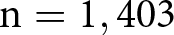 ${\text{n}} = 1,403$). Speaker education was included as a 3-level ordinal variable: lower than BAC (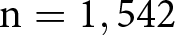 ${\text{n}} = 1,542$), BAC ( ${\text{n}} = 516$), higher than BAC (i.e., university degree,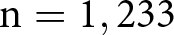 ${\text{n}} = 1,233$). Finally, we classified speakers’ socio-professional classes into seven categories based on the French government’s classification (Insee [Institut national de la statistique et des études économiques] 2003), in the following order: chômeurs (‘unemployed’, ${\text{n}} = 231$), élèves/étudiants (‘students’,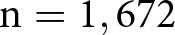 ${\text{n}} = 1,672$), ouvriers (‘workers’, ${\text{n}} = 125$), employés (‘employees’,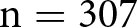 ${\text{n}} = 307$), professions intermédiaires (‘intermediate professions’,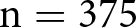 ${\text{n}} = 375$), cadres et professions intellectuelles supérieures (‘managers and higher intellectual occupations’, ${\text{n}} = 433$), artisans, commerçants et chef d’entreprise (‘craftsmen, merchants and entrepreneurs’, ${\text{n}} = 148$).Footnote 6
We also coded the following linguistic factors:
• Sentential polarity: Unlike previous studies, we made the distinction between sentential negation marker pas and n-words (personne, rien, jamais, etc.). We therefore distinguished three levels of coding in the final statistical model: affirmative (n = 2,832), negative context with pas (n = 369), and other negative contexts (n = 90).
• Verb frequency: We counted the frequency of each verb in the MPF corpus, log-transformed this value, and included it in the model as a numeric predictor.
• Verb irregularity: Blondeau and Labeau (Reference Blondeau and Labeau2016) report that irregular verbs favour SF while regular verbs favour PF. However, binary coding for verb (ir)regularity fails to account for differences in the degree of irregularity exhibited in the future tense relative to the verb’s infinitive. For example, although both être ‘be’ and faire ‘do’ are irregular in terms of SF conjugation, the SF form of faire (il fera ‘he will do’) is more similar to its infinitive than that of être (il sera ‘he will be’). In light of this, we took an information-theory-based approach, where verb irregularity is estimated by the morphological surprisal, reflecting the degree of unexpectedness when inferring the root of future from the verb’s infinitive. Concretely, the morphological surprisal of a verb is obtained by i) computing verbs’ alternation pattern by using the Quantitative Modelling of Inflection algorithm (Qumín, (Qumín, Beniamine Reference Beniamine, Eshkol and Antoine2017, Beniamine et al. Reference Beniamine, Bonami and Luís2021), ii) dividing the number of verbs that share the same pattern by the total number of verbs, and finally, iii) negatively log-transforming the obtained ratio.Footnote 7 The irregularity of verb is coded as a continuum from 0.37 to 12.36.
• Verb type: Fleury and Branca-Rosoff (Reference Fleury and Branca-Rosoff2010) observe a frequent usage of SF with modals. We coded a binary predictor with modals (pouvoir ‘can’, devoir ‘should’, vouloir ‘want’, and falloir ‘should’, n = 78) and non-modals (other verbs, n = 3,213).
• Subject type: Pronouns and NPs were differentiated, and a third category was included for cases where a pronominal or nominal subject is doubled by a co-referred subject clitic (2), as informal contexts favour subject doubling (Coveney Reference Coveney2005). Subject type was therefore a 3-level ordinal variable with pronoun (n = 3,067), NP (n = 48) and doubling (n = 176).

The statistical modeling was conducted using the generalized logistic mixed model with R (R Core Team 2022) under the lme4 package (Bates et al. Reference Bates, Mächler, Bolker and Walker2015). The alternation between SF (coded as 1) and PF (coded as 0) is modeled as depending on the nine fixed effects that were presented above and two random intercepts (speaker n = 87 and verb lemma n = 411), as specified by Equation (1).Footnote 8
For categorical factors, the Backward Difference coding is employed, comparing adjacent levels on the scale defined above, with the higher level compared to the previous one. All numeric predictors have been standardized. The GVIF measure (General Variance Inflation Factors) shows no major concern of collinearity in the model, as each variable has a GVIF $^{1/(2Df)}$ inferior to 2 (Fox and Monette Reference Fox and Monette1992).
 \begin{equation}\begin{array}{*{20}{l}}
{}&{{\kern 1pt} Usage\,\,of\,\,SF\,\,constrasted\,\,with\,\,PF\,\,is\,\,dependent\,\,on\!:{\kern 1pt} } \\
{}&{{\kern 1pt} \;age{\kern 1pt} + {\kern 1pt} \;sex{\kern 1pt} + {\kern 1pt} \;education{\kern 1pt} + {\kern 1pt} \;profession{\kern 1pt} + {\kern 1pt} \;subject\,type{\kern 1pt} } \\
{}&{ + {\kern 1pt} \;sentential\,\,polarity{\kern 1pt} + {\kern 1pt} \;verb\,\,frequency{\kern 1pt} + {\kern 1pt} \;verb\,\,irregularity{\kern 1pt} + {\kern 1pt} \;verb\,\,type{\kern 1pt} } \\
{}&{ + {\kern 1pt} \;(1|speaker{\kern 1pt} ) + (1|verb\,\,lemma{\kern 1pt} )}
\end{array}\end{equation}
\begin{equation}\begin{array}{*{20}{l}}
{}&{{\kern 1pt} Usage\,\,of\,\,SF\,\,constrasted\,\,with\,\,PF\,\,is\,\,dependent\,\,on\!:{\kern 1pt} } \\
{}&{{\kern 1pt} \;age{\kern 1pt} + {\kern 1pt} \;sex{\kern 1pt} + {\kern 1pt} \;education{\kern 1pt} + {\kern 1pt} \;profession{\kern 1pt} + {\kern 1pt} \;subject\,type{\kern 1pt} } \\
{}&{ + {\kern 1pt} \;sentential\,\,polarity{\kern 1pt} + {\kern 1pt} \;verb\,\,frequency{\kern 1pt} + {\kern 1pt} \;verb\,\,irregularity{\kern 1pt} + {\kern 1pt} \;verb\,\,type{\kern 1pt} } \\
{}&{ + {\kern 1pt} \;(1|speaker{\kern 1pt} ) + (1|verb\,\,lemma{\kern 1pt} )}
\end{array}\end{equation}3.2 Results
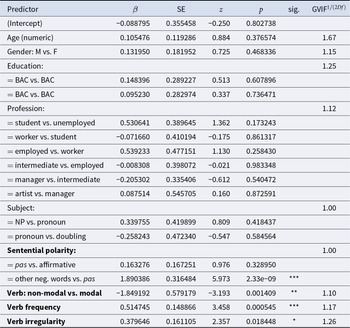
Table 2 displays the results of multivariate logistic regression of the probability that the synthetic future will be chosen. Four linguistic factors turned out to be significant predictors of future variant choice, whereas social factors had no impact. We will start with the effect of sentential polarity, the focus of this paper.
Results of a multivariate logistic regression (fixed effects) for the probability that future synthetic is chosen; MPF corpus

Table 2 Long description
The table has seven columns: Predictor, beta, SE, z, p, sig., GVIF raised to the power of 1 divided by 2 times Df. Row 1: Intercept, beta -0.088795, SE 0.355458, z -0.250, p 0.802738, sig. blank, GVIF blank. Row 2: Age (numeric), beta 0.105476, SE 0.119286, z 0.884, p 0.376574, sig. blank, GVIF 1.67. Row 3: Gender: M vs. F, beta 0.131950, SE 0.181952, z 0.725, p 0.468336, sig. blank, GVIF 1.15. Row 4: Education: BAC vs. BAC, beta 0.148396, SE 0.289227, z 0.513, p 0.607896, sig. blank, GVIF 1.25. Row 5: Education: BAC vs. BAC, beta 0.095230, SE 0.282974, z 0.337, p 0.736471, sig. blank, GVIF blank. Row 6: Profession: student vs. unemployed, beta 0.530641, SE 0.389645, z 1.362, p 0.173243, sig. blank, GVIF 1.12. Row 7: Profession: worker vs. student, beta -0.071660, SE 0.410194, z -0.175, p 0.861317, sig. blank, GVIF blank. Row 8: Profession: employed vs. worker, beta 0.539233, SE 0.477151, z 1.130, p 0.258430, sig. blank, GVIF blank. Row 9: Profession: intermediate vs. employed, beta -0.008308, SE 0.398072, z -0.021, p 0.983348, sig. blank, GVIF blank. Row 10: Profession: manager vs. intermediate, beta -0.205302, SE 0.335406, z -0.612, p 0.540472, sig. blank, GVIF blank. Row 11: Profession: artist vs. manager, beta 0.087514, SE 0.545705, z 0.160, p 0.872591, sig. blank, GVIF blank. Row 12: Subject: NP vs. pronoun, beta 0.339755, SE 0.419899, z 0.809, p 0.418437, sig. blank, GVIF 1.00. Row 13: Subject: pronoun vs. doubling, beta -0.258243, SE 0.472340, z -0.547, p 0.584564, sig. blank, GVIF blank. Row 14: Sentential polarity: pas vs. affirmative, beta 0.163276, SE 0.167251, z 0.976, p 0.328950, sig. blank, GVIF 1.00. Row 15: Sentential polarity: other neg. words vs. pas, beta 1.890386, SE 0.316484, z 5.973, p 2.33 times 10 raised to the power of negative 9, sig. three asterisks, GVIF blank. Row 16: Verb: non-modal vs. modal, beta -1.849192, SE 0.579179, z -3.193, p 0.001409, sig. two asterisks, GVIF 1.10. Row 17: Verb frequency, beta 0.514745, SE 0.148866, z 3.458, p 0.000545, sig. three asterisks, GVIF blank. Row 18: Verb irregularity, beta 0.379646, SE 0.161105, z 2.357, p 0.018448, sig. one asterisk, GVIF 1.26.
Note: Coefficient estimates  $\beta $, standard errors, $z$ value, $p$ value, significance level indicated by stars * and GVIF $^{1/2Df}$ for all fixed effects in the MPF corpus (n = 3,291). Bold highlights factors that contribute to selecting the synthetic future. Positive coefficients for categorical predictors signify a preference for the SF in the first level over the second
3.2.1 Sentential polarity
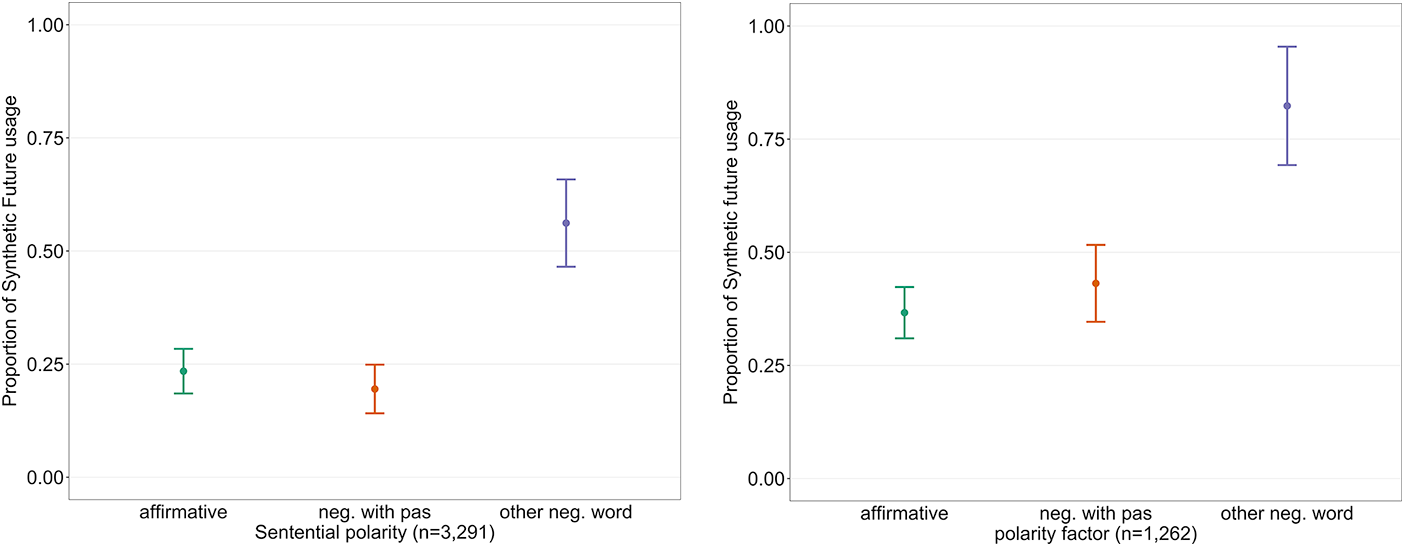
In line with Laurentian and most of the Metropolitan French studies, the polarity constraint is active in Parisian French. However, the polarity effect is not found in all of the negative contexts: no difference in usage was detected between negative context with pas (SF rate: 22.0%) and affirmative contexts (20.1%) (p = 0.33), but n-words (e.g., jamais ‘never’, plus ‘no longer’, rien ‘nothing’, etc.) dramatically favour SF (62.2%) compared with pas (p < 0.001), as shown in Figure 1 (left). As an illustration, SF is overwhelmingly preferred in (3a) compared to (3b) and (3c).

Long description
Linguistic example (3) showing three French sentences: (a) with the negator 'rien', (b) with the negator 'pas', and (c) without negation. English translations are provided for each.
Proportion of Synthetic Future use across affirmative, pas and n-word contexts in the MPF corpus (left) and the CFPP2000 corpus (right), aggregated by speaker.

Figure 1 Long description
The image A showing a point and error bar graph. The horizontal axis label is “Sentential polarity (n=3,291)”. The horizontal axis categories are “affirmative”, “neg. with pas” and “other neg. word”. The vertical axis label is “Proportion of Synthetic Future usage”. The vertical axis range is 0.00 to 1.00, with tick labels 0.00, 0.25, 0.50, 0.75, 1.00. The plotted point for “affirmative” is at about 0.24, with an error bar from about 0.19 to about 0.29. The plotted point for “neg. with pas” is at about 0.20, with an error bar from about 0.15 to about 0.25. The plotted point for “other neg. word” is at about 0.56, with an error bar from about 0.47 to about 0.66. The image B showing a point and error bar graph. The horizontal axis label is “polarity factor (n=1,262)”. The horizontal axis categories are “affirmative”, “neg. with pas” and “other neg. word”. The vertical axis label is “Proportion of Synthetic future usage”. The vertical axis range is 0.00 to 1.00, with tick labels 0.00, 0.25, 0.50, 0.75, 1.00. The plotted point for “affirmative” is at about 0.37, with an error bar from about 0.31 to about 0.42. The plotted point for “neg. with pas” is at about 0.43, with an error bar from about 0.34 to about 0.51. The plotted point for “other neg. word” is at about 0.82, with an error bar from about 0.69 to about 0.95.
Given that the number of contexts with n-words (n = 90) is limited, we investigated whether their behaviour differentiates from pas with respect to FTR in another spoken corpus of Parisian French: the CFPP2000 corpus (Branca-Rosoff et al. Reference Branca-Rosoff, Fleury, Lefeuvre and Pires2012). Unlike MPF, CFPP2000 focuses on an older population, spanning from 15 to 88 years old, with half of the participants being over 45 years old. Additionally, the corpus gives priority to speakers who experienced their early childhood in the city or nearby neighbourhoods of Paris. With its first recording dating from 2007, the corpus contains 51 transcriptions of semi-structured interviews, coming to about 750,000 words. Similar to the MPF corpus, we extracted 1,262 FTR tokens from the whole CFPP2000 corpus and employed the same logistic regression model specified in Equation (1), except for excluding the subject type factor given it was not a significant predictor.Footnote 9 The rate of SF is 38.6%, which is higher than that of MPF (21.5%).Footnote 10 Statistical analysis reveals a similar pattern for the sentential polarity factor: contexts with other negative words are associated with a significantly higher rate of SF than contexts with pas (82.1% vs. 47.5%, p < 0.01). However, pas also favours the use of SF compared with affirmative contexts (47.5% vs. 36.5%, p < 0.05), but the difference is smaller, as shown by Figure 1 (right). Although fewer tokens of other negative contexts (n = 28) were present in this dataset, it does demonstrate a stable preference for SF with n-words as compared with pas in Parisian French.Footnote 11
To summarize: we have found that the polarity constraint is active in two (very different) corpora of spoken Paris French. However, it is limited to n-words in this dialect, with utterances containing pas showing (almost) no difference from affirmatives. These contrasts in both corpora are shown in Figure 1.
3.2.2 Verb irregularity, frequency and type
We now turn to the other three factors related to the verb. Verb irregularity turns out to be another determinant of variant choice: the more unpredictable a verb’s future form is from the infinitive, the more likely the speaker is to use the SF (p < 0.05). Since irregular verbs tend to be highly frequent, this result aligns with the prediction that “repetition affects morphosyntax by ensuring the retention of older characteristics” (Bybee Reference Bybee, Brian and Richard2003: 621). As a matter of fact, the trend that irregular verbs favour conservative forms compared with regular verbs has been attested across various sociolinguistic variables, such as selection between subjunctive and indicative forms (Poplack Reference Poplack, Bybee and Hopper2001, Poplack et al. Reference Poplack, Lealess and Dion2013), choice between passé simple and passé composé (Engel Reference Engel1990), and preference for synthetic future over periphrastic future (Blondeau and Labeau Reference Blondeau and Labeau2016, Tristram Reference Tristram2020, and this squib).
Verb frequency also contributes to the variant selection: the more frequent a verb, the more likely it is to co-occur with the synthetic form (p < 0.001). We hypothesize that a frequent verb is easier to retrieve from memory, so the speaker would have more cognitive resources to retrieve the more complex variant, in our case the synthetic form. Since, in our data, most of the highly irregular verbs are also highly frequent, we verified that both (ir)regularity and frequency made a contribution to the model.Footnote 12 The results of this verification can be found in Appendix 2.
Finally, NON-MODAL VERBS strongly disfavour the SF (p < 0.01). However, it is unclear whether this effect is solely due to the irregularity effect, as modals are all irregular.
3.3 Temporal distance
Given the link between temporal distance and FTR observed in the literature on some dialects of French, we coded 500 tokens for temporal distance between the speech time and the future eventuality in the MPF corpus. Due to the absence of a temporal adverbial, 116 tokens had to be removed, as it is impossible to locate the event in the future. The remainder (n = 384) were annotated manually as proximal if the event will take place within a week, distal if longer, and continual if the event began in the past, but will continue in the future, following King and Nadasdi (Reference King and Nadasdi2003). A multivariate logistic regression was conducted with fixed effects of temporal distance, along with other linguistic factors that were revealed as significant predictors in the whole corpus (i.e., sentential polarity, verb irregularity, verb frequency, and verb modality) and random intercepts of speaker and verb lemma. The analysis reveals that the effect of temporal distance is not statistically significant, although there is a tendency for distal contexts to be associated with synthetic future compared with proximal events (p = 0.062). No difference was revealed between continual contexts and distal events (p = 0.15). In contrast, the effect of sentential polarity remains significant: SF is more likely to be used in negative contexts with other negative words than with pas (p < 0.01), and no distinction was observed between affirmative and pas contexts (p = 0.34). These findings align with previous research showing that polarity conditioning and temporal distance conditioning are in nearly complementary distribution. However, caution must be exercised in interpreting the results, given the limited sample size and the fact that the distinction between proximal and distal events is approaching statistical significance. Verb irregularity remains a significant predictor (p < 0.05).
4. Conclusion
In this squib we presented two quantitative studies of FTR in two very different corpora of Parisian French (the MPF and the CFPP2000), which we analyzed using multivariate statistical methods. Our study is thus unique for Parisian French, but is more comparable to the many large quantitative studies of FTR available for varieties of French spoken in Canada. The size of our datasets (around 3,300 tokens and 1,200 tokens respectively) allowed us to make finer grammatical distinctions within the set of negative contexts than previous studies, revealing a remarkable difference in the polarity effect compared with Laurentian French. Previous work on Laurentian French did not differentiate between negative contexts with pas and n-words, but given that SF is used more than 95% of the time in negative contexts which contain frequently pas, it is clear that pas largely contributes to the association of SF with negative contexts. We therefore propose that we are witnessing a true case of dialectal variation, which, we argue, challenges existing analyses of the polarity effect in FTR. For example, since utterances containing both sentential negation and n-words would be considered “contingent”, the contingency analysis would predict that they should behave the same way in Parisian French as they do in Laurentian French. Likewise, it is not clear why, in its route to becoming a stylistic marker, SF would be particularly entrenched with n-words in Parisian French but not pas.
This raises the question of what does create the polarity effects in their various instantiations across dialects. That n-words and pas behave differently in Paris strongly suggests that the polarity effect is a result of the syntax of these elements, or at least how they behave at the syntax-semantics interface. In fact, there is independent evidence from negative concord constructions that pas and n-words have different syntactic or semantic properties in Parisian French. In this dialect, multiple n-words in a single utterance can be interpreted as a single negation (i.e., Personne a rien vu can be interpreted as ‘No one saw anything’), but the combination of pas and an n-word naturally results in a double negation meaning (Milner Reference Milner1978) (i.e., J’ai pas rien vu must mean ‘I didn’t see nothing’).
Strikingly, in the same way that pas and n-words pattern together in FTR in Laurentian French, they also pattern together in negative concord in Laurentian French: J’ai pas rien vu is most naturally interpreted as ‘I didn’t see anything’ (Lemieux Reference Lemieux1985, Burnett et al. Reference Burnett, Tremblay and Blondeau2015). Although this may be a strange coincidence, we believe it is more likely that the dialectal differences in negative concord and FTR are related, and we therefore propose that whatever difference in the syntactic or semantic properties of pas between Parisian and Laurentian French allows it to participate in negative concord in the latter dialect is also what allows it to create the polarity effect in FTR. This being said, specifying in more detail how these connections work would involve combining precise formal analyses of negative concord across dialects, the syntactic expression of future tense, most likely within a probabilistic grammar setting. Therefore, sadly, these things are out of the scope of this squib.
Supplementary material
The supplementary material for this article can be found at https://doi.org/10.1017/cnj.2025.6.



 Open access

