

Marriage offers a unique insight into the intersection of the church and the law. It is both a legal contract between consenting adults, witnessed by a community, and (for Catholics) a sacrament celebrated as the foundation of reproduction and family life. This duality imbues the celebration of a marriage with characteristics that are both secular and sacred, individual and communal, as a status-changing event as well as the culmination of a process of courtship.
Marriage occupies a unique space in the legal reach of church and state, and in the moral behaviour both have sought to realize within the realm of population. Different concerns are at play, but marriage is necessarily connected both to the temporal realm, through its relation to inheritance and property ownership, and to the spiritual, in terms of the way it helps individuals to adhere to abjurations relating to fornication and concubinage. The state and church might both have concerns about the size and quality of the population entering into marriage, and about the possible consequences of nuptiality for the number or quality of the couple's resulting children. Indeed, Malthusian ideas of fertility, associated primarily with a couple's ability to support a household, were predicated on married couples, and saw particular fertility concerns in relation to the destitution of children born to the married poor.Footnote 1 It is to marriage, therefore, to which both church and state look, as the ‘prudential valve’Footnote 2 of both their realms of legal interest, as the necessary sacramentalization and sanction of a sexual relationship between two people, and as the legal context in which (in European history) most births took place.
Beginning in the period immediately after 1868, when the Ehekonsens Footnote 3 laws were abolished in Austria, and ending in 1945 after the demise of Nazi family policy relating to marriage and illegitimacy, this article explores the connections between marriage as a religious institution, marriage as an important and significant legal state, and the existence of large numbers of illegitimate births in parts of Austria. Focusing especially on the Gurk valley, it considers three aspects in particular: firstly, how illegitimacy was understood and responded to by the Catholic church on a local scale, both by priests working in the Gurk valley and by bishops auditing and collecting statistics about the parishes under their jurisdiction; secondly, how local understandings of the causes of illegitimacy led to specific responses (whether to excuse or to curb it), first by the Catholic church and later by the Nazi state, responses which drew on similar explanations for illegitimacy but were responding to very different fears about its social consequences; thirdly, why rates of illegitimacy changed little over the period from 1868 to 1938, a period when access to marriage for some (especially the landless) became legally easier, and why after 1938 Nazi policy was associated with greater rates of marriage in the Gurk valley.
The article uses a combination of relatio synodalis summary statistics produced annually by the diocese of Gurk for its parishes, reports submitted to the bishop of Gurk on themes around marriage, oral history interviews conducted in the Gurk valley, and published autobiographies from the Gurk valley. It also makes use of statistics published in 1941 in Vienna on the impact of the Anschluss with Nazi Germany in 1938. The timeframe of the article covers the period from the end of the Ehekonsens in 1868, which increased marriage rates in the alpine provinces of Austria-Hungary,Footnote 4 through to the end of the Second World War. Consequently, it spans a period of significant social, political and legal change, and it charts changes in the moral and legal framing of illegitimacy, particularly by the Catholic Church. No single source covers this period or these themes in their totality. The relatio synodalis statistics offer a quantitative measurement of illegitimacy in parish submissions to the diocese that allows the calculation of illegitimacy rates and shows the continuing relevance of counting illegitimacy within the parish. However, the narratives and explanations surrounding illegitimacy are not discussed annually, nor are they measurable straightforwardly from this source. The article therefore adds qualitative material to the quantitative, illuminating the period with three further sources. Reports submitted to the bishop by his parish priests in the Gurk deanery show the local assumptions, tolerations and concerns of clergy around marriage and sexual morality. The autobiographies and oral histories of Gurk valley residents show how they understood their relationship to marriage, as well as to the church and the state. Finally, publications of the National Socialist state show the impact on illegitimacy of a harsh, intolerant framing in statistical and cartographic terms.
The Gurk valley, in the ‘green alps’ of southern Austria, was notable for its marginal economic position in the late nineteenth and early twentieth centuries. It was characterized by large farming households with the presence of non-kin acting as servants in husbandry. Impartible inheritance practicesFootnote 5 and late age at marriage, both exacerbated by economic decline and high rates of farming indebtedness, contributed to a social and economic context in which non-marriage was widespread, and illegitimacy rates in the Gurk valley were among the highest in Austria and in Europe during this period. The Gurk valley's experience of illegitimacy reveals an adaptation to marriage and courtship processes under economic strain, resulting in significant numbers of couples who could not co-reside but who could and often did bear children together. The local Catholic church regarded some of these couples as married without that marriage being solemnized, but the later Nazi state did not. Through exploring the elision after 1868 of law, marriage and the church, we can not only trace the ways in which local social and ecclesiastical customs understood, and to an extent tolerated, births outside marriage, but also recognize the rapidity of the disappearance of this elision under National Socialist rule.
Marriage and Non-Marriage in Europe and Austria
Illegitimacy has been used as a proxy for a multitude of social trends. One question to have exercised researchers is the Europe-wide rise in illegitimate births after the Napoleonic wars and its relatively sharp decline at the turn of the twentieth century. Such dramatic changes, and their common occurrence over space and time, have led to the equation of illegitimate births with alterations in the wider fabric of society, most regularly with the process of ‘modernization’. Some have seen the relationship of illegitimacy to what might be termed ‘deviant’ sexuality as evidence of movement away from traditional social values, especially those enforced by church customs and marital practices.Footnote 6 Others see illegitimate births less as a liberation from restrictive pre-modern institutions and more as revealing a stress fracture in courtship, resulting from new economic opportunities outside a community that nullified the power of that community to govern behaviour.Footnote 7 Both theories of modernization see a significantly reduced role for the church, suggesting that it no longer possessed the moral authority over individuals or communities to bring couples to marry where a pregnancy as a result of extra-marital courtship had taken place. Given the significant presence of pre-nuptial pregnancy in some early modern communities, modernization theories such as these implicitly suggest the decline of church influence over the long nineteenth century.Footnote 8 In rural communities, however, some of these processes of modernization were not felt so keenly or quickly; in the close communities of Alpine villages, the priest's role remained central to communal life and to upholding the moral standards of the parish. Indeed, as Voegler argues, the heavy involvement of clergy as quasi-agents of the state as well as moral leaders in their community made them central to the operation of functions as diverse as poor relief and schooling.Footnote 9 Peter Tropper's summary of the reforming aims of the bishop of Gurk, Josef Kahn (1887–1910), highlights the breadth of interest of the Catholic Church in Carinthia in rural life, with commentary in favour of the reform of workers’ rights, notably in the limitation of working hours for women and children, and even in support of the building society movement and social security.Footnote 10
Understanding rural illegitimacy, then, requires different theorization. Michael Mitterauer's identification of high illegitimacy in the eastern Alps identified a theoretically sophisticated connection between deeply embedded reproductive responses to the environmental conditions in which a community is located. The pressure of population on the alpine environment was perceived to be hostile to great numerical expansion, thus creating a system in which inheritance was the key to marriage.Footnote 11 This finding is similar to those for other mountainous regions of Europe.Footnote 12
In search of additional factors that might account for the difference in the Alps, culture has often been invoked; most persuasive in exploring its articulation over space and through practice have been Jon Mathieu and Pier Paolo Viazzo.Footnote 13 While not centred on illegitimacy per se, Mathieu's analysis of household structure sees more environmental commonalities than differences in the alpine region, especially in the dominant forms of husbandry in each category of environment. This makes use of and refines Mitterauer's ecotype, which sees household structure as deriving ultimately from differences in physical geography and environmentally determined economic activity in Austria, such as pastoral farming in alpine regions and arable farming in the sub-alpine regions.Footnote 14 Mathieu opts for sociotype. This recognizes the role of the environment in shaping demographic outcomes, but it also leaves space for considering legal custom and the processes of state formation arising from the structures of local farming households. These factors affected the power relations within households and therefore the form that control of sexuality could take. Mathieu is struck by the number of unmarried servants resident within the households of the Gurktaler Alps in the eighteenth century; such people, who might become long-term residents through ageing or the birth of an illegitimate child, lacked the legal rights of the married couple. Mathieu suggests that impartible transfer of farms amongst a small population entitled to inherit is therefore important in determining which members of the community were best able to access the resources necessary for marriage and household formation. This is also evidence of a certain absolutist tendency reflected in the structures of the household, the ownership of land and the direction taken by the eighteenth-century state.Footnote 15
Much of Mathieu's analysis is interesting, especially in the identification of servants as occupying a highly vulnerable position, in law and in their household of service. The connection between household structure and its influence in ‘creating’ opportunities for illegitimate conceptions through the presence of unmarried kin, as well as an implicit pathway for such children to be incorporated into an underclass of servants, is of considerable importance. As I have argued elsewhere, illegitimacy in the Gurk valley had a historical grounding in economic rationality that evolved into something approaching a functional requirement of husbandry,Footnote 16 as well as one supported by cultural practices of fictive kinship and courtship rituals.Footnote 17
An explicit focus on illegitimacy can easily overlook the fact that births outside marriage were not always that different from births within marriage. The courtship culture that surrounded sexuality outside marriage does not appear to have differed profoundly from the culture which preceded entry into marriage, whether in the Gurk valley or in other rural areas of Carinthia.Footnote 18 Therese Meyer describes night-visiting in the parish of Molzbichl, near Villach in the high alps in the west of Carinthia, a custom practised in the Austrian Alps and elsewhere across Europe, according to which young men would visit young women after dark. Women might be gathered as a group to sew, and young men might begin their courtship through a conveniently open window. Molzbichl demonstrates a good deal of resonance with measures taken to observe and regulate relationships and the formation of attachments in the Gurk valley. It was the responsibility of the farmer and his wife to observe and regulate the behaviour of the servants who lived in in their household and thus under their care.Footnote 19
In seeking the ways in which legal frameworks impacted fertility behaviour beyond the regulation of courtship, the entitlement to land and one's prospects of inheritance are key to understanding the Gurk valley experience. As David Sabean notes,Footnote 20 the dominant system of passing property in Germany and Austria to a single male heir (usually the eldest) created a hierarchy of power within the farming household. Surviving siblings had to be paid off by the heir once he came into property; this could represent a source of tension if there was a delay in payment or a dispute over the amount. Not only was the son taking over the farmstead often forced to wait to marry, his siblings too might have to live with him until sufficient resources could be scraped together for them to establish independence and marry. However, in the Gurk valley the absence of marriage did not necessarily preclude a couple's having children.Footnote 21 The link between late marriage and illegitimacy, then, was not Malthusian vulnerability but a culturally influenced solution to a system of inheritance in communities with limited and often marginal land. Nor was this unique to the Gurk valley.Footnote 22 Fertility testing in rural communities was a means through which late inheritance, a requirement for labour, and a need to produce a viable heir could be reconciled.Footnote 23 It is no surprise that in Carinthia, the highest number of retrospective legitimizations per act of marriage occurred.Footnote 24 Illegitimacy in the Gurk valley existed on a continuum of fertility, with relationships of various intentions and outcomes partaking in similar courtship activities involving sexual intercourse outside marriage, and doubtless with many more encounters that did not result in a birth (or a marriage) and so remain invisible to us now. The role of the church not only as the recorder and registrar of vital events, through which births were recorded and marriages undertaken, but also as an institution which commented on marriages, relationships and births outside marriage allows us to use its records as a lens into the community. What remains sadly invisible, however, is the intervention of clergy in individual circumstances: we cannot know what was said to the young women and men involved. However, we can glean some sense of toleration of this continuum of fertility, or at least some parts of it where unions were stable but had not been confirmed by a liturgical rite or ceremony, through one of the sources discussed below.
The intersection of the law, the state and the Catholic Church went further than the recording of key life events through the institutional mechanisms of the parish. Marriage, as the gateway to legitimated reproductive behaviour, was a central element of population policy. The framing of marriage by the Austrian state and the Catholic Church in the later decades of the nineteenth century was shaped by a period of significant change during preceding decades. As von Schmädel notes, the shift to liberalization under Joseph II's Toleration Patent (1781) and Marriage Patent (1783) was codified in the Austrian Civil Code in 1811.Footnote 25 However, after 1848 there was a resurgence of absolutism and a new concordat between the Catholic Church and the Austrian state in 1855, resulting in the reestablishment of church control over issues related to marriage law.Footnote 26 After the Ausgleich of 1868 and a period of anti-clericalism, marriage law found itself subject again to the Civil Code and under state jurisdiction.Footnote 27
The response in marriage rates across Austria to the repeal of the restrictions on marriage has been discussed by many authors, none more sensitively than Teibenbacher,Footnote 28 who demonstrates a regional diversity across the alpine provinces, with relatively limited change and steadily increasing illegitimacy in Styria, the neighbouring province to Carinthia.Footnote 29 The Gurk valley, in its experience of illegitimacy in the period between 1868 and 1945, demonstrates that local practice remained persistent in the face of occasional moral concern from the church and more severe intervention from the Nazi state at the end of the period. It also highlights the ways in which local understandings, sometimes articulated by the attitude of the Catholic clergy of the valley towards marriage and fertility, describe a more resilient socio-economic system than we might infer from nineteenth-century changes in the law surrounding marriage and sanction against single motherhood in the 1930s and 1940s.Footnote 30 The parishes of the Gurk valley did not respond to the removal of limitations on marriage amongst the landless by increasing their uptake of the sacrament.Footnote 31 Rather, the westerly parishes reached their peak illegitimacy rate of 90 per cent of all recorded births in the 1880s and 1890s. Indeed, between 1870 and 1945 the illegitimacy rate in the Gurk valley rarely dropped below 50 per cent.Footnote 32 The ways in which this was counted, recorded and responded to show both the harsher reaction to, or judgement of, illegitimacy by those who measured it from the outside, and the continued importance of long-standing practice in response to illegitimacy.
Nevertheless, there was little sanction against illegitimacy from either church or state until the Anschluss, although it was measured, counted and discussed both before and after the Nazi annexation of Austria. The sources used here give an insight into that counting, first through the Catholic Church's relatio synodalis and later by means of the statistical mapping and technologies of intervention and impact introduced by the Nazi state.Footnote 33 The Catholic Church in the Gurk valley, while it recognized the challenges associated with some elements of local culture for the maintenance of morality, maintained consistent patterns of accommodation and tolerance for certain kinds of relationships, solemnized or not, that had been in place for generations and which underpinned practices of courtship, household structure and inheritance, not only there but also elsewhere in Austria. It could not take action against rising illegitimacy rates in the period except through small-scale and occasional initiatives by clergy which were resisted by the local population.
It was in the identification of illegitimacy's association with inheritance, and the action taken around farming household debt reduction, that the Nazi state showed its capacity to act to reduce illegitimacy, at least in the short term. The increase in illegitimacy in the Gurk valley later in the Second World War, however, reminds us that it is not simply to the inheritance of property that we should look to understand illegitimacy, but to cultural values and courtship norms too. These included the local clergy's toleration of the circumstances of illegitimacy, and an understanding of the social and economic pressures which served to hinder marriage. Oral history interviews conducted in the Gurk valley in 2007 and 2008, and the autobiographical publications from the Memoiren Verlag Bauschke, which works with local elderly residents, offer some insight into how individual lives intersected with and experienced these different framings of their courtship behaviours in the mid-twentieth century.
The Counting and Meaning of Sins
The Catholic Church and later the Nazi state both encountered and classified illegitimacy using tools of quantification, and these provided the basis for understanding behaviour, or for seeking to change behaviour in response to a perceived problem. For the Catholic Church, the annual deanery submissions of the state of the parish to the bishop in Klagenfurt came in the form of the relatio synodalis.Footnote 34 Containing counts of population and of the incidence of pastoral offices such as baptisms, marriages, funerals and confessions, these summary statistical sources enabled senior clergy at Klagenfurt to monitor the engagement of parish priests and the morality of their flocks.Footnote 35 If it was deemed that too few inhabitants of the parish were taking communion on a regular basis, then a mission was sent out by the bishop to improve sacramental participation. The diocese undertook a number of missions to the Gurk deanery during the late nineteenth and early twentieth century as part of a programme intended to improve the morality of the populace. The Gurktal was not exceptional in this regard; most Austrian parishes received a similar episcopal mission at some point. The deanery was not singled out for special intervention by the responsible bishop; nor was it reprimanded for its high illegitimacy. Given this indifference to the illegitimacy ‘problem’, we must doubt whether the Catholic Church in Carinthia constructed all forms of extra-marital sexuality as requiring intervention or reform.
Nonetheless, ideas about morality and marriage were of interest to the Catholic Church in Carinthia. In 1891 and 1892, the pastoral conferences held by the bishop in Klagenfurt touched upon sexuality, gender and morality. These conferences were intended to canvass the opinion of all deaconries of the diocese of Gurk on points of theological import. Each deanery was asked to submit a written contribution on a given topic, arranged around key questions, probably set out by the bishop. The theme from 1891 is especially pertinent to determining how far and by which means the clergy felt able to act to improve morality in their parishes: ‘Which measures are to be taken to check behaviour which contravenes the sixth commandment? Methods and evidence for the improvement of morality and removal of concubinage.’Footnote 36 The clergy of the Gurk deanery divided their thoughts into two sections: standard measures and special measures. The standard measures included the more stringent catechetical examination in the context of religious education, regular communion, making sure children were tidily (and fully) dressed at all times, reminding heads of household of their responsibilities to maintain moral order, and instructing young men and women not to associate too freely with one another. Indeed, the reference to solus cum sola was an indication of the worldly wisdom of the priests, as well as adding a touch of humour to their report.Footnote 37 The most important amongst the special measures was the suggestion that girls should be educated separately, in convent schools, due to the better ability of women to understand the needs of girls and girls’ responsiveness to a female teacher's maternal side.Footnote 38 Illegitimacy, it seems to have appeared to the local clergy, was an inevitable outcome of contact between the sexes. Where this could be controlled and mediated by positive role models of chastity, the vice of fornication could be avoided. The household, then, was key to preventing the pastime of ‘night-visiting’,Footnote 39 and it was therefore to the head of the household that guidance should be given to improve the morality of the unmarried population.
In 1892, the pastoral conference moved on to consider the sanctity of marriage and the encouragement of virginity before marriage. Much ink was spilt in reflection on the indissolubility of marriage, in recognition not only of its sacramental character but also of its nature as the keystone of social and legal order. To this end Tisch (table) and Bett (bed) were necessarily to be kept together, to prevent both men and women straying and to keep the marriage intact.Footnote 40 Perhaps responding to changes in legal responsibility for marriage which were introduced in Austria over the course of the nineteenth century,Footnote 41 the priests of the Gurk valley specifically invoked in their commentary a discussion of the validity of clandestine marriages in a papal letter of 1788, which highlighted the sacramental nature of marriage.Footnote 42 Clandestine marriages were accordingly deemed to be true and valid marriages, even if they were associated with other faults such as disrespect to the church shown by not solemnizing the contract in front of a priest. This view of the nature of marriage might not have chimed with the desires of contemporaries to avoid clandestine marriage, but neither was it separate from a longer practice of marriage without solemnization, dating back to the spousals common in many parts of Europe prior to the Council of Trent.Footnote 43 The ‘stickiness’ of practice over time, and the adaptability of local clergy in accepting stable unions between couples without marriage in church or solemnized by clergy, provides insight into the sensitivity of the clergy to the socio-economic circumstances of the area, and especially into types of sexual relationship outside marriage that were regarded as acceptable and, indeed, effectively marital.
Some parish priests were nevertheless horrified by what they saw in the Gurk valley. Oral history interviews with an elderly resident of Glödnitz parish reported that one early twentieth-century priest insisted upon baptizing all illegitimate babies as Eva or Adam, to make a point about their lack of a father. More drastically, oral history interviews with the priest of one parish revealed the poor example set by one of his predecessors when dealing with illegitimate births. On his arrival in the valley, this priest had been so appalled by the discovery that the majority of children he was called upon to baptize were illegitimate that he simply refused them the sacrament. The townsfolk did not react kindly to what they understood to be the denial of salvation to all those born outside marriage, who made up the majority of births. They attacked the priest, locking him up in a cupboard in his own rectory until he agreed to relent. Soon afterwards, the beleaguered cleric left not only the parish but the country, emigrating to Brazil.Footnote 44
These examples of parish priests taking exception to the behaviour of their flocks, and attempting remedial action of varying degrees of severity with little clear success, are the exception and not the rule. The majority of encounters between local clergy and the population seem not to have regarded illegitimacy as something which might call morality into question. The priest also recounted the story of a notably pious parishioner, who attended mass conscientiously and was a model of kindness to all, even in times of poverty. That she also brought five illegitimate children into the world was not a reason to doubt her good character, but simply suggested that the opportunity to marry had not been afforded her. Departures by the clergy from the accommodation of illegitimacy appear to have been rare; instead they focused in their statistical returns and their letters to the pastoral conference on the problem of the unstable unions that resulted from night-visiting, fornication and concubinage.Footnote 45
In these large households, labour-intensive techniques were made possible by the continuing patterns of service, which may in turn have been sustained by high rates of illegitimacy. It is, therefore, little surprise that the Gurk valley should have been somewhat slow in adopting more modern, mechanized agricultural practices. Rather than being limited by the difficulty of using machinery on the steep scree slopes found in western Carinthia, it was the deeply-embedded socio-economic structures of the Gurktaler Alps that hindered a progression from subsistence to more market-oriented farming.Footnote 46 The level of farming debt was severe. The economic depression of the 1890s had a considerable effect on local farmers because of their low output, and recovery thereafter was slow, and hindered further by the First World War, the Carinthian Civil War and the outbreak of Spanish flu.Footnote 47 When the Great Depression hit in 1929, there seemed little prospect of farming in the Gurk valley being viable in the future; rural emigration grew rapidly.
The promise of resolving farming debt was the key means through which the far right gained popular support in the Gurk valley. The westerly parish of Glödnitz in particular was affected by the troubles of the early 1930s; indeed, Klein-Glödnitz was the location of an early attempt at a Putsch by local Nazi sympathizers in 1935.Footnote 48 It was quelled by the police, and some of the handful of participants were shot in the resulting scuffle. It stemmed, according to Ferdinand Hochsteiner's autobiography, from mounting anger at the way in which the Catholic Church in particular, and larger (absentee) landlords and Bezirk authorities in general, were dealing with indebtedness amongst their tenants. Tenants had often been granted a tenancy for many years, or even for life, sometimes in lieu of an inheritance portion.Footnote 49 Increasingly, however, farmers who had insufficient liquidity to pay their creditors were forced off their farms, causing resentment and exacerbating fears amongst the remaining population of uncontrolled rural vagrancy and crime.Footnote 50 The relationship between indebted tenants and political dissatisfaction in the 1930s intensified, sowing seeds for political upheaval which benefitted the far right, and in which debt became a political concern.
After the Anschluss, one of the first steps taken by the Nazi government was a policy of Umschuldung, or debt rescheduling, intended to alleviate the immediate burden of illiquidity.Footnote 51 In this period, illegitimacy in the Gurk valley also began to decline. However, to see this fall as resulting solely from legislative action on debt would be naïve. Instead it reflects a shifting social context. The mothers of illegitimate children, and the children themselves, were constantly under the observation of the Nazi state.Footnote 52 While the monarchy and the First Republic alike had monitored illegitimacy in the alpine provinces, there had been no political or legal action taken to curb it, nor was it regarded as a major threat to the social order, except insofar as it might serve to exacerbate rural pauperization. The Nazi government differed strongly from its predecessors in this respect: it regarded the rural family as the key to Austria's future success, and saw illegitimacy as a direct threat to the family.Footnote 53 This threat was understood as arising both from the resulting existence of children outside a stable conjugal unit, and from the ‘poor quality’ of the offspring born of ‘mentally unfit’ women, that is from women who were evidently unable to make ‘rational’ decisions about sexuality and fertility. Although illegitimacy was only one area of life among many which came under increased statistical observation, measurement and surveillance in the Nazi state, the intersection of motherhood, and especially single motherhood, with rural poverty is central to understanding both why National Socialism was initially received warmly by those rural Carinthians who benefited from debt reduction. The association between household indebtedness, rural poverty and the lack of marriage is important in understanding why illegitimacy remained high in the nineteenth and early decades of the twentieth century. Marriage, in this period after the repeal of the Ehekonsens, was permitted by law but did not take place because of the poverty of tenant farmers. In the reduction of debt, therefore, a barrier to marriage was removed, and this was accompanied by a discourse of improvement in the ‘quality’ of the Austrian population.
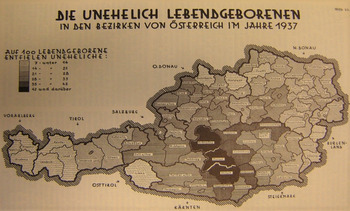
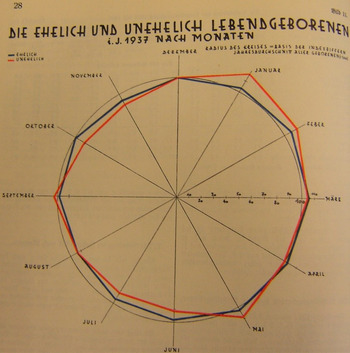
In 1941 the statistical office in Vienna, recently taken over by National Socialist authorities, emphasized in their publication Der Umbruch in der Bevölkerungsentwicklung im Gebiete der Ostmark how the lives and the ‘quality’ of the Austrian population had improved since 1938. Illegitimacy proved an important axis of this analysis. In this mapping of rural Austria's illegitimacy rates in the early 1930s against the situation in 1941, Bezirk St Veit and the Murau belt emerge as notable areas of improvement (Fig. 1). This can be understood in the context not only of Nazi family policy on illegitimacy, which was seen as an expression of weakness in the mother and as a threat to society when passed onto her children,Footnote 55 but also of policies to modernize backward Austrian agriculture in marginal regions such as the Gurk valley. Amongst a wide variety of statistics on life in Austria since 1938, the association of illegitimacy with the state of agriculture (such as the measurement of seasonality in Fig. 2), is interesting for its overt connection of demographic outcomes and socio-economic structures.
Map of Illegitimate Births in Austria in 1937. Source: Österreich Statistisches Amt für die Alpen- und Donau-Reichsgaue, Der Umbruch in der Bevölkerungsentwicklung im Gebiete der Ostmark (Vienna, 1941), 25.Footnote 54

Radar Graph of Austrian Illegitimacy and its Seasonality in 1937. Source: Österreich Statistisches Amt, Der Umbruch, 28.

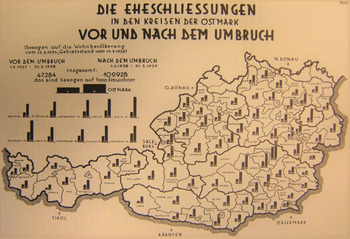
The Nazis’ desire to understand illegitimacy in scientific, quantifiable terms in order to identify the spaces and peoples most in need of targeted reform was not unique to Austria;Footnote 56 nor should it be seen in isolation from the wider interventions in the medico-moral realm that characterized the approaches to morality of the late nineteenth and early twentieth century in general,Footnote 57 as well as the Nazi state's intense statistical scrutiny of modernization in its many facets. In seeing illegitimacy primarily as a rural phenomenon, associated with agricultural communities, it was perceived as one aspect of Austria's wider need of improvement, to lift the country out of its state of backwardness. In the comparisons of figures before and after the Nazi occupation, it is unsurprising that the areas showing the sharpest decline in illegitimacy and the greatest increase in the number of marriages contracted were precisely those where the most significant problems had been identified: Bezirk St Veit and the Murau belt (Fig. 3).
Marriages in 1937/8 compared with 1938/9. Source: Österreich Statistisches Amt, Der Umbruch, 17.

The downward trend in illegitimacy in areas such as the Gurk valley did not last long, however. Illegitimacy rates fell dramatically during the first few years of Nazi rule in Austria. Across the Gurk deanery, these had remained above 50 per cent throughout the period from 1868 to 1938, only some of the smaller parishes showing major variations from year to year. During the First World War, there had also been a brief decline in illegitimacy, while men were away. Such an explanation may also help to account for some of the dip in births outside marriage during the Second World War (there was a peak in births in the spring of 1941, after Austrian troops were allowed home from the front en masse in the summer of 1940), but the fall in the illegitimacy rate after 1938 to levels of 30 per cent for the first time was short-lived.Footnote 58
Conclusion
Illegitimacy and the Catholic Church coexisted in a pattern of toleration and local adaptation seen in communities across Europe. Their coexistence in the Gurk valley shows us that, even when births outside marriage had outnumbered births within marriage for generations, and even when such births became still more prevalent within the community, the socio-legal understanding of marriage as a process rather than an event, and one which might be preceded rather than followed by children, remained highly resilient. Only certain kinds of fertility behaviour were regarded as problematic or transgressive, such as night-visiting, which moved courtship a little beyond the control of the community and its institutions such as the church. These were those in which inheritance, legitimization and the establishment of a conjugal household did not and could not follow, because of poverty or moral failing among the parents. The decision of local clergy, by and large, to tolerate such extra-marital fertility stands in sharp relief against the attitude of the Nazi state. While the same kind of fertility behaviour was identified as problematic by both groups, it was in the development not only of measurements but also of penalties and socio-economic rewards for improved behaviour that the Nazi state showed its ability to alter behaviour, at least temporarily, in the Gurk valley.
The religious framing of illegitimacy, and the position of marriage and of illegitimate fertility as a precursor to marriage, existed in the Gurk valley in a space in which these phenomena can be seen as an effect of property law and related local customs. Most particularly, it was impartible inheritance of property that most strongly governed access to marriage, and which therefore mediated illegitimacy, service and relationships within the farming household. The church accommodated illegitimacy, especially illegitimacy which took place prior to marriage amongst those whose unions were stable but for whom access to marriage was delayed by the wait to inherit. Illegitimacy rates therefore increased as the wait to inherit grew longer, over a period characterized by increasing farming indebtedness. It was the Nazi state, which did not accommodate illegitimacy in its family policy, that most actively sought to increase marriage by seeking to act upon its relationship with debt through a process of Umschuldung. In casting the legal category of illegitimacy as both a characteristic of rural backwardness and a threat to the race through the ‘quality’ of illegitimate offspring born into poverty and to ‘irrational’ mothers, its policy sought to change the structures underpinning births outside marriage in the Gurk valley. However, whilst illegitimacy initially fell, apparently in response to these measures (but perhaps rather because many young men had been called up), its rise after 1941 indicates that births outside wedlock were embedded within structures that were older, more resilient and more complex than inheritance law and debt alone. Although legal changes made a difference to the number of births outside marriage in the short term during the late 1930s and early 1940s, there was no sustained decrease. In the Gurk valley, marriage, and an individual's ability to obtain entry into its contractual and sacramental nature, was a process rather than an event.

 Open access

