



Over the past decades, non-communicable diseases (NCD) have been emphasized as a major public health problem, since they represent the leading cause of death and disability among populations in developed and developing countries( 1 – Reference Malta, Campos and Oliveira 3 ). In 2016, these diseases accounted for about three out of four deaths on a global scale (72·3 %), with a similar scenario in Brazil (76·4 %)( 4 ). This situation is partially driven by increases in the prevalence of overweight and obesity( 5 – Reference Ng, Fleming and Robinson 7 ), which, in 2015, were directly responsible for about 4 million deaths worldwide( 8 ). In Brazil, the prevalence of overweight went up from 31·1 % in 1980 to 56·5 % in 2016, while the rise in the prevalence of obesity was even more critical, from 6·6 % in 1980 to 23·1 % in 2016, representing an increase of more than 300 % in about 35 years( 4 ).
The dietary pattern related to excessive weight gain and NCD is characterized by the high consumption of ultra-processed foods to the detriment of fresh and minimally processed foods( Reference Kac and Pérez-Escamilla 9 ). Ultra-processed foods are commonly rich in free sugars (monosaccharides and disaccharides added to foods and beverages by the manufacturer, cook or consumer, and sugars naturally present in honey, syrups, fruit juices and fruit juice concentrates)( 10 ). In Brazil, between 1987 and 2009, the consumption of ultra-processed foods and beverages (such as sweetened beverages (SB), biscuits and chips) increased significantly (from 18·7 to 29·6 %), while the consumption of fresh and minimally processed foods (such as rice, beans, vegetables, eggs, roots and tubers) reduced from 44·0 to 38·9 %( Reference Martins, Levy and Claro 11 ).
Among these products, SB (especially soft drinks and artificial juices) have a recognized relationship with excessive weight gain and NCD( Reference Hu 12 – Reference Luger, Lafontan and Bes-Rastrollo 15 ). Extensive literature endorses this connection, highlighting not only the extremely low nutritional value of these beverages, but also their reduced capacity to promote satiety proportionally to their energy content (in comparison to solid items)( Reference Popkin 16 ). SB tend to figure among the major dietary sources of free sugars in both developing and developed countries( Reference Drewnowisk and Rehm 17 – Reference Ha, Chung and Lee 19 ). In 2009, free sugars consumption in Brazilian households reached 16·7 % of total energy( Reference Levy, Claro and Bandoni 20 ), exceeding by 67 % the WHO recommended daily limit for adults (10 % of total energy)( 10 ). Although table sugar is still the major contributor to this high sugar consumption, the increase of about 200 % (0·8 to 2·2 %) in the contribution of SB to the total energy purchased by Brazilian households from 1987 to 2009 must be highlighted( Reference Martins, Levy and Claro 11 ). Current evidence also indicates potential health risks related to the consumption of artificially sweetened beverages (ASB), such as diet, light and zero versions, proving these products are unlikely to be healthy alternatives to sugar-sweetened beverages (SSB)( Reference Ebbeling, Feldman and Chomitz 21 , Reference Imamura, O’Connor and Ye 22 ). Thus, reduction in the consumption of both types of SB has been discussed as a way of curbing current levels of obesity and NCD in Brazil( 1 , 23 ).
As no national food consumption survey is available in the country since 2009, current estimates for the Brazilian adult population rely mostly on data from the Surveillance System of Risk and Protective Factors for Chronic Diseases by Telephone Survey (VIGITEL)( 24 ). Therefore, the objective of the present study was to analyse time trends in SB consumption among adults in the Brazilian capitals and the Federal District (FD) between 2007 and 2016.
Methods
Sampling and data collection
The current study is a time-series analysis based on data from VIGITEL between 2007 and 2016, totalling 519 641 interviews. This system was implemented in 2006 by the Ministry of Health to investigate, annually, risk and protective factors for NCD among the adult population (age ≥18 years) of all state capitals and FD( 24 ).
Information about the population’s health is obtained through annual telephone surveys, in which a sample of approximately 2000 individuals is interviewed in each city per year of system operation, so the risk and protective factors for NCD can be assessed with a 95 % CI and a sample error of 2 percentage points (pp). For specific estimates, by gender, a maximum of 3 pp is expected. The VIGITEL sampling process is performed in two stages. The first consists in the sampling of 5000 landline telephones per city, followed by reorganization in twenty-five replicas, each replica reproducing the same proportion of lines by postal code (ZIP code) of the original list. Each landline selected is contacted up to six times in distinct days and hours (from 09.00 to 21.00 hours, including weekends and holidays) to verify its eligibility. Non-residential lines, out-of-service lines and lines that do not answer to any attempt of contact are considered ineligible. At the second stage, one adult among the residents of each household is sampled (simple random sample) and invited to participate to the survey.
According to the last national Demographic Census, in 2010, landlines telephones reached 60·8 % (varying from 28·5 to 74·2 %) of the households existing in all twenty-six Brazilian capitals and FD. Refusal rate was low, about 4·1 % (varying from 2·2 to 5·8 %). Weighting factors provided by the Ministry of Health equate the distribution of the population interviewed by VIGITEL with that predicted for the entire adult population of each city. The weighting procedure is executed in two steps. The first step aims to correct the unequal probability of selection of households with more than one landline telephone or with more than one resident, and the second step aims to equate the distribution of the population interviewed in each city (by gender, age and schooling) to its entire population (based on the official projections for each year)( 24 ).
The interviews were conducted through a computer-assisted telephone interview system, where questions were directly read from the screen of a video monitor and the answers were immediately recorded in an electronic form by a previously trained interviewer. This process allows not only the immediate discrimination of invalid responses and timing of the interview, but also the automatic pass-through over issues that are not applicable due to previous responses and the continuous feeding into the system database( 24 ).
Questions about sociodemographic characteristics, smoking, overweight and obesity, food consumption, physical activity, alcoholic beverages consumption, self-assessment of health status, female cancer screening tests and referred morbidity are addressed in the VIGITEL system. Food consumption was investigated through questions regarding the intake of markers of healthy and unhealthy lifestyles. SB were taken as an unhealthy marker( Reference Khan and Sievenpiper 25 ). More details on the sampling process and data collection employed by VIGITEL can be obtained from the annual reports of the system( 24 ).
Variables of study and organization of data
Sweetened beverages (SB) were classified as: sugar-sweetened beverages (SSB), i.e. regular soft drinks and artificial juices; and artificially sweetened beverages (ASB), i.e. diet, light or zero soft drinks and artificial juices.
The information regarding the consumption of SB was investigated by VIGITEL from 2007 onwards through three questions: ‘How many days a week, do you usually drink soft drinks or artificial juices? (1 to 2 days a week; 3 to 4 days a week; 5 to 6 days a week; every day, including Saturday and Sunday; almost never; never)’; ‘What type? (regular; diet/light/zero; both)’; ‘How many glasses/cans do you usually drink per day? (1; 2; 3; 4; 5; 6 or more; I don’t know)’. The question regarding the type of beverage consumed was omitted in 2012, 2013 and 2014.
Two indicators were developed to represent the regular consumption (≥5 d/week, independently of the quantity consumed) of SB and SSB. Average daily consumption of SB (millilitres per capita) was estimated by multiplying the weekly prevalence of consumption (mean value of the reported range) by the average amount consumed on a given day, and then dividing the result by 7 (number of days in a week). Only individuals with one or more days of consumption of SB per week were considered. Finally, a complementary indicator was created to represent non-consumption of SB (consumption reported as ‘almost never’ and ‘never’).
A set of five sociodemographic variables complemented the analysis: gender (male; female), age group in years (18–24; 25–34; 35–44; 45–54; 55–64; ≥65), schooling in years of study (0–8; 9–11; ≥12 years), marital status (with partner; without partner) and geographical region (North and Northeast (less developed regions); Midwest, Southeast and South (more developed regions)).
Data analysis
The studied population was initially described according to its sociodemographic characteristics. The prevalence of regular consumption of SB and SSB, the average daily consumption of SB and the prevalence of non-consumption of SB were then estimated for each year. All analyses were conducted for the entire population and according to sociodemographic strata.
The presence of significant linear trends was investigated through linear regression models. For each year, the dependent variables were all four indicators (annual prevalence of regular consumption of SB; annual prevalence of regular consumption of SSB; annual average daily consumption of SB; annual prevalence of non-consumption of SB) and the independent variables were the years of data collection. The statistical significance of the trends was evaluated using the regression coefficient, which indicates the annual average rate of increase or decrease of each (expressed in percentage points per year or millilitres per year). Variations corresponding to a regression coefficient statistically different from zero (P<0·05) were considered significant.
The statistical software package Stata version 13.1 was used to organize, process and analyse the data, considering the design of the VIGITEL sample at all stages.
The VIGITEL was approved by the National Commission of Ethics in Research for Human Beings of the Ministry of Health (CONEP Opinion 355.590 of 26 June 2013 and certificate of presentation for ethics assessment (CAAE) no. 16202813.2.0000.0008). Data are freely available for public access and use and do not allow identification of the respondents( 24 ).
Results
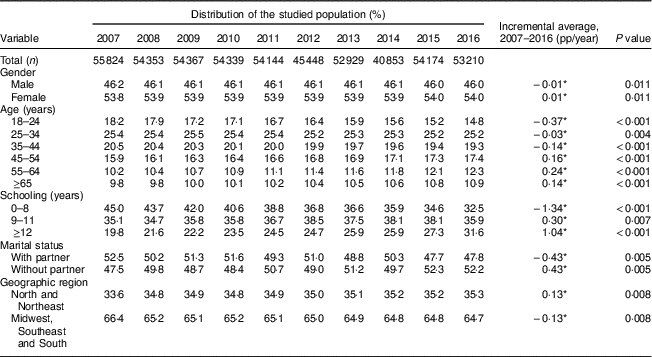
A total of 519 641 adults from the Brazilian capitals and FD were interviewed by VIGITEL from 2007 to 2016. Most of them were young adults (25–44 years old, about 45·3 %) with up to 11 years of study (about 75·3 %). The distribution of the population in terms of marital status was similar throughout the period and about two-thirds resided in more developed regions. Significant changes were observed in the prevalence of individuals in the older age groups (45 years or older: from 35·9 to 40·6 %, P<0·001) and with higher schooling (more than 9 years of study: from 54·9 to 67·5 %; 9–11 years: P=0·038; 12 years or more: P<0·001). There was also a significant increase in the prevalence of unmarried individuals (47·5 to 52·2 %, P=0·005) and those living in less developed regions (33·6 to 35·3 %, P=0·008; Table 1).
DistributionFootnote † of the adult population (aged ≥18 years) from the Brazilian capitals and Federal District by sociodemographic variables. VIGITEL, 2007–2016
VIGITEL, Surveillance System of Risk and Protective Factors for Chronic Diseases by Telephone Survey; pp, percentage points.
*P<0·05.
† Weighted percentage to adjust the sociodemographic distribution of the VIGITEL sample to the distribution of the adult population of each city estimated for each year of study.
‡ Corresponding to the linear regression coefficient value of the indicator on the year of the survey.
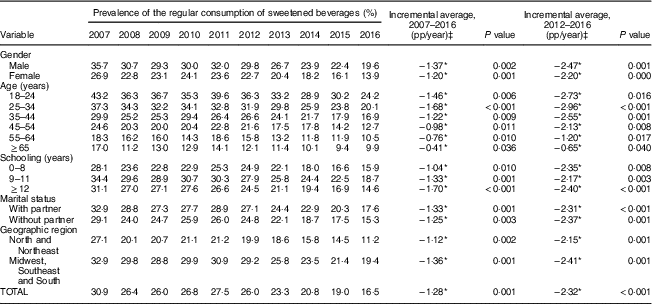
In the complete set of the population, there was a significant reduction of regular consumption (≥5 d/week) of SB, from 30·9 to 16·5 % (−1·28 pp/year, P=0·001) during the 10 years analysed. The decline in consumption was even more pronounced in the most recent period (2012–2016: −2·32 pp/year, P<0·001). A similar trend was observed in all population strata. Greater reductions were observed among men (−1·37 pp/year, P=0·001), those with age between 18 and 44 years (18–24 years: −1·46 pp/year, P=0·016; 25–34 years: −1·68 pp/year, P<0·001; 35–44 years: −1·22 pp/year, P=0·001), with more than 12 years of study (−1·70 pp/year, P<0·001), with a partner (−1·33 pp/year, P<0·001) and residents of more developed regions (−1·36 pp/year, P=0·001; Table 2).
PrevalenceFootnote † of the regular consumption (≥5 d/week) of sweetened beverages (including sugar- and artificially sweetened beverages) among the adult population (aged ≥18 years) from the Brazilian capitals and Federal District by sociodemographic variables. VIGITEL, 2007–2016
VIGITEL, Surveillance System of Risk and Protective Factors for Chronic Diseases by Telephone Survey; pp, percentage points.
*P<0·05.
† Weighted percentage to adjust the sociodemographic distribution of the VIGITEL sample to the distribution of the adult population of each city estimated for each year of study.
‡ Corresponding to the linear regression coefficient value of the indicator on the year of the survey.
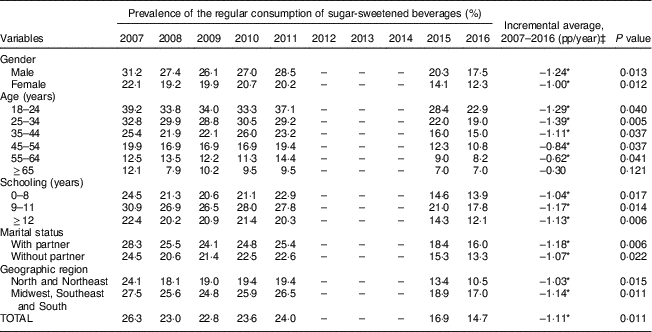
Among the individuals who reported regular consumption (≥5 d/week) of SB, 90 % consumed SSB (data not shown). The prevalence of regular consumption of SSB also decreased significantly, from 26·3 to 14·7 % (−1·11 pp/year, P=0·011). Once again, reduction was observed in all strata, with a marked reduction among men (−1·24 pp/year, P=0·013), young adults (18–24 years: −1·29 pp/year, P=0·040; 25–34 years: −1·39 pp/year, P=0·005; 35–44 years: −1·11 pp/year, P=0·037), those with schooling between 9 and 11 years of study (−1·17 pp/year, P=0·013), with a partner (−1·18 pp/year, P=0·006) and resident in more developed regions (−1·14 pp/year, P=0·011; Table 3).
PrevalenceFootnote † of the regular consumption (≥5 d/week) of sugar-sweetened beverages among the adult population (aged ≥18 years) from the Brazilian capitals and Federal District by sociodemographic variables. VIGITEL, 2007–2016
VIGITEL, Surveillance System of Risk and Protective Factors for Chronic Diseases by Telephone Survey; pp, percentage points.
*P<0·05.
† Weighted percentage to adjust the sociodemographic distribution of the VIGITEL sample to the distribution of the adult population of each city estimated for each year of study.
‡ Corresponding to the linear regression coefficient value of the indicator on the year of the survey.
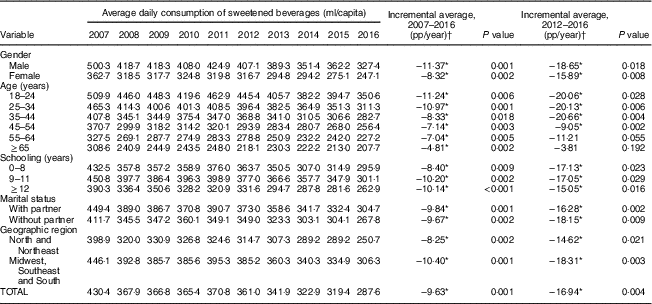
The average daily consumption also decreased significantly. In 2007, Brazilians consumed an average of 430·4 ml SB/d and in 2016, this consumption declined to 287·6 ml/d (−9·63 pp/year, P=0·001). The reduction was larger in the most recent period (−16·94 pp/year, P=0·004). Over the 10 years analysed, the decline in the amount consumed was also significant for all strata, except for the most recent period (2012–2016) among adults aged 55 years or over. Unlike the prevalence of regular consumption (Table 2), the average daily consumption in the total period (2007–2016) decreased most intensely among those with 11 years or less of schooling (0–8 years: −8·40 pp/year, P=0·014; 9–11 years: −10·20 pp/year, P=0·002; Table 4).
Average daily consumption of sweetened beverages (including sugar- and artificially sweetened beverages) among the adult population (aged ≥18 years) from the Brazilian capitals and Federal District by sociodemographic variables. VIGITEL, 2007–2016
VIGITEL, Surveillance System of Risk and Protective Factors for Chronic Diseases by Telephone Survey; pp, percentage points.
*P<0·05.
† Corresponding to the linear regression coefficient value of the indicator on the year of the survey.
Conversely, there was a significant increase in the prevalence of individuals who did not consume SB in the entire population (30·4 to 34·2 %, 1·54 pp/year, P=0·005) and in strata analysed (except for individuals aged 65 years or over). This increase was more significant among women (1·76 pp/year, P=0·005), with schooling higher than 12 years (2·13 pp/year, P=0·001) and residents of less developed regions (1·76 pp/year, P=0·004). There was a similar increase across different ages and marital status (Table 5).
PrevalenceFootnote † of non-consumption of sweetened beverages among the adult population (aged ≥18 years) from the Brazilian capitals and Federal District by sociodemographic variables. VIGITEL, 2007–2016
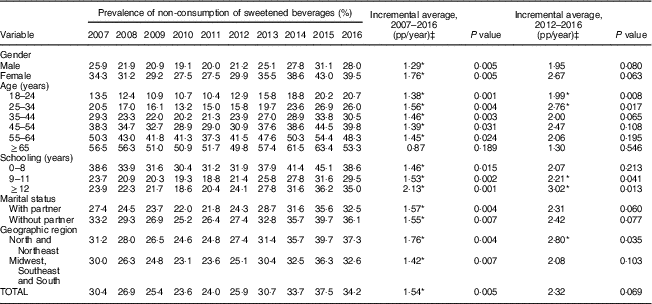
VIGITEL, Surveillance System of Risk and Protective Factors for Chronic Diseases by Telephone Survey; pp, percentage points.
*P<0·05.
† Weighted percentage to adjust the sociodemographic distribution of the VIGITEL sample to the distribution of the adult population of each city estimated for each year of study.
‡ Corresponding to the linear regression coefficient value of the indicator on the year of the survey.
Discussion
The systematic collection of information regarding the consumption of SB in a sample of more than half a million adults residing in all state capitals and FD over a 10-year period allowed the identification of a downward trend in the consumption of SB by the Brazilian adult population. There was a significant reduction in the regular consumption and average daily consumption of SB (more pronounced in the most recent period), as well as in the regular consumption of SSB throughout the total period. A similar trend was identified in all strata of the population, with a greater magnitude of reduction among men, with age between 18 and 44 years, individuals with higher level of education and residents of more developed regions. In the same sense, there was a significant increase in the prevalence of adults who did not consume any type of SB, especially among women, with higher schooling and residents of less developed regions. The magnitude of this increase was similar between different age groups.
The downward trend revealed among the results of the present study represents an inversion of the situation observed in the past decades in Brazil. Data from Household Budget Surveys conducted in the main metropolitan areas of the country since the 1980s show an increase in the participation of SB in total food and beverage acquisitions for household consumption (consumption away from home was not considered) from 0·8 % in 1987 to 2·8 % in 2003. However, no further increase was observed in the most recent survey conducted in 2009 (consumption remained steady, at 2·7 %), contradicting the trend observed in most countries( Reference Martins, Levy and Claro 11 ). While more recent information is not available, as of 2010, external sources (industry balances and market researchers) also indicate reductions in the production of SB and demand retraction for these products( 26 – 30 ).
This reduction in the regular consumption and average daily consumption of SB, together with the increase of non-consumption, may represent an improvement in quality of the Brazilian diet. However, the observed trends should not lead to the conclusion that health risks are surpassed, since in 2016 about one out of six adults (16·5 %) still consumed SB on a regular basis. This percentage represents almost 6 million individuals in the state capitals and FD (or about 26 million people when considering the entire adult population of Brazil( 31 )) consuming SB almost daily or even every day. Furthermore, inequities observed in the beginning of the studied period were not surpassed. Higher prevalence of consumption was seen among men, those in the younger age groups and in the higher schooling levels during the entire period. About 90 % of individuals reporting regular consumption (≥5 d/week) of SB consumed SSB (exclusively or combined with ASB). This prevalence held similar during the entire study period (data not shown), indicating no substitution of SSB for those with reduced or null energy content.
The deleterious effects of SB consumption are widely highlighted in the scientific literature( 10 , Reference Lim, Banwell and Bain 32 , Reference Laverty, Magee and Monteiro 33 ). A longitudinal study published in 2004, involving more than 50 000 Americans, identified that women who increased their consumption of SSB and maintained a high level of this consumption gained, on average, 8·0 kg of weight in a period of 8 years, while those who decreased their consumption and maintained a low level gained, in the same period, 2·8 kg( Reference Schulze, Manson and Ludwig 34 ). This causal relationship between SB consumption and excessive weight gain was also identified in other longitudinal studies( Reference Odegaard, Koh and Arakawa 35 , Reference Mozaffarian, Hao and Rimm 36 ). In 2015, a meta-analysis with data from seventeen longitudinal studies (38 253 individuals) identified an association between habitual SB consumption (one daily serving) and a higher incidence of type 2 diabetes mellitus (the incidence was 18 % higher without adjustment for adiposity and 13 % higher after adjustment for potential mediators and confounders of adiposity)( Reference Imamura, O’Connor and Ye 22 ). In 2016, another meta-analysis based on longitudinal studies (308 420 individuals) indicated an association between SSB consumption and increased cardiovascular risk( Reference Narain, Kwok and Mamas 37 ). Also, a growing body of evidence has refuted the effectiveness of using ASB in diets for weight loss( Reference Borges, Louzada and Sá 38 ), or even has associated their consumption with health damage such as diabetes( Reference Imamura, O’Connor and Ye 22 , Reference Yarmolinsky, Duncan and Chambless 39 ), dementia and stroke( Reference Pase, Himali and Beiser 40 ). Following the high level of SB consumption, all these conditions are widely present in the Brazilian population. In 2016, more than half of the adult population in the state capitals and FD was overweight (56·5 %), while 23·1 % was obese( 4 ). Medical diagnosis of diabetes was referred by 8·9 %( 24 ) and, in 2015, CVD figured among the main causes of death( Reference Lotufo, Goulard and Passos 41 ).
It is natural to believe that those conditions would be impacted by the reduction in the consumption of SB. Actions aiming to improve diet quality in the country have been intensified in the past decade( Reference Boog 42 ), following the strengthening of primary health care( 43 ) (including the incorporation of nutritionists in multidisciplinary teams in 2008( 44 )) and supported by a complex set of policies and frameworks( 23 , 43 , 45 – 48 ). The latest edition of the Dietary Guidelines for the Brazilian Population (2014) assertively recommends that ultra-processed foods (including SB) should be avoided( 49 ). All this allowed the incorporation of food and nutrition education activities and healthy eating promotion actions in the routine of primary health-care centres( 50 ) and public schools( 51 ) through the country. Although up to the moment no specific policy focuses on SSB consumption reduction, general health and healthy eating promotion actions may contribute to the adoption of healthier attitudes by the population, which would explain the downward trend found in the present study( 28 – 30 , 52 , 53 ). In 2017, a study found similar results in the Australian context( Reference Brand-Miller and Barclay 54 ). Another possibility is that the rising rates of overweight and obesity would lead consumers to search for healthier options of beverages( 55 ). Meanwhile, the exact role of these actions on the reduction of SB consumption is unclear, since no large-scale effective study or concentrated effort against the consumption of these beverages has been conducted.
Structural changes might also have influenced the observed trends. Since 2015, Brazil is experiencing intense political tension and economic crisis, impacting both the price of food and the income of families, with potential reflection on SB consumption. In this period, the yearly accumulated inflation for SB price was 12·6 % in 2015, 9·0 % in 2016 and 2·6 % in 2017 (higher than the general index: 10·7 % in 2015, 5·4 % in 2016 and 2·9 % in 2017)( 56 ). Currently, more than 50 million Brazilians (about 25 % of the population) live below the poverty line (less than $US 5·50 per person per day)( 57 ) and 13 million are unemployed (13·1 %), partially reversing the results of a decade of strong economic development( 58 ).
Despite the observed reduction in consumption, 65·8 % of the adult population still referred weekly consumption of SB in 2016( 24 ). Thus, the next step involves the adoption of strong regulatory actions (interventions made by the State in public and private economic activities) for the control and orientation of the market and protection of the public interest. The imposition of taxes and advertising restrictions over unhealthy foods and beverages was proposed by the WHO, as well as in several other forums (such as professional associations and governments), about a decade ago as important strategies to tackle the global obesity epidemic( 59 , 60 ). In 2016, the WHO published a document entitled Taxes on Sugary Drinks: Why Do It?, inviting all countries to implement tax measures against the consumption of these beverages. This document brings together a basic set of evidence on taxation and its impacts, supporting measures capable of increasing the final price of these beverages by at least 20 %( 61 ). SB taxation has already been implemented in more than thirty countries( 62 ), such as Mexico( Reference Colchero, Popkin and Rivera 63 ), Chile( Reference Caro, Ng and Taillie 64 ), France( Reference Julia, Mejean and Vicari 65 ), Hungary( Reference Holt 66 ), Barbados( Reference Alvarado, Kostova and Suhrcke 67 ), the UK( 68 ) and the USA (not at national level)( Reference Falbe, Thompson and Becker 69 ), more intensely in the last few years( Reference Backholer, Blake and Vandevijvere 70 , Reference Backholer, Blake and Vandevijvere 71 ). In Mexico, the measure resulted in a 6 % reduction in sales of taxed beverages, impacting all social classes, but more significantly on the lower income strata( Reference Colchero, Popkin and Rivera 63 , Reference Colchero, López and Molina 72 ).
In Brazil, in August 2017, the Minister of Health declared himself in favour of adopting a tax on SB( 73 ) but little progress has been made so far due to the strong resistance of the beverage industry and federal legislators (largely financed by the food and beverage industry)( 74 , 75 ). In a similar way, a federal initiative to regulate the advertising of unhealthy foods and beverages has been stalled since 2010 after industry litigation( 76 ). Without these types of measures, it is unclear if the federal government will be able to meet the target of reduction in SB consumption (at least 30 % reduction in the prevalence of regular consumption from 2017 to 2019) assumed with the Pan American Health Organization/WHO in 2017( 77 ). A study conducted in 2012 indicates that an SSB tax would lead to a reduction in consumption in Brazil( Reference Claro, Levy and Popkin 78 ). More recently (2017), a research that tested the impact of and adherence to food regulation proposals revealed that more than 70 % of the population would consume less SB if there were a higher tax and price rises( 79 ).
Some limitations regarding the data set used for the present study should be considered. The questionnaire adopted by VIGITEL is composed by closed, short and objective questions, and do not allow detailed quantitative and qualitative evaluation of the studied factors. The indicator adopted for monitoring the consumption of SB does not include, for example, nectars and other mixed beverages. However, this questionnaire was specially developed to be applied by telephone interview in large population samples (more than 50 000 interviews per year)( 24 ) and is frequently used in large surveys of health and lifestyle conditions due to its simplicity and low cost( Reference Brener, Kann and Kinchen 80 , 81 ). Similar methods are adopted by other health surveys conducted by telephone interview, such as the Behavioral Risk Factor Surveillance System (BRFSS)( Reference Remington, Smith and Williamson 82 ), or for the investigation of a large number of risk factors, like the WHO STEPwise approach (STEPS)( 83 ). Although the questionnaire used by VIGITEL was not fully validated, all studies conducted up to this moment ensured the validity of data concerning dietary intake( Reference Monteiro, Moura and Jaime 84 , Reference Mendes, Campos and Malta 85 ). It is also worth noticing that although no other data on the consumption of SB are available in Brazil to validate our results (since the country has only one national food consumption survey, conducted in 2008/09( 6 ), making any trend analysis impossible), market studies (based on Euromonitor data)( 86 ) and industry balances( 26 – 30 ) provided similar conclusions, highlighting the declining trend in consumption of SB in the country.
Also, it is known that self-reported data about food consumption are more subject to inaccuracies, such as under-reporting, than those directly collected by the researcher. However, the present study analyses data about the consumption of a very limited set of beverages. This way, errors in reporting are much smaller than those observed in energy intake evaluations (given that energy is present in almost everything we ingest). Besides their limitations, self-report data are of great value to ground the identification of dietary patterns and to lead to diet-related associations that might inform nutrition policy( Reference Subar, Freedman and Tooze 87 ).
Conclusion
The present study demonstrated a downward trend in the consumption of SB among adults in the Brazilian capitals and FD between 2007 and 2016. Even so, these beverages are still consumed virtually daily by a significant portion of the Brazilian adult population, being a generous source of free sugars in their diet. The adoption of strong regulatory actions including the regulation of advertising of unhealthy foods and beverages as well as fiscal policies could contribute for Brazil to reduce, even more, the consumption of SB.
Acknowledgements
Acknowledgements: The authors are grateful to Conselho Nacional de Desenvolvimento Científico e Tecnológico (CNPq) and Fundação de Amparo à Pesquisa de Minas Gerais (FAPEMIG) for financial support and granting scholarships. Financial support: This work was supported by Ministério da Ciência, Tecnologia e Inovação, CNPq (grant numbers 309293/2016-2 and 407331/2016-6); and FAPEMIG (grant numbers APQ-02329-15 – 01/2015 and PPM-00325-17 – 02/2017). The funding agencies had no role in the design, analysis or writing of this article. Conflict of interest: The authors declare no conflicts of interest. Authorship: N.F., E.G.M. and R.M.C. conceptualized the study and drafted and revised the manuscript. L.E.S.S. performed the statistical analysis and revised the manuscript. F.S.G. revised the manuscript. Ethics of human subject participation: The VIGITEL was approved by the National Commission of Ethics in Research for Human Beings of the Ministry of Health (CONEP Opinion 355.590 of 26 June 2013 and certificate of presentation for ethics assessment (CAAE) no. 16202813.2.0000.0008). Data are freely available for public access and use and do not allow the identification of the respondents.



