


Introduction
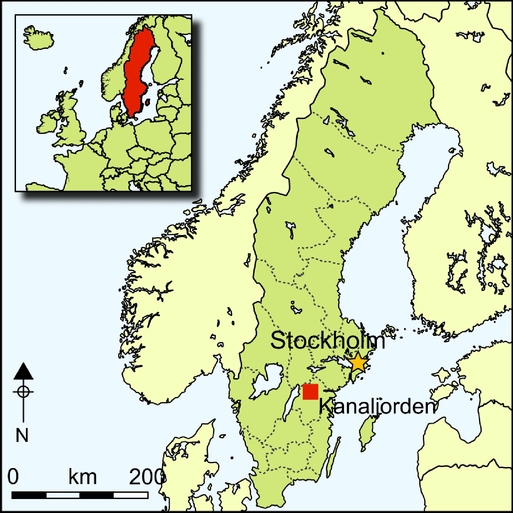
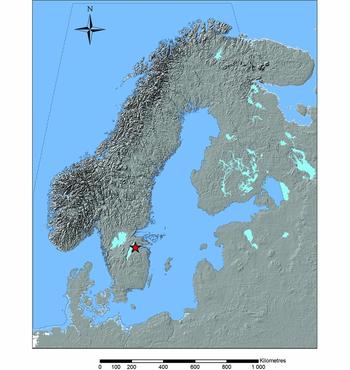
Middle and Late Mesolithic Scandinavia (c. 9000–6000 cal BP) was populated by mobile or semi-sedentary groups subsisting by hunting, fishing and gathering. Only approximately 200 human burials dating to this 3000-year period have been investigated in Scandinavia, and knowledge of socio-cultural behaviours is limited. Mesolithic mortuary practices in the region are dominated by inhumation burials, often forming clusters, such as at Vedbæk, Denmark and Skateholm, southern Sweden (Larsson Reference Larsson1988, Reference Kuijt and Lang2000; Brinch Petersen Reference Brinch Petersen2015; Sjögren & Ahlström Reference Sjögren, Ahlström, Grünberg, Gramsch, Larsson, Orschiedt and Meller2016). Of the approximately 250 known European burial sites (comprising around 2200 individuals), two-thirds have only one or two burials (Grünberg Reference Grünberg, Grünberg, Gramsch, Larsson, Orschiedt and Meller2016: 13). Occurrences of disarticulated human remains are recorded at several sites (Larsson et al. Reference Larsson, Meiklejohn and Newell1981; Lindqvist & Possnert Reference Lindqvist and Possnert1999; Brinch Petersen Reference Brinch Petersen, Grünberg, Gramsch, Larsson, Orschiedt and Meller2016; Sørensen Reference Sørensen, Grünberg, Gramsch, Larsson, Orschiedt and Meller2016). Here we discuss the site of Kanaljorden, Motala, in eastern-central Sweden, which contains unusual wetland depositions of disarticulated human and animal remains (Figure 1).
Map of Fennoscandia with a shoreline c. 7600 cal BP. The location of Kanaljorden is marked by a star. Based on a shoreline map by Lars Andersson and Tore Påsse, SGU.
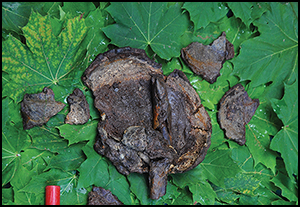
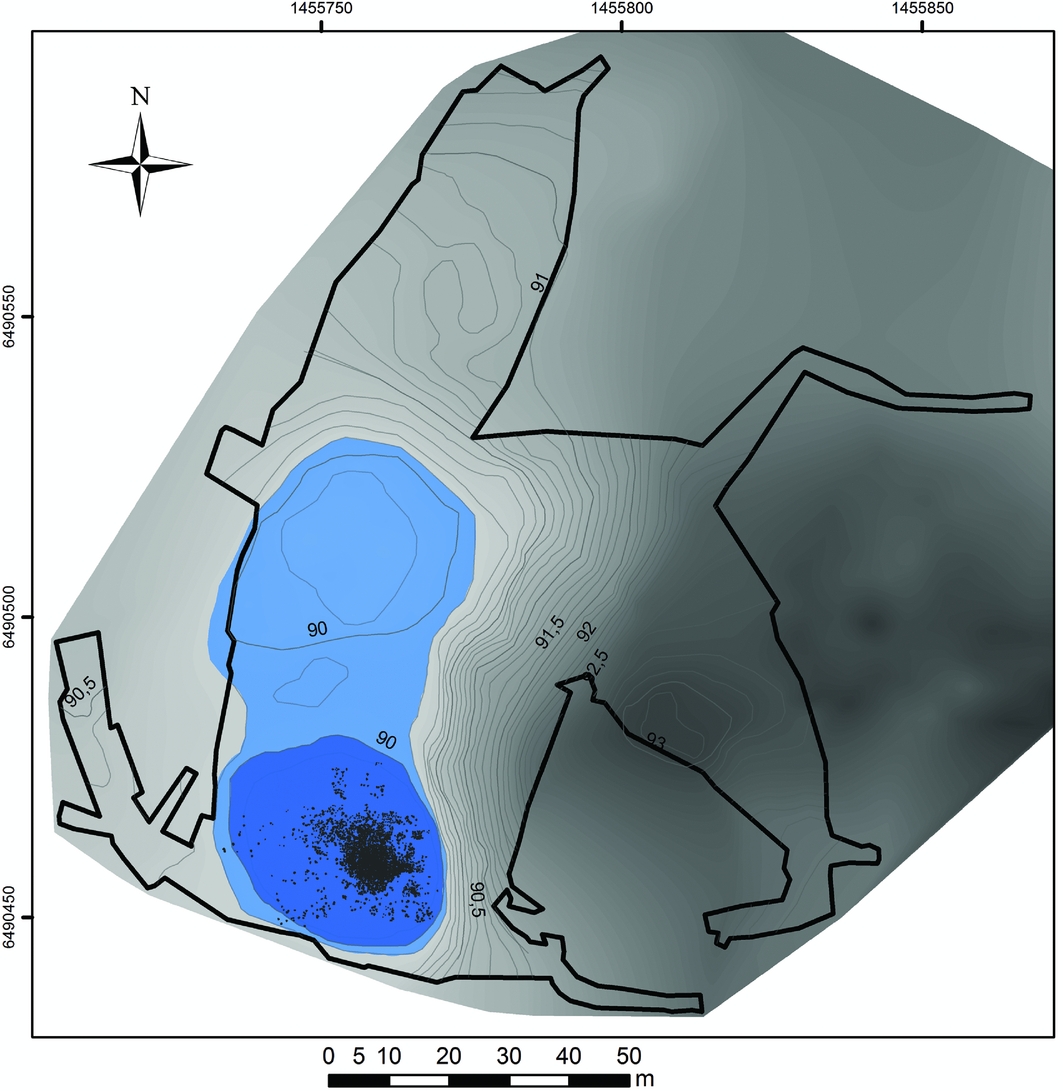
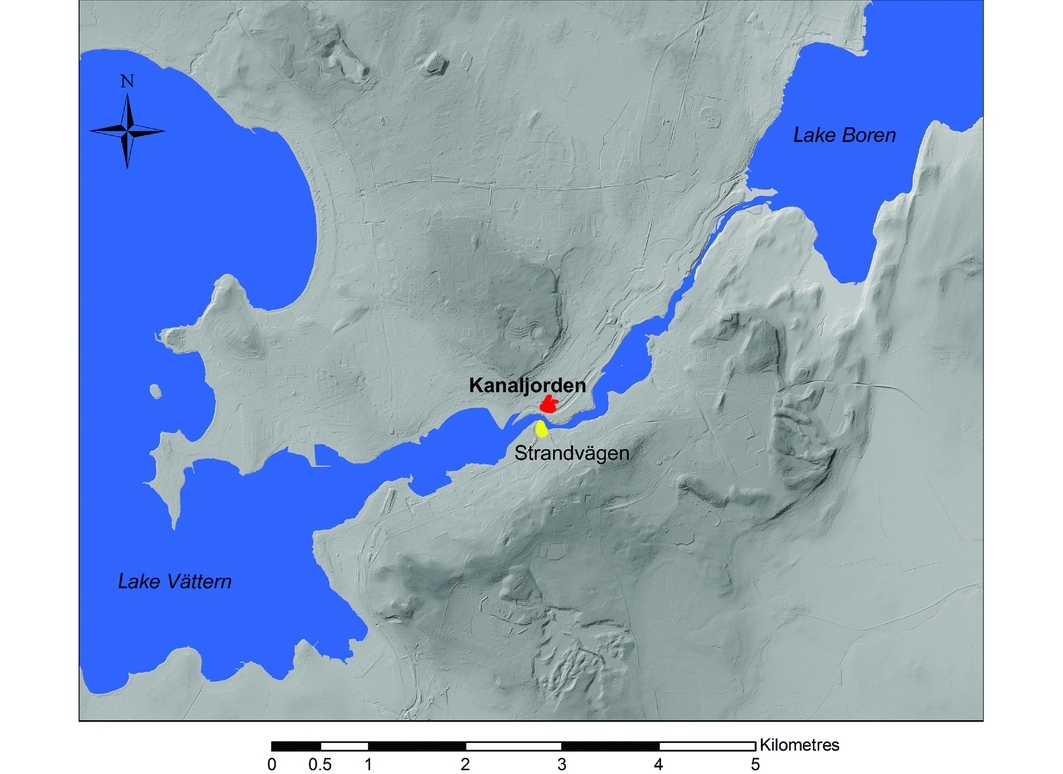
Kanaljorden is located on the margin of a small lake, close to the river Motala Ström (Figure 2). The eastern part of the site is a low hill that slopes towards a wetland, which extends to the west and north-west. Within the excavated area (black outline on Figure 2) were two small wetland basins. During c. 7700–7500 cal BP, the southern basin contained open water of about 1m in depth, while the northern basin consisted of a reed fen. The small lake in the southern basin was used for activities that included the construction of a 12 × 14m stone packing (a densely packed layer of large stones) on the bottom of the lake, and the subsequent deposition of human and animal remains in the water. Excavations in 2009–2013 uncovered this stone packing, which also included wooden stakes. On this structure, human and animal remains, as well as stone, bone and antler tools, had been deposited (Hallgren & Fornander Reference Hallgren, Fornander, Grünberg, Gramsch, Larsson, Orschiedt and Meller2016). The context is dated to c. 8000–7500 cal BP. The shores of the small lake were settled in preceding periods of the Mesolithic, but there is no evidence of subsequent habitation. There are, however, two contemporaneous settlement sites on the banks of the nearby river (Figure 3). The site on the south bank (Strandvägen) also yielded inhumation burials, as well as wetland deposits of human remains in the adjacent river (Molin et al. Reference Molin, Gruber, Hagberg, Riede and Tallavaara2014). The archaeological material from Motala reveals a society of hunter-gatherers with a broad subsistence economy that included fishing, the hunting of forest game and the gathering of wild plants, such as nuts and berries. Isotopic analyses of the human remains indicate a diet with varied protein sources, with a high proportion of aquatic resources (Eriksson et al. Reference Eriksson, Frei, Howcraft, Gummesson, Molin, Lidén, Frei and Hallgren2016). The results also indicate a degree of mobility, either logistical or residential (see Kelly Reference Kelly1983).
A model of the local topography at Kanaljorden. The black outline shows the excavated area. Map by Karin Berggren and Fredrik Hallgren.
The topographic setting at Motala, with Kanaljorden (red) to the north of the river Motala Ström, and the site Strandvägen (yellow) to the south of the river. Map by Fredrik Hallgren, digital data from Lantmäteriet (licence no. MS2012/02954), © Lantmäteriet.
Preservation conditions at Motala were good and allowed detailed analyses of the osteological material. The osseous remains consist primarily of disarticulated, unburnt bones from both humans and animals. The osteological methods used follow standard protocols and are presented in Supplement 1 (S1) in the online supplementary material. Here we discuss the results of the analysis, the depositional history and possible interpretations of the human bone, which together provide new insights into the treatment of animal and human remains. Bioarchaeological perspectives of trauma patterns have previously been used to understand different life-ways in past populations (e.g. Walker Reference Walker2001; Glencross Reference Glencross, Agarwal and Glencross2011; Judd & Redfern Reference Judd, Redfern and Grauer2012; Knüsel & Smith Reference Knüsel and Smith2014), and are applied to this unique wetland deposition to highlight aspects of social organisation.
Results
The human remains: demography
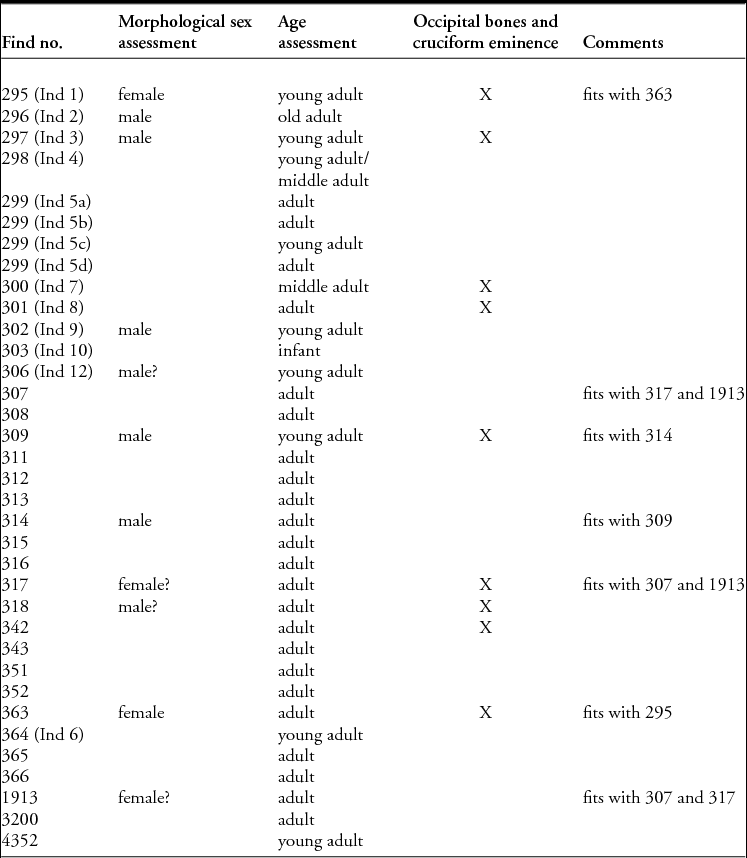
The assemblage includes 34 human elements; 19 cranial and 15 post-cranial elements (see S2). The remains of at least ten individuals—nine adults (based on the occurrence of occipital bones with a complete cruciform eminence) and one foetus/infant—were identified. The adults are primarily represented by relatively complete crania, and the infant by an almost complete skeleton. Two crania were identified as female and four as male (Table 1) (the sex assessments are in agreement with the genetic sex (S3)). As most of the crania were fragmented and incomplete, suture closure could be recorded in only two individuals. Both were male—one classified as an old adult (50+ years of age), and the other as a middle adult (35–50) (Table 1). In addition, two individuals were classified as at least of young adult age (20–35). Dental attrition could be assessed for eight elements, all indicating fully adult individuals. The length of the infant long bones suggest that they came from a foetus of approximately 36–40 weeks of age, indicating that the infant was stillborn or died soon after birth. Apart from the skeleton of the infant, all post-cranial human elements were disarticulated and came from fully developed individuals.
Demographic data of the human bone finds from Kanaljorden. (X = presence of occipital bones and cruciform eminence.)
The human remains: pathologies and trauma
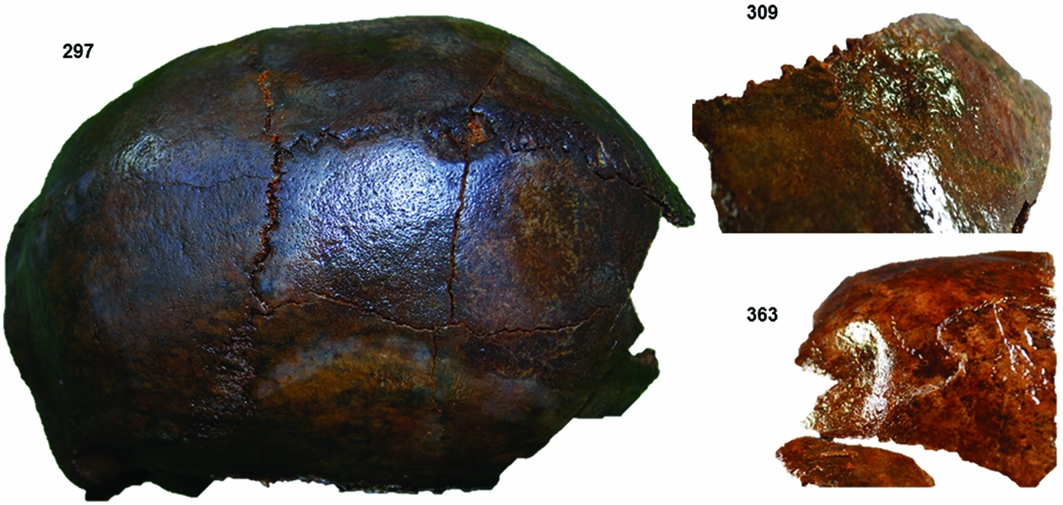
Minor pathological changes or anomalies were documented on five elements (S4). Seven individuals exhibited antemortem blunt force trauma to the head (see S4). In four of these individuals, nine round or elliptical depression fractures on the vault were documented (Figure 4). The injuries were shallow, affecting only the outer table and top section of the diploë. Additionally, healed blunt force injuries to the zygomatic process of a temporal bone, the zygomatic process of a frontal bone and a nasal bone were noted. A majority (n = 9) of the injuries were located near the top of the head, above the so-called ‘hat brim line’ (Kremer & Sauvageau Reference Kremer and Sauvageau2009). Two of the affected individuals were female, and four were male. Both females exhibited evidence of multiple instances of trauma to the back of the head (one of them also displayed a healed fracture on the right temporal bone), whereas the males exhibited a single traumatic event to the top of the head or to the face (Figure 5). The single mandible shows a healed injury to the left mandibular head. The injury may be related to trauma and dislocation of the joint.
Examples of blunt force trauma from analysed individuals. Photograph: Sara Gummesson and Fredrik Hallgren.
Location of blunt force trauma on female (grey markings) and male (black markings) crania, respectively.

Three of the male crania exhibited possible perimortem sharp force trauma (see S4). One incised wound was located on the right parietal bone parallel to the sagittal suture. The second injury comprised several shallow, linear incisions on a left temporal bone. The third potential sharp force wound was a horizontal fracture that radiated in an anterior–posterior direction on the left parietal bone. The wound was altered by postmortem damage, which partly destroyed the fracture margin. All incisions were shallow and only cut through the outer table of the bones. Postcranially, one right femur exhibited three shallow, parallel linear incisions near the popliteal surface.
The preservation of organic matter (e.g. collagen) affects the plastic response of bone to mechanical forces. Smooth perimortem fractures in fresh bone present obtuse or acute angles, while such trauma in dry bones produces transverse fractures with ragged and flaked margins (Ubelaker Reference Ubelaker, Gerdau-Radonic and McSweeney2015). Hence, the deposition of the bones in a wet environment complicates interpretations, as postmortem trauma may show similarities to perimortem trauma (Kjellström & Hamilton Reference Kjellström, Hamilton, Martin and Anderson2014). This affects the analysis of the perimortem sharp force trauma in the sample, as it does not allow for interpretations of the timing of the trauma. The cranium in which the left temporal bone exhibited sharp force incisions was, however, discovered with the right side facing upwards, reducing the probability of recovery damage as a causative factor for the trauma.
The animal remains
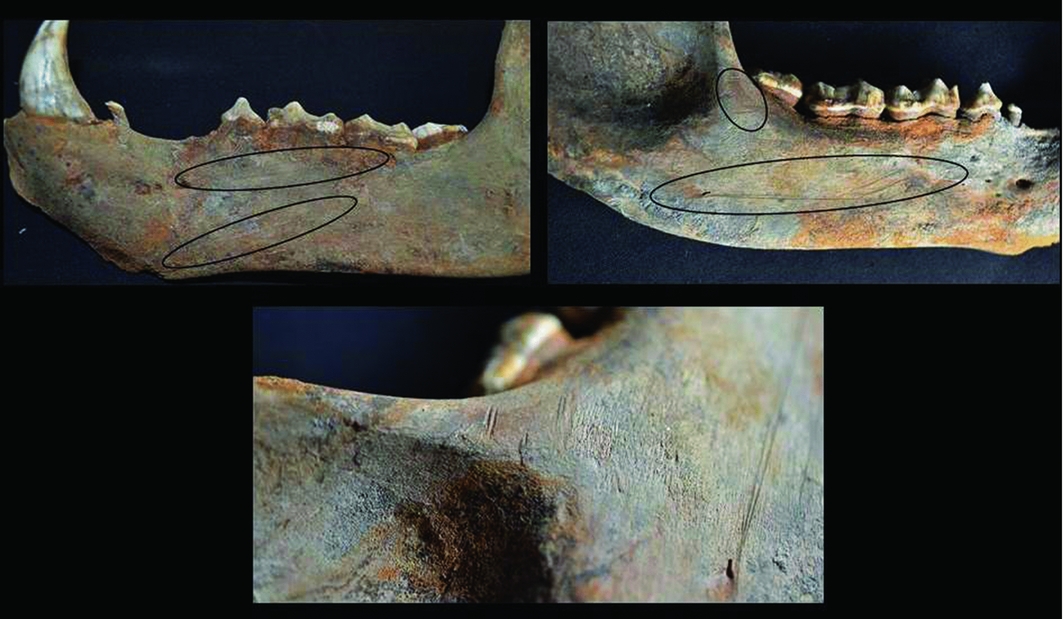
In addition to the human remains, scattered bones of at least 14 animals of 7 different species were recovered from the stone construction (see S2). Wild boar and brown bear were the most common species in the assemblage. The faunal assemblage was dominated by mandibles and post-cranial bones. Only one intact animal cranium, a badger skull with articulated mandible, was recovered. Differential element representation and observations of cut marks and fresh fractures suggest manipulation and diverse handling of the animal bodies. Perimortem sharp force trauma (butchery marks) was documented, for example, on several bear bones, indicating manipulation and disarticulation of the carcasses (Figure 6). The presence of articulated vertebrae from the lumbar region of roe deer and red deer and the cervical region of brown bear suggest varied handling of the bodies of different animals.
Cut marks on bear mandibula. Photograph: Sara Gummesson.
Taphonomy, preservation and selection
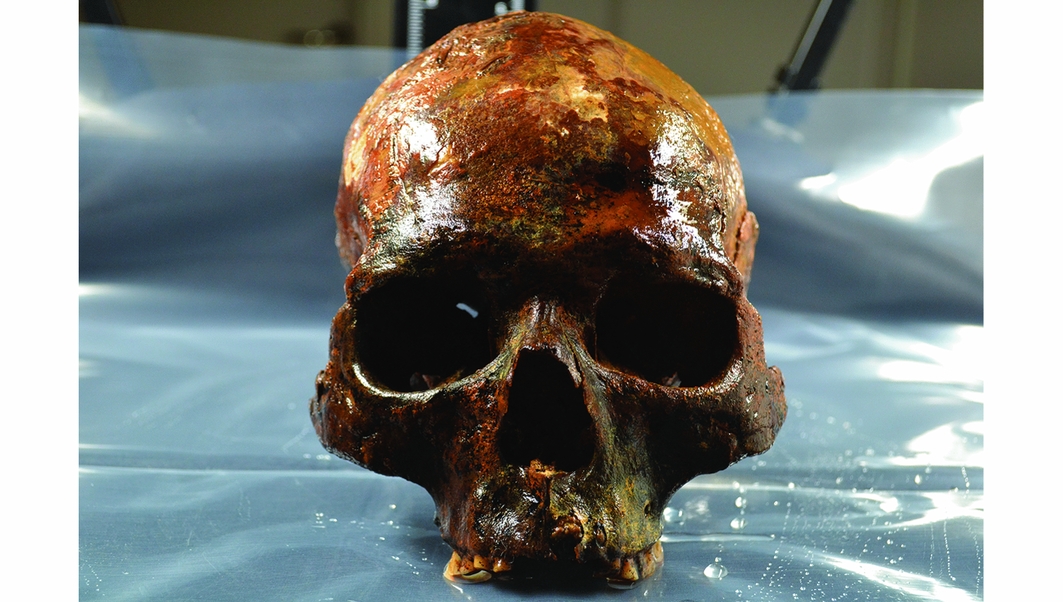
The human remains at Kanaljorden were deposited in still water. In submerged environments, bone disarticulation may result from water transportation of either complete bodies (that gradually disarticulate) or of individual elements. The skull is one of the first elements to separate from the body in water and the morphology of crania makes them vulnerable to rapid and prolonged transport. Fluvial transport often creates identifiable patterns of abrasion, particularly on the facial area, as the thin bones of the face with protruding processes are vulnerable to damage (Nawrocki et al. Reference Nawrocki, Pless, Hawley, Wagner, Haglund and Sorg1997). No such damage pattern or abrasion on the bones could be identified at Kanaljorden. Rather, the facial areas are fairly well preserved. The presence of small, thin bones, such as the nasal bone, on several of the crania indicated minimal water transportation (Figure 7).
Anterior view of crania F296 showing well-preserved facial bones. Photograph: Sara Gummesson.
The absence of mandibles (with one exception) among the human remains is notable. The articulation of the mandible is one of the first joints to disarticulate (cf. Micossi Reference Micossi1991: 51). Additionally, the mandible is robust, survives post-depositional processes well and is not easily moved by water (Nawrocki et al. Reference Nawrocki, Pless, Hawley, Wagner, Haglund and Sorg1997: 534; Bello & Andrews Reference Bello, Andrews, Gowland and Knüsel2006). Mandibles are common in the faunal assemblage. Thus, the absence of human mandibles is probably a consequence of intentional anthropogenic depositional practices.
The almost complete lack of sharp force trauma suggests that lower jaws were not forcibly removed, but were already disarticulated before deposition. This could have been achieved by earth-burial or exposure to the elements (although shielded from scavengers, considering the lack of gnaw marks). A possible exception is a disarticulated cranium that contained remnants of brain tissue, suggesting deposition shortly after death (cf. Doran Reference Doran2002; O'Connor et al. Reference O'Connor, Ali, Al-Sabah, Anwar, Bergström, Brown, Buckberry, Buckley, Collins, Denton, Dorling, Dowle, Duffey, Edwards, Correia Faria, Gardner, Gledhill, Heaton, Heron, Janaway, Keely, King, Masinton, Penkman, Petzold, Pickering, Rumsby, Schutkowski, Shackleton, Thomas, Thomas-Oates, Usai, Wilson and O'Connor2011). As this skull also lacks the mandible, it was probably removed by force. For this particular find, however, the preservation of the bone was less favourable, precluding the possibility to identify cut marks. The incidence of sharp force trauma in secondary funerary practice has been proved to be generally low (Bello et al. Reference Bello, Wallduck, Dimitrijević, Živaljević and Stringer2016). The low incidence of identified sharp force trauma at Kanaljorden should be viewed in light of this general pattern.
Seven of the disarticulated cranial elements could be refitted, even though they were recovered more than 4m apart. These finds originate from three individuals: two females and one male. Parts of one female cranium were recovered in three areas of the stone packing, and the temporal bone was recovered inside the cranium of the other female.It is possible that intact skulls may have moved in the rather calm water, as air pockets inside the skulls could have caused them to float (Boaz & Behrensmeyer Reference Boaz and Behrensmeyer1976). Conversely, the wooden structures might have hindered movement after deposition.
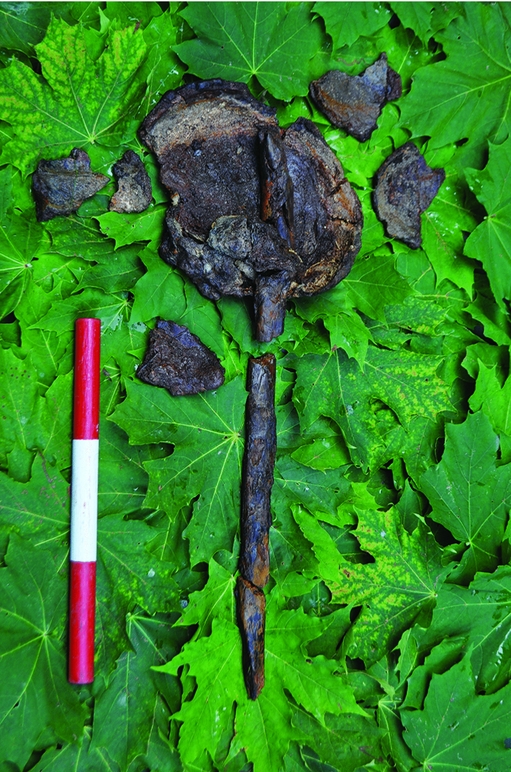
Favourable preservation conditions allowed the recovery of wooden objects. The most spectacular finds are the two wooden stakes recovered from inside two human crania. One stake was found sticking out of a cranium (Figure 8). The stake is intact, 25mm wide and 0.47m long, of which the last 0.2m were embedded in the cranium. The opposite end of the stake is pointed. The other stake, found inside another cranium during post-excavation examination in the laboratory, was broken, with the preserved part lodged in the skull. In both cases the stakes were inserted through the foramen magnum, reaching all the way to the inner tabula. These finds show that at least two of the crania were mounted. Additionally, 400 intact and fragmentary wooden stakes were recovered, some of which may similarly have been used to mount objects (e.g. skulls, animal remains or artefacts) that have since fallen off; others are interpreted as the remains of wooden constructions, such as partitions or fences.
Cranium F318 with wooden stake. Photograph: Fredrik Hallgren.
Discussion
The discovery of selected remains of ten Mesolithic individuals deposited on a man-made stone structure underwater is unique. The find raises questions concerning the life-history and final fate of the individuals, which may be discussed from the osteological parameters in combination with their depositional and taphonomic situation.
The incidence of trauma at Kanaljorden is high, as the majority of the crania exhibited healed blunt force trauma. The injuries affected both sexes; two females exhibited multiple traumas directed towards the back of the head and the right side. Males exhibited only a single occurrence of trauma, located on the top or the front of the skull. Healed head injuries of a similar type are known from several northern European Mesolithic populations (cf. Hutton Estabrook Reference Hutton Estabrook, Allen and Jones2014). There are many possible explanations for the trauma patterns: accidents, interpersonal violence, forced abduction, spousal abuse, socially regulated non-lethal violence, or warfare (cf. Martin & Frayer Reference Martin and Frayer1997; Martin et al. Reference Martin, Harrod and Fields2010; Hutton Estabrook & Frayer Reference Hutton Estabrook, Frayer, Knüsel and Smith2013; Allen & Jones Reference Allen and Jones2014). The majority of the antemortem blunt force trauma at Kanaljorden was located above the hat brim line, suggesting violence rather than accidental injury (Kremer et al. Reference Kremer, Racette, Dionne and Sauvageau2008). Weapon identification is not possible and the interpretation is not clear-cut. To discriminate between falls and blows in modern settings, similar blunt force trauma needs to be combined with other criteria associated with soft tissue and the post-cranial injury patterns (Kremer & Sauvageau Reference Kremer and Sauvageau2009; Guyomarc'h et al. Reference Guyomarc'h, Campagna-Vaillancourt, Kremer and Sauvageau2010). Although non-aggressive explanations cannot be ruled out, the number of crania with depressed fractures (some with multiple injuries) suggests some type of violence, rather than accident, as the mechanism of injury. Additionally, one of the females exhibits signs of osteoarthritis in the right temporo-mandibular joint, possibly secondary to a dislocation of the meniscus, and one of the males has a somewhat deformed nasal aperture (see S4). These skeletal changes could also tentatively be consequences of blows to the jaw and face as a result of violence.
If violence can be accepted as the causative agent, several culturally governed practices must be considered. The trauma pattern could be acknowledged as both repetitive and perhaps gender-related, as the injuries to the males are at the top of the skull, whereas those to the females are clustered at the back. In a socially stratified society, this trauma pattern could imply that the victims represented a special stigmatised group (e.g. slaves). Slavery is, however, rare among mobile hunter-gatherers (Fitzhugh Reference Fitzhugh2003). It would also have been a logistical challenge for the low population density hunter-gatherers of Mesolithic central Scandinavia to keep captives for any length of time. One alternative would be to view the trauma as an outcome of inter-group violence; for example, raiding and warfare—both common occurrences among hunter-gatherers (Roscoe Reference Roscoe, Allen and Jones2012; Allen & Jones Reference Allen and Jones2014). The gender-related trauma pattern (front/top vs back/side) is reminiscent of patterns observed among North American prehistoric hunter-gatherers, which have been interpreted as a result of different roles and behaviour in combat (Chatters Reference Chatters, Allen and Jones2014: 76). This could be associated with how individuals of different gender and age may play different roles in a combat situation (Roscoe Reference Roscoe2009: 92).
The severity of the recorded injuries is difficult to evaluate on a personal level. The gravity of cranial trauma is most often related to endocranial damage (Wilkinson Reference Wilkinson, Martin and Frayer1997: 33). Nevertheless, it is possible that the injuries had an impact on the surviving individual. Martin et al. (Reference Martin, Harrod and Fields2010) emphasise that healed cranial depression fractures are important, as violence to the head is a most effective way of subduing an opponent or victim. Furthermore, repeated non-lethal trauma to the head will cause brain damage and neurological trauma that affects functions such as speech, memory, vision, behaviour and motor control. Such injuries could make the victim prone to more violence (i.e. injury recidivism) (Alghnam et al. Reference Alghnam, Tinkoff and Castillo2016). The female with multiple injuries may be interpreted as having belonged to an at-risk group particularly exposed to violent acts. Marks of violence need not, however, have negative connotations, as wounds can be a source of revered status (Herdt Reference Herdt1987: 33, Chagnon Reference Chagnon1992: 191–92). In traditional societies, medical disorders caused by head trauma may be interpreted as an altered state of consciousness, a gift that gives a special ability to commune with spiritual entities (Kaplan Reference Kaplan2006). Given the lack of complete skeletons, questions regarding post-cranial trauma patterns, child and adult health, and potential disabilities must remain unanswered. It is worth stressing that cause of death cannot be identified for any of the individuals.
Element representation at Kanaljorden raises questions of body manipulation and deposition. The intentional removal of mandibles and the separation of the skull from the body stand in contrast to reported Mesolithic burial practices in Northern Europe, where bodily integrity was often respected after interment in primary earthen burials; thus an unaltered personhood was represented (Nilsson Stutz Reference Nilsson Stutz2003: 345–46, 350; Zagorskis Reference Zagorskis2004; Oshibkina Reference Oshibkina2008; Butrimas Reference Butrimas2012; Nilsson Stutz et al. Reference Nilsson Stutz, Larsson and Zagorska2013; Liedgren Reference Liedgren2014; Brinch Petersen Reference Brinch Petersen2015; Gummesson & Molin Reference Gummesson, Molin, Grünberg, Gramsch, Larsson, Orschiedt and Meller2016; Tõrv Reference Tõrv2016). In Latvia, however, there are also examples where transformations of the face of the dead have been identified (Nilsson Stutz et al. Reference Nilsson Stutz, Larsson and Zagorska2013). In other cases, ‘open’ or covered burials have been reported (Brinch Petersen Reference Brinch Petersen2015: 93; Terberger et al. Reference Terberger, Kotula, Lorenz, Schult, Burger and Jungklaus2015). These may be seen as examples where the decomposition (and transformation) of the corpse has not been hidden. There are also examples where specific bones are missing from graves (Nilsson Stutz Reference Nilsson Stutz2003: 310), a pattern that is often explained with reference to taphonomy or secondary disturbances. While this may be true in many instances, it could also mask a practice of manipulation, interaction and removal of buried remains (Andersson Reference Andersson2016). Loose human bones have been recovered from many Mesolithic sites in Northern Europe (Gray Jones Reference Gray Jones2011). These have been interpreted as remains of elaborate funerary practices where bodies were defleshed and selected bones were intentionally deposited. It has long been recognised that these may represent different aspects of the handling of the dead (Larsson et al. Reference Larsson, Meiklejohn and Newell1981; Lindqvist & Possnert Reference Lindqvist and Possnert1999). Similar practices have been reported from a series of Mesolithic sites in Serbia and Romania, and from Dudka in Poland (Borić Reference Borić and Borić2010; Chapman et al. Reference Chapman, Wallduck, Triantaphyllou and Gligor2014; Bugajska Reference Bugajska2016).
There are also several archaeological examples of skull deposits where decapitation has been documented (Frayer Reference Frayer, Martin and Frayer1997; Bazaliiskiy & Savelyev Reference Bazaliiskiy and Savelyev2003; Orschiedt Reference Orschiedt, Parker Pearson and Thorps2005; Schulting Reference Schulting, Gowland and Knüsel2006). Kanaljorden differs from those sites in that there are no indications of decapitation or perimortem sharp force trauma. Ceremonial deposition of skulls is well known from the archaeological, historical and ethnographic record. There are examples of the handling and interaction of skulls of relatives in secondary burial rituals, and also examples of the display and deposition of skulls as trophies of slain enemies (Hoskins Reference Hoskins1996; Wiessner & Tumu Reference Wiessner and Tumu1998; Kuijt Reference Kuijt2008; Bonogofsky Reference Bonogofsky2011; Armit Reference Armit2012). Sometimes trophy skulls are circulated as part of exchange systems, or are reclaimed by relatives and given a dignified burial (Hoskins Reference Hoskins1989; Lawrence Reference Lawrence1994: 275).
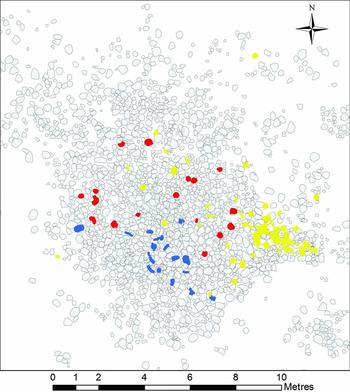
The contextual circumstances at Kanaljorden indicate that the deposits were structured and consciously arranged. The events do not appear to be random, but rather a series of conscious choices. At least two of the crania were mounted on wooden stakes. There are indications of a relatively short exposure period for at least part of the assemblage, suggested by the preserved human brain and the presence of articulated parts of animal bodies on the site. The deposition of animal remains should most probably be seen as part of the same depositional event(s), and there are indications of a strict spatial organisation. The human remains were recovered from the central part of the stone packing, whereas the majority of the faunal remains were recovered from the southern part, and with some degree of separation of different species (Figure 9). Hence, the deposition can be described as being carefully planned and executed, from the construction of the underwater stone packing to the spatially separated depositions of curated human and animal remains (Hallgren et al. in press).
Spatial distribution of bones from humans (red), brown bears (blue) and wild boar (yellow) on the stone packing.
Conclusion
The finds of human crania and animal bones at Kanaljorden demonstrate complex depositional practices. The full evaluation of the practices is challenging, although it is clear that human and animal bodies were manipulated prior to deposition. The osteological analysis of the human remains reveals a demographic selection favouring adult individuals, of whom several received trauma to the head before death. We have recognised a sex-related, non-random, trauma pattern, where non-lethal forces were directed to the back of the head of women and to the top of the head of men. The fact that the majority of the individuals show healed injuries seems to be more than a coincidence and implies that they were specifically chosen for inclusion in the deposition. Soon after death, or later, their crania were brought to a small lake and deposited on a wood and stone structure in the water. The remarkable circumstances of the disarticulated bones at Kanaljorden raise the question of whether some of the loose human bones from other Mesolithic sites, or stray finds of human bones from lakes and bogs, elsewhere in Scandinavia, could be the remains of similar complex rituals.
Supplementary material
To view supplementary material for this article, please visit https://doi.org/10.15184/aqy.2017.210



