


A TALE OF FOUR CONTINENTS
Comparing Italy and Brazil on the grounds of the authoritarian quality of their regimes is hardly new. In the decades before 1945, the two countries lived with authoritarian governments and several studies have examined the circulation of Italian Fascist ideas and the myth of Mussolini's personality in Latin America.Footnote 1 Italian Fascism influenced the development of the Brazilian authoritarian system and represented one of the pillars of the so-called Vargas Era between the Revolution of 1930 and end of World War II. Within this comparative framework, attention has also been drawn to agricultural and urban issues.Footnote 2 Building on this comparative perspective, our paper shifts the focus from the similarities between Benito Mussolini's and Getúlio Vargas’ regimes to examine how authoritarian governments in Italy and Brazil, in different time periods, have approached the specific issue of soil fertility and produced “improved” soils, from both political and technological perspectives. In other words, while the development of fascist regimes has been a hallmark of comparative analyses of the history of these two countries, we stretch this correlation further by extending its timeframe and redirecting its scope.
This paper will address a set of interrelated research questions: What kind of soil-based socio-ecologies have mirrored the twentieth-century authoritarian regimes? What can be historically inferred about dictatorships by analyzing trends of soil fertility? How did scientific expertise and political propaganda envision and transform arid soils in order to nurture and serve dictatorial power? Can we consider fertility an indicating factor in measuring the success or failure of both an ecological scheme and a political regime?
We argue that this exploration of the role played by agriculture in Italy and Brazil under the Fascist and civil-military dictatorships, respectively, demonstrates the ubiquitous, co-constitutive relationship between soil fertility and all dictatorial regimes, no matter when or where they unfold. To illustrate and implement our argument we rely on secondary literature and analyze two precise wheres and whens: North Libya under Italian Fascist rule from 1922–1943 and Central Brazil under the civil-military dictatorship from 1964–1985.
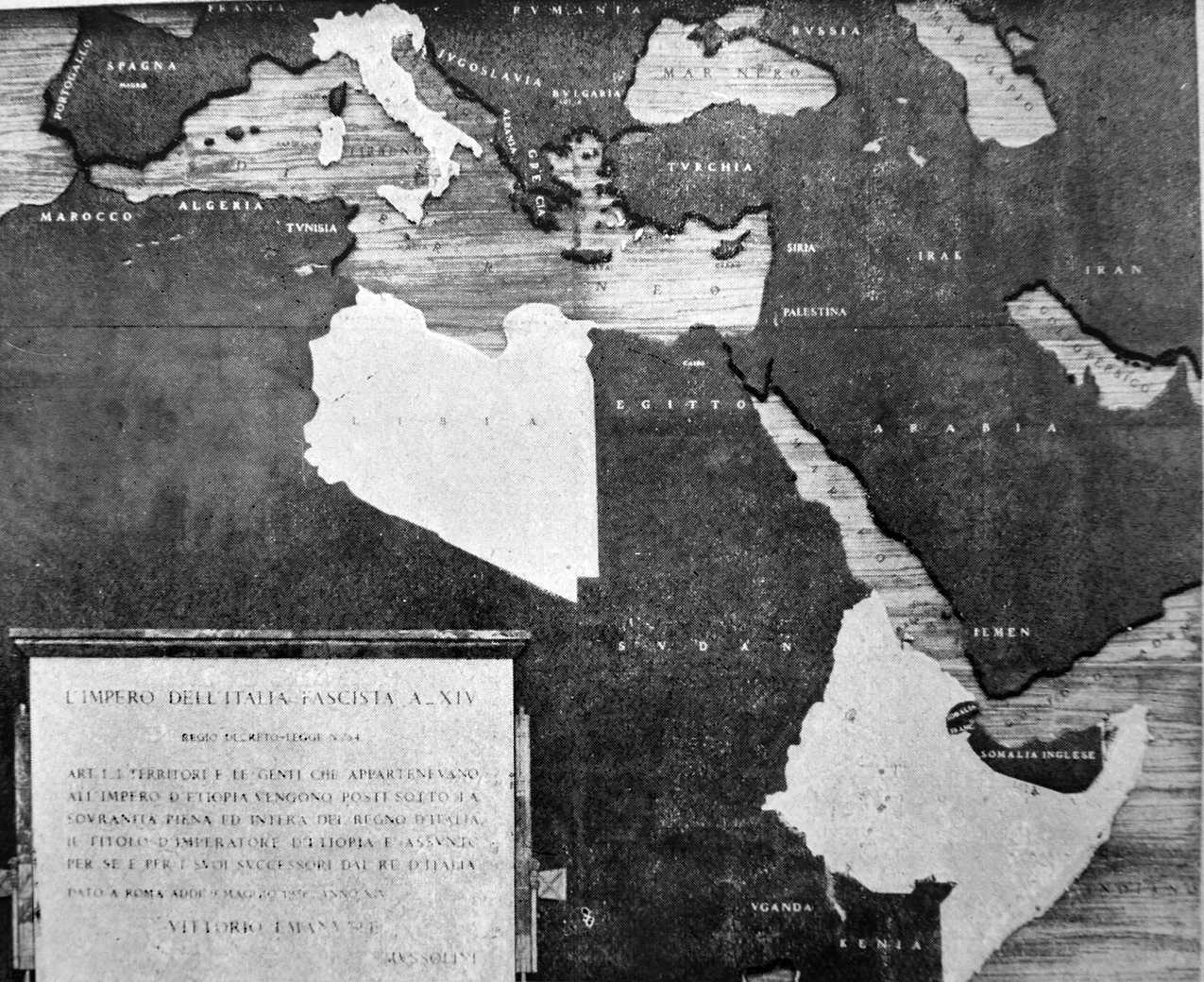
The coastal areas of Tripolitania and Cyrenaica (part of modern-day Libya), especially after the 1932 military “reconquest,”Footnote 3 provide an excellent case for demonstrating how land and politics can intertwine. Firstly, in colonizers’ portrayals, the building of a fascist Italian Libya made a case for a state-driven demographic colonization via agriculture. Secondly, Libya speaks to fascist politics in general—encompassing imperial ambitions—since it synthesized internal and external colonization:Footnote 4 it was an in-between space, neither fully a colony nor fully a metropolitan province. On one hand, it was a venue for targeting the local population with brutal attacks, segregation, and acculturation practices based on racialist rhetoric and ideals of white Italian supremacy.Footnote 5 Yet it was also considered the “fourth shore” of Italy in the Mediterranean Sea,Footnote 6 its legal and institutional status changed in early 1939 when it became a province of the Italian Kingdom,Footnote 7 and it embodied a space dedicated to the creation of a pure and committed Fascist community from scratch (see image 1).Footnote 8
Marble map of the Italian Empire in 1936 on display, during the Fascit period, on one side of Via dell'Impero in Rome (the modern-day Via dei Fori Imperiali). Source: “La parola e l'esempio,” Nazione e Impero. Rivista mensile di opere pubbliche, bonifica, colonizzazione Aprile-Maggio 4–5 (1937-XV): 4–8, 8, held in the Biblioteca Nazionale Centrale di Roma.
Libya is also crucial for a third reason: it was generally unsuitable for agriculture. A pioneering survey of Libyan soil had come out in 1912, when Italy proclaimed its sovereignty over the African country after the Italo-Turkish war. This brief and cautious study directly addressed soil properties with the intent to inform colonial agricultural development policy. Libyan soils’ texture, structure, porosity, chemistry, and color all warned of a country almost entirely covered by desert sand. Available information about the frequency of rain or presence of underground water seemed anything but promising, and in terms of plant varieties and surface only limited valorization plans were deemed feasible.Footnote 9 During this early Fascist period, in the eyes of Italian colonists Libya remained mostly arid desert.Footnote 10
The dream of a green colony together with the transfer of a mass of white colonists from Italy took shape in the late 1920sFootnote 11 and was implemented in the 1930s. In 1932, the government established a sector-specific agency to lead the agricultural reclamation and demographic colonization of North Africa. In 1933 the first four settlement villages were established with the arrival of more than 2,200 colonists, and in 1938–1939 the Agency for the Colonization of Libya and the National Fascist Institute for Social Security supported intensive programs of demographic colonization that allowed for a few dozen rural villages and the arrival of about thirty thousand white colonists.Footnote 12 It was not a coincidence that this last injection of “farmer-warriors,” the so-called “army of the thirty thousand,” occurred just before Italy entered World War II. Libya was the Italian, or better, Axis outpost along the African coast.Footnote 13 Despite propaganda and enormous financial resources, the Italian land transformation scheme covered at its peak an area of just 89,970 hectares out of Libya's total surface area of some 1,759,541 square kilometers.Footnote 14
On the other side of the world, about two decades later, we find a comparable case of inner colonization and transcontinental exchange of soil expertise under authoritarian rule. In Brazil during the civil-military dictatorship (1964–1985), the neotropical savannah represented “one of the great frontiers of our time.”Footnote 15 The way to the Green Revolution was paved by the expansion of agriculture, accelerating population growth, invigorated plantations and processing industries, increased national exports, and uneven international relations.Footnote 16
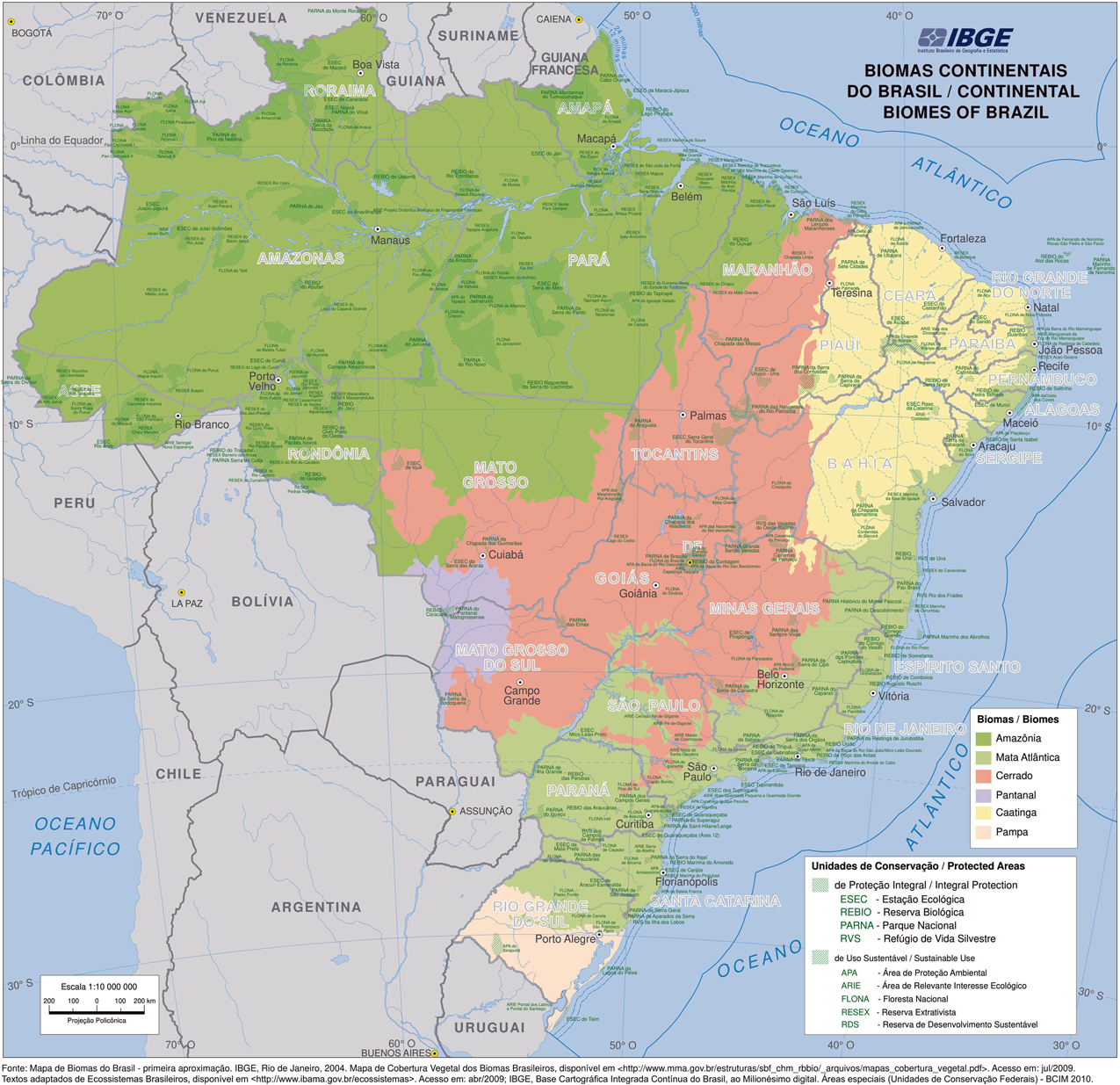
A first decisive moment for the occupation of the inner regions came when the capital city was transferred from Rio de Janeiro to Brasília in 1960 and the interior was included in the national modernization project and the development of the great Brazilian West.Footnote 17 In the early 1970s, a second transformative factor entered the picture: the international oil crisis and an internal diminution in food supplies contributed to yet another push for the transformation of the native Cerrado into “the breadbasket of the world.”Footnote 18 During that decade, natural scientists developed an interest in the great plateau of Central Brazil and its soil, vegetation, and production potential.Footnote 19 Agrarian scientists tested and used fertilizers to neutralize the effects of soil acidity and soil-related constraints and financial credit and technical assistance programs helped to achieve high yields.Footnote 20 The core and more fertile areas of Brazil's center-western savannah (the Cerrado biome), covering around one-fifth of the nation (about 2,045,000 square kilometers), changed dramatically.Footnote 21
Over about twenty years, in a context of rising international technological and scientific cooperation with the United States and emerging global markets, the processes of occupying and valorizing these vast areas, once considered “demographic vacuums,” was achieved. The government's propagandistic claims that it would provide landless families with land and harness wastelands to boost national prosperity seemed to become reality.Footnote 22 “The conquest of the Cerrado”Footnote 23 was interwoven with the “conquest of the state” (see image 2).Footnote 24
Biome Map of Brazil. Source: Instituto Brasileiro de Geografia e Estatística https://portaldemapas.ibge.gov.br/portal.php#homepage (last accessed 19 Nov. 2020).
These two wheres and whens share more than overarching development schemes and types of political regime. Latin American and African red soilsFootnote 25 became a means to build consensus and impose racial supremacies, functioned as a material place to resolve geopolitical tensions and seek international alliances, and served as a laboratory to test authoritarian scientific and technological capabilities.
However, the two situations differed widely in several important respects. The scale of farming modernization in the Cerrado dwarfed that in the Libyan settlements, which at their peak covered only 0.2 percent of the annexed territory.Footnote 26 Further, modernity was performed differently in each in terms of symbols, discourses, and technoscientific and government apparatuses. In Libya, the project of societal transformation overshadowed the goal of economic profit, while in Brazil the latter gained momentum as the government began the conquest of the Cerrado. Scholars of Italian colonialism have stressed that Fascism succeeded more in creating a colonial mind-set and a long-lasting narrative of settler colonialism than in achieving any large-scale transformation that was profitable over the long-term.Footnote 27 In Brazil, by contrast, the heartland regions of Goiás and Mato Grosso definitively became “agricultural states” that increased the country's role in the global marketplace.Footnote 28
Via differences and similarities, then, these two soil systems crystallized complex dictatorial social organizations. The Libyan arid and semi-arid regions from 1922 to 1943 and the Brazilian savannah from 1964 to 1985 represent two different archetypes of agricultural-political relations that lend themselves to an in-depth, comparative exploration of the nexus between soils and societies, and particularly between soils as technical artifacts and authoritarian societies.
This article engages with the development of an environmental history of soils and seeks to contribute to the ongoing dialogue between environmental history and science and technology studies (STS). It is grounded in historiographical debates in English, Italian, and Portuguese, and draws from primary sources from the Rockefeller Archive Center in New York, the Archivio Centrale dello Stato in Rome, and several Brazilian and Italian library collections: Epagri Library in Santa Catarina, the EMATER collection of the Empresa Brasileira de Pesquisa Agropecuária (Embrapa) in Belo Horizonte, the Biblioteca da Presidȇncia da República do Brasil, the Polo Bibliotecario Parlamentare Italiano, and the Istituto Agronomico per l'Oltremare in Florence.
PREPARING THE GROUND
The argument that the study of soils can unveil societal changes over time appeared in the early 1970sFootnote 29 and has been a feature of environmental history ever since. Environmental history officially emerged as a discipline in 1979, when Donald Worster published Dust Bowl: The Southern Plains in the 1930s, one of the most influential works about the nexus between economic and ecological failures in modern societies. As the title suggests, the main character in Worster's reconstruction is soil, but in the particular texture of dust.Footnote 30 Despite its pioneering and founding role in the field, the history of soils has been perhaps the most neglected subject within environmental history. Over the last decade, John R. McNeill and Verena Winiwarter have provided insightful reflections on the interactions between soils and societies. Agricultural communities, as well as industrialized societies, and their social structures, economic prosperity, and political power are rooted in soil ecosystems, and they depend on their capacity to create and/or maintain a certain level of productivity. “Everywhere, long-term economic trajectories, the ebb and flow of political power, the waxing and waning of population, rested on the successful management of soil nutrients. For want of nitrogen, many a kingdom was lost.”Footnote 31
The search for how to successfully manage soils recurs in many twentieth-century dictatorial regimes and to this ecological pursuit dictatorships have tied socioeconomic systems of oppression and modernization. One of the most explored attempts to reorganize society through investments in rural infrastructure, increasing soil productivity, and establishing rural settlements in marginal areas unsuitable for agriculture was the “Blood and Soil” ideology elaborated by R. Walther Darré, Minister of Agriculture under the Nazis from 1933 to 1942.Footnote 32 A comparable “ideology of the land” materialized in three Portuguese initiatives launched by the fascist New State: the Wheat Campaign (1929), the Irrigation Plan (1935), and the Afforestation Plan (1938). Tiago Saraiva noted how, more generally, this ideology expresses the reactionary element at the core of any fascist national modernism; “projects intended to make the national soil feed the national body” were the backbone of what he defines as “the paradox of reactionary modernism.”Footnote 33 In socialist counties, too, were found peasants tied to their land, state-owned economies, agricultural mechanization, and considerable progress in increasing the agricultural output.Footnote 34 The Soviet 1920s New Economic Policy forged a class alliance between the Party and the peasantry, allowed Lenin to consolidate the communists’ hold on the country, and facilitated a rebound in economic production.Footnote 35 Since only a small portion of the USSR had the combination of soil, precipitation, and temperature required for low-cost and non-irrigated agriculture, in 1948 Stalin announced a state-centered program to reverse ecological degradation, a grandiose plan to construct 5.7 million hectares of forest in the Russian south.Footnote 36 Khrushchev's agrarian policies were instead directed toward the vast prairies of the East, with the launch of the “virgin land program.”Footnote 37
While soils anchored socio-environmental policies, they were turned literally into testing grounds, which forged a second essential bond between economic policies and scientists. Science in Spain during Francoism (1939–1975) supported and developed together with autarkic plans,Footnote 38 and studies of Spanish agriculture have documented the coproduction of corporatism and scientific innovations.Footnote 39 Regarding the left-wing side of the political spectrum, Sigrid Schmalzer has reconstructed the emergence of the Chinese “scientific agriculture” during the Mao era between 1960 and 1980 and its entanglements with the Cultural Revolution, different social groups, and China's economic network. Through the promotion of new machines, seeds, and chemicals, the Communist Party promoted both the green and red revolutions.Footnote 40
This second bond brings us to a subsequent grounding aspect of environmental history as a discipline: the opportunity to bridge the gap between sciences and humanities,Footnote 41 or more precisely, to historicize science and technology. The conceptualization of soils as a materialization of political propositions and technological manipulation positions this research at the overlap between environmental history and STS, thus helping to foster the burgeoning theoretical dialogue between these fields. The recent volume New Natures: Joining Environmental History with Science and Technology Studies, edited by Dolly Jørgensen, Finn Arne Jørgensen, and Sarah B. Pritchard, highlighted how conceptual STS tools can unpack the construction of knowledge and the development of technology as social processes, helping us to deepen and transform our understanding of past human-natural interactions and thereby gain a richer understanding of how historical actors have constructed, perceived, contested, and reshaped the environment.Footnote 42
Both of the “new soils” examined here represents what Pritchard calls an “envirotechnical system,” a regime defined, justified, and maintained by and across “institutions, people, ideologies, technologies, and landscapes.”Footnote 43 Each such system expresses a specific combination of nature, culture, power, and science and technology, and via these “technopolitical” designs of soil fertilization we can read soils’ and societies’ co-productive relationship.Footnote 44 The soil appears here as organically tied to the body of the nation—engineering soils means engineering societies. Material manipulations of soils also make the ideological coherence of regimes possible since soil becomes a way of constituting the organic body of the nation, not only by feeding it but also through the work of experts and the labors of peasants and the common ground that elites and masses are given to mobilize and serve authoritarianisms. Authoritarian soils synthesize corporatism and economic dirigisme, mobility schemes and forced displacement, social and political consensus, geopolitical power shifts, scientific and technological advances, racialized social relationships, and radical transformations of natural environments. Although the two cases we present here exhibit differences, soil was crucial to both, and both highlight how soil is malleable and can be materially mobilized for multiple projects.
Science- and technology-based state schemes are indicators of “the culture and politics of modernity.”Footnote 45 We share Lars Denicke's definition of modernization as “the attempt of a nation … to upgrade its infrastructure to achieve a status that would put it on equal terms with the great powers.” In order to become modern, Italy adopted a pre-World War II strategy, colonialism, whereas Brazil adopted the central concept of Cold War technopolitics of modernization, globalism.Footnote 46
What follows will lay out how Libyan deserts and Brazilian savannahs, along with their communities, were transformed into authoritarian soils. Echoing Tiago Saraiva, we will look at soil as a “thick thing” able to encompass multiple meanings—scientific, cultural, social, political, and economic—in the production of historical accounts. In doing so, we do not simply consider Italian fascism and Brazilian civil-military dictatorship as space-time stages in which certain soil transformations took place; we focus on ways in which soil-related discourses and techniques “became constitutive” of totalitarian states and embodied authoritarianisms.Footnote 47
In the making of Italian Libya, the transformation of Libyan desert represented an upgrade of cultural, ecological, and social infrastructures that allowed Italian Fascism to complete its self-identification with a modern regime via colonization.Footnote 48 Studying Brazil's developmentalist state draws one into a daunting maze of acronyms of state, para-state, foreign, and private organizations and programs built upon economic crisis, Weberian bureaucracy, and collaborations between business, scientific expertise, and authoritarian institutions.Footnote 49
AN ECOLOGICAL JOURNEY INTO FASCIST MODERNITY: BLACK SHIRTS IN A VERDANT LIBYA (1922–1943)
In 1936, the Fascist Institute of Agricultural Techniques and Propaganda (Istituto Fascista di Tecnica e Propaganda Agraria) and the National Fascist Union of Agrarian Technicians (Sindacato Nazionale Fascista dei Tecnici Agrari) organized their first joint congress to appraise Italian agricultural production and discuss methods to increase it. Soil was, of course, one of the main topics of conversation. In a speech there, parliamentarian and agrarian science expert Emanuele De Cillis addressed the issues grounding a Fascist definition of soil—or a definition of Fascist soil—as a “dynamic” compound and introduced the “organic” theory of fertility. “The ground is a medium for uncountable activities, incessant transformations, which affect the life, growth, and product of a plant … thus the fertility is that whole array of actions that the earth itself exerts over vegetables.” In detailing his theories, he drew a comparison with the pre-Fascist period. Soil fertility during the Italian liberal regime (1861–1922) had been an isolated and confined objective achievable only through fertilization, but during the 1920s and 1930s technicians had reinterpreted it as a complex restorative interaction between organic remains, clay, rock particles, plants, chemical and natural substances, and living organisms. To increase production—the measurement of fertility—soil should be the perfect hygienic home for its flora and any noxious or offensive elements should be removed. On the other hand, roots should attach to the ground, breathe underground, and convey water and nourishment to the rest of the plant. In this approach, the creation or restoration of fertility relied upon harmonizing several procedures: rendering the upper layer of earth sufficiently thick; improving soil drainage; loosening hard soils to allow better water and air penetration; selecting the most appropriate crops with the greatest tolerance to specific environments and growing conditions; and fertilizing efficiently to maximize product yields. The application of fertilizers was merely a single and final step within this complex process.Footnote 50
Two other speeches from the published records of the day-long 1936 congress refined this definition and plainly described Fascist soil as a “techno-political” category in which the political sphere had to provide frames and objectives, while the technological sphere had to determine the feasibility of political plans.Footnote 51 Livio Gaetani, the secretary of the National Fascist Union of Agrarian Technicians, stated that agricultural techno-policies sprang from either “a technologized politics” or “a policy-oriented technology.”Footnote 52 Giuseppe Tassinari, then undersecretary of the Agriculture and Forest Ministry, asked Italian scientists to abandon any form of skepticism, “sharpen their blades,” and improve soil productivity in the belief that only self-sufficient economic system would ensure the nation's sovereignty.Footnote 53 This linkage between self-sufficiency, colonialism, and agriculture found in Libya a fertile terrain for implementation: autarky was both a premise and consequence of Italian expansionism.Footnote 54 Libya, like other Italian regions where adverse climatic conditions made cultivation difficult, became a target of research efforts.Footnote 55 Particularly after 1936, the Fascists multiplied the resources that liberal governments had devoted to agricultural initiatives and experimentation many times over, and their main tools were plant breeding and hybridization, chemical fertilizers, mechanization, and new research institutes.Footnote 56 These agricultural techno-policies constructed Libyan soon-to-be-Fascist soil and were elaborated together with it.
Scientists were assigned to be the engines of Fascist land reclamation, “to wake up sleepy, but not extinguished energies of the land and reestablish its ancient productivity.”Footnote 57 In Libya specifically, the past they had to bring back to life was not the socioeconomic backwardness of the early twentieth-century, but rather the grandeur of Roman imperial civilization, whose traces were identified in the remains of small verdant oases and water supply systems along the coast.Footnote 58 From 1922 until 1940, these natural oases were progressively expanded into small experimental lots, private latifundia-type estates, state land grants, and finally, rural villages managed by state or para-state colonization companies employing a growing number of Italian migrants and indigenous workers.Footnote 59 Each agricultural enterprise proceeded, or was supposed to proceed, following certain steps. A technical commission was appointed to decide the general types of cropping and therefore the size and character of farms and their buildings; how many years would be necessary to establish the farms (the maximum being five); the relation between the irrigated and dry cultures; how many families would be introduced into each zone; and the price a colonist would pay for his farm once it reached a specified level of soil fertility and productivity.Footnote 60
The preparatory phase consisted of two stages: first came deforestation, eradication of all indigenous plants and insects (especially locusts), and tillage. In the second stage, irrigation was ensured by drilling wells, and violent desert winds and encroaching sands were mitigated by planting blocks of eucalyptus along fields edges. Also, the soil was replenished with organic components through the introduction of livestock and the cultivation of nitrogen-fixing plants.Footnote 61 The actual demographic and agricultural colonization, which started in 1932–1935, focused on plant adaptation and an articulation of the last steps into three sub-phases: (1) introduction of olive and almond trees and vineyards; (2) introduction of working animals, tools, and machineries; and (3) realization of intensively cultivated and densely populated modern farms producing cereals—mostly wheat but also oat and barley—and breeding cattle and ovine.Footnote 62
There were other ways in which the southward expansion of the Italian colonial enterprise in Libya depended on science and technology, notably in the search for water and methods to regenerate fertility. The Italian Government constructed two major aqueducts: one in Tripolitania was 80 kilometers long and delivered 24,000 cubic meters of water daily, and a second in Cyrenaica was 150 kilometers long and delivered 96,000 cubic meters. The government also constructed many artesian wells near Italian settlements.Footnote 63 Experiments were conducted to find the best way to replenish poor Libyan soils with macronutrients (nitrogen, phosphorus, potassium, and sulfur) and suggest successful and organic methods to farmers. The use of chemical fertilizers faced two main impediments: despite the regime's production efforts, Italy only met 60 percent of its national demand and, in combination with chronic lack of precipitation and irrigation, chemical fertilizers could harm plants. The main source of nutrients remained animal manure, supplemented by growing broad beans and alfalfa, deep plowing, and burning after harvests.Footnote 64
Despite agrarian science and Fascist faith, only modest villages and farms were established. Yet because of the state's ambition to remodel the African space, these were a core element of the regime's propaganda.Footnote 65 “A strong, drilling, and constant propaganda” was seen as key to boosting soil fertility and meeting the need to showcase the regime's achievements so as to motivate individuals and raise productivity levels.Footnote 66 One particular type of propaganda, filmmaking, became part and parcel of the spiritual and material redemption of nature, and films presented step by step the major “struggle to turn sterile nature … into fertile landscapes.” Newsreels and documentaries promoted landscape transformation as a mission, “a heroic quest” to produce proper Fascist and fertile landscapes and communities. To reach a wider public arena, they were distributed for compulsory general viewing. Every stage of the reclamation process was recorded and reworked on film to produce a distinct vision of Fascist soil.Footnote 67 Fascist newsreels and films both made modernity visible and modernized visual propaganda.
Just how topical, engaging, and relevant the cinematographic celebration of penetrating new-found land to revivify wasted soil was is exemplified by the cinematic representation of Fertilia—literally “the fertile place”—one of the regime's new towns in Sardinia. Gino Rovesti's 1936 documentary Fertilia di Sardegna fulfilled the overarching aim of portraying the national project of modernization while detailing the reclamation work. The place is initially addressed as having been “sterile,” “without any sign of life,” and “the last of infertile areas,” where “men had been denied the possibilities for their livelihoods,” but as then having become “workable” and “thick with all the fruits of Italy” after the soil was broken up and rid of palm groves and parasitical vegetation, irrigation canals were created, and infrastructure and houses were built.Footnote 68 Tripolitania and Cyrenaica were the imperial fertilias, and propagandistic movies and videos translated Mussolini's claims and dreams into sounds and images and demonstrated that they were achievable and real. Cinematographic Libya was an immense and expanding panorama of “working landscapes” animated by powerful water irrigation systems, modern combine harvesters, white pioneer farmers, and subjugated indigenous people.Footnote 69 Reclaimed land and transformed soils played the main characters in this aesthetic modernity,Footnote 70 and the African region was portrayed as now possessing “Italian physiognomy and soul.”Footnote 71
Italian agricultural modernization endeavored to achieve political consensus and reinforce uneven socioeconomic power relations.Footnote 72 In addition to the reclamation and transformation of landscapes, the Fascists sought to reclaim of the human and the cultural.Footnote 73 Rural migrant workers and indigenous peoples were made part in this experiment. The formal agreement between the Colonization Agency and each colonizer made clear to farmers that they were part of a grand colonial, demographic, and developmental scheme, and because of that they were a manifestation of the interests of the supreme and all-inclusive state.Footnote 74 Regenerating nature implied the regeneration of people, and, as stated in one administrative file concerning the foundation of rural villages in Tripolitania and Cyrenaica: “Man and land were expected to undergo a parallel development”—to grow together.Footnote 75 Colonization itself was conceived as an opportunity to give humans back to the land, and through them, to make the soil fertile and able to nurture Fascist vegetation and Fascist communities.Footnote 76 In such an integral totalitarian society, just as no room was left for undesirable plants such as infected trees and unacclimated specimens,Footnote 77 there was no place for unhealthy, undisciplined, or morally questionable Italians with limited reproductive and working capacity.Footnote 78 New Italian colonists, made stronger by war and the colonization enterprise, would show the world that they represented the new type of Italian created by the Fascist regime: sober, warrior-like, vital, and prolific.Footnote 79 Indigenous tribes and communities were either expunged from coastal regions occupied by Italians, acculturated, subjugated in state reclamation projects and private plantation schemes, or, if they rebelled, eliminated.Footnote 80 Libyan nature and its inhabitants would now be solely Fascist, participating in and contributing to the “totalitarian modernity,”Footnote 81 that newly achieved, corporative society in which all interests and social and racial groups assimilated themselves according to the will of a supreme state and its regulations.Footnote 82
De Cillis’ definition of Fascist soil emerged in 1936 amidst the consolidation of Fascism as a totalitarian state according to Mussolini's formulation, “Everything in the State, nothing outside the State, nothing against the State.” Relying on analyses of major constitutional law experts of the period, we can argue that by simply replacing an ecological lexicon with socio-political terms the initial definition of soil fit the Fascist regime as it was organized in 1936. At that time, the state could indeed be described as “a medium for uncountable activities, incessant transformations, which affect the life, growth, and product of a society, … thus the fecundity is that whole array of actions that the State itself exerts over the society” (see image 3).Footnote 83
“The Soil's Redemption,” Nazione e Impero. Rivista mensile di opere pubbliche, bonifica, colonizzazione 6 (1937-XV), cover page, held in the Biblioteca Nazionale Centrale di Roma.

Paradoxically, scientists and technicians created a modern landscape to support a society that was anti-modern, frugal, and rural. They were asked to be innovative to create an alternative to modernity or, as Tiago Saiva has put it, to establish a Fascist “alternative modernity.”Footnote 84 Libyan colonization marked an important milestone not only in the fascist history of environmental restoration but also in the history of Italian Fascism tout court. It responded to and was triggered by the intrinsic tendency of the regime to nationalize peripheral landscapes and communities, a top-down propensity that historian Salvatore Lupo recognizes as another essential feature of fascism leading toward an “authoritarian modernization.”Footnote 85 Fascist redefinition of national topographiesFootnote 86 informed internal colonization projects and migration flows and, particularly during the 1930s, evolved along with the colonial agenda. According to historian Alberto De Bernardi, in that decade land redemption and civilization efforts in remote areas of Italy and colonial possessions aligned with autarchic plans, and these three elements defined Fascism as “authoritarian modernity.”Footnote 87
Libyan soil transformation summed up illiberal, totalitarian, alternative, aesthetic, and authoritarian socio-ecological modernities.
CERRADO SOILS UNDER AUTHORITARIAN PROGRAMS IN CIVIL-MILITARY BRAZIL (1964–1985)
Agronomic engineer and Minister of Agriculture Alysson Paulinelli, known as “the person who has reinvented Brazilian agriculture,”Footnote 88 was one of three people awarded the 2006 World Food Prize for his “vital role in transforming the infertile Cerrado in Brazil into productive cropland.”Footnote 89 During the ceremony, he retraced the steps to the conquest of the Cerrado and described the situation in the 1970s:
We were facing a dilemma, our fertile lands, where farming practice had a long tradition, were now completely occupied and, despite that, we were unable to meet national and international food demand. The increase of our urban population, the rocketing price of oil, the global issue of food scarcity, and the consequent rise of the market value of agricultural production forced us to find other outlets for farm produce, other alternatives.… The possibility of the transformation of the Cerrado: … that could be the great way out. Perhaps the only feasible and rational one.Footnote 90
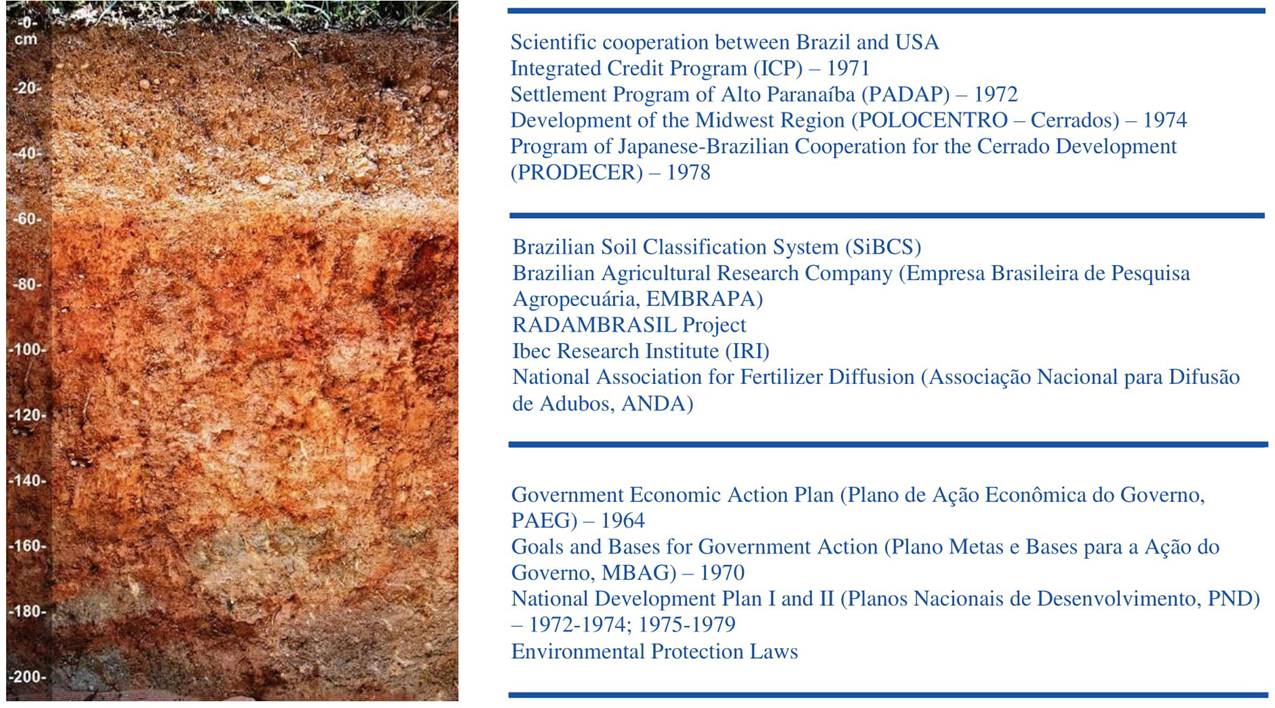
This quote encompasses both the national and geopolitical dimensions of authoritarian soil transformation: it sets the political agenda and highlights the relevance of the Cerrado bioma in the process of making Brazil “an emergent global power” under civil-military governments.Footnote 91 Soil represented the means by which to complete the authoritarian statecraft and nation-building processes via the establishment of an “inland empire”Footnote 92 and the enforcement of technocratic measures. The policies carried out under the military regime in the countryside brought about a civil-authoritarian political project to increase public power in the hinterland, challenge local authorities and elites, and halt emergent peasant mobilization.Footnote 93 Land transformation acted to legitimate the regime since it was coupled with the national security doctrine and developmentalist ideasFootnote 94 and was a tangible authoritarian “ideological arrangement” resulting from aggressive modernization policies and institutionalized land-grabbing.Footnote 95 Following from these premises, soils were seeded with countless social, economic, financial, and scientific programs via political power and technological tools. Some of these programs were completely new, while others stemmed from previous schemes and a few were inherited from past regimes. The combination of soil and authoritarianism helped establish the mastodontic techno-political infrastructure and bureaucratic organization of the Brazilian federated state. The Cerrado ecological area became the authoritarian-planned soil par excellence and synthesized politics into agricultural yields. Plowing through tropical authoritarian soil-management practices, one unearths their constitutive strata of three distinct layers: underlying layers, including nation-wide programs; transitional layers, including programs that followed the movement of the agricultural frontier and reached the Cerrado at a later stage; and topsoil layers, providing the setting for specific savannah-oriented schemes (see image 4).
Developmental programmes on tropical soils in the Brazilian Cerrados. Image elaborated by the authors. Source of the original photo of the section of Cerrado soil: I. F. Lepsch, “Status of Soil Surveys and Demand for Soil Series Descriptions in Brazil,” Soil Horizons 54, 2 (2013), https://dl.sciencesocieties.org/publications/sh/articles/54/2/sh2013-54-2-gc (last accessed 19 Nov. 2020).
The authoritarian Brazilian revolution inscribed itself upon an underlying trajectory of socioeconomic development that implied the industrialization of southeastern states such as São Paulo and Minas Gerais, while pushing the agricultural frontier into the southern Amazon rainforest and the Cerrado.Footnote 96 Within this organic and multifaceted modernization scheme, the government's growth projections for Brazilian agriculture can be summarized by its forecasts for the period 1974–1979: production was expected to increase by 55 percent, the use of fertilizers by 94 percent, and pesticides by 129 percent, and 25 percent more improved seeds would be planted. Related transformations would follow these trends: meccanization increasing by 101 percent, development of the electric grid and electrification by 936 percent, and irrigation system development by 49 percent. Complementary technological and scientific investment would grow by 71 percent.Footnote 97
Four main documents outlined the guidelines for nationalizing “peripheral areas”—the northeast, Amazonian, and center-west regions—by intensifying agricultural production: the 1964 Government Economic Action Plan (Plano de Ação Econômica do Governo, PAEG),Footnote 98 the 1970 Goals and Bases for Government Action (Plano Metas e Bases para a Ação do Governo, MBAG),Footnote 99 and the first and second National Development Plans (Plano Nacional de Desenvolvimento I and II, PND 1972–1974; 1975–1979).Footnote 100 According to these documents, Cerrado soils would undergo a hybrid modernization that would be driven mostly by the federal state but pragmatically open to private and international investments regulated by forces of supply and demand. The goal was to level the uneven distribution of infrastructure, population, and production among Brazilian states, to fill a supposed vacuum.Footnote 101 Behind these proclaimed goals, however, “filling demographic vacuums” also served to establish social order, political stability, and national security. They represented a strategic means to break the back of the Araguaia guerilla movement rooted in the peasant population, which took on a decisive role in the resistance to military repression. The greatest movement of armed resistance was mounted between 1967 and 1974 where the Amazon meets the Cerrado in the southeast of Pará and the north of Goiás, in the present states of Tocantins and Maranhão. Influenced by the Chinese rural guerrilla movement, a relatively small group of men and women challenged the dictatorship and, in so doing, made the government determined to occupy interior areas. The expansion of agriculture became a fundamental strategy for stabilizing control there.Footnote 102 During the 1970s and 1980s, this strategy saw millions of families displaced from the northeast and the south to the country's midwestern and northern regions. The opening of new frontiers was carried out not only by allotting land to poor families, but also through incentives that funded the appropriation of large areas of land by urban companies and landowners from the mid-south. Expulsions and threats of eviction created pressure on tenants, squatters, small family-based producers, traditional and Maroon communities, and the region's indigenous peoples.Footnote 103
Always at a national level, a series of environmental protection measures were passed: the Forest Code in 1965, the Fishing Activity Law in 1967, the Wildlife Protection Act in 1967, and the National Environmental Policy Law in 1981.Footnote 104 This legislation, informed largely by international pressures, contradicted national developmental efforts but shaped political and social functions of land toward environmental protection. Environmental protection has been argued by authoritarian regimes as “part of modern rational development,” and as such vast Amazonian conservation areas have been inaugurated under their rule. In the late 1980s conservation parks had an awkward presence among immense dams and mines. Not only were these parks demarcated as places to conserve a particular physical concept of the “Amazonian Environment,” but they also became places to contain and constrain ideas of “indigenous people,” adding a racialized axis to the defining powers that shaped this distinct spatial landscape.Footnote 105 Amazonia and the Cerrado were both initially affected by developmental plans, but international attention to “saving Amazonia,” as Acker has shown, also directed development strategies toward the Cerrado,Footnote 106 where the need for preservation was less apparent.
The significance of the Cerrado, and specifically its soil, as a geopolitical asset also came into focus with the 1973 Oil Crisis, created when Arab nation embargoed fuel exports to nations thought to be supporting Israel. Since Brazil imported about 90 percent of its petroleum, the 1973 oil shock would have been fatal for the country's astonishing economic growth had President General Ernesto Geisel not taken immediate action and supported the development of basic industries, while pushing for an expansion of farming activities rather than subsidizing middle-class consumption. This crisis also drove the government to envision Brazil not only as self-sufficient in terms of raw materials but also as an exporter of products from its rich asset, the soil.Footnote 107
Another contextual element that affected the history of the Cerrado under military rule was an increase in investments in and demands for research by scientific agricultural agencies. As we have argued, the dictatorial state apparatus was constructed partly based on soil. Scientists and technicians initiated an elaboration of a national soil classification and investigation in 1964, when agrarian expert Marcelo Camargo and FAO adviser Jacob Bennema presented a first categorization. Those initiatives led to the establishment of institutes that gained momentum during the 1970s. In 1975, a taxonomy of Brazilian soils was published, and in 1978 the first Brazilian Meeting on Soil Classification and Correlation was held, with the goal of developing the Brazilian Soil Classification System (SiBCS).Footnote 108 The information generated by the National Soil Survey and Conservation Service (SNLCS) provided the technical basis for several applications, including the reclamation of the Brazilian Cerrado for agricultural production and Ecological-Economic Zonings (EEZs) in many regions of the country. The accumulation of such knowledge, developed in partnership with universities and the Brazilian Institute of Geography and Statistics (IBGE), in the 1970s generated the Brazilian Soil Classification System, which led to the 1997 publication of a book that is now in its fifth edition.Footnote 109
In 1972–1973, out of the National Department of Research and Experimentation (Departamento Nacional de Pesquisa e Experimentação DNPEA), a hub of the Brazilian research agencies, President Emílio Garrastazu Médici established the Brazilian Agricultural Research Company (Empresa Brasileira de Pesquisa Agropecuária, or Embrapa).Footnote 110 Embrapa counted nine regional headquarters, seventy experimental stations, eleven real estate properties, and two national centers.Footnote 111 It became the leading public research institution tasked with overseeing and supporting the transformation of national agriculture specifically in tropical areas. In 1975 Embrapa-Cerrado was created.
Furthermore, the National Development Plan II became feasible in peripheral areas thanks to technological breakthroughs. A remote-sensing platform, carried by a twinjet Caravelle flying at an altitude of 12 kilometers at some 690 kilometers per hour, placed unproductive soils populated by indigenous communities under the technological scrutiny of the Radar of the Amazon Project, or RADAM. Beginning in 1970, RADAM carried out an integrated survey of the natural resources of a 1,500,000 square kilometer area in and around the territory affected by the Trans-Amazonian Highway, and due to its success, the surveying was expanded to the rest of the country in 1975 under the name RADAMBRASIL Project.Footnote 112 This survey collected data on mineral resources, soils, vegetation, and land use and provided, in the short term, “basic and necessary information to elaborate appropriate actions to tackle backwardness in those areas.”Footnote 113 Soils were classified according to categories of suitability for agricultural use and responsiveness to fertility treatments. The Cerrado, labeled as the “empty” midwest, together with the Caatinga, appeared to be the most suitable spaces for expanding intensive agriculture, but only under the unalterable terms of “technification.”Footnote 114
Technification of Brazilian agriculture relied on the expertise of several research institutes gained over a decade and on a well-established cooperation with the United States. It meant overcoming the physical limits of these regions by introducing innovative techniques and transforming the genetics of plants and the chemical composition of soils.Footnote 115 In 1972, Embrapa facilitated the transfer of expensive, specialized planting machines and no-till/direct-planting technology (zero tillage), reducing erosion, enhancing soil permeability for water infiltration, and increasing organic material in the soil. This federal investment led to the development of so-called miracle soy cultivars capable of tolerating the metal-heavy, nutrient-poor, acidic soils of the center-west with high levels of biological nitrogen fixation.Footnote 116 In the early 1970s, Ibec Research Institute (IRI)Footnote 117 investigators conducted several experiments on plant development in the Cerrado and found that the main obstacle was a deficiency of phosphorus and nitrogen in the soil. They suggested that targeted treatments would boost production by up to 89 percent over untreated soils.Footnote 118 From 1969 onward, the National Association for Fertilizer Diffusion (Associação Nacional para Difusão de Adubos, ANDA), a joint venture of fourteen private firms,Footnote 119 tested the adaptability of rice, corn, beans, and cotton to the southern regions of Goiás, Minas Gerais, and, in a second stage, Mato Grosso. From five hundred initial demonstration sites, by 1975 the experiment had expanded to include three thousand fields.Footnote 120
Even as the state became more proactive and inclined to centralize public control over agricultural experimentation, and even as presidents advocated for Brazil's national and international prestige, the country remained crucially dependent upon the United States.Footnote 121 Scientific cooperation between North Carolina State University, the U.S. Agency for International Development (USAID),Footnote 122 and Brazilian agencies led to two agreements: In 1963 the International Soil Fertility Evaluation and Improvement Project began promoting limestone and fertilizer use, including by private industry, and funding new laboratories that adopted innovative techniques and more reliable statistical analyses. For example, in 1970 the Tropical Soil Research Project began experiments with potassium fertilizers. In 1975, a specific unit within Embrapa called the Cerrado Agricultural Research Center (CPAC), in collaboration with Brazilian universities and Cornell University and the University of North Carolina, encouraged the production of master's theses and doctoral dissertations on Cerrado fertility.Footnote 123 Research on the nutrient status of Latin American soils was “the technical front” of the so-called War on Hunger financed by AID to increase agricultural production in developing nations.Footnote 124
It took more than fifteen years to establish the techno-political success of transforming the infertile Cerrado into a region of arable soils, and there emerged a growing interest in the specifics of that transformation. Cerrado symposia were held during the 1960s and 1970s by the São Paulo State Research Support Foundation (Fundação de Amparo à Pesquisa do Estado de São Paulo), the National Research Council (Conselho Nacional de Pesquisas), and the Brazilian Academy of Sciences (Academia Brasileira de Ciências). We can trace how a purely academic interest opened the way to more productivist approaches. While in the first and second congresses (1961 and 1965) presentations dealt with chemical and botanical issues, in the third and fourth (1971 and 1977) the focus was overwhelmingly on agronomic experimentation.Footnote 125
The government's final step in creating an authoritarian Cerrado was to increase its cooperation with agro-entrepreneurs and financial institutes. A stratification and juxtaposition of agricultural credit support schemes sought to increase production, build facilities and infrastructure, offer technical assistance, and introduce chemical fertilizers. These schemes were the Integrated Credit Program (ICP) launched in 1971 by the Minas Gerais Development Bank (BDMG), the Settlement Program of Alto Paranaíba (PADAP) in 1972, the Development of the Midwest Region (POLOCENTRO—Cerrados) in 1974, and the Program of Japanese-Brazilian Cooperation for the Cerrado Development (PRODECER) in 1978.Footnote 126 Those who benefitted from their subsidies were middle-class farmers and private owners with enough capital to face the challenge of the agricultural frontier. Most were second- or third-generation Japanese or Italians, or migrants, though some were descendants of the old plantation owners in coffee states like Minas Gerais and São Paulo.
The two decades of authoritarian supervision, allied with national liberal groups and close to the United States, was until recent times deemed a virtuous model for tropical agriculture.Footnote 127 This model achieved the massive transformation of the Cerrado into the country's breadbasket. The introduction of the soybean represented an additional rupture with the past, and it remains the most prominent legacy of the authoritarian reforms.Footnote 128 Rapid expansion of cultivation began in the 1960s, when soybeans were planted in the summer season and rotated with wheat in the winter (legume-grass crop rotation), which optimized land use and investments in agricultural machinery. Another driving force for the advance of soybeans in Brazil at that time was the exceptionally high price of the commodity on the world market in the mid-1970s; in 1973 the legume reached an all-time high of US$474.00 per ton.Footnote 129
Finally, the military governments promoted a “conservative modernization in the Brazilian countryside,” which enabled agricultural capital to take over the Brazilian midwest, first by transforming the large estates in rural enterprises and developing agro-industrial grain processing, and then by successfully adding livestock to the crop rotation.Footnote 130 Such changes imposed both new land ownership patterns and a politics of racial supremacy, and severely affected the indigenous population.Footnote 131 The National Truth Commission (Comissão Nacional da Verdade) investigated human rights violations during the period of 1946–1988 and recorded more than 8,500 indigenous people murdered during the agricultural expansion into the Brazilian west.Footnote 132
CONCLUSIONS
This paper has shown the intimate connection between the far right and soil in the twentieth century by exploring place-based dictatorial narratives, governmental projections, and guidelines for the nationalization of peripheral areas through agricultural expansion and colonial appropriation. Methodologically, soils and political regimes have served as pivot points for our comparison between Italy and Brazil. By approaching authoritarianisms as political formations through their soil transformations we have elucidated ecological dynamics in the development of sociopolitical systems. We have described how soils, in connection with fertility and production, were mobilized by the Fascist regime in Libya and within the developmentalist strategy of the Brazilian authoritarian regimes between the 1960s and the 1980s as symbols of and material spaces for their different modernizing missions. Both strategies included internal contradictions.
Within the environmental history and STS frameworks, analyses of soil transformations and their long-term effects avoid social reductionism and depoliticizing perspectives; they unfold “the multiple-scaled interconnections and reciprocally constitutive processes between social relations and soil dynamics.”Footnote 133 Our authoritarian soils are two “new natures”—to adopt a term from Dolly Jorgensen, Finn Arne Jorgensen, and Sarah Pritchard—and in the twentieth century the search for improvement has translated itself into fixes mediated by science and technology. In Libya, modernization relied on the construction of an extensive electric grid to pump water from underground and to power machinery. When the fuel and electrical supply started to run out during World War II, most farms were no longer able to produce and so were abandoned. In order to modify desert soils, in-loco farmers, officials, and agrarian technicians engaged in a war against natural constraints. In Brazil, the military-civilian vision and construction of a new nature came from outside, with remote sensing technology speeding up the scanning of vast regions, and the very nature of tropical soil was modified via a massive use of fertilizers, improved seeds, and pesticides. During the twentieth century, the boundary between natural ecofact and human-made artefact became progressively more blurred, and we have tracked this evolution through our two cases.Footnote 134
In this paper we have given less attention to human resistance to these state directives to focus in on the role of soil in societies. Our argument here is that there are such things as authoritarian soils and soil-based authoritarian states. Several studies have explored the authoritarian remaking of nature,Footnote 135 and another body of literature has stressed the presence of strong rural agendas in dictatorial governments.Footnote 136 We have specifically attributed the development of twentieth-century dictatorships to agricultural practices and soil transformations.
The restoring and maintenance of fertility has been a crucial theme in the reactionary modernist projects of authoritarian regimes: soil is the element that reconciled the seemingly paradoxical coexistence of technological and scientific innovation and social ruralism and traditionalism. As others have argued with regard to the Eastern European communist authoritarianisms, the transformation of agriculture meant “a major step towards the creation of the envisaged utopian … society in the countryside, and dogmatically praised the heroism of the peasantry, who allegedly responded to the.… Party's call and prevailed upon the regime's enemies in rural areas.”Footnote 137 Not just farmers were important—soil also bound other social groups to the state, including scientists, public servants, and investors and speculators. In a complementary fashion, the state encompassed different social groups under the umbrella of a corporatist society to work toward the overriding, manifold purpose of increasing productivity. Through soil fertility, reactionary states redefined and drew new boundaries of the nation, both geographically and socially. The rhetorical tool of “unoccupied” and “insufficiently occupied” lands highlights another common element: the states’ complete disregard for how populations that had long lived on the land used it or related to ecological conditions on the ground. Such approaches, particularly when they were imposed in peripheral regions, spawned racialized societies.Footnote 138
Moving from our empirical cases, we infer that cultivated soils offer dictatorships the material space in which to develop and condense quintessential attributes of dictatorships: social order, political stability, national security, geopolitical prestige, and the denial of conflicts. Free from any liberal or democratic constraints and relying on the assumption that everything is within the state and that the state guides and synthesizes every aspect of society, totalitarianisms legitimize specific visions of environmental transformation, especially modernist ones. From the totalitarian perspective, marginal areas represent testing grounds and experimental sites for analyses of political, social, economic, financial, technological, and scientific initiatives and programs. Free from most institutional checks and competition for political power, authoritarian states are able to mobilize huge assets in terms of both human expertise and money, even in economically challenging times. Indeed, it was due to their cash-strapped situations that Italian Fascists and Brazilian militarists counted on agricultural activities to help them achieve social control and build consent. The transformation of desert and savannah regions into fields promised future prosperity to poor rural families and the faith in national economic growth justified significant investments, violence, and the displacement of peoples. For nationalistic purposes and from a geopolitical perspective, agricultural development schemes also represent strategies for reacting to international sanctions and global energy crises. They showcase national power, define a self-sufficiency oriented political economy, and boost large-scale aggressive expansionism.
The goal of showcasing conflictual zones, linked to racialized disparities and corporatism, involved both the material and immaterial spheres. Authoritarian soils are also made up of words, and verbal constructions became common beliefs that were ingrained into Italian and Brazilian societies: in both of these cases we find powerful rhetorics of emptiness and miracles. The ideological construct of emptiness is a recurring theme in the history of colonialisms.Footnote 139 Though an established corpus of scholarship has deconstructed the colonial fallacy of “the empty land,” the actuality and materiality of emptying processes and acts of ruination have remained on the margins of this critical effort.Footnote 140 Very little has been written about the sixteen Libyan concentration camps that operated between 1930 and 1933,Footnote 141 or how the Fascist war against indigenous fauna and non-cultivated plants flowed from the construction of the rhetoric of an empty Libya. If we examine how states focused on fertility, and the function that high demographic rates played in the occupation and appropriation of spaces, we find that women were classed as reproductive beings, like plants, whose task was to fill desolate wastelands with humans. Despite the pervasive myth of productivity and the valorization of resources, agricultural colonization dynamics can only be understood with reference to uneven power relations and inequalities.
Authoritarian soils leave much longer legacies than do democratic ones due to the absence of contradictory visions in historical sources and contemporary narratives. The myth of agricultural productivity is tied to the enduring rhetoric of the miracle. Portrayals of crop production in unsuitable soils as a “miracle” outlived the authoritarian regimes that founded them and remained for decades after, and contesting this idea is crucial to critically reconstructing the building up of soil fertility as a mirror of authoritarianism. With regard to the agricultural sector, it has been problematic to question the positive role and civilization effort attached to dictatorial reclamation schemes, particularly in avowedly empty colonial spaces. Agricultural enterprises within developmentalist frameworks were celebrated in democratic times in both Italy and Brazil.Footnote 142
Those two histories are “a metaphor for nonsustainability”:Footnote 143 they shed critical light on development pathways that are widely accepted as success stories when in fact they undermined the goals of furthering human and environmental sustainability. In this paper we have asserted that these schemes must be placed within a framework of social oppression and ecological unsustainability in order to move forward the fascinating and urgent discussion about the relationship between agriculture, development, and democratization.Footnote 144


 Open access

