

To what extent—if any—are articles in international relations (IR) cited differently depending on the gender of the publication's author?Footnote 1 We address this question by analyzing citation patterns in the IR literature, using data from the Teaching, Research, and International Policy (TRIP) project.Footnote 2 We use the TRIP project's journal article database, which catalogues articles published in the top twelve peer-reviewed IR journals over the period 1980–2006.Footnote 3 The TRIP project has coded approximately 3,000 articles on twenty-six different substantive and demographic variables. Using these data, we demonstrate the existence of a persistent gender gap in citation counts: articles written by women are consistently cited less than articles written by men. This is especially true of women who have not yet earned tenure. Observable differences between male and female IR scholars—including productivity, institutional affiliation, publication venue, or epistemology—cannot account for this gap. We explore the gender citation gap further through an analysis of men and women in the network formed by citations between the articles in our sample. Using a dyadic citation data set built from the TRIP data and the Thomson Reuters Web of Knowledge (WOK) database, we show that women are also more concentrated on the periphery of the IR network, where their work is cited less often by authors of the most heavily cited work.
Taken together, these findings offer robust evidence for a gender gap in citation counts in IR. This is a cause for concern. If women in IR are systematically cited less than men in ways that do not appear to be associated with observable differences in their scholarship, and if citation counts continue to be used as a key measure of research impact, then women will be disadvantaged in tenure, promotion, and salary decisions. This article reveals this differential pattern of citation counts and offers two potential explanations for it. Our hope is that by identifying the gender gap in citations and then identifying potential reasons for it, we can begin to address and rectify it.
Gender and the IR Literature
The status of women in academia and political science has long been a topic of discussion and concern at colleges and universities across the United States.Footnote 4 Women continue to be underrepresented on political science faculty, at conferences, and in peer-reviewed publications.Footnote 5 Today, women are earning PhDs in political science in record numbers but are failing to earn tenure in proportion to these numbers.Footnote 6
The disproportionately low number of female faculty is potentially problematic given that the majority of undergraduate and graduate students in the United States are female. In 2010, women represented 57 percent of all students in four-year colleges and universities and 52 percent of all students in PhD programs.Footnote 7 It is expected that by 2020, women will represent 60 percent of all students enrolled in four-year degree-granting programs.Footnote 8 If colleges and universities are serious about increasing the number of tenured female faculty, especially at large research universities, they will need to understand and address why women are failing to move up the ladder at the same rate as their male counterparts. Without this, college faculty will continue to be dominated by men even as their student bodies are increasingly dominated by women.
The number of women in academia, as well as their influence, will depend in part on how often their research gets published and whether this research is then cited by other scholars. Decisions about tenure, promotion, and salary, especially at research universities, take into account not just publications but impact, which tends to be partly measured by citation counts. Although hard data do not exist, anecdotal evidence suggests that academia is weighting the influence of citation counts more over time. As one long-standing member of a top-ten political science department observed:
In thirty years … citation counts used to be a non-issue in hiring and promotion in my department. Until about three years ago, the issue had come up literally once. I remember because it seemed so odd. Now, the social science citation index and Google Scholar citation counts are regularly raised and discussed except for starting assistant professors.Footnote 9
If departments are increasingly relying on citation counts to measure impact, then at the very least they should know whether any systematic bias exists in such counts. Work in a number of other scholarly fields shows a consistent trend in gender-citation patterns between men and women. In biology,Footnote 10 biochemistry,Footnote 11 ecology,Footnote 12 library and information science,Footnote 13 and in general studies of the natural sciences, men tend to be more productive in terms of quantity, while women tend to produce higher-quality work, at least as measured by citations.Footnote 14
Do the same trends exist in IR? Copenheaver and colleagues argue that “gender differences in citation rates appear to be discipline specific, so identifying whether a difference exists within a discipline is an important factor for making fair and equitable decisions regarding the evaluation and promotion of female and male researchers.”Footnote 15 Mitchell and others provide limited evidence of a gender citation gap in IR in their bibliographic analysis of articles published in International Studies Quarterly and International Studies Perspectives in 2005.Footnote 16 They find that articles published by men are less likely to cite work by women than are articles published by women. On the other hand, Østby and colleagues find that gender is not a significant determinant of publication in their analysis of submission and publication rates at the Journal of Peace Research between 1983 and 2010.Footnote 17 Given the conflicting findings of some of these more limited data sets, more systematic tests are needed to come to a general understanding of how author gender affects the eventual influence of a given article.
To test if a citation gap exists in IR, we looked at more than 3,000 articles published between 1980 and 2006 in twelve influential peer-reviewed IR journals. Our findings suggest that articles authored by women are cited less on average than those authored by men. They also suggest that this gap disappears as soon as women coauthor with men.
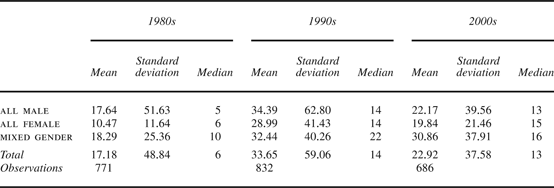
We begin our investigation with a very basic analysis of the TRIP data set. We coded all articles in the TRIP database for the gender of the author(s), grouping them into three categories: those written by one or more male authors, those written by one or more female authors, and those written by at least one author of each gender.Footnote 18 A simple cross-tabulation suggests that author gender plays a significant role in determining the number of citations a given article garners after publication. Table 1 displays the average number of citations a given article received based on the gender of the author(s). Articles authored by men garnered an average of 4.8 more citations than those authored by women over the period 1980–2006. Given that the average number of citations per article during this time was about twenty-five, this is quite a significant difference.
Citations by gender and decade

There are a number of possible explanations for why this gap exists. First, men and women tend to work at different institutions. According to the 2006 TRIP survey of IR scholars, men are more likely than women to be employed by PhD–granting institutions, while women are more likely than men to be employed by liberal arts schools.Footnote 19 The focus on teaching at liberal arts colleges may lead faculty to produce less research or have fewer opportunities to publicize their work at conferences and/or at seminars at other colleges or universities. It may also be the case that the research produced by faculty at liberal arts colleges could be differentially valued by the profession because of their institutional affiliations. Likewise, tenure requirements and a focus on research may generate different incentives to engage in academic debates and produce research. Because of the gender disparity in placement at liberal arts colleges, we might expect institutional affiliation to partially account for the gender divide in citation counts.
Second, women may publish less in the early years of their careers as a result of their need to take parental leave. This may not affect productivity over the long term, but if citations depend in part on building name recognition, then fewer publications early in one's career could translate into fewer citations over time. Symonds and colleagues find that discrepancies between men and women early in their careers can lead to differences in citation rates throughout their time as scholars.Footnote 20 Taking a temporary leave from research in the first part of one's career, therefore, may have lasting effects.
Third, the norms of coauthorship have changed over time and differentially across genders. Fisher and others show in their analysis of coauthorship in three political science journalsFootnote 21 that while coauthorship across these journals has increased, it has increased more quickly for women.Footnote 22 Further, in cross-gender collaborations, they find that women are nearly four times more likely to collaborate with men than men are to collaborate with women. It is possible that women receive fewer citations because coauthors are cited less frequently or acknowledged less often than single authors or authors whose names appear first. To account for these differential coauthorship patterns, we control for coauthorship in general and whether a given instance of coauthorship is mixed gender.
Fourth, men and women tend to study different substantive issues. As Table A1 in the appendix shows, men are more likely to write articles on security, US foreign policy, and methods. Women are more likely to write articles on human rights, comparative foreign policy, health, international law, and the environment.Footnote 23 If these topics are less popular and less well cited, then this could also help account for the gender gap in total citation counts.
Fifth, men and women report using different theoretical paradigms to analyze international politics. In the 2006 TRIP survey, women reported that they are more likely to employ constructivism and feminism than their male counterparts. Meanwhile, men are more likely to report employing realism or liberalism.Footnote 24 Similar differences are also apparent in our data from the coded articles. Table A2 in the appendix shows this breakdown. Women are more likely than men to publish articles that are constructivist or nonparadigmatic, while men are more likely to publish articles that are atheoretic, realist, or Marxist. There is little difference in the use of liberal theory across genders. Again, if women tend to gravitate toward theoretical approaches that are less widely used and appreciated, then this could account for the lower citation rate.
Sixth, as the 2006 TRIP survey and Breuning and colleagues show, men and women tend to situate their work in different epistemological schools.Footnote 25 Men are slightly more likely to report that their work is positivist. Women are nearly twice as likely as men to report their work being postpositivist. We find these trends in our data as well. We know from other recent work that articles not employing a positivist epistemology tend to be cited less, especially in the sampling of journals we include in our analysis.Footnote 26
Seventh, the TRIP surveys show that women are just slightly more likely to report employing qualitative methods than are men. Conversely, men are only slightly more likely to report employing quantitative methods than women. Men are also much more likely than women to report using formal methods.Footnote 27 As Maliniak and others show, quantitative and formal work are cited more frequently than qualitative work in recent years, potentially explaining the discrepancy in citations.Footnote 28
Finally, it could be that the gap in citations is because of the venue in which men and women publish. Women may tend to publish in certain journals and it is these journals that tend to draw fewer citations than others. Copenheaver and colleagues, for example, find that when they control for journal-specific effects in their analysis of citations, no gender gap remains.Footnote 29 It is possible that controlling for the venue in which articles are published will capture some of the variance between male and female citations.
All these explanations represent a range of plausible and compelling reasons for the citation gap in IR. Controlling for these factors, does the gender gap disappear? If not, then other less obvious factors must account for the dearth of citations that women receive.
Why Citations?
Individual citations are significant for two reasons. First, the discipline tends to use citations as an important measure of the quality of scholarly contributions, whether at the level of individual scholars, journals, or even entire institutions. Citations are one of the chief metrics used in academia to evaluate a scholar's performance and influence, and to distribute resources, including salary.Footnote 30 They are also used to rate the quality of the faculty and departments across different universities. Finally, citation-related metrics are often part of efforts to evaluate institutional excellence at a global level.Footnote 31 When articles are highly cited we tend to assume that they have had a significant impact on the field and that the researcher is influential. Second, the importance of citation counts is likely to increase as they become easier to compile using Google Scholar, ISI, or Scopus. If a persistent gender gap exists in citations, departments and universities should be aware of this.
It is important to emphasize that our analysis looks at article citations only and not the full range of venues through which scholars communicate their work. Other outlets include single and coauthored books, chapters in edited volumes, op-eds in newspapers, and (increasingly) blog posts. Given this variety, is it possible that the source of the gender citation gap is the result of self-selection into different types of publications? The evidence suggests not. Indeed, in the 2011 TRIP survey, respondents were asked to rank the “three kinds of research outputs that are most important for you to publish in order to advance your academic career.”Footnote 32 A plurality of women (45.9 percent) and a large percentage of men (40 percent) listed a single-authored journal article in a peer-reviewed journal as the most important research output to produce in order to advance their career. Coauthored articles in peer-reviewed journals are also ranked in the top three, higher than any other outlet, save single-authored books for a university press and single-authored journal articles in a peer-reviewed journal. Male and female scholars seem to agree that peer-reviewed journal articles are the main currency for stature in the realm of academia.Footnote 33
Data
Our universe of cases comes from the journals tracked by the TRIP project. These include American Journal of Political Science (AJPS), American Political Science Review (APSR), British Journal of Political Science (BJPS), European Journal of International Relations (EJIR), International Organization (IO), International Security (IS), International Studies Quarterly (ISQ), Journal of Conflict Resolution (JCR), Journal of Peace Research (JPR), Journal of Politics (JOP), Security Studies (SS), and World Politics (WP). For those journals that publish both IR and non-IR research, we limit our sample to those articles coded as being related to IR by TRIP.
As a dependent variable, we use the count of citations provided by the WOK. These values were gathered by an automated script in March 2013 and linked to the articles in the TRIP database by the unique combination of values formed by the title, journal of publication, issue number, and volume number. The number of citations for each article reflects citations from all articles catalogued in the WOK's Social Science Citation Index Expanded, not just those journals from which we draw our sample.Footnote 34
Data for our independent variables come from the TRIP project article-coding database.Footnote 35 The TRIP project has coded twenty-six variables for each article in issues one and three of each journal from 1980 to 2006. We believe the coded data are a representative sample of the IR literature over the past twenty-five years. The TRIP coding scheme records variables for important article attributes including methodology, epistemology, paradigm, time period, geographic area of study, issue area, and many others. For a more detailed description of the TRIP coding methodology, see the TRIP codebook.
Gender, our independent variable of interest, is taken from the TRIP gender variable which codes gender by the use of gendered pronouns by the author in the publication or on their website. If no gendered pronouns are used, we rely on any available photographs on the author's personal or departmental website. As a last resort, we rely on gender-specific first names. If no information about the author's gender is available, the variable is left as missing. We capture the gender makeup of a given article's authorship in three mutually exclusive dichotomous variables: all male, all female, or mixed gender.
To operationalize the potential confounding factors contributing to the gender-gap in citation counts that we discussed, we use a number of specific variables from the TRIP data. These include the following:
• theoretical paradigm. This is a nominal variable that is coded as one of the following: realist, liberal, Marxist, constructivist, nonparadigmatic, or atheoretic/none. As the TRIP codebook explains, “paradigms are defined primarily by their core assumptions and secondarily by the independent variables they emphasize.”Footnote 36 See the TRIP codebook for a longer description of the paradigm coding rules.
• age of publication. This is measured in years since publication. We add a square term to account for the possibility that the effect of age changes with time.
• author tenured. This is a dichotomous variable. An author is considered tenured if his or her rank is given as associate professor, professor, or full professor (or their equivalent for scholars at non-US institutions).
• tenured female. This is a dichotomous variable that is coded as 1 if there is a tenured female scholar on the paper.
• r1. This is a dichotomous variable. It is coded as 1 if the author is at a “National Research University” as defined by US News and World Report's college and university rankings.
• coauthored. This is a dichotomous variable. It is coded as 1 if the publication has more than one author.
• epistemology. This is a dichotomous variable. As the TRIP codebook explains, “This variable seeks to answer the question, by what criteria does the author establish knowledge claims.”Footnote 37 An article is coded as positivist “if [the author(s)] implicitly or explicitly assume that theoretical or empirical propositions are testable, make causal claims, seek to explain and predict phenomena, assume that research is supported by empirical means, and aspire to the use of a scientific method.”Footnote 38
• ideational. This dichotomous variable captures the use of ideational factors. The TRIP codebook explains, “Any article where ideas, beliefs, perceptions, learning, norms, identity, knowledge, or personality traits play a central role in the argument, whether as independent or dependent variable, is coded as ideational.”
• material. This is a dichotomous variable. It is coded as 1 if the article employs “material variables,” which are defined by the TRIP codebook as “non-ideational and refer to ascriptive characteristics of actors or the structures in which actors are embedded.”
• issue area. This nominal variable captures the particular subfield into which an article falls. It can take a value of any one of the following: international security, international political economy, human rights, environment, health, IR theory, US foreign policy, comparative foreign policy, history of the IR discipline, philosophy of science, international law, other, general (or nonspecific), international organization, methodology, comparative politics, American politics, or political theory. The TRIP codebook explains, “we have values for [non-IR] subfields of political science so that we can track non-IR articles in IR journals.”
• methodology. This is a set of dichotomous variables. The TRIP codebook explains that this variable is a “measure of whether the study uses quantitative (statistics), qualitative (case studies), formal modeling (calculus, game theory, spatial modeling), or some other methodological approach. Many articles utilize more than one methodology.” An article can employ one or more of the following types of methods: quantitative, qualitative, formal modeling, counterfactual, analytics/nonformal conceptual, descriptive, policy analysis, and experimental.
• journal of publication. This nominal variable takes on the value of one of the twelve journals tracked by the TRIP database.
Table A3 in the appendix provides descriptive statistics on each of these variables.
Analysis
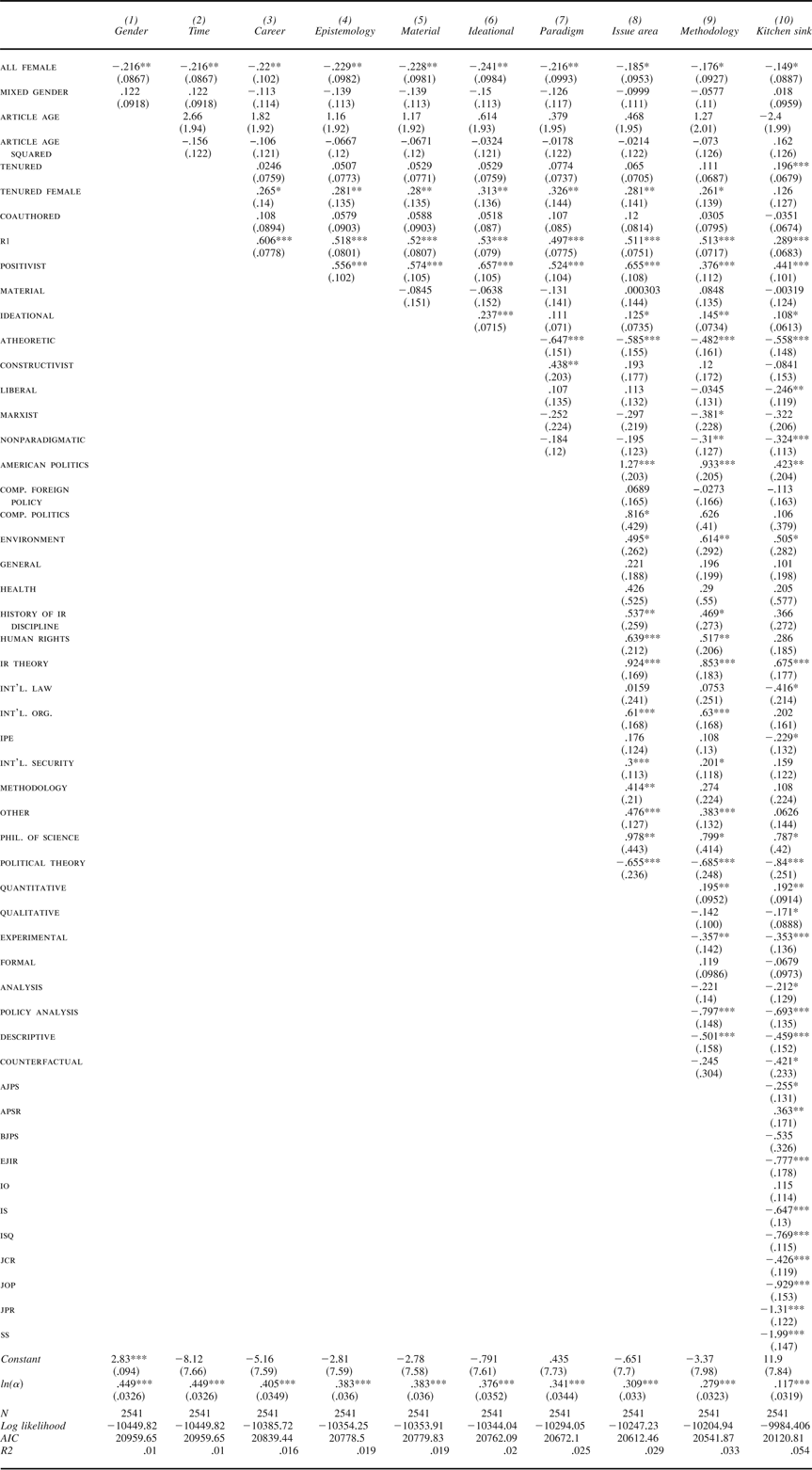
Using the data we described, we test the extent to which each of our independent variables affects citation counts.Footnote 39 Our estimates are based on a negative-binomial model because of clear overdispersion in the citation count variable. In all cases, we include our main independent variables of interest, an all female and a mixed gender variable, with all male as the reference category.Footnote 40 To account for potential idiosyncrasies across publication years in the data, we include year fixed-effects. Moreover, we exclude articles published later than 2006 so that each article has at least five years of exposure to possible citations by the time we gathered the counts. We also include the age of the article (in years) and a quadratic of age to help control both for exposure but also the changing nature of citation patterns over time.
In our baseline model in Table 2, the all female variable is negative and statistically significant. Given that the coefficient represents the natural log of the expected count of citations, we can interpret this as female-authored articles receiving roughly 80 percent of the citations that a similar male-authored article would receive. Articles having at least one male and one female author show no statistically significant difference in citations from male-only authored articles. Adding controls for age, in Model 2, we see unsurprisingly that older articles receive more citations than younger articles, but that this effect declines over time. The effect of article age slightly reduces the magnitude of our gender effect, but it does not affect its direction or statistical significance.
Determinants of citation counts
Notes: Standard errors in parentheses.
* p < .10;
** p < .05;
*** p < .01.
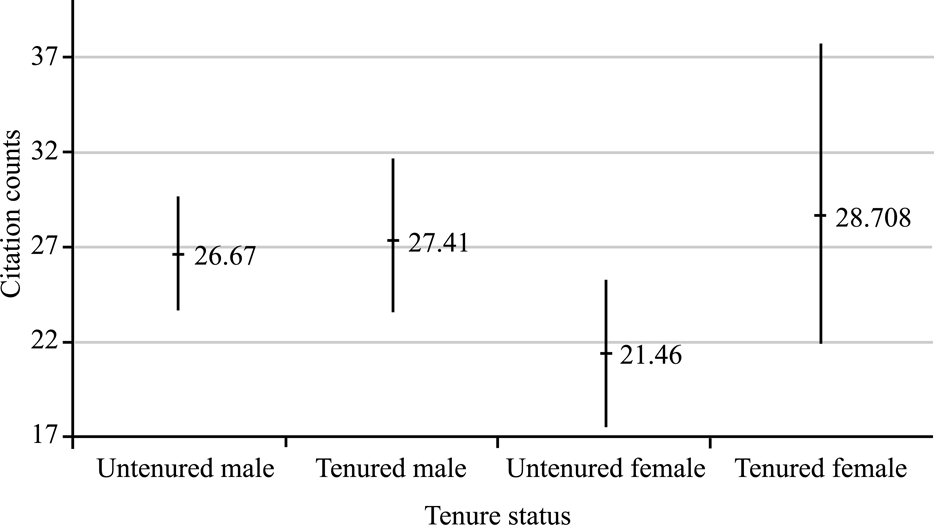
In Model 3 of Table 2, we explore the extent to which accounting for career-related factors helps explain the gender gap in citation counts. As noted, women in the field of IR are less likely to be employed by R1 institutions. We account for institutional affiliation by including a variable that captures whether any of the authors are employed at an R1 institution.Footnote 41 In this model, R1 affiliation has a positive and significant effect on citation counts. Because we also noted how coauthorship differs across gender, we add a variable to account for whether a given article is coauthored. Coauthorship has a positive and significant effect on citation counts.Footnote 42 We also add two variables to account for the effect of tenure across genders. The first is a simple dichotomous variable called tenure that takes on a value of 1 if any of the authors on the article are tenured and 0 otherwise. The second is a variable called tenured female that takes on a value of 1 if at least one of the authors on a given article is a female with tenure. Figure 1 shows the predicted count of citations and 95 percent confidence interval for all four categories of interest. Tenure is associated with more citations for both point estimates of male and female.
Estimated citation counts with simulated confidence interval
Notes: Estimates for single-authored articles by authors at R1 institutions. Estimates from career model.
The articles in our sample authored by women are more likely to employ a nonpositivist or postpositivist epistemology than those authored by men. When we include a dummy variable for whether the article is postpositivist or nonpositivist, as seen in the epistemology model (Model 4), positivist articles receive relatively more cites than similar non- or postpositivist articles. The coefficient on all female, however, remains negative and significant. The ideational model (Model 6) shows that neither accounting for the ideational variables nor a lack of material variables has a significant effect or changes the signs and significance of our coefficients of interest all female and tenure.
Controlling for the particular issue area that a given paper addresses decreases the magnitude of the coefficient on all female, but it remains significant at conventional levels. Including the paradigm of the article does not substantially affect the citation gender gap. Using realism as a base category, our paradigm model (Model 7) shows that atheoretic and Marxist articles tend to be cited relatively less, while constructivist articles have more citations.Footnote 43 As Model 7 illustrates, again, our coefficients of interest remain relatively stable after accounting for the research methods employed in each article. Formal or quantitative methods have a positive effect on citation counts, while descriptive methods are associated with fewer article citations. We cannot account for the gender citation gap by controlling for the fact that women are more likely to employ qualitative methods.
Finally, we estimate a kitchen sink model (Model 10) in which we include all article characteristics in one model and control for potential venue-specific citation effects. When we include a variable for each of the twelve journals, the net effect is to decrease the magnitude of coefficient on all female, but to substantially increase the magnitude of the tenure coefficient. Despite accounting for a wide variety of factors that might affect the number of citations a publication might receive, we cannot explain why gender remains negative and statistically significant. Articles authored by all women are cited systematically less than similar articles written by either all men or by men and women together.
Are these findings driven by a few highly cited, male-authored articles? When we exclude articles with three standard deviations above the mean of cites or more, our results are substantively similar. The coefficient on all female is always negative, with point estimates very close across specifications. The consistency of the effect across many specifications lends support to the general finding, as well as the result being a more general phenomenon across the distribution of articles. Of course, any subset of articles that garners fewer citations will decrease the chance of a gap being statistically significant thanks to information loss.
To illustrate the gender gap in a slightly different way, we create a model of citation counts built from the all-male authored articles only. If citations occur regardless of the authors' gender, a model that explains variance in citation counts should be equally predictive regardless of the gender of the authors. Using the career model from our analysis, we calculate the predicted number of citations for each article in our data set authored by women only or having at least one author from each gender.
A quick comparison between the average number of predicted citations for male-authored articles and the actual number of citations shows that the model seems to be quite precise. As Table 3 shows, our model predicts that male-authored articles should receive 25.3 citations. In reality, they received 25.13. Next, we can use the mixed gender articles to see if the coefficients from the model based on all-male authors do well to predict citations in this excluded group. In this case, a simple t-test shows that a 0.67 difference in the number of citations between the actual and predicted counts is not statistically significant.
Predicted vs. actual citation counts

The out-of-sample analysis illustrates our key counterfactual: Would the number of citations a given article received change if it were written by a man (or men) instead of a woman (or women)? Our all-male model predicts articles authored by only women should have 4.7 more citations than they actually received. Of course, as is the same with our previous results, we cannot be sure we have controlled for all the important confounding variables. Still, we find this result striking. Even controlling for a wide variety of confounds, articles written by women are cited less often at a statistically significant rate.
As a final robustness check, we apply propensity weighting, as suggested by Imbens for multivalued treatments.Footnote 44 This method calls for first running a multinomial logit on the treatment variable, in our case the article's gender composition. We then use the inverse of the predicted probabilities as a weight for that article. In this sense, articles for which the model highly correlates with the gender composition (that is, can predict it well), are weighted less than those for which gender is not related to the covariates. We then run our same negative-binomial regression model but apply these weights. As Table A4 in the appendix shows, this method of matching further supports the consistency of the gender gap result. The coefficient on all female remains negative and significant.
Is There Also an “Influence” Gap?
Thus far, we have shown a robust relationship between the gender of authors and the total number of times their papers are cited. Putting aside this result, we wonder if the ideas and influence of articles authored by women in the field of IR are also being undervalued? To address this, we propose the use of network analysis as a better measure of the impact of female authors on the field. This additional analysis measures impact much better than a simple citation count. Network analysis not only incorporates how many citations an article gets but also whether an article is cited by more influential articles. It is far more important to be cited in a seminal article than it is to be cited in an obscure one.
To measure the relative influence of a given article we employ the widely used HITS algorithm developed by Kleinberg.Footnote 45 HITS calculates a hub score and authority score for each node in the network. Kleinberg's method was developed to measure the relative importance of nodes in the world's largest “citation” network: the Internet.Footnote 46 A given node garners authority by being linked to by other nodes. More weight is placed on a link from a node that itself is linked to by many other nodes. To put it in the parlance of citation analysis, an article that is cited by many widely cited articles will have a higher authority score than an article cited by many articles that themselves are only rarely cited.
Using the network of citations produced by the twelve journals in the TRIP article-coding database, we calculate the “authority” score for all articles cited by at least one other article in the largest cluster of articles.Footnote 47 These values range from 0 to 1, with 1 being the most highly authoritative article, and 0 having no authority. We take the largest value an article achieves in any year of its publication. In this sense, we are looking to see if an article ever becomes highly influential over the entire period of our sample.
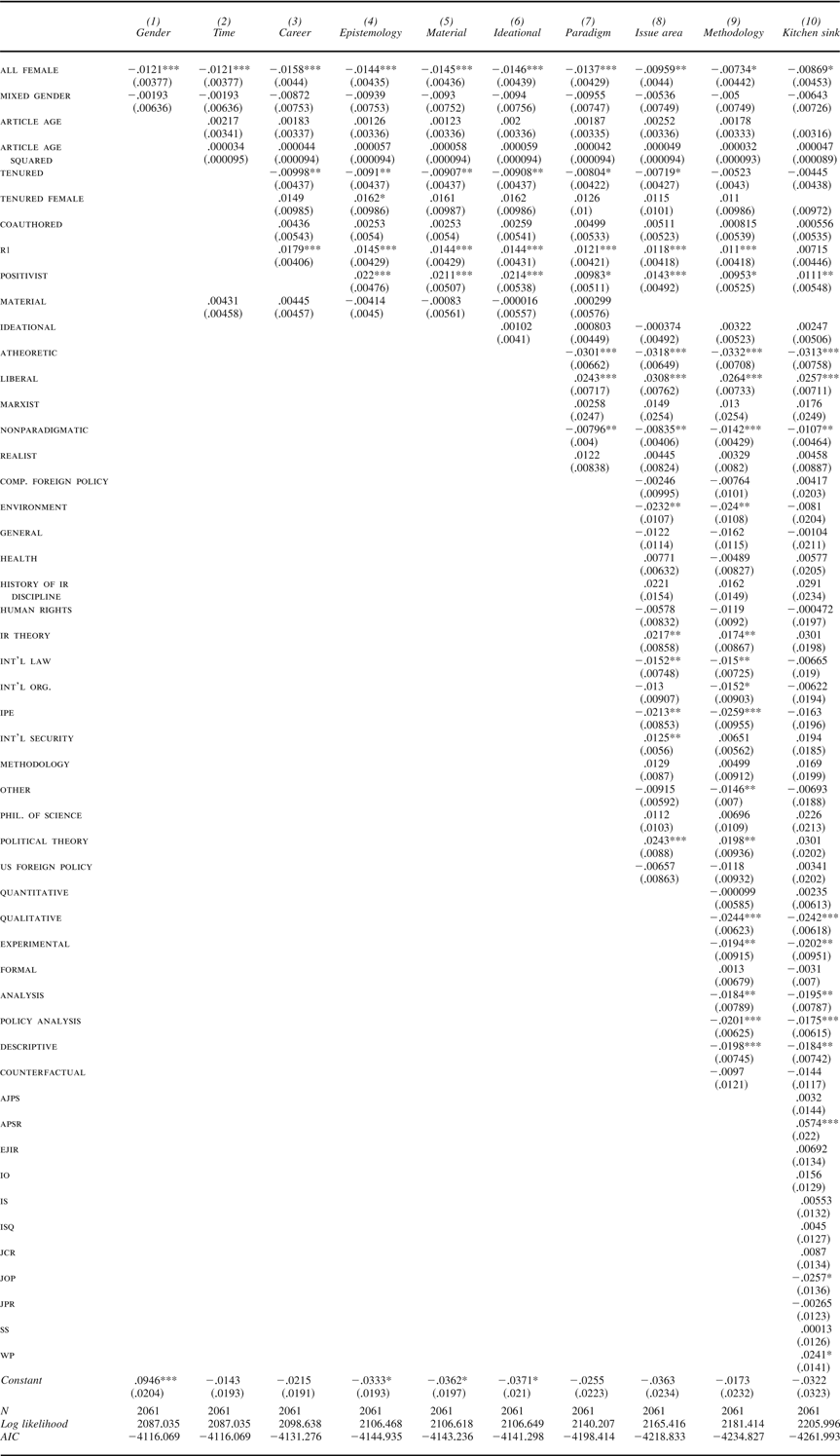
Our results largely mimic those of the citation count models presented earlier. Articles written by female authors are not only being cited less, but authors of the most influential articles are citing them less often. Table 4 presents the results of similar models to those used in the citation analysis using ordinary least squares (OLS) models.Footnote 48 In this sense, we should expect that the position of articles written by women is more to the periphery of the IR citation network.
Determinants of authority score
Notes: Standard errors are in parentheses.
* p < .10;
** p < .05;
*** p < .01.
This finding can be seen in Figure 2, which highlights authorship by gender across the network plotted in space. Each circle represents an article. The size of the circle is proportional to its authority score. Articles written by female author(s) are colored green. Articles written by all men are blue, and those written by some combination of men and women are colored red. As you can see from Figure 2, the all-female nodes (green) are much smaller on average than the male (blue) and mixed gender nodes (red). The green nodes also tend to be smaller than their blue counterparts.
Visualization of citation network
Notes: Green nodes are authored by all females. Blue nodes are authored by all males. Red nodes ar authored by at least one male and at least one female. The size of the node is proportional to its HITS centrality score.
Is The Gap Getting Smaller Over Time?
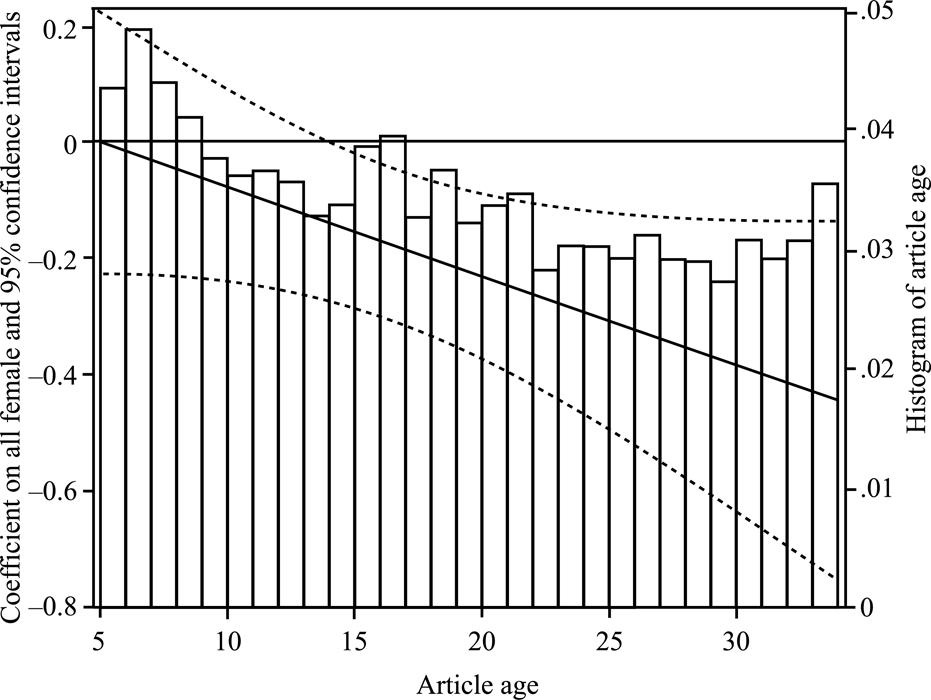
Readers will want to know if the gap is declining over time. If the field of IR is becoming more gender balanced, then it could be that younger female scholars will be disadvantaged less or not at all. To address this question, we estimate a slightly different version of our preferred model. Here we include an interaction between our all-female variable and the age of the article.Footnote 49 Table A5 reports the results. Because of the multiplicative interaction term, the effect of all gender is not clear from simply looking at the table. Figure 3 plots the coefficient on all-female as it changes over the range of the article-age variable. We see that older articles written by women are subject to greater bias than those written by men or coauthored with men. As we move from right to left on the graph, we see that the coefficient on all female declines in magnitude and eventually becomes statistically insignificant at conventional levels in more recent periods.
Coefficient on all female at different levels of article age
The most confident conclusion we can draw is that the gap is not statistically significant in the most recent periods. The lack of significance, however, is not tantamount to there being no gap. An optimist might argue this pattern illustrates the decline in the gender bias over time. But this result is consistent with the bias in citation counts taking a number of years to be realized. In an attempt to discern between these two observationally equivalent but substantively different outcomes, we constructed two new dependent variables. The first is the cumulative number of citations that a given article has received when it is six years old, and the second is the authority score of a given article at six years. We choose six years because it is roughly the length of many tenure clocks and allows us to include most of our data, as a later year would result in dropped cases in the later part of our sample.
Table A6 in the appendix displays the results for cumulative citations as the dependent variable. We conduct subsample analyses by decade. Column (1) replicates the full sample analysis using our new dependent variable. Columns (2) to (4) report the results from our decade subsamples. We see from this analysis that in the 1980s, the coefficient is negative, statistically significant, and substantially larger than the coefficient for the full sample. In the 1990s and 2000s, the coefficient on all female is smaller in magnitude and, while it is negative, is no longer statistically significant. While one might take heart from these results, we caution that the insignificant finding in later decades means only that we cannot say the gap exists with certainty, and that the reduced sample because of the time constraint could be causing this result.
Table A7 in the appendix displays the results of our subsample analysis on the authority score at six years. Again, column (1) replicates our full sample analysis using our new dependent variable, while columns (2) to (4) report the results from our decade subsample analyses. In contrast to our cumulative citation count variable, we see that all female is negative and statistically significant across all models. While the coefficient is declining in magnitude over time, it is difficult to compare the coefficients across models, thus preventing us from saying that the gender bias in authority scores is, in fact, declining over time. In some respects, these results are more important to IR as a discipline because they are based on dyadic citation behavior within the IR literature, while the cumulative citations count is based on all citations recorded by WOK—whether from IR articles, political science in general, or other disciplines. While we are less sure about the magnitude of the gap in recent years, it does appear that women are still systematically less central in the IR citation network than are men.
Other Explanations for the Citation Gap
The data reveal that articles published by women in the top IR journals are cited less often than those written by men even after controlling for the age of publication, whether the author came from an R1 school, the topic under study, the quality of the publishing venue, the methodological and theoretical approach, and the author's tenure status. Articles written by women are cited less often than articles coauthored with at least one man. They are also cited less often in seminal articles in the field. This bias may or may not be declining, but even if it is, women's work is still not valued to the same degree as men's. This is a striking and disturbing pattern given the weight the profession assigns citation counts in evaluating scholars and their institutions.
Women Cite Themselves Less Than Men
If the obvious factors do not account for the citation gap, what does? It is possible that the gap in citation counts is the result of women failing to cite their own work as frequently as men do. Self-citation is the easiest way to increase one's citation count because the total number of citations any one article receives over the course of its lifetime is small. In fact, the average number of citations an article in the social sciences and humanities receives in a year is less than one.Footnote 50 The average number of total citations received by articles in the TRIP data set was twenty-five. Adding even one additional citation every year, therefore, quickly adds up.
Self-citation also appears to have a compounding effect. Fowler and Aksnes find that self-citation increases future citations from others, at least among the Norwegian scientists they studied.Footnote 51 In their study, each self-citation generated an additional 3.65 citations from others after ten years. Thus, even if promotion and review committees were to subtract self-citations from overall citation counts, there would still be a substantial benefit from citing oneself.
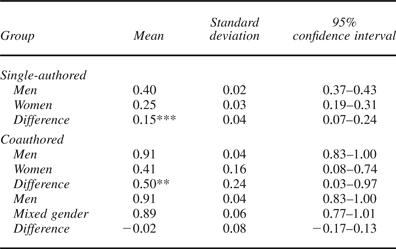
A look at our data reveals that women in IR do, in fact, cite their work significantly less than men.Footnote 52 We begin by defining a self-cite as any citation that has a common author with the author of the published article.Footnote 53 As Table 5 shows, among those single-authored articles, male-authored articles have 0.4 self-cites on average, while articles authored by one woman self-cite 0.25 articles. Looking at only coauthored articles reveals a similar pattern, where those written by two or more men cite themselves more than women. There is no significant difference between articles written by two or more men, and those written by at least one man and one woman. Again, we see that the introduction of one male author to the mix causes articles to “look” more like male-authored articles.Footnote 54 In both cases, the difference is substantively large, being just under 40 percent more in single-authored work, and more than double in coauthored work.
T-test comparing self-citations among author gender
** p < .05;
*** p < .01.
Does controlling for self-citation have a major effect on the gap? Here, we take the number of citations within our twelve-journal network and subtract all self-citations. Using this new citation count as the dependent variable, we find that the gender gap still exists. Articles written by women still receive fewer citations than those written by men. Moreover, as we suspected, coed-authored articles do not differ statistically from male-authored articles. The coefficients from models that do and do not account for self-citation do not differ statistically from each other.
The fact that the gender gap in citations continues even when we remove self-citations from the analysis is not surprising. If one self-citation translates into almost four additional citations, as Fowler and Aksnes found, then removing the self-citations will not correct for this additional benefit.Footnote 55 To address this, we not only subtract all self-citations from the total number of citations an article receives, but we also subtract an additional 3.65 citations for each self-cite.Footnote 56 When we control for “bonus” citations, the results still hold. Articles written solely by women are still cited significantly less than those written by men. Thus, although self-citation may explain some of the discrepancy between men and women, it does not explain all.
The Existence of Citation Groups
The second possible explanation has to do with informal agreements made among a group of scholars to cite each other. Clusters of individuals could inflate their citation counts by agreeing to cite each other in every article they write even if their research is only tangentially related. One type of citation game is the citation cartel. Here, groups of editors at academic journals have been known to collude to publish review articles that heavily cite articles published in each others' journals as a way to improve their impact factor.Footnote 57 This type of behavior is not only an easy way to increase citations, but it is also more difficult to trace than self-citations. If men are more apt to form such alliances than women, or have more opportunity to do so given their larger numbers or more extensive social networks, then this informal collaboration could account for the higher rate of citations for men.
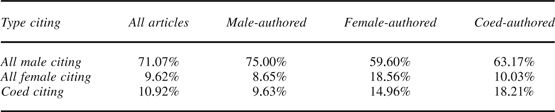
We have no definitive evidence that such informal arrangements exist or that they are more prevalent among men than women. However, stories abound in the halls of academia of such groups forming between graduate-student friends, or subfield cohorts. The evidence we do have reveals that citations appear to split along gender lines. Men tend to cite male-authored articles more than female-authored articles and women tend to cite female-authored articles more than male-authored articles.Footnote 58 This difference alone could account for the gender gap in citations since the number of men in IR is significantly higher than women. If IR scholars tend to cite along gender lines, which Table 6 suggests they do, then any researcher who is male will get a boost in citation counts simply for being a member of the dominant gender.
Dyadic citations by gender, percentages represent the mean for all articles of each type
Conclusion
These powerful findings reveal that articles written by women in IR are cited less than men even after controlling for a wide range of factors. A research article written by a woman and published in any of the top journals will still receive significantly fewer citations than if that same article had been written by a man.
We do not believe the citation gap will go away on its own even if it might improve over time. In fact, these findings make five things clear. First, citation counts are not a fair and objective measure of the quality and impact of a scholar. We now know that women will have lower citation counts than their male colleagues, at least into the foreseeable future, all else equal. Moreover, the bias stems not from a difference in quality, topic, or choice of research strategy but from certain underlying behaviors (fewer self-citations by women, and more within-gender citations).
Second, self-promotion strongly affects citation counts and women are less likely to promote themselves. Not only does self-citation increase one's overall citation score, but it also exposes one's work to a larger number of scholars, exponentially increasing citations. The fact that citation counts can be manipulated, and that this strategy is more apt to be pursued by men, disadvantages women.
Third, scholars tend to cite work by scholars of the same gender. This does not necessarily pose a problem for citation counts if a field has a fairly equal number of male and female scholars. If, however, a field is heavily dominated by men, as is the case in IR, then this pattern will lead to significantly fewer citations for women and significantly less exposure for their scholarship. It also means that the gap is not likely to disappear until a more equal number of male and female researchers exists.Footnote 59
Fourth, networks matter. Producing high-quality work is not sufficient for research to gain the attention of the widest number of scholars or have the greatest impact. Scholars tend to cite scholars they know, and work produced by lesser-known scholars, or scholars in small or peripheral networks, is likely to be cited less. If networks tend to bifurcate along gender lines, then any field that is disproportionately male will also disproportionately favor their work.
Finally, this study reveals that a subset of scholarship in IR is being systematically undervalued, even if inadvertently.Footnote 60 Research produced by a woman will be read less and cited less than research produced by a man. Not only does this mean that the trajectory of intellectual developments will be slower than it should be, but it means that the types of topics and methods being showcased in journals and on syllabi are likely to be skewed toward those favored and pursued by men.
The implications of this gap are potentially large. If citation counts, such as the h-index, are the main means by which review committees measure productivity and impact, then women will not gain tenure at the same rate as men, they will not be promoted at the same rate as men, and they will not be offered comparable salaries to men. This may help explain why women represent such a small percentage of tenured faculty, especially at major research universities. Understanding that a bias exists, therefore, is a first step in improving gender diversity in the make-up of the academic community.
This study suggests a variety of things faculty, department heads, and journal editors can do to reduce the gap. For faculty, three strategies are likely to be helpful. First, faculty can inform all of their students (especially female students) of the value of self-citation. If self-citation is a common and conventional practice, and we know it is, then women need to be encouraged to advocate for themselves and their work. As Fowler and Aksnes discovered, there are no penalties even for the most egregious self-citation.Footnote 61 In a world where the absolute number of citations an article receives is low and where citations can mean the difference between promotion or none, the failure to cite oneself can be professionally harmful. Second, faculty should also make female students aware of the benefits of coauthorship across gender lines since collaboration may be one way to increase the visibility of one's scholarly work. We do not think this should be a call for researchers to choose their coauthors based on anything but research abilities and collaborative qualities. Still, the real advantages of coauthoring should be known. Finally, faculty can emphasize the value of networking by helping their students make connections, especially with powerful members of the field. This is especially important for women in a field that is disproportionately dominated by men.
The most important recommendation for departments is to take the existence of gender bias seriously when evaluating female scholars for promotion and review. One could argue that citations should no longer be used as a measure of scholarly impact or weighted as heavily as they have been. Any measure that has been shown to include significant bias and is easy to manipulate should be discarded in favor of other, better measures. We do not believe this is the best path to take. Citation counts are a biased measure of quality and impact, but—as we demonstrated above—this bias is quantifiable to a significant degree. We believe it is better to work with an existing indicator whose bias is known, than to switch to one that is assumed to be unbiased but is not.
The findings also suggest that departments will need to determine whether bias exists in the other subfields as well. One of the questions that is likely to come up in department meetings is whether this finding is unique to IR or more widespread. It is possible, for example, that IR is a more “masculinized” subfield because of its connections with the foreign policy world or because a greater proportion of IR scholars are male. While it is possible that IR is disproportionately affected by this problem, we do not believe this is likely to be the case. Additional research will be needed to determine whether this is true, but until then, departments will need to consider that other subfields may be affected as well.
This research suggests ways in which editors at academic journals might help reduce the gap. One of the fascinating findings to emerge from this study is the tendency for men and women to more heavily cite authors from their own gender. A large portion of the gender citation gap, therefore, could be narrowed if men and women were made aware of this pattern and encouraged to be more gender neutral in who they choose to cite. One suggestion for editors is simply to monitor the ratio of male to female citations in the articles they publish.Footnote 62 What if reviewers took note of the gender ratio of citations and pointed this out to authors when citations are heavily skewed in favor of one or the other gender? Simply making authors aware of this tendency and identifying it when it occurs could help narrow the gap.
Some of the factors we discuss may be relatively easy to fix—such as the tendency for women in IR to cite themselves less. Some will be more difficult to fix—such as the tendency of individuals to cite members of their own gender. All require additional research to understand why these patterns exist and why individuals behave this way. This article says nothing about other systematic ways in which women might be disadvantaged in IR and in academia more generally. A similar study, for example, has not yet been done on whether a gender bias exists in hiring and promotion, or whether a bias exists in rates of submission and acceptance at top journals. Are articles written by women treated differently in the publication review process? Until we know the full range of bias that exists, it will be difficult to fully reach gender parity on campuses across the country.
Our first hope is that this study serves as a catalyst for additional research into the subtle and not-so-subtle barriers that may stand in the way of women rising through the ranks in any field historically dominated by men. We also hope that it helps pave the way for real changes in how universities mentor, support, and promote women. We are not the first to talk about bias in academia. The challenge has always been to prove that it exists. This study shows that it exists in at least one area related to women's advancement in the field: citations. If colleges and universities are serious about increasing the number of women on campuses, then this research reveals one area ready for improvement.