




1 Introduction
In this work, we study the reverse mathematics of theorems characterizing regular countable second countable (CSC) spaces. Reverse mathematics, in a very broad sense, is the study of the necessary and sufficient axioms needed to prove a given theorem. Most of the time, the given theorem is one that can be expressed in the seemingly poor language of second-order arithmetic. Over a suitable base theory, one can use a series of codes to talk about pairs, n-tuples, finite sets and sequences, functions, k-ary relations, countable rings and groups, complete separable metric spaces and Banach spaces, and many other mathematical objects. This allows us to express, in the language of second-order arithmetic, many theorems of ordinary mathematics.
However, the language of second-order arithmetic is not suited to consider objects of arbitrary large cardinality. One can therefore only hope to formalize a modest part of general topology. One approach is the study of MF spaces done by Mummert [Reference Mummert26], in which the points of a space are identified with second-order objects. This approach is similar to how Polish spaces are formalized in second-order arithmetic. Another approach is to consider CSC spaces. Friedman and Hirst studied CSC spaces in the form of countable subsets of complete separable metric spaces [Reference Friedman and Hirst9, Reference Hirst16]. Friedman also considered CSC spaces in the form of countable metric spaces, countable linear orders with the order topology, and subspaces of the rationals [Reference Friedman8]. Greenberg and Montalbán looked at
$T_2$
 compact CSC spaces mostly over
$\mathbf {ACA}_0$
compact CSC spaces mostly over
$\mathbf {ACA}_0$
 , which they referred to as very countable spaces. The study of CSC spaces in general over
$\mathbf {RCA}_0$
, which they referred to as very countable spaces. The study of CSC spaces in general over
$\mathbf {RCA}_0$
 started with Dorais [Reference Dorais6], who showed that arithmetic comprehension is needed for many basic topological facts. For example, in the absence of arithmetic comprehension, there can be compact infinite discrete spaces and products of compact spaces that are not compact.
Dorais’ formalization of CSC spaces has been looked at from different perspectives. Frittaion et al. looked at Noetherian CSC spaces [Reference Frittaion, Hendtlass, Marcone, Shafer and Van der Meeren10], which arise naturally as the Alexandroff topology of well quasi orders. Countable linear orders with their order topology were studied by Shafer [Reference Shafer29]. More recently, the Ginsburg–Sands theorem for CSC spaces, a Ramsey-type principle, has been studied by Benham et al. [Reference Benham, DeLapo, Dzhafarov, Solomon and Villano3]. In their work they showed that every infinite
$T_1$
 CSC space has an infinite subspace which is either discrete or has the cofinite topology is strictly between the strength of the Ramsey theorem for pairs and
$\mathbf {ACA}_0$
CSC space has an infinite subspace which is either discrete or has the cofinite topology is strictly between the strength of the Ramsey theorem for pairs and
$\mathbf {ACA}_0$
 .
.
It is natural to ask what are the conditions for metrizability. Understanding which CSC spaces are metrizable or completely metrizable allows us to frame Friedman and Hirst’s results about countable subspaces of complete metric spaces in terms of Dorais’ formalization of CSC spaces. A sketch of a metrization proof is given in Greenberg and Montalbán [Reference Greenberg and Montalbán12], which follows the classic proof of the Urysohn metrization theorem. However, the proof seems to work only for compact
$T_2$
 CSC spaces. We prove that over
$\mathbf {RCA}_0$
CSC spaces. We prove that over
$\mathbf {RCA}_0$
 , the metrizability of effectively
$T_2$
, the metrizability of effectively
$T_2$
 regular CSC spaces is equivalent to arithmetic comprehension. Lynn [Reference Lynn23] proved that the zero-dimensional subspaces of
$\mathbb {R}^n$
regular CSC spaces is equivalent to arithmetic comprehension. Lynn [Reference Lynn23] proved that the zero-dimensional subspaces of
$\mathbb {R}^n$
 are linearly orderable. We show that this theorem for
$T_3$
are linearly orderable. We show that this theorem for
$T_3$
 CSC spaces can be carried out over
$\mathbf {ACA}_0$
CSC spaces can be carried out over
$\mathbf {ACA}_0$
 , and we get a partial reversal. We will also prove that
$T_2$
, and we get a partial reversal. We will also prove that
$T_2$
 compact CSC spaces are well-orderable over
$\mathbf {ACA}_0$
compact CSC spaces are well-orderable over
$\mathbf {ACA}_0$
 and give a partial characterization of the effectively
$T_2$
and give a partial characterization of the effectively
$T_2$
 effectively compact CSC spaces over
$\mathbf {RCA}_0$
effectively compact CSC spaces over
$\mathbf {RCA}_0$
 in terms of well-orders.
In the second part of this work, we will consider scattered regular CSC spaces and locally compact
$T_2$
 CSC spaces. We have that scattered
$T_2$
CSC spaces. We have that scattered
$T_2$
 regular CSC spaces are precisely the countable completely metrizable spaces, and locally compact
$T_2$
regular CSC spaces are precisely the countable completely metrizable spaces, and locally compact
$T_2$
 CSC spaces are the well-orderable spaces. Both of these characterizations turn out to be equivalent to arithmetic transfinite recursion. The proofs of both these characterizations rely on the fact that arithmetic transfinite recursion is equivalent to every locally compact
$T_2$
CSC spaces are the well-orderable spaces. Both of these characterizations turn out to be equivalent to arithmetic transfinite recursion. The proofs of both these characterizations rely on the fact that arithmetic transfinite recursion is equivalent to every locally compact
$T_2$
 CSC space has a choice of compact neighborhoods. We will also be able to give alternative proofs to some results by Friedman and Hirst [Reference Friedman and Hirst9, Reference Hirst16]. Finally, we show that every
$T_2$
CSC space has a choice of compact neighborhoods. We will also be able to give alternative proofs to some results by Friedman and Hirst [Reference Friedman and Hirst9, Reference Hirst16]. Finally, we show that every
$T_2$
 regular CSC space has a rank and every
$T_2$
regular CSC space has a rank and every
$T_2$
 regular CSC space is the disjoint union of a dense in itself space and a scattered space are both equivalent to
$\Pi ^1_1$
regular CSC space is the disjoint union of a dense in itself space and a scattered space are both equivalent to
$\Pi ^1_1$
 comprehension over
$\mathbf {RCA}_0$
comprehension over
$\mathbf {RCA}_0$
 . We will also show that being compact, being connected, being scattered, and being a complete metric space are all
$\Pi ^1_1$
. We will also show that being compact, being connected, being scattered, and being a complete metric space are all
$\Pi ^1_1$
 universal formulas over
$\mathbf {ACA}_0$
universal formulas over
$\mathbf {ACA}_0$
 .
.
Part I
Metrization and orderability of CSC spaces.
In this part we will study the conditions needed for a space to be metrizable or orderable over
$\mathbf {RCA}_0$
 . We will also study the conditions for orderability. A large portion of this part will be dedicated to introducing basic known facts and definitions as well as presenting lemmas which, while being technical and not of immediate interest, will be needed for the next part.
2 Notation
For a poset
$(P,\leq _P)$
 and
$S\subseteq P$
and
$S\subseteq P$
 we write


We call
${\uparrow } S$
 the upwards closure of S in P and
${\downarrow } S$
the upwards closure of S in P and
${\downarrow } S$
 the downwards closure of S in P.
We use the French notation for intervals. That is, for a linear order
$(L,<_L)$
 and
$a,b\in L$
and
$a,b\in L$
 we write



If L has a minimal element, we will denote it usually by
$0$
 . We use the convention that
$-\infty $
. We use the convention that
$-\infty $
 denotes a new element strictly smaller than any element of L and
$+\infty $
denotes a new element strictly smaller than any element of L and
$+\infty $
 or
$\infty $
or
$\infty $
 to denote an element that is strictly greater than any element of L. By
$L+1$
to denote an element that is strictly greater than any element of L. By
$L+1$
 , we mean the linear order with field
$L\cup \{\infty \}$
, we mean the linear order with field
$L\cup \{\infty \}$
 and the order is extended so that
$\infty $
and the order is extended so that
$\infty $
 is greater than any other element of L.
By
$\mathbb {N}^{<\mathbb {N}}$
 we mean the set of all finite sequences of numbers and by
$2^{<\mathbb {N}}$
we mean the set of all finite sequences of numbers and by
$2^{<\mathbb {N}}$
 we mean the set of all finite
$0$
we mean the set of all finite
$0$
 –
$1$
–
$1$
 valued sequences. For
$\sigma ,\tau \in \mathbb {N}^{<\mathbb {N}}$
valued sequences. For
$\sigma ,\tau \in \mathbb {N}^{<\mathbb {N}}$
 we write
$\sigma \sqsubseteq \tau $
we write
$\sigma \sqsubseteq \tau $
 if
$|\sigma |\leq |\tau |\wedge \forall i<|\sigma |\;(\sigma (i)=\tau (i))$
if
$|\sigma |\leq |\tau |\wedge \forall i<|\sigma |\;(\sigma (i)=\tau (i))$
 . We will also use the following conventions:
-
(1) $2^{=n}=\{\sigma \in 2^{<\mathbb {N}}:|\sigma |=n\}$
 and
$\mathbb {N}^{=n}=\{\sigma \in \mathbb {N}^{<\mathbb {N}}:|\sigma |=n\}.$
and
$\mathbb {N}^{=n}=\{\sigma \in \mathbb {N}^{<\mathbb {N}}:|\sigma |=n\}.$
-
(2) $2^{\leq n}=\{\sigma \in 2^{<\mathbb {N}}:|\sigma |\leq n\}$
and
$\mathbb {N}^{\leq n}=\{\sigma \in \mathbb {N}^{<\mathbb {N}}:|\sigma |\leq n\}.$




Given a sequence
$\sigma \in \mathbb {N}^{<\mathbb {N}}$
 we write

A tree is a subset T of
$\mathbb {N}^{<\mathbb {N}}$
 such that
$T={\downarrow } T$
such that
$T={\downarrow } T$
 . We say that
$f:\mathbb {N}\rightarrow \mathbb {N}$
. We say that
$f:\mathbb {N}\rightarrow \mathbb {N}$
 is a branch in T if for all
$n\in \mathbb {N}$
is a branch in T if for all
$n\in \mathbb {N}$
 we have
$f|_{<n}\in T$
we have
$f|_{<n}\in T$
 . By
$[T]$
. By
$[T]$
 , we mean the set of branches of T. We say that a tree is well-founded if
$[T]\neq \emptyset $
, we mean the set of branches of T. We say that a tree is well-founded if
$[T]\neq \emptyset $
 .
.
Given
$A\subseteq \mathbb {N}$
 and
$e,x\in \mathbb {N}$
and
$e,x\in \mathbb {N}$
 we write
$\Phi ^A_e(x)$
we write
$\Phi ^A_e(x)$
 to mean the Turing machine with index e, oracle A, and input x. We write
$\Phi ^A_e(x){\downarrow }_{\leq t}$
to mean the Turing machine with index e, oracle A, and input x. We write
$\Phi ^A_e(x){\downarrow }_{\leq t}$
 to mean that the Turing machine with index e and oracle A halts at input x in less than t steps and we write
$\Phi ^A_e(x){\downarrow }$
to mean that the Turing machine with index e and oracle A halts at input x in less than t steps and we write
$\Phi ^A_e(x){\downarrow }$
 to mean that there exists a t such that
$\Phi ^A_e(x){\downarrow }_{\leq t}$
to mean that there exists a t such that
$\Phi ^A_e(x){\downarrow }_{\leq t}$
 and
$\Phi ^A_e(x){\uparrow }$
and
$\Phi ^A_e(x){\uparrow }$
 if such t doesn’t exist. We write
$B\leq _T A$
if such t doesn’t exist. We write
$B\leq _T A$
 if there exists an
$e\in \mathbb {N}$
if there exists an
$e\in \mathbb {N}$
 such that
$\Phi ^A_e$
such that
$\Phi ^A_e$
 is the characteristic function of B.
We will also assume that there is a fixed
$\Delta ^0_0$
 definable pairing function for numbers and we use the Ackermann interpretation to encode finite sets. That is, we have that
$x\in _{Ack} y$
definable pairing function for numbers and we use the Ackermann interpretation to encode finite sets. That is, we have that
$x\in _{Ack} y$
 if the x-th digit of the binary representation of y is
$1$
if the x-th digit of the binary representation of y is
$1$
 . We will not distinguish between finite sets and codes for finite sets. We will use the fact that membership in the Ackermann interpretation is
$\Delta ^0_1$
. We will not distinguish between finite sets and codes for finite sets. We will use the fact that membership in the Ackermann interpretation is
$\Delta ^0_1$
 definable. More details about coding in arithmetic can be found in [Reference Hájek and Pudlák13].
3 Reverse mathematics
We briefly introduce the Big Five systems of reverse mathematics and some classic theorems. More details can be found in [Reference Dzhafarov and Mummert7, Reference Hirschfeldt15, Reference Simpson32].
$\mathbf {RCA}_0$
 is the system consisting of the axioms of a discretely ordered commutative semiring with identity, induction for
$\Sigma ^0_1$
is the system consisting of the axioms of a discretely ordered commutative semiring with identity, induction for
$\Sigma ^0_1$
 formulas, and comprehension for
$\Delta ^0_1$
formulas, and comprehension for
$\Delta ^0_1$
 predicates.
$\mathbf {WKL}_0$
 is the system
$\mathbf {RCA}_0$
is the system
$\mathbf {RCA}_0$
 plus the statement that any infinite subtree of the binary tree
$2^{<\mathbb {N}}$
plus the statement that any infinite subtree of the binary tree
$2^{<\mathbb {N}}$
 has an infinite branch.
$\mathbf {ACA}_0$
 is the system
$\mathbf {RCA}_0$
is the system
$\mathbf {RCA}_0$
 plus comprehension for all arithmetical formulas.
$\mathbf {ATR}_0$
 is the system
$\mathbf {RCA}_0$
is the system
$\mathbf {RCA}_0$
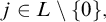
 plus arithmetic transfinite recursion, which is the statement that for any well-order
$(L,<_L)$
plus arithmetic transfinite recursion, which is the statement that for any well-order
$(L,<_L)$
 with least element
$0$
with least element
$0$
 , any set X, and any arithmetical formula
$\varphi $
, any set X, and any arithmetical formula
$\varphi $
 there exists a sequence of sets
$(X_j)_{j\in L}$
there exists a sequence of sets
$(X_j)_{j\in L}$
 such that
$X_0=X$
such that
$X_0=X$
 and for all
$j\in L\setminus \{0\},$
and for all
$j\in L\setminus \{0\},$

Informally, we can view
$X_j$
 as being the set obtained by applying some arithmetic procedure given by
$\varphi $
as being the set obtained by applying some arithmetic procedure given by
$\varphi $
 to
$X\, j$
to
$X\, j$
 many times.
$\Pi ^1_1 \textbf {-CA}_0$
 is the system
$\mathbf {RCA}_0$
is the system
$\mathbf {RCA}_0$
 plus comprehension for
$\Pi ^1_1$
plus comprehension for
$\Pi ^1_1$
 formulas.
Proposition 3.1.
$\mathbf {RCA}_0$
 proves the following:
-
(1) For any strictly increasing function $f:\mathbb {N}\rightarrow \mathbb {N}$
,
$\text {rng}(f)$
exists. -
(2) $\mathbf {B}\Sigma ^0_1$
: For every
$\Sigma ^0_1$
formula
$\varphi $
we have $$ \begin{align*} \forall a\;(\forall x<a\; \exists y\;\varphi(x,y))\rightarrow (\exists b\;\forall x<a\;\exists y<b \;\varphi(x,y)) \end{align*} $$
(see [Reference Hájek and Pudlák13, Theorem 1.44] or [Reference Simpson32, Exercise II.3.14]).


Proposition 3.2. Over
$\mathbf {RCA}_0$
 the following are equivalent:
-
(1) Arithmetic comprehension.
-
(2) For every injective function $f:\mathbb {N}\rightarrow \mathbb {N}$
, the range of f exists (see [Reference Simpson32, Lemma III.1.3]). -
(3) For every set X, the Turing jump $X'=\{e\in \mathbb {N}:\Phi ^X_e(e){\downarrow }\}$
exists (see [Reference Dzhafarov and Mummert7, Corollary 5.6.3]). -
(4) Kőnig’s lemma: Every infinite, finitely branching tree $T\subseteq \mathbb {N}^{<\mathbb {N}}$
has a branch (see [Reference Simpson32, Theorem III.7.2]).



Theorem 3.3. Over
$\mathbf {RCA}_0$
 the following are equivalent:
-
(1) Arithmetic transfinite recursion.
-
(2) For every sequence of trees $(T_i)_{i\in \mathbb {N}}$
such that
$\forall i\in \mathbb {N}\;|[T_i]|\leq 1$
, the set
$\{i\in \mathbb {N}: [T_i]\neq \emptyset \}$
exists (see [Reference Simpson32, Theorem V.5.2]). -
(3) Weak comparability of well-orders: For any two well-orders L and W, there either exists an increasing function from L to W or an increasing function from W to L (see [Reference Dzhafarov and Mummert7, Section 12.1]).
-
(4) Strong comparability of well-orders: For any two well-orders L and W, either L is isomorphic to an initial segment of W or W is isomorphic to an initial segment of L (see [Reference Simpson32, Section V.6]).



Theorem 3.4 (See [Reference Dzhafarov and Mummert7, Corollary 12.1.14] and [Reference Simpson32, Theorem V.8.3])
$\mathbf {ATR}_0$
 proves
$\Sigma ^1_1$
proves
$\Sigma ^1_1$
 choice, or rather for every
$\Sigma ^1_1$
choice, or rather for every
$\Sigma ^1_1$
 formula
$\varphi $
formula
$\varphi $
 we have

Theorem 3.5 (See [Reference Simpson32, Section V.1])
For any
$\Sigma _1^1$
 formula
$\varphi (X)$
formula
$\varphi (X)$
 there exists a
$\Delta ^0_0$
there exists a
$\Delta ^0_0$
 formula
$\theta (\sigma ,\tau )$
formula
$\theta (\sigma ,\tau )$
 such that
$\mathbf {ACA}_0$
such that
$\mathbf {ACA}_0$
 proves that

the formula to the right-hand side of the biconditional is called the Kleene normal form of
$\varphi $
 .
.
Observation 3.6. The formula
$\theta $
 in the previous theorem can be seen as defining a tree with respect to X. So over
$\mathbf {ACA}_0$
in the previous theorem can be seen as defining a tree with respect to X. So over
$\mathbf {ACA}_0$
 being an ill founded tree is a universal
$\Sigma ^1_1$
being an ill founded tree is a universal
$\Sigma ^1_1$
 formula and being a well-founded tree is a universal
$\Pi ^1_1$
formula and being a well-founded tree is a universal
$\Pi ^1_1$
 formula.
Definition 3.7. Let
$T\subseteq \mathbb {N}^{<\mathbb {N}}$
 be a tree. The Kleene–Brouwer order on T is given by

$\mathbf {ACA}_0$
 proves that every T is well-founded if and only if it is well-ordered with respect to the Kleene–Brouwer order (see [Reference Simpson32, Section V.1]).
Corollary 3.8 (See [Reference Simpson32, Lemma VI.1.1])
Over
$\mathbf {RCA}_0$
 the following are equivalent:
-
(1) $\Pi ^1_1$
comprehension. -
(2) For any sequence of trees $(T_i)_{i\in \mathbb {N}}$
the set
$\{i\in \mathbb {N}: T_i \text { is well-founded}\}$
exists. -
(3) For any sequence of linear orders $(L_i,<_i)_{i\in \mathbb {N}}$
the set
$\{i\in \mathbb {N}: (L_i,<_i) \text{is a well order}\}$
exists.





4 Countable second countable spaces
In this section we will go over some basic definitions and facts about CSC spaces. We will also go over how countable metric spaces may be treated as CSC spaces over
$\mathbf {RCA}_0$
 .
.
Definition 4.1. A topological space is said to be second countable if it has a countable basis of open sets. We say that a topological space is first countable if the neighborhood filter of every point has a countable cofinal sequence. It is easy to check that for a countable space, being first countable is equivalent to being second countable.
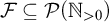
Observation 4.2. One may wonder if all countable spaces are second countable. This is not the case. A simple procedure to construct countable but not second countable spaces is to take any downwards directed family
$\mathcal {F}\subseteq\mathcal {P}(\mathbb {N}_{>0})$
 that does not have a countable cofinal sequence, and define on
$\mathbb {N}$
that does not have a countable cofinal sequence, and define on
$\mathbb {N}$
 the topology in which every
$n\in \mathbb {N}_{>0}$
the topology in which every
$n\in \mathbb {N}_{>0}$
 is isolated and the basic open neighborhoods of
$0$
is isolated and the basic open neighborhoods of
$0$
 are the ones of the form
$\{0\}\cup S$
are the ones of the form
$\{0\}\cup S$
 where
$S\in \mathcal {F}$
where
$S\in \mathcal {F}$
 .
.
To find such a directed subset of
$\mathcal {P}(\mathbb {N}_{>0})$
 one can use the fact that there exists a family
$\mathcal {B}$
one can use the fact that there exists a family
$\mathcal {B}$
 of size
$2^{\aleph _0}$
of size
$2^{\aleph _0}$
 of infinite subsets of
$\mathbb {N}_{>0}$
of infinite subsets of
$\mathbb {N}_{>0}$
 such that the intersection of any two members is finite. Let
$\mathcal {F}$
such that the intersection of any two members is finite. Let
$\mathcal {F}$
 be the family of all finite intersections of the complements of elements in
$\mathcal {B}$
be the family of all finite intersections of the complements of elements in
$\mathcal {B}$
 . We have that
$\mathcal {F}$
. We have that
$\mathcal {F}$
 is downwards directed, but it does not have a cofinal sequence.
Definition 4.3 (Dorais [Reference Dorais6, Definition 2.2])
In the context of second-order arithmetic, we have that a CSC space is a tuple
$(X,(U_i)_{i\in \mathbb {N}},k)$
 where X is a subset of
$\mathbb {N}$
where X is a subset of
$\mathbb {N}$
 , for each
$i \in \mathbb {N}\, U_i\subseteq X$
, for each
$i \in \mathbb {N}\, U_i\subseteq X$
 and
$k: X\times \mathbb {N}\times \mathbb {N}\rightarrow \mathbb {N}$
and
$k: X\times \mathbb {N}\times \mathbb {N}\rightarrow \mathbb {N}$
 is a partial function such that

A set
$A\subseteq X$
 is open if for all
$x\in A\;\exists i\in \mathbb {N}\,(x\in U_i\subseteq A)$
is open if for all
$x\in A\;\exists i\in \mathbb {N}\,(x\in U_i\subseteq A)$
 , and a set
$C\subseteq X$
, and a set
$C\subseteq X$
 is closed if it is the complement of an open set.
Definition 4.4 (Dorais [Reference Dorais6, Definition 2.4])
Given a CSC space
$(X,(U_i)_{i\in \mathbb {N}},k)$
 , an open code is a partial function
$f:\mathbb {N}\rightarrow \mathbb {N}$
, an open code is a partial function
$f:\mathbb {N}\rightarrow \mathbb {N}$
 . The open collection coded by f is the collection
$A=\{x\in X:\exists n\in \mathbb {N}\, x\in U_{f(n)}\}$
. The open collection coded by f is the collection
$A=\{x\in X:\exists n\in \mathbb {N}\, x\in U_{f(n)}\}$
 . Similarly, a closed code is a partial function
$g:\mathbb {N}\rightarrow \mathbb {N}$
. Similarly, a closed code is a partial function
$g:\mathbb {N}\rightarrow \mathbb {N}$
 . The closed collection coded by g is the collection
$C=\{x\in X: \forall n\in \mathbb {N}\, x\notin U_{g(n)}\}$
. The closed collection coded by g is the collection
$C=\{x\in X: \forall n\in \mathbb {N}\, x\notin U_{g(n)}\}$
 .
.
In general,
$\mathbf {RCA}_0$
 may not be sufficient to show that a coded open or closed collection exists as a set. Similarly, we have that
$\mathbf {RCA}_0$
may not be sufficient to show that a coded open or closed collection exists as a set. Similarly, we have that
$\mathbf {RCA}_0$
 is not sufficient to prove that every open or closed set has a code. A coded open collection that exists as a set is called an effectively open set, and a coded closed collection which exists as a set is called an effectively closed set. We leave it to the reader to show that every coded open collection exists as a set and every open set is coded are both equivalent to arithmetic comprehension over
$\mathbf {RCA}_0$
is not sufficient to prove that every open or closed set has a code. A coded open collection that exists as a set is called an effectively open set, and a coded closed collection which exists as a set is called an effectively closed set. We leave it to the reader to show that every coded open collection exists as a set and every open set is coded are both equivalent to arithmetic comprehension over
$\mathbf {RCA}_0$
 .
.
Observation 4.5. The coded open collections will be closed under finite intersections and countable unions. Given
$A_0$
 and
$A_1$
and
$A_1$
 open collections with codes
$f_0$
open collections with codes
$f_0$
 and
$f_1$
and
$f_1$
 , the partial function
$h:\mathbb {N}\times \mathbb {N}\times X\rightarrow \mathbb {N}$
, the partial function
$h:\mathbb {N}\times \mathbb {N}\times X\rightarrow \mathbb {N}$
 given by
$h(x,i,j)=k(x,f_0(i),f_1(j))$
given by
$h(x,i,j)=k(x,f_0(i),f_1(j))$
 will code
$A_0\cap A_1$
will code
$A_0\cap A_1$
 . Given a sequence of coded open collections
$(A_i)_{i\in \mathbb {N}}$
. Given a sequence of coded open collections
$(A_i)_{i\in \mathbb {N}}$
 with codes
$(f_i)_{i\in \mathbb {N}}$
with codes
$(f_i)_{i\in \mathbb {N}}$
 the partial function
$F:\mathbb {N}\times \mathbb {N}\rightarrow \mathbb {N}$
the partial function
$F:\mathbb {N}\times \mathbb {N}\rightarrow \mathbb {N}$
 given by
$F(i,n)=f_i(n)$
given by
$F(i,n)=f_i(n)$
 is the code for the open collection
$\bigcup _{i\in \mathbb {N}} A_i$
is the code for the open collection
$\bigcup _{i\in \mathbb {N}} A_i$
 . Similarly, coded closed collections are closed under finite unions and countable intersections.
Definition 4.6. Let
$(X,(U_i)_{i\in \mathbb {N}},k)$
 be a CSC space, we say that a sequence of open sets
$(A_n)_{n\in \mathbb {N}}$
be a CSC space, we say that a sequence of open sets
$(A_n)_{n\in \mathbb {N}}$
 is a sequence of uniformly effectively open sets if there exists a sequence
$(f_n)_{n\in \mathbb {N}}$
is a sequence of uniformly effectively open sets if there exists a sequence
$(f_n)_{n\in \mathbb {N}}$
 , such that for all
$n\in \mathbb {N}\, f_n$
, such that for all
$n\in \mathbb {N}\, f_n$
 is an open code for
$A_n$
is an open code for
$A_n$
 . Similarly,
$(C_n)_{n\in \mathbb {N}}$
. Similarly,
$(C_n)_{n\in \mathbb {N}}$
 is a sequence of uniformly effectively closed sets if there exists a sequence
$(g_n)_{n\in \mathbb {N}}$
is a sequence of uniformly effectively closed sets if there exists a sequence
$(g_n)_{n\in \mathbb {N}}$
 such that for all
$n\in \mathbb {N}\, g_n$
such that for all
$n\in \mathbb {N}\, g_n$
 is a closed code for
$C_n$
is a closed code for
$C_n$
 .
.
Definition 4.7 (Dorais [Reference Dorais6, Definition 2.5])
For a pair
$(X,(U_i)_{i\in \mathbb {N}},k)$
 and
$(Y,(V_i)_{i\in \mathbb {N}},k^*)$
and
$(Y,(V_i)_{i\in \mathbb {N}},k^*)$
 of CSC spaces, we say that a function
$f:X\rightarrow Y$
of CSC spaces, we say that a function
$f:X\rightarrow Y$
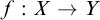 is effectively continuous if there exists a function
$v:X\times \mathbb {N}\rightarrow \mathbb {N}$
is effectively continuous if there exists a function
$v:X\times \mathbb {N}\rightarrow \mathbb {N}$
 such that for every
$x\in X$
such that for every
$x\in X$
 and
$j\in \mathbb {N}$
and
$j\in \mathbb {N}$
 if
$f(x)\in V_j$
if
$f(x)\in V_j$
 then
$x\in U_{v(x,j)}$
then
$x\in U_{v(x,j)}$
 and
$f(U_{v(x,j)})\subseteq f(V_j)$
and
$f(U_{v(x,j)})\subseteq f(V_j)$
 . We say that the function
$v$
. We say that the function
$v$
 verifies that f is continuous. We say that
$f:X\rightarrow Y$
verifies that f is continuous. We say that
$f:X\rightarrow Y$
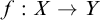 is effectively open if there exists a function
$v:X\times \mathbb {N}\rightarrow \mathbb {N}$
is effectively open if there exists a function
$v:X\times \mathbb {N}\rightarrow \mathbb {N}$
 such that for every
$x\in X$
such that for every
$x\in X$
 and
$j\in \mathbb {N}$
and
$j\in \mathbb {N}$
 such that
$x\in U_j$
such that
$x\in U_j$
 then
$f(x)\in V_{v(x,j)}$
then
$f(x)\in V_{v(x,j)}$
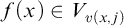 and
$V_{v(x,j)}\subseteq f(U_j)$
and
$V_{v(x,j)}\subseteq f(U_j)$
 . If f is effectively continuous and has an effectively continuous inverse, or equivalently, f is an effectively continuous and effectively open bijection, then we say that f is an effective homeomorphism. We will write
$X\cong Y$
. If f is effectively continuous and has an effectively continuous inverse, or equivalently, f is an effectively continuous and effectively open bijection, then we say that f is an effective homeomorphism. We will write
$X\cong Y$
 to say that X is effectively homeomorphic to Y. We say that
$f:X\rightarrow Y$
to say that X is effectively homeomorphic to Y. We say that
$f:X\rightarrow Y$
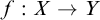 is an effective embedding if f is effectively continuous and there is a function
$v:X\times \mathbb {N}\rightarrow \mathbb {N}$
is an effective embedding if f is effectively continuous and there is a function
$v:X\times \mathbb {N}\rightarrow \mathbb {N}$
 such that for all
$x\in X$
such that for all
$x\in X$
 and
$i\in \mathbb {N}$
and
$i\in \mathbb {N}$
 such that
$x\in U_i$
such that
$x\in U_i$
 then
$x\in f^{-1}(V_{v(x,i)})\subseteq U_i$
then
$x\in f^{-1}(V_{v(x,i)})\subseteq U_i$
 . We will say that the function
$v$
. We will say that the function
$v$
 verifies that f is effectively open with its range. We note, however, that in general, over
$\mathbf {RCA}_0$
verifies that f is effectively open with its range. We note, however, that in general, over
$\mathbf {RCA}_0$
 , the range of an effective embedding may not exist as a set.
Observation 4.8. Since over
$\mathbf {ACA}_0$
 every CSC space has a function k we will often omit it from the definition of CSC space. Similarly, we won’t distinguish homeomorphisms from effective homeomorphisms over
$\mathbf {ACA}_0$
every CSC space has a function k we will often omit it from the definition of CSC space. Similarly, we won’t distinguish homeomorphisms from effective homeomorphisms over
$\mathbf {ACA}_0$
 .
.
Definition 4.9 (See [Reference Simpson32, Definition II.4.4])
A real number is a sequence
$(q_k)_{k\in \mathbb {N}}$
 of rational numbers such that
$\forall k\;\forall i\;(|q_{k}-q_{k+i}|\leq 2^{-k})$
of rational numbers such that
$\forall k\;\forall i\;(|q_{k}-q_{k+i}|\leq 2^{-k})$
 . We denote the class of real numbers by
$\mathbb {R}$
. We denote the class of real numbers by
$\mathbb {R}$
 . Let
$(p_k)_{k\in \mathbb {N}}$
. Let
$(p_k)_{k\in \mathbb {N}}$
 and
$(q_k)_{k\in \mathbb {N}}$
and
$(q_k)_{k\in \mathbb {N}}$
 be real numbers, we define:
-
(1) $(p_k)_{k\in \mathbb {N}}=_{\mathbb {R}}(q_k)_{k\in \mathbb {N}}$
if and only if
$\forall k\;|p_k-q_k|\leq 2^{-k+1}$
. -
(2) $(p_k)_{k\in \mathbb {N}}\leq _{\mathbb {R}}(q_k)_{k\in \mathbb {N}}$
if and only if
$\forall k\;p_k-q_k\leq 2^{-k+1}$
. -
(3) $(p_k)_{k\in \mathbb {N}}<_{\mathbb {R}}(q_k)_{k\in \mathbb {N}}$
if and only if
$\exists k\;q_k-p_k>2^{k+1}$
.






Addition on the reals is defined pointwise. Given a rational q and a real
$r=(r_n)_{n\in \mathbb {N}}$
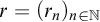 we define the product
$q\cdot r$
we define the product
$q\cdot r$
 to be the sequence
$(q\cdot r_{n+ k})_{n\in \mathbb {N}}$
to be the sequence
$(q\cdot r_{n+ k})_{n\in \mathbb {N}}$
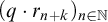 where
$k=\min \{j\in \mathbb {N}:2^j\geq q\}$
where
$k=\min \{j\in \mathbb {N}:2^j\geq q\}$
 .
.
We would like to be able to give a CSC structure to countable metric spaces. We will not be considering metric spaces the way they are usually defined in the context of reverse math (see [Reference Dzhafarov and Mummert7, Definition 10.1.5] or [Reference Simpson32, Definition I.8.1]) which is that of coded Polish spaces. Since we are working with CSC spaces, for our purposes we will only be considering countable metric spaces which will be a pair
$(X,d)$
 where
$X\subseteq \mathbb {N}$
where
$X\subseteq \mathbb {N}$
 is the collection of points and
$d:X\times X\rightarrow \mathbb {R}$
is the collection of points and
$d:X\times X\rightarrow \mathbb {R}$
 is a metric.
It is not immediate how a CSC structure may be given effectively to a countable metric space. In general, for a countable metric space
$(X,d)$
 , the open balls
$B(x,r)$
, the open balls
$B(x,r)$
 are
$\Sigma ^0_1$
are
$\Sigma ^0_1$
 definable but may not be
$\Pi ^0_1$
definable but may not be
$\Pi ^0_1$
 definable relative
$(X,d)$
definable relative
$(X,d)$
 . So
$\Delta ^0_1$
. So
$\Delta ^0_1$
 comprehension does not suffice to show that the open balls exist as sets. One solution is to simply consider CSC spaces with a weak basis as is done in [Reference Dzhafarov and Mummert7, Definition 10.8.2] in which the elements of the basis are the images of partial functions rather than sets. We present another approach to giving countable metric spaces a CSC structure.
We note that if the ball is clopen, that is,
$B(x,r)=\overline {B(x,r)}$
 , then

Since strict inequality between reals is
$\Sigma ^0_1$
 and weak inequality is
$\Pi ^0_1$
and weak inequality is
$\Pi ^0_1$
 , we have that
$B(x,r)$
, we have that
$B(x,r)$
 is
$\Delta ^0_1$
is
$\Delta ^0_1$
 definable. Working over
$\mathbf {RCA}_0$
definable. Working over
$\mathbf {RCA}_0$
 , any clopen ball exists by
$\Delta ^0_1$
, any clopen ball exists by
$\Delta ^0_1$
 comprehension. So, the problem of finding a CSC structure for a countable metric space is reduced to finding a basis of clopen balls.
Proposition 4.10.
$\mathbf {RCA}_0$
 proves that for any countable metric space
$(X,d)$
proves that for any countable metric space
$(X,d)$
 there exists a real
$a\in \mathbb {R}$
there exists a real
$a\in \mathbb {R}$
 such that

and that there is a function k such that
$(X, (B(x,q\cdot a) )_{q\in \mathbb {Q}_{>0},x\in X},k)$
 is a CSC space.
Proof. Informally, we will construct a real a that is the diagonal of the reals
$(q\cdot d(x,y))_{q\in \mathbb {Q}_{>0},x,y\in X}$
 . Let
$(t_n)_{n\in \mathbb {N}}$
. Let
$(t_n)_{n\in \mathbb {N}}$
 be an enumeration of all triples
$(x,y,q)\in X\times X\times \mathbb {Q}_{>0}$
be an enumeration of all triples
$(x,y,q)\in X\times X\times \mathbb {Q}_{>0}$
 . We define a real
$a=(a_i)_{i\in \mathbb {N}}$
. We define a real
$a=(a_i)_{i\in \mathbb {N}}$
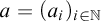 recursively as follows. Set
$a_0=\frac {1}{2}$
recursively as follows. Set
$a_0=\frac {1}{2}$
 . At step
$i+1$
. At step
$i+1$
 let
$t_i=(x,y,q)$
let
$t_i=(x,y,q)$
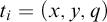 and let
$q\cdot d(x,y)=(b_j)_{j\in \mathbb {N}}$
and let
$q\cdot d(x,y)=(b_j)_{j\in \mathbb {N}}$
 . If
$|b_{2i+2}-a_{2i}|<2^{-2i-1}$
. If
$|b_{2i+2}-a_{2i}|<2^{-2i-1}$
 then:
then:
-
(1) $b_{2i+2}\geq a_{2i}$
, in which case we define
$a_{2i+1}=a_{2i+2}=b_{2i+2}- 2^{-2i-1}$
. -
(2) $b_{2i+2}< a_{2i}$
, in which case we define
$a_{2i+1}=a_{2i+2}=b_{2i+2}+ 2^{-2i-1}$
.




If instead
$|b_{i+1}-a_i|\geq 2^{-2i-1}$
 then we define
$a_{i+1}=a_i$
then we define
$a_{i+1}=a_i$
 . By induction, the triangle inequality, and using the fact that

we have that
$(a_i)_{i\in \mathbb {N}}$
 is a real number. Since
$a=(a_{i})_{i\in \mathbb {N}}$
is a real number. Since
$a=(a_{i})_{i\in \mathbb {N}}$
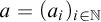 is recursive relative to
$(X,d)$
is recursive relative to
$(X,d)$
 it exists by
$\Delta ^0_1$
it exists by
$\Delta ^0_1$
 comprehension. By construction of a, we have that for all
$x,y\in X$
comprehension. By construction of a, we have that for all
$x,y\in X$
 ,
$q\in \mathbb {Q}\, a\neq _{\mathbb {R}} q\cdot d(x,y)$
,
$q\in \mathbb {Q}\, a\neq _{\mathbb {R}} q\cdot d(x,y)$
 . In particular we have that for all
$q\in \mathbb {Q}$
. In particular we have that for all
$q\in \mathbb {Q}$
 and all
$x\in X$
and all
$x\in X$
 the ball
$B(x,q\cdot a)$
the ball
$B(x,q\cdot a)$
 is clopen. Since the clopen balls are uniformly
$\Delta ^0_1$
is clopen. Since the clopen balls are uniformly
$\Delta ^0_1$
 definable relative to
$(X,d)$
definable relative to
$(X,d)$
 , we have that the collection
$(B(x,q\cdot a))_{q\in \mathbb {Q}_{>0},x\in X}$
, we have that the collection
$(B(x,q\cdot a))_{q\in \mathbb {Q}_{>0},x\in X}$
 exists by
$\Delta ^0_1$
exists by
$\Delta ^0_1$
 comprehension. Let
$(q_i)_{i\in \mathbb {N}}$
comprehension. Let
$(q_i)_{i\in \mathbb {N}}$
 be an enumeration of
$\mathbb {Q}_{>0}$
be an enumeration of
$\mathbb {Q}_{>0}$
 and let
$k:X\times (\mathbb {Q}_{>0} \times X)^2\rightarrow \mathbb {Q}_{>0} \times X$
and let
$k:X\times (\mathbb {Q}_{>0} \times X)^2\rightarrow \mathbb {Q}_{>0} \times X$
 be the function given by

where

or rather j is the least such that
$q_j\cdot a <_{\mathbb {R}} p\cdot a-d(x,y)$
 and
$q_j\cdot a <_{\mathbb {R}} r\cdot a-d(x,z)$
and
$q_j\cdot a <_{\mathbb {R}} r\cdot a-d(x,z)$
 . By construction of a, we also have that

So j can be searched effectively. By the triangle inequality, we have

By construction of a, we have that k is recursive and so it exists by
$\Delta ^0_1$
 comprehension.
We note that we did not need to use the fact that d separates points in the previous proof. The previous proposition tells us that any countable metric space has a basis of clopen sets. We will see later that any CSC space that distinguishes points (is
$T_0$
 ) and has a basis of clopen sets is homeomorphic to a countable metric space.
Definition 4.11. Let
$(X,d)$
 be a countable metric space, and
$a\in \mathbb {R}_{>0}$
be a countable metric space, and
$a\in \mathbb {R}_{>0}$
 such that

The CSC structure of
$(X,d)$
 is
$(X, (B(x,q\cdot a) )_{q\in \mathbb {Q}_{>0},x\in X},k)$
is
$(X, (B(x,q\cdot a) )_{q\in \mathbb {Q}_{>0},x\in X},k)$
 . It is straightforward to show that for any
$a,b\in \mathbb {R}_{>0}$
. It is straightforward to show that for any
$a,b\in \mathbb {R}_{>0}$
 satisfying (1) the spaces
$(X, (B(x,q\cdot a) )_{q\in \mathbb {Q}_{>0},x\in X},k)$
satisfying (1) the spaces
$(X, (B(x,q\cdot a) )_{q\in \mathbb {Q}_{>0},x\in X},k)$
 and
$(X, (B(x,q\cdot b) )_{q\in \mathbb {Q}_{>0},x\in X},k)$
and
$(X, (B(x,q\cdot b) )_{q\in \mathbb {Q}_{>0},x\in X},k)$
 will be effectively homeomorphic. In particular, the CSC structure on
$(X,d)$
will be effectively homeomorphic. In particular, the CSC structure on
$(X,d)$
 is unique up to effective homeomorphism. We say that a CSC space is metrizable if it is effectively homeomorphic to the CSC structure of a countable metric space.
Definition 4.12. Let
$((X^j,(U_i^j)_{i\in \mathbb {N}},k^j))_{j\in \mathbb {N}}$
 be a sequence of CSC spaces we define the topological disjoint union of the sequence of spaces as being the space

where
$\coprod _{j\in \mathbb {N}} X^j=\{(j,x):x\in X^j\}$
 and
$k^*((j,x),(j,a),(j,b))=(j,k^j(x,a,b))$
and
$k^*((j,x),(j,a),(j,b))=(j,k^j(x,a,b))$
 . We have that for every
$j\in \mathbb {N}\ \{j\}\times X^j $
. We have that for every
$j\in \mathbb {N}\ \{j\}\times X^j $
 is a clopen set and the map from
$X^j$
is a clopen set and the map from
$X^j$
 to
$\coprod _{j\in \mathbb {N}} X^j$
to
$\coprod _{j\in \mathbb {N}} X^j$
 given by
$x\mapsto (j,x)$
given by
$x\mapsto (j,x)$
 is an effective embedding. Furthermore, we observe that the disjoint union of the spaces is computable relative to the sequence of CSC spaces.
Definition 4.13. Given a linear order
$(L,<_L)$
 the order topology on L is the space
$(L,(\, ]a,b[\,)_{a,b\in L\cup \{+\infty ,-\infty \}},k)$
the order topology on L is the space
$(L,(\, ]a,b[\,)_{a,b\in L\cup \{+\infty ,-\infty \}},k)$
 where the function k is given by

By the standard indexing of the open intervals of L we mean the sequence
$(\, ]a,b[\,)_{a,b\in L\cup \{+\infty ,-\infty \}}$
 . We will assume that every linear order has the order topology unless specified. We define the upper limit topology on
$(L,<_L)$
. We will assume that every linear order has the order topology unless specified. We define the upper limit topology on
$(L,<_L)$
 to be the order topology where sets of the form
$]a,b]$
to be the order topology where sets of the form
$]a,b]$
 , with
$a,b\in L$
, with
$a,b\in L$
 , are added to the basis.
Given a sequence of linear orders
$(L_i,<_i)_{i\in \mathbb {N}}$
 we define the sum order
$\sum _{i\in \mathbb {N}}(L_i,<_i)$
we define the sum order
$\sum _{i\in \mathbb {N}}(L_i,<_i)$
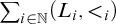 , or simply
$\sum _{i\in \mathbb {N}}L_i$
, or simply
$\sum _{i\in \mathbb {N}}L_i$
 , to be the order with field
$\bigcup _{i\in \mathbb {N}}\{i\}\times L_i$
, to be the order with field
$\bigcup _{i\in \mathbb {N}}\{i\}\times L_i$
 with the lexicographic order, that is,
$(i,k)<_{lex}(j,l)$
with the lexicographic order, that is,
$(i,k)<_{lex}(j,l)$
 if
$i<j$
if
$i<j$
 or,
$i=j$
or,
$i=j$
 and
$k<_i l$
and
$k<_i l$
 . Given a linear order
$(L,<_L)$
. Given a linear order
$(L,<_L)$
 we denote its dual by
$L^*$
we denote its dual by
$L^*$
 or
$(L,<^*_L)$
or
$(L,<^*_L)$
 , where for all
$i,j\in L$
, where for all
$i,j\in L$
 we have
$i<^*_L j\leftrightarrow j<_L i$
we have
$i<^*_L j\leftrightarrow j<_L i$
 .
.
A CSC space X is orderable if it is effectively homeomorphic to the order topology of a linear order and we say that X is well-orderable if it is effectively homeomorphic to the order topology of a well-order.
Observation 4.14. If L is well-ordered, its order topology coincides with its upper limit topology since
$]a,b]\ {=}\ ]a, b+1[$
 where
$b+1$
where
$b+1$
 is either the successor of b or
$+\infty $
is either the successor of b or
$+\infty $
 if b is maximal. However, we will see later that over
$\mathbf {RCA}_0$
if b is maximal. However, we will see later that over
$\mathbf {RCA}_0$
 , the two topologies are not, in general, effectively homeomorphic.
Observation 4.15. Let
$(L,<_L)$
 be a linear order, and let
$S\subseteq L$
be a linear order, and let
$S\subseteq L$
 be a set that is downwards closed with respect to
$<_L$
be a set that is downwards closed with respect to
$<_L$
 then S is open in the upper limit topology since
$S=\bigcup _{s\in S}\;]-\infty ,s]$
then S is open in the upper limit topology since
$S=\bigcup _{s\in S}\;]-\infty ,s]$
 .
.
5 Separation axioms
We will introduce some of the basic topological separation axioms. Similar to how the function k in the definition of CSC space witnesses the intersection property of the basis and the function
$v$
 witnesses the pointwise continuity of an effectively continuous function, we will also want to consider spaces which have a function that witnesses a given separation axiom. We will also show that assuming this additional structure exists for all CSC spaces satisfying the appropriate separation axioms requires arithmetic comprehension.
Definition 5.1. A topological space X is said to be Kolmogorov or
$T_0$
 if for every
$x,y\in X$
if for every
$x,y\in X$
 there exists an open set U such that
$x\in U\leftrightarrow y\notin U$
there exists an open set U such that
$x\in U\leftrightarrow y\notin U$
 .
.
Definition 5.2. The Kolmogorov quotient of a CSC space
$(X,(U_i)_{i\in \mathbb {N}},k)$
 is the quotient space
$X/\sim _K$
is the quotient space
$X/\sim _K$
 where the equivalence relation
$\sim _K$
where the equivalence relation
$\sim _K$
 is given by

We may identify the Kolmogorov quotient with the subspace of X given by the least elements of the
$\sim _K$
 -equivalence classes. The Kolmogorov quotient is always a
$T_0$
-equivalence classes. The Kolmogorov quotient is always a
$T_0$
 space. In general, the existence of the Kolmogorov quotient or the equivalence relation
$\sim _K$
space. In general, the existence of the Kolmogorov quotient or the equivalence relation
$\sim _K$
 requires arithmetic comprehension. To see this, let
$A\subseteq \mathbb {N}$
requires arithmetic comprehension. To see this, let
$A\subseteq \mathbb {N}$
 be a set and consider the space
$(\mathbb {N},(U_i)_{i\in \mathbb {N}},k)$
be a set and consider the space
$(\mathbb {N},(U_i)_{i\in \mathbb {N}},k)$
 where:

the Kolmogorov quotient of this CSC space will compute the jump of A.
Definition 5.3. A CSC space is said to be
$T_1$
 if every singleton is closed.
Definition 5.4. A CSC space
$(X,(U_i )_{i\in \mathbb {N}},k)$
 is said to be Hausdorff or
$T_2$
is said to be Hausdorff or
$T_2$
 if for every distinct
$x,y\in X$
if for every distinct
$x,y\in X$
 there exists
$i,j\in \mathbb {N}$
there exists
$i,j\in \mathbb {N}$
 such that:

Definition 5.5 (Dorais [Reference Dorais6, Definition 6.1])
We say that a space is effectively
$T_2$
 or
$eT_2$
or
$eT_2$
 if there exists a pair of functions
$H_0,H_1:X^2 \rightarrow \mathbb {N}\times \mathbb {N}$
if there exists a pair of functions
$H_0,H_1:X^2 \rightarrow \mathbb {N}\times \mathbb {N}$
 such that

We observe that the functions
$H_0$
 and
$H_1$
and
$H_1$
 are arithmetically definable. So over
$\mathbf {ACA}_0$
are arithmetically definable. So over
$\mathbf {ACA}_0$
 every
$T_2$
every
$T_2$
 CSC space is
$eT_2$
CSC space is
$eT_2$
 .
.
Proposition 5.6. If
$(X,(U_i)_{i\in \mathbb {N}},k)$
 has an effectively continuous injection to an
$eT_2$
has an effectively continuous injection to an
$eT_2$
 CSC space then X is
$eT_2$
CSC space then X is
$eT_2$
 .
.
Proof. Let
$f:(X,(U_i)_{i\in \mathbb {N}},k)\rightarrow (Y,(V_i)_{i\in \mathbb {N}},k')$
 be an effectively continuous injection and let
$H^Y_0$
be an effectively continuous injection and let
$H^Y_0$
 and
$H^Y_1$
and
$H^Y_1$
 witness that
$(Y,(V_i)_{i\in \mathbb {N}},k')$
witness that
$(Y,(V_i)_{i\in \mathbb {N}},k')$
 is
$eT_2$
is
$eT_2$
 . Let
$v:X\times \mathbb {N}\rightarrow \mathbb {N}$
. Let
$v:X\times \mathbb {N}\rightarrow \mathbb {N}$
 verify that f is continuous, meaning that for all
$x\in X$
verify that f is continuous, meaning that for all
$x\in X$
 and
$i\in \mathbb {N}$
and
$i\in \mathbb {N}$
 such that
$f(x)\in V_i$
such that
$f(x)\in V_i$
 we have that

For all
$x,y\in X$
 we define


The functions
$H^X_0$
 and
$H^X_1$
and
$H^X_1$
 exist by
$\Delta ^0_1$
exist by
$\Delta ^0_1$
 comprehension and witness that X is
$eT_2$
comprehension and witness that X is
$eT_2$
 .
.
Theorem 5.7 (Dorais [Reference Dorais6, Example 7.4])
If there exists a function
$f:\mathbb {N}\rightarrow \mathbb {N}$
 whose range does not exist as a set then there is a
$T_2$
whose range does not exist as a set then there is a
$T_2$
 CSC space which is not
$eT_2$
CSC space which is not
$eT_2$
 . Equivalently, over
$\mathbf {RCA}_0$
. Equivalently, over
$\mathbf {RCA}_0$
 , arithmetic comprehension is equivalent to every
$T_2$
, arithmetic comprehension is equivalent to every
$T_2$
 CSC space being
$eT_2$
CSC space being
$eT_2$
 .
.
Proof. Assume there is an injective function
$f:\mathbb {N}\rightarrow \mathbb {N}$
 whose range does not exist as a set. Let
$<_f$
whose range does not exist as a set. Let
$<_f$
 be the order on
$\mathbb {N}\cup \{\infty \}$
be the order on
$\mathbb {N}\cup \{\infty \}$
 given by:
-
• $\forall n\in \mathbb {N}\; n<_f\infty $
. -
• $\forall n,m\in \mathbb {N}\; n<_f m\leftrightarrow f(n)<f(m)$
.


Seeking a contradiction, assume that
$(\mathbb {N}\cup \{\infty \},<_f)$
 with the order topology is
$eT_2$
with the order topology is
$eT_2$
 and let
$H_0$
and let
$H_0$
 and
$H_1$
and
$H_1$
 be the functions that witness it. We have that n is the
$<_f$
be the functions that witness it. We have that n is the
$<_f$
 successor of m if and only if
$m<_f n$
successor of m if and only if
$m<_f n$
 and
$H_0(m,n)=(y,n)$
and
$H_0(m,n)=(y,n)$
 for some
$y<_f n$
for some
$y<_f n$
 and
$H_1(m,n)=(m,x)$
and
$H_1(m,n)=(m,x)$
 for some
$x>_f m$
for some
$x>_f m$
 . Since the image of f is unbounded, every
$n\in \mathbb {N}$
. Since the image of f is unbounded, every
$n\in \mathbb {N}$
 has an
$<_f$
has an
$<_f$
 successor and the successor function exists since it is computable relative to
$H_0$
successor and the successor function exists since it is computable relative to
$H_0$
 and
$H_1$
and
$H_1$
 . We can therefore define recursively g where
$g(0)$
. We can therefore define recursively g where
$g(0)$
 the
$<_f$
the
$<_f$
 -minimal element and
$g(n+1)$
-minimal element and
$g(n+1)$
 is the
$<_f$
is the
$<_f$
 -successor of
$g(n)$
-successor of
$g(n)$
 . So
$f\circ g$
. So
$f\circ g$
 is strictly increasing and has the same image as f, which implies that
$\text {rng}(f)$
is strictly increasing and has the same image as f, which implies that
$\text {rng}(f)$
 exists, contradicting our initial assumption.
Observation 5.8. The space constructed in the proof above is a well-order with the order topology. While the upper limit topology and the order topology coincide on a well-order, they may not be effectively homeomorphic. This is because the upper limit topology is always
$eT_2$
 , and arithmetic comprehension is equivalent to the order topology of any well-order is
$eT_2$
, and arithmetic comprehension is equivalent to the order topology of any well-order is
$eT_2$
 . However, it is straightforward to show that over
$\mathbf {RCA}_0$
. However, it is straightforward to show that over
$\mathbf {RCA}_0$
 , the identity on a well-order is an effective homeomorphism between the upper limit topology and the order topology if and only if the successor function for the order exists.
Proposition 5.9. Over
$\mathbf {RCA}_0$
 the following are equivalent:
-
(1) Arithmetic comprehension.
-
(2) Every well-order with the upper limit topology is homeomorphic to the order topology of some linear order.
Proof.
$(1\rightarrow 2)$
 follows from the fact that the successor function on a well-order is arithmetically definable.
$(2\rightarrow 1)$
 Let
$f:\mathbb {N}\rightarrow \mathbb {N}$
Let
$f:\mathbb {N}\rightarrow \mathbb {N}$
 be an injection,
$(X,<_f)$
be an injection,
$(X,<_f)$
 be as in the proof of Theorem 5.7, and let
$\infty _X$
be as in the proof of Theorem 5.7, and let
$\infty _X$
 denote the maximal element of X. We show that
$\text {rng}(f)$
denote the maximal element of X. We show that
$\text {rng}(f)$
 exists, which by Proposition 3.2 implies arithmetic comprehension. By assumption, X with the upper limit topology is effectively homeomorphic to some linear order
$(L,<_L)$
exists, which by Proposition 3.2 implies arithmetic comprehension. By assumption, X with the upper limit topology is effectively homeomorphic to some linear order
$(L,<_L)$
 with the order topology. Since X is
$eT_2$
with the order topology. Since X is
$eT_2$
 , we also have that L, with the order topology, is
$eT_2$
, we also have that L, with the order topology, is
$eT_2$
 . As in the proof of Theorem 5.7, we have that the successor and predecessor functions for L will exist. Since X has one limit point and doesn’t contain an infinite closed discrete subspace, we have by induction that L will be order isomorphic to
$\mathbb {N}+n$
. As in the proof of Theorem 5.7, we have that the successor and predecessor functions for L will exist. Since X has one limit point and doesn’t contain an infinite closed discrete subspace, we have by induction that L will be order isomorphic to
$\mathbb {N}+n$
 or its dual for some
$n\in \mathbb {N}$
or its dual for some
$n\in \mathbb {N}$
 or to
$\mathbb {N}+1+\mathbb {N}^*$
or to
$\mathbb {N}+1+\mathbb {N}^*$
 . The order topology of all these orders is effectively homeomorphic to that of
$\mathbb {N}+1$
. The order topology of all these orders is effectively homeomorphic to that of
$\mathbb {N}+1$
 so without loss of generality we may assume
$L=\mathbb {N}+1$
so without loss of generality we may assume
$L=\mathbb {N}+1$
 . Let
$g:X\rightarrow \mathbb {N}+1$
. Let
$g:X\rightarrow \mathbb {N}+1$
 be an effective homeomorphism and let
$v$
be an effective homeomorphism and let
$v$
 be the function which witnesses that g is effectively open. Let
$\infty _{\mathbb {N}}$
be the function which witnesses that g is effectively open. Let
$\infty _{\mathbb {N}}$
 denote the maximal element of
$\mathbb {N}+1$
denote the maximal element of
$\mathbb {N}+1$
 , we have that

which implies that
$\forall n\; \forall m\;(m\leq _f n\rightarrow g^{-1}(m)\leq _{\mathbb {N}} v(\infty _X,n))$
 . So in particular we have that n is the
$<_f$
. So in particular we have that n is the
$<_f$
 successor of m if and only if

The
$<_f$
 successor function is
$\Delta ^0_1$
successor function is
$\Delta ^0_1$
 definable, so it exists by
$\Delta ^0_1$
definable, so it exists by
$\Delta ^0_1$
 comprehension. Using the successor function as in the proof of Theorem 5.7, we get that the range of f exists.
Definition 5.10. A CSC space
$(X,(U_i)_{i\in \mathbb {N}},k)$
 is said to be regular if for every point
$x\in X$
is said to be regular if for every point
$x\in X$
 and any
$i\in \mathbb {N}$
and any
$i\in \mathbb {N}$
 such that
$x\in U_i$
such that
$x\in U_i$
 there are open sets
$v$
there are open sets
$v$
 and W such that

Definition 5.11. A CSC space that is
$T_0$
 and regular is said to be
$T_3$
and regular is said to be
$T_3$
 . So over
$\mathbf {ACA}_0$
. So over
$\mathbf {ACA}_0$
 , the study of regular spaces is reduced to the study of
$T_3$
, the study of regular spaces is reduced to the study of
$T_3$
 spaces since we may always restrict ourselves to the Kolmogorov quotient.
Observation 5.12. All
$T_3$
 spaces are
$T_2$
spaces are
$T_2$
 .
.
Definition 5.13 (Dorais [Reference Dorais6, Definition 6.4])
A CSC space
$(X,(U_i)_{i\in \mathbb {N}},k)$
 is said to be effectively regular if for every effectively closed set C of X and any
$x\notin C$
is said to be effectively regular if for every effectively closed set C of X and any
$x\notin C$
 there exist open collections
$U_0$
there exist open collections
$U_0$
 and
$U_1$
and
$U_1$
 for open sets such that
$x\in U_0 \subseteq X\setminus U_1\subseteq X\setminus C$
for open sets such that
$x\in U_0 \subseteq X\setminus U_1\subseteq X\setminus C$
 .
.
The issue with Dorais’ notion of effective regularity is that it lacks uniformity. There may not be a map which given a point x and a code for an effective closed set C gives codes for the open collections separating x and C. We introduce a stronger notion of effective regularity which is equivalent to Schröder’s notion of effective regularity for represented spaces [Reference Schröder, Ko, Nerode, Pour-El, Weihrauch and Wiedermann27] and Louveau’s notion of recursive regularity for basic spaces [Reference Louveau22]. Such notion of regularity was shown by both authors to be the necessary and sufficient condition for metrizability. We show that over
$\mathbf {RCA}_0$
 the same is true for CSC spaces.
Definition 5.14. We say that a CSC space
$(X,(U_i)_{i\in \mathbb {N}},k)$
 is uniformly regular or uniformly effectively regular if there is a pair of functions
$R_0$
is uniformly regular or uniformly effectively regular if there is a pair of functions
$R_0$
 and
$R_1$
and
$R_1$
 such that for all
$x,y\in X$
such that for all
$x,y\in X$
 and
$i\in \mathbb {N}$
and
$i\in \mathbb {N}$
 such that
$x\in U_i$
such that
$x\in U_i$
 and
$y\notin U_i$
and
$y\notin U_i$
 the following holds:


We will say that a CSC space is uniformly
$T_3$
 or
$uT_3$
or
$uT_3$
 if it is
$T_0$
if it is
$T_0$
 and uniformly regular. Intuitively,
$R_0(x,i)$
and uniformly regular. Intuitively,
$R_0(x,i)$
 is the index of a neighborhood of x whose closure is contained in
$U_i$
is the index of a neighborhood of x whose closure is contained in
$U_i$
 and the sequence
$(R_1(x,i,y))_{y\notin U_i}$
and the sequence
$(R_1(x,i,y))_{y\notin U_i}$
 codes an open collection containing
$X\setminus U_i$
codes an open collection containing
$X\setminus U_i$
 that is disjoint from
$U_{R_0(x,i)}$
that is disjoint from
$U_{R_0(x,i)}$
 . That is, we have

Observation 5.15. Subspaces of regular CSC spaces are regular and subspaces of uniformly effectively regular CSC space are uniformly effectively regular.
Proposition 5.16.
$\mathbf {RCA}_0$
 proves that for any pair of CSC spaces
$(X,(U_i)_{i\in \mathbb {N}},k)$
proves that for any pair of CSC spaces
$(X,(U_i)_{i\in \mathbb {N}},k)$
 and
$(Y,(V_i)_{i\in \mathbb {N}},k')$
and
$(Y,(V_i)_{i\in \mathbb {N}},k')$
 such that X effectively embeds into Y, if Y is uniformly regular then X is uniformly regular.
Proof. Let
$f:X\rightarrow Y$
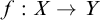 be an effective embedding and
$v_0$
be an effective embedding and
$v_0$
 verify that f is continuous and
$v_1$
verify that f is continuous and
$v_1$
 verify that f is open with respect to its image (see Definition 4.7). Let
$R^Y_0, R^Y_1$
verify that f is open with respect to its image (see Definition 4.7). Let
$R^Y_0, R^Y_1$
 be the functions given by uniform effective regularity of Y. We define

We have that

We define for
$y\notin U_i$


Since
$y\notin U_i$
 we have
$f(y)\notin V_{v_1(f(x),i)}$
we have
$f(y)\notin V_{v_1(f(x),i)}$
 so
$R^Y_1(f(x),v(f(x),i),f(y))$
so
$R^Y_1(f(x),v(f(x),i),f(y))$
 is well defined. By definition of
$R^Y_1$
is well defined. By definition of
$R^Y_1$
 we have

In particular

This means that the functions
$R^X_0$
 and
$R^X_1$
and
$R^X_1$
 have the desired properties, and so X is uniformly effectively regular.
Proposition 5.17.
$\mathbf {RCA}_0$
 proves that every
$uT_3$
proves that every
$uT_3$
 CSC space is
$eT_2$
CSC space is
$eT_2$
 .
.
Proof. Let
$(X,(U_i)_{i\in \mathbb {N}},k)$
 be a
$uT_3$
be a
$uT_3$
 CSC space and let
$x,y\in X$
CSC space and let
$x,y\in X$
 be distinct points. Since X is
$T_0$
be distinct points. Since X is
$T_0$
 , let i be the least number such that
$x\in U_i\leftrightarrow y\notin U_i$
, let i be the least number such that
$x\in U_i\leftrightarrow y\notin U_i$
 . If
$x\in U_i$
. If
$x\in U_i$
 then we let
$H_0(x,y)=R_0(x,i)$
then we let
$H_0(x,y)=R_0(x,i)$
 and
$H_1(x,y)=R_1(x,i,y)$
and
$H_1(x,y)=R_1(x,i,y)$
 otherwise if
$y\in U_i$
otherwise if
$y\in U_i$
 we set
$H_0(x,y)=R_1(x,i,y)$
we set
$H_0(x,y)=R_1(x,i,y)$
 and
$H_1(x,y)=R_0(x,i)$
and
$H_1(x,y)=R_0(x,i)$
 .
.
Corollary 5.18. Over
$\mathbf {RCA}_0$
 arithmetic comprehension is equivalent to every regular CSC space is uniformly regular.
We would like to show that over
$\mathbf {RCA}_0\, uT_3$
 is in general a stronger notion than
$eT_2$
is in general a stronger notion than
$eT_2$
 for
$T_3$
for
$T_3$
 CSC spaces. However, the next proposition will show us that we cannot use linear orders to separate these properties.
Proposition 5.19.
$\mathbf {RCA}_0$
 proves that every
$eT_2$
proves that every
$eT_2$
 order topology is also
$uT_3$
order topology is also
$uT_3$
 .
.
Proof. Let
$(I_e)_{e\in \mathbb {N}}$
 be the standard indexing of the open intervals of
$(L,<_L)$
be the standard indexing of the open intervals of
$(L,<_L)$
 and
$H_0$
and
$H_0$
 ,
$H_1$
,
$H_1$
 be the functions that witness that the order topology on L is
$eT_2$
be the functions that witness that the order topology on L is
$eT_2$
 . Given
$y<_L x<_L z$
. Given
$y<_L x<_L z$
 we define

and

The functions
$R_0$
 and
$R_1$
and
$R_1$
 witness that the order topology on L is
$uT_3$
witness that the order topology on L is
$uT_3$
 .
.
Proposition 5.20. Over
$\mathbf {RCA}_0$
 arithmetic comprehension is equivalent to all regular
$eT_2$
arithmetic comprehension is equivalent to all regular
$eT_2$
 CSC spaces being
$uT_3$
CSC spaces being
$uT_3$
 .
.
Proof. We show that arithmetic comprehension proves that all regular CSC spaces are uniformly regular. Given a regular CSC space
$(X,(U_i)_{i\in \mathbb {N}},k)$
 , for each
$(x,j)\in X\times \mathbb {N}$
, for each
$(x,j)\in X\times \mathbb {N}$
 such that
$x\in U_j$
such that
$x\in U_j$
 we define

and for all
$y\in X\setminus U_j$
 we define

The
$R_0$
 and
$R_1$
and
$R_1$
 have the desired properties and are arithmetically definable. So
$\mathbf {ACA}_0$
have the desired properties and are arithmetically definable. So
$\mathbf {ACA}_0$
 proves that every regular CSC space is uniformly regular.
We show the converse. Let A be a set. We show that the Turing jump of A exists, which will imply arithmetic comprehension. We define

We define on
$X^e$
 the following topology:

For all
$(m,n)\in (\mathbb {Z}\times \{t\in \mathbb {N}:\Phi ^A_e(e){\downarrow }_{\leq t}\})$
 we define


We define
$H_0$
 and
$H_1$
and
$H_1$
 on
$X^e$
on
$X^e$
 by:
by:
-
• $H_0(-\infty ,(m,n))=4(m,n)+3\;$
and
$\;H_1(-\infty ,(m,n))=4(m,n)+1.$
-
• $H_0(-\infty ,(+\infty ,n))=4(m,n)+3\;$
and
$\;H_1(-\infty ,(+\infty ,n))=4(m,n)+2.$
-
• $H_0((+\infty ,l),(+\infty ,n))=4(0,l)+2\;$
and
$\;H_1((+\infty ,l),(+\infty ,n))= 4(0,n)+2.$
-
• $H_0((+\infty ,l),(m,n))=4(m+1,l)+2\;$
and
$\;H_1((+\infty ,l),(m,n))= 4(m,n)+1.$
-
• $H_0((p,l),(m,n))=4(p,l)+1\;$
and
$\;H_1((p,l),(m,n))=4(m,n)+1.$










Given
$a=4(i,j)+r$
 and
$b=4(p,l)+s$
and
$b=4(p,l)+s$
 let
$c = \max \{|i|,j, |p|,l\}+1$
let
$c = \max \{|i|,j, |p|,l\}+1$
 and define:
-
• $k((m,n),a,b)=4(m,n)+1.$
-
• $k((\infty ,n),a,b)= 4(c,n)+2.$
-
• $k(-\infty ,a,b)=\begin {cases}4(-c,c)+4 \text { if } \Phi ^A_e(e){\downarrow }_{\leq c}\\ 4(-c,c)+3 \text { otherwise.} \end {cases}$



It is straightforward to show that the functions
$H_0$
 ,
$H_1$
,
$H_1$
 , and k have the desired properties and that
$X^e$
, and k have the desired properties and that
$X^e$
 is an
$eT_2$
is an
$eT_2$
 CSC space. To show that
$X^e$
CSC space. To show that
$X^e$
 is regular, we first observe that every basic open set, except perhaps
$U_0$
is regular, we first observe that every basic open set, except perhaps
$U_0$
 and
$U_{4(m,n)+3}$
and
$U_{4(m,n)+3}$
 , is clopen and
$-\infty $
, is clopen and
$-\infty $
 is the only non-isolated point of
$U_0$
is the only non-isolated point of
$U_0$
 and
$U_{4(m,n)+3}$
and
$U_{4(m,n)+3}$
 . If
$\Phi ^A_e(e){\uparrow } $
. If
$\Phi ^A_e(e){\uparrow } $
 then
$X^e= \{-\infty \}$
then
$X^e= \{-\infty \}$
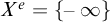 otherwise let t be the least number such that
$\Phi ^A_e(e){\downarrow }_{\leq t}$
otherwise let t be the least number such that
$\Phi ^A_e(e){\downarrow }_{\leq t}$
 then the sequence
$(U_{4(-n,t)+4})_{n\in \mathbb {N}}$
then the sequence
$(U_{4(-n,t)+4})_{n\in \mathbb {N}}$
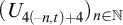 is a basis of clopen neighborhoods of
$-\infty $
is a basis of clopen neighborhoods of
$-\infty $
 . So every point of
$X^e$
. So every point of
$X^e$
 has a clopen neighborhood, so
$X^e$
has a clopen neighborhood, so
$X^e$
 is regular.
The CSC space
$X=\coprod _{e\in \mathbb {N}} X^e$
 will be regular and
$eT_2$
will be regular and
$eT_2$
 so by assumption X is also
$uT_3$
so by assumption X is also
$uT_3$
 . Let
$R_0$
. Let
$R_0$
 and
$R_1$
and
$R_1$
 be functions that witness the uniform regularity of X. For
$e\in \mathbb {N}$
be functions that witness the uniform regularity of X. For
$e\in \mathbb {N}$
 we have
$\Phi ^A_e(e){\downarrow }_{\leq n}$
we have
$\Phi ^A_e(e){\downarrow }_{\leq n}$
 if and only if for all
$m\in \mathbb {N}\, U_{4(m,n)+4}\subseteq U_0$
if and only if for all
$m\in \mathbb {N}\, U_{4(m,n)+4}\subseteq U_0$
 in the space
$X^e$
in the space
$X^e$
 . For all e there is some
$m\in \mathbb {N}$
. For all e there is some
$m\in \mathbb {N}$
 such that
$R_0((e,-\infty ),(e,0))=(e,4(m,n)+4)$
such that
$R_0((e,-\infty ),(e,0))=(e,4(m,n)+4)$
 , where by
$(e,-\infty )$
, where by
$(e,-\infty )$
 we mean
$-\infty $
we mean
$-\infty $
 of the space
$X^e$
of the space
$X^e$
 , and
$(e,0)$
, and
$(e,0)$
 is the index for
$U_0$
is the index for
$U_0$
 in
$X^e$
in
$X^e$
 . So by construction of
$X^e$
. So by construction of
$X^e$
 we have
$\Phi ^A_e(e){\downarrow }_{\leq n}$
we have
$\Phi ^A_e(e){\downarrow }_{\leq n}$
 if for some
$m\leq R_0((e,-\infty ),(e,0))$
if for some
$m\leq R_0((e,-\infty ),(e,0))$
 we have
$R_0((e,-\infty ),(e,0))=(e,4(m,n)+4)$
we have
$R_0((e,-\infty ),(e,0))=(e,4(m,n)+4)$
 . In particular,
$A'\leq _T R_0$
. In particular,
$A'\leq _T R_0$
 , which means the Turing jump of A exists by
$\Delta ^0_1$
, which means the Turing jump of A exists by
$\Delta ^0_1$
 comprehension.
Observation 5.21. We observe that the space in the previous proof is scattered. So, arithmetic comprehension is equivalent to all
$T_3$
 scattered spaces being
$uT_3$
scattered spaces being
$uT_3$
 . A CSC space is scattered if every subspace has an isolated point, we will look at
$T_3$
. A CSC space is scattered if every subspace has an isolated point, we will look at
$T_3$
 scattered CSC space in the next part. We also point out that the space in the previous proof is effectively regular in the sense of Dorais (Definition 5.13). This shows that effective regularity is a strictly weaker property than uniform regularity over
$\mathbf {RCA}_0$
scattered CSC space in the next part. We also point out that the space in the previous proof is effectively regular in the sense of Dorais (Definition 5.13). This shows that effective regularity is a strictly weaker property than uniform regularity over
$\mathbf {RCA}_0$
 .
.
The following technical result will be helpful in the next part.
Theorem 5.22. Over
$\mathbf {RCA}_0$
 , every scattered CSC space that is
$eT_2$
, every scattered CSC space that is
$eT_2$
 and
$T_3$
and
$T_3$
 effectively embeds into a linear order implies arithmetic comprehension.
Proof. Fix a set
$A\subseteq \mathbb {N}$
 , we show that
$A'$
, we show that
$A'$
 exists. Let
$(X,(U_i)_{i\in \mathbb {N}},k)$
exists. Let
$(X,(U_i)_{i\in \mathbb {N}},k)$
 be as in the proof of Proposition 5.20. Let
$(L,<_L)$
be as in the proof of Proposition 5.20. Let
$(L,<_L)$
 be a linear order,
$f:X\rightarrow L$
be a linear order,
$f:X\rightarrow L$
 an effective embedding, and
$v_0$
an effective embedding, and
$v_0$
 and
$v_1$
and
$v_1$
 be functions that witness, respectively, that f is effectively continuous and effectively open. For each e, we define
$m_e$
be functions that witness, respectively, that f is effectively continuous and effectively open. For each e, we define
$m_e$
 to be the unique number such that

where
$r\in \{3,4\}$
 and
$n\in \mathbb {N}$
and
$n\in \mathbb {N}$
 , or
$s_e=0$
, or
$s_e=0$
 . We have that the map
$e\mapsto m_e$
. We have that the map
$e\mapsto m_e$
 is recursive relative to
$v_0$
is recursive relative to
$v_0$
 and
$ v_1$
and
$ v_1$
 , so it exists by
$\Delta ^0_1$
, so it exists by
$\Delta ^0_1$
 comprehension. Assume that
$\Phi ^A_e(e){\downarrow }$
comprehension. Assume that
$\Phi ^A_e(e){\downarrow }$
 , we have that
$v_1((-\infty ,e),0)$
, we have that
$v_1((-\infty ,e),0)$
 will be the index of some interval
$]a,b[_{<_L}$
will be the index of some interval
$]a,b[_{<_L}$
 . By construction we have
$U_{s_e}\subseteq f^{-1}(]a,b[_{<_L})\subseteq U_0$
. By construction we have
$U_{s_e}\subseteq f^{-1}(]a,b[_{<_L})\subseteq U_0$
 . We also have that
$f^{-1}([a,b]_{<_L})$
. We also have that
$f^{-1}([a,b]_{<_L})$
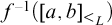 is a closed set contained in
$U_0$
is a closed set contained in
$U_0$
 plus at most two other points. If
$\Phi ^A_e(e){\downarrow }$
plus at most two other points. If
$\Phi ^A_e(e){\downarrow }$
 and either
$r=3$
and either
$r=3$
 or
$s_e=0$
or
$s_e=0$
 , then the closure of
$U_{s_e}$
, then the closure of
$U_{s_e}$
 contains infinitely many points which are not in
$U_0$
contains infinitely many points which are not in
$U_0$
 . But the closure of
$U_{s_e}$
. But the closure of
$U_{s_e}$
 is contained in
$U_0$
is contained in
$U_0$
 plus at most two other points. So if
$\Phi ^A_e(e){\downarrow }$
plus at most two other points. So if
$\Phi ^A_e(e){\downarrow }$
 then
$r=4$
then
$r=4$
 . By construction of X, we have
$\Phi ^A_e(e){\downarrow }$
. By construction of X, we have
$\Phi ^A_e(e){\downarrow }$
 and
$U_{4(m_e,n)+4}\subseteq U_0$
and
$U_{4(m_e,n)+4}\subseteq U_0$
 if and only if
$\Phi ^A_e(e){\downarrow }_{\leq m_e}$
if and only if
$\Phi ^A_e(e){\downarrow }_{\leq m_e}$
 . So we have that
$\Phi ^A_e(e){\downarrow } \leftrightarrow \Phi ^A_e(e){\downarrow }_{\leq m_e}$
. So we have that
$\Phi ^A_e(e){\downarrow } \leftrightarrow \Phi ^A_e(e){\downarrow }_{\leq m_e}$
 , which means that
$A'$
, which means that
$A'$
 exists since it is computable from the map
$e\mapsto m_e$
exists since it is computable from the map
$e\mapsto m_e$
 . Since every set has a Turing jump by Theorem 3.2, we have arithmetic comprehension.
We will use a construction similar to that in Theorem 5.20 to prove another technical lemma.
Theorem 5.23. Over
$\mathbf {RCA}_0$
 , for every
$T_3$
, for every
$T_3$
 scattered CSC space there is a continuous bijection from X to the order topology of a well-order implies arithmetic comprehension.
Proof. Let A be a set, we show that
$A'$
 exists. Define

with basic open sets:

and for all
$(m,n)\in (\mathbb {Z}\times \{t\in \mathbb {N}:\Phi ^A_e(e){\downarrow }_{\leq t}\}),$



Given
$a=4(i,j)+r$
 and
$b=4(p,l)+s$
and
$b=4(p,l)+s$
 let
$c =\max \{|i|,j, |p|,l\}+1$
let
$c =\max \{|i|,j, |p|,l\}+1$
 and define:
-
• $k((m,n),a,b)=3(m,n)+1.$
-
• $k((\infty ,n),a,b)= 3(c,n)+2.$
-
• $k(-\infty ,a,b)=3(-c,c)+3.$



Take
$X=\coprod _{e\in \mathbb {N}} X^e$
 , we have that it is
$T_3$
, we have that it is
$T_3$
 and scattered. We note that for each e the subspace
$X^e\times \{e\}$
and scattered. We note that for each e the subspace
$X^e\times \{e\}$
 is clopen in X. By assumption, there is an effectively continuous bijection
$f:X\rightarrow W$
is clopen in X. By assumption, there is an effectively continuous bijection
$f:X\rightarrow W$
 where W has the order topology of a well-order
$<_W$
where W has the order topology of a well-order
$<_W$
 . Let
$(I_i)_{i\in \mathbb {N}}$
. Let
$(I_i)_{i\in \mathbb {N}}$
 be the standard indexing of the basic open intervals of
$(W,<_W)$
be the standard indexing of the basic open intervals of
$(W,<_W)$
 and
$v$
and
$v$
 be a function that witnesses that f is effectively continuous. We have that all intervals of a well-order are clopen. Define for each
$e\in \mathbb {N,}$
be a function that witnesses that f is effectively continuous. We have that all intervals of a well-order are clopen. Define for each
$e\in \mathbb {N,}$


We have that
$f^{-1}(I_{i_e})$
 will be a clopen neighborhood of
$(e,-\infty )$
will be a clopen neighborhood of
$(e,-\infty )$
 . So, in particular, we have that
$v((e,-\infty ),i_e)$
. So, in particular, we have that
$v((e,-\infty ),i_e)$
 will be an index for a basic open set of
$(e,-\infty )$
will be an index for a basic open set of
$(e,-\infty )$
 that is contained in a clopen set that does not contain
$(e,+\infty ,0)$
that is contained in a clopen set that does not contain
$(e,+\infty ,0)$
 . But by construction of X we have that either
$\Phi ^A_e(e){\downarrow }_{\leq v((e,-\infty ),i_e)}$
. But by construction of X we have that either
$\Phi ^A_e(e){\downarrow }_{\leq v((e,-\infty ),i_e)}$
 or
$\Phi ^A_e(e){\uparrow }$
or
$\Phi ^A_e(e){\uparrow }$
 . So we have that
$A'$
. So we have that
$A'$
 is computable relative to
$v,(i_e)_{e\in \mathbb {N}},$
is computable relative to
$v,(i_e)_{e\in \mathbb {N}},$
 and X, and so it exists by
$\Delta ^0_1$
and X, and so it exists by
$\Delta ^0_1$
 comprehension.
6 Characterizations of dimension zero
We already have seen that countable metric spaces have a basis of clopen sets, that is, they are zero-dimensional. In this section we will study the relation between uniform regularity and dimension zero. We will also prove that over
$\mathbf {RCA}_0$
 , the
$uT_3$
, the
$uT_3$
 CSC spaces are metrizable. Instead of formalizing some form of the Urysohn metrization theorem for uniformly regular CSC spaces in
$\mathbf {RCA}_0$
CSC spaces are metrizable. Instead of formalizing some form of the Urysohn metrization theorem for uniformly regular CSC spaces in
$\mathbf {RCA}_0$
 we will instead show that every uniformly regular CSC space is homeomorphic to a closed subset of
$\mathbb {Q}$
we will instead show that every uniformly regular CSC space is homeomorphic to a closed subset of
$\mathbb {Q}$
 .
.
Definition 6.1. In general topology, a space is said to be zero-dimensional or of dimension zero if it has a basis of clopen sets.
Definition 6.2. Given a CSC space
$(X,(U_i)_{i\in \mathbb {N}},k)$
 we say that:
-
• X has a basis of clopen sets if for all $i\in \mathbb {N}$
the set
$U_i$
is also closed. -
• X has an algebra of clopen sets if there exists $Int:\mathbb {N}^2\rightarrow \mathbb {N}$
such that
$U_{Int(i,j)}=U_i\cap U_j$
and
$Comp:\mathbb {N}\rightarrow \mathbb {N}$
such that
$U_{Comp(i)}=X\setminus U_i$
.






Observation 6.3. For any sequence of sets
$(A_i)_{i\in \mathbb {N}}$
 the algebra generated by them is
$\Delta ^0_1$
the algebra generated by them is
$\Delta ^0_1$
 definable and so are functions
$Int$
definable and so are functions
$Int$
 and
$Comp$
and
$Comp$
 that compute, respectively, intersections and complements. A similar construction is done in [Reference Dorais6, Definition 2.11]. So for any zero-dimensional CSC space
$(X,(U_i)_{i\in \mathbb {N}},k)$
that compute, respectively, intersections and complements. A similar construction is done in [Reference Dorais6, Definition 2.11]. So for any zero-dimensional CSC space
$(X,(U_i)_{i\in \mathbb {N}},k)$
 there is a CSC space with an algebra of clopen sets
$(X,(V_i)_{i\in \mathbb {N}},Int,Comp)$
there is a CSC space with an algebra of clopen sets
$(X,(V_i)_{i\in \mathbb {N}},Int,Comp)$
 such that
$(U_i)_{i\in \mathbb {N}}$
such that
$(U_i)_{i\in \mathbb {N}}$
 is a subsequence of
$(V_i)_{i\in \mathbb {N}}$
is a subsequence of
$(V_i)_{i\in \mathbb {N}}$
 and every
$V_i$
and every
$V_i$
 is open in
$(X,(U_i)_{i\in \mathbb {N}},k)$
is open in
$(X,(U_i)_{i\in \mathbb {N}},k)$
 . This means that the identity
$X\rightarrow X$
. This means that the identity
$X\rightarrow X$
 is a homeomorphism. It will not, in general, be an effective homeomorphism. What is needed to ensure that the identity is an effective homeomorphism is a function that encodes complements in some way.
Definition 6.4. Let
$(X,(U_i)_{i\in \mathbb {N}},k)$
 be a CSC space, we say that X is effectively zero-dimensional if there is a function
$G:X\times \mathbb {N}\rightarrow \mathbb {N}$
be a CSC space, we say that X is effectively zero-dimensional if there is a function
$G:X\times \mathbb {N}\rightarrow \mathbb {N}$
 such that if
$x\in X\setminus U_i$
such that if
$x\in X\setminus U_i$
 then
$x\in U_{G(x,i)}\subseteq X\setminus U_i$
then
$x\in U_{G(x,i)}\subseteq X\setminus U_i$
 .
.
Observation 6.5.
$\mathbf {RCA}_0$
 proves that any
$T_0$
proves that any
$T_0$
 effectively zero-dimensional CSC space is
$eT_2$
effectively zero-dimensional CSC space is
$eT_2$
 .
.
Observation 6.6. Let
$(L,<_L)$
 be a linear order, the partial function

witnesses that the upper limit topology is effectively zero-dimensional.
Proposition 6.7.
$\mathbf {RCA}_0$
 proves that every effectively zero-dimensional CSC space is uniformly regular.
Proof. Let
$(X,(U_i)_{i\in \mathbb {N}},k)$
 be an effectively zero-dimensional CSC space and G be a function that witnesses that X is effectively zero-dimensional. For all
$x\in X$
be an effectively zero-dimensional CSC space and G be a function that witnesses that X is effectively zero-dimensional. For all
$x\in X$
 and
$i\in \mathbb {N}$
and
$i\in \mathbb {N}$
 such that
$x\in U_i$
such that
$x\in U_i$
 we define
$R_0(x,i)=i$
we define
$R_0(x,i)=i$
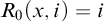 and for all
$y\notin U_i$
and for all
$y\notin U_i$
 we define
$R_1(x,i,y)=G(y,i)$
we define
$R_1(x,i,y)=G(y,i)$
 . It is easy to verify that
$R_0$
. It is easy to verify that
$R_0$
 and
$R_1$
and
$R_1$
 witness that X is uniformly regular.
Definition 6.8. Let
$(X,(U_i)_{i\in \mathbb {N}},k)$
 be a CSC space,
$x\in X$
be a CSC space,
$x\in X$
 , and a set
$I=(i_n)_{n\in \mathbb {N}}$
, and a set
$I=(i_n)_{n\in \mathbb {N}}$
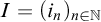 such that for all
$n\in \mathbb {N}$
such that for all
$n\in \mathbb {N}$
 we have
$x\in U_{i_n}$
we have
$x\in U_{i_n}$
 then we define
$K_I$
then we define
$K_I$
 as:
as:
-
(1) $K_I(x,0)=i_0$
. -
(2) $K_I(x,n+1)=k(x,K(x,n,I),i_{n+1}).$


$\mathbf {RCA}_0$
 proves the existence of
$K_I$
proves the existence of
$K_I$
 for all CSC spaces and all I since it proves that functions are closed under primitive recursion. If F is a finite set such that
$\forall i\in F\; x\in U_i$
for all CSC spaces and all I since it proves that functions are closed under primitive recursion. If F is a finite set such that
$\forall i\in F\; x\in U_i$
 then we define
$K(x,F)=K_F(x,|F|)$
then we define
$K(x,F)=K_F(x,|F|)$
 . We observe that

This will allow us to find effectively sufficiently small neighborhoods of x.
We show that uniformly regular CSC spaces are effectively zero-dimensional. To do so, we first show that a strong form of normality holds for uniformly regular CSC spaces.
Theorem 6.9. Over
$\mathbf {RCA}_0$
 , every uniformly regular CSC space
$(X,(U_i)_{i\in \mathbb {N}},k)$
, every uniformly regular CSC space
$(X,(U_i)_{i\in \mathbb {N}},k)$
 and any two sequences of coded closed collections
$(C_{0,e})_{e\in \mathbb {N}}$
and any two sequences of coded closed collections
$(C_{0,e})_{e\in \mathbb {N}}$
 and
$(C_{1,e})_{e\in \mathbb {N}}$
and
$(C_{1,e})_{e\in \mathbb {N}}$
 such that for all
$e\in \mathbb {N}$
such that for all
$e\in \mathbb {N}$
 we have that
$C_{0,e}\cap C_{1,e}=\emptyset $
we have that
$C_{0,e}\cap C_{1,e}=\emptyset $
 , then there exists a sequence of clopen sets
$(D_e)_{e\in \mathbb {N}}$
, then there exists a sequence of clopen sets
$(D_e)_{e\in \mathbb {N}}$
 such that for all
$e\in \mathbb {N}\, C_{0,e}\subseteq D_e\subseteq X\setminus C_{1,e}$
such that for all
$e\in \mathbb {N}\, C_{0,e}\subseteq D_e\subseteq X\setminus C_{1,e}$
 .
.
Proof. We prove the case for one pair
$(C_0,C_1)$
 of disjoint closed collections coded by
$f_0$
of disjoint closed collections coded by
$f_0$
 and
$f_1$
and
$f_1$
 , respectively. The general case will follow from the fact that the construction can be carried out uniformly. To construct D we will define recursively two increasing sequences of closed sets
$(C^n_0)_{n\in \mathbb {N}}$
, respectively. The general case will follow from the fact that the construction can be carried out uniformly. To construct D we will define recursively two increasing sequences of closed sets
$(C^n_0)_{n\in \mathbb {N}}$
 and
$ (C^n_1)_{n\in \mathbb {N}}$
and
$ (C^n_1)_{n\in \mathbb {N}}$
 such that
$C^0_0=C_0$
such that
$C^0_0=C_0$
 and
$C^0_1=C_1$
and
$C^0_1=C_1$
 and for all n the sets
$C^n_0$
and for all n the sets
$C^n_0$
 and
$C^n_1$
and
$C^n_1$
 are disjoint. We also define two increasing sequences of open sets
$(A^n_0)_{n\in \mathbb {N}}$
are disjoint. We also define two increasing sequences of open sets
$(A^n_0)_{n\in \mathbb {N}}$
 and
$(A^n_1)_{n\in \mathbb {N}}$
and
$(A^n_1)_{n\in \mathbb {N}}$
 such that for all
$n\in \mathbb {N}$
such that for all
$n\in \mathbb {N}$
 and
$j\leq 1$
and
$j\leq 1$
 we have
$A^n_j\subseteq C^n_j$
we have
$A^n_j\subseteq C^n_j$
 . We would like that
$\bigcup _{n\in \mathbb {N}}A^n_0\cup A^n_1 =X$
. We would like that
$\bigcup _{n\in \mathbb {N}}A^n_0\cup A^n_1 =X$
 and in such case we define
$D=\bigcup _{n\in \mathbb {N}}A^n_0$
and in such case we define
$D=\bigcup _{n\in \mathbb {N}}A^n_0$
 which by construction will be clopen and
$C_0\subseteq D\subseteq X\setminus C_1$
which by construction will be clopen and
$C_0\subseteq D\subseteq X\setminus C_1$
 . At every step, we will pick an
$x\notin A^n_0\cup A^n_1$
. At every step, we will pick an
$x\notin A^n_0\cup A^n_1$
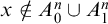 and find a small enough neighborhood
$U_{l}$
and find a small enough neighborhood
$U_{l}$
 such that for some
$j\leq 1$
such that for some
$j\leq 1$
 we have
$x\in U_l\subseteq X\setminus C^n_j$
we have
$x\in U_l\subseteq X\setminus C^n_j$
 . We then set
$A^{n+1}_{1-j}=A^n_{1-j}\cup U_{R_0(x,l)}$
. We then set
$A^{n+1}_{1-j}=A^n_{1-j}\cup U_{R_0(x,l)}$
 and
$C^{n+1}_{1-j}=C^n_{1-j}\cup \bigcap _{y\notin U_l}(X\setminus U_{R_1(x,l,y)})$
and
$C^{n+1}_{1-j}=C^n_{1-j}\cup \bigcap _{y\notin U_l}(X\setminus U_{R_1(x,l,y)})$
 .
.
To be able to construct the sequences
$(C^n_0)_{n\in \mathbb {N}},(C^n_1)_{n\in \mathbb {N}},(A^n_0)_{n\in \mathbb {N}},$
 and
$(A^n_1)_{n\in \mathbb {N}}$
and
$(A^n_1)_{n\in \mathbb {N}}$
 we will want them to be coded as finite objects. We will code
$A^n_j$
we will want them to be coded as finite objects. We will code
$A^n_j$
 with a finite set
$F^n_j$
with a finite set
$F^n_j$
 of indices such that
$A^n_j=\bigcup _{i\in F^n_j} U_i$
of indices such that
$A^n_j=\bigcup _{i\in F^n_j} U_i$
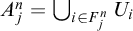 . We will code
$C^n_j$
. We will code
$C^n_j$
 as a finite set of pairs
$E^n_j$
as a finite set of pairs
$E^n_j$
 such that

We note that, in general,
$C^n_j$
 may not exist as a set.
Let
$X=(x_n)_{n\in \mathbb {N}}$
 and let
$F^0_0=F^0_1=E^0_0=E^0_1=\emptyset $
and let
$F^0_0=F^0_1=E^0_0=E^0_1=\emptyset $
 . Given
$C^n_0,C^n_1$
. Given
$C^n_0,C^n_1$
 and
$A^n_0,A^n_1$
and
$A^n_0,A^n_1$
 , if
$A^n_0\sqcup A^n_1=X$
, if
$A^n_0\sqcup A^n_1=X$
 then we are done. Otherwise, let m be the least number such that
$x_m\in X\setminus (A^n_0\cup A^n_1)$
then we are done. Otherwise, let m be the least number such that
$x_m\in X\setminus (A^n_0\cup A^n_1)$
 . Let
$(i,j)$
. Let
$(i,j)$
 be the least pair such that
$j\leq 1$
be the least pair such that
$j\leq 1$
 and
and

The formula above states that in i steps, we verify that
$x_m$
 is not in
$C^n_j$
is not in
$C^n_j$
 . Since
$C^n_0$
. Since
$C^n_0$
 and
$C^n_1$
and
$C^n_1$
 are disjoint we have that the search will eventually terminate. Let s be the least number such that
$x_m\in U_{f_j(s)}$
are disjoint we have that the search will eventually terminate. Let s be the least number such that
$x_m\in U_{f_j(s)}$
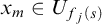 and define

which will be a finite set by
$\mathbf {B}\Sigma ^0_1$
 and will be coded. We then define

and

We now verify that the sets
$A^{n+1}_j$
 ,
$C^{n+1}_j$
,
$C^{n+1}_j$
 ,
$A^{n+1}_{1-j}$
,
$A^{n+1}_{1-j}$
 , and
$C^{n+1}_{1-j}$
, and
$C^{n+1}_{1-j}$
 have the wanted properties. By construction
$A^{n+1}_j=A^n_j\subseteq C^n_j=C^{n+1}_j$
have the wanted properties. By construction
$A^{n+1}_j=A^n_j\subseteq C^n_j=C^{n+1}_j$
 . We have that

since
$A^n_{1-j}\subseteq C^n_{1-j}$
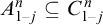 and by definition of
$R_0$
and by definition of
$R_0$
 and
$R_1$
and
$R_1$
 we have

We prove that
$C^{n+1}_j\cap C^{n+1}_{1-j}=\emptyset $
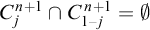 . We have by construction that

By definition of the functions
$R_1$
 and K we have

It therefore suffices to show that
$C^n_j\cap \bigcap _{i\in I}U_i=\emptyset $
 . Let
$r\in C^n_j$
. Let
$r\in C^n_j$
 using the definition of
$C^n_j$
using the definition of
$C^n_j$
 we have the following cases.
Case 1:
$r\in \bigcap _{i\in \mathbb {N}}X\setminus U_{f_j(i)}$
 so
$r\notin U_{f_j(s)}$
so
$r\notin U_{f_j(s)}$
 and
$r\notin \bigcap _{i\in I} U_i$
and
$r\notin \bigcap _{i\in I} U_i$
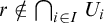 since
$f_j(s)\in I$
since
$f_j(s)\in I$
 .
.
Case 2: There is
$(z,l)\in E^n_j$
 such that
$r\in \bigcap _{y\notin U_l} X\setminus U_{R_1(z,l,y)}$
such that
$r\in \bigcap _{y\notin U_l} X\setminus U_{R_1(z,l,y)}$
 . By definition of I there is some y such that
$R_1(z,l,y)\in I$
. By definition of I there is some y such that
$R_1(z,l,y)\in I$
 and so
$r\notin U_{R_1(z,l,y)}$
and so
$r\notin U_{R_1(z,l,y)}$
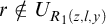 .
.
Therefore, the sequences
$(C^n_0)_{n\in \mathbb {N}},(C^n_1)_{n\in \mathbb {N}},(A^n_0)_{n\in \mathbb {N}},$
 and
$(A^n_1)_{n\in \mathbb {N}}$
and
$(A^n_1)_{n\in \mathbb {N}}$
 have the desired properties. Since the sequences
$(F^n_0)_{n\in \mathbb {N}}$
have the desired properties. Since the sequences
$(F^n_0)_{n\in \mathbb {N}}$
 ,
$(F^n_1)_{n\in \mathbb {N}}$
,
$(F^n_1)_{n\in \mathbb {N}}$
 ,
$(E^n_0)_{n\in \mathbb {N}}$
,
$(E^n_0)_{n\in \mathbb {N}}$
 , and
$(E^n_1)_{n\in \mathbb {N}}$
, and
$(E^n_1)_{n\in \mathbb {N}}$
 are defined recursively we have that they exist by
$\Delta ^0_1$
are defined recursively we have that they exist by
$\Delta ^0_1$
 comprehension. As observed before we have that the set

will be the wanted clopen set. Both D and its complement are
$\Sigma ^0_1$
 so D exists by
$\Delta ^0_1$
so D exists by
$\Delta ^0_1$
 comprehension.
Observation 6.10. Applying the previous result to the space
$(\mathbb {N},(\{i\})_{i\in \mathbb {N}},k)$
 , where
$k(i,i,i)=i$
, where
$k(i,i,i)=i$
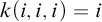 , gives us the classic recursion theory result that any pair of disjoint
$\Pi ^0_1$
, gives us the classic recursion theory result that any pair of disjoint
$\Pi ^0_1$
 sets can be separated by a recursive set.
Corollary 6.11.
$\mathbf {RCA}_0$
 proves that any uniformly regular CSC space is effectively homeomorphic to an effectively zero-dimensional CSC space.
Proof. Let
$R_0$
 and
$R_1$
and
$R_1$
 be the functions that witness that X is
$uT_3$
be the functions that witness that X is
$uT_3$
 . For each pair
$(x,i)$
. For each pair
$(x,i)$
 , where
$x\in U_i$
, where
$x\in U_i$
 , let
$C_0^{(i,x)}$
, let
$C_0^{(i,x)}$
 be the closure of the point x; which by regularity is contained in
$U_{i}$
be the closure of the point x; which by regularity is contained in
$U_{i}$
 , and
$C^{(x,i)}_1=X\setminus U_i$
, and
$C^{(x,i)}_1=X\setminus U_i$
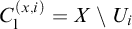 . We point out that the closure of x may not be a set, but it will be a coded closed collection. By Theorem 6.9 we have that there exists a sequence of clopen sets
$(D_{(x,i)})_{x\in U_i}$
. We point out that the closure of x may not be a set, but it will be a coded closed collection. By Theorem 6.9 we have that there exists a sequence of clopen sets
$(D_{(x,i)})_{x\in U_i}$
 such that for all
$x\in U_i$
such that for all
$x\in U_i$
 we have
$x\in D_{(x,i)}\subseteq X\setminus (X\setminus U_i)=U_i$
we have
$x\in D_{(x,i)}\subseteq X\setminus (X\setminus U_i)=U_i$
 . We define
$k'$
. We define
$k'$
 . Given
$x\in D_{(y,j)}\cap D_{(z,l)}$
. Given
$x\in D_{(y,j)}\cap D_{(z,l)}$
 , by the construction carried out in Theorem 6.9 we have that

Let
$m=\min \{n\in \mathbb {N}: x\in A^n_{0,(y,j)}\cap A^n_{0,(z,l)}\}$
 and define

and let
$k'(x,(y,i),(z,j))=(x,k(x,s,t))$
 . It is straightforward, using
$R_0$
. It is straightforward, using
$R_0$
 , to show that
$(X,(D_{(x,i)})_{x\in U_i},k')$
, to show that
$(X,(D_{(x,i)})_{x\in U_i},k')$
 is a CSC space with a basis of clopen sets and it is effectively homeomorphic to
$(X,(U_i)_{i\in \mathbb {N}},k)$
is a CSC space with a basis of clopen sets and it is effectively homeomorphic to
$(X,(U_i)_{i\in \mathbb {N}},k)$
 . We define a function G witnessing that X is effectively zero-dimensional. Let
$x\in X$
. We define a function G witnessing that X is effectively zero-dimensional. Let
$x\in X$
 and
$i\in \mathbb {N}$
and
$i\in \mathbb {N}$
 be such that
$x\in U_i$
be such that
$x\in U_i$
 . Observing the construction carried out in Theorem 6.9 we have that
$X\setminus D_{(x,i)}=\bigcup _{n\in \mathbb {N}} A^n_1=\bigcup _{n\in \mathbb {N}}\bigcup _{j\in F^n_1} U_j$
. Observing the construction carried out in Theorem 6.9 we have that
$X\setminus D_{(x,i)}=\bigcup _{n\in \mathbb {N}} A^n_1=\bigcup _{n\in \mathbb {N}}\bigcup _{j\in F^n_1} U_j$
 . Given
$y\notin D_{(x,i)}$
. Given
$y\notin D_{(x,i)}$
 let
$m=\min \{n\in \mathbb {N}: y\in A^n_1\}$
let
$m=\min \{n\in \mathbb {N}: y\in A^n_1\}$
 and define
$G(y,(x,i))=(y,\min \{j\in F^n_1: y\in U_j\})$
and define
$G(y,(x,i))=(y,\min \{j\in F^n_1: y\in U_j\})$
 . We have that G witnesses that
$(X,(D_{(x,i)})_{x\in U_i},k')$
. We have that G witnesses that
$(X,(D_{(x,i)})_{x\in U_i},k')$
 is effectively zero-dimensional and exists by
$\Delta ^0_1$
is effectively zero-dimensional and exists by
$\Delta ^0_1$
 comprehension.
Proposition 6.12. An effectively zero-dimensional CSC space
$(X,(U_i)_{i\in \mathbb {N}},k)$
 is effectively homeomorphic to a CSC space with an algebra of clopen sets.
Proof. Let
$(V_i)_{i\in \mathbb {N}}$
 be the sequence of sets given by
$V_{2j}=U_i$
be the sequence of sets given by
$V_{2j}=U_i$
 and
$V_{2i+1}=X\setminus U_i$
and
$V_{2i+1}=X\setminus U_i$
 . We then define
$A_m=\bigcap _{i\in m}\bigcup _{j\in i} V_i$
. We then define
$A_m=\bigcap _{i\in m}\bigcup _{j\in i} V_i$
 . We define
$Int(n,m)$
. We define
$Int(n,m)$
 to be the number that codes the union of m and n. For
$m\in \mathbb {N}$
to be the number that codes the union of m and n. For
$m\in \mathbb {N}$
 coding the set

then
$Comp(m)$
 will code the set of all sets of the form

where
$f:r\rightarrow \max \{n_j:j\leq r\}$
 is a coded function such that for all
$j\leq r $
is a coded function such that for all
$j\leq r $
 we have
$f(j)\leq n_j$
we have
$f(j)\leq n_j$
 and where
$a^c=a-1$
and where
$a^c=a-1$
 if a is odd and
$a^c=a+1$
if a is odd and
$a^c=a+1$
 if a is even. One observes that
$A_{Comp(m)}=X\setminus A_m$
if a is even. One observes that
$A_{Comp(m)}=X\setminus A_m$
 .
.
Let
$Id:(X,(U_i)_{i\in \mathbb {N}},k)\rightarrow (X,(A_m)_{m\in \mathbb {N}},Int,Comp)$
 be the identity function from X to X, we show that it’s an effective homeomorphism. The function
$(x,i)\mapsto \{\{2i\}\}$
be the identity function from X to X, we show that it’s an effective homeomorphism. The function
$(x,i)\mapsto \{\{2i\}\}$
 witnesses that
$Id$
witnesses that
$Id$
 is effectively continuous. We need to show that there is a function
$v$
is effectively continuous. We need to show that there is a function
$v$
 such that for any
$(x,m)$
such that for any
$(x,m)$
 such that
$x\in A_m$
such that
$x\in A_m$
 then
$x\in U_{v(x,m)}\subseteq A_m$
then
$x\in U_{v(x,m)}\subseteq A_m$
 . We define
$v$
. We define
$v$
 on the complexity of the set m codes. If
$m=\{\{2i\}\}$
on the complexity of the set m codes. If
$m=\{\{2i\}\}$
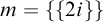 then we set
$v(x,m)=i$
then we set
$v(x,m)=i$
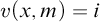 . If
$m=\{\{2i+1\}\}$
. If
$m=\{\{2i+1\}\}$
 then
$v(x,m)=G(x,i)$
then
$v(x,m)=G(x,i)$
 . For
$m=\{\{a_0,\dots ,a_n\}\}$
. For
$m=\{\{a_0,\dots ,a_n\}\}$
 where
$a_0<a_1<\dots <a_n$
where
$a_0<a_1<\dots <a_n$
 then we define
$v(x,m)=v(x,\{\{ a_0\}\})$
then we define
$v(x,m)=v(x,\{\{ a_0\}\})$
 . Finally for any
$m=\{m_0,\dots ,m_r\}$
. Finally for any
$m=\{m_0,\dots ,m_r\}$
 then let
$I=\{v(x,\{m_i\}): i\leq r\}$
then let
$I=\{v(x,\{m_i\}): i\leq r\}$
 we define

The function
$v$
 is defined primitively recursively, and so it exists by
$\Delta ^0_1$
is defined primitively recursively, and so it exists by
$\Delta ^0_1$
 comprehension, and it verifies that the identity is effectively open between
$(X,(U_i)_{i\in \mathbb {N}},k)$
comprehension, and it verifies that the identity is effectively open between
$(X,(U_i)_{i\in \mathbb {N}},k)$
 and
$(X,(A_m)_{m\in \mathbb {N}},Int,Comp)$
and
$(X,(A_m)_{m\in \mathbb {N}},Int,Comp)$
 .
.
Theorem 6.13.
$\mathbf {RCA}_0$
 proves that for every CSC space
$(X,(U_i)_{i\in \mathbb {N}},k)$
proves that for every CSC space
$(X,(U_i)_{i\in \mathbb {N}},k)$
 the following are equivalent:
-
(1) X is $uT_3$
. -
(2) X is $T_0$
and effectively homeomorphic to a CSC space with an algebra of clopen sets. -
(3) X is effectively homeomorphic to a subspace of $\mathbb {Q}$
. -
(4) X is metrizable.


Proof. The case in which X is finite is trivial, so we assume that X is infinite and let
$(x_i)_{i\in \mathbb {N}}$
 be the elements of X enumerated increasingly.
$(3\rightarrow 4)$
be the elements of X enumerated increasingly.
$(3\rightarrow 4)$
 is trivial.
$(1\rightarrow 2)$
 follows from Corollary 6.11 and Proposition 6.12.
$(2\rightarrow 1)$
follows from Corollary 6.11 and Proposition 6.12.
$(2\rightarrow 1)$
 follows from the fact that any CSC space with an algebra of clopen sets is effectively zero-dimensional, which by Proposition 6.7 is
$uT_3$
follows from the fact that any CSC space with an algebra of clopen sets is effectively zero-dimensional, which by Proposition 6.7 is
$uT_3$
 .
.
$(4\rightarrow 2)$
 We have already seen in Proposition 4.10 that all countable metric spaces have a CSC structure that consists of clopen balls. In particular given a metric space
$(X,d)$
We have already seen in Proposition 4.10 that all countable metric spaces have a CSC structure that consists of clopen balls. In particular given a metric space
$(X,d)$
 there exists an
$a\in \mathbb {R}_{>0}$
there exists an
$a\in \mathbb {R}_{>0}$
 such that
$(X, (B(x,q\cdot a) )_{q\in \mathbb {Q}_{>0},x\in X},k)$
such that
$(X, (B(x,q\cdot a) )_{q\in \mathbb {Q}_{>0},x\in X},k)$
 is a CSC space with a basis of clopen sets. We define
$G:X\times (X\times \mathbb {Q}_{>0})\rightarrow (X\times \mathbb {Q}_{>0})$
is a CSC space with a basis of clopen sets. We define
$G:X\times (X\times \mathbb {Q}_{>0})\rightarrow (X\times \mathbb {Q}_{>0})$
 which will send
$(x,(y,q))$
which will send
$(x,(y,q))$
 , where
$x\notin B(y,q\cdot a)$
, where
$x\notin B(y,q\cdot a)$
 , to
$(x,\frac {1}{n})$
, to
$(x,\frac {1}{n})$
 where n is the least n such that
$\frac {1}{2^n}\cdot a < d(x,y)- q\cdot a$
where n is the least n such that
$\frac {1}{2^n}\cdot a < d(x,y)- q\cdot a$
 . Since the CSC structure of X is effectively zero-dimensional, by Proposition 6.12, it is effectively homeomorphic to a space with an algebra of clopen sets.
$(2\rightarrow 3)$
 Assume that X has an algebra of clopen sets. We will show that there is an embedding f from X to the rational points of the Cantor space, which we will denote as
$2^{\mathbb {N}}\cap \mathbb {Q}$
Assume that X has an algebra of clopen sets. We will show that there is an embedding f from X to the rational points of the Cantor space, which we will denote as
$2^{\mathbb {N}}\cap \mathbb {Q}$
 . We observe that
$2^{\mathbb {N}}\cap \mathbb {Q}$
. We observe that
$2^{\mathbb {N}}\cap \mathbb {Q}$
 is a CSC space with an algebra of clopen sets of the form
$[[\tau ]]=\{g\in 2^{\mathbb {N}}\cap \mathbb {Q}:\tau \sqsubseteq g\}$
is a CSC space with an algebra of clopen sets of the form
$[[\tau ]]=\{g\in 2^{\mathbb {N}}\cap \mathbb {Q}:\tau \sqsubseteq g\}$
 , and it effectively embeds into
$[0,1]\cap \mathbb {Q}$
, and it effectively embeds into
$[0,1]\cap \mathbb {Q}$
 .
.
We construct recursively the following things:
-
• A total surjection $\phi :\mathbb {N}\rightarrow \mathbb {N}$
such that for all
$n\in \mathbb {N}$
and for all
$i<j<2n$
we have $$ \begin{align*}\{m<2n:x_i\in U_{\phi(m)}\}\neq \{m< 2n:x_j\in U_{\phi(m)}\}. \end{align*} $$
The function $\phi $
will define a sequence of basic open sets
$(U_{\phi (n)})_{n\in \mathbb {N}}$
. For
$\tau \in 2^{<\mathbb {N}}$
we write $$ \begin{align*} N_\tau=\{x\in X:\forall m<|\tau|\;(x\in U_{\phi(m)}\leftrightarrow \tau(m)=1)\}. \end{align*} $$
Since we are assuming that X has an algebra of sets, we have that for every sequence $\tau $
that $$ \begin{align*} N_\tau=\left(\bigcap_{i< |\tau|\wedge \tau(i)=1}U_{\phi(i)}\right)\cap\left(\bigcap_{i< |\tau|\wedge \tau(i)=0}U_{Comp(\phi(i))}\right). \end{align*} $$
So there is some j such that $N_\tau =U_j$
. Furthermore, there is a uniformly effective procedure to find an index j from
$\tau $
. In general,
$N_\tau $
might be empty, but this will not affect the construction. -
• $f(x_0),\dots ,f(x_n)\in 2^{<\mathbb {N}}\cap \mathbb {Q}$
. -
• A function $r_n:2^{\leq 2n}\rightarrow 2^{\leq 2n}$
which is monotone, level preserving and for all
$\sigma \in \text {rng}(r_n)$
there is an
$i\leq n$
such that
$f(x_i)\in N_{\sigma }$
. We also require that for all
$i\leq n$
we have
$f(x_i)\in [[r_n(seq_{2n}(x_i))]]$
where
$seq_{2n}(x_i)$
is a sequence of length
$2n$
such that $$ \begin{align*}seq_{2n}(x_i)(j)=\begin{cases} 1 \quad \text{ if }\quad x\in U_{\phi(j)} \\ 0 \quad \text{ if }\quad x\notin U_{\phi(j)}. \end{cases} \end{align*} $$
This ensures us that for all $\tau $
of length
$n\, f(N_\tau )=f(X)\cap [[r_n(\tau )]]$
and that f will be injective. Finally, we will require for all
$m<n$
that
$r_m\subseteq r_n$
.






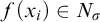







Assume we have
$f(x_0),\dots ,f(x_{n}),r_n,\phi |_{< 2n}$
 and that for all
$\sigma \in 2^{=2n}\, [[r_n(\sigma )]]$
and that for all
$\sigma \in 2^{=2n}\, [[r_n(\sigma )]]$
 contains a unique
$f(x_i)$
contains a unique
$f(x_i)$
 .
.
Step 1: We set
$\phi (2n)=\min \mathbb {N}\setminus \text {rng}(\phi |_{<2n})$
 , this ensures us that
$\phi $
, this ensures us that
$\phi $
 will be surjective. Given
$\tau \in 2^{<\mathbb {N}}$
will be surjective. Given
$\tau \in 2^{<\mathbb {N}}$
 of length
$2n-1$
of length
$2n-1$
 there exists exactly one
$j\leq n$
there exists exactly one
$j\leq n$
 such that
$f(x_j)\in [[r_n(\tau )]]$
such that
$f(x_j)\in [[r_n(\tau )]]$
 . Let
$i\leq 1$
. Let
$i\leq 1$
 be such that
$f(x_j)\in [[r_n(\tau )^\frown (i)]]$
be such that
$f(x_j)\in [[r_n(\tau )^\frown (i)]]$
 , we define
$r_n'(\tau ^\frown (0))=r_n'(\tau ^\frown (1))=r_n(\tau )^\frown (i)$
, we define
$r_n'(\tau ^\frown (0))=r_n'(\tau ^\frown (1))=r_n(\tau )^\frown (i)$
 .
.
Step 2: There is, by construction of
$r^{\prime }_n$
 , exactly one
$j\leq n$
, exactly one
$j\leq n$
 such that
$r^{\prime }_n(seq_{2n+1}(x_{n+1}))=r^{\prime }_n(seq_{2n+1}(x_j))$
such that
$r^{\prime }_n(seq_{2n+1}(x_{n+1}))=r^{\prime }_n(seq_{2n+1}(x_j))$
 . We define

That is, the first index for a basic open set not in the range of
$\phi |_{<2n+1}$
 that separates
$x_{n+1}$
that separates
$x_{n+1}$
 and
$x_j$
and
$x_j$
 . The search for such l will eventually terminate since we are assuming that X is
$T_0$
. The search for such l will eventually terminate since we are assuming that X is
$T_0$
 . Assume that
$x_j\in U_{\phi (2n+1)}$
. Assume that
$x_j\in U_{\phi (2n+1)}$
 and
$x_{n+1}\notin U_{\phi (2n+1)}$
and
$x_{n+1}\notin U_{\phi (2n+1)}$
 , the proof for the other case is analogous. Let
$\rho $
, the proof for the other case is analogous. Let
$\rho $
 be the unique sequence of length
$2n+2$
be the unique sequence of length
$2n+2$
 such that
$f(x_j)\in [[\rho ]]$
such that
$f(x_j)\in [[\rho ]]$
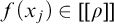 and let
$i=\rho (2n+1)$
and let
$i=\rho (2n+1)$
 . For all
$\sigma \in 2^{=2n+1}$
. For all
$\sigma \in 2^{=2n+1}$
 such that

we define


For all other sequences of length
$2n+2$
 we define
$r_{n+1}$
we define
$r_{n+1}$
 as in step
$1$
as in step
$1$
 .
.
In either case, we are ensured that for all
$j\leq n$
 , we have

Step 3: We define
$f(x_{n+1})$
 to be the least Cantor rational in the open set
$[[r_{n+1}(seq_{2n+2}(x_{n+1}))]]$
to be the least Cantor rational in the open set
$[[r_{n+1}(seq_{2n+2}(x_{n+1}))]]$
 . This ends the construction.
Given the functions
$f,\phi $
 and
$r=\bigcup _{n\in \mathbb {N}}r_n$
and
$r=\bigcup _{n\in \mathbb {N}}r_n$
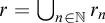 we show that f is an effective homeomorphism with its range.
We first show that the range of f exists. By definition
$y\in \text {rng}(f)\leftrightarrow \exists x\; f(y)=x$
 , and so the range is
$\Sigma ^0_1$
, and so the range is
$\Sigma ^0_1$
 definable relative to f. We also have that
$y\in \text {rng}(f)$
definable relative to f. We also have that
$y\in \text {rng}(f)$
 if and only if for all
$n\in \mathbb {N}$
if and only if for all
$n\in \mathbb {N}$
 there is a
$\sigma \in 2^{=n}$
there is a
$\sigma \in 2^{=n}$
 such that
$y\in [[r_n(\sigma )]]$
such that
$y\in [[r_n(\sigma )]]$
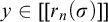 , which is a
$\Pi ^0_1$
, which is a
$\Pi ^0_1$
 definition. So we have that
$\text {rng}(f)$
definition. So we have that
$\text {rng}(f)$
 is
$\Delta ^0_1$
is
$\Delta ^0_1$
 definable and therefore exists by
$\Delta ^0_1$
definable and therefore exists by
$\Delta ^0_1$
 comprehension. We note that
$\Pi ^0_1$
comprehension. We note that
$\Pi ^0_1$
 definition of
$\text {rng}(f)$
definition of
$\text {rng}(f)$
 tells us it is a closed subspace of
$2^{\mathbb {N}}\cap \mathbb {Q}$
tells us it is a closed subspace of
$2^{\mathbb {N}}\cap \mathbb {Q}$
 .
.
Let
$x_j\in X$
 be a point and
$U_{\phi (i)}$
be a point and
$U_{\phi (i)}$
 be an open set containing it. We wish to effectively find an open neighborhood of
$f(x)$
be an open set containing it. We wish to effectively find an open neighborhood of
$f(x)$
 that is contained in
$f(U_{\phi (i)})$
that is contained in
$f(U_{\phi (i)})$
 . Let
$n>\max \{i,j\}$
. Let
$n>\max \{i,j\}$
 , we have that
$seq_{2n}(x_j)(i)=1$
, we have that
$seq_{2n}(x_j)(i)=1$
 and so

Which by construction implies

This implies that
$f:X\rightarrow f(X)$
 is effectively open.
Let
$[[\tau ]]$
 be a basic open set of the Cantor space and
$f(x_j)\in [[\tau ]]$
be a basic open set of the Cantor space and
$f(x_j)\in [[\tau ]]$
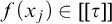 . By construction we have that
$\tau \in \text {rng}(r)$
. By construction we have that
$\tau \in \text {rng}(r)$
 , since r is level preserving we can effectively find
$\rho =r^{-1}(\tau )$
, since r is level preserving we can effectively find
$\rho =r^{-1}(\tau )$
 . We have that
$x\in N_{\rho }$
. We have that
$x\in N_{\rho }$
 and
$f(N_\rho )\subseteq[[\tau ]]$
and
$f(N_\rho )\subseteq[[\tau ]]$
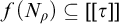 by construction. This shows that f is effectively continuous. Therefore f is an effective embedding of X into
$2^{<\mathbb {N}}\cap \mathbb {Q}$
by construction. This shows that f is effectively continuous. Therefore f is an effective embedding of X into
$2^{<\mathbb {N}}\cap \mathbb {Q}$
 .
.
Sierpiński [Reference Sierpiński30] proved using a back and forth construction that any pair of countable sets of
$\mathbb {R}^n$
 without isolated points are homeomorphic. That the back and forth method, used by Sierpinski, can be carried out in
$\mathbf {RCA}_0$
without isolated points are homeomorphic. That the back and forth method, used by Sierpinski, can be carried out in
$\mathbf {RCA}_0$
 for effectively zero-dimensional
$T_0$
for effectively zero-dimensional
$T_0$
 spaces was first observed by Soldà (unpublished).
Theorem 6.14 (Soldà [Reference Soldà33]).Footnote 1
$\mathbf {RCA}_0$
 proves that any two
$T_0$
proves that any two
$T_0$
 CSC spaces with an algebra of clopen sets and without isolated points are effectively homeomorphic.
Corollary 6.15. Any non-empty
$uT_3$
 CSC space without isolated points is effectively homeomorphic to
$\mathbb {Q}$
CSC space without isolated points is effectively homeomorphic to
$\mathbb {Q}$
 with the order topology.
Proof. By Corollary 6.11 and Proposition 6.12 any
$uT_3$
 CSC space has an algebra of clopen sets, so by Theorem 6.14, any
$uT_3$
CSC space has an algebra of clopen sets, so by Theorem 6.14, any
$uT_3$
 space without isolated points will be homeomorphic to
$\mathbb {Q}$
space without isolated points will be homeomorphic to
$\mathbb {Q}$
 .
.
Observation 6.16. Since over
$\mathbf {ACA}_0$
 all
$T_3$
all
$T_3$
 CSC spaces are
$uT_3$
CSC spaces are
$uT_3$
 we have that
$\mathbf {ACA}_0$
we have that
$\mathbf {ACA}_0$
 proves that every
$T_3$
proves that every
$T_3$
 space is homeomorphic to a subset of
$\mathbb {Q}$
space is homeomorphic to a subset of
$\mathbb {Q}$
 and is homeomorphic to a space with an algebra of clopen sets.
Theorem 6.17. The following are equivalent over
$\mathbf {RCA}_0$
 :
:
-
(1) Arithmetic comprehension.
-
(2) Every $T_3\, eT_2$
CSC space is effectively homeomorphic to a metric space. -
(3) Every $T_3\, eT_2$
CSC space is effectively homeomorphic to a CSC space with an algebra of clopen sets. -
(4) Every $T_3\, eT_2$
CSC space is effectively homeomorphic to a subset of the rationals.


Proof. By Theorem 6.13,
$(2)$
 –
$(4)$
–
$(4)$
 are equivalent over
$\mathbf {RCA}_0$
are equivalent over
$\mathbf {RCA}_0$
 . By Proposition 6.7, all effectively zero-dimensional CSC spaces, and therefore all CSC spaces with an algebra of clopen sets, are uniformly regular. By Proposition 5.16,
$(4)$
. By Proposition 6.7, all effectively zero-dimensional CSC spaces, and therefore all CSC spaces with an algebra of clopen sets, are uniformly regular. By Proposition 5.16,
$(4)$
 is equivalent to every regular
$eT_2$
is equivalent to every regular
$eT_2$
 CSC space is uniformly regular, which is equivalent to arithmetic comprehension over
$\mathbf {RCA}_0$
CSC space is uniformly regular, which is equivalent to arithmetic comprehension over
$\mathbf {RCA}_0$
 by Theorem 5.20.
It is clear that a CSC space that is not
$T_0$
 cannot be homeomorphic to a subspace of the rationals. However, for non-
$T_0$
cannot be homeomorphic to a subspace of the rationals. However, for non-
$T_0$
 uniformly regular CSC spaces we can consider a pseudometric.
Definition 6.18. A pseudometric on a set X is a function
$d:X\times X\rightarrow \mathbb {R}_{\geq 0}$
 that is symmetric and satisfies the triangle inequality. We observe that similar to the case of a metric space (Proposition 4.10), we can associate a CSC structure to a set with a pseudometric. As in the case for metric spaces, we get that the CSC structure of a pseudometric will be unique up to effective homeomorphism and effectively zero-dimensional. We say that a CSC space is pseudometrizable if it is effectively homeomorphic to the CSC structure of a pseudometric space.
Proposition 6.19.
$\mathbf {RCA}_0$
 proves that every uniformly regular CSC space is effectively homeomorphic to a CSC space with a pseudometric.
Proof. Let
$(X,(U_i)_{i\in \mathbb {N}})$
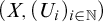 be a uniformly regular CSC space by Corollary 6.11 and Proposition 6.12 we can assume without loss of generality that X has an algebra of clopen sets. Let
$U[x]=\{i\in \mathbb {N}:x\in U_i\}$
be a uniformly regular CSC space by Corollary 6.11 and Proposition 6.12 we can assume without loss of generality that X has an algebra of clopen sets. Let
$U[x]=\{i\in \mathbb {N}:x\in U_i\}$
 we define d by

The function d is symmetric, and the triangle inequality follows from the following property of the symmetric difference:

By definition of d we have

So we have that
$B(x,\frac {1}{2^k})$
 is the Boolean combination of clopen sets and is, therefore, clopen. We show that the identity
$Id:(X,(U_i)_{i\in \mathbb {N}}, Int, Comp)\rightarrow (X,(B(x,\frac {1}{2^k}))_{k\in \mathbb {N}},k)$
is the Boolean combination of clopen sets and is, therefore, clopen. We show that the identity
$Id:(X,(U_i)_{i\in \mathbb {N}}, Int, Comp)\rightarrow (X,(B(x,\frac {1}{2^k}))_{k\in \mathbb {N}},k)$
 is an effective homeomorphism. For
$x\in X$
is an effective homeomorphism. For
$x\in X$
 and
$i\in \mathbb {N}$
and
$i\in \mathbb {N}$
 such that
$x\in U_i$
such that
$x\in U_i$
 then we have that
$x\in B(x,\frac {1}{2^i})\subseteq U_i$
then we have that
$x\in B(x,\frac {1}{2^i})\subseteq U_i$
 and so the map
$(x,i)\mapsto i$
and so the map
$(x,i)\mapsto i$
 verifies that the identity is effectively open. The map that sends
$(x,k)$
verifies that the identity is effectively open. The map that sends
$(x,k)$
 to the code for the open set

is computable relative to the functions
$Comp$
 and
$Int$
and
$Int$
 and it verifies that the identity is effectively continuous.
Just as in the
$T_0$
 case, we get the following result.
Theorem 6.20.
$\mathbf {RCA}_0$
 proves that for any CSC space
$(X,(U_i)_{i\in \mathbb {N}},k)$
proves that for any CSC space
$(X,(U_i)_{i\in \mathbb {N}},k)$
 the following are equivalent:
-
(1) X is uniformly regular.
-
(2) X is effectively zero-dimensional.
-
(3) X is effectively homeomorphic to a CSC space with an algebra of clopen sets.
-
(4) X is pseudometrizable.


7 Compactness
In this section, we will look at compact CSC spaces, especially
$T_2$
 compact CSC spaces. It is a classic result of general topology that compact
$T_2$
compact CSC spaces. It is a classic result of general topology that compact
$T_2$
 spaces are
$T_3$
spaces are
$T_3$
 and normal. We also have that compact
$T_2$
and normal. We also have that compact
$T_2$
 CSC spaces are well-orderable. We will show that these characterizations of
$T_2$
CSC spaces are well-orderable. We will show that these characterizations of
$T_2$
 compact spaces can be carried out in
$\mathbf {ACA}_0$
compact spaces can be carried out in
$\mathbf {ACA}_0$
 . We will also lay out a few technical lemmas that will be needed for the subsequent sections.
Definition 7.1. A CSC space
$(X,(U_i)_{i\in \mathbb {N}},k)$
 is said to be compact if for every
$I\subseteq \mathbb {N}$
is said to be compact if for every
$I\subseteq \mathbb {N}$
 such that
$X=\bigcup _{i\in I} U_i$
such that
$X=\bigcup _{i\in I} U_i$
 there exists a finite
$a\subseteq I$
there exists a finite
$a\subseteq I$
 such that
$X=\bigcup _{i\in a} U_i$
such that
$X=\bigcup _{i\in a} U_i$
 . The covering relation for the space X is the set
$C=\{a\in \mathbb {N}:X=\bigcup _{i\in a} U_i\}$
. The covering relation for the space X is the set
$C=\{a\in \mathbb {N}:X=\bigcup _{i\in a} U_i\}$
 . We say that X is effectively compact if it is compact and has a covering relation. We say that X is sequentially compact if every sequence contains a converging subsequence. A subset of a CSC space is said to be compact or effectively compact if its subspace topology is, respectively, compact or effectively compact.
Lemma 7.2 (Dorais [Reference Dorais6, Proposition 7.5])
$\mathbf {RCA}_0$
 proves that every linear order with the order topology has a covering relation.
Observation 7.3 (Dorais [Reference Dorais6, Example 5.4])
Over
$\mathbf {ACA}_0$
 a CSC space is compact if and only if it is sequentially compact.
Observation 7.4.
$\mathbf {RCA}_0$
 proves that the union of two effectively compact sets is effectively compact. In particular, given
$C_0,C_1$
proves that the union of two effectively compact sets is effectively compact. In particular, given
$C_0,C_1$
 the covering relations of
$K_0,K_1$
the covering relations of
$K_0,K_1$
 , respectively, then
$C_0\cap C_1$
, respectively, then
$C_0\cap C_1$
 is the covering relation for
$K_0\cup K_1$
is the covering relation for
$K_0\cup K_1$
 .
.
Theorem 7.5. Over
$\mathbf {RCA}_0$
 the following are equivalent:
-
(1) Arithmetic comprehension.
-
(2) Every compact CSC space is effectively compact (Dorais [Reference Dorais6, Example 3.5]).
-
(3) Every compact $uT_3$
CSC space is effectively compact.

Proof.
$(1\rightarrow 2)$
 since the covering relation for a CSC space is arithmetically definable.
$(2\rightarrow 3)$
since the covering relation for a CSC space is arithmetically definable.
$(2\rightarrow 3)$
 is trivial. For
$(3\rightarrow 1)$
is trivial. For
$(3\rightarrow 1)$
 consider the CSC space
$(X,(U_i)_{i\in \mathbb {N}},k)$
consider the CSC space
$(X,(U_i)_{i\in \mathbb {N}},k)$
 where
$X=\mathbb {N}\cup \{\infty \}$
where
$X=\mathbb {N}\cup \{\infty \}$
 :
:


that is all the
$j\geq n$
 such that for all
$e\in s$
such that for all
$e\in s$
 the Turing machine of index e does not halt for the first time at step j. We define k that sends
$(n,a,b)\mapsto 2n$
the Turing machine of index e does not halt for the first time at step j. We define k that sends
$(n,a,b)\mapsto 2n$
 and
$(\infty ,2(i,s)+1,2(j,t)+1)$
and
$(\infty ,2(i,s)+1,2(j,t)+1)$
 to
$2(\max \{i,j\},r)+1$
to
$2(\max \{i,j\},r)+1$
 where r is the code for the union of s and t. X is
$uT_3$
where r is the code for the union of s and t. X is
$uT_3$
 follows from the fact that the basis consists of clopen sets and all points except
$\infty $
follows from the fact that the basis consists of clopen sets and all points except
$\infty $
 are isolated. By assumption, X is effectively compact and, therefore, has a covering relation C. We have that

and so
$A'\leq _T C$
 .
.
Proposition 7.6 (Dorais [Reference Dorais6, Proposition 3.2])
$\mathbf {RCA}_0$
 proves that being effectively compact is preserved under effective homeomorphism.
Proposition 7.7 (Dorais [Reference Dorais6, Proposition 3.6])
$\mathbf {RCA}_0$
 proves that for any compact CSC space
$(X,(U_i)_{i\in \mathbb {N}},k)$
proves that for any compact CSC space
$(X,(U_i)_{i\in \mathbb {N}},k)$
 any effectively closed
$C\subseteq X$
any effectively closed
$C\subseteq X$
 subset is a compact subspace.
Proposition 7.8 (Dorais [Reference Dorais6, Proposition 6.3])
$\mathbf {RCA}_0$
 proves that for any
$eT_2$
proves that for any
$eT_2$
 CSC space
$(X,(U_i)_{i\in \mathbb {N}},k)$
CSC space
$(X,(U_i)_{i\in \mathbb {N}},k)$
 and
$K\subseteq X$
and
$K\subseteq X$
 an effectively compact set, then K is effectively closed.
Modifying Dorais’ proof of the previous proposition, we get the following results.
Proposition 7.9.
$\mathbf {RCA}_0$
 proves that for any
$eT_2$
proves that for any
$eT_2$
 CSC space
$(X,(U_i)_{i\in \mathbb {N}},k)$
CSC space
$(X,(U_i)_{i\in \mathbb {N}},k)$
 and
$(K_n,C_n)_{n\in \mathbb {N}}$
and
$(K_n,C_n)_{n\in \mathbb {N}}$
 sequence where
$K_n$
sequence where
$K_n$
 is an effectively compact subset of X and
$C_n$
is an effectively compact subset of X and
$C_n$
 is the covering relation for
$K_n$
is the covering relation for
$K_n$
 , then
$(K_n)_{n\in \mathbb {N}}$
, then
$(K_n)_{n\in \mathbb {N}}$
 is uniformly effectively closed.
Proof. Let
$H_0,H_1$
 the functions that witness that X is
$eT_2$
the functions that witness that X is
$eT_2$
 . Define
$p:\mathbb {N}\times X \rightarrow \mathbb {N}$
. Define
$p:\mathbb {N}\times X \rightarrow \mathbb {N}$
 such that for any
$n\in \mathbb {N}$
such that for any
$n\in \mathbb {N}$
 and
$x\notin K_n$
and
$x\notin K_n$
 we have

We observe that p is computable relative to
$(K_n,C_n)_{n\in \mathbb {N}}$
 and so it exists by
$\Delta ^0_1$
and so it exists by
$\Delta ^0_1$
 comprehension. For each
$x\notin K_n$
comprehension. For each
$x\notin K_n$
 we define
$s(n,x)=K(x,\{H_1(x,y):y\in p(n,x)\})$
we define
$s(n,x)=K(x,\{H_1(x,y):y\in p(n,x)\})$
 . We have that by construction

We have that s exists by
$\Delta ^0_1$
 comprehension and, for each n, we have that
$s(n,\cdot )$
comprehension and, for each n, we have that
$s(n,\cdot )$
 is a code for the closed set
$K_n$
is a code for the closed set
$K_n$
 , so
$(K_n)_{n\in \mathbb {N}}$
, so
$(K_n)_{n\in \mathbb {N}}$
 is uniformly effectively closed.
Theorem 7.10.
$\mathbf {RCA}_0$
 proves that every effectively compact
$eT_2$
proves that every effectively compact
$eT_2$
 CSC space is
$uT_3$
CSC space is
$uT_3$
 .
.
Proof. Let
$(X,(U_i)_{i\in \mathbb {N}},k)$
 be an effectively compact
$eT_2$
be an effectively compact
$eT_2$
 CSC space. Let C be the covering relation of X and
$H_0$
CSC space. Let C be the covering relation of X and
$H_0$
 and
$H_1$
and
$H_1$
 be functions that witness that X is
$eT_2$
be functions that witness that X is
$eT_2$
 . We define
$R_0$
. We define
$R_0$
 and
$R_1$
and
$R_1$
 on X. For any
$x\in U_i$
on X. For any
$x\in U_i$
 we have that
$\{U_i\}\cup \{U_{H_1(x,y)}:y\notin U_i\}$
we have that
$\{U_i\}\cup \{U_{H_1(x,y)}:y\notin U_i\}$
 is a covering of X. Let
$F\subseteq X\setminus U_i$
is a covering of X. Let
$F\subseteq X\setminus U_i$
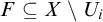 be the least finite set such that
$\{i\}\cup \{H_1(x,y):y\in F\}\in C$
be the least finite set such that
$\{i\}\cup \{H_1(x,y):y\in F\}\in C$
 . Define

and for each
$z\notin U_i$
 we define

By definition, we have

So the functions
$R_0$
 and
$R_1$
and
$R_1$
 witness that X is
$uT_3$
witness that X is
$uT_3$
 and are recursive relative to the sets and functions
$C,(X,(U_i)_{i\in \mathbb {N}},k)$
and are recursive relative to the sets and functions
$C,(X,(U_i)_{i\in \mathbb {N}},k)$
 ,
$H_0$
,
$H_0$
 , and
$H_1$
, and
$H_1$
 so they exist by
$\Delta ^0_1$
so they exist by
$\Delta ^0_1$
 comprehension.
Corollary 7.11.
$\mathbf {ACA}_0$
 proves that every
$T_2$
proves that every
$T_2$
 compact CSC space is
$T_3$
compact CSC space is
$T_3$
 .
.
Proposition 7.12 (See [Reference Greenberg and Montalbán12, Proposition 6.18])
$\mathbf {RCA}_0$
 proves that every well-order with a maximal element is compact with respect to its order topology.
Observation 7.13.
$\mathbf {RCA}_0$
 proves that every linear order with its order topology has a covering relation, so
$\mathbf {RCA}_0$
proves that every linear order with its order topology has a covering relation, so
$\mathbf {RCA}_0$
 proves that every well-order with maximal element is effectively compact. Using the same proof, we can show that the upper limit topology on a well-order with a maximal element is effectively compact. We will see later that over
$\mathbf {ACA}_0$
proves that every well-order with maximal element is effectively compact. Using the same proof, we can show that the upper limit topology on a well-order with a maximal element is effectively compact. We will see later that over
$\mathbf {ACA}_0$
 all compact
$T_2$
all compact
$T_2$
 CSC spaces will be homeomorphic to a well-order with maximum element.
Definition 7.14. We say that a CSC space
$(X,(U_i)_{i\in \mathbb {N}},k)$
 is strongly compact if for every sequence of open set
$(A_n)_{n\in \mathbb {N}}$
is strongly compact if for every sequence of open set
$(A_n)_{n\in \mathbb {N}}$
 there exists a finite set
$F\subseteq\mathbb {N}$
there exists a finite set
$F\subseteq\mathbb {N}$
 such that
$(A_n)_{n\in F}$
such that
$(A_n)_{n\in F}$
 covers X. A CSC space is strongly effectively compact if it is strongly compact and has a covering relation. We note that every sequentially compact CSC space is strongly compact by the usual topological argument (see [Reference Dorais6, Proposition 4.1]).
Clearly, over
$\mathbf {ACA}_0$
 , every compact CSC space is strongly compact. We would like to show that over
$\mathbf {RCA}_0$
, every compact CSC space is strongly compact. We would like to show that over
$\mathbf {RCA}_0$
 , strong compactness is a stronger property than compactness. Shafer proved in the absence of arithmetic comprehension, there can be compact spaces which are not strongly compact [Reference Shafer29, Proposition 3.10]. The CSC space considered by Shafer is discrete and therefore
$T_2$
, strong compactness is a stronger property than compactness. Shafer proved in the absence of arithmetic comprehension, there can be compact spaces which are not strongly compact [Reference Shafer29, Proposition 3.10]. The CSC space considered by Shafer is discrete and therefore
$T_2$
 , however, it is not effectively
$T_2$
, however, it is not effectively
$T_2$
 nor effectively compact. We would like to extend this result to show that in the absence of arithmetic comprehension being strongly compact is a stronger property even for effectively compact
$eT_2$
nor effectively compact. We would like to extend this result to show that in the absence of arithmetic comprehension being strongly compact is a stronger property even for effectively compact
$eT_2$
 spaces. We need the following definition and lemma.
Definition 7.15. Over
$\mathbf {RCA}_0$
 a linear order
$(L,<_L)$
a linear order
$(L,<_L)$
 is complete if there does not exist a pair of non-empty subsets A and B such that
$L=A\sqcup B$
is complete if there does not exist a pair of non-empty subsets A and B such that
$L=A\sqcup B$
 ,
$\forall a\in A\;\forall b\in B\;(a<_L b)$
,
$\forall a\in A\;\forall b\in B\;(a<_L b)$
 , A does not have a maximum and B does not have a minimum.
Lemma 7.16 (Shafer [Reference Shafer29, Lemma 4.4])
For any tree
$T\subseteq \mathbb {N}^{<\mathbb {N}}$
 , if T is well-founded, then
$(T,<_{\text {KB}})$
, if T is well-founded, then
$(T,<_{\text {KB}})$
 is complete.
Making use of Shafer’s [Reference Shafer29] result that an infinite finitely branching tree that is well-founded will fail to be strongly compact we get the following result.
Proposition 7.17. The following are equivalent over
$\mathbf {RCA}_0$
 :
:
-
(1) Arithmetic comprehension.
-
(2) Every $eT_2$
effectively compact CSC space is strongly compact.

Proof.
$(1\rightarrow 2)$
 follows from the fact that over
$\mathbf {ACA}_0$
follows from the fact that over
$\mathbf {ACA}_0$
 compact is equivalent to strongly compact.
$(2\rightarrow 1)$
 Let
$f:\mathbb {N}\rightarrow \mathbb {N}$
Let
$f:\mathbb {N}\rightarrow \mathbb {N}$
 be an injection, we wish to prove that
$\text {rng}(f)$
be an injection, we wish to prove that
$\text {rng}(f)$
 exists as a set. Define

That is, the tree T contains all sequences that approximate the inverse of the function g. The same construction is used in [Reference Simpson32, Theorem III.7.2] to prove that Kőnig’s lemma implies arithmetic comprehension. We have that T has the following properties:
-
(1) Every $\sigma \in T$
has at most two immediate
$\sqsubseteq$
-successors. -
(2) T has at most one branch, and the unique branch of T can compute $\text {rng}(f)$
.


We prove that the Kleene–Brouwer order on T is of order type
$\omega +\omega ^*$
 , that is, T is infinite and for every
$\sigma \in T$
, that is, T is infinite and for every
$\sigma \in T$
 either
$]-\infty ,\sigma [_{<_{\text {KB}}}$
either
$]-\infty ,\sigma [_{<_{\text {KB}}}$
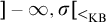 is finite and we say that
$\sigma $
is finite and we say that
$\sigma $
 is in the
$\omega $
is in the
$\omega $
 part or
$]\sigma ,+\infty [_{<_{\text {KB}}}$
part or
$]\sigma ,+\infty [_{<_{\text {KB}}}$
 is finite and we say that
$\sigma $
is finite and we say that
$\sigma $
 is in the
$\omega ^*$
is in the
$\omega ^*$
 part. Given
$\sigma \in T$
part. Given
$\sigma \in T$
 , we consider the following cases.
Case 1: If
$\forall j<|\sigma |\;(\exists n\; f(n)=j\rightarrow \sigma (j)=n+1)$
 then we have that there is no element to the right of
$\sigma $
then we have that there is no element to the right of
$\sigma $
 in T and so the only elements that are
$<_{\text {KB}}$
in T and so the only elements that are
$<_{\text {KB}}$
 greater than
$\sigma $
greater than
$\sigma $
 are its initial segments. This means that in
$]\sigma ,+\infty [_{<_{\text {KB}}}$
are its initial segments. This means that in
$]\sigma ,+\infty [_{<_{\text {KB}}}$
 has
$|\sigma |$
has
$|\sigma |$
 many elements and so
$\sigma $
many elements and so
$\sigma $
 is in the
$\omega ^*$
is in the
$\omega ^*$
 part.
part.
Case 2: If there is a
$j<|\sigma |$
 and
$n\in \mathbb {N}$
and
$n\in \mathbb {N}$
 such that
$f(n)=j$
such that
$f(n)=j$
 and
$ \sigma (j)=0$
and
$ \sigma (j)=0$
 then we have that
$\sigma $
then we have that
$\sigma $
 and any sequence to the left of
$\sigma $
and any sequence to the left of
$\sigma $
 in T cannot have an extension of length more than n in T. This in particular means that
$]-\infty ,\sigma ]_{<_{\text {KB}}}$
in T cannot have an extension of length more than n in T. This in particular means that
$]-\infty ,\sigma ]_{<_{\text {KB}}}$
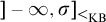 has at most
$2^n$
has at most
$2^n$
 elements and so
$\sigma $
elements and so
$\sigma $
 is in the
$\omega $
is in the
$\omega $
 part.
part.
We note that by the fact that
$(T,<_{\text {KB}})$
 has order type
$\omega +\omega ^*$
has order type
$\omega +\omega ^*$
 we have that every element of T which isn’t the maximum has a successor and every element other than the minimum will have a predecessor. In particular, we have that the upper limit topology on
$(T,<_{\text {KB}})$
we have that every element of T which isn’t the maximum has a successor and every element other than the minimum will have a predecessor. In particular, we have that the upper limit topology on
$(T,<_{\text {KB}})$
 is
$eT_2$
is
$eT_2$
 and discrete so it cannot be strongly compact. T does however have a covering relation, we prove that it is compact. Assume that T is not compact, and let
$(]a_n,b_n[)_{n\in \mathbb {N}}$
and discrete so it cannot be strongly compact. T does however have a covering relation, we prove that it is compact. Assume that T is not compact, and let
$(]a_n,b_n[)_{n\in \mathbb {N}}$
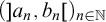 be an infinite covering of T which does not admit a finite subcovering. We have that every interval in
$(T,<_{\text {KB}})$
be an infinite covering of T which does not admit a finite subcovering. We have that every interval in
$(T,<_{\text {KB}})$
 will be either finite or cofinite, so for every
$n\in \mathbb {N}$
will be either finite or cofinite, so for every
$n\in \mathbb {N}$
 we have that
$]a_n,b_n[$
we have that
$]a_n,b_n[$
 will be finite. We show that both the
$\omega $
will be finite. We show that both the
$\omega $
 part and the
$\omega ^*$
part and the
$\omega ^*$
 part of
$(T,<_{\text {KB}})$
part of
$(T,<_{\text {KB}})$
 will be
$\Sigma ^0_1$
will be
$\Sigma ^0_1$
 definable. We have that x is in the
$\omega $
definable. We have that x is in the
$\omega $
 part if there exists a finite sequence
$\sigma $
part if there exists a finite sequence
$\sigma $
 such that
$a_{\sigma (0)}=-\infty $
such that
$a_{\sigma (0)}=-\infty $
 and for all
$j<|\sigma |-1$
and for all
$j<|\sigma |-1$
 we have
$b_j\leq _{\text {KB}} a_{j+1}$
we have
$b_j\leq _{\text {KB}} a_{j+1}$
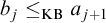 and
$x\in\ ]a_{\sigma (|\sigma |-1)},b_{\sigma (|\sigma |-1)}[$
and
$x\in\ ]a_{\sigma (|\sigma |-1)},b_{\sigma (|\sigma |-1)}[$
 . That is, there exists a finite sequence of intervals of the covering whose union is an initial segment of
$(T,<_{\text {KB}})$
. That is, there exists a finite sequence of intervals of the covering whose union is an initial segment of
$(T,<_{\text {KB}})$
 containing x. In a similar fashion we may give a
$\Sigma ^0_1$
containing x. In a similar fashion we may give a
$\Sigma ^0_1$
 definition of the
$\omega ^*$
definition of the
$\omega ^*$
 part of
$(T,<_{\text {KB}})$
part of
$(T,<_{\text {KB}})$
 . By
$\Delta ^0_1$
. By
$\Delta ^0_1$
 comprehension, we have that both the
$\omega $
comprehension, we have that both the
$\omega $
 and
$\omega ^*$
and
$\omega ^*$
 parts of T exist. So the Kleene–Brouwer order of T is not complete. By Lemma 7.16 it will have a branch which will compute
$\text {rng}(f)$
parts of T exist. So the Kleene–Brouwer order of T is not complete. By Lemma 7.16 it will have a branch which will compute
$\text {rng}(f)$
 .
.
Proposition 7.18. The following are equivalent over
$\mathbf{RCA}_0$
 :
:
-
(1) $\Pi ^1_1$
comprehension. -
(2) For every sequence of CSC spaces $(X^j)_{j\in \mathbb {N}}$
the set
$\{j\in \mathbb {N}: X^j \text { is compact}\}$
exists.



Proof.
$(1\rightarrow 2)$
 follows from the fact that being compact is a
$\Pi ^1_1$
follows from the fact that being compact is a
$\Pi ^1_1$
 definable property. We first show that
$(2)$
definable property. We first show that
$(2)$
 implies arithmetic comprehension. Let A be a set, we define for each
$e\in \mathbb {N}$
implies arithmetic comprehension. Let A be a set, we define for each
$e\in \mathbb {N}$
 the space
$X^e=\{t\in \mathbb {N}: \Phi ^A_e(e){\downarrow }_{\leq t}\}$
the space
$X^e=\{t\in \mathbb {N}: \Phi ^A_e(e){\downarrow }_{\leq t}\}$
 with the discrete topology. We observe that
$X^e$
with the discrete topology. We observe that
$X^e$
 is compact if
$X^e$
is compact if
$X^e$
 is finite which holds if and only if
$\Phi ^A_{e}(e){\uparrow }$
is finite which holds if and only if
$\Phi ^A_{e}(e){\uparrow }$
 . So
$\mathbb {N}\setminus A'=\{e\in \mathbb {N}:X^e \text { is compact}\}$
. So
$\mathbb {N}\setminus A'=\{e\in \mathbb {N}:X^e \text { is compact}\}$
 . So
$(2)$
. So
$(2)$
 implies that the Turing jump of every set exists which implies arithmetic comprehension. It therefore suffices to show
$(2\rightarrow 1)$
implies that the Turing jump of every set exists which implies arithmetic comprehension. It therefore suffices to show
$(2\rightarrow 1)$
 over
$\mathbf {ACA}_0$
over
$\mathbf {ACA}_0$
 .
.
We show that
$(2)$
 implies that for any sequence of trees
$(T_i)_{i\in \mathbb {N}}$
implies that for any sequence of trees
$(T_i)_{i\in \mathbb {N}}$
 the collection
$ \{i\in \mathbb {N}: T_i \text { is well-founded}\,\}$
the collection
$ \{i\in \mathbb {N}: T_i \text { is well-founded}\,\}$
 exists, which by Theorem 3.8 is equivalent to
$\Pi ^1_1$
exists, which by Theorem 3.8 is equivalent to
$\Pi ^1_1$
 comprehension. It suffices to prove that a tree T is well-founded if and only if T with the upper limit topology with respect to the Kleene–Brouwer ordering is compact. If T is well-founded, then
$(T,<_{\text {KB}})$
comprehension. It suffices to prove that a tree T is well-founded if and only if T with the upper limit topology with respect to the Kleene–Brouwer ordering is compact. If T is well-founded, then
$(T,<_{\text {KB}})$
 is well-ordered, which implies that its order topology is equal to its upper limit topology. By Proposition 7.12 and the fact that
$\emptyset \in T$
is well-ordered, which implies that its order topology is equal to its upper limit topology. By Proposition 7.12 and the fact that
$\emptyset \in T$
 is
$<_{\text {KB}}$
is
$<_{\text {KB}}$
 -maximum, we have that
$(T,<_{\text {KB}})$
-maximum, we have that
$(T,<_{\text {KB}})$
 with the upper limit topology is compact. If T is not well-founded then
$(T,<_{\text {KB}})$
with the upper limit topology is compact. If T is not well-founded then
$(T,<_{\text {KB}})$
 has an infinite descending chain
$(x_j)_{j\in \mathbb {N}}$
has an infinite descending chain
$(x_j)_{j\in \mathbb {N}}$
 . The space T admits a partition of basic open sets

so T is not compact.
Observation 7.19. In the previous proof, we saw that for every tree, there is a canonically defined CSC space which is compact if and only if the tree is well-founded. This implies that being a compact CSC space is a universal
$\Pi ^1_1$
 formula over
$\mathbf {ACA}_0$
formula over
$\mathbf {ACA}_0$
 , so in particular, compactness for CSC space cannot be expressed by a
$\Sigma ^1_1$
, so in particular, compactness for CSC space cannot be expressed by a
$\Sigma ^1_1$
 formula. Furthermore, Shafer proved that over
$\mathbf {WKL}_0$
formula. Furthermore, Shafer proved that over
$\mathbf {WKL}_0$
 , every linear order is complete if and only if it is compact [Reference Shafer29, Corollary 4.2]. This means that being a complete linear order is also a
$\Pi ^1_1$
, every linear order is complete if and only if it is compact [Reference Shafer29, Corollary 4.2]. This means that being a complete linear order is also a
$\Pi ^1_1$
 universal formula over
$\mathbf {ACA}_0$
universal formula over
$\mathbf {ACA}_0$
 .
.
8 Linear orders
It is tempting to say that since we showed that over
$\mathbf {ACA}_0$
 every
$T_3$
every
$T_3$
 space is homeomorphic to a subset of the rationals, we have proved that over
$\mathbf {ACA}_0$
space is homeomorphic to a subset of the rationals, we have proved that over
$\mathbf {ACA}_0$
 every
$T_3$
every
$T_3$
 space is linearly ordered. The issue is that, in general, given X a subspace of a linear order
$(Y,<)$
space is linearly ordered. The issue is that, in general, given X a subspace of a linear order
$(Y,<)$
 , the subspace topology on X is not the same as the topology given by the order
$<|_{X\times X}$
, the subspace topology on X is not the same as the topology given by the order
$<|_{X\times X}$
 . For example, the set

with the subspace topology will be a countable discrete space while with the order topology it will be homeomorphic to the
$1$
 point compactification of a countable discrete space. The issue here is that
$\{0\}=S\cap\ ]-\frac {1}{2},\frac {1}{2}[$
point compactification of a countable discrete space. The issue here is that
$\{0\}=S\cap\ ]-\frac {1}{2},\frac {1}{2}[$
 but there isn’t a
$b\in S$
but there isn’t a
$b\in S$
 such that
$]-\infty ,b[\ \cap S=\{0\}$
such that
$]-\infty ,b[\ \cap S=\{0\}$
 and so
$\{0\}$
and so
$\{0\}$
 is not open in the order topology of S. In general topology, the subspaces of linearly ordered spaces with the order topology are called generalized ordered spaces or GO spaces. There are GO spaces that are not orderable, for example, the space
$]0,1[\ \cup \{2\}\subseteq \mathbb {R}$
is not open in the order topology of S. In general topology, the subspaces of linearly ordered spaces with the order topology are called generalized ordered spaces or GO spaces. There are GO spaces that are not orderable, for example, the space
$]0,1[\ \cup \{2\}\subseteq \mathbb {R}$
 . However, in the countable case, we have that all GO spaces are orderable.
Observation 8.1. Let
$(L,<_L)$
 be a linear order and
$S\subseteq L$
be a linear order and
$S\subseteq L$
 . Then the order topology on S does not coincide with the subspace topology if and only if there is an
$x\in S$
. Then the order topology on S does not coincide with the subspace topology if and only if there is an
$x\in S$
 such that either:
-
(1) There is a $y\in L\setminus S$
such that
$y>x$
,
$]x,y[\ \subseteq L\setminus S$
, and
$\{z\in S: x<_L z\}$
does not have a least element. -
(2) There is a $y\in L\setminus S$
such that
$y<x$
,
$]y,x[\ \subseteq L\setminus S$
, and
$\{z\in S: z<_L x\}$
does not have a greatest element.








In general, the subspace topology on S is finer than the topology induced by
$<_L$
 . In the case where L is a well-order, the order topology on S coincides with the subspace topology if and only if every x which is isolated in the subspace topology is also isolated in the order topology. Equivalently, we have that the order topology of S coincides with the subspace topology if and only if every
$s\in S$
. In the case where L is a well-order, the order topology on S coincides with the subspace topology if and only if every x which is isolated in the subspace topology is also isolated in the order topology. Equivalently, we have that the order topology of S coincides with the subspace topology if and only if every
$s\in S$
 which has a predecessor in
$(L,<_L)$
which has a predecessor in
$(L,<_L)$
 has a predecessor in
$(S,<_L)$
has a predecessor in
$(S,<_L)$
 .
.
Theorem 8.2 (Lynn [Reference Lynn23])
Any separable zero-dimensional metric space is orderable.
We modify Lynn’s proof so that it can be carried out in
$\mathbf {ACA}_0$
 .
.
Theorem 8.3.
$\mathbf {ACA}_0$
 proves that any
$T_3$
proves that any
$T_3$
 space is homeomorphic to a linear order with its order topology.
Proof. Let
$X=(x_i)_{i\in \mathbb {N}}$
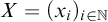 be a
$T_3$
be a
$T_3$
 CSC space. By Theorem 6.17 every
$T_3$
CSC space. By Theorem 6.17 every
$T_3$
 space is homeomorphic to a subset of the rationals, so without loss of generality, we may assume that X is a subspace of
$]0,\sqrt {2}[$
space is homeomorphic to a subset of the rationals, so without loss of generality, we may assume that X is a subspace of
$]0,\sqrt {2}[$
 . For each
$\sigma \in 2^{<\mathbb {N}}$
. For each
$\sigma \in 2^{<\mathbb {N}}$
 we define
$I_\sigma $
we define
$I_\sigma $
 to be the clopen subinterval of
$\mathbb {Q}$
to be the clopen subinterval of
$\mathbb {Q}$


By arithmetic comprehension the sequence
$(I_\sigma )_{\sigma \in 2^{<\mathbb {N}}}$
 exists. We observe that
$\sigma \sqsubseteq \tau \leftrightarrow I_\tau \subseteq I_\sigma $
exists. We observe that
$\sigma \sqsubseteq \tau \leftrightarrow I_\tau \subseteq I_\sigma $
 and that for all n the family
$\{I_\sigma : |\sigma |=n\}$
and that for all n the family
$\{I_\sigma : |\sigma |=n\}$
 is a partition of
$]0,\sqrt {2}[$
is a partition of
$]0,\sqrt {2}[$
 into
$2^n$
into
$2^n$
 many clopen sets. Given an
$x\in X$
many clopen sets. Given an
$x\in X$
 and
$n\in \mathbb {N}$
and
$n\in \mathbb {N}$
 we write
$ seq_n(x)$
we write
$ seq_n(x)$
 to be the unique sequence of length n such that
$x\in I_{seq_n(x)}$
to be the unique sequence of length n such that
$x\in I_{seq_n(x)}$
 .
.
The set
$T=\{\sigma \in 2^{<\mathbb {N}}:\exists x\in X\;x\in I_\sigma \}$
 exists by arithmetic comprehension. Inductively we define a partial function
$a_{(\cdot )}:2^{<\mathbb {N}}\rightarrow X$
exists by arithmetic comprehension. Inductively we define a partial function
$a_{(\cdot )}:2^{<\mathbb {N}}\rightarrow X$
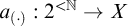 . We set
$a_{(0)}=x_0$
. We set
$a_{(0)}=x_0$
 , let
$i\leq 1$
, let
$i\leq 1$
 be such that
$x_0\in I_{(i)}$
be such that
$x_0\in I_{(i)}$
 and if there is an element in
$I_{(1-i)}\cap X$
and if there is an element in
$I_{(1-i)}\cap X$
 then let
$a_{(1)}$
then let
$a_{(1)}$
 be the least element of
$I_{(1-i)}\cap X$
be the least element of
$I_{(1-i)}\cap X$
 .
.
Assume
$a_\sigma $
 is defined. Let
$i=\sigma (|\sigma |-1)$
is defined. Let
$i=\sigma (|\sigma |-1)$
 , that is, i is the last digit in the sequence
$\sigma $
, that is, i is the last digit in the sequence
$\sigma $
 , we define
$a_{\sigma ^\frown (i)}=a_\sigma $
, we define
$a_{\sigma ^\frown (i)}=a_\sigma $
 . For ease of notation, let

If
$\tau ^\frown (1-j)\in T$
 let
$a_{\sigma ^\frown (1-i)}$
let
$a_{\sigma ^\frown (1-i)}$
 be the least element of
$X\cap I_{\tau ^\frown (1-j)}$
be the least element of
$X\cap I_{\tau ^\frown (1-j)}$
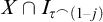 .
.
We note that for a sequence
$\sigma $
 in the domain of
$a_{(\cdot )}$
in the domain of
$a_{(\cdot )}$
 if
$i=\sigma (|\sigma |-1)$
if
$i=\sigma (|\sigma |-1)$
 then
$a_\sigma = a_{\sigma ^\frown (i)}=\dots = a_{\sigma ^\frown (i,\dots ,i)}$
then
$a_\sigma = a_{\sigma ^\frown (i)}=\dots = a_{\sigma ^\frown (i,\dots ,i)}$
 .
.
By construction we have that for all
$\sigma \in T$
 exists a unique
$\tau $
exists a unique
$\tau $
 such that
$|\tau |=|\sigma |$
such that
$|\tau |=|\sigma |$
 and
$a_\tau \in I_\sigma $
and
$a_\tau \in I_\sigma $
 , let
$f:T\rightarrow 2^{\mathbb {N}}$
, let
$f:T\rightarrow 2^{\mathbb {N}}$
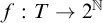 denote the map that sends
$\sigma $
denote the map that sends
$\sigma $
 to
$\tau $
to
$\tau $
 . We have
$f(seq_n(a_\sigma ))=\sigma $
. We have
$f(seq_n(a_\sigma ))=\sigma $
 and f is total, order preserving, level preserving, and injective. The function f is arithmetically definable relative to X, so it exists by arithmetic comprehension.
We define an order
$<_f$
 where
where

It is easy to verify that
$<_f$
 defines a total order on X. Under this order, we have

We show that the order topology induced by
$<_f$
 on X is the same topology as the subspace topology. Given
$x\in\ ]a,b[_{<_f}$
on X is the same topology as the subspace topology. Given
$x\in\ ]a,b[_{<_f}$
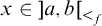 we have that by definition there exists an n such that

So
$I_{seq_n(x)}\subseteq\ ]a,b[_{<_f}$
 which implies that the topology on X is finer than the topology induced by
$<_f$
which implies that the topology on X is finer than the topology induced by
$<_f$
 .
.
We now show the converse. We have that the set
$\{I_{\sigma }\cap X:\sigma \in T\}$
 generates the subspace topology on X, so it suffices to prove that they are open in the topology generated by
$<_f$
generates the subspace topology on X, so it suffices to prove that they are open in the topology generated by
$<_f$
 . Given
$x\in I_\sigma $
. Given
$x\in I_\sigma $
 , let
$\tau _0$
, let
$\tau _0$
 and
$\tau _1$
and
$\tau _1$
 be such that
$|\tau _0|=|\sigma |=|\tau _1|$
be such that
$|\tau _0|=|\sigma |=|\tau _1|$
 and
$f(\tau _0)$
and
$f(\tau _0)$
 is the lexicographic predecessor of
$f(\sigma )$
is the lexicographic predecessor of
$f(\sigma )$
 and
$f(\tau _1)$
and
$f(\tau _1)$
 the lexicographic successor of
$f(\sigma )$
the lexicographic successor of
$f(\sigma )$
 in the set
$\{f(\rho ):\rho \in T\wedge |\rho |=|\sigma |\}$
in the set
$\{f(\rho ):\rho \in T\wedge |\rho |=|\sigma |\}$
 , the case where
$\sigma $
, the case where
$\sigma $
 is the lexicographic maximum or minimum are proved similarly. By definition of
$<_f$
is the lexicographic maximum or minimum are proved similarly. By definition of
$<_f$
 we have that

So in particular
$\min I_{\tau _1} =a_{f(\tau _1)^\frown (0)}$
 and
$\max I_{\tau _0}=a_{f(\tau _0)^\frown (1)}$
and
$\max I_{\tau _0}=a_{f(\tau _0)^\frown (1)}$
 . By definition of
$<_f$
. By definition of
$<_f$
 we have

Let
$x\in\ ]a_{f(\tau _0)^\frown (1)},a_{f(\tau _1)^\frown (0)}[_{<_f}$
 , setting
$n=|\sigma |$
, setting
$n=|\sigma |$
 we have

Since
$f(\sigma )$
 is the only sequence of length n that is lexicographically between
$f(\tau _0)$
is the only sequence of length n that is lexicographically between
$f(\tau _0)$
 and
$f(\tau _1)$
and
$f(\tau _1)$
 we have that
$f(seq_n(x))=f(\sigma )$
we have that
$f(seq_n(x))=f(\sigma )$
 which by injectivity of f means that
$x\in I_\sigma $
which by injectivity of f means that
$x\in I_\sigma $
 . So
$I_\sigma =\ ]a_{f(\tau _0)^\frown (1)},a_{f(\tau _1)^\frown (0)}[_{<_f}$
. So
$I_\sigma =\ ]a_{f(\tau _0)^\frown (1)},a_{f(\tau _1)^\frown (0)}[_{<_f}$
 which implies the topology induced by
$<_f$
which implies the topology induced by
$<_f$
 is the same as the subspace topology of X.
For compact
$T_2$
 CSC space, we can do better. Sierpiński and Masurkiewicz [Reference Mazurkiewicz and Sierpiński24] showed that any closed countable subset of
$\mathbb {R}^m$
CSC space, we can do better. Sierpiński and Masurkiewicz [Reference Mazurkiewicz and Sierpiński24] showed that any closed countable subset of
$\mathbb {R}^m$
 is well orderable. Friedman and Hirst essentially showed that over
$\mathbf {ATR}_0$
is well orderable. Friedman and Hirst essentially showed that over
$\mathbf {ATR}_0$
 any compact
$T_2$
any compact
$T_2$
 CSC space is homeomorphic to a well-order with the order topology [Reference Friedman and Hirst9, Lemma 4.7]. We will show that this characterization can be carried out in
$\mathbf {ACA}_0$
CSC space is homeomorphic to a well-order with the order topology [Reference Friedman and Hirst9, Lemma 4.7]. We will show that this characterization can be carried out in
$\mathbf {ACA}_0$
 and for
$eT_2$
and for
$eT_2$
 strongly effectively compact CSC spaces it can be carried out over
$\mathbf{RCA}_0+\text{WF}(\omega^\omega)$
strongly effectively compact CSC spaces it can be carried out over
$\mathbf{RCA}_0+\text{WF}(\omega^\omega)$
 . The usual proof of this result is by a back and forth argument which requires considerations over the Cantor–Bendixson analysis of the space, which, as we will see later, requires
$\mathbf {ATR}_0$
. The usual proof of this result is by a back and forth argument which requires considerations over the Cantor–Bendixson analysis of the space, which, as we will see later, requires
$\mathbf {ATR}_0$
 . Furthermore, we know that any compact
$T_2$
. Furthermore, we know that any compact
$T_2$
 CSC space X will be homeomorphic to
$(\omega ^\alpha +1)\cdot n$
CSC space X will be homeomorphic to
$(\omega ^\alpha +1)\cdot n$
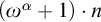 , where
$\alpha $
, where
$\alpha $
 is some well order and
$n\in \omega $
is some well order and
$n\in \omega $
 , but over
$\mathbf {RCA}_0$
, but over
$\mathbf {RCA}_0$
 the exponential of a well-order may not be a well order (see [Reference Girard11, Theorem II.5.4.1] and [Reference Hirst17, Theorem 2.6]). So over
$\mathbf {RCA}_0$
the exponential of a well-order may not be a well order (see [Reference Girard11, Theorem II.5.4.1] and [Reference Hirst17, Theorem 2.6]). So over
$\mathbf {RCA}_0$
 we cannot simply formalize the standard argument as in
$\mathbf {ATR}_0$
we cannot simply formalize the standard argument as in
$\mathbf {ATR}_0$
 .
.
Definition 8.4. By
$\text{WF}(\omega^\omega)$
 we mean the statement that the lexicographic order on the non increasing sequences of
$\mathbb{N}^{<\mathbb{N}}$
we mean the statement that the lexicographic order on the non increasing sequences of
$\mathbb{N}^{<\mathbb{N}}$
 is well ordered.
$\mathbf{RCA}_0+\mathbf{I}\Sigma_2^0\vdash \text{WF}(\omega^\omega)$
is well ordered.
$\mathbf{RCA}_0+\mathbf{I}\Sigma_2^0\vdash \text{WF}(\omega^\omega)$
 and
$\mathbf{RCA}_0+\text{WF}(\omega^\omega)\vdash Con(\mathbf{RCA}_0)$
and
$\mathbf{RCA}_0+\text{WF}(\omega^\omega)\vdash Con(\mathbf{RCA}_0)$
 , so in particular,
$\text{WF}(\omega^\omega)$
, so in particular,
$\text{WF}(\omega^\omega)$
 is provable in
$\mathbf{ACA}_0$
is provable in
$\mathbf{ACA}_0$
 but not in
$\mathbf{RCA}_0$
but not in
$\mathbf{RCA}_0$
 . It is routine to show that over
$\mathbf{RCA}_0$
. It is routine to show that over
$\mathbf{RCA}_0$
 the statement that for every
$n\in \mathbb{N}$
the statement that for every
$n\in \mathbb{N}$
 the Kleene-Brouwer order on the tree of all sequences of length at most
$n$
the Kleene-Brouwer order on the tree of all sequences of length at most
$n$
 is well founded is equivalent to
$\text{WF}(\omega^\omega)$
is well founded is equivalent to
$\text{WF}(\omega^\omega)$
 .
.
Observation 8.5. Over
$\mathbf {RCA}_0$
 let
$(X,(U_i)_{i\in \mathbb {N}},k)$
let
$(X,(U_i)_{i\in \mathbb {N}},k)$
 be a compact effectively zero-dimensional CSC space with covering relation C and G the function witnessing the effective zero-dimensionality of X. We have that the inclusion relation on indices of basic open sets
$\{(i,j): U_i\subseteq U_j\}$
be a compact effectively zero-dimensional CSC space with covering relation C and G the function witnessing the effective zero-dimensionality of X. We have that the inclusion relation on indices of basic open sets
$\{(i,j): U_i\subseteq U_j\}$
 is defined by

which is a
$\Pi ^0_1$
 formula, and by

which is a
$\Sigma ^0_1$
 formula. That is, the inclusion relation
$\{(i,j): U_i\subseteq U_j\}$
formula. That is, the inclusion relation
$\{(i,j): U_i\subseteq U_j\}$
 is
$\Delta ^0_1$
is
$\Delta ^0_1$
 definable relative to G and C and therefore exists by
$\Delta ^0_1$
definable relative to G and C and therefore exists by
$\Delta ^0_1$
 comprehension. If X is an effectively compact space with an algebra of clopen sets, then we have

that is, being an empty basic open subset is decidable relative to
$Comp$
 and C. Similarly, we have that for effectively compact CSC space with an algebra of clopen sets, strict inclusion will be decidable relative to the additional structure.
Theorem 8.6.
-
(1) $\mathbf{RCA}_0+\text{WF}(\omega^\omega)$
proves that if X is
$eT_2$
and strongly effectively compact then X is effectively homeomorphic to the upper limit topology of a well-order with maximal element. -
(2) $\mathbf{RCA}_0$
proves that if X is effectively homeomorphic to a well-order with a maximum element with the upper limit topology then X is effectively compact and
$eT_2$
.



Proof. For the second implication, we observe that the upper limit topology on a well-order with maximum element is
$eT_2$
 and effectively compact and being
$eT_2$
and effectively compact and being
$eT_2$
 , and effectively compact is preserved under effective homeomorphism.
Let
$(X,(U_i)_{i\in \mathbb {N}},k)$
 be a strongly effectively compact
$eT_2$
be a strongly effectively compact
$eT_2$
 CSC space and let C be the cover relation of X. The case in which
$X=\emptyset $
CSC space and let C be the cover relation of X. The case in which
$X=\emptyset $
 is trivial, so we may assume
$X\neq \emptyset $
is trivial, so we may assume
$X\neq \emptyset $
 . By Theorems 6.13 and 7.10 we may assume without loss of generality that X has an algebra of clopen sets and for every
$x\in X$
. By Theorems 6.13 and 7.10 we may assume without loss of generality that X has an algebra of clopen sets and for every
$x\in X$
 there are infinitely many
$j\in \mathbb {N}$
there are infinitely many
$j\in \mathbb {N}$
 such that
$x\in U_j$
such that
$x\in U_j$
 . Let
$Int$
. Let
$Int$
 and
$Comp$
and
$Comp$
 code the intersection and complement, respectively. As observed, we can effectively determine inclusion and being empty relative to the cover relation and the functions
$Comp$
code the intersection and complement, respectively. As observed, we can effectively determine inclusion and being empty relative to the cover relation and the functions
$Comp$
 and
$Int$
and
$Int$
 .
.
Let
$F:X\times \mathbb {N}\rightarrow \mathbb {N}$
 be a partial function such that for all x in X we have that

We have that F exists by
$\Delta ^0_1$
 comprehension. Informally, F lists out a weakly descending sequence of neighborhoods for every point. For ease of notation, we will write
$U(x,n)=U_{F(x,n)}$
comprehension. Informally, F lists out a weakly descending sequence of neighborhoods for every point. For ease of notation, we will write
$U(x,n)=U_{F(x,n)}$
 . We observe that the sets of the form
$U(x,n)$
. We observe that the sets of the form
$U(x,n)$
 form a basis of clopen sets for X.
We construct inductively a tree
$\mathcal {A}$
 and we assign to each
$\sigma \in \mathcal {A}$
and we assign to each
$\sigma \in \mathcal {A}$
 a label
$(x,i)\in X\times \mathbb {N}$
a label
$(x,i)\in X\times \mathbb {N}$
 where x is the
$<_{\mathbb {N}}$
where x is the
$<_{\mathbb {N}}$
 least element of
$U_i$
least element of
$U_i$
 . For the first step, we add the empty sequence to
$\mathcal {A}$
. For the first step, we add the empty sequence to
$\mathcal {A}$
 with label
$(x,i)$
with label
$(x,i)$
 , where i is such that
$X=U_i$
, where i is such that
$X=U_i$
 and x is the
$<_{\mathbb {N}}$
and x is the
$<_{\mathbb {N}}$
 least element of X. Let
$\sigma $
least element of X. Let
$\sigma $
 be a sequence in
$\mathcal {A}$
be a sequence in
$\mathcal {A}$
 with label
$(y,j)$
with label
$(y,j)$
 and let m be the least number such that
$U(y,m)\subseteq U_j$
and let m be the least number such that
$U(y,m)\subseteq U_j$
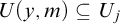 . For each
$k\geq m$
. For each
$k\geq m$
 , such that
$U(x,k)\setminus U(x,k+1)$
, such that
$U(x,k)\setminus U(x,k+1)$
 is non-empty, we add
$\sigma ^\frown (k+1)$
is non-empty, we add
$\sigma ^\frown (k+1)$
 to
$\mathcal {A}$
to
$\mathcal {A}$
 with label
$(z,l)$
with label
$(z,l)$
 where l is an index for
$U(y,k)\setminus U(y,k+1)$
where l is an index for
$U(y,k)\setminus U(y,k+1)$
 and z is the
$<_{\mathbb {N}}$
and z is the
$<_{\mathbb {N}}$
 least element of
$U_l$
least element of
$U_l$
 . If
$U(y,m)\neq U_j$
. If
$U(y,m)\neq U_j$
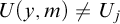 then we add
$\sigma ^\frown (0)$
then we add
$\sigma ^\frown (0)$
 to
$\mathcal {A}$
to
$\mathcal {A}$
 with label
$(z,l)$
with label
$(z,l)$
 where l is an index for
$U_j\setminus U(y,m)$
where l is an index for
$U_j\setminus U(y,m)$
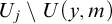 and z is the
$<_{\mathbb {N}}$
and z is the
$<_{\mathbb {N}}$
 least element of
$U_l$
least element of
$U_l$
 . We have that
$\mathcal {A}$
. We have that
$\mathcal {A}$
 is
$\Delta ^0_1$
is
$\Delta ^0_1$
 definable relative to
$(X,(U_i)_{i\in \mathbb {N}},k), C$
definable relative to
$(X,(U_i)_{i\in \mathbb {N}},k), C$
 , and
$Comp$
, and
$Comp$
 so it exists by
$\Delta ^0_1$
so it exists by
$\Delta ^0_1$
 comprehension.
Observation 8.7. Given
$\sigma ,\tau \in \mathcal {A}$
 with labels
$(y,j)$
with labels
$(y,j)$
 and
$(z,l),$
and
$(z,l),$
 respectively, we have:
-
(1) $\tau \sqsubseteq \sigma $
if and only if
$U_{l}\subseteq U_{j}$
. -
(2) If $\tau $
properly extends
$\sigma $
then
$y\notin U_{l}$
. -
(3) If $\tau $
properly extends
$\sigma $
then
$y<_{\mathbb {N}}z$
. -
(4) If $\sigma \in \mathcal {A}$
is terminal then y is isolated. -
(5) $\tau $
and
$\sigma $
are incomparable if and only if
$U_{j}$
and
$ U_{l}$
are disjoint. -
(6) For all $w\in U_j\setminus \{y\}$
there exists exactly one
$k\in \mathbb {N}$
such that
$\sigma ^\frown (k)\in \mathcal {A}$
,
$\sigma ^\frown (k)$
has label
$(u,r)$
for some
$u\in X$
, and
$w\in U_r$
.





We prove that
$\mathcal {A}$
 is well-founded. Seeking a contradiction, assume that
$\mathcal {A}$
is well-founded. Seeking a contradiction, assume that
$\mathcal {A}$
 is not well-founded. Let f be a branch of
$\mathcal {A}$
is not well-founded. Let f be a branch of
$\mathcal {A}$
 and let
$(x_n,i_n)$
and let
$(x_n,i_n)$
 be the label on
$f|_{<n}$
be the label on
$f|_{<n}$
 . We have that
$(U_{i_n})_{n\in \mathbb {N}}$
. We have that
$(U_{i_n})_{n\in \mathbb {N}}$
 is a descending sequence of non-empty clopen sets, so its intersection is also non-empty otherwise
$(X\setminus U_{i_n})_{n\in \mathbb {N}}$
is a descending sequence of non-empty clopen sets, so its intersection is also non-empty otherwise
$(X\setminus U_{i_n})_{n\in \mathbb {N}}$
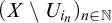 will be a covering of X without a finite subcovering. Let x be an element of
$\bigcap _{n\in \mathbb {N}}U_{i_n}$
will be a covering of X without a finite subcovering. Let x be an element of
$\bigcap _{n\in \mathbb {N}}U_{i_n}$
 , then for all
$n\in \mathbb {N}$
, then for all
$n\in \mathbb {N}$
 we have that
$x_n<_{\mathbb {N}}x$
we have that
$x_n<_{\mathbb {N}}x$
 . This is absurd since the sequence
$(x_n)_{n\in \mathbb {N}}$
. This is absurd since the sequence
$(x_n)_{n\in \mathbb {N}}$
 is strictly increasing and therefore is unbounded in
$\mathbb {N}$
is strictly increasing and therefore is unbounded in
$\mathbb {N}$
 . We note that since we are working over
$\mathbf {RCA}_0$
. We note that since we are working over
$\mathbf {RCA}_0$
 , we cannot conclude that the Kleene–Brouwer order on
$\mathcal {A}$
, we cannot conclude that the Kleene–Brouwer order on
$\mathcal {A}$
 is a well-order. However, we will later use the strong compactness of X to show that
$\mathcal {A}$
is a well-order. However, we will later use the strong compactness of X to show that
$\mathcal {A}$
 is in fact well-ordered by the Kleene–Brouwer order.
We show that every
$x\in X$
 appears in the label of exactly one sequence in
$\mathcal {A}$
appears in the label of exactly one sequence in
$\mathcal {A}$
 . By the observations above, we have that x cannot appear in the label of more than one sequence in
$\mathcal {A}$
. By the observations above, we have that x cannot appear in the label of more than one sequence in
$\mathcal {A}$
 . Given an
$x\in X$
. Given an
$x\in X$
 , define

$S\neq \emptyset $
 since it contains the empty sequence. By the observations made above, S is a chain, and since
$\mathcal {A}$
since it contains the empty sequence. By the observations made above, S is a chain, and since
$\mathcal {A}$
 is well-founded, we have S must have a maximal element
$\sigma $
is well-founded, we have S must have a maximal element
$\sigma $
 with respect to inclusion. Let
$(y,j)$
with respect to inclusion. Let
$(y,j)$
 be the label on
$\sigma $
be the label on
$\sigma $
 . If
$x\neq y$
. If
$x\neq y$
 then by construction of
$\mathcal {A}$
then by construction of
$\mathcal {A}$
 there will be an extension
$\tau $
there will be an extension
$\tau $
 of
$\sigma $
of
$\sigma $
 with label
$(z,l)$
with label
$(z,l)$
 such that
$x\in U_l$
such that
$x\in U_l$
 contradicting the maximality of
$\sigma $
contradicting the maximality of
$\sigma $
 .
.
We show that X is homeomorphic to
$\mathcal {A}$
 with the upper limit topology induced by the Kleene–Brouwer order. Let
$\alpha _x$
with the upper limit topology induced by the Kleene–Brouwer order. Let
$\alpha _x$
 denote the unique sequence of
$\mathcal {A}$
denote the unique sequence of
$\mathcal {A}$
 that has x in its label. We show that the map
$G:X\rightarrow \mathcal {A}$
that has x in its label. We show that the map
$G:X\rightarrow \mathcal {A}$
 given by
$x\mapsto \alpha _x$
given by
$x\mapsto \alpha _x$
 is a homeomorphism between X and
$\mathcal {A}$
is a homeomorphism between X and
$\mathcal {A}$
 with the upper limit topology induced by the Kleene–Brouwer order.
We show that G is effectively continuous. Given
$x\in X$
 then a basic neighborhood for
$\alpha _x$
then a basic neighborhood for
$\alpha _x$
 is of the form
$] \alpha _y,\alpha _x]$
is of the form
$] \alpha _y,\alpha _x]$
 with
$\alpha _y<_{\text {KB}} \alpha _x$
with
$\alpha _y<_{\text {KB}} \alpha _x$
 . Let
$(x,j)$
. Let
$(x,j)$
 be the label of
$\alpha _x$
be the label of
$\alpha _x$
 and m the least number such that
$U(x,m)\subseteq U_j$
and m the least number such that
$U(x,m)\subseteq U_j$
 . Define

If
$y\in U(x,m)$
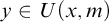 then
$\alpha _x\sqsubseteq \alpha _y$
then
$\alpha _x\sqsubseteq \alpha _y$
 and
$y\in U(x,l-1)\setminus U(x,l)$
and
$y\in U(x,l-1)\setminus U(x,l)$
 so
$\alpha ^\frown (l)\in \mathcal {A}$
so
$\alpha ^\frown (l)\in \mathcal {A}$
 . We have that
$\alpha _y\leq _{\text {KB}} \alpha _x^\frown (l)<_{\text {KB}} \alpha _x$
. We have that
$\alpha _y\leq _{\text {KB}} \alpha _x^\frown (l)<_{\text {KB}} \alpha _x$
 by construction and so
$G(U(x,l))\subseteq\ ]\alpha _y,\alpha _x ]$
by construction and so
$G(U(x,l))\subseteq\ ]\alpha _y,\alpha _x ]$
 . If
$y\notin U(x,m)$
. If
$y\notin U(x,m)$
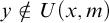 then for all
$z\in U(x,m)$
then for all
$z\in U(x,m)$
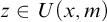 we have

and so
$G(U(x,m))=G(U(x,l))\subseteq\ ]\alpha _y,\alpha _x]$
 (note that
$\alpha _x^\frown (m)$
(note that
$\alpha _x^\frown (m)$
 may not be a member of
$\mathcal {A}$
may not be a member of
$\mathcal {A}$
 ). The function
$(x,y)\mapsto l$
). The function
$(x,y)\mapsto l$
 exists by
$\Delta ^0_1$
exists by
$\Delta ^0_1$
 comprehension and witnesses that G is effectively continuous.
We show that G is effectively open. Let
$x\in X$
 be a point and
$U_i$
be a point and
$U_i$
 a basic neighborhood of x. Let
$(x,j)$
a basic neighborhood of x. Let
$(x,j)$
 be the label on
$\alpha _x$
be the label on
$\alpha _x$
 , m the least number such that
$U(x,m)\subseteq U_j\cap U_i$
, m the least number such that
$U(x,m)\subseteq U_j\cap U_i$
 , and
$m_0$
, and
$m_0$
 the least number such that
$U(x,m_0)\subseteq U_j$
the least number such that
$U(x,m_0)\subseteq U_j$
 . We consider the following cases.
Case 1: If
$U(x,m)\subsetneq U_j$
 and
$U(x,m)=U(x,m_0)$
and
$U(x,m)=U(x,m_0)$
 , let y be the least element in
$U_j\setminus U(x,m)$
, let y be the least element in
$U_j\setminus U(x,m)$
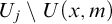 . We have that
$\alpha _y=\alpha _x^\frown (0)$
. We have that
$\alpha _y=\alpha _x^\frown (0)$
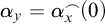 and for any
$z\in X$
and for any
$z\in X$
 if
$\alpha _y<_{KB}\alpha _z\leq _{\text {KB}} \alpha _x$
if
$\alpha _y<_{KB}\alpha _z\leq _{\text {KB}} \alpha _x$
 then
$z\in U(x,m)\subseteq U_i$
then
$z\in U(x,m)\subseteq U_i$
 . We set
$I=\ ]\alpha _y,\alpha _x]$
. We set
$I=\ ]\alpha _y,\alpha _x]$
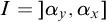 .
.
Case 2: If
$U(x,m)\subsetneq U_j$
 and
$U(x,m)\neq U(x,m_0)$
and
$U(x,m)\neq U(x,m_0)$
 , set
, set

and y the
$<_{\mathbb {N}}$
 least element of
$U(x,t)\setminus U(x,t+1)$
least element of
$U(x,t)\setminus U(x,t+1)$
 . We have that
$\alpha _y=\alpha _x^\frown (t+1)$
. We have that
$\alpha _y=\alpha _x^\frown (t+1)$
 and for any
$z\in X$
and for any
$z\in X$
 if
$\alpha _y<_{KB}\alpha _z\leq _{\text {KB}} \alpha _x$
if
$\alpha _y<_{KB}\alpha _z\leq _{\text {KB}} \alpha _x$
 then
$z\in U(x,t+1)\subseteq U(x,m)\subseteq U_i$
then
$z\in U(x,t+1)\subseteq U(x,m)\subseteq U_i$
 . We set
$I=\ ]\alpha _y,\alpha _x]$
. We set
$I=\ ]\alpha _y,\alpha _x]$
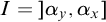 .
.
Case 3: If
$U(x,m)=U_j$
 and there are no sequences to the left of
$\alpha _x$
and there are no sequences to the left of
$\alpha _x$
 we set
$I=\ ]-\infty ,\alpha _x]= G(U_j)\subseteq G(U_i)$
we set
$I=\ ]-\infty ,\alpha _x]= G(U_j)\subseteq G(U_i)$
 .
.
Case 4: If
$U(x,m)=U_j$
 and there are sequences to the left of
$\alpha _x$
and there are sequences to the left of
$\alpha _x$
 in
$\mathcal {A}$
in
$\mathcal {A}$
 then define


We have that
$\alpha _x|_{<s}^\frown (u)\in \mathcal {A}$
 will be equal to some
$\alpha _y$
will be equal to some
$\alpha _y$
 and for all
$z\in U(x,m)$
and for all
$z\in U(x,m)$
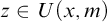 we have
$\alpha _y<_{KB} \alpha _z\leq _{KB} \alpha _x$
we have
$\alpha _y<_{KB} \alpha _z\leq _{KB} \alpha _x$
 and so let
$I=\ ]\alpha _y,\alpha _x]= G(U(x,m))$
and so let
$I=\ ]\alpha _y,\alpha _x]= G(U(x,m))$
 . In all four cases we have that
$I\subseteq G(U(x,m))$
. In all four cases we have that
$I\subseteq G(U(x,m))$
 , we can also effectively find an index for I and so G is effectively open.
This proves that G is an effective homeomorphism from X to the upper limit topology of
$(\mathcal {A},<_{\text {KB}})$
 . We now prove that
$\mathcal {A}$
. We now prove that
$\mathcal {A}$
 is a well-order. Assume that there exists an infinite sequence
$(x(n))_{n\in \mathbb {N}}$
is a well-order. Assume that there exists an infinite sequence
$(x(n))_{n\in \mathbb {N}}$
 such that
$(\alpha _{x(n)})_{n\in \mathbb {N}}$
such that
$(\alpha _{x(n)})_{n\in \mathbb {N}}$
 is strictly
$<_{\text {KB}}$
is strictly
$<_{\text {KB}}$
 -decreasing in
$\mathcal {A}$
-decreasing in
$\mathcal {A}$
 . Without loss of generality, we may assume that:
-
(1) The sequences $(\alpha _{x(n)})_{n\in \mathbb {N}}$
are pairwise incomparable. We can do this since we showed that
$\mathcal {A}$
is well-founded. -
(2) For all $n\in \mathbb {N}$
we have
$|\alpha _{x(n)}|<|\alpha _{x(n+1)}|$
. Here we are using the assumption
$\text{WF}(\omega^\omega)$
in the form that for all m the Kleene–Brouwer order of the tree of all sequences of length at most m is a well-order.




Let
$(x(n),j(n))$
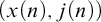 be the label on
$\alpha _{x(n)}$
be the label on
$\alpha _{x(n)}$
 we would like to show that
$O=\bigcup _{n\in \mathbb {N}} U_{j(n)}$
we would like to show that
$O=\bigcup _{n\in \mathbb {N}} U_{j(n)}$
 exists as a set and is closed. Since the
$(\alpha _{x(n)})_{n\in \mathbb {N}}$
exists as a set and is closed. Since the
$(\alpha _{x(n)})_{n\in \mathbb {N}}$
 are pairwise incomparable we have that the sets
$U_{j(n)}$
are pairwise incomparable we have that the sets
$U_{j(n)}$
 are pairwise disjoint. We have that for all
$y\in X$
are pairwise disjoint. We have that for all
$y\in X$
 that
$y\in O$
that
$y\in O$
 if and only if there exists an
$n\in \mathbb {N}$
if and only if there exists an
$n\in \mathbb {N}$
 such that
$\alpha _{x(n)}\sqsubseteq \alpha _y$
such that
$\alpha _{x(n)}\sqsubseteq \alpha _y$
 . Since the lengths of the
$\alpha _{x(n)}$
. Since the lengths of the
$\alpha _{x(n)}$
 are strictly increasing we have that

In particular, we have that O exists by
$\Delta ^0_1$
 comprehension. We show that O is closed. Given
$y\notin O$
comprehension. We show that O is closed. Given
$y\notin O$
 , let
$(y,l)$
, let
$(y,l)$
 be the label on
$\alpha _y$
be the label on
$\alpha _y$
 . If
$U_l\cap O=\emptyset $
. If
$U_l\cap O=\emptyset $
 we are done, otherwise there exists
$x(n)\in U_l$
we are done, otherwise there exists
$x(n)\in U_l$
 and
$\alpha _{x(n)}<_{\text {KB}}\alpha _y$
and
$\alpha _{x(n)}<_{\text {KB}}\alpha _y$
 . Let
$n=\min \{j\in \mathbb {N}: x(j)\in U_l\}$
. Let
$n=\min \{j\in \mathbb {N}: x(j)\in U_l\}$
 and let
$m=\min \{j\in \mathbb {N}: x(n)\notin U(y,j)\}$
and let
$m=\min \{j\in \mathbb {N}: x(n)\notin U(y,j)\}$
 . We have that
$U(y,m)\cap O=\emptyset $
. We have that
$U(y,m)\cap O=\emptyset $
 , so O is closed. The sequence
$\{U_{j(n)}:n\in \mathbb {N}\}\cup \{ X\setminus O\}$
, so O is closed. The sequence
$\{U_{j(n)}:n\in \mathbb {N}\}\cup \{ X\setminus O\}$
 is an infinite partition of X in clopen sets contradicting our assumption that X was strongly compact.

Construction of
$\mathcal {A}$
 .
.
Corollary 8.8.
$\mathbf {ACA}_0$
 proves that every sequence of compact
$T_2$
proves that every sequence of compact
$T_2$
 CSC spaces
$(K_i)_{i\in \mathbb {N}}$
CSC spaces
$(K_i)_{i\in \mathbb {N}}$
 the disjoint sum
$\coprod _{i\in \mathbb {N}} K_i$
the disjoint sum
$\coprod _{i\in \mathbb {N}} K_i$
 is homeomorphic to a well-order with the order or the upper limit topology.
Proof. Over
$\mathbf {ACA}_0$
 , the upper limit topology on a well-order is homeomorphic to the order topology. Following the proof of Theorem 8.6 we can uniformly define a sequence of well-orders
$(<_i)_{i\in \mathbb {N}}$
, the upper limit topology on a well-order is homeomorphic to the order topology. Following the proof of Theorem 8.6 we can uniformly define a sequence of well-orders
$(<_i)_{i\in \mathbb {N}}$
 such that
$<_i$
such that
$<_i$
 has
$K_i$
has
$K_i$
 as its field and the order topology induced by
$<_i$
as its field and the order topology induced by
$<_i$
 is the same as the topology of
$K_i$
is the same as the topology of
$K_i$
 . Let
$<_K$
. Let
$<_K$
 be the order on
$\coprod _{i\in \mathbb {N}}K_i$
be the order on
$\coprod _{i\in \mathbb {N}}K_i$
 given by

It is straightforward to show that
$<_K$
 is a well-order and its order topology is the same as the topology of
$\coprod _{i\in \mathbb {N}}K_i$
is a well-order and its order topology is the same as the topology of
$\coprod _{i\in \mathbb {N}}K_i$
 .
.
9 Summary Part I
Theorem 9.1. Over
$\mathbf {RCA}_0$
 the following are equivalent:
-
(1) Arithmetic comprehension.
-
(2) Every compact $T_2$
CSC space is
$eT_2$
(Dorais [Reference Dorais6, Example 7.4]). -
(3) Every well-order with the upper limit topology is effectively homeomorphic to the order topology of some linear order (Proposition 5.9).
-
(4) Every $eT_2$
scattered
$T_3$
space is
$uT_3$
(Proposition 5.20 and Observation 5.21). -
(5) Every $T_3$
CSC space is effectively homeomorphic to a linear order with the order topology (Theorem 8.3). -
(6) Every compact CSC space is effectively compact (Dorais [Reference Dorais6, Example 3.5]).
-
(7) Every $uT_3$
compact CSC space is effectively compact (Theorem 7.5). -
(8) Every $T_2$
compact CSC space is effectively homeomorphic to a well-order with the upper limit topology or the order topology (Corollary 8.8). -
(9) Every $eT_2\, T_3$
scattered CSC space effectively embeds into a linear order (Theorem 5.22). -
(10) For every $T_3$
scattered CSC space there is a continuous bijection from X to the order topology of a well-order (Theorem 5.23). -
(11) Every $eT_2$
effectively compact CSC space is strongly compact (Proposition 7.17).


Along with the following results, one can produce many more statements equivalent to arithmetic comprehension over
$\mathbf {RCA}_0$
 (Proposition 6.12 and Theorem 6.13).
$\mathbf {RCA}_0$
(Proposition 6.12 and Theorem 6.13).
$\mathbf {RCA}_0$
 proves that for any CSC space X the following are equivalent:
-
(1) X is $uT_3$
. -
(2) X is metrizable.
-
(3) X is $T_0$
and effectively zero-dimensional. -
(4) X is $T_0$
effectively homeomorphic to a space with an algebra of clopen sets. -
(5) X is homeomorphic to a subspace of $\mathbb {Q}$
. -
(6) X is homeomorphic to a closed subspace of $\mathbb {Q}$
.


and by Theorem 6.20 we have that the following are equivalent:
-
(1) X is uniformly regular.
-
(2) X is effectively zero-dimensional.
-
(3) X is effectively homeomorphic to a CSC space with an algebra of clopen sets.
-
(4) X is pseudometrizable.
Part II
Topological characterizations of
$\mathbf {ATR}_{\textbf{0}}$
 .
.
We saw that
$T_3$
 CSC spaces admit nice characterizations. Namely, they are all orderable, metrizable, and homeomorphic to a subspace of the rationals, and that these characterizations can be carried out in
$\mathbf {ACA}_0$
CSC spaces admit nice characterizations. Namely, they are all orderable, metrizable, and homeomorphic to a subspace of the rationals, and that these characterizations can be carried out in
$\mathbf {ACA}_0$
 . We will restrict our attention to locally compact CSC spaces and
$T_3$
. We will restrict our attention to locally compact CSC spaces and
$T_3$
 scattered CSC spaces. Countable scattered spaces have been studied in general topology since every second countable scattered space is also countable (see [Reference Semadeni28, Proposition 8.5.5]). Katětov [Reference Katětov19] showed that the
$T_3$
scattered CSC spaces. Countable scattered spaces have been studied in general topology since every second countable scattered space is also countable (see [Reference Semadeni28, Proposition 8.5.5]). Katětov [Reference Katětov19] showed that the
$T_3$
 scattered CSC spaces are precisely those which admit a continuous bijection to a compact
$T_2$
scattered CSC spaces are precisely those which admit a continuous bijection to a compact
$T_2$
 CSC space. Bel’nov [Reference Bel’nov2] and Knaster and Urbanik [Reference Knaster and Urbanik21, Theorem IV] showed that every scattered subspace of the Cantor space is homeomorphic to a subspace of a well order. We will show that both these theorems, formulated in terms of CSC spaces, are equivalent to arithmetic transfinite recursion over
$\mathbf {RCA}_0$
CSC space. Bel’nov [Reference Bel’nov2] and Knaster and Urbanik [Reference Knaster and Urbanik21, Theorem IV] showed that every scattered subspace of the Cantor space is homeomorphic to a subspace of a well order. We will show that both these theorems, formulated in terms of CSC spaces, are equivalent to arithmetic transfinite recursion over
$\mathbf {RCA}_0$
 . The
$T_3$
. The
$T_3$
 scattered CSC spaces are precisely those which are completely metrizable,Footnote
2
we will show that this characterization theorem is also equivalent to arithmetic transfinite recursion over
$\mathbf {RCA}_0$
scattered CSC spaces are precisely those which are completely metrizable,Footnote
2
we will show that this characterization theorem is also equivalent to arithmetic transfinite recursion over
$\mathbf {RCA}_0$
 . We will also consider the
$T_2$
. We will also consider the
$T_2$
 locally compact CSC spaces which are a strict subclass of the
$T_3$
locally compact CSC spaces which are a strict subclass of the
$T_3$
 scattered CSC spaces. Mazerkiewicz and Sierpiński [Reference Mazurkiewicz and Sierpiński24] essentially showed that
$T_2$
scattered CSC spaces. Mazerkiewicz and Sierpiński [Reference Mazurkiewicz and Sierpiński24] essentially showed that
$T_2$
 locally compact CSC spaces are precisely those which are homeomorphic to a countable well order. Unlike for
$T_2$
locally compact CSC spaces are precisely those which are homeomorphic to a countable well order. Unlike for
$T_2$
 compact CSC spaces, which can be well ordered in the system
$\mathbf {ACA}_0$
compact CSC spaces, which can be well ordered in the system
$\mathbf {ACA}_0$
 , the well orderability of locally compact
$T_2$
, the well orderability of locally compact
$T_2$
 CSC spaces is equivalent to arithmetic transfinite recursion. We will also find a series of related characterization theorems, all of which will be equivalent to arithmetic transfinite recursion. Finally we will show that over
$\mathbf {ACA}_0$
CSC spaces is equivalent to arithmetic transfinite recursion. We will also find a series of related characterization theorems, all of which will be equivalent to arithmetic transfinite recursion. Finally we will show that over
$\mathbf {ACA}_0$
 several properties of CSC spaces are
$\Pi ^1_1$
several properties of CSC spaces are
$\Pi ^1_1$
 universal.
10 Locally compact and scattered spaces
The study of
$T_2$
 locally compact CSC spaces was done indirectly by Hirst, who considered locally totally bounded closed sets of complete separable metric spaces [Reference Hirst17]. He proved that over
$\mathbf {ACA}_0$
locally compact CSC spaces was done indirectly by Hirst, who considered locally totally bounded closed sets of complete separable metric spaces [Reference Hirst17]. He proved that over
$\mathbf {ACA}_0$
 any such space is the disjoint union of compact balls and used this decomposition to define the one point compactification. In this section, we will reformulate these theorems for CSC spaces and we will give a definition for the one point compactification which is suitable for
$\mathbf {RCA}_0$
any such space is the disjoint union of compact balls and used this decomposition to define the one point compactification. In this section, we will reformulate these theorems for CSC spaces and we will give a definition for the one point compactification which is suitable for
$\mathbf {RCA}_0$
 .
.
Definition 10.1. A topological space is said to be dense in itself if it does not contain isolated points. By Corollary 6.15
$\mathbf {ACA}_0$
 proves that
$\mathbb {Q}$
proves that
$\mathbb {Q}$
 is the only non-empty dense in itself
$T_3$
is the only non-empty dense in itself
$T_3$
 CSC space up to homeomorphism.
Definition 10.2. A CSC space is said to be scattered if every subspace has an isolated point or, rather, it does not contain a non-empty dense in itself subspace. We observe that over
$\mathbf {ACA}_0$
 , being a
$T_3$
, being a
$T_3$
 scattered CSC space is equivalent to not having a subspace homeomorphic to
$\mathbb {Q}$
scattered CSC space is equivalent to not having a subspace homeomorphic to
$\mathbb {Q}$
 . Furthermore, over
$\mathbf {RCA}_0$
. Furthermore, over
$\mathbf {RCA}_0$
 , we have that a uniformly
$T_3$
, we have that a uniformly
$T_3$
 CSC space is scattered if and only if it does not have a subspace which is effectively homeomorphic to
$\mathbb {Q}$
CSC space is scattered if and only if it does not have a subspace which is effectively homeomorphic to
$\mathbb {Q}$
 .
.
Definition 10.3. Let
$(X,(U_i)_{i\in \mathbb {N}},k)$
 be a CSC space. We say that X is locally compact (or l.c. for short) if, for every
$x\in X$
be a CSC space. We say that X is locally compact (or l.c. for short) if, for every
$x\in X$
 , there exists a compact neighborhood of x. We say that X is locally effectively compact if, for every
$x\in X$
, there exists a compact neighborhood of x. We say that X is locally effectively compact if, for every
$x\in X$
 , there exists an effectively compact neighborhood for x. We say that a CSC space X has a choice of compact neighborhoods or
$CCN$
, there exists an effectively compact neighborhood for x. We say that a CSC space X has a choice of compact neighborhoods or
$CCN$
 for short, if there exists a sequence
$(K_x,i(x))_{x\in X}$
for short, if there exists a sequence
$(K_x,i(x))_{x\in X}$
 such that for all
$x\in X$
such that for all
$x\in X$
 we have
$x\in U_{i(x)}\subseteq K_x$
we have
$x\in U_{i(x)}\subseteq K_x$
 and
$K_x$
and
$K_x$
 is compact. We say that a CSC space X has a choice of effective compact neighborhoods or an effective
$CCN$
is compact. We say that a CSC space X has a choice of effective compact neighborhoods or an effective
$CCN$
 if there is a sequence
$(K_x, i(x), C_x)_{x\in X}$
if there is a sequence
$(K_x, i(x), C_x)_{x\in X}$
 such that
$x\in U_{i(x)}\subseteq K_x$
such that
$x\in U_{i(x)}\subseteq K_x$
 ,
$K_x$
,
$K_x$
 is compact, and
$C_x$
is compact, and
$C_x$
 is a covering relation for
$K_x$
is a covering relation for
$K_x$
 .
.
Observation 10.4. In the case in which
$(X,(U_i)_{i\in \mathbb {N}},k)$
 is l.c. with a basis of clopen sets, then a choice of compact neighborhoods is equivalent to having a sequence of indices
$(i(x))_{x\in X} $
is l.c. with a basis of clopen sets, then a choice of compact neighborhoods is equivalent to having a sequence of indices
$(i(x))_{x\in X} $
 such that
$U_{i(x)}$
such that
$U_{i(x)}$
 is compact. Since we will mostly be working with zero-dimensional spaces we will usually use this definition of
$CCN$
is compact. Since we will mostly be working with zero-dimensional spaces we will usually use this definition of
$CCN$
 .
.
Lemma 10.5.
$\mathbf {ACA}_0$
 proves that every
$T_2$
proves that every
$T_2$
 l.c. CSC space is scattered.
Proof. Let
$(X,(U_i)_{i\in \mathbb {N}})$
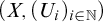 be a
$T_2$
be a
$T_2$
 l.c. CSC space, and let S be a non-empty dense in itself subset of X. Enumerate
$X=(x_n)_{n\in \mathbb {N}}$
l.c. CSC space, and let S be a non-empty dense in itself subset of X. Enumerate
$X=(x_n)_{n\in \mathbb {N}}$
 , let
$y_0\in S$
, let
$y_0\in S$
 , and let
$V_0$
, and let
$V_0$
 be a compact neighborhood of
$y_0$
be a compact neighborhood of
$y_0$
 . Since we are working in
$\mathbf {ACA}_0$
. Since we are working in
$\mathbf {ACA}_0$
 , we have that
$V_0$
, we have that
$V_0$
 is also sequentially compact. Given
$y_n$
is also sequentially compact. Given
$y_n$
 and
$V_n$
and
$V_n$
 such that
$y_n\in V_n$
such that
$y_n\in V_n$
 , let
$y_{n+1}$
, let
$y_{n+1}$
 be the least element in
$S\cap V_n\setminus \{y_n\}$
be the least element in
$S\cap V_n\setminus \{y_n\}$
 which will be infinite since S does not have isolated points. Let
$V_{n+1}$
which will be infinite since S does not have isolated points. Let
$V_{n+1}$
 be the first basic open set such that
$y_{n+1}\in V_{n+1}\subseteq V_n$
be the first basic open set such that
$y_{n+1}\in V_{n+1}\subseteq V_n$
 and
$x_{n+1}\notin V_{n+1}$
and
$x_{n+1}\notin V_{n+1}$
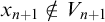 . The sequence
$(y_n,V_n)_{n\in \mathbb {N}}$
. The sequence
$(y_n,V_n)_{n\in \mathbb {N}}$
 exists by arithmetic comprehension. Assume that the subsequence
$(y_{n_k})_{k\in \mathbb {N}}$
exists by arithmetic comprehension. Assume that the subsequence
$(y_{n_k})_{k\in \mathbb {N}}$
 converges to
$x_m\in X$
converges to
$x_m\in X$
 , by construction
$(y_{n_k})_{k\in \mathbb {N}}$
, by construction
$(y_{n_k})_{k\in \mathbb {N}}$
 is eventually in
$V_m$
is eventually in
$V_m$
 which does not contain
$x_m$
which does not contain
$x_m$
 by construction. This contradicts the fact that
$V_0$
by construction. This contradicts the fact that
$V_0$
 is sequentially compact.
Observation 10.6. The converse does not hold. For a counterexample, take the set

with the subspace topology. We observe that the point
$\omega ^2\in S$
 does not have a compact neighborhood in S. Since S is order isomorphic to
$\omega ^2+1$
does not have a compact neighborhood in S. Since S is order isomorphic to
$\omega ^2+1$
 , its subspace topology cannot coincide with its order topology. In general, the subspaces of an l.c. CSC space may not be l.c. This counterexample can be easily formalized in
$\mathbf {RCA}_0$
, its subspace topology cannot coincide with its order topology. In general, the subspaces of an l.c. CSC space may not be l.c. This counterexample can be easily formalized in
$\mathbf {RCA}_0$
 . We will see later on that all scattered
$T_3$
. We will see later on that all scattered
$T_3$
 CSC spaces, over a sufficiently strong theory, are precisely the subspaces of well orders. It is also worth noting that, in general, l.c.
$T_2$
CSC spaces, over a sufficiently strong theory, are precisely the subspaces of well orders. It is also worth noting that, in general, l.c.
$T_2$
 second countable spaces are not scattered. For example,
$\mathbb {R}$
second countable spaces are not scattered. For example,
$\mathbb {R}$
 is locally compact, but it is not scattered since it is connected.
Proposition 10.7.
$\mathbf {RCA}_0$
 proves that every
$eT_2$
proves that every
$eT_2$
 locally effectively compact CSC space is
$T_3$
locally effectively compact CSC space is
$T_3$
 .
.
Proof. Let
$(X,(U_i)_{i\in \mathbb {N}},k)$
 be a
$T_2$
be a
$T_2$
 locally effectively compact CSC space and let
$x\in X$
locally effectively compact CSC space and let
$x\in X$
 and
$i\in \mathbb {N}$
and
$i\in \mathbb {N}$
 be such that
$x\in U_i$
be such that
$x\in U_i$
 . Let K be an effectively compact neighborhood of x and let
$j\in \mathbb {N}$
. Let K be an effectively compact neighborhood of x and let
$j\in \mathbb {N}$
 be such that
$x\in U_j\subseteq K$
be such that
$x\in U_j\subseteq K$
 . By Proposition 7.8 there is an f which codes K. We have that K is effectively
$T_2$
. By Proposition 7.8 there is an f which codes K. We have that K is effectively
$T_2$
 since it is the subspace of an effectively
$T_2$
since it is the subspace of an effectively
$T_2$
 space. By Theorem 7.10 K is uniformly
$T_3$
space. By Theorem 7.10 K is uniformly
$T_3$
 . Let
$R^K_0$
. Let
$R^K_0$
 and
$R^K_1$
and
$R^K_1$
 witness that K is uniformly regular and let
$s=k(x,i,j)$
witness that K is uniformly regular and let
$s=k(x,i,j)$
 , we have

So, in particular

which shows that X is regular.
Using the same proof, we get the following corollary.
Corollary 10.8.
$\mathbf {RCA}_0$
 proves that every
$eT_2$
proves that every
$eT_2$
 l.c. CSC space with an effective
$CCN$
l.c. CSC space with an effective
$CCN$
 is uniformly
$T_3$
is uniformly
$T_3$
 .
.
Corollary 10.9.
$\mathbf {ACA}_0$
 proves that every l.c.
$T_2$
proves that every l.c.
$T_2$
 CSC space is
$T_3$
CSC space is
$T_3$
 .
.
Observation 10.10. Let
$(W,<_W)$
 be a well order, then we have that the collection
$(]-\infty ,w+1[_{<_W})_{w\in W}$
be a well order, then we have that the collection
$(]-\infty ,w+1[_{<_W})_{w\in W}$
 is a
$CCN$
is a
$CCN$
 for W with the order topology.
Proposition 10.11.
$\mathbf {RCA}_0$
 proves that having a
$CCN$
proves that having a
$CCN$
 and an effective
$CCN$
and an effective
$CCN$
 are preserved under effective homeomorphism.
Proof. Let
$(X,(U_i)_{i\in \mathbb {N}},k)$
 and
$(Y,(V_i)_{i\in \mathbb {N}},k')$
and
$(Y,(V_i)_{i\in \mathbb {N}},k')$
 be a CSC spaces and
$f:X\rightarrow Y$
be a CSC spaces and
$f:X\rightarrow Y$
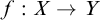 a homeomorphism and let
$v$
a homeomorphism and let
$v$
 be the function witnessing that f is effectively open. Assume that
$(K_x,i(x))_{x\in X}$
be the function witnessing that f is effectively open. Assume that
$(K_x,i(x))_{x\in X}$
 is a
$CCN$
is a
$CCN$
 for X. Then
$(f(K_{f^{-1}(y)}),v(f^{-1}(y),i(f^{-1}(y))))_{y\in Y}$
for X. Then
$(f(K_{f^{-1}(y)}),v(f^{-1}(y),i(f^{-1}(y))))_{y\in Y}$
 is a
$CCN$
is a
$CCN$
 for Y. If there exists a sequence
$(C_x)_{x\in X}$
for Y. If there exists a sequence
$(C_x)_{x\in X}$
 such that for all x the set
$C_x$
such that for all x the set
$C_x$
 is the covering relation for
$K_x$
is the covering relation for
$K_x$
 then by Proposition 7.6 there exists a sequence
$(D_y)_{y\in Y}$
then by Proposition 7.6 there exists a sequence
$(D_y)_{y\in Y}$
 such that for all
$y\in Y\, D_y$
such that for all
$y\in Y\, D_y$
 is the covering relation for
$f(K_{f^{-1}(y)})$
is the covering relation for
$f(K_{f^{-1}(y)})$
 .
.
Observation 10.12. This definition of local compactness is quite weak. The standard definition of local compactness that is usually used in general topology is that for every point x and open neighborhood U of x, there is a compact neighborhood of x contained in U. It is a classic result in general topology that both definitions of local compactness coincide for
$T_2$
 spaces.
Proposition 10.13.
$\mathbf {ACA}_0$
 proves that any
$T_2$
proves that any
$T_2$
 l.c. CSC space with
$CCN$
l.c. CSC space with
$CCN$
 is homeomorphic to a space with a basis of compact sets.
Proof. Let
$(X,(U_i)_{i\in \mathbb {N}},k)$
 be a
$T_2$
be a
$T_2$
 CSC space with a
$CCN$
CSC space with a
$CCN$
 . By Propositions 10.7 and 10.11 and Theorem 6.17 we may assume that X has a basis of clopen sets. Let
$(i(x))_{x\in X}$
. By Propositions 10.7 and 10.11 and Theorem 6.17 we may assume that X has a basis of clopen sets. Let
$(i(x))_{x\in X}$
 be a
$CCN$
be a
$CCN$
 for X and let
$J=\{j\in \mathbb {N}:\exists x\in X\, U_j\subseteq U_{i(x)}\}$
for X and let
$J=\{j\in \mathbb {N}:\exists x\in X\, U_j\subseteq U_{i(x)}\}$
 . We have that for all
$j\in J$
. We have that for all
$j\in J$
 , the basic clopen set
$U_j$
, the basic clopen set
$U_j$
 is compact by Proposition 7.7. We have that for all
$n\in \mathbb {N}$
is compact by Proposition 7.7. We have that for all
$n\in \mathbb {N}$
 the set
$U_n$
the set
$U_n$
 is open with respect to the basis
$(U_j)_{j\in J}$
is open with respect to the basis
$(U_j)_{j\in J}$
 since for all
$x\in U_n$
since for all
$x\in U_n$
 we have

and
$k(x,i(x),n)\in J$
 since
$U_{ k(x,i(x),n)}\subseteq U_{i(x)}$
since
$U_{ k(x,i(x),n)}\subseteq U_{i(x)}$
 . So
$(U_j)_{j\in J}$
. So
$(U_j)_{j\in J}$
 is a basis for X consisting of compact sets.
Proposition 10.14.
$\mathbf {ACA}_0$
 proves that every l.c.
$T_2$
proves that every l.c.
$T_2$
 CSC space with a
$CCN$
CSC space with a
$CCN$
 is the disjoint union of open compact sets and is well-orderable.
Proof. Let
$(X,(U_i)_{i\in \mathbb {N}},k)$
 be an l.c.
$T_2$
be an l.c.
$T_2$
 CSC space with a
$CCN$
CSC space with a
$CCN$
 . By Proposition 10.13, we may assume that X has a basis of compact sets. The sequence of sets

defines a partition of X into clopen compact sets. In particular, we have that X is homeomorphic to the disjoint sum of
$(V_i)_{i\in \mathbb {N}}$
 . By Corollary 8.8 we have that
$\coprod _{i\in \mathbb {N}}V_i$
. By Corollary 8.8 we have that
$\coprod _{i\in \mathbb {N}}V_i$
 is well-orderable and therefore X is well-orderable.
Observation 10.15. Since every well order has a
$CCN$
 , we have that over
$\mathbf {ACA}_0$
, we have that over
$\mathbf {ACA}_0$
 a
$T_2$
a
$T_2$
 CSC space is well-orderable if and only if it has a
$CCN$
CSC space is well-orderable if and only if it has a
$CCN$
 . This means that the strength of the well orderability of
$T_2$
. This means that the strength of the well orderability of
$T_2$
 l.c. CSC spaces lies in being able to choose a compact neighborhood for every point of a
$T_2$
l.c. CSC spaces lies in being able to choose a compact neighborhood for every point of a
$T_2$
 l.c. CSC space. In the next section we will show that this is equivalent to arithmetic transfinite recursion over
$\mathbf {RCA}_0$
l.c. CSC space. In the next section we will show that this is equivalent to arithmetic transfinite recursion over
$\mathbf {RCA}_0$
 .
.
Proposition 10.16.
$\mathbf {ACA}_0$
 proves that for any l.c.
$T_2$
proves that for any l.c.
$T_2$
 CSC space
$(X,(U_i)_{i\in \mathbb {N}})$
CSC space
$(X,(U_i)_{i\in \mathbb {N}})$
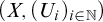 any l.c. subspace
$Y\subseteq X$
any l.c. subspace
$Y\subseteq X$
 also has a
$CCN$
also has a
$CCN$
 .
.
Proof. By Proposition 5.6 Y is
$T_2$
 since it is the subspace of a
$T_2$
since it is the subspace of a
$T_2$
 space. Since
$CCN$
space. Since
$CCN$
 are preserved under homeomorphism, we may assume without loss of generality that X has a basis of clopen sets. Let
$(i(x))_{x\in X}$
are preserved under homeomorphism, we may assume without loss of generality that X has a basis of clopen sets. Let
$(i(x))_{x\in X}$
 be a
$CCN$
be a
$CCN$
 for X. For each
$y\in Y$
for X. For each
$y\in Y$
 and
$j\in \mathbb {N}$
and
$j\in \mathbb {N}$
 such that
$U_j\cap Y$
such that
$U_j\cap Y$
 is closed in X, if
$U_j\subseteq U_{i(y)}$
is closed in X, if
$U_j\subseteq U_{i(y)}$
 then
$U_j\cap Y$
then
$U_j\cap Y$
 is compact by Proposition 7.7. Conversely, if
$U_j\cap Y$
is compact by Proposition 7.7. Conversely, if
$U_j\cap Y$
 is compact, then by Proposition 7.8
$Y\cap U_j$
is compact, then by Proposition 7.8
$Y\cap U_j$
 is closed in X since it is a compact set in a
$T_2$
is closed in X since it is a compact set in a
$T_2$
 space. For each
$y\in Y$
space. For each
$y\in Y$
 let
$\widehat {i}(y)$
let
$\widehat {i}(y)$
 be the first i such that
$y\in U_i\subseteq U_{i(x)}$
be the first i such that
$y\in U_i\subseteq U_{i(x)}$
 and
$U_i\cap Y$
and
$U_i\cap Y$
 is closed in X. The sequence
$(\widehat {i}(y))_{y\in Y}$
is closed in X. The sequence
$(\widehat {i}(y))_{y\in Y}$
 is arithmetically definable, so it exists by arithmetic comprehension and is a
$CCN$
is arithmetically definable, so it exists by arithmetic comprehension and is a
$CCN$
 for Y.
We will end this section by giving a definition of one point compactification which is suitable over
$\mathbf {RCA}_0$
 .
.
Definition 10.17. Let X be a topological space, the Alexandroff compactification or one point compactification of X is the space
$X\cup \{\infty \}$
 where
$U\subseteq X\cup \{\infty \}$
where
$U\subseteq X\cup \{\infty \}$
 is open if
$\infty \notin U$
is open if
$\infty \notin U$
 and U is open in X or
$\infty \in U$
and U is open in X or
$\infty \in U$
 and
$X\setminus U$
and
$X\setminus U$
 is compact in X. It is a classical result in general topology that the Alexandroff compactification of X is
$T_2$
is compact in X. It is a classical result in general topology that the Alexandroff compactification of X is
$T_2$
 if and only if X is
$T_2$
if and only if X is
$T_2$
 and l.c.
Observation 10.18. In general the one point compactification of a CSC space may not be a CSC space. For example, the one point compactification of
$\mathbb {Q}$
 is not second countable. We would like to consider CSC spaces that have one point compactification which is also a CSC space.
Definition 10.19. A space X is hemicompact if there exists an increasing sequence of compact sets
$(K_n)_{n\in \omega }$
 such that every compact set of X is contained in some
$K_n$
such that every compact set of X is contained in some
$K_n$
 . Equivalently, a space is hemicompact if the poset of compact subsets has a countable cofinal sequence. The Alexandroff or one point compactification of a space X is first countable if and only if X is first countable and hemicompact.
A space X has an exhaustion by compact sets if there is a sequence of compact sets
$(K_n)_{n\in \mathbb {N}}$
 such that for all
$n\, K_n\subseteq int(K_{n+1})$
such that for all
$n\, K_n\subseteq int(K_{n+1})$
 and
$X=\bigcup _{n\in \mathbb {N}}K_n$
and
$X=\bigcup _{n\in \mathbb {N}}K_n$
 . We observe that a space X with an exhaustion by compact sets is hemicompact and l.c.
Definition 10.20. Over
$\mathbf {RCA}_0$
 we say that a CSC space X has an exhaustion by compact sets if there exists a sequence
$(K_i,V_i,f_i,g_i)_{i\in \mathbb {N}}$
we say that a CSC space X has an exhaustion by compact sets if there exists a sequence
$(K_i,V_i,f_i,g_i)_{i\in \mathbb {N}}$
 such that:
-
• $\bigcup _{i\in \mathbb {N}} K_i= X.$
-
• For each $i\in \mathbb {N}\, K_i$
is compact, effectively closed, and
$g_i$
is a code for
$K_i$
. -
• For each $i\in \mathbb {N}\, V_i$
is an effectively open set and
$f_i$
is a code for
$V_i$
. -
• For each $i\in \mathbb {N}\, K_i\subseteq V_{i+1}\subseteq K_{i+1}$
.




Proposition 10.21.
$\mathbf {RCA}_0$
 proves that every
$T_2$
proves that every
$T_2$
 locally effectively compact CSC space with an effective
$CCN$
locally effectively compact CSC space with an effective
$CCN$
 has an exhaustion of compact sets
$(\widehat {K}_i,V_i,f_i,g_i)_{i\in \mathbb {N}}$
has an exhaustion of compact sets
$(\widehat {K}_i,V_i,f_i,g_i)_{i\in \mathbb {N}}$
 . Furthermore there exists a sequence
$(C_n)_{n\in \mathbb {N}}$
. Furthermore there exists a sequence
$(C_n)_{n\in \mathbb {N}}$
 such that for all
$n\in \mathbb {N}\, C_n$
such that for all
$n\in \mathbb {N}\, C_n$
 is the covering relation for
$\widehat {K}_n$
is the covering relation for
$\widehat {K}_n$
 .
.
Proof. Let
$(X,(U_i)_{i\in \mathbb {N}})$
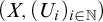 be an l.c. CSC space and let
$(K_x,i(x),C_x)_{x\in X}$
be an l.c. CSC space and let
$(K_x,i(x),C_x)_{x\in X}$
 be an effective
$CCN$
be an effective
$CCN$
 . Enumerate the points of
$X=(x_n)_{n\in \mathbb {N}}$
. Enumerate the points of
$X=(x_n)_{n\in \mathbb {N}}$
 . For each finite subset
$a\subseteq X$
. For each finite subset
$a\subseteq X$
 we have that
$\widehat {C}_a=\bigcap _{i\in a} C_i$
we have that
$\widehat {C}_a=\bigcap _{i\in a} C_i$
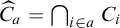 is the covering relation for
$\bigcup _{x\in a} K_x$
is the covering relation for
$\bigcup _{x\in a} K_x$
 . The sequence
$(\widehat {C}_a)_{a\subseteq X}$
. The sequence
$(\widehat {C}_a)_{a\subseteq X}$
 exists by
$\Delta ^0_1$
exists by
$\Delta ^0_1$
 comprehension. Instead of defining directly the sequence
$(\widehat {K}_i)_{i\in \mathbb {N}}$
comprehension. Instead of defining directly the sequence
$(\widehat {K}_i)_{i\in \mathbb {N}}$
 we instead define recursively a sequence of finite sets
$(F_n)_{n\in \mathbb {N}}$
we instead define recursively a sequence of finite sets
$(F_n)_{n\in \mathbb {N}}$
 such that
$\widehat {K}_n=\bigcup _{x\in F_n} K_x$
such that
$\widehat {K}_n=\bigcup _{x\in F_n} K_x$
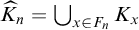 . Define
$F_0=\{\min X\}$
. Define
$F_0=\{\min X\}$
 . Given
$F_n$
. Given
$F_n$
 , define

Equivalently
$F_{n+1}$
 is the least finite subset of X such that
$(U_{i(x)})_{x\in F_{n+1}}$
is the least finite subset of X such that
$(U_{i(x)})_{x\in F_{n+1}}$
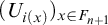 is a covering of
$\bigcup _{y\in F_n} K_y\cup \{x_n\}$
is a covering of
$\bigcup _{y\in F_n} K_y\cup \{x_n\}$
 . We have that the sequence
$(F_n)_{n\in \mathbb {N}}$
. We have that the sequence
$(F_n)_{n\in \mathbb {N}}$
 is well defined since for each
$n\, \bigcup _{y\in F_n} K_y$
is well defined since for each
$n\, \bigcup _{y\in F_n} K_y$
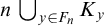 is compact and it exists by
$\Delta ^0_1$
is compact and it exists by
$\Delta ^0_1$
 comprehension.
Define
$\widehat {K}_n=\bigcup _{x\in F_n} K_x$
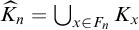 , we have that
$\widehat {C}_{F_n}$
, we have that
$\widehat {C}_{F_n}$
 is the covering relation for
$\widehat {K}_n$
is the covering relation for
$\widehat {K}_n$
 . By Proposition 7.9, we have that the sequence
$(\widehat {K}_n)_{n\in \mathbb {N}}$
. By Proposition 7.9, we have that the sequence
$(\widehat {K}_n)_{n\in \mathbb {N}}$
 will be uniformly effectively closed and so there exists a sequence
$(g_n)_{n\in \mathbb {N}}$
will be uniformly effectively closed and so there exists a sequence
$(g_n)_{n\in \mathbb {N}}$
 such that for all
$n\in \mathbb {N}\, g_n$
such that for all
$n\in \mathbb {N}\, g_n$
 is a closed code for
$\widehat {K}_n$
is a closed code for
$\widehat {K}_n$
 .
.
Let
$f_n$
 be the partial function that enumerates
$F_n$
be the partial function that enumerates
$F_n$
 increasingly. The sequences
$(\widehat {K}_n,\bigcup _{x\in F_n}U_{i(x)},f_n,g_n)_{n\in \mathbb {N}}$
increasingly. The sequences
$(\widehat {K}_n,\bigcup _{x\in F_n}U_{i(x)},f_n,g_n)_{n\in \mathbb {N}}$
 and
$(C_{F_n})_{n\in \mathbb {N}}$
and
$(C_{F_n})_{n\in \mathbb {N}}$
 are
$\Delta ^0_1$
are
$\Delta ^0_1$
 definable relative to
$(F_n)_{n\in \mathbb {N}}$
definable relative to
$(F_n)_{n\in \mathbb {N}}$
 and so they exist by
$\Delta ^0_1$
and so they exist by
$\Delta ^0_1$
 comprehension. By construction we have that

is an exhaustion by compact sets of X and for all
$n\in \mathbb {N}\, C_{F_n}$
 is a covering relation for
$\widehat {K}_n$
is a covering relation for
$\widehat {K}_n$
 .
.
Definition 10.22. Let
$(X,(U_i)_{i\in \mathbb {N}},k) $
 be a
$T_2$
be a
$T_2$
 CSC space with an exhaustion of compact sets
$(K_n,A_n,f_n,g_n)_{n\in \mathbb {N}}$
CSC space with an exhaustion of compact sets
$(K_n,A_n,f_n,g_n)_{n\in \mathbb {N}}$
 we define its one point compactification as the space

where
$V_{2i}=U_i$
 and
$V_{2i+1}=(X\cup \{\infty \})\setminus K_i$
and
$V_{2i+1}=(X\cup \{\infty \})\setminus K_i$
 .
.
-
(1) $\widehat {k}(x,2i,2j)=k(x,i,j)$
. -
(2) $\widehat {k}(x,2i,2j+1)=k(x,i,g(r))$
where
$r=\min \{n\in \mathbb {N}: x\in U_{g(r)}\}$
. -
(3) $\widehat {k}(x,2i+1,2j+1)= \max \{2i+1,2j+1\}$
.




We show that
$X\cup \{\infty \}$
 is compact. Let
$I\subseteq \mathbb {N}$
is compact. Let
$I\subseteq \mathbb {N}$
 be such that
$(V_i)_{i\in I}$
be such that
$(V_i)_{i\in I}$
 is a covering of
$X\cup \{\infty \}$
is a covering of
$X\cup \{\infty \}$
 . There exists some
$2j+1\in I$
. There exists some
$2j+1\in I$
 such that
$\infty \in V_{2j+1}=(X\cup \{\infty \})\setminus K_j$
such that
$\infty \in V_{2j+1}=(X\cup \{\infty \})\setminus K_j$
 . Since
$K_j$
. Since
$K_j$
 is compact and
$(U_i)_{i\in I}$
is compact and
$(U_i)_{i\in I}$
 covers
$K_j$
covers
$K_j$
 we have that there exists a finite set
$a\subseteq I$
we have that there exists a finite set
$a\subseteq I$
 such that
$K_j\subseteq \bigcup _{i\in a} U_i$
such that
$K_j\subseteq \bigcup _{i\in a} U_i$
 and so
$(U_i)_{i\in a\cup \{2j+1\}}$
and so
$(U_i)_{i\in a\cup \{2j+1\}}$
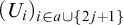 is a finite subcovering of
$X\cup \{\infty \}$
is a finite subcovering of
$X\cup \{\infty \}$
 . So the one point compactification of X is compact.
Assume X is effectively
$T_2$
 , and
$H_0,H_1$
, and
$H_0,H_1$
 the functions that witness that X is effectively
$T_2$
the functions that witness that X is effectively
$T_2$
 then the functions
$\widehat {H}_0,\widehat {H}_1$
then the functions
$\widehat {H}_0,\widehat {H}_1$
 such that for all
$x,y\in X$
such that for all
$x,y\in X$
 we have

For all
$x\in X$
 , let
$j=\min \{i: x\notin K_i\}$
, let
$j=\min \{i: x\notin K_i\}$
 . Define

and

The functions
$\widehat {H}_0,\widehat {H}_1$
 exist by
$\Delta ^0_1$
exist by
$\Delta ^0_1$
 comprehension and witness that
$X\cup \{\infty \}$
comprehension and witness that
$X\cup \{\infty \}$
 is effectively
$T_2$
is effectively
$T_2$
 .
.
Assume that X is effectively
$T_2$
 and there exists a sequence
$(C_n)_{n\in \mathbb {N}}$
and there exists a sequence
$(C_n)_{n\in \mathbb {N}}$
 such that for all
$n\, C_n$
such that for all
$n\, C_n$
 is the covering relation for
$K_n$
is the covering relation for
$K_n$
 . Given a finite set
$F\subseteq I$
. Given a finite set
$F\subseteq I$
 , let
$j=\max \{i: 2i+1\in F\}$
, let
$j=\max \{i: 2i+1\in F\}$
 , we have
$\bigcup _{i\in F} V_i=X\cup \{\infty \}$
, we have
$\bigcup _{i\in F} V_i=X\cup \{\infty \}$
 if and only if
$\{i: 2i\in F\}\in C_j$
if and only if
$\{i: 2i\in F\}\in C_j$
 , so the covering relation for
$X\cup \{\infty \}$
, so the covering relation for
$X\cup \{\infty \}$
 is
$\Delta ^0_1$
is
$\Delta ^0_1$
 definable relative to
$(C_n)_{n\in \mathbb {N}}$
definable relative to
$(C_n)_{n\in \mathbb {N}}$
 and so
$X\cup \{\infty \}$
and so
$X\cup \{\infty \}$
 is effectively compact.
Proposition 10.23. Over
$\mathbf {RCA}_0$
 let
$(X,(U_i)_{i\in \mathbb {N}},k) $
let
$(X,(U_i)_{i\in \mathbb {N}},k) $
 be a
$T_2$
be a
$T_2$
 CSC space and
$(K^0_i,U^0_i,f^0_i,g^0_i)_{i\in \mathbb {N}}$
CSC space and
$(K^0_i,U^0_i,f^0_i,g^0_i)_{i\in \mathbb {N}}$
 and
$(K^1_i,U^1_i,f^1_i,g^1_i)_{i\in \mathbb {N}}$
and
$(K^1_i,U^1_i,f^1_i,g^1_i)_{i\in \mathbb {N}}$
 be two exhaustions by compact sets of X. The CSC spaces

and

are effectively homeomorphic. That is, the topology of the one point compactification does not depend on the choice of the exhaustion by compact sets.
Proof. We show that the identity
$Id:X\cup \{\infty \}\rightarrow X\cup \{\infty \}$
 is an effective homeomorphism. Let
$v:X\times \mathbb {N}\rightarrow \mathbb {N}$
is an effective homeomorphism. Let
$v:X\times \mathbb {N}\rightarrow \mathbb {N}$
 be the function given by:
-
(1) $v(x,2i)=2i$
. -
(2) $v(x,2i+1)=2\cdot g(r)$
where
$ r=\min \{s: x\in U_{g(s)} \}.$
-
(3) $v(\infty , 2j+1)= \min \{r: \{ f_i(m): i,m<r\}\in C_i\}.$




We have that
$v$
 exists by
$\Delta ^0_1$
exists by
$\Delta ^0_1$
 comprehension and witnesses that the identity
$Id:X\cup \{\infty \}\rightarrow X\cup \{\infty \}$
comprehension and witnesses that the identity
$Id:X\cup \{\infty \}\rightarrow X\cup \{\infty \}$
 is effectively continuous. By symmetry, we have that the identity is also effectively open, and so the identity is an effective homeomorphism.
Proposition 10.24.
$\mathbf {RCA}_0$
 proves every l.c. effectively
$T_2$
proves every l.c. effectively
$T_2$
 CSC space with an effective
$CCN\, (X,(U_i)_{i\in \mathbb {N}},k)$
CSC space with an effective
$CCN\, (X,(U_i)_{i\in \mathbb {N}},k)$
 has a one point compactification
$X\cup \{\infty \}$
has a one point compactification
$X\cup \{\infty \}$
 which effectively compact effectively
$T_2$
which effectively compact effectively
$T_2$
 and the inclusion
$X\rightarrow X\cup \{\infty \}$
and the inclusion
$X\rightarrow X\cup \{\infty \}$
 is an effective embedding.
Proof. By Proposition 10.21 we have that X has an exhaustion by compact sets
$(K_i,U_i,f_i,g_i)_{i\in \mathbb {N}}$
 and there is a sequence
$(C_i)_{i\in \mathbb {N}}$
and there is a sequence
$(C_i)_{i\in \mathbb {N}}$
 such that for all
$i\in \mathbb {N}$
such that for all
$i\in \mathbb {N}$
 we have that
$C_i$
we have that
$C_i$
 is the covering relation for
$K_i$
is the covering relation for
$K_i$
 . By the observations made in Definition 10.22, we have that the one point compactification of X exists and is an effectively
$T_2$
. By the observations made in Definition 10.22, we have that the one point compactification of X exists and is an effectively
$T_2$
 effectively compact CSC space. We show that the inclusion
$X\rightarrow X\cup \{\infty \}$
effectively compact CSC space. We show that the inclusion
$X\rightarrow X\cup \{\infty \}$
 is an effective homeomorphism. We define
$v:X\times \mathbb {N}\rightarrow \mathbb {N}$
is an effective homeomorphism. We define
$v:X\times \mathbb {N}\rightarrow \mathbb {N}$
 where
$v(x,2i)=i$
where
$v(x,2i)=i$
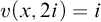 and
$v(x,2i+1)=g(r)$
and
$v(x,2i+1)=g(r)$
 where
$r=\min \{s\in \mathbb {N}: x\in U_{g_i(s)}\}$
where
$r=\min \{s\in \mathbb {N}: x\in U_{g_i(s)}\}$
 . The function
$v$
. The function
$v$
 exists by
$\Delta ^0_1$
exists by
$\Delta ^0_1$
 comprehension and witnesses that the inclusion
$X\rightarrow X\cup \{\infty \}$
comprehension and witnesses that the inclusion
$X\rightarrow X\cup \{\infty \}$
 is effectively continuous. We have that the map
$(x,i)\mapsto 2i$
is effectively continuous. We have that the map
$(x,i)\mapsto 2i$
 witnesses that the inclusion is effectively open, so the inclusion of X in
$X\cup \{\infty \}$
witnesses that the inclusion is effectively open, so the inclusion of X in
$X\cup \{\infty \}$
 is an effective homeomorphism.
Proposition 10.25. Over
$\mathbf {RCA}_0$
 , for all CSC spaces
$(X,(U_i)_{i\in \mathbb {N}},k)$
, for all CSC spaces
$(X,(U_i)_{i\in \mathbb {N}},k)$
 , if there is an effective embedding
$f:X\rightarrow \widehat {X}$
, if there is an effective embedding
$f:X\rightarrow \widehat {X}$
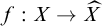 , where
$(\widehat {X},(V_i)_{i\in \mathbb {N}},k')$
, where
$(\widehat {X},(V_i)_{i\in \mathbb {N}},k')$
 is compact,
$eT_2$
is compact,
$eT_2$
 , and
$\widehat {X}\setminus \text {rng}(f)$
, and
$\widehat {X}\setminus \text {rng}(f)$
 contains exactly one point, then X has a
$CCN$
contains exactly one point, then X has a
$CCN$
 . If
$\widehat {X}$
. If
$\widehat {X}$
 is also effectively compact, then X has an exhaustion by compact sets and the one point compactification of X is effectively homeomorphic to
$\widehat {X}$
is also effectively compact, then X has an exhaustion by compact sets and the one point compactification of X is effectively homeomorphic to
$\widehat {X}$
 .
.
Proof. Let p be the unique element of
$\widehat {X}\setminus \text {rng}(f)$
 . Let
$H_0,H_1$
. Let
$H_0,H_1$
 be the functions that witness that
$\widehat {X}$
be the functions that witness that
$\widehat {X}$
 is effectively
$T_2$
is effectively
$T_2$
 and
$v$
and
$v$
 witness that f is effectively continuous. The sequence

will be a
$CCN$
 for X. For the second part, assume that
$\widehat {X}$
for X. For the second part, assume that
$\widehat {X}$
 is also effectively compact and let C be its covering relation. We have that
$\widehat {X}$
is also effectively compact and let C be its covering relation. We have that
$\widehat {X}$
 will be
$uT_3$
will be
$uT_3$
 by Theorem 7.10. By Theorem 6.13, we can assume without loss of generality that X has an algebra of clopen sets. Let
$Comp$
by Theorem 7.10. By Theorem 6.13, we can assume without loss of generality that X has an algebra of clopen sets. Let
$Comp$
 and
$Int$
and
$Int$
 be functions that witness
$\widehat {X}$
be functions that witness
$\widehat {X}$
 has an algebra of clopen sets. As in the proof of Theorem 8.6, let
$(V_{i(n)})_{n\in \mathbb {N}}$
has an algebra of clopen sets. As in the proof of Theorem 8.6, let
$(V_{i(n)})_{n\in \mathbb {N}}$
 define a decreasing cofinal sequence of neighborhoods of p. For ease of notation let
$j(n)=Comp(i(n))$
define a decreasing cofinal sequence of neighborhoods of p. For ease of notation let
$j(n)=Comp(i(n))$
 , we have

will be an exhaustion by compact sets. Following the proof of Proposition 10.23 one shows that
$\widehat {X}$
 is effectively homeomorphic to the one point compactification of X.
11 Choice of compact neighborhoods and arithmetic transfinite recursion
In this section, we will show that every l.c. CSC space has a
$CCN$
 is equivalent to
$\mathbf {ATR}_0$
is equivalent to
$\mathbf {ATR}_0$
 over
$\mathbf {RCA}_0$
over
$\mathbf {RCA}_0$
 .
$\mathbf {ATR}_0$
.
$\mathbf {ATR}_0$
 proves the existence of
$CCN$
proves the existence of
$CCN$
 for l.c. CSC space by the following lemma.
Lemma 11.1 (Simpson [Reference Simpson32, Lemma VIII.4.7])
For any
$\Pi ^1_1$
 formula
$\varphi (x,i,X)$
formula
$\varphi (x,i,X)$
 , where X is the only set variable in
$\varphi $
, where X is the only set variable in
$\varphi $
 ,
$\mathbf {ATR}_0$
,
$\mathbf {ATR}_0$
 proves

We introduce a special case of Lemma 11.1 and prove that it is equivalent to arithmetic transfinite recursion over
$\mathbf {RCA}_0$
 .
.
Definition 11.2. An eventually well-founded tree array is a collection
$(T_i^j)_{i,j\in \mathbb {N}}$
 of trees such that for all
$j\in \mathbb {N}$
of trees such that for all
$j\in \mathbb {N}$
 the sequence
$(T^j_i)_{i\in \mathbb {N}}$
the sequence
$(T^j_i)_{i\in \mathbb {N}}$
 is eventually well-founded. A modulus for an eventually well-founded array of trees
$(T_i^j)_{i,j\in \mathbb {N}}$
is eventually well-founded. A modulus for an eventually well-founded array of trees
$(T_i^j)_{i,j\in \mathbb {N}}$
 is a sequence
$(n_j)_{j\in \mathbb {N}}$
is a sequence
$(n_j)_{j\in \mathbb {N}}$
 such that for all j and all
$i\geq n_j$
such that for all j and all
$i\geq n_j$
 the tree
$T^j_i$
the tree
$T^j_i$
 is well-founded. By
$TAM$
is well-founded. By
$TAM$
 , we mean the statement that every eventually well-founded array of trees admits a modulus. By
$1TAM$
, we mean the statement that every eventually well-founded array of trees admits a modulus. By
$1TAM$
 , we mean
$TAM$
, we mean
$TAM$
 restricted to arrays of trees that have at most
$1$
restricted to arrays of trees that have at most
$1$
 branch each.
Proposition 11.3 (Simpson [Reference Simpson32, Exercise VIII.4.25])
$\mathbf {RCA}_0+1TAM$
 implies arithmetic transfinite recursion.
Lemma 11.4. The following are equivalent over
$\mathbf {RCA}_0$
 :
:
-
(1) $TAM.$
-
(2) For any sequence of sequences of linear orders $(L^j_i)_{i,j\in \mathbb {N}}$
such that for each j the sequence
$(L^j_i)_{i\in \mathbb {N}}$
is decreasing with respect to inclusion and eventually well-ordered then there is a sequence
$(n_j)_{j\in \mathbb {N}}$
such that for all
$j\in \mathbb {N}$
and all
$i\geq n_j\, L^j_i$
is a well order.


Proof. We have that
$TAM$
 and
$(2)$
and
$(2)$
 both imply arithmetic comprehension over
$\mathbf {RCA}_0$
both imply arithmetic comprehension over
$\mathbf {RCA}_0$
 . So it suffices to show that
$TAM$
. So it suffices to show that
$TAM$
 is equivalent to
$(2)$
is equivalent to
$(2)$
 over
$\mathbf {ACA}_0$
over
$\mathbf {ACA}_0$
 .
.
$(1\rightarrow 2)$
 follows from the fact that a linear order L is a well order if and only if

is well-founded.
Assume
$(2)$
 . Let
$(T_i^j)_{i,j\in \mathbb {N}}$
. Let
$(T_i^j)_{i,j\in \mathbb {N}}$
 be a sequence of trees such that for all
$j\in \mathbb {N}$
be a sequence of trees such that for all
$j\in \mathbb {N}$
 the sequence
$(T^j_i)_{i\in \mathbb {N}}$
the sequence
$(T^j_i)_{i\in \mathbb {N}}$
 is eventually well-founded. Define

We observe that
$T^j_n$
 is well-founded if and only
$(S^j_n,<_{\text {KB}})$
is well-founded if and only
$(S^j_n,<_{\text {KB}})$
 is a well order and that for all
$m\geq n\, S^j_m\subseteq S^j_n$
is a well order and that for all
$m\geq n\, S^j_m\subseteq S^j_n$
 . The family of linear orders
$((S^j_n,<_{\text {KB}}))_{n,j\in \mathbb {N}}$
. The family of linear orders
$((S^j_n,<_{\text {KB}}))_{n,j\in \mathbb {N}}$
 satisfies the conditions of
$(2)$
satisfies the conditions of
$(2)$
 so there exists by assumption a sequence
$(m_j)_{j\in \mathbb {N}}$
so there exists by assumption a sequence
$(m_j)_{j\in \mathbb {N}}$
 such that
$\forall i\geq m_j\, (S^j_i,<_{\text {KB}})$
such that
$\forall i\geq m_j\, (S^j_i,<_{\text {KB}})$
 is a well order. So
$\forall i\geq m_j\; T^j_i$
is a well order. So
$\forall i\geq m_j\; T^j_i$
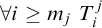 is well-founded.
Proposition 11.5.
$\mathbf {ATR}_0$
 proves
$TAM$
proves
$TAM$
 .
.
Proof. Let
$(L^j_i)_{i,j\in \mathbb {N}}$
 be as in the previous lemma. Fix a
$j\in \mathbb {N}$
be as in the previous lemma. Fix a
$j\in \mathbb {N}$
 , we wish to show that there exists
$m_j$
, we wish to show that there exists
$m_j$
 such that
$\forall k\in \mathbb {N}\, L^j_{m_j}\cong L^j_{m_j+k}$
such that
$\forall k\in \mathbb {N}\, L^j_{m_j}\cong L^j_{m_j+k}$
 . By assumption, there is an
$n_j$
. By assumption, there is an
$n_j$
 such that
$L^j_i$
such that
$L^j_i$
 is well-ordered for all
$i\geq n_j$
is well-ordered for all
$i\geq n_j$
 . Let
$L=L^j_{n_j}+1$
. Let
$L=L^j_{n_j}+1$
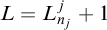 , by using the comparability of well orders and that
$\forall i\;L^j_{n_j+i}\subseteq L^j_{n_j}$
, by using the comparability of well orders and that
$\forall i\;L^j_{n_j+i}\subseteq L^j_{n_j}$
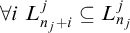 we have that every
$L^j_{n_j+i}$
we have that every
$L^j_{n_j+i}$
 is isomorphic to a proper initial segment of L. So

By
$\Sigma ^1_1$
 choice, we have that

We have that for all
$i_0<i_1$
 that
$a_{i_0}\geq a_{i_1}$
that
$a_{i_0}\geq a_{i_1}$
 and since L is a well order the sequence
$(a_i)_{i\geq n_j}$
and since L is a well order the sequence
$(a_i)_{i\geq n_j}$
 is eventually constant. Let
$m_j$
is eventually constant. Let
$m_j$
 be such that for all
$i\in \mathbb {N}\, a_{m_j}=a_{m_j+i}$
be such that for all
$i\in \mathbb {N}\, a_{m_j}=a_{m_j+i}$
 then we have for all
$i\geq m_j$
then we have for all
$i\geq m_j$
 that
$L^j_{m_j}\cong L^j_{m_j+i}$
that
$L^j_{m_j}\cong L^j_{m_j+i}$
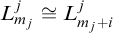 . In particular we have that for all
$i\geq m_j$
. In particular we have that for all
$i\geq m_j$
 the function
$f^{-1}_i\circ f_{m_j}$
the function
$f^{-1}_i\circ f_{m_j}$
 is an isomorphism between
$L^j_{m_j}$
is an isomorphism between
$L^j_{m_j}$
 and
$L^j_{m_j+i}$
and
$L^j_{m_j+i}$
 .
.
We have, therefore, that

Using
$\Sigma ^1_1$
 choice, we have

Using
$\Sigma ^1_1$
 choice again, we get

We observe that for all
$j\in \mathbb {N}\, L^j_{m_j}$
 must be a well order so
$(m_j)_{j\in \mathbb {N}}$
must be a well order so
$(m_j)_{j\in \mathbb {N}}$
 is a sequence with the desired property.
Proposition 11.6.
$\mathbf {ATR}_0$
 proves that every l.c. CSC space has a choice of compact neighborhoods.
Proof. Let
$(X,(U_i)_{i\in \mathbb {N}},k)$
 be an l.c. CSC space and let
$X=(x_n)_{n\in \mathbb {N}}$
be an l.c. CSC space and let
$X=(x_n)_{n\in \mathbb {N}}$
 be an enumeration of the points of X. Let
$f:X\times \mathbb {N}\rightarrow \mathbb {N}$
be an enumeration of the points of X. Let
$f:X\times \mathbb {N}\rightarrow \mathbb {N}$
 be the function given by

Intuitively,
$f(x,\cdot )$
 lists out the indices of basic neighborhoods of x. For each
$x\in X$
lists out the indices of basic neighborhoods of x. For each
$x\in X$
 let
$(T^x_i)_{i\in \mathbb {N}}$
let
$(T^x_i)_{i\in \mathbb {N}}$
 be the sequence of trees where for all
$i\in \mathbb {N}\, T^x_i$
be the sequence of trees where for all
$i\in \mathbb {N}\, T^x_i$
 is the set of strictly increasing sequences
$\sigma $
is the set of strictly increasing sequences
$\sigma $
 such that

That is, all sequences
$\sigma $
 such that none of its proper initial segments defines a covering for
$\overline {U_{f(x, i)}}$
such that none of its proper initial segments defines a covering for
$\overline {U_{f(x, i)}}$
 and for each
$n<|\sigma |$
and for each
$n<|\sigma |$
 if
$x_n\in \overline {U_{f(x,i)}}$
if
$x_n\in \overline {U_{f(x,i)}}$
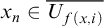 then there is an
$m\leq n$
then there is an
$m\leq n$
 such that
$x_n\in U_{\sigma (m)}$
such that
$x_n\in U_{\sigma (m)}$
 . An infinite branch in
$T^x_i$
. An infinite branch in
$T^x_i$
 defines a covering of
$\overline {U_{f(x,i)}}$
defines a covering of
$\overline {U_{f(x,i)}}$
 , which does not have finite subcovering. Similarly, an infinite cover of
$\overline {U_{f(x,i)}}$
, which does not have finite subcovering. Similarly, an infinite cover of
$\overline {U_{f(x,i)}}$
 that does not admit a finite subcover defines a branch in
$T^x_i$
that does not admit a finite subcover defines a branch in
$T^x_i$
 . Therefore,
$\overline {U_{f(x,i)}}$
. Therefore,
$\overline {U_{f(x,i)}}$
 is compact if and only if
$T^x_i$
is compact if and only if
$T^x_i$
 is well-founded. Since X is l.c. we have that for each
$x\in X$
is well-founded. Since X is l.c. we have that for each
$x\in X$
 , the sequence
$(T^x_i)_{i\in \mathbb {N}}$
, the sequence
$(T^x_i)_{i\in \mathbb {N}}$
 is eventually well-founded. Thus the modulus
$(n_x)_{x\in X}$
is eventually well-founded. Thus the modulus
$(n_x)_{x\in X}$
 given by
$TAM$
given by
$TAM$
 is such that for all
$x\in X$
is such that for all
$x\in X$
 the neighborhood
$\overline {U_{f(x,n_x)}}$
the neighborhood
$\overline {U_{f(x,n_x)}}$
 is compact. So
$(n_x,\overline {U_{f(x,n_x)}})_{x\in X}$
is compact. So
$(n_x,\overline {U_{f(x,n_x)}})_{x\in X}$
 exists by arithmetic comprehension and is a
$CCN$
exists by arithmetic comprehension and is a
$CCN$
 for X.
Proposition 11.7. Over
$\mathbf {RCA}_0$
 every
$T_2$
every
$T_2$
 l.c. CSC space having a basis of compact neighborhoods implies arithmetic comprehension.
Proof. Let
$A\subseteq \mathbb {N}$
 be a set, we show that its Turing jump exists. Set

and define the basic open sets of X to be

and

Define
$k((e,n),a,b)=2(e,n)+1$
 and
$k((e,\infty ),a,b)=\max \{a,b\}$
and
$k((e,\infty ),a,b)=\max \{a,b\}$
 . X can be viewed as the disjoint union of the spaces
$X_e=\{e\}\times (\mathbb {N}\cup \{\infty \})$
. X can be viewed as the disjoint union of the spaces
$X_e=\{e\}\times (\mathbb {N}\cup \{\infty \})$
 . It is straightforward to show that X is l.c. We observe that all of the basic sets are clopen and that X is
$T_3$
. It is straightforward to show that X is l.c. We observe that all of the basic sets are clopen and that X is
$T_3$
 , and it is easy to show that it is, in fact,
$uT_3$
, and it is easy to show that it is, in fact,
$uT_3$
 .
.
Let
$(i(x))_{x\in X}$
 be a
$CCN$
be a
$CCN$
 for X. Let
$m_e$
for X. Let
$m_e$
 be the unique number such that
$2(e,m_e)=i((e,\infty ))$
be the unique number such that
$2(e,m_e)=i((e,\infty ))$
 . For each
$e\in \mathbb {N}$
. For each
$e\in \mathbb {N}$
 ,
$\Phi ^A_e(e){\downarrow }$
,
$\Phi ^A_e(e){\downarrow }$
 if and only if
$U_{i(e,\infty )}$
if and only if
$U_{i(e,\infty )}$
 is isolated. In particular by construction, we have that
$\Phi ^A_e(e){\downarrow }$
is isolated. In particular by construction, we have that
$\Phi ^A_e(e){\downarrow }$
 if and only if
$\Phi ^A_e(e){\downarrow }_{m_e}$
if and only if
$\Phi ^A_e(e){\downarrow }_{m_e}$
 . So
$A'\leq _T (m_e)_{e\in \mathbb {N}}$
. So
$A'\leq _T (m_e)_{e\in \mathbb {N}}$
 exists by
$\Delta ^0_1$
exists by
$\Delta ^0_1$
 comprehension.
Proposition 11.8. Over
$\mathbf {RCA}_0$
 the statement that every
$T_2$
the statement that every
$T_2$
 l.c. CSC space has a
$CCN$
l.c. CSC space has a
$CCN$
 implies arithmetic transfinite recursion.
Proof. By Proposition 11.7 we may work over
$\mathbf {ACA}_0$
 . We show that every
$T_2 $
. We show that every
$T_2 $
 l.c. CSC space has a
$CCN$
l.c. CSC space has a
$CCN$
 implies
$1TAM$
implies
$1TAM$
 which is equivalent to
$\mathbf {ATR}_0$
which is equivalent to
$\mathbf {ATR}_0$
 over
$\mathbf {RCA}_0$
over
$\mathbf {RCA}_0$
 . Let
$(T_j^i)_{i,j\in \mathbb {N}}$
. Let
$(T_j^i)_{i,j\in \mathbb {N}}$
 be an eventually well-founded array of trees as in the condition of
$1TAM$
be an eventually well-founded array of trees as in the condition of
$1TAM$
 and let X be equal to the disjoint union of the spaces

with the upper limit topology where
We show that for every
$j\in \mathbb {N}$
 , the space
$X^j$
, the space
$X^j$
 is l.c. To do this, it suffices to show that a tree with at most one branch is l.c. with the upper limit topology induced by the Kleene–Brouwer order. If T is well-founded, then by Proposition 7.12 T with the topology induced by the Kleene–Brouwer order is compact and therefore l.c. Let T be a tree with exactly one branch f and
$x\in T$
is l.c. To do this, it suffices to show that a tree with at most one branch is l.c. with the upper limit topology induced by the Kleene–Brouwer order. If T is well-founded, then by Proposition 7.12 T with the topology induced by the Kleene–Brouwer order is compact and therefore l.c. Let T be a tree with exactly one branch f and
$x\in T$
 be a point. If
$\forall n\in \mathbb {N}\;x<_{\text {KB}} f_{\leq n}$
be a point. If
$\forall n\in \mathbb {N}\;x<_{\text {KB}} f_{\leq n}$
 then
$]-\infty ,x]$
then
$]-\infty ,x]$
 is well-ordered with a maximal element and therefore is a compact neighborhood of x. Otherwise, if there is an n such that
$f_{\leq n} <_{\text {KB}} x$
is well-ordered with a maximal element and therefore is a compact neighborhood of x. Otherwise, if there is an n such that
$f_{\leq n} <_{\text {KB}} x$
 then the interval
$]f_{\leq n},x]$
then the interval
$]f_{\leq n},x]$
 is well-ordered with respect to the Kleene–Brouwer order and so it is a compact neighborhood of x.
By assumption, there is a choice of compact neighborhoods for the space X. This implies that we have a choice of a compact neighborhood for
$\emptyset \in X_j$
 , which we denote by
$K_j$
, which we denote by
$K_j$
 . We define

Recall that the upper limit topology on a linear order with maximal element is compact if and only if it is well-ordered. So for all
$i\geq m_j\, (T^i_j,<_{\text {KB}})$
 is a well order, and so
$T^i_j$
is a well order, and so
$T^i_j$
 is well-founded.
12 Embedding scattered CSC spaces into well orders
We have that
$\mathbf {ATR}_0$
 proves that every l.c.
$T_2$
proves that every l.c.
$T_2$
 CSC space has a
$CCN$
CSC space has a
$CCN$
 and therefore embeds into a compact CSC space. We would like to show that we can embed
$T_3$
and therefore embeds into a compact CSC space. We would like to show that we can embed
$T_3$
 scattered CSC spaces into a well order. For scattered linear orders, we have the following results.
Theorem 12.1 (Clote [Reference Clote5])
Arithmetic transfinite recursion is equivalent to every countable scattered linear order having a countable set of initial segments. That is, for any scattered linear order
$(L,<_L)$
 there is a sequence of sets
$(I_n)_{n\in \mathbb {N}}$
there is a sequence of sets
$(I_n)_{n\in \mathbb {N}}$
 such that

In particular, we consider the empty set and all of L to be initial segments.
Observation 12.2. The initial segments of a linear order are naturally ordered by inclusion. Over
$\mathbf {ACA}_0$
 if a linear order
$(L,<_L)$
if a linear order
$(L,<_L)$
 has countably many initial segments, then we can order by inclusion the initial segments
$(I_n)_{n\in \mathbb {N}}$
has countably many initial segments, then we can order by inclusion the initial segments
$(I_n)_{n\in \mathbb {N}}$
 which are closed in the order topology of L. We call this order the Dedekind completion of L and the map
$l\mapsto \{j\in L:j\leq _L l\}$
which are closed in the order topology of L. We call this order the Dedekind completion of L and the map
$l\mapsto \{j\in L:j\leq _L l\}$
 is an embedding from L into its Dedekind completion.
Theorem 12.3 (Shafer [Reference Shafer29])
$\mathbf {WKL}_0$
 , and in particular
$\mathbf {ACA}_0$
, and in particular
$\mathbf {ACA}_0$
 , proves the order topology of every complete linear order is compact.
Corollary 12.4.
$\mathbf {ATR}_0$
 proves that the order topology of any scattered linear order embeds into a
$T_2$
proves that the order topology of any scattered linear order embeds into a
$T_2$
 compact CSC space.
Proof. By Theorem 12.1 we have that the Dedekind completion of X is countable, and so X embeds into a complete linear order which by Theorem 12.3, it will be compact.
The proof of Theorem 12.1 requires some results involving the Hausdorff rank, which is not a topological invariant. We also have that non-scattered linear orders may have scattered order topology. For example,
$\mathbb {Q}\times \mathbb {Z}$
 with the lexicographic order is non-scattered as a linear order, but its order topology is discrete. So Corollary 12.4 does not ensure that every
$T_3$
with the lexicographic order is non-scattered as a linear order, but its order topology is discrete. So Corollary 12.4 does not ensure that every
$T_3$
 scattered CSC space will embed into a
$T_2$
scattered CSC space will embed into a
$T_2$
 compact CSC space. We will need to use the Cantor–Bendixson rank instead. This will allow us to show that every
$T_3$
compact CSC space. We will need to use the Cantor–Bendixson rank instead. This will allow us to show that every
$T_3$
 scattered CSC space is homeomorphic to a scattered linear order with its order topology. The Cantor–Bendixson derivative and rank of CSC spaces in reverse mathematics has already been studied by Montálban and Greenberg [Reference Greenberg and Montalbán12], Friedman [Reference Friedman8] in the case of countable metric spaces, and by Friedman and Hirst [Reference Friedman and Hirst9] in the form of characteristic systems.
Definition 12.5. Let
$(X,(U_i)_{i\in \mathbb {N}},k)$
 be a CSC space then we write

We call
$D(X)$
 the sets of limit points of X. We observe that
$D(X)$
the sets of limit points of X. We observe that
$D(X)$
 is arithmetical relative to X, however, in general it will not be recursive.
Definition 12.6. Over
$\mathbf {ACA}_0$
 we say that a Cantor–Bendixson rank or rank for a CSC space X is a well order R such that there is a sequence
$(X_r)_{r\in R}$
we say that a Cantor–Bendixson rank or rank for a CSC space X is a well order R such that there is a sequence
$(X_r)_{r\in R}$
 such that
-
(1) $X_{0}=X$
. -
(2) For all $r\in R$
that is not maximal
$X_{r+1}=D(X_r)$
. -
(3) For every $r\in R$
which is limit
$X_r=\bigcap _{s<_R r} X_s$
. -
(4) $D(\bigcap _{r\in R} X_r)=\bigcap _{r\in R} X_r$
.




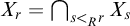

We call a well order such that
$(1)$
 –
$(3)$
–
$(3)$
 hold, but not necessarily
$(4)$
hold, but not necessarily
$(4)$
 , a partial rank. A rank R of X is minimal if none of its initial segments are a rank for X. Given a rank R on X we write

It is straightforward that for any x of rank r, we have
$x\in X_r$
 .
.
Observation 12.7. If X is a
$T_3$
 space and R is a rank for X then by definition of rank we have
$D(\bigcap _{r\in R} X_r)=\bigcap _{r\in R} X_r$
space and R is a rank for X then by definition of rank we have
$D(\bigcap _{r\in R} X_r)=\bigcap _{r\in R} X_r$
 . So
$\bigcap _{r\in R} X_r$
. So
$\bigcap _{r\in R} X_r$
 is invariant under the D and, therefore, does not have any isolated points. This means that
$\bigcap _{r\in R} X_r$
is invariant under the D and, therefore, does not have any isolated points. This means that
$\bigcap _{r\in R} X_r$
 is either homeomorphic to
$\mathbb {Q}$
is either homeomorphic to
$\mathbb {Q}$
 or it is empty. In particular, we have that if X is scattered, then
$\bigcap _{r\in R} X_r=\emptyset $
or it is empty. In particular, we have that if X is scattered, then
$\bigcap _{r\in R} X_r=\emptyset $
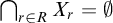 .
.
Observation 12.8. Since over
$\mathbf {ACA}_0$
 we have arithmetic transfinite induction, we have that any rank R for a
$T_3$
we have arithmetic transfinite induction, we have that any rank R for a
$T_3$
 scattered CSC space X has an initial segment that is a minimal rank. Over
$\mathbf {ACA}_0$
scattered CSC space X has an initial segment that is a minimal rank. Over
$\mathbf {ACA}_0$
 , any two minimal ranks
$R_0$
, any two minimal ranks
$R_0$
 and
$R_1$
and
$R_1$
 will be order isomorphic. We may say, over
$\mathbf {ACA}_0$
will be order isomorphic. We may say, over
$\mathbf {ACA}_0$
 , that R is the Cantor–Bendixson rank of X if R is a minimal rank.
Theorem 12.9 (Friedman [Reference Friedman8, Lemma 15])
$\mathbf {ATR}_0$
 proves that every
$T_3$
proves that every
$T_3$
 scattered space is ranked.
Proposition 12.10 (See [Reference Greenberg and Montalbán12, Proposition 6.36])
Over
$\mathbf {RCA}_0$
 every well order has a rank implies arithmetic comprehension.
Proof. Let
$A\subseteq \mathbb {N}$
 be a set. Let
$L_e=\{t\in \mathbb {N}:\neg \Phi ^A_e(e){\downarrow }_{\leq t}\} +1$
be a set. Let
$L_e=\{t\in \mathbb {N}:\neg \Phi ^A_e(e){\downarrow }_{\leq t}\} +1$
 and
$L=\sum _{e\in \mathbb {N}} L_e$
and
$L=\sum _{e\in \mathbb {N}} L_e$
 which is the sum of well orders and so it is a well order. We can compute
$A'$
which is the sum of well orders and so it is a well order. We can compute
$A'$
 from the set of non-isolated points of L, which is computable from the rank of L.
We now will show that over
$\mathbf {ACA}_0$
 a scattered
$T_3$
a scattered
$T_3$
 CSC space with a rank embeds into a well order. To show these results, we make use of a construction similar to that done in Theorem 8.6.
Construction 12.11. Working over
$\mathbf {ACA}_0$
 , let
$(X,(U_i)_{i\in \mathbb {N}})$
, let
$(X,(U_i)_{i\in \mathbb {N}})$
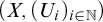 be a
$T_3$
be a
$T_3$
 scattered CSC space, which, without loss of generality, we assume that it has an algebra of clopen sets. Let R be a rank for X. We now lay out an arithmetic procedure to associate to each point x a unique sequence
$\alpha _x$
scattered CSC space, which, without loss of generality, we assume that it has an algebra of clopen sets. Let R be a rank for X. We now lay out an arithmetic procedure to associate to each point x a unique sequence
$\alpha _x$
 , which we call the address of x. We will see later that the Kleene–Brouwer order on the set of addresses is a well order and that the map
$x\mapsto \alpha _x$
, which we call the address of x. We will see later that the Kleene–Brouwer order on the set of addresses is a well order and that the map
$x\mapsto \alpha _x$
 will be an embedding.
Let
$F:X\times \mathbb {N}\rightarrow \mathbb {N}$
 be a partial function such that for all x in X if x is isolated
$U_{F(x,0)}=\{x\}$
be a partial function such that for all x in X if x is isolated
$U_{F(x,0)}=\{x\}$
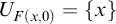 otherwise we define
$F(x,n)$
otherwise we define
$F(x,n)$
 to be the least
$s\in \mathbb {N}$
to be the least
$s\in \mathbb {N}$
 such that
-
(1) $U_s\cap X_{\text {rank}(x)}=\{x\}$
, or rather, all of the elements in
$U_s$
besides x are of lower rank. Since x is isolated in
$X_{\text {rank}(x)}$
, there must be a neighborhood of x containing x and points of rank strictly lower than x. -
(2) $\forall m< n\;U_s\subsetneq U_{F(x,m)}$
.




We have that F exists by arithmetic comprehension. Informally, F lists out a descending sequence of neighborhoods for every point. For ease of notation, we will write
$U(x,n)=U_{F(x,n)}$
 . We observe that the sets of the form
$U(x,n)$
. We observe that the sets of the form
$U(x,n)$
 form a basis of clopen sets for X.
For each
$x\in X$
 and
$n\in \mathbb {N}$
and
$n\in \mathbb {N}$
 let
$A^{(x,n)}= U(x,n)\setminus U(x,n+1)$
let
$A^{(x,n)}= U(x,n)\setminus U(x,n+1)$
 and
$A^{-1}=X$
and
$A^{-1}=X$
 . For
$h=-1$
. For
$h=-1$
 or
$h=(x,n)$
or
$h=(x,n)$
 we define inductively two sequences
$\sigma ^h\in X^{<\mathbb {N}}$
we define inductively two sequences
$\sigma ^h\in X^{<\mathbb {N}}$
 and
$\tau ^{h}\in \mathbb {N}^{<\mathbb {N}}$
and
$\tau ^{h}\in \mathbb {N}^{<\mathbb {N}}$
 . If
$A^h\setminus \bigcup _{i<k}U(\sigma ^h(i),\tau ^h(i))$
. If
$A^h\setminus \bigcup _{i<k}U(\sigma ^h(i),\tau ^h(i))$
 is empty we terminate the construction, otherwise let
$\sigma ^h(k)$
is empty we terminate the construction, otherwise let
$\sigma ^h(k)$
 be the first element in
$A^h\setminus \bigcup _{i<k}U(\sigma ^h(i),\tau ^h(i))$
be the first element in
$A^h\setminus \bigcup _{i<k}U(\sigma ^h(i),\tau ^h(i))$
 . Define

If
$A^h$
 is compact then there exists a k such that
$A^h=\bigcup _{i<k}U(\sigma ^h(i),\tau ^h(i))$
is compact then there exists a k such that
$A^h=\bigcup _{i<k}U(\sigma ^h(i),\tau ^h(i))$
 and at such k we halt the construction. Otherwise, the construction might go on forever, and
$\sigma ^h$
and at such k we halt the construction. Otherwise, the construction might go on forever, and
$\sigma ^h$
 and
$\tau ^h$
and
$\tau ^h$
 will be functions. We observe that the sets
$(U(\sigma ^h(i),\tau ^h(i)))_{i\in \text {dom}(\sigma )}$
will be functions. We observe that the sets
$(U(\sigma ^h(i),\tau ^h(i)))_{i\in \text {dom}(\sigma )}$
 form a partition of
$A^h$
form a partition of
$A^h$
 into clopen sets. Since
$\sigma ^h$
into clopen sets. Since
$\sigma ^h$
 and
$\tau ^h$
and
$\tau ^h$
 are uniformly arithmetically defined with respect to h we have that

exists by arithmetic comprehension.
For each point
$x\in X$
 we define
$\alpha _x,\beta _x\in \mathbb {N}^{<\mathbb {N}}$
we define
$\alpha _x,\beta _x\in \mathbb {N}^{<\mathbb {N}}$
 , and
$\gamma _x\in \mathbb {N}$
, and
$\gamma _x\in \mathbb {N}$
 as:
as:
-
(1) $\alpha _x(0)$
is the unique i such that
$x\in U(\sigma ^{(-1)}(i),\tau ^{(-1)}(i))$
and
$\beta _x(0)=\sigma ^{(-1)}(i)$
. -
(2) $\alpha _x(2n+1)$
is the unique m such that
$x\in U(\beta _x(n),m)\setminus U(\beta _x(n),m+1)$
. -
(3) $\alpha _x(2n+2)$
is the unique i such that $$ \begin{align*} x\in U(\sigma^{(\beta_x(n),\alpha_x(2n+1))}(i),\tau^{(\beta_x(n),\alpha_x(2n+1))}(i)) \end{align*} $$
and let
$$ \begin{align*}\beta_x(n+1)=\sigma^{(\beta_x(n),\alpha_x(2n+1))}(i). \end{align*} $$
If $x=\beta _x(n+1)$
, then
$\gamma _x=0$
if x is isolated and
$\gamma _x=\tau ^{(\beta _x(n),\alpha _x(2n+1))}(i)$
otherwise and the construction terminates.











Since for all
$n\, \text {rank}(\beta _x(n))>\text {rank}(\beta _x(n+1))$
 , we have that for all x the construction above must eventually terminate. The set of all
$(\alpha _x,\beta _x,\gamma _x)_{x\in X}$
, we have that for all x the construction above must eventually terminate. The set of all
$(\alpha _x,\beta _x,\gamma _x)_{x\in X}$
 is arithmetically definable, and so it exists by arithmetic comprehension.
For each
$x\in X$
 we call
$\alpha _x$
we call
$\alpha _x$
 the address of x. Since X is Hausdorff, we have that the map
$x\mapsto \alpha _x$
the address of x. Since X is Hausdorff, we have that the map
$x\mapsto \alpha _x$
 is injective. The collection of addresses
$\mathcal {A}$
is injective. The collection of addresses
$\mathcal {A}$
 will not be a tree since every address has odd length. But for any
$\alpha _x\in \mathcal {A}$
will not be a tree since every address has odd length. But for any
$\alpha _x\in \mathcal {A}$
 , every odd length initial segment of
$\alpha _x$
, every odd length initial segment of
$\alpha _x$
 will be an address. In fact, for each
$n<|\beta _x|\, \alpha _{\beta _x(n)}$
will be an address. In fact, for each
$n<|\beta _x|\, \alpha _{\beta _x(n)}$
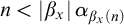 is the initial segment of
$\alpha _x$
is the initial segment of
$\alpha _x$
 of length
$2n+1$
of length
$2n+1$
 . We observe that for all
$x,y\in X$
. We observe that for all
$x,y\in X$
 that
$y\in U(x,\gamma _x)$
that
$y\in U(x,\gamma _x)$
 if and only if
$\alpha _x\sqsubseteq \alpha _y$
if and only if
$\alpha _x\sqsubseteq \alpha _y$
 . By construction, we have that if
$\alpha _x\sqsubseteq \alpha _y$
. By construction, we have that if
$\alpha _x\sqsubseteq \alpha _y$
 then
$\beta _x\sqsubseteq \beta _y$
then
$\beta _x\sqsubseteq \beta _y$
 . In particular, since the rank of
$\beta _x(n)$
. In particular, since the rank of
$\beta _x(n)$
 is strictly decreasing, there cannot exist an infinite increasing sequence of addresses.
Let
$<_\alpha $
 be the order given by

Since the Kleene–Brouwer ordering on a well-founded tree is a well order, we have that
$<_\alpha $
 defines a well order on X. In general, we have that
$<_\alpha $
defines a well order on X. In general, we have that
$<_\alpha $
 induces a coarser topology on X. We show that the map
$x\mapsto \alpha _x$
induces a coarser topology on X. We show that the map
$x\mapsto \alpha _x$
 defines an embedding from X to
${\downarrow } \mathcal {A}$
defines an embedding from X to
${\downarrow } \mathcal {A}$
 . That is, the map
$x\mapsto \alpha _x$
. That is, the map
$x\mapsto \alpha _x$
 is a homeomorphism between
$(X,(U_i)_{i\in \mathbb {N}})$
is a homeomorphism between
$(X,(U_i)_{i\in \mathbb {N}})$
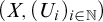 and
$\mathcal {A}$
and
$\mathcal {A}$
 with the subspace topology.
If x is isolated in X, then we have that
$\alpha _x$
 does not have any extensions in
$\mathcal {A}{\downarrow }$
does not have any extensions in
$\mathcal {A}{\downarrow }$
 , so it has a predecessor with respect to the Kleene–Brouwer order on
${\downarrow }\mathcal {A}$
, so it has a predecessor with respect to the Kleene–Brouwer order on
${\downarrow }\mathcal {A}$
 . So x is isolated in
$\mathcal {A}$
. So x is isolated in
$\mathcal {A}$
 with the subspace topology. If x is not isolated in X, then we have that
$U(x,\gamma _x)$
with the subspace topology. If x is not isolated in X, then we have that
$U(x,\gamma _x)$
 will be infinite. In particular, for all
$m\geq \gamma _x$
will be infinite. In particular, for all
$m\geq \gamma _x$
 , the set
$U(x,m)\setminus U(x,m+1)$
, the set
$U(x,m)\setminus U(x,m+1)$
 is non-empty. Given a
$\sigma \in {\downarrow }\mathcal {A}$
is non-empty. Given a
$\sigma \in {\downarrow }\mathcal {A}$
 such that
$\sigma <_{\text {KB}} \alpha _x$
such that
$\sigma <_{\text {KB}} \alpha _x$
 then there exists an
$m\geq \gamma _x$
then there exists an
$m\geq \gamma _x$
 such that
$\sigma <_{\text {KB}}\alpha _x^\frown (m)$
such that
$\sigma <_{\text {KB}}\alpha _x^\frown (m)$
 . For any
$y\in U(x,m+1)\setminus U(x,m+2)$
. For any
$y\in U(x,m+1)\setminus U(x,m+2)$
 we have
$\alpha _x^\frown (m)<_{\text {KB}} \alpha _y<_{\text {KB}}\alpha _x$
we have
$\alpha _x^\frown (m)<_{\text {KB}} \alpha _y<_{\text {KB}}\alpha _x$
 . This implies that
$\alpha _x$
. This implies that
$\alpha _x$
 is not isolated in
$\mathcal {A}$
is not isolated in
$\mathcal {A}$
 with the subspace topology. So x is isolated in X if and only if
$\alpha _x$
with the subspace topology. So x is isolated in X if and only if
$\alpha _x$
 is isolated in the subspace topology of
$\mathcal {A}$
is isolated in the subspace topology of
$\mathcal {A}$
 . It suffices to show that
$x\mapsto \alpha _x$
. It suffices to show that
$x\mapsto \alpha _x$
 is continuous and open on the non-isolated points of X.
Let
$x,y\in X$
 such that
$\alpha _y<_{\text {KB}} \alpha _x$
such that
$\alpha _y<_{\text {KB}} \alpha _x$
 and
$\alpha _x$
and
$\alpha _x$
 is not isolated in
$\mathcal {A}$
is not isolated in
$\mathcal {A}$
 with the subspace topology. If
$y\notin U(x,\gamma _x)$
with the subspace topology. If
$y\notin U(x,\gamma _x)$
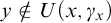 then
$U(x,\gamma _x)\subseteq\ ]y,x]_{<_\alpha }$
then
$U(x,\gamma _x)\subseteq\ ]y,x]_{<_\alpha }$
 . Otherwise there exists a unique
$n\geq \gamma _x$
. Otherwise there exists a unique
$n\geq \gamma _x$
 such that
$y\in U(x,n)\setminus U(x,n+1)$
such that
$y\in U(x,n)\setminus U(x,n+1)$
 , so
$\alpha _x^\frown (n)\sqsubseteq \alpha _y$
, so
$\alpha _x^\frown (n)\sqsubseteq \alpha _y$
 . Since

we have that
$\forall z\in U(x,n+1)\, \alpha _y<_{\text {KB}} \alpha _z<_{\text {KB}} \alpha _x$
 and so
$U(x,n+1)\subseteq\ ]y,x]_{<_\alpha }$
and so
$U(x,n+1)\subseteq\ ]y,x]_{<_\alpha }$
 . This proves that the map
$x\mapsto \alpha _x$
. This proves that the map
$x\mapsto \alpha _x$
 is continuous.
Let
$x\in X$
 be a non-isolated point and
$n\in \mathbb {N}$
be a non-isolated point and
$n\in \mathbb {N}$
 . Since x is not isolated there exists a
$y\in U(x,\max \{n,\gamma _x\})\setminus \{x\}$
. Since x is not isolated there exists a
$y\in U(x,\max \{n,\gamma _x\})\setminus \{x\}$
 . We have that
$\alpha _x\sqsubseteq \alpha _y$
. We have that
$\alpha _x\sqsubseteq \alpha _y$
 and so
$]y,x]_{<_\alpha }\subseteq U(x,n)$
and so
$]y,x]_{<_\alpha }\subseteq U(x,n)$
 by construction. This proves that the map
$x\mapsto \alpha _x$
by construction. This proves that the map
$x\mapsto \alpha _x$
 is open with its image. So X is homeomorphic to
$\mathcal {A}$
is open with its image. So X is homeomorphic to
$\mathcal {A}$
 with the subspace topology.
Theorem 12.12.
$\mathbf {ACA}_0$
 proves that every
$T_3$
proves that every
$T_3$
 scattered CSC space with rank is homeomorphic to a subspace of a well order.
Proof. Using the construction before we have that X embeds into
${\downarrow }\mathcal {A}$
 with the Kleene–Brouwer order and so X embeds into a well order.
Theorem 12.13.
$\mathbf {ACA}_0$
 proves that every
$T_2$
proves that every
$T_2$
 l.c. CSC space with a rank has a
$CCN$
l.c. CSC space with a rank has a
$CCN$
 .
.
Proof. Fix a point
$x\in X$
 , we have shown that for
$n\geq \gamma _x$
, we have shown that for
$n\geq \gamma _x$
 that
$U(x,n)$
that
$U(x,n)$
 is compact if and only if for all
$y\in U(x,n)$
is compact if and only if for all
$y\in U(x,n)$
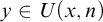 such that
$\alpha _x\sqsubseteq \alpha _y$
such that
$\alpha _x\sqsubseteq \alpha _y$
 and all
$s\in \mathbb {N}$
and all
$s\in \mathbb {N}$
 then
$\alpha _y^\frown (s)$
then
$\alpha _y^\frown (s)$
 finitely branches. If
$U(x,n)$
finitely branches. If
$U(x,n)$
 is compact and
$y\in U(x,n)$
is compact and
$y\in U(x,n)$
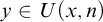 then
$U(y,s)\setminus U(y,s+1)$
then
$U(y,s)\setminus U(y,s+1)$
 will also be compact and so
$\alpha _y^\frown (s)$
will also be compact and so
$\alpha _y^\frown (s)$
 has finitely many extensions of length
$|\alpha _y| +2$
has finitely many extensions of length
$|\alpha _y| +2$
 . If instead for all y such that
$\alpha _x\sqsubseteq \alpha _y$
. If instead for all y such that
$\alpha _x\sqsubseteq \alpha _y$
 and all
$s\, \alpha _y^\frown (s)$
and all
$s\, \alpha _y^\frown (s)$
 is finitely branching, then by the previous result we have that the topology on
$U(x,n)$
is finitely branching, then by the previous result we have that the topology on
$U(x,n)$
 is the same topology as the topology induced by
$<_\alpha $
is the same topology as the topology induced by
$<_\alpha $
 , and so, in particular,
$U(x,n)$
, and so, in particular,
$U(x,n)$
 will be homeomorphic to a well order with maximal element and so it will be compact. We can, therefore, verify if
$U(x,n)$
will be homeomorphic to a well order with maximal element and so it will be compact. We can, therefore, verify if
$U(x,n)$
 is compact arithmetically, so by arithmetic comprehension, there exists a
$CCN$
is compact arithmetically, so by arithmetic comprehension, there exists a
$CCN$
 for X.
Theorem 12.14. The following are equivalent over
$\mathbf {RCA}_0$
 :
:
-
(1) Arithmetic transfinite recursion.
-
(2) Every l.c. $T_2$
CSC space is well-orderable. -
(3) Bel’nov–Knaster–Urbanik theorem: Every $T_3$
scattered CSC space embeds into a well order. -
(4) Every $T_3$
scattered CSC space has a rank. -
(5) Katětov’s theorem: For every $T_3$
scattered CSC space X there is an effectively continuous bijection from X to the order topology of a well order. That is to say, every
$T_3$
scattered CSC space is the refinement of the order topology of some well order.


Proof.
$(4\rightarrow 3)$
 By Proposition 12.10, we have that every well order is ranked implies arithmetic comprehension; so we may work over
$\mathbf {ACA}_0$
By Proposition 12.10, we have that every well order is ranked implies arithmetic comprehension; so we may work over
$\mathbf {ACA}_0$
 . By Proposition 12.12 every
$T_3$
. By Proposition 12.12 every
$T_3$
 scattered CSC space with rank embeds into a well order.
$(3\rightarrow 1)$
 By Theorem 5.22 we have that every
$T_3$
By Theorem 5.22 we have that every
$T_3$
 scattered CSC space embeds into a linear order implies arithmetic comprehension. So we may work over
$\mathbf {ACA}_0$
scattered CSC space embeds into a linear order implies arithmetic comprehension. So we may work over
$\mathbf {ACA}_0$
 . By Lemma 10.5 and Proposition 10.7
$T_2$
. By Lemma 10.5 and Proposition 10.7
$T_2$
 l.c. CSC spaces are
$T_3$
l.c. CSC spaces are
$T_3$
 and scattered. Since every well order has a
$CCN$
and scattered. Since every well order has a
$CCN$
 , we have that every
$T_2$
, we have that every
$T_2$
 l.c. CSC space embeds into a CSC space with a
$CCN$
l.c. CSC space embeds into a CSC space with a
$CCN$
 . So by Propositions 10.11 and 10.16 every
$T_2$
. So by Propositions 10.11 and 10.16 every
$T_2$
 l.c. CSC space has a
$CCN$
l.c. CSC space has a
$CCN$
 which by Proposition 11.8 implies arithmetic transfinite recursion.
$(4\rightarrow 2)$
 Every l.c.
$T_2$
Every l.c.
$T_2$
 space with Cantor–Bendixson rank has a
$CCN$
space with Cantor–Bendixson rank has a
$CCN$
 and by Proposition 10.14 every
$T_2$
and by Proposition 10.14 every
$T_2$
 l.c. CSC space with a
$CCN$
l.c. CSC space with a
$CCN$
 is well-orderable.
$(2\rightarrow 1)$
 If every
$T_2$
If every
$T_2$
 l.c. CSC space is well-orderable, then the upper limit topology of every well order is effectively homeomorphic to the order topology of a well order which by Proposition 5.9 implies arithmetic comprehension. Furthermore, if every
$T_2$
l.c. CSC space is well-orderable, then the upper limit topology of every well order is effectively homeomorphic to the order topology of a well order which by Proposition 5.9 implies arithmetic comprehension. Furthermore, if every
$T_2$
 l.c. CSC space is well-orderable then every
$T_2$
l.c. CSC space is well-orderable then every
$T_2$
 l.c. CSC space has a
$CCN$
l.c. CSC space has a
$CCN$
 which by Theorem 11.8 implies arithmetic transfinite recursion.
$(1\rightarrow 4)$
 is simply Theorem 12.9.
$(3\rightarrow 5)$
 follows from the fact that the subspaces of well orders have subspace topology, which is finer or equal to their order topology.
$(5\rightarrow 3)$
 every scattered
$T_3$
every scattered
$T_3$
 CSC space is a refinement of a well order implies arithmetic comprehension by Theorem 5.23. We may therefore work over
$\mathbf {ACA}_0$
CSC space is a refinement of a well order implies arithmetic comprehension by Theorem 5.23. We may therefore work over
$\mathbf {ACA}_0$
 . Assume that
$f:X\rightarrow W$
. Assume that
$f:X\rightarrow W$
 is a continuous bijection with W, we show that X can embed into a well order. Let
$S\subseteq W$
is a continuous bijection with W, we show that X can embed into a well order. Let
$S\subseteq W$
 be the set of limit points
$x\in W$
be the set of limit points
$x\in W$
 such that
$f^{-1}(x)$
such that
$f^{-1}(x)$
 is isolated in X. Define

With the lexicographic order. We have that
$\widehat {W}$
 is a well order. Informally,
$\widehat {W}$
is a well order. Informally,
$\widehat {W}$
 is the order obtained by adding to W a new point under every element of S. Let
$g:X\rightarrow \widehat {W}$
is the order obtained by adding to W a new point under every element of S. Let
$g:X\rightarrow \widehat {W}$
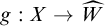 be the map
$x\mapsto (f(x),1)$
be the map
$x\mapsto (f(x),1)$
 . It is straightforward to show that g is an embedding.
Theorem 12.15.
$\mathbf {ACA}_0$
 proves every subspace of a well order is homeomorphic to a scattered linear order with countably many cuts.
Proof. Let
$(W,<_W)$
 be a well order and let
$S\subseteq W$
be a well order and let
$S\subseteq W$
 be a subspace. Let
$L\subseteq W\setminus S$
be a subspace. Let
$L\subseteq W\setminus S$
 be the collection of all
$w\in W\setminus S$
be the collection of all
$w\in W\setminus S$
 such that
$]-\infty ,w[_{<_W} \cap S$
such that
$]-\infty ,w[_{<_W} \cap S$
 does not have a
$<_W$
does not have a
$<_W$
 -maximum element. Since
$L\subseteq W$
-maximum element. Since
$L\subseteq W$
 is well-ordered, every element is maximal or has a successor. For each
$l\in \{-\infty \}\cup L$
is well-ordered, every element is maximal or has a successor. For each
$l\in \{-\infty \}\cup L$
 , let
$l^+\in L\cup \{+\infty \}$
, let
$l^+\in L\cup \{+\infty \}$
 denote the successor of l. We observe that for every
$l\in L$
denote the successor of l. We observe that for every
$l\in L$
 , the point
$\min \{s\in S: l<_W s\}$
, the point
$\min \{s\in S: l<_W s\}$
 will be isolated with respect to the subspace topology but will be a limit point with respect to the order topology (see Observation 8.1).
The sequence
$(]l,l^+]_{<_W})_{l\in L\cup \{-\infty \}}$
 defines a partition of W into clopen sets. So we have

We define a new order
$<_N$
 on W by flipping and rearranging the intervals
$]l,l^+]$
on W by flipping and rearranging the intervals
$]l,l^+]$
 so that the subspace topology on S will be the same as the order topology of
$<_N$
so that the subspace topology on S will be the same as the order topology of
$<_N$
 . Let
$(l_n)_{n\in \mathbb {N}}$
. Let
$(l_n)_{n\in \mathbb {N}}$
 be an enumeration of the elements of
$L\cup \{-\infty \}$
be an enumeration of the elements of
$L\cup \{-\infty \}$
 (we note that in general
$l_n^+\neq l_{n+1}$
(we note that in general
$l_n^+\neq l_{n+1}$
 ). We define on W the order
$<_N$
). We define on W the order
$<_N$
 where
$a<_N b$
where
$a<_N b$
 if and only if one of the following occurs:
-
(1) $a\in\ ]l_n,l_n^+]_{<_W}\wedge b\in\ ]l_m,l_m^+]_{<_W}\wedge n<_{\mathbb {N}}m.$
-
(2) $\exists n\;( a,b\in\ ]l_{2n},l_{2n}^+]_{<_W}\wedge a<_W b).$
-
(3) $\exists n\;( a,b\in\ ]l_{2n+1},l_{2n+1}^+]_{<_W}\wedge b<_W a).$



It is routine to show that
$<_N$
 has the same order topology as
$<_W$
has the same order topology as
$<_W$
 . We show that the subspace topology on S is the same as the order topology of
$<_N$
. We show that the subspace topology on S is the same as the order topology of
$<_N$
 . In general, the subspace topology is finer or equal to the order topology, so it suffices to show that the order topology is finer or equal to the subspace topology.
Let
$x\in S$
 be a point and
$a,b\in W$
be a point and
$a,b\in W$
 such that
$a<_N x<_N b$
such that
$a<_N x<_N b$
 , we show that there are
$c,d\in S$
, we show that there are
$c,d\in S$
 such that
$x\in\ ] c,d[_{<_N}\cap S\subseteq\ ] a,b[_{<_N}\cap S$
such that
$x\in\ ] c,d[_{<_N}\cap S\subseteq\ ] a,b[_{<_N}\cap S$
 . There exists a unique n such that
$x\in\ ]l_{n},l_{n}^+]_{<_W}$
. There exists a unique n such that
$x\in\ ]l_{n},l_{n}^+]_{<_W}$
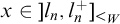 . We consider the case in which n is even, the odd case is proved similarly. Since n is even we have by definition that
$<_N$
. We consider the case in which n is even, the odd case is proved similarly. Since n is even we have by definition that
$<_N$
 restricted to
$]l_{n},l_{n}^+]_{<_W}$
restricted to
$]l_{n},l_{n}^+]_{<_W}$
 is equal to
$<_W$
is equal to
$<_W$
 . By definition of
$l_n^+$
. By definition of
$l_n^+$
 we have that
$]l_n,l_n^+]_{<_W}\cap S$
we have that
$]l_n,l_n^+]_{<_W}\cap S$
 is unbounded. Let
$d=\min \{ s\in\ ]l_n,l_n^+]_{<_W}\cap S: x<_Ns\}$
is unbounded. Let
$d=\min \{ s\in\ ]l_n,l_n^+]_{<_W}\cap S: x<_Ns\}$
 , that is, d is the successor of x in
$]l_n,l_n^+]_{<_W}\cap S$
, that is, d is the successor of x in
$]l_n,l_n^+]_{<_W}\cap S$
 . If x is the
$<_W$
. If x is the
$<_W$
 minimum element of
$]l_{n},l_{n}^+]_{<_W}\cap S$
minimum element of
$]l_{n},l_{n}^+]_{<_W}\cap S$
 then let
$c=-\infty $
then let
$c=-\infty $
 if
$n=0$
if
$n=0$
 otherwise let
$c=\min _{<_W} ]l_{n-1},l_{n-1}^+]_{<_W}\cap S$
otherwise let
$c=\min _{<_W} ]l_{n-1},l_{n-1}^+]_{<_W}\cap S$
 . If x is not the
$<_W$
. If x is not the
$<_W$
 minimum in
$]l_{n},l_{n}^+]\cap S$
minimum in
$]l_{n},l_{n}^+]\cap S$
 then if there is an
$s\in [a,x[_{<_W}\cap S$
then if there is an
$s\in [a,x[_{<_W}\cap S$
 we set
$c=s$
we set
$c=s$
 . Otherwise, the set

is non-empty since it contains a and has a least element u since W is a well order. By definition, the only element of L in
$]l_{n},l_{n}^+]_{<_W}$
 is
$l^+_n$
is
$l^+_n$
 , so we have that
$u\notin L$
, so we have that
$u\notin L$
 . By definition of L,
$]l_{n}, u[_{<_W}\cap S$
. By definition of L,
$]l_{n}, u[_{<_W}\cap S$
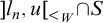 has a maximum and we set
$c=\max (]l_{n}, u[_{<_W}\cap S)$
has a maximum and we set
$c=\max (]l_{n}, u[_{<_W}\cap S)$
 . It is straightforward to verify that
$x\in\ ] c,d[_{<_N}\cap S\subseteq\ ] a,b[_{<_N}\cap S$
. It is straightforward to verify that
$x\in\ ] c,d[_{<_N}\cap S\subseteq\ ] a,b[_{<_N}\cap S$
 .
.
Any cut of
$(S,<_N)$
 will either be of the form
$]-\infty ,l]_{<_N}\cap S$
will either be of the form
$]-\infty ,l]_{<_N}\cap S$
 , where
$l\in W$
, where
$l\in W$
 , or of the form
$\bigcup _{i\leq 2n+1}]l_{i},l_{i}^+]_{<_W}\cap S$
, or of the form
$\bigcup _{i\leq 2n+1}]l_{i},l_{i}^+]_{<_W}\cap S$
 . Since
$(S,<_N)$
. Since
$(S,<_N)$
 has countably many cuts, it is a scattered linear order.
Corollary 12.16.
$\mathbf {ACA}_0$
 proves that every ranked
$T_3$
proves that every ranked
$T_3$
 scattered CSC space is effectively homeomorphic to the order topology of a scattered linear order with countably many cuts.
Corollary 12.17. Over
$\mathbf {RCA}_0$
 the following are equivalent:
-
(1) Arithmetic transfinite recursion.
-
(2) Every $T_3$
scattered CSC space is effectively homeomorphic to the order topology of a scattered linear order with countably many cuts.

Proof.
$\mathbf {ATR}_0$
 proves that every scattered
$T_3$
proves that every scattered
$T_3$
 CSC space embeds into a well order and so by Theorem 12.15
$\mathbf {ATR}_0$
CSC space embeds into a well order and so by Theorem 12.15
$\mathbf {ATR}_0$
 proves that every scattered
$T_3$
proves that every scattered
$T_3$
 CSC space is effectively homeomorphic to a scattered linear order with countably many cuts.
For the converse, assume every
$T_3$
 scattered CSC space is effectively homeomorphic to the order topology of a scattered linear order with countably many cuts. In particular, we have that every
$T_3$
scattered CSC space is effectively homeomorphic to the order topology of a scattered linear order with countably many cuts. In particular, we have that every
$T_3$
 scattered CSC space embeds into a linear order, which by Theorem 5.22 implies arithmetic comprehension. So we may work over
$\mathbf {ACA}_0$
scattered CSC space embeds into a linear order, which by Theorem 5.22 implies arithmetic comprehension. So we may work over
$\mathbf {ACA}_0$
 . We also have that every scattered
$T_3$
. We also have that every scattered
$T_3$
 space embeds into the order topology of a complete linear order. By Theorem 12.3, we have that the order topology of a complete linear order is compact. So every
$T_3$
space embeds into the order topology of a complete linear order. By Theorem 12.3, we have that the order topology of a complete linear order is compact. So every
$T_3$
 scattered CSC space, and therefore every
$T_2$
scattered CSC space, and therefore every
$T_2$
 l.c. CSC space embeds, into a compact CSC space. This implies that every
$T_2$
l.c. CSC space embeds, into a compact CSC space. This implies that every
$T_2$
 l.c. CSC space has a
$CCN$
l.c. CSC space has a
$CCN$
 which by Proposition 11.8 implies arithmetic transfinite recursion.
13 Complete metrizability
We have shown that
$\mathbf {ATR}_0$
 proves that a
$T_3$
proves that a
$T_3$
 scattered CSC space can embed into a well order with maximum element, and in particular, they can embed into a countable compact metric space. From general topology, we know that compact metric spaces are complete and the
$G_\delta $
scattered CSC space can embed into a well order with maximum element, and in particular, they can embed into a countable compact metric space. From general topology, we know that compact metric spaces are complete and the
$G_\delta $
 subspaces of a complete metric space are completely metrizable. For countable
$T_1$
subspaces of a complete metric space are completely metrizable. For countable
$T_1$
 spaces, all of the subspaces are
$G_\delta $
spaces, all of the subspaces are
$G_\delta $
 , so all
$T_3$
, so all
$T_3$
 scattered CSC spaces are completely metrizable. We will show that this proof can be carried out in
$\mathbf {ATR}_0$
scattered CSC spaces are completely metrizable. We will show that this proof can be carried out in
$\mathbf {ATR}_0$
 . As in the previous part of this work, we will only be working with countable metric spaces and will not be considered as being codes for Polish spaces as it is usually done in reverse math.
Proposition 13.1.
$\mathbf {RCA}_0$
 proves every complete countable metric space is
$T_3$
proves every complete countable metric space is
$T_3$
 and scattered.
Proof. Let
$(X,d)$
 be a complete countable metric space, by Proposition 4.10 we have that for some
$a\in \mathbb {R}_{>0}$
be a complete countable metric space, by Proposition 4.10 we have that for some
$a\in \mathbb {R}_{>0}$
 the balls
$(B(x,q\cdot a))_{x\in X,q\in \mathbb {Q}}$
the balls
$(B(x,q\cdot a))_{x\in X,q\in \mathbb {Q}}$
 are clopen. Without loss of generality, we may assume
$a=1$
are clopen. Without loss of generality, we may assume
$a=1$
 . By Theorem 6.13
$\mathbf {RCA}_0$
. By Theorem 6.13
$\mathbf {RCA}_0$
 proves that
$(X,(B(x,q)_{x\in X,q\in \mathbb {Q}},k)$
proves that
$(X,(B(x,q)_{x\in X,q\in \mathbb {Q}},k)$
 is uniformly
$T_3$
is uniformly
$T_3$
 . If X were not scattered, then it would contain a non-empty dense in itself subset S that will be a uniformly
$T_3$
. If X were not scattered, then it would contain a non-empty dense in itself subset S that will be a uniformly
$T_3$
 space that does not have isolated points. We note that any neighborhood of a point in S will contain infinitely many points. Let
$(q_n)_{n\in \mathbb {N}}$
space that does not have isolated points. We note that any neighborhood of a point in S will contain infinitely many points. Let
$(q_n)_{n\in \mathbb {N}}$
 enumerate the elements of
$\mathbb {Q}_{>0}$
enumerate the elements of
$\mathbb {Q}_{>0}$
 . Let
$x_0$
. Let
$x_0$
 be the
$<_{\mathbb {N}}$
be the
$<_{\mathbb {N}}$
 first element of S and set
$r_0=1$
first element of S and set
$r_0=1$
 . Assume that for all
$i\leq n\, y_i\in X$
. Assume that for all
$i\leq n\, y_i\in X$
 and
$r_i\in \mathbb {Q}_{>0}$
and
$r_i\in \mathbb {Q}_{>0}$
 are defined and for all
$i<n$
are defined and for all
$i<n$
 we have
$x_i\notin B(x_{i+1},r_{i+1})\subseteq B(x_{i},r_i)$
we have
$x_i\notin B(x_{i+1},r_{i+1})\subseteq B(x_{i},r_i)$
 . Let
$x_{n+1}$
. Let
$x_{n+1}$
 be the
$<_{\mathbb {N}}$
be the
$<_{\mathbb {N}}$
 least element of
$S\cap B(x_n,r_n)\setminus \{x_n\}$
least element of
$S\cap B(x_n,r_n)\setminus \{x_n\}$
 , which is not empty since S is dense in itself, and let
$r_{n+1}$
, which is not empty since S is dense in itself, and let
$r_{n+1}$
 be the first element in the enumeration of
$\mathbb {Q}$
be the first element in the enumeration of
$\mathbb {Q}$
 such that

We have by the triangle inequality that
$x_n\notin B(x_{n+1},r_{n+1})\subseteq B(x_n,r_n)$
 . By construction, the sequence
$(x_n)_{n\in \mathbb {N}}$
. By construction, the sequence
$(x_n)_{n\in \mathbb {N}}$
 is Cauchy and, therefore, must converge to some
$x\in X$
is Cauchy and, therefore, must converge to some
$x\in X$
 . Since for all n we have that
$x_{n+1}$
. Since for all n we have that
$x_{n+1}$
 is the
$<_{\mathbb {N}}$
is the
$<_{\mathbb {N}}$
 least element of
$B(x_n,r_n)\cap S\setminus \{x_n\}$
least element of
$B(x_n,r_n)\cap S\setminus \{x_n\}$
 and
$x_{n+2}\in B(x_n,r_n)\cap S\setminus \{x_n\}$
and
$x_{n+2}\in B(x_n,r_n)\cap S\setminus \{x_n\}$
 we have that
$x_{n+1}<_{\mathbb {N}} x_{n+2}$
we have that
$x_{n+1}<_{\mathbb {N}} x_{n+2}$
 . In particular the sequence
$(x_n)_{n\in \mathbb {N}}$
. In particular the sequence
$(x_n)_{n\in \mathbb {N}}$
 is strictly
$<_{\mathbb {N}}$
is strictly
$<_{\mathbb {N}}$
 increasing. For every
$n\in \mathbb {N}$
increasing. For every
$n\in \mathbb {N}$
 we have that
$(x_n)_{n\in \mathbb {N}}$
we have that
$(x_n)_{n\in \mathbb {N}}$
 is eventually in
$B(x_n,r_n)$
is eventually in
$B(x_n,r_n)$
 and so
$x\in \overline {B(x_n,r_n)}=B(x_n,r_n)$
and so
$x\in \overline {B(x_n,r_n)}=B(x_n,r_n)$
 , so in particular
$x_{n+1}\leq _{\mathbb {N}} x$
, so in particular
$x_{n+1}\leq _{\mathbb {N}} x$
 . But this is absurd since the sequence
$(x_n)_{n\in \mathbb {N}}$
. But this is absurd since the sequence
$(x_n)_{n\in \mathbb {N}}$
 is strictly increasing and therefore is unbounded. So X is a uniformly
$T_3$
is strictly increasing and therefore is unbounded. So X is a uniformly
$T_3$
 scattered CSC space.
Definition 13.2. A countable metric space
$(X,d)$
 is said to be totally bounded if for every
$n\in \mathbb {N}$
is said to be totally bounded if for every
$n\in \mathbb {N}$
 there exists a finite set
$F\subseteq X$
there exists a finite set
$F\subseteq X$
 such that
$X=\bigcup _{x\in F} B(x,\frac {1}{n})$
such that
$X=\bigcup _{x\in F} B(x,\frac {1}{n})$
 . Being a totally bounded space is arithmetically definable, as noted by Hirst [Reference Hirst16].
Lemma 13.3.
$\mathbf {RCA}_0$
 proves that if
$(X,d)$
proves that if
$(X,d)$
 is totally bounded then any subset of X is totally bounded.
Proof. Let
$(X,d)$
 be a totally bounded countable metric space and
$Y\subseteq X$
be a totally bounded countable metric space and
$Y\subseteq X$
 be a subspace. By Proposition 4.10 there is an
$a\in \mathbb {R}_{>0}$
be a subspace. By Proposition 4.10 there is an
$a\in \mathbb {R}_{>0}$
 such that the balls
$(B(x,q\cdot a))_{x\in X,q\in \mathbb {Q}}$
such that the balls
$(B(x,q\cdot a))_{x\in X,q\in \mathbb {Q}}$
 are clopen. Without loss of generality, we may assume
$a=1$
are clopen. Without loss of generality, we may assume
$a=1$
 . Given
$n>0$
. Given
$n>0$
 , we show that we can cover Y with finitely many balls of radius
$\frac {1}{n}$
, we show that we can cover Y with finitely many balls of radius
$\frac {1}{n}$
 . Since X is totally bounded, there exists a finite
$F\subseteq X$
. Since X is totally bounded, there exists a finite
$F\subseteq X$
 such that
$X=\bigcup _{x\in F} B(x,\frac {1}{2n})$
such that
$X=\bigcup _{x\in F} B(x,\frac {1}{2n})$
 . Define

we have that G exists by
$\Delta ^0_1$
 comprehension and is a finite set since it injects into F. For all
$x\in F$
comprehension and is a finite set since it injects into F. For all
$x\in F$
 if
$B(x,\frac {1}{2n})\cap Y\neq \emptyset $
if
$B(x,\frac {1}{2n})\cap Y\neq \emptyset $
 then there is a
$y\in G$
then there is a
$y\in G$
 such that
$B(x,\frac {1}{2n})\subseteq B(y,\frac {1}{n})$
such that
$B(x,\frac {1}{2n})\subseteq B(y,\frac {1}{n})$
 and so
$Y\subseteq \bigcup _{y\in G}B(y,\frac {1}{n})$
and so
$Y\subseteq \bigcup _{y\in G}B(y,\frac {1}{n})$
 . Thus, Y is totally bounded.
Theorem 13.4.
$\mathbf {ACA}_0$
 proves that a countable metric space is compact if and only if it is complete and totally bounded.
Proof. Let
$(X,d)$
 be a compact countable metric space. Since over
$\mathbf {ACA}_0$
be a compact countable metric space. Since over
$\mathbf {ACA}_0$
 sequential compactness is equivalent to compactness, we have that X is sequentially compact. Therefore, every Cauchy sequence in X will have a convergent subsequence, so X is complete. Since X is compact, for every
$n\in \mathbb {N}$
sequential compactness is equivalent to compactness, we have that X is sequentially compact. Therefore, every Cauchy sequence in X will have a convergent subsequence, so X is complete. Since X is compact, for every
$n\in \mathbb {N}$
 , it will have a finite covering of balls of radius
$\frac {1}{n}$
, it will have a finite covering of balls of radius
$\frac {1}{n}$
 , so X is totally bounded.
For the converse, let X be a complete, non-empty, and totally bounded countable metric space. We show that X is sequentially compact, which implies that X is compact. Let
$(y_n)_{n\in \mathbb {N}}$
 be a sequence in X, we define inductively a subsequence
$(z_n)_{n\in \mathbb {N}}$
be a sequence in X, we define inductively a subsequence
$(z_n)_{n\in \mathbb {N}}$
 of
$(y_n)_{n\in \mathbb {N}}$
of
$(y_n)_{n\in \mathbb {N}}$
 and a sequence of points
$(x_n)_{n\in \mathbb {N}}$
and a sequence of points
$(x_n)_{n\in \mathbb {N}}$
 . Let
$z_0=y_0$
. Let
$z_0=y_0$
 and
$x_0$
and
$x_0$
 be the first
$y_n$
be the first
$y_n$
 such that
$B(y_n,1)\cap \{y_k:k\in \mathbb {N}\}$
such that
$B(y_n,1)\cap \{y_k:k\in \mathbb {N}\}$
 is infinite. Assume that we have defined
$z_i$
is infinite. Assume that we have defined
$z_i$
 and
$x_i$
and
$x_i$
 for
$i\leq k$
for
$i\leq k$
 such that for infinitely many
$n\, y_n\in \bigcap _{i\leq k} B(x_i,\frac {1}{2i+1})$
such that for infinitely many
$n\, y_n\in \bigcap _{i\leq k} B(x_i,\frac {1}{2i+1})$
 . Since X is totally bounded, we have that
$\bigcap _{i\leq k} B(x_i,\frac {1}{2i+1})$
. Since X is totally bounded, we have that
$\bigcap _{i\leq k} B(x_i,\frac {1}{2i+1})$
 is totally bounded, and so there is a least finite set F such that

By the infinite pigeonhole principle let
$x_{k+1}$
 be the least
$x\in F$
be the least
$x\in F$
 such that for infinitely many n we have
$y_n\in B(x,\frac {1}{2k+3})\cap \bigcap _{i\leq k} B_i$
such that for infinitely many n we have
$y_n\in B(x,\frac {1}{2k+3})\cap \bigcap _{i\leq k} B_i$
 . Define
$z_{k+1}$
. Define
$z_{k+1}$
 to be the first
$y_n\in B(x_n,\frac {1}{2k+3})$
to be the first
$y_n\in B(x_n,\frac {1}{2k+3})$
 .
.
For every
$m\in \mathbb {N}$
 the sequence
$(z_n)_{n\in \mathbb {N}}$
the sequence
$(z_n)_{n\in \mathbb {N}}$
 is eventually in
$B(x_m,\frac {1}{2m+1})$
is eventually in
$B(x_m,\frac {1}{2m+1})$
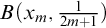 which has diameter
$\frac {2}{2m+1}<\frac {1}{m}$
which has diameter
$\frac {2}{2m+1}<\frac {1}{m}$
 and so we have that
$(z_n)_{n\in \mathbb {N}}$
and so we have that
$(z_n)_{n\in \mathbb {N}}$
 is a Cauchy subsequence of
$(y_n)_{n\in \mathbb {N}}$
is a Cauchy subsequence of
$(y_n)_{n\in \mathbb {N}}$
 . Since
$(X,d)$
. Since
$(X,d)$
 is complete we have that
$(z_n)_{n\in \mathbb {N}}$
is complete we have that
$(z_n)_{n\in \mathbb {N}}$
 converges.
Corollary 13.5.
$\mathbf {ACA}_0$
 proves that every effectively
$T_2$
proves that every effectively
$T_2$
 effectively compact CSC space is completely metrizable.
Proof. By Corollary 7.11 we have that
$\mathbf {ACA}_0$
 proves that every
$T_2$
proves that every
$T_2$
 compact CSC space is
$T_3$
compact CSC space is
$T_3$
 and by Theorem 6.17 it is metrizable. Any metric on a compact CSC space must be complete by the previous theorem.
Definition 13.6 (Simpson [Reference Simpson32, Exercise VI.1.8])
Let
$T\subseteq \mathbb {N}^{<\mathbb {N}}$
 be a tree then we define

which is the tree of all sequences
$\tau $
 that dominate some sequence of T of equal length.
Proposition 13.7. Over
$\mathbf {ACA}_0$
 we have that T is well-founded if and only if
$\text {KB}(T^{+})$
we have that T is well-founded if and only if
$\text {KB}(T^{+})$
 with the order topology is scattered.
Proof. The Kleene–Brouwer order of any tree will have the empty sequence as a maximal element. If
$\text {KB}(T^+)$
 is not scattered, then it is not compact, so it cannot be well-ordered. This means that
$T^+$
is not scattered, then it is not compact, so it cannot be well-ordered. This means that
$T^+$
 is not well-founded. Given
$f\in [T^+]$
is not well-founded. Given
$f\in [T^+]$
 we define the subtree

which is a finitely branching infinite subtree of T. By weak König’s lemma, we have that the subtree, and therefore T, also has a branch.
Assume instead T is not well-founded and let
$f\in [T]$
 be a branch. We show that

to do this, it suffices to show that S is dense in itself. Let
$\rho \in S$
 and
$\tau ,\sigma \in T^+$
and
$\tau ,\sigma \in T^+$
 such that
$\rho \in\ ]\sigma ,\tau [_{<_{\text {KB}}}$
such that
$\rho \in\ ]\sigma ,\tau [_{<_{\text {KB}}}$
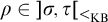 , if
$\rho \sqsubseteq \sigma $
, if
$\rho \sqsubseteq \sigma $
 then we have
$\sigma <_{\text {KB}}\rho ^\frown (\sigma (|\rho |)+1)<_{\text {KB}}\rho $
then we have
$\sigma <_{\text {KB}}\rho ^\frown (\sigma (|\rho |)+1)<_{\text {KB}}\rho $
 , and so
$\rho ^\frown (\sigma (|\rho |+1))\in\ ]\sigma ,\tau [_{<_{\text {KB}}}\cap S$
, and so
$\rho ^\frown (\sigma (|\rho |+1))\in\ ]\sigma ,\tau [_{<_{\text {KB}}}\cap S$
 . Otherwise, if
$\rho \mathrel { {\not\!\! \sqsubseteq}} \sigma $
. Otherwise, if
$\rho \mathrel { {\not\!\! \sqsubseteq}} \sigma $
 then we have
$\sigma <_{\text {KB}}\rho ^\frown (f(|\rho |)+1)<_{\text {KB}}\rho $
then we have
$\sigma <_{\text {KB}}\rho ^\frown (f(|\rho |)+1)<_{\text {KB}}\rho $
 . So S with the subspace topology is dense in itself, and so
$T^+$
. So S with the subspace topology is dense in itself, and so
$T^+$
 is not scattered.
Observation 13.8. The previous proposition shows that being a scattered CSC space is a
$\Pi ^1_1$
 universal formula. The proof above can be modified to show that if T is well-founded, then
$T^+$
universal formula. The proof above can be modified to show that if T is well-founded, then
$T^+$
 with the topology given by being a subspace of
$(\mathbb {N}^{<\mathbb {N}},<_{\text {KB}})$
with the topology given by being a subspace of
$(\mathbb {N}^{<\mathbb {N}},<_{\text {KB}})$
 is compact. Similarly, if T is ill founded then
$T^+$
is compact. Similarly, if T is ill founded then
$T^+$
 with the topology given by being a subspace of
$(\mathbb {N}^{<\mathbb {N}},<_{\text {KB}})$
with the topology given by being a subspace of
$(\mathbb {N}^{<\mathbb {N}},<_{\text {KB}})$
 is scattered.
Clote [Reference Clote5] used a similar construction to show that being a scattered linear order is a
$\Pi ^1_1$
 universal formula. However, as noted before, the notion of scatteredness for linear orders does not, in general, coincide with the topological notion of scatteredness.
Proposition 13.9. Over
$\mathbf {ACA}_0$
 being a complete countable metric space is a
$\Pi ^1_1$
being a complete countable metric space is a
$\Pi ^1_1$
 universal formula.
Proof. We can express
$(M,d)$
 being complete as

Which is a
$\Pi ^1_1$
 formula since converging to x and being a Cauchy sequence are arithmetically defined.
Fix any arithmetically definable metric d that is compatible with the order topology on
$(\mathbb {N}^{<\mathbb {N}},<_{\text {KB}})$
 . Over
$\mathbf {ACA}_0$
. Over
$\mathbf {ACA}_0$
 being a well-founded tree is
$\Pi ^1_1$
being a well-founded tree is
$\Pi ^1_1$
 universal so we have

and

So over
$\mathbf {ACA}_0$
 we have that for any tree T

which implies that being a complete countable metric space is a
$\Pi ^1_1$
 universal formula.
Corollary 13.10. Over
$\mathbf {RCA}_0$
 the following are equivalent:
-
(1) $\Pi ^1_1$
comprehension. -
(2) For any sequence of CSC spaces $(X^i)_{i\in \mathbb {N}}$
the set
$\{i\in \mathbb {N}: X^i \text { is scattered}\,\}$
exists. -
(3) For any sequence of countable metric spaces $(X^i,d^i)_{i\in \mathbb {N}}$
the set $$ \begin{align*}\{i\in\mathbb{N}: (X^i,d^i) \text{ is complete}\,\}\end{align*} $$
exists.





Proof. Since being a complete countable metric space and being scattered are both
$\Pi ^1_1$
 universal formulas over
$\mathbf {ACA}_0$
universal formulas over
$\mathbf {ACA}_0$
 , it suffices to show that
$(1)$
, it suffices to show that
$(1)$
 and
$(2)$
and
$(2)$
 both imply arithmetic comprehension. Using Theorem 3.2, we show that
$(1)$
both imply arithmetic comprehension. Using Theorem 3.2, we show that
$(1)$
 and
$(2)$
and
$(2)$
 both imply that every set has a Turing jump.
Assume
$(2)$
 and let
$A\subseteq \mathbb {N}$
and let
$A\subseteq \mathbb {N}$
 be a set. Let
$(q_n)_{n\in \mathbb {N}}$
be a set. Let
$(q_n)_{n\in \mathbb {N}}$
 be an enumeration of
$\mathbb {Q}$
be an enumeration of
$\mathbb {Q}$
 . Define

with the subspace topology. We have that
$X^e=\mathbb {Q}$
 if and only if
$\Phi ^A_e(e){\uparrow }$
if and only if
$\Phi ^A_e(e){\uparrow }$
 and
$X^e$
and
$X^e$
 is a discrete finite space, and therefore scattered, if and only if
$\Phi ^A_e(e){\downarrow }$
is a discrete finite space, and therefore scattered, if and only if
$\Phi ^A_e(e){\downarrow }$
 . So
$A'\leq _T \{e\in \mathbb {N}: X^e \text { is scattered}\,\}$
. So
$A'\leq _T \{e\in \mathbb {N}: X^e \text { is scattered}\,\}$
 and so
$A'$
and so
$A'$
 exists by
$\Delta ^0_1$
exists by
$\Delta ^0_1$
 comprehension.
Assume
$(3)$
 and let
$A\subseteq \mathbb {N}$
and let
$A\subseteq \mathbb {N}$
 be a set. Define
$X^e=\{\frac {1}{n+1}: \neg \Phi ^A_e(e){\downarrow }_{\leq n}\}$
be a set. Define
$X^e=\{\frac {1}{n+1}: \neg \Phi ^A_e(e){\downarrow }_{\leq n}\}$
 with the metric
$d^e(x,y)=|x-y|$
with the metric
$d^e(x,y)=|x-y|$
 . We have that
$X^e$
. We have that
$X^e$
 is complete if and only if
$\Phi ^A_e(e){\downarrow }$
is complete if and only if
$\Phi ^A_e(e){\downarrow }$
 and so
$A'\leq _T \{e\in \mathbb {N}: (X^e,d^e) \text { is complete}\,\}$
and so
$A'\leq _T \{e\in \mathbb {N}: (X^e,d^e) \text { is complete}\,\}$
 exists by
$\Delta ^0_1$
exists by
$\Delta ^0_1$
 comprehension.
Definition 13.11. In general topology, a subset of a topological space X is said to be
$G_\delta $
 if it is the countable intersection of open sets. If X is countable and
$T_1$
if it is the countable intersection of open sets. If X is countable and
$T_1$
 , that is, all singletons are closed, then all subsets of X are
$G_\delta $
, that is, all singletons are closed, then all subsets of X are
$G_\delta $
 . A classic result in descriptive set theory is that the
$G_\delta $
. A classic result in descriptive set theory is that the
$G_\delta $
 subspaces of complete separable metric spaces are also completely metrizable. We note that the usual proof can be carried out over
$\mathbf{ACA}_0$
subspaces of complete separable metric spaces are also completely metrizable. We note that the usual proof can be carried out over
$\mathbf{ACA}_0$
 .
.
Lemma 13.12 (See [Reference Kechris20, Theorem 3.11])
$\mathbf {ACA}_0$
 proves that every subspace of a complete metric space is completely metrizable.
Theorem 13.13. Over
$\mathbf {RCA}_0$
 the following are equivalent:
-
(1) Arithmetic transfinite recursion.
-
(2) Every $T_3$
scattered CSC space can be embedded into a completely metrizable space. -
(3) Every $T_3$
scattered CSC space is completely metrizable.


Proof.
$(1\rightarrow 2)$
 By Lemma 12.12 every
$T_3$
By Lemma 12.12 every
$T_3$
 scattered CSC space embeds into a
$T_2$
scattered CSC space embeds into a
$T_2$
 compact space and by Corollary 13.5 every
$T_2$
compact space and by Corollary 13.5 every
$T_2$
 compact space is completely metrizable.
$(2)$
 and
$(3)$
and
$(3)$
 both imply arithmetic comprehension since they imply that every
$T_3$
both imply arithmetic comprehension since they imply that every
$T_3$
 scattered CSC space is metrizable and by Theorem 6.13 and Corollary 5.21 this implies arithmetic comprehension. So we may prove the remaining implications over
$\mathbf {ACA}_0$
scattered CSC space is metrizable and by Theorem 6.13 and Corollary 5.21 this implies arithmetic comprehension. So we may prove the remaining implications over
$\mathbf {ACA}_0$
 .
.
$(2\rightarrow 3)$
 Let X be a
$T_3$
Let X be a
$T_3$
 scattered CSC space. If X can be embedded into a complete countable metric space, then by Lemma 13.12 X is completely metrizable.
$(3\rightarrow 1)$
 By Lemma 10.7 and Proposition 10.5 we have that every
$T_2$
By Lemma 10.7 and Proposition 10.5 we have that every
$T_2$
 l.c. space is
$T_3$
l.c. space is
$T_3$
 and scattered. So
$(3)$
and scattered. So
$(3)$
 implies every
$T_2$
implies every
$T_2$
 l.c. CSC space is completely metrizable. Let X be a
$T_2$
l.c. CSC space is completely metrizable. Let X be a
$T_2$
 l.c. CSC space and let d be a complete metric on X. For each
$x\in X$
l.c. CSC space and let d be a complete metric on X. For each
$x\in X$
 let
$i(x)$
let
$i(x)$
 be the least number such that
$(\overline {B(x,\frac {1}{2^{i(x)}})})_{i\in \mathbb {N}}$
be the least number such that
$(\overline {B(x,\frac {1}{2^{i(x)}})})_{i\in \mathbb {N}}$
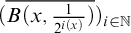 is totally bounded. Since being totally bounded is arithmetical, the sequence
$(i(x))_{x\in X}$
is totally bounded. Since being totally bounded is arithmetical, the sequence
$(i(x))_{x\in X}$
 exists by arithmetic comprehension. Since closed subsets of complete countable metric spaces are complete, we have that for all x, the set
$\overline {B(x,\frac {1}{2^{i(x)}})}$
exists by arithmetic comprehension. Since closed subsets of complete countable metric spaces are complete, we have that for all x, the set
$\overline {B(x,\frac {1}{2^{i(x)}})}$
 is compact by Theorem 13.4. So the sequence
$(\overline {B(x,\frac {1}{2^{i(x)}})})_{i\in \mathbb {N}}$
is compact by Theorem 13.4. So the sequence
$(\overline {B(x,\frac {1}{2^{i(x)}})})_{i\in \mathbb {N}}$
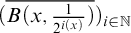 is a
$CCN$
is a
$CCN$
 . We have that every
$T_2$
. We have that every
$T_2$
 l.c. space has a
$CCN$
l.c. space has a
$CCN$
 , which is equivalent to arithmetic transfinite recursion.
14 Comparability of locally compact
$T_2$
spaces

A classic result in reverse mathematics is that over
$\mathbf {RCA}_0$
 arithmetic transfinite recursion is equivalent to the comparability of well orders. By comparability of well orders, we mean that for any pair of well orders, there is an order preserving map from one to the other. It turns out there is a similar topological equivalent to arithmetic transfinite recursion. It was shown by Friedman [Reference Friedman8] that topological comparability of well orders is equivalent to arithmetic transfinite recursion. We will give an alternative proof to a weaker theorem of Hirst [Reference Hirst16], namely, that arithmetic transfinite recursion is equivalent over
$\mathbf {ACA}_0$
arithmetic transfinite recursion is equivalent to the comparability of well orders. By comparability of well orders, we mean that for any pair of well orders, there is an order preserving map from one to the other. It turns out there is a similar topological equivalent to arithmetic transfinite recursion. It was shown by Friedman [Reference Friedman8] that topological comparability of well orders is equivalent to arithmetic transfinite recursion. We will give an alternative proof to a weaker theorem of Hirst [Reference Hirst16], namely, that arithmetic transfinite recursion is equivalent over
$\mathbf {ACA}_0$
 to the topological comparability of
$T_2$
to the topological comparability of
$T_2$
 l.c. CSC spaces.
Definition 14.1. We say that two CSC spaces X and Y are topologically comparable if there is an effective embedding from X to Y or from Y to X.
Proposition 14.2. Arithmetic transfinite recursion is equivalent over
$\mathbf {ACA}_0$
 to every
$T_2$
to every
$T_2$
 l.c. CSC space can be embedded into a compact space.
Proof. By Theorem 11.6 we have that
$\mathbf {ATR}_0$
 proves that every
$T_2$
proves that every
$T_2$
 l.c. space has a
$CCN$
l.c. space has a
$CCN$
 . By Proposition 10.24 every l.c.
$T_2$
. By Proposition 10.24 every l.c.
$T_2$
 CSC space with a
$CCN$
CSC space with a
$CCN$
 embeds into its one point compactification. On the other hand, every compact space trivially has
$CCN$
embeds into its one point compactification. On the other hand, every compact space trivially has
$CCN$
 . By Proposition 10.11, if every l.c.
$T_2$
. By Proposition 10.11, if every l.c.
$T_2$
 CSC space can be embedded into a compact CSC space, then it will have a
$CCN$
CSC space can be embedded into a compact CSC space, then it will have a
$CCN$
 , which by Proposition 11.8 implies arithmetic transfinite recursion.
Lemma 14.3.
$\mathbf {ACA}_0$
 proves that for any CSC space
$(X,(U_i)_{i\in \mathbb {N}},k)$
proves that for any CSC space
$(X,(U_i)_{i\in \mathbb {N}},k)$
 if every
$T_2$
if every
$T_2$
 compact CSC space embeds into X then X is not scattered.
Proof. Let X be a CSC space such that every compact
$T_2$
 CSC space C embeds into X. For every well-founded tree T, we have that
$T^{+}$
CSC space C embeds into X. For every well-founded tree T, we have that
$T^{+}$
 is well-founded and therefore,
$(T^{+},<_{\text {KB}})$
is well-founded and therefore,
$(T^{+},<_{\text {KB}})$
 (see Definition 13.6) embeds into X since it is compact. So we have that

But
$(T^{+},<_{\text {KB}})$
 embeds into X is
$\Sigma ^1_1$
embeds into X is
$\Sigma ^1_1$
 relative to X. Since “
$(T,<_{\text {KB}})$
relative to X. Since “
$(T,<_{\text {KB}})$
 is a well order” is a universal
$\Pi ^1_1$
is a well order” is a universal
$\Pi ^1_1$
 formula we have that there exists a non-well-founded T such that
$(T^{+},<_{\text {KB}})$
formula we have that there exists a non-well-founded T such that
$(T^{+},<_{\text {KB}})$
 embeds into X. Since T is not well-founded by Proposition 13.7, we have that
$\mathbb {Q}$
embeds into X. Since T is not well-founded by Proposition 13.7, we have that
$\mathbb {Q}$
 embeds into
$(T^{+},<_{\text {KB}})$
embeds into
$(T^{+},<_{\text {KB}})$
 and so
$\mathbb {Q}$
and so
$\mathbb {Q}$
 embeds into X contradicting our assumption that X was scattered.
Theorem 14.4. Over
$\mathbf {ACA}_0$
 the following are equivalent:
-
(1) Arithmetic transfinite recursion.
-
(2) All pairs of l.c. $T_2$
CSC spaces are topologically comparable.

Proof.
$(1\rightarrow 2)$
 follows immediately from the fact that
$\mathbf {ATR}_0$
follows immediately from the fact that
$\mathbf {ATR}_0$
 proves that every
$T_2$
proves that every
$T_2$
 l.c. CSC space is homeomorphic to some well order and that for every pair of well orders, X and Y either X is isomorphic to an initial segment of Y or Y isomorphic to an initial segment of X.
$(2\rightarrow 1)$
 . By Corollary 14.2, arithmetic transfinite recursion is equivalent to every
$T_2$
. By Corollary 14.2, arithmetic transfinite recursion is equivalent to every
$T_2$
 l.c. CSC space can be embedded into a
$T_2$
l.c. CSC space can be embedded into a
$T_2$
 compact CSC space. Let X be a
$T_2$
compact CSC space. Let X be a
$T_2$
 l.c. CSC space. If X does not embed into a
$T_2$
l.c. CSC space. If X does not embed into a
$T_2$
 compact CSC space, we have that every compact
$T_2$
compact CSC space, we have that every compact
$T_2$
 CSC space is homeomorphic to a subspace of X. By the previous lemma, this implies that X is not scattered, which by Lemma 10.5 contradicts our assumption that X is l.c.
Observation 14.5. We might wonder if
$T_3$
 scattered spaces are topologically comparable. This is not the case; we can consider the ordinal
$\omega \cdot 2+1$
scattered spaces are topologically comparable. This is not the case; we can consider the ordinal
$\omega \cdot 2+1$
 and a point with infinitely many sequences converging to it. These two spaces are both
$T_3$
and a point with infinitely many sequences converging to it. These two spaces are both
$T_3$
 and scattered. However, they are not topologically comparable. This observation can be carried out easily in
$\mathbf {RCA}_0$
and scattered. However, they are not topologically comparable. This observation can be carried out easily in
$\mathbf {RCA}_0$
 . However, Friedman proved that over
$\mathbf {ATR}_0$
. However, Friedman proved that over
$\mathbf {ATR}_0$
 countable metric spaces are comparable with continuous injections.
Theorem 14.6 (Friedman [Reference Friedman8, Theorem 16])
$\mathbf {ATR}_0$
 proves that for any two countable metric space there is a continuous injection from one to the other.
We can use this fact to get an alternative proof that every
$T_3$
 scattered CSC space embeds into a well order. We provide a proof sketch.
Proposition 14.7.
$\mathbf {ATR}_0$
 proves that any scattered
$T_3$
proves that any scattered
$T_3$
 CSC space embeds into a well order.
Proof. Let X be a
$T_3$
 scattered CSC space. If there is a continuous injection from X to a well order then, by an argument similar to that in Theorem 12.14, there is an embedding from X into a well order. Assume that there aren’t any continuous injections from X into a well order, then for every well order W there exists a continuous injection from W to X by Theorem 14.6. In particular, for every well order W with maximum, W will have compact order topology. So any continuous injection from W to X will be an embedding. By Corollary 8.8, every
$T_2$
scattered CSC space. If there is a continuous injection from X to a well order then, by an argument similar to that in Theorem 12.14, there is an embedding from X into a well order. Assume that there aren’t any continuous injections from X into a well order, then for every well order W there exists a continuous injection from W to X by Theorem 14.6. In particular, for every well order W with maximum, W will have compact order topology. So any continuous injection from W to X will be an embedding. By Corollary 8.8, every
$T_2$
 compact CSC space is well orderable over
$\mathbf {ACA}_0$
compact CSC space is well orderable over
$\mathbf {ACA}_0$
 , so every compact
$T_2$
, so every compact
$T_2$
 CSC space embeds into X. By Lemma 14.3, we have that X is not scattered.
For completeness, we will lay out Friedman’s proof that topological comparability for well orders is equivalent to arithmetic transfinite induction. To do so, we need to define well order exponentiation.
Definition 14.8 (Hirst [Reference Hirst17, Definition 2.1])
Given two well orders L and W, we define
$W^L$
 to be the set of sequences that includes the empty sequence and all sequences of the form

such that
$\forall i\leq n\, b_i\in L$
 and
$a_i\in W\setminus \{\min W \}$
and
$a_i\in W\setminus \{\min W \}$
 and for all
$j<i\leq n\, b_i<_L b_j$
and for all
$j<i\leq n\, b_i<_L b_j$
 .
.
Given
$\sigma ,\tau \in W^L$
 we define
$\sigma <_{W^L}\tau $
we define
$\sigma <_{W^L}\tau $
 if and only if either
$\sigma \subsetneq \tau $
if and only if either
$\sigma \subsetneq \tau $
 or given that

and

then

Intuitively, the elements of
$W^L$
 can be viewed as being ordinals less than
$W^L$
can be viewed as being ordinals less than
$W^L$
 in their Cantor normal form in base W and ordered in the standard way.
Theorem 14.9 (Hirst [Reference Hirst17, Theorem 2.6])
Over
$\mathbf {RCA}_0$
 , arithmetic comprehension is equivalent to ordinal exponentiation being well defined. That is, for any pair of well orders W and L, the set
$W^L$
, arithmetic comprehension is equivalent to ordinal exponentiation being well defined. That is, for any pair of well orders W and L, the set
$W^L$
 is well-ordered.
Observation 14.10.
$\mathbf {ACA}_0$
 proves that the isolated points of
$\mathbb {N}^L$
proves that the isolated points of
$\mathbb {N}^L$
 are the empty sequence and all sequences of the form

since they have as a successor

and as a predecessor

On the other hand, sequences of the form

where
$b_n>0$
 will not have a predecessor and are not isolated.
Lemma 14.11.
$\mathbf {ACA}_0$
 proves that for every well order
$L,\, \mathbb {N}^L+1$
proves that for every well order
$L,\, \mathbb {N}^L+1$
 is a well order and has L as a rank.
Proof. For each
$l\in L$
 let
$X_l$
let
$X_l$
 be the set of all sequences in
$\mathbb {N}^L$
be the set of all sequences in
$\mathbb {N}^L$
 of the form

such that for all
$i\leq n$
 we have
$b_i\geq l$
we have
$b_i\geq l$
 . We have that the sequence
$(X_l)_{l\in L}$
. We have that the sequence
$(X_l)_{l\in L}$
 exists by arithmetical comprehension. By Observation 14.10, we have that
$X_{l+1}$
exists by arithmetical comprehension. By Observation 14.10, we have that
$X_{l+1}$
 are the limit points of
$X_l$
are the limit points of
$X_l$
 . So we have that the sequence
$(X_l)_{l\in L}$
. So we have that the sequence
$(X_l)_{l\in L}$
 witnesses that L is a rank for
$\mathbb {N}^L$
witnesses that L is a rank for
$\mathbb {N}^L$
 .
.
Lemma 14.12. Over
$\mathbf {ACA}_0$
 , let X and Y be CSC spaces with ranks W and
$Y,$
, let X and Y be CSC spaces with ranks W and
$Y,$
 respectively. If X embeds topologically into Y then there exists an order embedding of W into L.
Proof. Let
$f:X\rightarrow Y$
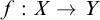 be an embedding, then we define
$\phi :W\rightarrow L$
be an embedding, then we define
$\phi :W\rightarrow L$
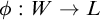 where given
$w\in W$
where given
$w\in W$
 :
:

We show that f preserves the strict order. Seeking a contradiction, assume that there exists a least
$w\in W$
 and
$w_0<_W w$
and
$w_0<_W w$
 such that
$\phi (w)\leq _L \phi (w_0)$
such that
$\phi (w)\leq _L \phi (w_0)$
 . Let
$x\in X$
. Let
$x\in X$
 be of rank w such that
$f(x)$
be of rank w such that
$f(x)$
 has rank
$\phi (w)$
has rank
$\phi (w)$
 . In
$X_{w_0}$
. In
$X_{w_0}$
 , x is a limit point of the elements of rank
$w_0$
, x is a limit point of the elements of rank
$w_0$
 and so
$f(x)$
and so
$f(x)$
 must be the limit point of the image of the elements of rank
$w_0$
must be the limit point of the image of the elements of rank
$w_0$
 . We have by definition of
$\phi $
. We have by definition of
$\phi $
 that
$f(W_{w_0})\subseteq Y_{\phi (w_0)}$
that
$f(W_{w_0})\subseteq Y_{\phi (w_0)}$
 , so
$f(x)$
, so
$f(x)$
 is a limit point of
$Y_{\phi (w_0)}$
is a limit point of
$Y_{\phi (w_0)}$
 . Since
$\text {rank}_{L}(f(x))=\phi (w)\leq _L\phi (w_0)$
. Since
$\text {rank}_{L}(f(x))=\phi (w)\leq _L\phi (w_0)$
 either
$f(x)\notin Y_{\phi (w_0)}$
either
$f(x)\notin Y_{\phi (w_0)}$
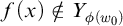 or
$f(x)$
or
$f(x)$
 is isolated in
$Y_{\phi (w_0)}$
is isolated in
$Y_{\phi (w_0)}$
 . Both cases contradict the fact that
$f(x)$
. Both cases contradict the fact that
$f(x)$
 is a limit point of
$Y_{\phi (w_0)}$
is a limit point of
$Y_{\phi (w_0)}$

Friedman proved a special case of the previous theorem, where X and Y are of the form
$\mathbb {N}^{W_0}$
 and
$\mathbb {N}^{W_1}$
and
$\mathbb {N}^{W_1}$
 , where
$W_0$
, where
$W_0$
 and
$W_1$
and
$W_1$
 are well orders (see [Reference Friedman8, Lemma 25]).
Theorem 14.13. Over
$\mathbf {RCA}_0$
 the following are equivalent:
-
(1) Arithmetic transfinite recursion.
-
(2) Every pair of $T_2$
l.c. CSC spaces is topologically comparable (Hirst [Reference Hirst16, Theorem 4.1]). -
(3) Every pair of well orders is topologically comparable (Friedman [Reference Friedman8, Lemma 20]).

Proof. We already showed that
$(1\rightarrow 2)$
 , and
$(2\rightarrow 3)$
, and
$(2\rightarrow 3)$
 is obvious.
The proof that
$(3)$
 implies arithmetic comprehension is not trivial but standard and can be found in [Reference Friedman8]. Working over
$\mathbf {ACA}_0$
implies arithmetic comprehension is not trivial but standard and can be found in [Reference Friedman8]. Working over
$\mathbf {ACA}_0$
 we show
$(3)$
we show
$(3)$
 implies that for any two well-orders W and L, either there is a strictly increasing function from W to L or from L to W, which is equivalent to arithmetic transfinite recursion. We have by Lemma 14.11 that
$\mathbb {N}^L+1$
implies that for any two well-orders W and L, either there is a strictly increasing function from W to L or from L to W, which is equivalent to arithmetic transfinite recursion. We have by Lemma 14.11 that
$\mathbb {N}^L+1$
 has L as a rank and
$\mathbb {N}^W+1$
has L as a rank and
$\mathbb {N}^W+1$
 has W as a rank.
$\mathbf {ACA}_0$
has W as a rank.
$\mathbf {ACA}_0$
 proves that
$\mathbb {N}^L+1$
proves that
$\mathbb {N}^L+1$
 and
$\mathbb {N}^W+1$
and
$\mathbb {N}^W+1$
 are well-orders and so there exists either an embedding from
$\mathbb {N}^L+1$
are well-orders and so there exists either an embedding from
$\mathbb {N}^L+1$
 to
$\mathbb {N}^W+1$
to
$\mathbb {N}^W+1$
 or an embedding from
$\mathbb {N}^W+1$
or an embedding from
$\mathbb {N}^W+1$
 to
$\mathbb {N}^L+1$
to
$\mathbb {N}^L+1$
 . Without loss of generality, assume there is an embedding from
$\mathbb {N}^L+1$
. Without loss of generality, assume there is an embedding from
$\mathbb {N}^L+1$
 to
$\mathbb {N}^W+1$
to
$\mathbb {N}^W+1$
 . By Lemma 14.12, this means that there is a strictly increasing function from L to W.
Montalbán and Greenberg [Reference Greenberg and Montalbán12] showed that
$\mathbf {ATR}_0$
 is equivalent to every
$T_2$
is equivalent to every
$T_2$
 compact CSC space having a rank. We give an alternative proof.
Theorem 14.14. Over
$\mathbf {RCA}_0$
 the following are equivalent:
-
(1) Arithmetic transfinite recursion.
-
(2) Every scattered $T_3$
space has Cantor–Bendixson rank. -
(3) Every well-order with the order topology has Cantor–Bendixson rank.

Proof.
$(1\rightarrow 2)$
 follows from Theorem 12.9 and
$(2\rightarrow 3)$
follows from Theorem 12.9 and
$(2\rightarrow 3)$
 is immediate.
By Proposition 12.10(3) implies arithmetic comprehension, so we may work over
$\mathbf {ACA}_0$
 . Let W and L be well-orders. We show that one embeds as an initial segment of the other, which over
$\mathbf {RCA}_0$
. Let W and L be well-orders. We show that one embeds as an initial segment of the other, which over
$\mathbf {RCA}_0$
 is equivalent to arithmetic transfinite recursion. Let
$X=(\mathbb {N}^L+1)$
is equivalent to arithmetic transfinite recursion. Let
$X=(\mathbb {N}^L+1)$
 and
$Y=(\mathbb {N}^W+1)$
and
$Y=(\mathbb {N}^W+1)$
 . The space Z, which is the disjoint union of X and Y, is homeomorphic to the well-order
$(\mathbb {N}^W+1)+(\mathbb {N}^L+1)$
. The space Z, which is the disjoint union of X and Y, is homeomorphic to the well-order
$(\mathbb {N}^W+1)+(\mathbb {N}^L+1)$
 and so by assumption Z has a rank R. We have that
$(\mathbb {N}^W+1)$
and so by assumption Z has a rank R. We have that
$(\mathbb {N}^W+1)$
 has W as rank and
$(\mathbb {N}^L+1)$
has W as rank and
$(\mathbb {N}^L+1)$
 has L as rank. By transfinite induction on L, we have that the map
$L\rightarrow R$
has L as rank. By transfinite induction on L, we have that the map
$L\rightarrow R$
 given by
$\text {rank}_R(x)\mapsto \text {rank}_L(x)$
given by
$\text {rank}_R(x)\mapsto \text {rank}_L(x)$
 is well defined, and it defines an order isomorphism from L to an initial segment of R. Similarly, we can embed W as an initial segment of R. So either W or L is order isomorphic to an initial segment of the other.
15
$\Pi ^1_1$
comprehension

Question 15.1 (Chan [Reference Chan4])
Are the following equivalent over
$\mathbf {RCA}_0$
 ?
?
-
(1) $\Pi ^1_1$
comprehension. -
(2) For every sequence $((X^j,(U^j_i)_{i\in \mathbb {N}}))_{j\in \mathbb {N}}$
of CSC spaces the set
$\{j\in \mathbb {N}: X^j \text { is connected}\}$
exists.



Where a CSC space
$(X,(U_i)_{i\in \mathbb {N}},k)$
 is said to be connected for any open set A and B such that
$X=A\cup B$
is said to be connected for any open set A and B such that
$X=A\cup B$
 then
$A\cap B\neq \emptyset $
then
$A\cap B\neq \emptyset $
 .
.
Chan showed that
$(2)$
 implies arithmetic comprehension, so the following result gives a positive answer to the question.
Theorem 15.2. Being a connected CSC space is
$\Pi ^1_1$
 universal over
$\mathbf {ACA}_0$
universal over
$\mathbf {ACA}_0$
 .
.
Proof. Let L be a linear order. Up to adding a new element, we may assume that L has a minimal element. For each
$l\in L$
 let
$V_l$
let
$V_l$
 be the set of all
$j\in L$
be the set of all
$j\in L$
 such that either
$j\leq _L l$
such that either
$j\leq _L l$
 or there exists a sequence
$\sigma $
or there exists a sequence
$\sigma $
 such that
$\sigma (0)=l$
such that
$\sigma (0)=l$
 for all
$n<|\sigma |$
for all
$n<|\sigma |$
 we have that
$\sigma (n+1)$
we have that
$\sigma (n+1)$
 is the smallest element greater than
$\sigma (n)$
is the smallest element greater than
$\sigma (n)$
 and that
$\sigma (|\sigma |-1)=j$
and that
$\sigma (|\sigma |-1)=j$
 . That is,
$V_l$
. That is,
$V_l$
 is the smallest set containing l that is closed under successor when it’s defined and downwards closed. Define the topology
$Top(L)$
is the smallest set containing l that is closed under successor when it’s defined and downwards closed. Define the topology
$Top(L)$
 on L to be generated by the sets
$(V_l)_{l\in L}\cup (\,]a,+\infty [\,)_{l\in L}$
on L to be generated by the sets
$(V_l)_{l\in L}\cup (\,]a,+\infty [\,)_{l\in L}$
 . We observe that sets of the form
$V_l\cap\ ]j,+\infty [$
. We observe that sets of the form
$V_l\cap\ ]j,+\infty [$
 form a basis for this topology and that all open sets are closed under successor when it’s defined.
We show that L is well-ordered if and only if it is connected with respect to
$Top(L)$
 . If L has a descending sequence
$(a_i)_{i\in \mathbb {N}}$
. If L has a descending sequence
$(a_i)_{i\in \mathbb {N}}$
 then the set
${\uparrow } \{a_i:i\in \mathbb {N}\}$
then the set
${\uparrow } \{a_i:i\in \mathbb {N}\}$
 is clopen since its complement is downwards closed and closed under successor. We have that
$L\neq {\uparrow }\{a_i:i\in \mathbb {N}\}$
is clopen since its complement is downwards closed and closed under successor. We have that
$L\neq {\uparrow }\{a_i:i\in \mathbb {N}\}$
 since L is assumed to have a minimal element.
If L is a well-order, let A be a non-empty clopen set of L which contains the least element of L. If
$A\neq L$
 , then let x be the least element of
$L\setminus A$
, then let x be the least element of
$L\setminus A$
 . Since
$L\setminus A$
. Since
$L\setminus A$
 is open, we have that x must be in a basic open set of the form
$V_j\cap\ ]l,+\infty [\ \subseteq L\setminus A$
is open, we have that x must be in a basic open set of the form
$V_j\cap\ ]l,+\infty [\ \subseteq L\setminus A$
 . We have that
$l<x$
. We have that
$l<x$
 , so by minimality of x, we have that
$l\in A$
, so by minimality of x, we have that
$l\in A$
 . Since A is closed under successor we have
$l+1\in A$
. Since A is closed under successor we have
$l+1\in A$
 but
$l+1\in\ ]l,+\infty [$
but
$l+1\in\ ]l,+\infty [$
 and since
$V_j$
and since
$V_j$
 is downwards closed and
$l+1\leq x$
is downwards closed and
$l+1\leq x$
 we have that
$l+1\in V_j\cap\ ]l,+\infty [\ \subseteq L\setminus A$
we have that
$l+1\in V_j\cap\ ]l,+\infty [\ \subseteq L\setminus A$
 which is absurd since
$l+1\in A$
which is absurd since
$l+1\in A$
 . So L must be connected as it has only trivial clopen sets.
So we have that L is a well-order if and only if
$Top(L)$
 is a connected topology on L. Since being a connected space is
$\Pi _1^1$
is a connected topology on L. Since being a connected space is
$\Pi _1^1$
 definable, it is a
$\Pi ^1_1$
definable, it is a
$\Pi ^1_1$
 universal formula.
Theorem 15.3. Over
$\mathbf {RCA}_0$
 the following are equivalent:
-
(1) $\Pi ^1_1$
comprehension. -
(2) Every $T_3$
CSC space is the disjoint union of a scattered subspace and a dense in itself subspace (this will not, in general, be a topological disjoint union as the dense in itself subspace may not be open). -
(3) Every $T_3$
space is ranked.


Proof.
$(1)$
 implies arithmetic comprehension since arithmetic formulas are
$\Pi ^1_1$
implies arithmetic comprehension since arithmetic formulas are
$\Pi ^1_1$
 and
$(3)$
and
$(3)$
 implies arithmetic comprehension by Proposition 12.10. We show that
$(2)$
implies arithmetic comprehension by Proposition 12.10. We show that
$(2)$
 implies arithmetic comprehension. Let
$A\subseteq\mathbb {N}$
implies arithmetic comprehension. Let
$A\subseteq\mathbb {N}$
 be a set and
$(q_n)_{n\in \mathbb {N}}$
be a set and
$(q_n)_{n\in \mathbb {N}}$
 be an enumeration of
$]0,1[_{<_{\mathbb {Q}}}\subseteq \mathbb {Q}$
be an enumeration of
$]0,1[_{<_{\mathbb {Q}}}\subseteq \mathbb {Q}$
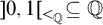 and consider

with the subspace topology. Let
$D\subseteq X$
 be a maximal dense in itself subspace of X then we have that
$(e,0)\notin D\leftrightarrow \Phi ^A_e(e){\downarrow }$
be a maximal dense in itself subspace of X then we have that
$(e,0)\notin D\leftrightarrow \Phi ^A_e(e){\downarrow }$
 and so
$A'\leq _T D$
and so
$A'\leq _T D$
 . So
$(2)$
. So
$(2)$
 implies the Turing jump of every set exists, which by Proposition 3.2 implies arithmetic comprehension. Since
$(1)$
implies the Turing jump of every set exists, which by Proposition 3.2 implies arithmetic comprehension. Since
$(1)$
 –
$(3)$
–
$(3)$
 all imply arithmetic comprehension, it suffices to show that they are equivalent over
$\mathbf {ACA}_0$
all imply arithmetic comprehension, it suffices to show that they are equivalent over
$\mathbf {ACA}_0$
 .
.
$(1\rightarrow 2)$
 Let X be a
$T_3$
Let X be a
$T_3$
 space and define
$U\subseteq X$
space and define
$U\subseteq X$
 to be the set of points
$x\in X$
to be the set of points
$x\in X$
 such that there exists an infinite dense in itself subspace of X containing x. The set U exists by
$\Sigma ^1_1$
such that there exists an infinite dense in itself subspace of X containing x. The set U exists by
$\Sigma ^1_1$
 comprehension, which is equivalent to
$\Pi ^1_1$
comprehension, which is equivalent to
$\Pi ^1_1$
 comprehension. We have that U is a maximal dense in itself subspace of X, and therefore,
$X\setminus U$
comprehension. We have that U is a maximal dense in itself subspace of X, and therefore,
$X\setminus U$
 must be scattered.
$(2\rightarrow 1)$
 Since being scattered is
$\Pi ^1_1$
Since being scattered is
$\Pi ^1_1$
 universal, we show that for any sequence
$(X_i)_{i\in \mathbb {N}}$
universal, we show that for any sequence
$(X_i)_{i\in \mathbb {N}}$
 of
$T_3$
of
$T_3$
 CSC spaces the set of indices i such that
$X_i$
CSC spaces the set of indices i such that
$X_i$
 is scattered exists. Let
$X=\coprod X_i$
is scattered exists. Let
$X=\coprod X_i$
 be the disjoint union of all the
$X_i$
be the disjoint union of all the
$X_i$
 and let D be the maximal dense in itself set of X. We have that
$X_i$
and let D be the maximal dense in itself set of X. We have that
$X_i$
 is scattered if and only if
$X_i\cap D= \emptyset $
is scattered if and only if
$X_i\cap D= \emptyset $
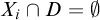 and so the set

exists by arithmetic comprehension.
$(1+2\rightarrow 3)$
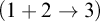 Let X be a
$T_3$
Let X be a
$T_3$
 CSC space, then we have by
$(2)$
CSC space, then we have by
$(2)$
 that
$X=P\sqcup Y$
that
$X=P\sqcup Y$
 where D is dense in itself and Y is scattered. Since
$\mathbf {ATR}_0$
where D is dense in itself and Y is scattered. Since
$\mathbf {ATR}_0$
 proves
$T_3$
proves
$T_3$
 scattered CSC space is ranked we have that
$(1)$
scattered CSC space is ranked we have that
$(1)$
 implies that Y has a rank R, let
$(Y_r)_{r\in R}$
implies that Y has a rank R, let
$(Y_r)_{r\in R}$
 witness that R is a rank for Y. We have that
$(Y_r\sqcup P)_{r\in R}$
witness that R is a rank for Y. We have that
$(Y_r\sqcup P)_{r\in R}$
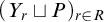 witnesses that R is a rank for X.
$(3\rightarrow 2)$
 Let X be a
$T_3$
Let X be a
$T_3$
 CSC space. By assumption X has a rank R, let
$(X_r)_{r\in R}$
CSC space. By assumption X has a rank R, let
$(X_r)_{r\in R}$
 witness that R is a rank for X. By definition of rank (Definition 12.6), we have that
$\bigcap _{r\in R} X_r=P$
witness that R is a rank for X. By definition of rank (Definition 12.6), we have that
$\bigcap _{r\in R} X_r=P$
 does not have limit points. So P is either empty or is a maximal dense in itself subspace of X. So
$X\setminus P$
does not have limit points. So P is either empty or is a maximal dense in itself subspace of X. So
$X\setminus P$
 is scattered and
$X=P\sqcup (X\setminus P)$
is scattered and
$X=P\sqcup (X\setminus P)$
 can be written as the disjoint union between a dense in itself subspace and a scattered subspace.
Note: The fact that a countable subset of
$\mathbb {R}^n$
 can be written as the sum of a scattered set and a dense in itself set is due to Sierpinski [Reference Sierpiński31]. A similar proof is used to show that
$\Pi ^1_1$
can be written as the sum of a scattered set and a dense in itself set is due to Sierpinski [Reference Sierpiński31]. A similar proof is used to show that
$\Pi ^1_1$
 comprehension is equivalent to the Cantor–Bendixson theorem for complete separable metric spaces [Reference Simpson32, Theorem VI.1.3].
16 Summary Part II
Theorem 16.1. Over
$\mathbf {RCA}_0$
 the following are equivalent:
-
(1) Arithmetic transfinite recursion.
-
(2) Every locally compact CSC space has a $CCN$
(Propositions 11.6 and 11.7). -
(3) Every $T_2$
locally compact CSC space has a
$CCN$
(Proposition 11.8). -
(4) Every $T_2$
locally compact CSC space is the disjoint union of open compact sets (Proposition 10.14). -
(5) Every $T_2$
locally compact CSC space has an exhaustion of compact sets (Proposition 10.21). -
(6) Every $T_2$
locally compact CSC space has an effectively
$T_2\, 1$
point compactification (Proposition 10.25). -
(7) Every $T_2$
locally compact CSC space is homeomorphic to a well-order with the order topology (Proposition 10.14). -
(8) Every well-order has Cantor–Bendixson rank (Friedman [Reference Friedman8]).
-
(9) Every scattered $T_3$
space has Cantor–Bendixson rank (Friedman [Reference Friedman8]). -
(10) Every pair of $T_2$
locally compact CSC spaces are topologically comparable (Hirst [Reference Hirst16]). -
(11) Every pair of well-orders with the order topology are topologically comparable (Friedman [Reference Friedman8]).
-
(12) Belnov–Knaster–Urbanik theorem ([Reference Bel’nov2, Reference Knaster and Urbanik21]): Every $T_3$
scattered CSC space effectively embeds into a well-order (Theorem 12.12). -
(13) Katětov’s theorem ([Reference Katětov19]): Every $T_3$
scattered CSC space is the refinement of the order topology of a well-order (Theorem 12.14). -
(14) Every $T_3$
scattered CSC space is effectively homeomorphic to a scattered linear order with countably many cuts (Theorem 12.17). -
(15) Every $T_3$
scattered CSC space is completely metrizable (Theorem 13.13).


Theorem 16.2. Over
$\mathbf {RCA}_0$
 the following are equivalent:
-
(1) $\Pi ^1_1$
comprehension. -
(2) For any sequence of CSC spaces $(X_i)_{i\in \mathbb {N}}$
then the set
$\{i\in \mathbb {N}:X_i\text { is connected}\}$
exists (Theorem 15.2). -
(3) For any sequence of CSC spaces $(X_i)_{i\in \mathbb {N}}$
then the set
$\{i\in \mathbb {N}:X_i\text { is compact}\}$
exists (Proposition 7.18). -
(4) For any sequence of CSC spaces $(X_i)_{i\in \mathbb {N}}$
then the set
$\{i\in \mathbb {N}:X_i\text { is scattered}\}$
exists (Corollary 13.10). -
(5) For any sequence of countable metric spaces $((X_i,d_i))_{i\in \mathbb {N}}$
then the set
$\{i\in \mathbb {N}:(X_i,d_i)\text { is Complete}\}$
exists (Corollary 13.10). -
(6) For any sequence of countable linear orders $((L_i,<_i))_{i\in \mathbb {N}}$
then the set
$\{i\in \mathbb {N}:L_i\text { is Complete}\}$
exists (Proposition 7.18, Shafer [Reference Shafer29, Corollary 4.2]) -
(7) Every $T_3$
CSC space is the disjoint union of a scattered space and a space homeomorphic to
$\mathbb {Q}$
(Theorem 15.3). -
(8) Every $T_3$
CSC space is ranked (Theorem 15.3).







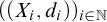





Question 16.3. Over
$\mathbf {RCA}_0$
 , any sequentially compact metric space will be complete. Is the same true for effectively compact or even strongly effectively compact metric spaces? If not, what is the strength of every effectively compact metric space is complete?
Question 16.4. Does
$\mathbf {RCA}_0$
 prove that every compact CSC space is scattered?
Question 16.5. Is the well-foundedness of
$\omega^\omega$
 necessary to prove that every strongly effectively compact effectively
$T_2$
necessary to prove that every strongly effectively compact effectively
$T_2$
 CSC space is well orderable over
$\mathbf{RCA}_0$
CSC space is well orderable over
$\mathbf{RCA}_0$
 ?
?
Question 16.6. Does arithmetic comprehension follow from every uniformly
$T_3$
 scattered CSC space having a complete metric?
Question 16.7. Does arithmetic comprehension follow from every
$T_3$
 scattered CSC space having an effective embedding into a
$T_2$
scattered CSC space having an effective embedding into a
$T_2$
 compact CSC space?
Question 16.8. Over
$\mathbf {ACA}_0$
 we have

and being scattered and being compact are both
$\Pi ^1_1$
 universal formulas. We can express a CSC space
$(X,(U_i)_{i\in \mathbb {N}},k)$
universal formulas. We can express a CSC space
$(X,(U_i)_{i\in \mathbb {N}},k)$
 is locally compact as
$ \forall x\,\exists i\,(x\in U_i\wedge \overline {U_i}\text { is compact}\,) $
is locally compact as
$ \forall x\,\exists i\,(x\in U_i\wedge \overline {U_i}\text { is compact}\,) $
 . So over
$\Sigma ^1_1$
. So over
$\Sigma ^1_1$
 axiom of choice being locally compact is equivalent to a
$\Pi ^1_1$
axiom of choice being locally compact is equivalent to a
$\Pi ^1_1$
 formula. Is being locally compact equivalent to a
$\Pi ^1_1$
formula. Is being locally compact equivalent to a
$\Pi ^1_1$
 formula over
$\mathbf {ACA}_0$
formula over
$\mathbf {ACA}_0$
 ?
?
Question 16.9.
$\mathbf {ATR}_0$
 proves that any
$T_3$
proves that any
$T_3$
 scattered CSC space is homeomorphic to the order topology of a scattered linear order with countably many cuts. Can
$\mathbf {ACA}_0$
scattered CSC space is homeomorphic to the order topology of a scattered linear order with countably many cuts. Can
$\mathbf {ACA}_0$
 prove that any
$T_3$
prove that any
$T_3$
 scattered CSC space is homeomorphic to a scattered linear order with the order topology?
Question 16.10 (Shafer)
What are the sets of Turing degrees of metrics on a recursive
$T_3$
 CSC space? An analysis of the proof in Theorem 5.20 shows that there is a recursive
$T_3$
CSC space? An analysis of the proof in Theorem 5.20 shows that there is a recursive
$T_3$
 space X such that a set A computes a metric for X if and only if
$\emptyset '\leq _T A$
space X such that a set A computes a metric for X if and only if
$\emptyset '\leq _T A$
 .
.
Acknowledgments
Many thanks to my supervisor, Paul Shafer, for many helpful suggestions and discussions, for reviewing my drafts, and for presenting the original problem and motivation for this work. I would also like to thank Carl Mummert, Orazio Nicolosi, and the anonymous reviewer for helpful suggestions and references.
Funding
The author’s work was supported by a scholarship from the UK Engineering and Physical Sciences Research Council.





 Open access

