Introduction
The Global Strategy for Plant Conservation (2008) aims to halt the continuing loss of plant diversity. Understanding, documenting and developing conservation strategies for plant species are key issues that need to be urgently addressed as national responsibilities (UNEP, 2005). In Lebanon, floristic richness is estimated to include 2,600 vascular plant species of which 311 (12%) are endemic (Khouzami et al., Reference Khouzami, Bassil, Fortunat and Hayek1996).
In the genus Iris 53 taxa are threatened worldwide, of which 29 belong to the section Oncocyclus (Walter & Gillet, Reference Walter and Gillet1998). Oncocyclus irises bear large showy flowers and have long fascinated horticulturists (Foster, Reference Foster1899). They are xerophytic plants growing naturally in the Caucasus, eastern Turkey, Syria, Lebanon, Jordan and Israel, and further to the east in Iraq, Iran and Afghanistan (Matthew, Reference Matthew1989; Rix, Reference Rix1997). Flower picking and collection of whole plants was probably one of the first causes of human pressure on wild Oncocyclus populations. The first mention of Oncocyclus cultivation dates from the 4th century BC when the Egyptian Pharaoh Tutmosis III brought plants back from his expedition in Asia (Archibald, Reference Archibald1999). At the beginning of the 20th century rhizomes were heavily collected in the wild from Turkey and the Middle East to be sold in Western Europe (Archibald, Reference Archibald1999). Awareness of the need to conserve Oncocyclus irises has been highlighted in several countries. In Jordan, for example, the black iris I. nigricans is the national flower, and the so-called Royal irises have become the symbol of nature protection in Israel. Some iris taxa are protected in Turkey (I. sprengeri) and Armenia (I. paradoxa; Gazit-Ginsburg, Reference Gazit-Ginsburg1974; Archibald, Reference Archibald1999; Shmida et al., Reference Shmida, Fragman, Nathan, Shamir and Sapir2002; Tan et al., Reference Tan, Duman, Niksarli Inal, İnal and Karagoz2003).
The Lebanese endemic Oncocyclus irises (I. cedretii, I. sofarana subsp. kasruwana, I. sofarana subsp. sofarana and I. westii) are rare, growing along the country's western mountain chain. In Lebanon no national conservation measures have yet been undertaken to protect Oncocyclus irises or any other plant species except those occurring within nature reserves (MOE, 2001), and only 2.5% of Lebanon's mountainous area, the natural range of Lebanese Oncocyclus irises, is protected by nature reserves (Khouzami et al., Reference Khouzami, Bassil, Fortunat and Hayek1996; Samaha, undated).
The aim of the research reported here was to examine the contemporary distribution of the Oncocyclus irises of Lebanon in comparison to the known historical distribution of the taxa, identifying their habitats and the threats to the remaining populations, and assessing their conservation status.
Methods
Historical distributions were determined using a literature and herbarium-based survey supplemented by contacts with individuals familiar with Lebanon's flora. The consulted literature included Floras, books on the genus Iris, and original descriptions of the taxa (Foster, Reference Foster1899; Post, Reference Post1933; Dinsmore, Reference Dinsmore1934; Mouterde, Reference Mouterde1966; Chaudhary, Reference Chaudhary1972, Reference Chaudhary1974; Kohlein, Reference Kohlein1987; Mathew, Reference Matthew1989; Rix, Reference Rix1997; Tohmé & Tohmé, Reference Tohmé and Tohmé2001). The herbaria with significant collections of Lebanese Oncocyclus are the Post Herbarium at the American University of Beirut, Lebanon (BEI), the Royal Botanical Gardens, Kew, UK (K), and Geneva, Switzerland (G). Actual specimens were examined at BEI and K, and electronic images were sent from G. All extant information was recorded for each specimen.
We surveyed for irises in May 2002 and 2003, i.e. in the flowering period, for a total of 26 days. Surveyed areas were chosen based on information archived with herbarium specimens and in the literature. Using the road network for access, we walked within high altitude rocky areas that appeared to have habitat suitable for irises. Depending on the size of the area, 1–3 days were spent in each location. When a population was located an additional 1–2 days were spent to determine the extent of the population, walking extensively in an area of at least 1 km2 around each population.
Located populations were divided subjectively into sub-populations based on their relative isolation (distance, presence of natural or artificial barriers) and habitat type (topography, soil and dominant vegetation). We estimated the number of individuals in each population (by counting individuals along transects in sub-populations and multiplying mean density by the effectively occupied area, and then by summing the results for all sub-populations within a population). The apparent geographical limits of each sub-population were mapped with a global positioning system (at least four locations per sub-population) and the area estimated using the geographical system ArcView v. 3.2 (ESRI, Redlands, USA). For each sub-population we noted slope of the land, aspect, soil type (1, reddish brown; 2, yellowish brown; 3, greyish brown), whether there was > 50% surface rock cover, and whether the soil had a sandy texture.
The current or potential pressures on populations in general and on each sub-population in particular were determined based on: (1) Direct observations (urbanization, cultivation, presence of grazing flocks or observation of animal tracks or faeces). (2) Communication with local people (all the people living within the sites or in immediately adjacent areas were questioned about land ownership, historical and current land use and future housing projects in the area; we met at least one council member for each site). (3) Consultation of urbanism/cadastral maps (available from the town planning department of each county) to determine the ownership and status of the sites (private vs council lands, building vs natural zones).
Using the information collected, the IUCN Red List status (IUCN, 2001) of each taxon was assessed.
Results
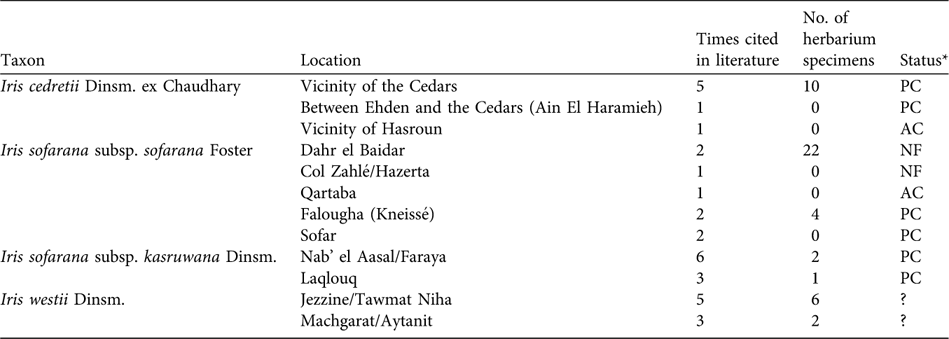
Published records indicated that populations were formerly present in 12 known locations on Mount Lebanon (Table 1). Collection dates indicate few and sporadic collection efforts, mostly during 1930–1972 (Table 2). The oldest herbarium specimen is from 1880 (in BEI). There are relatively few specimens per taxon and even when specimens are numerous, they are from a limited number of collections (Table 2). Ecological data associated with herbarium specimens were limited: altitude, habitat and soil type were noted for only 8% of the specimens. Eighty-seven per cent of the specimens have a collection date and location but only vague locality indications are given, and data on the extent of the populations were not given.
Locations of the four taxa of endemic Oncocyclus irises in Lebanon as determined from literature and herbarium specimens, with the number of times the locations were cited in published literature, the number of specimens in herbaria, and the current status of the populations as determined by the field surveys.

* AC, absence confirmed; PC, presence confirmed; NF, not found; ?, not visited
Number of specimens and collectors, and year of first and last collection, for the herbarium collections of Lebanese Oncocyclus irises.

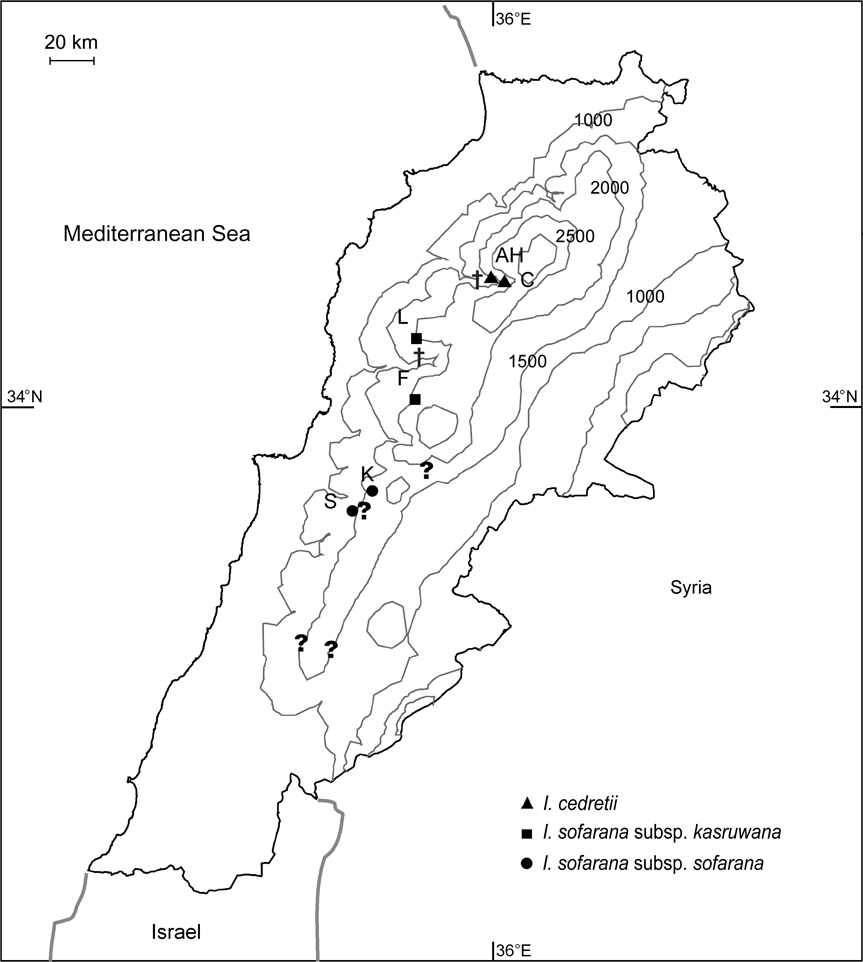
We were able to confirm presence of irises in six of the 12 previously reported sites (Table 1, Fig. 1). Two populations could not be relocated and are probably extinct (I. cedretii in the vicinity of Hasroun, and I. sofarana subsp. sofarana in Qartaba) as no irises were found within 5 km around the supposed locations of the species and as disturbances such as agriculture and urbanization are significant causes of habitat loss in these areas. One population requires further field surveys given the large scale of the area (I. sofarana subsp. sofarana in the Zahlé–Hazerta pass), and three populations (I. sofarana subsp. sofarana population in Dahr El Baidar and two I. westii populations in the south) could not be visited for safety reasons, including possible presence of land mines.
The known distribution of the populations of endemic Oncocyclus irises in Lebanon. Letters represent populations (Table 3): AH, Ain El Haramieh; C, The Cedars; L, Laqlouq; F, Faraya; K, Kneissé; S, Sofar; †, populations for which extirpation was confirmed; ?, populations not located or not visited.

The six located populations vary in extent from 500 m2 to > 4 ha, contain from 15 to > 3,000 individuals, occur at altitudes of 1,350–1,900 m, and grow preferentially on rocky slopes (up to 30°) with a south/south-west exposure (Table 3). No specific relationships were detected with soil type. All populations are located in highly disturbed environments and are facing a variety of threats (Table 3). Urbanization is a serious threat for all populations. Agricultural expansion is the second most serious cause of habitat loss. Grazing by sheep and goats is frequent but its impact on the populations seems to be low. Other pressures include flower picking and, on one site, the presence of old sand quarries.
Area of occurrence of the located sub-populations and estimated total numbers in each population of the endemic Lebanese Oncocyclus irises (we were unable to visit the locations of I. westii), with altitude, slope, aspect and soil type in the area of each sub-population or population and identified threats to each sub-population or population.

1 Clumps or potential genets
2 1, reddish brown; 2, yellowish brown; 3, greyish brown; r, rocky; s, sandy
According to the consulted cadastral maps, all existing iris populations are located on private land and at least two of the largest populations (the Cedars and Nab’ El Aasal) are located on land that has been divided into plots for sale. Iris populations cover, respectively, 13 plots in the Cedars and 27 in Nab’ El Aasal (MOF, undated; MOPW, undated).
Based on our findings, including extent of occurrence, area of occupancy, population size, number of locations and projected decline, we propose Red List categorizations of Endangered for I. cedretii (based on criteria B1ab(ii,iv)+2ab(ii,iv)) and I. sofarana subsp. sofarana (B1ab(ii,iv)+2ab(ii,iv), D)) and Vulnerable for I. sofarana subsp. kasruwana (A4c+B1ab(ii)).
Discussion
Herbaria often provide valuable information on the historical distribution of species. For the Oncocyclus irises of Lebanon herbaria include 58% of the historical information and are representative of 66% of the extant populations. The location of populations is better documented in the literature than in herbaria, however. Our fieldwork indicates a decline in the populations of these irises, with two populations apparently extirpated and two that may have disappeared out of the 12 historically reported, and we did not locate any previously unknown populations.
Ecological data associated with herbarium specimens were limited, with only 4–8% including data concerning altitude, habitat and/or soil type, which is typical for herbarium specimens (Dulloo et al., Reference Dulloo, Maxted, Guarino, Florens, Newbury and Ford-Lloyd1999). We did not identify any specific habitat requirements except preference for good soil drainage, reflected in occurrence on rocky sloping sites with a southern exposure. Irises colonize different types of soils and no soil differences were found between areas harbouring irises compared to areas where they were absent (Saad, Reference Saad2006). There are examples of adaptation of Oncocyclus to specific soil types, such as Iris basaltica (West, Reference West1963), which grows on basalt, but no such specificity is apparent in the Oncocyclus group in Lebanon. Oncocyclus irises appear to grow only at high altitudes in Lebanon but in adjacent areas in Jordan and Israel some species occur down to sea level (Rix, Reference Rix1997).
The major threat to iris populations in Lebanon is habitat loss due to the expansion of winter resorts and associated infrastructure such as new road networks and buildings. Tourism and recreational activities are the main threat to ecosystems throughout the Mediterranean (Allen, Reference Allen2001; Bennett & Bullitta, Reference Bennett and Bullitta2003). Human activity typically leads to fragmentation of suitable habitat (Gibbs, Reference Gibbs2001). Populations of Lebanese Oncocyclus irises are fragmented and/or represent the remnants of larger historical populations. The consequences of fragmentation are reductions in the number of breeding individuals within a population, and reduced gene flow between populations (Dudash & Fenster, Reference Dudash, Fenster, Young and Clarke2000) and pollination efficiency (Duncan et al., Reference Duncan, Nicotra, Wood and Cunningham2004). The small size of remnant populations makes them more prone to demographic, environmental and genetic stochasticity (Fisher & Matthies, Reference Fisher and Matthies1998; Lande, 1998; Oostermeijer et al., Reference Oostermeijer, Luijten and Den Nijs2003). Herbivory by caterpillars and phytophageous insects at flowering time has most likely inhibited chances of sexual reproduction in the populations of Sofar and Kneissé, and has negatively impacted the reproductive potentials of the population in Ain El Haramieh (Saad, Reference Saad2006). We observed that grazing by domestic goats and sheep is a threat to Oncocyclus irises only when the seed pods are green and fleshy, although Arafeh et al. (Reference Arafeh, Sapir, Shmida, Iraki, Fragman and Comes2002) reported grazing on all parts of the plant.
All existing iris populations are located on private land and, given the fact that there is currently no legal framework in Lebanon for the protection of either irises or other plant species in general on private lands, intervention such as translocation of populations will need to be considered. No ex situ conservation facilities exist in Lebanon and none of the Lebanese Oncocyclus irises are currently growing in international botanical gardens. The only place where they can be found is the Millennium Seed Bank (Wakehurst Place, Botanic Gardens Kew, UK) where I. cedretii and I. sofarana subsp. kasruwana seeds are preserved.
This study of Oncocyclus irises is an example of the type of conservation research that is required for the flora of Lebanon. Our findings have been passed to the Ministry of Environment, which is drafting a law that will oblige land owners to carry out an ecological impact assessment when applying for a building permit (C. Khater, pers. comm.). However, such a legal statute cannot insure the long-term preservation of these endemic irises. Data gathering about distributions, limiting environmental factors and the impact of human activity is a first step towards the conservation of rare plant species (Dinsdale et al., Reference Dinsdale, Dale and Kent1997). Additional research on taxonomy, population dynamics and genetics allowed us to define conservation units for these taxa more accurate (Monty et al., Reference Monty, Saad and Mahy2006; Saad, Reference Saad2006), and propagation techniques that could be used for restoration have been studied at the American University of Beirut (L. Saad & S.N. Talhouk, unpubl. data).
Acknowledgements
We thank D. West and Y. Tawk for location indications and A. Saad for help during the fieldwork. We thank the curators of the herbaria at Post, Beirut, Lebanon, Royal Botanic Gardens Kew, UK, and Geneva, Switzerland. LS benefited from a grant from the Belgian Fonds pour la Recherche dans l'Industrie et l'Agriculture.
Biographical sketches
Layla Saad carries out conservation biology research with a particular interest in plant endemism. She is currently working on the impacts of invasive plant species on native communities. Salma N. Talhouk is director the Initiative for Biodiversity Studies in Arid Regions at the American University of Beirut and is currently engaged in characterization of floristic diversity and in domestication trials as part of an interdisciplinary research project investigating the medicinal and horticultural potential of native Lebanese plant species. Grégory Mahy has carried out research in community and population ecology from both an evolutionary perspective and in applied biodiversity conservation. He is currently leading a team focused on plant invasion, plant diversity in semi-natural habitats, and the applied population biology of endemics.