

Although severe attacks on academic freedom may be prima facie associated with authoritarian regimes, the repression of academic freedom has never been exclusive to authoritarian states (SAR 2024a). In liberal democracies in the Global North, there have been campaigns against critical scholarship and political dissent, from anticommunist purges during the McCarthy era in the United States to the repression of antiwar academics during the Vietnam War, as well as more recent crackdowns linked to securitization, nationalism, and racialized politics. Recent assessments (AFi 2025; SAR 2024a) suggest that such attacks have intensified across democratic countries, particularly since October 7, 2023, thereby exposing the fragility of academic freedom even within systems that formally present themselves as committed to free inquiry and critical debate. Rather than isolated or exceptional episodes, these attacks on academic freedom, we argue, constitute a recurring and widespread feature of liberal democracies in the Global North.
This article focuses on the repression targeting expressions of solidarity with Palestine, which has become significantly more visible and systematic in the aftermath of October 7 and is increasingly embedded within legal and bureaucratic frameworks. In this context, academic institutions have emerged both as targets of repression and as active agents in its enforcement. We therefore examine why the protection of academic freedom necessarily includes the right of academics to criticize Israel and its state policies without fear of censorship, sanction, or professional retaliation. In doing so, we scrutinize how these forms of repression have been anchored in a resignification of antisemitism, which has been accorded a special status in the defense of Western civilization by separating it from other forms of racism.
Using the concept of moral panic (Cohen [1972] Reference Cohen2011), we analyze the construction of a narrative that portrays a specific challenge to the fundamental values of society, resulting in a scapegoating of the Left and of migrants. We also identify the main entrepreneurs of this moral panic within and outside universities (Della Porta and Doğan Reference Della Porta and Doğan2026). Using Germany and the United States as case studies of the particularly intense repression of academic freedom (AFi 2025; Della Porta Reference Della Porta2024; Reference Della Porta2025), we show both similarities in the repressive turn and national specificities in the content and form of scandalization, the main actors involved, and the specific targets of repression.
In both countries, the recent wave of academic repression reflects similar dynamics of stigmatization of critical views of Israel driven by moral panic entrepreneurs (policy makers, the media, and lobbyists). In both contexts, higher education has become increasingly commodified, subjected to demands for “neutrality,” and marked by growing precarity, budget cuts, and intensified competition. These pressures are accompanied by increasing controls on teaching and research topics, as well as a rise in anti-intellectualism.
The two countries under consideration also present distinct institutional and political configurations. Germany’s largely public higher education system—operating within a wehrhafte Demokratie model that prioritizes constitutional protection over absolute free expression—has generated more subdued opposition, whereas in the US system, which is characterized by a mix of public and private institutions and a strong tradition of free speech, academic protest and resistance have been more visible. Furthermore, the two countries feature two markedly different models of higher education and academic freedom, as discussed in detail later. Last but not least, the weaponization of the International Holocaust Remembrance Alliance’s (IHRA) definition of antisemitism—used as a tool to police academic discourse and that is central in our analysis—has unfolded differently in the two countries: in Germany, this weaponization has occurred through national-level policy implementation, whereas in the United States, it has been through a decentralized, institution-by-institution process.
The coexistence of these similarities and contextual specificities leads to our central research questions: How and why do analogous mechanisms of moral panic emerge across distinct institutional and political settings? And what accounts for variations in the actors involved as moral panic entrepreneurs? These variations highlight how shared repressive approaches, grounded in moral panic dynamics, intersect with specific national traditions of academic freedom and democratic governance.
We used an original database that draws on multiple sources to identify specific repertoires of repression used by various institutions and the characteristics of targeted actions. This article proceeds as follows. In the first two sections, we present our conceptual and theoretical framework, followed by our methodology. We then compare the two academic systems to better understand the patterns and mechanisms of repression. To contextualize the qualitative analysis, we next present some descriptive quantitative patterns. We then frame the repression of academic freedom as a fight against antisemitism, using the theories of moral panic. Finally, we conclude with some comparative remarks.
Conceptualizing and Theorizing Academic Freedom
Academic freedom is typically defined as an individual human right of academics (EHEA 2020; Rajagopal Reference Rajagopal2003; UNESCO 1997, Article 27) and as a fundamental condition for the proper functioning of democracy and society (Bérubé Reference Bérubé2019; Butler Reference Butler2018; EHEA, 2020; UNHRC, 2024). Moreover, it is also essential for the production of knowledge as a collective freedom and a right enjoyed by “members of particular groups (researchers, teachers, and students) located within the space of the university” (Scott Reference Scott2022, 3–4; Reference Scott2024, 328). Because knowledge production is inherently relational, it relies on a collective framework. Therefore, the collective aspect of academic freedom involves a form of care for knowledge and a responsibility for sharing it while also fostering constructive relationships with students, colleagues, and the wider society.
This collective and relational nature distinguishes academic freedom from other rights, such as freedom of expression, which is universal rather than grounded in institutions and epistemology. Unlike freedom of speech, academic freedom protects not only individual speech but also the collective process of sharing, debating, and pursuing knowledge within institutional and epistemic frameworks. Although closely related to freedom of expression, academic freedom differs from it in both scope and purpose. First, freedom of expression is a universal democratic right granted to all citizens in most national constitutions and international documents (UNESCO 1997, Articles 26 and 27); it provides legal protection for individuals to speak in any public sphere. Academic freedom, in contrast, is a collective right that is specific to academics and research institutions (Post Reference Post, Bilgrami and Cole2015, 126): it addresses the unique risks of inquiry, such as clashes with political power, while also recognizing its benefits for the common good. Rooted in universities and research institutions, it ensures the production of knowledge and the pursuit of truth through research.
Second, freedom of expression does not entail mandatory responsibility toward institutions. Academic freedom, in contrast, is grounded in academic integrity, encompassing professional obligations (EHEA 2020), “the standards of academic disciplines” (Bonn Declaration 2020, 2; see also Scott Reference Scott, Bilgrami and Cole2015; Sitze Reference Sitze2017), and the ethical and moral responsibilities inherent in the pursuit of truth (UNESCO 1997, Articles 33 and 34). Although freedom of speech protects individuals’ expression in various public spaces, academic freedom requires institutional, ethical, and epistemic conditions that enable collective knowledge production and its dissemination. Effective academic freedom requires the autonomy of universities and research institutions (Principle 3 in UNHRC 2024; Principle 1 in Magna Carta Universitatum 2020; UNESCO 1997).
International frameworks further define the scope of academic freedom. It includes the freedom to conduct research (International Covenant on Civil and Political Rights, Article 19 [ICCPR 1996]; Charter of Fundamental Freedoms of the European Union, Article 13 [EU 2000]), to teach and disseminate ideas, and to communicate with other academics on professional matters (EHEA 2020; UNESCO 1997, Article 27). It also includes the freedom of students to study (right to education; International Covenant on Economic, Social and Cultural Rights, Article 13 [ICESCR 1966) and to express criticism (United Nations Economic and Social Council 1999, Article 39 [UN ECOSOC 1999]), as well as institutional autonomy (UN ECOSOC 1999, Article 40; UNESCO 1997, Articles 17–21) and freedom of movement across borders (Magna Carta Universitatum 2020; UNESCO 1997, Articles 26, 29). The Bonn Declaration (2020) emphasizes that freedom of scientific research entails openly sharing, disseminating, and publishing results, including through training and teaching.
Unlike some earlier documents (e.g., UNESCO, 1997), the statement of the European Higher Education Area (EHEA) explicitly affirms that academic freedom applies to both scholars and students (EHEA 2020, 3).Footnote 1 Its 2020 definition offers a comprehensive, internationally recognized framework, ensuring that staff and students are free to learn, study, and engage in critical thinking without fear of repression (Magna Carta Universitatum 2020). This inclusivity is crucial to fostering academic freedom and critical thought. Similarly, UNESCO’s 1977 Recommendation affirms the right of personnel in higher education to express opinions freely and be free from institutional censorship (Articles 27 and 31). To foster knowledge production, all members of the academic community must be free to define research questions, develop theories, gather data, and challenge accepted wisdom (Bonn Declaration 2020, 2; Vrielink, Lemmens, and Parmentier Reference Vrielink, Lemmens and Parmentier2010, 3).
Our study examines cases where violations of academic freedom—especially extramural utterancesFootnote 2—have jeopardized the research and studies of both faculty and students, undermining the core academic rights to teach, critique, and learn. These violations can be analyzed through Hannah Arendt’s critique of conformism and her concept of freedom, alongside Judith Butler’s view of academic freedom, showing how their perspectives reflect and shape broader ethical and institutional dynamics on campuses. Butler’s argument (Reference Butler, Bilgrami and Cole2015, 299) that academic freedom cannot be separated from the right to education—that is, students are also entitled to academic freedom (Sitze Reference Sitze2025)—demonstrates that academic freedom is not just an individual right but also a collective activity and freedom. This resonates with Arendt’s analysis of freedom, (collective) action, plurality, solidarity, and politics (Miller Reference Miller2017).
In The Origins of Totalitarianism first published in 1951, Arendt ([1951] Reference Arendt1973, 323) argues that totalitarian regimes come to power by isolating ([1958] Reference Arendt1998, 53, 58) and inciting individuals to act against one another; this weakens social cohesion and by fragmenting and disempowering individuals creates a society characterized by distrust and deprived of reciprocity, responsibility, togetherness, and solidarity (Arendt [1951] Reference Arendt1973, 311). In The Human Condition, she emphasizes that individuals gain strength when they come together with others (Arendt [1958] Reference Arendt1998, 201–2). Resistance—understood as the conditions of action, plurality, collective power, and of acting together—constitutes a fundamental dimension of the human condition (52; Canovan Reference Canovan and Arendt1998, xii).
Action is closely linked to freedom (Arendt [1958] Reference Arendt1998, 188): individuals become free through their ability to act together and to engage in collective activity in solidarity (201). From this perspective, academic freedom is not intellectual isolation but a practice, from an Arendtian view, that is strengthened through relationships with students, colleagues, and the academic community as a whole (Euben Reference Euben and Gordon2001; Zembylas Reference Zembylas2026). Building on Arendtian concepts and her analysis of totalitarianism, the call to protect academic freedom is not merely about academic freedom itself but also about safeguarding knowledge, fostering human development, and upholding justice and truth (Sitze Reference Sitze2025).
Although Arendt’s concept of freedom refers to freedom in general, rather than specifically to academic freedom, it is highly relevant for understanding the conditions of freedom for academics and academia, as well as the institutional and political contexts in which academic freedom is exercised and restricted. We focus here on Arendt and Butler because they provide a conceptual framework for analyzing academic freedom at the intersection of conformism, ethical responsibility, and institutions.Footnote 3
This approach enables us to view academic freedom not only as a legal right but also as a fragile political practice shaped by periods of historical repression. In the name of avoiding criticism, claiming independence from politics, and upholding pure science and neutrality, both Arendt and Butler warn of “the dangers of conformism and its threat to freedom” (Arendt [1954] Reference Arendt and Kohl1994a, 425; [1948] Reference Arendt and Kohl1994b, 227) in knowledge-producing institutions during critical historical moments.Footnote 4 Arendt highlights the conformist attitude during McCarthyism “as an anti-Communist hysteria” (Carrabregu Reference Carrabregu2020, 15; Schrecker Reference Schrecker1984); Butler (Reference Butler2006a; Reference Butler, Bilgrami and Cole2015; Reference Butler2017) addresses ethical and moral responsibility in what has been described as a new era of McCarthyism (Kane Reference Kane2023; Kendall Reference Kendall2025), which historian Ellen Schrecker (Reference Schrecker2025) has characterized as “so much worse” than the 1950s version (Butler Reference Butler2004). Butler (Reference Butler and Doumani2006b; see Reference Butler2004, 125–26) emphasizes that critique and dissent are normative conditions of academic life.
Arendt’s account of freedom helps assess the conditions required for academic freedom, especially when academic freedom and expression are increasingly restricted. We argue that the university is not only a site for research and education but also a space where freedom is realized through action—an understanding of freedom that Arendt (Reference Arendt1968) articulates clearly. Her concept of freedom provides a theoretical foundation for understanding relationality, nonconformity, and the constraints on academic freedom. Freedom, she argues, is realized through engagement with others in a shared public space, where individuals can act and express themselves (Arendt Reference Arendt1961, 148). Without a politically guaranteed public sphere, freedom cannot be fully actualized ([1958] Reference Arendt1998, 149). For Arendt, politics exists to enable freedom that is experienced primarily through action: “to be free and to act are the same” (Arendt Reference Arendt1961, 151, 153). This freedom “needed …the company of other men who were in the same state, and it needed a common public space to meet them—a politically organized world, in other words, into which each of the free men could insert himself by word and deed” (148). Freedom therefore requires both relationality—engaging with others—and a public space.
Recent pressures on academic and expressive freedoms seek to sever this connection: detaching freedom from both action and politics, reducing it to an abstract internal notion (Arendt Reference Arendt1961, 146; Guimay Reference Guimay2025; Morgen Reference Morgen2016), and fostering anti-intellectualism by stripping it of critical understanding. Yet, academic freedom is realized through active engagement with others. Indeed, owing to its democratic nature, the university has a political character, and academics actualize their freedom by pursuing truth (Sitze Reference Sitze2025), forming relationships with students, colleagues, knowledge, society, or others. Moreover, academic freedom is tied to a specific profession, meaning that what is considered “academic” directly influences its constraints. This tension became very evident in the context of the Israeli war on Gaza, where the freedom to address divisive political issues became particularly contested. Although the wave of protest by students and academics against what they presented as a genocide of the Palestinian people considered universities as arenas for political debates, the repression was often justified by an assumed neutrality of academic knowledge.
In this context, the term “apolisophy”—a blend of the Greek words polis (city or politics) and sophy (wisdom), meaning wisdom beyond politics—describes a reluctance to take a stand in the name of purity (Standpunt 2021) and prioritizes wisdom for its own sake over the common good (Layton Reference Layton2021). Unlike the concept of the apolitical, apolisophy deliberately separates knowledge production from political engagement (Fish Reference Fish, Bilgrami and Cole2015) to preserve its “neutrality.” Responding to Karl Jaspers’ (Reference Jaspers, Deutsch, Reiche and Vanderschmidt1965, 141) view that universities should avoid politics, Arendt (Reference Arendt, Kohler and Saner1992, 49) claims that “there is no such thing as unpolitical insurance against politics” (Carrabregu Reference Carrabregu2020, 8). Her critique of the university as a conformist space and its subsequent retreat from politics and defense of neutrality is particularly illuminating in relation to the so-called Humboldtian model of academic freedom, which is historically linked to neutrality and apoliticism, rather than responsibility and political action. Today, claims of neutrality and apoliticism are increasingly common, including in some US universities. The notion of neutrality (Filippakou Reference Filippakou2023; Zimmer Reference Zimmer, Bilgrami and Cole2015, 243) and the approach of apolisophy contrast with academic freedom based on the common good. Across our cases, neutrality and apolisophy become not only institutional norms in university governance regimes and regulations but also ideological principles aimed at shaping academics and students to serve institutional interests.
Challenging the apolisophical stance of university administrators (their call for institutional passivity), campuses in Germany and the United States continue to function as spaces of resistance and political engagement through counter-hegemonic praxis, despite high levels of repression by three distinct forces: university administrators, state authorities, and private external actors (Alqaisiya and Perugini Reference Alqaisiya and Perugini2026). Resisting neutrality (Giroux Reference Giroux2020), counter-hegemonic practices include protests, performances, critical discourses such as new discussions on radical democracy (Clark Reference Clark2024), and the continuity of knowledge production (Yuka 2025).
As Deeb and Winegar (Reference Deeb and Winegar2024, 324) note, these practices have increased public awareness of Palestinian history and epistemology while promoting broader engagement with Palestinian rights and the Palestinian cause. This visibility emerges through acts of discursive and epistemic resistance (Medina Reference Medina2012, 3), challenging ongoing forms of epistemicide (Santos Reference Santos2014) and sophicide, including scholasticide (Ahmad and Vulliamy Reference Ahmad and Vulliamy2009; Giroux Reference Giroux2025; Hajir and Qato Reference Hajir and Qato2025; Shlaim Reference Shlaim2025; Wind Reference Wind2024). These processes systematically target Palestinian educational structure and knowledge (Mansour Reference Mansour2025; Jones Reference Jones2026; Moaswes Reference Moaswes2024; Pappé Reference Pappé2022), especially in Gaza (Adalah Legal Center 2024; Benraad, Reference Benraad2024; Right2edu, 2009).
This resistance aligns with Butler’s (Reference Butler2017, 857) conception of academic freedom as inseparable from both rights and obligations and as encompassing the broader right to education, which aligns with the American model outlined in the 1915 statement by the American Association of University Professors (AAUP; see the later revision and expansion in the 1940 Statement [AAUP 2025]). The 1915 statement defines academic freedom as both a professional right and a public responsibility extending beyond campus. For Butler (859), academic freedom involves rejecting political interference in research and teaching while fostering inquiry focused on freedom, justice, human dignity, and solidarity: it requires a commitment to critically scrutinizing disciplinary norms and the courage to contest prevailing ones, acknowledging dissent as essential to scholarly existence (Butler Reference Butler2009, 775–77). Academic freedom therefore requires not only resisting external interference (Zimmer Reference Zimmer, Bilgrami and Cole2015, 242) but also empowering institutions and scholars to proactively pursue knowledge centered on ethical and political principles serving the common good.
The discussions by Butler and Arendt highlight a central tension regarding academic freedom and the role of the university, especially in the contemporary context. For Butler (Reference Butler2009, 794), academic freedom depends on critique and dissent, which together create a space for new, marginalized, or controversial ideas to emerge; “Without critique there can be no robust debate on the issues raised by academic freedom” (776). On the one hand, a traditional approach sees the university as a space for professional competence, which is independent from political tensions and aligned with a conformist ideal of “pure” science; on the other hand, a socially engaged approach challenges this neutrality by emphasizing the university’s social and ethical responsibilities (Shakir, Govaerts, and Rabiger Reference Shakir, Govaerts and Rabiger2025). Since 2023, counter-hegemonic praxis and “polisophical” resistance have argued that academic freedom is not just freedom from interference but also the freedom to critically shape a society grounded in human dignity. Through their activities, research, and activism, academics and students combat restrictions and defend their right to challenge the status quo (Giroux Reference Giroux, Carvalho and Downing2010, 31), even as institutions and the law increasingly repress such engagement.
In both Germany and the United States, one of the main tools of repression has been weaponization of the IHRA definition of antisemitism (Stern Reference Stern2019) to target critics of Israel’s policies toward Palestinians. By defining antisemitism in a way that conflates legitimate criticism of Israeli state policies with antisemitism, the IHRA restricts freedom of expression, academic freedom, and other rights. In this regard, Butler (Reference Butler2009, 794–75) observes, “If academic freedom depends on critique, and critique is bound up with the question of how state legitimation takes place, then it would seem that the questions raised about Israel’s subordination and exclusion of the Palestinians prove to be a test case for whether or not critique can remain at the center of academic freedom during this time.”
In both countries, university administrators and political actors have invoked the IHRA definition to silence or discipline students and scholars expressing solidarity with Palestinians or advocating for BDS campaigns, framing such activism and criticism as antisemitic (Butler Reference Butler2006a). To analyze this dynamic, we draw on the concept of moral panic, which refers to a widespread and somewhat exaggerated fear that a society’s culture or well-being is under attack from some evil individual or force. These elements are reflected in Stanley Cohen’s ([1972] Reference Cohen2011, 1) definition: “A condition, episode, person, or group of persons emerges to become defined as a threat to societal values and interests; its nature is presented in a stylized and stereotypical fashion by the mass media.” Typically, the “extent and significance” of the threat are “exaggerated” either in themselves; when “compared with other more reliable, valid, and objective sources”; or relative to “more serious problems” (vii). Moral panic entrepreneurs—from journalists to politicians, opinion leaders to lawmakers—trigger and steer the feeling of panic: “The moral barricades are manned by editors, bishops, politicians, and other right-thinking people; socially accredited experts pronounce their diagnoses and solutions; ways of coping are evolved or (more often) resorted to” (1). In this process, which Cohen influentially studied with reference to the Mods and Rockers in the United Kingdom in the 1960s, folk devils are constructed as deviant figures and cast as outsiders threating society’s core values (1). These dynamics of moral panic exhibit similarities and differences across institutional contexts and models of academic freedom, showing how the German and American models have shaped, constrained, or enabled academic freedom.
Methodology
Our empirical research maps and explains cases of repression of academic freedom and solidarity protests by students and academics in Germany and the United States against the ongoing genocide in Palestine since October 2023.Footnote 5 The analysis focuses on identifying cross-national similarities and differences in the forms of repression, types of targeted actions, and the specific ways in which academic freedom was curtailed.
Within a case-oriented comparative framework, we used a triangulated methodology that combines qualitative and quantitative techniques. The preliminary quantitative analysis—based on cases identified between October 2023 and February 2025 and their distribution across specific categories—outlined general trends and guided case selection for our subsequent qualitative inquiry. This first stage did not aim to produce an exhaustive or representative quantitative account nor to measure prevalence, but rather to provide a structured overview that would guide the in-depth qualitative analysis.
The qualitative component allowed for a nuanced examination of how moral panic dynamics unfolded within each national context. Data were coded using the following categories: targeted action, type of attack, repressive actor, type of violation, legal repression, and legal action. The collected cases (57 in GermanyFootnote 6; 68 in the United States) are used in an illustrative way; the number of cases reflects the availability of sources of information. Some entries refer to individual cases and others to multiple victims, and some include more than one form of repression.
We conducted systematic keyword searches filtered by region (Germany and the United States), using terms such as “‘academic freedom,’ ‘freedom of expression,’ ‘attacks on student protests,’ ‘antisemitism and universities,’ ‘Palestinian protest bans,’ ‘dismissal,’ and ‘cancellation’” (Della Porta and Doğan Reference Della Porta and Doğan2026, 5). In several instances, a reported incident led to the identification of additional, related cases within the same source or across different reports.
The cases from Germany are mostly taken from the Archive of Silence (2023), a database documenting attacks on academic freedom and freedom of expression. Additional sources include newspapers,Footnote 7 official university statements, statements by associations such as the Deutsche Gesellschaft für Sozial- und Kulturanthropologie, articles addressing the repression of Palestinian solidarity, and reports by the Scholars at Risk: the Academic Freedom Monitoring Project (SAR 2024c), the British Society for Middle Eastern Studies (BRISMES), and the European Legal Support Center (ELSC 2025a; ELSC and BRISMIS 2023), which provides legal assistance in Palestine-related cases of repression in Europe (Della Porta and Doğan Reference Della Porta and Doğan2026, 5–6).Footnote 8
The US cases are mostly drawn from the Palestine Legal report (PL 2023), focusing on attacks on Palestinian rights defenders between October 7 and December 20, 2023. Other cases came from incidents reported by the Middle East Studies Association (MESA, including letters written by MESA on behalf of endangered or threatened scholars; Scholars at Risk; Pen America; the AAUP; the American Anthropological Association (AAA); the American Political Science Association (APSA); the Foundation for Individual Rights and Expression (FIRE), as well as various newspapers and media outlets.Footnote 9 Cases first identified through keyword searches were then crosschecked through additional sources, including reports, newspaper articles, and academic journals (Della Porta and Doğan Reference Della Porta and Doğan2026).
In both countries, our data include instances of repression targeting academic events, student groups, academics, and associations, as well as writers, activists, and artists engaged in lectures, conferences, or public discussions. Cases involving non-academic speakers were included when the targeted activity was intended to occur or did occur within an academic setting.
Comparing Germany and the United States
This article examines two countries with distinct models of higher education and academic freedom, exploring how various actors intervene in academia and using a relational approach linking context and agency while framing protest as a driver of social and political change.
Considering the historical and institutional context of higher education in both countries helps clarify these dynamics. As Emily J. Levine (Reference Levine2021, 2) notes, “No two countries are more intertwined” in the parallel histories of the university and modernity than the United States and Germany. In both countries, attacks on academic freedom reflect long-standing tensions between universities and powerful actors, including the state. John C. Moor (Reference Moor2019, 47) highlights how universities have historically been drawn into religious conflicts (see Doğan Reference Doğan2025), whereas Immanuel Wallerstein (Reference Wallerstein1971, 715) underscores persistent state–university tensions, noting that US universities often “supported the government in wartime.” Levine (Reference Levine2021, 19–20) similarly describes a German “academic social contract,” rooted in Humboldt’s 1810 model in Berlin, in which the state guaranteed freedom of teaching and research in exchange for universities serving state interests.
Max Weber (Reference Weber, Gerth and Mills1946) observed that academic freedom in the United States was less secure than assumed, with institutional autonomy constrained by bureaucracy and managerial governance (Levine Reference Levine2021, 3). He argued that reforms under Friedrich Althoff compromised the “pursuit of pure knowledge,” even as he saw competitive transformation in the United States as potentially beneficial (3). As Levine emphasizes, these systems evolved through mutual influence: American universities were Europeanized, while German institutions adopted competitive, capitalist logics (3). Through what she terms “competitive emulation,” each system borrowed and adapted from the other, blending cooperation with rivalry (4). Today, this dynamic can be seen in the Palestinian context as a form of “competitive repression,” in which the imitation of restrictive practices combines with new mechanisms of control under emerging definitions of antisemitism.
Despite their interaction, the two countries differ in their conceptions of academic freedom: the Humboldtian (German) model, developed between 1809 and 1810 (Bongaerts Reference Bongaerts2022; Levine Reference Levine2021, 5; Zimmer Reference Zimmer, Bilgrami and Cole2015) is grounded in the principle of neutrality (Metzger Reference Metzger1961, 115), which encourages apoliticism, asserting that universities should primarily provide professional training. It centers on Akademische Freiheit , emphasizing teaching, research (109), and university independence, including faculty and student rights. The American model is strongly linked to the 1915 AAUP Statement of Principles on Academic Freedom and Tenure, although it developed over time (Labaree Reference Labaree2017) and now extends the protection of academic discourse and free speech beyond campus.
When adapting Akademische Freiheit to the United States, scholars took note of structural differences: German universities are faculty-governed, whereas American universities are typically overseen by boards appointed by private owners, religious bodies, or political processes (Finkin and Post Reference Finkin and Post2009, 24; see also Hofstadter and Metzger Reference Hofstadter and Metzger1955). Universities in the two countries also operate within different systems: German universities are regulated by the state and federal government, whereas US universities operate under mixed public-private governance, often influenced by market and donor pressures. German professors, as state employees under the Beamte system, have particular duties of loyalty to the state, including in their political activities or expressions outside the university; US professors, as citizens of a democratic republic, enjoy First Amendment protections and understand academic freedom as both professional autonomy and broader public good (Finkin and Post Reference Finkin and Post2009, 29–30). The 1915 AAUP declaration reflects this understanding, defining faculty members as “appointees” responsible for fulfilling the university’s social function, as opposed to a mere “employee” (Fassin Reference Fassin2025; Finkin and Post Reference Finkin and Post2009, 34; Weber Reference Weber, Gerth and Mills1946).
These conceptions affect the activism of students and faculty: in Germany, protests are often seen as violating the Humboldtian principle of neutrality, whereas in the United States, they reanimate long-standing disputes over the university’s public role and the scope of academic freedom (Burke Reference Burke2024; Metzger Reference Metzger, Metzger, Kadish and DeBardeleben1969; Reference Metzger, Machlup, Metzger and Sullivan1971; Wood Reference Wood2024). The politicization of the IHRA definition also differs, unfolding through national policy in Germany and via decentralized, institution-level responses in the United States. Despite differences in academic systems and conceptions of academic freedom, similar mechanisms of repression emerge, particularly moral panics that weaponize accusations of antisemitism to suppress Palestinian solidarity (Della Porta Reference Della Porta2024). Differences, however, appear in how moral panics are articulated and mobilized, including the types of moral panic entrepreneurs and the forms of the institutional repression.
Repression of Academic Freedom in Germany and the United States: Some Descriptive Patterns from Documented Cases
The preliminary quantitative analysis, conducted to provide a structured overview and to map cases for qualitative exploration, identified 125 documented instances of extramural and intramural repression of speech. The data suggest different patterns across the two contexts. In the first three months following October 7 (October–December 2023), more documented cases were identified in the United States (45) than in Germany (figure 1). From January to June 2024, the number of documented cases in Germany (33 cases) increased, with violations of academic freedom, freedom of protest, and freedom of assembly approaching the levels observed in the United States during the initial three-month period. These shifts were particularly evident when German students began to set up their own protest camps, following the example of US campus protests.
Repression of Academic Freedom, October 2023–February 2025

Figure 1 Long description
The x-axis lists months from October 2023 to February 2025 using Italian abbreviations. The y-axis measures the number of cases from 0 to 35 in increments of 5. The chart uses two colors: blue for Germany (57 total cases) and orange for the U S A (68 total cases).
* October 2023: Germany starts at 6, U S A adds 11 for a total of 17.
* November 2023: Germany drops to 4, while U S A peaks sharply, adding 28 for a total of 32.
* December 2023: Germany is at 3, U S A adds 6 for a total of 9.
* January 2024: Germany peaks at 10, U S A adds 2 for a total of 12.
* February to June 2024: Both countries fluctuate between 1 and 6 cases monthly.
* July to August 2024: Both countries drop to near zero.
* September to October 2024: Germany remains low (0 to 2), while U S A rises to 6 in October.
* November 2024 to February 2025: Germany shows a slight increase to 3 in January before both countries converge to 1 case in February 2025.
Targeted Action, October 2023–February 2025
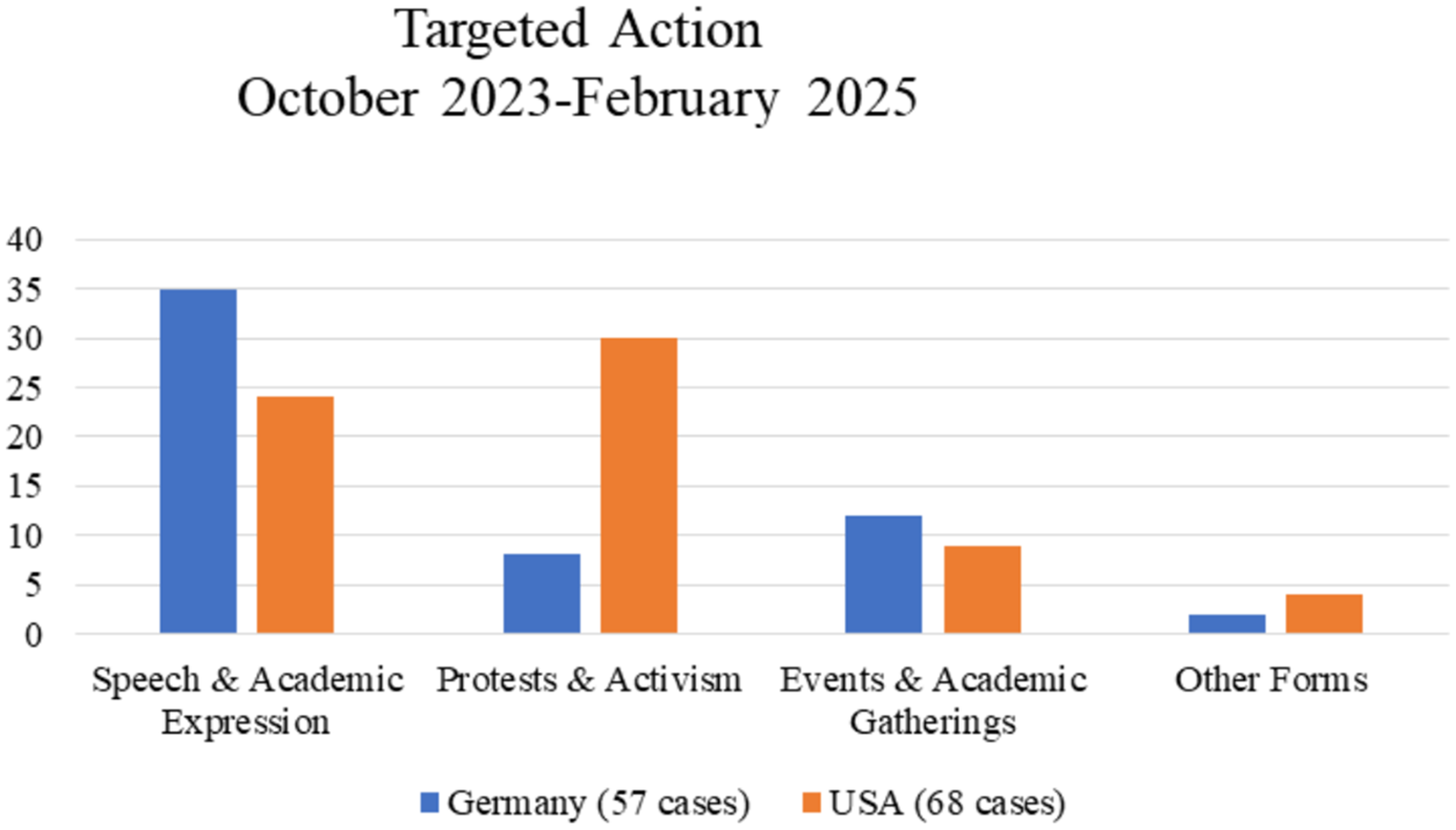
Figure 2 Long description
The y-axis represents the number of cases, ranging from 0 to 40 in increments of 5. The x-axis lists four categories of action. A legend at the bottom identifies blue bars as Germany with 57 total cases and orange bars as U S A with 68 total cases.
* Speech and Academic Expression. Germany has approximately 35 cases, while the U S A has approximately 24 cases.
* Protests and Activism. Germany has approximately 8 cases, while the U S A has 30 cases.
* Events and Academic Gatherings. Germany has approximately 12 cases, while the U S A has approximately 9 cases.
* Other Forms. Germany has 2 cases, while the U S A has 4 cases.
We classified the actions targeted by repression into four categories (figure 2):
-
1. Repression of speech and academic expression: punishments based on the content of academic work, including teaching (course content and syllabi), publishing, and writing
-
2. Repression of events and academic gatherings: targeting of the collective act of gathering and participating in academic activities, such as events and workshops
-
3. Repression of protest and activism: incidents related to activities such as organizing or participating in campus protests (i.e., sit-ins, pray-ins, or study-ins), as well as displaying Palestinian symbols (e.g., wearing keffiyehs, flying flags, etc.; see Perez Reference Perez2024)
-
4. Other forms: repression of speaking in Arabic on campus, or the suppression of status, such as personal identity (i.e. hiding one’s Middle Eastern, Muslim, or Arab origins), affiliations, and involvement in other organizations considered dangerous by authorities, such as Muslim organizations.
The documented cases illustrate that, although speaking Arabic on campus is not legally criminalized in the United States, it is often treated with suspicion or framed as a security threat. It can lead to surveillance, investigation, disciplinary action, or even physical violence. By contrast, in Germany, public authorities, such as the police, have explicitly banned the use of the Arabic language and associated cultural symbols during pro-Palestine protests (Zsiros Reference Zsiros2025; see also Archive of Silence 2024).
Within the documented cases, protests and activism feature prominently as targets of repression on US campuses, including private universities with specific regulatory frameworks. In contrast, the documented cases in Germany (30 cases) primarily involve the cancellation or censorship of events, speeches, and other activities, compared to 15 such cases documented in the United States. These differences across the two contexts reflect the institutional and legal differences between these two higher education systems, rather than being a measure of the relative prevalence of such repression. These activities have been targeted by six forms of repression (see figure 3).
Form of Repression of Academic Freedom (Observable Outcomes)

Figure 3 Long description
The chart features a horizontal X-axis ranging from 0 to 35 in increments of 5. The Y-axis lists six categories. Each category has two bars: an orange bar for Germany (57 total cases) and a blue bar for the U S (68 total cases).
* Legal Repression: Germany is at 9 and the U S is at 22.
* Threat and Harassment: Germany is at 22 and the U S is at 32.
* Disciplinary Investigations: Germany is at 2 and the U S is at 5.
* Banning or Suspension: Germany is at 13 and the U S is at 18.
* Cancellation or Censorship: Germany is at 30 and the U S is at 15.
* Job-based Repression: Germany is at 8 and the U S is at 12.
Overall, the U S shows higher counts in all categories except for Cancellation or Censorship, where Germany's count is double that of the U S.
Cancellation/censorship implies constraints on the content of talks, restrictions on the titles of speeches, the cancellation (or indefinite postponement) of events, or cuts in funding. In both countries, universities cancelled events organized by students or even by faculty, citing “security concerns” and accusing students of misbehaving (FIRE 2024).
Banning/suspension has targeted pro-Palestine university associations, protests (including sit-ins, teach-ins, pray-ins, and study-ins; Healey and Sunder Reference Healey and Sunder2024; Solomon Reference Solomon2023), activists (NYCLU 2024), and symbols (BMdI 2023; Rajvanshi Reference Rajvanshi2023). Student organizations such as Students for Justice in Palestine (SJP), as well as Jewish Voice for Peace, have been suspended or shut down at various universities (SJPR 2024). In some cases, students and faculty members have been declared persona non grata and thus excluded from campus buildings. Bans emerge as a recurring form of repression in the two case studies but occur more frequently in the United States (18 cases) than in Germany (13 cases).
Job-based repression covers dismissal, loss of one’s job or position, forced retirement, withdrawal of a job offer, and suspension from teaching. It is present in 12 cases in the United States: three firings/dismissals, four suspensions, three withdrawals of job offers, one forced retirement, and one removal from position. We coded eight cases of job-based repression in Germany: two firings/dismissals; four withdrawals of job offers, contracts, or professorship appointments; one forced retirement/resignation; and one removal from position.
Threats and harassment affect on- and off-campus teaching and occur online and offline not only through doxing (Bamford Reference Bamford2023), defamation, and smear campaigns but also through physical and verbal violence (Chenoweth et al. Reference Chenoweth, Hammam, Pressman and Ulfelder2024, 7). In both countries, threats and harassment were also enacted through government- or media-led defamation. In many cases, students and faculty were accused of antisemitism and extremism, with open letters and journal articles specifically targeting pro-Palestinian rallies and the individuals participating in them. The 22 US cases of threats and harassment that we coded involved more than 80 individuals.
Disciplinary investigations are a form of repression used by a university against students or faculty members accused of misconduct for discussing the situation in Gaza in class, participating in protests, or posting about Palestine on social media. In many cases—both in Germany and in the United States—university administrations called the police to enter campuses and repress sit-ins and occupations. In the United States, the five cases of disciplinary investigation in our database involved at least 186 individual students and faculty members who were investigated by their respective universities. Although the level of disciplinary sanctions would seem to be higher in the United States than in Germany, in both cases sanctions were issued based on participation in campus occupations, encampments, trespassing, and violations of campus regulations.
Legal repression includes arrests (e.g., students and teachers being arrested for protesting; Alonso Reference Alonso2025; Gambino Reference Gambino2025), the detention of students in classrooms with the assistance of university staff, criminal charges (e.g., for sit-ins or protests), the issuance of citations for protesting, and travel bans. Legal repression appears more prominently in the US cases included in the dataset (22 cases compared to 9 in Germany). In the United States, these cases of legal repression involved at least 311 individuals. Most of our sources from Germany reported legal repression in terms of cases or events, rather than the number of individuals affected, making it difficult to provide an approximate number.
Framing Repression of Academic Freedom as a Fight against Antisemitism
The various forms of repression just outlined were linked to debates about how dissent is framed as antisemitism.
More than two decades ago, Butler (Reference Butler2004, 102) criticized the stance taken by universities in response to earlier criticism of Israeli policies and interpreted the reaction of the then-president of Harvard University, who characterized criticism of Israel as antisemitism, as a blow to academic freedom. This was despite the fact that Butler, who is Jewish, agreed that it is necessary to remain vigilant about the rise of antisemitism and to challenge it wherever it occurs, “especially if it occurs in the context of movements mobilized in part or in whole against the Israeli occupation of Palestinian lands” (103–4).
In both Germany and the United States, universities and national governments have justified attacks on academic freedom as part of a broader fight against antisemitism and terrorism, both of which are seen as sources of insecurity on campus (BMdI 2023): they have portrayed these restrictions as measures that are necessary to combat antisemitism and maintain public order. Indeed, institutions in both countries responded swiftly to the pro-Palestinian protests, aligning with their respective governments’ strong support for Israel and their foreign policy interests in the Middle East.Footnote 10 In both cases, the justification for repression was framed as the protection of Jewish students and the maintenance of campus safety, with a particular emphasis placed on the risk posed by terrorism and antisemitism (Eidelson and Hellman Reference Eidelson and Hellman2025). Within this narrative, pro-Palestinian solidarity was stigmatized as critiques of Israel and Zionism were conflated with attacks on Jewish people as a whole.Footnote 11
In both cases, the fight against antisemitism has been weaponized through the adoption of the “not legally binding” working definition proposed by the IHRA in 2016. This definition focuses on an “Israeli-connected” form of antisemitism, suggesting that “manifestations might include the targeting of the state of Israel, conceived as a Jewish collectivity.” However, it also clarifies that “criticism of Israel, similar to that levelled against any other country, cannot be regarded as antisemitic.” Examples of antisemitic behavior include “denying the Jewish people their right to self-determination, e.g., by claiming that the existence of a State of Israel is a racist endeavor”; “drawing comparisons of contemporary Israeli policy to that of the Nazis”; and “holding Jews collectively responsible for actions of the state of Israel.”
This working definition, known as the IHRA WD, was written by a group of Jewish scholars under the auspices of the American Jewish Committee. It was formally approved only as a core definition, without including its 11 examples. The definition was immediately criticized for justifying human rights violations and the repression of free speech (Bangstad Reference Bangstad2025; ELSC and BRISMIS 2023; Gould Reference Gould2018; Gordon Reference Gordon2024; Hamzah, Reference Hamzah2023).Footnote 12 Criticisms were raised in various forms, including a 2022 letter signed by 122 scholars of Genocide and Holocaust Studies and a 2023 letter from 104 human rights civil society organizations, both of which were addressed to the UN, as well as a petition signed by 700 Jewish faculty members in the United States and a report by a UN rapporteur on human rights (Bangstad Reference Bangstad2025). The IHRA WD has been accused of exploiting the struggle against antisemitism for political purposes, resulting in “the suppression of legitimate criticism of Israel” rather than ensuring “the protection of Jews from racial and religious hatred and intolerance” (Di Stefano Reference Di Stefano2025, 9). At the discursive level, it is possible to note a global shift toward an identitarian form of “antiracism” that emphasizes claims of ethnic privilege (Della Porta Reference Della Porta2024, 336).
This is the historical context in which adoption of the IHRA definition of antisemitism has occurred, which has strengthened the identification of Jewish people and Jewishness with the state of Israel (Butler Reference Butler2004, 119; Della Porta Reference Della Porta2024, 337). As Baker (Reference Baker, Feldman and Volovici2023, 106) argues, rather than providing useful tools with which to identify anti-Jewish or antisemitic tropes or actions, the IHRA definition serves to “normalize” Israel’s statist ethnonationalism and in doing so, contributes to the normalization of other ethnonationalist movements and regimes. Butler (Reference Butler2004, 109–10) observes that when the charge of antisemitism is used as a threat, it becomes ineffective precisely where it is most needed: if all criticism of Israel is labeled antisemitic, the term becomes a weaker tool against genuine anti-Jewish insults, discrimination, antisemitic organizations, or attacks on synagogues.
Although the IHRA definition has played a fundamental role in both countries, its adoption followed different paths. In Germany, it was introduced in 2017 through educational, legal, and police training aimed at improving the recognition and prevention of “crimes with an antisemitic background” more effectively (Assman Reference Assman2021, 404). In November 2019, the German Rectors’ Conference adopted it as a binding guideline for universities, shortly after the attack on a synagogue in Halle (Della Porta Reference Della Porta2024, 302). As part of this process, the clause stating that “criticism of Israel similar to that leveled against any other country cannot be regarded as antisemitic” was removed, reinforcing the view that criticizing the State of Israel is a form of antisemitism.
In the United States, the Department of State embraced the IHRA definition of antisemitism in 2016 (see also AJC 2025). That same year, the University of California Regents’ Working Group on Principles against Intolerance stated that “antisemitism, anti-Zionism, and other forms of discrimination have no place at the University of California” (UC 2016). This stance was met with immediate criticism from academics, who condemned the conflation of anti-Zionism with antisemitism (JVP 2016).Footnote 13 This critique mirrors historical warnings. As early as 1948, Arendt had criticized Zionism on the grounds that its concept of the nation-state relied on ethnic nationalism; she warned that establishing a Jewish state amid conflict could exacerbate militarization, violence, and insecurity for Jewish communities, undermining any prospects for peaceful coexistence.
The tension Arendt identified persists today in the legal sphere. In 2018, the Department of Education adopted the IHRA definition in its enforcement of the Civil Rights Act, Title VI.Footnote 14 Legal scholars analyzing “Title VI allegations about campus antisemitism” note that the law requires proof of “a discriminatory intent or motive,” a standard the Supreme Court has emphasized, “suggesting that even implicit bias against a racial group or unreflective disparities in attitudes of sympathy and indifference would not suffice” (Eidelson and Hellman Reference Eidelson and Hellman2025, 23). As they argue, Title VI cannot automatically criminalize criticism of Israel or pro-Palestinian advocacy. In contrast to Title VII, Title VI does not recognize religion as a protected category: it was drafted with “the omission of ‘religion’ as [a] protected characteristic” and covers “ancestry” but not religion (2, 3). They add that “anti-Zionist acts of exclusion or ‘shunning’ on campus” could constitute “a racially hostile environment” only if motivated by “intent to exclude students of Jewish ancestry” or if “perceived Jewish ancestry” grounds “inferences about their views regarding Israel. Exclusion of Zionists per se would not suffice” (11; emphasis added). Despite these legal views, in 2019, President Trump’s Executive Order on Combating Antisemitism used the IHRA definition when targeting colleges and universities (Deeb and Winegar Reference Deeb and Winegar2024, 319). And, in 2024, the Department of Education opened investigations into students accused of violating the Title VI Act, with a focus on antisemitism as defined by the IHRA (Deeb and Winegar Reference Deeb and Winegar2024, 319).
Building on these developments, several bills were introduced in Congress. Among them, the Antisemitism Awareness Act (HR 6090) passed the House in 2024 and was reintroduced in 2025 to mandate use of the IHRA definition in Title VI enforcement—although it has not yet become law (Congress.gov 2023–24; FIRE 2025b).
In 2021, Texas Governor Greg Abbott signed a bill into law that formally adopted the IHRA definition of antisemitism, becoming the first state to do so (i24News 2021). In 2024, he issued Executive Order GA-44, which required all higher education institutions in Texas to update their free speech policies in accordance with the IHRA definition (Middle East Monitor 2024a; State of Texas 2024).
In many instances, the IHRA definition was introduced by universities following litigation initiated by Jewish organization. In January 2025, Harvard University adopted the IHRA definition in its Non-Discrimination and Anti-Bullying (NDAB) policies (Harvard University 2025; Joshi Reference Joshi2025). This decision sparked controversy among academics, who believed that this would damage freedom of speech and inquiry on Israel, Palestine, the Middle East, and Judaism. Some professors resigned in response.Footnote 15 One such academic was Jay Ulfelder, director of the Nonviolent Action Lab at Harvard Kennedy School’s Ash Center for Democratic Governance and Innovation, who stated that Harvard “consistently prioritizes the university’s funds and reputation over its students and its stated values” (Joshi Reference Joshi2025). His resignation followed that of Diane Moore, head of Religion and Public Life at Harvard Divinity School. Around the same time, a panel discussion including medical patients from Gaza was cancelled because of concerns over neutrality; the event was labeled as “one-sided” for not including Israeli panelists (Joshi Reference Joshi2025).
The insistence on political neutrality in these cases reflects an apolisophical approach to knowledge, which undermines the conditions for critical, pluralistic scholarship emphasized by Arendt and Butler, for whom debate and dissent are essential. An example of how neutrality and an apolisophical stance can limit the different forms of expression and discussion that underpin academic freedom occurred after George Mason University adopted the IHRA definition. It was cited when demanding a Palestinian student group remove a video from social media, warning that “failure to comply could result in disciplinary action” (FIRE 2025a).
Moral Panic Entrepreneurs: The Agents of Repression
Moral panics such as those mobilized to attack academic freedom are spread by moral panic entrepreneurs, which include politicians and the mass media, as well as pressure groups and administrative bodies (Cohen [1972] Reference Cohen2011; Della Porta Reference Della Porta2024). In both our case studies, politicians, bureaucrats (including academic administrators), and pro-Israeli pressure groups were involved: they frequently argued that their interventions were necessary to maintain the university’s neutrality (Burke Reference Burke2024). Given the differences in higher education systems, our data show a more centralized network in Germany, with state coordination, and a more decentralized one in the United States that is dominated by private actors. Although calls for the cancellation or censorship of academic events came from a similar constellation of actors, there were variations in their prominence and methods of intervention.
Moral panic entrepreneurs can be grouped into four main categories: political actors, government bureaucrats at both the federal and state levels, the press, and pro-Israel advocacy groups and student associations. Political figures have been active promoters of moral panics. In Germany, interventions often come from elected officials, such as Green Party city council members or CDU politicians, including Manuel Hagel, who publicly criticized universities for hosting speakers deemed “unqualified” or politically inappropriate (Jamal Reference Jamal2024). In the United States, similar dynamics are visible in executive and legislative actions, most notably Texas governor Greg Abbott’s Executive Order GA-44, which restricts anti-Israel speech under the guise of combating antisemitism.
Government bureaucrats at both the federal and state levels have played a significant role in defining the limits of permissible discourse. In Germany, for example, the Commissioner for Jewish Life and the Fight against Anti-Semitism in the state of Hesse, Uwe Becker, labeled a planned academic conference a “travelling circus of known Israel-haters,” and the mayor of Berlin called the UN rapporteur Francesca Albanese a Hamas supporter (Knight Reference Knight2025).
The third important amplifier of moral panics is the press (Gordon Reference Gordon2025). In the United States, right-wing outlets like The Daily Caller have publicly condemned universities for inviting speakers they perceived as critical of Israel. For example, The Daily Caller denounced the US Naval Academy’s decision to host the historian Ruth Ben-Ghiat. In Germany, the tabloid press plays a similar role: both Die Welt and Bild have led defamation campaigns against scholars such as Professor Ghassan J. Hage, who was even accused of having been used by the BDS movement to infiltrate German academia (SAR 2024b).Footnote 16 This campaign led to his contract being unilaterally terminated by the Max Planck Society, which cited his critique of Israel’s ongoing human rights violations in Gaza on social media and his support for pro-Palestinian protest rights (Della Porta Reference Della Porta2024; SAR 2024c).
Pro-Israel advocacy groups and student associations have acted as moral panic entrepreneurs in both countries. In Germany, the Young Forum of the German–Israeli Society successfully pressured the University of Münster to postpone a screening of the award-winning documentary Roadmap to Apartheid. In the United States, Jewish student organizations like Hillel have organized petition drives, such as the 2024 Wake Forest campaign that gathered more than 8,500 signatures, with the aim of cancelling lectures by scholars such as Rabab Abdulhadi (Alonso Reference Alonso2024). Petitions and coordinated email campaigns, often hosted on platforms like Change.org, appeared repeatedly as tools for mobilization. Although similar student-driven interventions were less frequent in Germany, they also played a role.
Across the cases we studied, diverse coalitions of political, institutional, media, and student actors converged in policing the boundaries of academic speech. However, the balance of these actors’ involvement and the degree of coordination between them differed significantly between Germany’s centralized public system and the US decentralized, market-oriented, higher education landscape. In Germany, a specific bureaucratic body focused on combating antisemitism, often taking a leading role, whereas in the United States, a broad and loosely coordinated network of pro-Israeli pressure groups drove the moral panic campaigns.
In Germany, public resources were invested in the creation of a bureaucracy devoted to combating antisemitism in 2018: the office of the Federal Government Commissioner for Jewish Life in Germany and the Fight against Antisemitism, based at the Federal Ministry of the Interior and Community. This effort was distinct from the broader fight against racism and discrimination.Footnote 17 The commissioner was assigned the task of coordinating “the relevant measures taken by all the federal ministries”; to “serve as contact person for Jewish groups and organizations, and as a liaison for federal, state and civil society measures to combat antisemitism”; and to “coordinate a standing joint federal and state commission … [to] increase public awareness of current and past forms of antisemitism” (FMI 2018). The vagueness of the commissioner’s roles, the unclear criteria for their selection, and the tendency to expand their scope of autonomous action have led to a proliferation of semi-legal regulations (Gessen Reference Gessen2023). Many staff members in this office have lacked significant knowledge of Judaism, which has increased the influence of the Israeli embassy and the Central Council for Jews in Germany (Neiman Reference Neiman2023). In practice, commissioners have often acted in collaboration with pro-Israeli groups.
In the United States, several repressive campaigns were triggered by hate groups and pro-Israel lobbies (Robinson and Griffin Reference Robinson and Griffin2017), targeting students and academics (especially international students and those belonging to ethnic minorities) who had criticized Israel and expressed solidarity with Palestine (Della Porta Reference Della Porta2025).Footnote 18 The Canary Mission, an organization that emerged in 2015, has since focused its activities on exposing students and professors who support Palestinian human rights (CAF of MESA 2018).Footnote 19 It openly proclaims that its aim is to prevent the employment of students and academics by branding them as “radicals” (Canary Mission 2015). In 2025, their website listed 1,898 students, 1,394 professors, and 38 organizations as antisemitic, a figure that included Jewish academics and institutions (Canary Mission 2025).
Pro-Israel donor groups, alumni, and trustees have also been active within most private and public institutions (see the section on the United States in Pen America 2024, as well as Lennard Reference Lennard2024; Moody Reference Moody2023; SAR 2024a). They have played a significant role in threatening universities by withholding their donations, accusing them of failing to condemn Hamas, or forcing institutions to dismiss faculty members or accept their resignations (Moody Reference Moody2023). They often argue that pro-Palestinian voices are “not neutral” to justify accusations of antisemitism, the cancellation of lectures or events, and faculty dismissals (Bronzini-Vender Reference Bronzini-Vender2025; Burke Reference Burke2024).
The repression of academics has also been triggered by individuals and groups promoting petitions on the website Change.org. For example, a petition created by “Muhlenberg College alumni and supporters” called for a Jewish scholar Maura Finkelstein to be removed from her position at the college. For more than 24 hours, a campaign of thousands of anonymous, bot-generated messages flooded the websites of school administrators, local news agencies, and politicians, demanding her removal and accusing her of “Jew-hatred” (Lennard Reference Lennard2024). She was subsequently fired in September 2024 for having shared writings by the Palestinian poet Remi Kanazi on social media (Quinn Reference Quinn2024). Such cases illustrate how individual scholars’ capacities for action and speech—what Arendt calls human plurality— are problematized and perceived as threats.
Building Folk Devils: The Target of the Repression of Academic Freedom
In The Human Condition, Hannah Arendt ([1958] Reference Arendt1998, 179) writes that “in acting and speaking, men show who they are, reveal actively their unique personal identities and thus make their appearance in the human world.” The capacities for action and speech, corresponding to our “plurality as distinct individuals” (ix), which Arendt presents as fundamental conditions of being human, have become sources of tension among states, university administrations, and external forces and have increasingly been problematized. In this context, individuals who speak and take action by exercising these human capacities have been portrayed as “folk devils,” perceived as threats to social order, morality, and national unity.
The construction of “folk devils”—as stigmatized figures portrayed as threats to public morality and institutional integrity (Cohen, [1972] Reference Cohen2011)—has taken similar forms in the United States and Germany. Repression of academic freedom has intensified through political, media, and institutional campaigns that frame pro-Palestinian voices as dangerous, antisemitic, or disruptive to the social order. However, the mechanisms, legal frameworks, and social actors involved differ between the two countries.
In Germany, neoliberal reforms have increased the precarity of the employment status of young scholars. We found that most cases of job-related repression at German universities affected scholars working under contracts that allow universities to terminate their employment at will (eight cases). In several cases, pro-Palestinian students who were accused of antisemitism underwent disciplinary investigations and were banned from universities. Some were prohibited from flying Palestinian flags or wearing keffiyehs and other pro-Palestinian symbols. Universities often intervened to cancel or interrupt events organized by students or student groups; in some instances, police forcibly evicted students who were participating in nonviolent, pro-Palestinian occupations of campus buildings.
Many cases of moral panic were triggered by the signing of petitions or participation in initiatives associated with the nonviolent BDS movement, a loose network of organizations that promotes the boycott, divestment and sanctioning of Israel. A key factor in this dynamic is the non-legally binding resolution passed by the Bundestag in May 2019, recommending that state funding be withheld from events and institutions connected to BDS, whose “patterns of argument and methods” were deemed antisemitic (DB 2019). Although administrative courts have at times upheld complaints against the withdrawal of public spaces for events involving BDS supporters (Balzer Reference Balzer2020), the resolution has primarily been used to delegitimize and discipline individuals and groups, especially non-native-Germans and including many Jews active within the BDS movement. Its adoption has also resulted in the repression of broader networks associated with BDS. In 2023, the Verfassungsschutz (Office for the Defense of the Constitution) labeled the BDS movement extremist, meaning that it could be placed under surveillance by the secret service.
Similarly, the Nationale Strategie gegen Antisemitismus und für jüdisches Leben (NASAS), adopted by the German government in 2022, declared that “antisemitism must also be countered when expressed in acts that are not punishable as criminal.” Without further specification, it confirmed that “financial support for organizations that question Israel’s right to exist is excluded, as is the funding of projects that call for a boycott of Israel or actively support the BDS movement” (BMdI 2022).
The 2024 Antisemitismus und Israelfeindlichkeit parliamentary resolution calls for the consistent implementation of “the joint recommendation of the Central Council of Jews in Germany, the Federal-State Commission of Antisemitism Commissioners and the Conference of Education Ministers on dealing with antisemitism in schools” (DB 2024; see also DB 2022). It denies the legitimacy of the call to boycott Israeli institutions, urging collaboration to prevent activities spreading “Israel-related antisemitism, including calls for boycotts, legitimization, disinformation, and demonization of the Jewish state” and stating that “supporters of any such movement must have no place in German educational and academic institutions” (DB 2024).
Furthermore, legal repression in Germany manifests as an anti-Palestinian epistemology, aimed at obstructing the dissemination of Palestinian knowledge, including culture, history, art, and literature (Giroux Reference Giroux2025; Hajir and Qato Reference Hajir and Qato2025; Moaswes Reference Moaswes2024; Said Reference Said1984; Shakir, Govaerts, and Rabiger Reference Shakir, Govaerts and Rabiger2025).Footnote 20 This is evident in the cancellation of events and the imposition of travel bans. In one of the most well-known international instances, a British Palestinian medical doctor and rector of the University of Glasgow, Ghassan Soleiman Abu-Sittah, was detained and denied entry into Germany in April 2024 to prevent him from speaking at the Palestinian Congress in Berlin (ELSC 2024). Before successfully challenging the decision in court, he was barred from entering other European countries because of the year-long ban imposed on him by Germany.
In the United States, dependence on donors and limited job protection have resulted in widespread job-related discrimination, with a higher number than in Germany of faculty members dismissed, suspended, or denied positions due to political and donor pressure (Jirmanus Reference Jirmanus2025): “Universities are increasingly desperate for funding and perhaps even willing to sell the academic freedom of their faculty in order to secure a stable financial future” (Post Reference Post, Bilgrami and Cole2015, 141). This dynamic is clearly visible in several high-profile incidents. In December 2023, for example, Sima Shakhsari was denied the position of Associate Dean of Diversity, Equity and Inclusion after responding to a question about Gaza during a public panel, following protests by pro-Israel groups (Arria Reference Arria2024).
Pro-Palestinian students have likewise been targeted. In the cases documented in the United States, students have faced suspensions of up to a year for engaging in peaceful forms of protests, such as walkouts, sit-ins and die-ins, and some were summoned by administrators for their social media posts or chants—including “From the river to the sea, Palestine will be free”—that were deemed offensive to Jewish students. Activists were also “accused of violence or disruption after being attacked by campus police during nonviolent protests” and arrested as part of wider legal repression (Palestine Legal 2023, 17).
Ethnic minorities, as well as international students and faculty, have increasingly been stigmatized as folk devils.Footnote 21 The case of Raz Segal highlights this issue. He was offered a job at the University of Minnesota, which later rescinded the offer in June 2024 after two members of the university’s advisory board resigned in protest against his hiring. The protest stemmed from Segal’s description of Israel’s war on Gaza as “a textbook case of genocide” in an article he wrote in October 2023. Hundreds of professors signed a petition in support of their colleague (Moini and Elder Reference Moini and Elder2024). The Jewish Community Relations Council of Minnesota and the Dakotas (JCRC), describing Segal as an “extremist” (Democracy Now 2024) then led a campaign advocating that his job offer be withdrawn. After what Segal called a “hateful campaign of lies and distortions,” his job offer was indeed withdrawn by the university. Segal claimed that he was targeted because as a Jewish individual, he rejected “the narrowing down of Jewish identity to Zionism” (Middle East Monitor 2024b).
In the second Trump administration’s scapegoating of ethnic and religious minorities, the DEI agenda (SAR 2024a) has become a key target; the federal government “immediately began using executive orders, federal funding and the litigation power of the Department of Justice as tools to end DEI efforts, which it views as discrimination against white students and faculty. It is leveraging charges of antisemitism to escalate the crackdown on campus protest that began in response to the encampments of 2024”Footnote 22 (Soucek Reference Soucek2025; see also LPE Project 2025).
Amid debates on neutrality and combating antisemitism, there was a surge in repressive legislation. Some students had their US visas revoked (Aljazeera 2025), and others faced deportation and arrest—most prominently, the Palestinian activist Mahmoud Khalil (Reference Khalil2026)—because of their activism or past statements (Della Porta Reference Della Porta2025). According to Inside Higher Ed (2025), as of April 2025, “over 280 colleges and universities identified more than 1,800 international students and recent graduates” whose legal status was “changed by the State Department.” Some of those students merely expressed support on social media.
The Trump-era repression extends the legacy of McCarthyism, the Red Scare, and the post-2001 War on Terror (Caffentzis Reference Caffentzis2004, 5), continuing the long history of silencing Palestinian voices. In May 2025, the administration even attempted to prevent Harvard University from enrolling international students. Many students and academics are now considering leaving the United States because they fear being accused of terrorism or antisemitism, evoking the climate of the early 2000s (see Freedland Reference Freedland2025).
Whereas past attacks on higher education were framed within the context of the War on Terror, recent ones increasingly rely on instrumental accusations of antisemitism. This political repression intersects with the neoliberal governance of higher education, which has fostered greater precarity and vulnerability among scholars and students. Another key aspect of this repression is its racial and ethnic dimension, particularly regarding the suppression of Palestinian history, culture, epistemology, and national identity; this suppression is often justified under the guise of memory politics or the protection of another ethnic-religious group. Both frameworks of repression share similar security logics and tend to target similar groups, especially Muslims, people of color, and those of foreign origin (Miller Reference Miller2025). As noted by Arendt (Reference Arendt and Kohl1994a, 424), what follows is that such security logics reveal how “the conflict between the state and the individual frequently was resolved at the expense of individual freedom.”
Overall, despite contextual differences, our cases illustrate the construction of pro-Palestinian actors as enemies of Western culture. In these cases, academic institutions engage in moral crusades that redefine dissent as a threat. In the United States, this process is driven by market and nationalist pressures; in Germany, it is shaped by state-led securitarian frameworks. In both cases, the result is a narrowing of the space for critical inquiry and the emergence of a new orthodoxy in which solidarity with Palestine is no longer tolerated.
Conclusion
Our empirical analysis has focused on the forms of attacks on academic freedom as reactions by elites to protests challenging the meaning of knowledge and shared human values. In examining two countries whose governments have been heavily involved in economic, military, and political support for actions perceived as genocidal violence against Palestinians, we identified different mechanisms and patterns of repression, rather than their measured intensity. This repression includes cancellations, censorship, harassment, bans, suspensions, job-related repression (firing and disciplinary investigations), and legal actions targeting both professors and students. In both contexts, the repression of pro-Palestinian protests is deeply embedded in long-standing cultural trends, marked by a growing racist backlash. In the United States, accusations of antisemitism or extremism have been used to attack and dismantle DEI policies (Soucek Reference Soucek2022), whereas in Germany such accusations operate within a hierarchical system of political conformity that emphasizes historical responsibility and Holocaust memory. Protesters in both countries are demonized as threats to society, the social order, campus security, democratic values, and Jewish communities: often they are portrayed as terrorist sympathizers, antisemitic, or extremists.
These dynamics are strengthened by the neoliberal restructuring of higher education, which has made academic institutions, as well as individual scholars and students, more vulnerable to repression (SAR 2024a). Neoliberal governance prioritizes competition and a market logic, centering profit and institutional gain, rather than the production of knowledge for the public good. To achieve this, greater emphasis is placed on funding security, donor satisfaction, rankings, and risk management, which increase censorship and the principle of discipline.
In the United States where many colleges and universities rely on market competition, private donors, and corporate partnerships, this dependence on the market increases pressure to suppress speech, ideas, and actions perceived as threatening, particularly those that could negatively affect institutions’ financial situation. In Germany’s publicly funded universities and centralized higher educational system, governments and ministers have greater influence over decision making and academic freedom. However, despite these structural differences (Labaree Reference Labaree2017), the neoliberal turn has also affected the German system, influencing research-funding regimes, patterns of knowledge production, and decision-making mechanisms (Slaughter and Leslie Reference Slaughter and Leslie1997), including managerialism, surveillance, competition, and precarious employment (Schleck Reference Schleck2022; Vazquez and Levin Reference Vazquez and Levin2018). Across both contexts, these transformations undermine collegial governance and academic autonomy in the name of competition (Reichman Reference Reichman2025; Schleck Reference Schleck2022; Vazquez and Levin Reference Vazquez and Levin2018).
As a result, some groups in both systems, particularly untenured academics and staff, share vulnerabilities: they are greatly affected by “economic and social sanctions for speech” (LPE Project 2023). Even without the threat of legal or disciplinary action, these conditions can lead to self-censorship and compliance. In this sense, neoliberal university governance actively conditions the institution and individuals to internalize repression by threatening academic freedom.
Repression in both countries is understood as a new form of McCarthyism (Gessen Reference Gessen2023). A key mechanism is the adoption of the controversial, non-legally binding IHRA’s definition of antisemitism, which provides a formal framework that can be used to legitimize the censorship of academic speech and its policing and regulation. This framework aligns with support for an apolisophical model of higher education, resonating with the Humboldtian ideal of neutrality that is often used to suppress political dissent. Self-censorship is encouraged through mechanisms such as funding cuts in response to accusations of antisemitism.Footnote 23 To counter these, Butler (Reference Butler2009, 775), advocates “objecting to illegitimate claims of public and governmental authority” and engaging in critical thinking.
In Germany, repression is embedded in an institutional environment characterized by a bureaucratization of policies against antisemitism (Della Porta Reference Della Porta2024). The adoption of the IHRA’s definition, the establishment of a Commissioner for Jewish Life in Germany and the Fight against Antisemitism, and the criminalization of BDS are part of a trend toward juridification: a tendency to extend legal regulation into more aspects of life, often on a semi-legal basis (Della Porta and Alagna Reference Della Porta and Alagna2025; Taylor and Tarrow Reference Taylor and Tarrow2024). The absence of a formal codification of these decisions into law allows them to bypass constitutional scrutiny and undermines the ability of victims to seek judicial redress. These institutional arrangements facilitate moral panic as a mechanism of repression, contributing to the stigmatization and silencing of the political opposition to Israeli policies and feeding into a broader “clash-of-civilizations” rhetoric.
In the United States, particularly after the second Trump administration took office, attacks on campuses, especially targeting students and higher education, have become increasingly institutionalized and legalized. This development has been fueled by attacks on critical race theory and on Middle East Studies, parts of a long-term political engineering of academic and scientific space. Increasingly shaped by legislative initiatives, executive actions, debates on neutrality, and ideological campaigns under the guise of combating antisemitism, radicalism, and campus extremism, Trump’s policies represent a systematic and sustained effort to restructure the boundaries of academic discourse, undermine institutional autonomy, reinforce anti-intellectual ideology, and construct an apolisophical model of higher education that would erode public reasoning, democratic engagement, plurality, and, most importantly, the critical character and mission of the university. Legal repression has intensified through executive actions and measures such as deportations, visa cancellations, and travel bans. These developments have prompted renewed debate on the independence and impartiality of US universities. Pro-Palestinian movements on US campuses have defined this as “a historic juncture” (Deeb and Winegar Reference Deeb and Winegar2024, 313), engaging in counter-hegemonic praxis.
Despite various forms of repression, students and academics continue to use their rights to protest and to use their freedom of assembly, academic freedom, and freedom of speech to expose the truth behind the reality and defend Palestinian rights against genocide and anti-Palestinian racism (Majid Reference Majid2022, 11). Their struggle extends beyond campus protests to legal mobilizations (The New Arab 2023) and public events to talk about the ongoing genocide. These efforts represent anti-apolisophical, or polisophical strategies aimed at resisting the exclusion of political and philosophical–intellectual stances from universities and academic communities.
Acknowledgements
We would like to thank the peer reviewers for their valuable comments, which have helped us improve the article and clarify its key concepts. We would also like to thank the editors for their care and ensuring that this research is accessible to all.
Competing interests
The authors declare that they have no known competing financial interests or personal relationships that could have appeared to influence the work reported in this article.

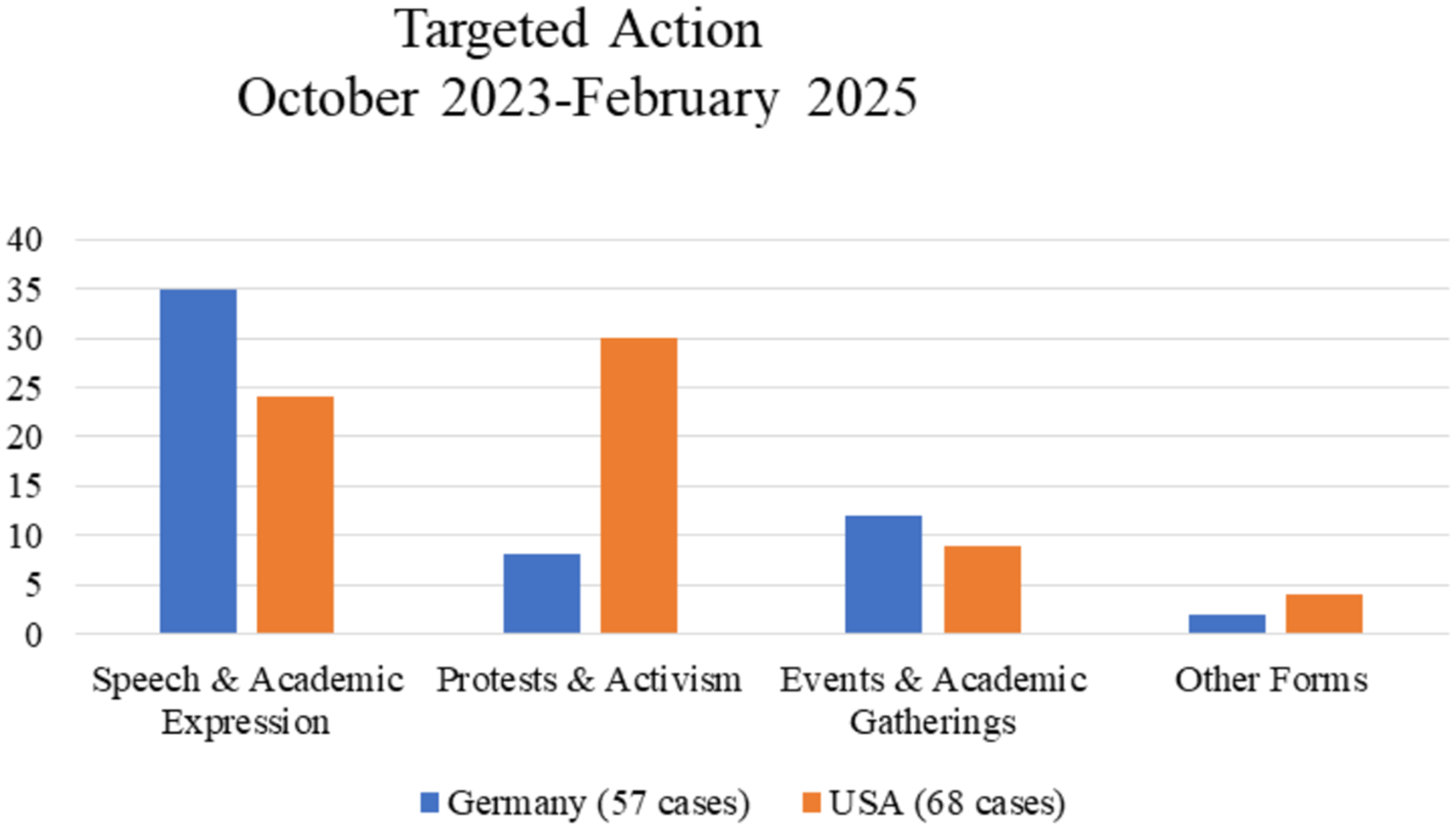
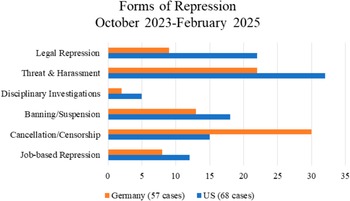

 Open access

