

Introduction
Latin America remains the most unequal region in the world. There was a temporary decline in inequality in the early 21st century, driven by favourable macroeconomic conditions and progressive labour policies. However, the region has experienced a renewed increase in income disparities since the mid-2010s. The COVID-19 pandemic has further intensified these trends, underscoring the structural persistence of wage inequality across sectors and reinforcing labour market segmentation (CEPAL 2022). Despite both its magnitude and its systemic character, inequality remains relatively underexplored from a sectoral perspective (Barrera Insua et al Reference Barrera Insua, Morris, Beliera and Medina2022).
A further, often overlooked, dimension concerns the relational nature of inequality. Rather than examining the foundational social relations through which inequality is produced – most notably those between employers and workers – mainstream economic analysis tends to privilege individual-level explanations. From this perspective, disparities in labour income are explained by differences in working hours, education and training, gender, or social networks, while the underlying structural dynamics of capitalist accumulation and labour relations receive comparatively limited attention.
This paper proposes an alternative analytical framework centred on the relational dimensions of wage inequality. We argue that divergent trajectories in sectoral profit rates and wage income are shaped by factors such as investment patterns, market concentration, union activity, and wage-setting institutions. These dynamics, in turn, contribute to the reproduction of inequality over time.
We employ panel data econometric models to analyse sectoral wage structures in Argentina over the period 2006 to 2019. The dependent variable is the average wage of workers across private economic sectors. Explanatory variables are organised into three interrelated dimensions: (A) capital accumulation under capitalist competition, captured by sectoral profit rates and firms’ differential capacity to pay wages; (B) union power, measured through workers’ structural power, unionisation rates, and wage conflicts; and (C) public labour policy, proxied by the statutory minimum wage.
A substantial body of literature highlights the relevance of these factors for wage determination. Evidence from the United States suggests that profit rates have a positive effect on wage growth when controlling for capital intensity and output levels (Mokre and Rehm Reference Mokre and Rehm2020). Union power, commonly operationalised through collective bargaining coverage or unionisation rates, has also been linked to inequality. In Germany, declining unionisation has been associated with rising wage dispersion (Biewen and Seckler Reference Biewen and Seckler2017). In Argentina, high levels of collective bargaining coverage have been found to raise wages at the lower end of the distribution, thereby promoting greater equality (Lombardo and Martinez-Correa Reference Lombardo and Martinez-Correa2019). Moreover, existing evidence suggests that even after accounting for sectoral differences in firms’ ability to pay, variables such as structural power, unionisation rates, and labour conflicts remain central determinants of wage structures (Barrera Insua and Marshall Reference Barrera Insua and Marshall2019). Finally, a range of studies shows that increases in the minimum wage tend to raise earnings at the bottom of the wage distribution without generating significant adverse employment effects (Groisman Reference Groisman2013; Marshall and Perelman Reference Marshall and Perelman2006). Comparable findings have been reported across other Latin American economies, where minimum wage policies have played a key role in reducing wage inequality (Maurizio and Vázquez Reference Maurizio and Vázquez2016).
The article makes two closely related contributions. First, it offers a theoretical contribution by integrating the analytical framework of capitalist competition with the power resources approach. Grounded in a class-based perspective, both traditions enable an analysis of wage determination as a relational phenomenon process, rather than as the outcome of individual characteristics. Second, this reinterpretation yields an empirical contribution in the form of a wage determination model that examines how capital accumulation dynamics and socio-labour conflict shape unequal wage structures. This model provides empirical evidence from Argentina and offers a framework that can be replicated in other national contexts.
The next section ‘Analysis framework: from transitory differentials to persistent forces’ presents the theoretical framework and discusses the analytical model used to examine sectoral wage inequality in Argentina while the following section ‘Empirical analysis: econometric model and variables description’ outlines the econometric specification, describes the key variables employed in the empirical analysis and reports descriptive statistics for the period under study. The section titled ‘Results’ presents the main results, and the final section, ‘Final remarks’ concludes with a discussion of the findings and their broader implications.
Analysis framework: from transitory differentials to persistent forces
Standard analytical frameworks tend to study sectoral wage inequalities without establishing them clearly from other sources of wage dispersion. Predominant explanations are grounded in human capital theory (Becker Reference Becker1964; Mincer Reference Mincer1958, Reference Mincer1974), which conceptualises education as an investment that enhances labour productivity. Within this perspective, the labour force is implicitly treated as homogeneous, and income disparities are primarily attributed to differences in individual endowments shaped by social institutions such as education.
Accordingly, more educated workers are assumed to exhibit higher productivity and, as a result, to receive higher wages reflecting their greater contribution to output. Differences in schooling and training translate into variations in productivity and earnings (Mincer Reference Mincer1974). The skill premium is therefore expected to fluctuate in response to shifts in labour supply and demand, driven by factors such as technological change, international trade, and changes in workforce composition – for example, the rising participation of women in paid employment.
A second line of explanation derives from the theory of compensating wage differentials (Rosen, Reference Rosen, Ashenfelter and Layard1986). This approach holds that observed wage disparities compensate workers for differences in job characteristics, thereby equalising monetary and non-monetary advantages and disadvantages across occupations and individuals. Wage differences are thus interpreted as compensation for factors such as occupational risk, working conditions and health impacts, urban disamenities (e.g. long commuting times or environmental degradation), and differences in living costs across employment locations. In this regard, Reder (Reference Reder and Meixide1988) emphasises a comprehensive synthesis of inter-industry wage differentials:
Under competitive conditions, in the long run, all industries that recruit in the same location pay the same price for a given quality of work. This statement must be modified based on the non-pecuniary incentives of the various industries and locations /…/. Therefore, in the long run, differences in real wages across industries will reflect differences in their skill mix. Given a qualification level, the differences between money wages of the locations, don’t have to be greater than those that can be due to the differences between the costs of living (Reder 201 -own translation-).
However, the aforementioned approaches restrict the analysis to the interaction between exogenous preferences, individual skills, and alternative production technologies. In doing so, they largely exclude social relations among workers (most notably trade unions), as well as the influence of employers’ organisations. As a result, these theories fail to incorporate unequal power relations between workers and employers as a fundamental driver of wage inequality. Moreover, they assign a secondary role to labour demand in shaping wage structures. Factors such as the conditions for capital valorisation across production sectors, differences in firm size, and varying degrees of market concentration – together with dimensions of union organisation and their collective actions – are marginalised in the analysis of wage determination, despite their well-documented influence on bargaining conditions (Barrera Insua Reference Barrera Insua2018; Barrera Insua and Marshall Reference Barrera Insua and Marshall2019).
The following section develops the analytical framework underlying this paper, outlining the theoretical foundations and key mechanisms through which wage inequality is generated and reproduced.
Capitalist competition, union power, and persistent wage differentials
Previous research has argued that sectoral wage inequality in Argentina arises from both economic and political variables. On one hand, dynamics associated with capital valorisation contribute to downward pressure on labour incomes. On the other hand, workers’ organisational capacity and collective struggles aim to preserve and improve wages and living standards (Barrera Insua Reference Barrera Insua2018). Moreover, in examining wage determination across economic sectors, it is essential to incorporate the role of the state. Far from being a neutral actor, the state operates as a contested arena in which conflicts over labour regulation and wage-setting are negotiated and institutionalised (Jessop Reference Jessop2007).
To examine the dynamics of capital valorisation, we begin by analysing corporate profits across sectors and within firms. The debate on differential profit rates must be situated within broader discussions of capitalist competition. Alternative theories of competition yield distinct interpretations of price formation, long-term growth potential, and, crucially, the distribution of socially produced income (Bahçe and Eres Reference Bahçe and Eres2013). Departing from the framework of perfect competition, which presupposes a harmonious convergence toward stable equilibrium, we adopt an approach that foregrounds conflict and rivalry among capitals, each seeking to maximise profit margins through heterogeneous competitive strategies. From this perspective, capitalist competition is understood as a turbulent, contradictory, and unstable process in which individual capitals continuously strive to appropriate larger shares of total profits. The persistent effort to secure at least ‘normal’ profit rates within a sector implies that profit rates equalisation – while theoretically limiting intersectoral capital mobility – operates only as a tendency rather than as a realised outcome (Shaikh Reference Shaikh1980; Tsoulfidis Reference Tsoulfidis2015).
Despite this instability, capitalist competition is ‘tendentially regulated’. Although profit-driven rivalry generates turbulent capital valorisation dynamics, cyclical movements exhibit a ‘centre of gravity’ around which profit rates fluctuate (Duménil and Lévy Reference Duménil and Lévy1999). As a result, sectoral profit rate differentials play a central role in shaping competitive dynamics: highly profitable industries attract new entrants, while capital tends to exit sectors with persistently lower returns.
Importantly, the tendency towards profit rate equalisation does not operate uniformly across all firms within a sector. Rather, it primarily governs the most efficient or regulating capitals (Shaikh Reference Shaikh1990). In this sense, equalisation functions as a gravitational mechanism for firms endowed with the most favourable cost structures. The reduction of unit production costs – often achieved through the reinvestment of profit in new or more efficient production techniquesFootnote 1 – thus becomes a key mechanism through which competitive advantages are established and rivals displaced.
Consequently, heterogeneous profit rates coexist within each sector, reflecting varied production techniques and their associated temporal dynamics. Market prices, however, are ultimately regulated by dominant capitals employing the most advanced production methods available (Shaikh Reference Shaikh1990). Given the procedural and unstable nature of competition, these dominant positions remain inherently contestable, and the continued participation of firms in each sector is constantly subject to competitive pressures.
Over time, capital inflows and outflows across sectors shape labour supply-demand conditions, thereby influencing average sectoral profit rates. Within this framework, the profit rates of regulating capitals – which tend to converge – establish an upper bound for wage determination. In principle, this upper limit expands with the adoption of new production techniques by dominant firms, as rising labour productivity reduces average production costs and increases the scope for wage growth without eroding profitability.
However, an expansion of the upper wage bound does not, in itself, explain observed wage outcomes. To account for actual wage dynamics, it is necessary to incorporate the organisational capacities and collective actions of workers.
Beyond the relationship between capital accumulation and wage structures, it is also essential to consider the lower bound of wages. In conventional political economy, this lower limit is associated with the value of labour power (Botwinick Reference Botwinick2017), understood as the historically and socially determined bundle of goods and services required for the reproduction of labour within a given geographical and institutional context.
Nevertheless, the lower bound of wage determination cannot be fully accounted for by reference to the value of labour power alone. Particularly in the short run, contingent factors related to workers’ organisational capacity, bargaining power, and representativeness in distributive conflicts must also be considered. Accordingly, the effective wage floor within each sector depends fundamentally on the collective strength of workers in wage negotiations (Barrera Insua Reference Barrera Insua2018).
Furthermore, since labour conflicts do not arise spontaneously but are the outcome of collective processes (Shorter and Tilly Reference Shorter and Tilly1986), this study draws on power resources theory, which places trade unions at the centre of workers’ capacity to compensate for their structural disadvantage vis-à-vis employers (Korpi Reference Korpi1978). Within this analytical framework, union power can be decomposed into analytically distinct dimensions with clear empirical counterparts (Schmalz Reference Schmalz2017; Schmalz et al Reference Schmalz, Ludwig and Webster2018). Among these, structural and associative power are particularly salient, as they constitute the most effective resources for advancing workers’ rights and material gains in the short run (Arnholtz and Refslund Reference Arnholtz and Refslund2024).
Structural power refers to workers’ capacity to affect firms’ profitability within a given economic sector, and in related sectors, through conflicts that disrupt productive activity (Perrone Reference Perrone1983; Wright Reference Wright2000). Accordingly, analysing the commercial linkages of an economic sector within a country’s productive structure provides a means of estimating the potential economic impact of union action. A substantial body of research operationalises these intersectoral connections using the Input–Output Tables: the larger the volume of transactions and the denser the network of linkages with other activities, the greater the potential bargaining power of trade unions (Barrera Insua and Marshall Reference Barrera Insua and Marshall2019; Barrera Insua, Noguera and López Reference Barrera Insua, Noguera and López2024; Cortés and Jaramillo Reference Cortés and Jaramillo1980; Perrone Reference Perrone1983).
Associative power, by contrast, derives from workers’ collective organisation and can be understood as both the degree of workplace adherence and the capacity for mobilisation (Silver Reference Silver and Madariaga2005), as well as from the alliances that unions establish with other organisations (Lévesque and Murray Reference Lévesque and Murray2010). Its primary empirical manifestation is union density (Ibsen Reference Ibsen2024). Accordingly, many empirical studies employ the unionisation rate – that is, the proportion of union members relative to the workforce eligible for unionisation (Barrera Insua and Marshall Reference Barrera Insua and Marshall2019; Barrera Insua et al Reference Barrera Insua, Morris, Beliera and Medina2022), as a synthetic indicator that also facilitates cross-national comparisons. Other contributions emphasise complementary aspects of associative power, including organisational efficiency, commitment, and internal cohesion among members (Schmalz Reference Schmalz2017; Schmalz et al Reference Schmalz, Ludwig and Webster2018).
A final, complementary dimension concerns wage-bargaining strategies. Labour disputes constitute one of the primary means through which unions exercise power, and their frequency and intensity depend both on the configuration of resources held by unions (Arnholtz and Refslund Reference Arnholtz and Refslund2024) and on the strategies adopted by employers or employers’ organisations (Barrera and Marshall Reference Barrera Insua and Marshall2019). The literature suggests that in strategically positioned sectors – where structural power is high – the credible threat of collective action may suffice to secure favourable wage outcomes (Perrone Reference Perrone1983). In non-strategic sectors, however, conflicts tend to be more prolonged and intense. In addition, ‘union traditions’, shaped by past practices and reinterpreted in light of current interests and struggles (Cambiasso Reference Cambiasso2015), may play a particularly important role in contexts such as Argentina. In this sense, contemporary bargaining strategies reflect the imprint of decisions taken by union leadership in response to earlier negotiation dilemmas (Barrera and Marshall Reference Barrera Insua and Marshall2019).
Finally, the role of state policy in wage determination must be explicitly acknowledged. From an institutionalist or state-centred perspective, labour institutions are regarded as central to explaining wage dynamics. From our standpoint, however, state policies in modern capitalism not only regulate labour markets but also reflect the strategic selectivity of state actors in response to prevailing social and political power relations (Jessop Reference Jessop2007; López Reference López2016). Accordingly, shifts in labour policy may either facilitate or constrain wage adjustments, depending on the broader configuration of societal power.
More generally, labour policies enacted by capitalist states seek to mediate conflicts between workers and employers while maintaining macroeconomic stability. Although such policies recognise the influence of workers’ organisations, they simultaneously aim to secure a minimum level of profitability for capital across sectors (Esping-Andersen et al Reference Esping-Andersen, Fried and Wright1976). In this sense, labour institutions formalise specific power relations at the bureaucratic-administrative level, stabilising certain worker demands as institutionalised wage floors while ensuring the continued reproduction of capital.
The following section examines the empirical manifestations of these dynamics.
Empirical analysis: econometric model and variables description
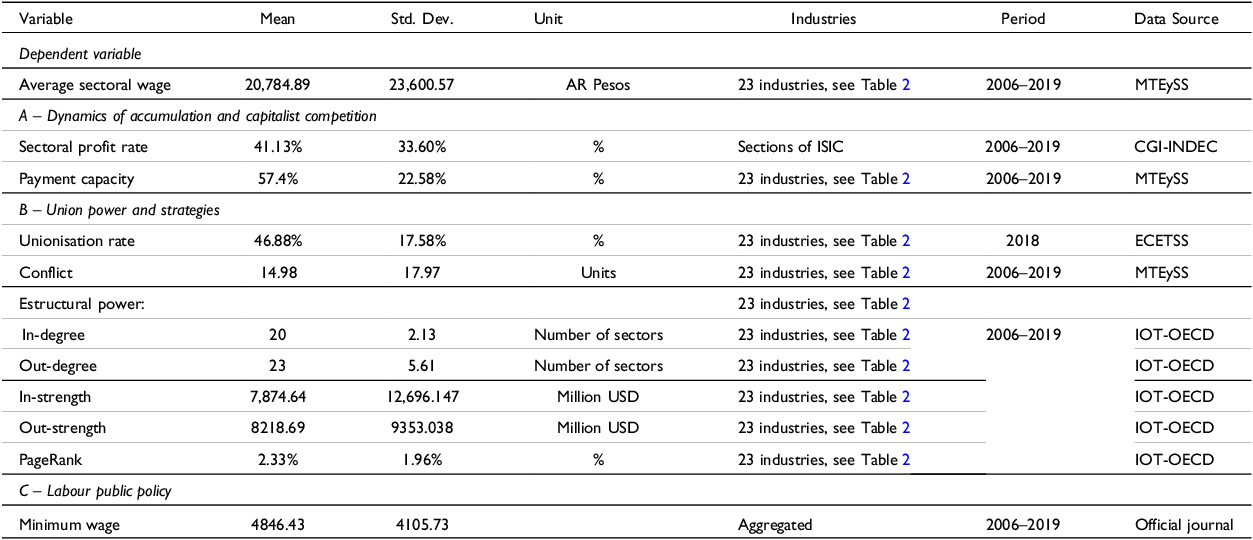
Building on the theoretical framework outlined above, we estimated the following econometric specification, which incorporates the variables summarised in Table 1:
Variables, sources, and descriptive statistics of the variables included in the study
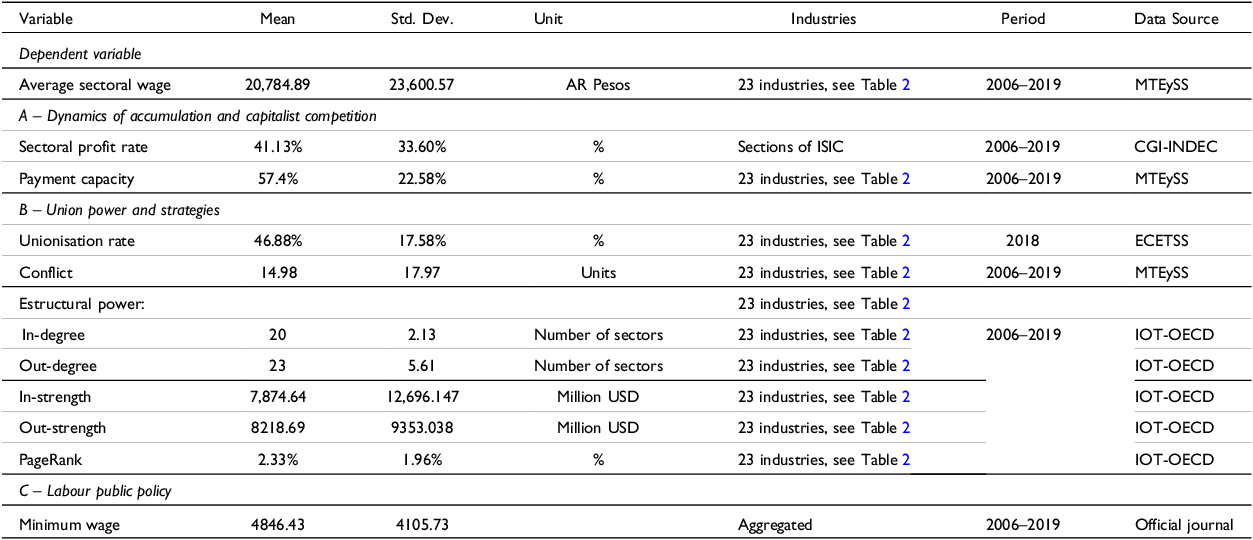
Note. Descriptive statistics are based on simple averages and not on weighted averages, which take into account size disparities between sectors.
 $$\eqalign{ & lnwm{e_{it}} = \alpha + {\beta _1}{\pi _{it}} + {\beta _2}fsiz{e_{it}} + {\gamma _1}epowe{r_{it}} + {\gamma _2}unio{n_{it}} + {\gamma _3}conflic{t_{it}} \cr & \quad \quad \quad \quad \quad + \omega wmin \times belowav{g_{it}} + outpu{t_{it}} + {u_{it}} \cr} $$
where i indexes productive sectors, and t denotes time. The dependent variable, lnwme it , represents the logarithm of the sectoral average wage. π it captures the sectoral average profit rate; while fsize it proxies the differential wage-paying capacity of productive sectors. Workers’ structural power is measured by epower it , whereas associative power is approximated by the sectoral unionisation rate, union it . The variable conflict it captures the incidence of labour conflict across industries. The statutory minimum wage, wmin, which is uniform across sectors, enters the model interacted with belowavg it , defined as the share of workers earning below the sector average wage. output it denotes the sectoral output and, finally, u it denotes the error term. The remainder of this section describes each variable in detail and specifies the corresponding data sources.
To examine the relationship between sectoral wages and the selected explanatory variables – grouped into (A) capital accumulation dynamics, (B) union power and bargaining strategies, and (C) labour public policy – we estimate a fixed-effects panel model. The panel structure enhances both the quality and the informational content of the analysis by combining cross-sectional and time-series variation. Moreover, by exploiting intertemporal sectoral variation, the fixed-effects specification allows us to control for unobserved, time-invariant heterogeneity across sectors (Baltagi, Reference Baltagi2015).
Identification in the empirical framework relies on within-sector variation over time. By including sector fixed effects, we control for time-invariant structural characteristics of each industry (such as technological intensity or historically rooted bargaining traditions), while time fixed effects absorb aggregate macroeconomic shocks common to all sectors. The inclusion of sectoral output further accounts for scale effects that may simultaneously affect wages and profits. Accordingly, the estimated coefficient on profit rates captures the association between changes in sectoral profitability and wages within a given sector over time, conditional on output dynamics, union power, and public policy variables. Although we do not claim a strictly causal interpretation, this specification allows us to more transparently account for scale effects and enhances the internal consistency of the model.
It is important to account for the heterogeneity that characterises the productive structure of Argentina. Accordingly, the empirical strategy controls for time-invariant and sector-specific characteristics that cannot be explicitly incorporated into the model. Previous studies have documented the presence of pronounced asymmetries across industries -particularly technological ones- resulting in a heterogeneous productive system. Moreover, this heterogeneity has been shown to persist over time rather than converging (Porcile and Holland Reference Porcile, Holland and Cimoli2005). It is therefore also necessary to assess whether the main results remain robust when controlling for characteristics that are common across sectors but evolve over time.
The role of unemployment also warrants consideration, as it is not directly included as a covariate in the model. Although the unemployment rate is commonly interpreted as an indicator of workers’ market powerFootnote 2 (Silver Reference Silver and Madariaga2005) and may influence intersectoral wage differentials, its effects are captured through the fixed-effects structure. Specifically, sectoral unemployment rates constitute part of the unobservable, time-invariant heterogeneity across sectors and are thus absorbed by sector fixed effects. At the aggregate level, unemployment varies over time but is common to all sectors and is therefore captured by time fixed effects.
Both pooled and within estimators are employed in the analysis. The pooled specification serves as a benchmark and allows for an initial assessment of robustness; however, the primary focus is on fixed-effects estimators. This specification is particularly suitable for mitigating bias arising from unobserved, time-invariant factors that may jointly affect wages and profitability.Footnote 3
The analysis covers the period 2006–2019, allowing for an examination of medium-term dynamics and the identification of structural trends. The dataset includes 23 private sectors (classified according to the CIIU Rev. 3 taxonomy), for which it was necessary to reconcile information from multiple data sources.Footnote 4
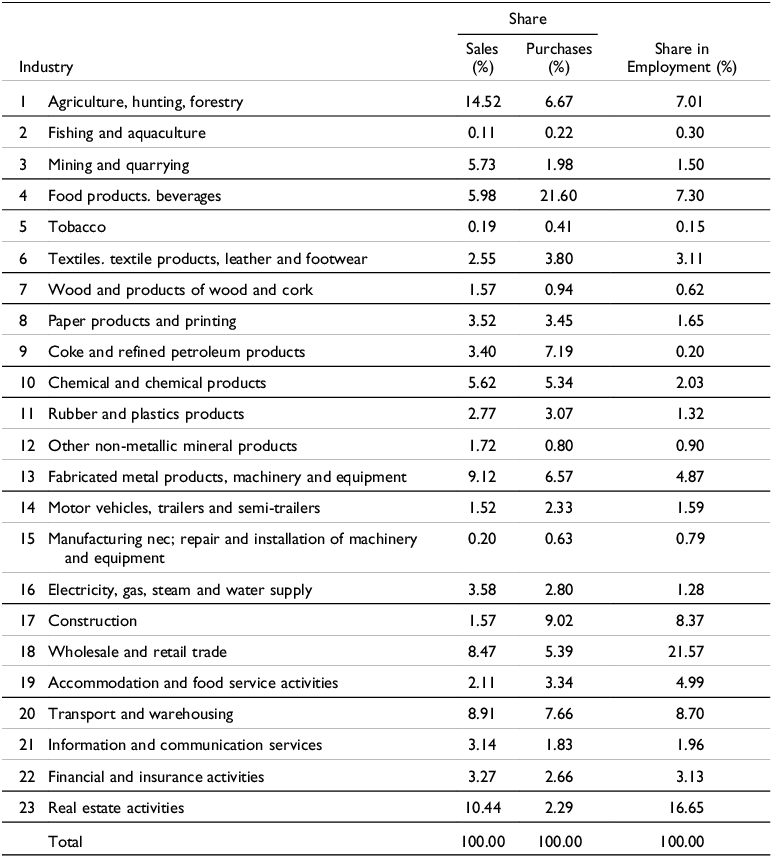
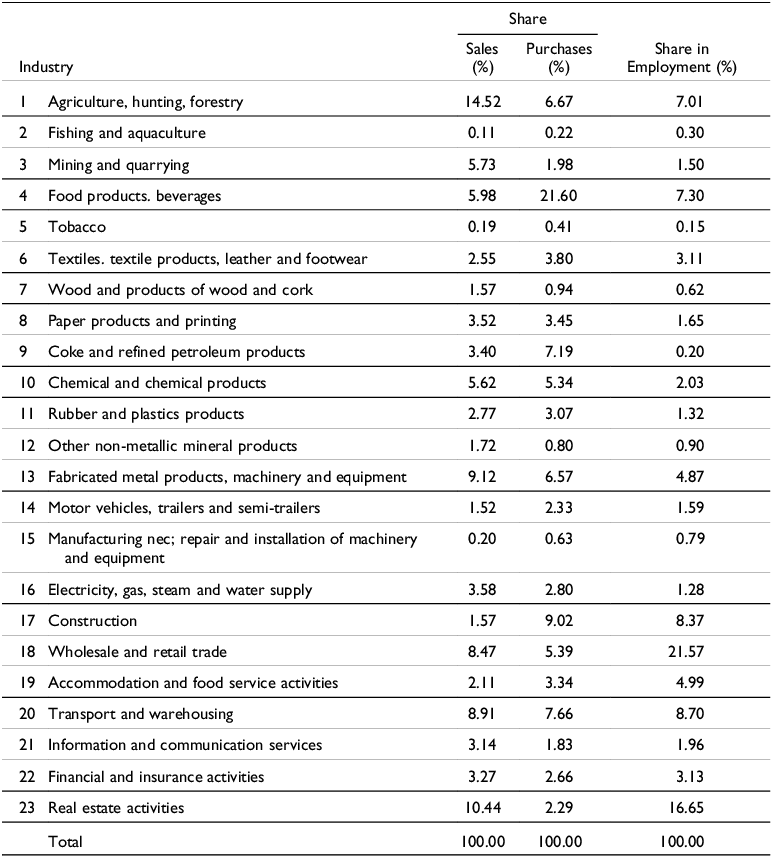
Table 2 presents an initial sectoral characterisation. The trade sector stands out as the most relevant in terms of employment, accounting for 21.6% of registered private-sector jobs. In terms of intersectoral transactions, agriculture, livestock, hunting, and forestry exhibit the highest share of sales to other sectors (14.5%), while food and beverages account for the largest share of intersectoral purchases (21.6%).
Sectoral classification and share of each sector in employment and intersectoral transactions. Average 2006–2019
The following subsection examines in greater detail the three dimensions that structure the set of explanatory variables included in the model.
Dynamics of accumulation and capitalist competition
Dimension A incorporates two variables: sectoral profit rates and the differential payment capacity across economic activities.
The sectoral profit rate is defined as the ratio between surplus value and the total capital advanced in production. Its empirical calculation follows the methodology proposed by Barrera Insua and López (Reference Barrera Insua and López2019), based on National Accounts data published by the National Institute of Statistics and Censuses (INDEC).Footnote 5
Surplus value is approximated by the mass of profits generated by sector i at time t (Mg it ), obtained as the difference between sectoral value added and the wage bill. Total invested capital is defined as the sum of three elements: (i) variable capital stock, proxied by the sectoral wage mass (Ms it ); (ii) fixed constant capital stock (kf it ), approximated by the value of machinery and equipment reported in the National Accounts as the stock of fixed capital;Footnote 6 and (iii) circulating constant capital (CI it ), understood as raw materials fully consumed within the production cycle and approximated by the value of intermediate inputs.Footnote 7
Accordingly, the sectoral profit rate is expressed as shown in equation (2).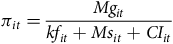 $\pi _{it}={Mg_{it} \over kf_{it}+Ms_{it}+CI_{it}}$
Based on the analytical framework, higher sectoral profit rates are expected to be associated with higher wages, a relationship that has been documented in previous empirical studies (Barrera Insua Reference Barrera Insua2018; Mokre and Rehm Reference Mokre and Rehm2020).
Alternatively, we include the aggregate profits relative to sectoral output (profit share), a variable that is positively correlated with the profit rate described above and that provides differentiated information for the 23 sectors considered. Aggregate profits are calculated by deducting the wage bill from the gross value of sectoral production. This information is published by INDEC. The results for this alternative specification are reported in Table A2 of the Appendix.
In addition, we incorporate the differential payment capacity of leading firms across private-sector economic activities, a factor that has been shown to play a significant role in wage determination (Barrera Insua and Marshall Reference Barrera Insua and Marshall2019). Ideally, indicators capturing productivity levels, productivity growth, or capital intensity would provide the most accurate approximation of firms’ ability to pay. However, due to data limitations, we follow Barrera Insua and Marshall (Reference Barrera Insua and Marshall2019) and employ a proxy based on the degree of concentration within each sector. Specifically, we use the share of registered employment generated by large firmsFootnote 8 relative to total registered employment in each industry. This information is drawn from administrative records of the Argentine Integrated Pension System, Ministry of Labour, Employment and Social Security, compiled by the MTEySS. This measure captures asymmetries in firm size within sectors and provides an indirect indication of differential wage-setting capacity.
Union power and worker’s strategies
Dimension B introduces three variables aimed at capturing differences in power resources and union strategies across sectors: the structural power, studied through measures of centrality referring to the intersectoral relations of the network, the associative power, measured through the unionisation rate, and the union action in wage-related conflicts.
Structural power is associated with the economic relevance of the sector in which a union operates within the system of intersectoral relations. More specifically, it reflects the extent to which a sector’s commercial transactions, both in magnitude and diffusion across the economy, shape its bargaining position. The underlying mechanism is that workers can disrupt production through work stoppages, thereby affecting not only sectoral profits but also propagating effects throughout the productive system (Cortés and Jaramillo Reference Cortés and Jaramillo1980; Perrone Reference Perrone1983).Footnote 9
Following Perrone (Reference Perrone1983), disruptive potential is estimated based on the differential positions occupied by sectors within the system of economic interdependencies. To this end, Input–Output Tables (IOTs) are employed, which map intersectoral production linkages and allow the identification of each sector’s relative importance within the productive network. Sectoral positions are captured through a measure of global centrality commonly used in network analysis (see, for example, Newman Reference Newman2018). Specifically, the PageRank index is applied (Brin and Page Reference Brin and Page1998; Page et al Reference Page, Brin, Motwani and Winograd1999).
For sector i, the index accounts for: (i) the position of sectors connected to sector i Footnote 10 within Argentina’s IOTs, (ii) the number and weight of purchases made by the sector i from other sectors, and (iii) a parameter that balances the relative importance of the number of input-supplying sectors and the volume of those transactions.Footnote 11
While simpler measures of network centrality (such as degree and strength)Footnote 12 are available, PageRank is preferred because it adjusts the value assigned to each sector by considering the outgoing links of its closest neighbours. Degree and strength capture only the number and weight of direct intersectoral relationships, whereas PageRank also incorporates the broader connectivity of those linked sectors. Moreover, this measure limits the overestimation of centrality that may arise from merely maintaining commercial relations with large input suppliers, such as energy, transportation, financial intermediation, and other services. In this sense, PageRank provides a more comprehensive indicator of workers’ structural or disruptive power, as it reflects both ‘backward’ and ‘forward’ linkages within the productive chain, while controlling for ties to large upstream providers.Footnote 13
The variable is constructed using local IOTs released by the Organisation for Economic Co-operation and Development (OECD 2021) for Argentina in the period 2006–2019. It should be noted that the structure of intersectoral relations in Argentina has remained relatively stable over time (Barrera Insua et al Reference Barrera Insua, Noguera and López2024).Footnote 14
Secondly, the associative dimension of union power is considered. This dimension refers to the power resource that derives from workers’ collective organisation, primarily through trade unions, but also through workplace councils, community organisations and political parties (Silver Reference Silver and Madariaga2005; Wright Reference Wright2000). In empirical terms, associative power is proxied by the sectoral unionisation rate. The unionisation rate is defined as the proportion of union members relative to the total number of registered wage earners in each sector – that is, workers who are legally eligible to unionise. In Argentina, sector-level information on union membership is obtained from several complementary sources. These include the Labour Relations Module and the National Survey of Workers on Employment, Work, Health, and Safety Conditions (ECETSS – MTEySS 2019), both conducted by the Ministry of Labour, Employment and Social Security (MTEySS), as well as the National Survey on Social Structure (ENES), carried out by the Inter-University Program of Research on Argentine Society (PISAC).
As Argentina lacks a consistent annual sectoral series on unionisation, and given the relative stability observed in recent survey-based estimates (Marshall Reference Marshall2021), we apply a constant sectoral unionisation rate over the period, based on ECETSS (MTEySS 2019). Available estimates of union density in Argentina are drawn from different employee surveys conducted at distinct points in time and are not fully comparable in terms of geographic coverage and survey scope. Nevertheless, evidence from the Labour Relations Module for 2005, 2006, and 2008 indicates relatively stable economy-wide unionisation rates (37.2%, 39.7%, and 37.7%, respectively). A similar pattern emerges from comparable household surveys (ENES PISAC 2014; ECETSS 2018), whose estimates differ by only 1.5% points (36.2% and 34.7%, respectively). As noted by Adriana Marshall, abstracting strict comparability issues, the period between 2005 and 2018 would show a slight decline in private-sector union affiliation; however, from a longer-term perspective, unionisation levels appear broadly stable.
Although the OECD AIASS (ICTWSS) database reports a decline in union density since the early 1990s, its methodological documentation indicates that early estimates rely on surveys with limited coverage, whereas more recent figures are based on nationally representative sources. The database explicitly cautions that long-run trends should therefore be interpreted with care (OECD 2025a, OECD, 2025b). Given that the present analysis relies on sectoral unionisation rates and overlaps primarily with the most recent nationally representative surveys, priority is given to internal consistency across these sources in the absence of a harmonised annual sectoral series.
Thirdly, union action is considered. The transition from possession of power resources to their effective deployment may be explained through different analytical perspectives. The quantitative approach adopted here allows for a broad characterisation of the predominant strategies pursued by trade unions across sectors. The wage-related conflict variable is built using the labour conflict database (MTEySS) and captures the negotiation strategies developed by unions to secure wage gains.Footnote 15 For each sector, the variable accounts for the annual number of labour conflicts initiated by trade unions and related to wage demands. This information is weighted by each sector’s share in total employment.Footnote 16
From an analytical perspective, structural power and sectoral conflict capture distinct dimensions of union influence. Structural power refers to the objective disruptive potential associated with a sector’s position within the intersectoral production network, whereas sectoral conflict reflects the realised strategic use of this potential through wage-related disputes. Although these dimensions are conceptually related, empirical diagnostics indicate that multicollinearity does not materially affect the estimates.Footnote 17 This suggests that structural position and realised conflict operate as empirically distinct determinants of sectoral wage dynamics.
Finally, in line with the analytical framework and previous empirical findings (Barrera Insua Reference Barrera Insua2018; Barrera Insua and Marshall Reference Barrera Insua and Marshall2019), a positive association is expected between each union-related variable and average sectoral wages. That is, higher levels of union power are expected to be associated with higher wage outcomes.
Labour public policy
In the third dimension, the statutory minimum wage published by the MTEySS is incorporated as a variable capturing the content of labour public policy. Although institutional wage-setting mechanisms operate economy-wide, their effects are expected to be concentrated in low-wage sectors, potentially limiting the impact of this variable to a subset of the industries under analysis. Accordingly, an interaction term is included between the minimum wage and the share of workers earning less than the sectoral average wage. This latter variable is constructed using the longitudinal sample of registered employmentFootnote 18 data published by the MTEySS.
Finally, sectoral output is included as an additional control variable in the empirical specification. Sectoral output data are obtained from INDEC’s Income Generation Account within the National Accounts and are expressed in millions of constant pesos. The inclusion of this variable allows scale effects and overall levels of sectoral economic activity – factors that may simultaneously influence wages and profits – to be appropriately controlled for.
The following section presents the empirical results of the proposed model.
Results
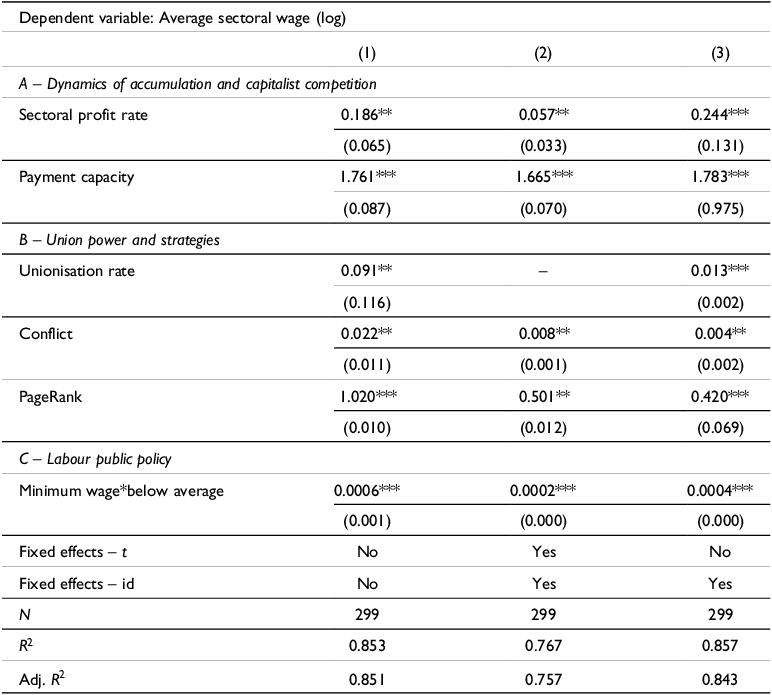
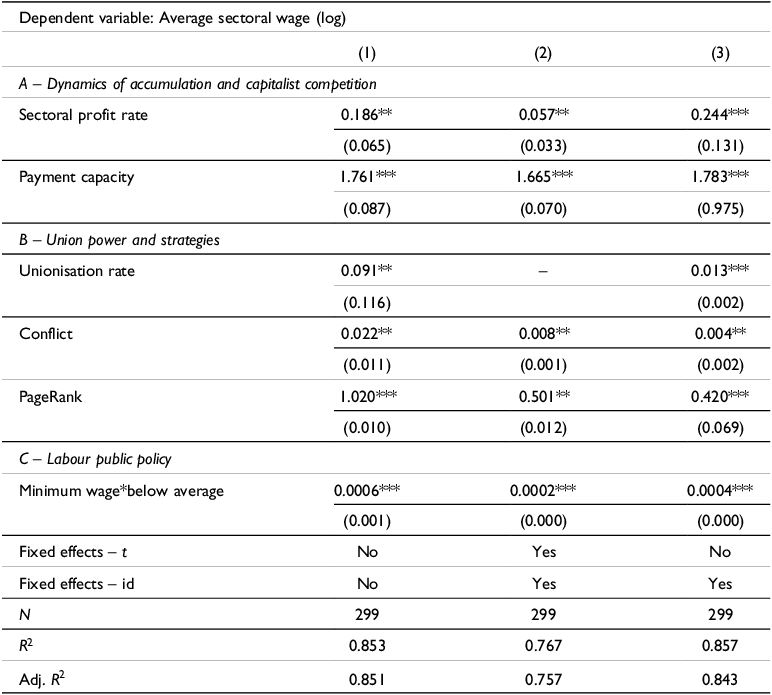
Table 3 presents baseline results. Model (1) corresponds to the ordinary least squares estimator with pooled data, while the rest report the results of the within estimator for panel data. Model (2) incorporates both time fixed effects (to account for time-varying omitted factors common to all sectors) and cross-sectional fixed effects (to control for time-invariant sectoral characteristics), while the latter only incorporates fixed effects at the sectoral level.
Estimation results. Dependent variable: logarithm of the average wage in the registered private sector
Note. Robust standard errors in brackets. Significance: *p < 0.1, **p < 0.05, ***p < 0.01.
Likewise, the appendix provides supplementary information using alternative measures of structural power detailed in the preceding section, alongside an alternative variable for the profit rate (profit share). These specifications are exploited to assess the robustness of the baseline results regarding Argentina’s sectoral wage structure. Notably, the specification with only cross-sectional fixed effects yields the superior fit both in terms of the significance of variables and the explanatory power of the regressors (as indicated by the R2 and adjusted R2).
This suggests that time-invariant, sector-specific unobservable factors play a significant role in determining average sectoral wages. In other words, sectoral characteristics – particularly the inherent heterogeneity of Argentina’s productive structure – significantly influence the wage hierarchy. Furthermore, this heterogeneity appears to be a structural feature, because this relevance is not transposed to factors that vary in time but affect all productive sectors in the same way.
Along similar lines, sector-specific unemployment rates appear to be more relevant in explaining wage determination than aggregated unemployment levels. Nonetheless, our current evidence is insufficient to support this claim, a topic that could be addressed in future research.
Regarding dimension A (accumulation dynamics and capitalist competition), the estimates indicate that the variables of interest are positive and statistically significant across all the specifications. Specifically, increases in the profit rate are associated with higher average wages for registered private-sector workers. The profit share – employed as an alternative variable exhibiting greater sectoral variability – also proves to be positive and statistically significant in all specifications (refer to models (10)–(14) in Table A2 of the Appendix).
In addition, a positive relationship is observed between average sectoral wages and the differential payment capacity of firms – proxied by the degree of intra-sectoral employment concentration. This suggests that market concentration enables firms to sustain higher wage levels.
Regarding dimension B (union power and strategies), the unionisation rate is positively associated with the average sectoral wages and is significant in specifications (1) and (3) in Table 3. However, Appendix Table A2 indicates that this variable is not significant in the pooled specification of Model (7). The unionisation rate performs optimally – achieving significance at the 1% level (p < 0.01) – in Models (3), (6), (9), (10), and (11), most of which incorporate sector-level fixed effects exclusively. A comparable pattern is observed for labour conflict, which generally yields positive coefficients across specifications and maintains a 5% significance level in most cases, except for Models (7), (9) and (10).
Concerning structural power, as proxied by the PageRank centrality index, all specifications (except Model 11) yield positive and statistically significant coefficients (p < 0.05), consistent with the proposed theoretical hypothesis. Appendix Table A2 reports the results of alternative formulations. In all cases, the variables used are positive, although there are some differences both in terms of statistical significance and in the magnitude of the coefficients. As anticipated, PageRank exhibits the superior fit among the variables used to operationalise structural power, likely due to its sophistication in assessing the differential position of sectors within the trade network. Furthermore, the magnitude of the effect is higher for PageRank than for other centrality measures.
The results for structural power, approximated by degree and strength (of entry and exit), merit further description (see Appendix Table A2). Regarding sectoral centrality measured by the number of buying and selling linkages -specifically, the in-degree and out-degree in Models (4)–(6), the results reveal that only ‘backward’ disruptive power (in-degree) is statistically significant. Conversely, ‘forward’ disruptive power (out-degree) lacks significance across all specifications.
A similar pattern emerges when structural power is approximated by the strength (internal and external) of intersectoral linkages. In-strength is statistically significant in all three models (7)–(9), whereas out-strength is only statistically significant in model (7). Taken together, these results suggest that the sectoral structure of wages is primarily shaped by the incoming connections of industries rather than by their role as suppliers to other sectors.
Substantively, the in-degree of a given industry captures the number of sectors from which it receives inputs (i.e. the breadth of its supplier base). A high in-degree indicates reliance on a wide range of upstream industries and thus a strong embeddedness in the productive structure. By contrast, in-strength measures the total value of inputs received from other industries and therefore captures the intensity of an industry’s dependence on intermediate inputs. A high in-strength indicates that a sector is a major purchaser of goods and services produced elsewhere in the economy.
Both measures provide salient insights into the position and role of an industry within the inter-industry network, particularly concerning sectoral dependencies. For instance, an industry characterised by high in-strength but low in-degree might rely heavily on a few key suppliers, making it potentially vulnerable to disruptions in those specific supply chains. Conversely, a sector exhibiting high in-degree but low in-strength suggests a diversified input structure, but the value of each individual supplier’s input might be relatively small.
In our view, by partially capturing both the breadth and intensity of intersectoral connections, PageRank constitutes a more effective measure of each sector’s position within the production network.
The variable associated with dimension C (public labour policy), the minimum wage interacting with the share of workers earning a wage below the sector’s average, is positive and statistically significant across all specifications. These results suggest that an active minimum wage policy will have a more substantial impact on sectors characterised by a higher density of low-wage earners relative to the sectoral mean. Notably, however, the magnitude of this relationship is considerably smaller than that of the other explanatory variables included in the model.
Finally, across all specifications, sectoral output (introduced as a control variable to capture production scale) displays a positive and statistically significant coefficient. This robust result suggests that higher levels of sectoral output are systematically associated with higher average wages. Substantively, the estimated magnitude indicates that expansions in production scale translate into meaningful wage gains, reinforcing the notion that larger or more productive sectors possess stronger wage-setting capacity. Overall, these findings underscore the structural importance of production scale in shaping sectoral wage dynamics.
Final remarks
This paper examines the sectoral structure of wages in Argentina’s registered private sector, identifying sectoral profit rates, heterogeneous forms of union power and action, and minimum wage policy as key determinants. To address this question, we estimate panel data model specifications that allow us to analyse both cross-sectoral wage differentials and their persistence over time. The results highlight the central role of sector-specific characteristics in explaining persistent wage disparities, underscoring the structural nature of sectoral wage hierarchies.
Our findings show that higher sectoral profit rates are associated with higher average wages, suggesting that the competitive dynamics of capital accumulation contribute systematically to wage inequality. However, this relationship must be interpreted relationally, in conjunction with the organisation and strategic capacity of labour. Accordingly, we incorporate three dimensions of union power: structural power, associational capacity, and union action. Overall, sectors characterised by stronger union power exhibit higher wages, indicating that labour’s uneven capacity to influence income distribution reinforces sectoral wage heterogeneity.
A distinctive contribution of the study lies in the operationalisation of structural power through indicators derived from network and graph theory. We find that both the number of intersectoral linkages and their magnitude are relevant for wage determination. Among these measures, PageRank displays the strongest explanatory power, as it captures not only the quantity of connections but also the relative centrality of sectors within the production network. These results remain robust after controlling for differential payment capacity, proxied by the sectoral share of large firms.
In sum, the differentiation of sectoral profit rates – rooted in capitalist competition – constitutes a primary force driving wage inequality. At the same time, organised labour generates a second, countervailing yet unequal force, as workers’ differential power translates into uneven wage outcomes across sectors. Minimum wage policy, in turn, affects the lower segments of the wage distribution, shaping the overall configuration of labour incomes. Wage inequality thus emerges as the crystallisation of the uneven dynamics of capital and labour over time.
Finally, the novelty of the paper resides in its analytical proposal, which articulates insights from different theoretical traditions using a sectoral database that has been comparatively underutilised in empirical studies of wage inequality in Argentina.
Supplementary material
The supplementary material for this article can be found at https://doi.org/10.1017/elr.2026.10071
Funding statement
This research received no specific grant from any funding agency in the public, commercial, or not-for-profit sectors.
Competing interests
The authors declare no conflicts of interest.
Facundo Barrera Insua is an Associate Researcher at the National Scientific and Technical Research Council (CONICET) and a Professor of Labor Statistics at the National University of Arturo Jauretche. His research topics focus on wage inequality, labor conflict, and economic development, particularly in the context of Latin America.
Deborah Noguera is a Postdoctoral Fellow at the National Scientific and Technical Research Council (CONICET) and a Professor of Environmental Economics at the National University of Río Negro. Part of her research focuses on the determinants of wage inequality, taking into account the conditions of capital reproduction as well as the actions of workers’ organizations.


 Open access

