


Introduction
Organic material provides one avenue for absolute dating of the archaeological record, yet much is lost to decay. Where archaeological features become embedded in a wet, anaerobic environment, such as waterlogged soils and bogs, the preservation of organic materials is enhanced. This may be seen, for example, in the exceptional preservation of pile dwellings from the European Neolithic and Bronze Age, c. 5000–500 BC (Hafner et al. Reference Hafner, Dolbunova, Mazurkevich, Pranckenaite and Hinz2020). Wooden architectural remains from the late third and second millennia BC can also be found in the alluvial plain of the historical landscape of Colchis, in what is now western Georgia. These remains have been preserved in the waterlogged soil beneath settlement mounds that were successively built upwards. Restricted academic and public awareness of these structures stems partly from sparse publication of the finds, typically in local-language volumes, and partly from the technical and financial limitations of previous research, which have negated exploitation of the full potential for scientific dating. The need for rigorous dating provided some of the impetus behind the Tabakoni project, conducted jointly by the Eurasia Department of the German Archaeological Institute (DAI) in Berlin and the Sokhumi State University (SSU) in Tblisi between 2011 and 2017.
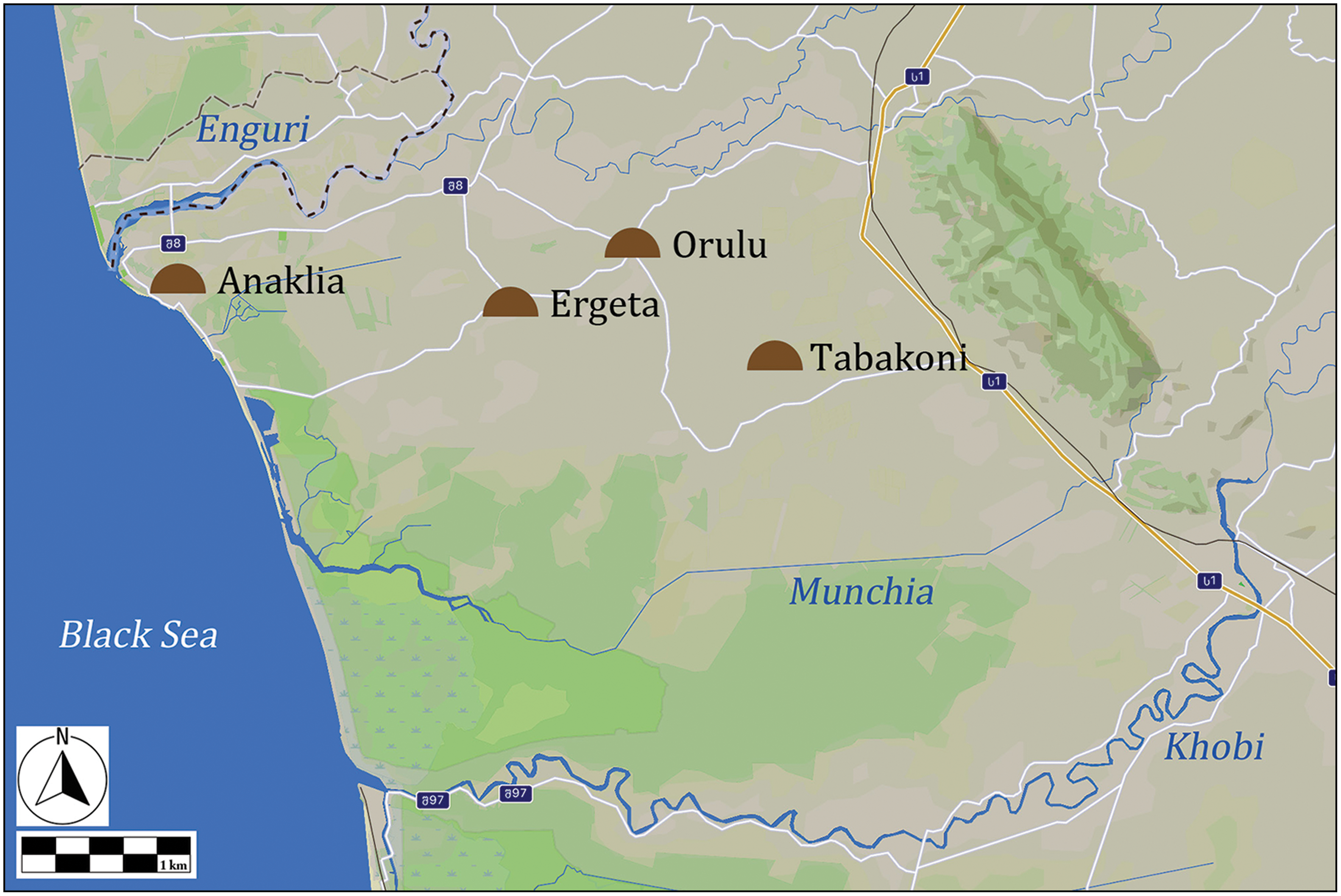
Tabakoni sits in the central part of the Colchis lowlands, near the eastern coast of the Black Sea, between the North and South Caucasus (Figure 1). This was the core region of the eponymous Colchis culture during the Late Bronze Age to the Early Iron Age, c. 1500–550 BC (Apakidze Reference Apakidze2009: 12–17, 245–49). Artificial mound settlements—which can reach up to 20m in height and 160m in diameter—dot the region, providing a focus for archaeological research (Jibladze Reference Jibladze1997, Reference Jibladze2007; Papuashvili & Papuashvili Reference Papuashvili and Papuashvili2005; Apakidze Reference Apakidze2009: 24–93). From the middle of the second millennium BC, depositions of metal artefacts are also found, usually away from settlement sites (Koridze Reference Koridze1965; Apakidze Reference Apakidze2000; Reinhold Reference Reinhold, Horejs, Jung, Kaiser and Teržan2005). Burials are mainly known from the latest phase, c. 1100–550 BC (Mikeladze Reference Mikeladze1985, Reference Mikeladze1995; Papuashvili Reference Papuashvili1998, Reference Papuashvili, Mehnert, Mehnert and Reinhold2012; Apakidze Reference Apakidze2009: 109–244; Papuashvili et al. Reference Papuashvili, Esebua, Jikia and Papuashvili2015).
Location of the Tabakoni site and other Bronze Age settlement mounds between the lower reaches of the Enguri and Khobi rivers in central Colchis (map by T. Mörtz).

The creation of settlements on artificially constructed mounds is distinctive and relates to the environment, which was (and continues to be) very humid, with a climate rich in precipitation and a landscape subject to seasonal flooding due to the snow melt carried by the Rioni and Enguri rivers, among others (Mörtz & Tchabashvili Reference Mörtz, Tchabashvili, Horn and Malekin press). Approximately 70 settlement sites have been explored, though the work proceeded on different scales and with different methods of investigation. More recently excavated and extensively published settlements include Dikha-Gudzuba II near Anaklia (Muskhelishvili et al. Reference Muskhelishvili, Murvanidze, Jibladze, Sagona and Abramishvili2008, Reference Muskhelishvili, Jibladze, Papuashvili and Papuashvili2010) and Mamuliebis Dikha-Gudzuba near Ergeta (Papuashvili & Papuashvili Reference Papuashvili and Papuashvili2005, Reference Papuashvili, Papuashvili, Sagona and Abramishvili2008). Less well published are Nosiri, also located in the Samegrelo region (Gogadze Reference Gogadze1982), several sites further north near Pichori (Jibladze Reference Jibladze1997, Reference Jibladze2007; Pkhakadze & Baramidze Reference Pkhakadze, Baramidze, Sagona and Abramishvili2008; Baramidze 2017) and the settlement of Namcheduri further south near Kobuleti in Adjara (Mikeladze & Chachutaišvili Reference Mikeladze and Chachutaišvili1984, Reference Mikeladze and Chachutaišvili1985).
Recent investigations using remote-sensing and the application of x-ray fluorescence and granulometry in the analysis of sediment cores have provided minimally invasive insights into the structure of settlement mounds (Laermanns et al. Reference Laermanns2018, Reference Laermanns2024). Anthropogenic deposits can be identified through the detection of trace metal and phosphorus, but the radiocarbon dates obtained from the cores only provide a rough chronological orientation for the mound. Direct archaeological contextualisation can only be provided by excavations.
The mounds are formed of a complex sequence of layers, with largely featureless fills separating humic sediments that mark episodes of occupation. The remains of wooden constructions are regularly found, preserved in the waterlogged soil of the Colchian lowlands. These are typically small, rectangular or, more often, square rooms built using a log-construction technique without vertical posts extending into the ground. The rising walls are preserved—if at all—only to a height of 0.3–0.4m, which is probably related to levelling of the surfaces either in the course of the temporary abandonment of the sites or during their re-appropriation. Prior to the erection of new buildings, an extensive backfill of sediment from the surrounding area was placed on the prepared ground. The volume of this fill increased towards the edges of the mound, where it could have a thickness of more than 1m. Through the processes of levelling and backfilling, the mound was raised, becoming higher and steeper while only increasing in area slightly.
Structures in the higher layers of the mounds, above the water table, typically only preserve if the wooden beams were burnt and carbonised. Where found, these are also box-type constructions that rested directly on backfill or in slight depressions. In the first millennium BC, a change in architectural style is apparent, with buildings constructed from wattle-and-daub walls and clay plaster. Preserved fragments of plaster with wooden imprints are found at Tabakoni and at other sites in the vicinity of Kutaisi (Hamburg & Lorenzon Reference Hamburg and Lorenzon2022). The mounds are typically surrounded by ditches, which may have been integrated into wider canal systems, such as those documented by first-millennium BC writers, including Hippocrates of Kos (De aëre aquis locis 15; Potter Reference Potter2022).
Despite the large-scale preservation of wood, the availability of absolute dates in the chronological classification of the settlement mounds remains limited. Although radiocarbon dates are available from some sites, these are largely based on just a few samples from individual layers (e.g. at Namcheduri; Mikeladze & Chachutaišvili Reference Mikeladze and Chachutaišvili1984, Reference Mikeladze and Chachutaišvili1985) and dendrochronological analyses, vital for local radiocarbon calibration, have only successfully been conducted at Tabakoni. Pottery is abundant and provides a relative seriation for the settlement mounds, given the clear separation in occupation layers and characteristic local decorative styles (Apakidze Reference Apakidze2009). Only the metal artefacts provide indications of chronological correlations with other regions, especially the long-duration burial sites in the North Caucasus (Reinhold Reference Reinhold2007: 265–78; Apakidze Reference Apakidze2009: 48–63).
The excavations in Tabakoni
Joint archaeological excavations between the DAI and the SSU, with the support and funding of the Alexander von Humboldt Foundation, were carried out on the settlement mound of Tabakoni in western Georgia between 2011 and 2017 (the results up to 2015 have been published in a preliminary report; Apakidze et al. Reference Apakidze, Hansen, Mörtz, Tchabašvili, Kašuba, Reinhold and Piotrovskij2020). The site, surrounded by marshy alluvial soil, is located in the Samegrelo region, between the lower reaches of the Enguri and Rioni rivers in western Georgia (Figure 1). The archaeological significance of the site was recognised in the early 1980s in connection with the ‘Colchis Expedition’ led by Teimuraz Mikeladze. However, investigations were limited to the area around the settlement mound and remain unpublished. Middle Bronze Age (c. 2400–1500 BC) finds were reported from an area of low elevation only a few metres in size, but the exact location is uncertain as there are several small mounds within a radius of 100–120m. Another trench, near a modern drainage ditch, uncovered pottery from the late phase of the Colchis culture, which dates back to approximately 1100–550 BC. Early Iron Age collective tombs and a cult site are located only 500m from Tabakoni, at Dgvaba; these were also excavated in the 1980s but have so far only been presented in brief reports and summary drawings (Mikeladze Reference Mikeladze1995).
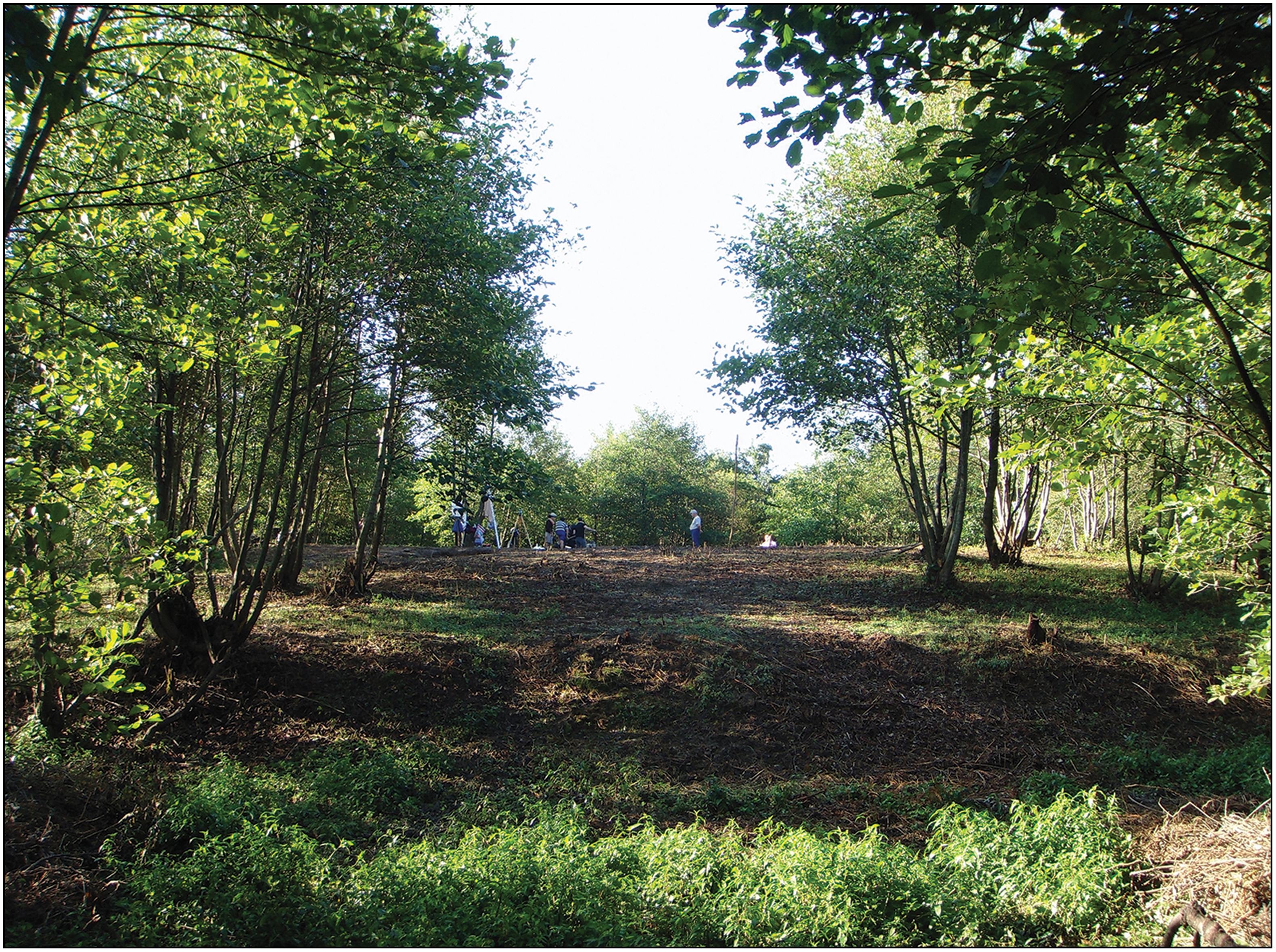
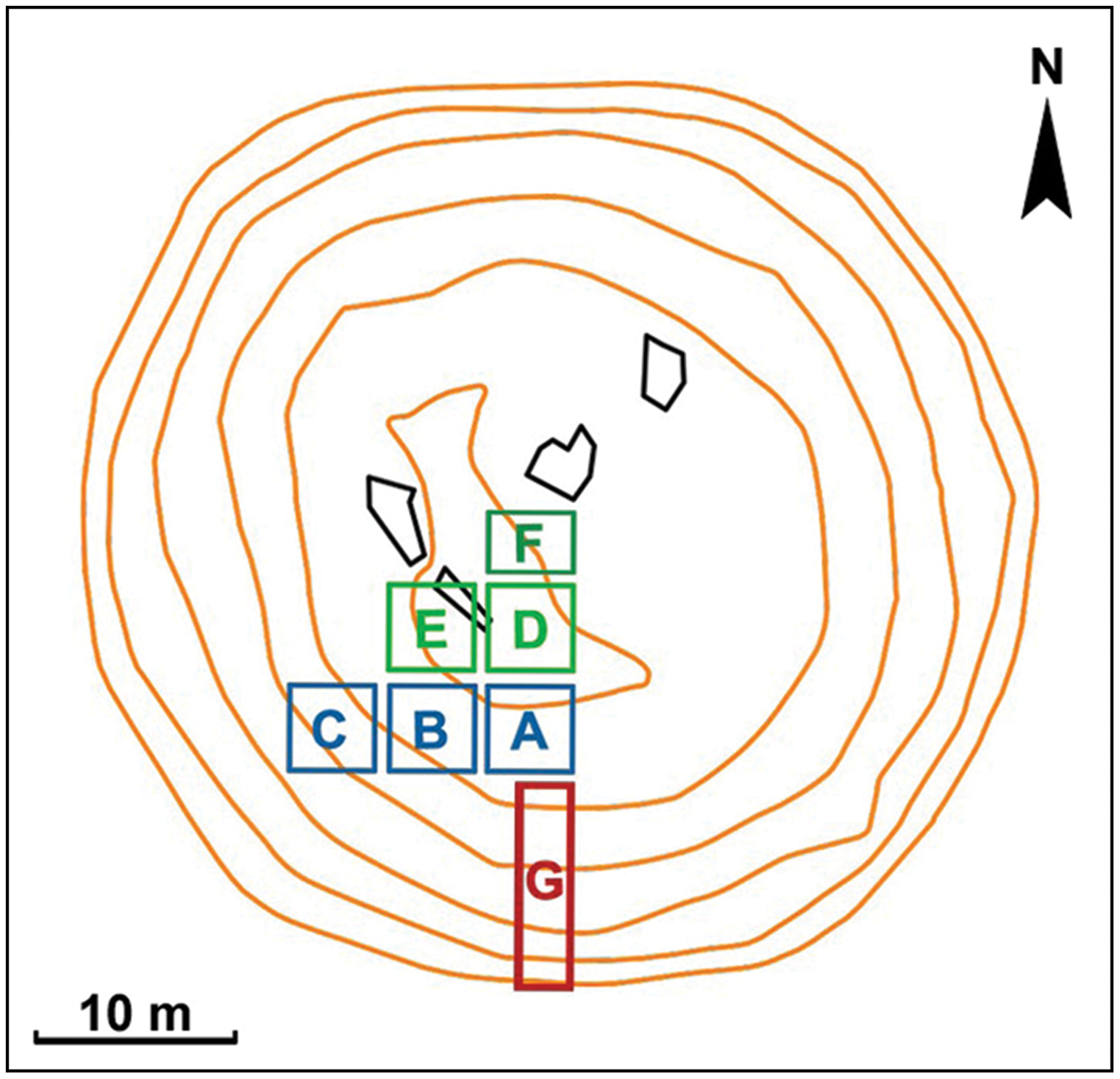
With a diameter of 45m and a total area of approximately 1600m2, the mound of Tabakoni is average sized. It lies in a forest near the village of Dgvaba on the border between the modern districts of Zugdidi and Khobi. The Black Sea coast is about 12km to the west and can be reached via the catchment area of the Munchia River. The mound is nearly circular with a central height of 2.9m, which corresponds to an absolute height of 8.8m above sea level (Figure 2). A total area of 140m2 was manually excavated between 2011 and 2017 to a maximum depth of almost 4m (from mound top to nearly 1m below the surrounding terrain), uncovering the remains of wooden structures in the waterlogged soil (Figure 3). An artificial ditch surrounds the mound, created by the removal of sediment for backfill between occupations, but it was not possible to establish whether it had ever linked with wider prehistoric canal systems. Due to the lack of any more-recent finds, the now isolated mound of Tabakoni was no longer inhabited after the Iron Age. In other places, however, there is evidence of modern use of the mounds (Laermans et al. Reference Laermanns2024), locally known as ‘Dikha-Gudzuba’ which in Megrelian means an elevation created by human activity. As an archaeological term, it refers to artificial mound settlements in the coastal region of central Colchis.
View of the Tabakoni settlement mound from the north-east in 2011 (photograph by T. Mörtz).

Distribution of modern disturbances (black) and excavation areas on the Tabakoni settlement mound started in 2011 (blue), 2012 (green), 2013 (red) and uncovered by 2015. With the removal of the profile bridges, all the sections were combined in 2017 (drawn by L. Tchabashvili).

Excavations were conducted successively, starting with three 4 × 4m trenches (A, B, C; see Figure 3). Within the trenches, different methods were used for the excavation, either in artificial, horizontal layers or following the evident strata. The first preserved timbers were discovered in 2014 in the outer areas of the mound (sections C and G). During the final season, profile ridges were systematically removed to allow full documentation of the wooden features. Annual progress in excavation depended on the length of the planned campaigns, which varied from three weeks to two and a half months, and the weather conditions, with heavy rainfall repeatedly halting work on site, sometimes for several days. On average, eight students from Tbilisi and Berlin and five local workers were present.
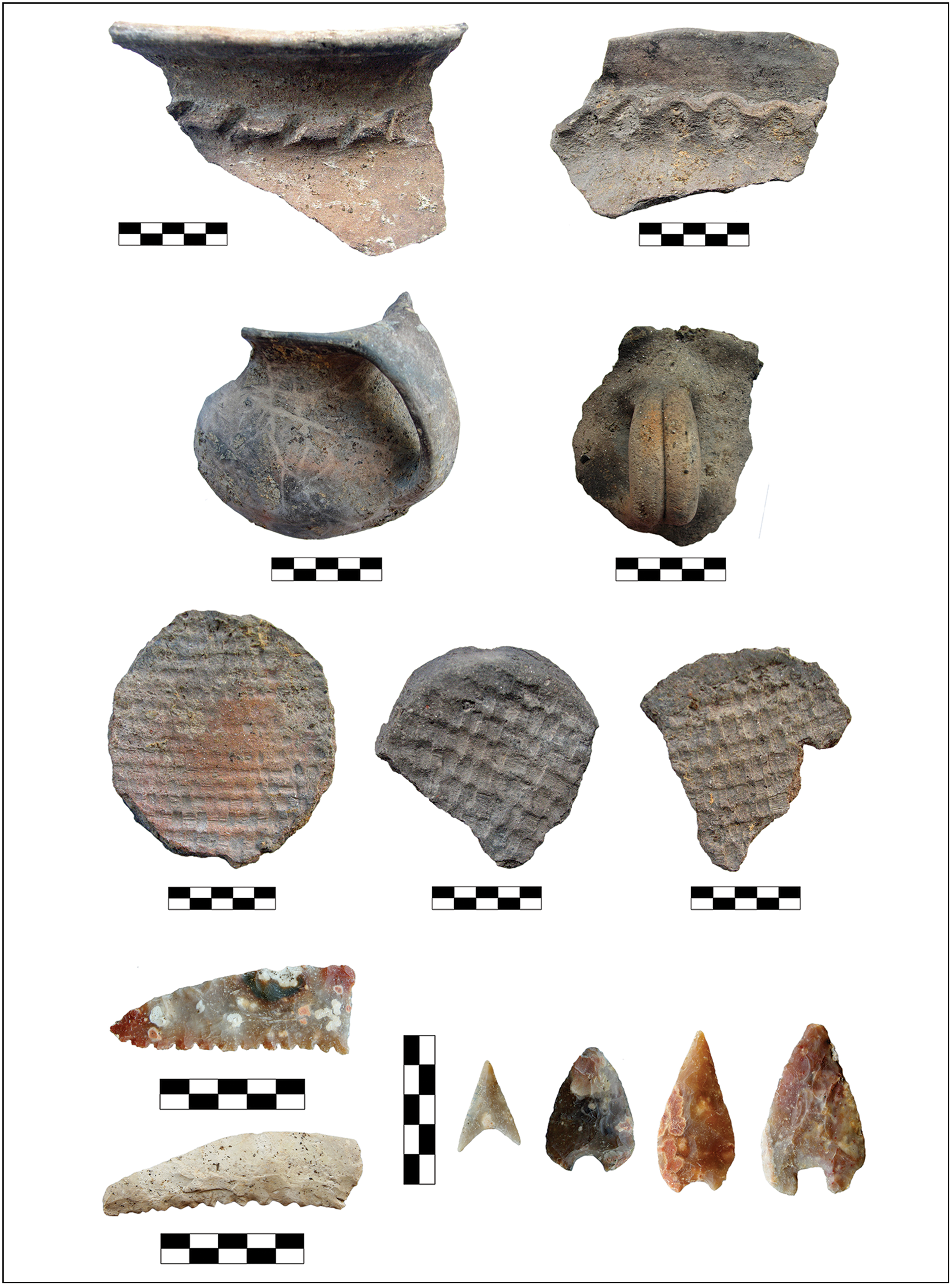
The small finds assemblage is dominated by pottery sherds, only a few of which could be assembled into larger pieces. The Late Bronze Age ceramics are characterised by bulbous and hemispherical vessels, decorated on their upper parts with semi-circular grooves and comb-stamped patterns. In contrast, the Middle Bronze Age pottery has only a few ornaments. A distinction may be made between coarse and fine pottery, as the black surface of the latter is smoothed and polished. The thick-walled coarseware pottery is more common and frequently features finger-stippled decoration in the moulding of the neck and flat textile impressions on the base (Figure 4). The vessels are also characterised by handles that are attached vertically to the neck and shoulder area and sometimes incorporate a narrow vertical groove.
Selection of pottery and flint artefacts from the Middle Bronze Age layers of the Tabakoni settlement; each scale bar = 50mm (figure by T. Mörtz).

Metal finds were largely limited to a few small and unidentifiable fragments. Nonetheless, the use of copper and probably copper alloys is evidenced by an open ceramic mould for hoes with a shaft hole, found in the Middle Bronze Age layers in Area B, approximately 0.5m above the wooden features (5.79m above sea level). Comparable finds are known from various contexts in the central settlement mound of Pichori in Abkhazia (Pkhakadze & Baramidze Reference Pkhakadze, Baramidze, Sagona and Abramishvili2008). Iron artefacts, including a spearhead, were only found in the uppermost, early antique layer.
Flint artefacts were discovered in both the Middle and Late Bronze Age layers and almost all are denticulate blades from sickles and arrowheads (Figure 4). The latter always have a U-shaped cut-out, which was used for hafting. The lengths of the blades vary between 30 and 60mm. Artefacts made of bone, horn or antler were mainly recovered from the earliest settlement phase, below the mound, as conditions higher in the sequence are not favourable for preservation. Most are single-pointed awls. Overall, the small artefacts from Tabakoni correspond to the spectrum known from other settlement mounds in Colchis. Following the individual excavation campaigns, the finds were stored at the Historical and Architectural Museum of the Dadiani Palaces in Zugdidi.
Faunal remains are also only preserved in the oldest phase. Analysis by Norbert Benecke (DAI) revealed a predominance of domestic cattle, a much lower quantity of pig and only a very small number of sheep/goat, which are not well suited to the natural conditions in Colchis. Hunting was only of secondary importance. Antlers, however, provided an important raw material for various artefacts, such as needles and awls. Despite the proximity to the Black Sea, exploitation of marine resources is not apparent, although it was not possible to undertake flotation to confirm this.
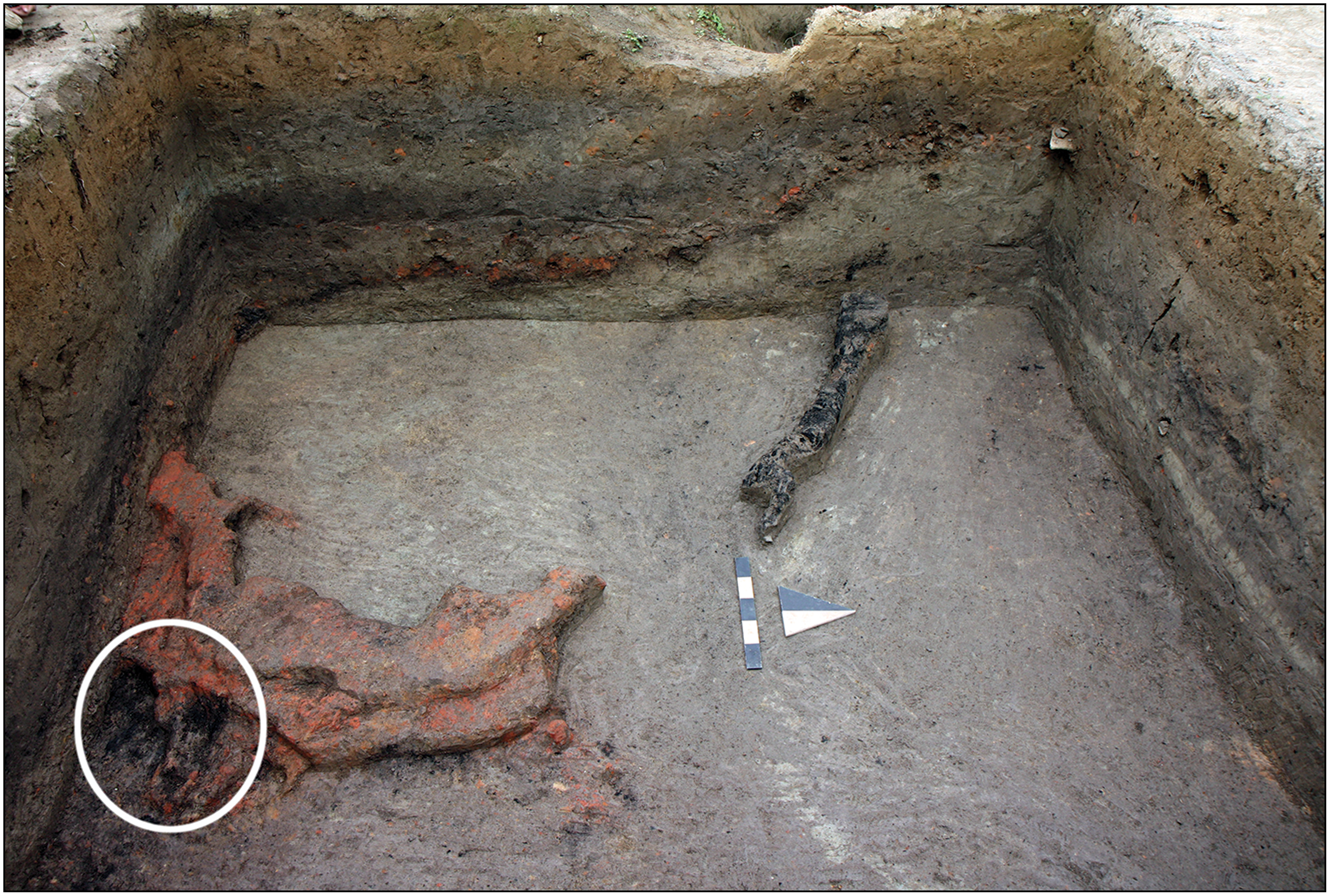
Evidence for a plant-based diet during the Middle Bronze Age is provided by hazelnut shells, a crop that continues to be important in Colchis today and a commodity that has been traded over long distances for millennia (Fairbairn et al. Reference Fairbairn, Kulakoğlu and Atici2014). Charred cereal remains were also recovered, which were identified as millet (Panicum miliaceum L.) by Nana Rusishvili (Georgian National Museum). A larger accumulation of millet grains is associated with a clay agglomeration and a charred wooden beam in area D, which probably date to the eighteenth century BC (MAMS-19623: 3441±26 BP; 1877–1686 cal BC at 95.4% probability) (Figure 5) (see online supplementary material (OSM) Appendix 4). This date positions the find as some of the oldest evidence of cultivated millet in the Caucasus, alongside evidence from other settlement mounds in Colchis, including Namcheduri and Pichori (Martin et al. Reference Martin2021). Secondary evidence for the farming of cereals is provided by the numerous hand mills found in all layers of the Tabakoni mound and by the lustre on the cutting surfaces of the denticulate flint sickle inserts—visible to the naked eye and confirmed analytically by Ketevan Esakia (Georgian National Museum).
Clay agglomeration with charred millet (circle) and a charred beam in the upper Middle Bronze Age layer excavated in 2014 (photograph by L. Tchabashvili).

Dendrochronology
Almost exclusively small logs with very few, usually only five to 10, growth rings were available for dendrochronological analysis. Most of the samples were Salix (willow) and Populus (poplar), which can only be differentiated to a limited extent by wood anatomy and were therefore combined. Roundwoods are also available from Acer (maple), Fagus (beech), Alnus (alder), Fraxinus (ash), Corylus (hazel), Ulmus (elm) and Prunus (pome fruit), representing the species-rich variety in Colchis. Oak wood is only represented by 73 pieces, and again small roundwoods with few growth rings predominate (see OSM Appendix 1). Of the 312 samples available, only 95 show more than 20 growth rings, limiting the effectiveness of dendrochronological analysis. The samples were measured under a stereomicroscope, regardless of wood type. Twenty-six pieces, all of them oak, could be cross-synchronised (OSM Appendix 2). The relative dates of these samples result in three mean-value curves that do not overlap.
As there is no standard dendrochronological curve for the third and second millennia BC for either Colchis or the Caucasus, and also because the sequences are relatively short, the inner and outer growth rings from well-preserved samples were sent to the Curt-Engelhorn-Zentrum Archäometrie (CEZA) laboratory in Mannheim for radiocarbon dating. Due to the known distance between the 26 oak samples, these dates control each other and provide significantly narrower time frames in the calibration (see OSM Appendix 3). The sequence presented here for the archaeological evidence from the Tabakoni settlement mound is therefore based on a combination of dendrochronologically constrained radiocarbon dates and the relative dating of growth rings.
To be able to work with definitive dates rather than relative time spans, the results were compared with available European oak chronologies and aligned with the most statistically significant and reproducible positions. Without a closed chronology from Georgia or the immediate surroundings, this procedure is to be regarded with caution and only as a working hypothesis until a better basis for comparison is available. However, the basic relationship between the samples within the narrow framework provided by the calibrated radiocarbon data and in their dendrochronological relationship to each other is in any case correctly reflected.
Settlement sequence and chronology
Settlement phases are outlined here in chronological sequence, from the lowest and oldest to the highest and most recent phases. The dating is based both on dendrochronological analyses carried out by Karl-Uwe Heußner (DAI) and radiocarbon determinations from charcoal conducted by Bernd Kromer and Ronny Friedrich (CEZA).
Results of the dendrochronological investigations indicate that the construction of the mound began in the first half of the twentieth century BC. Three radiocarbon dates obtained from a thick poplar or willow trunk embedded in the natural soil (MAMS-36451; MAMS-42433; MAMS-42434; see OSM Appendix 4) go back even further and cover a range from 3822±23 BP (MAMS-36451: 2397–2152 cal BC at 95.4% probability) to 3703±21 BP (MAMS-42434: 2192–2030 cal BC at 95.4% probability). Initial work on the construction of the mound therefore likely began at the end of the third millennium BC, although it remains possible that the discrepancy in dates could indicate the reuse of old logs as building material. Unfortunately, poplar/willow wood is not amenable to dendrochronological dating, so this cannot be tested.
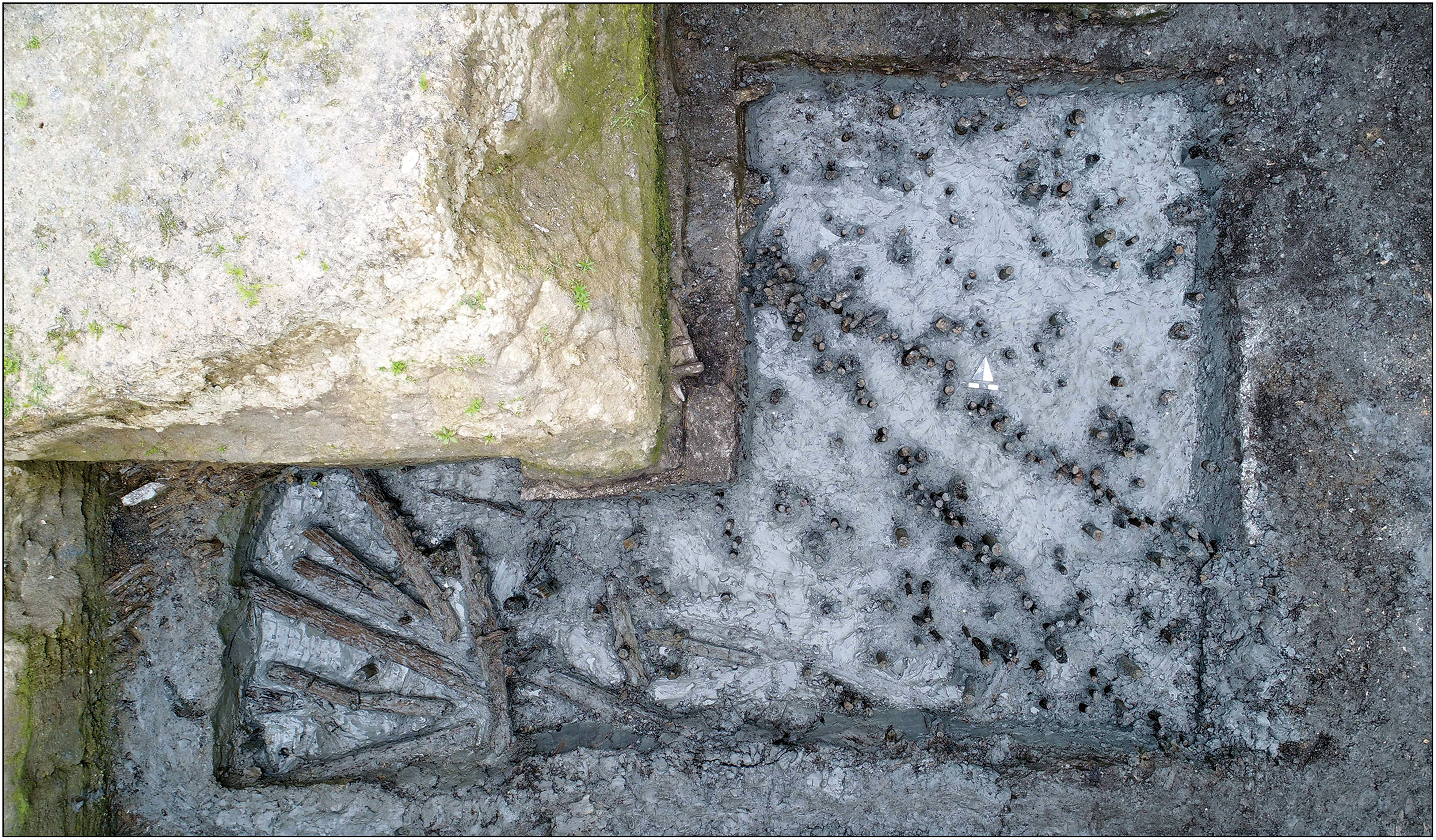
Initial construction proceeded through the placement of larger tree trunks horizontally in the loamy, light-grey soil to stabilise the foundation ground. Numerous pointed stakes were then pushed vertically into the ground; two rows of these stakes were uncovered, converging in the north-west of the excavation area (Figure 6). These apparently served as substructures for a ring of timbers that were angled to point upwards and outwards and probably ran concentrically around the entire mound. The ring was up to 2m wide. No comparable references to overlying installations are apparent for the other piles, which were placed at unequal and seemingly disorganised intervals. The aim of all these measures was to stabilise the foundation ground and protect the buildings from subsiding. Available dates suggest these efforts took place around the middle of the twentieth century BC. Timbers from the outer ring, preserved up to the bark, were felled between 1907 and 1897 BC and mark a second expansion phase of the mound.
Rows of vertical timbers and horizontally laid wooden beams in the natural soil below the settlement mound, excavated in 2017 (photograph by L. Tchabashvili).

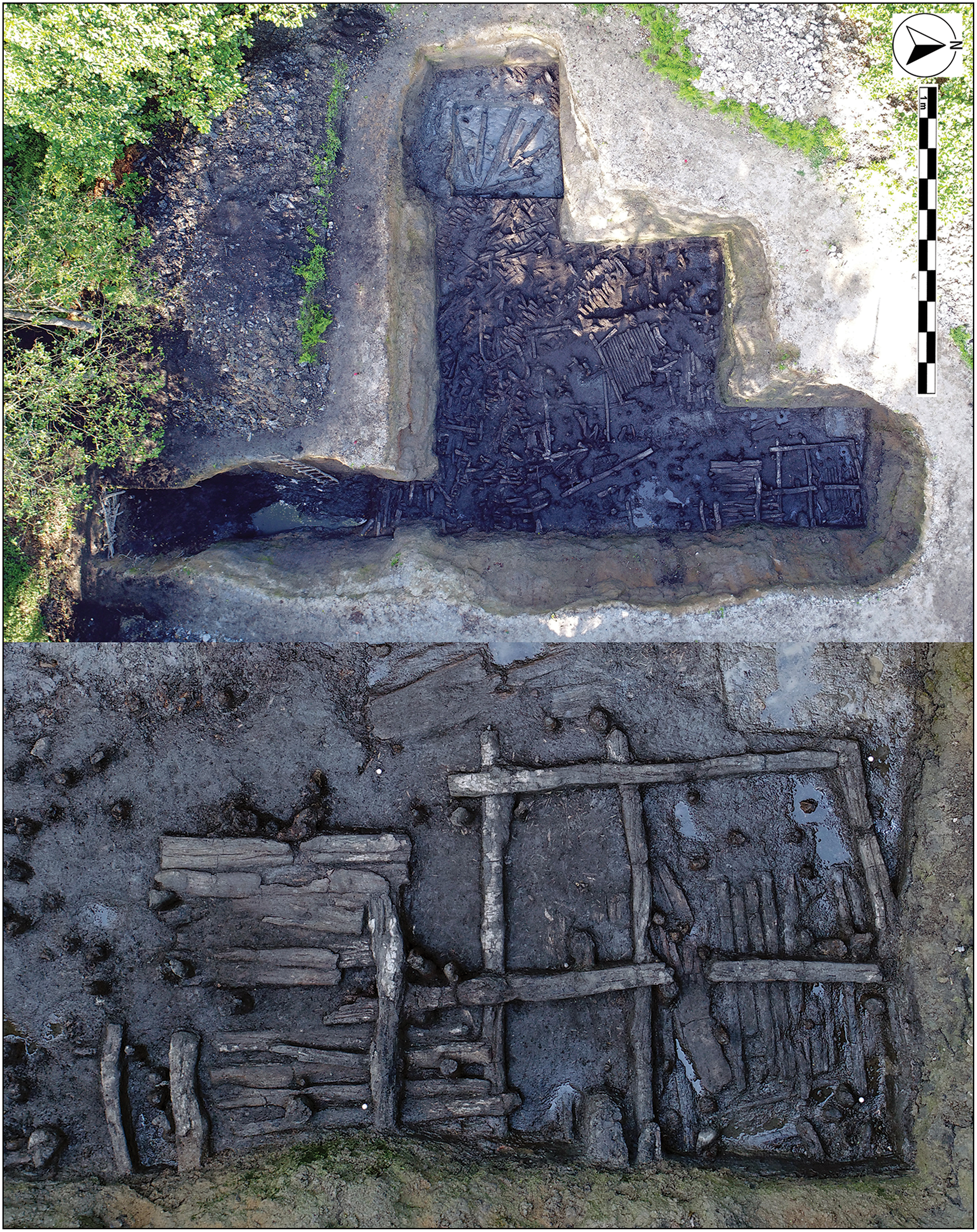
While thicker trunks were used in the outer area, the timbers recovered from the inner area had a maximum diameter of around 150mm, which considerably limits the possibilities of dendrochronological dating (Figure 7). The stratigraphically earliest buildings include a partially excavated rectangular structure in the centre of the mound (Figure 7). The beams of this box construction were supported by horizontal planks to prevent them from sinking into the waterlogged subsoil. A floor was then laid on top of the beams. A clay coating with traces of burning can be interpreted as a fireplace. No rising walls have been preserved. These were probably removed during later construction and conversion work and only the timbers lying in or on the floor were preserved as stabilising elements and covered with sediment. This procedure is repeated in later phases of occupation. As oak was not used in the construction of many of the architectural structures, dendrochronological dating of these features is not possible at present.
Top) overview of the wooden features from the first settlement phase (twentieth century BC); bottom) detail of the horizontally laid wooden beams that form the foundation of a rectangular building with a plank floor in the centre of the settlement mound, excavated in 2017 (photographs by J. N. Meyer).

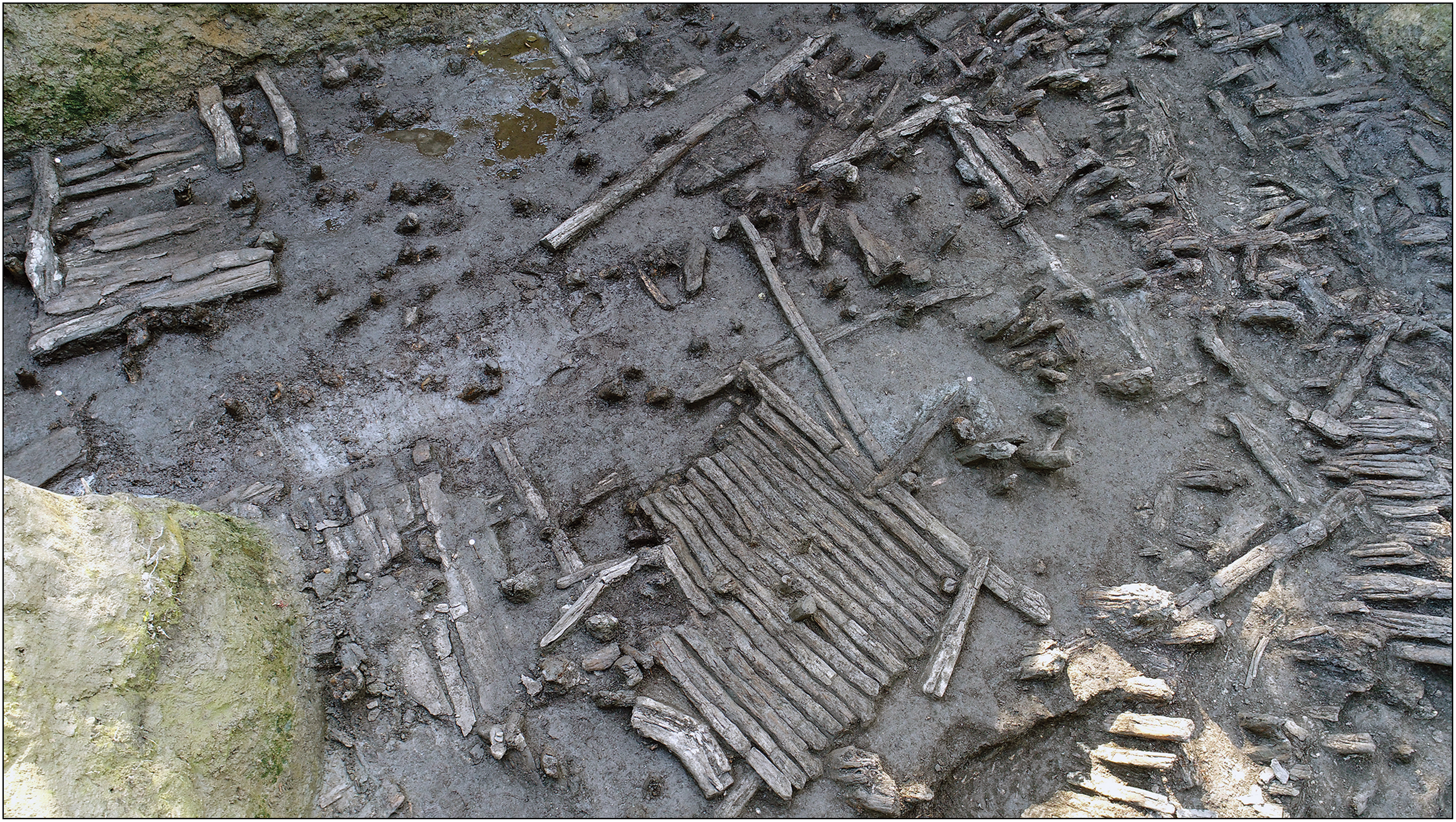
In some places, tight stratigraphic overlaps are identified, for example two wooden paths were placed on top of each other, differing slightly in orientation, in the centre of the excavation area, and both were located above a floor (Figure 8). It seems likely that after two to three decades of use, the buildings and other installations would have needed either a thorough renovation or a complete rebuild.
Wooden features from the first settlement phase in the centre of the excavation area in 2017 (photograph by J. N. Meyer).

Seven charcoal-based radiocarbon dates (MAMS-19621; MAMS-19623; MAMS-19624; MAMS-19625; MAMS-19626; MAMS-19627; MAMS-19628; see OSM Appendix 4) were obtained for the lower Middle Bronze Age layers, which were formed between 3633±28 BP (MAMS-19625: 2128–1914 cal BC at 95.4% probability) and 3703±21 BP (MAMS-19623: 1877–1686 cal BC at 95.4% probability). In comparison to the underlying features embedded in the waterlogged soil, the preservation of organic materials in the layers at the level of the surrounding modern ground surface is considerably poorer. Some oak timbers on the outermost edge of the mound can be associated with development activity at the beginning of the seventeenth century BC. For the first time, natural sediments from the surrounding areas were used to cover the older structures and create a new surface. While this fill is up to 0.3m deep in the centre of the mound, the thickness decreases towards the outside and is no longer detectable at the edges.
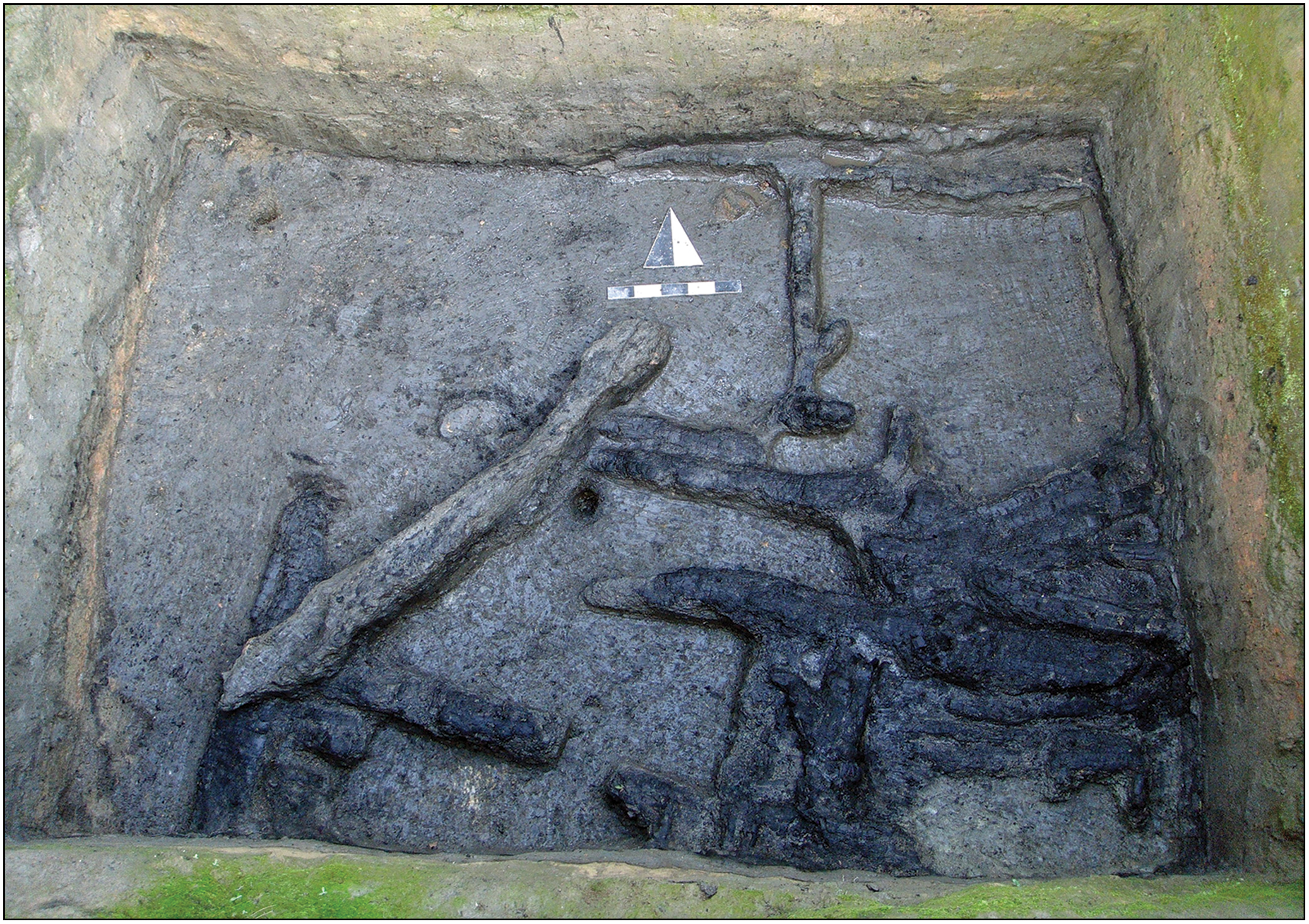
The duration of the hiatus in occupation between the earlier and later Middle Bronze Age layers is difficult to assess with the available dates and stratigraphic observations. The pottery repertoire does not change significantly, consisting mainly of undecorated vessels, some of which have characteristic wickerwork impressions on the base, probably from mats, and plastic ridges with impressions on the neck. Charred beams of a rectangular construction were preserved in the upper Middle Bronze Age layers (Figure 9), which are dated to 3383±25 BP (MAMS-1929: 1741–1622 cal BC at 95.4% probability) and 3328±24 BP (MAMS-19630: 1682–1536 cal BC at 95.4% probability). Charcoal from the neighbouring area D confirms this date: 3316±26 BP (MAMS-19622: 1677–1523 cal BC at 95.4% probability). Extensive clay agglomerations in the centre of the mound could be collapsed walls. No other building structures were discovered.
Charred beams of a box construction in the upper Middle Bronze Age layer of trench F, excavated in 2014 (photograph by L. Tchabashili).

A second backfill separates the Middle Bronze Age layers from a Late Bronze Age layer, which cannot be dated more precisely than the second half of the second millennium BC due to the lack of organic material. In marked contrast to the older find repertoire, pottery decorated with complex grooved and fluted patterns now appears. The flint inventory, on the other hand, hardly differs; denticulate sickle blades and double-winged arrowheads with U-shaped shafting notches predominate. No evidence of buildings was documented in the Late Bronze Age layers, which were only 0.2–0.4m thick.
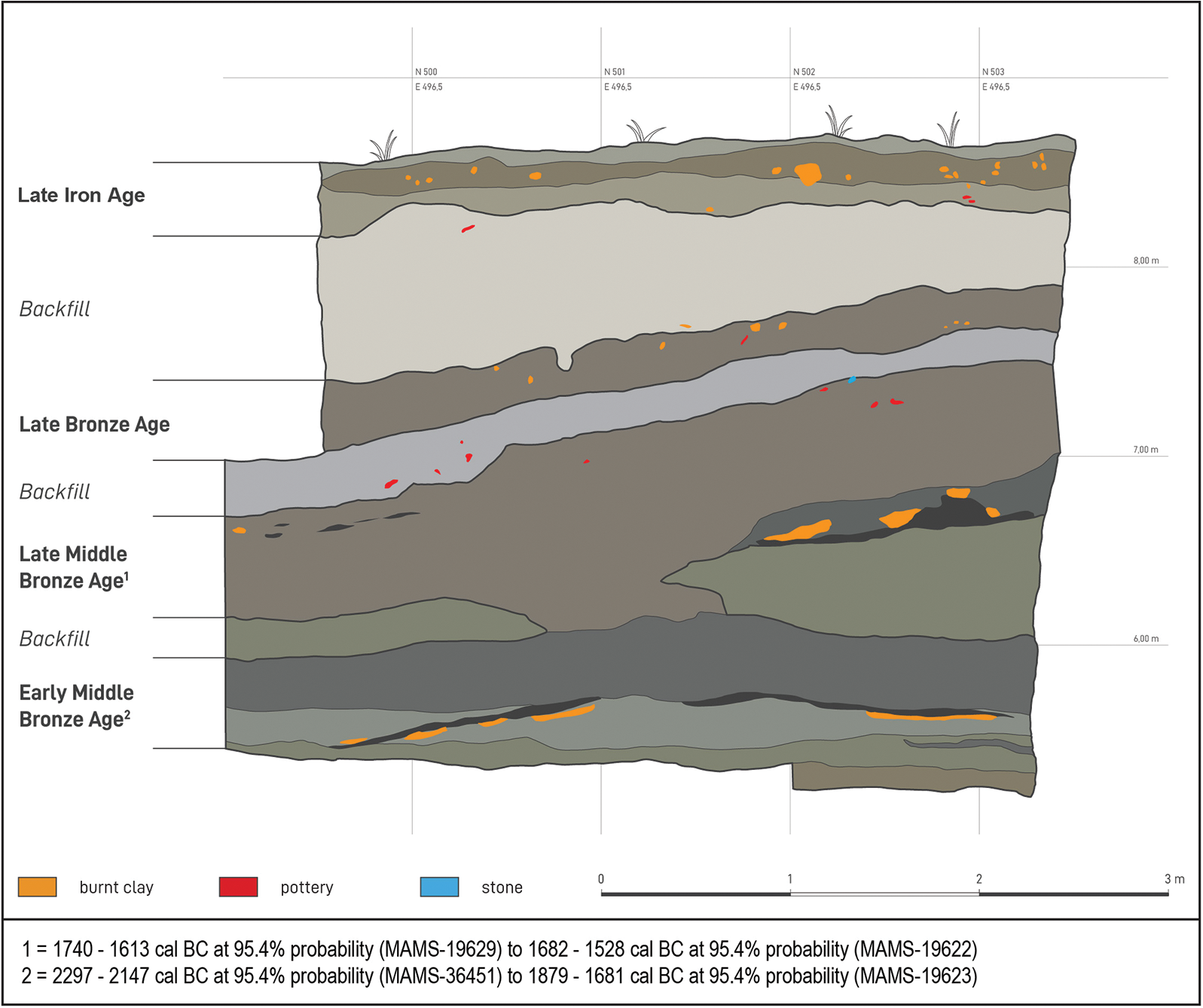
A backfill of up to 1m in the outer area covers the Bronze Age layers and marks a longer hiatus before the mound was inhabited again around the middle of the first millennium BC (Figure 10). This date is confirmed by pottery typology and the presence of iron artefacts. Only slight traces of this settlement survive below the humus layer. Lumps of clay with organic impressions evidence the construction of wattle-and-daub walls, but the duration of occupation is difficult to quantify. It also remains unclear whether the mound was occupied permanently or seasonally and if the surrounding areas were inhabited. There is currently no evidence that the Tabakoni mound was settled in the early first millennium BC, when the nearby collective tombs at Dgvaba were constructed. At an undefined moment in the Late Iron Age, the mound was abandoned and not returned to.
Stratigraphy of the Tabakoni settlement mound, showing western profile in Area E down to a depth just above the Middle Bronze Age wood features in the waterlogged soil (figure by D. Mariaschk).

Discussion
Although the excavations on the Tabakoni settlement mound focus on a limited area, the findings confirm patterns of construction and occupation documented at other Bronze and Iron Age sites in western Georgia. Both the evidence of small rectangular buildings embedded in the lowest wetland environment and the distinct stratigraphy of the mound built on top—with the alternation of humic, find-bearing layers and largely sterile backfills—are described elsewhere, for example in Anaklia (Muskhelishvili et al. Reference Muskhelishvili, Murvanidze, Jibladze, Sagona and Abramishvili2008, Reference Muskhelishvili, Jibladze, Papuashvili and Papuashvili2010) and Ergeta (Papuashvili & Papuashvili Reference Papuashvili and Papuashvili2005, Reference Papuashvili, Papuashvili, Sagona and Abramishvili2008). The typo-chronological sequence of the pottery at Tabakoni is equally characteristic, with mostly undecorated vessels in the lowest, Middle Bronze Age levels and pieces richly decorated with grooves in the intermediate, Late Bronze Age levels. Despite being accompanied by a hiatus in occupation, this stylistic transition can be placed around the middle of the second millennium BC, which corresponds with radiocarbon dates from Namcheduri (Mikeladze & Chachutaišvili Reference Mikeladze and Chachutaišvili1984, Reference Mikeladze and Chachutaišvili1985) and Pichori (Pkhakadze & Baramidze Reference Pkhakadze, Baramidze, Sagona and Abramishvili2008).
Our work provides the first dendrochronological age determinations for the Colchis lowlands through interpolation of oak timbers from the oldest construction phase with the European oak ring curve and confirmation of these dates through radiocarbon analyses. The results indicate that construction of the oldest wooden structures began in the twentieth century BC at the latest, which is consistent with the evidence from other sites, such as Ergeta and Orulu (Laermanns et al. Reference Laermanns2018, Reference Laermanns2024), located just a few kilometres from Tabakoni. Around 2500 BC, fluctuations in the level of the Black Sea began to stabilise and dense forests disappeared from the region, shortly followed by a significant colonisation of Colchis in the Middle Bronze Age. Environmental changes are evident in pollen diagrams of the Ispani marsh north of Kobuleti in Adjara, not far from the Bronze Age settlement mound of Namcheduri and in the hinterland of the ancient site of Pichvnari (Connor et al. Reference Connor, Thomas and Kvavadze2007; de Klerk et al. Reference de Klerk2009). The emergence of an open swamp landscape favoured the spread of hazel and is associated with evidence of cultivated plants, potentially including the flood-resistant millet found at Tabakoni.
The waterlogged environment required a solid foundation for the construction of occupation sites and, with repeated or prolonged occupation, the successive raising of the area through the artificial deposition of sediments brought in from the surrounding area. Tabakoni also conforms to the typical timeline for the ultimate abandonment of this specific form of settlement, although the dating of its last occupation within the second half of the first millennium BC is of necessity based on pottery typology and remains to be more precisely determined.
Conclusion
The application of two different scientific dating methods—radiocarbon and dendrochronology—have allowed the determination of a precise settlement sequence at the mound of Tabakoni, particularly for the earlier phases, which are characterised by the preservation of waterlogged wooden constructions. Occupation began in the twentieth century BC, at the latest, possibly coincident with an expansion of human landscape appropriation in Colchis. After the installation of a stable wooden foundation, the mound was used repeatedly over one and a half millennia. Artificial backfilling between occupation phases led to a substantial increase in height to almost 3m above the current ground surface. Prior to each occupation phase, the surface was cleaned and levelled, resulting in sharp, clearly defined layer transitions that separate earlier and later Middle Bronze Age, Late Bronze Age and Early Iron Age phases. The archaeological findings from the Tabakoni mound are characteristic of other settlement mounds in Colchis and the results presented here can therefore be seen as representative of comparable sites. Research into the integration of the site into the large-scale settlement and economic systems of the local Bronze and Iron Ages is, however, a task for future projects.
Acknowledgements
We thank all colleagues, students and helpers involved in the fieldwork. The Lataria family graciously accommodated the excavation team in Torsa and provided various organisational assistance. Dirk Mariaschk redrew the profile. The authors also thank the anonymous reviewers and editor, whose comments and suggestions have greatly improved our work.
Funding statement
This research was sponsored by the Alexander von Humboldt Foundation as part of an institutional partnership between Sokhumi University in Tbilisi and the Eurasia Department of the German Archaeological Institute in Berlin (project number: 3.4-IP-DEU/1116808).
Data availability statement
The authors confirm that the data supporting the findings of this study are available within the supplementary materials.
Online supplementary material (OSM)
To view supplementary material for this article, please visit https://doi.org/10.15184/aqy.2025.10254 and select the supplementary materials tab.


 Open access

