




This paper traces women brewers in colonial Tabora and the social life around beer halls as a means to examine three interrelated problems in East African colonial history. The first is the difficulty of tracing the further trajectories of former slaves in the region, and of slaves in the mainland and women ex-slaves in particular.Footnote 1 Second is the issue of these women’s livelihood and status struggles, particularly in urban environments and in connection with beer brewing and consumption. Third is the role of the state in shaping and responding to these struggles.
To start with the first issue, the difficulty begins with the uncertainty about the extent of enslavement in East Africa off the coast, given the paucity of sources on the region. Philip Gooding has recently argued that in parts of the Great Lakes region, captives moved up the social hierarchies with such ease that it is inappropriate to call them slaves, and that slave numbers were exaggerated by missionary observers looking for souls to save.Footnote 2 We argue below that in the Tabora region, there is reason to accept the presence of a substantial number of slaves, and that slave origins do appear to have carried a persistent stigma. That said, it is true that there were many forms of migration and displacement besides slavery. In written and oral sources, it is difficult to distinguish between enslaved and displaced persons, junior wives, and other hangers-on to large households.Footnote 3 Moreover, the present-day obsolescence of the history of slavery here does suggest that former slaves’ efforts to move on from slave status had some success.
Given that it is easy to overestimate the presence of slaves in the East African mainland, and that slavery was used as a justification for colonization, there is reason to treat information on slaves here with caution, lest researchers appear to reproduce a form of apologetics for colonialism. Yet, against such caution, stands Africanists’ long-standing interest in recovering the histories of marginalized people. Avoiding the topic forecloses questions about how former slaves—among the most marginal members of society—struggled to move on from slave status. Moreover, it perpetuates our lack of understanding of the postemancipation trajectories of enslaved women. Scholars writing four decades apart agree that self-emancipation was harder for women, even as there are striking examples of the lengths to which women went to in pursuit of autonomy.Footnote 4 Tabora offers an opportunity to appreciate the great variety of outcomes these efforts produced. The position taken here, then, is that it is possible to acknowledge that colonization helped open pathways to emancipation for enslaved people without excusing the violence, racism, and greed of colonial invasion. The topic is too important to avoid.
In the pages below, we trace information on a handful of women with slave or “slave-adjacent” status, and contextualize their experiences to gain a sense of what moving on from slavery involved in colonial Tabora.Footnote 5 The outlines of the post-slavery experience that emerge are faint and disjointed, but they nevertheless warrant close attention. They afford insights not only into the strategies and struggles of women and other marginalized figures, but also into the wider material and status economies they navigated. In doing so, they shed light on the ambiguous role of both colonial rule and decolonization with regard to plebeian Africans’ freedom or unfreedom.Footnote 6
Further, they cast new light on long-standing claims on the specific experiences of enslaved women, the history of urban women and gender in urban spaces, and on the gender dynamics around alcohol production and consumption. The diversity of these experiences not only complicates the literature’s emphasis on women “staying put,” but also affords us an appreciation that seeking to ameliorate one’s status within a given domestic unit demanded a good deal of initiative as well.
Setting and Sources
By 1900, Tabora—located in the Unyamwezi region in western Tanzania—was among the largest urban settlements in mainland East Africa, near one of the highest concentrations of enslaved people in the interior. Early German administrators here reported numbers of slaves adding up to at least 300,000. These figures were speculative, but administrators had little incentive to invent non-existent slave populations, since their presence threatened to undermine the abolitionist justification for colonialism.Footnote 7 Moreover, the stark hierarchies fostered by political competition for access to long-distance trade in the region, the existence of supply routes from eastern Congo, and the extensive needs of passing caravans, make clear that there was both demand for and a supply of slaves.Footnote 8 Karin Pallaver, in particular, has shown that in Tabora there was a functional place in the late precolonial economy for field slaves.Footnote 9 The presence of tens of thousands of enslaved people is therefore likely.
As Jan-Georg Deutsch has shown, slaveholders’ control over enslaved people disintegrated rapidly in the first decades of the twentieth century, as the colonial labor market expanded and holders lost political and social power.Footnote 10 We know that besides working the fields, enslaved women served as concubines, domestic servants, bakers, and brewers.Footnote 11 Yet, little is known about what the former slaves did next, after about 1920. Once colonial rule was firmly established, neither officials nor missionaries were interested in acknowledging that slave antecedents continued to be a problem, given that “ending slavery” had been such an important rationale for colonial invasion. Moreover, as in other parts of the continent, colonial administrators discouraged the departure of female slaves “for fear of upsetting domestic arrangements and because they tended to view women slaves, particularly concubines, as similar to wives.”Footnote 12 It appears that formerly enslaved women were bound to stay in place and integrate into local village communities. Yet the discussion below shows that the next steps out of enslavement could be very different from this apparent default option, and that even staying put could encompass a range of strategies and outcomes.
The written sources used here are predominantly administrative correspondence and reports, supplemented by a few newspaper articles. As is typical of such documents, they focus on formulating policy, rather than its implementation or effects. In keeping with the avoidant official stance on former slaves, these sources occasionally mention slavery but never explicitly refer to the integration of former slaves or their presence among urban workers and artisans. They have more to say on urban livelihoods, covering regulations for selling and drinking beer, concerns about alcohol use, and the state’s response.
Oral sources, for their part, make clear that in Tabora—as in many African societies—brewing was a women’s occupation, closely connected to their roles as cooks and growers of grain, and that it could provide a livelihood.Footnote 13 Home-made beer was appreciated as part of social life, a means of relaxation and socializing.Footnote 14 Nevertheless, written sources show that brewers had to contend with official mistrust and concomitant regulations that complicated their work.
The process of oral research showed that both the history of slavery and that of alcohol production and consumption remain sensitive topics in Tabora. Dr. Nyanto, who conducted the interviews, drew on friendships and connections established as a doctoral student in the region, and on the respect accorded to a university employee and msomi (educated person) from the capital. His reputation helped persuade a total of about forty elders to participate in interviews. Nevertheless, they all refused to be recorded. Moreover, six respondents (five women and one man) agreed to be interviewed but in effect refused to answer Nyanto’s questions, using evasive responses such as “your question is hard to comprehend.”Footnote 15 The laboriousness of their refusals may reflect reluctance to disappoint Nyanto, but neither his position nor his previous familiarity were enough to overcome these respondents’ reticence.
Further, of those who agreed to be interviewed, some insisted that “everything was good” in the post-abolition lives of their ancestors, which other interlocutors suggested was likely an expression of evasiveness stemming from protectiveness towards them, or fear of being cursed.Footnote 16 One high-status man who refused to be interviewed responded with fury to an inquiry into his descent relationship to freed slaves mentioned in mission records. Some local observers spotted signs of slave ancestry in others’ names or family histories, but never in their own. Such mixtures of “whispers and silence” on slave antecedents have been observed before.Footnote 17 As Sandra Greene highlights, they reflect not only protectiveness of one’s individual status, but also a concern not to disrupt relations within neighborhoods and communities.
Under these conditions, we were able to gather information on five named individuals involved in brewing who were likely of servile origin. Our use of these brewers’ life stories needs further exposition. In each case, the individual’s displacement to Tabora and their status during the slavery era were described in ways consistent with enslavement, though—with one exception—they were not explicitly identified as slaves.. This can be seen as indicative of three things. One possibility is that, as per Gooding, slaves were rare in the region, and most of our subjects weren’t slaves. This is doubtful for the reasons already mentioned. Another possibility is that present-day informants use claims about voluntary displacement and dependency to obscure their forebears’ slave status, out of delicacy towards them or to protect their own status. This is plausible, albeit requiring a significant interpretive leap. A third possibility is that, for people displaced amid widespread insecurity and fierce struggle for survival and opportunity, their status as free or unfree was not always clear. In this case, the ambiguity in present-day accounts reflects a lack of clarity about the distinction between “free” and “unfree” in the past that persists into the present.
This final interpretation—that the distinction between free and unfree lacked clarity—is highly plausible. It aligns with Marcia Wright’s findings for East-Central Africa around 1900, and resonates with the long-standing observation that enslavement was among several forms of dependency that “abutted on each other.”Footnote 18 We use the term “slavery-adjacent” to reflect this lack of clarity, acknowledging that the distinction between slave and free is blurred in both our contemporary oral sources and the historical period under study. This lack of clarity is itself evidence of the insecurity that characterized the late nineteenth century in this region. The unease that surrounds present-day discussion of the topic, moreover, is indicative of the difficulty of moving on from slavery; of the fact that association with slave origins was seen as threatening potential negative repercussions within the lifetime of the interviewees.Footnote 19 The oral history record shows that while the subject of the history of slavery in Tabora has become easy to avoid, there remain compelling reasons to avoid it: it remains potentially divisive, embarrassing, and burdensome. Closer consideration of the post-slavery period makes clearer why.
Status Struggles in a Town in Transition: Taborans from the Early to the Mid-Twentieth Century
In the late precolonial period, Tabora was the largest settlement of Arab and Swahili traders off the coast of East Africa, strategically located along the biggest caravan route in the region. Even then, its social hierarchies were both fluid and stark.Footnote 20 Major traders presided over households with numerous dependents, including wives, children, and slaves. African chiefs and entrepreneurial Nyamwezi planters nearby sought to rival these traders in wealth and status.Footnote 21 Their settlements, known as tembe, were as large, diverse, and hierarchical as the traders’. Tabora also had a large transient population of caravan traders, entrepreneurs, hangers-on, and displaced persons.Footnote 22 With the transition to the colonial regime, the Central Railway Line replaced the caravan route, trains replaced porters, cash crops replaced precolonial trade goods, traders and chiefs lost political power to administrators, and Indian produce traders replaced Arab and Swahili merchants. The town’s plebeian population increasingly found work as day laborers on the railway, on remaining fields, or in the produce traders’ go-downs.
The economic decline of the precolonial elite is evident from the scattering of Arab traders, who, beset by debt, increasingly set themselves up as modest intermediate traders and farmers in the countryside.Footnote 23 Meanwhile, the increasing availability of European education through missions offered the opportunity to elaborate new markers of status.Footnote 24 Against this background, struggles for belonging and status were fought in both mainland and coastal African communities in a variety of registers. Despite the increasing Christian presence, claims to Islamic identity and knowledge, a crucial part of precolonial ideas of ustaarabu, Arab civilization, remained potent.Footnote 25 Moreover, here as in many places, claims to indigeneity, elaborated with reference to ethnic identity, were important.Footnote 26
The town, then, offers a variation on themes well known in colonial urban history, of struggles for belonging, livelihood, and opportunity. It recalls the lively mixture of cooperation and competition described in Laura Fair’s exemplary study of Zanzibar town, albeit with different emphases.Footnote 27 In particular, there was less confrontation with colonial officials, and, in this multireligious setting, more contestation over religious knowledge. Nyamwezi speakers routinely asserted their status as wenyeji, indigenes of the town, and therefore also “owners” of its main mosque. They did so through rituals that excluded non-Nyamwezi, claims to urban landholdings, and efforts to exclude non-Nyamwezi suitors for marriage.Footnote 28 The Nyamwezi phrase ulakatolele kule (go get married farther), still known today, alludes to the need for low-status men, such as those with slave antecedents, to go look for wives in places where their status was less well known.Footnote 29 Nyamwezi townspeople referred to non-Nyamwezi townspeople as “outsiders” (wakuja), “simply slaves” (watumwa tu), and “yokels of the town” (washamba wa mji).Footnote 30
The people they denigrated responded by building a mosque of their own, which, though frequented by people of many origins, became known by the distinctive synthetic ethnonym “Manyema.” The longest-standing use of this term is as a place name, that of a region in the eastern Congo known for exporting people by capture, displacement, and voluntary migration.Footnote 31 Beginning in the nineteenth century, Manyema also became the name of Swahili-speaking urban networks of multiethnic origin, open to former slaves and other displaced people. Recasting their lack of adjacent rural roots as a claim to urbanity, today’s Manyema elders in Tabora describe their ancestors as embodying notions of urban gentility (wajanja wa mjini) and Islamic civilization (ustaarabu wa Kiislam).Footnote 32 Trading, use of Swahili, and public Islamic celebrations were characteristics of Manyema residents.Footnote 33 In effect, the ethnonym Manyema helps distance its bearers from ex-slave status while simultaneously perpetuating a non-local status through its persistent association with Congolese origins.Footnote 34 It comprises a diverse group of newcomers and enables its bearers to avoid specifying the exact circumstances of their forebears’ arrival in Tabora.
Mid-century Taborans, then, reckoned with a variety of categories of belonging and marginality: Nyamwezi, Arab, Manyema and other ethnic affiliations, indigeneity (uenyeji), civilization (ustaarabu) and its close cognate uungwana (urbanity, citizenship), and Uislamu and other symbolic registers. Each of these categories were continually subjected to contestation and redefinition as economic fortunes and political statuses changed. While such fluidity opened pathways for integration, the use of derogatory terms like “yokel” and “slave” underscores that exclusion was as prevalent a force as inclusion.. The following section places the life stories of women brewers in mid-twentieth-century Tabora against this background.
Women Brewers
The salience of female ex-slaves in this region can be inferred from the fact that the majority of the surviving Freibriefe—certificates of emancipation, issued from the turn of the twentieth century to 1914—were granted to women and girls.Footnote 35 While some of the recipients settled in villages or mission stations, others made their way to Tabora.Footnote 36 For many, brewing emerged as the most salient and vividly-remembered of a number of urban occupations during the colonial era, besides things such as basketry and plaiting mats.Footnote 37
Focusing on formerly enslaved women who settled in Tabora town, and especially those brewing beer, means encountering a population that has been framed very differently in different historiographic contexts. Efforts to trace women’s lives in late precolonial mainland East Africa, most prominently Wright’s, have uncovered stories of shocking vulnerability.Footnote 38 Women constantly had to strategize to guard against capture, sale, and abuse. By contrast, literature on women in colonial towns, most famously Luise White’s study, has emphasized the autonomy of urban women and their entrepreneurial approach even to challenging occupations such as prostitution.Footnote 39 Studies on the history of beer brewing, meanwhile, have emphasized that urban environments removed brewing from the control of male elders, but also that women faced a different set of constraints instead. Municipal governments reduced them to employees in businesses run by men or made them subject to exploitative licensing systems, their working processes subordinated to institutions whose main aims were the recreation of male labor and the raising of funds through sales taxes and fees.Footnote 40
Our material sits at angles to all these observations. Unlike in major urban centers in East Africa and across Southern Africa, we found no evidence that women brewers were made illegal or subservient to male monopolists and overseers.Footnote 41 Nevertheless, some of them resemble Wright’s women seeking safety in family connections more than White’s autonomous entrepreneurs. As will be seen, marriage was important to their quests for safety and status, but its implications varied across individuals and circumstances.Footnote 42 Finally, while late-colonial developmentalist policymakers showed disciplinarian tendencies similar to those elsewhere, oral accounts of colonial-era drinking culture recall a great diversity of behaviors, ranging from jealous rages to an easy sociality that contrasts with the official focus on young men’s drinking as catalyzing social disruption.
In examining individual life stories, the only brewer explicitly described as a former slave, Wangwalala, was of unknown ethnicity and said to have come from eastern Congo. Having brewed beer already while enslaved at the chiefly tembe at Itetemia near Tabora, Wangwalala turned to brewing and selling home-made beer independently after formal abolition in 1922. While the oral accounts remain vague, she may have worked as a casual laborer (kibarua) for the well-off farmers of Itetemia or in town to obtain the wherewithal for her beer business. Over time, her pombe (beer in Swahili), sold out of Kachoma beer hall, the town’s main drinking destination, earned a stellar reputation. As Issa Kipakila remarked, “her beer would have sold out even if she had had two barrels [a day]”.Footnote 43 Wangwalala eventually married a Nyamwezi suitor. Given the likely stigma attached to her servile background, this union implies that her commercial success had fostered significant social acceptance among her husband’s kin. Wangwalala continued to brew and sell beer after marriage to support her family, earning a good income. Nevertheless, information on her life dries up after her marriage.Footnote 44
Elders in Tabora recall two other women, Wayoswa and Wamasempele (alias binti Masempele), who, like Wangwalala had come out of nowhere and worked out of Kachoma beer hall in the 1940s and 50s.Footnote 45 Like Wangwalala, they built houses paid for with their income from brewing and supported their families through this work. Wamasempele had accumulated sufficient funds by the 1940s to leave Kachoma beer hall and build her own facility. Nyamwezi informants refer to these women as wasimbe, an ambiguous term whose narrow meaning in Kinyamwezi is “unmarried woman.” Yet, as some respondents quietly note, it may also connote “(former) slave” status.Footnote 46 This designation, then, indicates that the women could be counted as part of Tabora’s Nyamwezi networks, and yet their status remained ambiguous. The form of belonging they achieved in town was premised on accepting and working with existing patriarchal norms, seeking belonging in families more than entrepreneurial autonomy.
Yet while marriage was an important step in this search for security and status, it did not in itself define and guarantee either. This becomes evident when considering brewers of Manyema ethnicity, for whom somewhat more information is available—particularly Johari Ufunguo and Aisha Mkangwa. Ufunguo originated from eastern Congo.Footnote 47 Her grandson Juma recounted that she and her husband, Kulindwa, arrived during the period of active trade in slaves and elephant tusks, likely in the late nineteenth century.Footnote 48 Kulindwa originated from Usukuma but hunted in eastern Congo.Footnote 49 He was a professional elephant hunter, suggesting that Kulindwa collaborated with ivory traders associated with the Arab big man Msiri, and is said to have “rescued Johari from the forest.” Footnote 50 As Kulindwa’s wife, Johari’s status, then, lay in the gray area between refugee, dependent, slave, and wife, where women often found themselves at this time.Footnote 51
Kulindwa took Johari to Tabora in a caravan, where she became his wife and settled in the town. His wealth from hunting enabled him to acquire female domestic slaves (wajakazi) and male field slaves.Footnote 52 Much of Johari’s life in Tabora remains obscure, but we know that she purchased farmland of her own with proceeds from beer sales. A striking ambiguity marked her status: she was “rescued from the forest,” but she passed as the free wife of the head of a household also owning enslaved women. The detail available on her household highlights that a married woman still had to carve out and maintain a position within a hierarchical structure. The women who married into Nyamwezi households will have faced the same issue, even if the lack of further information on them suggests a more subservient position. Unlike them, Johari acquired another role in which to network: with the income from brewing, she established a women’s dancing group (ngoma ya kisonge), probably sometime in the 1930s. Such groups, known also as Lelemama or Beni, were a feature of many colonial-era East African towns. They asserted their members’ presence in town and doubled as mutual aid groups, called upon for life cycle events, illness, and bereavement.Footnote 53
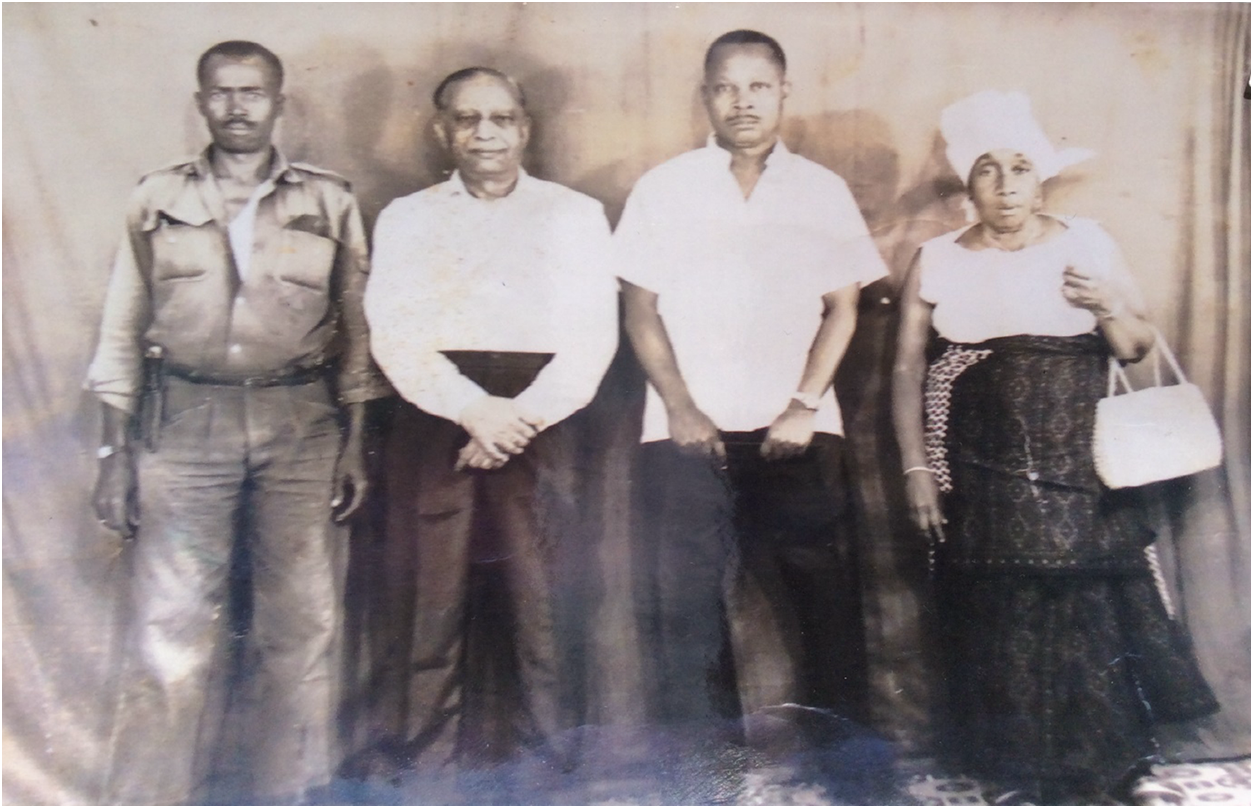
After Johari’s death, Aisha (or Asha) Mkangwa took over leadership of the group. Though born in Tabora, her son, Mkangwa Salum, says that she belonged to the Kusu linguistic group, found in the Manyema region.Footnote 54 Recurring wars had forced Aisha’s parents (Mkangwa and Ndalamumba) to flee and settle in Tabora. As with Johari, it is impossible to determine with certainty whether Aisha was a refugee, a migrant, or an enslaved dependent—and it may never have been entirely clear even at the time..Footnote 55 What is clear from oral recollections is that Aisha acquired a position of respect as a purveyor of beer.Footnote 56 Oscar Kisanji asserts that her family was “one of the richest in town,” owning seven “modern” rental properties.Footnote 57 In the 1950s, during the run-up to independence, Aisha established her own company (Asha Company), transporting cattle to Dar es Salaam in collaboration with her brother-in-law, brother, husband and an Indian trader (see Fig. 1, below, for a picture of Aisha and cofounders). By then, Aisha was regarded as one of the “successful Manyema women in the town.”Footnote 58 Losses from a train derailment in the 1960s led to the closure of the company, but her other businesses persisted.
Aisha Mkangwa and her Cofounders, c. 1964.
Sketchy though they are, the life stories of these women show colonial Tabora and its beer outlets as sites of opportunity, where the distinctively feminine skill of beer-brewing built fortunes and reputations. That said, even within this small sample, the differences are striking. Notably, the only person explicitly characterized as a former slave, Wangwalala, has no descendants speaking on her behalf. In the account given of her life, marriage was the ultimate prize, rather than part of an entrepreneurial career, as it was for Aisha. Taken together, these stories make clear that while important, marriage was not in itself a resolution to an ex-slave woman’s status worries, but part of a process that demanded sustained effort, networking, and strategizing in both household and beer hall. A closer consideration of social and working life around the beer halls helps bring these challenges further into focus.
“Alcohol Causes Joy and Anger”: Drinking, Gender, and Urban Culture in Colonial Tabora
The careers of the brewers described above depended on the urban environment of Tabora and its commercialized drinking culture. Their patrons were participants in an expanding urban economy. Between 1930 and 1948, the population of the town more than doubled, from 25,000 to 53,000, as expanding transport networks and cash crop trading attracted a growing number of casual laborers (vibarua), contracted workers, and visiting peasants selling crops. Footnote 59 Colonial officials took far-reaching measures to control this expanding population, deploying a slew of regulations between 1920 and 1936.Footnote 60 One of the earliest, the 1920 Township Ordinance, sought to control “native” behavior in public spaces and introduced zoning provisions. Racial binaries of “whites” and “Africans” were spatially demarcated, with African areas routinely more crowded and unsanitary. Thus, zoning revealed the underlying assumption in colonial policy that “natives were aliens to urban areas.”Footnote 61 It reflected colonial concerns about urban Africans as disorderly and, in the case of women, threatening to induce “immorality.”Footnote 62 In Tabora, zoning also reveals the loss of status of the Arab population, which was not accorded a separate zone.
A more elaborate form of zoning was introduced in 1936, splitting central Tabora into three parts. The first zone was reserved primarily for colonial officials and included amenities such as a post office, golf course, hockey field, and hospital.Footnote 63 The second zone, at the center of the town, was for Indians and included a commercial area, temples, schools, sports, and social clubs.Footnote 64 It was here that many visitors to Kachoma beer hall obtained the money they spent by selling crops to Indian produce traders. The third zone was for Africans, including laborers, petty traders, and artisans. In a sign of their declining status, many residents of Arab extraction also lived here. Of the three zones, this was the most populous and busy, with many beer outlets. Initially, most drinking took place in little sheds known as vilinge (sing. kilinge). These inconspicuous sites served as a fluid space between private household and public business, employing family labor to serve small quantities to local customers. Their importance diminished over time, relative to the larger beer halls that attracted customers from in and out of town.Footnote 65 Elders remember beer halls at locations called Ng’ambo, Isevya, and Gogoni, all in the “African” part of town, besides the government-endorsed beer hall at Kachoma, which by the 1940s overshadowed the other sites.Footnote 66
In these clubs, regulations permitted drinking during designated hours, marked by the sound of a siren.Footnote 67 Regulation of the beer hall, then, formed part of an effort to shape African customers’ use of both their time and public space. Unlike on the coast, where concern about the supposed reticence of former slaves against regular employment was made explicit, in Tabora, the need for such regulations was asserted with reference to general African, and especially youthful and male, unruliness.Footnote 68 Yet while official and oral records confirm that the disorder and health hazards associated with drunkenness were indeed part of the everyday lives of brewers and customers, overall, the sources paint a more varied picture of work and social life in the beer hall.Footnote 69
Certainly, the limited information on working conditions at Kachoma suggests a challenging job. As brewers had to move their beer manually from home to the beer hall for sale, their daily output was small, measured in single barrels or just gallon tins.Footnote 70 The hall opened when the official workday ended, at 4pm on weekdays and noon on weekends. Brewers worked separately in cubicles called vizimba, each rented out to a different woman, offering their beer through a “beer window” at the front of the stall; an arrangement not unique to Tabora.Footnote 71 The effort made to separate purveyors from customers contrasts with the more open layout of markets. It suggests the need to protect both wares and seller from inebriated or covetous customers. One interviewee, Maria Kasimula, stated that “some people struggle to be happy if they do not drink,” hinting at the behavioral effects of alcoholism.Footnote 72 We have found little information on whether or how sellers cooperated or mediated conflicts, or how they protected beer from theft or spoilage.Footnote 73 Nevertheless, the trading hours and the need to square trading and production with routine household obligations show that this was a demanding occupation. The additional burden of licensing fees and taxes further compounded the challenge.
The potential for physical violence was real, as drinking clubs attracted crowds from far and wide who would become more disinhibited as the evening wore on. Some men walked to the hall with clubs and other weapons, ready for physical confrontations that sometimes were reprised repeatedly.Footnote 74 Those who had a long way home were vulnerable to being waylaid, with alcohol-fueled violence spreading beyond the beer hall. In 1947, the government-sponsored Swahili-language magazine Mambo Leo expressed these concerns in an article entitled “Beer and Disorder” (Pombe na Vurugu).Footnote 75 That this article appeared at this time is likely to reflect the ramifications of military personnel returning from the Second World War, with some money to spend and masculine pride to defend.Footnote 76 The oral record states that beer caused “joy and anger” (furaha na hasira), since it fueled both enjoyment and conflict among the drinkers.Footnote 77 Moreover, in keeping with the literature, this kind of disorder was highly gendered. Much of it was fueled by assertions of masculine pride and involved confrontations between men.
Yet women, too, could become targets of violence. Though interviewees were reticent on the issue of sexual encounters around the beer hall, one respondent, Zakaria Kazilo, recalled the scandal of a woman who was stabbed at the hall because “she drank the beer of two men.”Footnote 78 The expression could suggest theft, but is more likely to indicate that both men considered themselves entitled to this woman’s loyalty, or to her sexual favors, in exchange for the beer they bought her. The woman was remembered as Chiku Malaya; “malaya”’ being a widely-used Swahili term for women engaging in prostitution. There appears to have been no prosecution for her murder.
Other women practiced transactional sex from a more secure position. Zakaria Kazilo recalled that in the early 1950s, when he was a regular at Kachoma beer hall, there was a colony of women working as prostitutes from Buhaya who rented houses on present-day Lumumba Road and charged five Shillings per encounter. He stated that they found customers at the hall and took them home after payment. Their customers considered this “part of relaxation after drinking,” and prostitution a way to make a living. Kazilo averred that “the town council did not disturb them” and that “Bahaya women came here to reap money.” This aligns with existing scholarship about the wide use of prostitution as a livelihood strategy by Bahaya women, and their mobility in pursuit of this trade.Footnote 79 But the emphasis on Bahaya also serves to deflect from the prostitution practiced by local women. Chiku Malaya, for instance, was said to have been Nyamwezi.
Nevertheless, Taborans who remember Kachoma describe it as a site of “much fun” (burudani nyingi), in contradiction to the negative depiction of beer halls by officials and some educated Africans.Footnote 80 Present-day recollections, though centered on the late colonial period, plausibly describe earlier decades. “Alcohol attracted many people,” in Issa Ndima’s words, making Kachoma a busy place where newcomers formed and locals expanded networks of friendship.Footnote 81 Elders state that some encounters in beer halls led to marriages, including between Nyamwezi wenyeji and non-local women. For some women, then, the town’s drinking hubs offered a way to become incorporated into Tabora’s social networks.Footnote 82 Further, Anthony Songoro recalls that “we [his friendship group] often stopped by the bar just to taste the beer,” emphasizing that while they enjoyed the beer hall, they drank in moderation.Footnote 83 He offers a reminder that the much-noted link between young men’s drinking and violence can be overstated.
These recollections carry broader implications. Firstly, they show vividly that the colonial regime’s abolitionist ambitions did not entail an appreciation of the livelihood needs, quandaries, and strategies of former slaves. Plebeian ex-slaves were a potential public order problem, and drinking policy shows that, as Keletso Atkins put it, African urbanites and colonial town planners “represented totally different social worlds… that eluded mutual comprehension.”Footnote 84 While African customers remember Kachoma as a place to relax and meet friends after a day’s work, the use of a siren reflects Europeans’ view of urban Africans as lazy, fickle, and capricious; a view that was applied even more assiduously to ex-slaves.Footnote 85 Designating specific drinking times was meant to “civilize” them through the “gospel of labor” and time management.Footnote 86 And yet, these strictures are marginal to oral recollections of the beer hall, which focus on the fun that was had anyway.
Meanwhile, the allusive description of how Chiku Malaya became a target of violence (“she drank the beer of two men”) hints at the social and affective baggage of both the beer trade and transactional sex, and the risks and hardships this entailed for the women in these trades. In her seminal study of prostitution in colonial Nairobi, White has shown that prostitution here was not just about sexual release, but also about creating a mirage of comfortable domesticity.Footnote 87 Like sex, beer was a commodity imbued with extensive social, affective, and gendered ties, and brewing was a domestic practice that became commodified in the colonial towns. The women who flourished in this trade had to manage not only the practical challenges of brewing but also the emotional charges and social ambiguity attendant on it. Trading what had previously been a quintessentially domestic good, deeply enmeshed in neighborhood networks and gendered hierarchies, for the hard-earned cash of increasingly inebriated customers required considerable people-management skills.Footnote 88 The apparent lack of punishment for Chiku’s killers shows that the official concern about public order did not translate into effective protection for women in the beer halls.
These considerations lead to a last point in need of elaboration. The biographies of brewers discussed above were, by and large, stories of success. But they represent a mere fraction of all the women who sold beer or otherwise worked in and around Tabora’s drinking halls. For every woman whose successful career as a brewer is remembered, there were others who struggled with their workloads, exposure to sexual and other violence, and insecurity of status. For every Wangwalala there were others whose beer was not popular and whose eventual marriages, if any, were not respectable. Part of these outcomes was determined by their skill and luck in interacting with increasing urban regulations. The late colonial period plays a contradictory role in this regard, exacerbating these challenges even as it opened new avenues of opportunity.
Marginal Livelihoods, Public Order, and Aspirations to Modernity at the End of Colonialism
The ambiguity surrounding the process and effects of late colonial liberalization has been thoroughly studied, notably by Frederick Cooper, and Anne Willis’s history of alcohol similarly highlights the increasing intrusiveness of late colonial regulation in the beer trade.Footnote 89 In Tabora, too, the intensification of efforts to control drinking during these years shows the tensions in the political project of independence at work. The rhetoric of decolonization in Tanzania was very assertive in its references to liberation and equality, and respondents near the coast connect this language directly with the attenuation of slavery-derived hierarchies.Footnote 90 But the same rhetoric also had an authoritarian-modernist and moralist strain, as in Julius Nyerere’s phrase “freedom is work” (uhuru ni kazi).Footnote 91 In this spirit, the late colonial town government in effect positioned drinking as an obstacle to the progress it constantly invoked for its legitimation. Yet the measures put in place to protect the pursuit of progress from the deleterious effects of drinking were indistinguishable from restrictions motivated by colonialists’ long-standing moralist mistrust of Africans. This mistrust had always been strongest against those Africans who did not fit the stereotype of the peasant villager, and was therefore particularly likely to ensnare the displaced and precarious, including ex-slaves. Footnote 92
There were some pragmatic reasons for increasing controls at this time. Following the Second World War, the return of soldiers with disposable income and the expansion of the cash crop economy intensified both the demand for and supply of beer. But the expansion of regulations also shows an activist and judgmental government. Rules put in effect between 1945 and 1956 ordered Africans to refrain from carrying weapons into licensed drinking places, and from stacking weapons outside beer halls, except for designated areas where they could collect them on leaving.Footnote 93 Lawbreakers were subject to fines or to imprisonment of up to three months.Footnote 94 In its twilight, between 1955 and 1959, the colonial government produced a blizzard of new regulations. Some made it easier to revoke licenses and impose further requirements on purveyors.Footnote 95 In this vein, in 1958, the township authority imposed cesspit emptying and drain clearing fees on the brewers, accusing their customers of “polluting the town.” Separate latrines for men and women were constructed near the beer hall.Footnote 96 Liquor ordinances between 1955 and 1959 mandated the police to enforce drinking restrictions, outlawing the sale of beer to Africans beyond authorized hours.Footnote 97 Further, the government ordered “native authorities” to enact uniform beer rules for all three Unyamwezi districts, citing the need to curb “banditry” as one reason.Footnote 98 Not to be outdone, the town government reduced authorized drinking hours from ten to eight per day between 1955 and 1959. The stated reason was an increase in violent crime and public disorder, including street fights.Footnote 99
Perhaps most tellingly, the administration built a police station across the street from the Kachoma.Footnote 100 This “charge office”’ became the night’s final destination for many drinkers accused of inciting disorder.Footnote 101 Official concerns about the effects of drunkenness were thus made visible in the street plan of Tabora’s African quarter. But all this interference did little to curtail demand for beer or brewers’ pursuit of this livelihood. Rather, brewers turned to clandestine modes of selling and drinking pombe, reviving the vilinge or drinking sheds of the early interwar period. Repositioning drinking back in the domestic sphere enabled brewers to sidestep the regulations.Footnote 102 Further, a tantalizing snippet from the archives tells us that in 1963, women brewers formed an association, the Umoja wa wanawake wapika pombe or Union of women beer brewers, with headquarters in Tabora. But there is no further information on its activities. Footnote 103
This slew of regulations vividly illustrates the contradictory impulses of the late colonial state, as well as the dilemmas they created for the very people the government purported to promote. By the 1950s, people like Wangwalala or Aisha had spent decades building their status and economic security—one might say, to achieve progress for themselves—and now they found their livelihoods positioned as barriers to societal progress. Their responses, founding an association on one hand while retreating into informal vilinge on the other, show their proactiveness and foreshadow the strategy of seeking refuge from state interference in the domestic sphere, traced so carefully in postindependence Tanzania by James Giblin.Footnote 104 Brewing would remain a contingent survival strategy, in Priya Lal’s words, in postcolonial Tanzania.Footnote 105
Conclusion
The discussion above vividly illustrates the difficulty of identifying and tracing the trajectories of former slaves—especially women—in western Tanzania. Nevertheless, the stories of beer brewers, drinkers, and the colonial-era regulation allow us to glimpse a social space that accommodated former slaves and others who had experienced conditions adjacent to slavery, and to trace how its occupants navigated that space. Two features of this space and its protagonists are particularly striking. One is the great variety of outcomes for formerly enslaved or slave-adjacent women, from Aisha Mkangwa’s impressive social mobility to the anonymity and vulnerability of the many unnamed brewers and women like Chiku Malaya. The other, flowing from the former, is the difficulty of assessing in general terms how much of a social burden slave antecedents remained.
We can observe, though, that the formerly enslaved and their descendants lived with a constant tension. Its poles were, on one hand, the proud, public assertion of refashioned identities, such as the Manyema one, by some formerly enslaved people. On the other hand, there was the self-effacement and avoidance of their history by other people with similar backgrounds. It is possible or even likely that some people alternated between both. Lingering unease among potential interviewees shows that slave antecedents remained a potential liability for a long time. The degree of liability, however, depended on a host of factors such as woman’s origins, her social and productive skills, and the precise character of the networks entered. Slave-adjacency was clearly a problem, but one for which a wide range of solutions existed, each with variable success. Entrepreneurial and autonomous characters like Aisha, who resembled the women described in White’s classic account of women in colonial Nairobi, represented one possible trajectory in Tabora.Footnote 106 Others, such as Wangwalala, appear to hearken back to nineteenth-century quests for safety traced by Wright. As Chiku Malaya’s end shows, women continued to be vulnerable, and striving for family connectedness remained an important means to seek safety. That said, “marriage” clearly was not the same to all women. Johari and Aisha became public figures within their networks as married women, while for others like Wangwalala, marriage appears to signal a return to anonymity. Yet we do not know what Wangwalala and her peers made of this outcome, or how comfortable their home lives were. We do not know how Wangwalala or her peers felt about their circumstances, or whether they regarded themselves as having transcended their origins. The lens through which they understood their own histories may have differed profoundly from ours.
In a similar vein, the consequences of involvement in urban brewing for women appear more varied than the literature on brewing in East Africa shows so far. Justin Willis’s work demonstrates the vulnerability of women in another Tanzanian country town, Tukuyu, to both repressive administrators and opportunistic African men seeking to profit from their work.Footnote 107 In Tabora, while officials caused plenty of problems to brewers and profiteering of the kind Willis describes may well have happened, some women still did remarkably well out of this work. In this regard, outcomes in Tabora recall those in South African settings, where—again, at certain times and places and under specific conditions—some women built fairly stable and lucrative careers on producing and selling alcoholic beverages.Footnote 108 There, too, it has been recognized that such success was exceptional and depended on luck, connections, and a very distinctive set of practical and interpersonal skills.
Women’s ability to thrive in brewing depended on an array of factors—from production skill to the strength and nature of ethnic networks. This variability confirms a long-standing observation in the history of female slaves, and arguably women tout court: women’s structural vulnerability combined with their importance to men’s quests for status to produce shocking extremes.Footnote 109 This also complicates the conventional narrative of female ex-slaves’ absorption into households. The trajectories discussed above involved the creation of quasi-domestic or para-domestic spaces (vilinge, vizimba; the gatherings of women’s dancing societies) and movements out of and back into the domestic sphere. They indicate that even within the domestic sphere, there was much room for variation, negotiation, and possibly conflict over the roles and status of the formerly enslaved.
To an extent, our findings justify the implicitly optimistic attitude expressed in the relative disinterest in post-slavery social struggles in the literature on East Africa. Former slaves could achieve economic self-sufficiency and full married status, like Wangwalala, and a classificatory stranger like Aisha could become a wealthy businesswoman. In this sense, the heritage of slavery sat relatively lightly on society here. But the apparent obsolescence of slave origins was achieved through hard daily work in an economically and often socially unforgiving environment. For every Aisha or Wangwalala, many others survived by desperate means, or like Chiku Malaya, did not survive at all. This spread of outcomes and the concomitant lack of generalizable claims help to explain the shortage of studies on post-slavery in mainland East Africa.
Further, despite the scope for integration achieved by the likes of Wangwalala, the trajectories traced here warn against ascribing to Tabora’s African inhabitants the kind of egalitarian mindset that both late colonial modernizers and postcolonial ujamaa ideology tended to assume.Footnote 110 Status distinctions were numerous and important, all the more as status was not simply a function of either wealth or origins. Rather, it can be expected that declining Nyamwezi planters only held on more firmly to their status of wenyeji, and Omani ones to their ustaarabu, as people like Johari and Aisha overtook them economically. Some claims to status became more important, at least to those making them, as they became less credible. This is an ambiguity that observers of post-slavery elsewhere, and indeed of other shifts in status economies, would recognize.Footnote 111 Considering these diverse, competing ways of reckoning status, the colonial town looks less like one community than like a layered agglomeration of networks, whose members contested over status with means ranging from clubs to verbal slights.
That slave antecedents have become muted—with an institution that was central to the urban economy at the onset of colonialism now spoken of allusively as one of many elements that determine a person’s status—is clearly an achievement for ex-slaves who worked hard to move on from servile status. Yet this transformation has not been without cost, in the form of silence and avoidance. This “Taboran solution” challenges the notion, normative in many Western contexts, that historical wrongs need to be aired in order to move on from them.
Meanwhile, the role of successive governments in these processes was persistently ambiguous. The colonial government facilitated emancipation mostly by disempowering precolonial elites and (in the interest of European planters) supporting the development of labor markets. But its restrictive approach to urban Africans and their leisure pursuits created new constraints for marginal urbanites such as ex-slaves. Moreover, the controlling and moralist overtones of decolonizing and postcolonial administrations heightened the tension with their professed emancipatory agendas further. This ambiguity feeds into an intricate mosaic of outcomes for former slaves in the interior. For female ex-slaves, in particular, they helped create a social landscape considerably more varied than the default assumption on absorption into households suggests.

 Open access

