




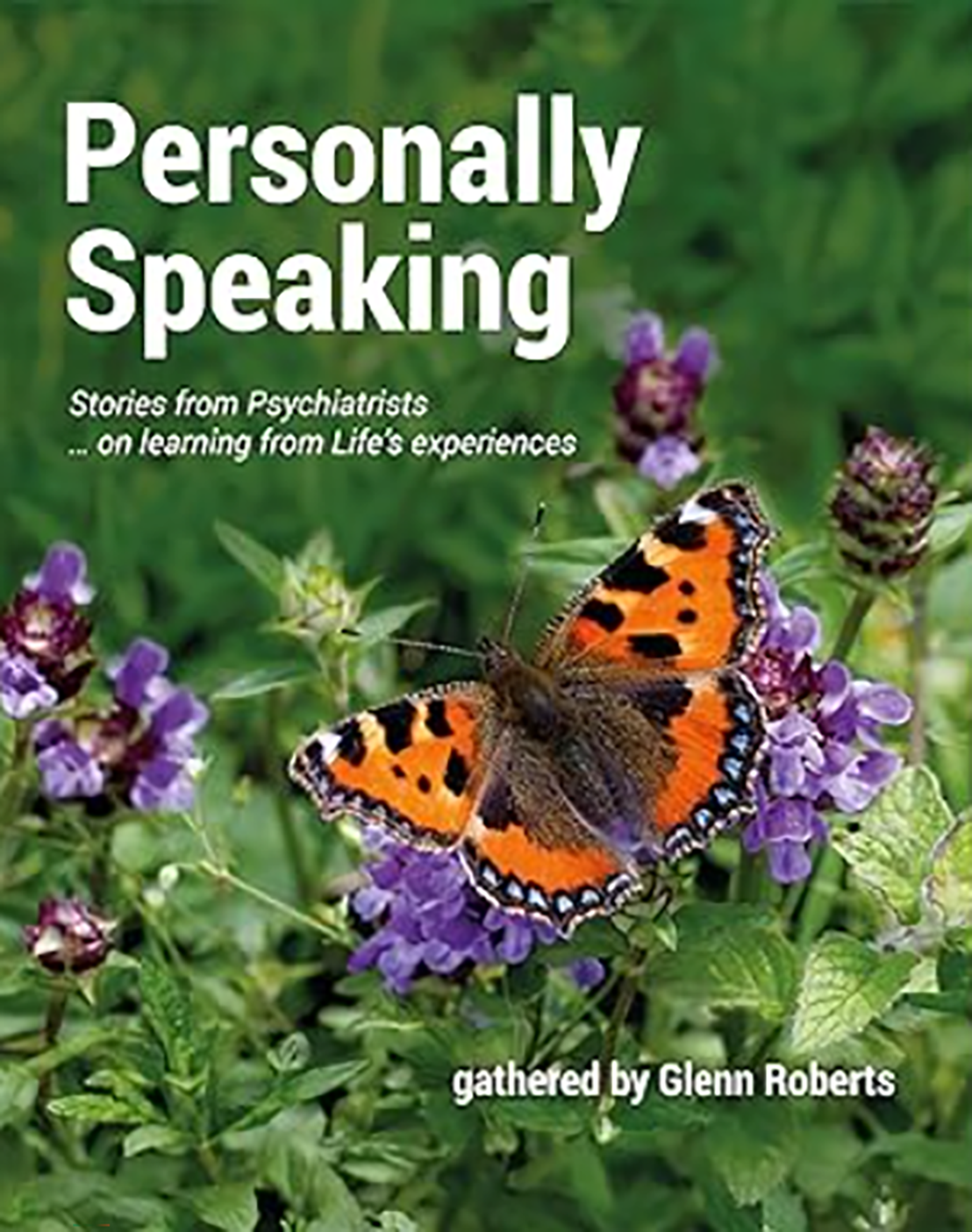
Personally Speaking is hot off the press right now – if you’re not aware of it yet, read on! Promotion of lived experience has been on the rise for a number of years, and there has been a fairly recent culture shift towards openness among clinicians. In the case of this book, there are 22 stories from some of the most esteemed psychiatrists in the country – including four past presidents of the Royal College of Psychiatrists – which is one of the reasons the book is so important.
One of the issues that Glenn Roberts points out is that much controversy in the history of psychiatry has arisen when we ‘lose awareness of psychiatric distress as a human experience occurring in people like us’, and he argues that keeping our common humanity at the forefront as vital. Stigma among medical professionals has always been rife, with a tendency to perfectionism and an internalisation of the perception that doctors are superhuman. We know this way of thinking can lead to shame and guilt when facing personal difficulties or illness and be a significant barrier to recovery – in fact, it is considered one of the reasons for such high rates of suicide among medics.
This book normalises the idea that we all have a variety of different experiences in life, because we are human. It is comforting to think that despite facing terrible hardship, it is entirely possible to still be successful, and that learning from these experiences might not only improve our own self-development but also improve our compassion and ability to look after others later on. Hope, in whatever form, appears to be a clear theme in several of these stories. Sridevi Kalidindi recalls the power of hope being held for her by someone else, and reflects on how doing this for our patients is also an important part of our work.
Much like in life, many of the stories are harrowing and emotional. They vary in focus and format, with some taking the form of interviews. We hear stories about how our identity as medics might have an impact on experiences of personal illness, family illness, bereavement and spirituality and vice versa. It is inspiring to see how some of these experiences have shaped the authors in their later achievements – for example Ananta Dave becoming a trustee of Doctors in Distress.
One story I found particularly interesting was Josep Vilanova’s account of how his own subconscious had hinted at his personal story in his writing. I could go on about them all, but this was one of the stories that stood out to me personally, just as I expect other stories will resonate with others. The variety and wide appeal of this book is one of its real strengths. I would recommend it to everyone – especially to those just starting a career in psychiatry or those currently experiencing difficulties themselves.
Declaration of interest
None.

 Open access


eLetters
No eLetters have been published for this article.