The public health goal to assure conditions in which people can be healthy(1) requires that families and communities have sufficient access to healthy foods, defined in the USA as foods that can be used to meet the Dietary Guidelines for Americans(2). Access to healthy foods has many dimensions including physical access (having food in geographic proximity given transportation options), economic access (having sufficient resources to pay for food), nutritional access (having access to food that is of good nutritional value) and cultural access (having food that is culturally appropriate)(Reference Rose3–Reference Gittelsohn and Sharma5).
In their efforts to assure access to healthy foods, public health nutritionists join a broad group of stakeholders who work to improve the capacity of food systems to deliver healthy foods to the population(Reference Story, Hamm and Wallinga6, Reference Muller, Tagtow and Roberts7). Nutritional status and access to healthy foods are impacted by many factors that interact in complex systems; sustainable initiatives to assure such access will require multidimensional changes across a broad set of food access determinants(Reference Muller, Tagtow and Roberts7, Reference Sacks, Swinburn and Lawrence8). These changes can be supported by a ‘health in all’(Reference Mayes and Oliver9) approach to developing, enacting and implementing effective policies to support actions at each point in the food system from production, transformation, distribution, retail and consumption through to waste management(Reference Muller, Tagtow and Roberts7). Such policies make it easier to make healthy lifestyle choices(Reference Swinburn, Sacks and Hall10), but they require strong leadership and substantial public policy change(Reference Gortmaker, Swinburn and Levy11).
An impressive list of policy strategies to improve food systems and increase access to healthy foods has been generated by researchers, practitioners, advocates and other policy actors. These include a wide range of legislative, regulatory and procedural approaches such as making food systems more health promoting overall(12), planning communities to assure food access for residents(13), promoting healthy environments in schools(Reference Shroff, Jones and Frongillo14), promoting breast-feeding in hospitals and communities(15), establishing tax policy incentives and disincentives(Reference Jensen and Smed16) and addressing family food security(Reference Bastian and Coveney17). Because this array of policies can be overwhelming to policy makers, there is a need to provide policy makers with concise information about opportunities for positive change(Reference Story, Hamm and Wallinga6).
Public health practitioners are accustomed to seeking out evidence about what works to improve health, but the health research literature offers little evidence about the process of developing and implementing policy in a state or local context(Reference Bastian and Coveney17). Most policies put forth by well-meaning advocates are not enacted(Reference Shroff, Jones and Frongillo14). Policy development is subject to political and social influences, and policy makers are subject to many competing demands(Reference Sabatier18). Little is known about stakeholder perceptions of policy impact, the feasibility of policy adoption or implementation, or how these perceptions are formed. For example, a diverse set of policy actors (advocates, academics, elected officials and agency staff) often come together around a given policy, so it is important to understand the beliefs of each of these actors about the dimension of policy that are most important to them(Reference Sabatier18, Reference Kingdon19). Policy process research and a better understanding of the policy landscape can inform the steps of policy formulation, enactment and implementation(Reference Leeman, Sommers and Vu20). Most major policy shifts require several years of preparatory action(Reference Kingdon19); identifying early ‘easy wins’ can support comprehensive long-term efforts to assure access to healthy foods(Reference Lawrence and Swinburn21).
In 2010, the Washington State Nutrition and Obesity Policy Research and Evaluation Network (WA NOPREN), funded by the Centers for Disease Control and Prevention (CDC) as part of a national NOPREN to conduct ‘transdisciplinary nutrition policy research’, served as an advisory group for the development of a report on Opportunities for Increasing Access to Healthy Foods In Washington (22) (referred to hereafter as the ‘Opportunities report’). WA NOPREN members have expertise in nutrition, agriculture, public health, food systems, law, economics, public policy, epidemiology, evaluation and urban design. The group includes representatives from state and local health departments, other state agencies, policy and advocacy organizations, and the state's universities. The Opportunities report was based on a summary of the status of the current food system in the state, interviews with sixty-five state leaders and experts in food and economic systems, and a review of over 100 policy recommendation and guidance documents. While policy strategies are recommended at international, national and local levels, this report focused only on state actions. Results of the needs assessment, interviews and document review were compiled to develop a list of the highest-priority strategies for improving healthy food access in families, communities, institutions and regional food systems.
The purpose of the present study is to build on the Opportunities report's findings to further inform policy development initiatives to increase access to healthy foods. The study addresses three research questions:
1. To what extent are specific state-level policy strategies to improve access to healthy foods perceived as impactful, politically feasible and implementable?
2. Do content experts, policy experts and other stakeholders differ in their perceptions of the impact and feasibility of policy strategies to improve access to healthy foods?
3. Which food policy strategies are most promising in terms of their impact and feasibility?
The study can impact public health interventions by identifying the most promising strategies for public health practitioners to pursue. Practitioners can apply the methodology described here in other settings.
Methods
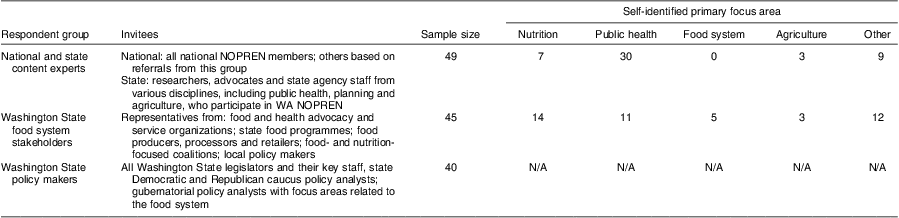
Data were collected through a sequential series of anonymous online surveys completed by national and state nutrition and food system content experts, Washington State researchers and food system stakeholders, and Washington State policy experts. Table 1 provides a summary of recruitment procedures and sample size for each of the respondent groups. The content expert and other stakeholder samples were developed using an initial roster of members of the national NOPREN network of university-based researchers and the WA NOPREN. These individuals, in turn, nominated content experts and other stakeholders.
Respondent group sample size and description; Washington State, USA, May–September 2011

NOPREN, Nutrition and Obesity Policy Research and Evaluation Network; WA NOPREN, Washington State Nutrition and Obesity Policy Research and Evaluation Network; N/A, not applicable.
Policy strategy selection
The list of policies included in the survey was based on a framework from the Opportunities report(22). While there is overlap in policies designed to address food access and obesity prevention, the primary focus of the report is healthy food access. These categories included: Food Marketing; Price Incentives; Access to Food Retailers; Community Planning and Land Use; Nutrition in Child-Care Facilities; Nutrition in Schools; State Agency Nutrition Standards; Local Food Procurement; Farmer Support and Agricultural Preservation; Breast-feeding; and Other (i.e. water access and joint use agreements). The team then further reviewed extant literature, primarily in the form of practice and policy guides, to identify specific state-level policy strategies that are recommended for each category(Reference Kaphingst and Story23–Reference Winterfeld, Shinkle and Morandi26). The WA NOPREN advisory group provided additional ideas for policy solutions and helped to prioritize and edit the list based on its knowledge of Washington's unique context. For example, some of the policy statements related to nutritional standards of foods served in government facilities came from a current draft of a proposed state food procurement bill. Policy strategies currently in place in Washington in some form were either not included or were revised to describe a stronger policy approach. Policies related to Farm-to-School programming were not included because they were already part of the state's Local Farms Healthy Kids Act passed two years prior. In another case, a policy statement related specifically to the funding of a state breast-feeding coordinator, since the position is mentioned, but not funded in existing state policy.
Online surveys
Surveys began with a statement that described ‘healthy food access’ broadly, inclusive of physical, financial, nutritional and cultural dimensions. The online surveys included questions and associated Likert-scale response options for the perceived impact, political feasibility and implementation feasibility (referred to hereafter as ‘dimensions’) of each policy statement. Survey questions were:
1. ‘To what extent would this policy positively impact the population's access to healthy foods?’
2. ‘To what extent could this policy be adopted or enacted within the next 5 years?’
3. ‘To what extent could this policy be implemented as described if adopted or enacted?’
Responses for each of the three questions included a 5-point scale of ‘no impact or feasibility’ (score = 0), ‘minimal’ (score = 1), ‘medium’ (score = 2), ‘considerable’ (score = 3) and ‘maximum impact or feasibility’ (score = 4). Respondents also had the option to select ‘I don't know’. Respondents identified their primary role with regard to the food system. The research team used these responses to categorize respondents into three groups for analysis: (i) content experts (including both national and Washington State nutrition and food system subject experts, predominantly researchers); (ii) policy experts (Washington State elected officials or their staff, gubernatorial or legislative policy analysts); and (iii) other Washington food system stakeholders (advocates, programme administrators, food producers).
Data collection took place between May and September 2011. Since the overall study design called for data on three dimensions for each of fifty policies, the research team designed a pragmatic data collection process to minimize the burden on individual respondents while still providing data useful to state planners. First, some respondents were asked to rate only the dimension(s) most pertinent to their perspective. Because they possessed less familiarity with Washington's political and implementation landscape, national content experts were only asked to rate the policies’ potential impact. Washington State policy experts were only asked to rate policies’ political feasibility, acknowledging that brevity was critical to ensure responses from busy policy makers – and that policy experts possess unique authority to assess this dimension. All other respondents (Washington State content experts and ‘other stakeholders’) were asked to rate policy strategies across all three dimensions. In addition, the research team used results from successive data collection rounds to eliminate low rated policies early on and keep the surveys as short as possible for subsequent rounds of data collection. Content experts from outside the state, those with the least stake in a process conducted for Washington State, received the survey first and the research team removed the ten policies that this group rated lowest impact before opening the survey to other respondent groups. Removed policies included, for example, developing and mandating a standards-based nutrition programme in schools, mandating menu labelling at chain restaurants with between ten and twenty locations, and providing a transportation subsidy to Supplemental Nutrition Assistance Program recipients. Washington State content experts and other stakeholders responded next, after which the research team removed an additional three policy strategies that scored low for all dimensions before opening the survey to Washington policy experts.
Survey invitation and reminder protocols were based on Dillman's recommendations(Reference Dillman27). An initial packet of materials that included an introduction to the project and its sponsors and the executive summary of the Opportunities report was mailed to policy experts. This was followed by an emailed invitation to participate in the survey. Postcard reminders were sent to policy experts who did not respond in the first week, and an attempt was made to contact each non-responsive policy expert by telephone. Content experts and other stakeholders were invited to participate through emailed invitations. Reminders were emailed to those who did not respond to the invitations about weekly for up to five weeks after the initial invitation.
For policy experts, the research team asked that either a legislator or his or her staff complete the survey. In instances when both completed the survey, only the legislator's response was included in analysis. As an incentive to participate, all content experts and other stakeholder survey participants were entered into a prize draw. Policy experts did not receive any incentives. The surveys took an estimated 15–45 min to complete. The study was conducted according to the guidelines laid down in the Declaration of Helsinki, and all procedures involving human subjects/patients were reviewed by the University of Washington Human Subjects Division which determined that the project did not require full review by the institutional review board because it qualified for exempt status.
Data analysis
Statistical analyses were completed with the statistical software package IBM SPSS Statistics 19. Descriptive statistics were used to calculate frequencies for demographic data and mean ratings for each feasibility dimension and policy statement. Scatter plots and Pearson's correlation coefficients were generated to examine relationships between mean policy ratings of each respondent group pairing (e.g. content experts and policy experts) and dimension pairing (e.g. impact and political feasibility), and ANOVA with Tukey corrections for multiple comparisons was used to assess differences between responses by respondent groups. The research team used the median policy rating for each dimension to classify mean ratings above the median as ‘higher’ impact or feasibility and those below the median as ‘lower’ impact or feasibility.
Results
Sample
Of 386 individuals or offices invited to participate, 134 responded to the online survey. The sample is described in Table 1. Of the forty policy experts, eleven were state legislators, twenty-four were legislative staff and five were legislative policy analysts. Most of the policy experts who participated were from the highly populated urban parts of the state.
Policy ratings
As indicated by the data in Table 2, on a scale from 0 to 4, respondents rated the policies in aggregate as slightly higher than ‘medium’ for impact and implementation feasibility, and slightly lower than ‘medium’ for political feasibility. For individual policy statements, mean ratings ranged between 2·04 and 2·85 for impact, between 1·32 and 2·71 for political feasibility, and between 1·89 and 3·00 for implementation feasibility.
Mean rating of thirty-seven policies’ perceived impact and feasibility by respondent group; respondents to an online survey on policy strategies to improve access to healthy foods, Washington State, USA, May–September 2011

Scale: 0–4; 0 = none, 1 = minimal, 2 = medium, 3 = considerable, 4 = maximum.
Figure 1 illustrates that the overall trend for individual policy options was to have lower ratings for political feasibility than impact and implementation feasibility. The exceptions to this pattern were policy strategies to ban advertising on school buses and school grounds. Scatter plots in Fig. 2 show relationships between the three dimensions for each of the policy strategies. Political and implementation feasibility were significantly associated (P < 0·01); neither political feasibility and impact nor impact and implementation feasibility were associated.
Mean impact, political feasibility and implementation feasibility ratings (on a scale from 0 to 4) among respondents to an online survey on policy strategies to improve access to healthy foods, Washington State, USA, May–September 2011
Scatter plots of mean policy ratings (on a scale from 0 to 4), comparing dimension pairings of (a) impact and political feasibility, (b) impact and implementation feasibility and (c) political feasibility and implementation feasibility, among respondents to an online survey on policy strategies to improve access to healthy foods, Washington State, USA, May–September 2011
Overall, about 10 % of respondents selected ‘I don't know’ for a given policy statement instead of rating its impact and/or feasibility. The fewest ‘I don't know’ responses were for policies related to food marketing, price incentives, food retail, school nutrition and state agency standards. The most ‘I don't know’ responses were for policies related to child-care standards, farmer support and agriculture, and breast-feeding. More than 20 % of respondents selected ‘I don't know’ for these three policies:
1. Issue additional state-determined nutrition standards for participation in the US Department of Agriculture's Child and Adult Care Food Program (CACFP) above and beyond the federal minimum standards; twenty-nine ‘don't knows’.
2. Ban restrictive land covenants that do not allow new grocery chains to move into locations previously held by another chain; thirty-eight ‘don't knows’.
3. Levy taxes on the conversion to non-farm uses of land designated for agricultural land preservation; thirty-eight ‘don't knows’.
Policy ratings – differences by respondent group
Table 2 presents the ratings of each dimension overall and by stakeholder group. Policy experts rated the policies as less politically feasible than content experts (P < 0·018) or other stakeholders (P < 0·001). The biggest differences in political feasibility ratings were for strategies that addressed funding and support for healthy eating media campaigns, encouraging local communities to address healthy food access in transportation and land-use planning, applying standards for trans fat in food at government facilities, funding farmer business training and funding a breast-feeding coordinator. There were no statistically significant differences in impact or implementation ratings between respondent groups.
Highest ranked strategies across the dimensions
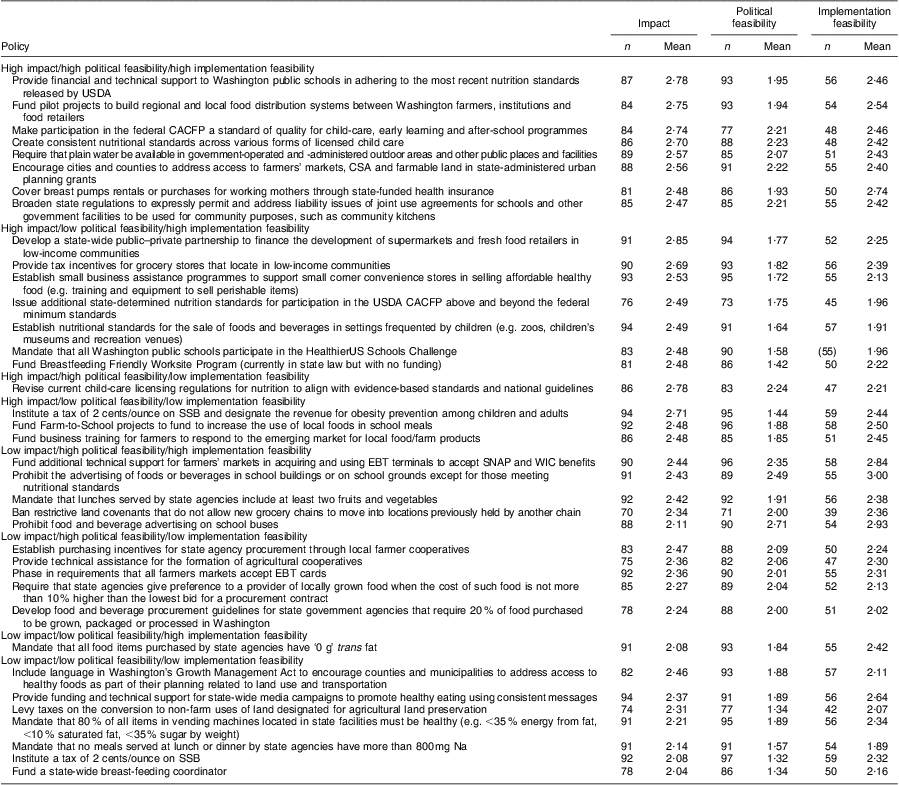
Using the median of each dimension as the cut-off (median = 2·47 for impact, median = 1·91 for political feasibility and median = 2·36 for implementation feasibility), Table 3 presents policy ratings for each dimension, categorized as rated relatively ‘high’ or ‘low’ in like combination groupings. Eight policies achieved ratings above the median for all three of the dimensions. The top three rated policies for perceived impact were provide financial and technical support to Washington public schools in adhering to the most recent nutrition standards released by the US Department of Agriculture (2·782), followed by fund pilot projects to build regional and local food distribution systems (2·750) and make participation in the federal CACFP a standard of quality for child-care, early learning and after-school programmes (2·738). The top three rated policies for political feasibility were create consistent nutritional standards across various forms of licensed child care (2·227), followed by encourage cities and counties to address access to farmers’ markets, community-supported agriculture and farmable land in state-administered urban planning grants (2·220) and broaden state regulations to expressly permit and address liability issues of joint use agreements to be used for community purposes, such as community kitchens (2·212). Finally, the top three rated policies for implementation feasibility were cover breast pumps rentals or purchases for working mothers through state-funded health insurance (2·740), followed by fund pilot projects to build regional and local food distribution systems (2·537) and make participation in the federal CACFP a standard of quality for child-care, early learning and after-school programmes (2·458).
Mean policy ratings for impact, political feasibility and implementation feasibility categorized by higher (above median) and lower (below median)Footnote * among respondents to an online survey on policy strategies to improve access to healthy foods, Washington State, USA, May–September 2011
CACFP, Child and Adult Care Food Program; CSA, community-supported agriculture; USDA, US Department of Agriculture; SSB, sugar-sweetened beverages; EBT, electronic benefit transfer; SNAP, Supplemental Nutrition Assistance Program; WIC, Special Supplemental Nutrition Program for Women, Infants, and Children.
* Median ratings: impact = 2·47, political feasibility = 1·91, implementation feasibility = 2·36.
Discussion
Information about the potential feasibility and effectiveness of nutrition- and food-related policy change can be used to focus limited policy process resources on those policy strategies with the best chances of successful enactment, implementation and impact. While the present study focused on state-level strategies, similar studies have been conducted in local communities(Reference Snowdon, Potter and Swinburn28, Reference Snowdon, Lawrence and Schultz29) and internationally with stakeholders from nine European Union countries(Reference Gonzalez-Zapata, Alvarez-Dardet and Ortiz-Moncada30).
In the current study, most policy strategies were seen as more impactful and feasible for implementation than politically feasible. The eight diverse policies that scored higher than the median on all three dimensions related to school and child-care standards, local food systems and community planning, water access, joint use, and breast-feeding. A number of the policies rated above the median were framed as approaches to encourage and support rather than mandate changes. Specific regulation changes that are within accepted parameters for governmental actions, such as insurance coverage for breast pumps and explicit options for joint use of publicly owned properties like school gymnasiums, may be perceived as relatively non-controversial and non-costly, technical changes to make in state policy.
Other studies have reported similar results. In a study of childhood obesity policy strategies, Brescoll and colleagues(Reference Brescoll, Kersh and Bron31) also found that content experts ranked policies higher for potential impact (4·27) than policy makers did for political feasibility (3·48). Childhood obesity policies that were viewed as potentially politically feasible but not very impactful included informational approaches such as providing parents and children with nutrition information about school lunches and increasing federal funding for nutrition education. A report on interviews with forty-five senior governmental and non-governmental authorities in Australia(Reference Shill, Mavoa and Allender32) found that the highest level of support was expressed for policies that addressed children or fell within traditional governmental boundaries such as school nutrition and cooking classes and nutrition standards for foods in government institutions including schools, prisons and government offices. For childhood obesity in the USA, strategies that involve outright bans and prohibitions were rated as impactful, but not politically feasible(Reference Brescoll, Kersh and Bron31), and in Australia policy strategies that were outside educational or conventional regulatory arenas, such as those that addressed food production, distribution and retail, received the least support(Reference Shill, Mavoa and Allender32).
Perceptions about political feasibility may be negatively affected by the perceived influence of those who may oppose policy change. An analysis of national nutrition policies in New Zealand found that current policies are more aligned with industry interests than with public health(Reference Jenkin, Signal and Thomson33). In the current study, a tax on sugar-sweetened beverages (SSB) was categorized as more impactful by content experts but as less feasible by the policy experts and other stakeholders. This perception about a lack of political feasibility for SSB taxes is supported by findings that only 36 % of US adults support a tax on SSB(Reference Rivard, Smith and McCann34). In Washington State, the perception of low political feasibility was probably enhanced by the recent passage of a voter initiative that repealed a very modest tax on nutrient-poor/energy-dense foods and beverages. The beverage industry funded the voter initiative heavily and it is likely that the perceived influence of industry opposition to an SSB tax is behind the low political feasibility of this strategy, despite its perceived impact.
In contrast to the perceived relative lack of political support for strategies to reduce access to unhealthy foods such as taxing SSB, there does seem to be support for strategies to increase access to fruits and vegetables. While it was not seen as especially impactful, support for building the infrastructure to allow use of electronic benefit technology for food assistance programme beneficiaries at farmers’ markets was seen as politically feasible. Foltz et al.(Reference Foltz, Harris and Blanck35) recently reported that 62 % of the general public supports changes to state or local policies to improve fruit and vegetable access through farmers’ markets.
The complexity of food and nutrition systems strategies may be a barrier to policy development and implementation. Many strategies in the current study had fairly high numbers of ‘I don't know’ responses. Allender and co-workers(Reference Allender, Gleeson and Crammond36) reported substantially more support for policy changes to support physical activity than healthy eating in Australia, and hypothesized that policy makers could easily understand the need for physical activity facilities but had difficulty understanding the more complex systems changes needed to address the food supply and food marketing. Food procurement policies may also be hindered by their perceived complexity. Gase et al.(Reference Gase, Kuo and Dunet37) found that lack of knowledge and experience was a barrier to implementing sodium procurement standards.
While the present study provides insight into the perceptions of policy actors for access to healthy foods, it has limitations. The policy strategies were selected based on their relevance to Washington State's context; perceptions may differ in other states. Respondents who chose to participate may have had characteristics distinct from those who did not; those who participated may be more interested in or generally supportive of policy approaches to address the issue of healthy food access than those who chose not to complete the survey. Few representatives of food industry, in particular, participated in the study and the policy expert response rate was somewhat lower than previously reported average response rates for legislator surveys of comparable length(Reference Maestas, Neeley and Richardson38). The diverse sample included individuals from various sectors of the food system, so they may not have been knowledgeable about all of the policy approaches. Based on use of the ‘I don't know’ response patterns, respondents felt more capable of rating some policies (e.g. food marketing) than others (e.g. child-care standards). In an intentional effort to make the data as useful as possible for Washington State policy efforts to increase access to healthy foods, the research team focused on the goals of creating a list of priority policy strategies and reducing respondent burden. Because policy experts were not asked to rate all policies on each dimension, it was not possible to assess policy experts’ perceptions of policy impact or implementation, or compare these opinions with those of other stakeholders. While all respondents were not asked all questions, there was an attempt to capture the most important perceptions according to the actors’ roles in the policy system(Reference Sabatier18). Only sixteen of the content expert respondents were from Washington, so this group was somewhat small in comparison with the number of stakeholders (n 44) and policy makers (n 40) asked to rate the policies’ political feasibility in the state. Some policies were removed from the survey early in data collection. As a result, the findings reflect the extent to which policies were seen as highly impactful or feasible, but not necessarily which policies are seen as the least impactful or feasible. The policy matrix divides the policies by ratings relative to one another to aid in policy prioritization. The actual range of mean ratings was small and few policies emerged as rated considerably higher than others. In fact, all thirty-seven policies achieved a mean rating of at least ‘medium’ impact and most policies did so related to implementation feasibility. The calculation of mean rating scores in effect masks heterogeneity of opinions across the sample. Asking respondents to identify preferred policies or rank the options may be a better approach when a shorter list of policies is being considered.
It is a strength that the study's participatory design and attention to state context have resulted in useful and practical information. Although the policy list was not intended to be comprehensive of all possible state-level strategies to increase access to healthy foods, the list was compiled based on prior state reports and input from state stakeholders. A wide variety of state stakeholders was invited to participate in the study. Perhaps the most notable observation to be made is that no one policy category emerged as the clear favourite; respondents feel that a mix of policies pertaining to sectors across the food system is needed and feasible.
There are several opportunities to further this line of study, including conducting studies in states with different demographic and political profiles. In addition, it would be helpful to gather qualitative information about the factors that respondents consider when they are ranking the policies. What is the role of evidence in decision making? What priorities drive interest in access to healthy foods? What roles do community and leadership support play in policy feasibility perceptions? For example, in Washington State, the fact that an SSB tax with proceeds dedicated to obesity prevention efforts was rated as more impactful than a tax without this specification indicates that respondents may have been interested in policy influence on unhealthy as well as healthy foods. Finally, it would be useful to crosswalk the findings presented here with evidence of effectiveness and actual policy adoption and implementation rates.
The present study provides useful insight into the perceived impact and feasibility of a wide array of state-level strategies to increase access to healthy foods. Since the study was conducted in Washington State, findings were shared with decision makers involved in a state-level food system planning process and significant progress has been made in three of the top eight rated policies. These methods can be used in other settings to provide a short list of policies considered most impactful and feasible, relative to others, that policy makers and planners can consider for early action. Furthermore, aggregate scores based on different weights of the three dimensions could be constructed to inform decisions based on stakeholders’ relative interest in the degree to which policies are impactful or feasible. A process such as this one could also serve as an early-stage prioritization exercise to take into account other critical considerations, such as impact on equity. Public health practitioners can also increase likelihood of policy success by thinking about each of the three dimensions measured here and fully considering policy makers’ scepticism about political feasibility.
Acknowledgements
Sources of funding: This paper was supported through NOPREN by Cooperative Agreement Number 5U48-DP001911 from the CDC. The findings and conclusions in this paper are those of the authors and do not necessarily represent the official position of the CDC. CDC had no role in the design, analysis or writing of this article. Conflicts of interest: No conflicts of interest exist. Authors’ contributions: All of the authors contributed to the design of this study. D.B.J. was the principal investigator of this project, and E.L.Q. and M.P. coordinated data collection activities. D.B.J. and E.L.Q. wrote paper drafts, and all authors contributed to review and paper finalization. Acknowledgements: The authors would also like to acknowledge members of the WA NOPREN, particularly Erin MacDougall, Victor Colman, Marilyn Sitaker, Laurie Anderson, Deborah Allen, Linda Stone and Patricia Lichiello, as well as the national NOPREN members, for their contributions.