


Introduction
On 26 July 1990, President George H.W. Bush signed into law the Americans with Disabilities Act (ADA 1990), the first comprehensive civil rights legislation addressing the needs of disabled people in the USA. Although not as wide-ranging as the ADA, similar legislation elsewhere, such as Thailand's Persons with Disabilities Empowerment Act (2007) and the Disability Discrimination Act of 1995 (DDA 1995) in the UK, demonstrates how pervasive the calls were to recognise and address the discrimination that disabled people face throughout their lives. One of the goals of the ADA was to remove barriers preventing disabled people from participating in mainstream American society. Included in the Act were requirements to remove “architectural barriers” to access, meaning that buildings and facilities should be “readily accessible to and usable by individuals with disabilities, including individuals who use wheelchairs” (ADA 1990: § 303.2). The ADA and, perhaps even more so, the DDA (Oliver Reference Oliver2016) have not been universally satisfactory, and their promulgation was late compared to other civil rights legislation. Nevertheless, they were hailed at the time—and still remain—progressive milestones of the late twentieth century. Is there any evidence for formal, if less ambitious, attempts to facilitate the participation of disabled people in society in earlier centuries, such as Greece in the fifth and fourth centuries BC?
By adopting a disability studies perspective and allowing for diversity in the demographic makeup of past societies, it is possible to assess whether or not conscious and serious consideration was given to the accessibility of ancient public spaces. In this article, I address two aims. First, to demonstrate that even without a systematic programme of civil rights as we would understand it today, the ancient Greeks made architectural choices that enabled individuals with impaired mobility to access certain spaces where relatively large numbers of disabled individuals were expected to visit. Specifically, they planned and constructed ramps at healing sanctuaries to make them accessible to members of the community who could not easily use stairs, including the disabled but also the elderly, pregnant women and small children. While the provision of access to mobility-impaired individuals may not have been the exclusive function of these ramps, it was a primary factor in their construction. Second, I aim to convince the reader that a disability studies approach to the past provides a productive means of looking again at well-known sites and promoting new understanding of a neglected aspect of ancient life.
Disability studies
The field of disability studies has its roots in the UK and the USA in the 1970s. Early efforts were focused on developing models of disability, most notably the social model of disability, which is seen as antithetical to the so-called medical model of disability. The medical model is underpinned by the notion of personal tragedy. In this perspective, an individual's impairments are the direct cause of her or his problems (Oliver Reference Oliver, Barnes and Mercer2004: 19), that is, disability resides within the individual, and overcoming disability requires overcoming one's own body. Conversely, the social model identifies disability as externally imposed restrictions on an impaired body. This model, which developed out of documents prepared for and by the Union of the Physically Impaired against Segregation in the UK, distinguishes between impairment and disability in much the same way that early feminist scholarship divided sex from gender: one is biological, the other is social and cultural (Union of the Physically Impaired Against Segregation 1976: 14; Barnes Reference Barnes, Watson, Roulstone and Thomas2012). With this heuristic distinction, the social model attempts to divert emphasis away from the functional limitations of individuals with impairments and onto the problems caused by disabling environments, barriers and cultural conventions (Union of the Physically Impaired Against Segregation 1976: 3).
In this article, I embrace the social model of disability and especially its recognition of disability as culturally contingent; the nature of disability, the kinds of conditions that are considered disabling, and the meanings attached to disability all vary with time, place and context (Straus Reference Straus and Davis2013: 462). Here, I focus exclusively on physical impairments and specifically on those that affect the lower body. I do not intend to imply that other impairments did not exist or were not relevant in the past. Rather, I argue that it is not possible to discuss all impairments or disabilities as a singular concept. As Edwards (Reference Edwards, Mitchell and Snyder1997: 43) emphasises, “the consequences of physical handicaps varied according to the context and to the individual”; for this reason, I focus not on a broad classification but on specific impairments. Finally, although I discuss one specific context in which individuals with mobility impairments, or the disabled, were accommodated in ancient Greece, such individuals undoubtedly faced other barriers to their participation in other societal contexts.
The hazards of antiquity
The World Health Organization's World report on disability (World Health Organization 2011) estimates that 15 per cent of the world's population—more than one billion people—live with a disability, but it is impossible to estimate what proportion of people living in the ancient world would be so classified. We can surmise, however, that the majority of adults in ancient Greece, comprising citizens, slaves and foreigners, men and women, likely either experienced disability themselves, or encountered it through a member of their household or community. The following brief survey of ancient Greek evidence shows not only that mobility impairments were common in ancient Greece, but also that, once they are indicated, they are difficult to ignore in the archaeological and written record.
Throughout his epic poems, Homer describes the physical dangers of warfare (Samama Reference Samama2017), and Hesiod (c. 700 BC, in Works and days 497; Most Reference Most2018) details the health risks associated with farming, including swollen feet. The Hippocratic Corpus, a collection of treatises mostly written by anonymous itinerant physicians in the late fifth and fourth centuries BC, describes impairments and deformities that affected individuals from all walks of life. One physician, for example, discusses individuals born with congenital clubfoot (Hippocrates, On joints 62; Withington Reference Withington1928), as well as children and adults who, due to various injuries, must walk with the aid of a crutch (Hippocrates, On joints 52; Withington Reference Withington1928). The author describes the productive potential of individuals with lower-body impairments in a story about the mythical tribe of Amazons who dislocate the knees or hips of their male offspring in early infancy to keep them sedentary; these men are then employed in crafts such as leather or copper working (Hippocrates, On joints 52; Withington Reference Withington1928). Another physician describes individuals who injure their “thick cords” (i.e. spine) and become paralysed (Hippocrates Coan prenotions 498 & 500; Potter Reference Potter2010), while yet another claims to perform amputations of the arms and legs (Hippocrates, Mochlicon 34; Withington Reference Withington1928).
The acquisition of impairments could be mundane or exceptional. The fifth-century BC historian Thucydides describes a plague that struck Athens during the Peloponnesian War in 430 BC. He reports that those who survived the plague suffered deformities to their genitals, fingers, toes and eyes (Thucydides 2.49; Strassler Reference Strassler2008). Given that Thucydides himself suffered from the plague and survived, was he himself physically impaired by it? Miltiades, the hero of the Battle of Marathon during the Persian Wars in 490 BC, suffered a knee or thigh injury during a campaign and had to be carried on a litter until he died (Herodotus 6.134–36; Strassler Reference Strassler2009). In the fourth century BC, the Macedonian king Philip II suffered the loss of an eye, a fractured collarbone and a shattered hand and leg (Demosthenes, On the crown 67; Vince & Vince Reference Vince and Vince1926). The fourth-century BC Spartan king Agesilaus was impaired in one leg (Xenophon, Hellenica 3.3.3; Brownson Reference Brownson1918), and Labda, the mother of the famous sixth-century BC Corinthian tyrant Cypselus, was also mobility impaired (Herodotus 5.92; Strassler Reference Strassler2009). Oedipus was named for his ‘swollen foot’, and one of the twelve Olympian gods, Hephaestus, walked with a limp. Nearly every genre of ancient literature preserves evidence of mobility and other impairments, and there is even a disabled genre of poetry—choliambic verse (χωλίαμβος)—that derives its name from its ‘limping’ metrical qualities.
The literary sources also mention the use of prostheses. Thus, a story in Herodotus (9.37–38; Strassler Reference Strassler2009) recalls Hegesistratos of Elis, a diviner who had been captured by the Spartans. When Hegesistratos was bound in the stocks, he cut off his own foot so that he could escape; when he had reached safety, he fashioned himself a wooden prosthesis. Even earlier, in Book 18 of Homer's Iliad, Thetis visits the house of Hephaestus to ask the smith to make for her son, Achilles, a new set of armour (Homer, Iliad 18.368–423; Fagles Reference Fagles1990). As he moves about his workshop, Hephaestus is supported not only by a staff or crutch, but also by golden automata in the form of living women.
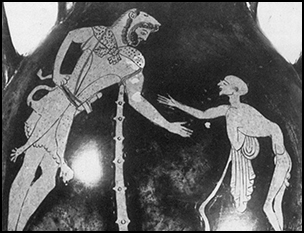
The evidence for mobility-related impairments increases when we turn to the material record. In vase painting, lower-body impairments and deformities appear by the late seventh century BC on black-figure pottery, as the so-called ‘padded dancers’ or komastai, whose feet are bent or twisted (Smith Reference Smith2009; Ziskowski Reference Ziskowski2012). Crutches or canes can also provide visual clues to mobility impairments. Geras, the personification of Old Age, is often depicted as supporting his weight on a cane, and in many of the so-called ‘departure scenes’, in which a warrior leaves home for the battlefront, an old man rests on a crooked cane that mimics the bending of his own back (Figure 1). Representations of old women can also feature similar mobility aids; for example, a mid fifth-century BC skyphos (drinking vessel) shows Geropso, the elderly nurse of Herakles, leaning on a crooked staff. A cane or staff can signal impaired mobility in sculpture, too, as in the depiction of the god Hephaestus on the frieze of the Parthenon (Figure 2).
Attic red-figure amphora attributed to the Matsch Painter, c. 480 BC, showing a departure scene. An old man (left) leans on a crooked staff or crutch as he bids the warrior farewell (photograph courtesy of The Metropolitan Museum of Art, New York, 56.171.39).

Detail of a later fifth-century BC frieze (Block V) of the Parthenon in Athens, showing the disabled god Hephaestus with a crutch tucked under his right arm (British Museum, London, 1816,0610.19; image © Trustees of the British Museum).

Bioarchaeological evidence strengthens the argument that the ancient Greeks were well-accustomed to the realities of mobility impairment. At the site of Amphipolis in northern Greece, for example, an analysis of some 20 per cent of the more than 900 individuals excavated there has identified osteoarthritic lesions on nearly 60 per cent of the adult skeletons dated to the Classical period (fifth to fourth centuries BC), and 40 per cent of those dated to the Hellenistic and Roman periods (later fourth century onwards) (Malamidou Reference Malamidou, Guimier-Sorbets, Hatzopoulos and Morizot2006). Ten of the 11 adult inhumations analysed at Early Iron Age (c. 1200–750 BC) cemeteries in the Athenian Agora have revealed evidence of degenerative joint disease, mostly affecting the hips and/or knees (Liston Reference Liston, Papadopoulos and Smithson2017). The oldest cremated individual in Liston's study, a man in his sixties (AA 53 from tomb 17), shows significant age-related degeneration, including osteophytes affecting the cervical, thoracic and lumbar vertebrae, and arthritis in the hip (Liston Reference Liston, Papadopoulos and Smithson2017: 524 & 536). In the same study, a woman in her forties (AA 304 in tomb 28) exhibits age-related degeneration, including pronounced osteoarthritis and degenerative joint disease in her neck, lower back, shoulder, right hand, ankles and feet, as well as evidence for osteoporosis affecting her scapulae, humeri and femora (Liston Reference Liston, Papadopoulos and Smithson2017: 540–42). While we cannot know how many individuals identified in ancient Greek cemeteries with arthritic lesions or degenerative joint disease were restricted in their mobility, we can assume that at least some experienced physical consequences.
A tomb from Capua in Italy dating to c. 300 BC provides evidence not just for impairment, but also for accommodation, in the form of an adult man whose missing lower leg had been replaced by one of the earliest known prostheses (Bliquez Reference Bliquez, Temporini and Haase1996; Draycott Reference Draycott2019). The so-called ‘Capua limb’ comprised a wooden core covered in bronze sheeting, which was held in place by a leather and bronze belt. This burial recalls the mentions of prostheses in literary sources, reviewed above.
This summary illustrates that the ancient Greeks would probably have been unsurprised to encounter someone with impaired mobility (Rose Reference Rose2003). Moreover, such individuals were not excluded from society or written out of the annals of history. Instead, they could be—indeed were—respected as generals and kings, worshipped as gods, treated as patients alongside other members of their communities, depicted in various artistic media and buried in a traditional manner in local cemeteries. Mobility impairments, in and of themselves, did not mark out an individual as exceptional.
Accessing religious healing
If individuals with impaired mobility not only existed, but also participated in ancient Greek society, we might then ask if and how their needs were recognised and accommodated. We know that individual Greek cities provided various social safety nets (Sneed Reference Sneed2018). In the fourth century BC, for example, the city of Athens provided a daily allowance for those disabled individuals who were unable to support themselves financially (Lysias, For the disabled man 24; Athenian Constitution 49.4; Rackham Reference Rackham1935; Todd Reference Todd2000). Although it is not possible, on the available evidence, to determine which disabilities or impairments qualified an individual for this welfare, at least one adult male citizen with a mobility impairment that required him to walk with the aid of two crutches figures among the recipients (Lysias, For the disabled man 24; Todd Reference Todd2000). While such social programmes were rare in the ancient world, allowances for disability existed in a variety of forms, including in the architecture of sanctuaries.
Fixed stone ramps are well-known features of ancient Greek sanctuaries, even though they are not always illustrated in published plans. Longer ramps, such as the 80 × 10m ramp that connects the Athenian Agora to the top of the Acropolis (Gissen Reference Gissen2014), and any ramps that lead to and through gateways, were clearly intended to facilitate wheeled traffic. Smaller ramps, such as that at the front of the Temple of Aphaia on the island of Aegina (Sporn Reference Sporn, Panagiotopoulos, Kaiser and Kouka2015: fig. 5a–b), however, tend to lead directly into relatively small, enclosed buildings, so they cannot be understood in this same way. Where such ramps have been considered in the scholarly literature, they are assumed to provide a means of conveying sacrificial animals, votive dedications or building materials into or out of the buildings to which they were attached. Yet, such ramps are neither ubiquitous nor common, making such explanations unconvincing. Many sanctuaries, for example, have one ramp attached to the main temple, but none on smaller and subsidiary buildings. It is unlikely that the ramps were for animals: sacrifices happened on altars located in front of temples and, although some animals could have entered temples (e.g. Pausanias 2.35.5–8; Jones Reference Jones1918), this practice seems to have been limited and irregular (Sporn Reference Sporn, Panagiotopoulos, Kaiser and Kouka2015: 352). It is unlikely that permanent stone ramps reaching only the top of the temple platform, rather than to the level of the roof, would have been used during temple construction, as they represent a significant investment of time, money and resources for a temporary purpose. The ancient Greeks may have used earthen ramps during building works, as recorded by the first-century BC Roman author Pliny the Elder (Natural history 36.21; Eichholz Reference Eichholz1962) during construction of the Temple of Artemis at Ephesus, but as early as the mid seventh century BC, large blocks were moved into place with cranes and hoists (Pierattini Reference Pierattini2019). Finally, ramps were apparently not critical or even desirable for the movement of heavy and expensive metal and stone offerings. Indeed, treasuries, which were purpose-built to house such dedications (Pedley Reference Pedley2006: 74), did not possess permanent stone ramps.
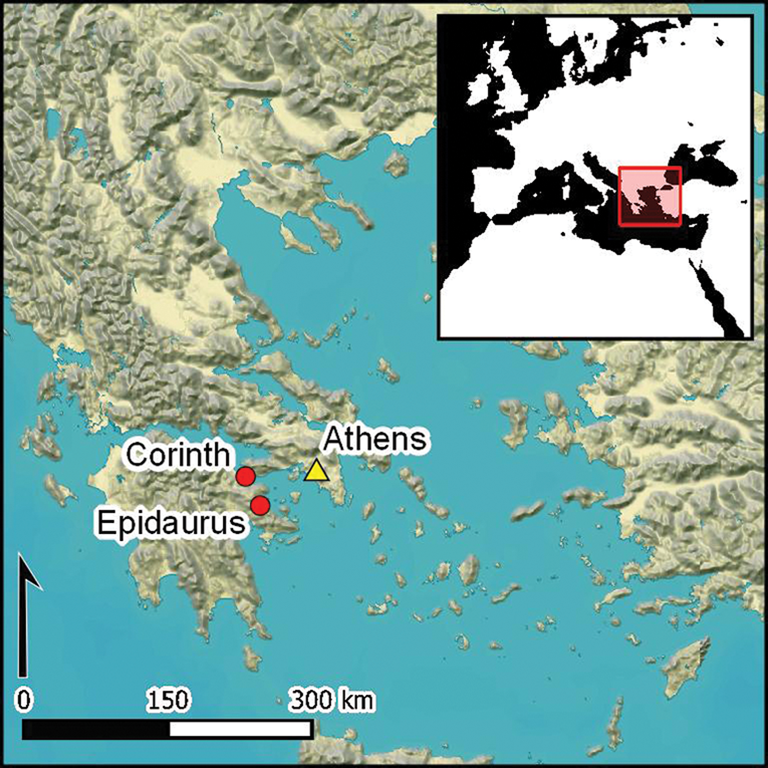
It is therefore necessary to consider why the ancient Greeks invested valuable resources in the construction of ramps at some sanctuary sites. Sporn (Reference Sporn, Panagiotopoulos, Kaiser and Kouka2015) discusses 18 ramps, primarily those attached to temple buildings, at 15 sites across the Greek world, convincingly showing that ramps facilitated human movement into temples. If the study is expanded to ramps attached to smaller temples and non-temple buildings, it reveals a more specific pattern, namely a preponderance of ramps at some sanctuaries and not others. The large Panhellenic Sanctuary of Zeus at Olympia, the site of the original Olympic Games, for example, has two ramps: a well-built stone ramp at the main temple and another, less formal ramp that leads to the Pelopeion, a sacrificial precinct (Pedley Reference Pedley2006: fig. 64). At the contemporaneous Panhellenic healing Sanctuary of Asklepios at Epidauros, there are at least 11 stone ramps. The available evidence indicates a trend whereby healing sanctuaries, which hosted many individuals with a range of illnesses, injuries and conditions (including many affecting mobility), had more ramps than non-healing sanctuaries. Two such healing sanctuaries, the Asklepios sanctuaries at Epidauros and Corinth, are sufficiently well preserved to illustrate this pattern.
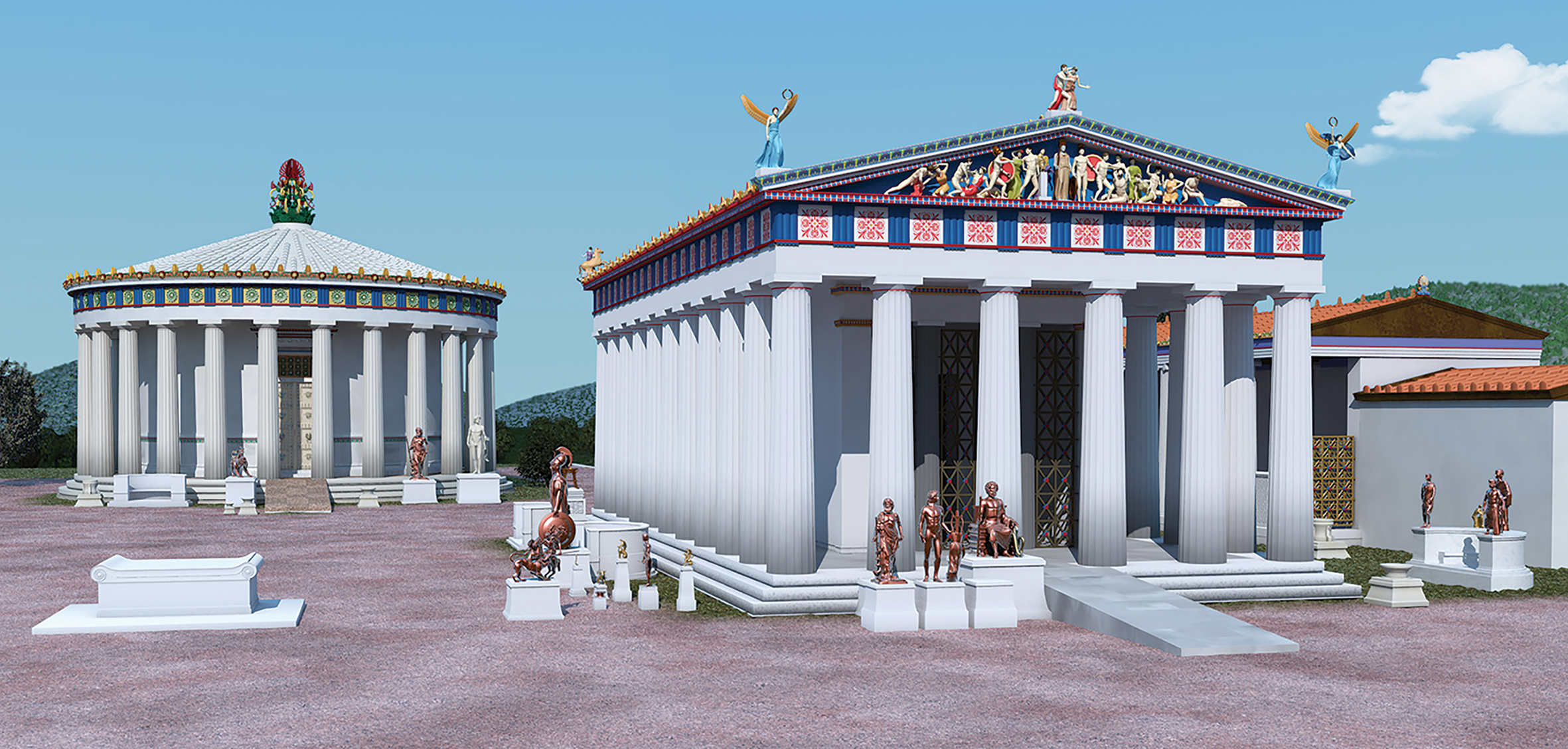
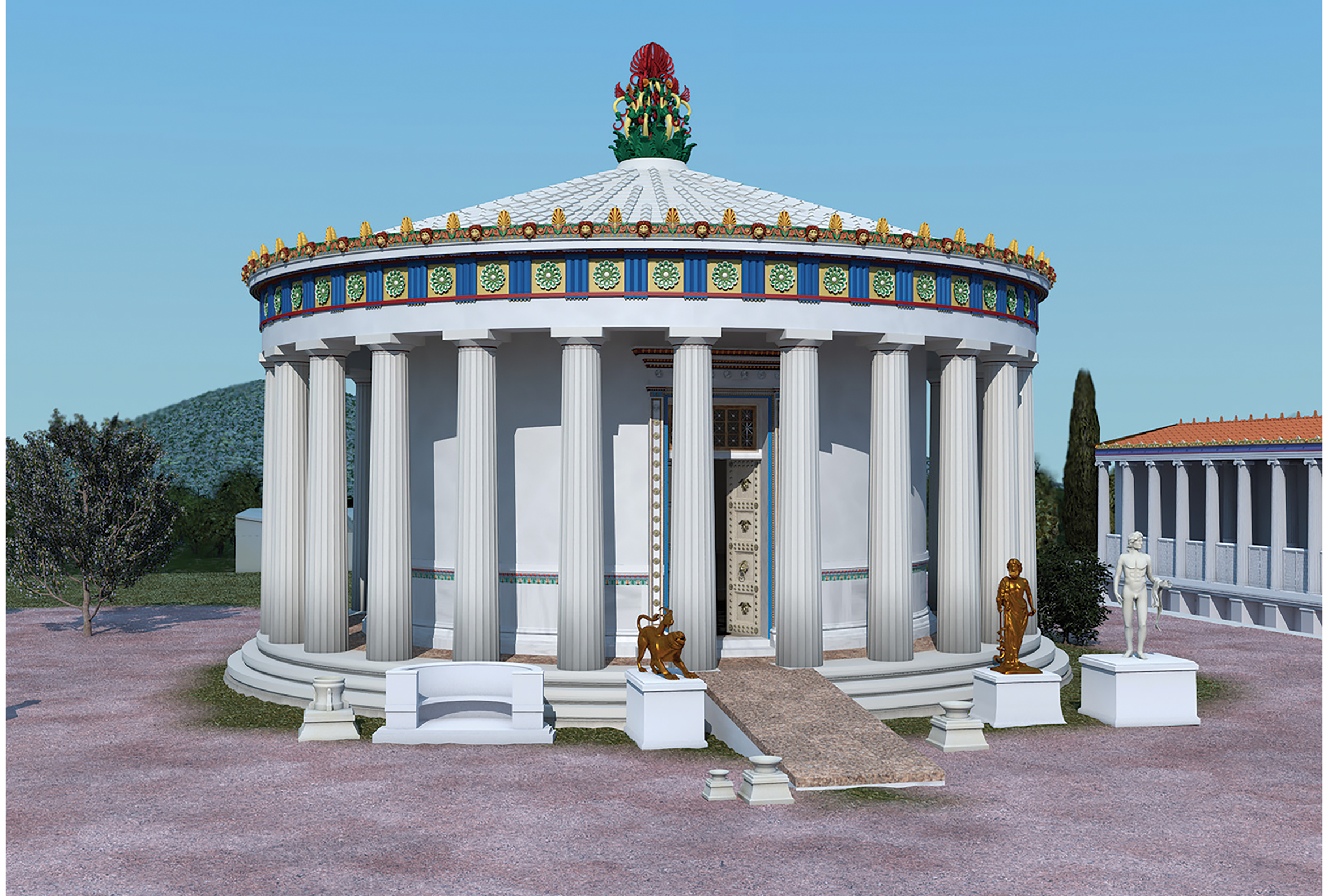
The Sanctuary of Asklepios at Epidauros, in the north-eastern Peloponnese, was arguably the most important healing sanctuary of ancient Greece. The earliest evidence for construction at the site dates to the end of the sixth century BC, but the first major building programme began in the late fifth century BC, a period in which Asklepios was first worshipped as a god in Greece. A robust expansion programme began around 370 BC, resulting in the sanctuary familiar to most scholars and visitors today. Detailed accounts, inscribed on stone stelae, provide a wealth of evidence, including the costs of materials and labour, timelines for construction and names of buildings (Burford Reference Burford1969). The first Temple of Asklepios, which featured an impressive stone ramp (Figure 3; Eliopoulos Reference Eliopoulos1940), was built within the sanctuary relatively early in the building programme. The second construction phase produced the enigmatic tholos (rotunda), with its circular plan, labyrinthine substructure and prominent ramp at its front (Figure 4). A series of smaller, subsidiary structures were also built as part of this programme, many with ramps.
Reconstruction of the fourth-century BC Temple of Asklepios at Epidauros (right), showing the ramp extending out of the front/east side (© 2019 J. Goodinson; scientific advisor J. Svolos).
Reconstruction of the fourth-century BC tholos at the Sanctuary of Asklepios at Epidauros (© 2019 J. Goodinson; scientific advisor J. Svolos).
The small building V, of uncertain function, had two ramps, one at the front and one at the back. The propylaia (gateway) to the sanctuary was a formal structure raised high above the roadway; this also had a ramp at either end. Three small temples—the Temple of Artemis, temple L and temple N—each had a ramp at the front. The so-called epidoteion, another building of uncertain function, was also provisioned with a ramp, as was building T, which is (controversially) identified as either a gymnasium or a dining hall (Tomlinson Reference Tomlinson1969). In total, at least 11 permanent stone ramps were installed on nine separate structures at the Sanctuary of Asklepios at Epidauros during the fourth century BC. Other buildings at the sanctuary were not raised sufficiently above ground level to require a ramp to be wholly or partially accessible to visitors. The abaton, for example, which hosted the ritual of incubation, a critical component of the experience at healing sanctuaries, was built on two levels, the lower being reached by a staircase. Only a small lip separates the upper (main) level of the abaton from the rest of the sanctuary.
The preponderance of ramps at Epidauros is echoed at the well-known, but significantly smaller and more local, Sanctuary of Asklepios at Corinth. Here, the building programme began in the late fourth century BC (Roebuck Reference Roebuck1951). Any earlier structures were removed entirely, and the main elements of the sanctuary and associated Lerna Court were built as a single complex. The Temple of Asklepios was erected high up on a podium, with a stone ramp at its front. As at Epidauros, the abaton was at ground level, requiring no additional construction to make it accessible. After visiting the temple and abaton, visitors proceeded to the secular Lerna Court, which was 4m lower than the sanctuary precinct and included fountains and dining rooms. Although a staircase provided access to the Court from the north side of the abaton, visitors probably used a ramp that ran the entire east–west length of the complex (Roebuck Reference Roebuck1951: 65). That this ramp provided the main access to the Lerna Court is suggested by its architectural elaboration. The walls flanking the ramp represent some of the best examples of Greek masonry at the site (Figure 5), exhibiting fine blue stucco decoration, while an ornamental gate at the bottom of the ramp marked a formal transition into the Lerna Court (Roebuck Reference Roebuck1951: 66–67). Thus, this small local sanctuary was built with two ramps, the same number as the much larger and wealthier Panhellenic Sanctuary of Zeus at Olympia.
The ramp at the south side of the Sanctuary of Asklepios at Corinth, looking west towards the Lerna Court (photograph taken with permission from Roebuck Reference Roebuck1951: pl. 16.6).

Visitors to healing sanctuaries
Ancient Greek healing sanctuaries have more ramps, relatively speaking, than non-healing sanctuaries. There were exceptions, however. The well-preserved healing Sanctuary of Asklepios on Kos, for example, had stairs connecting its three terraces. If it is correct that healing sanctuaries ‘specialised’ in certain types of conditions (e.g. Petridou Reference Petridou, Draycott and Graham2016), it is possible that sanctuaries that were more actively concerned with physical healing, and especially with conditions that affected mobility, were those that were provisioned with more ramps. Such a specialisation is evident at both Epidauros and Corinth. At the latter, excavators found caches of anatomical votive offerings that pre-date the late fourth-century BC reconstruction of the sanctuary (Roebuck Reference Roebuck1951: 113–14 & 152). The votives represent a variety of body parts, including a large number of legs and feet of both men and women (Roebuck Reference Roebuck1951: 126). The apparent dedicatory emphasis on legs and feet—and hence on lower-body injuries and impairments—at this early date may have encouraged the builders to include ramps when the spaces were reconstructed in the later fourth century BC to accommodate the relatively large number of visitors with impaired mobility that the site catered to or historically attracted (Lang Reference Lang1977: 10).
At Epidauros, inscriptions associated with the fourth-century BC building programme describe visitors who sought healing, including several apparently with impaired mobility: when Sostrata travelled to Epidauros from Pherai in Thessaly, for example, she was carried on a couch or litter (LiDonnici Reference LiDonnici1995: B5); an unnamed visitor was carried around the sanctuary by slaves (LiDonnici Reference LiDonnici1995: A17), while another, Nicanor, used a crutch to get around the precinct (LiDonnici Reference LiDonnici1995: A16); Damosthenes was paralysed in his legs and, after being carried to Epidauros on a couch, he used canes within the sanctuary to move around (LiDonnici Reference LiDonnici1995: C21). Details such as these are documented within the more than 70 accounts inscribed on the tablets from Epidauros. Similar visitors are also documented at other sites. A certain Diophantos visited the sanctuary of Asklepios at Athens and left a prayer of thanks that refers to a wound that made him appear ‘crab-footed’ (καρκινόπους), or as if he were ‘walking on sharp thorns’ (ἐπ’ ἀκάνθας ὡς ἀγρίας βαίνων) (Inscriptiones Graecae II2 4514; Kirchner Reference Kirchner1913–1940). Demandros of Gortyn visited the healing sanctuary of Asklepios at Lebena on Crete because of intense pains in his hips (Inscriptiones Creticae I xvii.9; Halbherr & Guarducci Reference Halbherr and Guarducci1935). The model proposed here suggests an association between healing sanctuaries—especially those that seemed to host a relatively high proportion of mobility-impaired visitors—and architectural accommodations, which could include features that facilitated access such as ramps or ground-level construction.
Conclusion
The concentration of ramps at sites frequented by individuals with mobility (and other) impairments appears to suggest that the ancient Greeks consciously provided for the needs of the users of these spaces. In much the same way that sites associated with athletics were provisioned with stadia and gymnasia, healing sanctuaries were provided with the buildings and features necessary for the successful inclusion of its intended visitors in ritual activities. In his Nobel Prize-winning novel The bridge on the Drina, Ivo Andrić (Reference Andrić1959: 10) writes that “[T]here are no buildings that have been built by chance, remote from the human society where they have grown and its needs, hopes, and understandings”. When we acknowledge the somatic realities of ancient Greek life and accept that, far from being excluded, individuals with impaired mobility occupied myriad productive and meaningful roles within their families and communities, we can ask new questions about the physical framework of the ancient world. We can also begin to offer new interpretations for objects and features like ramps, to which scholars have so far paid little, if any, attention.
Ancient Greek society neither mirrors our own, nor is it a precursor of a modern ‘Western civilisation’. Even where we do see similarities, as in the construction of ramps to promote accessibility, we cannot attribute them to the same causes. Ancient Greece had no civil rights as we understand them, nor were there organised groups to fight for such rights. The ancient Greeks, that is, were not progressive. We can, however, discuss the motivations behind the decisions of ancient Greek architects and builders, and of ancient Greeks in general, and consider the effects for individuals living within that society. While not all cultures accommodated individuals with impairments, or accommodated them in the same ways, if the ancient Greeks gave thought to their disabled community members, it is important that we do, too.
Acknowledgements
A sincere thank you to Sarah Morris and John Papadopoulos for their support and encouragement, and their many comments and suggestions for this article. Thanks also to Katherine Petrole, Anastasia Baran, Adriana Vasquez, Krishni Burns, David Gissen, John Goodinson and Sarah Bond for supporting me in their different ways. Scott Randolph travelled across Greece with me as I researched this paper, and for that I am grateful. Finally, I thank the two anonymous peer reviewers for their careful reading of the manuscript and helpful suggestions. Funding was provided by the Cotsen Institute of Archaeology at UCLA, the Harry and Yvonne Lenart Travel Fellowship, and the Steinmetz Family Foundation.



