


Introduction
Bats of the genus Pteropus, commonly referred to as flying foxes, are important pollinators and seed dispersers, especially in island ecosystems (Aziz et al., Reference Aziz, McConkey, Tanalgo, Sritongchuay, Low and Yong2021). Despite their ecological importance, island-dwelling Pteropus species are amongst the most threatened bats globally (Conenna et al., Reference Conenna, Rocha, Russo and Cabeza2017; Vincenot et al., Reference Vincenot, Florens and Kingston2017b; Kingston et al., Reference Kingston, Florens and Vincenot2021). Conflicts involving pteropodid bats and fruit growers who perceive them as agricultural pests are common, often leading to lethal control methods that threaten bat species (Aziz et al., Reference Aziz, Olival, Bumrungsri, Richards, Racey, Voigt and Kingston2015). One example is the mass culling of the Greater Mascarene flying fox Pteropus niger in Mauritius (Florens & Vincenot, Reference Florens and Vincenot2018; Oleksy et al., Reference Oleksy, Ayady, Tatayah, Jones, Froidevaux, Racey and Jones2018). Despite these conservation conflicts, there are few studies on the interactions between fruit growers and pteropodid bats (Aziz et al., Reference Aziz, McConkey, Tanalgo, Sritongchuay, Low and Yong2021).
The Ryukyu flying fox Pteropus dasymallus (Temminck, 1825) is one of two Pteropus species in Japan (Preble et al., Reference Preble, Ohte and Vincenot2021). The species is categorized as Vulnerable on the IUCN Red List. It was extirpated from most of Taiwan and now only inhabits the Ryukyu Islands in Japan and two small Taiwanese islands, with unconfirmed records in the northern Philippines (Vincenot, Reference Vincenot2017). Like other island Pteropus species, P. dasymallus has a broad herbivorous diet and provides important pollination and seed dispersal services (Lee et al., Reference Lee, Takaso, Chiang, Kuo, Nakanishi, Tzeng and Yasuda2009). Threats to P. dasymallus include habitat degradation, predation by feral dogs and cats, culling and entanglement in orchard nets (Vincenot et al., Reference Vincenot, Collazo and Russo2017a; Funk & Vincenot, Reference Funk and Vincenot2019).
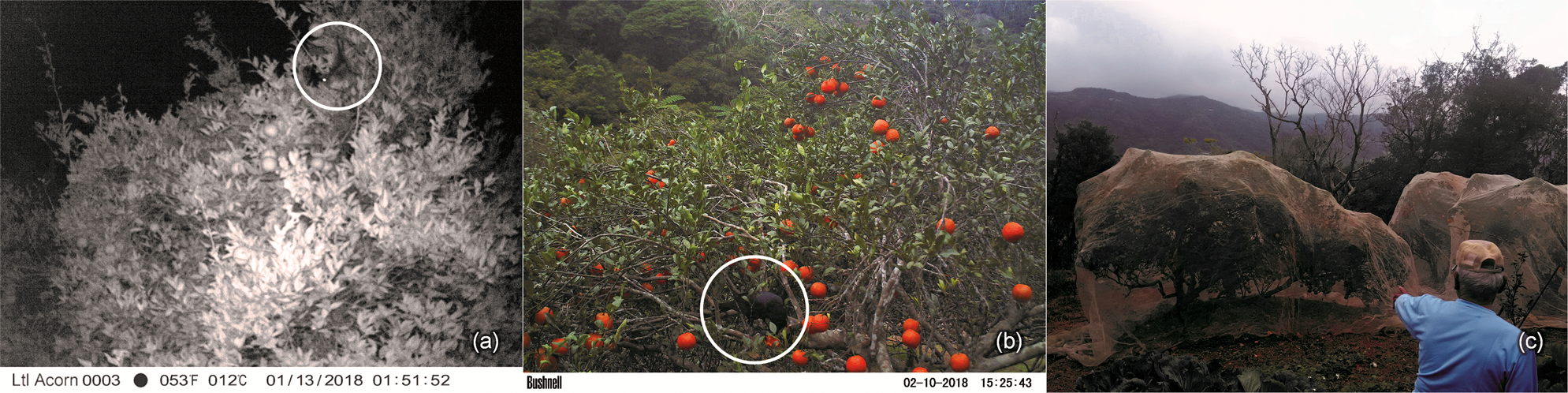
The perception that P. dasymallus damages crops is a major impediment to the conservation of this species (Vincenot et al., Reference Vincenot, Collazo, Wallmo and Koyama2015a; Okinawa Prefecture, pers. comm., 2018; Plate 1). Damage to citrus fruits caused by P. dasymallus has been reported as an important issue for Okinawan agriculture. For example, a news article reported that agricultural losses caused by P. dasymallus reached an estimated value of JPY 22.85 million across Okinawa Prefecture in 2012 (i.e. during the harvest season of fruits produced in 2011), with damage worth c. JPY 19 million to tankan orange Citrus tankan fruits (hereinafter tankan) in Nago City and Motobu Town (Isa, Reference Isa2013). Culling of P. dasymallus has occurred for several decades in the Yaeyama Islands but was only recently reported in the literature (Vincenot et al., Reference Vincenot, Koyama and Russo2015b). To our knowledge, P. dasymallus killing has not yet been reported on Okinawa Island, the largest of the Ryukyu Islands.
Trail camera photographs showing (a) Pteropus dasymallus and (b) Corvus macrorhynchos visiting fruit trees in tankan orchards in northern Okinawa Island (Fig. 1). (c) Common netting practice in tankan orchards. Entanglement in this type of loose netting causes a great number of P. dasymallus mortalities.
Pteropus dasymallus could also be threatened by cyclones, which have been reported to cause changes in foraging behaviour and population declines in other Pteropus species (Grant et al., Reference Grant, Craig and Trail1997; McConkey et al., Reference McConkey, Drake, Franklin and Tonga2004; Saitoh et al., Reference Saitoh, Kaji, Izawa and Yamada2015). This threat is increasing as climate change is producing more intense cyclones (Elsner et al., Reference Elsner, Kossin and Jagger2008), and some P. dasymallus populations isolated by cyclones are becoming inbred and thus less fit and resilient to disturbances (Taki et al., Reference Taki, Vincenot, Sato and Inoue-Murayama2021). Although the factors driving crop use by P. dasymallus remain unknown, we hypothesize here that typhoon intensity could explain the frequency and magnitude of crop use, and thus of culls and entanglements in orchard nets.
This study aims to answer three questions: (1) How much damage does P. dasymallus cause to tankan orchards, compared to other wildlife species? (2) Is there a correlation between the intensity of wildlife damage to tankan and the intensity of typhoons? (3) To what extent is the local P. dasymallus population on Okinawa Island affected demographically by interactions with farmers?
Study area
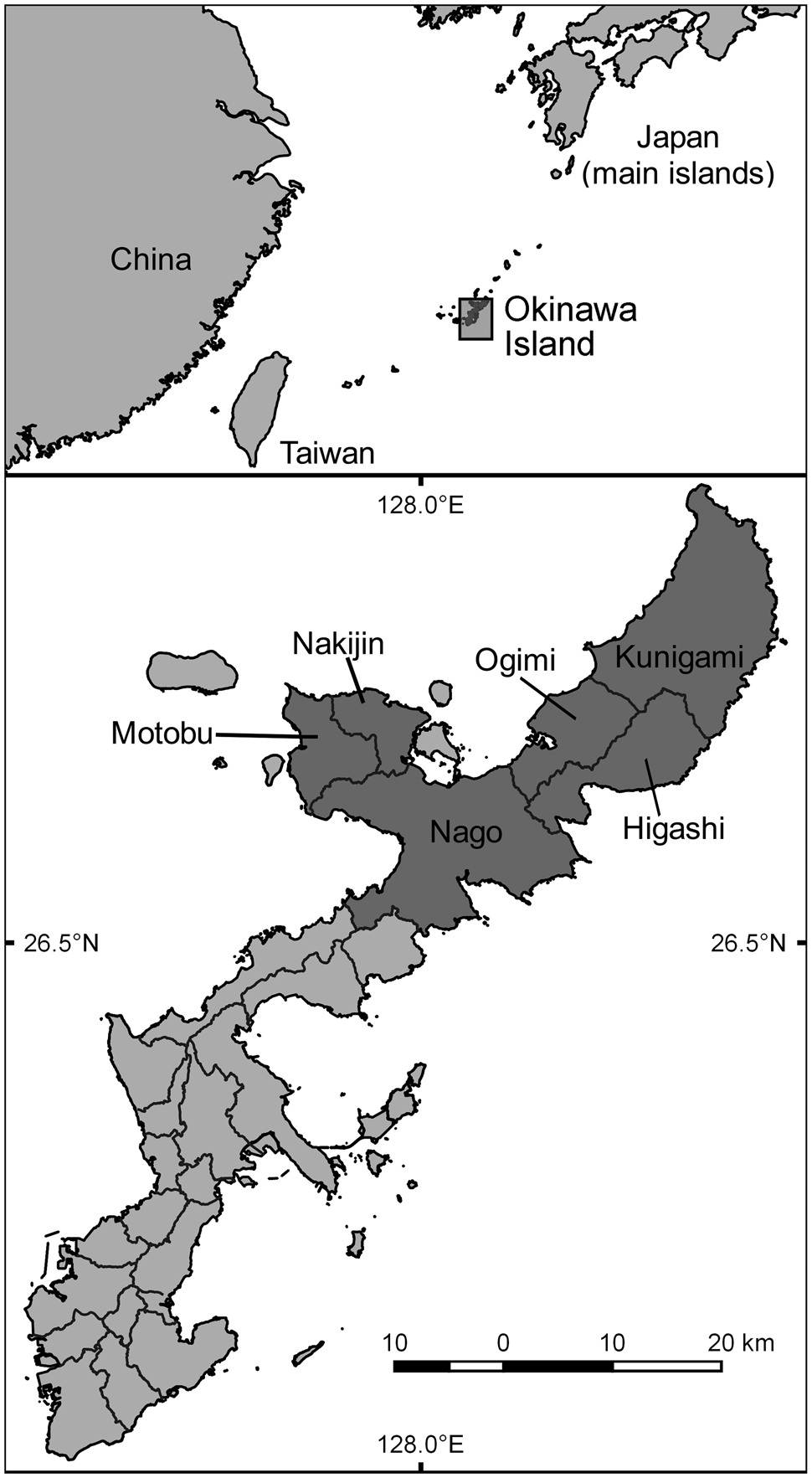
We conducted our surveys in six municipalities of Okinawa-hokubu, the northern part of Okinawa Island, Japan. These municipalities included Nago City and the surrounding areas to the west and north (Fig. 1), where most of the tankan orchards in Okinawa are located. In 2021, these six municipalities together covered 645 km2 and were populated by 95,446 people (148 people/km2; Okinawa Prefecture, Reference Okinawa Prefecture2021). The majority (75%) of the area is tree cover (Global Forest Watch, Reference Global Forest Watch2014), mostly in the form of mountainous forest. The area includes Yanbaru National Park, which covers 173 km2 across Kunigami, Ogimi and Higashi villages (Ministry of Environment, 2018). The forests of Yanbaru are important for nature conservation because of their high level of biodiversity and large number of endemic and threatened species (Ito et al., Reference Ito, Miyagi and Ota2000).
Study area: northern Okinawa Island (in dark grey), with the names of the municipalities in which we studied wildlife-caused damage to tankan orange orchards.
Methods
We collected data on interactions between tankan farmers and crop-damaging vertebrates using three methods: compilation of public crop damage reports, questionnaire surveys with farmers and time-lapse camera surveys.
Compilation of data from public reports
We retrieved records of estimated wildlife damage to tankan harvested in 2013–2018 (production years 2012–2017) from all six municipality offices in Okinawa-hokubu (Fig. 1). The identification of the wildlife species causing the damage was reported by farmers when questioned by officials from local governments. Tankan production statistics included cultivation area (ha), weight of fruits sold (t) and unit selling price (JPY/kg).
Questionnaire surveys
We conducted questionnaire surveys via face-to-face interviews with two main objectives: to estimate the amount of damage to tankan caused by P. dasymallus and other wildlife species, and to estimate the number of P. dasymallus individuals that died in tankan orchards. The questionnaire consisted of eight main sections: (1) respondent information, (2) orchard information, (3) crop damage by wildlife, (4) mitigation measures provided by local governments, (5) mitigation measures taken by the respondent, (6) population trends of P. dasymallus, (7) entanglement of flying foxes in nets, and (8) open comments. Forty-three farmers (all farmers who we contacted) agreed to be interviewed individually at their orchards during March–July 2018, shortly after the tankan harvesting season.
In the absence of written records, we considered asking farmers to quantify past damage caused by P. dasymallus and the number of entangled individuals for each year to be error-prone. Therefore, we inquired only about the year with the highest damage and the year with the highest number of entangled flying foxes. We based this on the assumption that peak years would be more memorable and therefore lead to more reliable reports from farmers. When a farmer mentioned more than a single year because of uncertainty, we considered only the most recent year, to avoid overestimation. Many farmers indicated ranges for the number of flying foxes caught in nets because they could not remember the exact number. We interpreted these numbers as high and low estimates.
Time-lapse camera survey
We conducted a time-lapse camera survey during January–February 2018 (the harvest season) to estimate the relative amount of damage to tankan caused by different wildlife species, including species that may not be reported otherwise. We surveyed 14 tankan trees in six orchards in Motobu Town and Nago City. We used 17 trail cameras: five Ltl-5210A cameras (Acorn, Zhuhai, China) and 12 Bushnell 8MP Trophy Cams (Bushnell, Overland Park, USA). Each camera faced a target tree and was placed 1.4–3.5 m away from the nearest branch, taking 5-megapixel photographs at 5-min intervals. A detectability assessment comparing 15-s and 5-min interval sampling suggested that 5-min intervals were sufficient to detect P. dasymallus and would detect c. 40 and 25% of visits by the large-billed crow Corvus macrorhynchos and other bird species, respectively (Supplementary Table 1).
We included only images of animals visiting on or under the target tree in our analysis. We considered multiple consecutive images of the same animal species taken at the same location as a single visit. We counted each individual animal per image as a separate visit. To calculate crop damage as a per cent of the total fruit, we multiplied the number of fruits damaged by animals by factors to correct for detectability at a 5-min interval sampling (i.e. 1/detectability rate; Supplementary Table 1) and camera non-operating time (total survey duration/camera operating duration = 1.80) and then divided this by the total number of visible fruits in the images from the first day. We counted only fruits visible in the images. We counted fruits as damaged by birds when birds were eating them visibly in the photographs. As night-time visibility was poor, we counted fruits damaged by P. dasymallus by comparing the daytime photographs before and after visits.
Correlation of wildlife damage and typhoon intensity
To test the correlation between wildlife damage and typhoon intensity of the year preceding the damage, we compared public records of wildlife damage reports to typhoon records from the Nago weather station retrieved online from the Automated Meteorological Acquisition System (National Institute of Informatics, undated). We used maximum wind speed (maxwindN) and the number of typhoons with maximum wind speed exceeding 20 m/s (ntyphN) to describe annual typhoon intensity. We based the 20 m/s threshold on the wind speed at which twigs break (Japan Meteorological Agency, Reference Japan Meteorological Agency2000) and the upper limit of force 8 on the Beaufort Wind Scale, above which significant damage to trees is known to occur (Beer, Reference Beer and Bobrowsky2013). We first investigated the effect of location (i.e. municipality) on relative damage (i.e. damage per weight of produce sold, as a proxy for orchard size) and scaled damage (i.e. damage scaled by extreme values observed for each species and at each location, respectively; Supplementary Equation 1). We used Cohen's D effect size to assess differences between locations (Cohen, Reference Cohen1988; Gignac & Szodorai, Reference Gignac and Szodorai2016). We then analysed scaled damage data using a generalized linear model. We report hereafter only analyses for damage by P. dasymallus and C. macrorhynchos, and total damage. The full model included ntyphN, maxwindN, their interaction (ntyphN × maxwindN) and location. We also built all possible nested models. We chose the most appropriate set of explanatory variables based, in order of importance, on model behaviour (i.e. diagnostic plots), Hoslem's test (Hosmer et al., Reference Hosmer, Lemeshow and Sturdivant2013), Akaike information criterion corrected for small sample size (AICc) and McFadden's pseudo-R2 (McFadden, Reference McFadden and Zarembka1974). We performed all analyses in R 3.5.0 (R Core Team, Reference Core Team2018).
Results
Data from public records
The number of tankan farmers and the total cultivation area in all municipalities decreased during 2013–2018 (Supplementary Fig. 1, Supplementary Table 2), but tankan production remained largely unchanged. During 2013–2018, species reported to damage crops included, in descending order of reported damage amount, C. macrorhynchos, P. dasymallus, wild boar Sus scrofa, brown-eared bulbul Hypsipetes amaurotis, light-vented bulbul Pycnonotus sinensis, Okinawa woodpecker Dendrocopos noguchii, mongoose Herpestes sp. and rat Rattus sp. (Supplementary Table 3). In 2013, the damage caused by all species except rat/mongoose was 1.9–7.0 times the mean of other years, with P. dasymallus showing the greatest increase (seven-fold).
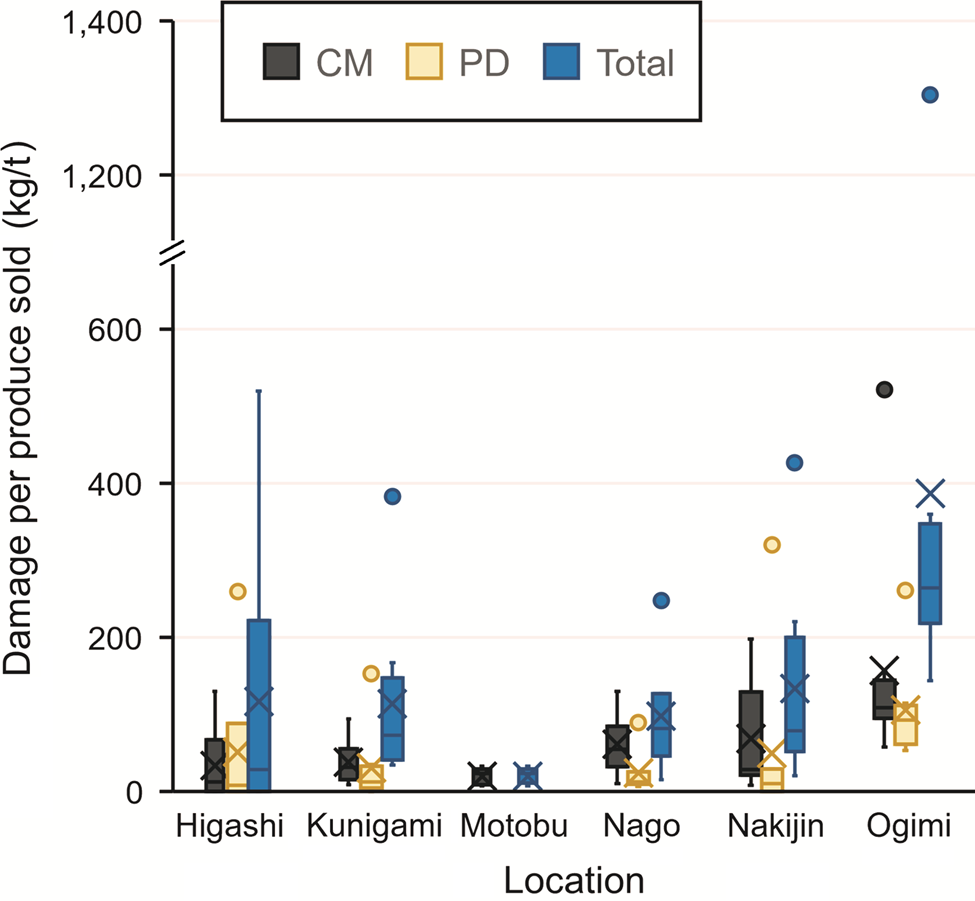
Reported damage differed by municipality (Fig. 2). Ogimi suffered significantly greater damage per area from P. dasymallus and wildlife overall when compared to other locations (Cohen's D effect size d = 0.62–1.62 for P. dasymallus, d = 0.86–1.33 for total damage). However, Motobu experienced significantly less damage per area from wildlife in general (d = 0.71–1.47 for total damage).
Damage per weight of tankan orange produce sold caused by wildlife, as reported by each municipality (location) in northern Okinawa Island. The boxes represent the interquartile range, middle lines are the medians, whiskers are minimums and maximums, and the dots represent outliers (outside 1.5 times the interquartile range). CM, large-billed crow Corvus macrorhynchos; PD, Ryukyu flying fox Pteropus dasymallus.
Questionnaire survey
We surveyed 43 farmers, 13.5% of all tankan farmers in Okinawa-hokubu. Thirty-eight respondents (88.4%) were male and all respondents were born and raised in Okinawa. The mean respondent age was 67.9 ± SD 12.5 years. The total tankan orchard area used by all respondents was 28.6 ha, 28.9% of the total tankan cultivation area of the surveyed municipalities (99 ha). Forty respondents (93.0%) also cultivated other fruit trees. On average, each orchard produced 4.3 ± SD 4.2 t of tankan in a typical year but production harvested in 2018 was lower (3.3 ± SD 3.6 t per orchard). The mean selling price of tankan was 279 JPY/kg.
Respondents reported that c. 13.5 ± SD 14.3% of tankan produced was damaged by wild animals in a typical year. Corvus macrorhynchos was the crop-damaging species most frequently mentioned, being reported by 39 farmers (90.7% of respondents; Supplementary Table 4). Pteropus dasymallus, reported by 25 farmers (58.1%), was the second-most mentioned species. Corvus macrorhynchos was reported to be responsible for the highest proportion (56.3%) of crop damage, followed by P. dasymallus (18.3%). In 2018, damage by wildlife was perceived to be lower than in a typical year (9.6 ± SD 10.7% vs 13.5 ± SD 14.3% of fruits produced; P < 0.05, d = −0.31). Absolute damage by P. dasymallus was also lower than in a typical year, although this difference was not significant (1.8 ± SD 6.0% vs 2.5 ± SD 5.1% of fruits produced; P = 0.48, d = −0.12). This was despite the proportion of damage caused by P. dasymallus amongst all wildlife-caused damage being consistent (18.7% of the total damage in 2017 vs 18.3% in typical years).
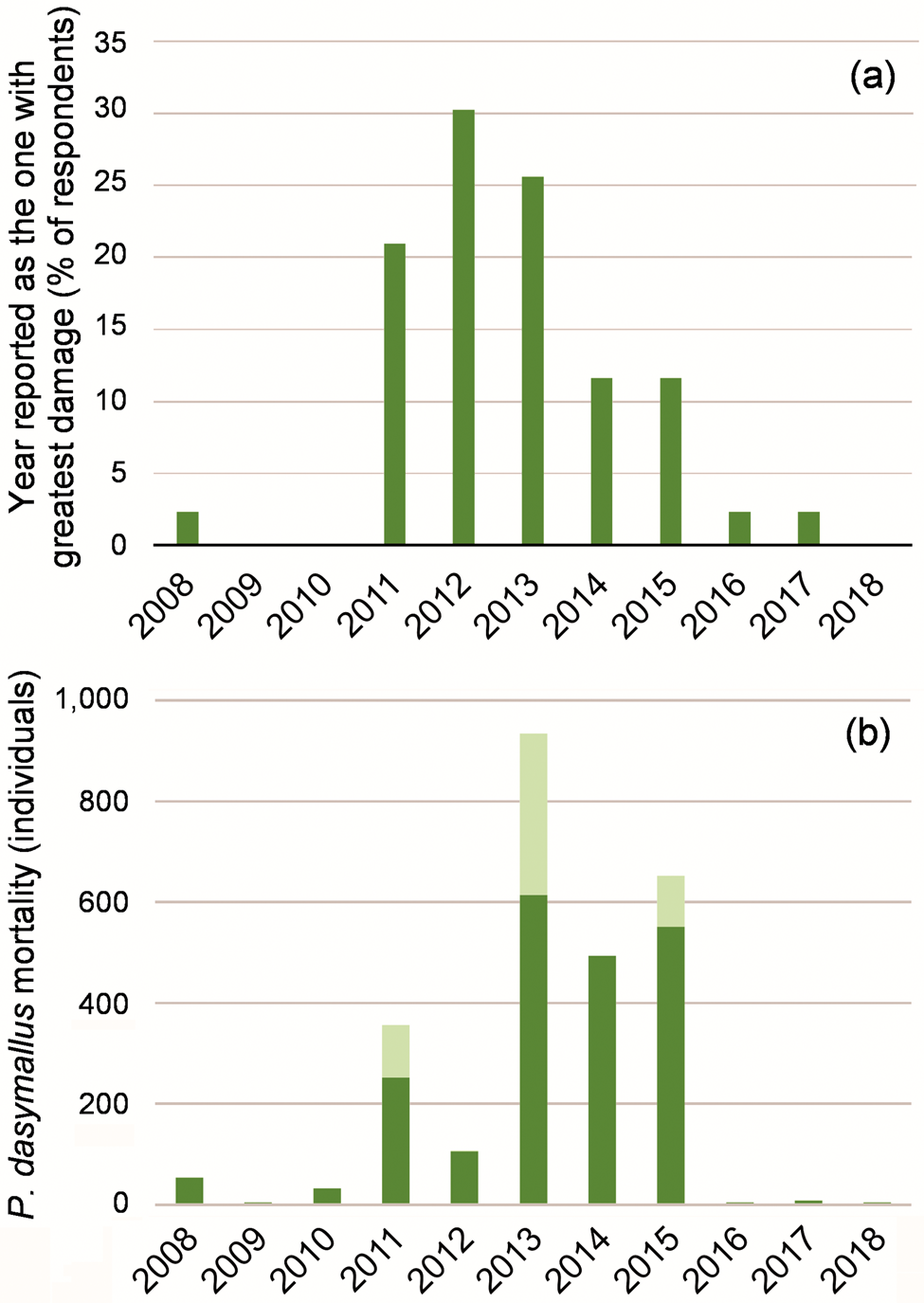
The years 2012 and 2013 had the highest levels of crop damage caused by P. dasymallus, as reported by 13 (30.2%) and 11 farmers (25.6%), respectively (Fig. 3). Considering only the farmers who reported years with extreme crop use (28 farmers), the mean amount of damage caused by P. dasymallus in the peak damage year was 28.9 ± SD 23.9% of the total fruit produced. This mean value was calculated using one response per respondent and includes zero values (seven farmers).
(a) Frequency with which each year during 2008–2018 was reported as the one with the greatest damage caused by P. dasymallus, in per cent of interviewed farmers (n = 43). (b) Conservative estimate of flying foxes caught in nets (based only on the reported peak capture year for each orchard). In some cases, farmers reported an estimated range for the number of killed P. dasymallus individuals rather than a precise number; the shaded areas represent these ranges.
Nets were the most widespread crop protection measure employed, being used by 83.7% of farmers (Supplementary Table 5). Nets were used mainly to keep out C. macrorhynchos, other birds and P. dasymallus. Subsidies for nets were the most commonly reported mitigation measure provided by local governments: 27 farmers (62.8%) reported that they could apply to receive nets from local municipal governments at subsidized prices or for free. Twenty farmers (46.5%) were satisfied with the support provided by local administrations to limit crop damage.
Thirty-five farmers (81.4% of respondents, 97.2% of farmers who use nets) had caught P. dasymallus in their nets. Respondents reported that a total of 1,914–2,441 P. dasymallus died in crop-protecting nets during 2008–2018 (Fig. 3). Extrapolating this estimated rate of mortality per cultivated area to all tankan farmland on Okinawa Island suggested that 6,500–8,500 bats may have died in nets during that decade (Supplementary Equation 2). This is a conservative estimate as we considered in our summation only the number of P. dasymallus that died in the year in which each farmer experienced the greatest number of individuals entangled, without including mortality from other years. The year 2013 had the highest number of reported entanglements (614–934 individuals). However, in 2018 when our interviews were performed, only seven farmers (16.3%) reported catching a total of 17–18 P. dasymallus in their nets. Twenty-five out of 43 farmers (58.1%) thought that the P. dasymallus population had decreased over the past 10 years (2008–2018), whereas only 12 farmers (27.9%) thought the population had increased. Four farmers (9.3%) said that the population size had not changed and two farmers (4.7%) said that they did not know if the population size had changed.
Time-lapse camera survey
Time-lapse cameras operated for 9,206 h in total and took c. 380,000 images. We observed animals in 4,694 of these images. The images showed 40–241 visible fruits per site.
We identified 17 vertebrate species in the photographs. We observed all species mentioned by interviewed farmers as fruit-damaging pests (Supplementary Table 6). We observed animals eating fruits during 200 visits. Only C. macrorhynchos was clearly observed eating intact fruits, whereas all other bird species were photographed eating fruits that had already been damaged. We observed visits by P. dasymallus only at one camera location in Motobu.
Forty fruits were damaged by wildlife during our observations: 38 by C. macrorhynchos and two by P. dasymallus. Considering the camera operating duration across the total survey and the detectability rate of C. macrorhynchos, we estimate that 12.4% of fruit produced were damaged by wild animals. Corvus macrorhynchos was responsible for 97.9% of the damage and P. dasymallus for the remaining 2.1%.
Wildlife-related crop damage and typhoons
Scaled amounts of damage from all wildlife, C. macrorhynchos and P. dasymallus were strongly correlated with maxwindN and even more so with ntyphN (Supplementary Tables 7 & 8). All binomial regressions performed confirmed the explanatory strength of ntyphN and of its interaction with maxwindN. In the case of P. dasymallus, the model including ntyphN, maxwindN and their interaction provided the best quality, with the lowest AICc (McFadden's pseudo-R2 = 0.61, AICc = 23.7). However, the model also integrating Loc_Ogimi (as a binary dummy variable instead of location) showed a better fit (McFadden's pseudo-R2 = 0.79), with only slightly lower quality (AICc = 24.6). We also observed a similar level of importance for the interaction between maxwindN and ntyphN in regressions of scaled total damage amount (i.e. all animal species combined; McFadden's pseudo-R2 = 0.5, AICc = 35.41). Models for damage caused by C. macrorhynchos exhibited poorer explanatory power as shown by weaker McFadden's pseudo-R2 values, and models including maxwindN × ntyphN performed less well than ntyphN alone (AICc = 53.88 vs 53.29). None of the models above showed evidence of poor fit (Hoslem's test, H = 0.262–0.999).
Comparison of data collection methods
The proportion of damage caused by wildlife varied depending on the survey method used (Fig. 4). Based on official data from farmers’ reports during 2013–2018, an estimated 7.3% of tankan production was damaged by wildlife in a typical year. Questionnaire responses produced a higher estimate of 13.5% of tankan production being damaged by wildlife.
Per cent of damage caused by different wildlife species (C. macrorhynchos, Dendrocopos noguchii, other birds, P. dasymallus and Sus scrofa) in a typical year and in 2018 in northern Okinawa Island, according to data from various sources (public records, questionnaire surveys and time-lapse camera surveys; Table 1).
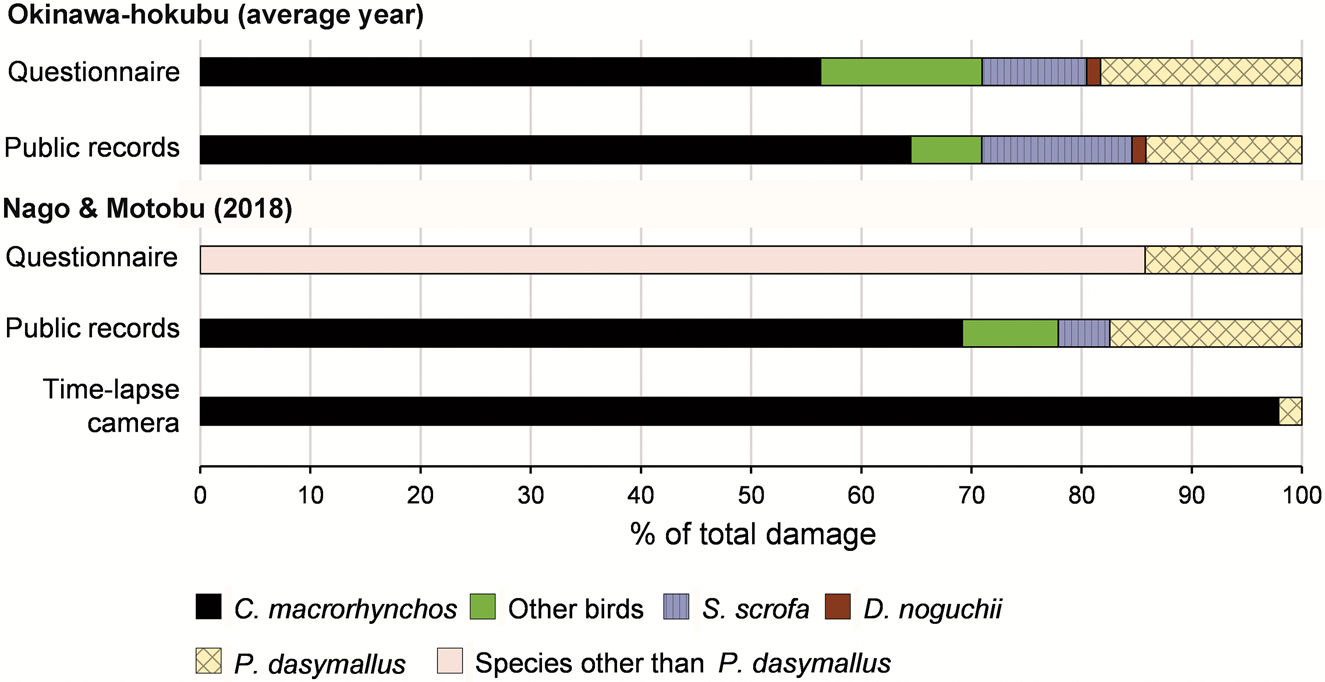
The questionnaire responses and official records agreed that, on average, C. macrorhynchos was responsible for more than 50% of crop damage. Based on the questionnaire responses, P. dasymallus was responsible for 18.3% of crop damage, whereas the estimate based on official records was 26.3%. Both sources agreed that damage by P. dasymallus was greatest in 2012 and 2013.
According to the time-lapse camera data, wildlife damaged an estimated 12.4% of fruit produced, which is slightly higher than suggested by the questionnaire results in the same municipalities (10.8%). However, P. dasymallus was responsible for only 2.1% of the observed damage, with the remaining 97.9% caused by C. macrorhynchos. This observed damage by P. dasymallus was much less than the mean annual damage (23.6% of total damage) and the 2018 damage (14.2%) reported via the questionnaire surveys from the same municipalities. Total damage amounts and the monetary values estimated using different survey methods are shown in Table 1.
Extrapolated damage to tankan production in northern Okinawa Island (Fig. 1) caused by wildlife in 2018, estimated from public records, the questionnaire survey and the time-lapse camera survey (Fig. 4). Estimated damage is given separately for the total of all crop-damaging wildlife species and for the Ryukyu flying fox Pteropus dasymallus. Numbers in parentheses represent values in a typical year.

1 From public records.
2 From the questionnaire survey.
Discussion
Regional damage amounts and costs
Our questionnaire and time-lapse camera surveys produced similar estimates of overall damage by wildlife species (Table 1). However, although the questionnaire results and official damage records agreed on the proportions of damage caused by each species, our time-lapse camera survey suggested that P. dasymallus causes less damage than that estimated using the other methods (Fig. 4). This suggests that the total damage amounts reported by farmers are accurate but that some damage by C. macrorhynchos could be misattributed to P. dasymallus. In 2018, damage caused by most crop-using species was low, especially for P. dasymallus, with only five flying fox visits observed in more than 9,206 h of time-lapse camera data. All survey methods suggested that damage caused by P. dasymallus fluctuates significantly between years. Intense crop use by P. dasymallus does not occur in every year or on every farm, and the affected areas appear to change over time.
Our results suggest that agricultural losses caused by P. dasymallus in years without intense typhoons (Table 1) are small and that farmers could be compensated for them with public aid. We recommend that local stakeholders consider the objective estimate of bat-related crop damage reported here, and act to prevent an escalation of counterproductive culling that threatens P. dasymallus, as has happened with P. niger on Mauritius (Florens & Vincenot, Reference Florens and Vincenot2018; Oleksy et al., Reference Oleksy, Ayady, Tatayah, Jones, Froidevaux, Racey and Jones2018).
Wildlife-related crop damage and typhoons
Without being prompted, five of the 43 interviewed farmers mentioned that the level of damage caused by wildlife, especially P. dasymallus, depended on typhoon intensity, suggesting that wild animals use crops more after strong typhoons, when wild food resources are reduced. This hypothesis has also been suggested by farmers in the Yaeyama Islands (Vincenot et al., Reference Vincenot, Collazo, Wallmo and Koyama2015a). The fact that the year with the highest crop damage by P. dasymallus in our study was also the year with the strongest typhoons supports this putative mechanism.
Our generalized linear model analysis suggests that the interaction between the number of strong typhoons and the strength of the strongest typhoon explains the variance in annual crop damage. The number of strong typhoons consistently had a greater effect on crop use by P. dasymallus than the strength of the strongest typhoon. Pteropus dasymallus can travel long distances to follow food resources but could struggle if multiple typhoons reduce the successive crops of multiple tree species over large areas.
On Okinawa Island, the typhoon season and the tankan harvesting season are several months apart. This suggests that typhoons could affect wildlife even several months after these storms have passed. This interpretation is supported by a study on the Pacific flying fox Pteropus tonganus in Tonga (McConkey et al., Reference McConkey, Drake, Franklin and Tonga2004), which described losses of potential wild food resources 6 months after a cyclone had passed. Improved conservation of healthy forest ecosystems could secure alternative wild food resources for pteropodid bats after cyclones (Scanlon et al., Reference Scanlon, Petit, Tuiwawa and Naikatini2018). This would simultaneously support biodiversity conservation and reduce crop use by bats.
Entanglements and culling of flying foxes
The questionnaire results revealed that > 1,900 P. dasymallus had died in tankan orchards during 2008–2018. The actual level of P. dasymallus mortality is expected to be significantly higher as our estimates are based only on the peak year for bat fatalities reported by each farmer. In addition, there are insufficient data on this semi-solitary species to accurately calculate local population size. Estimates vary from over 100,000 individuals (Nakamoto et al., Reference Nakamoto, Satto, Kinjo and Izawa2011) to as little as 5,000 individuals on Okinawa Island (Vincenot et al., Reference Vincenot, Collazo and Russo2017a). It has been reported that the P. dasymallus population on Okinawa Island tripled during 2001–2009 and that, therefore, apparent declines in particular areas were not of conservation concern (Nakamoto et al., Reference Nakamoto, Satto, Kinjo and Izawa2011). However, that study was based on data from only two foraging sites (amongst the dozens available on the island), did not account for movement in/out of the sites and assumed implicitly that individuals of this semi-solitary species showed fidelity to foraging sites. As flying foxes generally give birth to only one offspring per year (Martin & McIlwee, Reference Martin, McIlwee, Eby and Lunney2002) and utilize large foraging ranges (Epstein et al., Reference Epstein, Olival, Pulliam, Smith, Westrum and Hughes2009), we consider it improbable that the increasing population counts at the two sites observed previously (Nakamoto et al., Reference Nakamoto, Satto, Kinjo and Izawa2011) are representative of the entire P. dasymallus population on Okinawa Island. Furthermore, the idea that a population of a k-selected species such as P. dasymallus fluctuates sharply, which could explain these apparent increases, is not supported by biological evidence. Given the lack of reliable data, the P. dasymallus population decline perceived by farmers on Okinawa Island and in the southern Ryukyu Islands (Vincenot et al., Reference Vincenot, Collazo, Wallmo and Koyama2015a) should not be underemphasized. The number of P. dasymallus that died in orchards during the past 10 years could represent an alarming and overlooked threat to this species.
Although entanglement in orchard nets is often considered to be accidental, this may not always be the case. Farmers consider P. dasymallus to be a pest (Vincenot et al., Reference Vincenot, Collazo, Wallmo and Koyama2015a), and targeted culls (e.g. poisoning, beating or mist-netting) have been reported on other islands of the Ryukyu chain (Vincenot et al., Reference Vincenot, Koyama and Russo2015b, Reference Vincenot, Collazo and Russo2017a) and against the Bonin flying fox Pteropus pselaphon in the Ogasawara Islands, Japan (C.E. Vincenot, pers. obs., 2016). As one farmer stated in a survey conducted previously (Vincenot et al., Reference Vincenot, Collazo, Wallmo and Koyama2015a): ‘For fruit farmers in Yaeyama, gluttonous flying foxes are natural enemies. Beating them to death whenever they find them is the current situation. Farmers may not agree with flying fox conservation.’ (Supplementary Plate 1). Therefore, we suggest that future studies on flying foxes in Japan and elsewhere should consider the possibility that, in some cases, improper netting, whereby trees are covered loosely with nets that easily entangle flying foxes, could be a convenient way for farmers to kill the bats without legal or moral repercussions. On Okinawa Island, current crop protection practices could represent a serious long-term threat to the survival of P. dasymallus.
Improved measures are needed to reduce both wildlife damage to tankan oranges and P. dasymallus mortality in Okinawan orchards, which would relieve the local agricultural sector and protect P. dasymallus. Although netting is an effective measure to reduce depredation by fruit bats (Tollington et al., Reference Tollington, Kreenum, Augustin, Lallchand, Tatayah and Zimmermann2019), our results suggest that significant numbers of P. dasymallus die from entanglement. Positive measures to reduce damage to tankan and P. dasymallus mortality could include the appropriate installation of fixed nets that reduce entanglement (Rigden, Reference Rigden2008; Aziz et al., Reference Aziz, Olival, Bumrungsri, Richards, Racey, Voigt and Kingston2015; Oleksy et al., Reference Oleksy, Ayady, Tatayah, Jones, Froidevaux, Racey and Jones2018). Alternative measures such as the use of repellents could also be implemented (Raharimihaja et al., Reference Raharimihaja, Rakotoarison, Racey and Andrianaivoarivelo2016). Another approach could be to release P. dasymallus that become entangled in netting. The net-subsidizing programme that exists on Okinawa Island should be extended and advertised on other islands in the Ryukyu chain. Flying foxes are highly mobile and easily visible in some areas, so people may misperceive their abundance (Kingston et al., Reference Kingston, Florens and Vincenot2021). Educating government officials, farmers and the public about the ecosystem services provided by P. dasymallus and the potential negative impacts of their culling is also needed (Vincenot et al., Reference Vincenot, Collazo, Wallmo and Koyama2015a).
Conclusion
Our findings suggest that C. macrorhynchos is responsible for most of the damage to tankan orange orchards in Okinawa-hokubu, followed by P. dasymallus. Annual wildlife damage according to official records could be explained by typhoon intensity. This relationship could reflect a scarcity of wild food resources after strong typhoons, especially for damage caused by P. dasymallus, which showed the greatest annual fluctuations and the strongest correlation with cyclone strength and frequency. Therefore, we suggest that strengthening crop protection measures in years with severe typhoons could be an effective way to reduce negative impacts on both local agriculture and P. dasymallus populations. Conserving healthy forest ecosystems could also limit crop damage by providing more alternative food resources, especially for P. dasymallus.
The questionnaire survey revealed that bat–farmer interactions on Okinawa Island are a significant cause of mortality for P. dasymallus and could be a serious threat to the survival of this species. Enforcing the proper deployment of adequate netting that is less likely to entangle wildlife (i.e. using thick-threaded, small-meshed exclusion nets, preferably white in colour and stretched tightly over trees), mandating veterinarians and training volunteers to rescue entangled bats, educating local people regarding the importance of the species to ecosystems and monitoring bat populations concurrently to detect declines are critical for the conservation of this species. Finally, caution should be exercised when discussing and interpreting the status and trends of local P. dasymallus populations. Conjectures, especially ones that challenge established common knowledge regarding flying fox biology and demographics and that could lead to advocating for complacent policies, should only be expressed if they are supported by studies based on robust data. Given the socio-ecological context and the absence of population monitoring for P. dasymallus, we recommend a cautious, conservation-oriented approach in research communication and outreach to avoid undermining conservation efforts.
Acknowledgements
We thank Jason H. Preble, Anja M. Collazo and Aya Klos for comments on an earlier draft and for assistance in the field survey; Lina Koyama for lending equipment; all 43 farmers who participated in the interviews, and especially the six farmers who allowed us to set up cameras in their orchards; and the offices of Nago, Motobu, Nakijin, Ogimi, Higashi, Kunigami and Northern Joint Government Office Okinawa for providing data. This study was supported by a SPIRITS 2019 grant from Kyoto University and a Kaken Hi grant (20K21864), both awarded to C.E. Vincenot.
Author contributions
Study design: all authors; fieldwork: WC; data analysis and writing: WC, CEV.
Conflicts of interest
None.
Ethical standards
This research abided by the Oryx guidelines on ethical standards and followed the guidelines of the British Sociological Association, as outlined in their 2017 Statement of Ethical Practice. We conducted all surveys in private properties with the permissions of the owners and with minimal disturbance to the sites. No animal was captured or killed in this study. Personal information of participating farmers was treated confidentially and their anonymity protected. Interviewees provided prior, free, informed consent regarding their participation.


 Open access

