




Introduction
During the Early to Mid Holocene, agricultural intensification promoted the dispersal of farming groups across the Old World (Bellwood & Renfrew Reference Bellwood and Renfrew2002), extending their territories to areas previously only occupied by foragers. The nature of the ensuing forager and farmer interactions in East Asia, however, has rarely been examined critically. Relationships between indigenous forager populations and incoming farmers is sometimes conceived as the latter replacing the former (Ammerman & Cavalli-Sforza Reference Ammerman, Cavalli-Sforza and Renfrew1973; Bellwood & Renfrew Reference Bellwood and Renfrew2002), or as populations co-existing for extended periods, with either foragers adopting farming practices or exchanging hunting products for domesticated animals or crops (Zvelebil Reference Zvelebil and Harris1996; Krause-Kyora et al. Reference Krause-Kyora2013; Mittnik et al. Reference Mittnik2018).
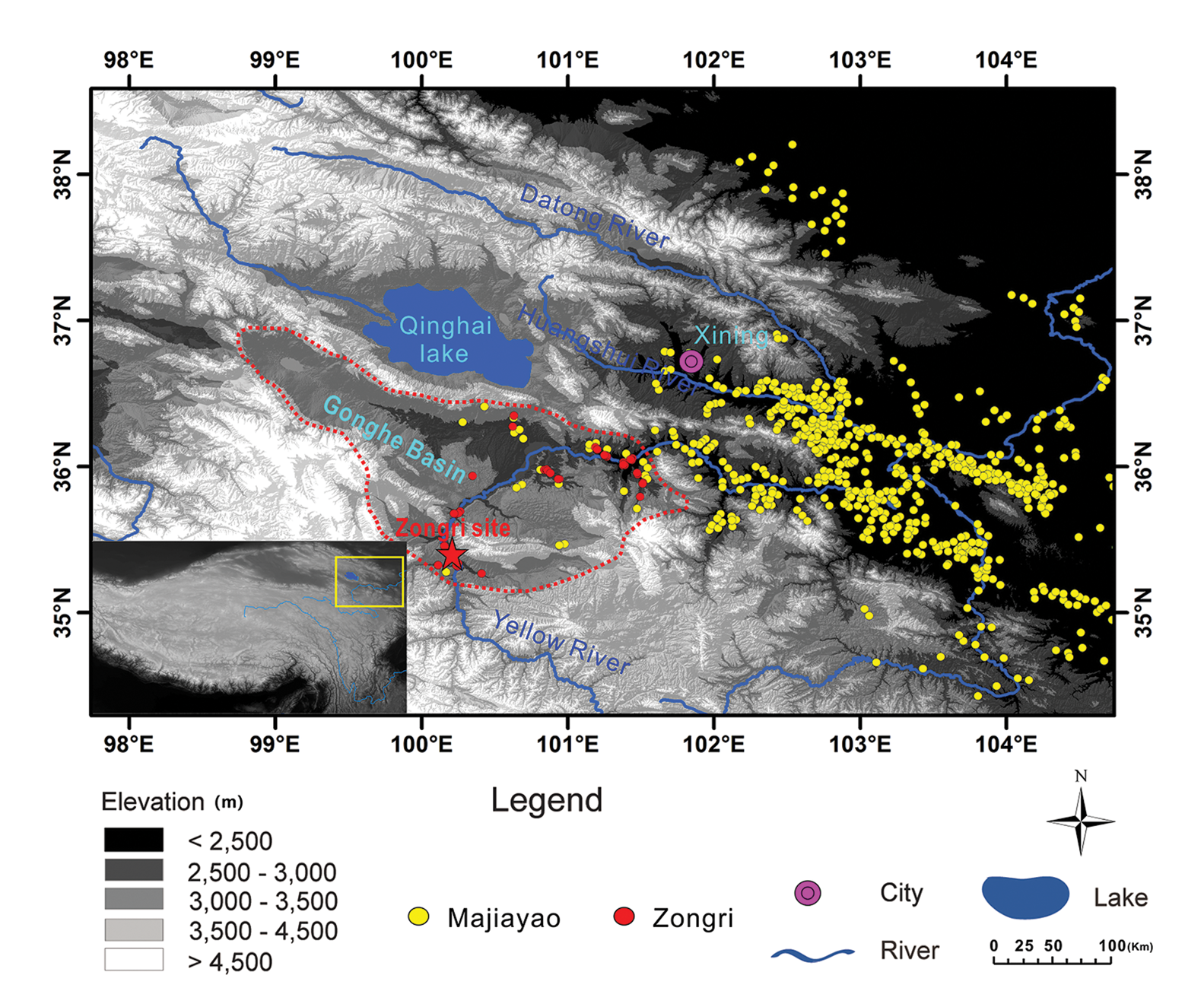
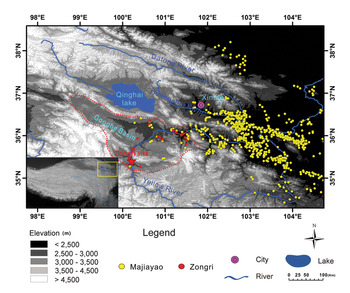
In north-western China, sites of the Neolithic Majiayao Culture (fourth and third millennia BC), characterised by painted pottery and millet-based farming, appear to provide clear evidence for the expansion of farmers from central China. By the fourth millennium BC, such sites seem to have spread to the eastern margins of the Tibetan Plateau (Dong et al. Reference Dong, Jia, Elston, Chen, Li, Wang, Cai and An2013). While some scholars argue that agriculture spread to the margins of the Tibetan Plateau through population movement (Li Reference Li2009; Chen et al. Reference Chen2015), others contend that sites once considered to have been occupied by farmers, such as Karuo in Chamdo, may have been inhabited by foragers who obtained grain through exchange with farmers (d'Alpoim Guedes et al. Reference d'Alpoim Guedes, Manning and Bocinsky2016; d’Alpoim Guedes Reference d'Alpoim Guedes2018). Fifty-one sites of the Zongri Culture (3650–2050 cal BC) are known in the eastern Gonghe Basin of the north-eastern Tibetan Plateau, all located above 2600m asl (Chen et al. Reference Chen, Ge and Li1998) (Figure 1). These sites have yielded tantalising evidence for indigenous foragers who were not replaced by incoming farmer groups and who were not passive recipients of farming practices. Indeed, scholars have argued that although farmers migrated to the Zongri cultural area, they did not replace the local foragers, and the two populations instead participated in complex interactions (Chen et al. Reference Chen, Ge and Li1998; Qinghaisheng Wenwu Guanlichu & Hainanzhou Minzu Bowuguan 1998; Chen Reference Chen and University2006; Hung et al. Reference Hung, Cui and Chen2012, Reference Hung, Cui, Chen and Hein2014).
Location of the Zongri type-site and distribution of Zongri and Majiayao Culture sites on the north-eastern Tibetan Plateau. The range within the red dotted line refers to the Gonghe Basin. Digital elevation model data were retrieved from http://www.gscloud.cn/ (figure by Lele Ren).
The Zongri type-site, located in Tongde County, Hainan Tibetan Autonomous Prefecture, Qinghai Province, was first investigated in 1982 by the Qinghai Provincial Institute of Cultural Relics and Archaeology. Initial investigations yielded two burials and a pottery kiln (Gao Reference Gao1985). Between 1994 and 1996, the Qinghai Provincial Bureau of Cultural Relics carried out further excavations at the site. These uncovered a total of 341 tombs, 18 ash pits and 18 sacrificial pits, and over 30 000 artefacts, including ceramic sherds, lithics, animal remains and bone objects (Chen Reference Chen and University2006). Previous research suggests that the site was occupied more or less continuously for 1600 years (Chen et al. Reference Chen, Ge and Li1998). Two key pottery types were recovered at Zongri:
1) Small ceramic vessels consistent with those found at sites in the Majiayao heartland in the upper Yellow River region. These are wheel-turned, highly burnished and decorated with painted whorl patterns. Previous chemical analysis confirms that these vessels were not manufactured at Zongri, but were instead imported from lower-lying areas to the east (Hong et al. Reference Hong, Cui, Wang and Chen2011).
2) A second, local tradition of pottery appears at Zongri shortly after the arrival of Majiayao pottery. Although this ceramic type imitates some aspects of the Majiayao style, the vessels are painted with zig-zags, and appear to have been hand-thrown and poorly fired. Hung et al. (Reference Hung, Cui and Chen2012, Reference Hung, Cui, Chen and Hein2014) have argued that this pottery was produced by foragers wishing to imitate Majiayao pottery.
The burials at Zongri include intriguing evidence for complex forager-farmer interactions. While Majiayao Culture graves primarily contained inhumations in a supine position within earthen pits, the earliest inhumations at Zongri were in a prone position within stone cists or wooden coffins (Chen Reference Chen and University2006; Hung et al. Reference Hung, Cui, Chen and Hein2014). During the site's middle phases, supine burials containing pottery imported from the Majiayao heartland appear at the site, alongside burials that continue the practice of prone inhumation. Towards the end of occupation, supine burials disappear, to be replaced by prone burials. Previous scholarship has argued that the prone burials are those of indigenous foragers and that the supine burials represent the incoming farmers (Hung et al. Reference Hung, Cui, Chen and Hein2014). The practice of supine burial, however, was present at Zongri for only a brief period (Hung et al. Reference Hung, Cui, Chen and Hein2014).
Some scholars argue that the Zongri foragers may have adopted both agricultural practices and material culture from the farmers (Cui Reference Cui2006; An & Chen Reference An and Chen2010). Indeed, a decrease in nitrogen and carbon isotope values in human bones at Zongri suggests less reliance on animal products and an increased consumption of C4 foods, presumably millet, over time (Cui Reference Cui2006). The question remains as to whether foragers at this site began to cultivate millets themselves, or whether millet was acquired via exchange with individuals or groups inhabiting lower elevations.
In order to understand better how Zongri forager groups adapted their high-altitude subsistence strategies, and how they interacted with groups practising plant cultivation in neighbouring areas, we conducted a small excavation in 2015 at the Zongri type-site (Figure 1), followed by a systematic programme to analyse plant and animal remains and acquire radiocarbon dates. Our results show that Zongri Culture foragers consumed crops, probably millet, while continuing to hunt wild animals. We use additional data to argue that the millet found in the Zongri cultural area was not grown locally, but was introduced through exchange with farmers living in neighbouring, lower-lying areas.
Materials and methods
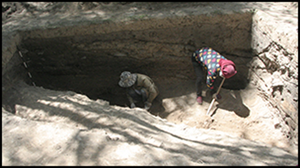
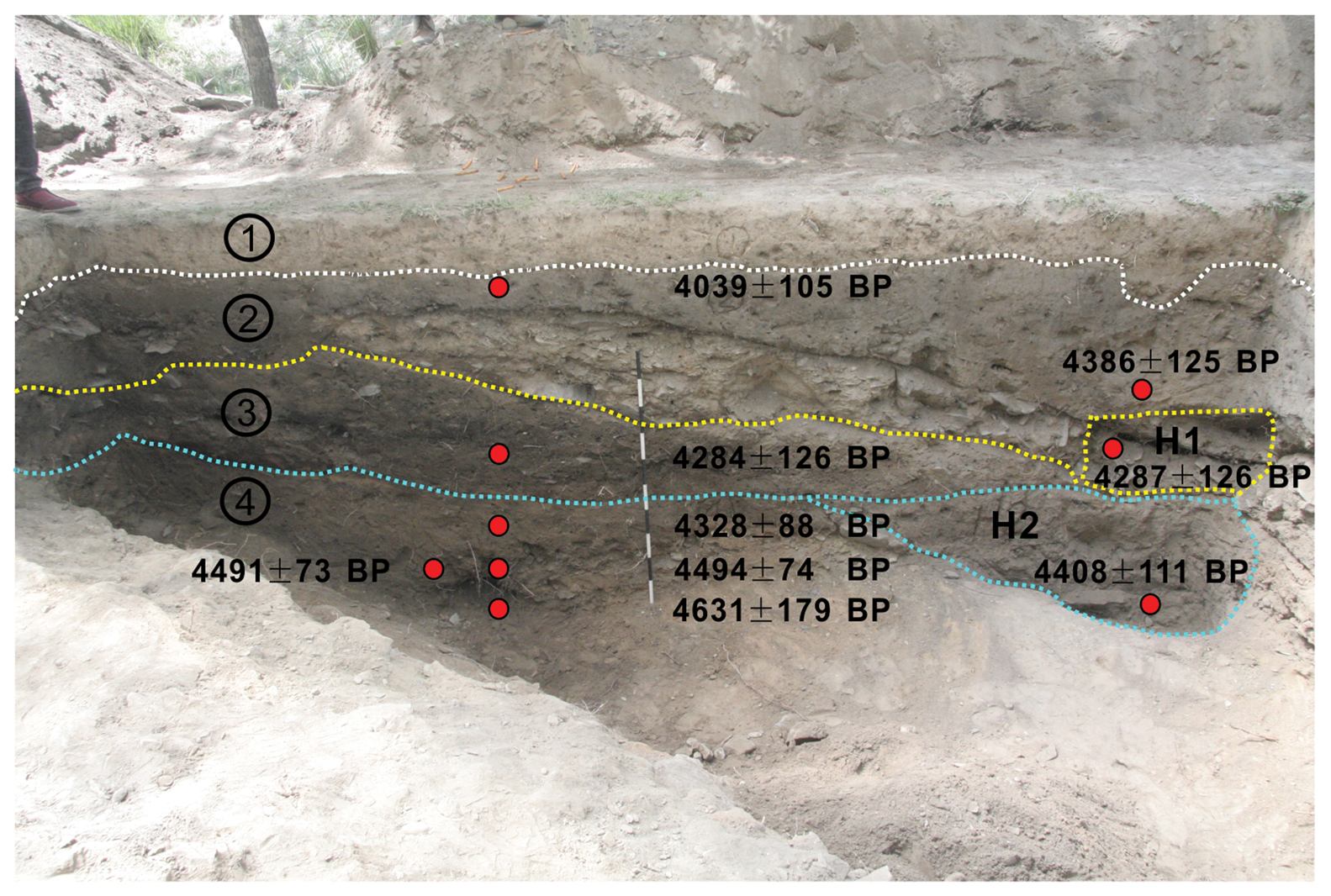
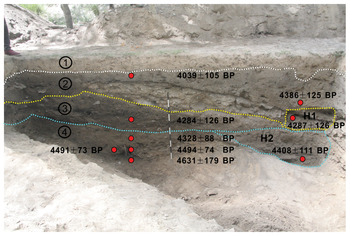
In 2015, we excavated a small trench measuring 4 × 4m at the Zongri type-site, identifying three distinct cultural layers (Figure 2). All artefacts were consistent with the late Zongri Culture (c. 2700–2100 cal. BC). Systematic archaeobotanical and zooarchaeological sampling was conducted for all features and layers encountered in the trench: 92 soil samples were taken (approximately 1778 litres), which contained 4150 charred plant seeds and 3132 fragments of animal bone. We argue that, although derived from a limited area of investigation, our data are sufficient to illustrate the subsistence strategies employed by the site's inhabitants. Procedures for the flotation and identification of charred seeds, the collection and identification of faunal remains, and the selection of samples for radiocarbon dating are outlined in the online supplementary material (OSM).
Chronology of the Zongri type-site, and stratigraphic locations of the radiocarbon samples. The white line separates the first layer (L1) from the second layer (L2); the yellow line marks the boundary between L2 and the third layer (L3) (ash pit 1 (H1) belongs to L2); the blue line separates L3 from the fourth layer (L4) (ash pit 2 (H2) belongs to L3) (figure by Lele Ren).
Results
Radiocarbon dating
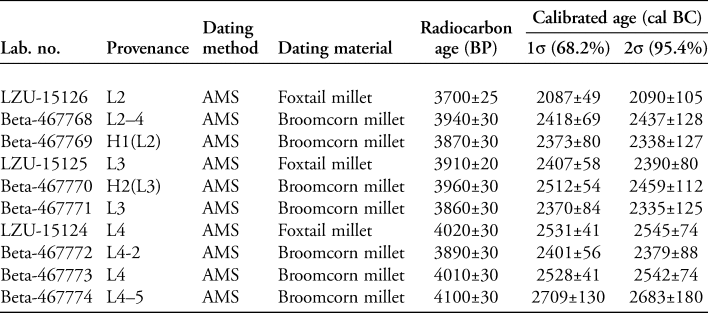
Ten charred millet seeds were selected from three cultural layers and two ash pits at the Zongri site for AMS radiocarbon dating. As shown in Table 1 and Figure 2, ranges from 2683±180 to 2090±105 cal BC (at 95.4% confidence) are documented. The non-sequential nature of the dates indicates the vertical migration of archaeobotanical material over the 600-year span of occupation. We therefore concentrated on the subsistence strategy of the Zongri group over the entire period of occupation, rather than on minor differences between the three cultural layers.
Calibrated radiocarbon dates of charred crop grains from the excavation of the Zongri site in 2015. The calibration was performed using OxCal v4.3 (Bronk Ramsey & Lee Reference Bronk Ramsey and Lee2013).

Plant macrofossils
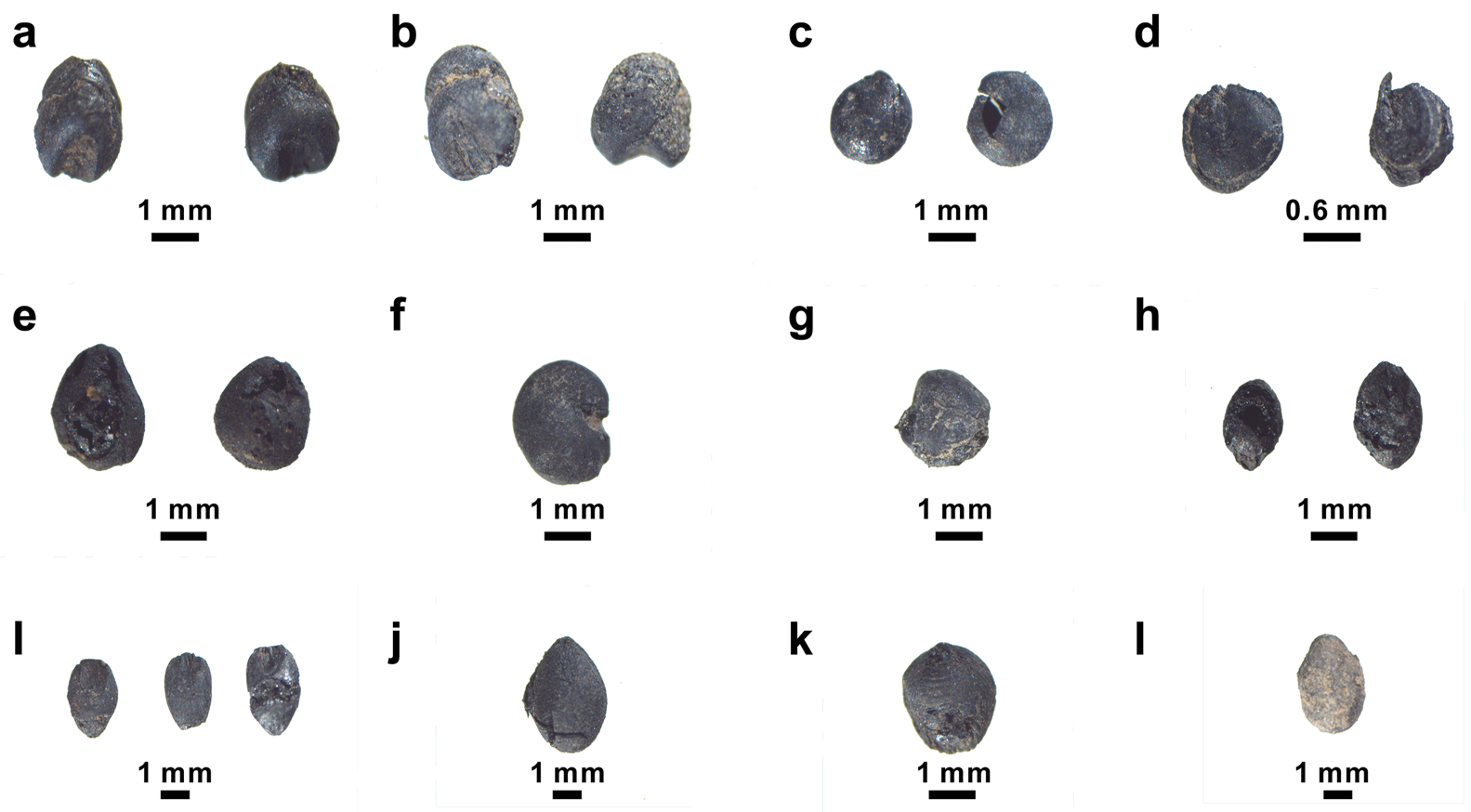
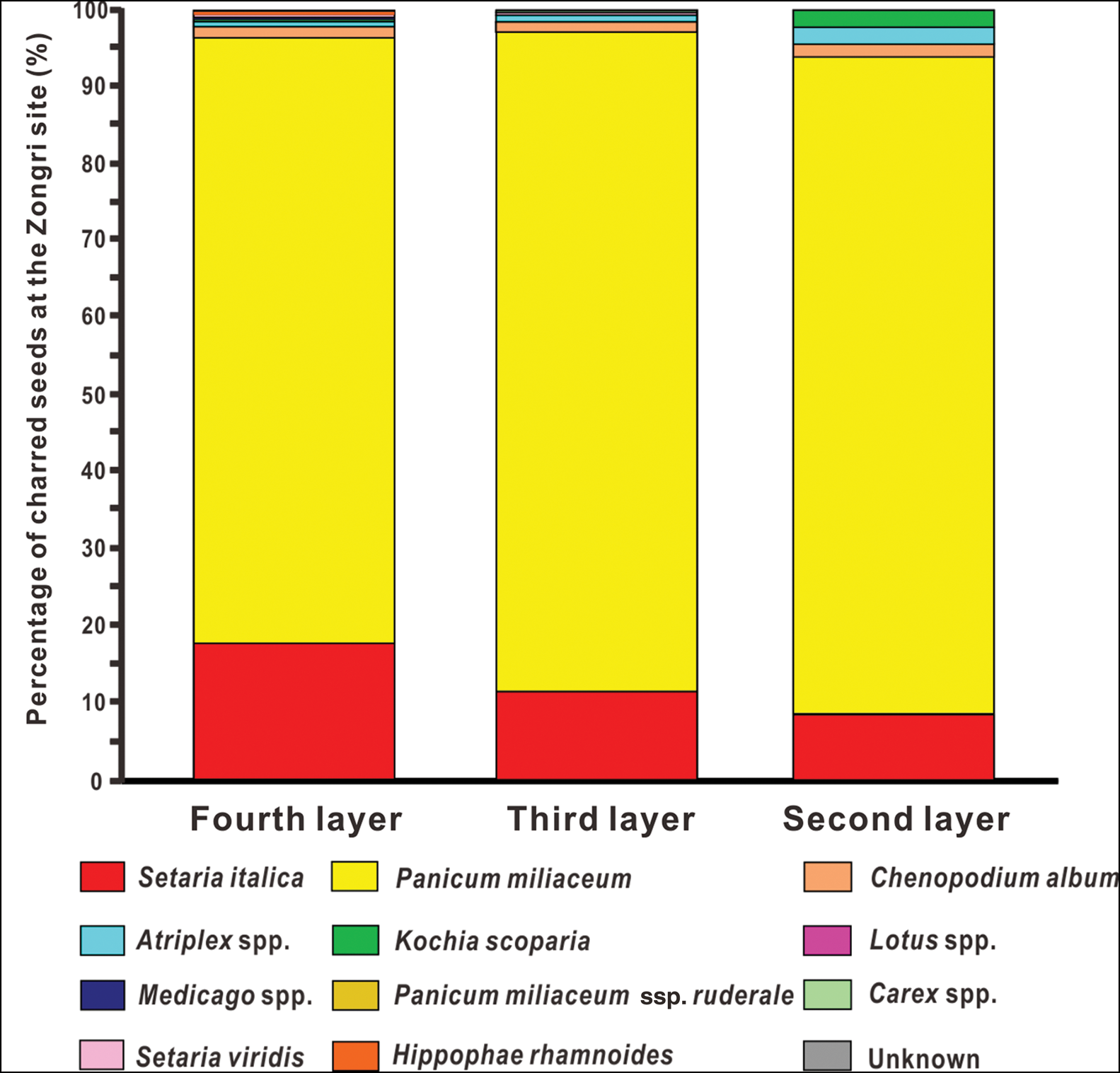
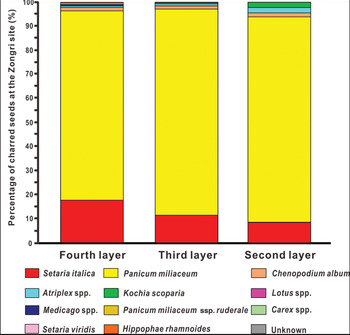
A total of 4150 charred plant seeds were identified and assigned to 11 plant taxa comprising two domesticates and nine taxa that may have been either weeds or wild plants used for economic purposes (Table S1; see Figures 3–4). Broomcorn millet (Panicum miliaceum) and foxtail millet (Setaria italica) are in the majority, with 3374 (81.3 per cent) and 635 seeds (15.3 per cent) respectively. One-hundred and forty weed seeds were also identified, including 55 lambsquarters (Chenopodium album) seeds, 51 saltbush (Atriplex spp.), 15 belvedere (Kochia scoparia), one medick (Medicago spp.), one lotus (Lotus spp.), ten green bristlegrass (Setaria viridis), three wild panic grass (Panicum miliaceum ssp. ruderale), three sea-buckthorn (Hippophae rhamnoides) and one sedge (Carex spp.). Lambsquarters and saltbush constitute roughly one per cent of the assemblage, the remaining taxa less than one per cent.
Charred plant seeds from the Zongri type-site: a) foxtail millet (Setaria italica); b) broomcorn millet (Panicum miliaceum); c) lambsquarters (Chenopodium album); d) saltbush (Atriplex spp.); e) belvedere (Kochia scoparia); f) medick (Medicago spp.); g) lotus (Lotus spp.); h) green bristlegrass (Setaria viridis); i) wild panic grass (Panicum miliaceum ssp. ruderale); j) sea-buckthorn (Hippophae rhamnoides); k) edge (Carex spp.); l) unknown (figure by Lele Ren).
Percentage of plant seed remains in samples from the Zongri type-site (figure by Lele Ren).
Faunal remains from the Zongri site
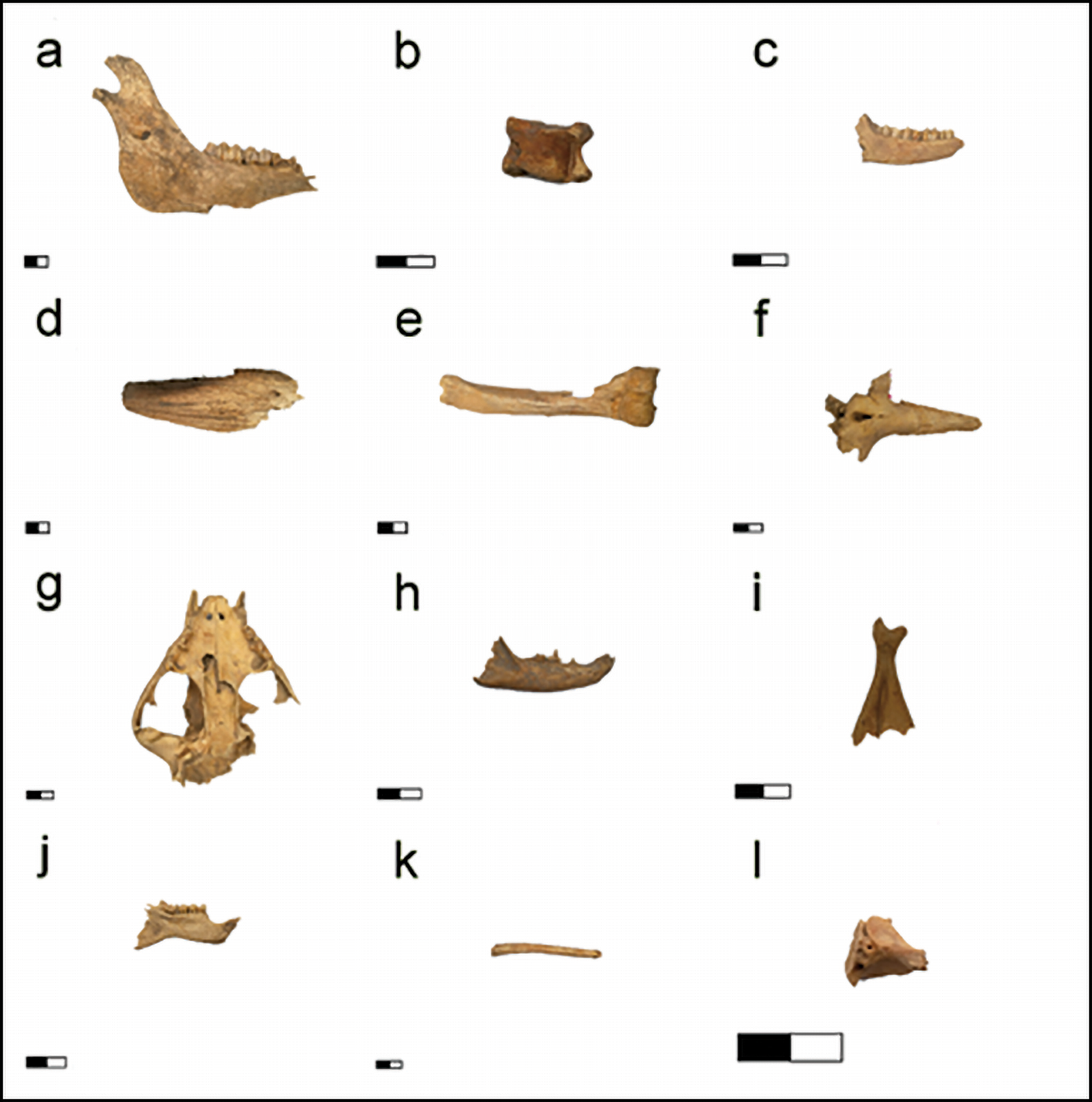
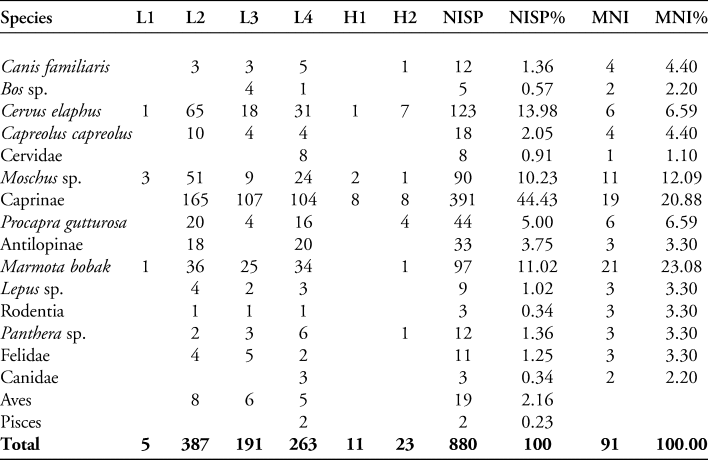
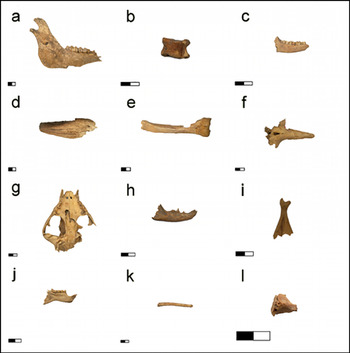
Our trench yielded 3132 fragments of animal bone, 880 of which could be identified to species or genus level, with the exception of fish and bird bones (Table 2). The number of faunal remains is defined as the number of identified specimens (NISP); the minimum number of individuals (MNI) of each species can be estimated based on their NISP. Both the NISP and MNI data for animal remains from the Zongri site show that wild animals outnumber domesticated species, with 763 fragments (98.1 per cent by NISP) vs 17 (1.9 per cent by MNI) and 63 fragments (91.3 per cent by NISP) vs 6 (5.8 per cent by MNI) (Table 2; see Figures 5–6). Domesticated species include dog (Canis familiaris) and probably cattle (Bos sp.), with a NISP of twelve and five and an MNI of four and two. Cervidae account for 27.2 per cent (NISP = 239) of the faunal assemblage, with at least 22 individuals represented. Together, Caprinae and Antilopinae make up 53.2 per cent (NISP = 468) of the assemblage, of which at least six were Mongolian gazelle (Procapra gutturosa). The NISP of rodents is 100 (MNI of 24) and that of lagomorphs is 9 (MNI of 3). Twenty-six bone fragments were attributed to wild carnivores. Bird (Aves) and fish (Pisces) bones constitute only 2.4 per cent (NISP = 21) of the assemblage.
Animal remains from the Zongri type-site: a) deer (Cervus sp.); b) roe deer (Capreolus capreolus); c) musk deer (Moschus sp.); d) Bos sp.; e) Caprinae; f) Mongolian gazelle (Procapra gutturosa); g) leopard (Panthera sp.); h) Felidae; i) hare (Lepus sp.); j) marmot (Marmota bobak); k) fish (Pisces); l) bird (Aves) (scales in cm; figure by Lele Ren).
Percentage of identified species (NISP) of animals in samples from the Zongri type-site (figure by Lele Ren).

Proportions of identified animal remains from the excavation of the Zongri site in 2015 (NISP: number of identified specimens; MNI: minimum number of individuals).
Discussion
Evidence for subsistence practices over the entire 600-year period of occupation at the Zongri site is consistent and clear, with domesticated food plants present alongside the remains of wild animals. Here we present the archaeobotanical and zooarchaeological results from the whole occupation (examples on Figures 3 & 5) to then concentrate on the proportions of flora and fauna for each layer.
At the Zongri site, the number of wild animals far outweighs that of the domesticates, a predominance consistent with previous studies of Zongri Culture sites (Chen et al. Reference Chen, Ge and Li1998). The only domesticate recovered at the Zongri type-site was dog, a species domesticated by foragers as early as 31 050 cal BC in southern East Asia, and which was probably used in hunting and the protection of human camps (Dayan Reference Dayan1994). Remains of wild animals included Mongolian gazelle (Procapra gutturosa), blue sheep (Pseudois nayaur), wild boar (Sus sp.), marmot (Marmota bobak), sika deer (Moschus sp.) musk deer and hare (Lepus sp.), together with an unidentified species of cattle that may have been either wild or domesticated (Figure 6).
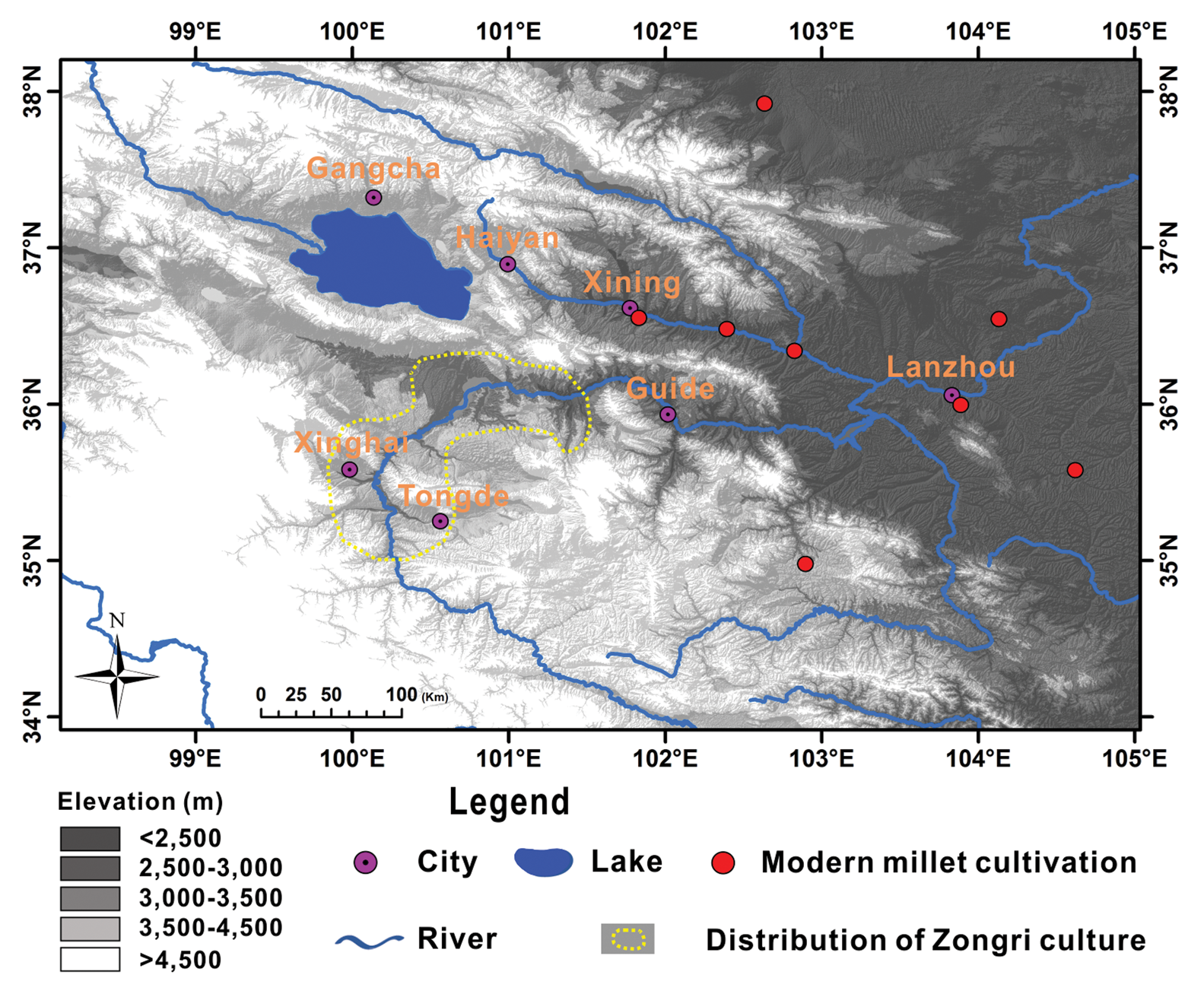
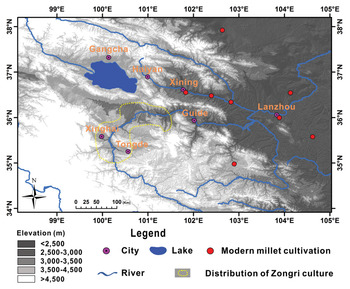
The archaeobotanical remains from the Zongri site contrast with the faunal remains in that domesticated crops, namely broomcorn and foxtail millets, represent up to 96.6 per cent of the assemblage (Table S1). This suggests that, at the very least, the inhabitants consumed agricultural products, a hypothesis seemingly confirmed by the high C4 contribution in human bone samples (Cui Reference Cui2006). We argue, however, that these crops were not necessarily grown at the site (Hung et al. Reference Hung, Cui, Chen and Hein2014; d’Alpoim Guedes Reference d'Alpoim Guedes2018). Millets are not frost-resistant, and the modern upper limit for millet cultivation in this area is approximately 2400m asl (Wang Reference Wang1994; d'Alpoim Guedes et al. Reference d'Alpoim Guedes, Manning and Bocinsky2016; d’Alpoim Guedes Reference d'Alpoim Guedes2018). All Zongri sites, however, are located higher than 2600m asl (Bureau of National Cultural Relics 1996, 2010). Furthermore, there is no historical evidence for millet cultivation in the Gonghe Basin (Council of Chinese Agriculture 2002) (Figure 7).
Distribution of modern millet cultivation on the north-eastern Tibetan Plateau and neighbouring areas (figure by Lele Ren).
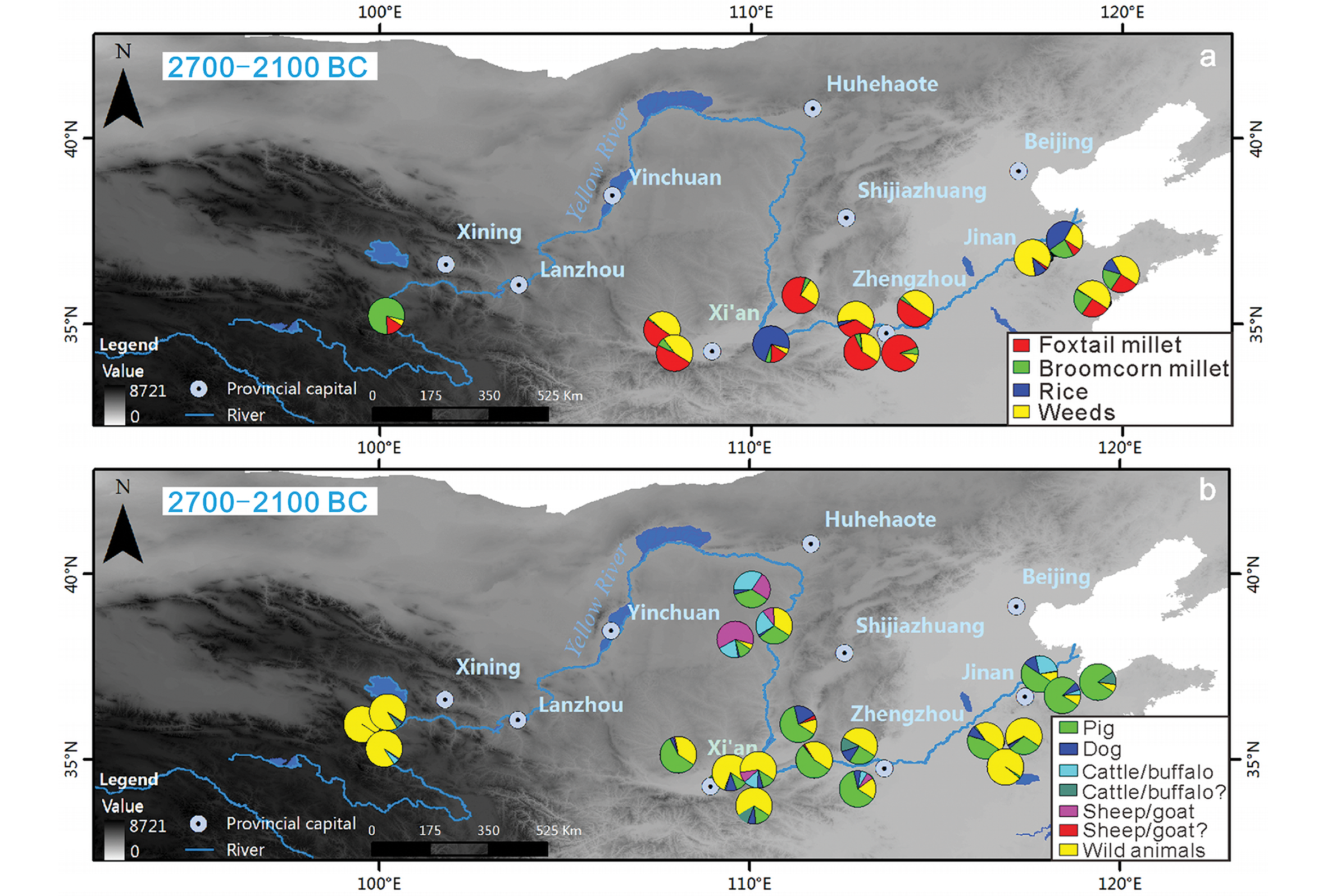
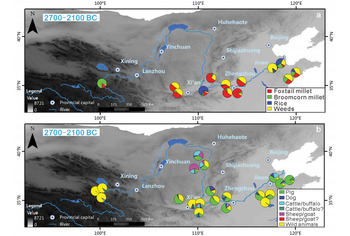
Remains of ancient crops are often found alongside weed seeds that enter the archaeobotanical assemblage during crop processing. Such processing can occur on a daily basis, in which case high proportions of weed seeds are found in assemblages, or by pooling labour at the end of the harvest, which yields a cleaner assemblage of grain with a lower percentage of weed seeds (Fuller & Stevens Reference Fuller, Stevens, Fairbairn and Weiss2009; Stevens Reference Stevens2013). The proportion of weed seeds at most Majiayao Culture sites is high, averaging 26.4 per cent of the total assemblage (Jia Reference Jia2012). This would indicate that regular crop-processing took place on site, probably undertaken by families who stored unprocessed crops and processed them for their daily needs. The high percentage (96.6 per cent) of crop remains relative to weed seeds identified at the Zongri site is unusual in that it is remarkably higher than that from contemporaneous late Majiayao sites in lower elevations. At other sites of the same period in the middle and lower reaches of the Yellow River, for which agricultural lifestyles are well documented by archaeological and isotopic evidence, crop remains account for an average of 61.9 per cent of all the plants (see Figure 8) (Lee et al. Reference Lee, Crawford, Liu and Chen2007).
Differences in proportions of charred plant and animal specimens from 2700–2100 BC sites at various altitudes across northern China: top) proportions of charred crop and weed seeds; bottom) proportions of livestock and wild animals. Digital elevation model data were retrieved from http://www.gscloud.cn/ (figure by Lele Ren).
Three possibilities could explain the high proportion of ‘clean’ grain in the Zongri assemblage:
1) Archaeological examples of clean crop remains are sometimes found when a store of such grains has been burnt accidentally (e.g. at the Banpo site in Shannxi Province). This does not seem to be the case at the Zongri site, as we sampled across a variety of spatially and temporally distinct features, and no such grain storage facilities were identified, although the excavation area was small.
2) Crops could have been grown near the site and then processed by a large group at the end of the harvest (Stevens Reference Stevens2013). Although Zongri lies close to the upper limit for millet cultivation, we cannot discount the possibility that foragers grew small quantities, processing and storing it immediately after harvest. It is possible that the foragers’ high investment in hunting made this relatively risky endeavour worthwhile.
3) A clean crop of grain may have been acquired through exchange with farmers at lower altitude (d’Alpoim Guedes Reference d'Alpoim Guedes2018). No sickles, which are generally assumed to have been used to harvest crops, have been identified in our trench at Zongri (Table S2–3). Moreover, the stone tool assemblage from the Zongri site comprises primarily microblades, microblade cores and flaked stone tools (Qinghaisheng Wenwu Guanlichu & Hainanzhou Minzu Bowuguan 1998) (Table S2), which were probably used for activities that included hunting and hide processing. Zongri foragers could have exchanged hunted animals or secondary products derived from these animals for clean, processed grain, a type of exchange that has ethnographic precedents (d'Alpoim Guedes et al. Reference d'Alpoim Guedes, Manning and Bocinsky2016).
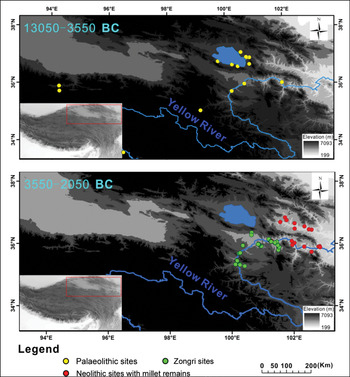
Current evidence suggests that between 13 050 and 3550 BC, foragers operated over a much larger area than the Zongri region (Gao et al. Reference Gao, Zhou and Guan2008; Madsen Reference Madsen2009; Meyer et al. Reference Meyer, Aldenderfer, Wang, Hoffmann, Dahl, Degering, Haas and Schlütz2017) (Figure 9 & Table S4), probably employing strategies of higher mobility to ensure that they could access sufficient quantities of both wild plants and animals. Increased opportunities for exchange between Zongri foragers and Majiayao farmers may have led the former to reduce their foraging range and concentrate their subsistence strategies around the Gonghe Basin, where they were able to exchange foraged products for grain with local farmers. Cultural exchange between foragers and farmers, involving dietary habits, burial customs and technology, has been observed in other Early to Mid Holocene regions of the world (e.g. Whittle Reference Whittle1996; Vanmontfort Reference Vanmontfort2008; Higham et al. Reference Higham, Xie and Lin2011).
Distribution of known sites associated with foraging and agricultural subsistence practices in the north-eastern Tibetan Plateau during two prehistoric periods: 13 050–3550 BC and 3550–2050 BC (figure by Lele Ren).

Our research demonstrates that the processes that led to millet deposition at the Zongri site were fundamentally different from those in the core Majiayao area. Instead of foragers adopting farming, as has been previously suggested (Cui Reference Cui2006), the exchange of subsistence products made it possible for foragers and farmers to co-exist on parts of the Tibetan Plateau during the Zongri period. After 2000 cal BC, the subsistence patterns in this region shifted to barley and pastoral animals, such as sheep, both of which were introduced from Western Asia. These resources allowed the region's inhabitants to adapt to the cooler conditions of the Late Holocene and permitted them to move calories (in the form of pastoral animals) into areas of higher altitude than those at which crops could be grown. While it is possible that the indigenous inhabitants of the Tibetan Plateau played an active role in the adoption of millets and, later, barley as well as pastoral animals, the question of who was responsible for adopting this new suite of domesticates requires further investigation. Future research should therefore move beyond models of simple population replacement, and aim to reveal the complex relationships between multiple groups of people who interacted at the eastern margins of the Tibetan Plateau.
Acknowledgements
This research was supported by the National Key R&D Program of China (grant 2018YFA0606402); the Strategic Priority Research Program of the Chinese Academy of Sciences, Pan-Third Pole Environment Study for a Green Silk Road (Pan-TPE) (grant XDA2004010101); the Fundamental Research Funds for the Central Universities (grant 2019jbkyzy014); the National Natural Science Foundation of China (grants 41901089 & 41620104007); and the International Partnership Program of the Chinese Academy of Sciences (grant 131C11KYSB20160061). Our 2015 excavation at Zongri, directed by the Qinghai Provincial Institute of Cultural Relics and Archaeology, was permitted by the State Administration of Cultural Heritage of China (grant 12XKG006). This article is dedicated to the memory of Hung Lingyu, whose work changed our understanding of forager/farmer interaction on the Tibetan Plateau.
Supplementary material
To view supplementary material for this article, please visit https://doi.org/10.15184/aqy.2020.35





 Open access

