



Bread is one of the oldest known foods prepared and consumed by man. Currently a basic component of the diet in many countries( Reference Quílez and Salas-Salvadó 1 ), bread, especially wholemeal bread, is a key source of complex carbohydrates, proteins, B-group vitamins, minerals and fibre( Reference Dewettinck, Van Bockstaele and Kühne 2 ). Daily consumption of three or more portions of foods based on wholegrain cereals, such as wholemeal bread, has been associated with a lower risk of CVD( Reference Gil, Ortega and Maldonado 3 ) and improved body weight outcomes( Reference Bautista-Castaño and Serra-Majem 4 , Reference Bautista-Castaño, Sanchez-Villegas and Estruch 5 ). Conversely, prepared foods, including bread, are one of the main sources of salt (NaCl) in the diet. In Spain in particular, bread’s contribution to salt intake is 19·2 %, second only to cured sausages at 26·2 %( 6 ).
There is a large body of evidence suggesting that the current salt intake in developed countries (about 10 g/person per d) is related to hypertension and hence to a greater risk of CVD( Reference Kotchen, Cowley and Frohlich 7 , Reference Aburto, Ziolkovska and Hooper 8 ). Many studies have confirmed that a moderate reduction in dietary salt can have great advantages for public health, in both the short( Reference He and MacGregor 9 ) and the long term( Reference He, Li and MacGregor 10 ).
Lowering the salt content of bread is especially important because bread is eaten daily as part of the Mediterranean diet and the population in general, and children in particular, are actually encouraged to follow this dietary pattern; so, paradoxically, it is one of the main sources of salt( Reference Marrodán, López-Ejeda and González-Montero de Espinosa 11 , Reference Farajian and Zampelas 12 ). In a recent review( Reference Quílez and Salas-Salvadó 1 ), we showed the possible benefits of a moderate salt reduction in bread in the European context and demonstrated that such a reduction is feasible in terms of both technology and sensory acceptance, thus responding to the concerns of industry.
In Spain, implementation of the NAOS (Nutrition, Physical Activity and Prevention of Obesity) strategy( Reference Neira and de Onis 13 ) resulted in an agreement with bread manufacturers in 2005 to reduce the salt content from 2·2 % to 1·8 % (flour basis), and this target was achieved in 2009. Further to the targets set by the NAOS strategy, the present study was carried out in collaboration with the company Europastry S.A., Spain (a manufacturer of partially baked frozen bread). This partially baked bread is stored and transported in frozen form and afterwards defrosted and fully baked in the bake-off stores, being sold to the consumer as ready-to-eat.
The overall objective of the present study was to conduct an analysis of sales data and complaints after the commercialization of partially baked bread in which the salt had been partially replaced with a potassium salt in Spain during 2013. As a preliminary step, a consumer panel test was carried out to check whether this was sensorially acceptable. It was (J Quilez, unpublished results), and potassium citrate (K-Cit) was chosen to partly replace the salt content of existing breads. The aim of marketing these products instead of the standard-salt products (1·8 % flour basis) was to verify that this change can be made with no adverse consequences for sales. Na and K contents of these breads were analysed to verify the concentration changes and the grounds for making nutritional and health claims according to European Union regulations regarding sodium reduction and increasing potassium( 14 , 15 ). Lastly, the results of the post-launch analysis were evaluated by monitoring sales of the reduced-salt products, as well as any possible complaints received.
Methods
Market breads
Nine types of partially baked, reduced-salt breads were introduced onto the market in January 2013, in substitution of the standard-salt breads at the same price as these breads were commercialized in 2012, which were removed from the sales portfolio. They were produced on industrial lines with a Sancassiano kneading system (Alba, Italy) and Mecatherm Megaline production lines (Barembach, France) using a direct process. These nine products, of the baguette type, were grouped into three categories to facilitate sales analysis: (i) breads containing bran, commonly known in Spain as wholemeal breads (group A); (ii) various breads containing seeds and/or other cereals (group B); and (iii) breads containing rye and seeds (group C).
In all cases, the original recipe was retained for each product, merely replacing 0·5 % of the salt (flour basis) in the formula with the equivalent weight of K-Cit. Products were distributed by the wholesalers in the usual manner, being stored and transported at −18°C to the retailers, where they were defrosted for 20 min before being finished off (14 min at 185°C) and sold to the consumer.
Wholesalers were informed directly about the change in reduced-salt breads, and bake-off stores and the final consumers indirectly by means of flyers and posters.
Sodium and potassium
Na and K were analysed in baked products using the AOAC Official Method 984·27( 16 ). Means were compared before and after the sodium substitution using Student’s t test.
Commercial data
Sales statistics for breads sold (in tonnes) during 2012 and 2013, according to the specified groups, were provided by Europastry, together with any direct or related complaints received about these breads as a consequence of the reduction in salt.
Wholesaler survey
A voluntary survey was sent by email to all wholesalers who marketed these breads in Spain (n 32) during October 2013. They were asked to express their opinion about commercial interest in reduced-salt bread in their own sphere and potential interest among retailers and consumers. The survey consisted of six questions, each of which required an answer by the owner of the company according to the respondent’s level of agreement with the question (high, quite high, medium, low, none).
Results
No difficulties were encountered in producing reduced-salt breads and there was no need to make any changes in the process to get products with the same appearance and characteristics as standard breads.
Table 1 shows the comparative results for Na and K for each bread group. There were highly significant changes between the standard breads and the same breads after salt had been replaced with K-Cit. The greater variation among group B breads is because these products are more heterogeneous than breads in the other two groups. Overall, the results showed a mean reduction in Na of 120 mg/100 g bread (−27·7 % compared with standard), an increase in K of 193 mg/100 g bread (276 %) and a substantial reduction of 2·65 (−78·4 %) in Na:K. In terms of salt content, applying a factor of 2·5 gave a reduction of practically 0·4 g/100 g bread. The results also confirm that these breads fulfil the requirements for the nutritional claims ‘reduced in salt’ and ‘source of potassium’( 14 ) and the health claim that either potassium or reduced consumption of sodium ‘contributes to the maintenance of normal blood pressure’( 15 ).
Sodium and potassium content of standard breads and reduced-salt breads in a feasibility and acceptability study of salt reduction in partially baked breads, Spain

Group A, breads containing bran; group B, various breads containing seeds and/or other cereals; group C, breads containing rye and seeds.
All differences between standard bread and salt-reduced bread are statistically significant (Student’s t test, P<0·001).
Figure 1 shows comparative sales data between 2012 (standard breads) and 2013 (the same breads with NaCl partially replaced) for the different groups. The yearly total represents sales of 3577 tonnes in 2012 and 3678 tonnes in 2013 (+2·8 %), so the two years were virtually identical in this respect, both as a whole and within each group. These figures are consistent with the sales for other breads (i.e. the 2013 sales were similar to those of 2012). Moreover, throughout 2013, no formal complaints were received as a direct or indirect consequence of the reduction in salt.
Sales of reduced-salt bread in 2013 ( ) compared with sales of the same breads with standard salt content in 2012 (
 ), according to type (group A, breads containing bran; group B, various breads containing seeds and/or other cereals; group C, breads containing rye and seeds), in a feasibility and acceptability study of salt reduction in partially baked breads, Spain
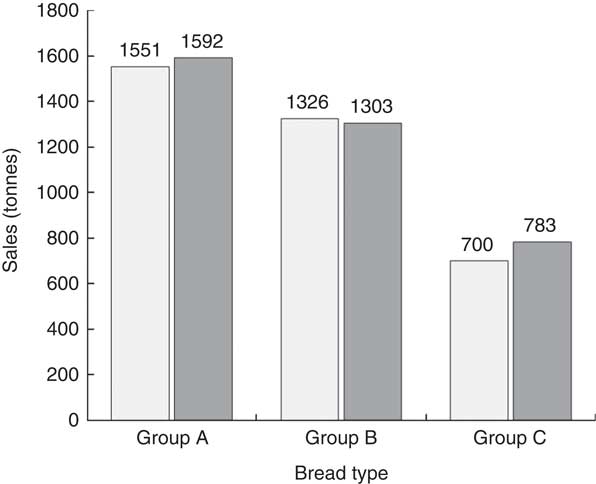
Table 2 shows the results of the surveys sent to wholesalers. Of the total of thirty-two surveys sent, twenty-eight (87·5 %) were returned. The responses showed that wholesalers’ interest in the reduced-salt bread project was rated in the medium–quite high range (seventeen out of twenty-eight responses). However, interest among retailers and consumers, and informing consumers correctly of nutritional and health claims, were rated in the medium–low range (twenty-one, twenty and seventeen out of twenty-eight responses, respectively). Adverse comments received and qualitative effects on the bread because of its reduced salt content were rated as virtually nil (twenty-five and twenty-four out of twenty-eight responses, respectively).
Responses in the survey of wholesalers on the project of reduced-salt bread, Spain (total surveys, n 28)

Discussion
Lowering the salt content of bread has often been suggested as a strategy for reducing salt intake( Reference Quílez and Salas-Salvadó 1 ). The present study shows that partly replacing NaCl in bread (in this case, 27·7 % by K-Cit) has no adverse effects on sales, even in a market environment with no sales growth, and no complaints were received.
The main drawback of this approach could be the reduced sensory acceptance of these breads, which can be counteracted by replacing some of the NaCl with other potassium, magnesium or calcium salts. In brown bread, a 32·3 % reduction in Na and a corresponding 34·8 % increase in K have been shown to give good results in terms of both appearance and flavour( Reference Charlton, MacGregor and Vorster 17 ). This was confirmed in another study, in which 30 % of the salt was replaced with potassium salts of various types, specifically K-Cit( Reference Braschi, Gill and Nalsmith 18 ). In our case, a previous consumer test (J Quilez, unpublished results) confirmed that the bread partly reduced in Na and replaced with K-Cit was well accepted sensorially.
The results obtained in our study support that this is a potentially feasible and viable strategy for the bakery industry. The distribution chain for partially baked bread involves various commercial agents, and the product is baked and sold anonymously to the consumer. This means the bread has no label, so the nutritional and health claims warranted by its composition (low sodium and a source of potassium) cannot be communicated properly. However, the lack of information about salt replacement and nutritional claims has neither led to complaints nor adversely affected sales, which indicates that the lack of information on products with similar sensory characteristics could be a good strategy for lowering Na intake.
Accordingly, the wholesalers’ survey suggests that little information reaches the end consumer. These results among wholesalers also suggest relatively little interest in reduced-salt bread among retailers and consumers. This has already been demonstrated in some studies, which show that consumers have little understanding of the relationship between Na intake and specific diseases( Reference Kim, Lopetcharat and Gerard 19 ). Another study also suggests that cutting Na intake is not a dietary priority and that the food industry plays a key role in this problem( Reference Newson, Elmadfa and Biro 20 ).
Data for Spain show that the average Na intake is 3·86 g/d (9·8 g salt/d)( Reference Ortega, Lopez-Sobaler and Ballesteros 21 ) and bread is currently responsible for 19·2 % of daily salt intake( 6 ). Nevertheless, in a recent study conducted on hypertensive individuals( Reference Guallar-Castillón, Muñoz-Pareja and Aguilera 22 ), Na intake was 2·9 g/d, but bread was the main source, representing 34·9 % of the total intake. This strengthens the concept that lowering the salt content in bread is important for managing the intake of Na in the general population and especially in this risk group.
According to per capita consumption in Spain (122 g/d)( 23 ), consumers of reduced-salt bread consume practically 0·5 g less salt daily. The effects on the population of such a moderate salt reduction have not been analysed to date. However, meta-analysis results indicate that reductions of 3 g/d or even 1 g/d are very positive and have a significant effect on reducing new CVD events and health-care costs( Reference Bibbins-Domingo, Chertow and Coxson 24 ). In the present situation, it would be interesting to investigate the consequences for public health of reducing salt intake by 0·5 g/d, taking into account the simultaneous increase in K intake provided by this type of bread. As already noted, the decrease in Na:K may play a more decisive role in reducing CVD than the effect of Na itself( Reference Cook, Obarzanek and Cutler 25 , Reference Aaron and Sanders 26 ).
In the UK, a very active policy has been implemented to reduce salt in the population. One of the actions taken, following the recommendations of the Food Standards Agency, has been to lower the salt content of processed foods( Reference Wyness, Butriss and Stanner 27 ). This can serve as a guideline for other countries. Bread, for which the 2012 target salt content was ≤1 g/100 g, has gone from an average of 1·23 g/100 g in 2001, to 1·05 g/100 g in 2006 and to 0·98 g/100 g in 2011( Reference Brinsden, He and Jenner 28 ). This shows that an overall but target-based strategy can be effective in the medium and long term. What does not seem to be effective is to leave the industry to solve the problem through self-regulation( Reference Brownell 29 ) unless this is done under very precise conditions and with supervision( Reference Sharma, Teret and Brownell 30 ). In legitimate defence of its interests, the food industry generally adopts a non-committal, conservative attitude, especially on issues that involve nutritional improvements but do not increase the product’s face value. This leads to active debate between stances that tend to favour maintenance of the status quo( Reference McCarron, Kazaks and Geerling 31 ) and those that prioritize public health as the focus of action( Reference Cappuccio, Capewell and He 32 ).
The main limitation of the present study is that it is based only on commercial aspects such as sales figures or the absence of complaints. However, it is precisely these commercial aspects that are preventing the food industry from reducing or replacing salt in foods. Therefore, our results are of considerable practical interest. It should also be noted that these small advances in staple products have a much greater impact on public health than large improvements in niche products. The success of the present project has meant that these breads are still being sold and salt is now being substituted in other special breads during 2014. Lastly, incentives should be sought to encourage initiatives that do not conflict with commercial issues in a progressive salt reduction plan.
Conclusion
In conclusion, it should be pointed out that the market test conducted in the present study concerning the partial salt replacement by K-Cit in bread demonstrated in practical terms that significant, nutritional improvements can be made in this staple product without negatively affecting either sales or complaints and without resorting to specific and more expensive products. This shows potential for introducing this type of bread on a larger scale.
Acknowledgements
This project was awarded with the ‘Strategy NAOS award 2013’ by the Spanish Agency for Consumer Affairs, Food Safety and Nutrition (AECOSAN). Financial support: This work was supported by Europastry S.A. (Spain). Conflict of interest: J.Q. is also Director of Technology at Europastry. Europastry is the main producer of partially baked bread and frozen doughs in Spain. J.S.-S. declares no potential conflict of interest. Authorship: J.Q. was responsible for design and implementation of the project and writing of the article. J.S.-S. was responsible for project assessment and article revision. Ethics of human subject participation: Ethical approval was not required.



