


Introduction
Social support has been linked to a wide range of beneficial effects, including reducing the risk of mental health difficulties (Thoits, Reference Thoits1995), improved overall quality of life (Helgeson, Reference Helgeson2003) and reducing the likelihood of developing physical health problems (Uchino et al., Reference Uchino, Cacioppo and Kiecolt-Glaser1996). Social support is of particular importance for older people due to the greater likelihood of developing health problems at this time in life. Amongst older people, having relatives or friends able to provide support has been shown to be correlated with overall satisfaction with life (Gabriel and Bowling, Reference Gabriel and Bowling2004), a longer period of time living in their own home and longer life (Rolls et al., Reference Rolls, Seymour, Froggatt and Hanratty2011).
Although social support has received a great deal of attention from researchers, there remains no overarching consensus as to a definition. Understandings variously focus on structural aspects (e.g. the presence or absence of different types of relationships), functional aspects (e.g. the presence or absence of different types of support provision) or perceived potential (e.g. the extent to which someone perceives that they have access to a supportive network) (Nurullah, Reference Nurullah2012). This review adopts Thoits’ (Reference Thoits2010) definition of social support as ‘emotional, informational, or practical assistance from significant others, such as family members, friends or co-workers; support may be received from others or simply perceived to be available when needed’ (Thoits, Reference Thoits2010: 46). As noted in a recent review (Nurullah, Reference Nurullah2012), this definition recognises that social support is a distinct concept from social integration or a social network. A social support network will be made up entirely of people from someone's social network, but not all members of someone's social network will be people who could be said to be available to provide social support.
The context of social support
Before considering why we might expect social support to be different for older lesbian, gay and bisexual people (LGB), it is useful to consider briefly their social context. In most Western countries, prior to the latter half of the twentieth century, sex between two men was a crime and there was no legal recognition of same-sex sexuality between women. With few exceptions, social and legal changes in Western countries have generally moved towards equality for LGB people. Internationally, homosexuality was removed as a psychiatric diagnosis from the Diagnostic and Statistics Manual of Mental Disorders in 1973, and the World Health Organization's (WHO) International Classification of Diseases in 1990.
This recent history suggests that older LGB people are likely to have faced not only negative attitudes about their sexual orientation, but criminalisation or medicalisation of their relationships. In line with this, nearly two-thirds of older LGB people reported experiencing verbal or physical abuse relating to their sexual orientation over their lifetime (D'Augelli and Grossman, Reference D'Augelli and Grossman2001). Stigma, discrimination and victimisation are likely to have had direct and indirect effects on the social support networks of older LGB people. Many have reported experiencing rejection from families and existing support networks when their sexual orientation was first made known (Guasp, Reference Guasp2010). Older LGB people are also less likely to have a partner than the heterosexual population (Guasp, Reference Guasp2010), and both biological and systemic barriers mean that older LGB people are less likely to have a child (Understanding Society, 2016).
At the same time as impeding access to support networks, experiences of discrimination may increase the need for social support. Experiences of victimisation related to sexual orientation unsurprisingly increase the risk of people developing mental health difficulties (Meyer, Reference Meyer2003; Birkett et al., Reference Birkett, Newcomb and Mustanski2015). Some of the ways that people manage this stress can be physically harmful and this population has been shown to be at increased risk of drug and alcohol use, smoking and obesity (Northridge, Reference Northridge2001). This means that the physical health needs of older LGB people are also likely to be greater than the general population.
Why is it important to understand this difference?
Older LGB adults currently accessing services are among the first to be in their later life when health and social care services have an explicit responsibility to provide an equitable quality of care. Critical histories of the development of health and social policies have highlighted how the current British welfare state developed around meeting the needs of heterosexual people (Williams, Reference Williams1992) and services have only had a responsibility to ensure their employees are competent in working with LGB-specific issues since the introduction of the Equality Act (HM Government 2007). Considering the relatively short length of time that health and social care organisations have had to adapt to these changes, it is perhaps unsurprising that in the United Kingdom (UK), compared to heterosexual people, LGB people report having a worse experience of health and social care services (Elliott et al., Reference Elliott, Kanouse, Burkhart, Abel, Lyratzopoulos, Beckett, Schuster and Roland2015).
The UK and other countries have placed a much greater emphasis on informal care in recent policies (e.g. HM Government 2014). With the increased emphasis on care provided by friends and family, it is of particular importance that health and social care services are able to work with the social support networks of all older people. A first step towards supporting this would be gathering together what is currently known about these networks and the provision of social support to older LGB people. There has only been one previous, non-systematic review of the social support needs of this population (Barker et al., Reference Barker, Herdt and de Vries2006). The review, which did not include bisexuals, described ways in which socio-political circumstances had affected social support networks in later life. The review identified a larger role of friends in comparison to family, and suggested that much of the social support for this population may come from ‘family-of-choice’ relationships (i.e. a group of close friends who are identified as being like family). The review, however, lacked a specified methodology, in addition to being published 11 years ago, during which time multiple additional studies have been published, along with notable changes to the circumstances of LGB people.
Method
The systematic review included original quantitative and qualitative research, involving gay, lesbian or bi-sexual participants, published in peer-reviewed journals. Using Thoits’ (Reference Thoits2010) definition of social support, studies of social networks were included if they explicitly explored the provision of emotional, informational or practical support within informal social (non-professional) networks. For the purpose of the present review, ‘older LGB people’ was defined as people over the age of 50 who identify as being lesbian, gay or bisexual. Whilst 50 is a younger age than is often used in the general older-age literature, this reflected the youngest cut-off that was commonly used in the literature referring to ‘LGB older adults’. Studies before the removal of ‘homosexuality’ as a mental health diagnosis from the WHO's International Classification of Diseases in 1990 were not included, as were those focusing on transgender people (or grouping transgender people into the same category of analysis as LGB (LGBT)). Transgender identities are related to gender identity rather than sexual orientation (i.e. as well as being transgender, a person will also be heterosexual, lesbian, gay, bisexual or another sexual orientation).
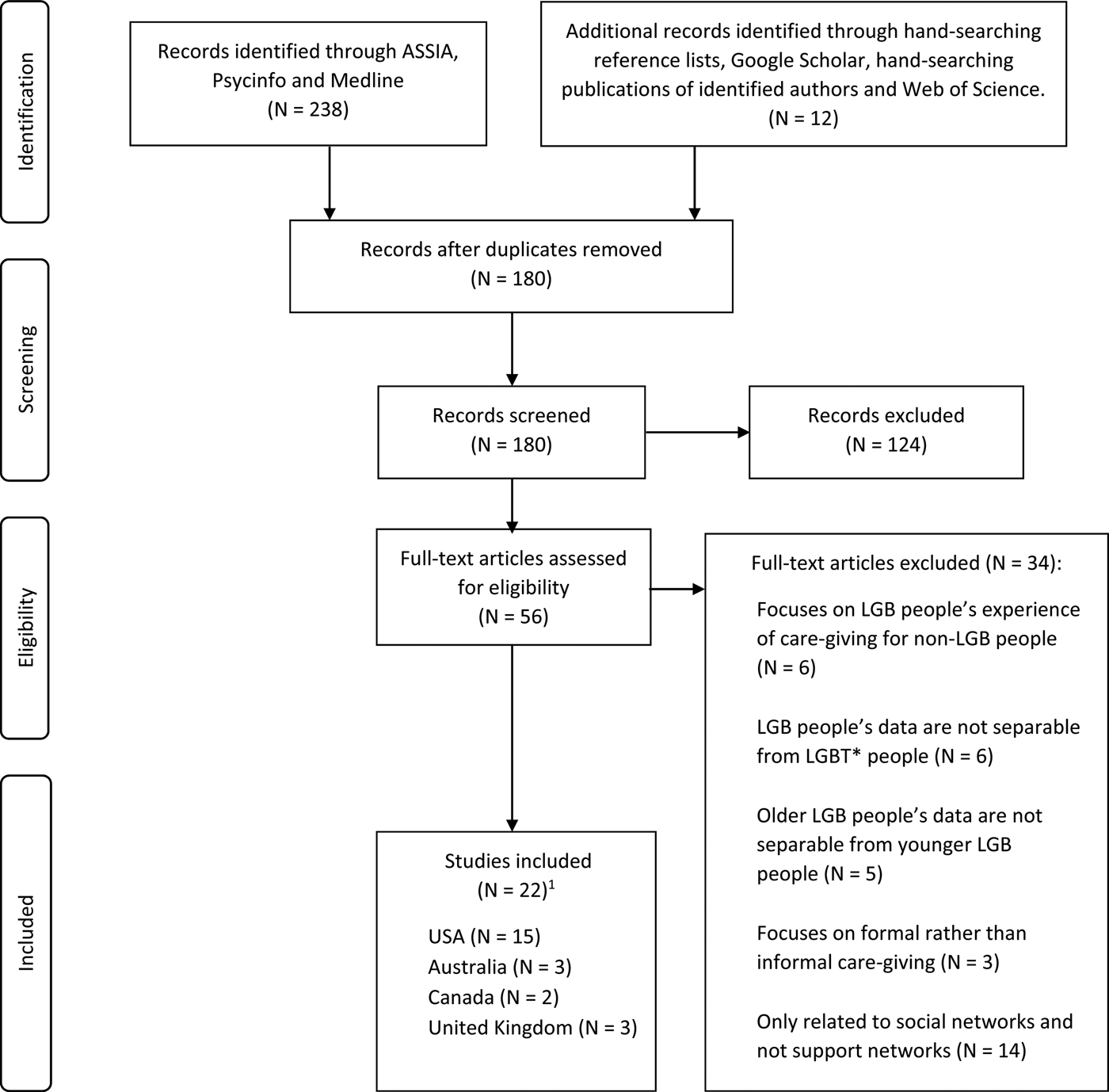
The Applied Social Sciences Index (ASSIA), Psychinfo and Medline were searched for articles containing a combination of the following terms (ageing or aging or ‘older people’ or ‘older adults’ or ‘later life’ or elder or gerontology or geronotological) and (‘social support’ or carer or caregiver or ‘informal care’ or ‘informal support’ or network) and (lesbian or gay or bisex* or homosex* or ‘sexual orientation’ or queer or LGB* or GLB*), from 1990 to 2016. Titles and abstracts were read and any articles which were clearly not related to the theme of this review were excluded. The full texts of the remaining articles were retrieved, read and assessed against the inclusion criteria. The reference lists of articles meeting the inclusion criteria were then hand-searched for relevant articles, along with a search of the articles citing these papers on Web of Science. Finally, Google Scholar was searched for any remaining relevant papers. Overall, there were 22 articles that met the inclusion criteria; 12 were cross-sectional quantitative studies and ten were qualitative (for a flowchart of the search process, see Figure 1).
PRISMA diagram (Liberati et al., Reference Liberati, Altman, Tetzlaff, Mulrow, Gøtzsche, Ioannidis, Clarke, Devereaux, Kleijnen and Moher2009).
All papers were read in full and the key findings were extracted. Each paper was scored on the appropriate version (qualitative or quantitative) of the Standard Quality Assessment Criteria for Evaluating Primary Research Papers (SQAC) (Kmet et al., Reference Kmet, Lee and Cook2004). For each criteria of the SQAC, papers were scored ‘0’ if not met, ‘1’ if it was partially or unclearly met and ‘2’ if it was definitely met; an average score was then calculated. The key findings of all papers were then grouped into shared themes. Brief summaries of the method and key findings for each study as well as scores on the critical appraisal tools can be found in Tables 1 and 2.
Overview of studies: qualitative studies
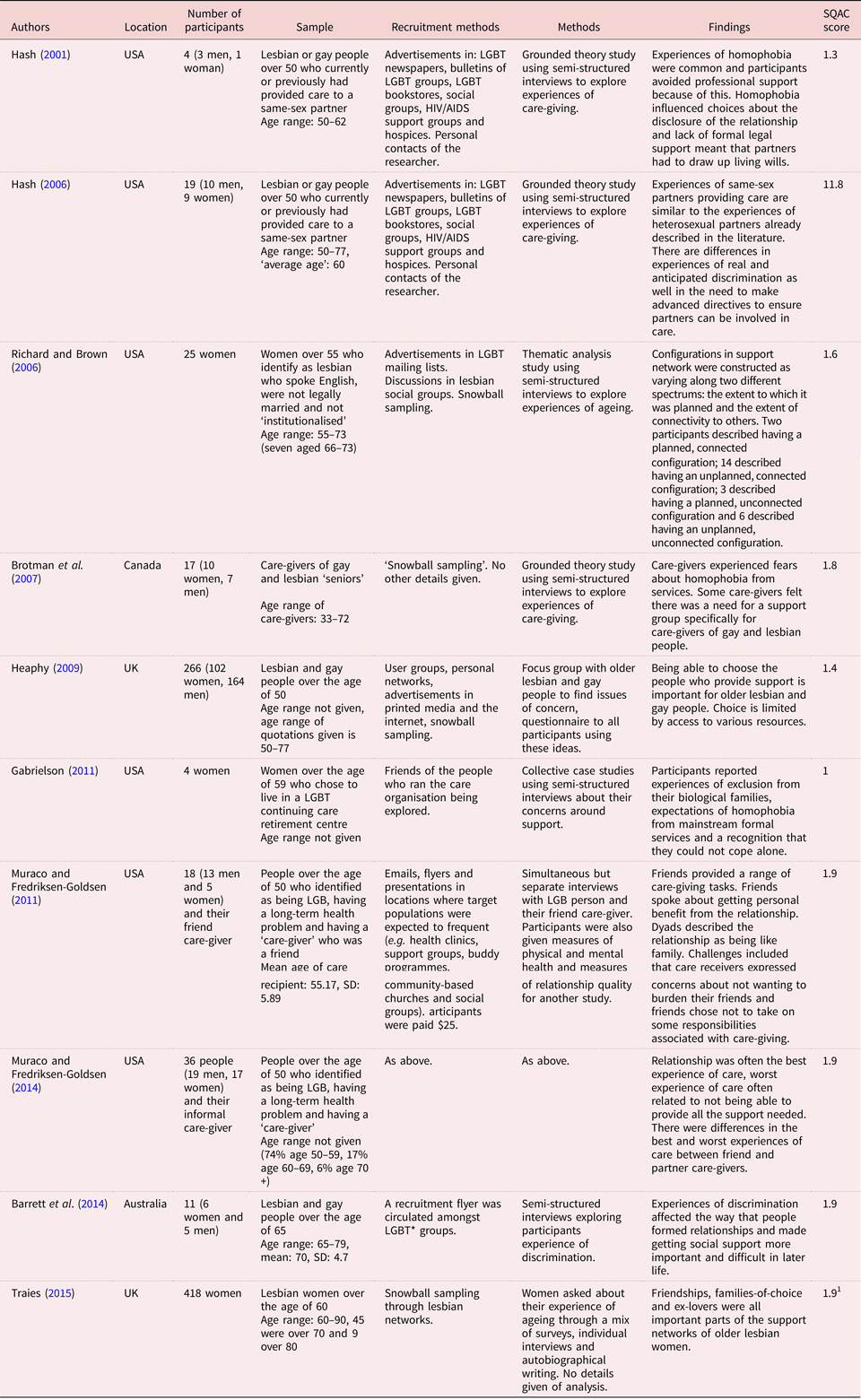
Notes: 1. This score is based on the methodology described in Traies (Reference Traies2014), from which the data for this paper are drawn. SQAC: Standard Quality Assessment Criteria for Evaluating Primary Research Papers. USA: United States of America. UK: United Kingdom. LGBT: lesbian, gay, bisexual and transgender. SD: standard deviation.
Overview of studies: quantitative studies
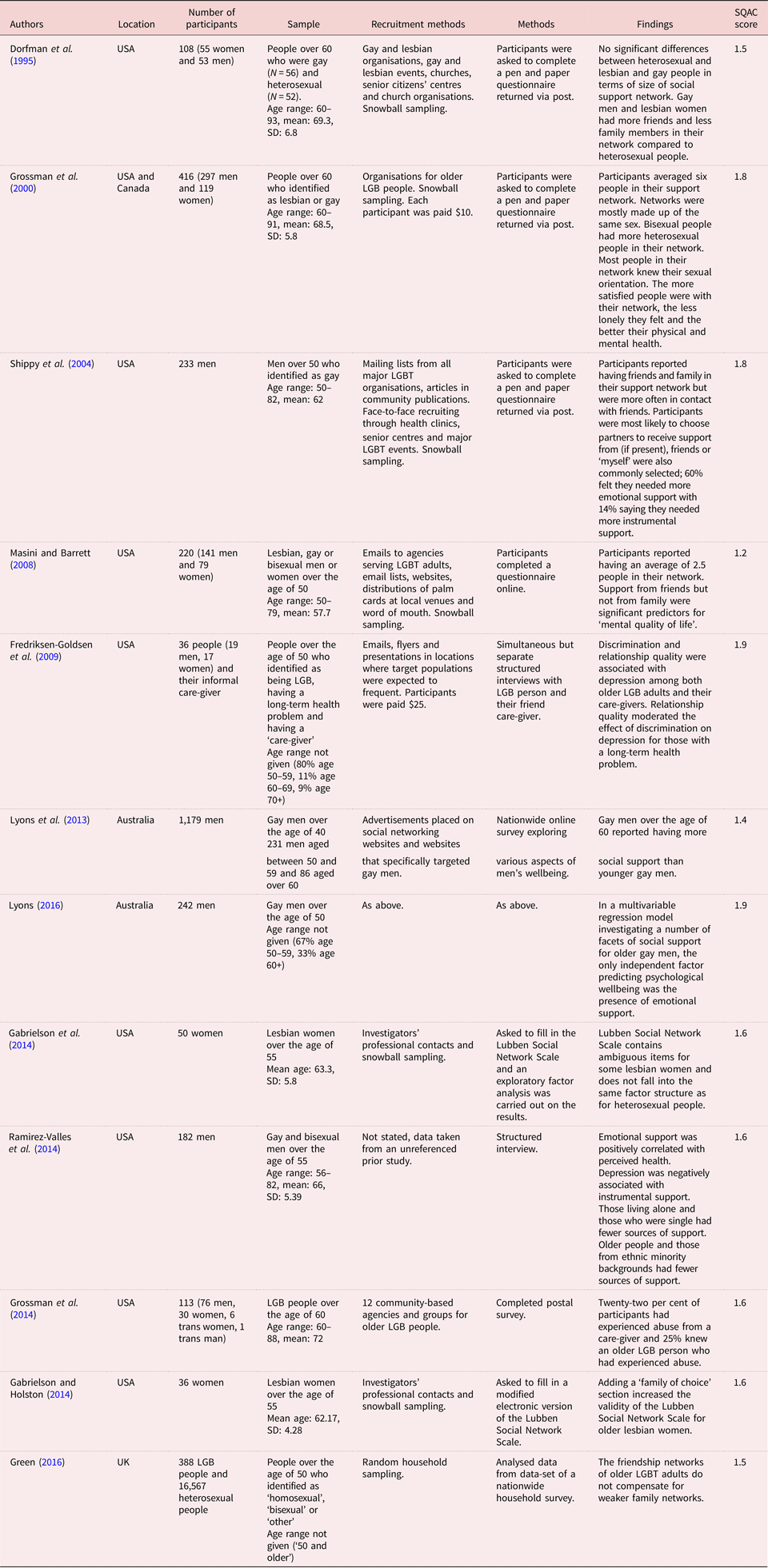
Notes: SQAC: Standard Quality Assessment Criteria for Evaluating Primary Research Papers. USA: United States of America. UK: United Kingdom. LGBT: lesbian, gay, bisexual and transgender. SD: standard deviation.
Results
Three main themes were identified: the structure of older LGB people's support networks (the size, frequency of contact, composition and any differences in these factors within the older LGB population), the types of support that these networks do and do not provide, and particular challenges within these relationships.
Structure of older LGB people's support network
Size of network
Nearly all studies reported that all LGB people participating had at least one person providing social support; only one study found anyone (one of the 233 gay men recruited) with no social support (Shippy et al., Reference Shippy, Cantor and Brennan2004). Although this suggests that there are few older LGB people who were entirely isolated, it was not always clear whether it would be possible for someone who was isolated to be recruited. Additionally, across studies there were very few participants in the older end of the age range when you might hypothesise that isolation is most likely. Studies used methods of recruitment that were likely to recruit disproportionately those with more social connections (e.g. recruitment through LGB agencies, word of mouth or advertisements on online social networks).
The size of these networks was not clear, with two studies giving widely different estimates. Grossman et al. (Reference Grossman, D'Augelli and Hershberger2000) found that participants listed an average of 6.3 people in their support network, with more than a third saying that they had ten or more, whereas Masini and Barrett (Reference Masini and Barrett2008) found that participants listed an average of 2.5 people with only 3 per cent reporting eight or more and 45 per cent naming only one member. It is possible that the first of the two estimates was more inflated by a social desirability bias as it both gave a higher maximum number of people respondents could list (ten versus eight) and asked people to fill out their questionnaire in person, rather than anonymously online. The only study to investigate whether the size of support networks differed for LGB and heterosexual people found no evidence of a ‘clinically’ significant difference (Dorfman et al., Reference Dorfman, Walters, Burke, Hardin, Karanik, Raphael and Silverstein1995). However, this article used the Lubben Social Network Scale, the validity of which has been questioned as a measure of social support for older lesbian women (Gabrielson and Holston, Reference Gabrielson and Holston2014; Gabrielson et al., Reference Gabrielson, Holston and Dyck2014). All three studies providing an estimate of the size of social networks come from within the United States of America (USA), so we cannot know to what extent these figures can be generalised to other contexts.
Although there were very few studies that reported no access to a support network, three studies found a significant proportion of gay men having a network, but not receiving sufficient support (Shippy et al., Reference Shippy, Cantor and Brennan2004; Lyons et al., Reference Lyons, Pitts and Grierson2013; Ramirez-Valles et al., Reference Ramirez-Valles, Dirkes and Barrett2014). Perhaps most strikingly, one study found that 60 per cent of older gay men felt that they needed more emotional support (Shippy et al., Reference Shippy, Cantor and Brennan2004), double that reported by the heterosexual population (Cantor and Brennan, Reference Cantor and Brennan1993). This is especially significant as in this population studies identified emotional support as being predictive of psychological wellbeing (Lyons, Reference Lyons2016) and perceived health (Ramirez-Valles et al., Reference Ramirez-Valles, Dirkes and Barrett2014). Similarly, in a study exploring support networks for lesbian women, the authors identified several people as having ‘precarious’ support, meaning that whilst they may have had many people in their support network, there was no consistency in the provision of support, networks could be scattered across the country and there were times when participants felt like they had to manage major life events alone (Richard and Brown, Reference Richard and Brown2006).
In line with this, one study looked at how much contact older LGB people had with others in their support network (Green, Reference Green2016). This study found that older LGB people reported having significantly less contact with people in their support network than older heterosexual people (Green, Reference Green2016). This study used data from a national survey, in which households were randomly sampled across the UK, meaning that it escaped some of the recruitment biases of the aforementioned studies. Unfortunately, this study combined the responses of LGB people with those that responded ‘other’ to the sexual orientation questions. Evidence from qualitative research carried out by the Office for National Statistics (Haseldon et al., Reference Haseldon, Joloza and Household2009) suggests that most people who respond ‘other’ are heterosexual people where language and cultural barriers prevented them from understanding the question. The ‘other’ group in Green's (Reference Green2016) study was nearly as large as the gay, lesbian and bisexual groups combined, meaning that almost half of the people in the ‘LGB’ group may not be lesbian, gay or bisexual. This draws into question the extent to which these findings can be usefully interpreted.
There was a suggestion that some older LGB people may prefer not to receive social support; one study found that a high proportion of gay men had a preference for relying on ‘myself’ for different types of support (Shippy et al., Reference Shippy, Cantor and Brennan2004). Additionally, Richard and Brown (Reference Richard and Brown2006) identified three lesbian women who were coded as having ‘independent’ configurations of social support. However, they described this group as being conflicted about not receiving support, with the authors interpreting that support was needed but the women did not want to access it. The reasons for these findings are not clear but self-reliance may be a coping strategy developed in a context of anti-LGB stigma and discrimination, which is discussed further below.
Composition of support networks
The studies identified suggested that older LGB people were diverse in terms of the composition of their support networks. Compared to heterosexual people, older LGB people had fewer family members but more friends in their support network (Dorfman et al., Reference Dorfman, Walters, Burke, Hardin, Karanik, Raphael and Silverstein1995; Grossman et al., Reference Grossman, D'Augelli and Hershberger2000; Shippy et al., Reference Shippy, Cantor and Brennan2004; Green, Reference Green2016). In the included studies, between 36 and 50 per cent had a partner (Shippy et al., Reference Shippy, Cantor and Brennan2004; Massini and Barrett, Reference Masini and Barrett2008) and some reported having children from previous marriages (e.g. Richard and Brown, Reference Richard and Brown2006). As well as traditional sources of support, qualitative accounts also suggested that ex-lovers were a significant source of social support for some lesbian women (Richard and Brown, Reference Richard and Brown2006; Traies, Reference Traies2015) but no studies reported on how common this was. These findings fit with prior suggestions that the support networks of older LGB people are idiosyncratically developed ‘families of choice’, including both biological family as well as friends, partners and ex-partners (Barker et al., Reference Barker, Herdt and de Vries2006).
Although no studies explicitly looked at why older LGB people may have more friends and fewer family members in their support network, there were several themes in the literature which may account for this difference. One study looking at those over the age of 65 described participant's accounts of being rejected by biological family (Barrett et al., Reference Barrett, Whyte, Comfort, Lyons and Crameri2014); it was unclear how common this experience was for the younger section of the population. Surveys suggested that sexuality-related difficulties within families were a common occurrence, with over a fifth of men and a third of women reporting that their sexuality had distanced them from their family of origin (Heaphy, Reference Heaphy2009). This suggests the possibility that friends take on these roles in order to fill the gaps left by family, in line with research which has suggested that there is a ‘principle of substitution’ in caring relationships (Qureshi and Walker, Reference Qureshi and Walker1989). Additionally, it may be that LGB friendships have an additional importance for older LGB people due to the need of having people who affirmed one's identity when living in a society that did not (Barrett et al., Reference Barrett, Whyte, Comfort, Lyons and Crameri2014), None of the studies investigated whether friendship bonds might be stronger amongst LGB people than heterosexuals for this reason. The lower proportion of older LGB people with children is also likely to be an important factor in the prevalence of friendship over family support. It may be that not having children increased the motivation and ability to maintain friendships over time.
Types of support provided by networks
The studies suggested that LGB people were most likely to prefer to obtain and actually receive emotional support from close friends and partners over family members (Grossman et al., Reference Grossman, D'Augelli and Hershberger2000; Shippy et al., Reference Shippy, Cantor and Brennan2004; Masini and Barrett, Reference Masini and Barrett2008). It is possible that this is related to the significant proportion of LGB people who reported that their sexuality had distanced them from their family of origin (Heaphy, Reference Heaphy2009).
Similar to the heterosexual population, instrumental support was most often provided by partners for both gay men and lesbian women (Grossman et al., Reference Grossman, D'Augelli and Hershberger2000; Masini and Barrett, Reference Masini and Barrett2008). When asked to list who they would want to provide instrumental support if they needed it, gay men were most likely to select a friend if they did not have a partner (Shippy et al., Reference Shippy, Cantor and Brennan2004). The findings around instrumental support should be interpreted with caution as participants across these studies reported good physical health so were likely to be in need of significant instrumental support than is normally considered in the care-giving literature. There were only three studies which explored the support of older LGB people with physical health difficulties (Hash, Reference Hash2001; Brotman et al., Reference Brotman, Ryan, Collins, Chamberland, Cormier, Julien, Meyer, Peterkin and Richard2007; Fredriksen-Goldsen et al., Reference Fredriksen-Goldsen, Kim, Muraco and Mincer2009) and none which explored the support of those at the older end of the age range. The participants in these studies suggest that as well as partners, children and siblings, friends also take on the role of being a ‘carer’ to older LGB people with physical health difficulties.
Two secondary analyses of the interview data from the study by Fredriksen-Goldsen et al. (Reference Fredriksen-Goldsen, Kim, Muraco and Mincer2009) explored the experience of those older LGB people with health problems who were supported by their friend (Muraco and Fredriksen-Goldsen, Reference Muraco and Fredriksen-Goldsen2011) and differences between the best and worse experiences of care-giving between friends and partners (Muraco and Fredriksen-Goldsen, Reference Muraco and Fredriksen-Goldsen2014). They found that both friendship and partner dyads described a diverse range of support, from picking up laundry to supporting with intimate personal care tasks. Mutuality was particularly important in the friendship relationships in a way that was viewed as distinct from the experience of partners, and friends described some of the benefits they received (e.g. a sense of being a good person) as being part of the reason they provided care (Muraco and Fredriksen-Goldsen, Reference Muraco and Fredriksen-Goldsen2014). Although both partners and friend dyads commonly described arguments as being part of the ‘worst’ experience of care, some partners said that arguments were the ‘best’ experience of care because it deepened their empathy and brought them closer together; this was not true of the friends (Muraco and Fredriksen-Goldsen, Reference Muraco and Fredriksen-Goldsen2014). Friends sometimes experienced challenges dealing with the bureaucracy of health and social care organisations due to their lack of legal relationship to the person for whom they were caring. Finally, although the friendship dyads spoke of being ‘like family’, many friends talked about a limit to the amount of time they would be willing to give and were unwilling to take on some of the roles that might traditionally fall to a partner (e.g. taking on legal power of attorney) (Muraco and Fredriksen-Goldsen, Reference Muraco and Fredriksen-Goldsen2011). Care receivers were also aware of not wanting to be a burden to their friend and this restricted the help that they would ask for or allow to be given. This suggests that these relationships do not fully compensate for less support from families of origin and may partially account for the fact that many older LGB people reported not consistently receiving support despite having similar-sized support networks to older heterosexual people.
Differences in support network structure within the LGB population
In line with the idea that increased friendship support does not fully compensate for less family support, whilst one study identified that older gay men were significantly more likely to feel well supported by their friends than younger gay men (Lyons et al., Reference Lyons, Pitts and Grierson2013), another study identified that overall sources of support decreased with age (Ramirez-Valles et al., Reference Ramirez-Valles, Dirkes and Barrett2014). It may be that the older population in particular have had to rely on friendship support over family support due to the greater likelihood of facing family rejection at the time they came out. The lack of participants at the older end of the age range mean that we cannot be confident in understanding the availability of social support for this group.
There were two studies which explored differences between the support networks of older gay/bisexual men and older lesbian/bisexual women (Dorfman, Reference Dorfman, Walters, Burke, Hardin, Karanik, Raphael and Silverstein1995; Grossman et al., Reference Grossman, D'Augelli and Hershberger2000). These studies suggested that the networks of older LGB men and women differed in several ways: (a) in the gender of those in the network: the networks of women were predominately female and vice versa; (b) the size of their network: men had smaller networks; and (c) the number of family members present in their network: women had more family members. The pattern of differences between the support networks of LGB men and women partially mirror differences commonly found between the support networks of men and women not selected on the basis of sexuality (e.g. Fuhrer and Stansfeld, Reference Fuhrer and Stansfeld2002), with the exception that in the general population both men and women receive more support from women. It is important to note that having more family members present in a support network may come with some costs. For example, it has previously been suggested that lesbian/bisexual women may maintain better connections with family members due to gendered expectations around care-giving (Fredriksen, Reference Fredriksen1999), meaning that there is a greater social pressure for some older lesbian/bisexual women to take on a care-giving role for their own older relatives even when these relationships may not have been positive.
Only one study carried out any analysis of differences in social networks between bisexual people and lesbian/gay people. This study found that bisexual people had significantly more heterosexual people in their support network (Grossman et al., Reference Grossman, D'Augelli and Hershberger2000).
Two studies identified that being in a relationship or living with a partner meant that people had more sources of social support and reported greater satisfaction with the support they received (Grossman et al., Reference Grossman, D'Augelli and Hershberger2000; Ramirez-Valles et al., Reference Ramirez-Valles, Dirkes and Barrett2014). This is comparable to findings in the general older adult literature where marital status has been shown to predict the number of sources of social support (Turner and Marino, Reference Turner and Marino1994). There was also evidence that some older LGB people co-habited with members of their family of choice outside of their partner (Grossman et al., Reference Grossman, D'Augelli and Hershberger2000; Ramirez-Valles et al., Reference Ramirez-Valles, Dirkes and Barrett2014). However, there was no research that explored whether living with someone other than a partner had a similar effect on social support.
Particular challenges
Experiences of discrimination
One quantitative study looked at the relationship between experiences of discrimination and depression amongst LGB older adults with health problems and their care-givers (Fredriksen-Goldsen et al., Reference Fredriksen-Goldsen, Kim, Muraco and Mincer2009). They found that half of care recipients and 43 per cent of care-givers reported experiencing discrimination on the basis of their sexual orientation. Experiences of discrimination were linked to depression for both care-givers and receivers, with the perceived quality of their relationship with their care-giver having a protective effect amongst those receiving care (Fredriksen-Goldsen et al., Reference Fredriksen-Goldsen, Kim, Muraco and Mincer2009).
Whilst differences in reports across qualitative studies suggest that practices recognised as discriminatory may be less common, the fear of the potential for discrimination remained (Hash, Reference Hash2001, Reference Hash2006; Brotman et al., Reference Brotman, Ryan, Collins, Chamberland, Cormier, Julien, Meyer, Peterkin and Richard2007; Gabrielson, Reference Gabrielson2011; Barrett et al., Reference Barrett, Whyte, Comfort, Lyons and Crameri2014). Fear of discrimination could be as much of a barrier to accessing services as discriminatory practices. These fears meant that care-givers sometimes described continuing to provide care beyond what they felt able to, due to reluctance to access formal support services.
Abuse in care-giving relationships
One study reported potentially troubling findings in relation to the number of older LGB people who had experienced abuse from those providing them with support (Grossman et al., Reference Grossman, Frank, Graziano, Narozniak, Mendelson, El Hassan and Patouhas2014). They found that 22 per cent of people reported having experienced abuse or neglect from their care-giver and 25 per cent said they knew another older LGB person who had experienced this. The authors describe these results as being ‘within the estimates of elder abuse in general’ but the review they compare these results to put 25 per cent as being at the very highest end of the range of estimates, with the only studies giving results around this figure looking at abuse of older people in China (Cooper et al., Reference Cooper, Selwood and Livingston2008). A more recent review suggests that amongst studies looking at the general population of older people living in the USA, the highest reported rate of abuse of older people is 14 per cent (Dong, Reference Dong2015), suggesting that older LGB people may be more likely to experience abuse from a care-giver than the general population. This finding is complicated by the fact that the study did not clearly differentiate abuse from health professionals, potentially leading to the inclusion of experiences of institutional discrimination which have been commonly reported elsewhere. Also people were recruited from LGB community centres rather than the likely more representative samples recruited in other studies of abuse of older people (e.g. via random-digit dialling or mail surveys).
Overall methodological issues
One of the clearest questions around the literature is the extent to which these results can be generalised to the wider LGB population. Across studies, participants were largely white, university educated and younger, and reported higher incomes and better physical health than is average for the general older adult population. It may be expected that the visible older LGB population would in fact differ from the general older adult population in this way, as those in socially privileged positions may find it easier to publicly identify as LGB. Although evidence from large surveys carried out in the USA suggests that the group of people who self-identify as LGB do not differ demographically from the general population in terms of ethnicity, gender or income (Gates, Reference Gates2014), this is likely to depend on the study recruitment method. Most of the studies found also focused on the experience of older LGB people living in the USA and those that did not, focused on those living in other Western countries. This is especially significant as we know that aspects of social support are culturally determined (e.g. Ishii et al., Reference Ishii, Mojaverian, Masuno and Kim2017). There is a need for more research with LGB people outside the USA as well as those with other socially disadvantaged characteristics; as it stands there is a danger that the experience of otherwise socially privileged people living in the USA becomes the normative model for understanding the social support of older LGB people.
Studies consistently recognised the method of recruitment as a limitation and were appropriately cautious in not overstating their claims. Almost all studies used a range of the following methods of recruitment: advertisements in the LGBT press and in LGBT social spaces, recruitment through LGBT organisations, recruitment through social networking sites and LGBT websites, and recruitment through ‘snowball sampling’ (asking participants to pass on details of the study to other potential participants). Of the different methods, studies which only recruited through the internet appeared to have the most educated, affluent and white samples, this may be related to access and previous use of the internet. Recruitment through LGBT organisations and snowball sampling appeared to allow recruitment of a more diverse population. However, these methods are particularly problematic for the purpose of researching social networks as they mean that the sample is biased towards people who are connected to other LGB people. It may even be possible that the high proportion of friends that older LGB people reported across studies could be partially attributed to this bias.
The SQAC checklist highlighted the challenges of recruitment across the quantitative studies. A common weakness was that studies did not report how many people were invited to take part versus how many people did actually end up taking part. Many studies suggested that this was not possible due to using a convenience sample. Whilst this would certainly be more difficult using a convenience sample, studies could report the number of people who were recruited through each source when using a mixture of different recruitment strategies. This would give readers a better understanding of what part of the LGB population is being reflected by these studies.
Only two studies escaped this recruitment bias by using the results of a national household survey, wherein people were randomly selected for participation by address. Unfortunately, this method of recruitment is clearly not feasible for most studies: the UK survey on which one of these studies was based identified LGB people over the age of 50 at a rate of approximately four per every thousand houses visited. Although not a perfect strategy, the best approach for smaller-scale studies appears to be to use a mix of different methods to try to access as diverse a section of the population as possible. Studies attempting to gain quantitative estimates of the size of support networks should be particularly cautious about using snowball sampling or other methods which rely on using social connections to access participants.
Only one study used a comparison group of heterosexual people (Dorfman et al., Reference Dorfman, Walters, Burke, Hardin, Karanik, Raphael and Silverstein1995). This means that for the most part the quantitative research literature just provides a description of older LGB people and does not allow us to easily unpick what experiences are particular to older LGB people and what may be universal to all older people. Studies commonly compared their findings against similar studies within the general population to draw conclusions (e.g. Shippy et al., Reference Shippy, Cantor and Brennan2004) but this approach means that differences between the studies (e.g. recruitment strategy, questionnaires used) could explain any differences found.
The qualitative papers shared a common weakness as assessed by the SQAC, in that they did not describe their reflections on the relationship between the researcher and participants. This may be particularly problematic for research in this area as some researchers recruited through their own networks, complicating the boundaries between researcher and participant. Four of the papers described no method to verify their coding (Hash, Reference Hash2001; Heaphy, Reference Heaphy2009; Richard and Brown, Reference Richard and Brown2006; Gabrielson, Reference Gabrielson2011) and two (Heaphy, Reference Heaphy2009; Gabrielson, Reference Gabrielson2011) did not describe the method they used to analyse data, drawing into question the validity of the results of these studies.
There were no qualitative papers which focused only on the experiences of gay or bisexual men and the two quantitative papers which focused on lesbian/bisexual women only looked at the validity of a measure. This means that we are missing important structural information about the support networks of lesbian and bisexual women and experiential information about social support of gay and bisexual men. Additionally, the available social support literature allows us to say very little about the social support of older bisexual people other than that they have more heterosexual people in their networks than lesbian or gay people.
A common strength was the use of participatory methods in designing the research. This was particularly true of many of the qualitative studies which described a process of identifying key areas of concern within the older LGB community before honing the focus of the research question. Some researchers identified as older LGB people themselves (e.g. Traies, Reference Traies2015), demonstrating the high levels of involvement from older LGB people in setting the research agenda. The fact that social support was commonly arrived at as a key area of concern for people in this population suggests that this remains an important topic of research.
Summary of results
In summary, although older LGB people report having similarly sized social support networks to the older heterosexual population, there is evidence that a significant proportion of older LGB people are not receiving certain types of support from the people they view as being part of their network. Whilst this may be partially related to some LGB people managing ageing independently by choice, it may be that a greater reliance on friends over legally recognised family means that the availability of certain types of support is lacking for older LGB people. Whilst there are many ways that the friendship networks of older LGB people do seem to fulfil their description as ‘families-of-choice’, there also appear to be important ways in which the support provided by friends differs from that provided by legal relatives or partners.
Older LGB people and their care-givers reported experiences of discrimination from health services or fear of discrimination. Fewer experiences of overt discrimination from professionals were reported in more recent studies than in the past but many older LGB people were still concerned about the potential to experience discrimination. Finally, one study suggested the possibility that older LGB people might be more likely to experience abuse or neglect than older heterosexual people. However, there was only one study which looked at this and differences in its methodology make it hard to compare this against the literature looking at elder abuse in the general population.
Caution is advised in applying these results beyond the population that researchers were able to access. Most studies looked at a North American population, and participants tended to be more likely to be white, wealthier, better educated, have better physical health and be younger than older people in the general population. Bisexual people were also very under-represented.
Discussion
Many of the findings highlighted in this review are in line with previous reviews in this area (Barker et al., Reference Barker, Herdt and de Vries2006). This is perhaps surprising in itself; recent years have been a time of rapid social change for LGB people in Western countries, so a lack of significant change in the reported experience of older LGB people is perhaps indicative that the older population has been left behind in these changes. It is important to note that the current review was limited to research published in peer-reviewed journals. It may be that research published in ‘grey literature’ as well as in book chapters reflects more recent developments in the field. It was not possible to incorporate this into the current review due to challenges in access to this body of work.
A particularly significant gap was the lack of research exploring the experiences of the ‘old-old’ population. There was a tendency for studies to look at the experiences uniformly across the age range. The experiences of someone over the age of 80 who grew up in the context of the criminalisation of their sexuality is likely to be very different from that of a 50 year old. Social support is likely to be of greater importance for those over the age of 65, both due to the increased risk of experiencing physical health difficulties and because LGB people over the age of 65 are more likely to perceive their sexuality as a greater barrier to accessing health and social care (Jenkins Morales et al., Reference Jenkins Morales, King, Hiler, Coopwood and Wayland2014). Previous research has also suggested that LGB networks have less diversity in terms of age due to generational differences in terms of approaches to survival (Fox, Reference Fox2007).
There was evidence that some older LGB people were not always getting all the support they needed despite reporting similar-sized support networks to older heterosexual people (Shippy et al., Reference Shippy, Cantor and Brennan2004; Richard and Brown, Reference Richard and Brown2006). Although more research is needed to understand more about this reported lack of support, one possibility is that differences between friendship and family support partially account for this. It was highlighted that some older LGB people felt like they did not want to ‘burden’ their friends and friends were more uncertain about taking on particular care-giving responsibilities (Muraco and Fredriksen-Goldsen, Reference Muraco and Fredriksen-Goldsen2011). It may be that friendship–care-giver dyads need to have more explicit negotiations about exactly what people are and are not willing to help with due to a lack of visible templates for these kinds of relationships in wider society. Services may have a role in supporting these conversations to happen.
Although the literature enables us to recognise gaps in access to social support (particularly emotional support for older gay men), there were no studies that explored interventions to improve social support in this population. Peer support groups have previously been shown to be an effective way to facilitate the development of emotionally supportive relationships amongst people with health problems (Hogan et al., Reference Hogan, Linden and Najarian2001). One barrier to these types of groups for older LGB people is the report that some in this population avoid groups and places perceived as heterosexual in order to avoid experiencing discrimination (e.g. Hash, Reference Hash2006). The fact that fear of discrimination was a barrier suggests that to make services accessible for older LGB people, services need to go beyond just routing out new instances of discriminatory practice to doing reparative work with this population (e.g. having ‘out’ LGB staff members and acknowledging past failures).
However, this kind of social change takes time and there is a need for places where older LGB people can go to develop supportive relationships without fearing discrimination. Whilst it may be possible to have face-to-face peer support groups for older LGB people or those with particular health difficulties in some cities and areas with large LGB populations, this presents a challenge in smaller communities. Internet support groups may be one way for organisations to help enable the development and maintenance of supportive relationships amongst this population. There is a need for research into understanding the utility, accessibility and impact of internet support groups for older LGB people.
Whilst the literature gave a good description of how the social support networks of LGB people are configured, there were no studies which directly explored what determines how the networks around LGB people adapt to provide care in response to the emerging and increasing health needs which are common in an older population. This was also a gap identified by the previous literature review in this area (Barker et al., Reference Barker, Herdt and de Vries2006). Research is also needed to help improve understanding of why particular individuals take on care-giving responsibilities for older LGB people. Current thinking around social support in the heterosexual population has suggested that the care-giving system organises itself largely according to the expectations of society as well as each individual's attachment to the person in need of care, the gender balance of the family (females are more likely to provide care) and the family's internal value system (Keith, Reference Keith1995; Leopold et al., Reference Leopold, Raab and Engelhardt2014). This does not account for the experiences of older LGB people: there are lower societal expectations of friends to take on more extensive care-giving roles, attachments to family-of-choice have developed in a different context later in life and the gender balance of their networks is generally predominately male or predominately female. Furthermore, it is not clear to what extent a family-of-choice, which is seemingly likely to have less clear and more fluid boundaries than a biological family, can be said to have an internal value system.
More generally, there is a need for quantitative descriptions of the social support networks of lesbian and bisexual women and qualitative studies exploring the experience of social support for gay and bisexual men. Whilst there were some papers that included gay/bisexual men in qualitative studies and lesbian/bisexual women in quantitative studies, these papers mostly did not focus down on to differences between men and women. Additionally, there is generally a need for more studies that look at social support for older bisexual people. It could be argued that the minimal inclusion of bisexual participants in the studies reviewed contributes to what has previously been described as ‘bisexual-invisibility’ (Hutchins, Reference Hutchins2005) as their particular experiences are hidden amongst the much larger data-set of lesbian and gay people's experiences. Future research should be mindful of previous guidelines that have argued that bisexual people should be separated from lesbian and gay people in academic papers (Barker et al., Reference Barker, Yockney, Richards, Jones, Bowes-Catton and Plowman2012). Also, research is required with LGB individuals with additional characteristics associated with discrimination (e.g. those with ethnic or gender minority status or those with disabilities or from more deprived socio-economic backgrounds), who may require and receive social support differently to other groups. Finally, future quantitative studies should consider the use of a comparison group of heterosexual older people or older people not recruited on the basis of their sexual orientation. This will allow for a clearer understanding of the particular experiences of older LGB people and, by extension, allow for a clearer understanding of how health and social care professionals may need to adapt their practice to work with older LGB clients.
Conclusion
The composition of the support networks around older LGB people differ from the composition around older heterosexual people. This has a knock-on effect in the type of support received, with some evidence suggesting that older LGB people with health problems may lack access to certain forms of instrumental support and older gay men are more likely to report that they do not have sufficient emotional support. There is a need for studies which look at ways of facilitating older LGB people to develop supportive relationships as well as research that looks at how the networks around older LGB people adapt in response to health problems. More generally, there is a need for research which is inclusive of bisexual people as well as minority groups within the LGB population.
Financial support
This work was supported by the UK National Health Service.



