


The determinants of childhood obesity are multiple and operate at the individual, family and environment level(Reference Swinburn, Sacks and Hall1). One of the factors that has been demonstrated to have an impact on children’s eating behaviour and body weight is the marketing of foods and drinks high in fat, salt and sugar(Reference Cairns, Angus and Hastings2). Marketing relates to commercial activities whose main purpose is to increase brand recognition and appeal and eventual purchase of products and services(3). Sugary breakfast cereals, soft drinks, confectionery, breakfast cereals, biscuits, snack foods, ready meals and fast foods are the products most often featured in advertisements targeted at or seen by children around the world(Reference Kelly, Halford and Boyland4,Reference Kelly, Vandevijvere and Ng5) . Based on this evidence, in May 2010, Member States of the WHO endorsed Resolution WHO 63.14, calling for limits on the marketing of food and non-alcoholic beverage products to children. Subsequently, the WHO released the ‘Set of Recommendations’ to guide efforts by Member States in designing new and/or strengthening existing policies on food marketing communications(6). A number of the major policy documents published to support the Recommendations and their implementation recommend comprehensive policies to reduce the intake of foods and non-alcoholic beverages high in saturated fat, salt and/or free sugars (HFSS foods)(7–9). They emphasise that reducing the exposure of children, including adolescents, to the marketing of these foods should be a priority.
The WHO has explicitly called on Member States to introduce comprehensive restrictions on marketing of HFSS foods to children in all media, including television. There are a number of European countries where advertising of foods and beverages to children and adolescents is regulated, to a greater or lesser extent (UK, Denmark, Norway, Sweden, France, Spain and Slovenia)(7,10) .
To be effective, policies should be evidence-based and respond to specific challenges identified; therefore in states where food marketing restrictions do not currently exist, a first essential step in the policy development process is monitoring the current advertising landscape to build the case for action(6). In order to have a comprehensive picture, both exposure (i.e. the frequency and reach of unhealthy food marketing to children) and power (i.e. the prevalence of persuasive marketing techniques) need to be assessed. The impact of marketing on behaviour is a function of both of these components(6).
Existing studies describe the extent and nature of television food advertising in Australia, Asia, Western Europe, and North and South America (e.g. Refs (Reference Kelly, Halford and Boyland4,Reference Kelly, Vandevijvere and Ng5)). Data show that advertising of foods to children is highly prevalent on television, actively uses persuasive techniques likely to appeal to children and largely promotes the consumption of foods and drinks that are HFSS and therefore not conducive to a healthy diet.
At the present time no studies have evaluated the food advertising children and adolescents are exposed to on television in the Russian Federation. But, the growing rate of obesity, including childhood obesity, has been demonstrated as a substantial problem in Russia in recent years(Reference Shalnova, Deev and Balanova11,Reference Tutelyan, Baturin and Kon12) . Furthermore, the diets of Russian youth are also poor (or sub-optimal). The WHO Health Behavior in School-Aged Children survey demonstrated that a relatively low percentage of Russian adolescents aged 11, 13 and 15 years old consume fruit and vegetables daily and over 25 % consume sweets every day(Reference Inchley, Currie and Jewell13). Therefore, it is necessary to consider all environmental factors that may be contributing to these phenomena and whether there might be scope for policy intervention to tackle the problem. Food advertising may be one such factor. A number of surveys demonstrate that television is still popular among the children and adolescent’s audience in Russia(14,15) . The survey, conducted in 2017 in sixteen cities with a population of over 1 million and included 7100 parents and 3500 children aged 12 years and under, found that 72 % children viewed TV regularly(14). Currently in the Russian Federation, there are no specific restrictions relating to the advertising of foods and drinks to children and adolescents on television. There is only the Federal Law ‘About Advertising’ adopted on 13 March 2006 and edited on 5 January 2019 that protects children and adolescents from information ‘harmful to health’ (marketing of tobacco products and alcohol is prohibited) and ‘abusing their trust and lack of experience’ (advertising cannot contain certain messages, e.g. discrediting parents/teachers)(16). Russian regulations require that 5 % of total advertisements on each channel should be public service announcements, but the level of adherence with these regulations is not known. Therefore, the primary aim of the current study was to assess the frequency, healthfulness and promotional techniques of food advertising to children and adolescents in the Russian Federation for the purposes of informing the development of future policies aimed at restricting its impact on the eating behaviours and health of young people. A secondary aim was to assess adherence with current regulations by identifying the prevalence of social marketing.
Methods
The study was conducted in Moscow, Russian Federation using an adapted version of the WHO protocol ‘Monitoring food and beverage marketing to children via television and the Internet’ developed in collaboration with WHO Euro experts on the basis of methodology established early and used in several countries(17). The basic protocol and the provided basic coding forms allowed the researchers from different countries to catalogue the food and beverage marketing and include the minimal version with the possibility of expansion and adaptation, depending on the country characteristics and capabilities of the research team, performing the study(17). Training and support in the use of the protocol and in the coding procedure were provided by the authors of the protocol – WHO (JMJ, JB) and academic (EB) experts. The study was observational and had strong methodological similarities with a number of published studies of television food advertising including – in Europe(Reference Effertz and Wilcke18,Reference Campos, Hernández-Torres and Agil19) , the UK(Reference Boyland, Harrold and Kirkham20), Australia(Reference Kelly, Hattersley and King21) and China(Reference Li, Wang and Cheng22).
Sampling
In order to select the five TV channels most popular among children and adolescents (under 16 years of age) in Russia, publicly available television viewing data were consulted (coverage of the population, in general and separately for each channel, by age and sex)(15). The study focused on federal channels as they are broadcast throughout the country, rather than regional or cable channels with more restricted audiences. The channels chosen were: «Карусель»/«Karusel», «Disney», (both child-oriented channels) «СТС»/STS, «ТНТ»/TNT, and «Пятница»/«Piatnitsa» (adolescent-oriented channels).
Data collection
For each channel, TV broadcasts were recorded by the research team for two weekdays and two weekend days, 06.00–22.00 hours, between March and May 2017. The recording days were chosen by random sampling and excluded periods of national holidays. The total sample (all five channels) comprised 320 h of TV across 20 d of recording (ten week days and ten weekend days).
All recordings were viewed and screened for spot advertisements (those shown between and during programmes). Other forms of marketing such as product placement and programme sponsorship were not included. All advertisements were coded into one of the twenty-four different types (e.g. food and drinks, clothing, financial etc.). Adaptations to the protocol to meet the needs of the Russian Federation included incorporating additional advertisement types. There were the advertisements of: (1) the sausage factories without highlighting any particular product, (2) dairy production factories without highlighting any particular product and (3) infant formula, including breast milk substitutes and infant feeding.
Two researchers each coded half of the recordings. In order to ensure reliability of coding across the two researchers, both researchers initially coded one day of data for one channel, the results were compared, discrepancies discussed, and agreement was reached for all instances of disagreement. Following this, the remaining days were divided equally between both researchers. Food and beverages advertisements (defined as those featuring a food item for sale, such as from a food retailer or fast food restaurant) were then additionally coded in accordance with the seventeen food categories described in the WHO Regional Office for Europe Nutrient Profile Model (NPM)(23). As per the protocol and previously published studies(Reference Kelly, Halford and Boyland4,Reference Boyland, Harrold and Kirkham20) , where more than one product was shown during the advertisement, the product deemed to be most prominent was coded. If more than one product was equally prominent, the item appearing first was coded. The exception to this was when marketing was for a restaurant meal, including a quick service or takeaway meal of two or more menu items, all items were individually coded according to the relevant nutrient criteria (as per the WHO NPM).
Information about the content (or ‘power’) of the advertisement was also recorded, according to the coding methods described in the WHO Regional Office for Europe protocol(17). Specifically, the primary persuasive appeal (defined as the main theme or topic of the advertisement) was recorded for each food or beverage advertisement. Coding the primary persuasive appeal to one of the eighteen categories (including taste, fun and health) required a subjective judgement about which theme is most prominent in the advertisement. Appeal categories were mutually exclusive as per previous studies(Reference Kelly, Halford and Boyland4,Reference Boyland, Harrold and Kirkham20) .
Nutritional analysis of advertised food and drinks
The WHO NPM was used to classify foods and beverages as permitted or not permitted to be marketed to children. The model does this using first a category-level classification, and then for thirteen categories, there are additional nutrient thresholds that must be met for marketing to be permitted. For example, a product categorised as ‘chocolate and sugar confectionery’ is not permitted to be marketed to children regardless of the nutrient content, but within the category ‘breakfast cereals’, a product may be permitted to be marketed to children if the total fat, total sugar and salt levels per 100 g of product are below the stated thresholds. Therefore, for some products, it was necessary to obtain the nutrition information, and where possible this information was sourced from product packaging (accessed online (80 %) or at point of sale in retail stores (20 %))(23). In the Russian Federation, nutritional information on product packaging generally only includes total fat (g/100 g), total carbohydrates (g/100 g), total protein (g/100 g), energy (kcal/100 g) and the list of ingredients (without specifying the amount). The amount of salt, added sugar or trans-fat is not a mandatory requirement and so often is not provided. Therefore, in some cases, it was not possible to make a judgement as to whether marketing of that product would be permitted according to WHO NPM.
Data analysis
Coding for all variables was entered directly into Microsoft Excel while viewing the TV recordings. Descriptive statistical analysis was performed using SPSS version 21.0 software for Windows (SPSS Inc.). Inferential tests were not conducted on these data. We are only seeking to provide an illustrative description of the food advertising pattern on TV in the Russian Federation, and with the number of data points provided by monitoring on this scale, even very minor differences identified as statistically significant and we wish to avoid overselling the true significance of any such findings.
Descriptive analyses were conducted to address the following research questions:
1. What is the quantity of food and beverage advertising on Russian TV popular with children and adolescents, and does this differ by channel?
2. What WHO Europe NPM food and beverage categories are promoted and does this differ between channels aimed at children and those aimed at adolescents?
3. What proportion of food and beverage ads on Russian TV popular with children and adolescents would be permitted to be advertised to children according to the WHO Europe NPM, and does this differ by channel?
4. What is the rate (frequency) of food and beverage advertising on Russian TV popular with children and adolescents, and does this differ by channel?
5. Does the rate of ‘not permitted’ food and beverage advertising differ by channel?
6. Do the primary persuasive appeals used to promote foods and beverages to young people on Russian TV differ between advertisements permitted and not permitted to be advertised to children according to the WHO NPM?
In accordance with these objectives, results were analysed overall (all five channels combined) and for each channel separately for advertised product types and the NPM classifications. Results for the analyses of content (power) are presented for all channels combined. Both the quantity of food advertisements and the rate (number of food advertisements per hour) were calculated.
Results
Advertised product types
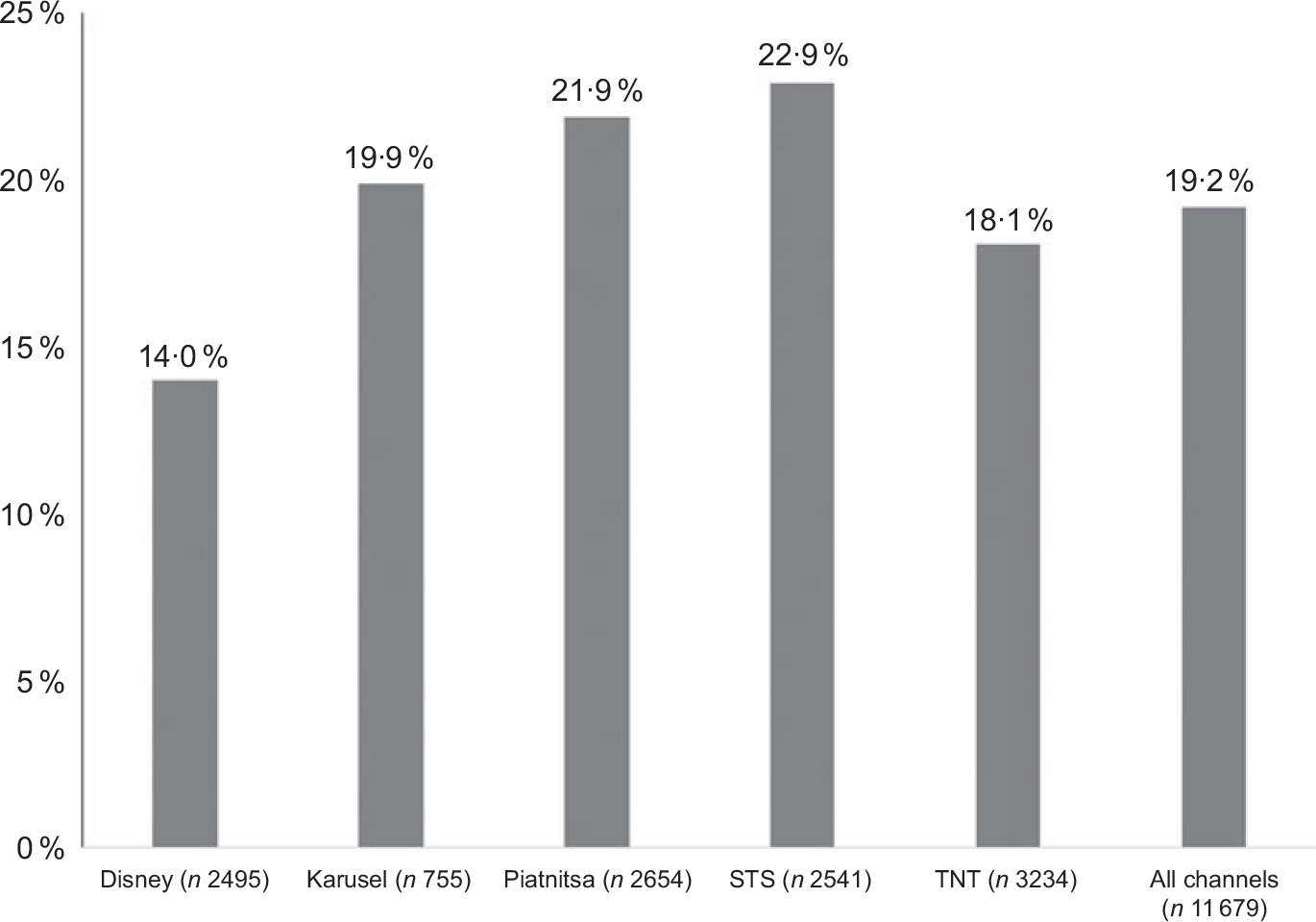
Overall, 11 678 advertisements were coded. The most frequent product type advertised was food and beverages (n 2247, 19·2 %) across all TV channels (Fig. 1 and online Supplemental Table 1), with proportions ranging from 14·0 % (n 349) of all ads (Disney) to 22·9 % (n 583) of all ads (STS). The second most frequently advertised category overall was pharmaceuticals (n 1985, 17·0 %).
Proportion of total advertisements that promoted food and drinks overall and by channel
There were no differences in number or proportion of advertisement types between weekdays and weekends, and therefore all subsequent analyses combined weekend and weekday data together.
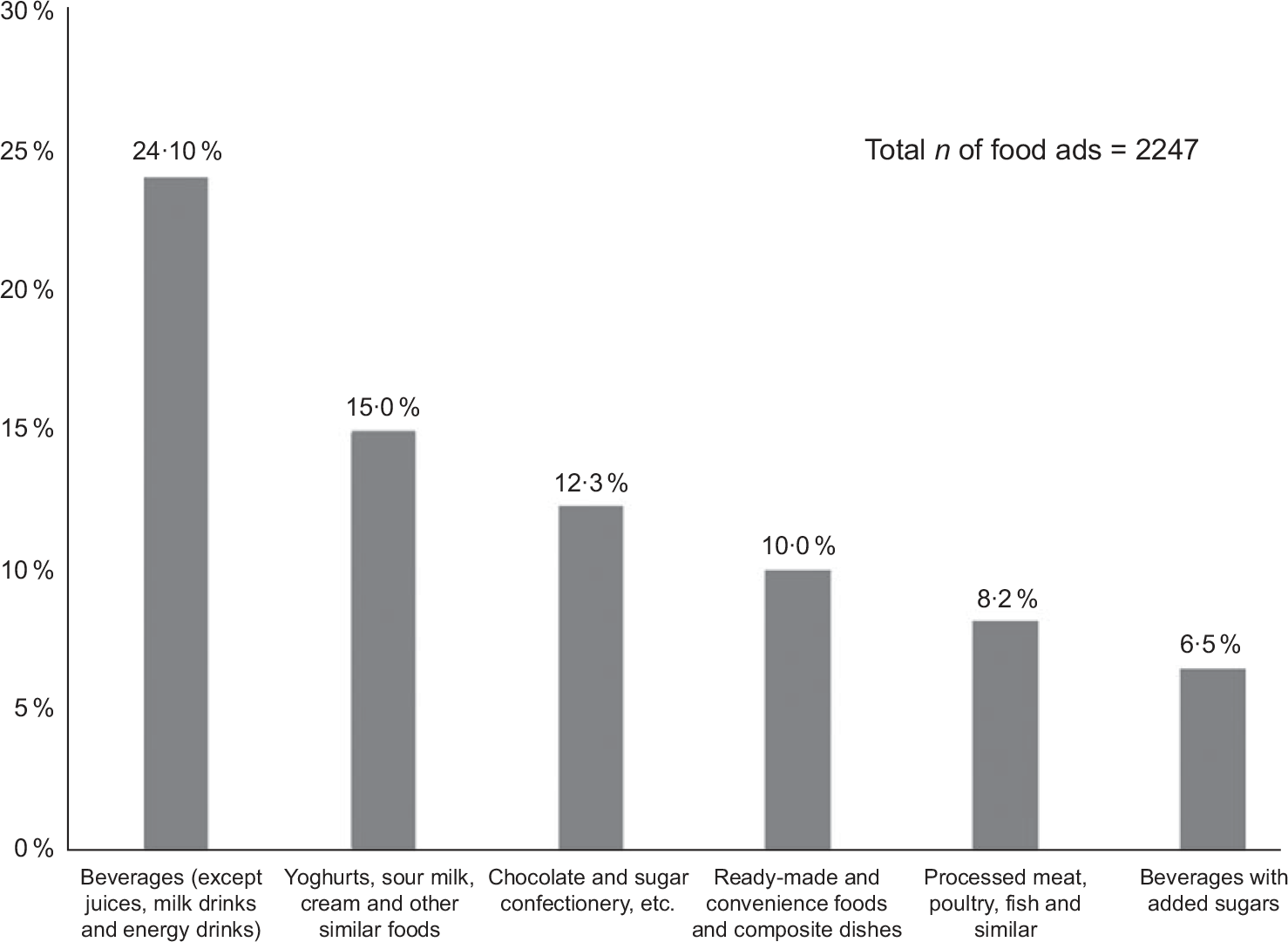
Across all TV channels, the most common food categories advertised were: beverages (n 541, 24,1 %), yoghurts, sour milk, cream and other similar foods (n 338, 15·0 % of total foods ads); chocolate and sugar confectionery (n 277, 12·3 %); ready-made and convenience foods and composite dishes (n 225, 10 %); and processed meat, poultry, fish and similar (n 185, 8·2 %) (Fig. 2 and online Supplemental Table 2). The proportion of sugary drink advertisements was 6·5 % (n 146). Child-oriented channels Disney and Karusel had a relatively higher proportion of advertisements for chocolate and sugar confectionery, juices and yoghurts compared with the three other channels (online Supplemental Table 2). The three adolescent-oriented channels advertised non-alcoholic beer, energy drinks and ready-made and convenience foods and composite dishes, which were not advertised on children channels at all.
Six most advertised food categories
Nutrient profile of advertised foods
Most of the food and beverages advertised (n 1443, 64·2 %) should not be permitted to be advertised to children according to the WHO NPM, with only 17·3 % (n 389) permitted. It was necessary to obtain the additional nutrition information for 72·8 % (n 1637) of food advertisements. A lack of nutrition information meant that 18·5 % (n 415) of food advertisements could not be evaluated according to the WHO NPM (online Supplemental Table 3) and were therefore coded as ‘unknown’. Of the food advertisements whose healthfulness could not be assessed (n 415), the most frequent food categories were yoghurt, soul milk and cream (n 150; 36 % of all unclassified ads), processed meat (n 65, 15·7 %) and beverages (n 58, 14·0 %). For the yoghurts and other beverages, lack of data on the amount of total sugar was the main reason for being classified as ‘unknown’ in relation to the NPM; for processed meat, it was an absence of the amount of salt in the product. The proportion of food advertisements not permitted did not vary substantially across the different TV channels (range of 59–64 %, see Fig. 3). The proportion of advertisements for products permitted to be advertised to children varied more and was highest on the Piatnitsa channel (an adolescent-oriented channel).
The proportion of food advertisements per channel classified as permitted or not permitted for advertising to children according to the WHO Nutrient Profile Model for Europe.  , Not permitted;
  , permitted;
  , could not be evaluated

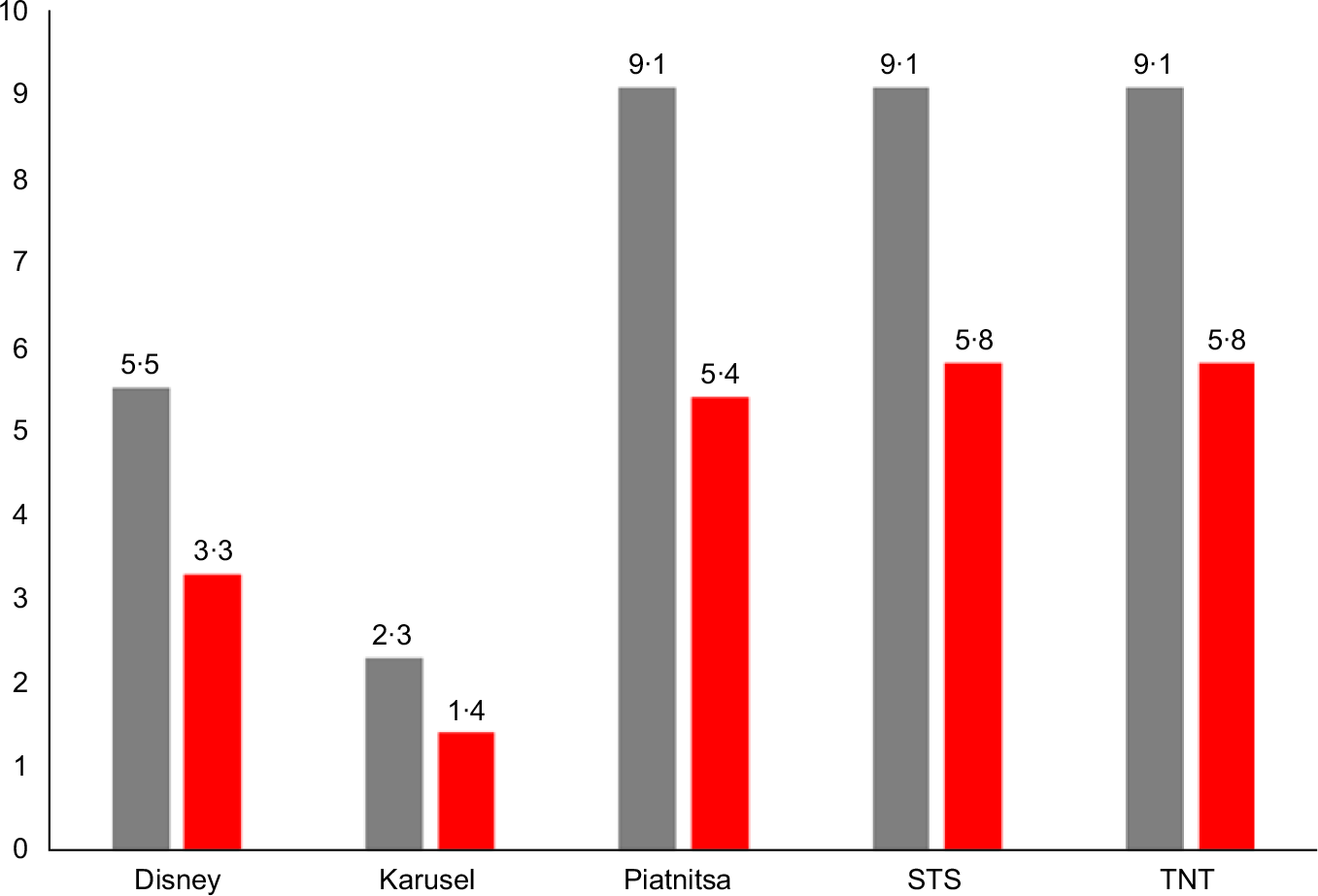
The mean rate of food advertisements (mean number of advertisements per hour) varied between 2·30 (Karusel) and 9·1 per hour (Karusel, Piatnitsa, STS and TNT) (Fig. 4). The rate of advertisements for foods not permitted to be advertised to children according to the NPM ranged from 1·4 (Karusel) to 5·8/h (STS and TNT).
The mean number of food advertisements (including not permitted) per hour by channel.  , All products; , products not permitted for advertisement according to WHO
The use of promotional techniques
The most frequent persuasive appeals in all food advertisements were health (n 366, 16·3 %), enjoyment/satisfaction (n 264, 11·7 %) and low price (n 254, 11·3 %) (online Supplemental Table 4). Online Supplemental Tables 5 and 6 contains detailed information about the primary persuasive appeal used for advertising non-permitted and permitted products by channel. The most frequently used primary persuasive appeal among the not permitted food advertisements was low price (n 250, 17·3 %), novelty (n 162, 11·2 %) and enjoyment/satisfaction (n 145, 10·0 %) (Fig. 5). In 9·1 % (n 131) of not permitted food advertisements, the primary persuasive appeal was health (online Supplemental Table 5). The most frequent primary persuasive appeals for permitted advertisements were enjoyment/satisfaction (n 83, 21·3 %), health (n 81, 20·8 %) and taste (n 71, 18·3 %) (Fig. 5 and online Supplemental Table 6).
Primary persuasive appeal used in food advertisements classified as permitted and not permitted for advertising to children according to the WHO Nutrient Profile Model for Europe. , Permitted (n 389); , not permitted (n 1443)

Public service announcements
No public service announcement was identified on any of the channels (online Supplemental Table 1).
Discussion
This study is the first to report empirical data on the frequency, healthfulness and promotional techniques of food advertising to which children and adolescents in the Russian Federation are likely to be exposed. It is also the first study for any Commonwealth of Independent States country and therefore may be used to inform policy development across this region. No Commonwealth of Independent States country has regulations on food marketing for children, so many findings of the current study are applicable to the whole region, especially considering that many Russian TV channels are broadcasted in these countries. Furthermore, it is the first study to have used the WHO monitoring tool and therefore provides a useful reference point for other Member States in their gathering of evidence to inform food marketing policy.
We analysed 320 h of TV broadcasting, during which time there were 11 678 advertisements. Of these, 19·2 % were for food and drinks. This is consistent with the proportion of food advertising found in previous studies in Germany (18·5 %)(Reference Effertz and Wilcke18), lower than in Australia and China (both 25 %)(Reference Kelly, Hattersley and King21,Reference Li, Wang and Cheng22) and much higher than in the UK (12·8 %, the statutory regulation was partly implemented when this study was conducted)(Reference Boyland, Harrold and Kirkham20).
Of the food and drink advertisements, yoghurts, sour milk, cream and other similar foods were the most frequently advertised item on child-oriented channels (30·1 % of all food advertisements on Disney channel and 32·0 % on Karusel). These products were also found to be the most frequently advertised to children in China(Reference Kelly, Halford and Boyland4). Beverages (except juices, milk drinks and energy drinks), and chocolate and confectionery were the next most advertised product types on these channels in the current study, and this is consistent with findings from many other countries(Reference Kelly, Halford and Boyland4).
A substantial proportion of the food advertisements (64·2 %) were for products that would not be permitted to be advertised to children according to the WHO NPM. Given that this study assessed the television channels that are most popular with these age groups, the findings suggest that children and adolescents in Russia are likely exposed to a high volume of unhealthy food advertisements when watching TV. In our sample, the healthfulness of 18·5 % of food advertisements could not be evaluated using the WHO NPM. The proportion of non-healthy food advertisements identified in this study is comparable to two studies from Germany, where the proportion was 73 % (with 6 % of foods unclassified)(Reference Effertz and Wilcke18) and 87 %(Reference Kelly, Halford and Boyland4), respectively. The figures are slightly higher than the proportions of non-healthy foods identified in studies from China (48 %)(Reference Li, Wang and Cheng22), Spain (54·9 %)(Reference Effertz and Wilcke18) and the UK (56 %)(Reference Boyland, Harrold and Kirkham20). However, it should be noted that some of these papers use slightly different systems for categorising foods, for example, using core and non-core groupings(Reference Boyland, Harrold and Kirkham20), and this may affect comparability of findings. In addition, some countries, like the UK, have regulations in place to restrict unhealthy food marketing to children(9).
For the channels that are more adolescent-oriented (Piantnitsa, TNT, STS), there was an average of 9·1 food advertisements per hour, of which 5·4–5·8 were for products not permitted to be advertised to children according to the WHO NPM. The rate of food advertisements on the other, more child-oriented channels was lower, with the lowest rate found on the Karusel channel. Thus, future policy measures should take into consideration the need to protect all children, including adolescents, from unhealthy food marketing. In China, the frequency of food advertisements was 6 per hour per channel, of which three advertisements were for unhealthy foods(Reference Li, Wang and Cheng22). Rates observed in the current study are comparable with those found for Germany (six non-core (unhealthy) food advertisements per hour), Greece and Spain (five non-core food advertisement per hour), and the US and Sweden (4 non-core food advertisement per hour)(Reference Kelly, Hattersley and King21).
The findings of the current study are a concern given the poor diet quality of young people in Russia(Reference Inchley, Currie and Jewell13), the growing obesity rates in this age group seen across the last decade(Reference Kartasheva, Polessky and Osipova24), and the evidence to support a causal link between unhealthy food advertising exposure and increased body weight in children(Reference Norman, Kelly and McMahon25). Although food marketing regulations often focus on the protection of younger children(9), with limited available data on the impact of food marketing exposure on eating behaviour in adolescents(Reference Boyland, Nolan and Kelly26), neurological, hormonal and social development factors may mean children of this age are uniquely vulnerable to food marketing despite growing cognitive ability(Reference Boyland and Tatlow-Golden27). These data therefore provide novel insight into potential exposure across both age groups and support increased regulation of unhealthy food advertising to all young people in Russia, not just young children.
The food advertisements analysed used a number of different types of persuasive appeals. The most frequently used appeals were low prices, product novelty and enjoyment. This differs from some previous studies, for example, one in Australia found that the advertisements most frequently used promotional characters and premium offers(Reference Kelly, Hattersley and King21). In 9·1 % of the advertisements for food not permitted to be advertised to children according to the WHO NPM, ‘health’ was used as a primary persuasive appeal, which may be considered as misleading for consumers. Recent work by other authors has discussed this ‘health halo’ surrounding food advertising(Reference Whalen, Harrold and Child28). The issue of misleading health (or product) claims is a separate point for legislation in this area, but these data highlight the need for clearly defined rules and regulations(9). Children and child-like characters were frequently used to advertise foods designated as ‘not permitted’ by the WHO NPM, for example, in promotions for cakes/sweet biscuits, juices and chocolate/sugar confectionery so it is clear that these promotions are targeting the attention and engagement of young people(Reference Jenkin, Madhvani and Signal29).
We did not find any social marketing in the analysed time periods. This does not exclude the possibility that social marketing was broadcasted at other times (e.g. after 10 pm at night), but based on these data, it seems that children and adolescents are unlikely to be exposed to such advertisements. Exposure to social marketing for positive dietary health behaviours, even at the 5 % rate, would be unlikely to sufficiently counteract the harmful effects of the high volume of unhealthy food and beverage advertising on health, but it is notable for policy deliberations that current regulations on social marketing do not appear to be adhered to. Policymakers should consider sanctions for non-compliance.
This study did not measure all aspects of food marketing on television, for example, programme sponsorship or product placement in children’s movies (which was shown recently to have significant effect on the children’s snack choices(Reference Brown, Matherne and Bulik30). In addition, for advertisements with multiple products, only the most prominent product was coded (except for quick service restaurants and takeaway meals with two or more items), potentially ignoring the presence of additional unhealthy products. Therefore, this study likely underestimated the frequency of unhealthy food marketing on examined channels. Future studies in the Russian Federation should seek to address these gaps and also consider the extent and nature of digital marketing to which children in this region are exposed. We also acknowledge the limitation that we did not calculate inter-coder reliability on a subsample of our advertisements but instead compared coding of 1 d of recordings and resolved discrepancies at the initial stage.
Current WHO recommendations on the marketing of foods and non-alcoholic beverages to children call for reductions in both the exposure of children to marketing and its power(10). Given that it is the actual exposure to the commercial content that is important to impact, rather than who the content is aimed at, the WHO recommendations emphasise the need to restrict food advertising not just on channels intended for children and adolescents (as studied here) but also around programming of more general appeal that is often watched by young people in substantial numbers. This study is an essential first step for evaluating the size of problem of food and drink advertising to children and informing appropriate policy actions in the Russian Federation. It also adds new evidence to inform policy deliberations in other member states of the European Region (particularly those neighbouring Russia) and contributes to the international debate about this global public health concern.
Conclusions
This first study of television advertising in Russia demonstrated that on the channels most popular with children and adolescents, there is a high volume of unhealthy food and drink advertising. This supports policy actions for the protection of the health of the young people in this region.
Key points
Marketing of unhealthy food is associated with increasing childhood obesity worldwide and, as such, is a critical public health issue.
This study is the first in the Russian Federation to analyse the food and drinks advertised on television popular with children and adolescents.
Young people in the Russian Federation are likely exposed to high volumes of unhealthy food advertisements in which persuasive appeals include promoting the novelty of the product and the potential enjoyment it offers.
Policymakers should consider steps to reduce this exposure and protect children from the negative impacts of unhealthy food advertising on eating behaviour and health.
Acknowledgements
Acknowledgements: Not applicable. Financial support: Funding for the work was kindly provided by the Government of the Russian Federation within the context of financial support to the WHO European Office for the Prevention and Control of Non-communicable Diseases. Conflict of interest: J.B. and J.M.J. are staff member(s) of the World Health Organization Regional Office for Europe. The authors are responsible for the views expressed in this publication, and they do not necessarily represent the decisions or stated policy of WHO. Authorship: J.B., J.M.J. and A.V.K. with input from all authors designed the research. A.E.I., Y.A.B. and A.V.K. conducted the study. A.E.I. performed the statistical analysis. A.V.K. wrote the first draft of the paper. All other authors provided comments on the drafts and approved the final paper. Ethics of human subject participation: Not applicable.
Supplementary material
For supplementary material accompanying this paper visit https://doi.org/10.1017/S1368980020000191


 Open access

