





Introduction
Childhood adversity, defined as exposure to negative environments during childhood or adolescence likely requiring adaptation by an average child (McLaughlin, Reference McLaughlin2016), confers vulnerability to negative health outcomes across the life span. For example, adolescents who have experienced childhood adversity – particularly threat-related forms such as psychological, physical, or sexual victimization (Lee et al., Reference Lee, Kitagawa, Mirhashem, Rodriguez, Hilerio and Bernard2025) – are at increased risk of developing internalizing psychopathology, including depression and depressive symptoms later in life (Clair et al., Reference Clair, Croudace, Dunn, Jones, Herbert and Goodyer2015; Dahl et al., Reference Dahl, Larsen, Petersen, Ubbesen, Mortensen, Munk-Olsen and Musliner2017; McLaughlin et al., Reference McLaughlin, Greif Green, Gruber, Sampson, Zaslavsky and Kessler2012). A key biological pathway proposed to underlie this association is altered regulation of the glucocorticoid hormone cortisol. Several models suggest that sustained or excessive adversity exposure may dysregulate cortisol secretion and downstream biological processes, which may, over time, contribute to negative health outcomes, such as depressive symptoms (Adam et al., Reference Adam, Quinn, Tavernier, McQuillan, Dahlke and Gilbert2017; McEwen, Reference McEwen1998; Miller et al., Reference Miller, Chen and Zhou2007). Despite ample theoretical and empirical research, the extent to which childhood adversity is linked to changes in diurnal cortisol patterns over time, and whether these changes, in turn, are associated with later increases in depressive symptoms, is largely unknown.
Childhood adversity and diurnal cortisol patterns
Cortisol is a key hormone released by the hypothalamic-pituitary-adrenal (HPA) axis in response to a range of physical and psychological stressors (Sapolsky et al., Reference Sapolsky, Romero and Munck2000). Often measured in saliva (Jessop & Turner-Cobb, Reference Jessop and Turner-Cobb2008), its secretion is regulated by the circadian rhythm of the suprachiasmatic nucleus (Clow et al., Reference Clow, Hucklebridge, Stalder, Evans and Thorn2010). In healthy populations, daily patterns of cortisol secretion are characterized by high levels at morning awakening, a marked surge within approximately 30 – 45 minutes post-waking (cortisol awakening response), and a gradual decline over the course of the day, reaching a nadir in the late evening (diurnal cortisol slope; Adam & Kumari, Reference Adam and Kumari2009; Pruessner et al., Reference Pruessner, Wolf, Hellhammer, Buske-Kirschbaum, von Auer, Jobst, Kaspers and Kirschbaum1997).
According to allostatic load models, chronic or excessive exposure to psychosocial stressors during early life (e.g., childhood adversity) requires frequent adjustment of biological stress response systems, such as the HPA axis (see Danese & McEwen, Reference Danese and McEwen2012; McEwen, Reference McEwen1998). Although these adjustments are presumed to be adaptive in the short term, over time, they may lead to biological or allostatic (over)load, reflected in profiles of hyper- or hypocortisolism. Yet, systematic reviews and meta-analyses have failed to find a consistent overall effect of childhood adversity on either the cortisol awakening response (CAR) or diurnal cortisol slope (DCS), owing to a large heterogeneity in research findings (Fogelman & Canli, Reference Fogelman and Canli2018; Perrone et al., Reference Perrone, Thorpe, Shariat Panahi, Kitagawa, Lindhiem and Bernard2023; Schär et al., Reference Schär, Mürner-Lavanchy, Schmidt, Koenig and Kaess2022).
Inconsistencies in prior work may in part be attributable to the broad range of adversities assessed. Theories such as the dimensional model of childhood adversity (McLaughlin & Sheridan, Reference McLaughlin and Sheridan2016) suggest that distinguishing between threat and deprivation or neglect can offer insights beyond cumulative models. For instance, childhood exposure to violence, but not social deprivation or poverty, has been linked to a blunted cortisol response to stress in youth (Busso et al., Reference Busso, McLaughlin and Sheridan2017; Peckins et al., Reference Peckins, Roberts, Hein, Hyde, Mitchell, Brooks-Gunn, McLanahan, Monk and Lopez-Duran2020), indicating a distinct neurobiological mechanism for threat-related adversity. Another reason for the mixed findings in prior research may be that indices of diurnal cortisol (e.g., CAR or DCS) have often been assessed at a single point in time, limiting our understanding of how childhood adversity is linked to changes in diurnal cortisol activity, particularly during early adolescence. As the HPA axis undergoes significant changes during adolescence (Shirtcliff et al., Reference Shirtcliff, Allison, Armstrong, Slattery, Kalin and Essex2012; Spear, Reference Spear2000; Stroud et al., Reference Stroud, Foster, Papandonatos, Handwerger, Granger, Kivlighan and Niaura2009), this period may be a critical window when the latent effects of prior victimization on diurnal cortisol patterns become evident (Adam et al., Reference Adam, Collier Villaume, Thomas, Doane, Grant, Crockett, Carlo and Schulenberg2023). These effects may contribute to the increased prevalence of psychological disorders, such as depression, observed in adolescence (Thapar et al., Reference Thapar, Collishaw, Pine and Thapar2012).
Only a few studies have examined the association between childhood adversity and within-person changes in diurnal cortisol during adolescence (e.g., Laurent et al., Reference Laurent, Gilliam, Bruce and Fisher2014; Leneman et al., Reference Leneman, Donzella, Desjardins, Miller and Gunnar2018; Shirtcliff et al., Reference Shirtcliff, Hanson, Ruttle, Smith and Pollak2024; Trickett et al., Reference Trickett, Noll, Susman, Shenk and Putnam2010). Highlighting the effects of threat-related adversity in particular, one prior study found that adolescents exposed to at least one lifetime incident of physical or sexual victimization were at increased risk of having blunted cortisol reactivity profiles to acute stress, both at the age of approximately 12 and 1.5 years later (Peckins et al., Reference Peckins, Susman, Negriff, Noll and Trickett2015). In another longitudinal study spanning 3 years, higher levels of current social stress predicted a stronger (steeper) CAR but a more blunted DCS, as all youths progressed through puberty (Reid et al., Reference Reid, DePasquale, Donzella, Leneman, Taylor and Gunnar2021). These findings contrast with those of another study, which found that experiences of abuse reported at baseline predicted a weaker CAR among girls 1 year after initial diurnal cortisol assessment (Sun et al., Reference Sun, Lunkenheimer and Lin2023). Additionally, this study observed a steeper DCS among abused girls, but not boys, at the 1-year follow-up, highlighting potential sex differences in the association between childhood adversity and diurnal cortisol.
Significant sex differences in HPA axis functioning may emerge during adolescence, especially in relation to the DCS (Hollanders et al., Reference Hollanders, van der Voorn, Rotteveel and Finken2017). Studies indicate that adolescent girls may exhibit a steeper DCS than boys (Adam et al., Reference Adam, Doane, Zinbarg, Mineka, Craske and Griffith2010; Fransson et al., Reference Fransson, Folkesson, Bergström, Östberg and Lindfors2014; Shirtcliff et al., Reference Shirtcliff, Allison, Armstrong, Slattery, Kalin and Essex2012), a pattern sometimes observable even before puberty (Rosmalen et al., Reference Rosmalen, Oldehinkel, Ormel, de Winter, Buitelaar and Verhulst2005). Theoretical frameworks emphasize the importance of examining sex differences in biological stress responses to adverse environments, suggesting that environmental challenges could accentuate these differences, with boys displaying more agonistic behaviors and girls becoming more withdrawn (Del Giudice et al., Reference Del Giudice, Ellis and Shirtcliff2011). A recent study found that associations between childhood adversity and stress responses were more pronounced in girls. Specifically, threat-related adversity was associated with increased perceived stressfulness of daily hassles in girls, which in turn predicted higher morning cortisol levels (LoPilato et al., Reference LoPilato, Addington, Bearden, Cadenhead, Cannon, Cornblatt, Mathalon, McGlashan, Perkins, Tsuang, Woods and Walker2020). These findings align with those of the previously discussed study, in which experiences of early abuse (i.e., threat-related adversity), but not neglect, were associated with a weaker CAR and steeper within-person changes in DCS in adolescent girls (Sun et al., Reference Sun, Lunkenheimer and Lin2023). As knowledge on the moderating effect of sex on physiological stress responses is still limited, further research is needed.
Diurnal cortisol and depressive symptoms
Central to the allostatic load model is the notion that the HPA axis, along with other physiological stress response systems, plays a critical role in increasing the risk of disease (McEwen, Reference McEwen1998). Disruption of the diurnal cortisol rhythm as a result of childhood adversity may impair the body’s ability to regulate stress, thereby heightening vulnerability to adverse health outcomes. Indeed, a stronger CAR has been linked to an elevated risk for major depressive disorder and depressive symptoms during late childhood and adolescence, both concurrently and prospectively (Adam et al., Reference Adam, Doane, Zinbarg, Mineka, Craske and Griffith2010; Dietrich et al., Reference Dietrich, Ormel, Buitelaar, Verhulst, Hoekstra and Hartman2013; Ulrike et al., Reference Ulrike, Reinhold and Dirk2013; Vrshek-Schallhorn et al., Reference Vrshek-Schallhorn, Doane, Mineka, Zinbarg, Craske and Adam2013; although see Carnegie et al., Reference Carnegie, Araya, Ben-Shlomo, Glover, O’Connor, O’Donnell, Pearson and Lewis2014; Dedovic & Ngiam, Reference Dedovic and Ngiam2015). Similarly, a flatter DCS has been associated with depression and depressive symptoms (Adam et al., Reference Adam, Quinn, Tavernier, McQuillan, Dahlke and Gilbert2017), with some, though inconsistent, evidence also indicating prospective associations (e.g., Adam et al., Reference Adam, Doane, Zinbarg, Mineka, Craske and Griffith2010; Carnegie et al., Reference Carnegie, Araya, Ben-Shlomo, Glover, O’Connor, O’Donnell, Pearson and Lewis2014; Shirtcliff & Essex, Reference Shirtcliff and Essex2008).
To the best of our knowledge, few longitudinal studies have directly examined the extent to which cortisol patterns may serve as a pathway linking exposure to childhood adversity to subsequent depressive symptoms. One study found that lower overall cortisol levels mediated the link between childhood adversity in late childhood and depressive symptoms in early adulthood (Iob et al., Reference Iob, Baldwin, Plomin and Steptoe2021). In this study, cortisol levels were averaged across measurements taken before and after a computer game task, making it difficult to determine how well these measures reflect typical cortisol levels. Nevertheless, similar findings emerged in another study, which showed that higher levels of childhood adversity among adolescent girls were associated with increased internalizing symptoms via lower levels of latent trait cortisol (Stroud et al., Reference Stroud, Chen, Doane and Granger2019). Importantly, neither of these studies examined cortisol over longer periods of time, limiting the ability to infer whether adversity can lead to cortisol changes. It also remains unexplored whether changes in CAR and DCS in particular, which capture key features of the diurnal cortisol rhythm, can serve as pathways linking childhood adversity to increased depressive symptoms among adolescent girls and boys.
The present study
With this study, we aimed to gain a deeper understanding of how childhood adversity can affect within-person changes in adolescents’ diurnal cortisol patterns and the extent to which these changes, in turn, predict later depressive symptoms. Specifically, we examined how adversity experienced before and during early adolescence may affect within-person changes in indices of diurnal cortisol (CAR and DCS) across two time points over 1 year. We focused on threat-related forms of adversity, given evidence that such exposures are more strongly associated with internalizing psychopathology than deprivation (Lee et al., Reference Lee, Kitagawa, Mirhashem, Rodriguez, Hilerio and Bernard2025). Based on the reviewed literature, we hypothesized that childhood adversity would predict within-person changes in CAR and DCS. However, given the mixed findings on the link between childhood adversity and diurnal cortisol, and the limited longitudinal research on cortisol changes during adolescence, we did not formulate a priori hypotheses regarding the specific direction of these associations (blunted or steeper CAR/DCS). We further hypothesized that the changes in CAR and DCS would positively predict depressive symptom changes over the following 1.5 years. The primary goal was to test a temporal sequence of events in which childhood adversity is followed by diurnal cortisol changes, which, in turn, predict depressive symptom changes. Given prior evidence of sex differences in the associations between childhood adversity and diurnal cortisol changes (Sun et al., Reference Sun, Lunkenheimer and Lin2023), and the higher prevalence of depressive symptoms among girls (e.g., Wang et al., Reference Wang, Kogler and Derntl2024), we also examined whether the associations between childhood adversity and the diurnal cortisol indices, as well as between the cortisol indices and depressive symptoms, varied by sex.
Prior work has highlighted the importance of the developmental timing of adversity exposure. For example, exposure to adversity during childhood may relate differently to changes in CAR and DCS than adversity experienced more proximally during the adolescent years (Bosch et al., Reference Bosch, Riese, Reijneveld, Bakker, Verhulst, Ormel and Oldehinkel2012; Roberts & Lopez-Duran, Reference Roberts and Lopez-Duran2019). Therefore, in secondary, exploratory analyses, we examined whether adversity reflecting lifetime experiences (i.e., prior adversity) was differently associated with diurnal cortisol pattern changes and, within our broader framework, with depressive symptoms, compared to adversity experienced more proximally in the past six months (i.e., concurrent adversity).
Method
Participants
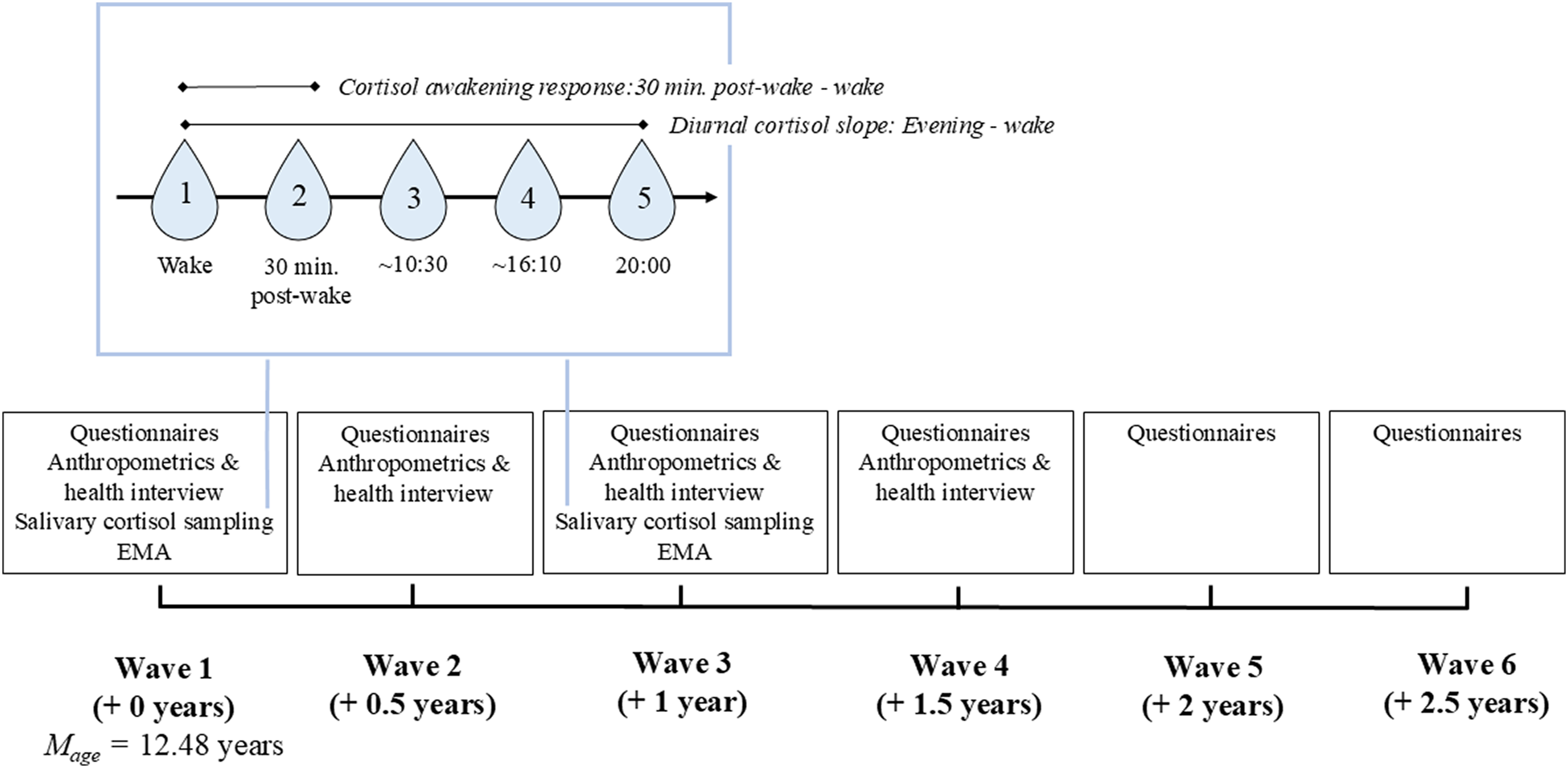
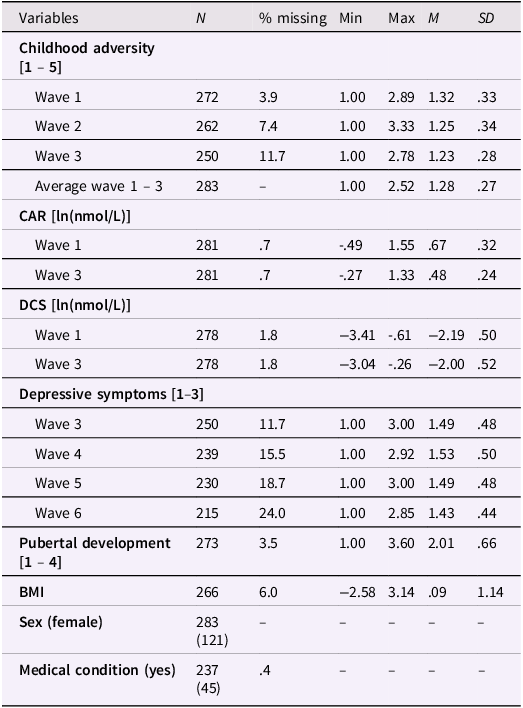
Data were drawn from a larger longitudinal project examining the impact of adversity on psychological and biological health indices among secondary school students in Belgium (Outside-In). A detailed description of the recruitment procedures is provided in the Supporting Information (Appendix S1). In the overall project, six assessments took place at 6-month intervals over 2.5 years (see Figure 1), starting at the beginning of the first year of secondary school. Participants were included in the present study if CAR or DCS could be calculated for at least one of the two waves in which cortisol data were collected. In line with recommendations (Stalder et al., Reference Stalder, Kirschbaum, Kudielka, Adam, Pruessner, Wüst, Dockray, Smyth, Evans, Hellhammer, Miller, Wetherell, Lupien and Clow2016), CAR and DCS were calculated excluding non-compliant cortisol samples based on self-reports. Non-compliance was defined as first morning samples collected more than 15 minutes after waking (6.7%) and second morning samples collected more than 7.5 minutes earlier or later than the requested time (14.6%). This resulted in a final analytic sample of 283 participants. Detailed information about retention rates and missing data for key variables is provided in Table 1 as well as in the Supporting Information (Appendix S2).
Overview of study procedures. Note. Abbreviation: EMA = ecological momentary assessments. For reasons of clarity, only procedures directly relevant to the present study are shown.
Descriptive statistics for study variables
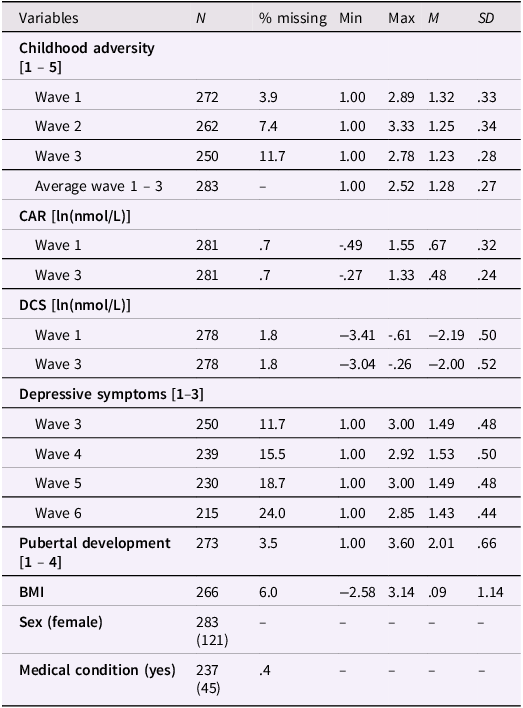
Note. Abbreviations: BMI = body mass index; CAR = cortisol awakening response; DCS = diurnal cortisol slope.
Descriptive statistics are provided for the final computed variables, as detailed in the Method section. Values in brackets indicate measurement units or possible score ranges.
In the current study, ≥ 15.8% of participants met the cut-off for clinical depression across waves (Thabrew et al., Reference Thabrew, Stasiak, Bavin, Frampton and Merry2018). Pubertal development and BMI values (z-scores, standardized for age and sex; < −3, severe thinness; −3 to −2, thinness; 0, normal; 0 to 1, overweight; > 2, obesity; WHO) were based on wave 1 measures; medical condition was based on assessments across the first three waves.
At baseline, participants were between 11 and 14 years old (M = 12.48 years; SD = 0.39; 42.8% female), with 86.7% being 12 or 13 years of age. The majority of participants lived in two-parent households (73.5%) and identified as Belgian (87.6%), while a minority reported other European (1.8%), African (2.5%) or Asian (1.4%) origins, or indicated having a mixed ethnic background (6.7%). Participants’ socioeconomic status (SES) was generally high, as inferred from the highest education level of their parents (self-reported by N = 207); most parents had completed college/university education (80.2%), with a smaller proportion reporting secondary (19.3%), or primary school education as their highest education level (0.5%).
Procedure
At baseline, active parental consent was obtained for all prospective participants. Participating adolescents provided written assent at the start of each wave of assessment. At each of the six waves, adolescents completed a battery of online questionnaires during school hours – including questions about childhood adversity and depressive symptoms – in rooms with 15 to 20 participants. In waves 1 to 4, the questionnaires were followed by individual measurements of each participant’s height and weight (i.e., anthropometric measures) and a semi-structured health interview. During waves 1 and 3, a subsample of participants was invited to take part in a sub-study involving salivary cortisol sample collections and ecological momentary assessments (EMA), scheduled to start on a school day Monday approximately 1 to 2 weeks after the main assessments (see Figure 1). The present study used childhood adversity data collected during the first three waves, cortisol data from waves 1 and 3, and depressive symptoms data from waves 3 to 6 to examine cortisol changes as a pathway and establish a temporal sequence of events.
Participants in the sub-study collected passive drool saliva samples five times daily for four consecutive days for the assessment of cortisol levels. They were asked to collect their saliva immediately after waking up, 30 minutes later, during the first morning break (around 10:30), at the end of the school day (around 16:10), and around 20:00 in the evening. Participants were instructed to avoid brushing their teeth, eating, or drinking one hour before each saliva sample collection. During school hours, research assistants supervised the collection process of the third and fourth saliva samples, and provided participants with “salivary kits” for subsequent unsupervised sample collections. These kits included cryovials marked with the time and minimum volume for collection (i.e., 0.5 ml), and straws to facilitate passive drool collection into the vials. Timed text messages and a phone app (m-Path, https://m-path.io/landing/) for EMA were used for collection reminders, to gather data relevant to the collection process (e.g., waking and collection times), and to assess affective processes that are beyond the scope of the present study.
At the end of each wave, adolescents received 10€ vouchers for participating in the main study procedures, including the online questionnaires, anthropometric measures and health interview. Participants involved in the sub-study received up to 15€ vouchers for handing in at least 75% of the saliva samples, and vouchers worth up to 20€ if they had filled in the EMA questionnaires at least 70% of the time. The study received approval from the medical ethics committee of Ghent University Hospital (BC09559).
Measures
Childhood adversity (Waves 1 – 3)
Exposure to childhood adversity was measured using a nine-item version of three subscales of the reduced Juvenile Victimization Questionnaire (JVQ-R2; Finkelhor et al., Reference Finkelhor, Hamby, Turner and Ormrod2011). Three items each tapped into participants’ exposure to three types of threat-related adversity: conventional crime (e.g., “Did anyone hit or attack you on purpose with an object or weapon?”), psychological and sexual victimization (e.g., “Did you get scared or feel very bad because adults in your life called you names, said mean things to you, or said they didn’t want you?”, “Did an adult you know touch your private parts when they shouldn’t have, make you touch their private parts, or force you to have sex?”), and witnessing and indirect victimization (e.g., “Did you see a parent get pushed, slapped, hit, punched, or beat up by another parent, or their boyfriend or girlfriend?”). In the first wave, participants reported their lifetime exposure to childhood adversity; in waves 2 and 3, they reported their respective experiences since the previous fall or summer vacation, covering a period of approximately six months. Modified response options were used, so that participants could rate each item on a 5-point Likert scale: 1 (never), 2 (once or twice), 3 (two or three times a month), 4 (about once a week), 5 (a few times a week). For each wave, childhood adversity scores were computed by averaging across all item responses, with higher scores indicating higher levels of childhood adversity. The final adversity score was computed as the average score across waves. Internal consistency for the childhood adversity measure at each wave was Cronbach’s α > 0.69, McDonald’s ω > 0.70.
Diurnal cortisol (Waves 1 & 3)
Participants gave their saliva samples to research assistants either on the same day or next day of collection (i.e., evening samples were stored in participants’ refrigerators overnight), which were then stored at −80°C for up to 6 months until analysis. Cortisol concentrations in saliva were assayed at Dresden LabService GmbH. After thawing, samples were centrifuged at 3,000 r.p.m. for five minutes, which resulted in a clear supernatant of low viscosity. Samples were then assayed using commercially available chemiluminescence immunoassays with high sensitivity (Tecan - IBL International, Hamburg, Germany; Catalogue No. R62111). A quarter of the samples were measured in duplicate. The intra- and inter-assay coefficients of variance for wave 1 were 7.7% and 4.1%, respectively. For wave 3, they were 2.7% and 2.8%, respectively.
For each wave, two indicators of diurnal cortisol activity were created, the CAR and DCS (see Figure 1). Given high skewness and kurtosis, cortisol values were first log- transformed (natural log) and then winsorized to be within 3 × the interquartile range.
Depressive symptoms (Waves 3 – 6)
Depressive symptoms were assessed using the Short Mood and Feelings Questionnaire (SMFQ; Angold et al., Reference Angold, Costello, Messer and Pickles1995), a widely used and validated screening tool for depressive symptoms in adolescents (e.g., Jarbin et al., Reference Jarbin, Ivarsson, Andersson, Bergman, Skarphedinsson and Montazeri2020; Thabrew et al., Reference Thabrew, Stasiak, Bavin, Frampton and Merry2018). Prior research has demonstrated good convergent validity with clinician-rated depression scales and high diagnostic accuracy for distinguishing between depressed and non-depressed youth (Thabrew et al., Reference Thabrew, Stasiak, Bavin, Frampton and Merry2018). Participants indicated their agreement with 13 items about their feelings and behavior over the past two weeks (e.g., “I cried a lot”) on a 3-point Likert scale ranging from 1 (not true) to 3 (usually true). A total depressive symptoms score was calculated for each wave of interest (waves 3 – 6) by averaging the item responses, with higher scores reflecting higher levels of depressive symptoms. Internal consistency at each wave was Cronbach’s α > 0.91, McDonald’s ω > 0.91.
Covariates
We included a number of covariates in the main analyses given their potential influence on cortisol levels and depressive symptoms (e.g., Abraham et al., Reference Abraham, Rubino, Sinaii, Ramsey and Nieman2013; Buske-Kirschbaum et al., Reference Buske-Kirschbaum, von Auer, Krieger, Weis, Rauh and Hellhammer2003; Kirschbaum et al., Reference Kirschbaum, Wüst and Hellhammer1992; Quevedo et al., Reference Quevedo, Johnson, Loman, LaFavor and Gunnar2012; Stumper & Alloy, Reference Stumper and Alloy2023; Wang et al., Reference Wang, Kogler and Derntl2024). These were participants’ sex, pubertal development and body mass index (BMI; adjusted for age and sex) at baseline, as well as medical condition (e.g., asthma) reported over the first three assessment waves. Additional information about the covariates is provided in the Supporting Information (Appendix S3).
Statistical analyses
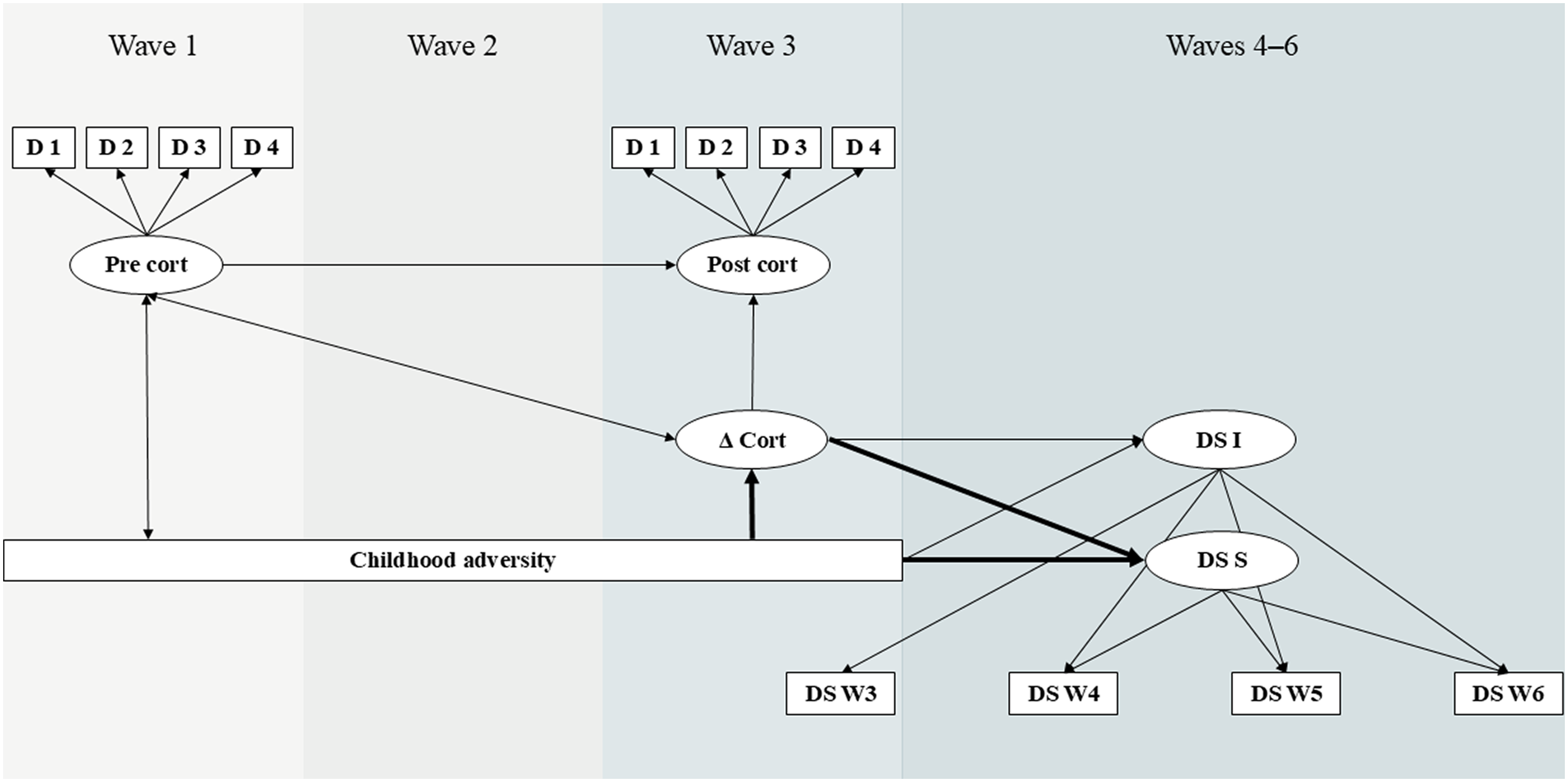
All main analyses were conducted in Mplus version 8.8 (Muthén & Muthén, Reference Muthén and Muthén1998 – 2017) using Structural Equation Modeling (SEM). First, we derived indicators of CAR and DCS for each day of saliva collection, calculated as the difference between the second and awakening samples for CAR, and between the evening and awakening samples for DCSFootnote 1 , similarly to previous studies (e.g., Reid et al., Reference Reid, DePasquale, Donzella, Leneman, Taylor and Gunnar2021; Sun et al., Reference Sun, Lunkenheimer and Lin2023). We then used these indices to construct latent change score models, from which we defined second-order latent residual change factors to capture within-person changes in CAR and DCS across the two waves. For a detailed description of the approach used, see the Supporting Information (Appendix S4 & Table S1).
To examine changes in depressive symptoms over time, we used latent growth curve modeling. Depressive symptoms reported at waves 3 to 6 were used to estimate latent growth factors representing average levels of depressive symptoms (i.e., intercept) and the average rate of change in depressive symptoms over time (i.e., slope). Variations between individuals were modeled using random effects around these latent growth factors. The unconditional growth model including a linear slope demonstrated good model fit (TLI and CFI = 0.97, RMSEA = 0.07, SRMR = 0.03).
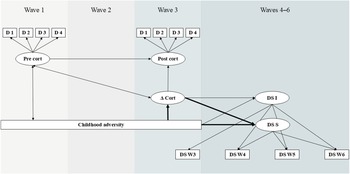
Lastly, the final CAR/DCS latent change score and depressive symptoms linear growth curve models were combined into conditional models to test the main study hypotheses. In these models, the CAR/DCS second-order latent residual change factors were regressed on childhood adversity to examine whether adolescents’ exposure to childhood adversity predicted within-person changes in CAR and DCS. Additionally, the intercept and slope of depressive symptoms were regressed on both childhood adversity and the CAR/DCS change factors to assess whether they predicted depressive symptom trajectories over time (see Figure 2). In separate models, we also examined the potential moderating role of sex by including interaction terms (childhood adversity × sex, CAR/DCS × sex). All models were first run with only the primary predictors, followed by the inclusion of covariates. Analyses used the complex option and full information maximum-likelihood (FIML) estimation with robust standard errors to account for the non-independence of observations and to handle missing data (see e.g., Ouellet-Morin et al., Reference Ouellet-Morin, Brendgen, Girard, Lupien, Dionne, Vitaro and Boivin2016).
Graphical overview of the final structural equation model. Note. Abbreviations: cort = cortisol; D1–4 = cortisol change scores for days 1 – 4, calculated as the difference between the second and awakening sample for the cortisol awakening response (CAR), and between the evening and awakening sample for the diurnal cortisol slope (DCS); DS = depressive symptoms; I = intercept; S = slope; W1–4 = waves 1 – 4; Δ = latent cortisol change score (CAR/DCS). The bold arrows indicate the primary associations of interest.
Results
Descriptive information for the main study variables is presented in Table 1. In wave 1, 78.7% of participants reported at least one instance of childhood adversity (conventional crime: 72.4%, psychological and sexual victimization: 36.4%, witnessing and indirect victimization: 34.6%). In wave 2, the proportion was 66.8% (conventional crime: 53.1%, psychological and sexual victimization: 33.2%, witnessing and indirect victimization: 26.7%), and in wave 3 it was 65.2% (conventional crime: 52.4%, psychological and sexual victimization: 39.2%, witnessing and indirect victimization: 28.8%). Bivariate correlations are provided in the Supporting Information (Table S2). Higher overall levels of childhood adversity were weakly correlated with more blunted DCS at both cortisol assessment waves (r = 0.14 – 0.19, ps < 0.05), and moderately correlated with higher depressive symptoms across waves (r = 0.32 – 0.37, ps < 0.001). The diurnal cortisol indices were moderately to highly stable over time (CAR: r = 0.59, DCS: r = 0.76, ps < 0.001) and correlated with each other at baseline (r = 0.24, p < 0.001). Average diurnal cortisol patterns across sampling days for each assessment wave showed the expected steep increase in cortisol levels 30 minutes after awakening, followed by a gradual decline throughout the day (see the Supporting Information, Figure S1).
The unconditional latent change score models for CAR and DCS indicated significant mean changes over time (CAR: b = 0.27, p = 0.01; DCS: b = −0.65, p = 0.04), as well as significant individual variability around those means (CAR: b = 0.13, p = 0.02; DCS: b = 0.33, p = 0.004). The unconditional latent growth curve model for depressive symptoms revealed a significant intercept (b = 1.51, p < 0.001) and a non-significant linear slope (b = −0.01, p = 0.23), indicating higher levels of depressive symptoms at wave 3 but no consistent linear change over time. However, significant variance around both the intercept (b = 0.17, p < 0.001) and the slope (b = 0.01, p = 0.02) suggested individual differences in depressive symptoms at wave 3 as well as in the change of depressive symptoms over time, providing a basis for further analyses.
All main analyses, whether conducted with or without covariates, produced broadly consistent resultsFootnote 2 . Consequently, we present only the findings from the final models including covariates in the main manuscript. Results from models without covariates are reported in the Supporting Information (Tables S3 & S4, and Appendices S5 & S6).
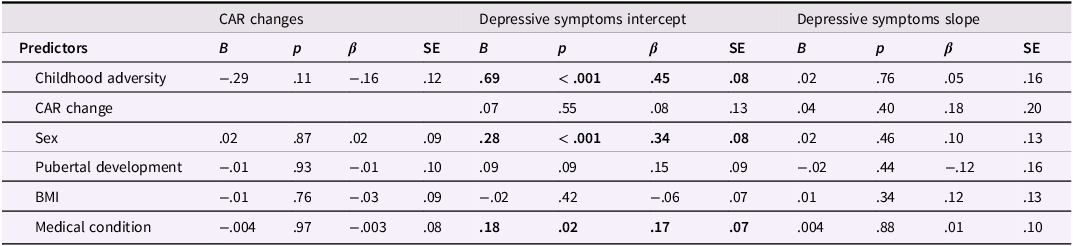
Cortisol awakening response changes
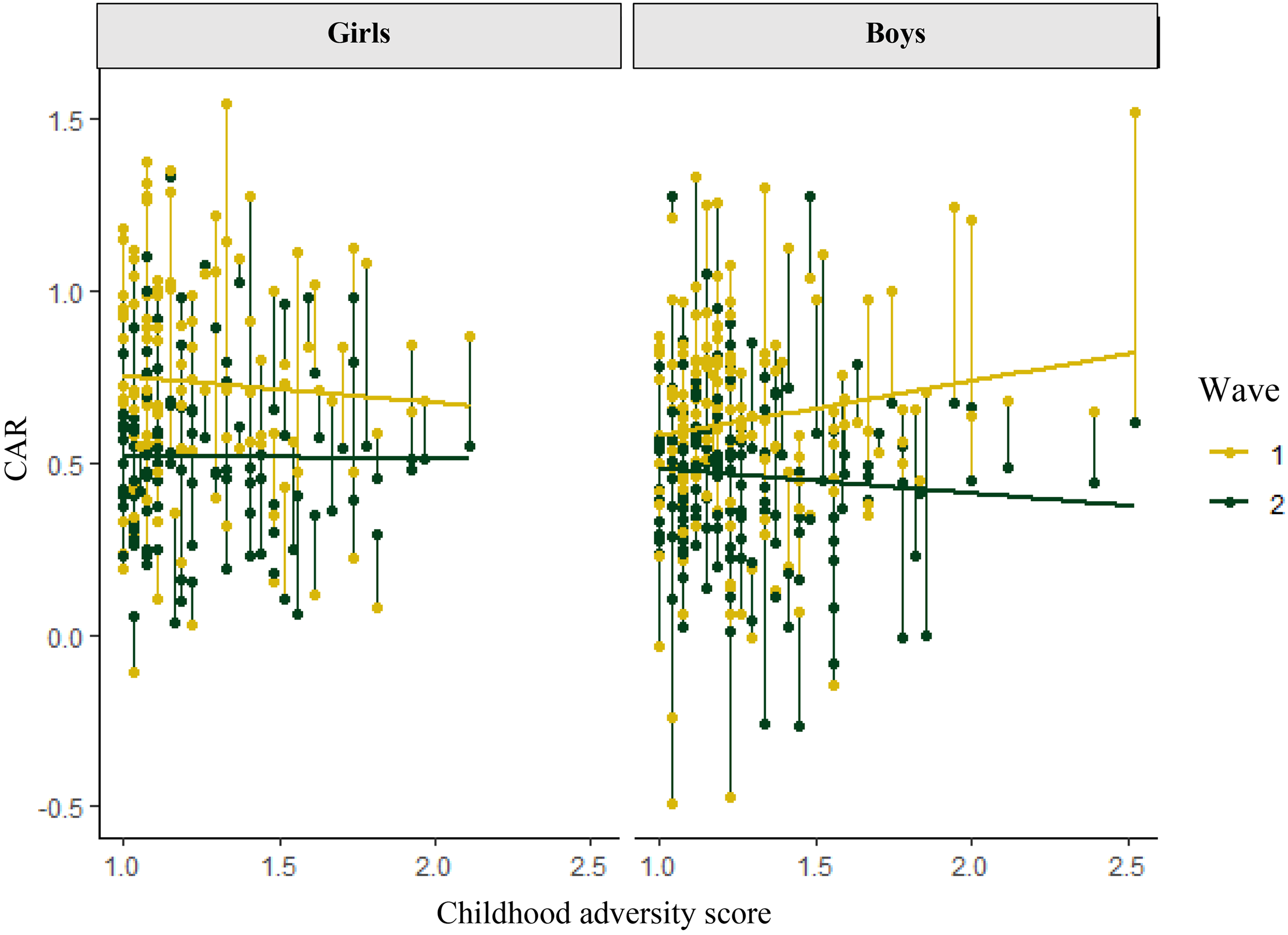
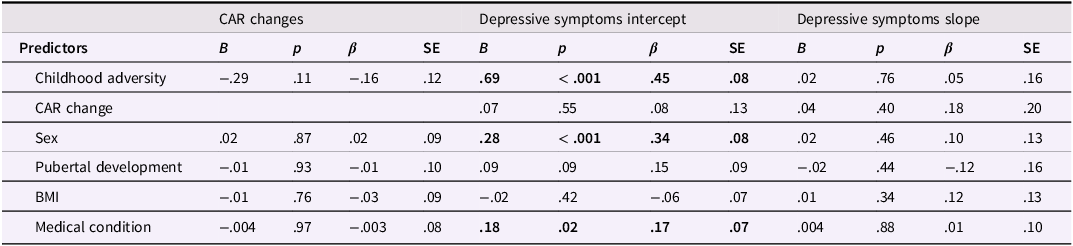
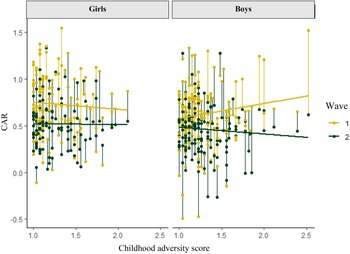
Table 2 shows the estimates for predictors of within-person changes in CAR across waves and subsequent depressive symptom changes. Results revealed no significant association between childhood adversity and CAR changes. However, the interaction between childhood adversity and sex significantly predicted CAR changes (b = 0.74, p = 0.04, β = 0.25). Follow-up analyses examining changes in CAR separately for girls and boys showed different diurnal cortisol pattern changes (girls: b = 0.13, p = 0.64, β = 0.08; boys: b = −0.49, p = 0.03, β = −0.28), indicating a significantly blunted, or weaker CAR across waves for victimized boys in particular (see Figure 3).
Associations between childhood adversity and cortisol awakening response changes over 1 year for girls and boys. Note. Abbreviation: CAR = cortisol awakening response. The figure shows the association between childhood adversity and CAR separately for each sex. CAR values are based on the calculations described in the statistical analyses section. Higher CAR values indicate a stronger CAR.
Estimates for predictors of cortisol awakening response changes over 1 year and subsequent depressive symptom changes over 1.5 Years (N = 281)
Note. Abbreviations: BMI = body mass index; CAR = cortisol awakening response.
As also shown in Table 2, childhood adversity significantly predicted the depressive symptoms intercept. However, this association was not significantly moderated by sex (b = 0.35, p = 0.20, β = 0.14). Likewise, CAR changes were not significantly associated with the depressive symptoms intercept, and sex did not significantly moderate this association (b = 0.40, p = 0.37, β = 0.21). Regarding the depressive symptoms linear slope, neither childhood adversity, the childhood adversity × sex interaction (b = −0.09, p = 0.44, β = −0.15), CAR, nor the CAR × sex interaction (b = 0.14, p = 0.19, β = 0.32), were significant predictors.
Diurnal cortisol slope changes
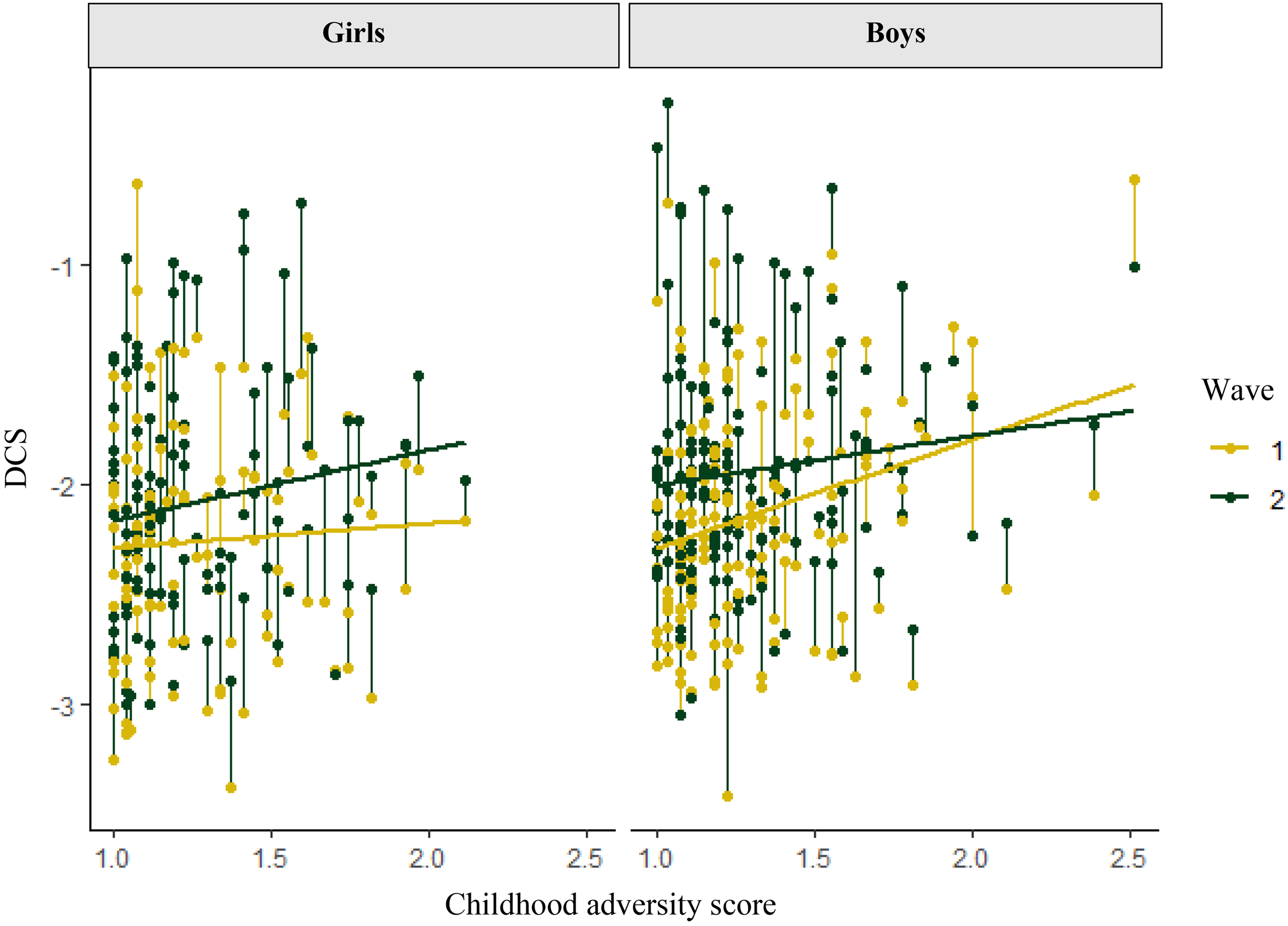
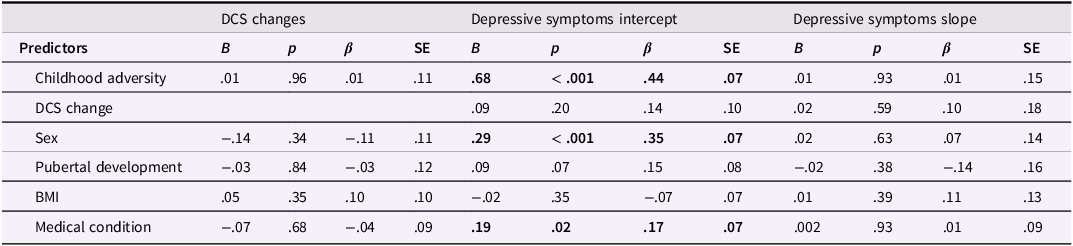
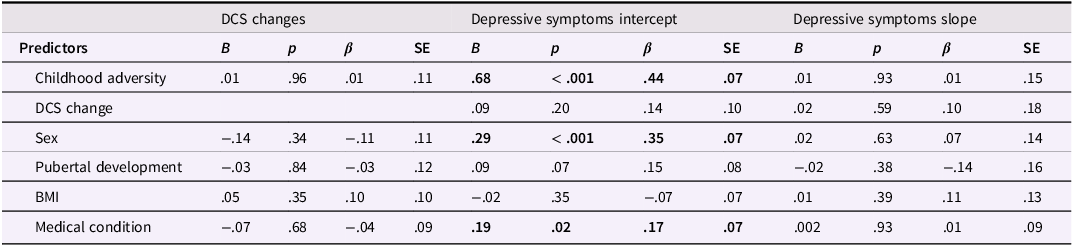
Estimates for the predictors of changes in DCS over waves and depressive symptom changes are shown in Table 3. While results indicated no significant direct link between childhood adversity and DCS changes, sex again emerged as a significant moderator of their association (b = 1.34, p = 0.01, β = 0.35), with different pattern changes for girls (b = 0.92, p = 0.03, β = 0.34) and boys (b = −0.43, p = 0.32, β = −0.19). These findings indicate a significantly blunted or flatter DCS over waves particularly among victimized adolescent girls (see Figure 4).
Associations between childhood adversity and diurnal cortisol slope changes over 1 year for girls and boys. Note. Abbreviation: DCS = diurnal cortisol slope. The figure shows the association between childhood adversity and DCS separately for each sex. DCS values are based on the calculations described in the Statistical analyses section. Higher DCS values indicate a less steep, or more blunted DCS.
Estimates for predictors of diurnal cortisol slope changes over 1 year and subsequent depressive symptom changes over 1.5 years (N = 278)
Note. Abbreviations: BMI = body mass index; DCS = diurnal cortisol slope.
Regarding depressive symptoms, DCS changes were not significantly associated with the depressive symptoms intercept (see Table 3), and sex did not moderate their association (b = 0.39, p = 0.12, β = 0.26). Similarly, neither DCS changes, nor the DCS changes × sex interaction (b = 0.09, p = 0.27, β = 0.27) significantly predicted the depressive symptoms slope. In summary, childhood adversity, but not changes in CAR or DCS predicted overall levels of depressive symptoms. Additionally, neither childhood adversity nor CAR or DCS changes predicted depressive symptom changes, and there was no evidence of sex differences in these associations.Footnote 3
Exploratory analyses
In secondary, exploratory analyses, we first examined whether adversity assessed at wave 1, reflecting lifetime experiences (i.e., prior adversity), was associated with CAR/DCS at baseline and predicted changes in CAR/DCS. In separate models, we then investigated whether adversity assessed during waves 2 and 3 (average across the two assessments), reflecting experiences over approximately the past six months (i.e., concurrent adversity), predicted changes in CAR/DCS above and beyond prior adversity. Additional models examined sex as a potential moderator. All analyses also included linear growth curve models for depressive symptoms.
Cortisol awakening response changes
Prior adversity (assessed during wave 1) was not significantly associated with CAR at baseline but predicted CAR changes (b = −0.32, p = 0.02, β = −0.22), indicating a weaker CAR over waves for adolescents with higher levels of prior victimization. This association remained significant after adding concurrent adversity (average across waves 2 & 3; correlated with prior adversity r = 0.58, p < .001) in the model (b = −0.40, p = 0.03, β = −0.27). Concurrent victimization, however, did not significantly predict CAR changes. Regarding sex differences, no evidence was found for a prior adversity × sex interaction in predicting changes in CAR, but there was a significant concurrent adversity × sex interaction (b = 0.75, p = 0.05, β = 0.26). Follow-up analyses revealed different, albeit statistically non-significant, CAR pattern changes for victimized girls (b = 0.54, p = 0.13, β = 0.37) and boys (b = −0.19, p = 0.39, β = −0.11).
Diurnal cortisol slope changes
Prior adversity was significantly associated with DCS at baseline (b = 0.05, p = 0.04, β = 0.22) but did not predict DCS changes, indicating a more blunted initial DCS among adolescents with higher levels of prior adversity. When concurrent adversity was included in the model, prior adversity remained significantly associated with DCS at baseline (b = 0.04, p = 0.04, β = 0.22). Additionally, in this model, both prior and concurrent adversity significantly predicted DCS changes (b = −0.51, p = 0.04, β = −0.27 and b = 0.59, p = 0.01, β = 0.26, respectively), suggesting a steeper DCS over waves for adolescents with higher levels of prior adversity, but a more blunted DCS over waves for adolescents with higher levels of concurrent adversity. No evidence was found for sex differences in these associationsFootnote 4 .
Associations with depressive symptoms
In both models including CAR or DCS changes, concurrent adversity significantly predicted the depressive symptoms intercept (bs ≥ 0.73, ps < 0.001, βs ≥ 0.50). No other significant associations were found.
Sensitivity analyses
In sensitivity analyses, we re-ran all analyses excluding cortisol samples from days on which participants reported taking glucocorticoid medication in the EMA questionnaires (n observations = 23), given the potential effects of such medication on cortisol levels (Granger et al., Reference Granger, Hibel, Fortunato and Kapelewski2009). Findings were largely consistent with those reported in the main and secondary analyses. Results of the sensitivity analyses for the main models are provided in the Supporting Information (Tables S6 & S7 and Appendices S7 & S8).
Discussion
Various theoretical frameworks suggest that dysregulated HPA axis functioning may serve as a biological pathway in the association between childhood adversity and depressive symptoms (see Koss & Gunnar, Reference Koss and Gunnar2018). Our findings provide some evidence for the hypothesized role of childhood adversity in affecting changes in both the CAR and DCS during early adolescence, and highlight sex differences in these associations. However, our results do not support the hypothesis that diurnal cortisol changes predict increases in later depressive symptoms.
Contrary to hypothesis, we did not find evidence that childhood adversity predicted CAR changes. However, secondary, exploratory analyses suggested that exposure to prior adversity in particular – defined as lifetime adversity reported prior to initial cortisol assessment – was associated with a more blunted, or weaker CAR over time. A blunted CAR may reflect conditions marked by severe, uncontrollable stress (Steptoe & Serwinski, Reference Steptoe and Serwinski2016). Alternatively, diurnal cortisol changes can be understood using the allostatic load or allostatic overload framework (McEwen, Reference McEwen1998). This framework posits that periods of increased challenge may initially elevate CAR, while severe or prolonged adversity may “wear and tear” the biological stress response, resulting in dysregulated HPA axis activity and a weaker CAR. This perspective aligns with our findings and with evidence from adult populations, where fatigue and post-traumatic stress were linked to lower levels of CAR (Boggero et al., Reference Boggero, Hostinar, Haak, Murphy and Segerstrom2017; Chida & Steptoe, Reference Chida and Steptoe2009).
Interestingly, prior research has shown a weaker CAR over time among disadvantaged adolescents exposed to high levels of early abuse, but only among abused girls, not boys (Sun et al., Reference Sun, Lunkenheimer and Lin2023). In contrast, our analyses indicated a weaker CAR only among boys in association with overall higher levels of adversity. This discrepancy in findings may stem from differences in how childhood adversity was measured. Our study considered both prior and concurrent exposure to psychological, physical, or sexual victimization, whereas the previous study assessed only prior abuse reported at baseline. Alternatively, differences in sample selection may explain the divergent results. Our study used a normative sample of European youths, while the prior study focused on disadvantaged Chinese girls and boys, who may differ in cultural norms surrounding stress, coping mechanisms, and social support systems (e.g., Mortenson et al., Reference Mortenson, Burleson, Feng and Liu2009). To better understand these disparate findings, future research should consider the precise timing of adversity in a diverse sample to gain clarity over its impact on changes in diurnal cortisol patterns.
Our study results also indicated that adolescent girls exposed to higher levels of adversity had a more blunted or flatter DCS over time. This observed sex difference contrasts with previous research showing that abused girls had a progressively steeper DCS (Sun et al., Reference Sun, Lunkenheimer and Lin2023). Notably, our secondary analyses suggest that the timing of stressor exposure may be an important determinant of DCS changes. Specifically, prior, lifetime victimization was associated with a more blunted baseline DCS but predicted a steeper DCS over time, whereas concurrent, adolescent victimization predicted a progressively more blunted DCS. These patterns may, in part, reflect statistical regression to the mean. Alternatively, the transition from a blunted to a steeper DCS following prior adversity may indicate HPA axis recalibration during adolescence (Quevedo et al., Reference Quevedo, Johnson, Loman, LaFavor and Gunnar2012), while the progressive blunting of DCS in response to concurrent adversity could reflect the cumulative burden of adversity. These results extend prior research by highlighting the distinct physiological impacts of concurrent versus past adversity and the importance of accounting for ongoing adversity in developmental studies. Given the exploratory nature of our analyses, replication is essential to confirm these associations and refine our understanding of sex-specific patterns in DCS trajectories in adolescence.
The present study additionally revealed higher levels of depressive symptoms among adolescents exposed to greater childhood adversity, particularly when the adversity was concurrent. However, contrary to hypothesis, neither childhood adversity nor diurnal cortisol changes predicted later depressive symptom trajectories. These results are surprising given prior longitudinal research identifying cortisol as a pathway linking adversity to internalizing symptoms, albeit with different diurnal cortisol indices (Iob et al., Reference Iob, Baldwin, Plomin and Steptoe2021; Stroud et al., Reference Stroud, Chen, Doane and Granger2019). However, they are consistent with a study using hair cortisol – which reflects longer-term cortisol accumulation than salivary cortisol – that similarly found no association between cortisol output and depressive symptoms (Doom et al., Reference Doom, Peckins, Hein, Dotterer, Mitchell, Lopez-Duran, Brooks-Gunn, McLanahan, Hyde, Abelson and Monk2022). Importantly, our study specifically examined whether changes in cortisol over time predicted depressive symptoms. It may be that prior findings reflect covariation rather than causal associations between adversity, cortisol, and depressive symptoms. Alternatively, cortisol levels might moderate, rather than mediate, the association between childhood adversity and depressive symptoms (Jopling & LeMoult, Reference Jopling and LeMoult2023). This aligns with the diathesis-stress model (Monroe & Simons, Reference Monroe and Simons1991), which suggests that adversity has a stronger impact on health outcomes for particularly vulnerable individuals (e.g., genetically). Future research should explore how different cortisol indices and long-term changes in these indices relate to mental health trajectories. Given the heterogeneity of depression and prior evidence linking somatic symptoms – more so than cognitive-affective symptoms – to biological processes, including cortisol levels (Iob et al., Reference Iob, Kirschbaum and Steptoe2020), future research would benefit from using multidimensional assessments of depressive symptoms to examine whether changes in diurnal cortisol patterns are differentially associated with somatic or cognitive-affective symptoms. Furthermore, examining potential moderating factors, such as genetic predispositions and other markers of vulnerability (e.g., environmental, rejection sensitivity, emotion regulation), could provide deeper insights into how childhood adversity shapes mental health.
Limitations and conclusion
This study has several limitations. First, our adversity measure focused on event frequency but did not directly assess the severity of these events, a factor that could significantly influence the relationship between childhood adversity and diurnal cortisol. Second, our adversity measure included only threat-related forms of adversity, not deprivation. Therefore, we were unable to examine potentially divergent associations. Third, we did not use objective measures for saliva sample collection times, relying instead on participants’ self-reports, which were incomplete for some adolescents. While aggregating samples over multiple days may have mitigated this limitation (Segerstrom & Boggero, Reference Segerstrom and Boggero2020), future studies should consider using objective verification methods, such as electronic monitors or time-stamped photos (Stalder et al., Reference Stalder, Lupien, Kudielka, Adam, Pruessner, Wüst, Dockray, Smyth, Evans, Kirschbaum, Miller, Wetherell, Finke, Klucken and Clow2022), to ensure accurate sampling times. Fourth, only a subset of the salivary cortisol samples (∼25%) were assayed in duplicate. Although prior research suggests that measurement error in salivary cortisol analysis is generally minimal in established laboratories (Calvi et al., Reference Calvi, Chen, Benson, Brindle, Bristow, De, Entringer, Findlay, Heim, Hodges, Klawitter, Lupien, Rus, Tiemensma, Verlezza, Walker and Granger2017), the lack of duplicate assays for all samples may still have increased the potential for measurement error in the cortisol data. Fifth, our assessment of cortisol changes spanned only two time points within a one-year period. Extending the observation period to include multiple waves could provide a clearer understanding of how adversity impacts HPA axis activity over time and how this relates to depressive symptoms. Finally, the sample used in this study was a convenience sample recruited from secondary schools in Belgium, which limits the generalizability of our findings to broader populations. To increase generalizability, future research should aim to replicate these results in more diverse samples, including participants from different countries, socioeconomic backgrounds, and educational contexts.
Despite these limitations, the present study expands on the limited body of longitudinal research examining changes in diurnal cortisol patterns over time and contributes to growing evidence that early adverse experiences, such as psychological, physical, and sexual victimization, can recalibrate the body’s stress response system. Our findings highlight the impact of childhood adversity on the CAR and DCS in early adolescence and underscore the importance of sex-sensitive approaches in stress research. Future research examining the precise timing of adversity and exploring the relationship between childhood adversity, diurnal cortisol pattern changes, and mental health trajectories over longer periods may help inform strategies to support resilience and well-being in victimized adolescents.
Supplementary material
The supplementary material for this article can be found at https://doi.org/10.1017/S0954579425100916.
Data availability
The data and code necessary to reproduce the main analyses presented here are available on the Open Science Framework (OSF; https://doi.org/10.17605/OSF.IO/V2UR3). Analyses were not pre-registered.
Funding statement
This project has received funding from the European Research Council (ERC) under the European Union’s Horizon 2020 research and innovation program (Grant agreement No. 853517).
Competing interests
The authors report no conflicts of interest.




 Open access

