


The Middle East and North Africa region is characterized by high vulnerability to food insecurity, a factor postulated to play a key role in fomenting the ‘Arab Spring’( Reference Zurayk 1 ). The World Bank has estimated that 5% of the Middle Eastern and North African population is below the lowest poverty line of $US 1·25/d and suffers from numerous forms of deprivation, including malnutrition( Reference Ivanic and Martin 2 ). Food security in the region is further threatened by challenged agricultural production, high dependence on imports, low levels of regional economic integration and high income inequalities. These factors are exacerbated by the continuing domestic and regional instability, violence, civil and military conflicts. The World Food Summit (Rome, 1996) highlighted that ‘a peaceful, stable and enabling political, social and economic environment is the essential foundation which will enable States to give adequate priority to food security and poverty eradication’( 3 ). Lebanon is one of the Middle Eastern countries that has witnessed and is still witnessing a state of continuous political turmoil, which may affect food security through the disruption of access to markets, the increase in prices, and the increase in displacement and refugee migration( 4 ). Food insecurity in Lebanon and the Middle East has essentially been described as a ‘rural phenomenon’, owing to constraints on landholdings, production quality and access to markets( 4 , 5 ).
This high vulnerability to food insecurity underscores the need for tailoring specific interventions to high-risk population groups, for the development of efficient evaluation systems of national food policies and for effective monitoring of food insecurity in response to changes in environmental/economic conditions( Reference Hadley and Maes 6 – Reference Frongillo 8 ). In many countries of this region, the scarcity of such interventions and policies is attributed in part to the lack of culture-specific tools to assess food insecurity( Reference Melgar-Quinonez and Hackett 9 ). Recent evidence highlights promising potentials in food access measurements, particularly with the development of simple household survey tools such as the Household Food Insecurity Access Scale (HFIAS)( Reference Barrett 10 – Reference Coates, Frongillo and Rogers 12 ), a nine-item measure of food access designed to be used cross-culturally. The HFIAS was developed by the US Agency for International Development-funded Food and Nutrition Technical Assistance Project( Reference Coates, Swindale and Bilinsky 13 ), and was reported as valid for the measurement of household food insecurity by several countries including Tanzania and Iran( Reference Mohammadi, Omidvar and Houshiar-Rad 14 , Reference Knueppel, Demment and Kaiser 15 ).
In response to the need for food insecurity assessment in countries of the Middle East, the present study aims to evaluate the validity and reliability of a locally adapted HFIAS to measure household food insecurity in rural Lebanon and to investigate the socio-economic characteristics associated with household food insecurity in the study sample.
Methodology
Study design and study participants
Data for the present study were collected as part of a cross-sectional survey aiming at assessing the nutritional status of mothers and young children (0–2 years old) in the Beqaa Valley area of Lebanon. The Beqaa Valley is the largest of the six governorates of Lebanon( 16 ) and is characterized by one of the highest poverty rates in the country (29 %), with extreme poverty reaching 11 %( 17 ). The Beqaa Valley also typifies a main aspect of rural Lebanon which is ‘dependence on agriculture’. According to the United Nations Environment Programme, ‘As in most developing countries, rural areas in Lebanon depend to a large extent on agriculture. In Lebanon, the Beqaa region has the largest area allocated for agriculture in terms of hectares’( 18 ).
From each of the five districts of the Beqaa Valley (kadaas), a random number of villages were selected. In each selected village, a convenience sampling approach was followed and was based on consecutive household sampling. The number of households selected from each district was proportional to its population size as estimated by the Central Administration of Statistics( 16 ). The household constituted the primary sampling unit. A household was considered eligible if it included a mother (aged 19–40 years) and a child younger than 2 years of age. The household was excluded if either the mother or the child had any chronic illness that may interfere with their eating patterns. When a mother had more than one child younger than 2 years, the eldest was chosen. Sample size calculation was based on a minimum number of subjects to variables ratio of 10:1 for factor analysis( Reference Garson 19 ). Out of 198 households approached, 150 participated in the study (response rate 75·8 %). The main reasons for refusal to participate were related to lack of time and interest in the study. The study was conducted according to the guidelines laid down by the Declaration of Helsinki and all procedures involving human subjects were approved by the Institutional Review Board at the American University of Beirut. Participants gave a written consent to take part in the study.
Data collection
Data collection took place between September 2011 and March 2012. Trained dietitians collected data through face-to-face interviews with the mother. The HFIAS was translated into Arabic and then modified through semi-structured interviews with a convenience sample of twenty women from the five kadaas of the Beqaa Valley to ensure its cultural adaptability. Consequently, a few modifications were introduced as follows:
-
1. The phrase ‘household member’ was replaced by ‘family member living with you at home’ because, in the local context, all those who reside in the same household are to be considered family.
-
2. ‘In your household’ was changed to ‘in your home’.
-
3. In question #9, ‘whole day and night’ was replaced by ‘twenty four hours’.
-
4. The word ‘available’ was added to the end of most questions to further clarify the concept of lack of food availability.
The Arabic version of the HFIAS was reviewed and approved by a panel of four experts in the fields of nutrition, food insecurity and social sciences. The recall period for the HFIAS was 4 weeks (30 d) and the HFIAS score was computed as per Coates et al. ( Reference Coates, Swindale and Bilinsky 13 ). Higher HFAIS scores indicated greater food insecurity levels. Another indicator of food insecurity used in the present study was the Household Food Insecurity Access Prevalence (HFIAP). Households were categorized into four levels of food insecurity (food secure, mildly insecure, moderately insecure and severely food insecure), depending on the number of affirmative responses to statements on more severe conditions and/or experiences( Reference Coates, Swindale and Bilinsky 13 ).
In order to evaluate the convergent validity of the HFIAS, basic sociodemographic information, anthropometric measurements of the mother and child, and dietary intake data of the child were obtained. Sociodemographic characteristics included: (i) age of the mother (in years); (ii) education level of the mother and father grouped as ‘no or primary education’ (<5 years of schooling), ‘intermediate’ (6–9 years), ‘high school’ (10–12 years) and ‘higher education’ (>12 years); (iii) working status of mother and father; (iv) number of cars; (v) number of electrical appliances in the house; (vi) monthly income; and (vii) crowding index (defined as the average number of people per room, excluding the kitchen and bathroom). Weight (mother and child) and height/length (mother/child) were obtained using standard protocols( 20 ). For the mother, BMI was interpreted according to the WHO criteria( 21 ). For the child, Z-scores for length-for-age, weight-for-age and weight-for-length were calculated according to the 2006 WHO Child Growth Standards, using the WHO ANTHRO software( 22 ). Dietary intake of the children was assessed using the multiple-pass 24 h dietary recall (with the mother as proxy). Dietary adequacy among children was assessed on the basis of two indicators: the Dietary Diversity Score (DDS) and the Meal Frequency Score (MFS). Both of these indicators were suggested by the WHO as reflective of infants’ and young children's dietary practices( 23 ). In order to establish test–retest reliability of the HFIAS, a sub-sample of fifty participants was selected at random to complete a second administration of the questionnaire three months after the first administration took place (forty-three completed; response rate 86·0 %).
Statistical analysis
Frequencies, means and standard deviations were used to describe characteristics of the study participants. Factor analysis with a varimax rotation was used to assess the construct validity of the HFIAS. Criterion validity was assessed using Pearson's correlation of HFIAS scores with various socio-economic characteristics, anthropometric measurements and dietary adequacy indices. Internal consistency was assessed using Cronbach's α. Test–retest reliability of the questionnaire was assessed using intra-class correlation (ICC). Statistical analyses were performed using the SPSS statistical software package version 17·0.
Results
Study participants' characteristics
Mothers’ average age was 30·4 (sd 6·1) years, with more than half of the mothers (55·3 %) reporting an education level of intermediate schooling or less (Table 1). Prevalence of maternal overweight and obesity were 36·0 % and 22·0 % respectively. Children's average age was 13·8 (sd 7·0) months, with 2·1 % of children being stunted, 29·5 % at risk of overweight, 10·1 % overweight and 2·7 % obese. No wasting was observed among infants in the study population. Minimum dietary diversity and minimum meal frequency were achieved by 46·8 % and 66·7 % of children, respectively (Table 1).
Family and household characteristics of study participants (n 150) from the rural area of the Beqaa Valley, Lebanon, September 2011–March 2012
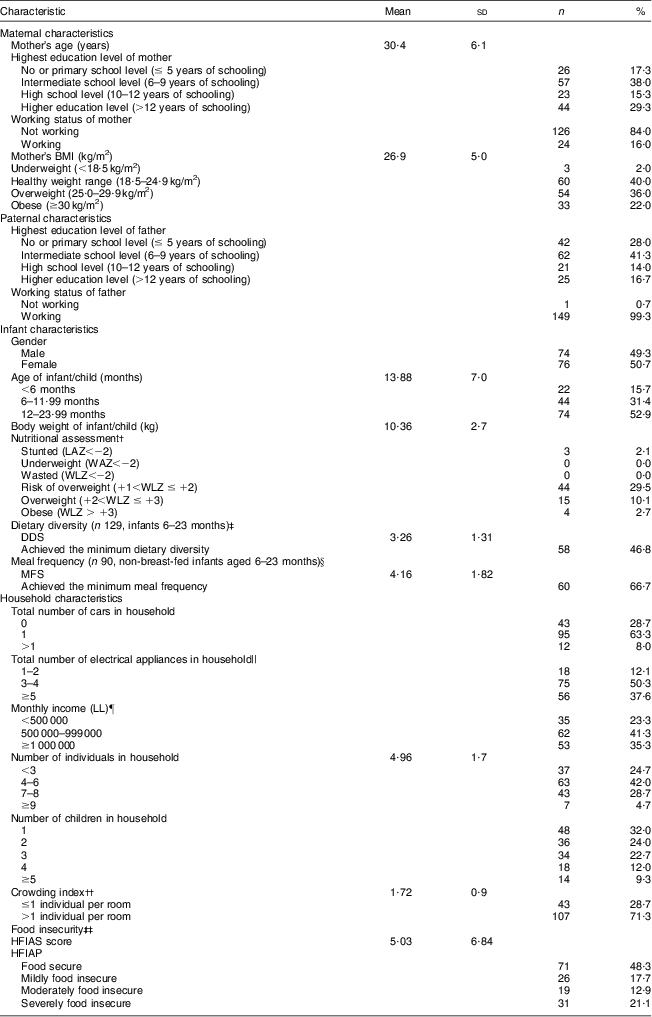
†Nutritional assessments: LAZ, length-for-age Z-score; WAZ, weight-for-age Z-score; WLZ, weight-for-length Z-score.
‡Dietary diversity: DDS, Dietary Diversity Score; minimum dietary diversity is the WHO indicator of the proportion of children 6–23 months of age who receive foods from four or more food groups during the previous day( 23 ).
§Meal frequency: MFS, Meal Frequency Score; minimum meal frequency is the WHO indicator of the proportion of non-breast-fed children 6–23 months of age who receive solid, semi-solid or soft foods (but also including milk feeds) the minimum number of times or more during the previous day (4 times for non-breast-fed infants aged 6–23 months)( 23 ).
||Total number of appliances is the sum of each affirmative response received for each item owned; items included refrigerator, stove, washing machine, microwave, air conditioner, DVD player and computer.
¶LL = Lebanese Lira (currency of Lebanon) whereby 1500 LL ≈ US$.
††Crowding index was defined as the average number of people per room, excluding the kitchen and bathroom.
‡‡Food insecurity: HFIAS, Household Food Insecurity Access Scale; HFIAP, Household Food Insecurity Access Prevalence.
Mean HFIAS score in the study population was 5·0 (sd 6·8). The households were grouped into four levels of food insecurity: food secure (n 71, 48·3 %); mildly food insecure (n 26, 17·7 %); moderately food insecure (n 19; 12·9 %); and severely food insecure (n 31, 21·1 %; Table 1).
As shown in Table 2, more respondents answered affirmatively to the questions indicating less severe food insecurity (such as not being able to eat the types of food they preferred) than to the questions indicating more severe food insecurity (such as going for 24 h without eating). In Table 3, principal component factor analysis of the HFIAS revealed two main factors which explained 38·3 % and 32·0 % of the total variance, respectively. The first factor included questions 1 to 4 and reflected ‘insufficient food quality’. The second factor featured questions 5 to 9 and reflected ‘insufficient food quantity’. Regarding convergent validity, the HFIAS score was significantly correlated with mother's and father's education levels (r = −0·47 and −0·22, respectively), number of household electrical appliances (r = −0·48), monthly income (r = −0·45), number of cars (r = −0·39) and crowding index (r = 0·30). While household food insecurity was significantly associated with lower weight-for-age (r = −0·25) and length-for-age (r = −0·30) among children, it was positively associated with mother's BMI (r = 0·17). Household food insecurity was inversely associated with DDS (r = −0·22) and MFS (r = −0·25; Table 4). The HFIAS and the two identified factors had high internal consistency, with corresponding Cronbach's α values of 0·91, 0·87 and 0·80. In behavioural research, Cronbach's α of 0·8 or greater is considered good( Reference Velásquez-Melendez, Schlüssel and Brito 24 ). As for the test–retest reliability, a significant positive correlation was noted between the HFIAS scores of the two administrations of the scale (ICC = 0·58), indicating moderate agreement, and 76 % of households were classified into the same (44 %), the upper adjacent (16 %) or the lower adjacent (16 %) category of food insecurity prevalence.
Responses to items on the Arabic version of the Household Food Insecurity Access Scale (HFIAS) among study participants (n 150) in the rural Beqaa Valley, Lebanon, September 2011–March 2012
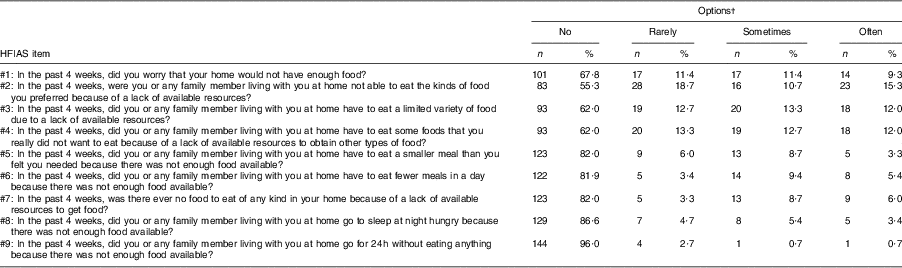
†Rarely, once or twice in the past 4 weeks; sometimes, three to ten times in the past 4 weeks; often, more than ten times in the past 4 weeks( Reference Knueppel, Demment and Kaiser 15 ).
Pearson correlation coefficients for the association of household characteristics, anthropometric measurements of the mother and child, and infant feeding indicators with food insecurity scores as measured by the Arabic version of the Household Food Insecurity Access Scale in the study population (n 150) from the rural area of the Beqaa Valley, Lebanon, September 2011–March 2012

*P < 0·05, **P < 0·01.
†Total number of appliances is the sum of each affirmative response received for each item owned; items included refrigerator, stove, washing machine, microwave, air conditioner, DVD player and computer.
‡LL = Lebanese Lira (currency of Lebanon) whereby 1500 LL ≈ US$ 1.
§Crowding index was defined as the average number of people per room, excluding the kitchen and bathroom.
||Nutritional assessments: WAZ, weight-for-age Z-score; LAZ, length-for-age Z-score; WLZ, weight-for-length Z-score.
¶Dietary diversity: DDS, Dietary Diversity Score.
††Meal frequency: MFS, Meal Frequency Score.
Discussion
Findings of the current study provide evidence for the validity and reliability of the Arabic version of the HFIAS to assess food insecurity in rural Lebanon.
The responses to the various items of the HFIAS showed a clear ascending gradient of food insecurity, with the item describing severe food insecurity receiving the most negative answers while the item related to food preference had the most affirmative answers. This gradient has been previously observed in rural areas and is suggestive of the progressive nature of food insecurity experienced by this population( Reference Knueppel, Demment and Kaiser 15 ).
Factor analysis revealed two main factors, ‘food quality’ and ‘food quantity’, which explained 70·3 % of the total variance. This percentage is similar in magnitude to what has been reported in others studies( Reference Knueppel, Demment and Kaiser 15 ). While the HFIAS was originally structured to capture three different domains of food insecurity( Reference Coates, Swindale and Bilinsky 13 ), the ‘anxiety and uncertainty about the food supply’ did not emerge as a separate domain in the factor analysis; rather, item #1, ‘In the past four weeks, did you worry that your household would not have enough food?’, loaded on the food quality domain. Other studies examining the construct validity of the HFIAS also reported two main constructs related to food quantity and quality with item #1 loading higher on the food quality domain, failing to separate anxiety and uncertainty as a separate domain( Reference Mohammadi, Omidvar and Houshiar-Rad 14 , Reference Knueppel, Demment and Kaiser 15 , Reference Leyna, Mmbaga and Mnyika 25 ). It seems that this item does not reflect a separate concept of household food insecurity, but is rather an inherent reflection of anxiety pertinent to either food quality or quantity, as experienced by specific population groups. In this population, where severe food insecurity was not highly prevalent, it is possible that participants projected their own experience with food insecurity on the understanding of the term ‘worry’, thereby interpreting it as more related to quality rather than absolute quantity.
Our results showed that the Arabic version of the HFIAS has a comparable internal consistency (Cronbach's α = 0·91) to that previously reported for the Tanzanian and Iranian versions of the questionnaire (Cronbach's α = 0·90 and 0·85, respectively)( Reference Mohammadi, Omidvar and Houshiar-Rad 14 , Reference Knueppel, Demment and Kaiser 15 ).
As for convergent validity of the HFIAS, in the absence of a gold standard as reference, we have used correlations between food insecurity (as determined by this scale) and household sociodemographic characteristics, anthropometric measurements of children and mothers, in addition to child dietary adequacy indicators. Correlations of the HFIAS scores with poverty and lower education levels lent support for its validity, as previous reports also showed food insecurity to be negatively associated with markers of wealth( Reference Zurayk 1 , Reference Mohammadi, Omidvar and Houshiar-Rad 14 ).
Moreover, and similar to other studies( Reference Leyna, Mmbaga and Mnyika 25 – Reference Ivers and Cullen 28 ), a positive association was found between food insecurity and BMI among women. Possible explanations include limited food availability and access to healthy food choices, which may lead to the consumption of cheaper, less nutritious, high-fat and more energy-dense food items( Reference Shariff and Khor 29 ). In children, on the other hand, food insecurity was associated with lower Z-scores for length-for-age and weight-for-age but not weight-for-length. These findings are similar to those of the MAL-ED study, a recent multi-site research initiative investigating the association of food insecurity with child nutritional status across eight countries( Reference Psaki, Bhutta and Ahmed 30 ). On the other hand, Kac et al. showed that household food insecurity was not associated with weight-for-height, overweight or obesity among 0–60-month-old Brazilian children( Reference Kac, Schlussel and Pérez-Escamilla 27 ). The heterogeneous relationship between household food insecurity and weight status in mothers v. children may be explained by the different velocities and stages of the nutrition transition experienced by diverse subgroups and individuals at different stages of the life cycle( Reference Kac, Schlussel and Pérez-Escamilla 27 ). Alternatively, the high nutrient demands per unit of body weight that characterize young children may also partially explain the differential effects that exposure to household food insecurity may have on obesity risk in children as compared with adult women( Reference Kac, Schlussel and Pérez-Escamilla 27 ).
In the present study, food insecurity was found to be inversely associated with dietary adequacy among children. Similar to these results, Becquey et al. found an inverse association between HFIAS scores and the household mean dietary adequacy ratio in Burkina Faso, a West African setting( Reference Becquey, Martin-Prevel and Traissac 31 ). A study among women in South Africa showed that limited food access in poor households was a significant determinant of inadequate nutrient intakes and poor dietary diversity scores( Reference Oldewage-Theron and Kruger 32 ).
As for reliability, the magnitude of the correlation between the two administrations of the scale, although significant (ICC = 0·58), is not considered indicative of high reliability. However, the ICC coefficient may have been attenuated by the fact that the two administrations took place in different seasons (autumn v. winter). Although no published reports exist on the effect of seasonality on food security in Lebanon, autumn and winter seasons could potentially have a differential effect on food security status of this rural population. The harsh weather during the winter season in the Beqaa Valley may impose restraints on labour markets, household income and food availability.
A main strength of our study is the use of a food insecurity assessment tool that is originally designed for use in diverse cultural settings. In addition, the implementation of a multitude of statistical approaches to evaluate the validity and reliability of the HFIAS provided a comprehensive assessment of the scale's performance. The use of anthropometric and dietary adequacy measurements of children, in addition to the sociodemographic characteristics, to examine the convergent validity of the scale is advantageous given that child anthropometry has consistently provided an indirect measure for household food access( Reference Carlsen, Lillegaard and Karlsen 7 , Reference Sen 33 ).
A potential limitation to the generalizability of the study findings is the consecutive household sampling technique used to select the study participants. Ideally, a form of random sample should have been obtained from the villages of the Beqaa Valley. However, in many of those villages, there are no municipalities, no distinct geographical definition of streets or roads, and no inclusive listing of households; a situation that limited the sampling frame to a great extent. Furthermore, even though the study sample was restricted to the Beqaa area, the study findings may be applicable to other rural areas of the country which, together with the Beqaa Valley, are characterized by high reliance on agriculture as a production system. In addition, given that Lebanon is a small country (10 452 square kilometres, population size of 4 million) with urban and rural areas interconnected and speaking a common language and dialect, the understanding of the underlying concepts of the HFIAS is not expected to be area-specific and hence the study findings could potentially cover other parts of the country.
It is important, however, to note that the use of this questionnaire in other Arabic-speaking countries of the Middle East and North Africa region is limited by the fact that these countries, although sharing many cultural and social aspects, possess their own particularities regarding the understanding and interpretation of food access and food quality. Hence, it is advisable that further tailoring of the HFIAS to the local context be implemented by the individual countries.
Conclusion
Our findings provide evidence for the validity and reliability of the Arabic version of the HFIAS to assess food insecurity in rural Lebanon. The current study complements global efforts to evaluate the scale's performance in various cultural settings, in order to promote cross-country monitoring and comparisons. The availability of an Arabic food insecurity assessment tool is a first step towards the formulation of evidence-based policies and programmes aimed at alleviating the burden of food insecurity in the country. It is important to note, however, that Lebanon is host to displaced populations that may exhibit various patterns of food insecurity( Reference Ghattas, Seyfert and Sahyoun 34 ). Further research is needed to adapt this Arabic version of the HFIAS or develop and validate new tools to assess food security among these population groups.
Item loadings of the Arabic version of the Household Food Insecurity Access Scale (HFIAS)

E, eigenvalue.
†Factor loadings greater than 0·6 are indicated in bold font.
‡Food quality factor explained 38·3 % of the total variance.
§Food quantity factor explained 32·0 % of the total variance.
Acknowledgements
Sources of funding: The study was partially funded by the Issam Fares Institute and by the Lebanese National Council for Scientific Research through its support of the Associated Research Unit on ‘Nutrition and Non communicable Diseases in Lebanon’. The funders had no role in the study design, data collection, analysis, interpretation and reporting, or in the decision to submit the paper for publication. Conflicts of interest: The authors declare that they have no competing interests. Ethical approval: The study was conducted according to the guidelines laid down by the Declaration of Helsinki and all procedures involving human subjects were approved by the Institutional Review Board at the American University of Beirut. Participants gave a written consent to take part in the study. Authors’ contributions: F.N. was responsible for the concept and design of the study and drafted the manuscript. N.H. participated in data interpretation and critical review of the paper. T.F. was responsible for data collection and supervision of field work. D.Z. participated in the statistical analysis and data interpretation. L.N. played a central role in the concept and design of the study and acted as lead reviewer. All authors participated in the preparation of and have approved the final version of the manuscript. Acknowledgements: The authors extend special thanks to Ms Nada Adra for expert review of the statistical analysis of the data. They would also like to express their gratitude to the Institutional Review Board at the American University of Beirut for their review of the ethical conduct of the study.



