


Introduction
Human–wildlife conflicts have been identified as the most significant cause of adult mortality in large carnivores and may lead to significant population declines, even within protected areas (Woodroffe & Ginsberg, Reference Woodroffe and Ginsberg1998). Consequently, efforts to identify and implement mitigation strategies for human–carnivore conflicts are required (Inskip & Zimmermann, Reference Inskip and Zimmermann2009), especially at reserve borders and in buffer zones where contact between humans and carnivores is more likely (Woodroffe & Ginsberg, Reference Woodroffe and Ginsberg1998; Sunquist, Reference Sunquist, Medellín, Chetkiewicz, Rabinowitz, Redford, Robinson, Sanderson and Taber2002; Crawshaw, Reference Crawshaw2004). However, to propose viable and effective site-specific interventions a better understanding of spatial and temporal patterns of such conflicts is needed (Treves et al., Reference Treves, Wallace, Naughton-Treves and Morales2006; Inskip & Zimmermann, Reference Inskip and Zimmermann2009; Rosas-Rosas et al., Reference Rosas-Rosas, Bender and Valdez2010).
In the neotropics human–carnivore conflicts typically arise when jaguars Panthera onca and pumas Puma concolor attack, or are blamed for attacks on, livestock, often resulting in the elimination of the individual carnivore believed responsible (Crawshaw, Reference Crawshaw2004). A review of studies addressing human–felid conflicts (Inskip & Zimmermann, Reference Inskip and Zimmermann2009) concluded there was a large gap in information on this issue for certain geographical areas and species. Although the predation of livestock by jaguars and pumas has been extensively studied in South America (Quigley & Crawshaw, Reference Quigley and Crawshaw1992; Hoogesteijn et al., Reference Hoogesteijn, Hoogesteijn, Mondolfi, Dunstone and Gorman1993; Hoogesteijn, Reference Hoogesteijn2001; Mazolli et al., Reference Mazolli, Graipel and Dunstone2002; Conforti & Azevedo, Reference Conforti and Azevedo2003; Polisar et al., Reference Polisar, Maxit, Scognamillo, Farell, Sunquist and Eisenberg2003; Crawshaw, Reference Crawshaw2004; Graham et al., Reference Graham, Beckerman and Thirgood2004; Zimmermann et al., Reference Zimmermann, Walpole and Leader-Williams2005; Michalski et al., Reference Michalski, Boulhosa, Faria and Peres2006; Azevedo & Murray, Reference Azevedo and Murray2007; Azevedo, Reference Azevedo2008; Palmeira et al., Reference Palmeira, Crawshaw, Haddad, Ferraz and Verdade2008), few studies have examined this issue in Mesoamerica (Rabinowitz, Reference Rabinowitz1986; Saenz & Carrillo, Reference Saenz, Carrillo, Medellín, Chetkiewicz, Rabinowitz, Redford, Robinson, Sanderson and Taber2002; Rosas-Rosas et al., Reference Rosas-Rosas, Bender and Valdez2008). As a result, little is known about predation on livestock in this region and it is not clear if the pattern of predation is similar to areas previously studied, or if husbandry practices and landscape features (i.e. possible mitigation factors) affect the occurrence of human–carnivore conflicts in the same manner throughout the neotropics. Conflict mitigation efforts have only recently been implemented in Mesoamerica and therefore detailed studies of this issue are required, especially in areas for which information is lacking such as the tropical lowlands of Guatemala.
The northern Petén District of Guatemala, along with adjacent protected areas in Belize and Mexico, forms part of the largest continuous forest in Mesoamerica, the Maya Forest (Grunberg, Reference Grunberg2000). The Maya Forest has been identified as an important site for the long-term conservation of jaguars (Sanderson et al., Reference Sanderson, Redford, Chetkiewicz, Medellin, Rabinowitz, Robinson and Taber2002). Despite this, forest fragmentation in this district is increasing because of current land-use patterns (Grunberg, Reference Grunberg2000; Hayes et al., Reference Hayes, Sader and Schwartz2002). Cattle ranching is one of the principal livelihoods in the area (Grunberg, Reference Grunberg2000). Consequently, there is considerable overlap between livestock husbandry and wildlife, which may increase human–carnivore conflicts. Nevertheless, no efforts had formerly been undertaken to examine or mitigate this issue in the Petén District, despite its importance for the conservation of tropical carnivores.
Our objectives were to characterize patterns of predation on livestock by carnivores, determine whether ranchers implement practices to reduce predation, and test the hypothesis that the occurrence of such predation is influenced by landscape variables and ranch characteristics. We predicted that predation of livestock would be associated with landscape variables that describe prime carnivore habitat (i.e. forest cover, distance to forest and water) and with ranch size and number of cattle because we expected larger ranches with more cattle to provide better care and protection for their livestock.
Study area
The study was carried out in the 36,000 km2 Petén District of northern Guatemala (Hayes et al., Reference Hayes, Sader and Schwartz2002; Fig. 1). In the most recent census this District had a human population of 366,735 (Instituto Nacional de Estadística, 2003). Altitudes in Petén are 100–300 m (Grunberg, Reference Grunberg2000), annual total precipitation is 1,300–2,500 mm, with a wet season in June–January and dry season in February–May (McNab & Polisar, Reference McNab, Polisar, Medellín, Chetkiewicz, Rabinowitz, Redford, Robinson, Sanderson and Taber2002), and mean monthly temperatures are 22–34°C (Novack et al., Reference Novack, Main, Sunquist and Labisky2005). The vegetation consists primarily of high canopy tropical lowland forests, seasonally-flooded lowland forests with a dense understorey of shrubs and small trees, wetlands along rivers and lakes, and savannah-like grasslands (Grunberg, Reference Grunberg2000). Within the District there are several protected areas surrounded by human communities where the principal livelihood is cattle ranching, with c. 5,000 ranches in the District according to the most recent census (Instituto Nacional de Estadística, 2003). The main protected area in the District is the 16,000 km2 Maya Biosphere Reserve, the largest protected area in Guatemala (Hayes et al., Reference Hayes, Sader and Schwartz2002).
The study area, showing the ranches surveyed in the Petén District, Guatemala, in 2007. The inset indicates the location of the main figure in Mesoamerica.

Methods
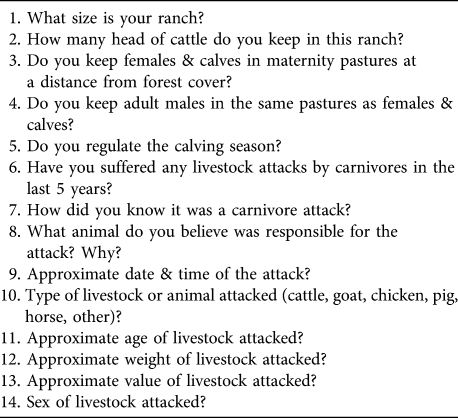
We used a questionnaire survey (Table 1) to interview cattle ranchers at sites within Petén District from which government and NGO personnel had received reports of predation on livestock. We first visited ranches that had reported predation and then proceeded to survey adjacent and surrounding ranches. We attempted to survey an equal number of ranches with and without attacks in each surveyed site. We did not survey ranches at random because this would have been too time consuming and may have yielded a smaller number of ranches with attacks. In each site we interviewed as many cattle ranch administrators or owners (hereafter ranchers) as possible and asked if their livestock had suffered attacks from carnivores within the previous 5 years (2003–2007). We only interviewed ranchers who had been working on the ranch during the 5 years encompassed by this study. Interviews were conducted, by JRS and a field assistant, during June–August 2007. Ranches were then classified as either reporting attacks or not.
Questions asked of cattle ranchers in the Petén District, Guatemala (Fig. 1), in 2007.
Patterns of predation
We asked a suite of questions about each reported incident. Only first-hand reports of attacks were accepted and the reliability of each incident was assessed based on expert-based indications of an attack (i.e. signs of struggle on the ground and surroundings, presence of bite or scratch marks on carcass, body parts consumed, carnivore tracks near attack site or carcass, carcass dragged and hidden or covered under a leaf pile; Hoogesteijn et al., Reference Hoogesteijn, Hoogesteijn, Mondolfi, Dunstone and Gorman1993, Reference Hoogesteijn, Boede, Mondolfi, Medellín, Chetkiewicz, Rabinowitz, Redford, Robinson, Sanderson and Taber2002; Palmeira et al., Reference Palmeira, Crawshaw, Haddad, Ferraz and Verdade2008). We discarded second-hand reports or reports with insufficient or no evidence of a carnivore attack. For most analyses we pooled attacks regardless of the carnivore thought to be responsible as the majority of interviewees had no prior experience in distinguishing attacks of the carnivore species inhabiting the area.
For each reported attack we recorded the carnivore believed responsible, type of livestock or animal attacked (cattle, goat, horse, pig or dog), and time of day and date of incident. Time was categorized as night (18.00–05.59), morning (06.00–11.59), or afternoon (12.00–17.59) because in many cases the hour was not exactly known. χ 2 goodness of fit tests were used to determine whether species of attacker (jaguar, puma or coyote Canis latrans), type of livestock attacked, and time of day were equal for all categories; Fisher’s exact tests were used when frequencies of responses were small (Zar, Reference Zar1999). We performed Spearman rank correlations (rs) to examine associations between frequency of attacks per month and mean monthly rainfall for all attacks reported, and for attacks on cattle separately because the latter is the most abundant type of livestock in the area. Statistical significance was P ≤ 0.05 for all analyses. We recorded sex and weight of cattle attacked. Cattle weights were categorized into nine classes (11.4–450 kg). χ 2 goodness of fit tests were used to determine whether attacks occurred on both sexes equally. Spearman rank correlations were used to examine the relationship between number of attacks and weight of animals attacked. A total and mean annual monetary loss during the study period was obtained for cattle by asking ranchers to estimate the cost of animals attacked and converting estimates to USD at an exchange rate of GTQ 7.60 = USD 1.00. We estimated percentage of cattle lost to predators based on the total number of cattle reported by each rancher.
Livestock husbandry practices
We asked if ranchers applied livestock husbandry practices that previous researchers (Hoogesteijn et al., Reference Hoogesteijn, Hoogesteijn, Mondolfi, Dunstone and Gorman1993; Hoogesteijn, Reference Hoogesteijn2001; Polisar et al., Reference Polisar, Maxit, Scognamillo, Farell, Sunquist and Eisenberg2003; Hoogesteijn & Hoogesteijn, Reference Hoogesteijn and Hoogesteijn2010) have recommended to reduce the probability of predation on livestock by large felids (Table 1). More specifically, we asked if ranchers kept calves and females in maternity pastures at a distance from forest cover, if they kept older, more experienced males with calves and females, and if they regulated calving season to concentrate calves and provide better protection for them. This information was analysed qualitatively because of homogeneous practices among the ranches.
Predictors of predation
For each ranch surveyed we recorded the geographical coordinates, with a global positioning system (GPS), of the main ranch house. This was done because in some instances ranchers did not allow us access to their pastures. The layout of most ranches surveyed is similar, with the main ranch house located at the entrance to the ranch and the pastures directly behind the main house (J. Soto, pers. obs.). We used a geographical information system to quantify landscape structure in and around each ranch using raster and vector shape files previously classified by the National Council of Protected Areas (CONAP), Guatemala. Roads and land cover classes were based on a 2003 Landsat image of the area, and GPS way-points for roads recorded by CONAP personnel. Although 15 land cover classes were defined in the image we used only the broad-leaf forest class in our analyses as this was the predominant and most extensive type of natural forest. Thornton (Reference Thornton2010) assessed the accuracy of the same Landsat image of the area by ground-truthing and by comparisons with aerial photographs, obtaining an accuracy of 91% for forest classes. Rivers and lakes were digitized from 1 : 50,000 cartographic maps obtained from the National Institute of Geography, Guatemala (IGN). Location of human settlements was based on GPS way-points collected by CONAP personnel. We measured forest cover and the Euclidean distance from the ranch to forest cover, human settlements, rivers, bodies of water (i.e. lakes, lagoons) and roads using ArcGIS v. 9.0 (ESRI, Redlands, California). To calculate forest cover we created a 5-km buffer around each ranch point and estimated forest cover in each buffer.
We recorded two ranch characteristics (Table 2) and six variables related to landscape structure near ranches. Inter-correlation amongst these variables was evaluated with a Pearson’s correlation test (r > 0.5), and we excluded two potential explanatory variables (distance to roads and rivers) that were highly correlated (r = 0.83).
Variables used to summarize characteristics of ranches and their surrounding landscape in the Petén District, Guatemala, measured in 2007.
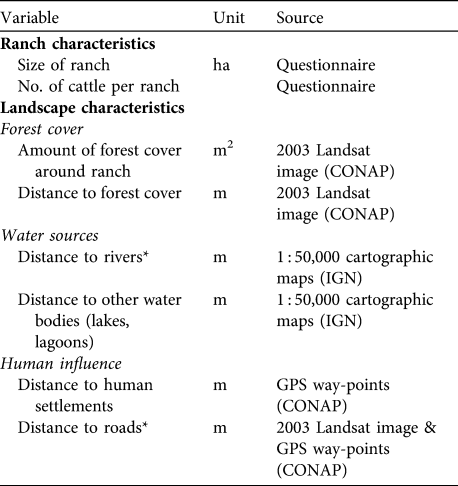
* Discarded because of high inter-correlation (see text).
We compared ranches with and without attacks using a logistic regression analysis of a priori models based on various combinations of explanatory and predictor variables, and used Akaike’s Information Criterion (AIC; Burnham & Anderson, Reference Burnham and Anderson2002) to compare models and identify the model or models that received the most support for explaining occurrence of predation by carnivores. The various combinations of models that formed the basis were: ranch characteristics (size of ranch and number of cattle) and landscape variables. The landscape variables were subdivided into models containing only variables related to forest cover, water sources and human influence to test for the effect of these variables on the occurrence of predation. We compared AIC values, corrected for small sample size (AICC), AICC differences (▵AICC), and the Akaike weights (AICC wt) for models with different combinations of predictor variables based on these categories (Burnham & Anderson, Reference Burnham and Anderson2002). We used a Hosmer–Lemeshow goodness of fit test to examine the fit (α ≤ 0.05) for each model proposed (Hosmer & Lemeshow, Reference Hosmer and Lemeshow2000). All statistical analyses were performed using SAS v. 9.1 (SAS Institute, 2003).
Results
We surveyed 83 ranches, of which 32 provided reliable reports of 104 incidents of predation on livestock. The mean size of surveyed ranches was 175.9 ± SE 41.6 ha (range 11.2–2,688.0 ha, n = 70), with a high percentage of small ranches (11.2–500.0 ha, n = 66, 94%) and few medium-sized (> 500.0–1,000.0 ha, n = 2, 3%) or large (> 1,000.0 ha, n = 2, 3%) ranches. The mean number of cattle per ranch was 120.5 ± SE 17.6 (range 5–750, n = 69). Most ranches had 1–99 cattle (n = 44, 64%); fewer ranches had 100–199 cattle (n = 16, 23%), 200 to 299–cattle (n = 3, 4%), or ≥ 300 cattle (n = 6, 9%).
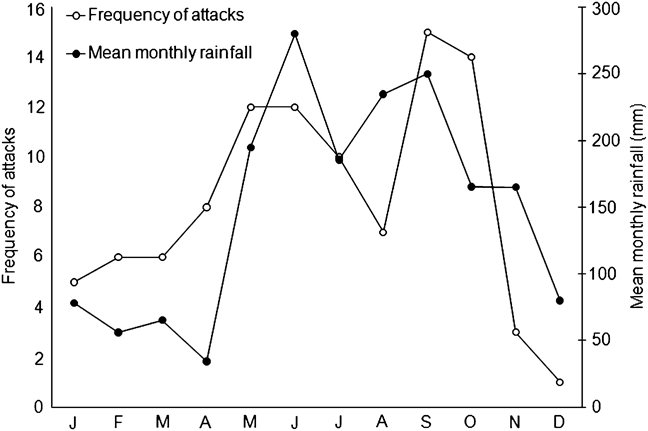
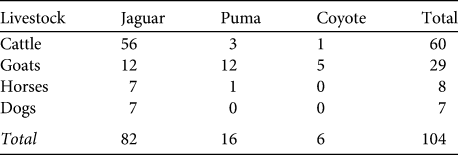
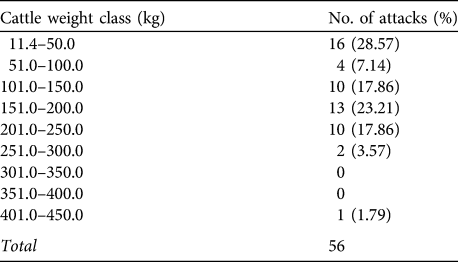
The jaguar was the carnivore most accused of attacks on livestock (78.9% of all attacks, P < 0.001, n = 104; Table 3) and the puma and coyote were accused of 15.4 and 5.8% of attacks, respectively. Cattle was the type of livestock most attacked, followed by goats (Table 3). Most attacks occurred at night (P < 0.001, n = 100) and during the rainy season (P < 0.001, n = 99). Attacks were associated with monthly rainfall (rs = 0.590; P = 0.044, n = 100; Fig. 2). Most attacks on cattle occurred at night (P < 0.001, n = 55) and during the rainy season (P < 0.001, n = 57). Attacks on cattle were not associated with mean monthly rainfall (rs = 0.527, P = 0.079, n = 55) but inversely related to the weight class of cattle predated (rs = -0.815, P = 0.007; mean = 135.1 ± SE 11.5 kg, range 11.4–431.8 kg, n = 56). Most attacks were on cattle between 11.4 and 227.3 kg, with a high number of attacks occurring on cattle of 11.4–50.0 kg and 151.0–200.0 kg (28.6 and 23.2%, respectively; Table 4). Male cattle were attacked more than females (P = 0.001, n = 44).
Total number of monthly predation incidents on livestock by carnivores and mean monthly rainfall per month in Petén District, Guatemala (Fig. 1), for 2003–2007.
Number of predation incidents on livestock reported by ranchers to have been carried out by jaguar Panthera onca, Puma Puma concolor and coyote Canis latrans in the Petén District, Guatemala, during 2003–2007.
Number (%) of predation incidents on cattle, by weight classes of individuals attacked, in the Petén District, Guatemala, 2003–2007.
The total economic loss from predation on cattle by large carnivores during the study period was estimated to be USD 14,736 and mean annual loss was USD 2,947 ± SE 1,491. Of all cattle reported in the study, 0.7% were lost to carnivores. Most ranchers (90%, n = 71) kept calves and females with adult males but few ranchers kept calves in maternity pastures away from forest cover (11%, n = 72) or regulated calving season (27%, n = 70). The only supported model for explaining occurrence of predation incidents in the study area consisted of all landscape variables (model fit P = 0.226; Table 5); other models were poor, with low Akaike weights (wi ≤ 0.01).
Comparison of candidate models predicting predation on livestock by carnivores in the Petén District, Guatemala, 2003–2007.
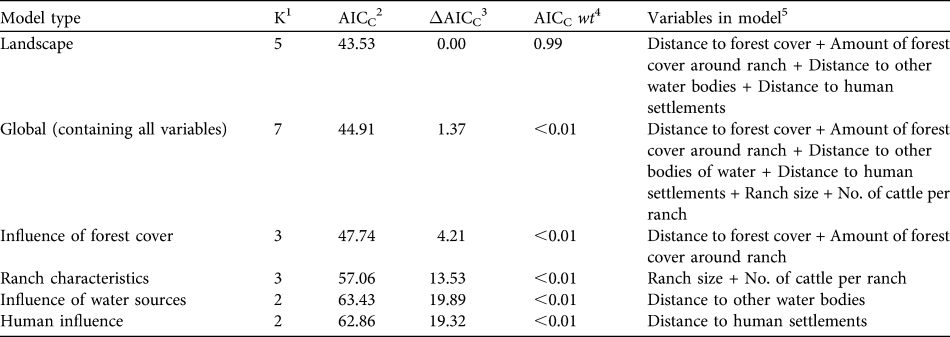
1 K, number of parameters in model (includes an intercept term, β0)
2 AICC, AIC estimate corrected for small sample size
3 ΔAICC, difference of the AICC values between the most supported model and the given model
4 AICC wt, Akaike weight for each model
5 Table 2
Discussion
Our results could have been influenced by the fact that the sites surveyed were selected from a survey of government and NGO personnel, and complete coverage of the Petén District by these organizations is unlikely. This can be seen in the homogeneous characteristics of the ranches surveyed (i.e. a high percentage of small ranches with a low number of cattle) and the relatively small number of ranches surveyed within the Maya Biosphere Reserve. Consequently, our study should be interpreted with caution as it may only apply to small ranches and to the sites surveyed. Nevertheless, small ranches with low numbers of cattle are predominant throughout Petén District.
Cattle loss to carnivores in the area we surveyed constitutes a minor percentage of all cattle reported (0.7%). This is comparable to estimates in other areas: 0.56% of the total livestock on a ranch were predated by jaguars and pumas in the Pantanal, western Brazil (Azevedo & Murray, Reference Azevedo and Murray2007), 0.3% in the Iguaçu National Park area in southern Brazil (Azevedo, Reference Azevedo2008), and 0.4% in central-western Brazil (Palmeira et al., Reference Palmeira, Crawshaw, Haddad, Ferraz and Verdade2008). Previous studies have shown that livestock mortality from predators may be negligible compared to losses from other causes (Hoogesteijn et al., Reference Hoogesteijn, Hoogesteijn, Mondolfi, Dunstone and Gorman1993; Mazolli et al., Reference Mazolli, Graipel and Dunstone2002; Polisar et al., Reference Polisar, Maxit, Scognamillo, Farell, Sunquist and Eisenberg2003; Michalski et al,. Reference Michalski, Boulhosa, Faria and Peres2006; Azevedo & Murray, Reference Azevedo and Murray2007; Azevedo, Reference Azevedo2008; Palmeira et al., Reference Palmeira, Crawshaw, Haddad, Ferraz and Verdade2008). In our study area a high percentage of ranchers identified disease (black leg, a highly infectious bacterial disease that affects sheep and cattle) to be a primary cause of livestock mortality, followed by poisonous snake bites, and few ranchers recognized predation on livestock as a major source of mortality (J.R. Soto-Shoender, unpubl. data). Nevertheless, when cattle ranching is the primary economic activity and a rancher owns a small number of cattle or other livestock, any loss may be considered significant (Saenz & Carrillo, Reference Saenz, Carrillo, Medellín, Chetkiewicz, Rabinowitz, Redford, Robinson, Sanderson and Taber2002; Rosas-Rosas et al., Reference Rosas-Rosas, Bender and Valdez2008, Reference Rosas-Rosas, Bender and Valdez2010) and result in retaliatory measures and cause a negative attitude towards carnivores. Therefore, even though the overall effect of carnivores on livestock appears minimal, it is a problem that can lead to negative impacts on both local people and carnivore populations in areas with small cattle ranches such as the Petén District.
The jaguar was accused of the highest percentage of the attacks in our study. However, this should be interpreted with caution, as the culprit of attack was not systematically identified in most cases and local knowledge and perception of carnivore species may have influenced the findings. Conforti & Azevedo (Reference Conforti and Azevedo2003) also reported a tendency for local people to blame jaguars for attacks on livestock. This may be attributed to insufficient local knowledge of pumas (Conforti & Azevedo, Reference Conforti and Azevedo2003) and coyotes. The occurrence of the coyote in this area is relatively recent (J.R. Soto-Shoender, pers. obs.) and local people may still be learning to identify this predator. Attacks could also be the act of feral or domestic dogs (Sillero-Zubiri & Laurenson, Reference Sillero-Zubiri, Laurenson, Gittleman, Funk, Macdonald and Wayne2001). Nevertheless, the high number of attacks blamed on jaguars, despite a lack of supporting evidence, suggests a negative perception of jaguars that could negatively affect this felid.
Our results are consistent with studies in other regions that found higher predation rates on younger age classes of cattle (Hoogesteijn et al., Reference Hoogesteijn, Hoogesteijn, Mondolfi, Dunstone and Gorman1993; Polisar et al., Reference Polisar, Maxit, Scognamillo, Farell, Sunquist and Eisenberg2003; Michalski et al., Reference Michalski, Boulhosa, Faria and Peres2006; Palmeira et al., Reference Palmeira, Crawshaw, Haddad, Ferraz and Verdade2008). Palmeira et al. (Reference Palmeira, Crawshaw, Haddad, Ferraz and Verdade2008) and Michalski et al. (Reference Michalski, Boulhosa, Faria and Peres2006) found higher predation rates on newborn cattle and cattle up to 8 and 5 months old, respectively, and a small number of attacks on cattle older than 12 months, which is consistent with our observation of only three attacks on cattle over 250.0 kg. In addition, we also detected a higher number of attacks on male than on female calves. Palmeira et al. (Reference Palmeira, Crawshaw, Haddad, Ferraz and Verdade2008) also found this pattern, suggesting it was the result of male calves being more independent of their mothers.
Most attacks occurred at night and during the rainy season. Researchers have speculated that attacks may be higher during wetter months because ranchers are less active afield during these conditions (Mazolli et al., Reference Mazolli, Graipel and Dunstone2002), limiting the amount of time people are near their cattle, which may otherwise deter predation. Furthermore, carnivores may be more difficult to detect, by both people and livestock, during periods of high rainfall and jaguars and pumas have been found to be more active during wetter months when temperatures are lower and prey are more dispersed and not concentrated around permanent water sources (Scognamillo et al., Reference Scognamillo, Maxit, Sunquist and Polisar2003). An increase in predation during wetter months has been reported in other regions (Mazolli et al., Reference Mazolli, Graipel and Dunstone2002; Saenz & Carrillo, Reference Saenz, Carrillo, Medellín, Chetkiewicz, Rabinowitz, Redford, Robinson, Sanderson and Taber2002). Palmeira et al. (Reference Palmeira, Crawshaw, Haddad, Ferraz and Verdade2008) also found a higher predation rate during the wetter months but related this to the majority of calf births occurring during this period. Michalski et al. (Reference Michalski, Boulhosa, Faria and Peres2006) found the opposite, with an increase in attacks during drier months, primarily related to the timing of calving. Other studies have also found a correlation between predation and peaks in calving (Polisar et al., Reference Polisar, Maxit, Scognamillo, Farell, Sunquist and Eisenberg2003; Scognamillo et al., Reference Scognamillo, Maxit, Sunquist and Polisar2003). Most ranchers in our study area did not regulate calving seasons; nevertheless, as the ranchers questioned do not keep detailed records of their operations we cannot speculate whether the strong seasonal pattern of predation incidents is related to calving season or seasonal differences in carnivore and prey ecology.
Conflicts with jaguars, pumas and coyotes occur only in Mexico and Central America where the ranges of these three carnivores overlap, particularly in areas with high rates of deforestation (Hidalgo-Mihart et al., Reference Hidalgo-Mihart, Cantu-Salazar, Gonzalez-Romero and Lopez-Gonzalez2004) such as the Petén District. If the trend of increasing deforestation in the area continues (Hayes et al., Reference Hayes, Sader and Schwartz2002), we would expect an increase in coyote populations and a concomitant increase in human–coyote conflicts (Cuaron, Reference Cuaron2000). Consequently, higher rates of conflicts with coyotes may exacerbate conservation problems for threatened species such as the jaguar as local people tend to blame jaguars for predation on livestock. Coyotes are intense livestock predators (Knowlton et al., Reference Knowlton, Gese and Jaeger1999; Sillero-Zubiri & Laurenson, Reference Sillero-Zubiri, Laurenson, Gittleman, Funk, Macdonald and Wayne2001) and the control and prevention of predation by coyotes requires species-specific measures (Knowlton et al., Reference Knowlton, Gese and Jaeger1999). These measures are only now being included in recommendations to mitigate human–carnivore conflicts in the neotropics (J.R. Soto-Shoender, pers. obs.).
Livestock husbandry practices were homogeneous throughout our study area, regardless of ranch size or location. In this region livestock husbandry practices have been described as rudimentary (Saenz & Carrillo, Reference Saenz, Carrillo, Medellín, Chetkiewicz, Rabinowitz, Redford, Robinson, Sanderson and Taber2002) and, as shown by our study, most ranches do not apply some of the practices recommended to prevent predation on livestock (i.e. keeping calves and females in secure pens at night), despite reports of predation. Although ranchers did keep females and calves with older males most ranches are cattle-breeding operations and keep a low percentage of males in their stock (J.R. Soto-Shoender, unpubl. data), and thus the practice is not an effective preventive measure.
Ranchers may not modify their practices to prevent predation on livestock because they do not have the knowledge or capacity to do so or because of a negative attitude towards carnivores and conservation (J.R. Soto-Shoender, pers. obs.). In other areas people were reluctant to modify husbandry practices to prevent predation on livestock (Oli et al., Reference Oli, Taylor and Rogers1994; Weber & Rabinowitz, Reference Weber and Rabinowitz1996; Mazolli et al., Reference Mazolli, Graipel and Dunstone2002). Additionally, predation on livestock in our study area is not a regularly occurring problem and may not therefore warrant the investment required to modify traditional practices. Consequently, eliminating the animal believed responsible for the attacks may appear to be a more effective and economic measure to the rancher (J.R. Soto-Shoender, pers. obs.).
Our hypothesis that ranch characteristics and landscape variables around ranches influenced the occurrence of predation on livestock by carnivores was only partially supported. Our analysis indicated that landscape variables were the only important predictors of predation and we did not detect an influence of ranch characteristics. This finding is consistent with other studies (Michalski et al., Reference Michalski, Boulhosa, Faria and Peres2006; Azevedo & Murray, Reference Azevedo and Murray2007; Palmeira et al., Reference Palmeira, Crawshaw, Haddad, Ferraz and Verdade2008) that have identified landscape variables such as proximity to forests and water sources and amount of forest area surrounding ranches as major predictors of conflicts with carnivores. These characteristics may be important predictors because they also describe prime carnivore habitat and sites where there is a high probability of carnivore presence (Rabinowitz, Reference Rabinowitz, Woodroffe, Thirgood and Rabinowitz2005). Consequently, any ranch in the study area near adequate forest cover and water sources and at a considerable distance from human settlements is at risk of suffering predation of its livestock by carnivores unless husbandry practices are modified.
We recommend implementing outreach and education programmes to promote the application of conflict mitigation efforts on ranches near forest cover and water sources. Protection for livestock on these ranches should concentrate on calves, especially during the wetter months. This can be done through regulating birth seasons when possible and maintaining maternity pastures, and building secure corrals in which to pen animals at night at a distance from forest cover and near human presence (Mazolli et al., Reference Mazolli, Graipel and Dunstone2002; Palmeira et al., Reference Palmeira, Crawshaw, Haddad, Ferraz and Verdade2008; Hoogesteijn & Hoogesteijn, Reference Hoogesteijn and Hoogesteijn2010). A further recommendation is to train local government and NGO personnel in predator identification and conflict mitigation techniques. Research on ranches within the Maya Biosphere Reserve should be a priority, as predation on livestock, and consequently jaguar and puma mortality, may be more severe in these sites. Finally, implementation of monitoring of livestock mortality would help determine the scale of the problem and the extent to which each carnivore species contributes to predation on livestock.
These recommendations are currently being implemented in the study area by a consortium of government organizations (Wildlife Service Department and Ministry of Agriculture and Cattle Ranching) and local conservation NGOs. The ranchers also receive free veterinary services (e.g. livestock vaccinations and nutritional supplements) and advice. This human–carnivore conflict mitigation and monitoring programme has now been running for 2 years and there has been a positive response from local ranchers.
Acknowledgements
This study was authorized by the Institutional Review Board (IRB) of the University of Florida (UFIRB study number 2007-U-372). We are grateful for the financial support provided by the United States Department of State (award number S-LMAQM-07-CA-312), University of Florida, Chester Zoo, and the Jaguar Conservation Program of the Wildlife Conservation Society. We thank the Fulbright Program, Organization of American States, and the Center for Latin American Studies Program of the University of Florida for a graduate scholarship to JS, the Wildlife Conservation Society Guatemala for logistical support, Guillermo Lopez, Wilfredo Raxon, Melvin Merida, Tomas Dubon, Jose Lopez and Ambrocio Marin for assistance in the field, all government and NGO personnel and the cattle ranchers who participated in this study, and the Evaluation and Monitoring Center of the National Council of Protected Areas, especially Victor Hugo Ramos, in Guatemala for providing the ArcGIS layers used in this study.
Biographical sketches
Jose Soto-Shoender has worked in wildlife research and conservation programmes in the tropical lowlands of Guatemala for 9 years and is interested in understanding and mitigating the impacts of human activities on neotropical wildlife, especially carnivores and their prey. William M. Giuliano is a wildlife conservationist who has worked on conservation education and wildlife management issues in Central and North America for more than 15 years, with a particular interest in developing methods to integrate wildlife conservation with other land uses.



