


The prevalence of raised blood pressure (BP) is 22 % in adults aged 18 years or above worldwide(1), and its harmful effect on CVD and related mortality has already been supported by large prospective epidemiological studies(Reference Lewington, Clarke and Qizilbash2). According to the Joint National Committee’s 7th report(Reference Chobanian, Bakris and Black3), a healthy lifestyle needs to be adopted for the prevention and management of BP, including weight reduction, consumption of foods rich in K and Ca, dietary Na reduction, physical activity and modification of alcohol consumption. The Dietary Approaches to Stop Hypertension (DASH) diet plan is the most popular to reduce the prevalence of high BP.
Several meta-analyses(Reference Li, Li and Wang4, Reference Ralston, Lee and Truby5) and a large cross-sectional study (INTERMAP)(Reference Chan, Stamler and Griep6) have reported the association between intake of single nutrients and BP, but the results are not consistent. Because people consume complex combinations of foods, it is difficult to assess the independent effects of single nutrients or foods. Therefore, dietary pattern analysis has been performed recently to evaluate the effect of food/nutrient intake on chronic diseases including high BP(Reference Aljefree and Ahmed7). Although the adaptation of the DASH diet plan for reducing BP has been supported by several prospective studies and intervention trials, its beneficial effect remains controversial. In particular, the traditional dietary items and cooking methods of Asian populations were shown to result in more complicated and varied relationships between dietary factors and BP compared with those in Western populations(Reference Lee, Cai and Yang8–Reference Xu, Byles and Shi14).
Although the main issue of dietary factors to prevent high BP has traditionally focused on fat intake, especially saturated fat, dietary carbohydrate intake may play a substantial role in the risk of high BP for Asians, because they traditionally consume large amounts of rice as a staple food. The effects of a carbohydrate-rich diet and high refined-grain consumption on the risk of high BP have been observed in obese Korean women(Reference Kim, Yun and Choi15) and South Indians(Reference Radhika, Van Dam and Sudha16), respectively. Clinical trials using polyunsaturated fat to replace saturated fat have reduced the incidence of CVD, but use of carbohydrates to replace saturated fat did not decrease the incidence(Reference Hooper, Martin and Abdelhamid17, Reference Mozaffarian, Micha and Wallace18). On the other hand, evidence from prospective observational studies indicates that carbohydrates from whole grains could reduce CVD when they replace saturated fat(Reference Li, Hruby and Bernstein19).
Regarding the effect of diet on the risk of high BP by ethnic variation, it is valuable to consider the attenuated effect by aetiological characteristics including gender and obesity(Reference Mosher, Martin and Cupples20, 21). Therefore, the aim of the present study was to examine the association between dietary pattern and the risk of high BP and to evaluate the attenuated effect on the association by gender and obesity using a prospective cohort study.
Methods
Study population
Data from participants in the community-based Korean Genome Epidemiology Study (KoGES), which is a cohort study in Korea, were used to investigate the effect of dietary and environmental factors on chronic diseases. Detailed information on the study procedure has been described previously(Reference Lim, Jang and Lee22). Briefly, 10 038 (urban area, n 5020; rural area, n 5018) participants were recruited from 2001 to 2003 for baseline examinations. Follow-up examinations were then performed every 2 years.
Detailed information on the selection of participants for the current study is presented in Fig. 1. Among these 10 038 participants, we excluded thirty-nine participants who were under 40 or over 70 years of age at baseline recruitment and those for whom no information was available on BP (n 16), history of hypertension (n 4) or total daily energy intake (n 318). As well as those who had a history of chronic disease (including hypertension and hypertension medication use, diabetes mellitus, hyperlipidaemia, CVD and cancer; n 2289), participants were also excluded who reported implausible total daily energy intake (≤3357 or ≥16 736 kJ (≤800 or ≥4000 kcal) for males, ≤2092 or ≥14 644 kJ (≤500 or ≥3500 kcal) for females; n 208). Participants who had been diagnosed with high BP at baseline (n 1383) were excluded to eliminate a latent period bias. After exclusions, 5781 individuals were included as our study population. Of these, 630 did not participate in any follow-up through the first to the fourth after the baseline examination. Finally, 5151 healthy individuals were analysed.
Flow diagram showing the selection of participants for the present study. *From individuals who had not participated in the 1st f/u. †From individuals who had participated in the 1st f/u. ‡From individuals who had not participated in the 2nd f/u. §From individuals who had participated in the 2nd f/u. ║From individuals who had not participated in the 3rd f/u. ¶From individuals who had participated in the 3rd f/u (KoGES, Korean Genome Epidemiology Study; BP, blood pressure; f/u, follow-up)

Definition of blood pressure incidence
BP measurements were performed at each follow-up examination. Systolic BP (mmHg) and diastolic BP (mmHg) were measured repeatedly in both arms while the participant was in a sitting posture. The mean value of repeated measurements was used to determine high BP, defined as systolic BP ≥ 140 mmHg or diastolic BP ≥ 90 mmHg according to the WHO criteria.
To define the incidence of high BP, we took cases who were first diagnosed with high BP through the first to the fourth follow-up. The detailed process to define event (high BP) and non-event (normal BP) participants is presented in Fig. 1.
Socio-economic and lifestyle factors
To analyse factors affecting the risk of high BP, socio-economic and lifestyle factors were surveyed. General factors included age, gender, education level (<elementary, middle school, high school, ≥college), monthly average household income in US dollars (<1000, 1000–1999, 2000–3999, ≥4000), occupation (office, non-office, housework), marital status (yes/no), family history of hypertension (yes/no), BMI in kg/m2 (<23, 23–24·9, 25–29·9, ≥30) and waist circumference (males, <90 cm; females, <85 cm). Lifestyle factors included drinking status (non-current v. current), total alcohol consumption (g/d), smoking status (non-current v. current), absolute number of cigarettes smoked (packs/year), physical activity (yes/no) and total energy intake (quartiles).
Dietary intake assessment
Dietary intake information was measured using the semi-quantitative FFQ developed for KoGES(Reference Ahn, Kwon and Shim23). This FFQ consisted of 103 items concerning the individual’s food intake over the past year. The frequency of consumption for each item was divided into nine categories: ‘never or seldom’, ‘once a month’, ‘2–3 times a month’, ‘1–2 times a week’, ‘3–4 times a week’, ‘5–6 times a week’, ‘once a day’, ‘twice a day’ and ‘three times or more a day’. For a semi-quantitative approach, one serving size was classified into less (0·5 times), reference amount and higher (1·5 times). The duration of seasonal variety of fruit intake was divided into four categories (3, 6, 9 and 12 months). Validity of the developed FFQ was then conducted. The correlation coefficient for nutrients ranged from 0·23 (vitamin A) to 0·64 (carbohydrate).
Dietary pattern derivation
Factor analysis was used to derive dietary patterns and determine factor loadings for daily intake of 103 individual food items. These factors were rotated with varimax rotation to maintain uncorrelated factors and enhance interpretability. We examined both scree plots and factors to determine which set of factors most closely described food consumption patterns after adjusting for total energy intake. The factor score for each pattern was calculated by summing the intake of all food groups weighted by their factor loadings. A factor score was then calculated for each participant for each of the four factors, in which standardized intake for each of the 103 foods was weighted by its factor loadings and summed. From these analyses, five dietary patterns with the highest loadings (absolute loading > 0·30) were identified and named according to the highest loading food. The following dietary patterns were defined: (i) ‘fruit’ pattern with high fruit score; (ii) ‘vegetable’ pattern with high score for oyster mushroom, onion, other mushroom, perilla leaf, leek/parsley, spinach and courgette; (iii) ‘high-protein’ pattern with high score for sashimi (flounder, crab, tuna, urogu, etc.), pork roast (ribs, sirloin, etc.), grits, roast beef, pork belly and eel; (iv) ‘coffee’ pattern with high score for sugar, coffee and coffee creamer; and (v) ‘rice’ pattern with low score for unrefined cereal but high score for refined rice, nabak kimchi/dongchimi and kakdugi (see online supplementary material, Supplemental Table S1).
Statistical analysis
General and lifestyle factors according to each dietary pattern score were presented using frequency or mean and sd. Pearson correlation analysis was performed to examine the correlation between each dietary pattern and nutrients. To examine the effect of each dietary pattern on the risk of high BP, the Cox proportional hazards model was performed after adjustment for covariates that were associated with high BP in this study population; including age, gender, education level, monthly average household income, family history of hypertension, BMI, waist circumference and total energy intake. To evaluate the attenuated effect of obesity and gender on the association between the ‘rice’ pattern and high BP risk, we analysed the association between the ‘rice’ pattern and high BP risk after stratifying by obesity (BMI < 25 kg/m2 v. BMI ≥ 25 kg/m2) for both genders. All analyses were performed using the statistical software package SAS version 9.3. Statistical significance was considered at P < 0·05.
Results
Characteristics of dietary patterns
The characteristics of participants for each dietary pattern are shown in Table 1. Elderly participants were more likely to belong in the group of individuals with high ‘fruit’ and ‘rice’ pattern scores but with low ‘high-protein’ and ‘coffee’ pattern scores. Men were likely to rank high for the ‘high-protein’, ‘coffee’ and ‘rice’ patterns. However, women had high scores for the ‘fruit’ and ‘vegetable’ patterns. Participants who had an education level of more than high school and those who reported relatively high family income (more than $US 2000/month) had high scores for the ‘high-protein’ pattern, but low scores for the ‘rice’ pattern. Office workers had high scores for the ‘high-protein’ and ‘coffee’ patterns, while blue-collar workers had high scores for the ‘rice’ pattern. Participants with a family history of hypertension had higher scores for the ‘high-protein’ pattern but lower scores for the ‘rice’ pattern compared with those without such history. No significant difference was observed among scores for the different dietary patterns according to BMI, but abdominal obesity was observed in participants with high scores for the ‘fruit’ and ‘rice’ patterns but low scores for the ‘high-protein’ pattern. Current drinkers had high scores for the ‘high-protein’ pattern but low scores for the ‘fruit’ pattern. Higher scores for the ‘high-protein’, ‘coffee’ and ‘rice’ patterns but lower scores for the ‘fruit’ and ‘vegetable’ patterns were observed in current smokers compared with those in non-smokers. Current exercisers were likely to have low scores for the ‘rice’ pattern.
Characteristics of participants in each dietary pattern. Korean adults (n 5151) from the community-based KoGES cohort

KoGES, Korean Genome Epidemiology Study; Q1, quintile 1; Q5, quintile 5.
Results are presented as mean and sd for age and BMI (kg/m2); and as n and % for all other variables including BMI groups.
* Criteria for abdominal obesity used waist circumference for males and females ≥90 cm and ≥85 cm, respectively.
Correlations between nutrients and dietary patterns
The results of correlation coefficients between nutrients and each dietary pattern are presented in Table 2. The ‘fruit’ pattern showed a high correlation with vitamin C (r = 0·68), K (r = 0·30) and fibre (r = 0·26). The ‘vegetable’ pattern was correlated with overall vitamins (ranged from r = 0·25 for niacin to r = 0·55 for vitamin A and folate) and minerals (ranged from r = 0·31 for P to r = 0·49 for Fe). The ‘high-protein’ pattern had positive correlations with protein, fat, retinol, niacin and cholesterol levels. However, the ‘coffee’ pattern showed no correlation with any nutrient. The ‘rice’ pattern also had no correlation with any nutrient, with the exception of Na (r = 0·28).
Correlation of nutrients with each dietary pattern after adjusting for total energy intake
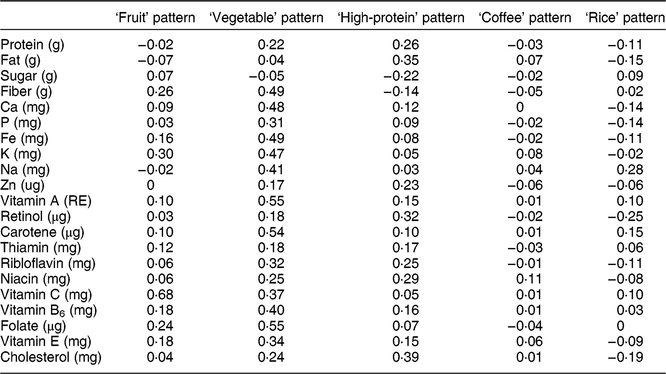
RE, retinol equivalents.
Association of ecological and lifestyle factors with the risk of high BP
The average follow-up time was 6·2 years and ranged from 1·4 to 8·7 years. The risk of high BP increased with age (P trend < 0·001) and in women (hazard ratio = 0·65, 95 % CI 0·57, 0·76; Table 3). Education level (P trend < 0·001) and family income (P trend < 0·001) were negatively associated with high BP risk. Family history of hypertension showed increased risk of high BP (hazard ratio = 1·50, 95 % CI 1·30, 1·73). Both general obesity (P trend < 0·001) and abdominal obesity (hazard ratio = 1·54, 95 % CI 1·33, 1·77) were associated with increased risk of high BP. However, lifestyle factors such as drinking, smoking, exercise and total energy intake showed no significant association with the risk of high BP.
General characteristics of participants according to high blood pressure status. Korean adults (n 5151) from the community-based KoGES cohort
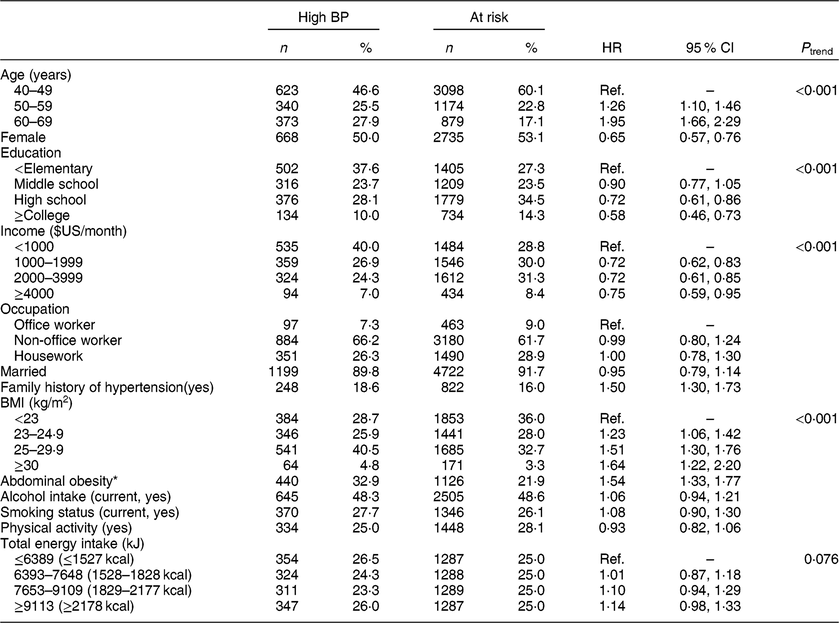
KoGES, Korean Genome Epidemiology Study; BP, blood pressure; HR, hazard ratio; Ref., reference category.
Adjusted for age, gender, education, occupation, married, income, BMI, waist circumference and family history of hypertension.
* Criteria for abdominal obesity used waist circumference for males and females ≥90 cm and ≥85 cm, respectively.
Effect of dietary patterns on the risk of high blood pressure
No association was shown for each dietary pattern with the risk of high BP regardless of the type of covariates, with the exception of the ‘rice’ pattern (Table 4). The effect of the ‘rice’ pattern was observed in both men (P trend = 0·013) and women (P trend < 0·001) after adjusting for age. After adjusting for all confounding factors, its statistical significance was shown only in women (P trend = 0·004). The positive association between the ‘rice’ pattern and the risk of high BP was attenuated by obesity (P trend = 0·299 in normal-weight and P trend < 0·001 in obese participants). On the other hand, after stratification by gender and BMI (<25 v. ≥25 kg/m2), the harmful effect of the ‘rice’ patt-ern on high BP risk was predominantly observed in obese women (P trend < 0·001), but not in obese men (P trend = 0·182; Table 5).
Cox proportional hazard rate ratios for high blood pressure according to quintile of dietary pattern by gender. Korean adults (n 5151) from the community-based KoGES cohort
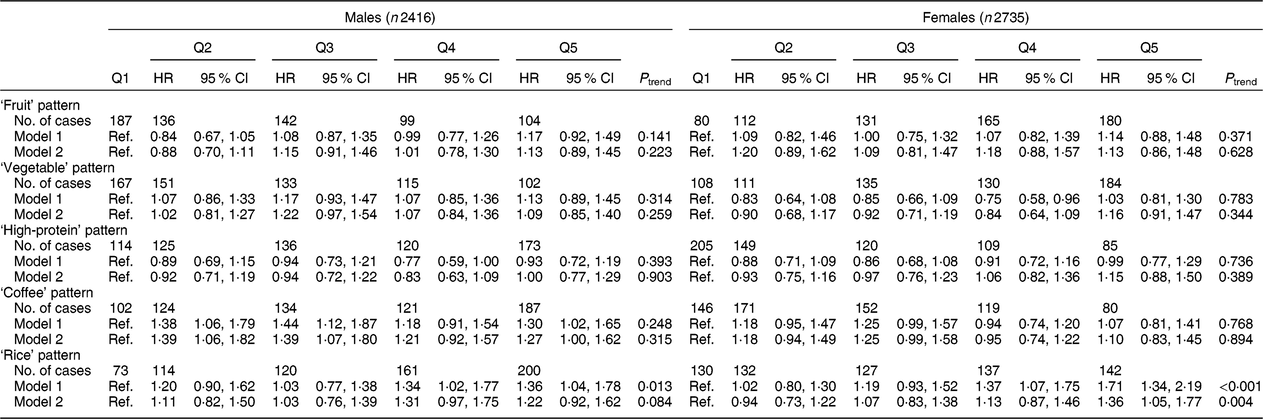
KoGES, Korean Genome Epidemiology Study; Q1, quintile 1; Q2, quintile 2; Q3, quintile 3; Q4, quintile 4; Q5, quintile 5; HR, hazard ratio; Ref., reference category.
Model 1, HR adjusted for age; Model 2, HR adjusted for age, education, income, family history of hypertension, BMI, waist circumference and total energy intake.
Association between the ‘rice’ pattern and risk of high blood pressure after stratification by obesity using BMI. Korean adults (n 5151) from the community-based KoGES cohort

KoGES, Korean Genome Epidemiology Study; HR, hazard ratio; Q1, quintile 1; Q2, quintile 2; Q3, quintile 3; Q4, quintile 4; Q5, quintile 5; Ref., reference category.
Adjusted for age, education, income, family history of hypertension and total energy intake.
Discussion
The present community-based cohort study showed that the ‘rice’ pattern was positively associated with the risk of high BP. The ‘rice’ pattern was characterized by low scores of unrefined cereals in Korea but high scores of refined rice and various types of kimchi with high salt. After adjusting for all confounding factors, its statistical significance was shown only in women. The positive association was attenuated by obesity. On the other hand, the harmful effect of the ‘rice’ pattern on the risk of high BP was predominantly observed in obese women, but not in obese men, suggesting an attenuated effect of gender and obesity on the association.
The ‘fruit’ pattern scored higher in females, homemakers or unemployed persons, and those with abdominal obesity, but scored lower in current drinkers or current smokers compared with their counterparts in our study. Almost all ecological characteristics showed the opposite trend between the ‘high-protein’ pattern and ‘rice’ pattern except for gender and current smoking status. Individuals with high scores for the ‘coffee’ pattern were males, office workers and current smokers. Strong socio-economic gradients have been observed in dietary patterns identified in several studies, showing that higher incomes and education levels are usually associated with higher scores for healthy eating indices and healthy dietary patterns, but smoking, alcohol consumption and physical inactivity are related to unhealthy dietary patterns(Reference Heroux, Janssen and Lam24, Reference Mullie, Clarys and Hulens25).
In the present study, the effect of the ‘rice’ pattern on high BP risk could be considered according to two factors: (i) dietary Na intake and (ii) consumption of foods with high glycaemic index or high glycaemic load. First, the 2013 US Institute of Medicine report acknowledged the overall association between Na intake and BP based on previous studies(Reference Graudal26). Koreans consume 2·4-fold higher Na (4800 mg) than the daily intake recommended by WHO(27). The top five foods contributing to Na intake are kimchi (20·0 %), salt (17·5 %), soya sauce (8·7 %), salt-fermented soya paste (6·4 %) and ramen (4·4 %)(28); these foods scored highly in the ‘rice’ pattern in our study (see online supplementary material, Supplemental Table S1). A cross-sectional study (Korean National Health and Nutrition Examination Survey 2009–2011) recommended low salt intake for Koreans to prevent and control adverse BP(Reference Oh, Lee and Koo29), and this is supported by our prospective study. The American Heart Association and the US Centers for Disease Control and Prevention have criticized the J- or U-shaped relationship between Na intake and hypertension risk(Reference Cogswell, Mugavero and Bowman30), suggested that excessive salt intake is associated with hypertension. In the present study, it was suggested that the ‘rice’ pattern could increase Na intake and effect increased risk of high BP. Second, dietary carbohydrate intake has received considerable research attention because of a positive association of diets with high glycaemic index or high glycaemic load with risks of obesity, metabolic syndrome, diabetes and CHD(Reference Barclay, Petocz and McMillan-Price31). A cross-sectional study(Reference Song, Lee and Song32) suggested that the percentage of energy from carbohydrates and intake of refined grains are associated with Korean metabolic syndrome. Although several prospective studies worldwide have shown that dietary glycaemic index or glycaemic load is associated with high incidence of CHD, type 2 diabetes and stroke(Reference Liu, Willett and Stampfer33, Reference Oba, Nagata and Nakamura34), to the best of our knowledge, no prospective study has reported the effect for Korean adults.
Due to ethnic variations, our results revealed that the ‘rice’ pattern rich in refined carbohydrates was positively associated with the risk of high BP in Korean adults, predominantly in women, consistent with the results of previous studies(Reference Kim, Yun and Choi15, Reference Liu, Willett and Stampfer33, Reference Choi, Se-Young and Lee35–Reference Park, Lee and Park37). Gender differences in dietary practices among those who consumed high-carbohydrate diets showed differential effects on blood pressure in the present study, similar to the results by Song et al. (Reference Song, Lee and Song32). The risk of metabolic disease might be related to female sex hormones, implying a presumably higher susceptibility of women than men to the risk of hypertension(Reference Mosher, Martin and Cupples20, Reference Mittendorfer38). Pathophysiological mechanisms, the renin–angiotensin system, sex hormones and increased immune inflammatory factors might have greater impacts on women than on men(Reference Balan and Popescu39, Reference Pechere-Bertschi and Burnier40). Although there are many different pathophysiological and social reasons why such impacts might be greater for women, the gender-specific effect of the ‘rice’ pattern on high BP risk could suggest that reducing refined rice intake might be one approach to reduce the risk in women.
Obesity is not only a chronic condition, but also an important biological risk factor for non-communicable diseases. Diet has been widely identified as a factor in the prevention of obesity(21). As an extended line of gender-specific effect, the risk of high BP for women with high score for the ‘rice’ pattern remained only for obese women, suggesting that the effect of the ‘rice’ pattern on high BP risk could be attenuated by obesity and gender. Obesity and insulin resistance are not caused by excessive dietary fat intake, but by carbohydrate intake that exceeds energy needs(Reference Cheung41). In the present study, increased TAG level was observed in participants with high scores for the ‘rice’ pattern (data not shown), and this is consistent with the results by Parks and Hellerstein(Reference Parks and Hellerstein42). The Nurses’ Health Study has shown that the effect of carbohydrate intake on the risk of some components (TAG and HDL-cholesterol) of the metabolic syndrome is stronger in women with high BMI levels(Reference Liu, Manson and Stampfer43).
The current study has notable strengths as it is the first prospective study to evaluate the effect of dietary pattern on the risk of high BP for Koreans who traditionally consume large amounts of rice as a staple food. To avoid latent period bias and evade a possible bias due to changes in lifestyle factors which could be caused by uncomfortable symptoms even without any diagnosis of high BP, our analysis was examined after excluding individuals who were diagnosed with high BP at baseline. Finally, we performed advanced analyses to evaluate the attenuated effect of gender and obesity on the association between dietary pattern and the risk of high BP.
Nevertheless, the study has several limitations. First, although assessment of our dietary patterns was based on indices that operationalized various (food) items and derived their information from validated FFQ, it had an inherent methodological limitation, due to self-report bias or recall bias, to reflect the general diet of our study population. Second, our FFQ might not have adequately covered changing dietary habits because dietary assessment was performed only once at baseline. Third, our study results cannot be generalized to other populations, especially populations with a low-carbohydrate staple diet, but could be considered in Asians who traditionally consume large amounts of high-carbohydrate food as their staple diet.
Conclusion
In conclusion, based on the present longitudinal study in Koreans, a positive association of the ‘rice’ pattern was found with long-term development of incident high BP, predominantly in women. In addition, the association is likely to be attenuated by gender and obese status; the harmful effect of the ‘rice’ pattern on the risk of high BP was not observed in normal-weight women but was only shown in obese women. These results could be viewed as discouraging in terms of the appropriate dietary modifications following the current guidelines and recommendations for the prevention of high BP.
Acknowledgements
Financial support: This work was supported by a 2015 Research Grant from Kangwon National University (number 520150345). The funding source was not involved in the design, implementation, analyses or interpretation of the data. Conflict of interest: The authors declare no conflict of interest. Authorship: H.Y., D.K. and S.-A.L. designed and conducted the research; H.Y. and S.A.-L. analysed the data and performed the statistical analyses; H.Y. and S.-A.L. wrote the manuscript and had primary responsibility for the final content of the manuscript; and all authors read and approved the final manuscript. Ethics of human subject participation: This study was conducted according to the guidelines laid down in the Declaration of Helsinki and all procedures involving human subjects were approved by the Institutional Review Board of Kangwon National University Hospital. Written informed consent was obtained from all subjects.
Supplementary material
To view supplementary material for this article, please visit https://doi.org/10.1017/S136898001900168X
Author ORCID
Sang-Ah Lee, 0000-0002-5079-9733.


 Open access

