


Consumers are concerned about the impact of nutrition on well-being and health. This fact has given rise to the development of new food products, with new formulations designed to increase the supply of some compounds with healthy biological activities and even others whose functionality has been proved only more recently.
Functional foods can be considered to be those whole, fortified, enriched or enhanced foods that provide health benefits beyond the provision of essential nutrients (e.g. vitamins and minerals) when they are consumed at efficacious levels as part of a varied diet on a regular basis(1). Functional foods represent one of the most intensively investigated and widely promoted areas in the food and nutrition sciences nowadays.
There is scientific evidence proving that the intake of numerous essential and non-essential dietary components influences growth, development and performance as well as disease prevention(Reference Milner2).
There is a great offer of functional foods and especially of enriched foods on the market. However, there are not many studies showing the real impact of these foods in the diet and the extent to which they really assure an efficient supply of the required compounds in a diet.
Fibre, calcium, iodine, vitamins A, D and E and n-3 fatty acids are essential compounds that are often used to develop enriched foods as a consequence of their demonstrated functionality. Fibre is considered an efficient protective agent for a wide variety of illnesses, including CVD, colon cancer and constipation(Reference Marlett, McBurney and Slavin3, Reference Castro, Barroso and Sinnecker4).
Iodine is considered an essential nutrient in relation to the synthesis of thyroid hormones and for thyroid function, in addition to being important for brain development. Indeed, iodine deficiency is well known and the use of iodized salt has been established by WHO in trying to reduce it(5).
The relationship between calcium and bone metabolism is well known, as is the importance of an adequate intake (AI) of calcium as a key factor in decreasing the risk of osteoporosis(Reference Weaver6). Vitamin D is directly related to the metabolic efficiency of calcium, its intake being necessary for the utilization of calcium by the organism(Reference Zittermann7). Vitamin A, whose important physiological function in normal functioning was known earlier, has also been shown to be an interesting antioxidant, being implicated in anti-carcinogenesis as well as in immunological and anti-degenerative processes through several investigations(Reference Yoshikawa8). Vitamin E has also been shown in different epidemiological studies to have a potent antioxidative function(Reference Stampfer, Hennekens and Manson9, Reference Rimm, Stampfer and Ascherio10).
The need for an optimal n-3 fatty acids intake and the reduced amounts recommended with regard to the essential linolenic fatty acid have been studied in the last several years. The beneficial effects of a low n-6:n-3 ratio in relation to the prevention and development of CVD have been widely investigated(Reference Simopoulos, Leaf and Salem11). The European Union has established legal criteria for fibre, vitamins and minerals and recently for n-3 fatty acids in order to make nutritional claims on commercial foods(12, 13).
The objective of the present study was to evaluate the nutritional relevance of incorporating some foods enriched in different nutrients in a basal diet. A total or partial substitution of some conventional foods by their enriched counterparts was assayed.
Materials and methods
The basal diet was based on a 28 d dietary plan, which was designed by expert dietitians and nutritionists in order to provide the nutritional needs of a reference adult(Reference Cuervo and de las Heras14). The mean value for the energy supply was 9904 kJ/d (2367 kcal/d), of which 52·4 % was supplied by carbohydrates, 28·4 % was supplied by fat, and protein contributed 18·7 % of the total energy requirement.
Enriched foods
Enriched foods containing increased amounts of fibre, calcium, iodine, vitamins A, D and E and n-3 were selected from the market. Table 1 shows the nutritional composition of these foods (obtained from the nutritional labels) and that of their corresponding conventional foods (obtained from food composition tables).
Nutritional information of selected enriched foods (1) and their conventional counterparts (2)

Tr., trace.
Modified diets
Enriched foods were used as substitutes for their respective conventional counterparts in the newly developed special diets (diets 1–12). Table 2 shows the thirteen types of diet (basal and modified diets) designed according to the nutrient supply and the nutritional information of the foods exchanged in the different proposed diets.
Thirteen types of diet depending on the foods that have been chosen to be exchanged by their enriched counterparts
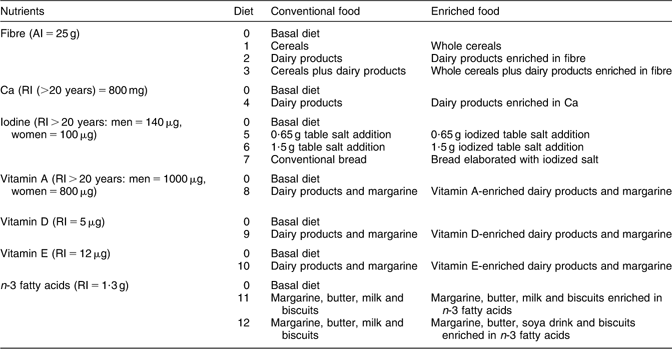
AI, adequate intake; RI, recommended intake according to the Spanish recommended values for adults.
Diet 0 is the basal diet and diets 1–12 introduce several modifications, depending on the nutrient.
With regard to fibre enrichment, several special diets were designed with different enriched foods. In diet 1, cereals (bread, breakfast cereals and biscuits) were substituted by whole cereals; in diet 2, dairy products (milk and yoghurt) were substituted by their fibre-enriched versions; in diet 3, both cereals and dairy products were changed. For calcium and vitamins A, D and E, only one alternative diet was proposed in each case, including foods found on the market that increased each compound (diets 4, 8, 9 and 10, respectively). For iodine, the developed diets followed different criteria because of the difficulty in finding iodine-enriched products. In Spain, iodization of salt is not obligatory, but iodine is allowed to be added at 60 mg/kg salt(15). The information given by WHO regarding the recommended total daily salt intake (5 g), the estimated total daily mean salt intake (11 g) and the percentage of table salt referred to the total mean salt intake (13 %) was taken into account in developing the different diets(5). Therefore, diet 5 was elaborated by substituting 0·65 g (13 % of 5 g) of table salt with iodized salt and diet 6, by substituting 1·5 g (13 % of 11 g) of the total salt with iodized salt. Finally, diet 7 was developed by substituting the bread included in the basal diet (180 g/d) with bread made with iodized salt.
For n-3 fatty acids, two diets were proposed to increase the supply of these nutrients. Both of them substituted the conventional margarine, butter and biscuits of the basal diet with their corresponding enriched alternatives. Moreover, these diets included the substitution of milk with n-3-enriched milk (diet 11) or with soya drink (diet 12).
Trained dietitians derived the energy and nutrient intake of the 28 d dietary plan from Spanish food composition tables, using a computer program (Calidiet, University of Navarra, Spain). Values of n-3 and n-6 fatty acids were taken directly from food composition tables(Reference Moreiras, Carbajal and Cabrera16). Derivation was made before and after the substitution of diets by the enriched foods. All data were compared to the recommended intake (RI) or AI of energy and nutrients for the Spanish adult population(Reference Moreiras, Carbajal and Cabrera16).
Data analysis
Statistical analysis was performed using the Statistical Package for the Social Sciences statistical software package version 15·0 (SPSS Inc., Chicago, IL, USA). Data presented are mean, sd, median, interquartile range (25th and 75th percentiles), minimum and maximum. Normal distribution was analysed with the Kolmogorov–Smirnov tests. Non-parametric tests (Friedman and Wilcoxon) were used to compare data obtained from the different substitutions on each compound.
Results and discussion
Regulation (EC) No 1924/2006 of the European Parliament and of the Council of 20 December 2006 on the nutrition and health claims made on foods pointed out that a varied and balanced diet is a prerequisite for good health, having products that have a relative importance in the context of the total diet. Thus, it is interesting to evaluate the diets in a global context to conclude about their suitability in relation to generally accepted nutritional recommendations.
The present study aimed at following a theoretical approach to the intake of enriched foods, based on data obtained from food composition tables and from labels of the foods included in the study. However, the different bioavailability of nutrients was not taken into account. Table 2 shows the nutritional composition of the enriched foods used for the substitutions. It can be observed that, in general, except for the component in which the modified food is enriched, the composition of these products can be considered equivalent to that of conventional foods. Only one exception deserves a comment: modified margarine and butter showed a significantly lower amount of fat than did conventional products.
Table 3 shows the mean amounts of the different nutrients for the basal and modified diets during the 28 d of the dietary plan. Other descriptive parameters are also included (sd, median, percentiles (25th and 75th), minimum and maximum). Table 4 shows the descriptive parameters with regard to the percentages of the RI or AI for each nutrient covered by the different diets.
Descriptive statistics obtained for the amounts of the different nutrients in the different diets
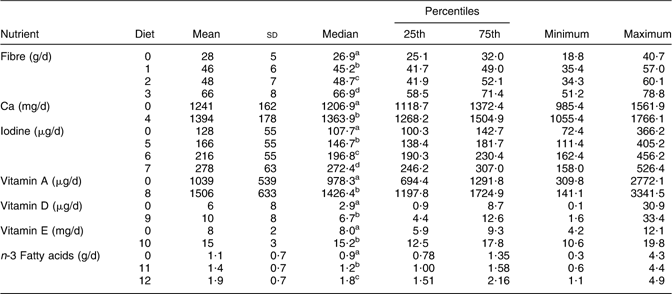
Results include the mean value, sd, the median, the 25th and 75th percentiles and the minimum and maximum values for the 28 d.
Mean values within a column with unlike superscript letters were significantly different among diets within each nutrient (P < 0·05).
Descriptive statistics obtained for the percentages of RI or AI covered by the different diets
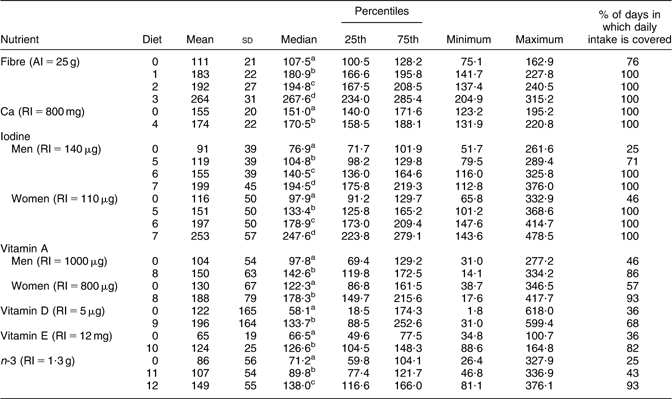
Results include the mean value, the standard deviation, the median, the 25th and 75th percentiles and the minimum and maximum values for the 28 d.
RI, recommended intake; AI, adequate intake.
Mean values within a column with unlike superscript letters were significantly different among diets within each nutrient (P < 0·05).
With regard to fibre intake, a mean value of 28 g/d was observed for the basal diet, higher than 25 g, which was taken as the AI (Table 3). On a daily basis, 76 % of the days achieved the AI (Table 4). The day with the minimum supply reached 75·1 % of the AI.
In the Dorica II Study, mean fibre consumption was 21 g/d in men and 18 g/d in women(Reference Aranceta, Pérez and Serra17). Another study carried out on thirty-eight postmenopausal women aged between 46 and 60 years showed that this population consumed 21·3 g fibre/d(Reference Schoppen, Carbajal and Pérez-Granados18). The results obtained in another study carried out on children gave similar values (19·4 g/d)(Reference García, López-Sobder and Aparicio19). Castetbon et al. (Reference Castetbon, Vernay and Malon20) estimated that the daily mean intake of fibre in France is 19·1 g/d in men and 15·9 g/d in women, similar to the intake in Spain. The Seguimiento Universidad de Navarra (SUN) cohort study revealed intakes of fibre in Spanish university graduates to be around 26·7 g/d, an amount similar to that observed in the present study. In this cohort, fibre from cereals was statistically significantly associated with a reduction in the risk of hypertension, with wholegrain bread being the main source of this type of fibre(Reference Alonso, Beunza and Bes-Rastrollo21).
When foods enriched in fibre (cereals, dairy products and a combination of both) were included in the diet instead of their respective conventional products, significant increases of fibre were detected every day, with amounts over the RI. In some cases, it was even possible to observe that the intake could be extremely high. Diet 3 (including enriched cereals and dairy products) reached a mean value of 66 g/d with a range of 51·2–78·8 g/d, which means 204–315 % of the RI. It has to be noted that there are studies pointing out that an excessive intake of fibre can cause adverse effects. The consumption of high amounts of dietary fibre may cause a decrease in the absorption of minerals such as iron, calcium and zinc(Reference Gómez, Rosado and Pérez22). Excessive fibre consumption can also cause an increase in gastrointestinal motility, flatulence, nausea, etc.(Reference Livesey23). Moreover, Escudero and Gonzalez(Reference Escudero and González24) confirmed some cases of intestinal obstruction and formation of phytobezoars with the ingestion of a high amount of non-fermentable fibre, especially when water intake is limited.
Dairy products are an important constituent of food in preventing osteoporosis, as they are the major source of dietary calcium(25), and are hence important for the effects of calcium on bone(Reference Heaney26). The daily requirement for calcium is set at 800 mg, which was always achieved in the basal diet, as the minimum calcium intake was 985·4 mg. The mean value for the basal diet was 1241 mg/d, whereas 1394 mg/d (174 % of the RI) was reached when using calcium-fortified foods (Tables 3 and 4). These data agree with data reported by WHO(27), in which calcium intake by adults in Spain is 1267 mg/d, and with data from the SUN cohort(Reference Alonso, Beunza and Delgado-Rodriguez28).
However, other studies have revealed dietary calcium insufficiencies. The calcium intake of Spanish university students was below the recommendations, between 650 mg/d and 750 mg/d, and it was lower in women(Reference Oliveras, Nieto and Agudo29). However, calcium consumption of elderly people was 792 mg/d for women and 813 mg/d for men(Reference Villarino, García-Linares and García-Fernandez30).
In a study carried out with Irish adults, it was observed that the mean calcium intake of this population was 805 mg/d for men and 938 mg/d for women. It was also observed that 66 % of individuals (65 % of men and 68 % of women) consumed fortified foods(Reference Joyce, Hannon and Kiely31). Calcium intake in France was 974 mg/d in men and 837 mg/d in women(Reference Castetbon, Vernay and Malon20). The results show that with the designed basal diets there is no need to include calcium-fortified foods to cover current recommendations. The use of enriched foods such as dairy products significantly increased the amounts of calcium in the diet, reaching amounts much higher than the RI. It has been proved that a high intake of calcium has deleterious effects on health, as it is associated with prostate cancer(32). Zinc absorption can also be reduced, as a result of interactive effects with the intestine(Reference Abrans and Atkinson33). Nevertheless, the highest amount of calcium found in the present study corresponded to that in diet 4, reaching a maximum of 1766 μg/d, still far from the UL (upper limits) for this mineral (2500 mg/d).
In contrast to the contribution of calcium in the basal diet, a deficient iodine supply was observed. Vitti et al.(Reference Vitti, Rago and Aghini-Lombardi34) pointed out that most European countries are still characterized by mild-to-moderate iodine deficiency. Iodine RI are 110 μg/d for women and 140 μg/d for men. Although in the basal diet a mean intake value of 128 μg/d for the 28 d was observed, it has to be noted that the median was 107 μg/d. Only in 25 % of days for men and in 46 % for women did the basal diet cover the daily recommended values. The maximum iodine level (366·2 μg/d) was due to the presence of red mullet (Mullus sp.) in the menu. Hake, salmon, mackerel and tuna also contributed to adequate iodine intakes on other days of the dietary plan. Effectively, the presence of fish in the diets allowed to achieve the mean dietary recommended iodine intake considering the 28 d plan. The use of iodized table salt instead of common salt (diet 6) allowed reaching the RI of iodine every day, for both men and women. According to WHO, the current salt intake nowadays in Spain is around 11 g/d. If iodized table salt was provided at this level, no iodine deficiency would be observed, reaching intakes of around 216 μg/d. Considering that the recommended salt intake is established at 5 g/d, iodine deficiency in that case would also be significantly reduced (diet 5) with the recommendations covered for women every day and in 71 % of the days for men (mean value = 166 μg/d). Vitti et al.(Reference Vitti, Rago and Aghini-Lombardi34) showed that the strategy of salt iodization is very cheap, taking into account the beneficial impact of a correct iodine intake on health. When the developed diet substituted the use of daily bread (180 g/d) made with iodized salt (diet 7) instead of common salt, the results were even more favourable, with a mean intake of iodine of around 278 μg/d, which meant 199 % and 253 % of the RI for men and women, respectively. This fact let us to conclude that the development of new products made with iodized salt could be a very easy and efficient technological strategy to decrease iodine deficiency.
With regard to fat-soluble vitamins, the mean values observed for the basal diets reached the RI for vitamins A (men and women) and D. In the case of vitamin A, the RI for men was higher than for women, and the median for the percentage of RI was 97·8 %, indicating that on a significant number of days the intake of vitamin A for men did not reach 100 % of the RI (the 25th percentile was 69·4 % of RI; Table 4). The supply of vitamin D showed a high dispersion (sd), with a median of around half of the RI (58·1 %). The worst situation was found for vitamin E, which showed a mean and a median supply of 8 mg/d, with 12 mg/d being its RI. This amount was covered only in 4 % of the days. In fact, the value found for the 75th percentile was only 9·3 mg/d. These findings were likely due to the strict control of the fat content in the designed diets. In a study developed in Spain, it was found that the consumption of vitamin A is 800·63 μg/d(Reference Morales, Ochoa and López-Frías35), and in a previous one the consumption was found to be 686 μg/d for men and 665 μg/d for women(Reference Aranceta, Serra and Pérez36). Moreover, vitamin A deficiency may be a cause of anaemia, although further study is needed to characterize both the pathogenesis and public health importance of this pathology(Reference Semba and Bloem37).
In Spain, the eVe Study(Reference Aranceta, Serra and Pérez36) provided data confirming the possible deficiency of vitamins D and E with mean intakes for men and women under the RI (vitamin D, men 2·42 μg/d and women 1·96 μg/d; vitamin E, men 9·1 mg/d, women 8·3 mg/d). Furthermore, Sebastian et al.(Reference Sebastian, Cleveland and Goldman38) carried out a study in older adults, concluding that the use of vitamin/mineral supplements had a positive influence on nutrient adequacy in men and women aged ≥51 years.
When vitamin A-enriched dairy products and margarine were used as substitutes of conventional foods (diet 8), the mentioned insufficiencies decreased significantly, increasing the number of days on which these RI were covered, achieving a median value of 1426 μg/d. In fact, the 25th percentile already covered the RI for both men and women. The UL for this vitamin was established at 3000 μg/d. This value was reached only once during the 28 d dietary plan (3341·5 μg/d), where spinach and carrots contributed significantly to vitamin A intake. As the 75th percentile showed a value of 1724·9 μg/d, it could be concluded that no problems of excessive intake were detected.
For vitamin D (diet 9), the supply was also higher than the RI, with a mean of 10 μg/d, which was twice the RI but far from the UL (50 μg). The enriched diets showed a median value of 6·7 μg/d, covering the RI, which was an interesting improvement compared to the basal diet. However, probably the most relevant change was for vitamin E, where the enriched foods allowed reaching a mean intake value of 15 mg/d, with the 25th percentile already showing a supply of 12·5 mg/d, covering the RI for this vitamin.
Finally, we analysed the condition of n-3 fatty acids. As observed for vitamin E, the mean contribution of n-3 fatty acids was insufficient to cover the dietary recommendations (1·3 g/d), nor did the median value cover the RI. Specifically, the basal diet covered the daily requirements only on 25 % of the days (Table 4). According to Sanchez-Villegas et al.(Reference Sanchez-Villegas, Henriquez and Figueiras39) the n-3 mean intake of the Spanish population is 0·99 g/d, a value that does not reach the RI for these fatty acids.
The inclusion of enriched margarine, butter, milk and biscuits (diet 11) contributed to improving the intake of n-3, increasing the mean supply from 1·1 g/d to 1·4 g/d (Table 3) and the number of days reaching the RI from 25 % to 43 % (Table 4). However, only the substitution of milk by soya drink, margarine, butter and biscuits (diet 12) was able to reach the RI on most of the days (93 %; Table 4), obtaining a mean intake of 1·9 g/d and with a median of 1·8 g/d (Table 3). Besides the increment in the supply of n-3 fatty acids achieved with diets 11 and 12, a decrease in the n-6:n-3 ratio (from 10·4 in the basal diet to 7·6 in the modified diets) was observed, which is also a beneficial effect. The n-6:n-3 ratio in occidental countries is 15(Reference Wood, Richardson and Nute40), the recommended values being about 4–5(Reference Wood, Richardson and Nute40, Reference Kris-Etherton, Harris and Appel41).
The use of soya drink instead of milk as a source of n-3 fatty acids (diet 12) did not affect the fibre, energy or protein content of the diet. However, the supply of calcium, although quantitatively similar in this diet to that in the basal diet, showed a different bioavailability depending on the salt used for supplying calcium in this product(Reference Heaney, Dowen and Rafferty42, Reference Zhao, Martin and Waver43).
Conclusion
The analysed basal diet designed taking into account established guidelines showed deficiencies in iodine, vitamin E and n-3 fatty acids. However, no problems were found with regard to fibre and calcium. The substitution of conventional foods by enriched foods could increase the supply of all the studied compounds, helping to significantly decrease nutritional deficiencies.
Acknowledgements
The present study was supported by the ‘Programa Consolider-Ingenio 2010 CARNISENUSA CSD2007-00016’ and the ‘Proyecto AGL2008-01099/ALI’ (Ministerio de Ciencia e Innovación). The material in this manuscript has not been submitted to any journal, and to the best of the authors’ knowledge contains no material previously published or written by another person. The authors have no conflicts of interest. I.B. contributed to the calibration of diets, data processing and first draft elaboration; M.C., A.R.d.l.H. and S.S. contributed to the design of basal diets; A.J.M. contributed to the data processing and editing; I.A. was the project leader and contributed to the experimental design and writing of the manuscript; D.A. contributed to the experimental design, statistical assessment and writing of the manuscript. Master Europeo en Alimentación, Metabolismo y Nutrición (University of Navarra) is acknowledged.



