


In England, the number of involuntary admissions to hospital under the Mental Health Act has increased over the past 20 years.Reference Keown, Weich, Bhui and Scott1 Last year, there were 63 622 involuntary admissions, constituting 57% of the total psychiatric admissions in the country.2
Shared decision-making
Shared decision-making is a process in which clinicians and patients work together to select management or support options.3–5 Important aspects of shared decision-making are that care or treatment options are fully explored, along with their risks and benefits, different choices available to the patient are discussed, and a decision is reached by the patient together with a health and social care professional.5 The National Institute for Health and Care Excellence (NICE) has suggested as a quality standard for in-patient care that ‘People in hospital for mental health care, including service users formally detained under the Mental Health Act, are routinely involved in shared decision-making’.6 The involvement of patients in decision-making in hospital is also emphasised by the Code of Practice for the Mental Health Act in England,3 which states that ‘Patients should be fully involved in decisions about care, support and treatment’. Qualitative studies interviewing involuntary hospital patients have shown that participation in decisions while in hospital is important to improve their experience of care,Reference Katsakou and Priebe7, Reference Katsakou, Bowers, Amos, Morriss, Rose and Wykes8 and that shared decision-making practices can preserve their feelings of autonomy, enhance their sense of safety and convey respect to them.Reference Valenti, Giacco, Katsakou and Priebe9 However, a recent report by the Care Quality Commission (CQC) on monitoring the Mental Health Act has criticised current practice for lack of patient involvement in care decisions.2 The CQC emphasised that this is a key priority for improving care.
Current study/research
Despite previous studies having highlighted the wishes of involuntary hospital patients to be involved in decisions within the hospital, there has been little research on what can hinder or facilitate shared decision-making practices with these patients. In the current study, we have explored the views of both patients and clinicians on barriers and facilitators to shared decision-making during involuntary hospital treatment. This could inform changes in clinical practice to make sure that patients are involved in care.
Specifically we addressed the following research questions.
(a) What are the barriers to shared decision-making with patients treated under the Mental Health Act?
(b) What can make patient involvement in decisions easier?
Methods
Design
This was a qualitative study with the aim of generating ideas regarding potential barriers and facilitating factors to shared decision-making during involuntary hospital treatment.
We collected patients' and clinicians' views in focus groups, as group discussions are particularly helpful for generating new ideas to improve practice.Reference Leung and Savithiri10
We were also interested in hearing from people who were not fluent in English, as language barriers may be an additional issue making it difficult for patients to participate in clinical decisions.Reference Suurmond and Seeleman11 However, there were practical difficulties in including patients who did not speak English in a focus group discussion. Hence, we conducted additional individual interviews, with an interpreter, with involuntary hospital patients who were unable to speak conversational English so that their views were not excluded.
The sampling strategy did not include mixed focus groups (i.e. including both patients and clinicians) as the sensitive nature of the topic and the potentially divergent views among participant groups may have inhibited an open discussion.
Sampling was purposive in order to include patients who were in hospital at the time of the focus group and those who had been discharged from an admission under the Mental Health Act and were being treated in the community. We conducted one focus group for each group of clinicians (psychiatrists, psychologists and nurses).
We stopped at a sample size of 38 participants, as interim analysis indicated that ‘data saturation’ had been reached, as no new themes were emerging and there was redundancy in the data.Reference Saunders, Sim, Kingstone, Baker, Waterfield and Bartlam12
A topic guide for the focus groups and interviews was developed by four researchers (D.G., L.M., J.G. and S.P.), covering potential barriers to, and facilitators of, involving patients in decision-making during involuntary hospital treatment.
Data collection
We conducted four focus groups and six individual interviews with patients who had experienced being involuntarily admitted to hospital within the previous 4 months, and four focus groups with clinicians working in hospital wards in East London National Health Service (NHS) Foundation Trust.
The patients were identified through community clinicians' caseloads, and then those invited for the focus groups and interviews were randomly selected. This strategy was adopted to ensure that the clinicians would not know which patients were taking part in the research. Three focus groups with patients were conducted within the ward and one with patients who had been discharged. Individual interviews using an interpreter were carried out with patients currently being treated in hospital under the Mental Health Act.
Participants were recruited between April 2016 and January 2017. After being given a complete description of the study, they gave written informed consent to participate.
The focus groups were conducted by three researchers for this study overall (L.M., J.G. and D.G.). For each focus group, two researchers were present; one of them acted as facilitator and one as co-facilitator. In the focus groups with patients, either the facilitator or the co-facilitator was clinically trained (D.G. or J.G.) to identify any risk issues arising during the focus groups. Focus group facilitators were not involved in patients' care. The focus groups took place at facilities within East London NHS Foundation Trust and lasted between 60 and 90 min.
Interviews with participants who required an interpreter were conducted by two researchers (M.C. and J.G.), one of whom was clinically trained (J.G.), and lasted between 30 and 60 min.
The London – London Bridge Research Ethics Committee (ref: 16/LO/0384) approved the study, which has therefore been performed in accordance with the ethical standards laid down in the 1964 Declaration of Helsinki.
Analysis
The focus groups and interviews were audio recorded and transcribed verbatim by the researchers or by an external transcription company, omitting any identifiable data (e.g. names and locations). The transfer of data to the transcription company was carried out using a secure system, and the company respected the same standards of confidentiality used in the NHS. The transcripts were then subjected to thematic analysis. Open coding was used to explore, name and categorise topics found in the text. To examine coding reliability, the researchers independently coded three focus groups (L.M. and J.G.) and three individual interviews (M.C. and J.G.) and compared their results. A coding frame was developed for the focus groups and individual interviews, and then the researchers coded all of the transcripts, using N-VIVO software (version 11), for qualitative data analysis.13 Core themes emerging from the data were identified and refined through discussion among the authors,Reference Braun and Clarke14 who have different backgrounds (research methodology, social sciences, psychology, psychiatry).
We analysed the three groups of transcripts together (patients' focus groups, clinicians' focus groups' and interviews with non-English-speaking patients), looking to identify emerging themes across the three groups. We then looked into whether the themes represented ideas present across all three groups of transcripts, or whether they were specific to one of the groups. When we found themes occurring only in one group, we reported those in our results and specified that the themes were only reported by one group of participants.
Results
Sample
Focus groups
Eighteen out of 40 invited patients and 16 out of 19 invited clinicians agreed to take part in the focus groups. Of the patients who required an interpreter (n = 9), six agreed to take part. Hence, the response rate for participation in the study was 49.0% for patients and 84.2% for clinicians.
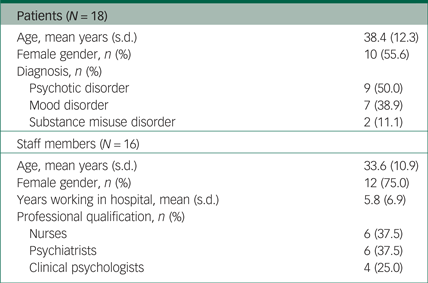
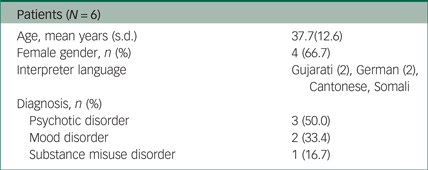
The general sociodemographic, work-related and clinical characteristics of the patients and clinicians who took part in the focus groups are summarised in Table 1. Those of the patients who took part in individual interviews are given in Table 2.
Focus groups: patient and staff characteristics
Individual interviews with interpreters: patient demographics
Among the focus group participants, ten patients were female (55.6%) and eight were male (44.4%), with a mean age of 38.5 (s.d. = 12.6) years. Eight patients had a diagnosis of psychotic disorder (44.4%), seven of mood disorders (38.9%) and two of substance misuse-related mental disorders (11.1%).
All patients participated in the focus groups within 4 months of their last involuntary admission.
The mean age of clinicians was 33.6 (s.d. = 10.9) years. Twelve were female (66.7%) and four were male (33.3%). They had been working in mental health hospitals for 5.8 (s.d. = 6.9) years.
Individual interviews
Of the patients who used an interpreter (n = 6), four were female (66.7%) and two were male (33.3%). Their mean age was 37.7 (s.d. = 12.6) years. Three had a diagnosis of a psychotic disorder (50%), two of mood disorders (33.3%) and one of a substance misuse-related disorder (16.7%). The languages of the interpreters were Gujarati (n = 2), German (n = 2), Cantonese and Somali.
The themes arising from the qualitative analysis are summarised in Fig. 1.
Barriers and facilitators for involvement of involuntary hospital patients in care decisions.

Barriers to patient involvement in decisions
Difficulties in communication
Difficulties in communication were described as hindering participation in care decisions in two different ways.
A common concern among patients was that they sometimes found it difficult to explain their symptoms and their preferences about their care to clinicians:
‘I think when you got a physical problem, it is quite easy to explain that to a doctor. But when the stuff is schizophrenia is a little bit difficult […] To understand schizophrenia is a little bit complicated, you know’ – Patient A01
On the other hand, some of the terminology used by clinicians was not easily understood by patients or could cause them concern:
‘They [the patients] just feel like they are being jailed and they don't understand, you know. The mental health [staff] described it as “detention”, for example, in a patient's mind it's like “I can't leave” or “it's the same as being thrown into a cell”’ – Patient I01
Clinicians mentioned that some training in communication techniques aimed at facilitating patient involvement in decision-making and negotiation might help:
‘Yeah, I mean. I think any sort of training in communication and helping with choices and that sort of thing is probably helpful. ‘Cause as much as you do in psychiatry, in psychiatry you learn how to ask questions, I don't know if you really learn how to negotiate that much …’ – Clinician D04
Noisy and busy ward environment
Both patients and clinicians stressed that the environment on the ward did not provide the most suitable setting for a discussion on decision-making to take place. Patients mentioned that the wards were noisy and busy, although this varied depending on the specific ward, the day or the patients who are in hospital at a given time. Patients referred to noise caused by other patients on the ward:
‘Because some on [ward name] there were very noisy people …’ – Patient A01
‘Constantly noisy, crowdie, screamy…’ – Patient A07
Clinicians also referred to noisiness on the ward caused by other factors such as televisions. Clinicians also mentioned the ‘rule-based’ nature of the ward, which might affect the patient–clinician relationship in shared decision-making, owing to the perception of immovable dynamics and policies of the ward:
‘I think in terms of things that you can control, location is obviously important in the middle of a busy ward where all the TVs are blurring next to you. Finding a more private space is probably better’ – Clinician D04
‘I think that we should involve also the staff on the ward, because what I'm seeing recently is that the patients want to be listened to, but the environment on the ward is so difficult and so chaotic. We are there trying to listen to their expectations, the way they feel so we can try to change something but if the environment remains the same is very difficult to do’ – Clinician D06
A number of clinicians mentioned that due to the ward being so busy, they were sometimes unable to find a space to sit down with the patient and have a conversation:
‘I think N02 made a really good point about there just not necessarily being any physical space to have a quiet conversation yeah’ – Clinician N04
Challenges in involving carers
Carer involvement was discussed as both a facilitator of and a hindrance to shared decision-making. Carer involvement was seen as potentially making decision-making more challenging, as it requires clinicians to have the skills to manage a three-way conversation. This is particularly difficult when carers have different views from those of the clinician of the patient's current mental state, or if they are experiencing high levels of stress themselves because of the patient's admission.
Clinicians reported the concern, in relation to carer involvement, that the more people are present during a discussion, the more points of view need to be considered and the more difficult it is to reach a consensus:
‘Obviously the more people are involved, the more points of conflict there are and the more there is to be negotiated you know but by not involving them, you don't take that complexity away necessarily’ – Clinician P04
Clinicians also mentioned that the decision-making process might become more difficult if the carer has not understood the severity of the patient's situation, or when carers are facing emotional difficulties and high stress because of the patient's admission:
‘The only issue that springs to my mind is if a carer is possibly in denial of how unwell their relative is’ – Clinician N03
‘Cause emotions are usually pretty high with the carers when they first come in, so being mindful of that’ – Clinician P01
Patients talked about the stress that an involuntary admission can have on their carers, making it difficult for carers to participate in decisions:
‘It's not easy for the carer. They've got work, they've got this, they've got that, they've got to go to the person's home, they've got to and get the clothing …’ – Patient I01
Facilitators of patient involvement in decisions
The sooner the better
Most patients and clinicians believed that involvement in decision-making would be facilitated by beginning the process as early on in the admission as possible. They suggested that the discussion should happen in the first week, and, even within that first week, it was suggested that the earlier it takes place the better. Having a negative experience in the first few days may reduce involvement and engagement in care throughout the admission:
‘The sooner the conversation happens the better. Then, the ward staff can help me, especially to get used to, or to understand what are the main basic rules of psychiatric work in the ward, for example’ – Patient B02
‘In the first two days it [shared decision-making] can produce a positive effect […] a lot of the time what happens is you are admitted on a Friday and it's not likely you would see a psychiatrist on the Monday. It could be up until the Wednesday before you are allocated a psychiatrist and by that time, if there is any negativity it's already set in and it's firmly set in’ – Patient I01
‘I do agree with the earlier, the better because I think once they can have a conversation where it's more of a conversation and a dialogue then they know what is happening, and how it will go on’ – Clinician P01
Involvement of the whole clinical team
Clinicians spoke about the involvement of the whole team being important for patient involvement in decision-making. They suggested that, in order for a decision to be implemented, all of the professionals who are part of the team should be informed and contribute as needed:
‘And you'd have to get everyone on board […] all the way up to the consultants, the psychologists and everything. Everyone would have to be signed up to it’ – Clinician N04
‘Decisions that are made, everybody else needs to be on board with that, the whole team I mean, because you'll find that people are in different places and it doesn't always work out so the service user is thinking “when do I get a say in this”? […] to make it successful everyone needs to be on board with it I think’ – Clinician P01
Including carers: additional information and patient comfort
Another way of facilitating involvement in decision-making was including carers. At the beginning of their admission, patients may be feeling distressed and may have difficulties expressing their thoughts and engaging in a conversation. The presence of their carer can make the patients comfortable enough to express their wishes. In some cases, they may help the patient to talk about their priorities:
‘‘Cause the person doesn't know what's going on with your … you are just brought in you are confused, you are panicking a little bit and then you just want your family to answer a couple questions for you’ – Patient A12
‘They know you inside and out, they know how to answer those questions when you are unwell.’ – Patient A07
Clinicians also felt that carer inclusion may lead to patients feeling more comfortable:
‘I was thinking about this earlier actually and especially if a patient is too unwell to engage, then their carers probably have a far better idea of what they'd like than I do. So having a conversation with the carer, if the patient wants them to be involved, could help’ – Clinician N04
‘A lot of patients will feel they need someone on their side so a relative or a friend or someone like that just to make them feel a bit more comfortable, a bit more backed up’ – Clinician D04
Positive relationships with staff members
The views expressed by patients who used an interpreter were generally similar to those discussed in focus groups. However, one of the themes that emerged for these patients in particular was the importance of relationships with staff on the ward in helping involvement in decision-making. When asked what might matter most in supporting involvement in decision-making, patients spoke about having a good relationship with specific clinicians, the importance of being listened to and how not feeling listened to was a barrier:
‘I have very good relationships with the staff working here, I think this is most important’ – Patient II02
‘[The staff] some of them, they listen to what you want. Some of them they ignore what you are saying, absolutely … that makes it difficult’ – Patient II06
Discussion
Main findings
Across clinicians' and patients' focus groups and in individual interviews, challenges in communication between patients and clinicians and the noisy and busy environment of the wards were seen as barriers to the involvement of patients in clinical decision-making. On the other hand, across all groups, involving patients in decisions was thought to be easier when it was actively facilitated from the first days of admission.
Some themes came out more strongly in specific groups. For example, clinicians mentioned the importance of having the full clinical team involved in this shared decision-making endeavour, while in interviews with non-English speaking patients, the role of positive working relationships with staff members was seen as particularly important.
Involving carers was identified as a facilitator of involvement in decision-making, through providing more information on the patient and as a source of support and comfort. However, carer involvement was also discussed as bringing additional challenges to shared decision-making, related to managing three-way conversations with people who may be experiencing high levels of stress or have different understandings of the patient's condition.
Strengths and limitations
This was the first study to explore barriers and facilitators to shared decision-making with involuntary hospital patients. In order to ensure that patients felt free to express their views, we adopted a complex recruitment strategy, randomising which eligible patients would be invited to the focus groups so that clinicians would not be able to identify which patients participated. The sample size was higher than that of most focus group studies in healthcare research.Reference Carlsen and Glenton15 We included different types of professionals involved in delivering in-patient care, i.e. psychiatrists, clinical psychologists and nurses, as well as patients with different diagnoses (see Table 1). We recruited patients who were in the ward at the time of the study, and also patients who were currently being treated in the community but had been involuntarily admitted within 1 year of the study. This allowed us to obtain the views of currently detained people, as well as those who had experienced the entire process of involuntary treatment, including discharge. Interviewing involuntary in-patients who did not speak English fluently, with an interpreter, allowed us to access the views of patients who are potentially at an increased risk of not being involved in decisions, and whose views are often not represented.
The limitations of the study were as follows. (a) Recruitment was limited to a specific area, East London. This is a metropolitan area with a high deprivation index,16 which could cause substantial pressure on psychiatric hospital beds and a high threshold for admissions to hospital. This may have somewhat influenced the views of professionals and patients. However, the general barriers and facilitators identified may be applicable to other services and areas. (b) We did not sample based on ethnicity. Cultural views about mental distress might influence attitudes toward treatment and involvement in care decisions; however, the sample included people with different ethnicities, being a reflection of the diverse population living and accessing mental health services in East London. (c) The main methodology used was that of focus groups, which may be less sensitive to individual experiences of care. However, personal experiences were not the focus of our study: we tried to elicit perspectives and views on how to ensure that patients are involved in decision-making when detained. Focus groups help in obtaining general views and preferences, as they allow their participants to react to and build on the responses of others.Reference Carlsen and Glenton15 Participants' specific experiences, including severity of symptoms, type of drug treatment, having received coercive measures and level of family support are likely to have influenced their views on involvement in decision-making. These factors can vary greatly among people who are involuntarily admitted but were not explored in our topic guide. We aimed to obtain general suggestions on barriers to, and facilitators of, shared decision-making during involuntary hospital care.
Comparison with previous literature
This is the first study to specifically explore shared decision-making in the context of involuntary hospital care. It builds on previous qualitative studies showing that participation in clinical decisions is important to improve experience of care of people who are involuntarily admitted to hospitalReference Katsakou and Priebe7–Reference Valenti, Giacco, Katsakou and Priebe9 and identifies barriers and facilitators to the practice of shared decision-making during involuntary hospital treatment.
Some barriers and facilitators reflect those found in other studies exploring implementation of good practice standards in routine healthcare.Reference Eassom, Giacco, Dirik and Priebe17 For example, challenges in communication with the patient or carers have also been identified by strategies to increase carer involvement in mental health treatment.Reference Eassom, Giacco, Dirik and Priebe17 Interestingly, previous research on improving quality of care supported involving the full clinical team, as was found in the present study's clinician focus groups.Reference Edmondson, Bohmer and Pisano18, Reference Fixsen, Blase, Naoom and Wallace19
However, other factors may be more specific to mental health interventions carried out in hospital. We identified challenges related to the noisiness of the ward and difficulty of finding private spaces, which may hamper one-to-one conversations. This may need to be addressed when designing psychosocial interventions to change hospital-based practices. For example, the interventions may need to be simple enough to be delivered in patients' rooms.
The finding that people who are not fluent in English rely strongly on positive relationships with some staff members can be interpreted in light of the previous literature.Reference Ferguson and Candib20 People with limited skills in the language of the host country tend to select staff whom are either of the same cultural and linguistic background or more able to communicate in a clear and intelligible fashion.Reference Ferguson and Candib20, Reference O'Brien and Shea21
Implications of the findings
Clinical implications
The findings from this study provide a basis for clinical procedures to be developed to encourage and support patient involvement in clinical decisions when they are involuntarily admitted to hospital. This is in line with NICE recommendations stipulating that systems and standardised procedures should be in place to routinely involve patients in decisions in hospital, including patients formally detained under the Mental Health Act.5, 6 Given the particular context of involuntary hospital treatment, not only decisions about treatment, but also decisions about some other pragmatic aspects related to life in hospital (food, security on the ward, leave, etc.) should be taken into account to facilitate a better experience of care.Reference Katsakou and Priebe7–Reference Valenti, Giacco, Katsakou and Priebe9
A key issue is making sure that the patients are involved in decisions from the first days of admission. These days seem to constitute a critical period for establishing a positive relationship with clinicians.Reference Katsakou and Priebe7–Reference Valenti, Giacco, Katsakou and Priebe9, Reference Priebe, Katsakou, Amos, Leese, Morriss and Rose22–Reference Kallert, Katsakou, Adamowski, Dembinskas, Fiorillo and Kjellin24 Even though the patient may be agitated or highly distressed, failing to involve them in decisions from the beginning may generate a negative initial experience that can affect the admission as a whole. On the other hand, a positive experience of care within the first days of admission is predictive of better long-term outcomes of treatment.Reference Priebe, Katsakou, Amos, Leese, Morriss and Rose22–Reference Kallert, Katsakou, Adamowski, Dembinskas, Fiorillo and Kjellin24
Difficulties in clinician–patient communication may stand in the way of meaningful and therapeutic conversations. Hence, some attention should be given to equipping clinicians with the necessary communication skills to facilitate patient involvement in decisions. Such skills may involve active listening skills and the ability to elicit preferences and concerns from patients, no matter how distressed or agitated they are.
All or most of the clinical team members within a ward should be trained in these skills, so that a culture favouring patient involvement in decisions can be created and fostered.Reference Eassom, Giacco, Dirik and Priebe17, Reference Giacco, Dirik, Kaselionyte and Priebe25 Supervision sessions and reflective practice team meetings should also focus on this. This will increase the likelihood that lessons are learned from practice and that this feeds into continuously improving the quality of care.Reference Fadden and Heelis26, Reference Hyrkäs and Lethi27
Most clinicians and patients agreed that involving carers can empower patients and make it more likely that they feel comfortable and confident in expressing their views. There are, however, challenges in managing three-way conversations when there may be disagreements between carers, patients and clinicians. Training clinicians in how to involve families and friends of patients in clinical conversations and mitigate potential disagreements may help make the most of carer involvement.Reference Eassom, Giacco, Dirik and Priebe17, Reference Wortington and Ronney28–Reference Clarke, Puschner, Jordan, Williams, Konrad and Kawohl31
Research implications
Remarkably, at present no comprehensive interventions to improve involuntary hospital care have been systematically developed based on evidence or tested in randomised controlled trials.Reference Giacco and Priebe32 This study suggests that clinical behaviours intended to facilitate shared decision-makingReference Puschner, Becker, Mayer, Jordan, Maj and Fiorillo33 starting from early after admission, and to improve communication between patients and clinicians by involving the full care team and fostering positive relationships between patients and staff, may all be beneficial characteristics of novel interventions. Experience of care in hospital may be an important outcome for these patients, not only in itself, but also because a more positive experience of care in hospital is linked with better long-term outcomes.Reference Priebe, Katsakou, Amos, Leese, Morriss and Rose22–Reference Kallert, Katsakou, Adamowski, Dembinskas, Fiorillo and Kjellin24 Novel interventions to improve involuntary hospital care should be tested in experimental studies which have the same rigour as research carried out with other patients and in other contexts of care (e.g. randomised controlled trials or large-scale naturalistic evaluations).
Funding
This study was funded by the National Institute for Health Research (NIHR) Programme Development Grants for Applied Research (Ref.: RP-DG-1214-10004). D.G and S.P. were supported by the NIHR Collaboration for Leadership in Applied Health Research and Care North Thames at Barts Health NHS Trust. The views expressed are those of the author(s) and not necessarily those of the NHS, the NIHR or the Department of Health.
Acknowledgements
We acknowledge the contributions of all patients and clinicians who provided their time and input for the focus groups and interviews.


 Open access


eLetters
No eLetters have been published for this article.