



Fe deficiency (ID) and inadequate intakes of n-3 fatty acids (FA) often coexist in child populations, particularly in developing countries. Fe and n-3 FA play important roles in brain development and function( Reference Schuchardt, Huss and Stauss-Grabo 1 , Reference Lozoff 2 ), and both ID and low n-3 FA status have been associated with behavioural disorders, such as Attention-Deficit Hyperactivity Disorder (ADHD) and dyslexia, in children( Reference Cortese, Angriman and Lecendreux 3 – Reference Gow and Hibbeln 5 ). A great deal of evidence has shown that inadequate neuronal levels of the n-3 long-chain PUFA, DHA (22 : 6n-3) and EPA (20 : 5n-3), as well as inadequate brain Fe stores, can affect the morphological development, physiology and chemistry of the brain( Reference Schuchardt, Huss and Stauss-Grabo 1 , Reference Salem, Moriguchi and Greiner 6 – Reference Anjos, Altmae and Emmett 8 ). Furthermore, we have previously shown in rats that a combined deficiency of Fe and n-3 FA resulted in greater deficits in monoaminergic neurotransmission than a deficiency in Fe or n-3 FA alone( Reference Baumgartner, Smuts and Malan 9 ). Particularly, deficits in dopaminergic and serotonergic neurotransmission may be responsible for behavioural abnormalities during childhood( Reference Gow and Hibbeln 5 , Reference Transler, Mitchell and Eilander 10 ).
Even though several observational studies have shown that children with ADHD have low n-3 FA and Fe status( Reference Schuchardt, Huss and Stauss-Grabo 1 , Reference Cortese, Angriman and Lecendreux 3 , Reference McNamara and Strawn 11 ), the therapeutic effects of n-3 PUFA supplementation in children with ADHD are not conclusive( Reference Transler, Eilander and Mitchell 12 ), and a recent systematic review has found that the same is true for Fe supplementation( Reference Cortese, Angriman and Lecendreux 3 ). However, while the majority of studies investigating the effects of n-3 FA or Fe supplementation on behaviour have been performed in children with a diagnosed behavioural disorder( Reference Richardson and Montgomery 13 – Reference Richardson, Burton and Sewell 15 ), such as ADHD or dyslexia, none or only a few studies have assessed the effects of Fe and n-3 FA supplementation, respectively, on behaviour in healthy school children( Reference Richardson, Burton and Sewell 15 – Reference McNamara, Able and Jandacek 20 ).
Behavioural abnormalities are often characterised by overactivity( Reference Sonuga-Barke and Rubia 21 ). In several rat studies, deficiency in dietary n-3 FA resulted in elevated locomotor activity( Reference Levant, Ozias and Davis 22 , Reference Levant, Zarcone and Fowler 23 ). In a recent study using a rat model of ADHD, the provision of an n-3 FA-enriched diet for 6 weeks significantly reduced motor activity when compared with the administration of an n-3 FA-deficient diet, which – according to the authors – could be interpreted as an improvement in hyperactivity( Reference Hauser, Makulska-Gertruda and Reissmann 24 ). However, to our knowledge, only one study has investigated the potential relationship between n-3 FA status and physical activity in healthy school children. A recent cross-sectional study conducted in 8- to 11-year-old Danish children without diagnosed ADHD has found a negative association between DHA status and physical activity, particularly of light intensity( Reference Damsgaard, Stark and Hjorth 25 ).
In contrast to n-3 FA deficiency, ID and ID anaemia have been associated with reduced voluntary motor/physical activity in animals and humans( Reference Lozoff, Klein and Nelson 26 – Reference Golub, Hogrefe and Germann 30 ); however, only some studies have found an increase in activity after correction of Fe status( Reference Harahap, Jahari and Husaini 31 ). The majority of these studies have been performed in infants. Nonetheless, it has been suggested that being physically active plays an important role in learning from the environment and in cognitive development during infancy( Reference Angulo-Barroso, Peirano and Algarin 32 ), and the same could be true for school children.
However, it is logical to presume that increased motor activity during class time may reflect on behaviours such as restlessness, squirming, inability to remain still and distracting others – all of which are ADHD-related behaviours – which could potentially be detected by using an accelerometer. To our knowledge, however, none of the studies conducted in school children without diagnosed behavioural disorders has used accelerometers to assess physical activity in a behavioural context during school time.
Therefore, the aim of the present randomised, double-blind, placebo-controlled trial was to investigate the effects of Fe and DHA+EPA supplementation, alone or in combination, on physical activity during morning class time, break time and after-break class time, and on teacher ratings of ADHD-related behaviour in Fe-deficient, non-ADHD-diagnosed South African school children. Furthermore, we explored whether physical activity levels during class time were associated with teacher-rated behaviour.
Experimental methods
Participants and study design
The present study was nested within a previously reported randomised, placebo-controlled, double-blind, 2 × 2 factorial trial that investigated the effects of Fe and DHA+EPA supplementation, alone or in combination, on cognition in 321 school children with poor Fe and n-3 FA status( Reference Baumgartner, Smuts and Malan 33 ). In brief, this trial was conducted between November 2009 and November 2010 at four primary schools serving low-income rural villages in the province of KwaZulu-Natal in eastern South Africa( Reference Baumgartner, Smuts and Malan 33 ). Inclusion criteria for the study were as follows: (1) 6–11 years of age; (2) Hb concentration >80 g/l; (3) ID, which was defined as either a serum ferritin concentration < 20 μg/l, a Zn protoporphyrin (ZnPP) concentration >70 μmol/mol haem in washed erythrocytes, or a serum transferrin receptor (TfR) concentration >8·3 mg/l; (4) apparently healthy, with no chronic illness; (5) no consumption of Fe- or n-3 FA-containing supplements. For the present study, all participating children from the largest of the four primary schools (n 98; from grades 2 to 4) were selected. This was the only school with a playing area of approximately 30 × 50 m, while the other three schools did not contain any playing space and were therefore excluded in order to minimise potential variability in physical activity caused by environmental factors. The present study was conducted according to the guidelines laid down in the Declaration of Helsinki, and all procedures involving human subjects were approved by the ethical committees of the North-West University and Swiss Federal Institute of Technology (ETH). Written informed consent from the parents or guardians and verbal assent from the children were obtained. The trial was registered at ClinicalTrials.gov as NCT01092377.
Randomisation and intervention
Details on randomisation, blinding and intervention have been described previously( Reference Baumgartner, Smuts and Malan 33 ). In brief, children were randomly allocated to receive (1) Fe plus DHA+EPA, (2) placebo plus DHA+EPA, (3) Fe plus placebo or (4) placebo plus placebo as oral supplements. The intervention began at the beginning of the school year and continued throughout the whole school year (8·5 months). The Fe-supplemented groups received one oral tablet of 50 mg Fe as iron sulphate (Lomapharm; Paul Lohmann GmbH) on 4 d/week during school days. The respective non-Fe-supplemented (placebo) groups received the same regimen of placebo tablets (Lomapharm; Paul Lohmann GmbH) that were identical in appearance to the Fe tablets. The DHA+EPA-supplemented groups received two oral capsules of fish oil that contained a total of 420 mg DHA and 80 mg EPA (Burgerstein AG) on 4 d/week during school days. The respective non-DHA+EPA-supplemented (placebo) groups received the same regimen of placebo capsules that contained medium-chain TAG (RP Scherer GmbH) and were identical in appearance and total fat content to the DHA+EPA capsules. The Fe or respective placebo tablets were administered under the supervision of a trained fieldworker in the morning when the children arrived at school (before 08.00 hours) together with a fruit-flavoured beverage providing approximately 10 mg vitamin C per serving. The DHA+EPA or respective placebo capsules were provided 2·5 h later during mid-morning break. In total, the supplements were provided for 105 d over a period of 8·5 months. The mean total Fe intake during the 105 d trial was 4·8 g in the groups that received the Fe tablets and corresponded to approximately 18 mg Fe/d across the entire study period (including weekends and holidays). The mean total DHA and EPA intakes were 41·2 and 7·8 g, respectively, in the groups that received the DHA+EPA capsules and corresponded to approximately 155 mg DHA and 29 mg EPA/d across the entire study period.
Anthropometric measures
Body weight and height were measured as described previously( Reference Baumgartner, Smuts and Malan 33 ). The age- and sex-specific height-for-age z-score, the weight-for-age z-score and the BMI-for-age z-score (BAZ) were calculated by using the 2007 WHO Growth Standards for children aged 5–19 years with the software WHO Anthro Plus for personal computers (version 1.0.3, 2010). Stunting was defined as a height-for-age z-score < − 2, and mild stunting was defined as a height-for-age z-score < − 1 and ≥ − 2. Children with a weight-for-age z-score < − 2 were classified as underweight, those with a BAZ >1 and < 2 were classified as overweight, and those with a BAZ ≥ 2 were classified as obese.
Biochemical indicators
Venous blood samples (10 ml) were drawn into EDTA-coated and trace element-free evacuated tubes (Becton Dickinson) at baseline and endpoint. Hb concentrations in whole blood, serum ferritin, C-reactive protein and TfR concentrations in serum and ZnPP concentrations in washed erythrocytes were measured as described previously( Reference Baumgartner, Smuts and Malan 33 ). Analysis of total phospholipid FA in washed erythrocytes has also been described previously( Reference Baumgartner, Smuts and Malan 33 ).
Physical activity
Physical activity was measured during school days by using forty-eight Actical activity monitors (Mini Mitter; Philips Respironics), which are small (2·8 × 2·7 × 1·0 cm, 17 g) electronic devices that house an omni-directional accelerometer. The Actical accelerometer has previously been demonstrated to be a valid measure of activity in children for population-based studies( Reference Rosenkranz, Rosenkranz and Weber 34 ). Children were randomised to wear the accelerometer on four different school days (completion within 8–12 school days) at baseline (February 2010) and at endpoint (October 2010). Four days (replicates) per subject and time point (baseline/endpoint) were chosen to obtain a more precise measure of physical activity, considering potential day-to-day variation in activity. The accelerometers were randomised between subjects (none of the children wore the same Actical accelerometer twice). In the morning when the children arrived at school (before 08.00 hours), the accelerometers were securely strapped around the children's waist with an elastic belt and placed over the right hip. After school before the children went home (before 13.00 hours), the accelerometers were removed. The accelerometers were programmed to record physical activity from 08.00 to 12.00 hours in 60 s epochs. The teachers were asked to inform the investigators in advance about any planned special events/activities, such as sports and examination days. Such days were excluded from the analysis. Furthermore, the trained researcher who was responsible for executing the activity measurements stayed at the school during the entire school day on each day of data collection in order to observe potential extraordinary events that could have influenced physical activity, such as accidents (e.g. serious car accident on the school ground), unannounced sports activities during class time, etc. In case of such an event, data from the affected children were excluded from the analysis. The researcher present at the school also observed whether the accelerometers were worn for a shorter time period (e.g. when a child arrived late or left school earlier). Activity data were uploaded from the monitor to the computer after each day by using the accelerometer device software (Actical version 2.1.2; Philips Respironics). Data from school days were divided into three different time periods: morning class time (08.00–10.29 hours); break time (10.30–11.00 hours); after-break class time (11.01–12.00 hours). The decision to analyse physical activity counts and intensity levels for the morning class time and after-break class time separately was made before the start of data collection. The reasons were as follows: (1) we observed during our pre-visits that the morning class time was more academically focused than the after-break class time; (2) the children received a meal during break time that could affect activity levels during after-break class time; (3) it has been well documented that behavioural and physiological variables of children change throughout the school day( Reference Koch, Montagner and Soussignan 35 ). For each time period, mean physical activity counts per min were calculated. Furthermore, percentage of time spent in sedentary, light-, moderate- and vigorous-intensity physical activities was defined as a percentage of total minutes spent on physical activity of < 48, 48–2031, 2032–2872 and >2872 counts/min, respectively. These physical activity intensity cut-offs for children using the Actical accelerometer were proposed by Evenson et al. ( Reference Evenson, Catellier and Gill 36 ) and confirmed more recently by Colley & Tremblay( Reference Colley and Tremblay 37 ).
Conners’ Teacher Rating Scales
To determine whether physical activity counts and intensity levels of a child during class time are associated with the teacher's perception of the child's behaviour, we applied the Conners’ Teacher Rating Scales – Revised: Short Form (CTRS-R:S). The Conners’ Teacher Rating Scales is a commonly used rating scale applied for the assessment of classroom behaviour problems related to ADHD( Reference Epstein, March and Conners 38 ). The general purpose of the scale is to provide information at the screening level to assist clinicians and researchers in understanding several important domains of the child's behaviour( Reference Conners, Sitarenios and Parker 39 ). The CTRS-R:S is a questionnaire for teachers that contains twenty-eight items concerning the behaviour of a child. Each item is scored using a Likert scale ranging from 0 to 4 (0 being ‘not true at all’ and 4 being ‘very much true’). Higher scores indicate greater severity of symptoms. The CTRS-R:S consists of three factor-derived subscales (oppositional, cognitive problems/inattention and hyperactivity), as well as of the ADHD Index that is aligned with the Diagnostic and Statistical Manual of Mental Disorders, fourth edition criteria for ADHD( 40 ). A trained, local fieldworker was assigned to interview the teachers, asking them the questions appearing on the CTRS-R:S for each child included in the study. This was done in an effort to improve the quality of the data. We initially planned to apply the CTRS-R:S at baseline and endpoint. However, we decided not to perform a baseline assessment since the study started at the beginning of the school year and the teachers felt that they did not know their learners (n 30–40 per class) well enough yet to rate their behaviour.
Statistical analyses
Statistical analyses were performed using IBM SPSS Statistics (version 21; IBM Company). All data were checked for normal distribution. Skewed variables were transformed before data analysis. Estimated intervention effects of Fe (Fe v. placebo) and of DHA+EPA (DHA+EPA v. placebo) and their interactions were analysed by using two-factor ANCOVA on the endpoint measurement by using the respective baseline values (except for CTRS-R:S data), sex, age and compliance (only for biochemical variables) as individual covariates. When a statistically significant interaction was found, one-way ANOVA was performed to compare the treatment groups in order to interpret the nature of the interaction. Multiple linear regression analyses were performed to determine the associations between physical activity and biochemical indicators of Fe and n-3 FA status at baseline, adjusting for age and sex. Multiple linear regression analyses were also performed to determine the associations between physical activity and subscale scores of the CTRS-R:S at endpoint, adjusting for age, sex and BAZ. Paired t tests were used to determine within-group differences in physical activity between baseline and endpoint. Independent t tests were used to investigate the differences in physical activity between girls and boys. P values < 0·05 were considered significant.
Results
Subjects
Of the ninety-eight children selected to participate in the present study, eighty-nine children completed the study, resulting in a dropout rate of 9 %. Only nine children withdrew from the study because they did not like taking the supplements (n 4), complained about side effects (headache; n 1), left school (n 1), or withdrew for no reason (n 3). The baseline characteristics of the children in total and by supplementation group are shown in Table 1. There were no differences observed in any baseline characteristics between the supplementation groups. The mean adherence to treatment (observed capsules and tablets swallowed during the 105 d trial) was 90 % and did not differ between the treatment groups.
Baseline characteristics of the study participants (Number of participants and percentages; mean values and standard deviations; medians, minimum and maximum values)‡

HAZ, height-for-age z-score, WAZ, weight-for-age z-score; BAZ, BMI-for-age z-score; SF, serum ferritin; TfR, transferrin receptor; ZnPP, Zn protoporphyrin; ARA, arachidonic acid.
* Potential baseline differences between the intervention groups were investigated using one-way ANOVA for continuous variables or χ2 test with Bonferroni correction for categorical variables.
† SF values of all subjects with a C-reactive protein concentration >5 mg/l were excluded.
‡ Data were log-transformed to perform ANOVA.
§ Total body Fe concentration was calculated according to the method proposed by Cook et al. ( Reference Cook, Flowers and Skikne 46 ).
Baseline associations
At baseline, Hb concentrations were positively associated with physical activity counts during break time (P= 0·004; Table 2). The Fe status markers TfR and ZnPP were both negatively associated with physical activity counts during break time at baseline (TfR, P= 0·006; ZnPP, P= 0·006). Higher TfR concentrations – indicative of worse Fe status – were associated with more time spent in sedentary physical activity (P= 0·019) and less time spent in moderate-intensity (P= 0·020) and vigorous-intensity (P= 0·023) physical activities during break time. Similarly, higher ZnPP concentrations – indicative of worse Fe status – were associated with less time spent in moderate-intensity physical activity during break time (P= 0·015). We also found a negative association between the relative content of ARA in the total phospholipid fraction of erythrocyte membranes and the percentage of time spent in moderate-intensity physical activity during break time at baseline (Table 2). Furthermore, a higher n-6:n-3 ratio in erythrocyte membranes was associated with lower physical activity counts (B= − 29·6, 95 % CI − 48·2, − 5·1) and less time spent in vigorous-intensity physical activity (B= − 0·3, 95 % CI − 0·6, − 0·1) during after-break class time at baseline (data not shown). There were no significant associations observed between BAZ and physical activity (counts and levels) during any of the three time periods at baseline. Also, there was no intervention effect on BAZ. Therefore, we decided not to include BMI as a covariate in the statistical analyses.
Associations between physical activity during break time and biochemical indicators of iron and n-3 fatty acid status at baseline (B coefficients and 95 % confidence intervals)

FA, fatty acid; ARA, arachidonic acid.
* All multiple linear regression analyses were adjusted for age and sex.
† Sex was a significant predictor (P< 0·05).
‡ Age was a significant predictor (P< 0·05).
Biochemical indicators
Concentration of Fe status indicators and the relative content of selected n-3 and n-6 long-chain-PUFA of erythrocyte membranes at baseline and after the 8·5-month intervention by supplementation group are shown in online supplementary Table S1. Fe supplementation improved Fe status and Hb concentrations, indicated by a significant treatment effect of Fe on all Fe indices (serum ferritin, P< 0·001; TfR, P< 0·001; body Fe, P< 0·001; ZnPP, P= 0·004) and on Hb concentrations (P= 0·026). DHA+EPA supplementation significantly increased the relative content of EPA (P< 0·001) and DHA (P< 0·001) in the total phospholipid fraction of erythrocyte membranes, and decreased the relative content of ARA (P< 0·001) and the n-6:n-3 FA ratio (P< 0·001). Furthermore, there was also a significant treatment effect of Fe for decreased relative content of ARA (P< 0·014) and a significant Fe × DHA+EPA interaction (P= 0·020). Compared with the placebo plus placebo group, the relative content of ARA at endpoint was lower in the placebo plus DHA+EPA (P= 0·027) and the Fe plus DHA+EPA (P= 0·038) groups, while the Fe plus placebo group did not differ from any of the groups.
Physical activity
No significant intervention effects were found on physical activity counts and intensity levels during break time (Table 3). All the four groups had significantly lower activity counts and spent less time in high-intensity physical activity levels at endpoint compared with baseline. At endpoint, time spent in sedentary physical activity during break time was higher (B= 2·89, P= 0·016), while time spent in light-intensity (B= − 2·24, P= 0·030) and vigorous-intensity (B= − 0·660, P= 0·047) physical activities was lower with increasing age.
Effects of the intervention with iron and DHA+EPA, alone or in combination, on physical activity counts and intensity levels during break time (Mean values and standard deviations; B coefficients and 95 % confidence intervals)

* Intervention effects were estimated by using ANCOVA, adjusted for the respective baseline values, sex and age.
† Age was a significant predictor (P< 0·05).
‡ Sex was a significant predictor (P< 0·05).
DHA+EPA supplementation significantly decreased physical activity counts per min during morning class time (P= 0·023; Table 4). DHA+EPA supplementation increased the percentage of time spent in sedentary physical activity during morning class time (P= 0·033) while decreasing the time spent in light-intensity (P= 0·024) and moderate-intensity (P= 0·009) physical activities. Time spent in vigorous-intensity physical activity was not influenced by treatment, but was lower with increasing age (B= − 0·129, P= 0·041).
Effects of the intervention with iron and DHA+EPA, alone or in combination, on physical activity counts and intensity levels during morning class time and after-break class time (Mean values and standard deviations; B coefficients and 95 % confidence intervals)

* Intervention effects were estimated by using ANCOVA, adjusted for the respective baseline values, sex and age.
† Sex was a significant predictor (P< 0·05).
No significant intervention effects were found on physical activity counts during after-break class time (Table 4). All the four groups had significantly higher activity counts and spent more time in higher activity levels at endpoint compared with baseline. However, DHA+EPA supplementation significantly increased time spent in sedentary physical activity (P= 0·025) during after-break class time at endpoint while decreasing the time spent in light-intensity physical activity (P= 0·021) (Table 4). Furthermore, time spent in moderate- and vigorous-intensity physical activities during after-break class time at endpoint was significantly higher in boys than in girls (moderate, B= 1·29, P= 0·049; vigorous, B= 2·70, P= 0·001), with no significant sex × treatment interactions.
Classroom behaviour and associations with physical activity
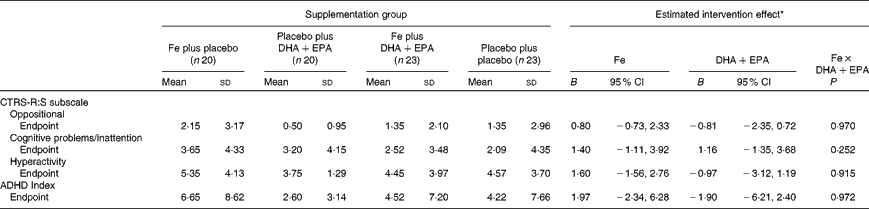
No significant intervention effects were found on any of the subscale scores of the CTRS-R:S or on the ADHD Index (Table 5). However, mean physical activity counts during morning class time at endpoint were positively associated with the oppositional (β = 0·375, P< 0·001) and hyperactivity (β = 0·470, P< 0·001) (Fig. 1) subscale scores of the CTRS-R:S, and with the ADHD Index (β = 0·400, P< 0·001) (Table 6). Furthermore, time spent in sedentary physical activity during morning class time at endpoint was negatively associated with oppositional, hyperactivity and ADHD Index scores. In contrast, light-, moderate- and vigorous-intensity physical activities during morning class time were positively associated with oppositional, hyperactivity and ADHD Index scores (only the association between moderate-intensity physical activity and the ADHD Index was not significant, P= 0·096).
Effects of the intervention with iron and DHA+EPA, alone or in combination, on Conners’ Teacher Rating Scales – Revised: Short Form (CTRS-R:S) scores (Mean values and standard deviations; B coefficients and 95 % confidence intervals)
ADHD, Attention-Deficit Hyperactivity Disorder.
* Intervention effects were estimated by using ANCOVA, adjusted for the respective baseline values, sex and age.
Relationship between physical activity counts per min during morning class time and hyperactivity subscale scores of the Conners’ Teacher Rating Scales – Revised: Short Form at endpoint after supplementation with iron and a mixture of DHA and EPA, alone or in combination, for 8·5 months. Variables on both axes were adjusted for age and sex. r 0·472, P< 0·001, n 85.

Associations between physical activity during morning class time and Conners’ Teacher Rating Scales – Revised: Short Form (CTRS-R:S) scores at endpoint (B coefficients and 95 % confidence intervals)

ADHD, Attention-Deficit Hyperactivity Disorder.
* All multiple linear regressions were adjusted for age and sex.
† Age was a significant predictor (P< 0·05).
Discussion
To our knowledge, this is the first randomised, double-blind, placebo-controlled trial investigating the effects of Fe and DHA+EPA supplementation, alone or in combination, on physical activity and ADHD-related behaviour in Fe-deficient, non-ADHD-diagnosed school children.
Our main findings were that DHA+EPA supplementation decreased physical activity counts during morning class time; children who received DHA+EPA supplements spent more time in sedentary physical activity and less time in light- and moderate-intensity physical activities. Consistently, children who received DHA+EPA supplements spent more time in sedentary physical activity at the expense of light-intensity physical activity during after-break class time. These findings are in accordance with the observations made in a recent cross-sectional study showing that DHA status in Danish school children was negatively associated with physical activity counts and time spent in light-intensity physical activity( Reference Damsgaard, Stark and Hjorth 25 ). However, in that study, physical activity was assessed during seven consecutive days and not specifically during class time as done in the present study. Nonetheless, the authors speculated that children with a higher intake of n-3 long-chain-PUFA may be calmer and thus spend less time on physical activities of light intensity. A similar observation was made in a randomised controlled trial in healthy UK school children, which found that children supplemented with 400 and 1000 mg DHA/d for 8 weeks showed a greater improvement in the ratings of ‘relaxation’ compared with controls, assessed by an Internet battery including visual analogue mood scales( Reference Kennedy, Jackson and Elliott 18 ).
In rural South African primary schools, children in classrooms are mainly required to sit and listen to teacher-directed instructions. Thus, it was no surprise that the children in the present study spent on average 75 % of the morning class time in sedentary physical activity. The after-break class time, which was shorter than the morning class time, was characterised by higher activity, particularly higher percentages of time spent in moderate- and vigorous-intensity physical activities, and a higher variability in activity compared with the morning class time. We also observed that unconventional or out-of-class activities were performed more often during this time period. Thus, confirming our a priori assumption that the morning class time is more academically focused than the after-break class time. It is also possible that the school meal provided during break time affected physical activity during after-break class time. Furthermore, a study by Koch et al. ( Reference Koch, Montagner and Soussignan 35 ) has shown that the percentage of primary school children who get up from their chair and spontaneously move increases from the beginning to the end of each school day.
Physical activity counts and intensity levels during after-break class time, particularly moderate- and vigorous-intensity physical activities, increased from baseline to endpoint in all the four groups. The endpoint assessment was conducted at the end of the school year, and it is likely that the teachers kept the children busy with self-study and play at the end of a school day in order to cope with a high burden of administrative work and exam preparations (information from personal communication with the teachers). This and the higher within-group variability in activity during after-break class time might explain why the effects of DHA+EPA supplementation on after-break class time were only apparent for physical activity intensity levels and why after-break class time activity was not associated with the teacher ratings of behaviour.
Even though DHA+EPA supplementation did not have an effect on teacher rating scores at endpoint, lower levels of physical activity during morning class time was associated with lower levels of teacher-rated hyperactivity and oppositional behaviour at endpoint. Thus, it can be speculated that the lowering effect of DHA+EPA supplementation on physical activity during morning class time may indicate an improvement in ADHD-related behaviour, such as hyperactivity, in the present sample of non-ADHD-diagnosed school children. This would be in agreement with a recent randomised controlled trial conducted in healthy UK school children who underperformed in reading, showing that DHA supplementation reduced parent-rated ADHD-related symptoms (oppositional behaviour, hyperactivity and ADHD Index), assessed by using the Conners’ Parent Rating Scales( Reference Richardson, Burton and Sewell 15 ). However, the authors did not find an effect on teacher-rated behaviour. Although in the present study, the Conners’ Teacher Rating Scales was not used to diagnose ADHD, it has been recommended that both parent and teacher rating scales be used to reliably assess ADHD-related symptoms( Reference Pelham, Fabiano and Massetti 41 ). We did not include parent questionnaires due to the local circumstances. Furthermore, we only collected Conners’ Teacher Rating Scales data at endpoint because the teachers felt that they did not know their learners well enough to rate their behaviour at baseline (beginning of the school year). These are the limitations of the present study, considering that at least two intervention studies examining the effects of n-3 FA supplementation in children with ADHD have shown improved behaviour only on parent-rated behaviour( Reference Sinn and Bryan 42 – Reference Johnson, Ostlund and Fransson 44 ).
In comparison to class time, break time was the time period of voluntary physical activity and was characterised by higher physical intensity levels (predominantly light-intensity physical activity). Physical activity during break time was significantly higher at baseline than at endpoint in all the four groups, which might be explained by seasonal changes. Ridgers et al. ( Reference Ridgers, Stratton and Clark 45 ) investigated day-to-day and seasonal variability of physical activity during school breaks in nineteen school children aged 6–11 years and found a trend for physical activity levels to be higher in winter than in summer. Similarly, the present study found break time activity to be higher during the cooler autumn (baseline) than during spring (endpoint). It can also be speculated that the general decrease in activity levels during break time from baseline to endpoint was a factor that contributed to the increase in activity during after-break class time, as the children did not get rid of their excess energy during break time.
At baseline, higher Hb concentrations and better Fe status (based on TfR and ZnPP concentrations) were associated with higher voluntary physical activity during break time. This is in agreement with several human (mostly infant) and animal studies showing that ID and ID anaemia are associated with reduced motor activity( Reference Lozoff, Klein and Nelson 26 – Reference Golub, Hogrefe and Germann 30 ). The majority of these observational studies have been performed in infants, and to our knowledge, this is the first randomised controlled trial to investigate the effects of Fe supplementation on physical activity in school children. However, we were not able to show an increase in voluntary physical activity during break time with Fe supplementation. The only time during which voluntary or free-living activity was measured in the present study was during the 30 min break time. During this time period, children were also provided with a school meal and were administered the DHA+EPA or respective placebo capsules. Thus, extending the recording time of activity beyond school time could have provided a more comprehensive assessment of voluntary activity. Furthermore, the prevalence of ID anaemia in the children studied was low (8·5 %) and the majority of children were only moderately Fe-deficient. Thus, it can be speculated that an effect of Fe supplementation to increase physical activity during break time would have been more likely in severely ID and ID anaemia children. We also found no effect of Fe supplementation on physical activity during class time and ADHD-related behaviour. Only one small study by Konofal et al. ( Reference Konofal, Lecendreux and Deron 14 ) has investigated the effects of Fe supplementation on ADHD-related symptoms in Fe-deficient, non-anaemic (serum ferritin < 30 μg/l) children diagnosed with ADHD, and only found trends towards improved parent-rated and teacher-rated behaviour.
While the validity and reliability of the Actical accelerometer for the assessment of physical activity in children has been demonstrated previously( Reference Rosenkranz, Rosenkranz and Weber 34 , Reference Evenson, Catellier and Gill 36 , Reference Colley and Tremblay 37 ), the validity for the use of the accelerometer as a tool to assess ADHD-related behaviour, particularly during class time, has not yet been established. Increased physical activity during class time may reflect on behaviour, such as restlessness, squirming and inability to remain still – all of which are ADHD-related behaviour. Therefore, our finding that higher physical activity during class time was associated with higher teacher-rated oppositional, hyperactivity and ADHD Index scores suggests that the accelerometer might be a useful tool to assess ADHD-related behaviour in school children. Unlike the Conners’ Teacher Rating Scales, which is based on observation, the accelerometer is able to provide a tangible and unbiased measure of physical activity that might be related to behaviour.
The strengths of the present study were that all children attended the same school and, thus, the physical environment was the same for all of them. Even though it was not possible for us to observe the participating children in the classroom, the researcher responsible for executing the activity measurements was present at school on the days of data collection, which made it possible to pick up extraordinary events/activities (e.g. accident happening on the school ground and sports day), which could have confounded the data. The limitations of the present study were the lack of baseline teacher-rated behaviour, the lack of parent-rated behaviour, and the restriction of physical activity measurements to school time. Furthermore, splitting up the class-time physical activity data into morning class time and after-break class time resulted in more endpoints tested, and therefore it might have increased the chance for false-positive outcomes.
In conclusion, the present study provides evidence that DHA+EPA supplementation might decrease physical activity levels during class time, and that lower activity levels at endpoint were associated with lower levels of teacher-rated hyperactivity and oppositional behaviour in Fe-deficient, non-ADHD-diagnosed South African school children. To our knowledge, the present study is the first to use the accelerometer to detect ADHD-related behaviour in a classroom set-up in children without diagnosed behavioural disorders. Our findings provide further evidence for a potential relationship between Fe status and voluntary physical activity. However, in contrast to our hypothesis, Fe supplementation did not affect physical activity. The results of the present study further indicate that the accelerometer might be a sensitive tool to assess the potential effects of a nutrition intervention on motor activity and ADHD-related behaviour in school children, and its sensitivity and specificity for this purpose deserves further investigation in future trials.
Supplementary material
To view supplementary material for this article, please visit http://dx.doi.org/10.1017/S0007114514003493
Acknowledgements
The authors thank the fieldworkers, the teachers and the principal of the school for their support, the children and parents for their participation in the trial, MRC and NWU colleagues, especially Ellenor Rossouw, and students for their assistance during the field and laboratory work.
The present study was financially supported by Unilever Research and Development (Vlaardingen, The Netherlands), the North-West University (Potchefstroom, South Africa) and the Medicor Foundation (Vaduz, Principality of Liechtenstein). Paul Lohmann GmbH (Lomapharm, Emmertal, Germany) provided the Fe supplements and Burgerstein AG (Rapperswil, Switzerland) provided the DHA+EPA capsules. The European–South African Partnership in Nutrition Research provided travel support.
The authors’ responsibilities were as follows: C. M. S., M. B. Z., J. B. and J. K. designed the study; J. G., J. B. and C. M. S. conducted the study; J. B. analysed the biochemical indicators; J. B. and J. G. performed the statistical analyses; C. M. S., J. B. and J. G. wrote the first draft of the manuscript; J. B. had the responsibility for the final content of the paper and the decision to submit for publication. All authors read and edited the manuscript, and were involved in the interpretation of the results and had full access to all the data.
J. B. and C. M. S. received speaking honoraria from Unilever. The rest of the authors have no conflict of interest.



