


Youngsters’ increasingly unhealthy eating behaviour( Reference Bauer, Larson and Nelson 1 , Reference Larson, Neumark-Sztainer and Hannan 2 ) and the growing prevalence of overweight and obese adolescents( Reference Wang and Lobstein 3 , Reference Jebb, Rennie and Cole 4 ) are strong indicators that maintaining a healthy dietary pattern is difficult for young people. Being overweight as an adolescent has serious negative implications for mental and physical health( Reference Dietz 5 , Reference Reilly, Methven and McDowell 6 ). It is therefore highly important to address eating behaviour among this age group. This becomes even more pressing knowing that eating patterns that are developed in this phase of life often become habits that track into adulthood and then become difficult to change( Reference Wang and Lobstein 3 ).
In the current environment, unhealthy and energy-dense foods are available in abundance and are typically easily accessible, meaning that adolescents are constantly confronted with temptations( Reference de Vet, de Wit and Luszczynska 7 , Reference Feng, Glass and Curriero 8 ). There is, however, more to the eating environment than only the physical presence of food. The social norms that exist around food and food consumption constitute another important aspect of the eating environment( Reference de Ridder, de Vet and Stok 9 ). In the present study, we investigate whether adolescents’ subjective perceptions of peer norms are related to healthy eating intentions, as well as to intake of healthy and unhealthy food.
Eating norms in adolescence
Social norms are defined as the rules that a group has regarding acceptable behaviours, values and beliefs of its members( Reference Aronson, Wilson and Akert 10 ). Two sources of social influence are distinguished( Reference Cialdini, Kallgren and Reno 11 , Reference Knight Lapinksi and Rimal 12 ): the actual behaviour that other group members display (called ‘descriptive norms’) and the expectations of other group members regarding how one should behave (called ‘injunctive norms’). When people’s subjective perceptions of the social norms (either descriptive or injunctive) that exist in their social groups are measured, these perceptions are often referred to as ‘subjective norms’ (especially in research regarding the Theory of Planned Behavior( Reference Ajzen 13 )). In the current paper, we focus on adolescents’ subjective perceptions of the second type of social influence, the type that stems from the expectations of others. These perceptions of peer expectations are thought to constitute an importance source of influence on adolescents’ behaviour. Adolescence is a transitional phase in life, during which the peer group becomes a more important source of influence( Reference Bradford Brown, Bakken and Ameringer 14 , Reference Brown 15 ). Adolescence is marked by a heightened need for peer approval and belonging to peer groups( Reference Coleman 16 ) and adolescents will typically try hard to comply with group norms. Importantly, previous research has shown that there are clear group norms surrounding eating behaviour among adolescents( Reference Stead, McDermott and MacKintosh 17 , Reference Stevenson, Doherty and Barnett 18 ) and recent studies have convincingly shown that the peer group is indeed an important factor shaping adolescent eating behaviour( Reference de la Haye, Robins and Mohr 19 – Reference Perkins, Perkins and Craig 22 ).
However, studies using the Theory of Planned Behavior to predict eating behaviour have shown that subjective perceptions of normative expectations are usually only weakly associated with eating-related behavioural intentions and are often unrelated to actual eating behaviour (e.g. references Reference Backman, Haddad and Lee23–Reference Martens, Van Assema and Brug26), indicating that the role of perceived normative expectations (including expectations from peers) in shaping adolescent eating behaviour may be limited. It has been suggested that limitations in the measurement of subjective norms may explain this lack of predictive association( Reference Armitage and Conner 27 – Reference White, Smith and Terry 29 ). In studies based on the Theory of Planned Behavior, subjective norms are typically measured by asking participants to indicate how they believe ‘important others’ would want them to behave. Indeed, a recent review indicated that there are not many studies investigating perceived normative expectations specifically of peers( Reference de la Haye, Robins and Mohr 19 ). The ‘important others’ operationalization aggregates perceived peer norms with perceived norms of parents, siblings, teachers, health professionals and perhaps other referents. Such an aggregation may obscure the importance of a single referent group( Reference Wood Baker, Little and Brownell 28 ) – in this case, peers. As shown above, there is sufficient evidence that peer group expectations play an important role in adolescent eating, but the role of adolescents’ perceptions of these expectations may be underestimated by the aggregation of different referents (potentially including less- or non-important referents)( Reference Wood Baker, Little and Brownell 28 , Reference Stok, de Ridder and de Vet 30 ). Importantly, research has shown that the relationship between norms and behaviour exists particularly when people identify with the norm referent group( Reference Stok, de Ridder and de Vet 30 , Reference Terry, Hogg and White 31 ), and adolescents are likely to identify more strongly with their peers than with other referents. Indeed, the few studies that previously investigated the influence of subjective norms of distinct referents on adolescent eating behaviour found that peer norms were more strongly related to attitudes towards healthy eating than parental or family norms( Reference Wood Baker, Little and Brownell 28 , Reference Pelletier, Graham and Laska 32 ). In the current study, too, we focus specifically on the associations of subjective peer norms with eating behaviour, which may contribute to the existing literature by providing a more accurate reflection of the importance of subjective peer norms in adolescent eating behaviour.
Another limitation of earlier studies assessing subjective norms and eating behaviour, that we attempt to improve on in the current study, is that previous studies often focused on subjective norms for increasing healthy eating (e.g. ‘Important others want me to eat healthily’) while norms regarding decreasing unhealthy eating (e.g. ‘Important others want me to eat less unhealthily’) have been researched less often (although there are exceptions( Reference de Bruin, Kremers and Schaalma 25 , Reference Martens, Van Assema and Brug 26 )). Even more important, to our knowledge no study to date has investigated peer approval of healthy eating and peer disapproval of unhealthy eating simultaneously. We propose that considering the relationship of these two types of subjective norms with eating behaviour may provide important new insights. It has been shown that increasing healthy behaviour is not necessarily equal to decreasing unhealthy behaviour, but that these are two quite distinct processes (cf. references Reference Gollwitzer and Sheeran33 and Reference Adriaanse, Vinkers and de Ridder34). Similarly, normative support for healthy eating need not be the same as normative discouragement of unhealthy eating. More specifically, adolescents may perceive that their peers encourage the intake of healthy food while not disapproving of the intake of unhealthy food. Vice versa, adolescents may experience that their peers discourage the intake of unhealthy food, but do not encourage the intake of healthy food. Moreover, both types of norms need not influence eating behaviour in the same way and to the same extent. Importantly, recent research suggests that adolescents have a preference for public health strategies that encourage healthy eating rather than strategies that discourage unhealthy eating (FM Stok, JBF de Wit, L Nureeva et al., unpublished results; available from the first author). In line with these findings, adolescents may be influenced more by norms encouraging healthy eating than by norms discouraging unhealthy eating.
Current study
In the current study, which was part of the TEMPEST study, a European research project, we investigated the association between subjective peer norms and adolescent eating behaviour in a large international sample. We focused on three outcome variables: healthy eating intentions, intake of healthy food and intake of unhealthy food. Based on earlier findings( Reference Armitage and Conner 27 ), we hypothesized that there would be stronger associations between norms and behavioural intentions than between norms and food intake. Moreover, because previous research has found that it is, in general, more difficult to decrease unhealthy behaviours than to increase healthy behaviours( Reference Adriaanse, Vinkers and de Ridder 34 , Reference Holland, Aarts and Langendam 35 ), we also predicted that subjective peer norms would be more strongly associated with intake of healthy food than with intake of unhealthy food. The present research extends earlier research by considering both peer encouragement of healthy eating and peer discouragement of unhealthy eating simultaneously. As argued before, normative support for healthy eating is not necessarily equal to normative discouragement of unhealthy eating, and their effects on eating behaviour also need not be similar. We therefore jointly assessed the effects of peer encouragement of healthy eating as well as peer discouragement of unhealthy eating, to investigate if the two norms are differentially associated with the outcome variables.
Method
Participants and procedure
Participants were 2764 European (pre-)adolescents aged 10–17 years (mean age 13·2 (sd 1·9) years) who were recruited from twenty-four different schools in four countries: Poland, Portugal, the UK and the Netherlands. Care was taken to select schools located in neighbourhoods of both low (31·4 %) and high (68·6 %) socio-economic status (SES) and in both rural (50·9 %) and urban (49·1 %) areas. Of the participants, 50·9 % were boys and 49·1 % were girls. Most participants (94·2 %) indicated being native to the country they lived in, while a minority (5·8 %) indicated being an immigrant. A majority of participants came from highly affluent families (52·5 %), while 35·8 % and 11·7 % came from families where affluence was respectively medium and low. Based on self-reported height and weight, most participants (71·5 %) had a normal BMI, while 11·9 % were underweight, 13·4 % were overweight and 3·2 % were obese.
The study was conducted according to the guidelines laid down in the Declaration of Helsinki. All procedures involving human participants complied with the ethical guidelines of each specific country and (exemption from the requirement to seek) ethical approval was granted by an ethical review board in each country. Active or passive written consent was sought from parents before their child participated and children could opt out of participation. Participants filled out the questionnaire during normal class hours and in their regular class setting. Their regular teacher and a research assistant were present in the classroom at all times during data collection.
Measures
The questionnaire was originally prepared in English and then translated into each country’s native language. To check accuracy and to revise translations where required, questionnaires were then back-translated into English. The following measures were used.
Overweight status
Participants reported their height and weight. BMI was calculated from height and weight, and scores were dichotomized (0=not overweight, 1=overweight) based on age- and gender-specific cut-offs determined by the International Obesity Task Force( Reference Cole, Bellizzi and Flegal 36 ).
Sociodemographic characteristics
Participants were asked to indicate their age and gender. Immigrant status was assessed by asking participants what language they typically spoke at home with their parents( Reference Berry 37 ). Family SES was assessed using the Family Affluence Scale (FAS)( Reference Currie, Molcho and Boyce 38 ), which uses child-appropriate items (e.g. ‘Do you have your own bedroom for you alone?’, ‘How many computers does your family own?’). Using the procedure outlined by the authors of the scale, three categories (low, medium and high affluence) were created.
Subjective peer norms
Four items were used to assess adolescents’ subjective perceptions of peer norms, based on the ‘subjective norm’ component of the Theory of Planned Behavior( Reference Ajzen 13 ). The items were measured on a 5-point Likert scale ranging from 1 (‘completely disagree’) to 5 (‘completely agree’). Two items, ‘My friends encourage me to eat fruits and vegetables’ and ‘My friends approve of my eating fruits and vegetables’, were averaged to create the ‘peer encouragement of healthy eating’ construct (r=0·410, P<0·001). The other two items, ‘My friends discourage me from eating snacks and drinking soft drinks’ and ‘My friends disapprove of my eating snacks and drinking soft drinks’, were averaged to create the ‘peer discouragement of unhealthy eating’ construct (r=0·518, P<0·001).
Healthy eating intentions
Participants’ intention to eat healthily was assessed by four items measured on a 5-point scale ranging from 1 (‘completely disagree’) to 5 (‘completely agree’). Example items are ‘I intend to eat healthier’ and ‘I would like to eat healthier’. One average score was created (Cronbach’s α=0·76).
Healthy food intake
Two items measured intake of healthy foods. Participants were asked, ‘How many servings of fruit do you eat on an average day?’ and ‘How many serving spoons of cooked or raw vegetables do you eat on an average day?’. The questionnaire explained that one serving of fruit and one serving spoon of vegetables corresponds to about one handful. Five response categories were provided (‘none or fewer than 1 servings per day’, ‘1’, ‘2’, ‘3’, ‘4’ and ‘more than 4 servings per day’) that we coded as 0 (none or <1) to 5 (>4). Responses to both items were summed to represent an index of healthy food intake (cf. references Reference de Bruin, Kremers and Schaalma25 and Reference Martens, Van Assema and Brug26).
Unhealthy food intake
Two items measured intake of unhealthy foods. Participants were asked, ‘How many snacks do you eat on an average day?’ and ‘How many glasses of soft drinks, lemonade or energy drinks do you drink on an average day?’. Examples were provided of what constituted an unhealthy snack (e.g. one pizza slice, one candy bar, a handful of candies). Moreover, the questionnaire explained that light soft drinks and mineral water should not be taken into account for the soft drink measure. Response categories were identical to those described for healthy food intake (i.e. ranging from ‘none or fewer than 1 snacks/soft drinks per day’ to ‘more than four snacks/soft drinks per day’) and coding was also identical (i.e. ranging from 0 to 5). Responses to both items were summed to represent an index of unhealthy food intake (cf. references Reference de Bruin, Kremers and Schaalma25 and Reference Martens, Van Assema and Brug26).
Data analyses
Hierarchical linear regression analyses were run for each of the three main outcome variables: healthy eating intentions, intake of healthy food and intake of unhealthy food. In each linear regression analysis, sociodemographic characteristics (age, gender, family affluence and immigrant status) and overweight status were entered in Step 1. In Step 2, peer encouragement of healthy eating and peer discouragement of unhealthy eating were entered to determine if adding these constructs significantly increased explained variance. Both subjective norm constructs were added for all three outcome variables to determine the relative importance of peer encouragement of healthy eating v. peer discouragement of unhealthy eating.
To correct for a potential clustering effect at country level, both regression analyses were re-run using complex sample analysis with the four countries as strata. The square root of the design effects deviated maximally 0·002 from 1·00, indicating that the design effect was extremely small (i.e. standard error changed by no more than 0·2 % when the country level was taken into account). Country effects were thus negligible and because results did not differ between the complex samples analyses and regular analyses, results from the regular linear regression analyses are reported here.
Results
Descriptive statistics
Descriptive statistics for all variables under study are shown in Table 1. Participants scored an average of 4·0 (sd=2·3) on the healthy food index (portions of fruits and vegetables per day) and an average of 3·9 (sd=2·4) on the unhealthy food index (unhealthy snacks and soft drinks per day). They reported a slight intention to eat healthily (mean=3·59, sd=0·77). Participants perceived neutral peer norms with regard to encouragement of healthy eating (mean=2·89, sd=1·02) and slightly negative peer norms regarding the discouragement of unhealthy eating (i.e. peers were perceived not to discourage unhealthy eating; mean=2·56, sd=1·02). The correlation between the two types of peer norms was large (r=0·593, P<0·001). A paired t test indicated that healthy-encouraging scores were significantly higher than unhealthy-discouraging scores, t(2656)=18·27, P<0·001.
Means and standard deviations or percentages for the main variables under study among European (pre-)adolescents aged 10–17 years (n 2764) from Poland, Portugal, the UK and the Netherlands, TEMPEST study

FAS, Family Affluence Scale.
Explaining healthy eating intentions
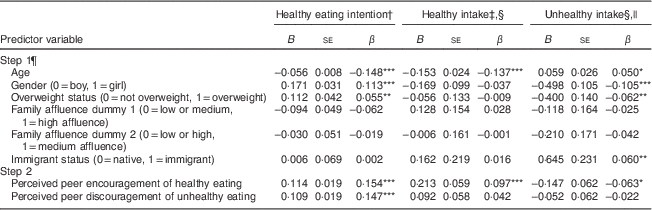
Step 1 of the linear regression analysis indicated that several sociodemographic variables were (weakly) associated with healthy eating intentions (see Table 2): younger adolescents, girls and overweight adolescents reported having stronger healthy eating intentions than older adolescents, boys and normal-weight adolescents. Family affluence and immigrant status were not associated with healthy eating intentions. Step 2 (see Table 2) showed that peer encouragement of healthy eating (β=0·154, P<0·001) and peer discouragement of unhealthy eating (β=0·147, P<0·001) were both positively related to healthy eating intentions. R 2 of the final model was 0·13 and R 2 change from Step 1 to Step 2 was significant (P<0·001, see Table 2), indicating that adding the subjective norm constructs increased explained variance.
Regression analyses of healthy eating intention, healthy intake and unhealthy intake v. sociodemographic variables (Step 1) and peer social norms (Step 2) among European (pre-)adolescents aged 10–17 years (n 2764) from Poland, Portugal, the UK and the Netherlands, TEMPEST study
* P<0·05, **P<0·01, ***P<0·001.
† R 2 Step 1=0·059, F(6,2096)=21·96, P<0·001. R 2 Step 2=0·128, F(8,2094)=38·53, P<0·001. R 2 change=0·069, F(2,2094)=83·08, P<0·001.
‡ R 2 Step 1=0·025, F(6,2070)=8·93, P<0·001. R 2 Step 2=0·040, F(8,2068)=10·90, P<0·001. R 2 change=0·015, F(2,2068)=16·39, P<0·001.
§ ‘Healthy intake’ reflects average daily intake of fruits and vegetables; ‘unhealthy intake’ reflects average daily intake of unhealthy snacks and soft drinks.
|| R 2 Step 1=0·024, F(6,2083)=8·51, P<0·001. R 2 Step 2=0·030, F(8,2081)=8·00, P<0·001. R 2 change=0·006, F(2,2081)=6·33, P=0·002.
¶ Values of B and β from the final (Step 2) model are reported.
Explaining intake of healthy food
Step 1 of the linear regression analysis indicated that most sociodemographic variables were unrelated to intake of healthy food (see Table 2). Only age was found to be significantly associated, with younger adolescents reporting eating more fruits and vegetables than older adolescents. Gender, weight status, family affluence and immigrant status were not associated with intake of healthy food. Step 2 (see Table 2) showed that only perceived peer encouragement of healthy eating was associated with higher intake of healthy food (β=0·097, P<0·001); peer discouragement of unhealthy eating was unrelated (β=0·042, P=0·114). R 2 of the final model was 0·04 and R 2 change from Step 1 to Step 2 was significant (P<0·001, see Table 2), indicating that adding the subjective norm constructs increased explained variance.
Explaining intake of unhealthy food
Step 1 of the linear regression analysis indicated that most sociodemographic variables were (weakly) related to intake of unhealthy food (see Table 2): older adolescents, boys, normal-weight adolescents and immigrant adolescents reported consuming more unhealthy snacks and soft drinks than younger adolescents, girls, overweight adolescents and native adolescents. Family affluence was not associated with intake of unhealthy food. Step 2 (see Table 2) showed that only peer encouragement of healthy eating was associated with lower intake of unhealthy food (β=−0·063, P=0·019); peer discouragement of unhealthy eating was unrelated (β=−0·022, P=0·401). R 2 of the final model was 0·03 and R 2 change from Step 1 to Step 2 was significant (P=0·002, see Table 2), indicating that adding the subjective norm constructs increased explained variance.
Discussion
The present study investigated whether subjective peer norms were associated with adolescents’ healthy eating intentions and self-reported intake of healthy and unhealthy food. While quite some research has previously investigated subjective normative influences on adolescent food intake, the unique influence of adolescent-perceived peer norms had been investigated less often. Moreover, extending previous research, we investigated both peer encouragement of healthy eating and peer discouragement of unhealthy eating simultaneously. Our results indicate that peer norms are related to healthy eating intentions as well as to intake of healthy and unhealthy food. In accordance with our hypotheses, peer norms explained most variance in healthy eating intentions, less in healthy intake and least in unhealthy intake. Moreover, while both peer encouragement of healthy eating and peer discouragement of unhealthy eating were related to behavioural intentions, only peer encouragement of healthy eating was associated with intake (of both healthy and unhealthy food). Peer discouragement of unhealthy eating was unrelated to intake. Two issues warrant further discussion. The first issue concerns the generally low percentages of explained variance and the differences therein between the three outcome variables. The second issue concerns the differences in the association between, on the one hand, peer encouragement of healthy eating and eating behaviour and, on the other hand, peer discouragement of unhealthy eating and eating behaviour.
Explaining variance in eating intentions and intake
A wide range of factors potentially shape adolescent eating behaviour( Reference McClain, Chappuis and Nguyen-Rodriguez 39 , Reference Rasmussen, Krølner and Klepp 40 ). Zooming in on a single variable and enrolling a large and heterogeneous sample, as we did in the current study, is therefore unlikely to render high percentages of explained variance. In line with the purpose of the study, our results do demonstrate that subjective norms are associated with intended eating and food intake, above and beyond sociodemographic variables. Moreover, the strength of these correlations indicates that associations are meaningful and represent important targets for health promotion. Notably, a 1-point increase on the response scale in peer encouragement of healthy eating was shown to increase daily healthy food intake (i.e. fruit and vegetable consumption) by one-fifth (almost 1·5 portions per week) and to decrease daily unhealthy food intake (i.e. snack and soft drink consumption) by one-seventh (1 portion per week). Subjective perceptions of peer encouragement of healthy eating and discouragement of unhealthy eating may only be a small part of the picture of adolescent eating behaviour, but it does seem to be a part that is related to relevant differences in intake of both healthy and unhealthy food.
Peer encouragement of healthy eating and peer discouragement of unhealthy eating
Both peer encouragement of healthy eating and peer discouragement of unhealthy eating were associated with adolescents’ healthy eating intentions. In other words, adolescents intend to eat more healthily when their peers encourage them to eat healthily, but also when their peers discourage them from eating unhealthily. In terms of intake of healthy food, however, only peer encouragement of healthy eating was significantly related; only when peers encouraged healthy eating did adolescents report higher intake of fruits and vegetables, not when peers discouraged unhealthy eating. More surprisingly, similar associations were found for intake of unhealthy food. Lower intake of snacks and soft drinks was not associated with peer discouragement of eating such unhealthy foods, but only with peer encouragement of eating healthy foods.
These findings may indicate that promoting healthier eating behaviour among adolescents may be most successful when using a positive approach that supports healthy choices. Peer encouragement to eat healthy foods was associated not only with adolescents doing exactly that, but also with adolescents consuming fewer unhealthy foods. Other findings from the TEMPEST project corroborate this suggestion, showing that adolescent support for public health interventions that promote the consumption of healthy foods is higher than their support for interventions that aim to decrease the consumption of unhealthy foods (FM Stok, JBF de Wit, L Nureeva et al., unpublished results; available from the first author). Future research should determine if this is the case only for social norms that come from the peer group, or if norms from other referent groups (e.g. parents, health professionals) are also more influential when framed in a healthy-eating encouraging manner rather than an unhealthy-eating discouraging manner.
Limitations and suggestions for future research
Several limitations of the current study should be noted, in addition to the limited explained variance addressed above. Notably, the data for the study were collected through self-report and previous research has shown that self-report measures of eating are not always reliable( Reference Livingstone, Robson and Wallace 41 ). Furthermore, due to the cross-sectional design of the study, no inferences can be drawn about causality, leaving open the possibility that adolescents’ eating behaviour shapes how they perceive peer norms. Future research should, therefore, replicate our results using longitudinal or experimental designs and employing more robust outcome measures, such as food diaries( Reference Day, McKeown and Wong 42 ).
Another limitation may be the fact that we focused on adolescents’ subjective perceptions of norms existing in their peer group. Such perceptions need not correspond to the actually prevailing norms( Reference Cruz, Henningsen and Williams 43 , Reference Rimal and Real 44 ), because they are also influenced by adolescents’ own experiences, behaviours and attitudes. Indeed, previous studies have shown that adolescents perceive eating-related peer norms that are different from those that actually prevail, which can be calculated by adding the privately held norm of each person in the peer group( Reference Lally, Bartle and Wardle 21 , Reference Perkins, Perkins and Craig 22 ). It is important to note, however, that it has been argued that the factor eventually influencing the individual’s behaviour is his or her perception or interpretation of a social norm, not the actually prevailing norm( Reference Perkins, Perkins and Craig 22 ). This has also been shown empirically in the case of eating behaviour: adolescents’ soft drink consumption was shown to be associated with how many soft drinks they thought their peers consumed (‘perceived, subjective descriptive norm’), but not with the average of each adolescent’s reported soft drink consumption (‘actual descriptive norm’)( Reference Perkins, Perkins and Craig 22 ). Therefore, the focus on subjective norms in the current study need not be a disadvantage.
The phrasing of the subjective norm items could also be a limitation of the study. In the current study, norm items were phrased to correspond with the promotion of healthy eating behaviour: peer encouragement of healthy eating and peer discouragement of unhealthy eating. In future studies, it would be interesting to determine what results would be obtained if the norm items are phrased in the opposite direction (peer discouragement of healthy eating and peer encouragement of unhealthy eating). As previous literature showed that, in adolescence, peer groups may promote unhealthy rather than healthy eating behaviour( Reference Coleman 16 , Reference Stead, McDermott and MacKintosh 17 , Reference Lally, Bartle and Wardle 21 ), these norms are likely to be strongly associated with adolescent eating behaviour.
Finally, generalizability of our findings may be an issue. By recruiting participants from schools in both urban and rural areas and in both high- and low-SES neighbourhoods, we attempted to collect data from a representative sample. Comparing characteristics of our sample with findings from earlier large-scale studies attempting to collect representative data in the same countries, some differences were found. Our participants reported somewhat higher FAS scores than adolescents in the same countries in earlier studies( Reference Currie, Nic Gabhainn and Godeau 45 , Reference von Rueden, Gosch and Rajmil 46 ). Prevalence of overweight is roughly comparable to figures from earlier studies( Reference Currie, Nic Gabhainn and Godeau 45 , Reference Ottova, Erhart and Rajmil 47 ). Furthermore, our sample showed relatively healthy eating behaviours, reporting slightly higher intake of healthy foods and slightly lower intake of unhealthy foods than found in earlier studies( Reference Brug, van Strale and te Velde 48 , Reference Diethelm, Jankovic and Moreno 49 ). Together, these comparisons indicate that our findings stem from a sample that differs to some extent from earlier samples, both in FAS scores and in eating behaviour, indicating that our results cannot be generalized one-on-one to the entire adolescent population of these four countries.
Implications and conclusions
The current study contributed to our understanding of normative influences on eating by regarding the specific association of subjective peer norms with adolescent eating behaviour, without additional sources of normative influence (e.g. parents) being included in the measure. Results show that peers are an important referent group for adolescents: subjective peer norms are associated with healthy eating intentions as well as with the intake of both healthy and unhealthy food. This corroborates earlier findings that peers’ subjective norms influence adolescent eating behaviour more than parents’ subjective norms( Reference Wood Baker, Little and Brownell 28 , Reference Pelletier, Graham and Laska 32 ).
Most important may be the novel finding that peer encouragement to eat healthily is associated both with adolescents’ higher intake of healthy food as well as lower intake of unhealthy food, while peer discouragement of unhealthy eating was unrelated to intake. While future research will need to determine if such associations are also found for perceived normative influence from, for example, parents and health professionals, it seems prudent for any source of normative influence to keep in mind that healthy eating behaviour may be better promoted through improving support for healthy eating rather than through the discouragement of unhealthy eating.
Acknowledgements
Acknowledgements: The authors acknowledge all members of the TEMPEST consortium. Financial support: This research was supported by the European Community FP7 Research Programme (Health-F2-2008-223488). The EC FP7 Research Programme had no role in the design, analysis or writing of this article. Conflict of interest: None. Authorship: F.M.S., E.d.V., J.B.F.d.W. and D.T.D.d.R. conceptualized the research question. All authors (F.M.S., E.d.V., J.B.F.d.W., A.L., M.S. and D.T.D.d.R.) were involved in creation of the study materials and all authors contributed to the process of data collection. F.M.S. conducted the analyses and drafted the manuscript. E.d.V., J.B.F.d.W., A.L. and D.T.D.d.R. assisted with analyses and interpretation of results. E.d.V., J.B.F.d.W., A.L., M.S. and D.T.D.d.R. extensively edited the manuscript. Ethics of human subject participation: The Dutch Central Committee on Research Involving Human Subjects indicated that ethical approval did not have to be sought for this study in the Netherlands. In the UK, the University College London Research Ethics Committee granted approval. In Poland, the International Review Board – KEBE of the University of Social Sciences and Humanities in Warsaw granted approval. In Portugal, the ethics committee of the São João Hospital Centre granted approval.



