


In their seminal paper, Feddersen and Pesendorfer (Reference Feddersen and Pesendorfer1998, 32) make a squeeze argument to establish a limit (Proposition 2) using the inequalities

where
$ f\in (0,1) $
 and
$ n\ge 2 $
and
$ n\ge 2 $
 .Footnote
1 However, only the second inequality holds.Footnote
2 The argument, therefore, establishes just one bound on the quantity of interest.
.Footnote
1 However, only the second inequality holds.Footnote
2 The argument, therefore, establishes just one bound on the quantity of interest.
This bound only serves to demonstrate that, as the jury size grows, the equilibrium probability of convicting an innocent defendant stays bounded away from one; not zero. Still, Proposition 2 is true. I provide a short proof below.
Claim. Let
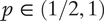
$ p\in (1/2,1) $
 ,
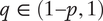
$ q\in (1-p,1) $
,
$ q\in (1-p,1) $
 , and
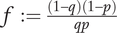
$ f:=\frac{(1-q)(1-p)}{qp} $
, and
$ f:=\frac{(1-q)(1-p)}{qp} $
 . Then

Proof. Let
$ a:=\frac{p}{2p-1} $
 . For
$ n\ge 2 $
. For
$ n\ge 2 $
 , write
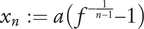
$ {x}_n:=a\left(\right.{f}^{-\frac{1}{n-1}}-1\left)\right. $
, write
$ {x}_n:=a\left(\right.{f}^{-\frac{1}{n-1}}-1\left)\right. $
 and
and

Note that
$ {x}_n>0 $
 (when
$ n\ge 2 $
(when
$ n\ge 2 $
 ) since
$ a>0 $
) since
$ a>0 $
 and
$ f\in (0,1) $
and
$ f\in (0,1) $
 . So,
. So,

is well-defined. Using
$ {f}^{-\frac{1}{n-1}}={e}^{\frac{-\ln f}{n-1}} $
 ,
,

since
$ {\lim}_{n\uparrow \infty }{x}_n=0 $
 while
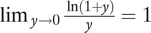
$ {\lim}_{y\to 0}\frac{\ln (1+y)}{y}=1 $
while
$ {\lim}_{y\to 0}\frac{\ln (1+y)}{y}=1 $
 and
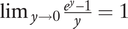
$ {\lim}_{y\to 0}\frac{e^y-1}{y}=1 $
and
$ {\lim}_{y\to 0}\frac{e^y-1}{y}=1 $
 . Therefore,

□
CONFLICT OF INTEREST
The author declares no ethical issues or conflicts of interest in this research.
ETHICAL STANDARDS
The author affirms this research did not involve human participants.



 Open access


Comments
No Comments have been published for this article.