


Dietary sodium intake has been identified as one of the major risk factors for high blood pressure and CVD( Reference Yang, Liu and Kuklina 1 – Reference Strazzullo, D'Elia and Kandala 3 ). Cost–benefit analyses have demonstrated that reduction of dietary salt is a cost-effective measure to reduce the disease burden associated with CVD( Reference Bibbins-Domingo, Chertow and Coxson 4 – Reference Palar and Sturm 6 ).
Although more than 75 % of dietary salt comes from processed foods( Reference Mattes and Donnelly 7 ), consumer awareness and education is important to empower consumers to choose products with lower salt content and reduce the amount of discretionary salt intake. Consumer understanding and evaluation of salt knowledge, attitude and behaviours has been recommended as one of the key components of a successful salt reduction programme( 8 , Reference Legetic and Campbell 9 ).
To date, several studies have been conducted to assess the levels of salt knowledge in the population( 10 – Reference Chariton, Yeatman and Houweling 14 ). While there were some common elements in the questions used across these studies, no attempt has been made to validate them, i.e. to establish whether, in fact, they assess consumers’ knowledge. The use of unreliable, unvalidated questionnaires to measure nutrition knowledge has been suggested as being responsible for the inconsistencies observed in the relationships between knowledge and dietary behaviours( Reference Parmenter and Wardle 15 , Reference Worsley 16 ).
Given the importance of consumer knowledge as a fundamental aspect of population monitoring and providing information to policy makers and stakeholders involved in salt reduction initiatives( 8 ), we believe there is an urgent need for a validated questionnaire to assess consumer salt knowledge and enable comparisons between different salt reduction communication programmes. Therefore, the aim of the present study was to describe the development and validation of a salt knowledge questionnaire in an Australian adult population.
Method
Study design
A cross-sectional study was conducted on an online web survey platform using convenience, snowball sampling( Reference VanderStoep and Johnson 17 ).
Participants
The study population consisted of experts (dietitians/nutritionists), dietetics or nutrition students and lay people. Experts were recruited via an email which was sent to a list of dietitians and nutritionists in Australia. Students were recruited through lectures attended by Dietetics and Nutrition students in two universities. Lay people were recruited through the professional and informal social networks of the researchers. In addition, the study was advertised in website forums. The invitation email also requested the potential participants to forward the email to others who might be interested in taking part in the study.
Procedure
The participants were invited to answer a self-administered online questionnaire( Reference Dillman 18 ), which could be completed at their convenience within 20 to 40 min. The survey was kept open for four months.
The questionnaire
The first part of the questionnaire required participants to indicate which group they belonged to, i.e. nutritionist/dietitians, or nutrition/dietetics students, or lay people. Next, they were asked to rate their overall knowledge of dietary salt based on a four-point scale which ranged from ‘very high’ to ‘low’ before they proceeded to the main part of the questionnaire.
The questionnaire consisted of four parts: (i) salt knowledge; (ii) beliefs about salt; (iii) dietary behaviours related to salt intake; and (iv) demographic information.
Salt knowledge
Questions
The salt knowledge section assessed two main domains of knowledge: (i) declarative knowledge, i.e. awareness of things and processes (i.e. the properties of nutrients such as salt and foods); and (ii) procedural knowledge or ‘know how knowledge’( Reference Worsley 16 ). The declarative knowledge section included questions drawn from the literature relating to the identification of diet–disease associations, expert recommendations and sources of high-salt foods( Reference Parmenter and Wardle 15 ), as well as common misconceptions about salt and health (e.g. ‘Cutting down salt may cause leg cramps’, ‘Drinking more water can neutralise salt in my diet’). Where possible, items were derived from previous studies on salt knowledge( 10 , Reference Grimes, Riddell and Nowson 12 – Reference Chariton, Yeatman and Houweling 14 , Reference Marshall, Bower and Schröder 19 ), to enable comparison of results with past studies( Reference Parmenter and Wardle 15 ).
The procedural knowledge section related to purchasing behaviours, eating at home and eating out. These items were based on health education messages targeted at healthy populations( 20 – 22 ).
A total of seventy-three questions was developed and reviewed by a nutritionist (V.F.) and a behavioural scientist (A.W.). These experts reviewed all of the questions to ensure they clearly represented the knowledge domains intended to be measured (content validity). Their inputs were taken into consideration in the construction of the items and the response formats( Reference Parmenter and Wardle 23 ). The questionnaire was also pre-tested among five lay individuals for comprehension and question format (face validity). After the evaluation, sixty-five items were retained to form the questionnaire. These items were evaluated for psychometric criteria (discrimination index, item difficulty index, item-to-total correlation; see Statistical analysis). This resulted in a final set of twenty-five questions (fifteen questions which met all of the psychometric criteria and ten questions which were included to maintain content validity( Reference Parmenter and Wardle 15 ); Table 2).
Item analyses for each item in the online salt knowledge questionnaire
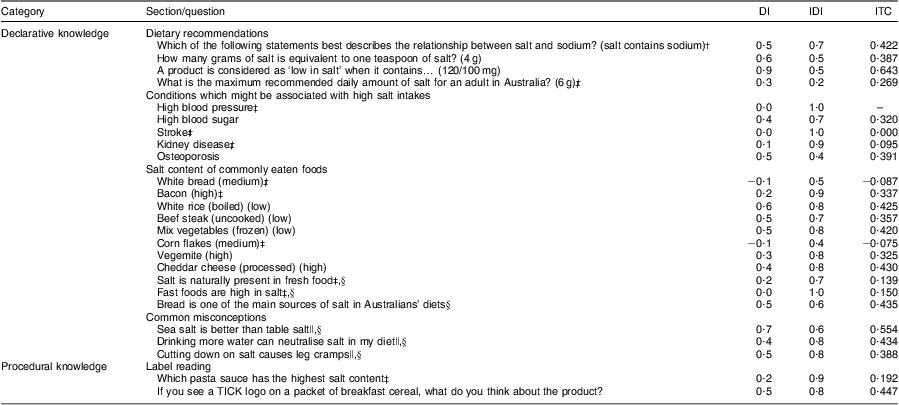
DI, discrimination index; IDI, item difficulty index; ITC, item-to-total correlation.
†Correct answers are in parentheses after each item.
‡Items which were retained for the purpose of content validity.
§Indicates items were scored as: 2 = ‘certainly true’, 1 = ‘probably true’, 0 = all others; otherwise items were scored as 1 = correct answer; 0 = all others. Negative statements were reversed prior to scoring.
∥Items were reversed coded prior to scoring.
Scoring
The questions were presented to the respondents in the form of multiple-choice and true or false response scales (Table 2). All correct responses for multiple-choice items were scored as 1, while incorrect responses which included ‘don't know’ or ‘not sure’ and non-responses were assigned a score of 0.
True or false questions were presented using five-point response scales: ‘certainly true’, ‘probably true’, ‘not sure’, ‘probably wrong’ and ‘certainly wrong’. In order to differentiate between lack of knowledge and knowledge held with low levels of confidence( Reference Kemm 24 ), a score of 2 was assigned for ‘certainly true’, 1 for ‘probably true’ and 0 for incorrect answers which included ‘not sure’ and non-responses. Negative statements were reversed prior to scoring.
The salt knowledge items were summed to yield scores for each subset of questions corresponding to dietary recommendations, diet–disease relationships, perceived salt content of commonly eaten foods, common misconceptions and label reading habits.
In addition, a total salt knowledge score was derived by summing the twenty-five items that were included in the final version of the questionnaire (Table 2).
Beliefs related to salt
While there are distinct epistemological differences in the definitions of knowledge and beliefs( Reference Kemm 24 , 25 ), both affect behaviour in the same way. For example, the Theory of Planned Behaviour posits that beliefs held by a person influence his/her attitudes which in turn determine his/her behaviour( Reference Ajzen 26 ). This is because the thinking processes and motivational effects of an individual holding a belief (regardless of the truth) act in similar ways( Reference Kemm 24 ).
The belief items were based on items used in past studies( Reference Grimes, Riddell and Nowson 12 ) and themes derived from websites and web discussions about salt( 20 , Reference Penberthy 27 ). Beliefs related to salt were assessed using four items: (i) ‘My health would improve if I lowered the amount of salt in my diet’; (ii) ‘In general, salt-free food tastes bad’; (iii) ‘Salt makes food tasty’; and (iv) ‘Salt should be used in cooking to enhance the taste of the food’. These belief items were measured on five-point Likert scales ranging from ‘certainly wrong’ to ‘certainly true’. Principal component analysis showed that the second, third and fourth items formed one factor (Cronbach's α = 0·58). These three items were retained and were summed to derive a total beliefs score about the importance of the taste of salt. Higher scores indicate stronger beliefs about the importance of the taste of salt.
Behaviours associated with higher salt intake
Dietary behaviour
Dietary behaviours associated with salt consumption were assessed using a list of items which included: (i) the use of discretionary salt, which contributes about 20 % of the salt in Australians’ diets (aged 2 years and older)( 28 ); (ii) dietary practices relating to the use of salt during meal preparation, e.g. fresh ingredients and substitution of salt with herbs and spices as recommended in the Dietary Guidelines for Australia( 22 ); (iii) consumption of fast food and sauces( 29 , Reference Dunford, Webster and Barzi 30 ); and (iv) the consumption of salted snacks.
Participants were asked to indicate how frequently they engaged in the particular behaviours. Responses ranged from never or not applicable to 1–3 times/week, 4–6 times/week and 7 times/week.
Food shopping behaviour
Frequencies of food shopping behaviours (e.g. ‘Looked for the salt content in food products when shopping’, ‘Purchased a product labelled “low salt” or “reduced salt”’) were assessed using five-point scales. Response options ranged from never to 4 or more times/week.
Scores were assigned according to the frequencies (1 for never, 2 for 2–3 times/week, etc.). Higher scores indicated higher frequency in engaging in particular behaviours.
Demographic information
Demographic information including age, gender and highest level of education was elicited from the respondents.
Statistical analysis
Data analysis was conducted using the statistical software package IBM SPSS Statistics for Windows version 20·0. Descriptive statistics were calculated to describe the study sample. Item analyses were conducted by calculating: (i) the item difficulty index (IDI), the proportion of individuals who answered an item correctly( Reference Oosterhof 31 ); (ii) the discrimination index (DI), which was used to determine whether each item was capable of discriminating between the highest and lowest scorers( Reference Oosterhof 31 ); and (iii) item-to-total correlations (ITC), which measure the extent each item shares the same domain or common core as the other items( Reference Churchill 32 ). The acceptable range of IDI for the present study was set as 0·3 to 0·9, the minimal DI was set at 0·2( Reference Oosterhof 31 ) and ITC at 0·30( Reference Nunnally and Bernstein 33 ).
The construct validity of the questionnaire was established by comparing the responses of the three groups of individuals who were expected to have different levels of nutrition knowledge based on the degree of their nutritional training( Reference Parmenter and Wardle 15 ), i.e. dietitians/nutritionists should have greater knowledge than nutrition/dietetics students who in turn should have greater knowledge than lay people. The construct validity of the questionnaire was evaluated using the Kruskal–Wallis H test. If any significant differences were observed in the total salt knowledge scores and each subset of questions (dietary recommendations, diet–disease relationships, perceived salt content of commonly eaten foods, common misconceptions and label reading) between the three groups (i.e. experts, students and lay people), the Mann–Whitney U test was used to evaluate pair-wise differences (i.e. experts v. students, experts v. lay people).
Spearman's rho correlation coefficient was used to examine the associations between the total salt knowledge and total beliefs scores and the set of dietary behaviours associated with high salt consumption.
Results
Description of sample
Table 1 shows the demographic characteristics of the study participants. A total of 133 individuals accessed the survey website. Of these, twenty-four provided incomplete responses and were excluded from the data analysis. The remaining 109 provided usable responses for the final analyses. Forty-one respondents (37·6 %) were experts (dietitians/nutritionists), thirty-two (29·4 %) were dietetics/nutrition students and thirty-six (33·0 %) were lay people. The overwhelming majority of the participants were female (93·1 %). More than 50 % of the respondents were the main food shopper or food preparer for the household. The majority (73·1 %) of the nutrition experts rated their overall salt knowledge as high or very high, while the majority of nutrition students (65·6 %) rated their knowledge as medium. A third of the lay people rated their knowledge on dietary salt as low and slightly more than 50 % rated their knowledge as medium.
Demographic characteristics of the study sample: respondents to the online salt knowledge questionnaire, Australia
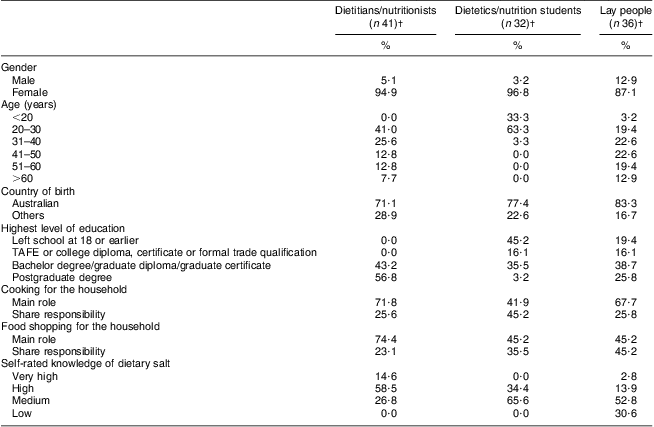
TAFE, technical and further education.
†Total for each row may vary slightly due to missing data.
Psychometric properties of the salt knowledge items
Table 2 shows the items that were included in the final set of questions. Twenty-one out of the twenty-five items had an acceptable level of item difficulty (IDI = 0·3–0·9), sixteen of the items had DI values above 0·2 (which is generally considered sufficient to discriminate between good and poor performers) and sixteen met the criterion set for ITC (≥0·30).
Construct validity
The group differences in sub-scores and total salt knowledge score are shown in Table 3. The total salt knowledge score for all participants ranged from 9 to 30 (maximum possible score was 31) with a mean of 20·39 (sd 5·08). The mean total salt knowledge score and sub-scores were significantly and consistently higher among the experts, followed by the students (all P < 0·05).
Mean and range of scores for each group of respondents to the online salt knowledge questionnaire
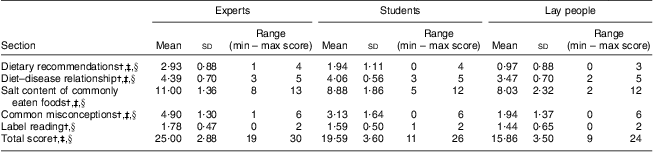
†Significantly different between the three groups (Kruskal–Wallis H test, P < 0·05).
‡Significantly different, experts v. students (Mann–Whitney U test, P < 0·05).
§Significantly different, experts v. lay people (Mann–Whitney U test, P < 0·05).
Relationship between total salt knowledge and belief scores with dietary behaviours
There were significant inverse correlations between total salt knowledge score and frequent use of salt at the table (ρ = −0·197, P < 0·05) and consumption of fast food (ρ = −0·293, P < 0·01; Table 4). The total salt knowledge score was also correlated positively with healthier dietary behaviours associated with lower use of salt, such as using fresh ingredients and herbs and spices in cooking (ρ = 0·327, P < 0·01) and looking for salt content in food products when purchasing foods (ρ = 0·400, P < 0·01). However, there was no significant correlation between the use of salt in cooking and salt knowledge.
Correlations of total salt knowledge score and total beliefs related to taste of salt score with self-reported frequencies of dietary behaviours associated with higher salt intake
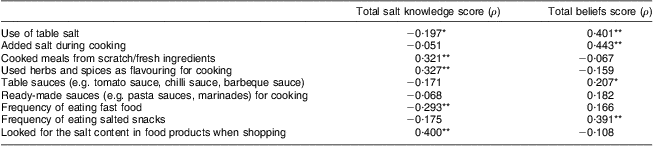
Significant correlation: *P < 0·05, **P < 0·01.
Significant correlations were also observed between beliefs about the importance of the taste of salt and the use of table salt (ρ = 0·401, P < 0·01), salt in cooking (ρ = 0·443, P < 0·01), table sauces (ρ = 0·207, P < 0·05) and frequent consumption of salted snacks (ρ = 0·391, P < 0·01).
Discussion
The final twenty-five-item questionnaire demonstrated adequate construct validity and good internal reliability.
The psychometric analysis of the items showed that their discriminatory properties varied between sections. For example, items in the dietary recommendations section, which require ‘technical knowledge’, had higher discriminatory values; i.e. there were more distinct differences between the experts and the lay people. All four items relating to dietary recommendations demonstrated good item discrimination (DI > 0·2) and three of the four questions were answered correctly by less than half of the respondents. The lay persons’ responses observed in this section are similar to those seen in other studies which used similar questions( Reference Wyllie, Moore and Brown 11 , Reference Grimes, Riddell and Nowson 12 , Reference Chariton, Yeatman and Houweling 14 , 34 ).
In contrast, three out of five questions about the health risks associated with higher salt intake were answered correctly by at least 90 % of the respondents (IDI ≥ 0·90), hence their lower discriminatory values (DI < 0·2). Past studies have also shown that over 80 % of consumers possessed greater levels of awareness of the health risks associated with salt intake( Reference Wyllie, Moore and Brown 11 – Reference Chariton, Yeatman and Houweling 14 ).
As in other studies of nutrition knowledge and dietary behaviours( Reference Sapp and Jensen 35 , Reference Dickson-Spillmann and Siegrist 36 ), the correlations observed between total salt knowledge score and dietary behaviours associated with high-salt food consumption were low or moderate. This may be because knowledge often acts as an indirect predictor of behaviour through mediating variables such as attitudes and intention( Reference Sapp and Jensen 35 ).
Slightly stronger correlations were observed between beliefs about the importance of the taste of salt and use of salt at the table and in cooking, suggesting that taste preference may also may play an important part in determining dietary behaviour( Reference Kim and Lee 37 ). The relationships observed between beliefs and behaviour, especially with the discretionary salt use, could also be due to the specific phrasing of the statements used in the study. For example, the specificity of the belief statement ‘Salt should be used in cooking to enhance the taste of the food’ is more likely to predict behaviour than a more general belief statement( Reference Kemm 24 ).
While we used item analyses to guide the evaluation of each item, we were aware that these analyses reflect only the internal consistency of the items and not the validity of the items( Reference Mehrens and Lehmann 38 ). As such, some items that had low discriminatory values but were considered essential to measure salt knowledge levels in the population (content validity) were retained( Reference Parmenter and Wardle 15 ). The inclusion of these items did not reduce the discriminatory value of the questionnaire since significant differences were observed in the total and sectional salt knowledge scores between the groups (which supports their construct validity).
Several factors such as the sampling method (convenience sampling), lack of information about the characteristics of non-responders and presence of chronic diseases may limit the generalisability of the study findings. Also, as in previous studies( Reference Hendrie, Cox and Coveney 39 – Reference Venter 41 ), females were over-represented in our sample as were those with higher levels of education.
Some of the items used in the present study are applicable only for Western diets where the majority of salt in the diet comes from processed foods. In developing countries (e.g. China) where the majority of salt in the diet is added to food during food preparation( Reference Brown, Tzoulaki and Candeias 42 ), additional questions on food preparation should be considered. Similarly, the misconceptions and beliefs about salt may vary between cultures( Reference Smith, Quandt and Arcury 43 ). Therefore, reassessments of these items are required prior to using the questionnaire in cultures with different salt beliefs and behaviours.
A further limitation of the study concerns the use of self-reported frequencies of dietary behaviours associated with high salt consumption as a proxy of dietary sodium intake. Even though self-reported use of table salt has been found to be correlated with actual behaviour( Reference Mittelmark and Sternberg 44 ) and urinary sodium( Reference Jeffery, Nowson and Riddell 45 ), discretionary salt intake only represents about 20 % of salt intake in the diet( 28 ). Therefore, future studies should extend the validation of this questionnaire against other established sodium intake measurements such as 24 h urinary sodium excretion or dietary recalls and test the questionnaire for its test–retest reliability.
Conclusion
The current questionnaire is likely to be a useful tool for researchers and policy makers who wish to measure levels of salt knowledge in general populations or to examine the effectiveness of public education programmes. Further investigation is needed to improve the assessment of procedural knowledge and to test the validity of the questionnaire in other populations.
Acknowledgements
Sources of funding: The study was supported by the Higher Degree Research Student Funds, University of Wollongong. Ethics: The study was approved by the University of Wollongong Research Ethics Committee. Conflicts of interest: The authors declare no conflict of interest. Authors’ contributions: R.S and A.W. were responsible for the design of study. R.S. analysed and wrote the paper with contributions from A.W. V.F. assisted in the review of the questionnaire and manuscript. Acknowledgements: The authors thank Dr Anne-Maree Parrish for her invaluable assistance in the preparation of the ethics application for this project and all of the survey respondents for their participation.



