



Research on eating behaviour commonly focuses on women. Many of these studies do not provide a rationale for this exclusive focus( Reference Adriaanse, De Ridder and De Wit 1 – Reference Williams, Ball and Crawford 3 ), but seem to implicitly assume that investigating eating behaviour in women only is justified because there are important sex differences in eating behaviour. For example, it appears to be a common assumption that women eat less than men and that they are more preoccupied with their food intake and more inclined to diet than men.
While the observation that men eat more( Reference Pliner and Chaiken 4 , Reference Rolls, Morris and Roe 5 ) and different types of foods than women (more red meat and fatty/salty foods and less fruits and vegetables( Reference Beer-Borst, Hercberg and Morabia 6 – Reference Oliver, Wardle and Gibson 8 )) is indeed well established, studies that convincingly demonstrate sex differences on psychological eating-related variables such as the intention to eat healthily are actually scarce. Although the importance of investigating sex differences in such psychological eating-related variables has been acknowledged( Reference Grogan, Bell and Conner 9 , Reference Provencher, Drapeau and Tremblay 10 ), little research is available that investigates these differences in a large representative sample and/or that includes a comprehensive set of such variables. As a result, although on a physiological level it is evident that men require more energy intake as they are simply bigger than women and have a higher resting metabolic state( Reference Davy, Van Walleghen and Orr 11 ), it is not clear to what extent men and women differ on psychological eating-related variables or whether different psychological variables may play a role in predicting eating behaviour for the two sexes. In view of these limitations, the present study aimed to investigate sex differences on a variety of key psychological predictors of eating behaviour among a large representative adult sample. We included those psychological variables that are frequently tested in the context of eating behaviour (habit strength, intention) and/or that have been known to show sex differences with regard to eating behaviour (the eating styles of emotional eating and restrained eating; for reasons of completeness, we included the third eating style – external eating – as well).
The two psychological eating-related variables that have been investigated most with regard to sex differences are restrained eating and emotional eating. Several studies have demonstrated that women score higher on restrained eating (i.e. dieting) than men( Reference Rolls, Morris and Roe 5 , Reference Oliver, Wardle and Gibson 8 , Reference Provencher, Drapeau and Tremblay 10 , Reference Alexander and Tepper 12 – Reference Weinstein, Shide and Rolls 17 ). Based on these studies, the increased tendency to diet among women has become a well-cited finding in the eating literature. Most of these studies, however, employed small and specific samples (e.g. students( Reference Oliver, Wardle and Gibson 8 , Reference Alexander and Tepper 12 ), young adults( Reference Rolls, Morris and Roe 5 , Reference Klein, Faraday and Quigley 13 , Reference Weinstein, Shide and Rolls 17 ) or overweight individuals( Reference Martin, Anton and Walden 14 )) and thus do not allow for drawing firm conclusions about sex differences in dieting in a representative sample of males and females. Sex differences in emotional eating (i.e. the tendency to overeat in response to negative emotions( Reference Van Strien, Frijters and Bergers 18 )) have also been investigated frequently, with many studies indicating that women score higher on emotional eating than men( Reference Oliver, Wardle and Gibson 8 , Reference Klein, Faraday and Quigley 13 , Reference Snoek, Van Strien and Janssens 15 , Reference Larsen, Van Strien and Eisinga 19 ). However, similar to studies on restrained eating, most studies examining sex differences in emotional eating employed selective samples of students( Reference Oliver, Wardle and Gibson 8 ), young adults( Reference Klein, Faraday and Quigley 13 ) or obese people( Reference Larsen, Van Strien and Eisinga 19 ). It is thus to be determined whether a sex difference in emotional eating will also be observed in the general population.
Surprisingly few studies have examined sex differences in other important psychological predictors of food intake such as external eating (the tendency to overeat in response to tempting food cues( Reference Van Strien, Frijters and Bergers 18 )), the intention to eat healthily or habit strength. With regard to external eating, the studies that have been conducted yielded mixed findings: some studies showed that men score higher than women( Reference Snoek, Van Strien and Janssens 15 , Reference Van Strien and Bazelier 16 ) while others showed similar scores for men and women( Reference Oliver, Wardle and Gibson 8 , Reference Klein, Faraday and Quigley 13 ). With regard to the intention to eat healthily, the limited studies that have been conducted seem to suggest that women have stronger intentions to eat healthily than men( Reference Biltoft-Jensen, Groth and Matthiessen 20 ). Nevertheless, this stronger intention might not necessarily be beneficial as it has also been suggested that women’s motivation to eat a healthy diet masks concern about their appearance( Reference Hayes and Ross 21 , Reference Pollard, Steptoe and Wardle 22 ) rather than their health, which may actually lead to unhealthy eating patterns( Reference Hubbard, Gray and Parker 23 – Reference Strelan, Mehaffey and Tiggemann 25 ). Lastly, while habit strength (in other words, the degree to which behaviour is executed automatically( Reference Verplanken and Orbell 26 )) has proved to be a strong predictor of unhealthy snack intake( Reference Verhoeven, Adriaanse and Evers 27 ), sex differences in this variable have not yet been investigated.
Taken together, it seems that sex differences in external eating, the intention to eat healthily, food-related appearance and health concerns, and habit strength are as of yet not well understood. In addition, there is a need to validate previously reported differences in emotional and restrained eating in a large and representative sample. The most important gap in the literature, however, is that in general very little is known about the extent to which the above outlined psychological eating-related variables, insofar they exist, predict food intake for both sexes. Most studies investigating sex differences merely reported the differences between men and women on these psychological variables. However, a question that is arguably even more important is whether the relationship between these psychological variables and food intake is different for men and women. Answering this question is important for designing interventions that are effective in promoting healthy eating in men as well as women.
The present study therefore investigated sex differences in snack intake and in the aforementioned psychological variables. Moreover, and most importantly, interactions between sex and the psychological variables were examined to investigate whether different variables may be of importance in predicting snack intake among men and women. The choice for snack consumption as the food type of interest was made because previous studies have demonstrated that snack intake is a major contributor to overweight( Reference Zizza, Siega-Riz and Popkin 28 ).
Methods
Participants, procedure and drop-out
The current paper draws on data of the LISS (Longitudinal Internet Studies for Social Sciences) Internet survey panel of CentERdata, which is based on a true probability sample of 5000 households (8000 individuals) drawn from the population register by Statistics Netherlands( Reference De Vos 29 ). Participants first filled out a questionnaire about eating behaviour which was part of a larger study( Reference Verhoeven, Adriaanse and Evers 27 ). One month later, participants were asked to keep a snack diary for seven days. Seven thousand eight hundred and seventy-two members of the panel were invited to participate in the study and of these invitees, 5332 participants filled out the questionnaire. Of the participants who filled out the questionnaire, 2021 also responded to the 7 d food diary. Of these 2021 responders, data from 1383 participants met our criteria for sufficiently completing the diary, which was defined as filling out at least four days of the diary. Lastly, ninety-one participants were excluded (forty-three participants included meals in the diary and forty-eight participants had extreme scores >3 sd above the mean on (un)healthy snack intake), so that the final sample included in the analyses comprised 1292 participants.
A drop-out analysis indicated no differences between the 1292 participants included in the final analyses and the 4040 ‘drop-outs’ (i.e. participants who filled out the questionnaire but were excluded (n 91), who incompletely filled out the diary (n 638) or who did not respond at all to the diary (n 3311)) for emotional eating, perceived health consequences, BMI or marital status (all P>0·11). Yet, participants included in the final analyses scored significantly lower on external eating (mean 2·55 (sd 0·52) v. mean 2·60 (sd 0·54); F(1, 5305)=8·00, P=0·005), higher on restrained eating (mean 2·79 (sd 0·78) v. mean 2·70 (sd 0·79); F(1, 5305)=10·52, P=0·001), lower on habit strength (mean 2·42 (sd 1·28) v. mean 2·57 (sd 1·31); F(1, 5293)=13·09, P<0·001), lower on intention to consume fewer unhealthy snacks (mean 3·08 (sd 0·88) v. mean 3·15 (sd 0·88); F(1, 5326)=5·87, P=0·02) and were also older (mean 51·23 (sd 16·78) years v. mean 48·42 (sd 17·69) years; F(1, 5329)=25·35, P<0·001) compared with drop-outs. These differences were, however, very small (all Pη 2≤0·005).
The 1292 included participants (45 % male) had a mean age of 51·23 (sd 16·78) years (range 16–89 years) and a mean BMI of 25·62 (sd 4·75) kg/m2. Of the males, 0·9 % were underweight (BMI<18·5 kg/m2), 45·1 % had a normal weight (BMI=18·5–25·0 kg/m2), 42·9 % were overweight (BMI=25·0–29·9 kg/m2) and 11·2 % were obese (BMI ≥30·0 kg/m2). Of the females, 2·0 % were underweight, 53·4 % had a normal weight, 27·9 % were overweight and 16·8 % were obese. These figures are in line with recent data from the Netherlands Institute for Public Health and the Environment( 30 ). Regarding education level, 8·9 % of the participants had completed elementary school, 38·6 % high school, 20·4 % middle-level applied education, 23·7 % higher professional education and 8·4 % university education. Most participants were married (58·6 %); 27·1 % had never been married, 8·4 % were divorced and 5·9 % were widows/widowers or unofficially separated.
Compared with the Dutch population in 2010( 31 ), the included sample was slightly older (51·23 v. 47·37 years), more often married (58·6 % v. 41·5 %) and less often unmarried (27·1 % v. 46·5 %). All education levels were represented in the sample, but participants more often reported high school as their highest education (38·6 % v. 32·6 %), less often reported middle-level applied education (20·4 % v. 30·5 %) and more often reported a higher professional education (23·7 % v. 18·0 %). The final sample was very comparable to the Dutch population in the proportion of divorced (8·4 % v. 6·8 %) and widowed (5·3 % v. 5·2 %) people, as well as people who completed elementary school (8·9 % v. 8·2 %) and with a university degree (8·4 % v. 9·8 %).
Questionnaire
Demographics
Demographic variables were provided by CentERdata and included sex, age, weight, height, marital status and education level.
Emotional, external, restrained eating
Scales on Emotional Eating (thirteen items, e.g. ‘Do you feel like eating if you feel sad or discouraged?’; α=0·96), External Eating (ten items, e.g. ‘Do you feel like buying a treat if you walk past the bakery?’; α=0·83) and Restrained Eating (ten items, e.g. ‘Do you keep track of how much you eat?’; α=0·92) from the Dutch Eating Behavior Questionnaire( Reference Van Strien 32 ) were included. Items were answered using 5-point scales ranging from 1 (‘never’) to 5 (‘always’).
Intention
Intention to eat more healthily was measured by two items (‘I want to/plan to start eating more healthily’), using 5-point scales ranging from 1 (‘totally disagree’) to 5 (‘totally agree’; α=0·87). We chose to include the intention ‘to eat more healthily’ as this incorporates the motivation for both eating fewer unhealthy snacks as well as more fruits and vegetables.
Health/appearance concerns
Two items were administered to investigate whether participants were concerned (‘yes’ or ‘no’) about how their food intake affected their health (‘I rarely think about the long-term consequences of my eating habits on my health’) and their appearance (‘I am concerned about the consequences of my eating habits on my appearance’). The item for health concerns was recoded so that, for both items, a score of 1 (‘yes’) reflected being concerned about health/appearance consequences.
Snack habit strength
The Self-Report Habit Index (SRHI)( Reference Verplanken and Orbell 26 ) was administered to assess unhealthy snack habit strength. The SHRI includes twelve items (α=0·95) that address the automaticity of snack consumption (e.g. ‘Eating unhealthy snacks is something I do automatically’) on 7-point scales from 1 (‘totally disagree’) to 7 (‘totally agree’). As we were unfortunately limited in the number of items we could include in the questionnaire, only habit strength of eating unhealthy snacks and not habit strength for eating healthy snacks was included, as particularly unhealthy snack habit strength has been found to predict (unhealthy) snack intake( Reference Verplanken 33 , Reference Van ’t Riet, Sijtsema and Dagevos 34 ).
Perceived health consequences
To rule out the possibility that any effects could be attributed to one of the sexes having a better understanding about the relationship between food intake and health, three items were administered to assess participants’ knowledge of the relationship between eating behaviour and overweight, cancer and CVD (e.g. ‘To what extent do you think eating habits have consequences for obesity?’; α=0·73). Participants indicated their response on 4-point scales ranging from 1 (‘no influence’) to 4 (‘a strong influence’).
Snack diary
The snack diary consisted of one column with healthy snacks and one with unhealthy snacks, measured in appropriate units (e.g. ‘hand full’ for chips). A snack was defined as any food that was consumed in between meals. Categories of healthy (mainly fruits and vegetables) and unhealthy snacks (e.g. cakes and chips) were derived from a previous study and validated by a registered dietitian( Reference Adriaanse, De Ridder and De Wit 1 ).For both snack categories, an option ‘other’ was also provided. At the end of each day for a one-week period, participants were asked to indicate how much of the snacks they had consumed. Participants were specifically instructed to fill out the online snack diary every day at the end of the day, when they expected not to eat any more. If this was not possible, they could fill it out the next day at latest. The snack diary was available only on the day it referred to and the day after. For example, the snack diary for Monday could only be filled out on Monday and Tuesday. In adopting this procedure, we made sure that participants did not retrospectively recall their snacking behaviour at the end of the seven days.
For unhealthy snack intake, the amount of energy (kilocalories) consumed was calculated by multiplying each snack by the average amount of kilocalories it contains (derived from the Netherlands Nutrition Centre) because the unhealthy snacks differed considerably in caloric value. For healthy snacks the number of portions of fruit and vegetables was used as the dependent variable. It was decided to include only fruit and vegetables as: (i) the vast majority of healthy snacks were fruit and vegetables; (ii) these snacks are the most unambiguous in their health connotation; and (iii) as noted earlier, this is a specific type of food on which sex differences have been found previously.
Data analysis
ANOVA and χ 2 tests were performed to test whether men and women score differently on variables associated with (un)healthy snacking. Next, multiple regression analyses were conducted to test whether sex predicts energy intake from (un)healthy snacks over and above psychological variables. Finally, multiple regression analyses including the interaction terms of sex with each of the psychological variables were performed to investigate whether the relationship between the psychological variables and (un)healthy snack intake differs for men and women. Data analyses were conducted using the statistical software package IBM SPSS Statistics version 20·0.
Results
Overall, participants consumed 1·59 (sd 1·45) portions of fruit and vegetables in between meals per day and consumed 1356 (941) kJ (324 (sd 225) kcal) from unhealthy snacks per day. Means and standard deviations (all continuous variables) or frequency distributions (all categorical variables) for both sexes separately can be found in Table 1.
Means and standard deviations or frequency distributions for the variables under study, according to sex, in a community-based sample of adults (n 1292), the Netherlands
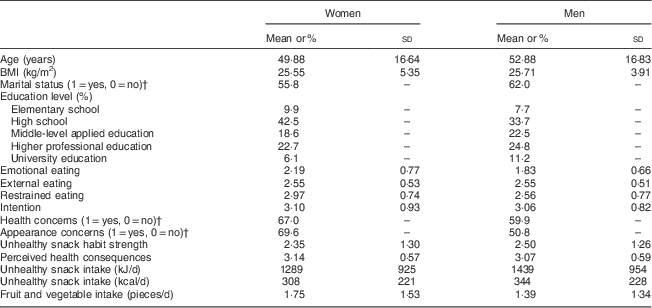
† Marital status, health concerns and appearance concerns are dichotomous variables. Percentages for these variables reflect the percentage of participants who responded ‘yes’.
ANOVA (healthy snack intake, unhealthy snack intake, emotional eating, external eating, restrained eating, intention to eat healthily and perceived health consequences) and χ 2 tests (health and appearance concerns) were conducted to investigate whether men and women scored differently on snack intake (healthy and unhealthy) and on the psychological variables. Controlling for BMI, age, education level and marital status did not alter the significance of results, so results are reported without these covariates.
For intake, significant effects were found for both unhealthy snack intake (F(1, 1289)=8·55, P<0·01, Pη 2=0·007) and healthy snack intake (F(1, 1289)=19·23, P<0·01, Pη 2=0·015). Women consumed more healthy snacks (mean 1·75 (sd 1·53) pieces/d) and less unhealthy snacks (mean 1289 (sd 925) kJ/d (mean 308 (sd 221) kcal/d)) than men (mean 1·39 (sd 1·34) pieces/d and mean 1439 (sd 954) kJ/d (mean 344 (sd 228) kcal/d), respectively).
Regarding the psychological variables, significant effects were found for appearance concerns, health concerns, emotional eating, restrained eating, habit strength and perceived health consequences. Specifically, women were more often concerned (69·6 %) about appearance (χ 2=47·54, P<0·001) than men (50·8 %). They were also more concerned (67·0 %) about health (χ 2=7·07, P<0·01) than men (59·9 %). Women scored higher on emotional eating (mean 2·19 (sd 0·77); F(1, 1289)=79·59, P<0·001, Pη 2=0·06) and on restrained eating (mean 2·97 (sd 0·74); F(1, 1289)=95·98, P<0·001, Pη 2=0·07) than men (mean 1·83 (sd 0·66) and mean 2·56 (sd 0·77), respectively).
Women were also found to have weaker unhealthy snacking habits (mean 2·35 (sd 1·30); F(1, 1289)=4·502, P=0·034) than men (mean 2·50 (sd 1·26)), although the absolute difference was small (Pη 2<0·01). The effect of sex on perceived health consequences was significant, with women perceiving the influence of eating behaviour on health as stronger (mean 3·14 (sd 0·57); F(1, 1289)=5·27, P=0·022) than men (mean 3·07 (sd 0·59)), but again the effect size was small (Pη 2<0·01). Men and women did not differ significantly with regard to their intention to eat more healthily (P=0·38) or the extent to which they rated themselves as external eaters (P=0·80).
Multiple regression analyses were conducted to test whether sex predicts energy intake from unhealthy and healthy snacks over and above psychological variables. Zero-order correlations between all variables included in the regression analyses can be found in Table 2. In Table 2, Pearson product-moment correlations (r) are displayed for correlations between continuous variables, point-biserial correlations (r pb) are used for correlations between dichotomous and continuous variables, and phi coefficients (r φ ) are used to display correlations between two dichotomous variables. The variable ‘education’ was treated as a continuous predictor in all analyses, which is conventional for variables with five categories (see Table 1 for the five categories) or more.
Correlations between the variables under study
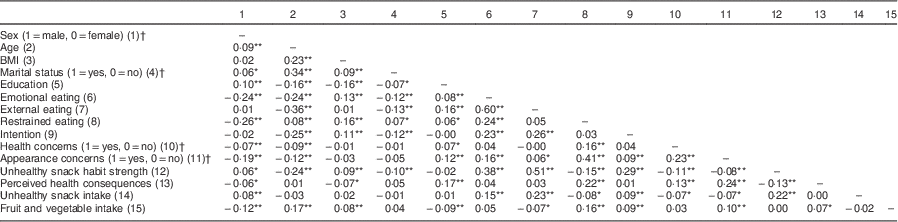
*P<0·05; **P<0·01.
† Sex, marital status, health concerns and appearance concerns are dichotomous variables, all other variables are (treated as) continuous variables. Pearson product-moment correlations (r) are displayed for correlations between continuous variables, point-biserial correlations (r pb) are displayed for correlations between dichotomous and continuous variables, and phi coefficients (r φ) are displayed for correlations between two dichotomous variables.
A hierarchical multiple regression analysis was conducted with unhealthy snack intake as the dependent variable (see Table 3). Sex (male v. female), age, BMI, marital status (married: yes v. no) and education level were entered as predictors in the first step. Emotional eating, external eating, restrained eating, intention to eat healthily, appearance concerns (yes v. no), health concerns (yes v. no), unhealthy snack habit strength and perceived health consequences were entered as predictors in the second step. In each step, the variables were introduced using forced entry. Sex, marital status, appearance concerns and health concerns were dichotomous predictors; all other predictors were (treated as) continuous. The first step was significant (F(5, 1281)=2·24, P=0·048), with sex as a significant predictor. The second step significantly improved the model (F(8, 1273)=13·00, P<0·001). In the final model (including steps 1 and 2), 8·4 % of the variance in unhealthy snack intake was predicted with sex, external eating and habit strength as significant predictors: men (β=0·06), people scoring higher on external eating (β=0·16) and people with stronger unhealthy snacking habits (β=0·12) consumed more energy from unhealthy snacks. It should be noted that these effects are significant but relatively small.
Hierarchical multiple regression analysis for unhealthy snack consumption in a community-based sample of adults (n 1292), the Netherlands
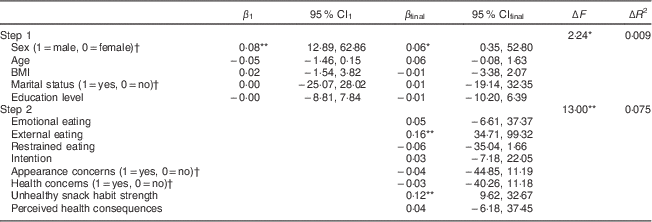
*P<0·05; **P<0·01.
† Sex, marital status, health concerns and appearance concerns are dichotomous variables, all other variables are (treated as) continuous variables.
To investigate whether the predictive validity of the psychological variables differed for men and women, additional regression analyses were conducted. The first two steps of these regression analyses were the same as the previous analysis, but in the third step interaction terms for the eight psychological variables with sex were added. Interaction terms were calculated using z-transformed variables. Separate regression analyses were conducted for each of the eight interaction terms. None of the interaction terms significantly improved the model (all P>0·27).
A similar multiple regression analysis was conducted with healthy snack intake as the dependent variable (see Table 4). Again, sex (male v. female), age, BMI, marital status (married: yes v. no) and education level were entered as predictors in step 1. In step 2, emotional eating, external eating, restrained eating, intention to eat healthily, appearance concerns (yes v. no), health concerns (yes v. no), unhealthy snack habit strength and perceived health consequences were entered as predictors. The variables were introduced using forced entry in both steps. Sex, marital status, appearance concerns and health concerns were dichotomous predictors; all other predictors were (treated as) continuous. The first step was significant (F(5, 1281)=13·98, P<0·001), with sex and age as significant predictors. The second step significantly improved the model (F(8, 1273)=6·45, P<0·001). In the final model (including steps 1 and 2), which predicted 8·9 % of the variance in healthy snack consumption, sex, age, education, external eating, restrained eating, intention and habit strength were significant predictors. Women (β=−0·08), older people (β=0·20), people with lower education (β=−0·06), who score lower on external eating (β=−0·09), who score higher on restrained eating (β=0·10), with stronger intentions to eat healthily (β=0·11) and with stronger unhealthy snacking habits (β=0·08) consumed more healthy snacks in between their meals. While these effects are significant, effect sizes are small. Similar to the analyses for unhealthy snack intake, additional regression analyses were conducted with interaction terms in the third step. None of the interaction terms significantly improved the model (all P>0·12), while a marginally significant interaction effect was found for appearance concerns×sex (P=0·057).
Hierarchical multiple regression analysis for fruit and vegetable snack consumption in a community-based sample of adults (n 1292), the Netherlands
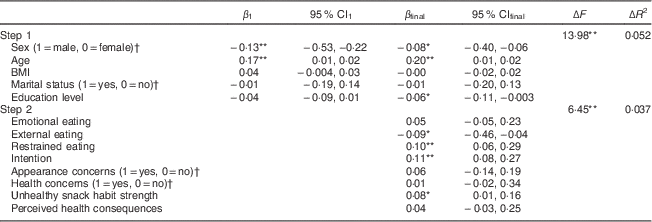
*P<0·05; **P<0·01.
† Sex, marital status, health concerns and appearance concerns are dichotomous variables, all other variables are (treated as) continuous variables.
Discussion
The present study was designed to examine sex differences in psychological predictors of snacking behaviour in a large representative community sample. It has previously been suggested that women are more concerned about their eating behaviour than men( Reference Pliner and Chaiken 4 , Reference Oakes and Slotterback 35 , Reference Pliner, Chaiken and Flett 36 ) and that there are therefore major sex differences in psychological variables associated with food intake. The results of the present study cast some doubt on this assumption.
Despite the observed sex differences in (un)healthy snack intake and in some of the psychological eating-related variables, overall the present findings yield only weak support for the notion that strong sex differences exist in the psychology of eating. That is, although results indicated that women were more often concerned about the consequences of their eating behaviour for their appearance as well as for their health, men and women had equally strong intentions to eat more healthily. For habit strength and perceived health consequences, significant sex effects were found, but effect sizes indicated that these sex differences can be considered negligible. No sex difference was found for external eating. Only for restrained eating and emotional eating was a medium-sized effect of sex found, with women scoring higher than men.
However, despite these medium-sized differences in emotional and external eating, still none of the psychological variables for which significant sex effects were observed (emotional eating, restrained eating, appearance concerns and health concerns) proved to be relevant for predicting unhealthy snack intake and of these variables only restrained eating predicting healthy snack intake. No sex effects were observed for the two variables that proved most relevant in predicting snack intake (external eating for unhealthy snack intake and intention for healthy snack intake). Finally, and most importantly, no single variable was predictive of men’s v. women’s snack intake (none of the interactions between sex and psychological variables proved significant).
A limitation of the present study is that only snack intake was assessed and not the overall consumption pattern including meals. It thus remains to be determined whether the present findings hold when meals are taken into account. That is, based on the present data (restricted to snack intake only) we cannot rule out the possibility that men compensated for their higher energy intake from snacks by eating less energy during their main meals (e.g. skipping breakfast). A second limitation refers to the assessment of psychological variables by self-report. Despite these methodological limitations, it should be noted that snack intake was recorded by one of the more sophisticated measures that is currently available (diaries)( Reference De Castro 37 ) and a large representative sample was included, which should be considered methodological strengths.
Conclusion
The results from the present study thus show that there are indeed differences between men and women in psychological eating-related variables, most notably in emotional and restrained eating, but also that these differences are not as profound as is often assumed because no single variable was predictive of men’s v. women’s snack intake. Consequently, the present findings yield little evidence to suggest that interventions aiming to promote a healthier diet should target different predictors according to sex.
Acknowledgements
Financial support: This research received no specific grant from any funding agency in the public, commercial or not-for-profit sectors. Conflict of interest: None. Authorship: Data collection was supervised by D.T.D.d.R. Data analyses were performed by M.A.A. and A.A.C.V. The paper was written by M.A.A. with substantial input from C.E. and D.T.D.d.R. and feedback from A.A.C.V. Ethics of human subject participation: The study was approved by the board of CentERdata.



