


Youth fruit and vegetable consumption (FVC) in the USA is well below current guidelines. Surveillance research reports only 21 % of adolescents consume five or more fruit and vegetable (FV) servings per day(1) and only 1·2 % of boys and 3·6 % of girls (9–13 years) consume the minimal amount of FV servings recommended by the Dietary Guidelines for Americans(2, Reference Guenther, Dodd and Reedy3). Additionally, FVC levels decline as children enter adolescence(Reference Mensink, Kleiser and Richter4, Reference Riediger, Shooshtari and Moghadasian5) and, in comparison to their counterparts, inadequate FVC appears to be more prevalent among males(Reference Bere, Brug and Klepp6, Reference Lytle, Varnell and Murray7) and lower socio-economic status (SES) youth(Reference Riediger, Shooshtari and Moghadasian5–Reference Rasmussen, Krolner and Klepp8). With additional consideration of strikingly rapid increases in adolescent obesity during the last 30 years(Reference Ogden, Carroll and Curtin9, Reference Ogden, Flegal and Carroll10) and evidence supporting the role of FVC in obesity recovery and prevention(Reference Epstein, Paluch and Beecher11, Reference Rolls, Ello-Martin and Tohill12), these inadequate levels of FVC illuminate a public health concern.
To intervene effectively and improve youth FVC, it is necessary for research to not only describe what influences youth FVC, but to extend efforts to address how; in other words, how can we maintain those influences in the youth environment to promote consistent FVC? To date, FV availability and FV preference emerge as the strongest and most consistent influences on youth FVC in both-cross sectional(Reference Baranowski, Cullen and Baranowski13–Reference Domel, Baranowski and Davis20) and longitudinal studies(Reference Bere, Brug and Klepp6, Reference Bere and Klepp21). Not surprisingly, FV availability is also reported to moderate changes in youth FV preference; thus, FV availability facilitates repeated exposure and is necessary to improve youth preferences for FV(Reference Baranowski, Cullen and Baranowski13, Reference Cullen, Baranowski and Owens14). The primary need for availability is also consciously recognized by youth, with youth consistently reporting their food choices are less based on health and more on what is made available to them(Reference Evans, Wilson and Buck22–Reference Story, Neumark-Sztainer and French25). Taken together, the primary what seems to be FV availability, expanding to how promotion programmes can re-structure youth environments to improve FV availability. With environments that secure FV options for youth, the efficacy of future FV promotion programmes should increase, ultimately improving youth FV preference and consumption. This sounds ideal; however, the realization is that FV availability promotion efforts do not directly involve youth, leading to the critical addition of who.
Characteristically, youth are born vulnerable to the entities and environments surrounding them and remain at this mercy through adolescence, diluting environmental change efforts that solely target youth. Without direct control of the social and institutional practices that make FV available, youth are left reliant on adults to provide FV options. This suggests that direct promotion of youth FVC is likely a pointless endeavour without consideration of the entities ruling their environment. A significant influence on youth diet is their parent (i.e. who), managing most of their food opportunities and options. For instance, youth ability to make healthier choices is at the mercy of the food options brought home by their parent(Reference Domel, Thompson and Davis26). In brief, parents provide the food environments that surround youth, providing meal and snack food availability and communicating health behaviours both verbally and non-verbally(Reference Pearson, Timperio and Salmon27).
To prematurely summarize, we have compiled evidence as to what (FV availability) and who (parents), leaving us to ponder how. Given parental control over youth food environments, their positive and consistent involvement during FV promotion may be a large contributor to programme success. In fact, solely parent-based interventions and solely child-based interventions rarely report meaningful effects on youth weight(Reference Lindsay, Sussner and Kim28). Unfortunately, previous youth health programmes attempting to include parents report variable and/or poor parent involvement(Reference Coatsworth, Duncan and Pantin29–Reference Heinrichs, Bertram and Kuschel31). In fact, health professionals reported that lack of parental involvement was one of the strongest barriers to managing child obesity(Reference Story, Neumark-Stzainer and Sherwood32). Given the barrier to direct parental participation, another potential route is the indirect promotion of their involvement through child empowerment.
Social cognitive theory is a predominant model to understand heath behaviour change, including a child empowerment approach, proxy efficacy. Proxy efficacy, or one’s confidence that one can get others to act on one’s behalf to reach a desired outcome(Reference Bandura33), is a process of behaviour change that empowers youth with the confidence to adopt personal responsibility for their health through repeated requests for healthier options and/or opportunities. We are all witness to the successful media strategies that exclude FV promotion(Reference Galo34), create brand images for unhealthy foods recognizable by children as young as 2 years(Reference Valkenburg and Buijzen35) and have youth ‘nagging’ their parents at the grocery store for strategically placed energy-dense foods(Reference Eisenberg, McDowell and Berestein36, Reference Dijksterhuis, Smith and van Baaren37). Why not mirror these ruthless tactics that create obesogenic environments and undermine our costly efforts? One cost-efficient tactic is to improve youth proxy efficacy. For example, programmes target youth proxy efficacy by advancing their awareness and value for their own health (especially FVC) and building their capacity to influence parental provision of FV availability. This approach aims to reach parents and promote healthy environmental changes through youth empowerment, facilitating a possible solution to how.
The proxy construct has been studied minimally for FV availability, and there is no current research investigating this construct over time. Direct examinations of this construct report strong factorial validity(Reference Geller and Dzewaltowski38, Reference Geller, Dzewaltowski and Rosenkranz39) and significantly lower proxy efficacy for parent-provided FV availability among youth attending low-SES schools compared with high-SES schools(Reference Geller, Dzewaltowski and Rosenkranz39). In FVC research, increases in cognitive/behavioural skills for FV availability (‘asking skills’) were related to improved self-efficacy, which resulted in increased FVC(Reference Reynolds, Yaroch and Franklin40). Similarly, Young and colleagues(Reference Young, Fors and Hayes41) found that youth who perceived parental support consumed more FV. Thus, positive changes may be possible by increasing youth confidence to request FV availability from their parent and should be examined with consideration for differing demographic characteristics.
The primary aim of the current study was to investigate youth proxy efficacy to influence their parents for FV availability. Using longitudinal data collected over three years (6th, 7th and 8th grade), the study investigated the development of proxy efficacy over the middle school years. The secondary aim was to examine the influence of youth-level demographic variables on youth proxy efficacy over time, specifically investigating the influence of gender (male, female) and SES (lower, higher). Considering the lack of previous proxy efficacy examinations, our hypotheses are generated from evidence reporting the prevalence of youth FVC. Thus, youth proxy efficacy was hypothesized to decline linearly over time and be lower among males and youth categorized as lower SES (i.e. receiving free or reduced-price school meals).
Experimental methods
Participants and setting
Participants were recruited from eight middle schools located in urban, suburban and rural areas of Kansas that were randomly selected as the control sites for the Healthy Youth Places (HYP) project. The HYP project was a longitudinal randomized control trial (sixteen schools in total; 50 % control), targeting environmental change to promote healthy nutrition and physical activity among young adolescents (6th to 8th grade)(Reference Dzewaltowski, Estabrooks and Johnston42, Reference Dzewaltowski, Estabrooks and Welk43). The current analysis examines survey responses given by youth within the control condition of HYP (n 1506). Among those youth, 712 (47 %) had both complete demographic data and proxy scores for the 6th and 8th grade assessment points. Missing response scores for proxy items in 7th grade (12 % missingness for each item) were estimated from 6th and 8th grade values using full-information maximum likelihood (FIML). FIML estimation is generally regarded as the best method for handling missing data in most confirmatory factor analysis (CFA) and structural equation modelling applications(Reference Allison44, Reference Duncan and Duncan45). Of the 712 youth (mean age 12·4 years in 6th grade), 51·8 % of the sample was female, 30·5 % of the youth were classified as low SES (i.e. receiving free or reduced meal programme assistance) and 89·5 % were Caucasian, non-Hispanic.
Measures
Youth proxy efficacy was measured on a 6-point Likert scale, indicating youth confidence to influence their parent(s) to make fruits, vegetables and fruit juices available in their school lunch, including: (i) ‘How sure are you that you can get your parents to help you include your favourite fruits in your lunch?’; (ii) ‘How sure are you that you can get your parents to help you include cut-up vegetables with dressing (like carrot sticks and ranch dressing) in your lunch?’; (iii) ‘How sure are you that you can get your parents to help you include 100 % fruit juice with your lunch instead of soda?’ The reliability of the proxy efficacy scale was tested using Cronbach’s alpha and demonstrated appropriate reliability each year, ranging from 0·863 to 0·933.
Data analyses
The factor structure of proxy efficacy was first examined for measurement equivalence/invariance (ME/I) across time and between demographic subgroups, which should precede applications of LGM procedures(Reference Bollen and Curran46, Reference Duncan, Duncan and Strycker47). Following confirmation of measurement invariance, latent growth modelling (LGM) analyses were conducted, which included a multiple indicators, multiple causes (MIMC) model(Reference Joreskog and Goldberger48, Reference Muthen49) to examine the impact of youth-level demographic variables on proxy efficacy over time. All analyses were performed using Mplus 4.2(Reference Muthen and Muthen50).
Longitudinal and group invariance
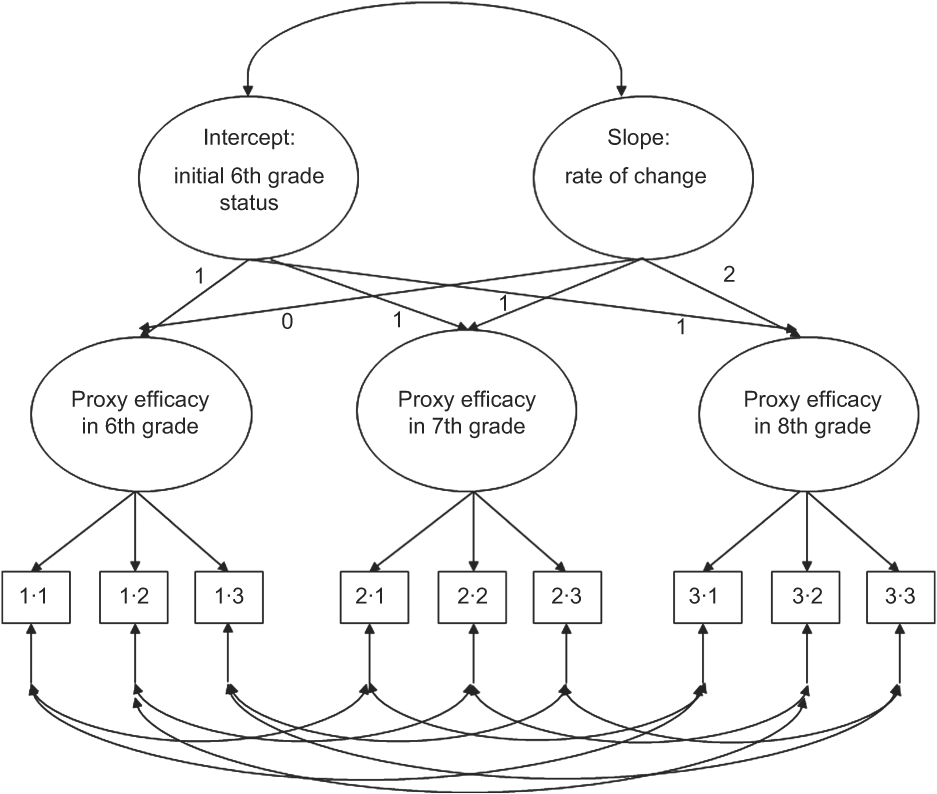
Tests of measurement invariance provided information about the stability of proxy efficacy across gender, SES and time. Figure 1 illustrates the specified latent growth model (LGM). The model for the proxy efficacy latent factor included three indicator items, which contained no cross-loading across assessment years. The first indicator of proxy efficacy was used as a marker indicator for each assessment year. The measurement error terms were allowed to covary due to the expectation that some systematic variance unaccounted for by proxy efficacy was the same over time. Accordingly, the model was over-identified with twenty-three degrees of freedom.
Specified latent growth model for youth proxy efficacy from their parent for fruit and vegetable availability across the 6th, 7th and 8th grade
All youth scores were included to examine longitudinal ME/I across 6th, 7th and 8th grade, including equivalent tests for form, item loadings and intercepts. Group ME/I was examined at each time point using multi-group CFA for gender (female, male) and SES (lower, higher) subgroups. Due to the inflation of χ 2 values as sample sizes increase and the unequal n between both subgroups, random samples were drawn for male and lower-SES youth to match the sample size of their counterpart subgroup. Similar to longitudinal ME/I, group ME/I examinations included tests for equal form, item loadings and intercepts.
Longitudinal and group ME/I was examined with a multi-step approach, involving three nested CFA. For group ME/I, the validity of the factor structure was initially tested by examining the model separately for each subgroup. Next, sequential model constraints were imposed, examining ME/I of model form, factor loadings and item thresholds longitudinally, as well as across gender and SES subgroups. Form and factor loading equivalence is the minimal evidence necessary to establish ME/I, with further tests (i.e. equal thresholds) providing additional evidence(Reference Marsh51).
Multiple indicators, multiple causes latent growth model
LGM analysis is essentially a multilevel model for change; applying CFA to variables measured longitudinally(Reference Singer and Willet52) to examine the level of proxy efficacy at each grade (intercept) and its rate of change over time (slope). The intercept was tested separately for each assessment year, while the slope was examined by assigning a regression weight to proxy efficacy at each of the three time points (i.e. 6th grade = 0, 7th grade = 1, 8th grade = 2). Youth were nested within eight schools; thus, school was included in the model as a cluster variable, adjusting the standard errors of parameter estimates for potential between-school variability.
MIMC modelling included the simultaneous inclusion of youth-level covariates (gender, SES) to examine potential direct effects on the intercept and slope. A significant direct effect indicates different proxy efficacy means at different levels of the covariate; thus, results are interpreted based on the dummy code assigned to each covariate and the negative or positive sign of the parameter estimate. Given that females and higher-SES youth were dummy coded as 1 (their counterparts as 0), a positive parameter estimate would indicate higher values for these youth. MIMC modelling was chosen over multi-groups CFA due to unequal subgroups (n) and a less cumbersome application(Reference Brown53).
Model fit
In addition to the χ 2 statistic(Reference Bollen54) model fit was assessed with multiple indices. The comparative fit index (CFI) was adequate at values above 0·90(Reference Bentler55) and the Tucker–Lewis coefficient (TLI)(Reference Bentler and Bonett56) at values greater than or equal to 0·95(Reference Hu and Bentler57). Root-mean-square error of approximation (RMSEA) values of less than 0·08 and less than 0·06 (and the 90 % confidence interval) indicated acceptable and close fit, respectively(Reference Browne and Cudeck58). The standardized root-mean-square error (SRMR) reflected good fit at values less than 0·08(Reference Chan59). Finally, significance of factor loadings and modification indices were closely examined.
Results
Longitudinal and group invariance
Longitudinal and group ME/I results are presented in Table 1, including χ 2 and all model fit statistics. Longitudinal ME/I for form demonstrated viability of the proxy measurement model at all three assessment periods, such that each fit index was within the appropriate range, there existed no areas of strain (e.g. all modification index (MI) values <3·5), and all items were significantly (all P < 0·001) and strongly related (R 2 ranged from 0·575 to 0·884) to proxy efficacy. In addition, correlations between proxy factors (i.e. stability coefficients) were significant between each assessment year, ranging from 0·36 to 0·50 (all P < 0·05).
Longitudinal and group measurement invariance for proxy efficacy from parent(s) for fruit and vegetable availability (longitudinal n 712; gender n 340 (50 % female); SES n 216 (50 % high))
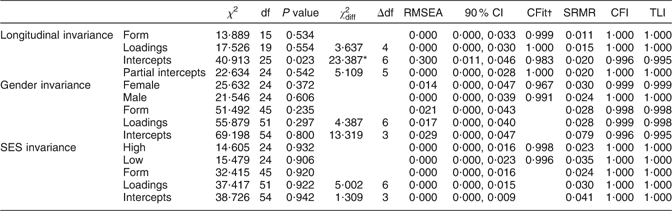
SES, socio-economic status; df, degrees of freedom;  , nested χ 2 difference; Δdf, change in degrees of freedom; RMSEA, root-mean-square error of approximation; CI, confidence interval for RMSEA; CFit, test of close fit (probability RMSEA ≤ 0·05); SRMR, standardized root-mean-square residual; CFI, comparative fit index; TLI, Tucker–Lewis index.
*Significantly degrades the model (P < 0·001).
†Mplus does not provide Cfit statistics for multiple-group confirmatory factor analysis.
Following baseline model assessment, a series of nested model comparisons with sequential equality constraints were examined for longitudinal ME/I. First, the meaning and structure of the proxy scale over time was confirmed equivalent (i.e. factor loadings), demonstrating appropriate fit indices without degrading model fit,  , NS (critical value of χ 2(4) = 9·49, α = 0·05). However, additional model constraints specifying equal thresholds over time did degrade model fit,
  , NS (critical value of χ 2(6) = 12·59, α = 0·05). To identify the unequal intercept(s), equality constraints with the highest MI values were consequently freed until model fit was appropriate. The intercept of the first proxy item in year three (p31) had the highest MI, which was released first leading to a non-significant change in model fit,
  , NS (critical value of χ 2(5) = 11·07, α = 0·05). Given invariant factor loadings over time, there is sufficient evidence for longitudinal ME/I(Reference Marsh51); thus, the partially constrained model was tested further for group ME/I.
Table 1 presents results of subgroup comparisons. As seen, the baseline model fit each set of subgroup data well. In addition, all freely estimated factor loadings were statistically significant (P < 0·05) and salient (R 2 > 0·40), demonstrating strong model consistency across youth gender and SES subgroups. Further tests confirmed equivalent form, factor loadings and item thresholds across both gender and SES subgroups (see Table 1). Evidence for longitudinal and group ME/I confirms the validity of the proxy scale across time and subgroup, assuring accuracy when examining longitudinal change in youth proxy, as well as potential variability based on youth-level gender and SES.
Multiple indicators, multiple causes latent growth model
Overall, the model presented a close fit to the data (χ 2(37) = 39·032, P = 0·379, CFI = 0·999, TLI = 0·999, RMSEA = 0·009, SRMR = 0·019). The variance estimates for the intercept (1·069) and slope (0·272) were both statistically significant (P < 0·05), as was the negative correlation between the intercept and slope (r = −0·378, P < 0·05); thus, youth reporting higher proxy efficacy in 6th grade are less likely to decrease over time compared to youth with lower initial proxy. Table 2 provides in-depth descriptive results for the proxy factor across time and between gender and SES subgroups. Results of the MIMC analysis are also presented in Table 2, including the unstandardized parameter estimates with standard errors and tests of significance. Also, the effect sizes presented in Table 2 are partially standardized; thus, only the latent variables have been modified to a standard scale, allowing the covariates to be expressed on the original metric. Given that gender and SES covariates are represented with dummy coded values (e.g. female = 1, male = 0), coefficient values are interpreted as the number of standardized scores proxy efficacy is predicted to change as a function of a change in the dummy coded metric (i.e. difference between males and females, difference between higher and lower SES). These standardized values can be interpreted analogous to Cohen’s d guidelines, such that 0·20, 0·50 and 0·80 represent small, medium and large effects, respectively(Reference Cohen60, Reference Cohen61).
MIMC LGM examining youth-level covariate effects on proxy efficacy from 6th to 8th grade and the rate of change in proxy efficacy over time (n 712; gender: female n 372, male n 340; SES: high n 496, low n 216)
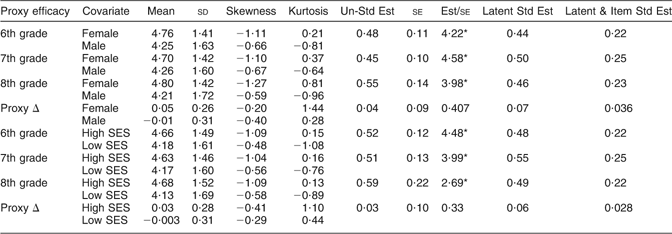
MIMC, multiple indicators, multiple causes; LGM, latent growth model; SES, socio-economic status; Un-Std, unstandardized; Est, estimate; Est/se, critical value; Std, standardized; Δ, change.
Binary values: females = 1, males = 0; high SES = 1, low SES = 0 (positive estimates reflect higher values for those coded 1).
*P < 0·05.
Gender (females = 1, males = 0)
The unstandardized estimates of gender to proxy efficacy in 6th, 7th and 8th grade were all statistically significant. In 6th grade, females had significantly higher proxy efficacy scores compared with males, as reflected by a positive coefficient (females +0·48). This difference was consistent in both 7th (females +0·45) and 8th grade (females +0·55). The standardized effect size of these differences ranged from just short of moderate (6th and 8th grade) to moderate in 7th grade (d = 0·50). The estimates from gender to the rate of change in proxy efficacy were not significant.
Socio-economic status (higher = 1, lower = 0)
The unstandardized estimates of SES to proxy efficacy in 6th, 7th and 8th grade were also all statistically significant. In 6th grade, the mean of high-SES youth was 0·52 units higher than the mean of low-SES youth, which remained consistent in both 7th (higher SES +0·51) and 8th grade (higher SES +0·59). The standardized effect size values ranged between 0·48 and 0·55, indicating an average medium effect of youth SES on their proxy efficacy. Similar to gender, the estimates from SES to the rate of change in proxy efficacy over time were not significant.
Discussion
The present study examined the change in youth proxy efficacy to influence parents to provide FV across early adolescence (6th, 7th and 9th grade). In addition, the relationships between youth demographic variables (i.e. gender and SES) and youth proxy efficacy were examined over time. Below we review the study results in comparison with our study hypotheses.
First, the measurement scales demonstrated consistency over three years among youth developing through early adolescence. More specifically, both the factor structure and item loadings were equal and consistent over 6th, 7th, and 8th grade. Confirmed longitudinal ME/I ensures that differences found in proxy efficacy over time can be attributed to true change in the construct rather than shifts in the validity of the measure, strengthening results and offering a valid measure for future examinations.
Second, youth proxy efficacy did not change significantly over time, nor were there differences in proxy change based on gender or SES. This finding is contrary to our expectation of a linear decline over time, which would parallel evidence for the linear decline in youth FVC during this same period of development(Reference Mensink, Kleiser and Richter4, Reference Riediger, Shooshtari and Moghadasian5). As children develop into adolescence they seek more independence and autonomy, which may lead to distancing in adolescent–parent relationships(62); however, influences on FVC are similar between children and adolescents and parental influence remains significant throughout development(Reference Geller and Dzewaltowski63, Reference Hanson, Neumark-Sztainer and Eisenberg64). Therefore, the consistency in proxy efficacy throughout early adolescence may reflect the ongoing role and influence of parents. Another potential explanation is the inclusion of grade levels that precede high school, representing young adolescents who are likely still dependent on communications with their parent. There were also no differences over time based on youth demographic characteristics, ruling out developmental distinctions in proxy efficacy between gender and SES subgroups. Interestingly, the variance of the slope (i.e. variability in proxy change) remained significant following inclusion of gender and SES as covariates, suggesting variability due to an unmeasured variable. It is probable that youth race/ethnicity contributes to this variability; however, due to a predominantly Caucasian sample, this type of analysis was not possible with the current data.
Third, within the current sample, differences in youth proxy efficacy for FV availability exist based on gender and SES. Relevant to gender, male youth expressed significantly lower proxy efficacy compared with females at 6th, 7th and 8th grade, which supports both our expectations and research reporting lower rates of FVC among boys(Reference Bere, Brug and Klepp6, Reference Lytle, Varnell and Murray7). Previous research has reported numerous gender differences regarding FV availability, such as: boys perceive less FV availability than girls(Reference Bere, Brug and Klepp6), boys’ and parents’ reports of FV availability are not consistent(Reference Bere, Brug and Klepp6) and FV availability is related to FVC among girls, but not boys(Reference Hanson, Neumark-Sztainer and Eisenberg64). These differences may be due to girls’ exaggerated concern for health in comparison to boys(Reference Reynolds, Yaroch and Franklin40), leading to greater awareness of healthy food availability. Also, boys may care less about FV due to lower FV preferences(Reference Bere, Brug and Klepp6, Reference Cullen, Baranowski and Owens14, Reference Domel and Thompson65). It may also be possible that lower proxy efficacy among boys for FV availability from their parent reflects advanced autonomy and/or detached parental relations. Further examinations of the proxy construct are required before conclusions can be made, including examining its relatedness to youth levels of FVC.
The current results also reflect significantly lower proxy efficacy among low-SES youth compared with high-SES youth at each assessment point, corresponding to our expectations, FVC research(Reference Riediger, Shooshtari and Moghadasian5, Reference Lytle, Varnell and Murray7, Reference Rasmussen, Krolner and Klepp8, Reference Lien, Jacobs and Klepp66) and similar investigations among children of elementary-school age(Reference Geller, Dzewaltowski and Rosenkranz39). There are numerous characteristics of low SES that may influence the youth food environment, including: longer parent working hours and less family time, lower family income, higher prevalence of single-parent homes, and lower awareness of healthy options and grocery stores access(Reference Patrick and Nicklas67, Reference Schor68). It may be these characteristics, along with others, leading to lower FV availability(Reference MacFarlane, Crawford and Ball69) and consumption among low-SES youth(Reference Riediger, Shooshtari and Moghadasian5, Reference Stewart and Menning70), which may be related to lower proxy levels. However, without additional examinations, the factors contributing to these differences are still unknown. The most obvious possible contributor is family income, which was reported by both youth and parents to limit their food selection, cooking and eating practices(Reference Kaplan, Kiernan and James71). Thus, lower-SES youth may be aware of their family’s economic struggle, which negatively impacts their proxy efficacy for FV availability.
There are specific strengths and limitations of the current study that should be noted. First, the LGM analyses included the entire measurement model, confirming the validity of results. A limitation of analyses completed with ordinary least squares (e.g. correlation analyses, multiple regression analyses) is the assumption that variables have been measured without error(Reference Brown53, Reference Chan59). Another major strength of the included analyses is the comparison of proxy means across assessment years, as well as the rate of change over time. However, the low prevalence of diverse youth limited analyses, excluding assessment of variability based on race/ethnicity. In a recent focus group study, barriers and facilitators of FVC were found to vary between different racial/ethnic minority populations(Reference Yeh, Ickes and Lowenstein72); thus, additional research on proxy efficacy is needed among a more diverse population. Another weakness is our categorization of youth SES solely based on lunch programme assistance status, possibly limiting the validity and generalizability of our results. Previous youth studies have used a variety of different measures to assess SES (i.e. maternal education, household income, etc.), making comparisons across studies difficult(Reference Currie, Molcho and Boyce73) and possibility leading to inaccurate classifications(Reference Braveman74, Reference Gazmararian, Adams and Pamuk75).
Implications for research and practice
Collectively, the present study provides novel information regarding youth proxy efficacy for FV availability and these findings may be useful in future intervention development. The influence of FV availability on youth consumption is supported in numerous research studies(Reference Bere, Brug and Klepp6, Reference Baranowski, Cullen and Baranowski13–Reference Kratt, Reynolds and Shewchuk16, Reference Bere and Klepp21), and we believe that empowering youth with the skills and confidence to request FV (i.e. proxy efficacy) may facilitate increased FV availability and consumption. There is some evidence that intervention strategies can build youth proxy to improve their physical activity opportunities and their physical activity levels(Reference Dzewaltowski, Estabrooks and Johnston42, Reference Dzewaltowski, Estabrooks and Welk43). Thus, similar future interventions may be able to reach parents by using youth proxy efficacy as a vehicle to promote healthy changes to the food environment. Our results also demonstrate differences in proxy efficacy based on gender and SES; however, the mechanisms linking these demographic characteristics to proxy efficacy are still unknown. Future research examining the intermediate variables between youth-level demographic variables and proxy efficacy are necessary.
Acknowledgements
All work was performed at the Department of Kinesiology and Community Health Institute, Kansas State University. The study was supported in part by RO1 HD37367 funded by the National Institute of Child Health and Human Development, the National Institute of Nursing Research, the Office of Disease Prevention, National Institute of Allergy and Infectious Diseases, and the Office of Dietary Supplements (NICHD, NINR, ODP, NIAID, ODS). There are no conflicts of interest. K.S.G. ran all statistical analysis and drafted the paper. D.A.D. was the principal investigator of the grant that supported this research and contributed to the writing and editing of the final manuscript.



