





1. Introduction
The acquisition of language’s logical connectives has received significant attention in the child language literature recently, in line with the extensive research being conducted on the role the connectives play in cognition in general, be this in studies of language comprehension, reasoning, or the relationship between language and thought (e.g. Cesana-Arlotti et al., Reference Cesana-Arlotti, Martín, Téglás, Vorobyova, Cetnarski and Bonatti2018; Lobina et al., Reference Lobina, Demestre, García-Albea and Guasch2022, Reference Lobina, Demestre, García-Albea and Guasch2023; Mody & Carey, Reference Mody and Carey2016). This is on account of the fact that the connectives tap distinct but interrelated properties of syntax and semantics, and thus, their study can provide key insights into some of the central properties of cognition – putting two sentences or thoughts together is a core cognitive ability, after all, and this is the very raison d’etre of the connectives (Fodor, Reference Fodor1975; Frege, Reference Frege1963).
Language exhibits various ways to connect two sentences (or clauses), the smallest grammatical units that express a proposition (or thought) (Haiman & Thompson, Reference Haiman and Thompson1988), with “coordinators” such as and and or generating so-called “compound” sentences. Such sentences involve each compound clause being of equivalent grammatical status and hence independent of each other (Haspelmath, Reference Haspelmath and Haspelmath2004). Thus, for example, the sock is blue and the shoe is red, where the coordinator and connects the clauses at the same grammatical level. Remarkably, out of the many lexical items that natural languages employ to connect clauses (e.g. and, because, but, or), a small handful exhibit logical properties – they behave like the sentence operators of formal logic.
There are two such connectives in many of the world’s languages: conjunction and, the union of two clauses; and disjunction or, which can receive an inclusive or exclusive interpretation in language, depending on various factors (in formal logic, there are two disjunction operators, one for each interpretation, as explained below). This is certainly the case for the language of our study, Italian, with conjunction e and disjunction o as this language’s logical connectives. There is an extensive literature on experimental work with the connectives by now, mostly with English as the target language, with some work also in Italian; the present work aims to provide another view on the acquisition of the logical connectives, as our data come from a much younger cohort than has been the case in the field before.Footnote 1
The connection between language and formal logic is meant to be fairly direct in this strand of work in cognitive science. In logic, propositions are assigned truth values in order to account for their meaning, a proposition being either true (T) or false (F) depending on whether it describes an aspect of the world or not. When two propositions are combined through a connective, “truth tables” can be constructed for these compound sentences by, first, placing two propositions side by side along with all the possible combinations of truth values – namely: T–T, T–F, F–T, F–F – and then establishing the truth value for each combination on the basis of the connective mediating between the clauses. The implication here is that the meaning of natural language connectives is captured by truth tables, as in formal logic, an issue that is somewhat muddied by the fact that linguistic expressions are context sensitive, which is not the case for formal expressions (Chierchia, Reference Chierchia and Belletti2004, Reference Chierchia2013). Thus, whilst it seems to be the case that linguistic expressions have a core truth-conditional component as part of their meaning (what’s usually referred to as their semantics; von Fintel & Matthewson, Reference von Fintel and Matthewson2008), their use in context can give rise to a number of implicatures and presuppositions, the domain of pragmatics. In this paper, the evidence to be presented will mostly pertain to semantic properties, and thus, we shall put pragmatic issues to one side for the most part, as explained below.Footnote 2
Table 1 provides the truth tables for conjunction ( $ \wedge $
) as well as for inclusive and exclusive disjunctions from formal logic (
$ \wedge $
) as well as for inclusive and exclusive disjunctions from formal logic ( $ \vee $
and
$ \vee $
and $ {\vee}_e $
, respectively). A conjunctive compound sentence is only true when both conjuncts are true, inclusive disjunction is true if at least one disjunct is true, and exclusive disjunction is true when only one disjunct is true. As such, there are two superset–subset relationships at play within the truth table: between conjunction and inclusive disjunction, on the one hand, and between inclusive and exclusive disjunction, on the other. That is, conjunctive and (inclusive) disjunctive sentences are both true when both clauses are true (thus, the truth values of conjunction constitute a subset of the truth values of inclusive disjunction), whilst inclusive and exclusive disjunctive sentences are both true when only one of the clauses is true (thus, exclusive disjunction is a subset of implicit disjunction).
$ {\vee}_e $
, respectively). A conjunctive compound sentence is only true when both conjuncts are true, inclusive disjunction is true if at least one disjunct is true, and exclusive disjunction is true when only one disjunct is true. As such, there are two superset–subset relationships at play within the truth table: between conjunction and inclusive disjunction, on the one hand, and between inclusive and exclusive disjunction, on the other. That is, conjunctive and (inclusive) disjunctive sentences are both true when both clauses are true (thus, the truth values of conjunction constitute a subset of the truth values of inclusive disjunction), whilst inclusive and exclusive disjunctive sentences are both true when only one of the clauses is true (thus, exclusive disjunction is a subset of implicit disjunction).
Truth tables for conjunction and inclusive and exclusive disjunctions, given propositions P and Q

As noted, the relevant distinctions in meaning among formal connectives are explicitly marked as such in logic and no lexical ambiguity arises (there are 16 binary connectives in logic), but the situation in natural language is more nuanced, as we shall see. In addition, there is significant cross-linguistic variability regarding both the lexicalisation of the connectives (Cheyenne, for instance, only uses one connective; see Murray, Reference Murray, Burgdorf, Collard, Maspong and Stefánsdóttir2017) and how the connectives are processed and comprehended, especially under negation (see e.g. the discussion in Szabolcsi, Reference Szabolcsi2002), and this raises the question of whether language’s logical connectives are acquired in different ways across the world’s languages. As we shall describe in the next section, most of the evidence on the acquisition of the connectives has come from studies of English, and many of these studies have employed tasks tapping the production abilities of young children – that is, tasks in which children produce compound sentences, whether spontaneously so or otherwise.
The objective of this study is therefore twofold: to employ a suitable experimental paradigm to evaluate the comprehension abilities of toddlers with compound sentences, thus allowing us to gather evidence from much younger children than has been the case so far, and to do so with a language other than English, thereby offering a wider picture of the acquisition of language’s logical connectives. In the next section, we offer a limited but relevant sample of past results as the necessary background to our study, which is then outlined immediately after. We shall then report in detail the results of an eye-tracking experiment with Italian-speaking infants aged 28 months old (on average), along with the analysis of the results with a non-linear regression model especially adapted for this kind of data. We will bring the paper to an end with a discussion of the results and how our study can inform theories of acquisition as well as the related question of what sort of primitives there might be in language and thought vis-à-vis the logical connectives.
1.1. Previous results
Much evidence on the acquisitional trajectory of the connectives has come from studies of production, be these experimental paradigms targeting elicited speech or the analysis of corpora data. In the case of the latter, Morris (Reference Morris2008), for instance, adopting an item- and usage-based approach to language acquisition, reports the following interrelated results: that children start producing conjunction before disjunction; that the early use of these connectives is not usually logical in nature; and that disjunction is mostly exclusive in both children and adults. The account is based on the assumption that language acquisition is greatly determined by the input children receive from their parents, including the frequency of such input; under this view, consequently, parental input functions as a starting point for children, and both children’s production and the interpretations they use for the connectives are predicted to eventually match the production and interpretations of their parents. Parents’ (and children’s) use of conjunction is more frequent than that of disjunction (in the corpus Morris analysed, there were nearly 6000 instances of conjunction, for fewer than 500 for disjunction), and considering that the vast majority of the uses of disjunction children hear is exclusive in nature, Morris concludes that children’s early meaning of disjunction is exclusive and that the inclusive meaning only arises later on, from the age of 6 or 7 years. In terms of production rates, Morris’s analysis suggests that children’s frequency of use of conjunction matches that of adults by age 3, but in the case of disjunction, children still have not quite become adult-like by age 5, with rather different patterns of usage to boot.
In a more comprehensive analysis of corpora data, Jasbi et al. (Reference Jasbi, Jaggi, Clark and Frank2024) show that there is an asymmetry in the speech acts produced by children and parents when it comes to disjunction, with parents producing far more disjunctive questions than children (as in would you like to play with this or with this other one?). If the analysis is constrained to declarative sentences, in fact, children’s production is proportionally comparable to that of adults. In more general terms, children start producing conjunctive sentences from 12–18 months of age, in contrast to 18–30 months for disjunction, with adult-like production starting at 30 months for conjunction and at 6 years of age for disjunction (further, and in line with one of Morris’s findings, in the corpus Jasbi et al. analysed conjunction was ten times more frequent than disjunction).
More tellingly, Jasbi et al. show that the use of disjunction is typically exclusive in child-directed speech when the clauses are logically inconsistent (i.e. they cannot both be true) and the overall sentence exhibits a rise–fall intonation (i.e. the pitch rises over time throughout the sentence and then starts falling). Absent these cues – the clauses can both be true at the same time and/or the prosody is not rise–fall – and the disjunction is meant inclusively. The exclusive interpretation of disjunctive sentences is certainly more frequent in both children and adults; the point is that the inclusive interpretation is available and constitutes the default reading in both cohorts if semantic and intonational cues are absent (it is worth adding that children are sensitive to intonational cues by age 12 months, as Jasbi et al. point out; see references therein, and in addition, Frota et al., Reference Frota, Butler and Vigário2014). Thus, and as is the case in much of the literature, Jasbi et al. take disjunction to be intrinsically inclusive in language, with exclusivity a pragmatically derived interpretation – in terms of the first superset/subset relationship outlined above, this is a situation in which the possible three true values of inclusive disjunction are reduced (or strengthened) to the two possible true values of exclusive disjunction (the exclusive interpretation is said to be “stronger” because it is applicable to two states of affairs instead of the three that an inclusive interpretation allows).
The evidence so far discussed pertains to production data and moreover comes from corpora analyses, and this necessarily yields an incomplete view of the acquisition of the connectives. In the case of experimental data targeting the comprehension of the connectives, many studies have used the truth-value judgement task, a paradigm in which a young child is required to judge the truth/accuracy of the utterances of a playful puppet. In this task, children are not required to produce target sentences, but to process and comprehend them: children are asked to evaluate the speech they hear and are often expected to correct the speech of the puppet as a way to show that the target interpretation is available. Using this task, children have been shown to interpret the connectives in logical ways from the age of 3 or so, with disjunction interpreted mostly inclusively between the ages of 3 and 5 (Chierchia et al., Reference Chierchia, Crain, Guasti, Gualmini, Meroni, Do, Domínguez and Johansen2001; Crain, Reference Crain2012). As is often the case when production and comprehension data are contrasted in language acquisition, the comprehension data tend to suggest that children master the requisite linguistic structures at an earlier age than what production data indicate, and this is especially true in the case of disjunction here.
Singh et al. (Reference Singh, Wexler, Astle-Rahim, Kamawar and Fox2016), also employing the truth-value judgement task, but combined with a forced choice task, report a result that prima facie relates to the second superset/subset relationship we delineated above – that between inclusive disjunction and conjunction, with the shared true value requiring both clauses to be true (a true–true reading, as we shall call it from now on).Footnote 3 The data Singh et al. obtained with this experimental setting suggest that children between the ages of 3 and 6 (mean age: 4;10) treat disjunctions as if they were conjunctions. That is, it is not that children prefer the conjunctive interpretation of (inclusive) disjunction (i.e. a true–true reading, according to our nomenclature), a perfectly acceptable choice; rather, the children in the Singh et al. study only accept disjunction when both clauses are true, rejecting disjunctive sentences when only one of the clauses is true, contrary to what the semantics of disjunction would mandate. This particular result has generated a considerable discussion on what may be causing children to mistakenly interpret disjunctive sentences – and this interpretation is indeed regarded as a mistake – with Skordos, Bale, and Barner (Skordos et al., Reference Skordos, abd Feiman, Bale and Barner2020), for instance, arguing that some features of the Singh et al. study may have resulted in significant pragmatic uncertainty for children, and when this factor is controlled for, the results do not appear to be replicable. In this vein, furthermore, Singh et al.’s findings are somewhat in conflict with those reported in Chierchia et al. (Reference Chierchia, Guasti, Gualmini, Meroni, Crain, Foppolo, Noveck and Sperber2004), where it is shown that 5-year-olds clearly distinguish between conjunction and disjunction.Footnote 4
Also relevant for our purposes here is a parallel discussion in the literature regarding the semantics of language’s connectives, especially the claim that language’s conjunction and disjunction may not in fact be boolean in nature, which is to say that they may not be quite like the connectives of formal language. Boolean functions take statements that are either true or false and compute a new statement therefrom that is also only either true or false, as specified in the truth tables above, and a number of scholars have argued that language’s conjunction and disjunction do not behave thus. To mention but two perspectives, Winter (Reference Winter1995) takes conjunction to not be boolean, but an operator that forms tuples instead (i.e. lists of elements), without contributing any meaning to the overall sentence (see Discussion for a different take from Winter, which will be rather relevant to explaining our results), whereas for Zimmerman (Reference Zimmerman2000) it is disjunction that is non-boolean (and thus not like either inclusive or exclusive disjunction from formal logic), but instead encompasses a list of epistemic possibilities as an answer to the question “what might be the case?” (we will also come back to Zimmerman in Discussion).
In sum, most studies have focused on the production of the connectives in children between the ages of 3 and 6, with the data indicating that conjunction is mastered by age 3 and disjunction from age 6 or so, whilst studies on the comprehension of the connectives have shown that children distinguish the two connectives from the age of 5 and that, furthermore, children can interpret disjunction inclusively by age 3. As in the case of studies employing the truth-value judgement task, the work we present here also focuses on a comprehension rather than on a production task as the measure to probe mastery of the linguistic structures under analysis. Comprehension tasks have demonstrated that children are in possession of a much more sophisticated knowledge of language (and exhibit much more sophisticated cognition) than what production tasks, including act-out experiments and corpora data, have indicated in the past, and at a much younger age (as a case in point, see Gertner et al., Reference Gertner, Fisher and Eisengart2006); in fact, production tasks can easily obfuscate children’s abilities, given that the requisite behaviours in these tasks often implicate factors that may not be entirely operative in comprehension (memory recall, motor planning, etc.). The truth-value judgement task, however, is not appropriate to evaluate the linguistic knowledge of infants and toddlers, as these tasks call for factors that are not trivial and plausibly too taxing to toddlers (in particular, interacting with a puppet and correcting their speech if they misdescribe a scene).
2. The present eye-tracking study
The present study, then, which was pre-registered at https://tinyurl.com/bdc5jr4t, targeted the so-called terrible twos, and in order to do so, we employed the intermodal preferential looking paradigm (IPLP) (Golinkoff et al., Reference Golinkoff, Ma, Song and Hirsh-Pasek2013), a technique that has been successfully used to study the acquisition of grammatical phenomena with children as young as 13–15 months and has been especially useful with children aged 18 months and above, well within the age range of the cohort of this study (Ambridge & Rowland, Reference Ambridge and Rowland2013; Seidl et al., Reference Seidl, Hollich and Jusczyk2003). To the best of our knowledge, in fact, ours is the only study to employ this particular comprehension method to probe the acquisition of the logical connectives in toddlers. Our experiment, therefore, gathered evidence from children between the ages of 24 and 36 months, and the task was meant to focus exclusively on the comprehension of conjunctive and disjunctive sentences that are readily available to children this young, as in simple declarative sentences that refer to coloured objects such as the ball is blue and/or yellow. The focus on this particular age cohort is precisely on account of the fact that many pragmatic considerations do not apply at this age (see Chierchia et al., Reference Chierchia, Guasti, Gualmini, Meroni, Crain, Foppolo, Noveck and Sperber2004), therefore allowing us to get at the semantics of compound sentences more directly, as it were, and with the additional benefit that this age group already manifests a solid knowledge of basic syntactic and semantic structures, as mentioned above.
The working assumption of the study was that comprehension tasks can offer a better view of when in ontogeny children demonstrate mastery of this or that feature of language, and this would complement and indeed enrich the current literature, not least by employing materials in a language other than English. In terms of our actual predictions, it was in general hypothesised that both conjunction and disjunction would be available from very early on (and, thus, available to this age group); that the use of the IPLP task, along with the nature of the materials and the design we employed, would not be too taxing for toddlers; and that these children would not be sensitive to significant pragmatic factors (see ft. 4, supra). The set-up and experimental materials we used followed a similar design to that reported in Lobina et al. (Reference Lobina, Demestre, García-Albea and Guasch2023), a study focused on unearthing the default (which is to say, semantic) interpretations of the connectives, and where an attempt was made to discriminate between semantic and pragmatic properties in the processing of the connectives, a set-up that was thus especially apt to our own study.
In our preferential looking task, children were shown two images side by side on a computer screen whilst a sentence potentially describing both images was played to them, with an eye tracker recording children’s fixations on these two images as the sentence unfolded, and for a brief period of time after the sentence had ended. The sentences were of the kind the ball is blue and/or yellow, and the images were of coloured balls and of two kinds (on one side of the screen a ball of one single colour, and on the other, a ball of two colours). As a result, the presence of the connectives would help determine which image would constitute the match for the sentences played to children, depending on their interpretation of the sentences (the familiarisation phase children were exposed to before testing is also an important factor, as described in the Methods section and discussed extensively in Discussion). In particular, a blue and yellow ball would match the meaning of a conjunctive sentence, whilst disjunctive sentences could potentially describe either a blue ball or a blue and yellow ball, depending on what reading of disjunction is favoured (as mentioned above, inclusive or exclusive readings). Less roughly, we formulated the following, more specific hypotheses
-
• H1: conjunction should be easier to comprehend than disjunction;
-
• H2: children will accept the true–true reading for disjunction – the truth-value conjunction and (inclusive) disjunction share – though not to the same extent they favour conjunction for the same kind of graphic (a bicoloured ball in this case); and, consequently,
-
• H3: children will prefer the true–true reading for disjunction over an exclusive reading (true–false or false–true; namely, a unicoloured ball), in line with the consensus in the literature that exclusive interpretations of disjunction arise because of pragmatic considerations and these ought not to apply here, as discussed.
As for the dependent variable we focused on (namely, total looking time), and taking into consideration that the two conditions in the experiment – conjunction and disjunction – where each condition was composed of target and competitor images (the two images presented side by side), we predicted the following:
-
• P1: total looking time to the true–true interpretation will be greater in the conjunction condition than in the disjunction condition;
-
• P2: total looking time to the target image will be greater towards the second half of each trial, as by then the sentence has been played completely and the full interpretation can be computed;
-
• P3: latency to the target image will be smaller in the conjunction condition than in the disjunction condition; and
-
• P4: the number of switches between target and competitor images will be greater in the disjunction condition than in the conjunction condition.
We now turn to an in-depth description of the task and the results.
2.1. Methods
Participants. A total of 28 infants (19 female and 9 male) between the ages of 24 and 36 months were recruited to take part in this experiment. Two participants were eliminated before data preparation as they were exposed to other languages at home, suggesting a bilingual upbringing and thus constituting a different demographic. The data from two further participants were also eliminated because of data quality issues, as explained in the Analyses section below; thus, we present data from 24 children. The mean age of the 24 children was 28.8 months (SD = 3.5), and none had any known hearing or visual impairments. All were native speakers of Italian. The parents/guardians of all participants gave written informed consent before the experiment, the experiments followed the research and ethical guidelines of the University of Milano-Bicocca, and the overall study itself was approved by the university’s ethical committee. The number of participants we tested followed the recommendations in Oakes (Reference Oakes2017) regarding statistical power when testing toddlers in the preferential looking paradigm. Each child was randomly assigned to one of the two conditions of the experiment, and thus, there were 12 participants in each condition.
Materials. The experimental materials were in line with the vocabulary children are expected to understand by age 24 months, as corroborated by the Italian version of the MacArthur-Bates Communicative Development Inventory (Caselli et al., Reference Caselli, Bello, Rinaldi, Stefanini and Pasqualetti2016). In the case of the connectives, we identified nouns such as ball and colour predicates like blue and yellow as appropriate for inclusion in the materials, all of which are present in the vocabulary of Italian children from the age of 18 months, yielding experimental sentences in the form the ball is blue and/or yellow. Children were exposed to graphics representing coloured balls of two kinds whilst an experimental sentence was played over loudspeakers and the infants’ eye movements were recorded with an eye tracker as they inspected the overall scene (see Figure 1). In terms of the visual saliency of the graphics, the employment of fixation points, or the use of attention getters to keep toddlers engaged, we followed the general recommendations put forward by Delle Luche et al. (Reference Delle Luche, Durrant, Poltrock and Floccia2015).
Experimental flow.

Procedure. We used the IPLP for the purposes of this experiment, as advanced supra. The IPLP consists of measuring children’s differential visual fixations to two images or videos presented side by side as linguistic audio is being played over speakers or headphones (Golinkoff et al., Reference Golinkoff, Hirsh-Pasek, Cauley and Gordon1987; Golinkoff et al., Reference Golinkoff, Ma, Song and Hirsh-Pasek2013). One of the images constitutes the target, which is usually presented in a test phase, and it is the image the audio directs children to look at. The other image plays the role of a distractor and is usually introduced for the first time during the experimental session itself, thereby maximising the “surprise factor” and thus potentially drawing the attention of children to it and away from the target. Given this general set-up, then, if children paid more attention to the images the audio describes than to the novel distractors, the data would indicate that children are indeed demonstrating knowledge of the linguistic feature or property they are being exposed to. The IPLP can now be combined with an eye tracker, allowing researchers to follow where children’s gazes are fixated, for how long, and the space course these take, thereby producing moment-by-moment information on language processing (cf. Fernald et al., Reference Fernald, Zangl, Portillo, Marchman, Sekerina, Fernández and Clahsen2008), and this is the set-up we employed.
The experiment was a between-group design, with two conditions: conjunction and disjunction. One group of participants undertook the conjunction task (all experimental items were conjunctive sentences), and one group the disjunction task (all items were disjunctive sentences). A Tobii eye tracker (Pro X3–120) collected eye movement data, and the experiment was administered with the E-prime software by using the E-prime extensions for Tobii Pro. The experiment was designed and run with the E-prime software and administered in a nursery room with low to normal illumination, in which each child was tested individually. Children were seated in front of a laptop with a 14-inch screen set to a resolution of 1024 × 768 pixels, at a distance of around 60 centimetres. The position and fixations of children’s right eye, most people’s dominant eye, were continuously recorded at a sampling rate of 120 Hz with a Tobii screen-based eye tracker. Eye centring was conducted before the familiarisation phase, and calibration was performed before the experimental phase. The experiment lasted around 15 minutes overall.
Each screen was divided into two halves, yielding two areas of interest, and a sentence was played for each trial, describing either one or both sides of the screen; the sentences would only describe one side for conjunctive sentences, but potentially the two sides in the case of disjunctive sentences. The object on display was a ball, which was presented in different colours (blue and yellow or just one of these two colours). The sentences were recorded in stereo with a normal but subdued intonation by a native, female speaker of the Italian language using the Audacity software on a Windows-operated computer, with a slight stress placed on the connectives to signal their presence. Moreover, the intonation did not exhibit a rise–fall pattern as to avoid signalling a particular interpretation, as discussed above. The graphics representing the truth values of conjunction and disjunction were created with Microsoft PowerPoint (see Figure 2 for examples and the Supplementary Materials at https://doi.org/10.5281/zenodo.19347734 for more details).
Familiarisation phase, in order from panels (a) to (d), with each screen appearing twice. A single ball appeared on panels (a) and (b), on a different side on each trial. In panels (c) and (d), two balls appeared on each trial; in this sense, the played sentence did not fully describe the overall screen in the latter case, but instead directed children to focus on each graphic individually (no infelicity was introduced, however).

All participants undertook the same eight-trial familiarisation phase, exposing them to conjunctive and disjunctive sentences as well as to all possible graphics, and this was followed by a four-trial experimental task. The familiarisation phase was composed of sentences such as look, the ball is blue; look, the ball is yellow; and look, the ball is blue and/or yellow, with the aim to attract the attention of the toddlers at each step so as to keep them engaged. In this phase, the first four trials only displayed a unicoloured ball on one side of the screen (either on the left or on the right side), whilst the last four trials showed a ball on both sides of the screen, as shown in Figure 2. In the case of the conjunction condition, the graphic always showcased a bicoloured ball, whereas for the disjunction condition the sentences were accompanied by a unicoloured ball, thus signalling an exclusive reading (i.e. only one clause of the disjunctive sentences would match the graphic). The latter was done in order to draw a contrast between conjunction and disjunction during the familiarisation phase – recall that both groups of children were exposed to the same familiarisation phase – but we still hypothesised that the true–true reading would be the preferred interpretation for disjunction, under the assumption that disjunction is intrinsically inclusive in language and exclusivity is a pragmatically derived reading that is not available to toddlers. There was no explicit instruction of any kind during this phase, and the expectation was that children would implicitly familiarise to the pairings between compound sentences and the graphics of coloured balls that were being presented to them.
The experimental sentences were of one kind; that is, they all followed the same format – questions such as, literally in Italian, look, where is the ball blue and/or yellow?, for where is the blue and/or yellow ball in English, or perhaps more accurately, where is the ball that is blue and/or yellow – with the length of conjunctive sentences 3,000 milliseconds (ms) and that of disjunctive sentences 3,200 ms long. In the experimental session, a ball appeared on both sides of the screen for the four experimental trials; in one condition, the sentences played to children were conjunctive, whereas in the other condition, they were disjunctive. In both conditions, the target was always represented by a bicoloured ball and the competitor by a unicoloured; this was codified in the analyses in terms of two main predictors: an area of interest (AOI) factor, with two levels (target and competitor), and a Condition factor, with two levels too (conjunction and disjunction); AOI and Condition were, thus, the two main fixed effects in the analyses.
In this experiment, therefore, we employed competitor images instead of distractors, as the differences in interpreting conjunctions and disjunctions, our focus here, can be nuanced, and we were interested in the finer details. We should note that, even though the bicoloured ball is the only possible target for the conjunction condition, in the case of disjunction we decided to code the bicoloured ball as the target under the expectation that children will prefer the true–true reading of (inclusive) disjunction without having access to the enrichment processes typical of pragmatic effects. Naturally, we anticipated that it would have been perfectly possible for children to prefer the unicoloured ball instead, thus demonstrating a preference for a reading where only one disjunct is true (exclusivity), though we doubt this would have been the result of pragmatically deriving exclusivity from inclusive disjunction. We should add that even though there were always two balls on display during the testing phase, the experimental sentences were not meant to describe the overall screen; the experimental sentences were in the form of questions, and these were meant to direct children to focus on what they regarded as the correct graphic (the correct ball) given the description provided by the sentences (we do not believe any infelicity was introduced in the materials, though; see the Discussion section for further discussion, however).
Figure 1 shows the outline of the experimental trials children undertook. Children would be directed to the centre of the screen by the fixation point at the beginning of each trial, the images would appear after 500 ms and children would have 1,000 ms to inspect the scene, thereby showcasing any possible preference to the two possible visuals in the absence of linguistic input (as stressed, the images were always a unicoloured ball and a bicoloured ball), and then the sentence would be played – in one condition, children would hear conjunctive sentences, whereas in the other a disjunctive sentence. For the purposes of the analyses, we focused on children’s eye movements from when the images first appeared on the screen, at time 500 in Figure 1, followed by the sentences, which started at time 1500 and lasted 3000 ms for conjunction and 3200 for disjunction, thus ending at time 4500 for conjunction and time 4700 for disjunction (the 1000-ms period between graphics and sentence onsets acted as a baseline), and until 4000 ms after the sentences finished, a looking-time period we had hypothesised would be relevant (the period in which children would reflect upon the meaning of the sentences vis-à-vis the graphics). This made for a total of over 8000 ms of potential eye movement data per trial (the total trial time of 9000 ms minus the initial 500 ms before the images appear makes for a total of 8500, which is the overall period we initially chose), though in the event the analysis window was modified after plotting the data, as per the recommendations by Delle Luche et al. (Reference Delle Luche, Durrant, Poltrock and Floccia2015) regarding post-hoc decisions on window analysis (see details, infra).
2.2. Analytical methods
The eye gaze data collected with the Tobii eye tracker were exported by using the manufacturer’s software. The data files this software outputs require significant preprocessing before analysis and plotting, and we used the R package eyetrackingR for this purpose. To begin with, we performed an analysis of trackloss (i.e. the amount of times the eye tracker lost track of participants’ eye gaze), with the result that 19 out of 104 trials with less than 65% of valid data were eliminated; in the case of two participants, all their trials were marked as trackloss and were thus discarded, and this meant that these two participants were eliminated from the final analyses, which comprised data from 24 children, 12 per condition, as anticipated in the Participants, above.
We employed a generalised additive mixed model (GAMM) (Wood, Reference Wood2017) to analyse the eye-tracking data, a technique that is becoming more common in analyses of time-series data (Baayen et al., Reference Baayen, Vasishth, Kliegl and Bates2017; Baayen et al., Reference Baayen, van Rij, de Cat, Wood, Speelman, Heylen and Geeraerts2018) in cognitive psychology, including eye-tracking studies (Montero-Melis & Jaeger, Reference Montero-Melis and Jaeger2019), as these models can track how an effect changes over the course of time. GAMMs are a type of generalised linear model and are specifically useful here on account of three features: the models relax the assumption of a linear relationship between predicting variables and response variables by implementing so-called smooth functions, which can also implement wiggly random effects, an especially apt property given that non-linearity is common in time-series data; the autocorrelation in the data, also common in time-series data, can be accounted for by the inclusion of an autoregressive (AR-1) parameter (fixations between adjacent time bins tend to be correlated with each other in the IPLP, making window analyses, where the data are aggregated by participants or items, quite unsuitable in many cases, including this study); and the interpretation of the models is partly determined visually, allowing us to plot, among other things, the differences between conditions over time, as was our want – in particular, GAMMs can identify the time window in which an effect is statistically significant, which was key for us, though the models do not tell you exactly when an effect starts (Ito & Knoeferle, Reference Ito and Knoeferle2023). The visual evaluation of GAMMs is very important and constitutes one of the main ways to test the significance of each model.Footnote 5
The data were therefore prepared in order to conduct a GAMM analysis. GAMMs were conducted and partly analysed with the R package mgcv (Wood, Reference Wood2017), complemented with the R package itsadug (van Rij et al., Reference van Rij, Wieling, Baayen and van Rijn2020). We used model selection, in combination with an analysis of the summary statistics, to determine both the best fixed-effects structure and the best random-effects structure for the data, the most appropriate approach for non-linear models such as GAMMs (Baayen et al., Reference Baayen, Vasishth, Kliegl and Bates2017; Wieling, Reference Wieling2018). The eyetrackingR package generated both proportion of looks and empirical logits (or log-odds of looks) as dependent variables; we used proportions to plot the data and selected empirical logits for the analyses, the latter a more appropriate measure for regression analyses (Barr, Reference Barr2008).
2.3. Analyses and results
We undertook an initial plotting of the data in order to establish the right time window to analyse. We started by calculating proportions of looks to the two areas of interest as the time spent looking at each area of interest divided by total looking time per trial, excluding trackloss. The plotting of proportions of looks showed that after 5000 ms – that is, around 800/1000 ms after the experimental sentences had finished at mark 4000/4200 – participants ceased to pay attention. As such, we decided to delimit the window of analysis to the first 5000 ms out of the 8500 ms we had initially decided to focus on (adding the last 3500 ms, in addition, would have resulted in many trials being eliminated due to trackloss, but spuriously so).
Figure 3 shows the proportion of looks to the two areas of interest, per condition, from the time the images appear on the screen at time 0. In this graphic and the following ones, we mark sentence onset, average connective onset, and when the sentences end, with the last two being the most important reference points for the analyses. After all, the full, appropriate meaning of a compound sentence, the interpretation this study aims to study, cannot be completely put together after the connective has been processed, but once the entire compound sentence has, as in formal logic (i.e. we are probing the interpretations of compound sentences once these have been presented and processed); in addition, recall that our Italian materials exhibited the following word order towards the end of the sentences: ball blue or yellow. This is the reason we had decided to record 4 seconds of looking time after the sentences finish, for no interpretation can be regarded as complete when it comes to the logical meanings of compound sentences after having processed the segment ball blue and/or.
Proportion of looks to target and competitor per condition. Top panel is the conjunction condition, and bottom panel is the disjunction condition. Sentence and connective onsets are marked, in addition to sentence offset.

At first sight, then, looks to target seem to increase, for both conditions, from around the 3000 mark onwards, which is 2000 ms into the sentences, and thus slightly before the window in which the connectives were presented at 3000–3300 (i.e. 2100–2300 into each sentence type), with the second colour predicate appearing immediately after. However, the time frame from 3500 ms on is when differences in proportions of looks appear to be most pronounced (the amplitude is greater), especially around the 4000-ms mark in the disjunction condition, when the sentences end. Moreover, in the conjunction condition, the proportions of looks to target just about dip over the 50% mark and are not particularly high anywhere during the whole record, whereas in the disjunction condition, they reach the 75% threshold towards the end of the sentences, which is significantly high; we’ll come back to this.
Proportions of looks were converted to empirical logits for the analyses, as proportions of looks violate some of the assumptions of regression modelling. Following Wieling (Reference Wieling2018) and standard practice in model selection and GAMMs, a number of models were first run to determine the best fixed-effects structure, with three different configurations under comparison: the main effects of the AOI (target and competitor images) and Condition factors (conjunction and disjunction) separately; the main effects of AOI and Condition plus their interaction; and the interaction between AOI and Condition only, without the main effects of each factor. A model with a coded interaction between the two main effects and named AOICond (with four levels, the combination of target and competitor with the conjunction and disjunction conditions) proved to be the best fit, thus justifying a model with an interaction between AOI and Condition (see below for the “difference smooth” model for further evaluation of the interaction), and this composite factor was retained as the main predictor in all analyses. This meant that the GAMMs would model four curves, capturing the design of the experiment: a curve for empirical logits to target in the conjunction condition, a curve for target in the disjunction condition, a curve for competitor in conjunction, and a curve for competitor in disjunction. As such, the question the model would be answering was: Does the target–competitor difference depend on the condition factor (conjunction vs disjunction)?
In all the models we ran, the AOICond variable was fitted to the response variable Elog (empirical logits). All models included a smooth function for Time by AOICond, allowing us to assess whether there was a non-linear relationship between the fixed-effect AOICond factor and the response variable Elog over time for each level of the AOICond factor, and an AR-1 parameter in order to account for autocorrelated data.Footnote 6
Regarding the random effects, we ran a number of further models, and a model which included factor smooths for Time per time-series by AOICond (i.e. per trial and per participant) offered the best fit to the data – these constitute “event” smooths that tell the model that the measurements for each time series are not in fact independent and thus decrease the significance of possible trial effects (nevertheless, trial effects are implicitly accounted for by specifying that each event is a unique pairing of a trial and a participant).
For every smooth function of the best-fit model, non-linear curves were obtained. Regarding the visual inspection, two graphics are relevant in this case. Figure 4 shows the modelled Elogs to each AOI per condition, and a useful comparison can be drawn between the response variable Elog from these graphics and the proportions of fixations from Figure 3 above. Values over 0 indicate a high likelihood of a fixation, whereas values below 0 indicate the exact opposite, that is, that there was a high likelihood that there was no fixation. It is noteworthy that for the conjunction condition, curves for both target and competitor are for the most part below 0, indicating that participants were not fixating on either graphic for long (they were possibly constantly switching from one side to the other), whereas for the disjunction condition, the likelihood of fixations on the target is above 1 for large parts of the trial.
Non-linear smooths (fitted values) for the log-odds to each area of Interest (target and competitor) per Condition (conjunction and disjunction) in the best-fit model, for a duration of 5000 milliseconds. The pointwise 95% confidence intervals are shown by shaded bands. Sentence and connective onsets are marked, in addition to sentence offset.

In turn, Figure 5 shows the “difference curves” from this model between the smooth function for the target against the smooth function for the competitor, per condition, where the relevant time bins are marked – that is, the graphics show the estimated differences between fixations to the target and fixations to the competitor. These curves as well as the accompanying statistics were implemented by the package itsadug and constitute one of the relevant ways to assess whether the different levels of the AOICond factor significantly differ from each other. There is no difference between target and competitor in the conjunction condition according to the models, but there is in the disjunction condition, with the difference between fixations to the target and competitor manifesting in the 2500–4400 time bin; to be more accurate, the results show that the log-odds ratio was more positive in the target curve (the bicoloured ball) than in the competitor curve (the unicoloured ball) in the 2500–4400 time window. Moreover, the difference between the target and competitor was most pronounced around the 4000-ms mark, when the disjunctive compounds are being completed; that is, when the second colour predicate is being presented and thus processed (recall that GAMMs cannot identify when exactly an effect starts, only the time window in which there is a statistically significant effect).
Difference curves from the best-fit model. The graphs show the comparison between the (non-linear) smooth for the target, in terms of log-odds (Elog on the y-axis) against the (non-linear) smooths for the competitor, per condition (conjunction and disjunction), with the grey solid line indicating the estimated difference. The shaded band represents the pointwise 95% confidence interval; when the band does not overlap with the x-axis (i.e. the value is significantly different from zero), this is indicated by a red solid line on the x-axis along with red vertical dotted lines. Top panel shows estimated differences for the conjunction condition between the log-odds to the target and to competitor. The target–competitor comparison exhibits no differences. Bottom panel shows estimated differences for the disjunction condition between the log-odds to the target and the log-odds to the competitor. The comparison shows a difference in the time bin 2525–4444 ms. Sentence and connective onsets are marked, in addition to sentence offset.

The differences between target and competitor can also be treated formally in a GAMM by employing ordered factors, and a final model was run for this purpose. To do so, we created ordered factors per condition, yielding a “reference smooth” and a “difference smooth”, in order to formally evaluate the differences (or lack thereof) unearthed by the previous model. This model also tests the interaction between AOI and Condition, but in a different way, as the model estimates baseline competitor trajectories per condition. In other words, the model fitted target–competitor difference smooths per condition, thereby allowing the interaction between AOI and Condition to vary across time – in other words, it is a model of the time-varying interaction.
In the summary statistics (see Supplementary Material for details), the difference smooth in the conjunction condition (viz., the curve for the target image) is not statistically significant (p = 0.4396), which means that it is not different from the reference smooth (i.e. the curve for the competitor image in the conjunction condition), whilst the difference smooth for disjunction (the curve for target) is statistically significant (p = 0.0125) and therefore different from its reference smooth (the curve for competitor in the disjunction condition).
These patterns can also be visually inspected, in this case with graphics showing the partial effects of the reference and difference smooths (we do not include onsets or offsets marks in this graphic, as this model was run in order to statistically assess the difference between target and competitor trajectories in general, and not within any particular time window, as in the previous model). Figure 6 shows the partial effects of these differences, and we can see that the curve for the difference between the target and competitor in the conjunction condition stays around the middle line 0, indicating that there is no difference between the target and competitor (i.e. that there were equal looks to each image), whereas for disjunction, the difference curve does diverge from the middle line, indicating that the target and competitor do differ from each other in this condition – in particular, values above 0 indicate more looks to target image and below 0 to the competitor image.
Visualisation of the partial effects in the final model, representing the difference between the target and competitor for both the conjunction condition (top) and the disjunction condition (bottom). In these graphs, the pointwise 95% confidence intervals are marked by the lines.

3. Discussion
Let us outline the main results of the experiment clearly. Firstly, the data show a different pattern for each condition in that behavioural performance on the conjunction condition is rather different to the behavioural performance on the disjunction condition; at the very least, this shows that at age 28 months, children can already discriminate between conjunctive and disjunctive compound sentences. Secondly, our toddlers did not show a preference for any image in the conjunction condition, even though there was prima facie no ambiguity involved: only the bicoloured ball could be regarded as an appropriate interpretation of conjunctive sentences, not the unicoloured ball. And, thirdly, toddlers demonstrated a preference for the intended target in the disjunction condition – a bicoloured ball, in contrast to what they were exposed to in the familiarisation phase – which is to say that they favoured an inclusive interpretation for disjunctive compound sentences over an exclusive interpretation (the unicoloured ball).
In what follows, we first relate these data to the hypotheses we had postulated and then offer an overall explanation that is based on two central features of our study: the role of surprisal effects in the IPLP and the possibility that GAMMs afford us to identify the time windows in which an effect is significant, including the magnitude of the effects within the relevant time window (i.e. GAMMs can specify the length of time an effect lasts). Finally, and in order to bring this paper to an end, we shall discuss some of the semantics involved in our materials as well as how our results may relate to the study of the logical connectives in cognition, in particular as it pertains to the issue of what sort of logical primitives our cognitive systems employ.
In terms of our predictions, then, the first thing to note is that the hypothesis regarding the interpretation of conjunction (H1) did not pan out. That is, children did not show a preference for the image of bicoloured balls over the image of unicoloured balls in the conjunction condition, even though a unicoloured ball is not an appropriate representation of the state of affairs for conjunctive sentences, and during the familiarisation phase, children had been exposed to bicoloured balls only with such sentences (the only correct interpretation). In fact, children did not show a preference for any interpretation in the conjunction condition. Regarding disjunction, children preferred bicoloured balls (the true–true reading of disjunctive sentences) over unicoloured ones (the latter suggesting an exclusive reading), and this despite the fact that in the familiarisation phase, children were only exposed to unicoloured balls with disjunctive sentences. Thus, the hypotheses regarding disjunction, according to which the true–true reading would be accepted (H2), and furthermore preferred to the exclusive readings (H3), were confirmed. In addition, conjunction did not prove to be easier to process than disjunction, contra H1, and consequently, the comparisons between conjunction and disjunction we had postulated in terms of total looking time, latency to target, and number of switches turned out to be inapplicable (these were predictions P1, P3, and P4, respectively).
Prediction P2, which had it that total looking time would be greater towards the second half of sentences, was confirmed for disjunction (but, as noted, there was no preferred interpretation in the conjunction condition). In terms of the number of switches between target and competitor (this relates to prediction P4), there were very few switches in the disjunction condition, as shown in Figure 4 (bottom half), given that fixations to the target settled early and proved to be lasting, but the opposite was true for conjunction – namely, there were various switches between the target and competitor in this condition (top half of Figure 4), further confirming that children did not show a preference for any particular interpretation in this case.
To summarise at this point: there can be no doubt that toddlers discriminate between conjunction and disjunction, as shown by the differing performance on each condition, and whilst their preferred reading of disjunctive sentences is the true–true interpretation, even when contrasted with an exclusive reading (the most common interpretation in older children and adults), they do not show a preference for the only possible interpretation that conjunction can receive (viz., that both clauses are true), even when contrasted with an interpretation that is inapplicable to conjunctive sentences. It will be useful now to approach the discussion of these results by considering some relevant details of the IPLP qua experimental task as well as the time windows where the effects were significant in the disjunction condition.
3.1. Surprisal effects and explaining time-series data
As mentioned, the IPLP is quite sensitive to surprisal effects, and as a result, special care must be exercised in its design. In the familiarisation phase of our experiment, bicoloured balls were paired with conjunctive sentences (the same bicoloured ball appeared on each side of the screen), and unicoloured balls were paired with disjunctive sentences (for a sentence such as look, the ball is blue or yellow, a blue ball appeared on one side of the screen, and a yellow one on the other); see Figure 2 for examples of the graphics used in the experiment. In the experimental phase, children would see a bicoloured ball on one side of the screen and a unicoloured ball on the other side in each trial, and thus, the surprisal effect would be expected to be triggered by the unicoloured ball in the conjunction condition and by the bicoloured ball in the disjunction condition, as these were not the pairings children had observed during the familiarisation phase. This is not quite what we obtained in our results.
One reason for this is the fact that our task was not a purely perceptual task, where surprisal effects are strongest, but a language comprehension task with a perceptual component. This is par for the course when using the IPLP with young children, where the general expectation is that language comprehension processes ought to mitigate the strength of the surprisal effect, and this is what was observed in our data. Before we discuss this point, though, it is important to note that children did not manifest a preference for a particular image to begin with. In each experimental trial, we presented the images side by side for 1000 ms before the sentence started – as stressed, a bicoloured ball on one side of the screen and a unicoloured one on the other, varying the position – and the eye-tracking record shows that toddlers did not direct their fixations to any particular image in the absence of linguistic input during this time window – no effects were identify by our GAMMs in the first 1000 ms. We had included this 1000-ms segment as a baseline in order to control for any possible biases, and none arose.
The situation is as follows, then. In the conjunction condition, children would be expected to be drawn to the novel image (the unicoloured ball) as the result of a surprisal effect, an image they would then reject as an interpretation for conjunction, eventually fixating on the bicoloured ball instead. Toddlers may indeed have been drawn to the competitor image, as indicated by the switches shown in Figure 5 within the 1000–3000 time window, but fixations to the novel image were not consistent, plausibly as a result of comprehension processes inhibiting the surprisal effect – that is, children might have considered the unicoloured ball, but did not accept it as a reading of conjunction. Nevertheless, children did not then fixate on the target image (the bicoloured ball) especially for the remainder of the trial, despite the apparent increase in fixations to the bicoloured balls from the 3000-ms mark onwards, when the conjunction and the two colour terms were being presented; in this case, there were no significant differences between the target and competitor in the conjunction condition in any time window, according to our models.Footnote 7
In the disjunction condition, the bicoloured ball constitutes the novel image, and it did draw children’s attention to it; but, crucially in this condition, this image is compatible with the meaning of inclusive disjunction – if children of course regard the true–true reading represented by bicoloured balls as a possible reading of disjunctive sentences in language. And as it transpired, children stayed focused on this image for the second half of the trial onwards, thereby demonstrating that they accept language’s disjunction as an inclusive kind of disjunction. In this case too, then, the surprisal effect is operative, establishing which image children first fixate on at around 1000–2000 ms, as shown in the bottom panel of Figure 5, a time window in which the sentence has just started. And in fact, and this is key, fixations to the target (the bicoloured ball) greatly increased in the 3000–4400 period (or 2000–3200 ms into the sentences), the time window in which the disjunction and the colour terms appeared; and given, moreover, that children accepted this reading, they did not deviate from it. Indeed, and this is telling, children do not switch from the true–true interpretation for the remainder of the trial, as they do not seem to have favoured exclusive readings. This datum does not necessarily mean that children are (mistakenly) treating disjunction as if it were conjunction, as in the data from Singh et al. (Reference Singh, Wexler, Astle-Rahim, Kamawar and Fox2016), given the differing behaviour between the two conditions in our study; more likely, though we do not want to state this conclusively, children this young cannot compute an exclusive reading from inclusive disjunction (the pragmatic enrichment process mentioned earlier on), and in any case, the semantic and intonational cues of our materials did not signal an exclusivity reading (we’ll come back to this).Footnote 8
The overall argument may be a bit tortuous, so let us make it as explicit as possible. We are postulating that a surprisal effect is at play in the data and that this effect applies differently in each condition, as toddlers fixate on the bicoloured ball in the disjunction condition on account of the surprisal effect, whilst they do not seem to go to unicoloured balls in the conjunction condition in quite the same way. We thus propose the following account: there is a surprisal effect in the conjunction condition, but the novel image is not compatible with the meaning of conjunction, so children quickly reject this interpretation; the novelty is not long-lasting, and thus, the surprisal effect is inhibited. In the disjunction condition, on the other hand, the novel image is compatible with the meaning of (inclusive) disjunction, and thus, toddlers do not look away once the novelty has decreased, as they accept the image as a match for disjunction. In sum, we are arguing that the toddlers in our experiment did indeed process the connectives appropriately and their comprehension of conjunction and disjunction is partly responsible for the patterns we obtained, though there was certainly a trade-off between the mental resources involved in dealing with the surprisal effect and those that language comprehension exercises, as explained.
According to an alternative account, suggested by a reviewer, children might not have processed the connective in the disjunction condition and instead fixated on the most salient elements of the auditory and visual information, disregarding the logical relations that disjunction signals. If so, children would have simply tracked whether the balls and colours mentioned in the sentences matched the graphics, thus fixating on bicoloured balls and abstracting away from the disjunction mediating the two colour predicates in this case. This kind of worry is a common one, in fact, going back at least to Paris (Reference Paris1973), who reported a number of experiments involving the logical connectives with 7-year-olds and older participants, and where this kind of explanation was also considered when analysing the results with disjunctive sentences. We are rather sceptical of the general import of the alternative account to begin with, though, and for well-known reasons. As Fodor (Reference Fodor1983) argued some time ago now, and has been reargued once again more recently by Ferreira and Nye (Reference Ferreira, Nye, De Almeida and Gleitman2018), language comprehension is a compulsory mental process – given a linguistic input, the language processing system cannot but be activated – and this is magnified in well-controlled experimental settings, where conditions do not allow for abstracting away from the linguistic material that is presented to participants – the contrary view would have to be properly substantiated, and it is unclear how this would proceed.
This is not to say that there might be experimental conditions in which children might become confused and perhaps not attend as well as they are expected to; we mentioned earlier that the experiments in Singh et al. (Reference Singh, Wexler, Astle-Rahim, Kamawar and Fox2016) may have introduced significant pragmatic uncertainty for the children, but this was not the case in our own experiment in any way – pragmatic considerations were minimised, the IPLP is designed to constantly draw children’s attention to the screen and the audio, and moreover, we had applied a slight stressed intonation to the connectives, further drawing children’s attention to (this part of) the audio. Nevertheless, a reviewer worries that in the disjunction task, it may not be entirely clear how to interpret the sentences given the visual graphics and the overall setting, even for adults. We disagree as speakers of Italian, but in order to rule out this possibility we collected online survey data with the PsyToolkit software (Stoet, Reference Stoet2010, Reference Stoet2017) from adult Italian speakers on a minimally modified version of each task (adults were asked to select the graphic that matched the sentences instead, and no eye tracking was involved). We collected data from 32 respondents in the conjunction task, and 37 in the disjunction task. We expected 100% accuracy in the conjunction condition, and this was indeed the case: adults selected bicoloured balls in this condition for every single item (as in the original tasks, there were four experimental items). In the disjunction condition, we expected adult speakers to favour an exclusive reading and thus choose unicoloured balls, as per the expectation, discussed earlier, that adult speakers tend to compute an exclusivity implicature for disjunctive sentences. In this case, there was a mean accuracy of 79% (SD 0.37), and this shows that there was a clear favoured interpretation in this condition. It is important to recall that disjunctive sentences are ambiguous between inclusive and exclusive readings, and 79% is a pretty high response value in such circumstances; in fact, six participants had an accuracy of 0%, which means they selected the inclusive reading each time, one had an accuracy of 50% (two out of two items answered correctly), four had an accuracy of 75% (three out of four answered correctly), and the remainder 26 out of 37 participants had an accuracy of 100%. In sum, respondents were not confused at all by the design, graphics, or audio (or a combination thereof). A Welch two sample t-test shows that there is a significant difference in mean accuracy between conditions (t = 3.3152, df = 36, p-value = 0.002098), with a large size effect (Cohen’s d = 0.8), whilst a Frith logistic regression (conducted in order to handle perfect separation correctly) confirmed that the factor condition (with two levels: conjunction and disjunction) was the main predictor and age (mean age 30.4, SD 9.0) and sex (18 male, 52 female), the other two predictors we collected in the survey, had no detectable effect.Footnote 9
More substantially, perhaps, there are two further reasons to favour our own account to the alternative. Firstly, the alternative take does not strike us as a fully principled explanation, for it does not provide a unified account for the data from the two conditions; instead, the alternative account applies to the disjunction condition only, with the data from the conjunction condition to be explained in rather different terms, and this is hard to justify – why would children not attend to the disjunction but do so for a conjunction, for instance? What an experiment typically requires is an integrated explanation covering the data from all experimental conditions, and in this case one that centres on the relevant factors at play: the surprisal effect, the processing of the linguistic material, and the interaction between these two factors and the experimental design – in the case of the latter, the progression from the familiarisation to the testing phase is a particularly important issue, as we have discussed.Footnote 10
Secondly, GAMMs provide a nuanced account of time-series data, allowing us to identify the time windows in which the postulated effects are significant (though not, as stressed, the actual point when an effect starts). As Figure 4 shows, this plot representing fixations modelled as empirical logits to the target and competitor, per condition, fixations to bicoloured balls (the target in each condition) increased for both conditions at around the 3000-ms mark, and thus, 2000 ms into the sentences, with the greatest amplitudes noticeable after the 4000-ms mark, where the sentences have been fully, or mostly fully, presented (conjunctive sentences ended at 4000 ms, and disjunctive ones at 4200 ms). Here, the difference between the target and competitor proved to be significant only in the disjunction condition, as shown in Figure 5, but the “difference curves” from these plots confirm that the greatest difference between the target and competitor is identifiable after 4000 ms.
In terms of our explanation, then, the increase in looks to bicoloured balls in the disjunction condition, starting at around 3000 ms, would have been partly due to the surprisal effect, as disjunctive sentences were paired with unicolouring balls only in the familiarisation phase, but the continuation of these fixations, along with the increasing difference between target and competitor, peaking after the 4000-ms mark into the trials, precisely around when the sentence has finished, as marked in Figure 5 (thus, 3200 ms into disjunctive sentence, which had a length of 3200 ms), would have eventually been the result of processing and comprehending the sentences – indeed, of accepting an inclusive reading for disjunction. As anticipated early on in this paper, the full interpretation of compound sentences is only possible once the sentences have been fully presented and processed; the mere presence of the connective, for instance, cannot establish the meaning of the sentence in the absence of the second (colour) predicate. In other words, and to restate our position, given that all children were exposed to both conjunctive and disjunctive sentences in the familiarisation phase, with conjunction matched with bicoloured balls and disjunction with unicoloured balls in order to create a contrast between the two conditions, the more parsimonious result would have been for toddlers in the conjunction group to have fixated on bicoloured balls once the sentences had been fully presented and for children in the disjunction group to have fixated on unicoloured balls once they had been exposed to the full sentences, but this is not what transpired in either case.
Putting it all together, then, the results show, first of all, discrimination between conjunction and disjunction by 28-month-old toddlers, thus showcasing the very early comprehension of both inclusive disjunction and conjunction (though, indirectly so, in the case of the latter). And secondly, the surprisal effect typical of the IPLP is modulated and effectively inhibited by what interpretations are entertainable by children for conjunctive and disjunctive sentences, with this going in one direction in the case of conjunction, but in another direction for disjunction, as explained.
There is no indication that children consider the exclusive readings of disjunction in this experiment, though this per se does not mean that children at this age do not have access to exclusive interpretations. As argued earlier, however, this age group is not expected to be able to derive exclusivity from (inclusive) disjunction, as per the consensus in the literature that such derivations require pragmatic processes that are not be available to toddlers. Nevertheless, the possibility that children may have access to exclusive disjunction independently of inclusive disjunction cannot be discounted, perhaps in the form of a connective of an underlying conceptual representational system (recall that in formal logic inclusive and exclusive disjunction are two separate connectives). This brings us back full circle to the issue of the semantics of the connectives as evidenced by our experimental data, to which we now turn. We shall also offer some pointers on the primitives of the logical vocabulary in both language and thought, and that will bring the paper to an end.
3.2. Semantics and the logical vocabulary in thought
A running thread of the whole discussion has been the close connection between formal logic and corresponding properties of language. Natural languages, however, are not formal languages stricto sensu, and some features pertain to natural language only. One such feature is the fact that the clauses of compound sentences need not always be spelled out in full but can appear in reduced form in language – that is, John ate an apple and a banana instead of John ate an apple and John ate a banana. This is not the case in logic, where everything is spelled out in a formal language. The worry in such cases is that the connectives might not compute the meaning contributed by each clause equally or even return illicit interpretations (recall that logic’s connectives are boolean operators that take the true or false values of each clause and return a true or false value for the entire sentence). This can be the case with reduced clauses in the subject position; a common example in the literature usually involves a sentence such as John and Mary are married, which may be regarded as a reduced version of John is married to Mary and Mary is married to John, the latter one of the possible meanings of the sentence, in fact (John and Mary may well not be married to each other!). In such cases, these sentences would not be tracking logical relationships very closely. This does not seem to apply to the object position as much; John ate an apple and a banana does not introduce similar issues, as there is no apparent ambiguity as to who did the eating, and likewise for John ate an apple or a banana, though in the latter case there is a hint of a proposition that expresses a doubt or a possibility, more a case of (as far as I know) John ate an apple or a banana than an affirmation (this is part of the story of how disjunction is usually processed and interpreted, as we shall see). The question here is whether our materials suffer the same sort of shortcomings.
Consider Winter (Reference Winter2001), who discusses the kind of materials we employed here. Thus, after noting that sentences such as the flag is green and white do not appear to be boolean in nature – the sentence does not imply that the flag is green and that the flag is white – Winter argues that this is an epiphenomenon of independently known facts to do with the special semantics of colour predicates, as they can also function as nominals (p. 70). That is, colour terms can be used as both adjectives, as in our materials, and nouns (e.g. in blue is my favourite colour), and this gives rise to a contrast between adjectives that have nominal uses and adjectives that do not, which in turn results in a contrast between whether colour predicates behave in boolean or non-boolean ways. In particular, adjectives that do not have a nominal use behave in a straightforward, and expected, boolean fashion – e.g. the house is comfortable and small does imply that the house is comfortable and that the house is small – and such facts, as Winter puts it, “speak against any general non-boolean analysis of and in singular predicate conjunctions” (p. 71). We defer to Winter (Reference Winter2001) for the actual details; here we simply note that conjunctive sentences involving colour predicates are boolean in nature and no troubling ambiguity seems to arise. The case of disjunction is slightly different, however.
Jasbi et al. (Reference Jasbi, Jaggi, Clark and Frank2024), discussed earlier, showed that a significant amount of adults’ use of disjunctive sentences, especially when directed at children, are questions, and naturally enough these typically pose an option between two or more possibilities, all within the realm of what is possible. This is particularly relevant here because the disjunctive sentences in our study were of the kind look, where is the ball that is blue or yellow? As Jasbi et al. demonstrated, exclusive interpretations of disjunction usually come with intonational and semantic cues – a rise–fall prosody and the presence of two incompatible clauses (i.e. both cannot be true) – and without these, the interpretation is inclusive instead. Our materials were of the relevant kind to elicit an inclusive interpretation, which children appear to have accepted, as the intonation was not rise–fall and the clauses were compatible given the graphics on display (if anything, the disjunction connective was slightly stressed, as discussed earlier, and this ought to have signalled an exclusive interpretation, but in this case did not). In terms of the meaning of disjunction, our data accord well with a non-boolean account of disjunction, mentioned in Introduction: namely, that of Zimmerman (Reference Zimmerman2000), according to which linguistic disjunctions are conjunctive lists of epistemic possibilities (though we leave open the possibility that a boolean meaning of disjunction may also be part of natural language; perhaps language’s or is ambiguous between a boolean and non-boolean operator).
Based on an analysis of free choice disjunctive sentences such as Mr X may take a bus or a taxi, which imply both that Mr X may take a bus and that Mr X may take a taxi, Zimmerman proposes a non-boolean, modal account of disjunction, where disjunctions of the kind $ {S}_1 $ $ \left[ or\right] $ $ {S}_2, $ $ \dots $ $ or $ $ {S}_n $
express a list of propositions such as
$ {S}_n $
express a list of propositions such as $ {S}_1,\dots {S}_n $
, all of which are compatible with the person uttering a disjunctive sentence. Under this view, a disjunctive sentence amounts to a “list answer” to the question of “what might be the case?”, with the response effectively being
$ {S}_1,\dots {S}_n $
, all of which are compatible with the person uttering a disjunctive sentence. Under this view, a disjunctive sentence amounts to a “list answer” to the question of “what might be the case?”, with the response effectively being $ {S}_1 $ $ \left[ and\right] $ $ {S}_2, $ $ \dots $ $ \left[ and\right] $ $ {S}_n $
, where the brackets indicate that each addition of a further proposition is but a possibility entailed by the disjunction. Similar to the account in Jasbi et al. (Reference Jasbi, Jaggi, Clark and Frank2024), Zimmerman’s proposal also includes a role for prosody in the interpretation of disjunctive sentences, and along the same lines; in particular, in Zimmerman’s account a high phrase-final tone indicates that all possibilities in a disjunction can apply (the inclusive reading), whereas a low phrase-final tone signals that this is not the case (a low phrase-final tone is equivalent to the rise–fall intonation of Jasbi et al. and of course exemplifies an exclusive reading).
$ {S}_n $
, where the brackets indicate that each addition of a further proposition is but a possibility entailed by the disjunction. Similar to the account in Jasbi et al. (Reference Jasbi, Jaggi, Clark and Frank2024), Zimmerman’s proposal also includes a role for prosody in the interpretation of disjunctive sentences, and along the same lines; in particular, in Zimmerman’s account a high phrase-final tone indicates that all possibilities in a disjunction can apply (the inclusive reading), whereas a low phrase-final tone signals that this is not the case (a low phrase-final tone is equivalent to the rise–fall intonation of Jasbi et al. and of course exemplifies an exclusive reading).
Zimmerman’s account is especially attractive here because it suggests a possible explanation for the observation that our toddlers preferred disjunctive sentences to conjunctive sentences for the true–true reading. Namely, the task may have created a situation where children indeed considered what might be the case given the images on display and the sentences played to them (actual questions), with the design of the materials furthermore supporting the application of a list of possibilities as a possible answer to the question – a neutral tone, compatible clauses, a picture–sentence matching task which involved some novelty and uncertainty, etc, and indeed children did look at both graphics to begin with, but focused on bicoloured balls early on. In such a setting, children may well have favoured an inclusive reading of disjunction over the much stronger, and less open to uncertainty, option of conjunction. An additional contrast is to be found in the adult data reported in Lobina et al. (Reference Lobina, Demestre, García-Albea and Guasch2023), where participants undertook a visual world experiment similar in kind to ours, as noted in Introduction. In this study, disjunctive sentences such as the triangle is yellow or the square is blue were played to participants as they inspected a screen that was divided into quadrants, with each quadrant representing each one of the possible four truth values of disjunction. The true–true reading received the most fixations overall in this experiment – that is, participants fixated the most on a quadrant that exhibited, for the example sentence, a yellow triangle and a blue square. The set-up is not entirely equivalent to our own, but these data show nonetheless that disjunctive sentences that are presented with the relevant intonation and exhibiting two compatible clauses yield an inclusive interpretation.
Thus stated, then, we take our conjunctive sentences to be underlain by a boolean conjunction operator, following Winter (Reference Winter2001), whilst the comprehension data in our disjunctive condition appear to be compatible with Zimmerman’s (Reference Zimmerman2000) non-boolean account of disjunction. Moreover, we have adult data converging on the true–true, online reading of (inclusive) disjunction that our toddlers manifested with disjunctive sentences.
A final point we wish to broach, but which we shall not discuss extensively, is the issue of whether acquisitional data of this kind can inform on what sort of primitives there might be in language and thought, especially in terms of the logical vocabulary (in this case, the logical connectives). As an example, in a study on how young children reason with the disjunctive syllogism (viz., p or q and not-q, therefore p), Mody and Carey (Reference Mody and Carey2016) report an experiment in which children below the age of 3 do not appear to employ the syllogism, and this, these authors suggest, may be related to the apparent fact that English or is not used properly until about age 3, in line with the literature we reviewed earlier. How so? In order to employ the syllogism, one would presumably have to have the concepts OR and NOT (we use capitals for concepts, as per the norm), and one way to figure out whether these concepts are available at a certain age, according to Mody & Carey, is to establish how early in ontogeny the corresponding lexical items are acquired. If there is a large temporal gap between a given word entering the lexicon and it being given the appropriate meaning, we could then conclude that there was no corresponding concept in thought before the acquisition of the relevant lexical item (if this is the case, language would have a rather central role in both bringing about the relevant meanings and assisting the development of logical capacities).
This argumentative line must be regarded as very tentative. The mapping between lexical items and their meanings is a rather intricate affair (Bloom, Reference Bloom2000), and in many cases, the mapping will not be swift or instantaneous, especially when the semantics of a given lexical item is not a straightforward matter, as is the case with disjunction. It is also doubtful that a given concept will always be available for use in a given experimental task, even if it is already part of the conceptual system at the time, as myriad factors may conspire to block its employment (misidentification of the task, cognitive maturation, etc.). In the case of Mody and Carey (Reference Mody and Carey2016), these scholars employed an act-out task, which requires children to plan a set of actions and then execute them, and this is often rather taxing for young children (see Crain and Thornton, Reference Crain and Thornton1998, for a description of act-out tasks and the like, and Brandt-Kobele and Höhle, Reference Brandt-Kobele and Höhle2010 for a discussion on how different techniques yield different kinds of data).
Cesana-Arlotti et al. (Reference Cesana-Arlotti, Martín, Téglás, Vorobyova, Cetnarski and Bonatti2018) employed a more neutral method to probe whether toddlers can use the disjunctive syllogism to reason with alternatives and argued that their results showed that 12- and 19-month-olds demonstrated the requisite abilities. This study measured the eye movements and pupil dilations of very young children during the presentation of scenes that were congruent and incongruent in relation to the application of the disjunctive syllogism, and under these conditions, the children did in fact behave as if following the disjunctive syllogism. Though we do not discount alternative explanations, these skills would be presumably in place before the acquisition of or, suggesting that the concepts OR and NOT (along with a way to put them together) may be available at such an early age, contrary to what Mody and Carey (Reference Mody and Carey2016) had suggested (see, however, the discussion in Feiman et al., Reference Feiman, Mody and Carey2022).
Viger (Reference Viger2005) runs a similar argument in terms of the kinds of learning involved with different kinds of vocabularies (logical and natural kinds), arguing that the earlier on a particular kind of vocabulary is acquired in language acquisition, the more likely it is that this vocabulary will be part of a language of thought or similar (i.e. as part of an innate conceptual system; the locus classicus here is Fodor, Reference Fodor1975). And in Viger (Reference Viger2005) too, we find the observation that the logical vocabulary is acquired relatively late (the data he cites are now certainly out of date, but the evidence also circled around the age of 3 then) and thus the claim that conjunction, disjunction, and the like would not be part of thought ab initio. We will not claim to settle this issue here (we hope to do some further work on this), but we do wish to suggest that our data show that children have conjunction and and inclusive disjunction or relatively early in language acquisition, not late.
4. Conclusion
In this study, we probed children’s comprehension of language’s logical connectives at an earlier age than has been the case in the available literature and in a language other than English. In these terms, we have provided new data to the study of language acquisition as it pertains to the logical connectives as well as another perspective to the cross-linguistic investigation of the connectives, both of which are prominent research areas in cognitive psychology at present. In particular, we have shown that toddlers discriminate between conjunction and disjunction, as manifested in their differing behavioural patterns when exposed to conjunctive and disjunctive sentences, and they demonstrate this skill significantly earlier than their production of compound sentences. This last point is an uncontroversial finding. Further work will have to elucidate how the comprehension and production of connective-mediated compound sentences interrelate and what this means for our understanding of child language, but at the very least, our data ought to add to the now-standard view that comprehension of language precedes its production by some time at various levels of linguistic knowledge.
As stressed throughout the paper, however, the analysis and our interpretation of the data we gathered (eye movement data) are neither trivial nor straightforward with children so young and by manipulating materials as intricate as sentences involving logical connectives, and we devoted a significant amount of space to accounting for these nuances properly, including discussing alternative explanations – some of which we have discarded, and others have left as open possibilities. This included the issue of how these linguistic structures relate to the corresponding and related conceptual structures, given that this is a question that arises often in studies of very young children. In particular, the ability to comprehend linguistic structures at an earlier time than these can be produced in ontogeny may well presuppose that the relevant meanings are available as conceptual primitives (in this case, the concepts AND and OR, which might not match up to the corresponding lexical items in a straightforward manner), and this suggests different ways to proceed. We have offered some pointers as to how to approach this question as well, and even though there is much to do along these lines, we hope this paper has provided a glimpse of what a future research avenue would look like. We certainly intend to add to this literature anon.
Supplementary material
The supplementary material for this article can be found at https://doi.org/10.5281/zenodo.19347734.
Acknowledgements
The genesis of this work goes back to 2013, when the first author first discussed this sort of undertaking with Profs. Martin Davies and Kim Plunkett at Oxford University; their input was greatly appreciated at the time and since. We would like to thank Oana Lungu for comments on a previous version of this paper, as well as to audiences from Humboldt University, in Germany, the Laboratoire de Linguistique de Nantes, at the University of Nantes, in France, and the Pompeu Fabra University, in Barcelona, Spain, where these results were presented. We would also like to thank Claire Isbecque from La Fontaine Academy in the UK for assisting us in this and a complementary study. In addition, the analysis of the eye-tracking data greatly benefited from the assistance of Marc Guasch, Martijn Wieling, and T. Florian Jaeger.
Funding statement
This research was partially funded by the European Research Council under the European Union’s Horizon 2020 research and innovation programme (Grant Agreement No. 856421).
Competing interests
The authors declare none.
Ethical standard
The study was approved by the Ethics Committee of the University of Milano-Bicocca (children study, prot. 508) and was evaluated by the local commission for minimal-risk studies of the Psychology Department (adult study, RM2020–229). According to the Declaration of Helsinki ethical principles of the World Medical Association, signed informed consent to participation was obtained from parents or legal guardians of children participants, verbal consent by children, and online consent from adult participants.
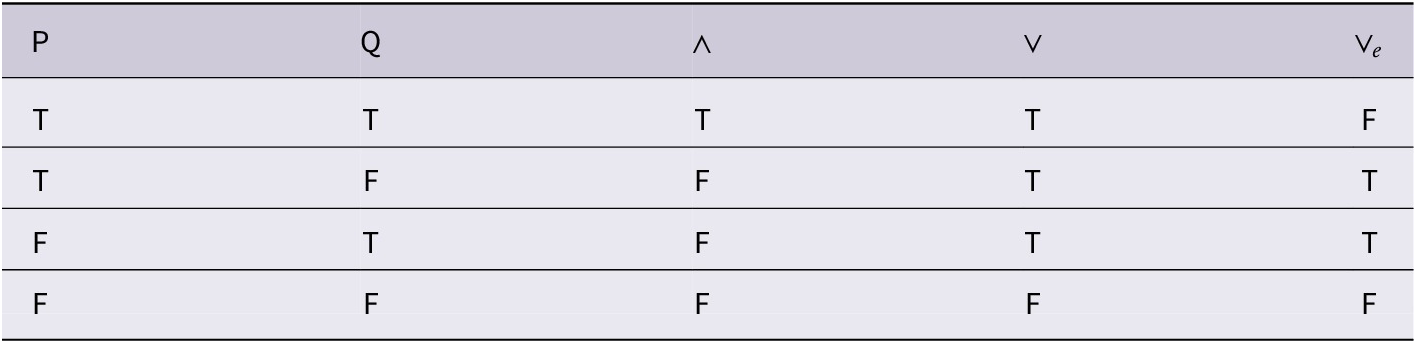
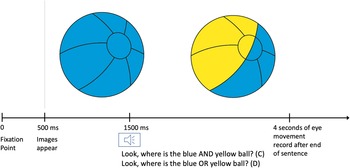

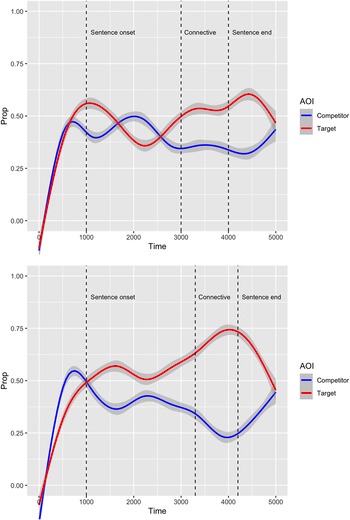
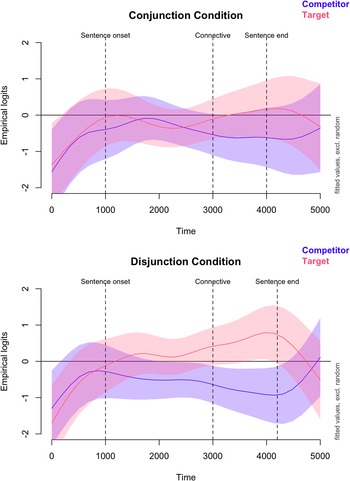

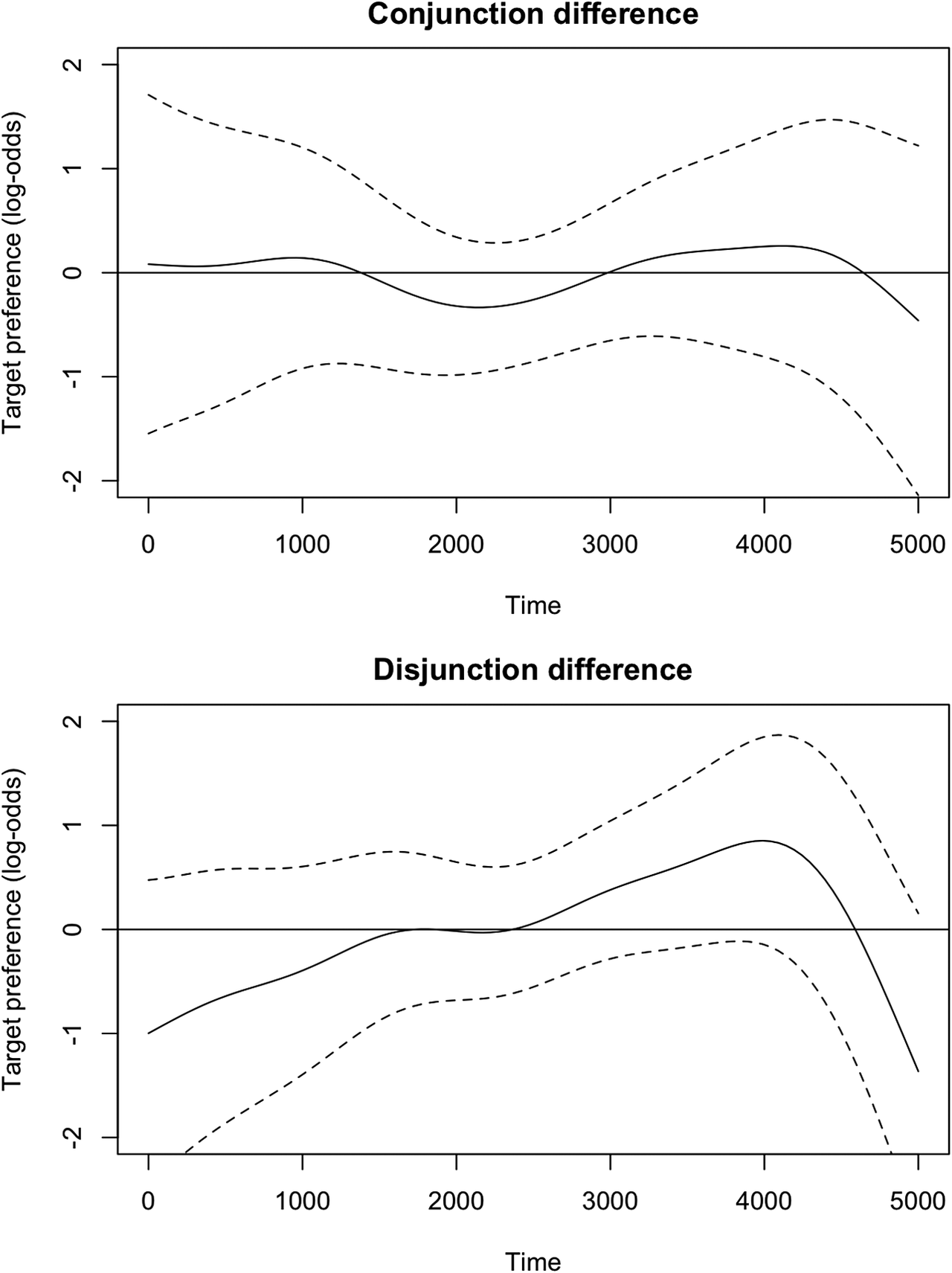


 Open access

