



Latinos and Hispanics (hereafter referred to as ‘Latinos’) are the largest and most rapidly growing population group in the USA( Reference Ennis, Rios-Vargas and Albert 1 ). Children in low-income Latino families have an elevated risk of becoming overweight or obese( Reference Ogden, Carroll and Lawman 2 ). Recent statistics show that almost 17 % of Latino pre-school children are classified as being obese compared with 11 % of Black, 4 % of White and 3 % of Asian children( Reference Ogden, Carroll and Lawman 2 ). As a result, childhood obesity among Latinos is a pressing public health concern as childhood weight status tracks into adulthood and increases risk of other obesity-related chronic diseases( Reference Ogden, Carroll and Lawman 2 , Reference Singh, Siahpush and Hiatt 3 ).
Establishing healthy eating and physical activity (PA) habits early in life is important for preventing obesity and related co-morbidities in childhood and beyond( Reference Lindsay, Sussner and Kim 4 – Reference Lumeng, Taveras and Birch 6 ). Multiple behavioural risk factors such as unhealthy eating habits (e.g. consumption of energy-dense, nutrient-poor foods), low PA levels and increased sedentary behaviours (SB) have been linked to disparities in childhood obesity among Latino children( Reference Ogden, Carroll and Lawman 2 , Reference Singh, Siahpush and Hiatt 3 , Reference Lumeng, Taveras and Birch 6 ). Parents are key players in determining their children’s weight status through the home environment they create for eating, PA and SB( Reference Lindsay, Sussner and Kim 4 , Reference Ochoa and Berge 7 – Reference Conlon, McGinn and Lounsbury 11 ). Furthermore, parents shape their children’s eating, PA and SB through their knowledge of nutrition; influence over food selection, meal structure and home eating patterns; and modelling of eating, PA and SB, including television (TV) viewing and screen time( Reference Lindsay, Sussner and Kim 4 , Reference Schrempft, van Jaarsveld and Fisher 8 , Reference Sleddens, Kremers and Stafleu 10 – Reference Birch and Davison 12 ). Due to parental influences on their children’s eating and PA practices, and thus in preventing obesity, parents should be central to collective efforts to end the childhood obesity epidemic( Reference Lindsay, Sussner and Kim 4 , Reference Lindsay, Greaney and Wallington 5 , Reference Birch and Davison 12 ).
To date, research examining parental influences on children’s healthy eating, PA and SB has focused primarily on mother–child interactions( Reference Singh, Siahpush and Hiatt 3 , Reference Lumeng, Taveras and Birch 6 – Reference Conlon, McGinn and Lounsbury 11 , Reference Lindsay, Sussner and Greaney 13 – Reference Sosa 20 ). This research documents the critical influence of mothers’ beliefs, attitudes, parenting styles and practices on children’s eating, PA, SB and weight status( Reference Sleddens, Kremers and Stafleu 10 , Reference Conlon, McGinn and Lounsbury 11 , Reference Lindsay, Sussner and Greaney 13 – Reference Sosa 20 ). Although, in most cultures, mothers still spend more time caring for their children, fathers’ involvement in childcare has increased over the past decades, especially in high-income countries( Reference Hofferth and Lee 21 – Reference Raley, Bianchi and Wang 25 ). This increase may be due to changes in the labour market, increased participation of women in the labour force and changes in family roles and dynamics( Reference Yeung, Sandberg and Davis-Kean 23 , Reference Cabrera, Hofferth and Chae 26 ).
Recent reviews point to the limited representation of fathers in parenting and childhood obesity research( Reference Davison, Gicevic and Aftosmes-Tobio 27 – Reference Fraser, Skouteris and McCabe 30 ). Despite the increasing number of studies examining fathers’ food parenting practices( Reference Harris and Ramsey 31 – Reference Morgan, Collins and Plotnikoff 35 ), available research assessing the influence of parenting styles and practices on children’s eating among Latino fathers is limited( Reference Guerrero, Chu and Franke 36 – Reference Lora, Hubbs-Tait and Ferris 40 ). None the less, these studies underscore father’s influential role on children’s eating( Reference Guerrero, Chu and Franke 36 – Reference Lora, Hubbs-Tait and Ferris 40 ). This small body of research indicates the need for further research, but also suggests that Latino fathers be included in nutrition interventions designed to reduce and prevent child obesity( Reference Guerrero, Chu and Franke 36 – Reference Lora, Hubbs-Tait and Ferris 40 ). Similarly, a growing research literature documents the influential role of fathers on children’s PA and SB, but the majority of this research has focused on Caucasian, middle-income fathers( Reference Turner, Navuluri and Winkler 39 , Reference Thompson, Vandewater and Matson 41 ) with limited research examining Latino fathers’ beliefs, attitudes and practices related to young children’s PA and SB( Reference Turner, Navuluri and Winkler 39 , Reference Thompson, Vandewater and Matson 41 ). Results of a recent review that included thirteen studies examining home environmental influences on childhood obesity among Latino children (2–17 years) revealed that Latino children spend more time using media (e.g. watching TV, playing video games) and have fewer limitations placed on them by their parents regarding the use of media than White or Black children and that this lack of limits is associated with increased inactivity and child weight gain( Reference Ochoa and Berge 7 ). The majority of studies included in that review were composed primarily of Latina mothers, highlighting the need for additional studies to include Latino fathers( Reference Ochoa and Berge 7 ).
Identifying and understanding potentially modifiable factors associated with increased risk of child obesity among minority, low-income children, such as Latinos, is critical to collective efforts to prevent and control childhood obesity( Reference Singh, Siahpush and Hiatt 3 , Reference Lumeng, Taveras and Birch 6 ). Given limited but increasing evidence of the influential role of fathers in their children’s development of eating, PA and SB, the purpose of the present study was to expand on the current existing research and examine Latino fathers’ beliefs, attitudes and practices related to their young children’s eating, PA and SB.
Methods
Study design and sample
The present study was part of a community-based, mixed-methods research study designed to assess parenting styles and practices related to eating, PA and SB associated with risk of childhood obesity that is being conducted with Latino families living in the state of Rhode Island, USA( Reference Lindsay, Greaney and Wallington 42 ). We used a purposive sampling method to recruit participants from Special Supplemental Nutrition Program for Women, Infants, and Children (WIC) clinics and community-based programmes and agencies serving predominantly Latino populations in Rhode Island. Clinics and community-based programmes and agencies were contacted by a research coordinator who explained the purpose of the research and asked the sites to participate in recruitment efforts. Sites agreeing to participate were mailed study flyers in Spanish and English that included a telephone number for interested participants to call. Flyers were posted at agencies between June and October 2016. Individuals who contacted the research coordinator were screened for study eligibility. Fathers were eligible to participate if they self-identified as being of Hispanic ethnicity; were 21 years of age or older; had lived in the USA for at least 12 months; had at least one child between 2 and 8 years of age who was enrolled in or eligible for WIC; and had shared parental responsibilities for or cohabitated with said child. Initial eligibility included being a parent of at least one child between 2 and 5 years of age, which is the age group eligible for the WIC programme. However, to recruit a sufficient number of fathers, we extended the age limit to 8 years, given that most eligible families had children of multiple ages.
We chose to conduct focus group discussions (FGD) because they are an important technique for conducting research in diverse cultural settings and provide valuable information( Reference Kidd and Parshall 43 , Reference Miles and Huberman 44 ). Moreover, the synergistic effects of group settings elicit ideas and discussion that may not arise in individual interviews( Reference Kidd and Parshall 43 , Reference Miles and Huberman 44 ). Ethics approval was obtained from the University of Massachusetts–Boston Ethics Board (IRB# 2013060).
Data collection
We conducted seven FGD with Latino fathers at local public libraries and community agencies between August and October 2016. Each FGD had three to five participants. All FGD were conducted in Spanish and moderated by a bilingual native Spanish-speaker, trained in qualitative research methods, using a semi-structured discussion guide that explored fathers’: (i) definitions of healthy eating and active living; (ii) beliefs and attitudes related to healthy eating, PA and SB of young children; (iii) practices related to eating, PA and SB; and (iv) perceptions of barriers to children’s healthy eating and PA (Table 1). The FGD guide was piloted-tested in an FGD with Latino fathers not included in the present study and refined prior to use.
Questions from the focus group discussion guide on Latino fathers’ beliefs, attitudes and practices related to their young children’s eating, physical activity and sedentary behaviours
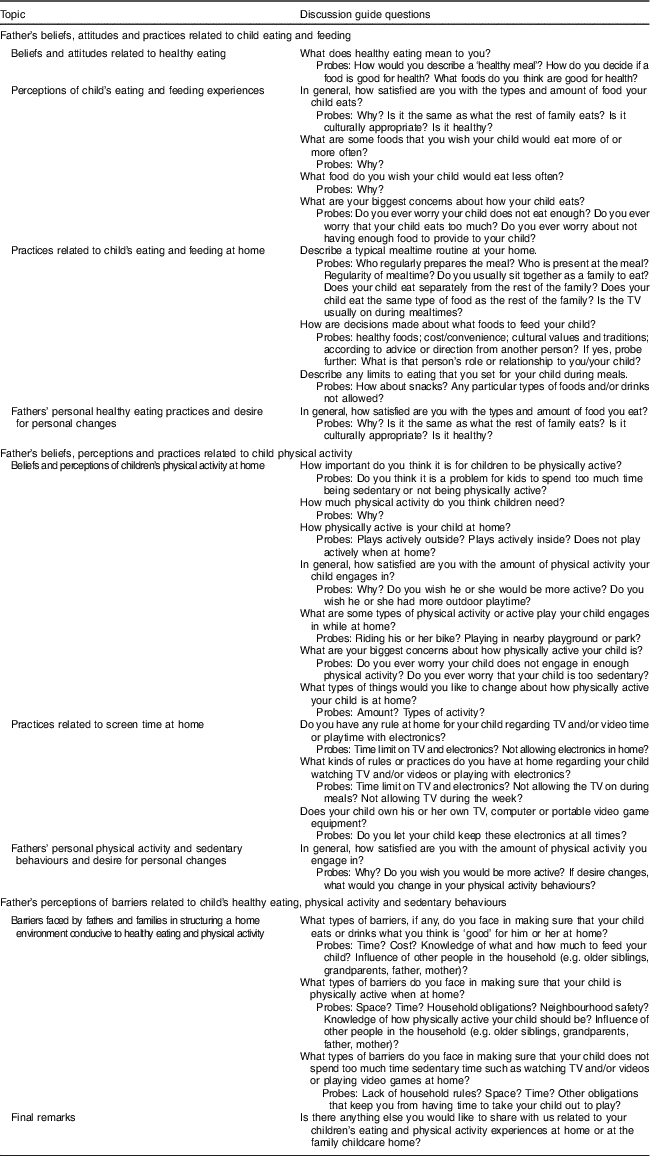
TV, television.
Before each FGD, the moderator explained the study’s purpose and procedures, and participants provided written, informed consent. Before beginning each FGD, the moderator asked fathers to think about their youngest child (2–8 years of age) when participating in the discussion. Each audio-taped FGD lasted between 60 and 80 min, and a trained, bilingual (Spanish and English) research assistant took notes during each session. The moderator and research assistant convened for approximately 15 min after the end of each FGD to discuss new and recurring themes heard during the session, which were then added as probes to the FGD guide.
At the completion of the FGD, participants received a $US 25 gift card for participation and completed a brief, self-administered survey that assessed participants’ sociodemographic characteristics (e.g. education, marital status, country of origin, length of time living in the USA, etc.) and level of acculturation via the Short Acculturation Scale for Hispanics (SASH)( Reference Marin, Sabogal and Marin 45 ). The SASH is a twelve-item measuring scale validated for use in Latino groups, such as Mexican Americans, Cuban Americans, Puerto Ricans, Dominicans, and Central and South Americans( Reference Marin, Sabogal and Marin 45 ). The SASH assesses language use, media use and ethnic social relations. An acculturation score was computed by averaging across twelve items; measured on a scale of 1 (=least acculturated) to 5 (=fully acculturated)( Reference Marin, Sabogal and Marin 45 ).
Analysis
Audio tapes were transcribed verbatim in Spanish and translated into English without identifiers. To ensure that the integrity and equivalence of the data were not lost in the process of translation, a professional transcriptionist, bilingual and native Spanish-speaker translated the transcripts using forward–backward techniques to establish semantic equivalence in translation. We analysed transcripts using thematic analysis, an iterative process of coding the data in phases to find meaningful patterns( Reference Ritchie and Spencer 46 , Reference Vaismoradi, Turunen and Bondas 47 ). Analytic phases included data familiarization, generation of initial codes, searching for and review of themes and patterns, and defining and naming themes. The qualitative data analysis software NVivo version 11 (QSR International Pty Ltd, 2015) was used to assist in coding, organizing and indexing of the qualitative data. All transcripts were read and reviewed by two authors who identified and generated initial codes, concepts and themes. Next, themes were reviewed, identified, defined and named( Reference Ritchie and Spencer 46 , Reference Vaismoradi, Turunen and Bondas 47 ). Descriptive statistics and frequencies were calculated for the sociodemographic data and the Marin scale using Microsoft® Excel 2008.
Results
Seven FGD with twenty-eight Latino fathers of young children representing twenty-eight unique families were conducted. Participants’ age ranged from 27 to 49 years (mean 34·2 (sd) 2·8 years). Participants had an average of two children (range: 1–4) per household and 92·9 % (n 26) cohabited full-time with their children. Approximately 71·4 % (n 20) had a high-school degree (50·0 %; n 14) or general education diploma (GED; 21·4 %; n 6), and 60·7 % (n 17) reported an annual family income of ≤$US 40 000. Nearly all (85·7 %; n 24) were foreign-born and had lived in the USA for an average of 14·3 (sd 2·7) years. The majority (92·9 %; n 26) reported speaking primarily Spanish at home and their mean acculturation score was 2·32 (sd 0·36), indicating that they more closely identified with Latino culture, although they were close to ‘bicultural’. See Table 2 for additional information on the demographic characteristics of the fathers participating in the study.
Sociodemographic and acculturation characteristics of the study participants; Latino fathers (n 28) with at least one child aged 2–8 years, Rhode Island, USA, August–October 2016

* Only includes fathers not born in US states.
Emergent themes related to fathers’ beliefs, attitudes and practices related to eating, PA and SB of their young children are discussed below. Table 3 presents representative quotes illustrating each theme.
Focus group themes and supporting quotes from Latino fathers (n 28) regarding their beliefs, attitudes and practices related eating, physical activity and sedentary behaviours of their children aged 2–8 years, Rhode Island, USA, August–October 2016
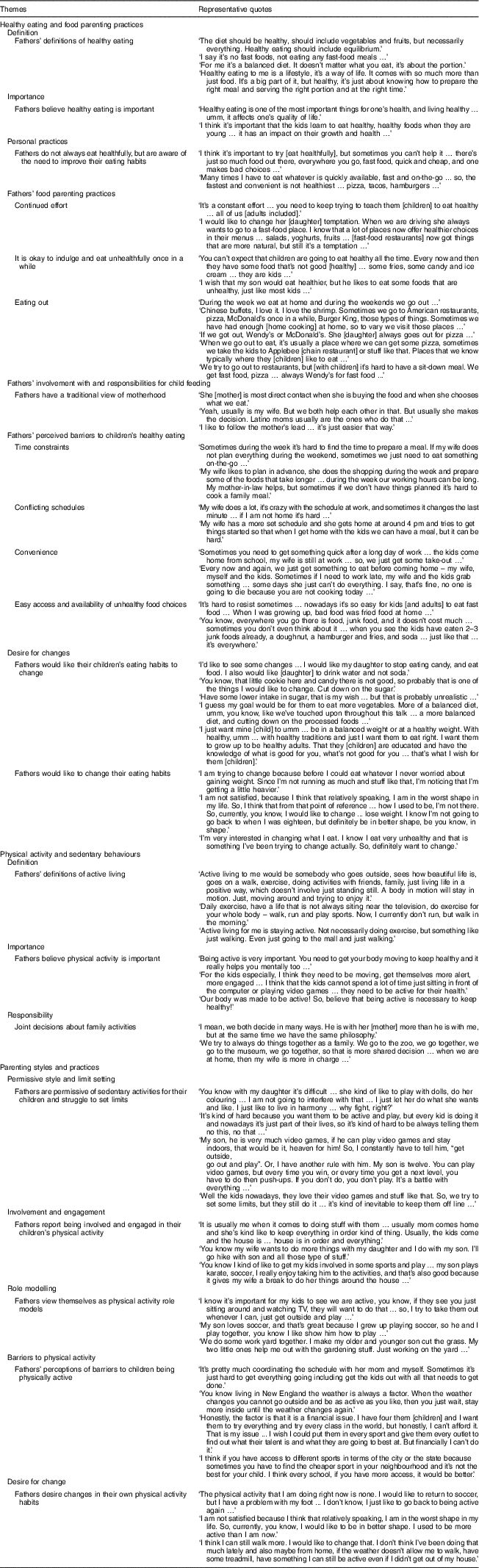
TV, television.
Beliefs, attitudes and practices related to healthy eating
Fathers’ definitions of healthy eating
Fathers defined healthy eating in a variety of ways, although most offered a definition that focused on the importance of eating a balanced diet that included adequate amounts of fruits, vegetables and proteins. Fathers also spoke of limiting fried, ‘junk’ and fast foods, and several noted the importance of portion control.
Fathers believe healthy eating is important
Across all FGD, fathers agreed about the importance of healthy eating for one’s health and quality of life, including both adults and children. Moreover, several fathers viewed healthy eating as a lifestyle and reported that they consistently tried to eat a variety of healthy prepared foods. A few fathers noted the importance of children developing early healthy eating habits.
Fathers do not always eat healthfully, but are aware of the need for improvement
Although there was consensus about the importance of healthy eating, some fathers spoke of the difficulties associated with this, especially given the availability and accessibility of unhealthy foods. Fathers also noted that a lack of time impacted their food choices and led them to select less healthy and more convenient options. In addition, a few fathers mentioned that it is ‘easy to give in to unhealthy food choices when feeling stressed out’.
Fathers’ food parenting practices
Continued effort
A few fathers spoke of their continued efforts to promote and support their children’s healthy eating. Fathers explained that the food available outside their home is a constant ‘temptation’, impacts what types of foods their children want to eat and ‘threatens’ their children’s healthy eating habits.
It is okay to indulge and eat unhealthfully once in a while
A few fathers reported that it is inevitable that their children will eat foods that are unhealthy, but that they tried to keep it to a minimum and mostly to the weekends. In addition, a couple of fathers suggested allowing ‘unhealthy’ food choices as ‘once-in-a-while’ reward.
Eating out
Some fathers noted that they rarely eat out, while others reported that they eat out frequently. Fathers most often went out to eat with their families on the weekends. When asked about the types of restaurants they frequent and foods ordered, fathers reported going to large chain restaurants, ethnic restaurants (e.g. Chinese, Hispanic) or out for pizza. Several fathers spoke of eating at fast-food restaurants, as it can be hard to eat out with young children.
Fathers’ involvement with and responsibilities for child feeding
Fathers have a traditional view of motherhood
Most fathers who lived full-time with their children reported that their child’s mother most often decided what their children and families ate, as well as how meals were prepared. A few fathers did note that it was a joint decision about the foods served to their families. The two fathers who did not co-reside with their children reported that they followed the lead of the mother regarding meals and child feeding. Some fathers explained that they preferred to let the mother make the decisions about child feeding as they felt mothers know how to best teach and instil healthy habits. A few fathers were more directly involved in decisions about child feeding due to the mothers’ work schedule.
Fathers’ perceived barriers to children’s healthy eating
Fathers noted several barriers to their children’s healthy eating, including parents having limited time for cooking home-made meals due to mothers’ working long hours and conflicting family schedules. Additionally, some fathers spoke of children being ‘picky eaters’ and preferring foods such as chicken nuggets to more healthy options. Some fathers noted that easy access to and availability of inexpensive unhealthy foods that appealed to children’s taste was a main influence in their children’s eating habits.
Fathers would like their children’s eating habits to change
When asked about goals for their children, several fathers noted that they wanted their child to eat more healthfully and eat less ‘junk’ and ‘sugary’ foods, such as candy and soda. None the less, a couple of fathers did not think this was feasible because their children are exposed to and prefer these sorts of foods. Several fathers noted that although their children were good eaters, they would like their children to eat a greater variety of foods, including more fruits and vegetables, and less processed foods. A few fathers expressed concern for their children’s current weight status and alluded to wanting their children to lose weight.
Fathers would like to change their eating habits
A few fathers explained that along with their children they also should eat more healthfully. Several fathers stated that they needed to pay attention to portion sizes and increase their fruit and vegetable intake. Furthermore, several fathers noted that they would like to lose weight and spoke of doing this by increasing their PA and watching what they eat.
Beliefs, attitudes and practices related to physical activity and sedentary behaviours
Fathers’ definition of active living
When queried as to what active living means, about half of the participants provided a definition that focused on PA, while most others provided a broader definition that focused on being actively engaged in life, being mentally active, participating in family activities, being autonomous and/or working. A few fathers provided a hybrid definition that encompassed both being physically active and being engaged in life. A couple of fathers provided slightly different definitions of active living for children and parents, by defining active living for children as including interactions with friends as well as opportunities for intellectual growth.
Fathers believe physical activity is important
Across all FGD, fathers explained that they believed that PA is important for health and for maintaining a healthy weight. Several fathers also mentioned the importance of PA for overall quality of life and mental health.
Joint decisions about family activities
Most fathers, but not all, reported that decisions regarding family activities were made by the family, with children, if old enough, being part of the decision-making process. Some fathers explained that they were more physically active than the mothers, who were more involved with household chores and keeping a family schedule. A few fathers noted that family activities sometimes unfold without planning and may be based on what the children feel like doing. A couple of fathers explained that they are usually active with their sons and their wives with their daughters.
Fathers’ parenting styles and physical activity parenting practices
Fathers are permissive of sedentary activities for their children and struggle to set limits
Several fathers acknowledged engaging in sedentary behaviours with their children and being permissive of children’s screen-time behaviours. A few fathers noted that setting limits on screen time can be difficult, especially during the cold winter months, when children are more likely to spend more time inside. Some fathers described being permissive and allowing their children to have unlimited screen time. Furthermore, some fathers explained that playing video games, etc. is an acceptable part of children’s lives nowadays and difficult to limit. A number of fathers noted that their children, especially their sons, enjoyed playing video games, using their electronic devices and watching TV, and that they often spent time with their children watching soccer matches on TV and playing video games. Fathers also spoke of other sedentary activities that their daughters enjoyed, such as playing with dolls and colouring.
Fathers report being involved and engaged in their children’s physical activity
Overall, fathers felt that they were more involved and engaged in their children’s PA than with feeding their children. Nevertheless, fathers reported that their children participated in both active and sedentary activities. They reported that their children liked playing soccer, swimming and playing outside. A few fathers noted that school had a positive impact on their children’s PA levels by providing opportunities for active play.
Fathers view themselves as physical activity role models
Some fathers recognized the importance of modelling PA, but noted that they were not always as physically active as they should be. Nevertheless, a few fathers reported seeking out and being involved in adult sports programmes in their communities. Furthermore, a couple of fathers noted involving their children in household chores (e.g. yard work) that required their children to be active.
Fathers’ perceptions of barriers to child being physically active
Not all fathers felt that there were barriers that prevented their children from being physically active. For example, several fathers reported that they lived in safe neighbourhoods that allowed their children to play freely in their yards and in the neighbourhood (e.g. access to parks). However, others noted barriers to PA including accessibility, cost of activities/programmes and cold weather. Additional noted barriers included having to schedule activities and having to work long hours.
Fathers’ desire to be more physically active
A few fathers reported that they should be more physically active and spoke of being more active in the past. They noted that their reduced PA had contributed to their gaining weight. Only a limited number of fathers reported wanting their children to be more physically active.
Discussion
The current literature examining Latinos’ parenting and their children’s health-related behaviours focuses primarily on Latina mothers’ beliefs, attitudes and practices related to their young children’s eating, PA and SB( Reference Schrempft, van Jaarsveld and Fisher 8 , Reference Conlon, McGinn and Lounsbury 11 , Reference Lindsay, Sussner and Greaney 13 , Reference Silva Garcia, Power and Fisher 14 – Reference Sosa 20 , Reference Tschann, Martinez and Penilla 48 – Reference Lindsay, Sussner and Greaney 52 ). To date, there is a paucity of information on these topics among Latino fathers. To address this gap, the present qualitative study explored Latino fathers’ beliefs, attitudes and practices related to healthy eating, PA and SB of their young children among a predominantly immigrant sample.
Although we purposively invited fathers with young children (2–8 years) to participate in the study and developed the FGD guide to focus on food parenting practices and eating and PA habits of young children, it is worth noting that several fathers discussed these topics within the context of the whole family, including older and younger children. This is consistent with previous qualitative research and indicates the importance of the family within Latino communities( Reference Ochoa and Berge 7 , Reference Lindsay, Sussner and Greaney 13 , Reference Lora, Cheney and Branscum 17 , Reference Lindsay, Sussner and Greaney 52 ). It also suggests that the family should be considered the unit of change, as prevention of child overweight and obesity will not be successful without considering parents and children as a complete unit( Reference Ochoa and Berge 7 , Reference Lindsay, Sussner and Greaney 13 , Reference Lora, Cheney and Branscum 17 , Reference Lindsay, Sussner and Greaney 52 ).
Recent trends suggest an increase in overall father involvement in childcare, with a few differences across racial and ethnic groups of fathers( Reference Hofferth and Lee 21 , Reference Yeung, Sandberg and Davis-Kean 23 , Reference Raley, Bianchi and Wang 25 , Reference Cabrera, Hofferth and Chae 26 ). Research on cultural models of parenting practices suggests that Latinos’ value of familism (e.g. family obligations, family reciprocity) is associated with behaviours that encourage fulfilling familial roles, such as taking care of children, which may lead to fathers being highly engaged in parenting( Reference Cabrera, Hofferth and Chae 26 , Reference Mirande 53 – Reference Hofferth 56 ). Studies conducted with Latino fathers in the USA suggest that they spend more time with their children in shared caregiving activities than White fathers( Reference Mirande 53 – Reference Mirande 57 ). A recent study with Latino parents and their 3–12-year-old children found that Latino fathers spent more time in caregiving activities than fathers from other ethnic groups( Reference Hofferth 56 ).
Latino fathers participating in the current study believed in the importance of healthy eating for their children, themselves and their families. Nevertheless, the majority reported a number of familial practices including eating out, getting take-out, etc. that have been linked to unhealthy eating habits and increased risk of overweight and obesity among children( Reference Parada, Ayala and Horton 37 , Reference Penilla, Tschann and Deardorff 38 ). Moreover, several fathers reported a number of unhealthy personal eating habits (ignoring portion size, making unhealthy food choices, etc.) that may influence their children’s eating behaviours, which most fathers wished would change. This finding is congruent with studies involving Latina mothers, and underscores the importance of childhood obesity prevention interventions to address parents’ own eating behaviours( Reference Conlon, McGinn and Lounsbury 11 , Reference Lindsay, Sussner and Greaney 13 , Reference Silva Garcia, Power and Fisher 14 , Reference James, Connelly and Rutkowski 16 , Reference Lora, Cheney and Branscum 17 ). Given the importance of parental modelling in the development of children’s eating behaviours, parenting interventions should incorporate opportunities to engage fathers and promote changes in fathers’ own eating habits and food behaviours( Reference Lora, Cheney and Branscum 17 , Reference Vollmer, Adamsons and Foster 32 – Reference Morgan, Collins and Plotnikoff 35 , Reference Hofferth 56 , Reference Harris and Ramsey 58 – Reference Tibbs, Haire-Joshu and Schechtman 60 ).
Contrary to recent studies conducted with Caucasian, middle-income fathers, most Latino fathers participating in our study reported that they had limited responsibilities for organizing child meals and deciding what foods to feed the child( Reference Vollmer, Adamsons and Foster 32 – Reference Morgan, Collins and Plotnikoff 35 ).
Our study found that Latino fathers appeared to allow their child’s mother to make most decisions regarding their child’s healthy eating and that they were more actively involved in their children’s PA behaviours. This finding may reflect traditional parenting roles, with mothers bearing most responsibilities for child feeding. Nevertheless, a few fathers reported that they shared some child feeding responsibilities with the mother, especially when the mother worked long hours( Reference Parada, Ayala and Horton 37 ).
Although more research is needed, our findings suggest that Latino fathers may be more interested in participating in interventions to promote PA and be less enticed to participate in interventions that focus solely on healthy eating. This should be taken into consideration when designing obesity prevention interventions involving Latino fathers. Future studies should continue to explore Latino fathers’ roles and responsibilities for child feeding, and associations with children’s eating habits and weight status. This information will be important for the design of obesity prevention interventions targeting Latino families that include fathers.
Consistent with previous research( Reference Myers and Vargas 62 , Reference Gauthier and Gance-Cleveland 63 ), a few fathers in the current study expressed concerns for their children’s weight status and alluded to the fact that they would like their children to lose weight. Appropriate assessment of a child’s weight, followed by appropriate weight management strategies, is important for the prevention of obesity during childhood, as parents who misperceive their children’s weight status are less likely to engage in interventions to reduce risk of paediatric obesity( Reference Myers and Vargas 62 , Reference Gauthier and Gance-Cleveland 63 ). Previous studies with Latino mothers and fathers indicate that both parents are likely to misperceive their children’s weight status, mostly underestimating their weight status( Reference Parada, Ayala and Horton 37 , Reference Myers and Vargas 62 , Reference Gauthier and Gance-Cleveland 63 ). Future research should further explore Latino fathers’ perceptions of their children’s weight status and how their perceptions and attitudes towards their child’s weight impact their food parenting practices and children’s weight status. This information is important as evidence suggests parents who report more concerns about their child becoming overweight or obese also report more controlling food parenting practices (what and how much their child eats) that may have unintentional negative impacts (e.g. overly restricting food access)( Reference Sleddens, Kremers and Stafleu 10 , Reference Vollmer, Adamsons and Foster 32 , Reference Mallan, Daniels and Nothard 34 , Reference Tschann, Martinez and Penilla 48 ).
Although our findings revealed that Latino fathers appeared to be more involved and engaged in children’s PA than eating and feeding, we also found that fathers engaged in sedentary activities with their children, appeared permissive of children’s SB and struggled to set limits on children’s screen time. These findings are important given evidence of the influence of paternal parenting styles and practices on children’s PA and screen-viewing behaviours( Reference Jago, Thompson and Sebire 64 – Reference Lloyd, Lubans and Plotnikoff 67 ). Previous research suggests that parental attitudes towards and use of screen time, including parents’ own screen-viewing habits, using screen viewing as a form of childcare (or babysitter), viewing screen time as a source of education and as a means of child relaxation, result in permissive styles towards their children’s screen viewing( Reference Jago, Thompson and Sebire 64 – Reference Pearson, Salmon and Crawford 76 ). Furthermore, our findings indicate that Latino fathers’ ability to model healthy PA behaviours for their children may be limited by their lack of self-efficacy to participate in these behaviours themselves and indicate that interventions should focus not only on fathers’ styles and practices, but also on helping fathers increase their self-efficacy for these behaviours. Existing research evidence combined with findings from the current study indicate the need for future research to further examine fathers’ attitudes and personal behaviours, as well as the influence of Latino fathers’ parenting styles and practices on their children’s PA and SB. This information will be critical for designing interventions to decrease Latino children’s screen time and SB.
Moreover, study findings also suggest possible gender differences in fathers’ report of their daughters’ and sons’ PA and SB, as well as their involvement and engagement in activities with their sons and daughters. Despite the small number of fathers who reported such differences, this is worth exploring further in future qualitative and quantitative research.
In summary, although the role of fathers in the promotion of their children’s eating, PA and SB is a growing area of research, there is still limited information available on the role of minority fathers including Latinos( Reference Lora, Cheney and Branscum 17 , Reference Guerrero, Chu and Franke 36 – Reference Lora, Hubbs-Tait and Ferris 40 ). The current study provides insights into the role of Latino fathers in promoting their children’s eating, PA and SB within the family environment and contributes information that allows for a more complete picture of how Latino parents view eating and PA environments for their children. Given the central role of the family in the Latino culture, effective interventions targeting the promotion of healthy eating, PA and SB – and ultimately the prevention of child obesity and related chronic diseases – should take account of the role of fathers( Reference Lindsay, Sussner and Greaney 13 , Reference Lora, Cheney and Branscum 17 , Reference Guerrero, Chu and Franke 36 – Reference Turner, Navuluri and Winkler 39 ).
Existing research suggests obesity prevention interventions designed for Latino children and families should target multiple behaviours (eating, PA, SB, sleep), be family-focused and involve both parents( Reference Crespo, Elder and Ayala 77 –83). Research also suggests the importance of the intervention context (particularly, family constraints, ethnicity and parental motivation) in changing behaviours. Furthermore, interventions need to consider adapting programme content to accommodate cultural preferences( Reference Crespo, Elder and Ayala 77 – Reference Schmied, Parada and Horton 83 ). In the case of Latinos, the use of culturally appropriate lay leaders (promotoras) to deliver interventions has shown to be efficacious. The present study adds to the existing literature and can inform the design of future research and the development of parenting and family-based interventions targeting Latino families( Reference Jago, Wood and Zahra 74 , Reference Johnson, Chen and Hughes 75 ).
Study findings should be considered in light of some limitations. Findings are based on a non-random, purposeful and relatively small sample of low-income, Latino fathers recruited from community-based organizations located in a few cities in Rhode Island. Selection bias may have resulted in fathers having a heightened interest and awareness about eating, PA and SB. Furthermore, given that our recruitment strategy included recruiting participants from WIC clinics, it is possible that fathers might have been more inclined to believe that mothers were more knowledgeable of nutrition because of their participation in the WIC programme. Future research should utilize both qualitative and quantitative methods that address these study limitations by using different recruiting methods and exploring Latino fathers’ beliefs, attitudes and practices related to eating, PA and SB from other communities across the USA. Nevertheless, the present qualitative study provided deep insight into primarily immigrant, Latino fathers’ personal beliefs, attitudes and practices related to child eating, PA and SB and contributes new information to the current scant literature on Latino fathers and prevention of childhood obesity.
Conclusions
The present study provides new information on the beliefs and child feeding and PA practices of Latino fathers, most of whom were immigrants. The results may provide important targets for interventions aimed at promoting children’s healthy eating and PA practices involving Latino fathers. Given the importance of the family in Latino culture and indication from the literature of the importance of the family context in the development of early healthy eating and PA habits, future research should further explore the role of fathers’ parenting styles and practices in the development and support of children’s early eating and PA habits. This information is needed to identify risk factors amenable to interventions and to design culturally appropriate parenting and family-based interventions targeting the home environment of Latino children and designed to meet the specific needs of this ethnic group.
Acknowledgements
Acknowledgements: We thank the fathers who participated in the study as well as the programmes and community-based agencies in Rhode Island, USA, for support in recruitment efforts. Financial support: This study was funded by the Joseph P. Healey Research Grant Program at the University of Massachusetts–Boston (Principal Investigator: A.C.L.). The funder had no role in the design, analysis or writing of this article. Conflict of interest: The authors declare that they have no conflict of interest. Authorship: All co-authors contributed to the work. A.C.L. designed the study, oversaw data collection, participated in data analysis, and led manuscript preparation and review. S.F.W. participated in interpretation of findings and manuscript preparation and review. M.A.M. participated in interpretation of findings and manuscript preparation and review. M.L.G. contributed to study design, led data analysis, and participated in interpretation of findings and manuscript preparation and review. All authors read and approved the final version of the manuscript. Ethics of human subject participation: The study was approved by the University of Massachusetts–Boston Ethics Board (IRB# 2013060) and all participants provided written, informed consent.



