




This article will explore the changing meanings connected to historic architecture in the central European city of Lviv at the turn of the twentieth century. Rather than providing a detailed description of urban development, it will focus on the cultural meaning of architectural changes in building in the eyes of the city's local Polish elite. I will argue that the political situation of the Poles, the multi-ethnic character of the region and the challenge which was posed by urban modernity had a profound impact on spatial policy in the centre of Lviv, its Old Town, or Śródmieście as the district was called. My methodology draws upon the spatial approach to urban history, stemming from the ‘spatial turn’ in German humanistic studies, as well as cultural history, including changes in human mentality and the cultural history of nation building. Moreover, rather than dealing with the economic and social history of the city, this article will contribute to the history of monument preservation and the identity of urban elites. It will also be a reference point in a longer debate about the national ideal as an all-encompassing category that challenged the existing worldview and found its way into the field of architectural aesthetics.Footnote 1
The process of nation building
Historians of national movements tend to present nationhood as either a modern or an ancient phenomenon. For both groups, however, historic monuments have played an important role in securing a sense of belonging and collective identity. For example, Anthony D. Smith contended that the core of ethnicity lay in the myths, symbols and memories that were shared by consecutive generations, and which were rethought and reworked during the nineteenth-century revolution in nation-state building. These communities, called ‘ethnies’ by Smith, tended to evolve into modern nations.Footnote 2 Monuments and historic sites connected to an ethnie testified to its perennial existence, and nostalgia for a lost past was a crucial material upon which the modern nation was built. Moreover, it was the nineteenth-century fields of science, including archaeology, which helped to establish nationhood as the key element of modern identity and a new secular ‘religion’.Footnote 3
In her study of the emergence of modern national identities, Anne-Marie Thiesse clearly stressed that binding old traditions with the present was the main task of the nineteenth-century awakeners. Thiesse described monuments as the signs which could be easily connected to the issue of national historic continuity, the pillars of collective memory.Footnote 4 One of the proponents of the latter approach, of collective or cultural memory, Jan Assmann, also reflected on historic monuments. When writing about ancient civilizations, Assmann hinted at the formative potential of collective memory in shaping human identity as a group and securing its cultural survival, and also at the functions performed by the founding myths. For him, the past could be translated into political and social utopias, which were not only the basis of a stable identity, but also a project for the future. This function, which is often referred to as ‘mythomotor’, could also pertain to much more recent historical phenomena, including nationalism.Footnote 5 Here, the aim of creating the perennial consciousness of a nation projecting its continuity deep into the past was achieved by means of historical sites and monuments being raised to the level of a sign, by the semiotization of a place. He cited the example of medieval castles, or even whole landscapes as in the case of ancient Israel. Assmann also stressed the rupture that allows the imagined mythomotoric past to be shaped by a group, or the practice of highlighting the periods of decline of a nation as a starting point in its renewal.Footnote 6 The historiography therefore shows the importance of historic monuments to the history of nation building in the nineteenth century, and the relative ease with which national meanings were assigned to them in modern times. This article will show that this issue could pertain not only to the more obvious objects in space such as castles and churches, but also less conspicuous secular urban architecture.
Central European historic cities
Let me begin with a few excerpts from the nineteenth-century history of two other central European cities: Nuremberg and Krakow, which had been connected to Lviv since the Middle Ages by trade routes running north of the Carpathians, and which rose to prominence at that time. All of these three cities remained regional hubs of commerce, administration and, to a lesser extent, industry in the nineteenth century, which also entailed a considerable challenge to their identity, which was – in the case of the first two – connected with culture. Both Nuremberg and Krakow became cultural centres due to their strong artistic and artisanal traditions, and breathtaking medieval and early modern monuments located within their walls. Their cultural role developed in the nineteenth century in a different trans-regional format: a national network of cities and regions as part of the imagined future states of Germany and Poland, which exceeded the boundaries of the then Austrian Galicia and Bavaria. These extraordinary roles, along with the image of both cities (which was decisive in this context) helped them to become established as symbolic centres for both nations.Footnote 7
The Old Towns of both cities were ‘discovered’ as picturesque historic centres during the romantic period in the first half of the nineteenth century.Footnote 8 However, a threat to their image was posed by a wildly popular policy of urban modernization through the clearing of the urban transit system and the resulting demolitions.Footnote 9 Discussions concerning planned demolitions led to the working out of a mature local policy of conservation developed by such prominent architects and conservationists (including proponents of the monument preservation movement) as Carl A. Heideloff and August von Essenwein in Nuremberg, and Karol Kremer, and later Józef Łepkowski and others, in Krakow. The history of Lviv differed from these two cities in many ways, not least by the fact that it was established as a cultural centre much later. This was probably because it was taken over by a foreign empire earlier than Krakow, becoming part of a different political entity, which changed the vector of its cultural development. Nevertheless, by taking the less obvious example of Lviv as a place where the process of connecting historic monuments and memories related to them was occurring at the beginning of the twentieth century, one may see the ubiquity of nation-building practices, which permeated not only high culture and science, but also the preservation of older urban architecture. One may also see to what extent the will to use Lviv's architectural heritage as a tool for nation building had to be constrained in the context of a large modernizing city, so that it was less a battle against other ethnies, as against modernity. Finally, the case of Lviv as a multi-cultural centre on the ethnic periphery can show the practice of the discursive homogenization of a shared heritage, so that it may serve as an effective ‘mythomotor’.
Lviv
Lviv/Lwów/LembergFootnote 10 became the capital of Austrian Galicia in 1772. This was a newly ‘invented’ region with borders coinciding with the limits of the Austrian partition of the Commonwealth.Footnote 11 It had been a regional administrative centre under the previous regime, when it was dominated by the nobility and Polish, Jewish, Armenian and, to a lesser extent, Ruthenian-speaking burghers, who over the years displayed a preference for Polonization. This history was not forgotten during the next century, which made Lviv part of the developing Polish national network. It did not participate in the intellectual turmoil of the Polish Enlightenment, which swept across the lands that remained in the Commonwealth during the rest of the eighteenth century, and was later insensitive to the patriotic liberal-national propaganda spread by the members of the Polish nobility against the partitioning powers until the 1830s, excluding a short period of patriotic enthusiasm in 1809 when the city was captured by the army of the duchy of Warsaw. This was in stark contrast to Krakow, which gained, or sustained, the status of the cultural capital of the Polish territories, and which became partly sovereign as a city-state until 1846. Lviv was nevertheless also an important hub in the new network of imperial cities in the nineteenth century, rivalling many smaller municipalities such as Pozsony/Pressburg/Prešporok, Brünn/Brno and even Graz, fighting for respectability with larger ones like Budapest, Prague, with which it shared the same point of reference – Vienna. In this respect, Lviv beat Krakow by a significant margin.
Lviv's ascendancy did not come without a cost. The new capital was the object of the Austrian cultural policy of unification. The first decades of Austrian rule brought changes in the urban elite: a rapid rise in the number of German-speaking officials of Austrian and, increasingly, Czech and Moravian origin, and the process of the Germanization of the Jews. The city was transformed spatially as the authorities removed some objects, such as the city walls and towers (see below), or the ancient town hall, after it partially collapsed in 1826. Moreover, Emperor Joseph II closed a majority of the monasteries and some churches, which were subsequently turned into civic objects. The weakening of the centralist power after the military defeats of 1859‒66, and the successful negotiations between Vienna and the Galician elite represented by descendants of the Polish nobility, led to a change in the status of this crown land. Broad autonomy was given to Poles as new political hosts. The city became Polonized culturally from 1870 with new street names and a wave of public monuments (see Figure 1). Polish self-rule did not go unchallenged. The Polish political elite, which formed the highest echelons of local government, increasingly had to account for the demands of the propagators of the growing Ukrainian political movement.
Map of the Old Town in Lviv in 1890 (fragment). The Main Square with the town hall, marked 1 on the map, visible in the middle. To the upper right from the Square: the Dominican Church with the Dominican Square; to the right: Blacharska and Ruska Streets; to the lower right: the Halicki and Bernardyński Squares; to the left: Trybunalska Street with the old Zipper House facing the Old Town Square from the upper-left corner.
Source: polona.pl.

The Ruthenians, who like the Poles made up approximately 40 per cent of the population of Galicia but who formed a majority in its eastern region, where Lviv was the main urban centre, were, also like the Poles, divided according to party lines. But Ruthenians were faced with deeper dilemmas, as to whether to choose Russian culture as the basis for cultural development, to seek a separate Ukrainian identity or to access the modern Polish nation as its eastern regional group (the so-called ‘Gente Rutheni natione Poloni’, of Ruthenian origin, politically Poles). These contradictory visions proved a significant burden and weakened the chances of this ethnicity gaining its own political self-government. Lviv was a city with a Polish-speaking majority, surrounded by a mainly ethnically Ruthenian countryside. The second minority were Jews, who amounted to about one third of the population, living in the Żółkiewskie (northern) district, as well as in the Śródmieście. Here, their role as building investors should be stressed. Wealthy members of this community were also proponents of the earliest modernist architecture, which changed the image of Lviv at the beginning of the twentieth century, as they were investors and architects, who had otherwise limited opportunities for municipal and state commissions.Footnote 12
The city's population increased from around 100,000 in 1873 to 160,000 in 1890 and to more than 200,000 in 1910 (including soldiers),Footnote 13 which made it one of the largest cities in the Austrian part of the empire. The growth was generated mainly in the new leading administrative and residential areas in the southern (Halickie) and south-western (Krakowskie) suburbs (from 13,000 to 58,000, and from 19,000 to 74,000 inhabitants respectively from 1857 to 1910), while the central historic core of the city, which was home to almost 19 per cent of the population in 1857, stopped growing around 1880 with 16,500 inhabitants; it then proceeded to decrease in size to 12,500, and was home to only 6.42 per cent of the whole population in 1910.Footnote 14 The pace of building activity increased after 1905, when the city saw an annual average of 300 buildings erected from 1906 to 1913.Footnote 15 The nearest parts of the districts abutting the centre (i.e. the Śródmieście and ancient city within the walls) were the most affected. The parcels around the main public space of the Hetman Ramparts (Wały Hetmańskie), which were arranged along the defunct walls and bastions, were quickly built up. To the south-west, a business district of financial and administrative institutions developed. A trend surfaced towards packing up the central parts. The city's growth also affected the legal arrangements concerning the buildings.Footnote 16
The cost of urban growth
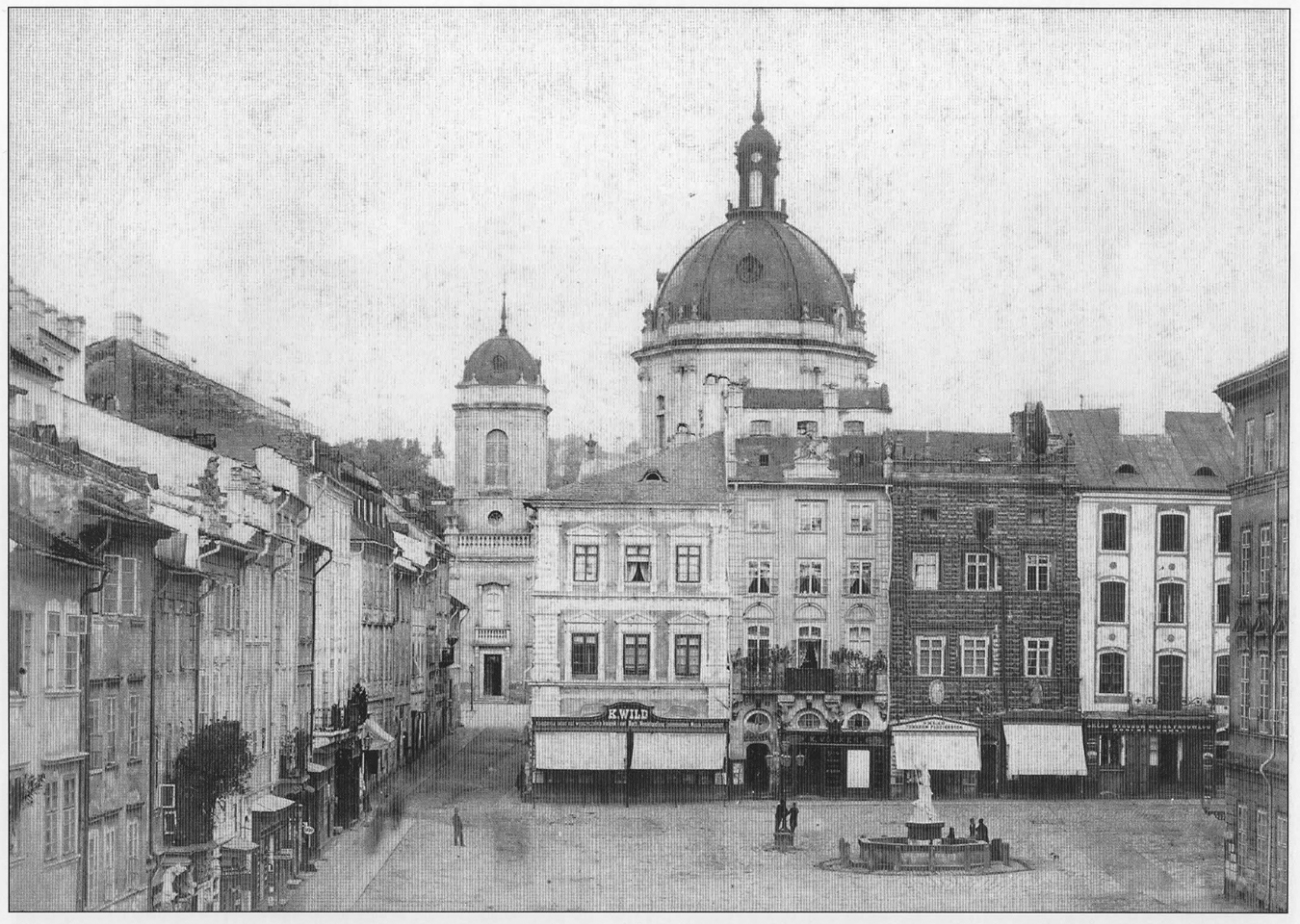
As was quite common in the nineteenth century, urban development not only aroused optimism, but was also cause for anxiety amongst contemporary social commentators. In an article published on the occasion of the new building code, a journalist with the most popular newspaper in the city, Kurier Lwowski (Lviv Courier), complained about the lack of originality in the new architecture. The author believed that the solution lay in the appreciation and preservation of the old architecture: ‘We demand respect for the remnants and monuments of the ancient epochs, which, being an ornament to Lviv, give it after all the appearance of an ancient city.’Footnote 17 In the same article, the journalist stressed the need to look after the sculptures that adorned many houses in the Śródmieście and which were treated carelessly. This sort of argument was in itself symptomatic of modernization. As Richard Dennis argued, confrontation with history played an important role in modernization, especially opposition to the process of the new replacing the old.Footnote 18 The text shows how the Śródmieście gradually changed its status in the eyes of the Polish inhabitants. The area was a place where an ethnically mixed community had lived since the fourteenth century. Part of it had been granted to Jews, who were active merchants. During the early modern period, Jews tried to cross the boundaries marked out for them (Jewish streets), and it was finally the Austrian authorities that forced them to remain in their quarter.Footnote 19 This was evidenced in memoirs by Polish inhabitants in the first half of the nineteenth century, where the Old Town Square (or Rynek (see Figure 2)) was described as noble and with artistic values, although it was located near the Jewish district, which was deemed alien and problematic.Footnote 20 The Jewish population expanded after they were freed from spatial restrictions during the reform of the monarchy in 1867, so the Rynek Square also changed its connotations. In the eyes of a Polish witness from the last third of the century, the Square was a ‘dozen hundred times’ uglier than that of Krakow, and the neoclassical town hall was described as an ‘ugly old box’.Footnote 21 Another witness, a proponent of the nationalistic movement, added that the Square was ‘always ugly and repugnant, partly because of its Jewish residents’.Footnote 22 This one-sided view should of course be put in context. Jews formed an active, industrious urban class, whose residences in the Śródmieście were the subject of modernization, and whose pursuit of capital gain led to the changing of the face of the oldest historic district of Lviv, a threatening prospect for conservationists, which, however, turned out to be too compelling to be rejected.
The north-eastern part of the Main Square in Lviv before 1914, Dominican Church visible in the background.
Source: Lviv Historic Museum, ID no. FM 2507.
Preserving the monuments
The article from Kurier Lwowski also stressed the importance of preserving monuments. The conservationist movement reflected the needs, anxieties and changes in the mentality of the period well, and it was the practice of the monument preservation institutions to allow the change of status of Lviv's Śródmieście to take place. The modern need for the legal preservation of monuments, which should be seen as one of the symptoms of modern nation building, appeared in France after the Revolution and after the wave of demolitions of historic buildings which accompanied it. The origins of that movement in central Europe are more connected with the idea of statehood and the restored kingdoms’ need for legitimacy after the Napoleonic Wars, at least in the case of Prussia.Footnote 23 The main concern for conservationists was to find specific categories which could aid in defining the monuments to be protected. In the first half of the century, these were to a large extent aesthetic: the appearance of a building and its role in a picturesque ensemble, which formed part of the general appearance of the city, its Stadtbild. Footnote 24 The practice of marking out monuments and making the classification (classement in French) was defined as bringing new ‘semantic codes’ to old objects, as Michael Falser has put it, or an institutional practice of semiotiation of the rural and urban landscape, as Assmann contended.Footnote 25 It was a conscientious activity, if not politically biased. However, one should not forget that by the same token, the idea of the state's responsibility for preserving monuments was promoted, and spread from France and Prussia to Austria.
In the mid-1850s, in the wake of new centralizing reforms in the Austrian monarchy, the Imperial and Royal Central Commission for Preservation and Research of Artistic Heritage (K.K. Central-Commission Zur Erforschung und Erhaltung der Kunst- und Historischen Denkmale) was established in Vienna (1850‒53), with separate chief conservationists in each of the crown lands.Footnote 26 Galicia was divided into two parts. The focus of conservationists was obviously narrow at that time. Their main concerns were churches and castles; in Lviv, they were active in defending the old High Castle when a new commemorative mound was put on top of it in 1869, and proposing renovation of the old sculptures that decorated public spaces across the city.Footnote 27 It was only in 1888 that special groups of conservationists were established in each part of Galicia, bringing together more than a dozen intellectuals trained in history and later in art history.Footnote 28 The body, initially loosely connected with Vienna,Footnote 29 then dependent upon the Central Commission, fought to regain sovereignty. At the beginning of the twentieth century, the Group of Conservationists for eastern Galicia (also referred to as ‘the conservationists’) also began concentrating on the fate of the secular monuments in the Śródmieście of Lviv, which amounted to a field of activity outside the focus of the Viennese institution.Footnote 30 This was an obvious consequence of the scarcity of funds dedicated to the Central Commission's activity and legal tools to prevent demolition, which had its impact on the overly tight definitions of monuments as objects of legal protection (conceived of as monuments of crucial historical or artistic value).Footnote 31 On the other hand, the active role played by the local conservationists, who had a free hand in dealing with the issues outside the immediate interest of the Central Commission, can be considered as part of the process of burdening the Austrian provinces with the costs of managing the empire, including its culture, as Pieter Judson described it.Footnote 32
When describing the activity of this monument preservation institution, one should turn one's attention to those historic remnants that could remind the Polish inhabitants of Lviv of their urban past. City walls, or their scarce remains, played an essential role and formed part of Lviv's heritage. The walls were removed immediately after the partition in 1772‒76, and the towers after 1777.Footnote 33 The remaining parts were preserved around the arsenal to the east of the Śródmieście, and it is unsurprising that the building, with its heraldic decorations, was subject to the conservationists’ care. In addition, the only surviving tower, called Gunpowder Keep, on the Governor Ramparts (Wały Gubernatorskie), was deemed worthy of preservation. In 1899, a proposal from the Musical Society to build its seat on that plot encountered fierce opposition from all those consulted.Footnote 34 Later, the Gunpowder Keep housed the municipal archive, managed by the city archivist and local patriot Aleksander Czołowski. The history of the walls continued into the twentieth century because some traces and remains of their lower parts of them were still to be found in the cellars and ground floors of newer houses, which usually resulted in the status of these buildings being changed. In ‘Dornbach House’ at 32 Sobieski Street, the remnants of an old half-oval keep were discovered in 1906.Footnote 35 These remains were initially deemed unsuitable for preservation and consent for demolition was granted, but, later, a proposal was put forward to make them part of the cellar, where an underground restaurant could be created, which also acted as a tourist attraction.Footnote 36
Defending the Old Town
The first known intervention against changes in the Śródmieście was made as early as 1875, with the help of the leading municipal architect, Juliusz Hochberger. The owner of the house at 18 Rynek Square was allegedly planning to alter the façade of his property. Hochberger decided to intervene, and was subsequently assured by the owner that he had no intention of making any changes.Footnote 37 That was, however, an exception to the rule because the issue of secular buildings in the Śródmieście was largely beyond the remit of the conservationists until the early twentieth century. This was not surprising as burgher houses in historic cities were rarely protected in the empire and were absent from the Central Commission's agenda in Lviv throughout the period.Footnote 38 Consequently, the owners of the houses in Lviv frequently altered and demolished their properties with little resistance from the conservationists or the municipal council, whose building section was entrusted only with the technical safety of the houses in the city.Footnote 39 It is therefore difficult to assess how many buildings were materially refurbished or demolished by the beginning of the twentieth century. More discussions then began, although the conservationists had the impression of losing control of the process. The first sign of a change was an initiative to clarify more generally the status of these buildings. In 1906, the full list of old houses in need of care, probably drawn up in 1904, was prepared and published by the conservationists. The instruction stated that demolition would only be possible after approval from the Group of Conservationists. This included not only obviously significant monuments, but also those newer houses that were built on old foundation stones, or were built from old, reused materials.Footnote 40 The presentation of the list to the city council provoked an outcry by some of the councillors. Architect Artur Schleyen charged its authors with also including buildings with no artistic merit and thus inhibiting building activity in the city. Responding to the accusation, Czołowski had to defend the list and stated that it was apparently presented with no introductory description, which would have explained everything.Footnote 41 Here, one can also point to the expressions used in the texts. If the surviving protocol is precise, Schleyen's argument was based on the expression of ‘artistic values’ (artystyczne), whereas the answer was about ‘historic values’ (zabytkowe), which serves as an example of non-professionals mixing these two categories at the start of the twentieth century. That coincided with changes in the theoretical background of conservation. The category of outstanding general artistic or historic value of a protected monument was planned to be substituted by a broader, potentially less nation-oriented and more unifying definition of the age value of a monument. The latter was coined by Alois Riegl, the head of the Central Commission (until his death in 1905), but the difficulty in employing this definition in practice led to its final abandonment.Footnote 42
From 1906, the number of official petitions for demolition or structural changes to Lviv's façades rose considerably, as did the number of permissions. The main condition in such cases was to preserve at least the historic parts of the houses, and to reuse them in parts of the building not affected by the renovation, to insert them into the courtyard wall,Footnote 43 or into the upper part of the house, as in the case of 10 Halicka Street.Footnote 44 Another example is the house at 19 Blacharska Street, where the owner was instructed to remove carefully all of the architectonic details for the purpose of reusing them in the new house, which should in itself follow the ‘general outline’ of the old one. Another method of preserving the old parts of buildings that could not be reused was to store them in the municipal archive in the aforementioned Gunpowder Keep.Footnote 45 In the case of two houses demolished at 20 and 22 Ruska (Ruthenian) Street by the ‘Dnister’ insurance company, the details were transported in eight fully laden carts.Footnote 46 The authorities demanded that photographs of the altered parts of the houses should be taken and occasionally also plans be drawn up, in order to store them in the archive. These demands sometimes met with opposition from the owners, who asked the archivists to cover the related costs.
In many cases, the conservationists did not hesitate to take command by designing parts of the new façades. This was the case for the house at 12 Rynek Square in 1906, where the vaults and portals had to be added to the design according to the proposal of the conservationist body.Footnote 47 A more well-known example from 1912 involved a decorative stone motif of a swan in the house at 10 Halicka Street, which had been defended by the ‘city fathers’ since at least 1894, ultimately without success. It had to be redesigned by the conservationists and inserted into the upper part of the façade, and the rest of the authentic relief transported to the archive; here, the argument that the house had already been subject to renovation before played a role.Footnote 48 In the case of a seventeenth-century house at 5 Dominikańska (Dominican) Street, the conservationists opposed the insertion of a new window and entrance, but eventually agreed to a door with the old construction system of the lintel reintroduced into the new design.Footnote 49 Finally, the house at 4 Rynek Square, a venerable monument, was also remodelled, this time according to specific instructions delivered by the Group.Footnote 50 This practice of redesigning the old parts to adapt them into a new building can be described as a historically conscious modernity, or re-enacting the past and securing a sense of continuum in a city's and nation's history. Such practice, in helping to conserve the old fabric, also led to the creation of new meanings; the new buildings had the aim, apart from the obvious one of providing rentable space, of displaying a new, local and familiar face of urban modernity, which could be reconciled with the city's imagined past. However, they also created new meanings of familiarity and tamed the unknown amid the changing and unpredictable urban environment, which was difficult to connect with feelings of nostalgia for the past.
The refusals were generally based on the exceptional status of a house, or of the sheer boldness of the proposal. For example, the new shop window of the house at 2 Rynek Square went too far in 1903, covering the old portal.Footnote 51 The proposal in 1912 by Isreal Lippel to remove the seventeenth-century portal from his house at 10 Ruska Street was rejected because of the age of the portal, but also because of the indecisiveness of the owner himself.Footnote 52 The owners’ reactions to a refusal were usually positive, although with some exceptions. These could be politically motivated, as in the case of an old Ruthenian (Russofile) institution, the Stavropigiya, which did not wait for the opinion of the conservationists and demolished part of a wing in their complex at Blacharska Street in 1904. Even if there was no conscious intention to challenge the authority of the Group, the outcome was to some extent political, as is shown by the resignation of the Lviv conservationist, prominent art historian Jan Bołoz-Antoniewicz, from his post.Footnote 53
Consent for demolitions increased significantly in number towards the end of the period in question. In 1912, for example, the houses at 13 and 15 Skarbkowska Street,Footnote 54 then number 31 on the same street,Footnote 55 25 Blacharska StreetFootnote 56 and 9 Serbska Street,Footnote 57 were sacrificed in the name of progress. Historic elements in the Śródmieście houses were disposed of without the conservationists being informed. These practices occasionally resulted in fees,Footnote 58 or judgements to restore the previous forms. The house at 12a Rynek Square, from 1911, serves as an example. The owner removed the old window and entrance frames, built an additional mansard floor and a roof lantern, higher than allowed, which changed the façade of the house. That triggered an immediate reaction from the Group of Conservationists, who ordered him to hide the lantern behind a stylish new attic, remove the mansard floor and rebuild the historic frames according to prepared drawings.Footnote 59 The conservationists were there to judge whether new frontages still recalled the historic styles, in other words, whether they were still able to carry the meanings assigned to them by the city's hosts.
Another group of issues pertained to the views of historic monuments in the city. The examples given here reveal a type of thinking similar to that determining the Stadtbild complex. Here, the main value was the way a group of old buildings presented itself to the viewers, and among them also to the city's inhabitants. That was in line with recent developments in the theory of urban planning in a historical context. The practice of separating the monuments from the rest of the urban fabric to highlight their artistic qualities and visual attractiveness, which was the subject of scientific theories of perception by Herrmann von Helmholtz, was frequently used, especially in Germany, where it was called Freilegung. Strong opposition to this practice appeared on the part of an urban planner Camillo Sitte, who defended the irregular historic arrangement of streets and city centres.Footnote 60 The perception of the monument therefore evolved from being merely part of a larger picturesque entity at the beginning of the century into an object of artistic appreciation, worth separating from less attractive surroundings, to a part of an entity, this time conceived of as a group of legally protected monuments. Even the expression Stadbild, used much earlier, appeared again in the writings of Riegl's follower as the head of the Central Commission in 1905, Max Dvořák.Footnote 61
In Lviv, Halicki Square began to be developed at the beginning of the twentieth century and the adjacent Bernardines’ Square followed, although the houses around the latter had a less modernistic appearance than those of the former. The case of Bernardines’ Square was more problematic in the context of stabilizing meanings in space because it surrounded one of the focal points on the conservationist map of Lviv: the church and former monastery of the Bernardines. In this case, the issue at stake was the visibility of the church, not so much its façade, serving as one of the square's ‘walls’, but rather its side apses and chapels. In the mid-1880s, the owner of one of the apartment houses near the church (one Albertyna Łączyńska) decided to build a wing on it. The Group of Conservationists fiercely opposed the plan, for it would block the view of one of the apses, as well as restrict light to the church choir. A letter from Julian Zachariewicz, a renowned and important architect of Lviv, stated that the conservationists should prohibit the undertaking.Footnote 62 In 1897, conservationists reported her withdrawal of the plan, but in 1898 it was the Bernardines themselves who gave permission for the building. The conservationists took note of that decision, but in the same year the same Zachariewicz stopped construction to revise the plan.Footnote 63 Here, one important fact should also be stressed. The clergy did not generally share the ideals of the conservationists, with some remarkable exceptions such as the future Roman Catholic archbishop Józef Bilczewski, who was a member of the Group of Conservationists. However, the clergy usually had to be informed of the extraordinary value of ecclesiastical architecture, and they were addressees of many petitions.
Another scandal concerned the issue of a new office building in Dominican Square. This historic square in front of the Dominican Church was expanded after the removal of old sheds around the church, an example of Freilegung. In 1913, a proposal from the town hall to house its offices, which lacked room in the main building, in a new four-floor structure built near the church, was made public. It triggered an outcry from conservationists and journalists alike. A memorandum was published in the main construction journal to stop the action, which would have blocked daylight in the vicinity.Footnote 64 The conservationists reacted by sending a paper directly to the city council arguing that the new building would ‘destroy the characteristic and highly aesthetic appearance of the square, and moreover it would block the view towards the Dominican Church…, which is among the most valuable and beautiful monuments in Lviv’.Footnote 65 Instead, a much lower and more modest edifice was proposed. Again, the view towards the monuments as part of the Stadtbild was the key asset of the city, threatened by ‘alien’ architecture arriving with modernization. The words used to describe it (‘some’, ‘stylistically doubtful’) could also be seen as a practice of assigning meanings to the unbuilt environment. The whole issue was similar to the famous, controversial and much debated plan to build a new City Museum next to the Carlo Borromeo Church in Vienna.Footnote 66
The Stadtbild argument also pertained to the outlook of ‘normal’ streets, particularly to the issue of details, such as advertisements and shops signs. Issuing permits for them was the duty of the magistrate. In 1909, the magistrate initiated an extraordinary action of revising each of them, and entrusted Czołowski with this task. Interestingly, given the ethnic tensions in the city, the content of the signs was also subject to scrutiny. This was nationally conditioned, as signs written only in languages other than the official one, Polish (in fact Ruthenian or Russian), as well as only in languages which were not acknowledged in Austria (Yiddish) had to be removed.Footnote 67 Aesthetics also played a crucial role here, in the shape and quality of the signs.Footnote 68 Moreover, the elements that challenged the ideal of the old architecture as a Polish heritage were specifically targeted.
The practice of managing the building movement in Lviv and defending the ‘status quo’ proved to be tricky. If one delves into the details of the mechanisms of issuing consents, a more complicated situation emerges. The idea of modernizing the network of streets was valid throughout the period and also pertained to the Śródmieście. There was no overall plan for Lviv, and urban planning tools were applied only in individual cases by the regulatory commission. These measures included widening streets in the Śródmieście (5. District), but only on an incremental basis: the goal of wider streets was achieved by granting permits for new houses to replace the demolished ones according to the new street designs. In the 1890s, there was also a plan to expropriate the owners of the plots in the district altogether in order to hasten this process, which did not take effect, as Mariana Dolynska has shown.Footnote 69 That was arguably one of the factors in favour of demolition in the process of decision-making, as can be concluded from the case of 19 Blacharska Street, where the Group of Conservationists approved of the demolition of a three-floor house, officially due to its unhygienic condition, but an order was made that the new one should be offset 3 metres from the existing frontage to widen the street.Footnote 70 Additionally, the old wall surrounding the monastery of Bernardines and reaching Wałowa Street was sacrificed for the goal of widening the latter.Footnote 71 Wałowa Street was symbolic as it ran from Halicki Square, where the line of new modernist apartment houses was to be built in the near future. One can also note a different approach, as in the case of the conservationists opposing a plan by the commission to widen Krakowska Street and Ormiańska (Armenian) Street by 2 metres on each side, due to their remarkable historic character.Footnote 72 There was, then, an awareness of the threat posed by the regulatory tools of modernization, but the urge for it was occasionally irresistible.
If one analyses the method of reasoning by particular groups of professionals, the differences among them can also be instructive. Architects almost always tended to defend demolitions and were more sensitive when it came to restricting creativity in the historic environment. Architects active in the Group of Conservationists included Teodor Talowski, who defended the investors in Śródmieście by insisting on lifting conditions on the demolitions,Footnote 73 or arguing that the houses in the central part of the Śródmieście should be refurbished in order to provide shops on the ground floors, the lack of which might make the properties useless to their owners.Footnote 74 The other architects in the Group or the city council, like the prolific Wincenty Rawski Jr, Michał Łużecki and Władysław Sadłowski (designer of the impressive new railway station), were also liberal in terms of restrictions, as will be seen below.
The case of the Zipper House
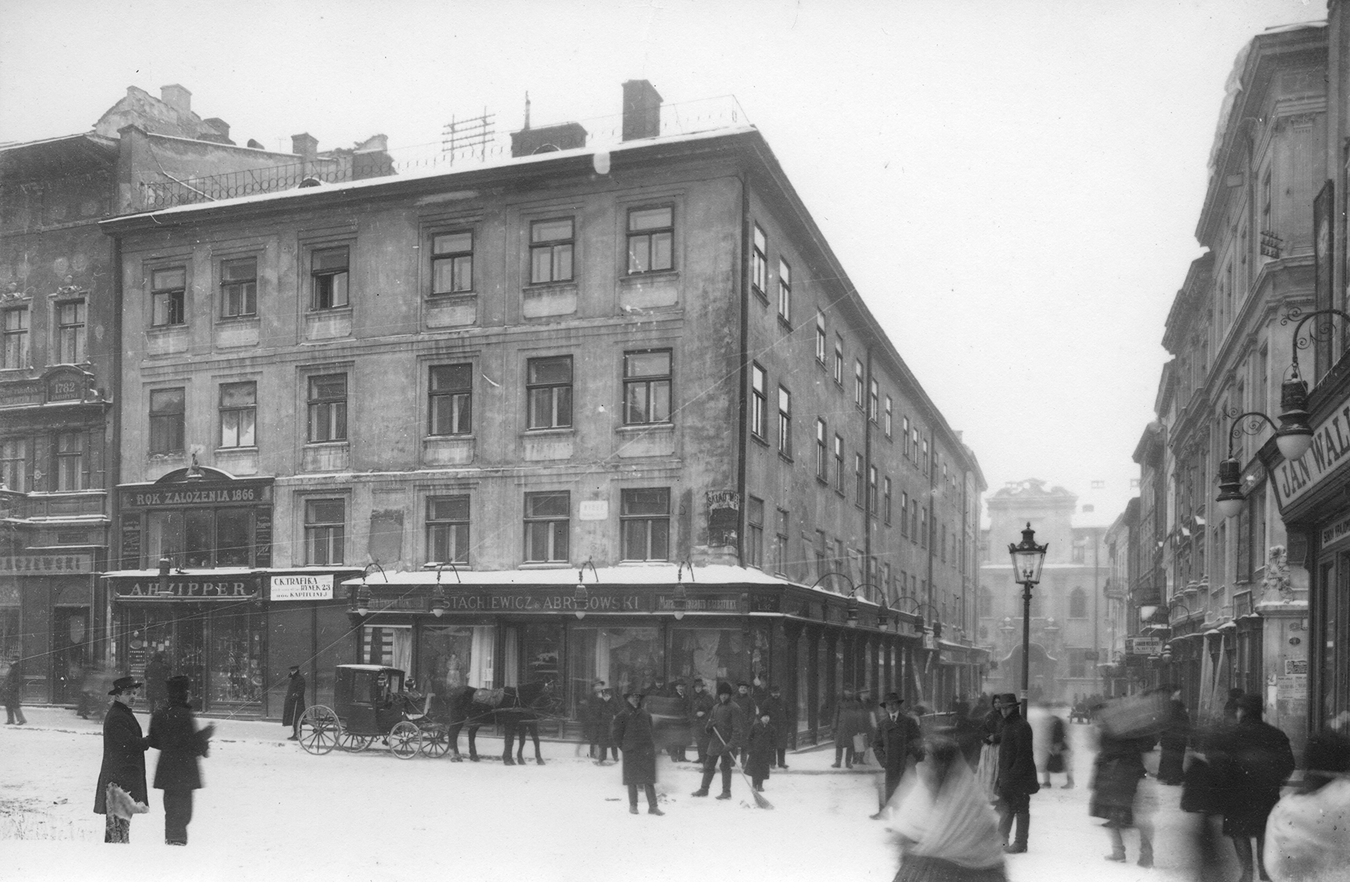
The most important and complicated issue concerned the petition from the owner of the house in the Rynek Square on the corner of Trybunalska Street, Henrietta Zipper (see Figure 3). The applicant, the owner of a jewellery shop, proposed in 1912 to demolish the house to build a taller one, with ample space reserved for shops on the ground floor. The answer from the conservationists in March 1912 was generally positive. Czołowski stated that the house had already been significantly altered around 1780, when three smaller houses had been connected to each other behind a new façade, so it was not authentic any longer. The document concluded that:
Changes made to the building stripped it of its ancient architectural features; only the ground floor was partly preserved with a row of buttress pillars, covered lately by shop portals. Nevertheless, due to the memoirs related to the building, it has historical value to the city. Given this, the Group of Conservationists regrets to accept the fact of its planned demolition.Footnote 75
The old Zipper House before demolition in 1912, as seen from the Main Square.
Source: Centre of Urban History of East Central Europe, ID no. 3548.
The value of authenticity was an idea already widespread, grasped so brilliantly by Riegl in his contemporary writings. In addition, in 1903, the editors of an architectural periodical from Krakow, which was well known in Lviv, published the translation of the Seven Lamps of Architecture by John Ruskin. In the sixth chapter, ‘Lamp of memory’, which advocated protecting the authentic material of historic monuments, Ruskin hinted at private houses as important witnesses to the history of a nation, and presented strong if poetic arguments in their favour.Footnote 76 This late translation made the issue all the more real and pressing.
In this case, the solutions proposed were not consequential, as the fabric of these houses was in fact authentic, and the governing idea was rather the previously mentioned image of a building, which was unimpressive in its current state. The needs of urban development were decisive. There was no battle for the old building, but rather for the new one, as the same answer also dictated the conditions for it. The new building could not exceed three floors or differ greatly from the other houses in the Rynek Square. In particular, ‘The façade of the new apartment house must tune into the surroundings; it should therefore be treated in a solemn style and based on Polish, and particularly old Lviv, motifs.’Footnote 77 Here, one can clearly grasp a mix of trans-regional and local ideals which defined the approach of the city elite.
The design of the new house was prepared by the architect Michał Łużecki, who was also active in the city council, defending the image of the Śródmieście. It was a bold proposal, as the building was 25 metres high (10 metres higher than its neighbour), had very large windows and a mezzanine – a half-floor that was not intended to be counted as a separate floor. The reaction of the commission, and the vice-president Tadeusz Rutowski in particular, was mixed. It approved of the general outline, but advised the architect to make the building smaller, more symmetrical, with narrower windows, and to remove the mezzanine as it was against the new building code. The conservationists supported these demands. It was again the architects who defended the right of the owner to propose new solutions. W. Rawski and W. Sadłowski supported the idea of an asymmetrical façade. Finally, the broad windows were approved, but in this case the type of goods shown in the windows was decisive: not clothes, which apparently presented a threat to the aesthetics, but jewellery. The last battle was fought for the width of the windows and their divisions, the architects again defending the freedom of creativity. One of them, the well-known Art Nouveau architect Tadeusz Obmiński, proposed to specify officially what the conditions for wider windows were in the entire Śródmieście. The resolution contained a more general ruling that no wider windows were allowed.
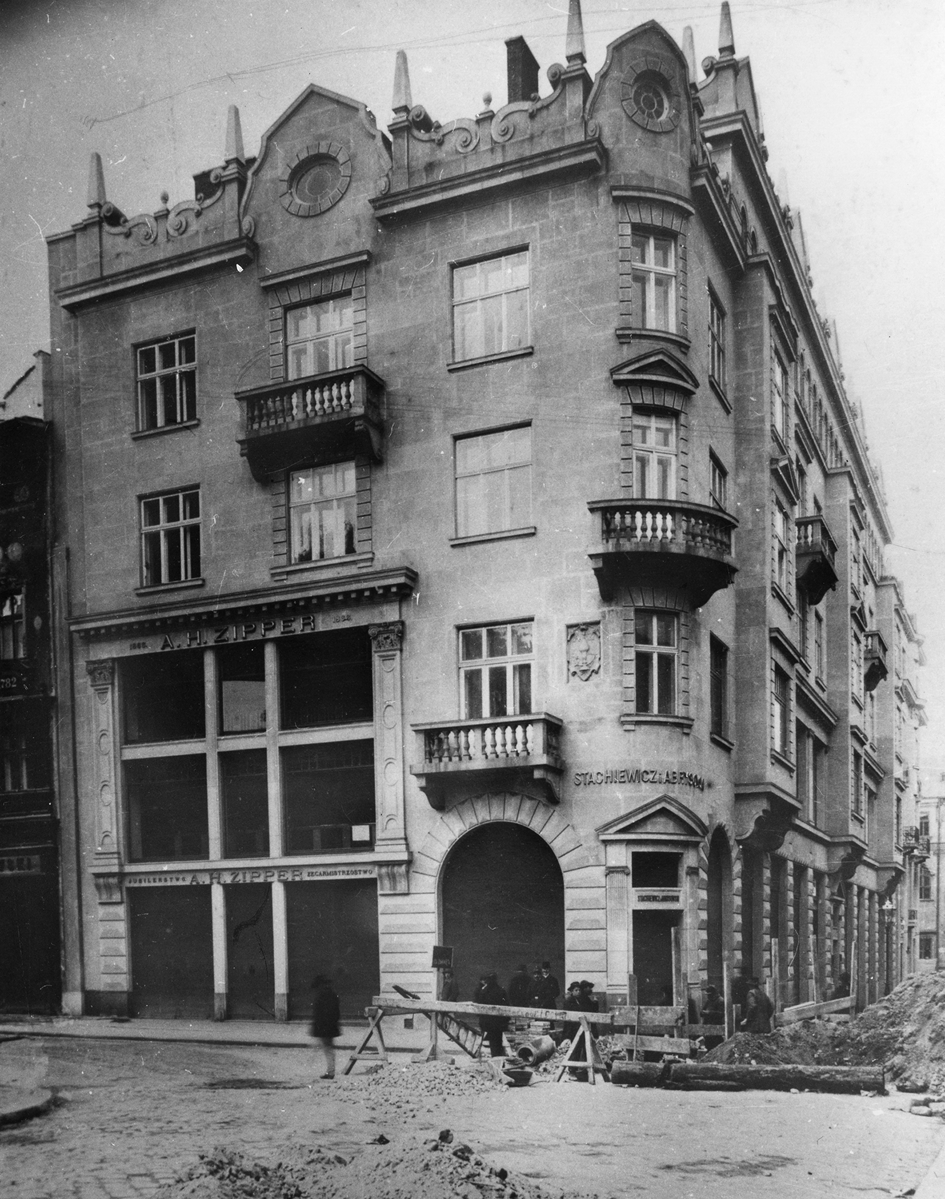
The next session was, as mentioned earlier, dominated by the Group of Conservationists. Czołowski, Rutowski and the conservative ex-viceroy, the art-loving Leon Piniński, argued that no new house facing the Rynek Square should ever stand out in size or decoration. The severity of new architecture should, in other words, allow the other old palace-like houses to dominate the view rather than presenting the clear message that the Square deserved to be altered. The width of the shop windows, the triple windows in the upper floors and the excessive attic on the top were all criticized. The architects’ line of defence was interesting. Rawski argued that it was not the task of the architect to follow the old styles, but to follow progress in architecture, and Alfred Zachariewicz (son of Julian and also a prolific architect) added that to preserve the Rynek Square intact, the city should buy up all the parcels of land around it, or if that was impossible, it should not oppose the needs of the owners.Footnote 78 In the following discussion, of which no protocols have survived, the architect modified his design only partially, lowering the attic and the height of the building. Also of interest is the issue of the number of floors. The decision ruled out the façade towards the Square having more than three floors, but the conditions for the side street allowed for four, so the Zipper House got three extremely high floors from one side, and four floors from the other. The final building, erected in 1913, still stood out from its surroundings, albeit to a lesser extent than initially planned. The decorations, which were deemed to be in line with the old ‘Polish’ baroque style, were also peculiar.
The artistic problem of creating a new historic style for new buildings located in old towns has already been raised. The lens of conservationists and other urban activists made them decide selectively on the issue of which buildings and styles to follow in these parts of the cities. Only a few historic centres had developed their own regional styles, such as Nuremberg, which was based on local late Gothic and High Renaissance.Footnote 79 However, this tendency mostly relied on deliberately choosing eras from the city's history, not taking into account the style actually prevailing numerically in the given old town. This way, neo-Renaissance houses were built in the Altstädte where classicism was strongly present.Footnote 80 In Lviv, it resulted in the creation of something completely new, similar to the neoromantic style, that prevailed in the German architecture of that period, but which can be described in this case as a form of ‘familiar’ architecture, new in its dimensions, but with details evoking meanings based on the association with the old Lviv architecture.
One final letter from the archive of the Group of Conservationists, from 1895, is worth discussing. In an appeal addressed to the Galician architects, the Group wrote about monuments of the past scattered around the former Commonwealth, which were often endowed with ‘local motifs, which were seemingly insignificant and tiny, but in essence always characteristic’. Further, they stressed the fact that new ideas and a fashion for appreciating these local details in buildings were already emerging in the country, but they were still weak, so the letter contained an appeal to architects to look for such motifs and register them in photos or drawings. ‘By the same token, they can preserve and popularize the remnants of architectural monuments, whose familiar accents, even insignificant, may in the future give rise to a local tinge [to architecture], according to our climate and conditions.’Footnote 81 Through such attempts at reviving old architectural patterns, conservationists kept in line with the broader trends of the time to take advantage of the historic heritage to distinguish Polish art from the art of other nations and peoples in the Habsburg empire in order to build a modern nation. The new Zipper House can also be seen in this light (see Figure 4).
The new Zipper House as seen from the Main Square, photo: J.K. Jaworski, 1914.
Source: Centre of Urban History of East Central Europe, ID no. 3549.
Conclusion
The issue and discourse of the preservation of monuments in Germany, despite having a clear all-Germanic tinge, were always locally oriented and focused on a specific genius loci. Even at the national level an emphasis was placed on local historic centres and local museums, rather than more centralized ones as in France.Footnote 82 The whole idea of Heimat relied on the environment which was nearest to the man, be it a region, a city or particular district. As Leiff Jerram has put it, the German Heimat could be in opposition to the nation as the dominating community.Footnote 83 It was only after 1871 and the unification of Germany that the idea was transformed into a national (or nationalistic) movement.Footnote 84 In Austria, a multi-ethnic monarchy, the idea of Heimat, and Heimatliebe (love for the mother/fatherland) had the potential to strengthen the centrifugal forces at the cost of the centripetal ones. That is why ideas of broader values of age or authenticity of monuments were developed by the Austrian conservationists, to stress the international, humanistic aspect of architectural heritage. The lack of funds and the difficulties in controlling the development of national movements in the crown lands also pertained to the issue of conservation. The members of the Group of Conservationists for eastern Galicia did not focus on the Polish heritage of the land, as reports of many interventions in the cases of Ruthenian wooden churches and Jewish synagogues can testify. In Lviv, secular urban architecture (or everyday architecture)Footnote 85 could be seen as a contrary case. In fact, it was often a ‘tool’ which could be useful in building national identity, but, and this is one of my conclusions, that identity did not have to involve a trans-regional scope, but relied instead on an attachment to a city. That sort of patriotism can be seen as different from national or imperial patriotism, and closer to a local Heimatliebe, the feeling which could evolve either into a nationalistic sentiment, or an inherent part of the Austrian identity, as Pieter Judson has put it.Footnote 86
Defending what was deemed to be the ‘real’ history of Lviv, along with other types of shaping local patriotism (such as publishing city guides, organizing regional exhibitions and the activities of the Society of the Friends of the Old Lviv from 1906 and the Society of the Embellishment of the City of Lviv and its Surroundings from 1911) can be understood as a practice of connecting new research into urban history with the ongoing process of nation building. Fighting for the historic appearance of the Śródmieście, for the old window frames, entrances, attics and decorations, was an attempt at making this environment more familiar to the Polish burghers and convincing them of the historic continuity within the city. The environment, which was dominated by Jewish property-owners who occasionally misunderstood this policy or sometimes opposed it (and the costs that this refurbishment entailed) was now supposed to be reinvented to some extent. The urban historic core, described as alien as late as the 1890s, became by 1914 a new battleground for national identification and myth-making, and one of the tools to accomplish that was the clear interplay of oppositions (Jewish or Ruthenian districts versus old familiar Polish architecture) and the existence of ‘nodal points’ with a concentration of national meanings around historic buildings such as ancient churches. Finding new objects for legal preservation (notably private houses), which to some extent involved an act of heritage creation, relied on the assumption that buildings from the past could effectively influence the present. ‘Tinkering’ around spatial meanings can therefore be seen as a remedy against the threats posed by modernityFootnote 87 or a reaction of the urban elite, which found itself in a crisis that also stemmed from the complexes related to the still low cultural status of Lviv at that time. Here, the inter-relation of Lviv and Krakow comes again to mind, and the ongoing struggle between the two cities. Defending the Śródmieście, the district which had the largest potential to serve as proof of Lviv's historicity, can be seen in this light as part of a fight for respectability with Krakow.
The theory of monument purification, a widely popular conservationist trend inspired by the works and writings of Eugène-Emmanuel Viollet-le-Duc, was not a tool for stressing the Polish character of the monuments as Markian Prokopovych has argued, at least not in the case of the old houses in question.Footnote 88 But the practice of strengthening their Polish connotations was clearly at play, not only by changing the appearance of the houses, but by assigning new national meanings to these monuments. Highlighting the allegedly Polish character of these apartment houses and urban palaces meant simultaneously stripping them of their multi-cultural history. The early heritage of the Armenians, Greeks and Ruthenians in Lviv was by the same token marginalized. Historical accounts as well as conservationists’ reports, along with more publicly visible elements of the public sphere such as the manifestos, legal acts and the press, can all be regarded as tools with which to turn Lviv's old secular architecture into a ‘mythomotor’. To that end, the memories connected with the buildings in question, including their meanings and connotations, had to be clearly marked as Polish, national, and, by the same token, their history, along with their historical owners, was subject to homogenization, simplification and cultural appropriation. The ‘tale’ of national continuity had to be clear and obvious.
The conservationist policy had its practical, processual aspects of preventing and controlling the physical change of urban space. That had its limits, as is the case with any preservation of heritage. As happened abroad, financial barriers hindered its development. In Lviv, another important factor was in play: the capitalistic development of a large city. The changes made by it to the amount of disposable capital and to land prices created new opportunities that the city council and urban architects embraced. On the one hand, this change helped to launch the identity politics of the conservationists, but on the other hand, it weakened their position and forced them to give way to new buildings. The ‘Old Lviv’ could not therefore be fully saved, which anyone who takes a stroll along Лесі Українки, Братів Рогатинців, or Валова streets can witness, seeing the modernist apartment houses. However, its defence nevertheless played a role in forging Lviv's modern identity.
Financial support
This article is a result of research into the functioning of urban architecture in the Polish territories (1850–1914) and financed from funds from the National Science Center in Poland


 Open access

