


Introduction
Agriculture is facing dramatic challenges due to climate change. Crop varieties are failing under extreme and changing weather conditions, requiring farmers to implement diverse coping mechanisms and adaptive strategies. Globally, agriculture is also a major contributor to climate change, directly responsible for 13.7% of greenhouse gas (GHG) emissions from 2000 to 2010 (Tubiello et al., Reference Tubiello, Salvatore, Rossi, Ferrara, Fitton and Smith2013) and indirectly responsible for an additional 7–14% GHG emissions through deforestation (Harris et al., Reference Harris, Brown, Hagen, Saatchi, Petrova, Salas, Hansen, Potapov and Lotsch2012). In order to achieve climate resilience, smallholder farming systems require capacity to cope with droughts, floods, pests, extreme weather conditions, salinization and erosion; mitigate GHG emissions and ecological degradation; and address worsening inequities, limited resources, social unrest and economic uncertainty (IAASTD, Reference McIntyre, Herren, Wakhungu and Watson2009; Altieri et al., Reference Altieri, Nicholls and Funes2012).
The Philippines is one of the foremost countries affected by climate change, ranking number 3 in the World Risk Index (Birkmann and Welle, Reference Birkmann and Welle2016) and number 5 in the Global Climate Risk Index (Kreft et al., Reference Kreft, Eckstein and Melchior2017). All regions in the Philippines are highly vulnerable to climate change with significant and frequent exposure to tropical cyclones, floods, droughts and landslides (Yusuf and Francisco, Reference Yusuf and Francisco2010). The islands contain extensive coastlines with a high population density, coupled with a heavy dependence on agriculture, natural resources and forestry for providing livelihoods. Increasing incidences of climate variability and extremes exacerbate existing food insecurity, poverty and ecological degradation in the Philippines (Yumul et al., Reference Yumul, Cruz, Servando and Dimalanta2011; UNU and ADW, 2014). An estimated 13.5% (13.7 million) of Filipinos are undernourished (FAOSTAT, 2017). One in five Filipinos live below the poverty line and farmers have the highest incidences of poverty (PSA, 2017b). Nearly 90% of Filipino farmers are considered smallholders as they manage <3 ha of land, accounting for approximately half of the farmland in the country (PSA, 2017a). Approximately 29% of the Philippine labor force works in agriculture and are largely engaged in rice production (PSA, 2017a). Rice systems are also responsible for 61% of the country's agricultural-related GHG emissions (FAOSTAT, 2017), and studies suggest that emissions will intensify with rising temperatures (Van Groenigen et al., Reference Van Groenigen, Van Kessel and Hungate2013). As a principal staple crop, rice is the largest contributor to calories derived from cereals and is the number 1 agricultural commodity in the Philippines, valued at US$2.65 billion (PSA, 2017a). Rice systems are therefore intimately connected to the socio-ecological fabric of the Philippines, and central to adaptive measures to augment food security, mitigate GHG emissions and improve socio-economic conditions linked to vulnerability.
Globally, rice systems vary significantly and include irrigated or rain-fed, paddy or dryland, upland or lowland, and managed using indigenous, organic or conventional modes of agricultural production. Variations in modes of production have been articulated in terms of disparate agricultural development paradigms, corresponding to contested visions for rice production in the Philippines (see Broad and Cavanagh, Reference Broad and Cavanagh2012; Vidal, Reference Vidal2014; Stone and Glover, Reference Stone and Glover2017). The grassroots farmer-led advocacy network Magsasaka at Siyentipiko para sa Pag-unlad ng Agrikultura (Farmer-Scientist Partnership for Agricultural Development, MASIPAG) represents one of these contested visions, emerging in the mid-1980s as a reaction to the environmental and social costs associated with the Green Revolution (Medina, Reference Medina2004, Reference Medina, van Buren and Myers2012; Broad and Cavanagh, Reference Broad and Cavanagh2012). Grounded in their campaign for organic farming, MASIPAG provides farmers with training in alternatives to chemical-based agriculture. What began as a partnership between a relatively small group of scientists and farmers grew into a network comprising approximately 30,000 farmers, 41 non-government organizations (NGOs) and 15 scientists by the early 2000s (MASIPAG, 2017). MASIPAG membership is attained through participation in a collective of farmers that form a local people's organization. This requirement was implemented in order to address isolation that individual MASIPAG farmers experienced in the past and to ensure capacity for community learning and other support mechanisms. MASIPAG farmers utilize organic rice production practices, often relying on traditional and indigenous seed varieties, botanical foliar sprays, compost and vermiculture, and intercropping to support agrobiodiversity, control pest populations and restore soil nutrients. MASIPAG farmers have documented a range of challenges in transitioning to organic agriculture. Farmers often need to learn and implement new farm management strategies; it generally takes several years to rebuild soil health, and the transition period is usually marked by significant declines in yields (see Bachmann et al., Reference Bachmann, Cruzada and Wright2009). MASIPAG and others report that these initial challenges are often followed by improvements in yield, income, household health and food security, as well as environmental outcomes and social empowerment (Bachmann et al., Reference Bachmann, Cruzada and Wright2009; Lin, Reference Lin2011; Rusinamhodzi et al., Reference Rusinamhodzi, Corbeels, van Wijk, Rufino, Nyamangara and Giller2011; Harvey et al., Reference Harvey, Chacón, Donatti, Garen, Hannah, Andrade, Bede, Brown, Calle, Chara and Clement2013).
In contrast, conventional rice farmers in the Philippines are indirectly affiliated with the International Rice Research Institute (IRRI) through its national sister organization the Philippine Rice Research Institute (PhilRice). The dissemination of PhilRice technology and innovations is facilitated by the Department of Agriculture through Agricultural Training Institute extension services. Conventional rice farmers often rely on hybrid seed varieties, synthetic fertilizers and pesticides, and other external inputs and technological innovations to manage their farms. This infrastructure, along with other institutional mechanisms that prescribe and support conventional agriculture, were so effective that by the mid-1980s, only two Green Revolution rice varieties occupied 98% of the entire rice growing area in the Philippines, replacing the thousands of traditional rice varieties that were culturally significant, locally adapted to the region and required minimal external inputs (Medina, Reference Medina2004, Reference Medina2009; Altoveros and Borromeo, Reference Altoveros and Borromeo2007).
Defining climate resilience
There is as yet no global consensus on how to conceptualize and measure climate resilience as it is often defined to respond to specified research and policy interests, and interpreted using the evolving concepts of adaptation, mitigation and vulnerability. However, key developments in resilience theory offer suggestions on how to define climate resilience. In the context of a socio-ecological system, resilience is generally understood as an emergent property derived from the systems’ ability to absorb disturbance and reorganize (e.g., adaptive capacity) so as to either retain or improve upon the previous structure and living conditions (Walker et al., Reference Walker, Holling, Carpenter and Kinzig2004; Barrett and Constas, Reference Barrett and Constas2014). Thornton and Mansafi (Reference Thornton and Manasfi2010) argue that both the adaptive capacity and mitigation potential of farming systems must be enhanced simultaneously in order to cope with and address global environmental change. However, mitigation is widely perceived as an international issue to be addressed largely by institutions and industry. This is partially due to challenges associated with engaging communities (at the local level) in agricultural carbon market schemes (see Unruh, Reference Unruh2008; Raboin and Posner, Reference Raboin and Posner2012; Loft et al., Reference Loft, Pham, Wong, Brockhaus, Le, Tjajadi and Luttrell2017). But the separation of adaptation and mitigation activities is problematic for farming systems as trade-offs and synergies may occur over different temporal or spatial scales (Harvey et al., Reference Harvey, Chacón, Donatti, Garen, Hannah, Andrade, Bede, Brown, Calle, Chara and Clement2013). For example, the use of agrochemicals may increase yields in the short-term, but at the expense of long-term cumulative contributions to GHG emissions; and the use of agroecological practices may reduce yields over the short-term, but often result in greater productivity and carbon sequestration over the long-term (Lin, Reference Lin2011; Rusinamhodzi et al., Reference Rusinamhodzi, Corbeels, van Wijk, Rufino, Nyamangara and Giller2011; Harvey et al., Reference Harvey, Chacón, Donatti, Garen, Hannah, Andrade, Bede, Brown, Calle, Chara and Clement2013).
Another key development in resilience theory is the integration of vulnerability, a condition often defined as a function of exposure, sensitivity and adaptive capacity to external shocks or stresses (Choptiany et al., Reference Choptiany, Graub, Dixon and Phillips2015). Resilience and vulnerability research are complementary in that the former generally emphasizes ecological–biophysical dynamics, such as ecosystem services, thresholds and feedbacks; the latter generally focuses on social–political dimensions such as power and equity that affect the capacity for adaptation and mitigation. Hence, Miller et al. (Reference Miller, Osbahr, Boyd, Thomalla, Bharwani, Ziervogel, Walker, Birkmann, Van der Leeuw, Rockström and Hinkel2010) have called for integrating the two concepts in order to account for the biophysical and social dimensions of global environmental change and to foster a more sophisticated understanding of ecological, biophysical, social and political processes and the distribution of costs, risks and benefits. Resilience can therefore be conceptualized as a suite of integrative processes and outcomes (Cabell and Oelofse, Reference Cabell and Oelofse2012) that determine the ways that complex socio-ecological systems respond to a range of trends, cycles and shocks (Miller et al., Reference Miller, Osbahr, Boyd, Thomalla, Bharwani, Ziervogel, Walker, Birkmann, Van der Leeuw, Rockström and Hinkel2010). Our study defines climate resilience as a function of social and ecological integrative processes and outcomes that enhance adaptive capacity, augment mitigation potential and reduce the vulnerability of a farming system. The latter component, accounting for socio-ecological conditions driving vulnerability, is an important distinction from Climate Smart Agriculture.
Measuring climate resilience
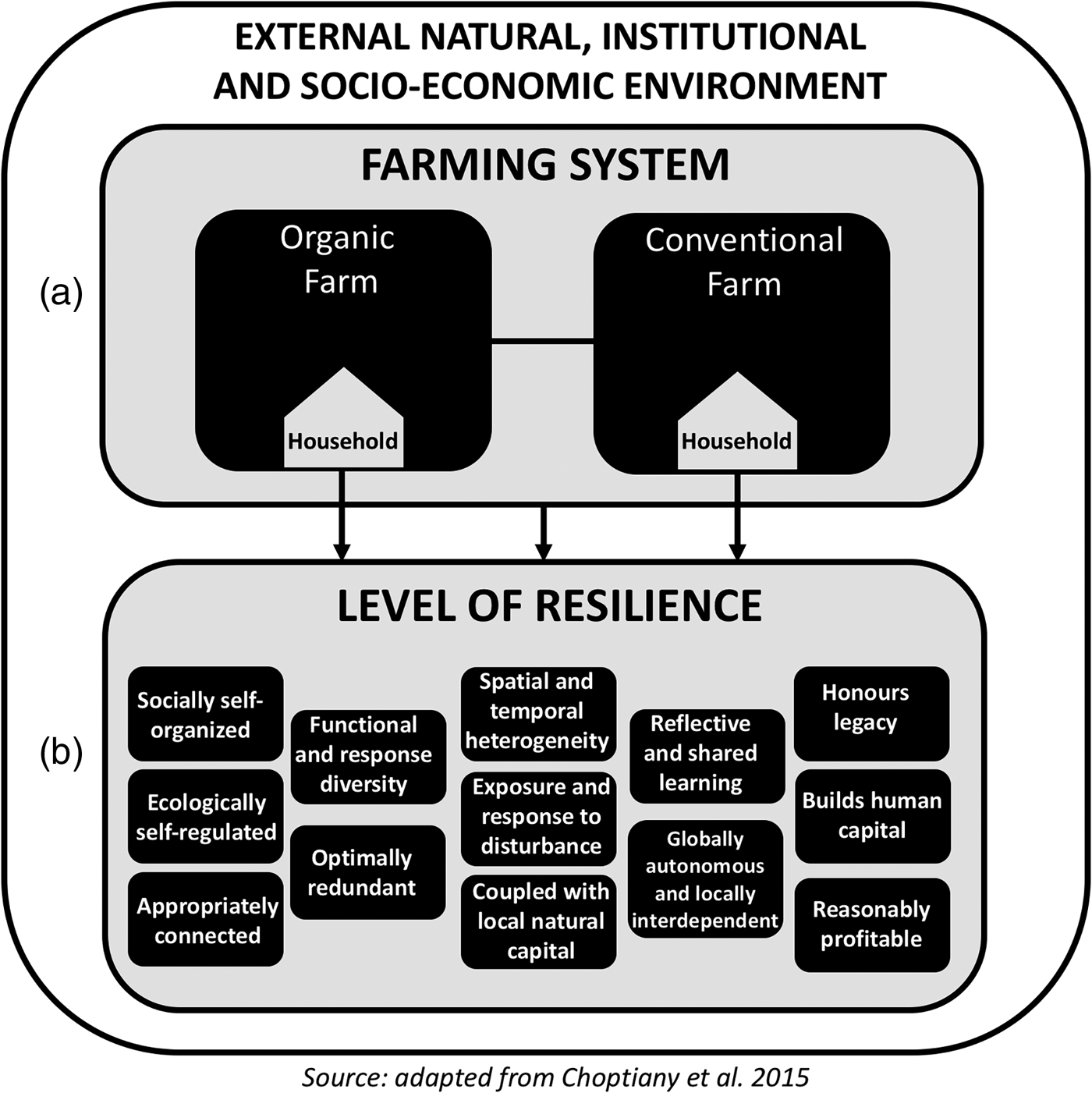
Our interdisciplinary study investigates the hypothesis that divergent agricultural management practices in the Philippines result in rice systems with different degrees of climate resilience. To explore the adaptive capacity, mitigation potential and vulnerability of organic and conventional rice systems, this study utilizes the Self-evaluation Holistic Assessment of climate Resilience for farmers and Pastoralists (SHARP) tool. The tool was developed by a team of agricultural experts at the United Nations Food and Agricultural Organization (FAO) in consultation with academics and practitioners and involved a multi-step process that included a review of existing resilience frameworks, methodologies and assessment tools (Choptiany et al., Reference Choptiany, Graub, Dixon and Phillips2015). The SHARP tool collects data and farmer feedback on 54 components of farming systems, including household, production, environment, government, social and economic dimensions. The concept of a farming system is the unit of analysis. Distinct from a single farm, a farming system is a population of individual farms that have similar resource bases, enterprise patterns, household livelihoods and constraints, and for which similar development strategies and interventions would be appropriate (Dixon et al., Reference Dixon, Gulliver and Gibbon2001). A farming system is multidimensional and multi-scalar, containing the household; the farm; and the natural, institutional and socio-economic environment (Darnhofer et al., Reference Darnhofer, Gibbon and Dedieu2012, p. 6) (see Fig. 1a). We use ‘farming system’ and ‘rice system’ interchangeably, the latter being an explicit indication that rice cultivation is a commonality.
(a) Using a socio-ecological systems approach and the concept of a farming system as our unit of analysis, our participatory assessment of climate resilience engages in a multidimensional and multi-scaler analysis of organic and conventional rice systems. (b) Using the SHARP tool, we collect information on various processes and outcomes occurring within the natural, institutional and socio-economic environment, as well as at the household, farm and village/community level. This information is used to comparatively measure 13 agroecosystem indicators identified as proxies for climate resilience.
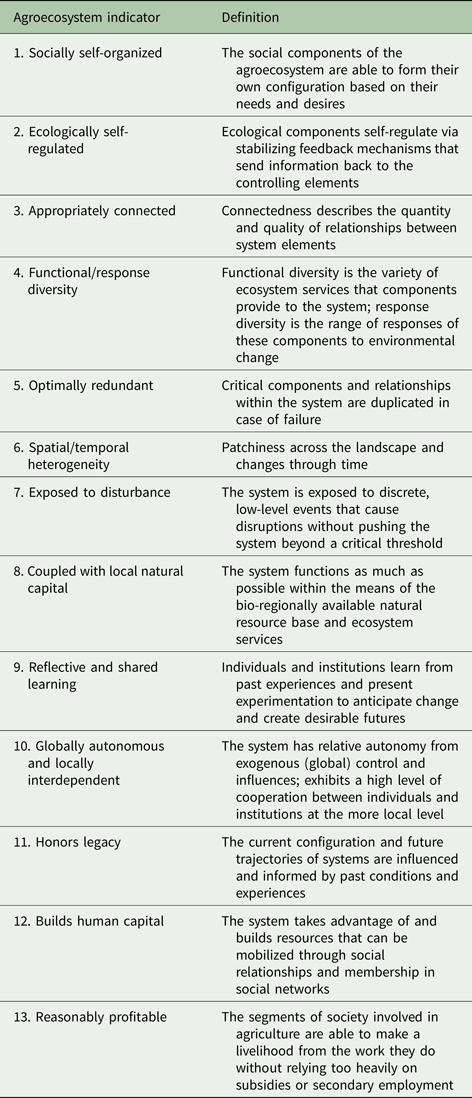
Due to the complexity and variability of farming systems over time and space, researchers have suggested that context-dependent indicators of resilience should be measured in lieu of attempting to quantify resilience itself (e.g., Bennett et al., Reference Bennett, Cumming and Peterson2005; Carpenter et al., Reference Carpenter, Bennett and Peterson2006). For Darnhofer et al. (Reference Darnhofer, Bellon, Dedieu and Milestad2010, p. 195–196), emphasis should be placed on ‘identifying more general ‘rules of thumb’ for use by farmers and facilitators to guide farms, the industry sector, the national agricultural systems and the interconnected part of the international food and fiber system towards a more resilient orientation’. The FAO SHARP tool builds on 13 agroecosystem indicators (or characteristics of resilience) that are cited most often in the literature on socio-ecological systems resilience (Cabell and Oelofse, Reference Cabell and Oelofse2012), paying particular attention to general ‘rules of thumb’ for agroecosystems (see Table 1). The indicators are behavior-based, integrate core aspects of socio-ecological systems, and encompass the four phases in the adaptive cycle: growth/exploitation, conservation, release and reorganization/renewal (see Walker et al., Reference Walker, Holling, Carpenter and Kinzig2004; Darnhofer et al., Reference Darnhofer, Bellon, Dedieu and Milestad2010). Similar to biotic indicators typically employed to monitor ecosystems, Cabell and Oelofse (Reference Cabell and Oelofse2012) suggest that the presence of these 13 agroecosystem indicators in a farming system indicates a capacity for adaptation and transformation, while their absence signals vulnerability and the need for intervention. The SHARP tool links data related to a farming system to these 13 agroecosystem indicators in order to measure climate resilience (Choptiany et al., Reference Choptiany, Graub, Dixon and Phillips2015).
Thirteen agroecosystem indicators for climate resilience identified by Cabell and Oelofse (Reference Cabell and Oelofse2012)
In summary, climate resilience is an emergent property of farming systems, arising from the unique interaction between farmer, farm and context (Carpenter et al., Reference Carpenter, Walker, Anderies and Abel2001; Cabell and Oelofse, Reference Cabell and Oelofse2012; Choptiany et al., Reference Choptiany, Graub, Dixon and Phillips2015). Using a socio-ecological systems approach and the concept of a farming system as our unit of analysis, we carry out a participatory assessment of climate resilience that engages in a multidimensional and multi-scalar analysis of organic and conventional rice systems (see Fig. 1a and b). We use the SHARP tool to collect data on farming system processes and outcomes occurring within the natural, institutional and socio-economic environment, as well as at the household, farm and barangay (village/community) level. We comparatively measure 13 agroecosystem indicators identified by Cabell and Oelofse (Reference Cabell and Oelofse2012) to assess climate resilience. Additionally, we identify targeted interventions for enhancing climate resilience given socio-ecological conditions and farmer experience.
Methods
Study site
According to the Manila Observatory (2005), Negros Occidental (one of the Philippine's 81 provinces, Fig. 2a) is ranked 19 at risk to projected temperature rise. In an assessment of 74 of the 81 Philippine provinces, Yusuf and Francisco (Reference Yusuf and Francisco2010) ranked Negros Occidental the 46th most vulnerable, making the province neither the most or the least vulnerable, but rather mid-range relative to other Philippine provinces. We chose a mid-ranging province to examine climate resilience as selecting a more vulnerable province (i.e., high exposure, high sensitivity and low adaptive capacity) would increase the likelihood of insufficient infrastructure and/or adaptive mechanisms to allow a robust comparative assessment. Negros Occidental ranked 48 in exposure, 17 in sensitivity and 37 in adaptive capacity to climate variability (Yusuf and Francisco, Reference Yusuf and Francisco2010)––indicating, to some degree, that climate intervention efforts are present but inadequate in the province.
(a) Map of the Philippines with provincial boundaries, Negros Occidental shaded and study area highlighted; and (b) the distribution of organic and conventional rice systems sampled in the study.

The governors of Negros Occidental and the neighboring province of Negros Oriental signed a memorandum of agreement in 2005 committing the island to 10% organic production by 2010 with the long-term vision of making the island the ‘organic food bowl of Asia’. However, neither province has succeeded in meeting its commitments. Recent reports indicate that approximately 16,000 of the 400,000 hectares (or 4.8%) of agricultural land in Negros Occidental have been converted to organic farming (Philippines News Agency, 2017); more than double the national rate of 1.89% (Willer and Lernoud, Reference Willer and Lernoud2017). Although organic agriculture is garnering political and public support in Negros Occidental, as well as around the country (see Salazar, Reference Salazar2014), many institutional mechanisms still favor conventional agriculture in the region. For example, of the 90 hectares of land managed by PhilRice Negros, one of the six rice research stations attached to the Department of Agriculture and working in collaboration with IRRI, only 6.5 hectares are designated for organic rice, while the remaining are designated for conventional rice breeding and seed propagation. Our study is thus carried out in a region with pre-existing institutional mechanisms that favor conventional agriculture, but also waves of mobilization and growing interest in organic agriculture.
Field research
A growing number of researchers emphasize the importance of ‘multi-stakeholder engagement’, ‘people-centered and participatory approaches’ and ‘social inclusion’ in fostering resilience (Reed et al., Reference Reed, Evely, Cundill, Fazey, Glass, Laing, Newig, Parrish, Prell, Raymond and Stringer2010; Tanner et al., Reference Tanner, Lovell, Pichon, Bahadur and Morsi2016). These approaches to research are critical for recognizing political economic context and power dynamics as structural conditions that influence both how farmers perceive the resilience of their agroecological systems, and the strategies they utilize to cope with socio-ecological change (Blesh and Wittman, Reference Blesh and Wittman2015). The idea that farmers should be active participants (vs passive subjects) in climate resilience research recognizes that many farmers have extensive experiential knowledge derived from generations of accumulated experiences and interaction with the environment. In recognition of the simultaneous ‘plurality of knowledges’ among farming communities and their historical and systematic exclusion from knowledge production, participatory approaches offer methodological frameworks to involve community members and stakeholders in the research process (Kindon et al., Reference Kindon, Pain and Kesby2007). Defining features of community-based participatory research include a research agenda defined by community partners, community members engaged in the research process, development and promotion of an action plan, and relationships rooted in trust and mutual accountability (Bacon et al., Reference Bacon, deVuono-Powell, Frampton, LoPresti and Pannu2013; Guzmán et al., Reference Guzmán, López, Román and Alonso2013).
Our research agenda was developed in collaboration with the former MASIPAG National Coordinator. MASIPAG farmers were noticing that their organic farms were ‘better off than their neighbors’ conventional farms after experiencing an extreme weather event, such as a flood, drought or pest infestation. The MASIPAG National Coordinator indicated that an investigation into these farmer observations and a comparative assessment of the climate resilience of organic and conventional farms would be useful and meaningful to MASIPAG. Preliminary fieldwork and in-person meetings with MASIPAG network members including MASIPAG Board of Directors; MASIPAG National, Regional and Provincial staff; and Farmer Associations occurred over a 3-month period in 2014; primary data collection via the SHARP tool was carried out during August–December of 2016 with the support of a team at Paghida-it sa Kauswagan Development Group (Peace Development Group, PDG), a not-for-profit partner organization of MASIPAG. The research team presented the study design at four local Farmer Association meetings, and invited members to participate in the study following the presentation. A total of 40 organic and conventional rice farmers across four neighboring villages joined the research team as ‘participant evaluators’ in a comparative assessment of climate resilience.
The research process was designed to increase understanding of climate resilience and involve farmers in the evaluation process. This was accomplished through creating spaces for participatory learning and exchange between organic and conventional farmers and the research team, as well as across the four villages represented. A community resource mapping and cropping calendar exercise was facilitated to enable farmers to situate the study within their socio-ecological contexts. The participant farmer evaluators also provided data on 54 farming system components utilizing the SHARP tool, which were then used for three purposes. First, we assessed the 13 features of an agroecosystem identified by Cabell and Oelofse (Reference Cabell and Oelofse2012) as proxies for climate resilience. Secondly, the data were used by participants themselves in a facilitated exercise to determine which farming system components should be prioritized for interventions to enhance climate resilience given existing socio-ecological conditions and farmer experience. Thirdly, we facilitated a participatory gap analysis (PGA) to obtain farmer insight on possible and preferred interventions to enhance climate resiliency.
Participant evaluators
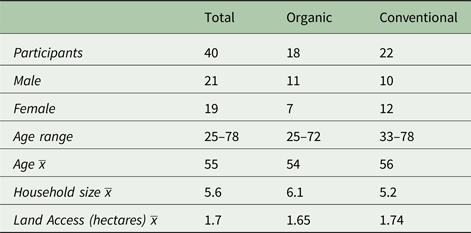
A total of 40 smallholder farmers (N = 40), comprised of 18 organic and 22 conventional farmers from four neighboring villages in Negros Occidental, Philippines agreed to participate in the case study (see Table 2). Most participants had been farming their entire lives, and are small-holder (primarily) subsistence farmers, meaning crops grown by participating farmers are typically allocated for household consumption and the surplus and/or selected crops (i.e., sugarcane) are sold for the purposes of paying debts or generating income. There are also collective efforts being made to process and package certain crops (i.e., cassava noodles). Prior to receiving land as agrarian reform beneficiaries, many farmers indicated that they were sugarcane plantation workers. Participants were asked to self-identify as either an organic or conventional farmer. There were 21 male and 19 female participants that ranged between the ages of 25–78. On average, household size is 5.6 persons and participating farmers have access to 1.7 ha of land. This includes land that is individually owned or leased (i.e., rice fields, sugarcane fields and home gardens), managed communally (i.e., trial farms and other communal land) and accessed/managed for additional resources (i.e., forested areas). Several farmers also own and manage livestock, including chickens, ducks, pigs, carabaw (water buffalo) and goats. Figure 2b shows the distribution of the organic and conventional rice systems accounted for in our assessment.
Descriptive statistics for participant evaluators (farmers)
SHARP survey
The SHARP survey tool was used to collect data on the 54 components of farming systems. We adapted SHARP version 1.9.0 for the Philippine context, including translation into both Tagalog/Filipino (the national language) and Ilongo/Hiligaynon (the local language). The survey was made available in electronic and hard-copy form and administered to the participating farmers by a team of field assistants––all of whom are affiliated with PDG, have had a long-term presence in the region and have established relationships with the participating farmers. Consistent with the SHARP methodology, the collected data pertaining to the 54 farming system components were compiled into 13 agroecosystem indicators and scored to comparatively measure the climate resilience of organic and conventional rice systems. Some components appear in more than one agroecosystem indicator due to serving multiple purposes in a farming system. For example, ‘intercropping’ contributes both to a farming system being ‘appropriately connected’ and having ‘spatial and temporal heterogeneity’, hence it is accounted for in both agroecosystem indicators. Other components may be broken into sub-components. For instance, ‘the total number of groups’ and ‘the number of different types of groups’ a farmer actively participates in both contribute to the measurement of the ‘group membership’ variable (one of the 54 farming system components) but are scored independently. Such instances therefore result in a total of 84 scores calculated for each organic and conventional farmer survey.
The SHARP tool also asks farmers to rank the adequacy and importance of farming system components. For instance, after answering a series of questions pertaining to seed sources (one of the 54 farming system components), the farmer is also asked: To what extent does this combination of seed sources meet the needs of your farm system? How important is it to have access to several sources of seeds for your farm system? This collection of data is then used to also generate a priority rankings list of farming system components to determine which components should be prioritized for interventions given existing socio-ecological conditions and farmer experience. Through this approach, participating farmers provide guidance in the interpretation of survey results, drawing attention to features of a farming system most critical to the farmers. To generate priority rankings for the respective farming system components, the data acquired through the SHARP survey were transcribed into three scores: academic, adequacy and importance. Academic scores are automatically calculated and generated by the SHARP tool (Choptiany et al., Reference Choptiany, Graub, Dixon and Phillips2015: 47). Both ‘adequacy’ and ‘importance’ scores are generated by the participating farmer and are based on a Likert scale. These three scores are added together to produce a final score, which is used to generate priority rankings for the farming system components. Low scores are an indication that the farming system component is in need of improvement measures and is perceived as important by the farmer.
Statistical analysis
A two-way t-test was conducted to determine statistical differences between organic and conventional SHARP survey scores at the individual sub-component level (1.1 group membership, 1.2 functions of groups, etc.), agroecosystem indicator level (1. socially self-organized, 2. ecological self-regulated, etc.) and at the whole farming system level (see Fig. 1 and Supplementary Table S1). Continuous raw data scores were used in the analysis of all 84 sub-components. Sub-component scores were then averaged by agroecosystem indicator and again by farming system to determine differences at each level. All statistical analyses were conducted using the data analysis tool in Excel V15.37 (Microsoft, Redmond, Washington: Microsoft, 2016).
Participatory gap analysis
Three weeks following the completion of the SHARP surveys, participants were presented with preliminary results of the SHARP survey, then asked to break into working groups to explore the identified trends and patterns, and to discuss targeted interventions for enhancing resilience in their rice systems. A facilitator was assigned to each of the four working groups and equipped with a hardcopy of the preliminary results and worksheets for documenting reflections and recommendations made by farmers. The small working groups were intended to facilitate consensus building during the PGA exercise.
Results and discussion
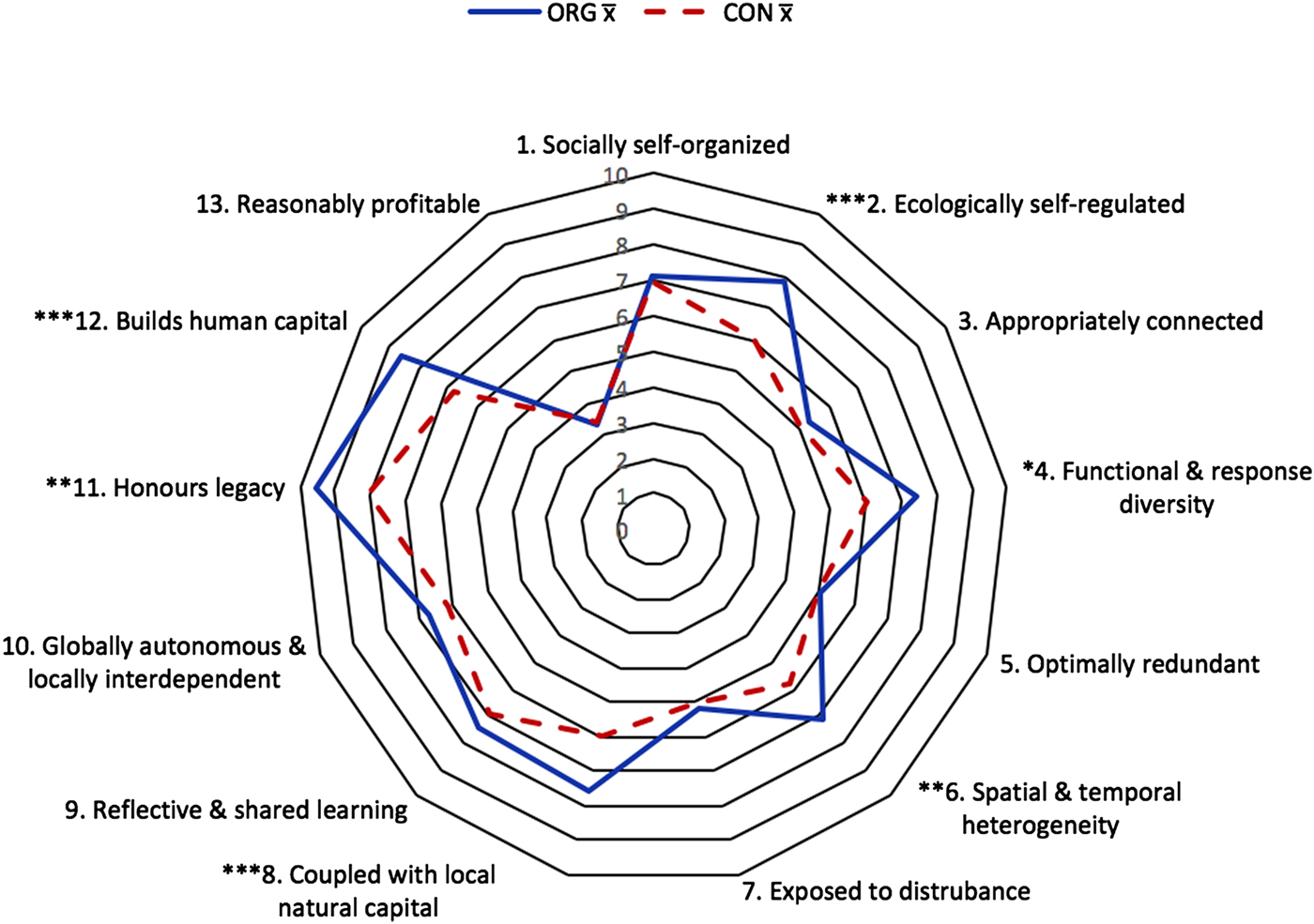
Statistical differences between conventional and organic systems were evident in 25 out of the 84 sub-components, where organic scored higher in 22 of the 25 instances (Supplementary Table S1). Mean scores for 6 out of the 13 agroecosystem indicators were also significantly higher for organic farming systems than conventional (Fig. 3). Overall, average mean scores were 15.2% higher (P < 0.001) for organic rice systems in climate resilience than conventional systems.
Organic and conventional mean (x̅) scores for 13 agroecosystem indicators for climate resilience. Significant differences determined by t-test are indicated as: *P < 0.05, **P < 0.01, ***P < 0.001.
The results of the priority rankings exercise indicate that organic and conventional farmers have identified many of the same farming system components as priorities for intervention. Conventional farmers share 18 of the top 20 priorities identified by organic farmers (Table 3). The results of the PGA include farmer suggestions for how to improve low scoring (or high priority) farming system components, and ultimately enhance climate resilience given existing socio-ecological conditions and farmer experiences. The results and discussion of the PGA are incorporated into our analysis of the 13 agroecosystem indicators below.
Priority rankings for organic and conventional farming system components
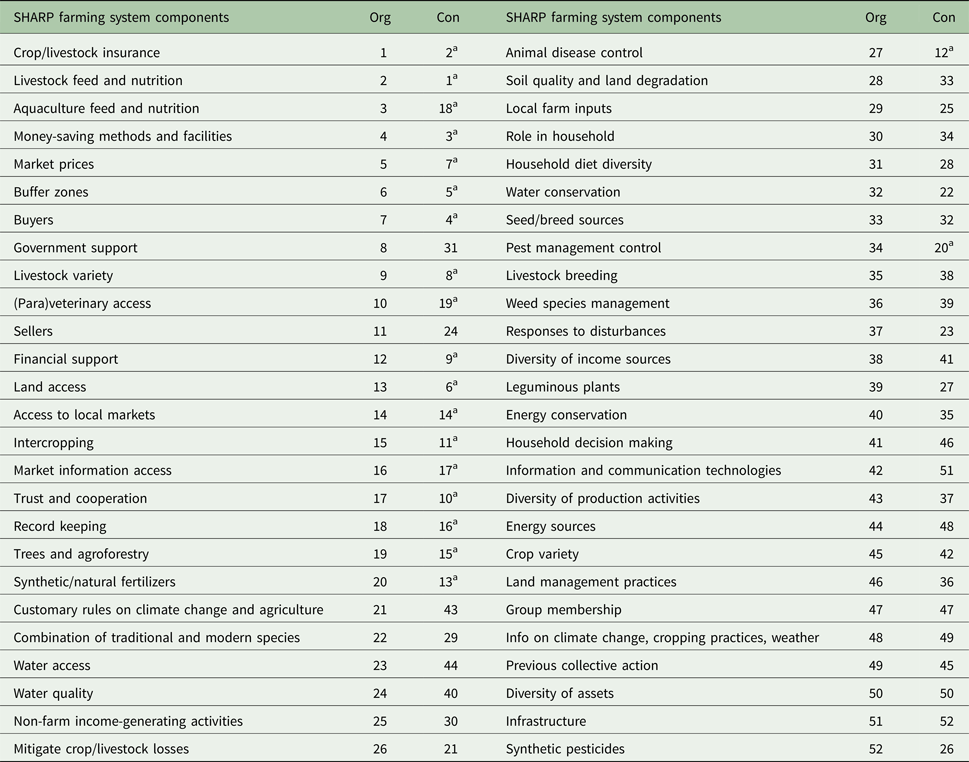
a Demarks top 20 priorities for conventional farmers.
Socially self-organized
There were no significant differences between organic and conventional rice systems overall for the socially self-organized indicator, measured by their active participation in groups, access to local farmers markets, previous use of internal coping mechanisms and access to communal resources (Supplementary Table S1). High levels of self-organization impart greater intrinsic adaptive capacity (Cabell and Oelofse, Reference Cabell and Oelofse2012). At the sub-component level, conventional farmers on average indicated a significantly more active participation with a greater variety of groups than their organic neighbors (1.2). Both organic and conventional farmers have limited access to local markets and have targeted this component for intervention. According to the PGA, establishing market contacts would help improve market access; however, farmers emphasized that household consumption is the number 1 priority, and local consumers are the second priority. Farmers indicated that communities should organize and support mechanisms for farmer exchange, information dissemination and record keeping to document changes in weather and production; as well as continue to pursue access to land through the Department of Agrarian Reform.Footnote 1
Ecologically self-regulated
Organic farming systems exhibit a significantly greater degree of ecological self-regulation, measured by the use of perennial crops, local crop and livestock varieties, nitrogen fixing plants, buffer zones, agroforestry, sustainable energy sources and the lack of chemical inputs. Ecological self-regulation reduces the amount of external inputs required to maintain a system (Cabell and Oelofse, Reference Cabell and Oelofse2012). As expected, organic farmers on average use more traditional (local) crops/livestock (2.2), avoid using chemical pesticides and subsequently contribute less to the accumulation of hazardous waste (2.3), and apply natural fertilizers (2.6) made from locally sourced ingredients. The region lacks a waste management system, so most non-organic waste, including pesticide containers, are either dumped in open waste piles or burned. Both organic and conventional farmers identify fertilizer use as a priority for intervention, and expressed interest in improving their own compost, vermicast and botanical foliar production; as well as implementing soil/land improving practices, such as applying organic matter on elevated areas of the farm and fallowing land, and planting legumes, cover crops and other green manuring strategies. Both rice systems have very few buffer zones, but do contain agroforestry systems, and organic and conventional farmers identified agroforestry as a priority for intervention. The PGA revealed that limited land access is a prominent reason why farmers do not establish or expand their buffer zones or agroforestry systems. Given this condition, farmers suggested bordering their farm fields with trees, establishing tree nurseries and planting more native tree species as solutions for improving and/or expanding agroforestry systems.
Appropriately connected
There was no significant difference between organic and conventional rice systems for the appropriately connected indicator. Connectedness describes the quantity and quality of relationships between the system (Cabell and Oelofse, Reference Cabell and Oelofse2012). Connectedness is measured in terms of farmers’ access to seed/breed sources, market information and weather forecasting, and (para) veterinary services; as well as their employment of intercropping strategies and sense of trust and cooperation in the community. At the sub-component level, organic farmers had a significantly higher level of intercropping practices than conventional farmers (3.2). Both farming systems appear to lack trust and cooperation and access to (para)veterinary services; as well as have similar access to market information and weather forecasting services. Several of associated farming system components were listed as priorities for both organic and conventional farmers. During the PGA, farmers expressed interest in improving intercropping measures to enhance crop diversity and incorporate both herbal and root crops into production practices. Farmers proposed devising a farm diversification plan that also includes a trial farm and seed bank for the purposes of collecting and propagating native (or local) varieties of corn, rice and vegetables, as well as improving access to seeds. To foster more trust and cooperation within the community, farmers suggested creating mechanisms for sharing within and between communities, such as establishing links between Farmer Associations for seed exchanges to occur. To improve market information access, farmers suggested forming committees that will take charge of gathering market information from the television and radio, as well as monitor and determine market prices for crops. Because (para)veterinary services were distant and/or inaccessible for many farmers, farmers recommended establishing links to (para)veterinary services through the barangay (village government).
Functional and response diversity
Organic farming systems contain significantly higher functional and response diversity, measured in terms of species diversity, diversification of farming activities (by category), income sources, and pest and animal disease control methods. Heterogeneous features within the landscape and farm can impart buffering and regenerative capacity following a disturbance (Cabell and Oelofse, Reference Cabell and Oelofse2012). Organic rice systems scored higher in crop and livestock diversity (4.1), diversity of farming activities (4.2), and number of pest and animal disease control methods practiced (4.4). Several of the corresponding farming system components were listed as priorities for both organic and conventional farmers, including livestock variety, animal disease control and pest management control. To improve livestock diversity, farmers recommended adopting native species and engaging in more breeding practices. They also expressed interest in receiving training on livestock management practices, including an orientation on disease control and deworming practices, with many farmers emphasizing a preference for utilizing herbal supplements and other natural remedies. Farmers also indicated a desire to learn additional and alternative pest management practices.
Optimally redundant
There were no significant differences between organic and conventional rice systems for the optimally redundant indicator. Optimal redundancy is measured in terms of water, energy, fertilizer, seed and livestock sources; land management practices, varietal diversity, human and animal nutrition, and cereal bank access; as well as market access and productive assets. Redundancy gives a system multiple back-ups that support buffering and renewal processes following a disturbance (Cabell and Oelofse, Reference Cabell and Oelofse2012). Scores for organic systems were significantly lower for the sub-component for fertilizer sources (5.6). This is likely due to many organic farmers producing their own fertilizer and/or having limited sources for natural fertilizers. Neither organic nor conventional farmers had access to cereal banks (5.11). Both sets of farmers identify livestock variety as a priority, and farmer recommendations for improving livestock variety center on (re)adopting native livestock varieties. Livestock feed and nutrition is a priority for both organic and conventional farmers, with farmers recommending more diverse diets for livestock (i.e., corn stalks, water cabbage and sweet potato leaves), as well as indicating an interest in livestock management trainings.
Spatial and temporal heterogeneity
Organic rice systems scored significantly higher in spatial and temporal heterogeneity, measured in terms of farm and landscape heterogeneity, agricultural management practices, quantity of trees and invasive species, percentage of intercropping, types of soil observed and presence of perennials. Systems that contain spatial and temporal heterogeneity often contain more patches for recovery and nutrient restoration, and greater instances of renewal following disturbances (Cabell and Oelofse, Reference Cabell and Oelofse2012). Organic farmers implement more farm and landscape management practices that create a greater degree of temporal heterogeneity (6.1), such as rotating crops, fallowing land and establishing wind breaks/hedges. Organic rice systems also contain a higher percentage of intercrops (6.6). Both agroforestry and intercropping were identified as priorities for both organic and conventional farmers, and proposed interventions were discussed earlier.
Exposed to disturbance
There were no significant differences between organic and conventional rice systems for the exposed to disturbance indicator, suggesting both rice systems experience comparable levels of small-scale disturbances. Measured in terms of exposure to invasive species and climate-related disturbances, such as temperature and rainfall variability, unusual disease and pest infestation, as well as conflict and livestock raiding. Livestock breeding practices, buffer zones and reliance on local species were also considered as features that provide enhance resistance. Exposure to disturbance helps to increase resilience over time by allowing a system to develop mechanisms for coping and recovering from change (Cabell and Oelofse, Reference Cabell and Oelofse2012). Organic rice systems contain significantly more native species/varieties (7.5) which have potentially adapted to changes overtime in the region. To improve responses and resilience to disturbance, farmers expressed interest in identifying and adopting climate resilient crop varieties, particularly drought-resistant varieties, as well as documenting and adjusting the crop cycle to the changing weather patterns and using water management strategies to mitigate invasive species. Farmers also expressed interest in an orientation on disaster and risk reduction management.
Coupled with local natural capital
Organic rice systems scored significantly higher for the ‘coupled with local natural capital’ indicator, measured in terms of land, soil and water quality; land improving practices, energy conservation and resource recycling; as well as pesticide use, tree planting and animal disease control practices. A system that is coupled with local natural capital engages in responsible use of local resources which subsequently encourages a system to live within its means and recycle waste (Cabell and Oelofse, Reference Cabell and Oelofse2012). Organic rice systems scored higher in land quality (8.1); land improving practices (8.3), such as planting more nitrogen fixing legumes and using natural fertilizers; and water recycling and conservation practices (8.5). However, scores for organic rice systems were lower for soil and water quality (8.2), indicating that organic farmers reported more soil degradation and water quality problems than their conventional neighbors. This inconsistency could be a result of organic farmers being more attentive to ecological conditions due to their reliance on ecosystem services. Organic systems avoid using pesticides, subsequently reducing the accumulation of hazardous waste in the region (8.6), and use more environmentally friendly animal disease control methods (8.8).
Reflective and shared learning
There were no significant differences between organic and conventional rice systems for the reflective and shared learning indicator, suggesting both groups of farmers engage in comparable amounts of knowledge exchange for the purposes of improving local knowledge and capacities for building and enhancing resilience. Measured in terms of group participation, response to climate change, use of extension services, record keeping practices and sources of knowledge on the environment and agriculture—reflective and shared learning provides people and institutions and opportunity to learn from the past and from each other (Cabell and Oelofse, Reference Cabell and Oelofse2012). At the sub-component level, organic systems scored significantly higher in record keeping (9.4). Both groups of farmers identify record keeping as a priority and recommended creating a unified form and mechanism for generating and maintaining a record of cropping calendars, pests, weather conditions, and other related changes and disturbances farmers are experiencing and responding to.
Globally autonomous and locally interdependent
There were no significant differences between organic and conventional rice systems for the globally autonomous and locally interdependent indicator. Although it is impossible for farming systems to be entirely globally autonomous, a greater degree of local interdependence has the potential to make systems less vulnerable to forces that are outside of its control, as well as facilitates collaboration and cooperation rather than competition (Cabell and Oelofse, Reference Cabell and Oelofse2012). To measure autonomy and interdependence, we looked at whether farmers were engaged in direct selling/trading to consumers and direct buying/trading with producers; relied on local farm inputs, previous collective action, local species, local energy sources or chemical inputs; have the ability to breed animals at the local level and practice animal disease control; and have access to local markets. At the sub-component level, organic systems rely on more local crop and livestock varieties (10.6). They also avoid chemical inputs (10.10) that are externally produced, and often imported and made available to farmers commercially. Both organic and conventional farmers have indicated access to local markets is a priority, and identified niche markets as a possible solution for increasing market access. In this regard, farmers recommended producing and selling organic fertilizers, and developing marketing strategies that target consumers with a higher level of health awareness. Many farmers also clarified that sugarcane, fruits and vegetables require access to the market, while rice is often produced and consumed for household consumption. Both sets of farmers also identified animal disease control as a priority, and indicated an interest in studying and producing herbal crops for the purposes of animal disease control (also see Functional and response diversity).
Honors legacy
Organic rice systems scored significantly higher in the honors legacy indicator, measured by the participation of elders, sources of agricultural learning, use of traditional activities, preservation of traditional knowledge and knowledge of tree products for household and farm purposes, such as medicinal remedies and crop protection. A system that honors legacy embodies biological and cultural memory that guide the trajectory of a system based on past conditions and experiences (Cabell and Oelofse, Reference Cabell and Oelofse2012). Organic farmers engage in more traditional activities (11.3) and indicated an awareness of more traditional knowledge (or stories) related to climate change (11.4). Farmers recommend generating mechanisms for involving children in farm activities, facilitating knowledge and resource sharing within and between communities, and recruiting young people who have the knowledge and capacity to document and maintain records on cropping calendar, production practices, weather patterns, and related disturbances and farmer responses.
Builds human capital
Organic rice systems build significantly more human capital than their conventional counterparts. A system that builds human capital mobilizes social relationships and resources that improve household well-being, economic activity, technology, infrastructure, individual skills and abilities; and facilitates social organization and norms, as well as formal and informal networks (Cabell and Oelofse, Reference Cabell and Oelofse2012). Human capital is measured in terms of household health, knowledge of land improvement strategies, access to infrastructure, active participation in groups, household equality and investment in human capital. Organic farmers indicated a greater knowledge and application of land improvement strategies (12.2). They also reported greater investments in human capital, such as prioritizing expenditures related to education in their household (12.6). During the PGA, farmers recommended the adoption of organic farming practices to reduce health concerns, as well as production costs.
Reasonably profitable
There were no significant differences between organic and conventional rice systems for the reasonably profitable indicator, measured in terms of financial support, non-farm income-generating activities, market prices/costs, crop and livestock insurance, and accumulated assets and savings. Being reasonably profitable allows farmers to invest in the future, which has the potential of adding buffering capacity, flexibility and building wealth—all of which can be used to improve farmers’ ability to withstand disturbances (Cabell and Oelofse, Reference Cabell and Oelofse2012). Both rice systems measured comparably and average scores were the lowest for this indictor. A large majority of participants do not have crop or livestock insurance and have identified this as a major priority. Farmers recommended accessing crop and livestock insurance from the Department of Agriculture, Philippine crop Insurance Corporation, and lobbying the local government to subsidize crop and livestock insurance for its farmers. Both sets of farmers have needed additional financial support over the past 5 yrs and have relied on non-farm income-generating activities. Financial support is deemed a priority for both sets of farmers, and farmers desired additional support from government organizations and NGOs, a subsidy program offered through the Land Bank of the Philippines, and loans from Valley Bank, a rural banking institution known for its microfinancing endeavors. Another recommendation was for Farmer Associations to develop income-generating projects and maintain ‘common funds’ that members can manage and access as needed. Very few farmers reported to have financial savings, and both sets of farmers indicated that money-saving methods and facilities are needed and should be prioritized. The PGA revealed that farmers struggled to come up with solutions for improving market prices, and rather expressed frustration with having no control over the price of their produce. However, farmers did recommend creating mechanisms for staying informed of market prices (see Appropriately connected section).
Implications for climate resilience
Our integrative analysis of the SHARP survey scores, priority rankings and PGA explored key areas of variation in climate resilience between organic and conventional farming systems. It also identified possible interventions for enhancing climate resilience given existing socio-ecological conditions and based on farmer knowledge and experience. Our findings indicate that organic rice systems are more climate resilient than conventional rice systems. In terms of adaptive capacity, organic rice systems contain higher crop, farm and landscape diversity. This finding is consistent with previous research that has associated organic (or alternative) farming systems with higher levels of agrobiodiversity (see Medina, Reference Medina2004; Bachmann et al., Reference Bachmann, Cruzada and Wright2009; Chappell et al., Reference Chappell, Wittman, Bacon, Ferguson, Barrios, Barrios, Jaffee, Lima, Ernesto, Méndez and Soto-Pinto2013; Graddy, Reference Graddy2013). In the context of climate resilience, the implication of having higher diversity (or a heterogeneity of features) is that farming systems will have multiple back-ups that improve the capacity to buffer against disturbances, and provide opportunities for dynamic periods of renewal (Altieri, Reference Altieri1999; Jackson et al., Reference Jackson, Pascual and Hodgkin2007; Lin, Reference Lin2011). Secondly, consistent with previously conducted comparative studies of organic (or alternative) and conventional farming systems (see Mendoza, Reference Mendoza2010, Reference Mendoza2014; Lin et al., Reference Lin, Chappell, Vandermeer, Smith, Quintero, Bezner-Kerr, Griffith, Ketcham, Latta, McMichael, McGuire, Nigh, Rocheleau, Soluri and Perfecto2011; Abasolo and Zamora, Reference Abasolo and Zamora2016), organic rice systems also exhibit a higher potential for mitigating GHG emissions and environmental degradation, due to organic farmers engaging in more water conservation practices, and land and soil improvement measures while also relying less on external inputs and more on bio-regionally available natural resources to manage their farms. Such engagements promote ecological regulation and stability (Sundkvist et al., Reference Sundkvist, Milestad and Jansson2005; McKey et al., Reference McKey, Rostain, Iriarte, Glaser, Birk, Holst and Renard2010), as well as more responsible use of local resources and other ecosystem services (Ewell, Reference Ewell1999; Robertson and Swinton, Reference Robertson and Swinton2005; Naylor, Reference Naylor, Chapin, Kofinas and Folke2009).
Finally, vulnerability appears to be comparable between organic and conventional rice systems. However, organic systems contain more household and community mechanisms that can serve to reduce vulnerability, such as engaging in more internal coping mechanisms, including self-producing farm inputs (such as seeds, natural fertilizers, and disease and pest control methods) and maintaining a record of management practices and traditional knowledge on climate change. Such engagements improve a system's ability to build social networks and meet its own needs by fostering collaboration and cooperation, such as knowledge and resource exchange (Frossard, Reference Frossard, Cleveland and Soleri2002; Holt-Giménez, Reference Holt-Giménez2002, Reference Holt-Giménez2006; Ireland and Thomalla, Reference Ireland and Thomalla2011).
Conventional rice systems, on the other hand, appear to have better access to institutional and market infrastructure, resulting in a greater number of sources for chemical fertilizers and participation in more diverse groups. Conventional farmers are able to source their fertilizers from shops and direct sellers, and reported greater participation in credit financing programs (one probable cause for why conventional farmers reported participation in more diverse groups). These outcomes and processes are predicated on existing political economic conditions, vs derived directly and uniquely from conventional farming systems. Overall, organic rice systems were more climate resilient due to their greater potential for enhancing adaptive capacity and mitigation, as well as reducing vulnerability via household and community support mechanisms.
Our integrative analysis and participatory assessment of rice systems illustrated challenges to climate resilience. First, inadequate land access remains a major barrier to implementing farm and landscape management practices that enhance climate resilience, such as establishing buffer zones and agroforestry systems, as well as implementing fallowing cycles. Aside from engaging in political advocacy for land reform, farmers recognize that land access is an issue that is ultimately resolved at the institutional level.
Farmer recommendations for interventions include building individual, collective and local capacities for enhancing climate resilience. For instance, many of the suggested solutions for implementing land and soil improvement measures, augmenting crop and livestock diversity, as well as collecting, recording and sharing information, occur at the farmer household or community level. Such solutions include self-producing farm inputs such as botanical foliar sprays and natural fertilizers; establishing local trial farms to study and produce resilient crop varieties, and local seedbanks to increase farmer access to seeds; as well as creating community mechanisms for collecting and exchanging knowledge, information and resources. This preference for household and community (or local) mechanisms for enhancing adaptation, augmenting mitigation and reducing vulnerability confronts and counters institutional and industry efforts being made to develop and make available technological innovations through commercial or market mechanisms, such as modern seed and breed varieties, as well as chemical inputs.
However, external provisions are also needed to improve other farming system components and socio-ecological conditions that are significant for enhancing resilience, and farmers clearly outline in their recommendations what interventions require external support and services. Aside from land access, farmers identified (para)veterinary services, crop and livestock insurance, and other financial support mechanisms, such as subsidies and microfinancing, as interventions that should be provided by the government and local banking institutions. This suggests that government organizations and NGOs can better support farmers’ efforts to reduce vulnerability by addressing existing economic conditions that limit farmers’ capacity to invest in the future and buffer against anticipated climate-related shocks and disturbances. These farmer recommendations counter the current institutional trend and tendency to direct government funds for the purposes of developing technological innovations that are eventually made available through commercial and market mechanisms.
Conclusion
The results of this case study show a clear difference between the climate resilience of organic and conventional rice systems. Although a limited number of indicators show there is little difference between the two systems in terms of their climate resilience, and at the sub-component level in a few cases conventional rice systems are more resilient, the majority of indicators suggest that organic rice systems are overall more climate resilient than their conventional counterparts. Based on farmer insights and recommendations from our survey, interventions that require external support and services from researchers, government organizations and NGOs are needed to enhance adaptive capacity, augment mitigation potential and reduce the vulnerability of rice systems in the Philippines. Further insight could be achieved by engaging in a longitudinal study and incorporating supplemental analyses that measure additional biophysical and socio-economic conditions. Additional study of the evolution of the competing definitions and visions of the organic movement in the Philippines is also required to give more context to the diversity of organic production methods within the region.
Supplementary material
The supplementary material for this article can be found at https://doi.org/10.1017/S1742170517000709
Acknowledgements
This project would not have been possible without the work of the FAO-SHARP team, and the technical support provided by Daniele Conversa and David Colozza. Major acknowledgments go to Charito Medina, Former National Coordinator of MASIPAG and Ted Mendoza, University of Philippines-Los Baños for guidance throughout research development and fieldwork. Special thanks to Emily Cordero-Guara, Juvelyn Genol, Elmie Gonzaga, Anabelle Espinosa, Analyn Mirano and Mardie Mangcao with Paghida-it sa Kauswagan Development Group, and Marie Austria and Jessa Abejo, for providing research assistance. Finally, our deepest gratitude to all of the participating farmers for their patience and willingness to share their knowledge and experiences.



