





According to the results of the German National Nutrition Survey II (NVS II), which was conducted between 2005 and 2007, one-quarter of the German population regularly used vitamin and mineral supplements( Reference Heuer, Walter and Krems 1 ). In 2011, more than 250 million Euros were spent on vitamin and mineral supplements in Germany( 2 ). The uncontrolled use of supplements in the general population may represent a health risk as there is increasing evidence that high intakes of some dietary supplements, such as vitamin E or vitamin A, may be more harmful than beneficial( Reference Miller, Pastor-Barriuso and Dalal 3 – Reference Bjelakovic, Nikolova and Gluud 5 ).
One common finding among studies on supplement use in Europe is that the major motives for supplement use are related to health( Reference Braun, Koehler and Geyer 6 – Reference del Balzo, Vitiello and Germani 10 ). Furthermore, it has been reported that supplement use is more frequent in women than in men( Reference Heuer, Walter and Krems 1 , Reference Li, Kaaks and Linseisen 11 , Reference Kofoed, Christensen and Dragsted 12 ), in older people than in younger people( Reference Heuer, Walter and Krems 1 , Reference Kofoed, Christensen and Dragsted 12 ) and in people with higher levels of education compared with those with lower levels of education( Reference Giammarioli, Boniglia and Carratu 13 , Reference Rovira, Grau and Castaner 14 ). Supplement users tend to be more physically active( Reference Reinert, Rohrmann and Becker 15 , Reference Marques-Vidal, Pecoud and Hayoz 16 ), less likely to smoke( Reference Pouchieu, Andreeva and Peneau 7 , Reference Reinert, Rohrmann and Becker 15 ), have a lower BMI( Reference Li, Kaaks and Linseisen 11 , Reference Rovira, Grau and Castaner 14 ) and to make a healthier food choice( Reference Heuer, Walter and Krems 1 , Reference Beitz, Mensink and Hintzpeter 17 , Reference Touvier, Niravong and Volatier 18 ) than non-users.
However, little attention has been given to heterogeneity among supplement users. The majority of studies that examine the characteristics of supplement users simply compare users of dietary supplements with non-users. Recent investigations have shown that this dichotomous approach is likely to mask differences in sociodemographic, lifestyle, health and dietary characteristics among users of different types of dietary supplements( Reference Giammarioli, Boniglia and Carratu 13 , Reference Denison, Jameson and Syddall 19 ). The findings from these studies indicate that there is a need for more research on the similarities and differences among subgroups of supplement users. As motivation is a key factor that influences individual consumption behaviour( Reference Fitzmaurice 20 ), examining individuals’ motives for taking supplements is an important way of differentiating between subgroups of supplement users. Overall, it is of great interest to explore the heterogeneity among supplement users based on their motives for taking supplements.
Therefore, our study aimed to examine the motives for the use of vitamin and mineral supplements and to identify subgroups with similar motives among adult users of supplements in Germany. The study further aimed to investigate the sociodemographic, lifestyle, health and dietary characteristics of supplement users and the patterns of supplement use (frequency of use, types of supplements used, number of supplemented vitamins and minerals) among the overall group of supplement users as well as within the motive-based subgroups. The data for these analyses were obtained from the German National Nutrition Monitoring (NEMONIT).
Methods
Study design and participants
NEMONIT was a longitudinal survey that was carried out from 2008 to 2015, a detailed description of which has been published previously( Reference Gose, Krems and Heuer 21 ). NEMONIT involved a sample of about 2000 participants aged 18–80 years who were recruited from NVS II, a study on the food consumption and nutrient intake of a representative sample of 14- to 80-year-old men and women in Germany( Reference Heuer, Krems and Moon 22 ). The aim of NEMONIT was to monitor the food consumption of the adult population in Germany. Hence, food consumption, supplement use, and sociodemographic, lifestyle and health characteristics were assessed annually by two 24 h recall telephone interviews and an additional computer-assisted telephone interview. In 2010/11, additional information on supplement use regarding the frequency of supplement use and motives for taking supplements was collected.
All data used in the present study were derived from the NEMONIT assessments in 2010/11, in which 1623 participants completed two 24 h dietary recall interviews. Due to contradictory information on supplement use, thirty-four individuals were excluded. These participants reported vitamin and mineral supplement use in the 24 h recall interviews, but they denied supplement use in the previous 12 months when they were asked in the computer-assisted telephone interview. Thus, the total sample consisted of 1589 participants aged 18–80 years.
The survey was approved by the German Federal Data Protection Office. Respondents were informed in detail about the study objectives, interview procedures and the handling of data records and analyses under pseudonymous conditions. Participation was on a voluntary basis and could be withdrawn at any time. Participants provided informed written consent.
Assessment of food consumption and supplement use
Food consumption and supplement use were assessed via 24 h dietary recalls on two non-consecutive days. The dietary assessment programme EPIC-SOFT( Reference Slimani, Deharveng and Charrondiere 23 , Reference Slimani, Ferrari and Ocke 24 ) (which was renamed GloboDiet in 2014) was used during the interviews. With regard to supplements, the participants reported the product name, the pharmaceutical form and the dosage. Information on the nutrient content of the reported supplements was obtained from an internal supplement database. This database (which was updated for 2011) contained the product information for each supplement, such as product names and nutrient contents obtained from the packaging, the Internet or the manufacturer’s reply to a written request.
In the present study, the term ‘supplement’ refers to supplements and drugs that predominantly contain vitamins and minerals. Several reported products that lack significant amounts of micronutrients were excluded from the analysis, such as prebiotics, probiotics, herbal products and homeopathic products. According to each supplement’s product name and main micronutrient, the supplements were assigned to thirteen groups, e.g. to the ‘magnesium’ group if magnesium was the primary component, to the ‘magnesium and calcium’ group if both minerals where primary components (with no clear predominance) or to the ‘multivitamin–mineral’ group if the product contained a wide range of vitamins and at least one mineral. The number of vitamins and minerals supplemented by each individual was calculated using the information on the micronutrient composition of the supplements from the supplement database.
The quality of each participant’s diet was measured using the Healthy Eating Index-NVS II (HEI-NVS II)( Reference Wittig and Hoffmann 25 ), which was adapted for use with 24 h dietary recalls. The index comprises ten components related to various food groups and macronutrients: (i) fruit/fruit products; (ii) vegetables; (iii) bread/cereals/potatoes; (iv) milk/cheese/other dairy products; (v) fish/seafood; (vi) meat/sausages; (vii) eggs; (viii) non-alcoholic beverages; (ix) alcohol; and (x) fat. The amounts of each component consumed were compared with the dietary recommendations of the German Nutrition Society( Reference Oberritter, Schäbethal and von Ruesten 26 , 27 ). Each of the components was given a maximum score of 10 points, except for fruit/fruit products and vegetables, which were each given a maximum score of 15 points. Higher scores indicate a closer accordance with the recommended nutrition amounts or ranges. Total HEI-NVS II scores were calculated by summing the scores of each of the ten components. The maximum score is 110 points, which indicates that the individual’s diet follows the recommendations precisely (for more information see Gose et al.( Reference Gose, Krems and Heuer 21 )). Each participant’s energy and nutrient intake from foods was calculated based on the German Nutrient Database (BLS) 3.02( Reference Hartmann, Heuer and Hoffmann 28 ).
Frequency and motives of supplement use
The participants took part in a computer-assisted telephone interview during which they were asked whether they had used any vitamin and/or mineral supplements in the previous 12 months. Those who had used supplements were asked about their frequency of use (there were four potential responses ranging from ‘daily’ to ‘one or more times per year’). Data on the participants’ motives for taking supplements were collected by asking the participants to select from a list of ten possible motives. Participants were allowed to select multiple options and to provide additional motives.
Sociodemographic, lifestyle and health characteristics
Sociodemographic data (such as data on sex, age, school education and number of people living in the individual’s household) were also collected during the computer-assisted telephone interview. In addition, participants were asked about their smoking status and whether they had a special diet (such as a vegetarian diet). BMI was calculated using self-reported height and weight and the participants were asked about the number of hours they spent on sports activities per week. They were also asked to assess their own health status (there were four potential responses ranging from ‘very good’ to ‘poor’).
Statistical analysis
Descriptive statistics were calculated as percentages for the categorical variables and as means (with standard deviations) for the continuous variables. The differences in the prevalence rates between groups were assessed using Pearson’s χ 2 analyses and the differences in the means of the continuous variables were assessed using one-way ANOVA.
To identify motive-based subgroups of supplement users, both a factor analysis and a cluster analysis were used. First, a principal component factor analysis with varimax rotation was carried out to reduce the large number of inter-correlated motives to a small number of independent factors. These underlying factors represented the motives that were highly correlated and frequently reported in combination. The analysis was based on a tetrachoric correlation matrix, which is an appropriate method for use with dichotomous data( Reference Kubinger 29 ). For each supplement user, factor scores were calculated using a least-squares regression approach( Reference DiStefano, Zhu and Mindrila 30 ). Second, to generate subgroups of supplement users with homogeneous motives, a cluster analysis was carried out using the squared Euclidean distance as the distance measure. The standardised factor scores (Z-scores) obtained from factor analysis were used as entities in the cluster analysis. The optimal number of clusters was evaluated using a dendrogram and the pseudo-F statistic of Ward’s hierarchical method( Reference Ward 31 , Reference Caliński and Harabasz 32 ). Cluster allocation was carried out using a non-hierarchical k-means method with the initial centroids obtained from Ward’s method( Reference Milligan and Cooper 33 ).
Multivariate logistic regression analyses were conducted to assess the independent association of each sociodemographic, lifestyle and health characteristic (independent variables) with supplement use (dependent variable) for the overall group of supplement users as well as for each motive-based subgroup. Multivariate general linear models with the total HEI-NVS II score or dietary energy or nutrient intake as dependent variables and group membership as independent variable were used to compare the dietary characteristics between groups of supplements users and non-users, adjusted for potential confounders.
The analyses were carried out using the statistical software package IBM SPSS Statistics for Windows version 20.0 except for the tetrachoric correlation matrix analysis, which was carried out using SAS version 9.3. Statistical significance (based on two-tailed significant tests) was defined as a P value of less than 0·05.
Results
Of the 1589 participants, 58·0 % were female. The mean age of the study population was 54·1 (sd 15·1) years and the mean BMI was 25·7 (sd 4·5) kg/m2. Forty per cent were identified as supplement users, having taken vitamin and/or mineral supplements at least once during the previous 12 months. Supplement use was more common in women (44·7 %) than in men (34·0 %). A further description of the study sample is presented in Table 1.
Characteristics of the study sample of the German National Nutrition Monitoring (NEMONIT), survey year 2010/11

HEI-NVS II, Healthy Eating Index of the German National Nutrition Survey II.
The most frequently reported motive for supplement use was ‘prevention of nutrient deficiencies’, which was reported by more than 60 % of the supplement users (Table 2). The motives ‘disease prevention’ and ‘achievement or improvement of general well-being’ were each reported by a third of the sample. Women reported the motives of ‘disease prevention’ and ‘good appearance’ more often than men. Sixty per cent of the supplement users selected more than one motive for taking supplements.
Motives for supplement use among supplement users; the German National Nutrition Monitoring (NEMONIT), survey year 2010/11
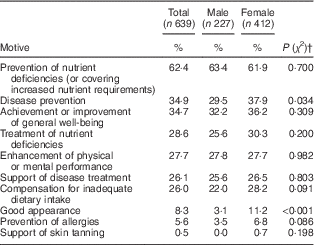
† P values from Pearson’s χ 2 analyses of the differences between male and female supplement users.
For the identification of motive-based subgroups of supplement users, a two-step approach was used. At first, to explore which motives were reported in combination, a principal component factor analysis was carried out. Two distinct factors were identified, which explained 57·9 % of the total variance (see online supplementary material, Supplemental Table 1). As indicated by strong positive factor loadings, factor 1 represented the combination of the motives ‘enhancement of physical or mental performance’, ‘achievement or improvement of general well-being’, ‘disease prevention’ and ‘compensation for inadequate dietary intake’. Respectively, factor 2 represented the combination of the motives ‘support of disease treatment’ and ‘treatment of nutrient deficiencies’. In addition, ‘prevention of nutrient deficiencies’ had a strong negative factor loading on factor 2, which means that this motive was extremely rarely reported in combination with the two motives associated with treatment.
Based on the standardised factor scores from the factor analysis, in the second step a cluster analysis was used to classify the supplement users into subgroups. The optimal number of clusters was determined using Ward’s hierarchical approach, which indicated that a three-cluster solution was the best fit for the data. Therefore, three subgroups of supplement users were generated using a k-means analysis (see online supplementary material, Supplemental Table 2). Cluster 1, which contained 324 (51·8 %) of the participants, was the largest subgroup. Clusters 2 and 3 had 166 (26·5 %) and 134 (21·7 %) participants, respectively. The clusters were labelled according to the principal motives of the cluster members. Cluster 1 was labelled ‘Prevention’, as the motive ‘prevention of nutrient deficiencies’ was reported by more than three-quarters of the cluster members. The other nine motives were each reported by less than a quarter of the cluster members (Table 3). Cluster 2 was labelled ‘Prevention and additional benefits’, as two preventive motives (‘prevention of nutrient deficiencies’ and ‘disease prevention’) and three motives concerning additional benefits (‘achievement or improvement of general well-being’, ‘enhancement of physical or mental performance’ and ‘compensation for inadequate dietary intake’) were each reported by more than half of the members. Cluster 3 was labelled ‘Treatment’, as ‘treatment of nutrient deficiencies’ and ‘support of disease treatment’ were each reported by about two-thirds of the cluster members, while the other eight motives were each reported by less than a quarter of the members. Many of the respondents in the ‘Prevention’ and ‘Treatment’ subgroups (58·0 and 47·8 %, respectively) reported only one motive for taking supplements. However, in the ‘Prevention and additional benefits’ subgroup, none of the respondents stated only one motive and 60·2 % reported five or more motives.
Motives for supplement use among motive-based clusters of supplement users; the German National Nutrition Monitoring (NEMONIT), survey year 2010/11

Prevalence rates above 50·0 % are indicated in bold font.
† P values from Pearson’s χ 2 analyses of the differences between the three clusters.
The sociodemographic, lifestyle and health characteristics of the groups of supplement users in comparison to non-users are described in Table 4. Supplement users were more likely to be women, older, spend more time on sports activities and to have a special diet like a vegetarian diet. Comparisons of the motive-based subgroups of supplement users and non-users showed that those who had a special diet were up to three times more likely to be in the ‘Prevention’ or ‘Prevention and additional benefits’ subgroup than the non-users group, while there was no difference between those in the ‘Treatment’ subgroup and non-users. Participants in the ‘Prevention and additional benefits’ subgroup also tended to spend more time on sports activities than non-users. In addition, in the ‘Prevention’ subgroup, a tendency to spend a larger amount of time on sports activities than that spent by non-users was observed (P=0·07). Furthermore, only the participants in the ‘Treatment’ subgroup were more likely to be older and to report a poor health status than non-users. Independent of the motive-based subgroups, women were more likely to be supplement users than non-users, whereas school education, the number of people living in the participant’s household, regular smoking and BMI were not associated with supplement use.
Sociodemographic, lifestyle and health characteristics of groups of supplement users compared with non-users (= base outcome), depicted as OR from logistic regression models; the German National Nutrition Monitoring (NEMONIT), survey year 2010/11Footnote †,Footnote ‡

Ref., reference category.
*P<0·05, **P<0·01, ***P<0·001.
† OR were estimated for the total group of supplement users using a binominal logistic regression model and for the clusters using a multinomial logistic regression model. All variables presented in the table were mutually adjusted for. The non-users of supplements (n 932) were used as base outcome in the regression models.
‡ Participants with missing values for any of the independent variables were excluded from the models (n 38).
Supplement users tended to have a higher total HEI-NVS II score (Table 5). The β coefficient of 1·77 indicates that the HEI-NVS II score was 1·77 higher in supplement users compared with non-users. Examining the nutrient intake from food alone without considering the contribution from supplements, the intake of dietary fibre, vitamin E, folate, vitamin B12, Mg and Fe was significantly higher in supplement users than in non-users. Similar findings were observed for the two prevention subgroups in comparison to non-users. The higher total HEI-NVS II scores were accompanied by a higher intake of dietary fibre, vitamin E, folate, Mg and Fe in the ‘Prevention’ subgroup, and a higher dietary intake of vitamin A and vitamin B12 in the ‘Prevention and additional benefits’ subgroup. However, no differences were observed regarding the total HEI-NVS II score or micronutrient intake between the ‘Treatment’ subgroup and non-users, even though energy intake was higher in the ‘Treatment’ subgroup.
Total HEI-NVS II score and energy and nutrient intake from food in supplement users compared with non-users (= reference group), depicted as β coefficients from general linear models conducted separately for total HEI-NVS II score and each dietary intake variable; the German National Nutrition Monitoring (NEMONIT), survey year 2010/11Footnote †,Footnote ‡

HEI-NVS II, Healthy Eating Index of the German National Nutrition Survey II; E%, percentage of energy; RE, retinol equivalents; TE, tocopherol equivalents; NE, niacin equivalents; FE, folate equivalents.
*P<0·05, **P<0·01.
† General linear models were performed separately for the total HEI-NVS II score and each dietary intake variable as dependent variables, adjusted for sex, age (years), time spent on sports activities (h/week) and self-reported health status (very good, good, moderate and poor), and with non-users of supplements (n 932) as reference group. A positive coefficient value of 1·43 for fibre intake, for example, indicates a 1·43 g higher daily intake of fibre in the group of supplement users compared with non-users.
‡ Participants with missing values for any of the independent variables were excluded from the models (n 38).
Regarding the frequency of supplement use, half of the supplement users reported taking supplements daily, while a tenth of the users reported taking supplements one or more times per year but less than monthly (Table 6). Comparisons of the frequency of use between each of the motive-based subgroups indicated no differences. With regard to the types of supplements used, overall, magnesium products were the most frequently used supplements, followed by multivitamin–mineral products and calcium products. This was also true for the ‘Prevention’ and ‘Prevention and additional benefits’ subgroups. However, in the ‘Treatment’ subgroup, calcium products were used more often than multivitamin–mineral products. Furthermore, the use of vitamin B products was more pronounced in the ‘Prevention’ and ‘Prevention and additional benefits’ subgroups than in the ‘Treatment’ subgroup, and the use of multivitamin–mineral products and vitamin C and zinc products was particularly high in the ‘Prevention and additional benefits’ subgroup.
Frequency and types of supplements used and number of supplemented vitamins and minerals in groups of supplement users; the German National Nutrition Monitoring (NEMONIT), survey year 2010/11

† P values from Pearson’s χ 2 analyses of the differences between the three clusters.
‡ Assessed via a computer-assisted telephone interview.
§ Assessed via two 24 h recall telephone interviews. The number of supplement users was lower according to the 24 h recalls compared with the number according to the computer-assisted telephone interview, as different time periods were assessed: two recall days and the previous 12 months, respectively.
Regarding the number of supplemented vitamins and minerals, the majority of supplement users took up to four vitamins and minerals during the two 24 h dietary recall periods. However, nearly a quarter supplemented with ten or more micronutrients. Regarding the motive-based subgroups, supplementation with ten or more micronutrients was more pronounced in the ‘Prevention and additional benefits’ subgroup than in the other two subgroups, with almost one-third of those in the ‘Prevention and additional benefits’ subgroup. In contrast, in the ‘Treatment’ subgroup, three-quarters of users supplemented with up to four micronutrients and only 14·1 % supplemented with ten or more micronutrients.
Discussion
The present analysis provided insights into the heterogeneity among adult vitamin and mineral supplement users in Germany differentiated according to their motives for supplement use. The aims were to examine the motives for supplement use, to identify subgroups with similar motives, and to characterise these subgroups in terms of sociodemographic, lifestyle, health and dietary factors and supplement use. The most frequently reported motives in the overall group of supplement users were related to prevention and well-being. Three motive-based subgroups of supplement users were identified: a ‘Prevention’ subgroup, which was characterised by the motivation to prevent nutrient deficiencies; a ‘Prevention and additional benefits’ subgroup, which was characterised by the desire to prevent health problems and to improve well-being and performance; and a ‘Treatment’ subgroup, which was characterised by the intention to treat nutrient deficiencies or diseases.
The two prevention subgroups were similar in many respects; for example, members of both subgroups had a more favourable food choice than non-users. One noticeable difference between the two prevention subgroups was that those seeking additional benefits supplemented with a greater number of micronutrients. The ‘Treatment’ subgroup differed from the two prevention subgroups in that its members tended to be older and have a lower self-reported health status than non-users, and they supplemented with a smaller number of micronutrients than those in the other subgroups. Women were more likely to be supplement users than men, independent of their motives.
The most frequently reported motives for taking supplements and the characteristics of the overall group of supplement users reported in the present study are in close agreement with those reported by previous studies. These previous studies found that the most commonly reported motives were improving or maintaining health and well-being( Reference Pouchieu, Andreeva and Peneau 7 – Reference Heinemann, Willers and Bitterlich 9 , Reference Bailey, Gahche and Miller 34 ). The majority of studies observed associations between supplement use and age, female gender, physical activity, having a special diet and making a healthy food choice( Reference Pouchieu, Andreeva and Peneau 7 , Reference Giammarioli, Boniglia and Carratu 13 , Reference Marques-Vidal, Pecoud and Hayoz 16 , Reference Beitz, Mensink and Hintzpeter 17 , Reference McNaughton, Mishra and Paul 35 , Reference Skeie, Braaten and Hjartaker 36 ). Although most studies also observed that supplement users tended to have a higher level of education, a lower BMI and be less likely to smoke compared with non-users( Reference Pouchieu, Andreeva and Peneau 7 , Reference Giammarioli, Boniglia and Carratu 13 – Reference Reinert, Rohrmann and Becker 15 , Reference Touvier, Kesse and Volatier 37 ), these associations were not observed in the present study. Regarding the relationship between health status and supplement use, contradictory results have been reported( Reference Giammarioli, Boniglia and Carratu 13 , Reference Rovira, Grau and Castaner 14 , Reference Knudsen, Rasmussen and Haraldsdóttir 38 , Reference Harrison, Holt and Pattison 39 ). These discrepancies may be due to differences in the study populations, the definitions of supplements and the assessment methods.
In extension to previous works, the present study demonstrates that supplement users do not form a homogeneous group. As described above, three subgroups of supplement users were differentiated by their motives, a ‘Prevention’ subgroup, a ‘Prevention and additional benefits’ subgroup and a ‘Treatment’ subgroup. To the best of our knowledge, this approach has not been used in previous studies. The characterisation of the motive-based subgroups showed that participants in the ‘Prevention’ and the ‘Prevention and additional benefits’ subgroups were very similar. They were more likely to have a special diet and to make a healthier food choice (demonstrated by their higher total HEI-NVS II scores) than non-users. They tended to have a higher dietary intake of several micronutrients compared with non-users, which indicates a higher consumption of nutrient-rich foods when taking into account the comparable amounts of energy intake between the prevention subgroups and non-users of supplements. Furthermore, they tended to spend more time on sports activities than non-users. Previous studies have shown that supplement users typically make a healthier food choice and have a healthier lifestyle than non-users( Reference Pouchieu, Andreeva and Peneau 7 , Reference Kofoed, Christensen and Dragsted 12 , Reference Reinert, Rohrmann and Becker 15 , Reference Mensink and Ströbel 40 ). The Swiss Food Panel (2010) also demonstrated that consuming a healthy diet was related to higher levels of health consciousness among supplement users( Reference van der Horst and Siegrist 41 ). These findings have led numerous researchers to support the ‘inverse supplement hypothesis’, which postulates that those who are the most likely use supplements are the least likely to need them( Reference Rovira, Grau and Castaner 14 , Reference Bailey, Gahche and Miller 34 , Reference Harrison, Holt and Pattison 39 , Reference Kirk, Woodhouse and Conner 42 ). The results from the present and previous studies indicate that many supplement users take a greater interest in nutritional issues than non-users and are generally more health conscious. It seems that supplement users are more likely to take an active role in their own health due to concerns about future health problems and that supplement use is just one effort among many to live a healthier lifestyle. The present results confirm the applicability of the inverse supplement hypothesis to the majority of supplement users.
Despite the many similarities between the two prevention subgroups, there were also some differences. Participants in the ‘Prevention and additional benefits’ subgroup supplemented with a greater number of vitamins and minerals than participants in the ‘Prevention’ subgroup. This is likely to be due to their preference for multivitamin–mineral products and their desire to achieve a wide range of objectives by taking supplements, as indicated by the fact that they tended to report a greater number of motives for taking supplements. Our results suggest that motives are associated with the types of supplements chosen and the range of micronutrients supplemented. Previous studies have also demonstrated that motives for taking supplements differ by the type of supplement used( Reference Bailey, Gahche and Miller 34 , Reference Neuhouser, Patterson and Levy 43 – Reference Barnes, Ball and Desbrow 45 ).
The third subgroup of supplement users, the ‘Treatment’ subgroup, differed greatly from the two prevention subgroups. Their supplement use was associated with being older and having a lower self-reported health status. In a nationally representative survey of US adults (2007–2011), older individuals were found to be more likely to use supplements for specific health indications compared with younger individuals( Reference Bailey, Gahche and Miller 34 ). In contrast to those in the two prevention subgroups, those in the ‘Treatment’ subgroup did not spend more time on sports activities compared with non-users nor did they make a healthier food choice; instead, they tended to have a higher adjusted energy intake compared with non-users. Similarly, the Swiss Food Panel (2010) demonstrated that one-third of supplement users were categorised as having an unhealthy diet and that these users tended to have lower levels of health consciousness and poorer perceived health( Reference van der Horst and Siegrist 41 ). These findings indicate that there is a subgroup of supplement users that makes less effort to maintain a healthy lifestyle and that the inverse supplement hypothesis does not hold true for this subgroup. The present analysis also revealed that those in the ‘Treatment’ subgroup supplemented with a small number of micronutrients, which indicates a more targeted usage of supplements. This finding and those related to the lower self-reported health status and their reported motives support the assumption that individuals in the ‘Treatment’ subgroup supplement with specific micronutrients as a result of therapeutic indications (although no information on clinical diagnoses was gathered).
The present study clearly demonstrates that the characteristics of supplement users vary depending on their motives. Some of the characteristics observed in the overall group of supplement users were not confirmed for some of the motive-based subgroups. Other characteristics of the motive-based subgroups were masked when examining all the supplement users together and they only became apparent in the subgroup analyses. The study also revealed a link between motives and the types of supplements chosen as well as the numbers of vitamins and minerals supplemented.
The present study has several limitations. As the NEMONIT participants were recruited from the NVS II, there was a selection bias towards older, female and more highly educated participants( Reference Gose, Krems and Heuer 21 ). As the results of exploratory cluster analyses are strongly dependent on the data structure and the samples on which the analyses are performed, small variations in the data may lead to different results. Consequently, further studies are needed to confirm the motive-based subgroups reported in the present study. Moreover, the cross-sectional nature of the study did not allow the causes behind the reported associations to be deduced.
The study also has several major strengths. First, it explored the motives for supplement use in the whole German population rather than in a specific target group (e.g. athletes). Second, to our knowledge, it is the first study to identify distinct motive-based subgroups among supplement users. In the past, supplement users have mainly been differentiated by the types of supplements used and the reasons for taking supplements were not taken into account. Third, by characterising supplement users according to their motives, the study provides a far more differentiated picture than that provided by previous studies. A comparison of all the supplement users with the non-users would not have captured all the critical differences between the motive-based subgroups of supplement users.
Conclusion
The present study demonstrated that supplement users are heterogeneous in regard to their motives to take supplements, their sociodemographic, lifestyle, health and dietary characteristics, and their patterns of supplement use. The results indicate that a large proportion of supplement users in Germany take supplements for reasons related to prevention due to concerns about future health problems and it seems that supplement use is just one effort among others to maintain their health. The findings of their healthier lifestyle and food choice as well as their higher intake of several micronutrients from food alone (without considering supplements) support the inverse supplement hypothesis for those in the prevention subgroups. Taking supplements for additional benefits besides prevention is accompanied by the supplementation of a more extensive range of micronutrients. Only a small group of supplement users take supplements for the treatment of health problems. These supplement users tend to be older, have a lower health status and take supplements in a more targeted way. Such users may have underlying health indications for supplement use and they may therefore be more likely to benefit from supplementation than users who take supplements for reasons related to prevention. However, the actual need for nutritional supplementation among the subgroups remains to be examined. Future research should continue to investigate the heterogeneity among supplement users. Differentiated information on the motives, characteristics and usage patterns of supplement users can provide insight for the development of public health interventions against uncontrolled use of supplements in Germany.
Acknowledgements
Acknowledgements: The authors thank Dr Alexander Roth from the Department of Physiology and Biochemistry of Nutrition, Max Rubner-Institut (present address: Department of Child and Adolescent Psychiatry and Psychotherapy, University of Zurich, Switzerland), for his statistical consulting. Financial support: NEMONIT was funded by the German Federal Ministry of Food and Agriculture, which had no role in the design, analysis or writing of this article. Conflict of interest: None. Authorship: A.F. developed the research question, analysed and interpreted the data, and drafted the manuscript. I.H. was involved in the data interpretation, manuscript preparation and critically reviewed the manuscript. T.H. was involved in the manuscript preparation and was responsible for the study design, data interpretation and final content. Ethics of human subject participation: The survey was approved by the German Federal Data Protection Office and participants provided informed written consent after being informed in detail about the study and that participation was voluntary.
Supplementary material
To view supplementary material for this article, please visit https://doi.org/10.1017/S1368980017001021


 Open access

