


The prevalence of obesity and diet-related non-communicable diseases is rising in Singapore. In adults, obesity prevalence rose from 6·9 % in 2004 to 10·8 % in 2010, while diabetes mellitus prevalence rose from 8·2 % in 2004 to 11·3 % in 2010( 1 ). Energy intakes are also higher than previously; the population mean daily intake rose from 9950 kJ (2378 kcal) in 2004 to 10 979 kJ (2624 kcal) in 2010( 2 ). Typical diets in Singapore are energy-dense. The average adult Singaporean consumes 10 979 kJ/d (2624 kcal/d), with little difference by ethnic group (Chinese 10 933 kJ/d (2613 kcal/d); Malay 11 175 kJ/d (2671 kcal/d); Indian 11 058 kJ/d (2643 kcal/d)). Eating out is popular, since it is convenient and relatively low-priced, with food courts and street food vendor centres being the most frequented venues. The food in these food courts is prepared by stall holders or at centralised kitchens and then transported to the retail outlets. Food courts primarily serve Chinese, Malay and Indian cuisine. Cuisines from around the region are also available, such as Korean, Japanese and Thai. More recently, many food courts have ‘Western’ food stalls, selling Western-type foods such as French fries and steak. Rice is the main staple in all three major ethnic groups, with noodles being popular in Chinese cuisine. Sweetened milk tea and coffee are popular. Frozen and refrigerated ready meals are not dominant parts of the Singaporean diet. In 2010, 60·1 % of Singapore residents reported usually eating out for lunch and/or dinner, compared with 47·8 % in 2004( 2 ). Concurrently, household food expenditure on food service has increased from 58 % in 2002/03 to 62 % in 2007/08( 3 ). Yet despite the ease of access to a wide variety of convenient, affordable foods, the number of Western fast-food outlets on the island is increasing( 4 ); a trend seen in other countries in Asia( Reference Cheng 5 – Reference Seubsman, Kelly and Yuthapornpinit 7 ).
‘Western’ fast food tends to be energy-dense, nutrient-poor items which can undermine appetite regulation and may lead to ‘passive over-consumption’( Reference Prentice and Jebb 8 ). Fast-food consumption has been associated with poorer diet quality, such as lower wholegrain intake( Reference Pereira, Kartashov and Ebbeling 9 ), lower fruit intake( Reference Pereira, Kartashov and Ebbeling 9 – Reference Schroder, Fito and Covas 11 ), lower vegetable intake( Reference Pereira, Kartashov and Ebbeling 9 , Reference Paeratakul, Ferdinand and Champagne 10 , Reference French, Harnack and Jeffery 12 ) and higher intakes of fat and saturated fat( Reference Paeratakul, Ferdinand and Champagne 10 ). Fast-food consumption has also been associated with weight status( Reference Schroder, Fito and Covas 11 , Reference Jeffery, Baxter and McGuire 13 , Reference Li, Dibley and Sibbritt 14 ) and weight gain( Reference Pereira, Kartashov and Ebbeling 9 , Reference French, Harnack and Jeffery 12 , Reference Bes-Rastrollo, Sanchez-Villegas and Gomez-Gracia 15 , Reference Duffey, Gordon-Larsen and Jacobs 16 ). In a recent analysis of a cohort of middle-aged and older Chinese Singaporeans, fast-food intake was associated with a strong risk of CHD mortality( Reference Odegaard, Woon and Yuan 17 ); in this cohort, 11 % of participants reported consuming fast food once per week or more.
International data suggest that the proportion of fast-food consumers may vary in different segments of the population, such as younger age groups. In the USA( Reference Paeratakul, Ferdinand and Champagne 10 , Reference Dave, An and Jeffery 18 ), Australia( Reference Mohr, Wilson and Dunn 19 ) and Spain( Reference Schroder, Fito and Covas 11 ) fast-food consumption is highest among younger age groups. It has also been shown to be more prevalent in higher-income groups in the USA( Reference Paeratakul, Ferdinand and Champagne 10 ), Australia( Reference Mohr, Wilson and Dunn 19 ) and South Africa( Reference Steyn, Labadarios and Nel 20 ).
The aim of the present study was to investigate the demographic profile of fast-food consumers in an ethnically diverse, nationally representative sample of Singapore residents and determine whether fast-food consumption frequency in adult Singapore residents is associated with diet quality and weight status.
Methods
Data from participants aged 18–69 years who took part in the 2010 National Nutrition Survey (NNS) were used in the present analysis. NNS is a national cross-sectional survey carried out every six years to monitor food and nutrient intake at the population level. NNS 2010 participants were a sub-sample of 1773 individuals aged 18–69 years from the 2010 National Health Survey (NHS)( 1 ) participants. Details on sampling, data collection and data quality control can be found in the NHS 2010 report( 1 ). For NNS 2010 the sampling selection matrix was stratified by gender, ethnicity and age. Malay and Indian participants were over-sampled to provide adequate numbers for statistical comparisons between ethnic groups. Interviewers underwent two days of classroom-based training before the commencement of fieldwork. Fieldwork was carried out at six locations across Singapore between March and June 2010. As part of NHS, participants’ heights and weights were measured using the WHO MONICA protocol( 21 ); this was converted to BMI and the Asian cut-off of ≥23 kg/m2 for identifying individuals at moderate and high risk of obesity-related diseases was used in analysis( 1 , 22 ). Waist and hip circumferences were also measured and Asian cut-offs for waist circumference and waist:hip ratio( 23 ) were used to define abdominal obesity. Demographic variables were also collected, including age, gender, ethnicity, monthly household income and highest educational attainment. Groupings for educational attainment were ‘primary or below’, ‘secondary/O/N-level’, ‘A-level/polytechnic’ and ‘degree/professional qualification’. ‘Primary’ corresponds with the age group 6–12 years. ‘Secondary/O/N-level’ are secondary- or high-school qualifications, corresponding with the age group 13–17 years. ‘A-level/polytechnic’ are further education qualifications which are beyond the level of secondary- or high-school qualifications, but prior to university degree-level qualifications, and usually correspond with the age group 17–19 years.
A locally validated FFQ( Reference Deurenberg-Yap, Li and Tan 24 ) containing 182 items was administered face to face. The FFQ was semi-quantitative, including predefined serving sizes. Participants were asked how often one of these standardised servings was consumed in a ‘typical’ month and could answer per day, per week or per month. Food vessels such as plates, bowls and glasses were shown to participants to help them visualise ‘one serving’. The nutrient database for analysing the FFQ contained the weight in grams of each of these standard servings. There was also a ‘rarely/never’ option for items consumed less frequently than once per month. As an introduction to the fast-food section of the FFQ, participants were told they would be asked about their fast-food consumption. The five fast-food items contained in the FFQ were: ‘burgers, with beef or chicken’, ‘burgers, fish’, ‘French fries’, ‘pizza’ and ‘mashed potato with gravy’. Mashed potato with gravy is typically served at a fried chicken fast-food outlet. The term ‘fast food’ was not defined to participants, so reporting is based on participant perception of whether the food outlet at which the food was purchased was indeed a fast-food outlet. Data were entered into FIND (Food Information and Nutrition Database), an in-house data-entry system, merged with the corresponding nutrient profile for each FFQ item, and aggregated to produce daily food group and nutrient intakes for each participant. Questions on dietary practices such as the type of oil used in cooking were asked prior to the FFQ; answers to these questions were routed to corresponding FFQ line items in order that more accurate nutrient profiles could be assigned. In this sense there were 397 possible FFQ items.
Fast-food consumers were defined as those who reported consuming any quantity of any of the five FFQ items in the fast-food section of the questionnaire in a typical month. Participants were split into groups based on their fast-food consumption frequency: non-consumer, regular consumer and occasional consumer. ‘Regular’ was defined as consuming at least one serving at least once per week; this cut-off was used in other studies( Reference Moore, Diez Roux and Nettleton 25 , Reference Scully, Dixon and Wakefield 26 ) and was thought to be a fitting definition for a ‘regular’ behaviour. ‘Occasional’ was defined as consuming any quantity of fast food less than once per week but more than once per month, while a ‘non-consumer’ was defined as someone reporting rarely/never consuming fast foods. While it could not be determined whether some of the fast-food items were consumed together, it was considered likely; therefore frequencies were not summed when assigning participants to these groups. Diet quality was assessed by comparing mean daily intakes and intakes per 4184 kJ (1000 kcal) of macronutrients and selected micronutrients between the groups. Intakes per 4184 kJ were examined to account for the correlation of energy intake with intake of other nutrients. The odds of meeting wholegrain, fruit and vegetable guidelines were assessed, and the odds of exceeding energy, total fat and saturated fat intake recommendations were also assessed. The Health Promotion Board of Singapore recommends at least one serving of wholegrain products, two servings of fruit and two servings of vegetables per day( 27 ). The RDA used for energy intake recommendations was based on equations derived from a sample including Asian subjects( Reference Henry 28 ). Fat and saturated fat are recommended to contribute no more than 30 % and 10 % of total energy intake, respectively( 27 ).
The study was conducted according to the guidelines laid down in the Declaration of Helsinki and all procedures involving human subjects were approved by the Health Promotion Board Medical and Dental Board Ethics Committee. Written informed consent was obtained from all subjects.
Statistical analyses
Weightings were applied to account for non-response, selection bias and population profile for key demographics. ANOVA with linear contrasts was used to test for trends in food and nutrient intakes across groups. Since food intake variables did not follow a normal distribution, data were first log-transformed; however, non-transformed data are presented herein for ease of interpretation. Logistic regression was used to determine the odds of meeting food-based recommendations for fruit, vegetable and wholegrain intakes, the odds of exceeding recommendations for energy, fat and saturated fat intakes, and the odds of having ‘at-risk’ BMI (BMI ≥ 23·0 kg/m2), raised waist circumference (≥90 cm males; ≥80 cm females) and raised waist:hip ratio (≥0·90 males; ≥0·85 females) for each of the fast-food consumption frequency groups. Age (as a continuous variable), gender, ethnicity, household income group and education level group were included in the model. Analysis was conducted in the statistical software package IBM SPSS Statistics Version 20.
Results
Of the 1773 invited participants aged 18–69 years, 1661 participants completed the FFQ. Subsequently thirty-four were excluded; fourteen due to ineligibility (e.g. belonging to an ethnic group other than Chinese, Malay or Indian, or being below 18 years of age at the time of fieldwork) and twenty due to extreme energy intakes (defined as <2092 or >29 288 kJ/d (<500 or >7000 kcal/d) for males and <2092 or >20 920 kJ/d (<500 or >5000 kcal/d) for females). Therefore 1627 participants were included in the comparison of food and nutrient intakes. One hundred and sixty-seven participants had not provided either income or education level data and were not included in logistic regression for the determination of odds ratios.
Demographics
Overall 63 % of participants reported consuming fast food within a typical month, and 20 % did so at least once per week. Frequency of consumption differed by age, gender, ethnicity, household income and education level (Table 1). Proportions reporting consumption (either regular or occasional) decreased with age from 89 % in the youngest age group (18–29 years) to 28 % in the oldest (60–69 years). Conversely, proportions reporting consumption increased with monthly household income from 49 % in the lowest income group to 81 % in the highest, and also increased with education level, from 29 % in the group with lowest education level to 79 % in the group with highest. However, regular consumption was highest in the middle education level group. Proportions reporting consumption were more similar by gender and ethnicity, but were highest in males (68 %) and Malays (73 %).
Sociodemographic and anthropometric variables by fast-food consumption status: Singapore residents (n 1627) aged 18–69 years, 2010 National Nutrition Survey
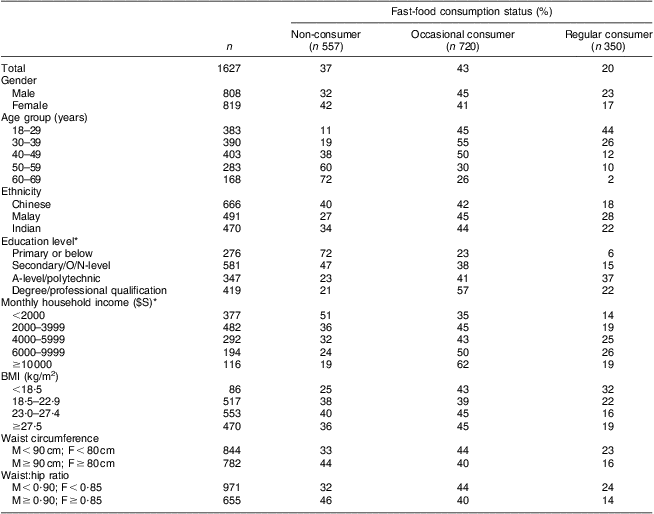
M, males; F, females.
*Some participants (n 167) did not provide education or income level data, so could not be included in this demographic breakdown.
Food and nutrient intakes
A positive association was observed between frequency of fast-food consumption and total food intake (Table 2). Compared with non-consumers of fast food, median food intake of occasional and regular fast-food consumers was higher by 189 g and 462 g, respectively (P < 0·001). This trend was not confined to a particular food group but was reflected in intakes of many food groups.
Weekly frequency of fast-food consumption and daily intake of foods (g/d) by fast-food consumption status: Singapore residents (n 1627) aged 18–69 years, 2010 National Nutrition Survey
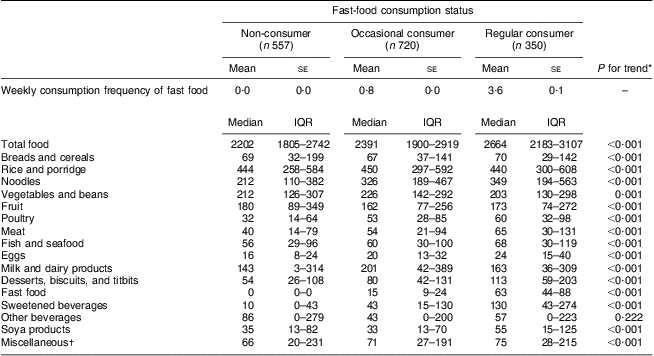
IQR, interquartile range.
*Variables were log-transformed before using linear contrasts to test for trends
†Miscellaneous includes items such as bread spreads, salad dressings and soup broths.
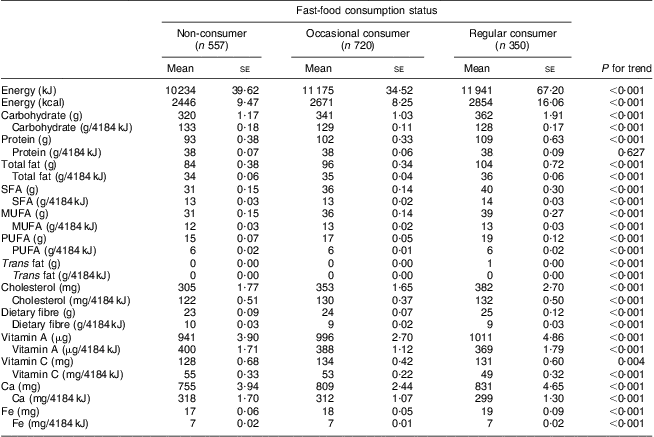
In regular fast-food consumers, mean daily energy intake was 13 100 kJ (3131 kcal), compared with 11 159 kJ (2667 kcal) in occasional consumers and 9636 kJ (2303 kcal) in non-consumers (Table 3). Intakes of energy, fat and saturated fat in comparison to dietary guidelines were positively associated with fast-food consumption frequency (P for trend < 0·001), and in regular consumers the percentage contribution of fast food to average daily intakes of these nutrients reached a daily equivalent of 6·1–7·9 % (Table 4). Carbohydrate and protein intakes per 4184 kJ were inversely associated with fast-food consumption frequency, whereas fat intake per 4184 kJ was positively associated with fast-food consumption frequency (P for trend < 0·001). Cholesterol intake per 4184 kJ was also positively associated with fast-food consumption frequency (P for trend < 0·001); there was a mean difference of 10·6 (95 % CI 8·8, 12·4) mg/4184 kJ between regular consumers of fast food and non-consumers. Intakes of micronutrients per 4184 kJ were inversely associated with frequency of fast-food consumption (P for trend < 0·001). Vitamin C intake per 4184 kJ was lower by 6·5 (95 % CI 5·4, 7·6) mg in regular fast-food consumers compared with non-consumers.
Daily intakes of nutrients (total and per 4184 kJ (1000 kcal)) by fast-food consumption status, adjusted for age, gender, ethnicity, education and income level: Singapore residents (n 1627) aged 18–69 years, 2010 National Nutrition Survey
Daily intakes of selected foods and nutrients in comparison with dietary recommendations, and percentage contribution of fast food to daily intakes of energy and selected nutrients, by fast-food consumption status: Singapore residents (n 1627) aged 18–69 years, 2010 National Nutrition Survey
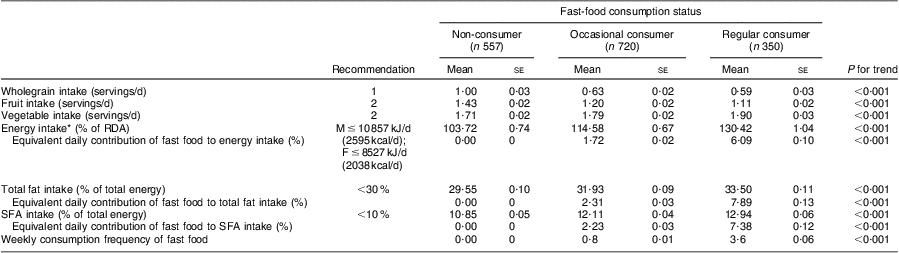
M, males; F, females.
*Mean energy intake recommendations; age- and gender-specific recommendations are used in all calculations.
Dietary guidelines
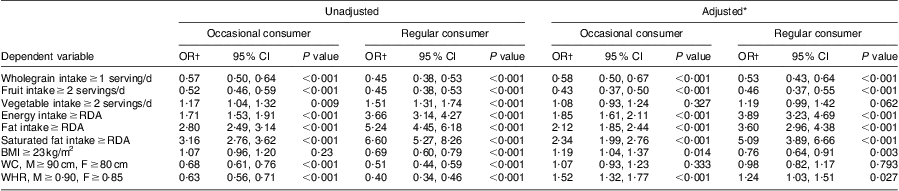
At the group level, the mean number of servings of fruit and vegetables consumed daily was below the recommended level for all three groups. At the group level, the mean number of servings of wholegrain consumed daily by non-consumers of fast food was at the recommended level (Table 4). Compared with non-consumers, both regular and occasional consumers of fast food were less likely to meet the wholegrain recommendation of at least one serving daily (Table 5). They were also less likely to consume two servings of fruit daily but were neither more nor less likely to meet the vegetable recommendation of two servings daily. Other factors such as education and income level were associated with meeting these food-based recommendations (data not shown).
The odds of regular and occasional fast-food consumers meeting or exceeding dietary intake recommendations, and of having an ‘at-risk’ BMI and abdominal obesity: Singapore residents (n 1460) aged 18–69 years, 2010 National Nutrition Survey
WC, waist circumference; M, males; F, females; WHR, waist:hip ratio.
*Age (as a continuous variable), gender, ethnicity, household income group and education level group were included as covariates.
†Non-consumer of fast food was the reference category.
Overall, fast-food consumption status was the strongest predictor of exceeding energy, fat and saturated fat intake recommendations (Table 5). The likelihood of exceeding these recommendations was higher in regular than in occasional consumers. The strongest predictor for exceeding energy intake recommendations was being a regular consumer of fast food (OR = 3·89, 95 % CI 3·23, 4·69). Of all dietary recommendations, regular consumers of fast food were most likely to exceed the saturated fat intake recommendation (OR = 5·09, 95 % CI 3·89, 6·66).
Weight status
Occasional consumers of fast food were more likely to have a BMI ≥ 23·0 kg/m2 than non-consumers (OR = 1·19, 95 % CI 1·04, 1·37), whereas regular consumers were slightly less likely (OR = 0·76, 95 % CI 0·64, 0·91) than non-consumers to have an ‘at-risk’ BMI (Table 5). Fast-food consumers were neither more nor less likely to have a raised waist circumference (≥90 cm males; ≥80 cm females) than non-consumers, but were more likely to have a raised waist:hip ratio above the WHO cut-off (≥0·90 males; ≥0·85 females). Overall, ethnicity was the strongest predictor of weight status (data not shown).
Discussion
The present analysis has shown that fast-food consumption frequency is associated with declining dietary quality and that one in five adult Singapore residents consumes fast food at least once per week. In line with other studies, the analysis showed that frequency of fast-food consumption is associated with exceeding recommendations for energy( Reference French, Harnack and Jeffery 12 , Reference Jeffery and French 29 ), fat and saturated fat intakes( Reference Paeratakul, Ferdinand and Champagne 10 ) and with not meeting recommendations for wholegrain( Reference Pereira, Kartashov and Ebbeling 9 ) and fruit consumption( Reference Pereira, Kartashov and Ebbeling 9 – Reference French, Harnack and Jeffery 12 ).
Fast-food consumption was most prevalent in young adults, high income level groups and middle education level groups. These demographic findings have also been observed overseas( Reference Paeratakul, Ferdinand and Champagne 10 , Reference Schroder, Fito and Covas 11 , Reference Dave, An and Jeffery 18 – Reference Steyn, Labadarios and Nel 20 , Reference Hamer and Mishra 30 ) and reflect the target market of the fast-food industry, especially in Asia( Reference Hawkes 31 ).
Although frequency of consumption is similar to that in the USA, the motivators of use may not be. In the USA, speed( Reference Rydell, Harnack and Oakes 32 ) and convenience( Reference Dave, An and Jeffery 18 ) have been identified as the strongest motivators for choosing fast food; in Asia other motivators have been identified, such as fast food's fashionable status, association with Western culture( Reference Cheng 5 ) and advertising( Reference Seubsman, Kelly and Yuthapornpinit 7 ). The industry has also identified that young consumers are attracted by a clean, comfortable environment in which they can socialise( 33 ). Thai adolescents were asked about reasons for fast-food consumption; the association with a modern lifestyle, the venue being desirable for social occasions and advertising emerged as important factors( Reference Seubsman, Kelly and Yuthapornpinit 7 ). In recent years McDonalds and KFC in Singapore have been among the top ten for media advertisement expenditure( Reference Hawkes 31 ) and in a recent market research survey McDonalds and KFC were ranked third and eighth respectively as favourite brands of Singaporean adolescents( 34 ).
In the present study frequency of fast-food consumption is associated with higher intakes of food in total, and this is across most food groups. This is in line with the findings of a local cohort study in older Chinese Singaporeans( Reference Odegaard, Woon and Yuan 17 ) which suggest that fast-food consumption is not a marker for an overall dietary pattern defined by food type. The higher intake of most foods suggests that fast-food consumption reflects wider eating behaviours and is not the sole cause of higher energy intakes. In fact, it has been suggested that excessive consumption of these fast foods is likely to reflect excessive consumption of other foods and excessive consumption in other lifestyle choices such as purchasing in shops and supermarkets( Reference Simmons, McKenzie and Eaton 35 ).
The present results show that occasional fast-food consumers are the most likely to have a raised BMI, whereas regular fast-food consumers are less likely. This is in contrast to the energy intake data, where the regular fast-food consumers have a higher energy intake than both occasional and non-consumers. One possible reason is that participants with higher BMI under-reported their intake of fast food compared with participants of normal body weight. Overweight and obese individuals have been shown to under-report their energy intake( Reference Rennie, Coward and Jebb 36 ), and under-report foods perceived as ‘unhealthy’( Reference Pryer, Vrijheid and Nichols 37 ), so it is possible that those with higher BMI have not reported as accurately as those with lower BMI. Conversely, it could be that overweight and obese participants avoid fast foods in an attempt to restrict energy intake. Since the data are cross-sectional it is not possible to infer the direction of any associations. Physical activity levels were not included in the analysis; energy RDA are based on a population-level average physical activity level of 1·61 based on data obtained in the NHS; however, activity levels varied by demographics( 1 ), so use of an average physical activity level may have some impact on the estimates of proportions exceeding energy recommendations, although the direction of this impact is unknown. Another possible explanation is that since weight gain occurs as a result of long-term positive energy balance, and most fast-food consumers were in the younger age groups, they have not yet been in positive energy balance long enough to exceed a BMI of 23·0 kg/m2. However fast-food consumers are more likely to have a raised waist:hip ratio than non-consumers. While waist:hip ratio can identify abdominal fatness, it may not identify overweight and obese individuals who have high hip circumferences. This suggests that fast-food consumption frequency may be associated with abdominal fatness, rather than overall overweight/obesity. Despite these findings on BMI, any group habitually exceeding energy intake recommendations is at risk of being in positive energy balance. Overweight and obesity are caused by energy imbalances over time, i.e. energy intake persistently exceeding energy expenditure, and weight gain over a 5- or 10-year period has been shown to occur at an imbalance of less than 418 kJ/d (100 kcal/d)( Reference Hill 38 ).
The present study has several strengths. First, the data are from an ethnically diverse, nationally representative sample. There are no other similar data in Singapore on habitual nutrient intakes at the population level. Second, diet is assessed using an FFQ, which has been suggested as the most appropriate tool for measuring habitual fast-food consumption( Reference Rosenheck 39 ). However, it must be noted that the FFQ remains a self-report tool prone to biases such as misreporting, the distribution of which is unknown in this sample, and the portion sizes assigned to each item are largely averages; this may have impacted the calculation of nutrient intakes. In general, FFQ have a tendency to overestimate dietary intake( Reference Bingham, Gill and Welch 40 ) and the cognitive challenge of an FFQ may be greater in individuals with a highly varied diet.
In the literature, there is variation in the definition of fast food. Should it refer to the food type, or the nature of the outlet it is purchased from? For example, should a salad from a burger outlet be classified as fast food? In the present study the definition was based on participant perception of fast food – if the interest is food type, this approach may have resulted in an underestimate of intake frequency, since there are a number of smaller local chains serving similar types of food which may not have been perceived as fast food because of the brand. Another factor which may have resulted in underestimation of fast-food intake is the limited number of items in the fast-food section of the FFQ. For example, fried chicken was not included in this list of fast-food items since the FFQ did not ask about the venue in which these foods were consumed, and fried chicken is a popular ethnic dish frequently consumed elsewhere.
In order to curb the impact of fast-food consumption, it has been suggested that energy (calorie) labelling of fast-food menus would affect consumer choices, and although this has been shown to increase awareness of energy content( Reference Dumanovsky, Huang and Bassett 41 ), there is little or no impact on subsequent energy intake( Reference Swartz, Braxton and Viera 42 ). However, a recent study has shown that 14–33 % of consumers invited to down-size their portions in a fast-food outlet at the point of purchase accepted this offer and were served more than 837 kJ (200 kcal) less than they initially ordered( Reference Schwartz, Riis and Elbel 43 ). Down-sizing did not impact the amount of leftover food, suggesting that energy intake was also reduced as a result. In the Asian setting, where fast-food outlets are viewed as a desirable place to socialise, ensuring that alternative venues, equally as clean and comfortable, are available has been suggested as an important measure( Reference Seubsman, Kelly and Yuthapornpinit 7 ), although it is likely that considerable social marketing would be required to shift trends away from established venues of choice towards healthier alternatives.
Conclusion
Fast-food consumption in Singapore is most prevalent in young adults, high income and middle education level groups. Frequent fast-food consumption is associated with unfavourable dietary and nutrient profiles and abdominal obesity, although associated with having an ‘at-risk’ BMI only in occasional consumers. Overconsumption of food, especially energy-dense, nutrient-poor foods, is not recommended. Measures are required to empower consumers to make healthier choices in all settings; this includes efforts from industry to control portion sizes and more heavily market items which are less energy-dense. The Health Promotion Board will continue with efforts to engage all sectors of the food service industry in order that Singaporeans have access to healthier food choices.
Acknowledgements
Sources of funding: This study was funded by the Health Promotion Board. Conflicts of interest: No author declares a conflict of interest. Authors’ contributions: C.W. prepared the manuscript and conducted analyses. Y.M. prepared the data set, provided input and reviewed the manuscript. A.C.B. provided input and reviewed the manuscript. M.F.C. was Principal Investigator for the survey and provided input and reviewed the manuscript. L.C. provided input and reviewed the manuscript. Acknowledgements: Anita Lai is acknowledged for planning and project managing the survey and creating the nutrient table required for FFQ analysis.



