


Findings from randomised clinical trials have demonstrated a lower risk of incident and recurrent CVD and their risk factors to be associated with a healthy dietary pattern, including the Mediterranean dietary pattern( Reference Estruch, Ros and Salas-Salvadó 1 , Reference Martinez-Gonzalez and Bes-Rastrollo 2 ). The Mediterranean dietary pattern is a broadly studied dietary pattern, featuring high intake of olive oil, olives, legumes, whole grains, vegetables, and fruit, moderate intake of fish, low-to-moderate intake of dairy products (primarily as cheese and yogurt), moderate intake of wine with meals, and low intake of red meat and processed meat( 3 ).
Previous studies have demonstrated inverse associations between the Mediterranean dietary pattern and mortality( Reference Trichopoulou, Costacou and Bamia 4 , Reference Sofi, Cesari and Abbate 5 ) and risk of several chronic conditions( Reference Martinez-Gonzalez, Bes-Rastrollo and Serra-Majem 6 ), including the metabolic syndrome (MetSyn), a cluster of several CVD risk factors. A recent meta-analysis of fifty studies has reported that the Mediterranean diet is associated with a lower risk of the MetSyn( Reference Kastorini, Milionis and Esposito 7 ); however, there was significant heterogeneity in this meta-analysis and the authors concluded that more prospective studies are required to investigate this association( Reference Kastorini, Milionis and Esposito 7 ). Of the previously published prospective studies reporting an inverse association between the Mediterranean diet score and incident MetSyn, three( Reference Tortosa, Bes-Rastrollo and Sanchez-Villegas 8 – Reference Kesse-Guyot, Ahluwalia and Lassale 10 ) were conducted in a Spanish population and in middle-aged US adults. Few studies examining the associations between dietary patterns and the MetSyn have used an ‘a priori’ Mediterranean diet score adapted to the US diet( Reference Rumawas, Meigs and Dwyer 9 ), especially in a racially diverse young adult population with 25 years of follow-up.
The purpose of the present study was to determine the longitudinal association of a modified Mediterranean diet (mMedDiet) score with the risk of developing the MetSyn among young black and white adults enrolled in the Coronary Artery Risk Development in Young Adults (CARDIA) study. We hypothesised that the mMedDiet score will be inversely associated with the risk of incident MetSyn over 25 years of follow-up.
Methods
Study population
The CARDIA study is a multi-centre population-based prospective study of CVD risk factor evolution in black and white men and women. Details of the CARDIA study design and participants have been reported previously( Reference Friedman, Cutter and Donahue 11 ). Briefly, 5115 participants aged 18–30 years were recruited at baseline (1985–6) from Chicago, IL; Minneapolis, MN; Birmingham, AL; and Oakland, CA. A total of seven clinical examinations were conducted at years 0 (baseline), 2, 5, 7, 10, 15, 20 and 25, with follow-up response rates of 91, 86, 81, 79, 72 and 72 %, respectively( Reference Chamberlain, Schreiner and Fornage 12 ). Informed consent was obtained from all participants during each examination, and the study was approved by institutional review committees at each site.
Participants were excluded from the present analyses for the following reasons: extreme energy intake at baseline, year 7 and year 20 ( < 3347 kJ/d ( < 800 kcal/d) and >33 472 kJ/d (>8000 kcal/d) for men and < 2510 kJ/d ( < 600 kcal/d) and >25 104 kJ/d (>6000 kcal/d) for women; n 88); pregnancy during the year 0 examination (n 7); prevalent MetSyn at baseline (defined below, n 110); lack of fasting blood sample at baseline (n 147). Measurements taken during pregnancy at years 7, 20 and 25 were treated as missing (n 65). Thus, the sample size for the analyses was 4713 (1030 black men, 1349 black women, 1110 white men and 1224 white women).
Data collection
Clinical measurements
The participants were asked to fast for at least 8 h and to avoid smoking and heavy physical activity 2 h before the examination. Blood was drawn using a standard protocol by venepuncture. Plasma lipid concentrations were determined at the Northwest Lipid Research Clinic Laboratory at the University of Washington (Seattle, WA, USA). In particular, LDL-containing lipoproteins were precipitated with dextran sulphate/magnesium chloride before determining HDL concentrations( Reference Warnick, Benderson and Albers 13 ). TAG concentrations were enzymatically measured, using a blank-corrected method( Reference Warnick 14 ). Fasting glucose concentrations were quantified using the hexokinase method and standard RIA( Reference Folsom, Jacobs and Wagenknecht 15 ). During each examination, three seated blood pressure measurements were obtained from the right arm using a Hawksley random-zero sphygmomanometer (WA Baum Company) following a 5 min rest period. The average of the second and third measurements was used in the analyses.
Waist circumference was measured to the nearest 0·5 cm with a tape in duplicate around the minimal abdominal girth. Body weight was measured to the nearest 0·2 kg with a calibrated balance beam scale. Height was measured with a vertical ruler to the nearest 0·5 cm. BMI was computed as weight in kg divided by height in m2.
The MetSyn is defined as having at least three of the following five criteria according to the National Cholesterol Education Program Adult Treatment Panel III (ATP III) guidelines( Reference Grundy, Cleeman and Daniels 16 ): waist circumference >88 cm for women or >102 cm for men; elevated systolic or diastolic blood pressure ≥ 130 or ≥ 85 mmHg, respectively, or use of antihypertensive medication; elevated fasting TAG concentrations ≥ 1·69 mmol/l ( ≥ 150 mg/dl); fasting glucose concentrations ≥ 6·11 mmol/l ( ≥ 110 mg/dl) or having diabetes; low HDL-cholesterol concentrations ( < 1·29 mmol/l; < 50 mg/dl).
Assessment of dietary intake
During examinations at years 0, 7 and 20, dietary intake was assessed using an interviewer-administered diet history questionnaire specifically developed for the CARDIA study( Reference McDonald, Van Horn and Slattery 17 ). The participants were asked to self-report dietary intake for the past 28 d, including the frequency of food consumption, amount of food consumed, food preparation methods, and type of fat used in food preparation or at the table. The validity and reliability of this diet history questionnaire were evaluated and described in detail( Reference Liu, Slattery and Jacobs 18 ). Reported foods and beverages were grouped into food groups according to the Nutrient Data Software for Research (NDSR; University of Minnesota, Minneapolis, MN, USA) food grouping scheme( 19 ). Daily intake of each food or beverage group was calculated as the sum of the number of servings consumed per day.
The Mediterranean diet pattern score according to Trichopoulou et al.( Reference Trichopoulou, Costacou and Bamia 4 ) was modified (mMedDiet) and includes twenty-two food and beverage groups plus a measure of healthy fat intake, i.e., monounsaturated fat+polyunsaturated fat divided by saturated fat (MUFA+PUFA:SFA ratio) with the median as the cut-off. Although Americans do not commonly consume olive oil, they do consume meat, which contributes MUFA to the diet, and vegetable oil, which contributes PUFA to the diet. Therefore, a MUFA+PUFA:SFA ratio was included in the score as an alternative to MUFA intake. Furthermore, present-day food and beverage habits commonly include consumption of coffee, sugar-sweetened beverages and sweet or salty snack foods as reported in both the Mediterranean and US populations( Reference Scholer 20 – Reference Piernas and Popkin 23 ); therefore, the original Mediterranean diet score was modified to include the majority of reported foods and beverages in the diet. Briefly, a value of 0 or 1 was assigned to each of the food and beverage groups and fat ratio. A value of 1 was assigned to individual intakes above the median and 0 to those below the median for foods assumed to be beneficial for health (whole-grain products, fruit, vegetables, fruit+vegetable juice, legumes, nuts, poultry, fish, eggs, coffee and tea, and the MUFA+PUFA:SFA ratio). A value of 1 was assigned to individual intakes below the median and 0 to those above the median for foods presumed to be harmful to health (red and processed meat, dairy products, fried vegetables, refined grains, sauces, snack foods, sugar-sweetened beverages and diet beverages). For alcohol, 1 was assigned to men who consumed between 10 and 50 g/d and to women who consumed between 5 and 25 g/d. Thus, the total mMedDiet score ranged from 0 (less healthy dietary pattern) to 19 (more healthy dietary pattern).
Other covariates
Data on demographic characteristics (age, sex, race, field centre and education at baseline) and lifestyle behaviours (physical activity and cigarette smoking) were obtained via standardised questionnaires across CARDIA examination visits. A validated CARDIA physical activity history questionnaire was administered( Reference Jacobs, Ainsworth and Hartman 24 ), while vitamin supplement use was queried as a separate question in the CARDIA diet history questionnaire( Reference McDonald, Van Horn and Slattery 17 ).
Statistical analyses
SAS version 9.2 software (SAS Institute) was used for all statistical analyses. Baseline characteristics are reported as means and standard deviations for continuous variables and as frequency (%) for categorical variables. The cumulative incidence of MetSyn components over 25 years was estimated. The first occurrence of the MetSyn at any of the years 2, 5, 7, 10, 15, 20 and 25 is defined as the 25-year incidence of the MetSyn.
The mMedDiet score was divided into five categories. The average number of food servings consumed from each food group was computed within categories of the mMedDiet score using linear regression, adjusting for sex, age, race, education, field centre and energy intake. Time-dependent Cox proportional-hazards regression analysis was used to evaluate associations for the 25-year incidence of the MetSyn, as well as for each MetSyn component, across the mMedDiet score categories and to assess whether these associations were modified by race or sex. Time at risk was defined as until first diagnosis or date of the last follow-up examination. Hazard ratios were computed for category 2 through category 5 of the mMedDiet score compared with category 1 (lowest intake) as the referent group, including interaction terms for race and sex. The cumulative average of dietary intakes, which increases the precision of dietary exposure, was used to create food groups and patterns( Reference Hu, Stampfer and Rimm 25 ). The time-varying dietary exposures were modelled as (1) between baseline (year 0) and year 7, dietary exposure was based on dietary intake as measured at year 0; (2) year 7 to year 20, dietary exposure was based on the average of dietary intakes as measured at years 0 and 7; and (3) year 20 to year 25, dietary exposure was based on dietary intake as measured at year 20. A total of four models were developed: model 1, adjusted for energy intake and demographic characteristics (age, race, sex, education and field centre); model 2, adjusted for all variables in model 1 plus current smoking status, physical activity and vitamin supplement use at baseline (as dietary intake may be related to other behaviours); model 3, adjusted for all variables in model 2 plus baseline BMI; model 4, adjusted for all variables in model 3 plus waist circumference at baseline (to determine whether the association between the MetSyn and mMedDiet score was independent of baseline adiposity). A linear trend across the mMedDiet score categories was tested with contrast statements using orthogonal polynomial coefficients. The proportional-hazards assumption was tested and found to be satisfied( Reference Hosmer, Lemeshow and May 26 ).
Results
The average number of food servings consumed daily from each food group across the five mMedDiet score categories is summarised in Table 1. Generally, more servings of whole grains, fruit, vegetables, nuts, fish and seafood were consumed by those with higher mMedDiet scores, while fewer servings of these foods were consumed by those with lower scores. Fewer servings of red and processed meat, dairy products, refined grains, snack foods, candy, sugar-sweetened beverages and diet beverages were consumed by those with higher mMedDiet scores than by those with the lowest scores. The proportion of men and women reporting moderate alcohol intake was 51·2 and 48·8 %, respectively. Nutrient intake was supportive of dietary intake: fibre, vitamin C and Mg intakes were greater, while saturated fat intake was lowest in those with the highest mMedDiet scores than in those with the lowest scores (Table 2).
Average number of daily servings* consumed from each food group across the modified Mediterranean diet (mMedDiet) score categories: CARDIA (Coronary Artery Risk Development in Young Adults) study, n 4713

* Adjusted for age, sex, race, education, field centre and energy intake.
† Whole-grain foods without snack foods.
‡ Refined-grain foods without snack foods.
§ Meat includes red and processed meats, liver and other organ meats.
∥ Snack foods include cake, cookies, pie, pastry, crackers, granola bars, snack chips and popcorn.
¶ Sugar group includes sugar, honey, syrup, jam and jelly, and sweet sauces.
** Moderate alcohol intake for men is 10–50 g/d and for women is 5–25 g/d = top median scored 1.
Daily nutrient intake* across the modified Mediterranean diet (mMedDiet) score categories at baseline: CARDIA (Coronary Artery Risk Development in Young Adults) study, n 4713
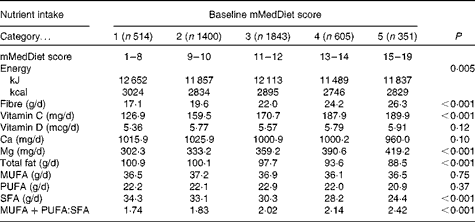
* Adjusted for age, sex, race, education, field centre and energy intake.
Baseline characteristics are given in Table 3. Compared with those in the lowest mMedDiet score category, a greater proportion of participants in the highest mMedDiet score category were older, white, more highly educated and more physically active. Furthermore, participants with higher diet scores had lower waist circumference and higher HDL-cholesterol concentrations. The other CVD risk factors were similar across the mMedDiet score categories.
Baseline characteristics* across the modified Mediterranean diet (mMedDiet) score categories among the CARDIA (Coronary Artery Risk Development in Young Adults) study participants, 1985–6, n 4713
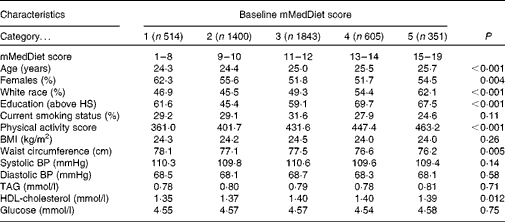
HS, high school; BP, blood pressure.
* Adjusted for age, sex, race, education, field centre and energy intake.
The 25-year cumulative incidence of MetSyn components (abdominal obesity, high TAG concentrations and low HDL-cholesterol concentrations) decreased with higher mMedDiet scores (except for elevated glucose concentrations, all P trend≤ 0·02) (Table 4). Over 59 % of the participants assigned to category 1 of the mMedDiet score were abdominally obese compared with 42 % who reported eating a healthier diet (category 5). Generally, there were fewer participants with adverse MetSyn components in the higher mMedDiet score categories than in the lowest category.
Incidence of metabolic syndrome components* over 25 years across the modified Mediterranean diet (mMedDiet) score categories: CARDIA (Coronary Artery Risk Development in Young Adults) study, 1985–2010, n 4713
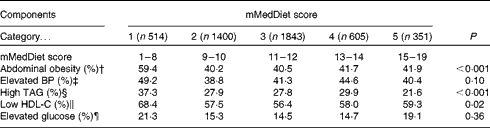
BP, blood pressure; HDL-C, HDL-cholesterol.
* Adjusted for age, sex, race, education, field centre and energy intake.
† Abdominal obesity is defined as waist circumference >88 cm for women and >102 cm for men.
‡ Elevated BP = systolic BP>130 mmHg or diastolic BP>85 mmHg or antihypertensive medication use.
§ High TAG = TAG concentrations ≥ 1·69 mmol/l ( ≥ 150 mg/dl).
∥ Low HDL-C = HDL-C concentrations < 1·29 mmol/l ( < 50 mg/dl).
¶ Elevated glucose = glucose concentrations >6·11 mmol/l (>110 mg/dl).
Furthermore, the incidence of the MetSyn was lower with increasing mMedDiet score. Over 25 years of follow-up, hazard ratios and 95 % CI for individuals with mMedDiet scores across categories 1–5 were 1·0; 0·94 (0·76, 1·15); 0·84 (0·68, 1·04); 0·73 (0·58, 0·92); and 0·72 (0·54, 0·96), respectively, adjusted for age, sex, race, education, field centre, energy intake, smoking status, physical activity and vitamin supplement use (Table 5; model 2, (P trend= 0·005)). Additional adjustment for BMI and waist circumference at baseline did not influence the observed associations (models 3 and 4; P trend= 0·004). The proportional-hazards assumption was met for the models (P>0·05). No effect modification by sex or race was observed for the association between the mMedDiet score and incident MetSyn (P>0·05).
Association between a modified Mediterranean diet (mMedDiet) score and risk of developing the metabolic syndrome (MetSyn) over 25 years among young adults enrolled in the CARDIA (Coronary Artery Risk Development in Young Adults) study (Hazard ratios (HR) and 95 % confidence intervals, n 4713)
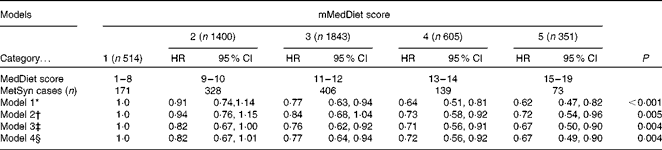
* Model 1 adjusted for age, sex, race, field centre, education and energy intake.
† Model 2 adjusted for all variables in model 1 plus current smoking status, physical activity and vitamin/mineral supplement use.
‡ Model 3 adjusted for all variables in model 2 plus BMI.
§ Model 4 adjusted for all variables in model 3 plus waist circumference at baseline.
Discussion
In this cohort of young adults, the 25-year incidence of the MetSyn was inversely associated with the adherence to a dietary pattern similar to the Mediterranean dietary pattern characterised by high intake of fruit, vegetables, nuts, fish and seafood, and whole grains, moderate intake of alcohol, and low intake of red and processed meat, dairy products and snack foods. Although the hallmark of the Mediterranean diet is olive oil, we included a MUFA+PUFA:SFA ratio in the mMedDiet score as Americans do not consume olive oil at amounts consumed by the Mediterranean population. Study participants with higher mMedDiet scores were older, had more years of education and were more physically active than those with lower scores. Although energy intake was similar across the mMedDiet score categories, participants with lower scores consumed over two daily servings of snack foods high in solid fat and/or added sugar, such as sugar-sweetened beverages, candy, cake, cookies, pie, doughnuts, crackers and chips, compared with those with higher mMedDiet scores who consumed about one daily serving of snack foods. These findings suggest that the food choices of study participants who adhered to a dietary pattern similar to a Mediterranean-type diet are consistent with food recommendations of the 2010 US Dietary Guidelines( 27 ).
Although numerous cross-sectional studies have been conducted examining the Mediterranean diet–MetSyn associations, findings have been inconsistent( Reference Kastorini, Milionis and Esposito 7 ). Our findings, based on 25 years of follow-up among Caucasian and African American adults aged 18–30 years at baseline, were consistent with those of three previously conducted prospective studies examining the same associations, but had fewer years of follow-up( Reference Tortosa, Bes-Rastrollo and Sanchez-Villegas 8 – Reference Kesse-Guyot, Ahluwalia and Lassale 10 ). In a study of 2563Spanish men and women, it was found that individuals adhering to a traditional Mediterranean dietary pattern were 80 % less likely to have the MetSyn over 6 years of follow-up compared with those who did not adhere to this dietary pattern( Reference Tortosa, Bes-Rastrollo and Sanchez-Villegas 8 ). However, one limitation of this study was that the components of the MetSyn were self-reported and not measured by trained observers. In a study of 3232 French men and women, three variations of the Mediterranean diet were found to be related to a lower risk of the MetSyn over 6 years of follow-up( Reference Kesse-Guyot, Ahluwalia and Lassale 10 ). Among 2730 middle-aged white adult men and women free of diabetes and enrolled in the Framingham Offspring Study, the 7-year incidence of the MetSyn was found to be 21 % lower among those in the highest quintile of a Mediterranean dietary pattern than in those in the lowest quintile( Reference Rumawas, Meigs and Dwyer 9 ). Despite differences in study design and methods, including the differing age and race composition of the study populations, dietary intake assessment instrument, data analysis approach and length of follow-up, the associations between the diverse Mediterranean dietary patterns and the MetSyn were consistent between the present study and the other three prospective studies( Reference Tortosa, Bes-Rastrollo and Sanchez-Villegas 8 – Reference Kesse-Guyot, Ahluwalia and Lassale 10 ).
The Mediterranean dietary pattern includes foods and beverages that are rich in a myriad of nutrients, including monounsaturated fat, antioxidants, fibre, Ca, Mg, and phyto-oestrogens, and other food components( Reference Kafatos, Verhagen and Moschandreas 28 ). The combined influence of these foods (nutrients and food components) has been shown to confer beneficial effects on the individual components of the MetSyn, including a better lipid profile( Reference Tzima, Pitsavos and Panagiotakos 29 ) and lower systolic and diastolic blood pressure( Reference Psaltopoulou, Naska and Orfanos 30 ), adiposity( Reference Babio, Bullo and Salas-Salvado 31 ) and insulin resistance( Reference Salas-Salvadó, Bullo and Babio 32 ). Evidence from studies of individual food intakes relative to MetSyn components may also explain underlying mechanisms. In addition, inverse associations have been reported between whole-grain foods and glucose concentrations, insulin resistance and incident diabetes( Reference McKeown, Meigs and Liu 33 ). Moderate alcohol intake has been reported to be associated with higher HDL-cholesterol concentrations( Reference de Silva Foster, Harper and Seidman 34 ). Blood pressure may also be beneficially modulated by intakes of fruit and vegetables that are rich in K, fibre and antioxidants( Reference Steffen, Kroenke and Yu 35 ), while intakes of plant protein and foods from plant sources are inversely associated with blood pressure( Reference Elliott, Stamler and Dyer 36 ) and elevated blood pressure( Reference Steffen, Kroenke and Yu 35 ). Meat intake has been reported to be positively associated with blood pressure and risk of hypertension in several populations( Reference Steffen, Kroenke and Yu 35 , Reference Miura, Greenland and Stamler 37 ); numerous studies have also shown positive associations between red and processed meat intake and adiposity( Reference Wang and Beydoun 38 ) and type 2 diabetes( Reference Aune, Ursin and Veierød 39 ). Finally, fish intake has been reported to be inversely associated with CVD risk factors and the MetSyn( Reference Baik, Abbott and Curb 40 , Reference Lara, Economou and Wallace 41 ) and its individual components (blood pressure, glucose homeostasis and lipids)( Reference Lara, Economou and Wallace 41 – Reference Panagiotakos, Zeimbekis and Boutziouka 43 ).
Olive oil, rich in MUFA and antioxidants, is a characteristic component of the Mediterranean diet and known for its beneficial effects on CVD risk factors, including lipids, blood pressure, and glucose homeostasis, as well as endothelial function, inflammation and oxidative stress( Reference Covas, Konstantinidou and Fito 44 ). However, Americans do not consume large quantities of olives or olive oil, but they do consume other vegetable oils that are high in PUFA, Thus, the MUFA+PUFA:SFA ratio was greater among adults with a higher mMedDiet score. Higher mMedDiet scores were related to higher intake of polyunsaturated fat and lower intake of monounsaturated fat and saturated fat.
Limitations of the present study include reliance on self-reported dietary intake, which may introduce considerable measurement error( Reference Neuhouser, Tinker and Shaw 45 ). However, it is likely that dietary intake was ranked correctly. Moreover, dietary intake was assessed by trained and certified interviewers at three visits using the validated CARDIA diet history questionnaire( Reference McDonald, Van Horn and Slattery 17 , Reference Liu, Slattery and Jacobs 18 ), ensuring greater precision of dietary intake compared with a single assessment at baseline( Reference Hu, Stampfer and Rimm 25 ). Finally, residual confounding may still exist even though statistical models were adjusted for numerous potential factors that may confound the association between dietary intake and incident MetSyn.
The present study has several strengths, including the prospective design and study population of African Americans and white men and women aged 18–30 years at baseline, long duration of follow-up, and multiple clinic examinations to characterise the components of the MetSyn and assess incident MetSyn. Finally, the CARDIA diet history questionnaire allowed for the collection of data on specific fat and oil consumption/use in food preparation and added to foods at the table – which was important to calculate the MUFA+PUFA:SFA ratio included in the mMedDiet score.
The findings of the present study with 25 years of follow-up suggest that the risk of incident MetSyn in young Caucasian and African American adults is lower when consuming a dietary pattern rich in fruit, vegetables, whole grains, nuts and fish. Promoting a Mediterranean dietary pattern is beneficial to cardiovascular health.
Acknowledgements
The authors thank the CARDIA study participants for their continued participation in the study.
The CARDIA study was supported by contracts N01-HC-48047, N01-HC-48048, N01-HC-48049, N01-HC-48050, N01-HC-95095, and N01-HC-45134 from the National Heart, Lung, and Blood Institute (NHLBI) at the National Institutes of Health. Drs Loria and Reis, who are employed by the NHLBI, contributed to the study design, conduct of the study, interpretation of the findings, and preparation of the manuscript.
The authors’ contributions are as follows: L. M. S. and L. V. H. designed the research; L. M. S., L. V. H. and M. L. D. wrote the first draft of the manuscript; L. M. S. supervised the statistical analyses; X. Z. performed the statistical analyses; L. M. S. had primary responsibility for the final content and is the guarantor of the manuscript, having had full access to the data in the study, and takes responsibility for the integrity of the data and the accuracy of the data analysis. All authors reviewed the manuscript, participated in the interpretation of the study results and approved the manuscript.
None of the authors has any conflicts of interest to declare.



