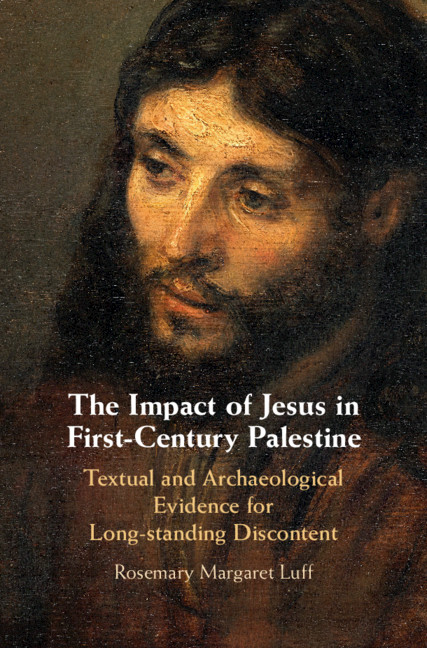

Although the archaeological evidence indicates a prosperous and thriving Galilee in the early first century CE, the Gospel texts suggest a society under stress, where the rich were flourishing at the expense of the poor. In this multi-disciplinary study, Rosemary Margaret Luff contributes to current debates concerning the pressures on early first-century Palestinian Jews, particularly with reference to socio-economic and religious issues. She examines Jesus within his Jewish environment in order to understand why he rose to prominence when he did, and what motivated him to persevere with his mission. Luff's study includes six carefully-constructed essays that examine Early Christian texts against the wider background of late Second Temple Judaic literature, together with the material evidence of Galilee and Judea (Jerusalem). Synthesizing a wide range of archaeological and textual data for the first time, she offers new insights into the depth of social discontent and its role in the rise of Christianity.
‘The book is especially helpful in recording archaeological evidence that counters reconstructions of Jesus’s Galilee based on sociological modeling.’
A.-J. Levine Source: Choice
'… it is by far the best study of what bones and other archaeological evidence for human and animal disease can tell us about the early 1st-century context of the Gospels yet published. The book deserves to be widely read by archaeologists, ancient historians and religious studies scholars for this alone, let alone its other contributions. However, the principal feature of the volume is that it contributes to situating the study of the early 1st-century 'Holy Land' firmly within the mainstream archaeology of the Roman provinces.'
Ken Dark Source: Journal of Anglo-Israel Archaeological Society
Loading metrics...
* Views captured on Cambridge Core between #date#. This data will be updated every 24 hours.
Usage data cannot currently be displayed.
This section outlines the accessibility features of this content - including support for screen readers, full keyboard navigation and high-contrast display options. This may not be relevant for you.
Accessibility compliance for the HTML of this book is currently unknown and may be updated in the future.
