



Standard weight loss interventions focus on creating an energy deficit by energy intake restriction and increasing physical activity. Although body weight is ultimately determined by total energy intake and total energy expenditure, recent hypotheses suggest that not only what and how much one eats but when one eats plays a role in weight regulation( Reference Johnston 1 – Reference Tahara and Shibata 3 ). As such, the circadian system has emerged as a growing area of interest in obesity research.
Circadian rhythms are centrally regulated by the ‘master’ oscillator, located within the suprachiasmatic nuclei (SCN) of the anterior hypothalamus( Reference Johnston 4 ), and coordinate processes including sleep/wake rhythms, core body temperature and melatonin secretion( Reference Albrecht 5 ). The SCN also synchronises downstream, ‘peripheral’ clocks distributed throughout the body’s various tissues( Reference Damiola, Le Minli and Preitner 6 , Reference Fliers, la Fleur and Kalsbeek 7 ), which regulate the circadian expression and activity of enzymes and hormones involved in nutritional physiology and metabolism( Reference Fliers, la Fleur and Kalsbeek 7 , Reference Froy 8 ).
Although evidence suggests that nocturnal eating can result in metabolic disruption( Reference Holmbäck, Forslund and Lowden 9 – Reference Knutsson, Karlsson and Ornkloo 11 ), so far there is no recommendation for the optimal distribution of daily energy intake. Over time, there has been a reduction in daytime energy intake with a commensurate increase in mid-afternoon and evening intakes( Reference Almoosawi, Winter and Prynne 12 ). As foods and beverages consumed in the evening tend to be more energy dense( Reference Kant and Graubard 13 ), dinner is typically the most energy-dense meal of the day( 14 ). Large evening intake may be driven by several factors. First, time constraints imposed by regularised work hours during the day means that there is more time for meal preparation and eating in the evening. Second, during work hours, individuals may find that they can attenuate or ignore their hunger sensations as their attention is held by other activities – that is work tasks( Reference Murray and Vickers 15 ). Heightened evening subjective hunger may also drive larger evening intake, with one study observing a peak in the evening (around 20.00 hours) and trough in the morning (around 08.00 hours) among non-obese adults( Reference Scheer, Morris and Shea 16 ). However, there is little complementary literature to support this observation( Reference Holmstrup, Fairchild and Keslacy 17 ). It is possible that habitual intake may entrain hunger such that anticipation of food at certain times of day elicits an appetitive response( Reference Frecka and Mattes 18 ). Consuming large evening meals habitually may entrain increased evening hunger. Further, after a large evening meal, the individual may not be in a totally post-absorptive state the following morning, resulting in reduced breakfast intake and further perpetuation of the eating pattern. Last, the notion that dinner ought to be the most substantial meal of the day is a sociocultural norm that persists in ‘Anglo’ culture.
Research also suggests that energy metabolism is less efficient during the evening. It has been observed that morning-diet-induced thermogenesis (DIT) is significantly higher than afternoon( Reference Romon, Edme and Boulenguez 19 ) and night DIT( Reference Bo, Fadda and Castiglione 20 ), which may be due to reduced nocturnal insulin sensitivity( Reference Ravussin, Acheson and Vernet 21 ). Moreover, fat oxidation is lower in the evening compared with that in the morning( Reference Hibi, Masumoto and Naito 22 , Reference Gluck, Venti and Salbe 23 ). These physiological mechanisms coupled with factors that drive greater evening consumption may play a role in obesity aetiology.
Previous studies( Reference Forslund, Lindroos and Sjostrom 24 , Reference Reeves, Huber and Smith 25 ) have found that individuals with obesity consume a greater proportion of daily energy intake in the evening. A recent publication( Reference Almoosawi, Vingeliene and Karagounis 26 ) reviewed observational studies examining global trends in time-of-day energy intake and its association with obesity. The ten full-text articles included reported on studies in adults (n 5), children (n 4) or both (n 1) and the association between time-of-day energy intake and obesity. They concluded that there is limited evidence of this association. Despite this, the idea of eating ‘breakfast like a king’ and ‘dinner like a pauper’ remains a commonly held belief.
The current review will build on the previous review by also including and examining clinical trials. Its aims were (1) to review the association between large evening energy intake and weight/BMI in adults and (2) to determine the effectiveness of reducing the evening energy intake for weight loss.
Methods
Inclusion and exclusion criteria for observational studies
Observational study designs included in this review were cohort studies, cross-sectional studies and case–control studies. Only original research studies were included; review articles, case studies, surveys, abstracts and conference papers were excluded but the references of review articles were searched for further studies. In the instance in which cross-sectional data from a cohort study were reviewed, data from the most recent time point were used.
To be included in the review, publications must have studied adults (≥18 years of age). Children (<18 years of age) were excluded as their dietary patterns are heavily influenced by parental eating behaviours. The variable of interest was the proportion of daily energy consumed in the ‘evening’. Included studies needed to quantify the proportion of daily energy intake consumed in the evening period – for example quantiles, proportion of total daily energy intake (TDEI) or the published data allowed for its calculation. Outcome measures of interest were weight, BMI or a measure of association between end-of-day energy intake and weight – that is OR, correlation coefficient.
As there is no standard definition of ‘evening’ intake, a range of definitions deemed appropriate by the reviewers were used and these are presented in Table 1. There was no limit placed on the year of publication. Studies were excluded if participants did shift work. Participants with night eating syndrome (NES) were also excluded as dietary behaviours of NES patients were considered beyond the scope of ‘normal’ eating. The criteria for NES according to the Diagnostic and Statistical Manual of Mental Disorders 5 (DSM-5) is defined as ‘…eating after awakening from sleep or by excessive food consumption after the evening meal…The night eating causes significant distress and/or impairment in functioning. The disordered pattern of eating is not better explained by binge-eating disorder or another mental disorder, including substance use, and is not attributable to another medical disorder or to an effect of medication’. Exclusion of NES participants was intended to enhance the generalisability of results. Studies investigating Ramadan fasting (nil by mouth from dawn to sunset) were also excluded.
Characteristics of observational studiesFootnote * (Mean values and standard deviations; mean values with their standard errors; odds ratios and 95 % confidence intervals)

TDEI, total daily energy intake; NHANES, National Health and Nutrition Examination Survey; CFSII, Continuing Survey of Food Intakes by Individuals; EI, energy intake.
* Time is 24 h (00.00 hours).
Inclusion and exclusion criteria for meta-analysis of observational studies
In addition to the above criteria, observational studies included in the meta-analysis needed to report BMI and standard deviations of groups with high and low evening energy intake.
Inclusion and exclusion criteria for clinical trials
Only original research studies were included; review articles, abstracts and conference papers were excluded but the references of review articles were searched for further studies. To be included in the review, trials must have met the following criteria:
-
(1) the trial should have studied adults (≥18 years of age);
-
(2) it should be a randomised or a non-randomised clinical trial;
-
(3) it should have compared at least two treatment arms whereby the distribution of circadian energy intake was the manipulated variable;
-
(4) it should have daily energy prescriptions that were isoenergetic between treatment arms or standardised on the basis of participants’ estimated energy requirements;
-
(5) it should have weight change as an outcome measure; and
-
(6) it did not include participants who were shift workers, those with NES or used a forced desynchrony protocol.
Inclusion and exclusion criteria for meta-analysis of clinical trials
In addition to the above criteria, trials included in the meta-analysis had to use an intervention of a hypoenergtic diet for at least 4 weeks, as this was considered sufficient time to observe weight loss. The participants, intervention, comparator and outcomes for trials included in the meta-analysis are given in Table 2.
PICO clinical question for clinical trials to be included in the meta-analysis
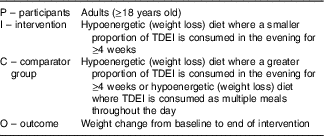
TDEI, total daily energy intake.
Search strategy
Databases included in this search were MEDLINE, PubMed, Cinahl, Web of Science, Cochrane Library of Clinical Trials, EMBASE and SCOPUS from their inception to May 2016. Both MeSH and free text search terms were used. All languages were included and papers in languages other than English were translated. Limits were set so that only studies involving humans and adults were included. Reference lists of all relevant articles, as well as review articles, were searched to ensure that all relevant studies were found. The following example shows the specific key words (or MeSH terms) used for the search of MEDLINE: anag* or balanc* or reduc* or chang*)).tw. OR obesity/ OR body weight/ Or body mass index/ OR weight gain/ OR weight reduction/ OR weight loss.tw OR energy metabolism/ OR overweight/ Or body composition/ OR fat free adj2 free.tw OR adiposity/ OR waist circumference/ OR weight reduction programs/.
The example search strategy for MEDLINE (above) was adapted to suit each database. The full search strategy used for MEDLINE is available in the online Supplementary Material.
Data extraction and analysis
Two authors (M. F. and C. D. M.) screened the titles and abstracts of the studies identified in the above search independently. The full texts of potentially relevant studies were retrieved and were screened by the same authors independently (M. F. and C. D. M.) according to the inclusion and exclusion criteria. Additional articles from other sources known to authors were also included in this review if appropriate – that is from conference attendance and if full texts were available. Authors were contacted if further information was required.
M. F. (author) extracted the following data from each observational study, as summarised in Table 1: author, year, sample size, participant characteristics (sex, age, BMI), exposure, comparison and outcome. The same author extracted the following data from each clinical trial: author, year, sample size, participant characteristics, description of intervention and weight change (Table 3). All data extraction was checked by an additional author (C. D. M.).
Characteristics of clinical trialsFootnote * (Mean values and standard deviations; mean values with their standard errors)

IBW, ideal body weight; BF, breakfast; L, lunch; D, dinner; RBW, relative body weight.
* If mean age and mean BMI were not provided in the article, it was manually calculated by the first author (M. F.). Time is 24 h (00.00 hours).
For consistency, energy expressed as kcal was converted to kJ (1 kcal=4·18 kJ) and time is expressed in a 24-h format (00.00 hours). Articles published in languages other than English were translated by native, foreign-language speakers if speakers were accessible. Articles that were unable to be translated were considered ineligible for inclusion( Reference Sortland, Gjerlaug and Harviken 35 – Reference Koliaki and Katsilambros 39 ). These articles were published in Norwegian( Reference Sortland, Gjerlaug and Harviken 35 ), Czech( Reference Rath and Petrasek 36 ), Japanese( Reference Soga, Shirai and Ijichi 37 , Reference Nishino, Nomura and Takeshita 38 ) and Greek( Reference Koliaki and Katsilambros 39 ).
Where standard deviation was not provided, it was calculated from standard errors. When trials did not report weight change, this was calculated from baseline and end of trial weight using a standard formula, which imputes a correlation for the baseline and follow-up weights. This method has been used in two previously published trials( Reference Jebb, Ahern and Olson 40 , Reference Jolly, Lewis and Beach 41 ).
Risk of bias
Risk of bias was assessed by two review authors (M. F. and C. D. M.) independently by the use of Cochrane methodology( 42 ). The risk of selection bias, detection bias, attrition bias and reporting bias in each study was classified as low, high or unclear. The risk of performance bias was not assessed as blinding of participants and study personnel to the treatment allocation was not feasible because of the nature of the intervention. Assessment of bias is detailed in Table 4.
Assessment of the risk of bias using Cochrane methodology

Analysis strategy
As outcomes varied widely between observational studies and clinical trials, these two categories of studies were analysed separately. Meta-analyses were conducted for eligible clinical trials using Review Manager 5.3 statistical analysis package( 43 ). Random effects models were used as the diversity of intervention components, and control conditions meant that treatment effects were expected to differ. A pooled mean difference was calculated for the weight change at the end of intervention and I 2 was reported to quantify heterogeneity. If standard deviation was not provided by the authors, it was calculated using raw data or converted from standard errors.
Results
Search results
From the seven databases searched, a total of 18 096 search results were retrieved, which reduced to 11 014 publications once duplicates were removed. Following screening of titles and abstracts, 121 full texts were assessed for inclusion in the review, including one publication sourced from a reference list. A total of 102 texts did not meet the review eligibility criteria. A total of twenty texts including one previously known to authors were included in this systematic review. A flow diagram of the publication selection process is detailed in Fig. 1.
Flow diagram for the process of publication selection, inclusion and exclusion from this systematic review and meta-analysis.

Study characteristics of observational studies
Ten observational trials( Reference Kant and Graubard 13 , Reference Aljuraiban, Chan and Griep 44 – Reference Baron, Reid and Kern 52 ) were included in the review and comprised nine cross-sectional studies( Reference Kant and Graubard 13 , Reference Aljuraiban, Chan and Griep 44 – Reference Summerbell, Moody and Shanks 49 , Reference Kant, Ballard-Barbash and Schatzkin 51 , Reference Baron, Reid and Kern 52 ) and one cohort study( Reference Bo, Musso and Beccuti 50 ). All study characteristics of observational studies are given in Table 1.
The sample size ranged from 52 to 39 094 participants (median=980), and one study( Reference Kant, Ballard-Barbash and Schatzkin 51 ) examined women only. All other studies included males and females, with the percentage of female participants ranging from 48 to 68 %. Age and BMI of participants were expressed in a variety of ways, making it difficult to synthesise results. Studies included both healthy-weight participants and those with obesity.
Most studies reported on the proportion of TDEI eaten in the evening defined as quantiles( Reference Almoosawi, Prynne and Hardy 45 , Reference Summerbell, Moody and Shanks 49 – Reference Kant, Ballard-Barbash and Schatzkin 51 ) or percentage TDEI( Reference Kant and Graubard 13 , Reference Morse, Ciechanowski and Katon 46 , Reference Striegel-Moore, Franko and Thompson 47 ). One study reported on the ratio between morning and evening energy intake( Reference Aljuraiban, Chan and Griep 44 ) and another( Reference Baron, Reid and Kern 52 ) defined evening energy intake as ‘energy content after 18.00 hours’ although numerical data were not provided. Five studies( Reference Aljuraiban, Chan and Griep 44 , Reference Almoosawi, Prynne and Hardy 45 , Reference Summerbell, Moody and Shanks 49 – Reference Kant, Ballard-Barbash and Schatzkin 51 ) reported BMI, one study( Reference Striegel-Moore, Franko and Thompson 47 ) reported on difference in BMI between groups, two studies( Reference Morse, Ciechanowski and Katon 46 , Reference Wang, Patterson and Ang 48 ) reported on the odds of being overweight (BMI≥25 kg/m2) or obese (BMI≥30 kg/m2) and two studies( Reference Kant and Graubard 13 , Reference Baron, Reid and Kern 52 ) reported on the correlation with obesity (BMI>30 kg/m2).
Two publications that claimed to investigate NES patients were included, as these participants did not meet the DSM-5 criteria. Diagnosis in these studies was only based on the proportion of TDEI consumed after suppertime( Reference Morse, Ciechanowski and Katon 46 ) and from 19.00 to 04.59 hours the following morning( Reference Striegel-Moore, Franko and Thompson 47 ).
Study characteristics of clinical trials
Eight clinical trials( Reference Caviezel, Cattaneo and Marini 27 – Reference Sensi and Capani 34 ) with sample size ranging from 10 193 participants (mean=62) were included in the review. Four trials( Reference Jakubowicz, Barnea and Wainstein 30 – Reference Madjd, Taylor and Delavari 33 ) included women only and one trial( Reference Sensi and Capani 34 ) did not specify the sex of participants. All other studies included both males and females, with the percentage of female participants ranging from 60 to 90 %. Mean baseline BMI ranged from 28·0 to 35·8 kg/m2. One trial( Reference Caviezel, Cattaneo and Marini 27 ) reported baseline weight as percentage relative body weight (%RBW), with mean baseline weight being 159 (sd 9) % RBW. All clinical trial characteristics are shown in Table 3.
Intervention characteristics of clinical trials
The duration of interventions ranged from 18 d to 16 weeks. Only one study( Reference Jakubowicz, Froy and Wainstein 29 ) had a follow-up period, and participants were followed up 16 weeks post intervention. All interventions prescribed a hypoenergetic diet to promote weight loss. Dietary prescriptions varied, with two trials standardising recommended energy intake based on predictive equations (Harris–Benedict)( Reference Keim, Van Loan and Horn 31 ) or actigraphy( Reference Lombardo, Bellia and Padua 32 ). All other interventions( Reference Caviezel, Cattaneo and Marini 27 – Reference Jakubowicz, Barnea and Wainstein 30 , Reference Sensi and Capani 34 , Reference Del Ponte, Angelucci and Capani 53 ) prescribed daily energy targets ranging from 2508 to 6688 kJ/d (600–1600 kcal/d). Energy prescriptions for these trials were isoenergetic between treatment arms.
The majority of interventions manipulated the distribution of TDEI so that a greater proportion was either consumed at the breakfast or dinner meal( Reference Jakubowicz, Froy and Wainstein 29 – Reference Madjd, Taylor and Delavari 33 ). Two trials compared single meals consumed during the day or in the evening( Reference Del Ponte, Angelucci and Capani 28 , Reference Sensi and Capani 34 ), and another trial( Reference Caviezel, Cattaneo and Marini 27 ) included a third group who consumed daily energy intake at three meals throughout the day.
Dietary compliance was assessed through self-reported written food records verified by a dietitian( Reference Jakubowicz, Barnea and Wainstein 30 ), a feedback form( Reference Madjd, Taylor and Delavari 33 ) or a food checklist( Reference Jakubowicz, Froy and Wainstein 29 ). One study assessed dietary reporting accuracy by comparing self-reported intake with estimations of BMR( Reference Lombardo, Bellia and Padua 32 ). In a number of studies( Reference Caviezel, Cattaneo and Marini 27 , Reference Del Ponte, Angelucci and Capani 28 , Reference Keim, Van Loan and Horn 31 , Reference Sensi and Capani 34 ), participants were housed in a metabolic suite for the duration of the trial and were provided all foods and beverages by study personnel. Self-reported dietary compliance was not assessed for these trials.
Synthesis of results for observational studies
Four( Reference Morse, Ciechanowski and Katon 46 , Reference Wang, Patterson and Ang 48 , Reference Bo, Musso and Beccuti 50 , Reference Baron, Reid and Kern 52 ) of the ten studies showed an association between a large evening intake and greater weight, BMI or odds of being overweight and/or obese. However, a few caveats were noted. Wang et al.( Reference Wang, Patterson and Ang 48 ) observed that ‘larger’ evening intake defined as ≥33 % of total energy intake was associated with increased odds of being overweight or obese (OR 2·00; 95 % CI1·03, 3·89) among the whole sample population after adjusting for age, sex, race, education, TDEI and physical activity level. However, this association was not significant when analysis was restricted to ‘true reporters’ only – that is those participants whose self-reported energy intake was within ±25 % of total energy expenditure as assessed by the doubly labelled water method (OR 2·10; 95 % CI 0·60, 7·29).
Morse et al.( Reference Morse, Ciechanowski and Katon 46 ) found that >25 % TDEI consumed after ‘suppertime’ was associated with increased odds (OR 2·6; 95 % CI 1·5, 4·5) of being obese (BMI>30 kg/m2) after controlling for age, sex, race and major depression status. Similarly, a study by Bo et al.( Reference Bo, Musso and Beccuti 50 ) found that individuals ranked in the highest tertile of evening energy intake (≥48 % TDEI) had a higher mean BMI than those in the lowest tertile (<33 % TDEI) (P<0·01). These results did not significantly change after excluding under-reporters (those with a ratio of <0·88 of estimated energy intake:predicted BMR based on the Schofield equation). Baron et al.( Reference Baron, Reid and Kern 52 ) investigated the correlation between sleep timing and energy intake and BMI. They found that energy intake after 20.00 hours were correlated with BMI (0·37, P<0·01) after adjusting for sleep timing.
Five studies( Reference Kant and Graubard 13 , Reference Aljuraiban, Chan and Griep 44 , Reference Almoosawi, Prynne and Hardy 45 , Reference Summerbell, Moody and Shanks 49 , Reference Kant, Ballard-Barbash and Schatzkin 51 ) showed no association between large evening intake and weight/BMI. Interestingly, one study( Reference Striegel-Moore, Franko and Thompson 47 ) found BMI to be weakly, inversely associated with end-of-day energy intake. The BMI of participants who consumed ≥25 % of TDEI between 19.00 and 04.59 hours the following morning was 0·44 kg/m2 less than those who consumed <25 % TDEI during this time after controlling for age group, racial/ethnic group, sex and TDEI. However, this association was only observed for the National Health and Nutrition Examination Survey III (NHANES III) data set.
Meta-analysis of observational studies
Four independent studies( Reference Aljuraiban, Chan and Griep 44 , Reference Almoosawi, Prynne and Hardy 45 , Reference Bo, Musso and Beccuti 50 , Reference Kant, Ballard-Barbash and Schatzkin 51 ) were included in the analysis. Of the eight studies excluded from the analysis, seven did not report BMI as an outcome( Reference Kant and Graubard 13 , Reference Morse, Ciechanowski and Katon 46 – Reference Wang, Patterson and Ang 48 , Reference Baron, Reid and Kern 52 , Reference Berteus Forslund, Lindroos and Sjostrom 54 , Reference Reeves, Huber and Halsey 55 ) and one study( Reference Summerbell, Moody and Shanks 49 ) that reported BMI did not provide standard deviations. Almoosawi et al.( Reference Almoosawi, Prynne and Hardy 45 ) reported results for ‘dinner’ and ‘late evening’ intakes and both of these results were included in the meta-analysis.
The analysis showed that the BMI of those with low evening energy intake was on average 0·39 kg/m2 less than those with high evening energy intake (95 % CI −0·80, 0·01, P=0·06). The I 2 was 38 %, indicating low heterogeneity among studies. Fig. 2 details the results of the meta-analysis as a forest plot.
Forest plot for meta-analysis of observational studies.

Synthesis of results for clinical trials
Six trials( Reference Caviezel, Cattaneo and Marini 27 , Reference Jakubowicz, Froy and Wainstein 29 – Reference Madjd, Taylor and Delavari 33 ) out of eight trials showed that reducing evening intake produced greater weight loss than reducing breakfast intake or eating three meals throughout the day. In one study( Reference Caviezel, Cattaneo and Marini 27 ), this was only true for severely obese participants (>170 % RBW) and there was no difference in treatment arms for moderately obese participants (<170 % RBW). It is worth noting that weight change was only represented graphically in this publication. The authors were unable to be contacted for raw data, and therefore numerical results were estimated by reviewers.
Jakubowicz et al.( Reference Jakubowicz, Barnea and Wainstein 30 ) showed that weight loss at 12 weeks for the breakfast group (50 % TDEI at breakfast and 14 % TDEI at dinner) and dinner group (14 % TDEI at breakfast and 50 % TDEI at dinner) was −8·7 (sd 8·6) and −3·6 (sd 9·0) kg, respectively (P<0·0001). In their similar follow-up trial( Reference Jakubowicz, Froy and Wainstein 29 ), it was found that there was no difference in weight change between treatment groups from baseline to end of intervention (Week 16) (P=0·11). However, weight change from baseline to end of follow-up (Week 32) was significantly higher in the breakfast group (38 % TDEI at breakfast and 25 % TDEI at dinner for men and 43 % TDEI at breakfast and 21 % TDEI at dinner for women) compared with the dinner group (19 % TDEI at breakfast and 44 % TDEI at dinner for men and 21 % TDEI at breakfast and 43 % TDEI at dinner for women) (−20·6 (sd 2·8) v. 3·5 (sd 2·7) kg, P<0·001).
Keim et al.( Reference Keim, Van Loan and Horn 31 ) observed similar results whereby participants in the ‘breakfast group’ (35 % TDEI at breakfast and 30 % TDEI at and after dinner) lost significantly more weight than those in the ‘dinner group’ (30 % TDEI at breakfast and 70 % TDEI at and after dinner) (P<0·01) after 6 weeks. Lombardo et al.( Reference Lombardo, Bellia and Padua 32 ) and Madjd et al.( Reference Madjd, Taylor and Delavari 33 ) observed that participants in the ‘breakfast group’ lost significantly more weight than those in the ‘dinner group’ over approximately 3 months (−8·2 (sd 3·0) v. – 6·5 (sd 3·4) kg and −5·73 (sd 1·9) v.−4·61 (sd 1·9) kg, respectively).
Conversely, Sensi et al.( Reference Sensi and Capani 34 ) and Del Ponte et al.( Reference Del Ponte, Angelucci and Capani 28 ) found that a single meal of 2860 kJ produced greater weight loss when consumed for 18 d at 18.00 hours compared with 10.00 hours. However, no statistical test of significance was performed in either trial, making it difficult to assess the significance of the results.
Meta-analysis of clinical trials
A summary of the characteristics of clinical trials is presented in Table 3, and Fig. 3 details the results of the meta-analysis as a forest plot. One trial( Reference Caviezel, Cattaneo and Marini 27 ) was excluded as weight change, and standard error means were only reported graphically. The intervention length of two trials was too short to include( Reference Del Ponte, Angelucci and Capani 28 , Reference Sensi and Capani 34 ). As only one study( Reference Jakubowicz, Froy and Wainstein 29 ) had a follow-up period, only results from baseline to end of intervention were included. Five independent clinical trials( Reference Jakubowicz, Froy and Wainstein 29 – Reference Madjd, Taylor and Delavari 33 ) were included in the meta-analysis.
Forest plot for meta-analysis of clinical trials.

The analysis showed that weight loss between treatment groups was not significantly different and the overall mean difference was −0·89 kg (95 % CI −2·52, 0·75, P=0·29) favouring the small dinner intervention. The I 2 was 93 %, indicating very high heterogeneity among studies.
Risk of bias
The assessment of bias in intervention trials is summarised in Table 4. Generally, many studies did not provide sufficient information to judge bias in detail. Only one trial( Reference Madjd, Taylor and Delavari 33 ) had a low risk of selection bias and reported the process used for random sequence generation and allocation concealment. The risk of selection bias was unclear in all other studies( Reference Caviezel, Cattaneo and Marini 27 – Reference Lombardo, Bellia and Padua 32 , Reference Sensi and Capani 34 ) as neither of these processes was reported. No trials reported blinding of outcome assessment and therefore had an unclear risk of detection bias. However, it is unlikely that the collection of anthropometric data would be affected by bias in this instance.
Seven trials( Reference Caviezel, Cattaneo and Marini 27 – Reference Lombardo, Bellia and Padua 32 , Reference Sensi and Capani 34 ) had a high risk of attrition bias with three( Reference Caviezel, Cattaneo and Marini 27 , Reference Del Ponte, Angelucci and Capani 28 , Reference Sensi and Capani 34 ) not disclosing the number of completers. Risk of attrition bias was low in one study( Reference Madjd, Taylor and Delavari 33 ) where attrition rates between treatment groups were similar and imputation methods were used to account for missing data. As study protocols were not accessible, it was difficult to assess selective outcome reporting. Therefore, most studies( Reference Del Ponte, Angelucci and Capani 28 , Reference Jakubowicz, Froy and Wainstein 29 , Reference Lombardo, Bellia and Padua 32 , Reference Madjd, Taylor and Delavari 33 ) had an unclear risk of reporting bias. However, four studies had a high risk of bias as they did not report important information such as baseline weight( Reference Caviezel, Cattaneo and Marini 27 , Reference Keim, Van Loan and Horn 31 , Reference Sensi and Capani 34 ), the outcome used for the power calculation( Reference Jakubowicz, Barnea and Wainstein 30 ), sex of participants( Reference Sensi and Capani 34 ) and the mean weight change for all treatment arms( Reference Sensi and Capani 34 ).
The risk of bias was also assessed in the observational trials. Three studies( Reference Kant and Graubard 13 , Reference Aljuraiban, Chan and Griep 44 , Reference Almoosawi, Prynne and Hardy 45 ) were at a low risk of selection bias as the sample population was representative of the general population. In all other studies( Reference Morse, Ciechanowski and Katon 46 – Reference Baron, Reid and Kern 52 ), sample populations were restricted to a particular sex, disease states, BMI categories, narrow age ranges and races/ethnicities, and therefore the risk of selection bias was high.
Data collection methods varied in their reliability and validity. Three( Reference Morse, Ciechanowski and Katon 46 , Reference Kant, Ballard-Barbash and Schatzkin 51 , Reference Baron, Reid and Kern 52 ) studies used self-reported height and weight, whereas five( Reference Kant and Graubard 13 , Reference Aljuraiban, Chan and Griep 44 , Reference Almoosawi, Prynne and Hardy 45 , Reference Wang, Patterson and Ang 48 , Reference Bo, Musso and Beccuti 50 ) measured height and weight. Information on anthropometric data collection was unable to be sourced for one study( Reference Summerbell, Moody and Shanks 49 ). Striegel-Moore et al.( Reference Striegel-Moore, Franko and Thompson 47 ) used a combination of measured and self-reported anthropometric data from the NHANES III and Continuing Survey of Food Intakes by Individuals (CSFII) data sets, respectively.
Three studies( Reference Kant and Graubard 13 , Reference Morse, Ciechanowski and Katon 46 , Reference Striegel-Moore, Franko and Thompson 47 ) used poor methods of dietary assessment such as single 24-h recalls, unvalidated questionnaires and single questions. Seven( Reference Aljuraiban, Chan and Griep 44 , Reference Almoosawi, Prynne and Hardy 45 , Reference Wang, Patterson and Ang 48 – Reference Baron, Reid and Kern 52 ) studies used dietary assessment methods with greater validity such as multiple, non-consecutive 24-h recalls, multiday, estimated food records and multiday, weighed food records. It should be noted that although Wang et al.( Reference Wang, Patterson and Ang 48 ) used multiple web-based 24-h recalls timing of beverage consumption was not recorded and the associated energy contribution was distributed evenly throughout the day for analytical purposes. Four studies validated participants’ self-report dietary/energy intake through the use of either doubly labelled water( Reference Wang, Patterson and Ang 48 ) or estimated energy expenditure based on the Schofield equation( Reference Aljuraiban, Chan and Griep 44 , Reference Summerbell, Moody and Shanks 49 , Reference Bo, Musso and Beccuti 50 ). Only one study( Reference Bo, Musso and Beccuti 50 ) mentioned blinding of outcome assessment. Although it was poorly documented, it is unlikely that being unblinded to anthropometric measures would contribute to the risk of bias.
Discussion
The trials reviewed here show conflicting evidence regarding the distribution of energy intake and its relation to BMI and intentional weight loss. Four of the observational studies showed a positive association with BMI, whereas five showed no association and one indicated a weak, inverse relationship. There was considerable inconsistency in the definitions of meal timing, the quantification of energy intake, dietary assessment methods and outcome measures. The meta-analysis of observational studies showed only a slight trend between greater BMI and greater evening energy intake (P=0·06). The majority of clinical trials reported that a smaller evening meal produced greater weight loss; however, the meta-analysis showed no significant difference between groups (P=0·29). The dietary protocols, living conditions of participants, dietary assessment methods and validation varied greatly and many studies had an unknown or high risk of bias (Table 4). This was reflected by the high heterogeneity (I 2=93 %) among the considerably small sample (n 5) of intervention trials that were included in the meta-analysis. Given these results, we are not to make sound conclusions about the relationship between the evening meal and its effect on intentional weight loss. Our findings challenge the popular belief that eating a smaller dinner is beneficial for weight management, and would make a valuable addition to ‘Myths, Presumptions and Facts about Obesity’ in which Casazza et al.( Reference Casazza, Fontaine and Astrup 56 ) list common myths relating to obesity.
The review by Almoosawi et al.( Reference Almoosawi, Vingeliene and Karagounis 26 ) also observed varied results among observational studies. Although most showed an association between time-of-day energy intake and weight/BMI, large heterogeneity made it difficult to draw a definitive conclusion. Almoosawi et al. noted that a greater BMI may be correlated with greater TDEI rather than its circadian distribution. However, of the five studies included in the current review that did adjust for TDEI( Reference Kant and Graubard 13 , Reference Almoosawi, Prynne and Hardy 45 , Reference Striegel-Moore, Franko and Thompson 47 , Reference Summerbell, Moody and Shanks 49 , Reference Kant, Ballard-Barbash and Schatzkin 51 ), only one( Reference Striegel-Moore, Franko and Thompson 47 ) showed a weak effect but no measure of significance was provided. Therefore, it is not likely that omitting adjustment for TDEI affected the results. Importantly, research has shown that evening energy intake predicts TDEI( Reference Baron, Reid and Kern 52 , Reference Drewnowski 57 ). Therefore, it is possible that those who consume a high proportion of TDEI in the evening consume a greater TDEI overall, which will increase the risk of obesity.
Compared with the review by Almoosawi et al., our review included a more open search strategy (including clinical trials) and therefore allowed us to identify more evidence and summarise observational and randomised controlled trials. The previous review excluded studies that only assessed energy intake at specific eating occasions (i.e. breakfast) without reporting energy intake at other eating occasions. Our current review did not apply these restrictions, and articles were included provided that the proportion of TDEI contributed by the morning and evening meal could be calculated. As such, we included five more observational studies on adults and were able to conduct a meta-analysis. The inclusion of these additional articles and clinical trials facilitated a more comprehensive investigation of the research question.
The meta-analysis of clinical trials showed that in the short term (approximately 1–3 months), manipulating the circadian distribution of TDEI so that evening intake is smaller does not result in greater weight loss. However, heterogeneity among the clinical trials was very high (I 2=93 %), and although there is no real consensus on how to interpret heterogeneity measures in meta-analysis 93 % may be considered too large to make a meaningful interpretation. Heterogeneity may be due to differences in intervention duration, dietary protocol and the living condition of participants (laboratory v. free living), which has implications for dietary adherence. However, when the only laboratory trial( Reference Keim, Van Loan and Horn 31 ) was removed from the meta-analysis, the mean difference increased to 0·46 kg but was not significant (95 % CI −0·01, 0·93).
The null effect of the intervention observed in some trials may be attributable to a few factors. In studies that used a very low-energy diet( Reference Caviezel, Cattaneo and Marini 27 , Reference Del Ponte, Angelucci and Capani 28 , Reference Sensi and Capani 34 ), severe energy restriction may have masked the effect of meal timing, potentially confounding the results. In addition, there is a small amount of emerging evidence that has examined chronotypes (one’s ‘morningness’ and ‘eveningness’) and weight loss. An evening chronotype has been associated with obesity and less weight loss after bariatric surgery( Reference Ruiz-Lozano, Vidal and De Hollanda 58 ). Therefore, we can postulate that there may be an interaction between one’s chronotype, circadian energy distribution and weight regulation. Second, weight loss may not have been observed because modest, albeit statistically significant, differences in circadian energy metabolism are simply not large enough to affect weight in the short term. Bo et al.( Reference Bo, Fadda and Castiglione 20 ) showed that DIT was 8017 kJ (95 % CI 7498, 8540) v. 7347 kJ (95 % CI 6895, 7795) (1916 kcal (95 % CI 1792, 2041) v. 1756 kcal (95 % CI 1648, 1863)) (P<0·001) after the morning and evening meal, respectively. A difference of 669 kJ/d (160 kcal/d) may not be large enough to affect weight in the short term. There was also large inter-individual variability in morning DIT, which may also account for the null effect observed in some trials. It is possible that benefits may be observed in the long term if dietary shifts were adopted over a greater period of time as seen in the trial by Jakubowicz et al.( Reference Jakubowicz, Froy and Wainstein 29 ).
Strengths and limitations
The main strength of the current review is the inclusion of meta-analyses of observational studies and clinical trials. To our knowledge, our study is the first to conduct meta-analyses in this field. Other strengths include the comprehensive search strategy used, the use of two independent review authors throughout the review and the use of Cochrane methodology to appraise the risk of bias.
There were a number of limitations of the current study, the most significant being the high level of heterogeneity in the studies included. A number of potential sources of bias may have affected reliability of study results. Interestingly, the study by Madjd et al.( Reference Madjd, Taylor and Delavari 33 ) appears to represent the trial with the lower risk of bias and showed that reducing evening intake can increase weight loss.
Observational studies assessing dietary intake through single 24-h dietary recalls, unvalidated questionnaires or single questions are more likely to produce unreliable results compared with those using multiple recalls or multiday food diaries. Studies that validated dietary intake provided even greater reliability; however, these were few. Similarly, studies that used self-reported height and weight data may obscure the reliability of results. Although there were no restrictions placed on language of publication, a number of studies published in languages other than English were excluded as they were unable to be translated by native speakers. This may have potentially led to the exclusion of otherwise valuable data. Inconsistency in the definitions of meal timing is an inherent issue in this field of research and highlights the need to reach consensus on definitions of meal timing to reduce ambiguity in future research.
Future research
More well-controlled, intervention studies with a low risk of bias similar to that of Madjd et al.( Reference Madjd, Taylor and Delavari 33 ) would provide more definitive information on the effect of a smaller dinner on weight. Dietary compliance is of particular importance and can be tightly controlled in a laboratory setting. To increase dietary compliance in free-living participants, future studies could provide participants with menus that prescribe a certain proportion of daily energy during specific time frames. Research should also assess individuals’ acceptability of a smaller evening meal, as this meal pattern may not be congruous with modern social and cultural norms. Measuring diurnal subjective appetite would also provide information about the sustainability of this eating pattern and whether appetite entrainment occurs. Studies investigating the effect of a small evening meal in participants on an isoenergetic diet would provide insight into the relationship between circadian energy distribution and weight gain prevention.
Conclusion
Overall, because of high heterogeneity and a high or unknown risk of bias among observational and intervention trials, it is difficult to draw conclusions about the effect of large evening energy intake on weight control and intentional weight loss. Therefore, recommendations to reduce the evening meal for weight loss cannot be substantiated by clinical evidence.
Acknowledgements
The authors express the gratitude to Talia Palacios, Stefanie Schurer, Alice Meroni and Felipe Luz for their linguistic skills, which helped to translate foreign-language articles to English. The authors’ thanks also go to academic librarian, Ms Joy Wearne, and her team for their great assistance with generating the search strategies.
This research received no specific grant from any funding agency, commercial or not-for-profit sectors.
The authors’ responsibilities were as follows – M. F. and C. D. M.: designed and conducted the research and analysed data; M. F.: had responsibility for final content; M. F., C. D. M. and I. D. C.: wrote the paper. All authors read and approved the final manuscript.
The authors declare that there are no conflicts of interest.
Supplementary material
For supplementary material/s referred to in this article, please visit https://doi.org/10.1017/S0007114517002550



