Dietary transition is a major feature of the nutrition transition theory, with progressive shifts towards a more atherogenic diet and a more sedentary lifestyle resulting in an increase of chronic disease in populations of developing countriesReference Popkin1–Reference Popkin3. It is suggested that dietary transition occurs in stages, from traditional through more Westernised dietary patterns, and to a conscious healthful diet and lifestyle in the final stageReference Popkin1–Reference Popkin3. Although nutrition and dietary transitions normally refer to populations in developing countries, they may also apply in migrants from developing countries to industrialised countries in whom changes in diets and lifestyle, combined with genetic predisposition, could increase the risk of cardiovascular disease (CVD)Reference Popkin3–Reference Luke, Cooper, Prewitt, Adeyemo and Forrester5. In the case of immigrants, dietary transition is an integral part of the process of acculturationReference Berry6. Dietary transition (or acculturation) is a longitudinal process, but different stages or levels can be identified at one point in time, as was done in some acculturation studies with language spoken at homeReference Sundquist and Winkleby7, Reference Lin, Bermudez and Tucker8. To our knowledge this has not been done as yet with dietary acculturation.
In the African Diaspora, increasing rates of risk markers of CVD, particularly obesity, hypertension and diabetes, were found from Africans, to Caribbean and to black populations in the UK or USAReference Cooper, Rotimi, Ataman, McGee, Osotimehin and Kadiri9–Reference Cruickshank, Mbanya, Wilks, Balkau, Forrester and Anderson11, in line with the theory of nutrition transitionReference Popkin1. Information on concurrent dietary changes, however, is scanty and somewhat inconsistent. One of the few studies showed that the only linear trend in the African Diaspora pertained to protein, with the highest protein intakes in the industrialised country (the UK), while the highest intakes of fat were recorded in Africa (Cameroon) and the highest intakes of carbohydrates in the Caribbean (Jamaica), considered at an intermediate stage of dietary transitionReference Mennen, Jackson, Sharma, Mbanya, Cade and Walker12. Dietary transition is thus a complex process and its features and pace may vary across population groups. The analysis of dietary patterns can help to define dietary ‘phenotypes’ that are associated with high CVD riskReference Kant13 and which may reflect different stages of dietary transition or acculturation.
The present study is part of a larger research endeavour on nutrition transition and CVD risk in population groups of African origin living in Africa, Haiti and Canada. The objectives of this study were:
1 To identify dietary patterns typical of different stages of the dietary transition (or acculturation) process among Haitians of Montreal, using the proportion of their lifetime in Canada as a proxy for the duration of their exposure to the host country's food culture;
2 To assess the nutritional quality of these dietary phenotypes, based on micronutrient adequacy and congruence with dietary recommendations for health and the prevention of chronic diseases.
The hypothesis was that the diet would become less healthful with increasing exposure time to the host country's food culture, even after controlling for socio-economic circumstances, age and sex.
Materials and methods
Study population
A total of 181 subjects of Haitian origin aged between 25 and 60 years were recruited using a modified random digit dialling method (RDD)Reference Ghadirian, Simard, Baillargeon, Maisonneuve and Boyle14 with the Montreal phone directory. Although it is labour-intensive, this method ensures representativity since only 2.4% of the population of the province of Quebec does not have a home phone15. ‘Haitian origin’ was defined as having both parents of African descent and born in Haiti. Subjects were excluded if they were under medication for diabetes, hypertension or cholesterol as these conditions may have altered diets and lifestyles. Pregnant and lactating women were also excluded. The study was approved by the Ethics Committee of the Faculty of Medicine of the Université de Montréal and a consent form was signed by each participant.
Study variables and assessment methods
Dietary intake
Dietary intake was assessed via three non-consecutive 24-hour food recalls conducted by two trained interviewers using the multiple-pass methodReference Jonnalagadda, Mitchell, Smiciklas-Wright, Meaker, Van Heel and Karmally16, Reference Moshfegh, Borrud, Perloff and LaComb17. The first interview was conducted in person and the others by phone over an average period of 2.5 months. A poster of food portion sizesReference Posner, Borman, Morgan, Borden and Ohls18 was used as a visual aid for the interviews. Nutrient and energy intakes were computed with the Canadian Nutrient File 200119. Additional data were sought from fast-food outlets and from the US Department of Agriculture food composition database. The consumption of food supplements (vitamin and mineral supplements and meal substitutes) was taken into account when computing daily intake since 42% of subjects reported using these.
Of the total of 181 subjects, 175 had completed three 24-hour food recalls. Two subjects completed only two recalls. The four subjects who only had one food recall were excluded from the analysis. Using SIDE software (Iowa State University, 2002), nutrient and energy intakes were adjusted for the number of recalls completed, the method (in person or by phone), the number of days between the food recalls and the day of the week of each recall. This adjustment is intended to reduce the intra-individual variation of intake.
Eating patterns
Food items consumed by the study participants were grouped into 21 categories based on the literatureReference Beaudry, Galibois and Chaumette20–Reference Hu, Rimm, Stampfer, Ascherio, Spiegelman and Willett22 and our empirical knowledge of Haitian food habits (see list in Appendix A). Mean daily intake of every food group per 1000 kcal was computed in order to define food patterns independent of usual energy intakes, as suggested by Newby and TuckerReference Newby and Tucker23. Cluster analysis was used to classify subjects into mutually exclusive dietary patternsReference Kant13, Reference Newby and Tucker23. With this method, the square Euclidian distance is used to determine which observations are close enough to belong to the same cluster. Ward's clustering approach was used to separate subjects into non-overlapping groups. Data were transformed into standard deviation scores to ensure that cluster creation was not influenced by food groups with very high or very low variance. The procedure was applied several times in order to identify different cluster solutions ranging from three to five clusters, as previously describedReference Kant, Graubard and Schatzkin24. In our study, we found four fairly homogeneous clusters which allowed nutritional interpretationReference Hu25, Reference Togo, Osler, Sorensen and Heitmann26. To test robustness of the clusters, the procedure was repeated three times with three random sets of 75% of subjects; this cut-off of 75% was used to retain enough statistical power for the analysis. The results were similar to those of the whole sample (data not shown).
Diet quality
Diet quality was assessed using two scores, one based on recommended intakes of micronutrients (Food and Agriculture Organization (FAO)/WHO27) and the other on WHO dietary recommendations for health and the prevention of chronic diseases4. For the ‘micronutrient adequacy’ score, percentage adequacy ratio was first computed for 10 micronutrients (calcium, magnesium, iron, thiamin, riboflavin, vitamin B6, folic acid, vitamin B12, vitamin C and vitamin A). Each item was then coded 1 if intake was 100% or more of the reference value and 0 if it was under 100%, for a total score ranging from 0 to 10. For the ‘healthfulness’ score, nine items from the WHO dietary recommendations were used: total lipids, saturated fatty acids, omega-6 (n–6) and omega-3 (n–3) fatty acids, sugar, protein, cholesterol, fibre, and fruit and vegetable intakes. Each item was coded 1 if the recommendation was met and 0 if it was not. Variety, defined as the number of different food items as proposed by RuelReference Ruel28 and computed over the recall days, was added as a tenth item. The first tertile of dietary variety was considered as a monotonous diet (coded 0) and the other two tertiles as a varied diet (coded 1). The healthfulness score also had a maximum value of 10.
Socio-economic data
A questionnaire provided information on socio-economic variables such as the proportion of lifetime lived in Canada, based on age and length of stay in Canada, which was divided into tertiles for the purpose of analysis. A socio-economic status (SES) score was built from education level, family income bracket, employment status at the time of the interview and housing status (owner or tenant). The score ranged from 0 to 6, with a lower score reflecting lower SES (Cronbach's α = 0.60).
Statistical analysis
Mean daily intakes were transformed using the square root in order to normalise the distribution. Intakes of the 21 food groups, diet quality scores and demographic and socio-economic characteristics were compared between food type clusters using analyses of variance with age and sex as covariates where appropriate (and Tukey post hoc test) in the case of continuous variables, and Pearson's chi-square tests for categorical variables. Data were analysed with SPSS 11.0 (SPSS Inc.), using 5% as level of statistical significance.
Results
The participation rate in the study was 34.2%. With RDD, such a participation rate is deemed acceptableReference Nkondjock, Shatenstein, Maisonneuve and Ghadirian29, particularly when the study requires more than just a telephone interview and involves blood sampling and lengthy in-person interviews. There were more women than men among the non-participants (207 women vs. 141 men) as more women answered the phone. However, no age difference was noted between participants (40.7 ± 10.2 years) and non-participants (39.9 ± 9.6 years). According to the most recent census data, the study subjects were representative of the Haitian community of Montreal for most characteristics (citizenship, place of birth, employment, income, marital status, type of transportation)30, except for a higher level of education: 46% of study participants had a university degree compared with 15% according to the census (data not shown).
Table 1 shows mean daily intakes of 21 different food groups in the four dietary pattern clusters. ‘Traditional’ and ‘Pre-Western’ phenotypes included the majority of subjects (44 and 39%, respectively) whereas the ‘Western’ and ‘Modern’ clusters represented together 17% of the sample. Significant differences or trends (0.1>P>0.05) were observed for all food groups except vegetables and full-fat dairy products. ‘Traditional’ and ‘Western’ clusters were the most clearly delineated. The highest intakes of fruits, grains, breakfast cereal and also white bread were found in the ‘Traditional’ type, which corresponds to typical Haitian eating patterns as described in Appendix B. Low-fat dairy products and sandwiches were also lowest in the ‘Traditional’ cluster. In the ‘Western’ pattern, in contrast, the consumption of fruit and breakfast cereal, as well as non-fried tubers and hot cereal, was lowest whereas intakes of fast foods, soft drinks, fried tubers, processed meat and poultry were the highest of all clusters. The ‘Pre-Western’ diet type was somewhat in between, with high intakes of white bread, non-fried tubers, hot cereal and dairy products, but also the lowest consumption of fast foods and soft drinks (and whole-grain bread) of the four patterns. The ‘Pre-Western’ and ‘Traditional’ clusters both tended to have a much higher intake of red meat and fruit drinks compared with the other food types. The fourth cluster was labelled ‘Modern’ for lack of a better name, because of the highest consumption of whole-grain bread, sandwiches and superfluous items such as cakes and pastries, whereas this pattern featured the lowest intake of grains, white bread, fried tubers, processed meat and poultry.
Mean daily intake of food groups by dietary phenotype (g/1000 kcal) (mean±standard deviation)

Significantly highest mean values are in bold and significantly lowest mean values are in italics.
a,b,c Means with common superscript letters were not significantly different.
Table 2 presents subjects' demographic and socio-economic characteristics according to food clusters. Compared with subjects of the ‘Western’ diet pattern, those in the ‘Traditional’ group were significantly older. Moreover, these two dietary types included significantly more men than women compared with the ‘Pre-Western’ and ‘Modern’ types. The proportion of lifetime in Canada, as well as the SES score, varied significantly between dietary clusters, but there were no differences for separate items of the SES score (education, income, employment and housing status). In addition to being younger, subjects of the ‘Western’ cluster had lived a significantly greater proportion of their lifetime in Canada than those of the ‘Traditional’ cluster (55% vs. 48%, P = 0.02). Furthermore, ‘Western’ cluster subjects had a significantly higher SES score (adjusted for age and sex) than those of the ‘Pre-Western’ diet type (3.1 vs. 2.8, P = 0.011). Subjects belonging to the ‘Modern’ cluster tended to be more educated, with 64% reaching university compared with between 38 and 47% in the other clusters. ‘Western’ cluster subjects tended to have a better income, with only 38% below $30 000, compared with over 50% in the other clusters. At the time of the study, $30 000 per annum was the low-income cut-off for a household of three people living in Montreal in 200331. Unemployment also tended to be much lower in the ‘Western’ cluster: 6% compared with 21% or above in the other clusters.
Subjects' demographic and socio-economic characteristics by dietary phenotype (n=177)

SES – socio-economic status; SD – standard deviation.
Significantly highest mean values are in bold and significantly lowest mean values are in italics.
* Adjusted for age and sex.
a,b Means with common superscript letters are not significantly different.
Regarding dietary quality, no significant differences or trends were noted for micronutrient adequacy (Table 3). More than 80% of the subjects met the recommended intake, except for calcium ( < 43%) and iron ( < 70%). In contrast, the healthfulness score varied significantly between clusters, as seen in Table 4. The healthfulness score was significantly lower in the ‘Western’ cluster compared with the ‘Traditional’ and ‘Pre-Western’ groups, reflecting in particular higher than recommended intakes of total fat, saturated fat and cholesterol. Irrespective of food patterns, the low proportions of subjects having intakes in line with the recommendations for n–6 and n–3 fatty acids, free sugars, fibre and fruits and vegetables are noteworthy. Compliance with dietary recommendations as regards total fat, saturated fat and n–3 fatty acids was also low in the ‘Modern’ cluster, although this dietary pattern tended to be more varied, higher in fruits and vegetables, and in fibre.
Proportion (%) of subjects meeting dietary allowances for micronutrients and mean micronutrient adequacy score by dietary phenotype (n=177)

FAO/WHO – Food and Agriculture Organization/World Health Organization; SD – standard deviation; ♂ – males; ♀ – females; FE – folate equivalents; RE – retinol equivalents.
* Adjusted for number of 24-hour food recalls completed, methods, number of days between food recall and day of the week.
† Abnormal distribution.
Compliance (%) with WHO dietary recommendations and ‘healthfulness’ score by dietary phenotype (n=177)

WHO – World Health Organization; SD – standard deviation.
* Adjusted for number of 24-hour food recalls completed, interview in person or by phone, number of days between food recall and day of the week.
† Abnormal distribution.
a,b Means with common superscript letters are not significantly different.
The proportion of subjects likely underreporting their energy intake could be estimated based on data on resting metabolic rate which were available for a subgroup of 39 subjects (data not shown). The ratio of energy intake to resting metabolic rate according to individual physical activity level was computed as proposed by Mennen et al.Reference Mennen, Jackson, Cade, Mbanya, Lafay and Sharma32 and the results were extrapolated to the whole sample. We estimated that roughly 26% of subjects likely underestimated their energy intake. Low-energy reporters (LERs) were not different from others in terms of age, sex, body mass index (BMI), SES, alcohol intake and tobacco consumption, although their leisure physical activity level was higher (data not shown).
Discussion
To our knowledge, this is the first study analysing dietary patterns in immigrants as a means of staging their dietary transition or acculturation and linking these dietary patterns with dietary quality. In this cross-sectional study on a representative sample of Haitians living in Montreal, we identified four dietary clusters and these were associated with significant differences in age, sex, length of stay in Canada and SES. The first two clusters (‘Traditional’ and ‘Pre-Western’), which included a large majority of subjects (83% together), somewhat reflect resistance to dietary change, whereas the latter two (‘Western’ and ‘Modern’) represent more of an acculturation to dietary habits of the surrounding environment, although the assimilation is only partial. Subjects with a more ‘Western’ diet type were younger and tended to have spent a higher proportion of their lifetime in Canada; they also had a significantly higher SES score. The quality of their diet was poorer with respect to total fat, saturated fat and cholesterol intakes.
Dietary patterns according to length of stay in Canada and SES
Dietary transition is part of the nutrition transition and it usually refers to changes in diet linked to globalisation, urbanisation, changes in socio-economic level and greater access to industrialised (processed) food items in developing countriesReference Popkin1, Reference Popkin2. As the features of the transition process and its pace may vary widely according to socio-economic and demographic profiles of populations, it would be reasonable to refer to transitions. However, some trends are consistently observed in diverse settings and include increases in fat, dietary cholesterol, sugars and refined cereals, and decreases in dietary fibre and polyunsaturated fat intakes, which are typical of Western dietary patterns. Although some authors consider that dietary transition and Westernisation should be examined as separate entitiesReference Uusitalo, Sobal, Moothoosamy, Chitson, Shaw and Zimmet33, we contend that they are interchangeable in many settings. Additionally, it is our view that dietary transition as an epidemiological concept is also relevant for immigrant populations from developing countries. Whether described in terms of transition, Westernisation or acculturation, the dietary changes with migration may at first enhance the risk of chronic diseases such as CVD, although, at a later stage, individuals may shift to a more prudent diet out of health concerns, i.e. more fibre, fruits and vegetables, and less fat and animal protein.
We attempted to identify stages of dietary transition by connecting eating patterns with the proportion of lifetime in Canada and with SES, while correcting for age and sex. This is how the ‘Western’ diet type was observed in subjects who had lived in Canada for a significantly greater proportion of their lifetime compared with those of the ‘Traditional’ cluster; their SES score was also the highest of all food clusters. However, our analyses showed that dietary patterns are more complex than implied in the dietary transition theoryReference Popkin1. For instance, we found little evidence for the replacement of traditional Haitian foods by Western-type items when comparing the ‘Traditional’ and the ‘Western’ clusters. Traditional dishes were still present in the latter although perhaps in smaller quantities than in the former, and they were complemented by fast foods, soft drinks and French fries. Energy intake was not significantly higher in the ‘Western’ diet type than in the ‘Traditional’, suggesting that some degree of substitution of traditional by Western foods has occurred. This is at variance with findings from a study conducted in aboriginal Dogrib communities in the Northwest Territories (Canada)Reference Szathmary, Ritenbaugh and Goodby34. The authors noted that dietary acculturation to dominant diet and lifestyle occurred mainly through the addition of new food items to an existing traditional diet but little substitution, resulting in increased energy intake. More in line with our results, a study in BubisReference Gil, Vioque and Torija35, a rural immigrant population of African origin living in Madrid (Spain), showed that traditional dietary patterns progressively declined at the expense of more Westernised food habits.
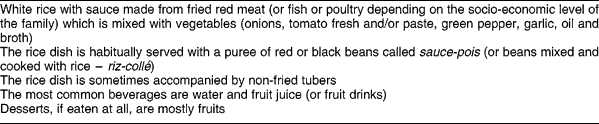
The traditional Haitian meal as described in Appendix B is consistent with the ‘Traditional’ dietary cluster, wherein a high intake of breakfast cereal was also observed. Breakfast cereal is expensive in Haiti and is therefore considered ‘rich’ people's food. When income increases with migration, this prestigious food becomes accessible. Hot cereal seems to have somewhat replaced breakfast cereal in the ‘Pre-Western’ cluster, but cold breakfast cereal consumption is quite high again in the ‘Modern’ cluster, and the high fibre intake in this last cluster suggests that breakfast cereal rich in fibre may be selected. The high consumption of whole-grain bread (and fruits and vegetables) in the ‘Modern’ cluster may also contribute to the high fibre intake. In Haiti, white bread is widely consumed while whole-wheat bread is scarce. Except for the ‘Modern’ cluster, whole-grain bread was little consumed. The traditional Haitian meal is occasionally accompanied by non-fried tubers; this habit was most common in the ‘Pre-Western’ cluster. The high intake of dairy foods (low-fat and high-fat) in the ‘Pre-Western’ cluster is difficult to explain. A high consumption of dairy products, but primarily low-fat, was also seen in the ‘Modern’ type.
In our study, there was some evidence of a shift towards a traditional but healthier dietary pattern in the ‘Modern’ cluster, which can be considered the ultimate stage of dietary transition; however, it was not as clear-cut as featured in the nutrition transition theoryReference Popkin1. Indeed, the ‘Modern’ diet type included quite high amounts of beans and fruit, and also of less traditional healthy food items such as whole-grain bread, but also sizeable amounts of sandwiches and superfluous food items which are not typically associated with a healthier diet. Moreover, the overall quality of the ‘Modern’ diet was not significantly higher than that of the other dietary phenotypes.
The changes from traditional food patterns that occurred in this Haitian population living in Canada were quite intricate and subtle, suggesting a more complex process than that described in the nutrition transition theoryReference Popkin1, Reference Popkin2. Our results are more in line with those of Mennen et al.Reference Mennen, Jackson, Sharma, Mbanya, Cade and Walker12 who studied three populations of the African Diaspora (Cameroon, Jamaica and Caribbean migrants in Britain) and found, for instance, that total and saturated fat intake was highest in rural Africa, whereas the lowest consumption of fat is expected in this early stage of dietary transition. Yet, African Caribbean men (but not women) living in Britain and following a more traditional diet had a significantly lower intake of energy from fat and saturated fat than less traditional menReference Sharma, Cade, Riste and Cruickshank36.
One strength of the present study is that we examined the overall nutritional quality of the dietary phenotypes rather than considering individual nutrients as has been done in several studiesReference Newby, Muller, Hallfrisch, Qiao, Andres and Tucker37–Reference Wirfalt, Mattisson, Gullberg and Berglund39. We found a higher diet quality in terms of compliance with the recommendations for health and the prevention of chronic diseases in the ‘Traditional’ phenotype and a lower quality in the ‘Western’ phenotype, but no difference as regards micronutrient intake adequacy. The lower quality of the ‘Western’ type of diet corroborates the findings of the Framingham studyReference Quatromoni, Copenhafer, Demissie, D'Agostino, O'Horo and Nam40 showing that a ‘Healthier’ diet type was associated with a higher quality and an ‘Empty-calorie food items’ dietary type with a lower quality.
The use of cluster analysis
There are two main statistical methods available for defining dietary patterns: cluster analysis and factor analysisReference Kant13, Reference Hu25, Reference Jacobson and Stanton41, Reference Kant42. Because factor analysis is based on correlations of different food items with one another, it assumes a linear relationship between variables that is not always presentReference Newby and Tucker23, Reference Hu25, Reference Jacques and Tucker43. Many of our food groups were not linearly interrelated so correlation was not an appropriate analytical approach, thus precluding factorial analysis. Cluster analysis is not based on the same statistical precepts since it is a more mathematical method which classifies individuals by their mean intakes in each food group into subgroups maximally separated in a multidimensional spaceReference Newby and Tucker23, Reference Hu25, Reference Jacques and Tucker43. Both factorial analysis and cluster analysis are a posteriori methods based on many subjective decisions such as food grouping or the choice of number of clustersReference Hu25, Reference Jacques and Tucker43. To choose the number of clusters, researchers consider the homogeneity and meaningfulness of the clustersReference Hu25, Reference Togo, Osler, Sorensen and Heitmann26. The number of clusters reported in the literature varies from two to eight, and we found four fairly homogeneous and meaningful clusters in this Haitian sample. Cluster analysis (or factorial analysis) is not intended to provide an ideal dietary type; rather, it reflects the food habits in the population under studyReference Hu25, Reference Jacques and Tucker43. Comparison with other studies is thus difficult since dietary types depend on cultural and ethnic heritage and other environment factors such as food availabilityReference Hu25, Reference Jacques and Tucker43. However, it is an informative and interesting means of increasing our understanding of the role of diet in the development of chronic diseasesReference Jacques and Tucker43.
As a complement to statistical approaches such as cluster analysis for defining dietary types, it is also possible to use indices of overall diet quality which assess several nutrition and health aspects of the dietReference Hu25Reference Kant42–Reference Patterson, Haines and Popkin44. We found significant differences between dietary types in the extent of compliance with dietary recommendations for health and the prevention of chronic diseases (WHO)4, but not in the adequacy of micronutrient intakes (FAO/WHO)27. So diets or dietary types may at the same time be adequate but of poor quality from a healthfulness standpoint.
The high estimated rate of LERs in our study (26%) could introduce bias in the results of the cluster analysis, as amounts of food are affected. Additionally, the diet quality indices may be affected positively or negatively depending on the nutritional profile of the ‘forgotten’ food items in the 24-hour food recalls. The proportion of LERs is however similar to that found in the British population, although we did not find demographic, socio-economic or BMI differences between LERs and other subjects, unlike Pryer et al.Reference Pryer, Nichols, Elliott, Thakrar, Brunner and Marmot45, Reference Pryer, Vrijheid, Nichols, Kiggins and Elliott46. Nevertheless, the high proportion of overweight (46%) and obesity (22%) in our sample suggests that many subjects likely consume more energy than they need.
Apart from the small sample size, although deemed adequate for the purposes of the study, a limitation of our study is that the participants had a higher schooling level than the general Haitian population of Montreal, according to census data. Otherwise, the socio-economic profile of the sample was similar to that of the population. In studies based on voluntary participation, samples are frequently of higher education level than the population, owing to self-selectionReference Sogaard, Selmer, Bjertness and Thelle47. The fact that participants in such studies are better educated and more interested in the research topic than the non-participants may result in healthier behaviours, better health status or a lower susceptibility to CVDReference Lissner, Heitmann and Bengtsson48. We found a significant difference in SES score (which included education) across diet types (P < 0.016), but no significant difference in education level alone, which suggests that food consumption (and nutrient intake) might not be much different in a less educated sample of the same adult population.
Although this study was cross-sectional, the findings suggest that the dietary types reflected different stages of dietary transition (or acculturation). A longitudinal design would indeed have allowed us to identify the dietary and lifestyle changes that individuals make over time.
In conclusion, our results showed that it is possible to stage dietary transition (or acculturation) of migrants from a developing country to an industrialised country on the basis of eating patterns according to length of stay in the host country and taking account of SES (and age and sex). In this study, Westernised dietary patterns were typical of younger Haitians, whereas more traditional diets were observed in older subjects. Relevant dietary interventions based on the results could include the promotion of traditional Haitian food patterns, but with some improvements in order to increase fibre intake through emphasis on fruits and vegetables, whole grains, legumes and non-fried tubers.
Acknowledgement
This study was funded by the Canadian Population Health Initiative and the Canadian Institute of Health Information.
Food groups used in cluster analyses

A traditional Haitian meal