



Many Western countries have encountered shifts in dietary patterns over the last few decades, including an increase in the consumption of added sugar and animal food products and a decrease in the intake of fibre( Reference Drewnowski and Popkin 1 – Reference Austin, Ogden and Hill 4 ). This so-called Western diet has negative consequences for public health( Reference Gilbert and Khokhar 5 , Reference Brussaard, van Erp-Baart and Brants 6 ), which is also of concern to the growing ethnic minority and migrant-origin groups in many Western countries when they adopt parts of the Western diet( Reference Gilbert and Khokhar 5 , Reference Satia-Abouta, Patterson and Neuhouser 7 ).
Migration can play a role in dietary patterns by bringing about cultural changes affecting attitudes, orientations or behaviours( Reference Gilbert and Khokhar 5 , Reference Satia-Abouta, Patterson and Neuhouser 7 – Reference Hosper, Nierkens and Nicolaou 9 ), a process that is defined as acculturation( Reference Redfield, Linton and Herskovitz 10 , Reference Berry 11 ). Age at the time of migration to the host country, length of residence in the new environment and generation status are often used in the literature as proxies of acculturation( Reference Thomson and Hoffman-Goetz 12 ). These proxies are quick and convenient; however, many authors have criticized their use. They do not directly measure elements of culture such as culturally determined attitudes, behaviours or cultural orientation( Reference Thomson and Hoffman-Goetz 12 – Reference Cabassa 17 ). Furthermore, they assume that the process of adaptation to the host culture is accompanied by the loss of the original culture and results in an exclusive orientation to the host culture, which is also conceptualized as the unidimensional perspective( Reference Berry 11 , Reference Tropp, Erkut and Coll 18 , Reference Berry 19 ). Thus, it can be argued that unidimensional proxies do not capture the bidimensional changes that occur when individuals from different cultural and social backgrounds interact( Reference Abraido-Lanza, Armbrister and Florez 15 , Reference Himmelgreen, Cantor and Arias 20 ).
The bidimensional perspective, in contrast, assumes that both cultural orientations are relatively independent of one another. Individuals may adapt to the host culture without losing their attachment to the culture of origin( Reference Berry 19 ). These two dimensions allow individuals the option of maintaining or rejecting their culture of origin while adopting values, attitudes and behaviours of the host culture( Reference Cabassa 17 ).
Studies on the relationship between acculturation and diet have generally used a unidimensional operationalization of acculturation( Reference Lee, Sobal and Frongillo 21 – Reference Ayala, Baquero and Klinger 31 ). As shown in reviews by Satia-Abouta et al. and Ayala et al. on acculturation and diet, most studies have found no consistent association between level of acculturation and intake of specific food groups. The methods used to measure acculturation and incomplete assessment of predictors of dietary intake may explain these inconsistent results( Reference Satia-Abouta, Patterson and Neuhouser 7 , Reference Ayala, Baquero and Klinger 31 ). The bidimensional perspective may be more informative in this regard because of its more nuanced characterization of cultural orientation and, presumably, its association with diet.
The current study aimed to investigate the role of acculturation in the dietary patterns of residents of Surinamese origin in the Netherlands using both the unidimensional and the bidimensional perspectives. The dietary patterns of Dutch- and Surinamese-origin participants were compared to explore differences on the basis of the acculturation status of the Surinamese. In addition, we explored differences within the Surinamese group. Comparison of Dutch and Surinamese respondents makes it possible to explore the robustness of dietary patterns.
Methods
Study design and sample
A quantitative cross-sectional study design was used and baseline measurements of the HELIUS study were taken. The HELIUS study is a prospective cohort study among the largest ethnic minority and migrant-origin groups living in Amsterdam, the Netherlands and data collection started in January 2011. The overall aim of the HELIUS study is to examine the health disparities across different ethnic groups and its causes. For the current study, data collected between January 2011 and December 2013 were used. The population, aged 18–70 years, was randomly sampled, stratified by ethnicity, from the Amsterdam city register. More details on the HELIUS study design have been published elsewhere( Reference Stronks, Snijder and Peters 32 ). The current study is a sub-study of HELIUS and included Dutch and Surinamese participants of African and South Asian origin. Surinamese-origin migrants are one of the largest ethnic minority groups in the Netherlands( Reference Nicolaas, Loozen and Annema 33 ). Approximately 80 % are of either African origin or South Asian origin( Reference Stronks, Kulu-Glasgow and Agyemang 34 , Reference Oudhof, Harmsen and Loozen 35 ). These groups differ considerably in terms of culture, migration history, geographical origin and socio-economic position; African-origin Surinamese share a common ancestry with the African-descent populations in the West, while South Asian-origin Surinamese share a common ancestry with the South Asian populations( Reference Stronks, Snijder and Peters 32 ). Each participant’s ethnicity was defined according to the country of birth of the participant as well as that of both his/her parents. Specifically, a participant was considered as of non-Dutch (i.e. Surinamese origin) if he/she fulfilled either of the following criteria: (i) he/she was born in Suriname and had at least one parent born in Suriname or (ii) he/she was born in the Netherlands but both his/her parents were born in Suriname( Reference Stronks, Kulu-Glasgow and Agyemang 34 ). Registry data, upon which the sampling was made, are based on the country of birth; thus further distinction of the Surinamese group into South Asian or African origin was based on participants’ self-report.
During the informed consent procedure of the HELIUS study, the participant’s permission was asked to approach him/her for future additional studies. Participants of the HELIUS study who consented to take part in additional studies were asked to fill in an FFQ; this sub-study is described in more detail by Dekker et al.( Reference Dekker, Snijder and Beukers 36 ). The response rates of the Dutch-origin, African Surinamese-origin and South Asian Surinamese-origin respondents who completed the FFQ were 73 %, 53 % and 49 %, respectively.
Assessment of dietary patterns
Diet was measured using ethnic-specific FFQ that were specifically designed for the HELIUS study population, described by Beukers et al.( Reference Beukers, Dekker and de Boer 37 ). Although the Surinamese group in HELIUS consists of two distinct ethnic groups (African origin and South Asian origin), similarities in the foods commonly eaten (such as specific vegetables and roti) allowed the design of a single questionnaire( Reference Dekker, Snijder and Beukers 36 ). The FFQ with approximately 200 food items was used to collect information about the frequency and the amount of intake of the respective food items in the previous 4 weeks. Food items on the basis of similarity in nutrient profile, culinary use or ethnic origin were combined to obtain forty-nine food groups. Dietary patterns were derived on the basis of principal component analysis, which assesses the correlations between food groups to identify underlying patterns in the data. In order to describe differences in dietary patterns between the Dutch group and the Surinamese group, principal component analysis was performed for the whole sample. The number of components retained was based on the following criteria: components with an eigenvalue >1, a scree plot test and the interpretability of the components. Food items were considered to load on a component if they had an absolute factor loading ≥0·3. A larger factor loading indicates a higher correlation of the food group to the respective component. The scree plot test clearly identified three major components. The components (hereafter called ‘dietary patterns’) were labelled on the basis of those food groups that loaded highest in the respective dietary pattern: (i) ‘noodle/rice dishes and white meat’ pattern; (ii) ‘red meat, snacks and sweets’ pattern; and (iii) ‘vegetables, fruit and nuts’ pattern. The dietary patterns were derived on the basis of the unadjusted consumption (g/d) of specific food groups. A factor score was calculated by summing the standardized intake of foods, weighted by the factor loadings of the foods groups for each dietary pattern; each participant received a factor score for each dietary pattern that emerged from the data. These scores rank individuals according to the degree to which they conformed or adhered to each of the derived dietary patterns.
Assessment of acculturation
The unidimensional perspective and the bidimensional perspective of acculturation were assessed with different indicators among the Surinamese-origin participants. The unidimensional indicators included residence duration, age at migration and generation status and are hereafter referred to as ‘acculturation proxies’. Residence duration and age at migration in Surinamese-origin participants were assessed with the question: ‘Since which year have you been living in the Netherlands?’ The date of birth and date of completion of the questionnaire were checked to calculate residence duration and age at migration. Residence duration was classified into three categories (≤25 years; 26–37 years; ≥38 years) and age at migration was classified into four categories (≤11 years old; 12–17 years old; 18–34 years old; ≥35 years old) based on literature regarding life stages and migration( Reference Rumbaut 38 ). Finally, generation status was defined on the basis of birthplace. Those born outside the Netherlands and having at least one parent born outside the Netherlands were considered first-generation Surinamese; those born in the Netherlands and having one or both parents born in Suriname were considered second-generation Surinamese( Reference Stronks, Kulu-Glasgow and Agyemang 34 ).
The bidimensional perspective was measured with twenty-six items regarding ethnic identity, social contacts and psychological attachment. The items applied to both the Dutch and the Surinamese culture; the Dutch scale and the Surinamese scale contained thirteen items each. Factor analysis indicated high internal consistency, Cronbach’s α=0·88 and 0·89 for the Dutch and Surinamese scale, respectively. Examples of questions were: ‘I feel proud to be part of the Dutch culture’/‘I feel proud to be part of the Surinamese culture’ or ‘I have a lot in common with Surinamese people’/‘I have a lot in common with Dutch people’. The items were rated on a five-point Likert scale and the range of total scores was 13–65 per scale. Mean individual scores on the two scales were calculated, ranging from 1 to 5. On each scale, participants with a mean score of ≥3 were classified as ‘highly orientated to the related culture’, participants with a mean score of <3 were classified as ‘low orientated to the related culture’. This cut-off point was based on literature regarding assessment of acculturation( Reference Matsudaira 39 – Reference Garrett and Pichette 41 ). Based on the combination of their scores on each of the two scales, participants were categorized in one of the four acculturation strategies of Berry’s acculturation framework( Reference Berry 11 ), shown in Fig. 1. That is, participants with a mean score of ≥3 on both the Surinamese and the Dutch scale indicate adaptation towards the host culture without losing attachment to the original culture, which is defined as ‘integration’. A mean score of <3 on the Suriname scale and ≥3 on the Dutch scale implies cultural adaptation towards the host culture accompanied by loss of the original culture, conceptualized as ‘assimilation’. Further, participants with a mean score of ≥3 on the Surinamese scale and <3 on the Dutch scale were classified as having a ‘separation’ acculturation strategy; rejection of the host culture and orientation towards the original culture. Finally, a mean score of <3 on both the Surinamese and the Dutch scale indicates rejection of both the host culture and the culture of origin, defined by Berry as ‘marginalization’( Reference Berry 11 ). In discussing the results this classification is referred to as the ‘acculturation strategy’.
The four acculturation strategies of Berry( Reference Redfield, Linton and Herskovitz 10 )

Assessment of sociodemographic variables
The variables age, sex, education level and marital status were evaluated using a comprehensive self-completed questionnaire or, if participants were not able to fill in this questionnaire by themselves, an interview. Marital status was defined as living together with a partner (married/registered partnership or living together) or not (unmarried/never married, divorced/separated or widow/widower). Education level was indicated by the highest education attained (either in the Netherlands or in the country of origin). Four categories were used: ‘never been to school or elementary schooling only’, ‘lower vocational schooling or lower secondary schooling’, ‘intermediate vocational schooling or intermediate/higher secondary schooling (general)’ and ‘higher vocational schooling or university’.
Statistical analysis
Means, standard deviations and percentages of the baseline characteristics were calculated. Linear regression analysis was performed to investigate the association between dietary patterns and ethnicity (i.e. Dutch origin and Surinamese origin), to examine the differences in dietary pattern scores between the Dutch group and the acculturation status of the Surinamese group, and to examine the differences within the Surinamese group, adjusted for age, educational level and marital status( Reference Nicolaou, van Dam and Stronks 22 – Reference Norman, Castro and Albright 24 , Reference Lin, Bermudez and Tucker 27 , Reference Mejean, Traissac and Eymard-Duvernay 29 ). Post hoc analysis was applied to test the interaction between acculturation and ethnicity. As no substantial differences were found between the South Asian Surinamese origin and the African Surinamese origin, the data of the two groups were combined. It has been observed that dietary patterns and acculturation vary on the basis of sex( Reference Jasti, Lee and Doak 42 , Reference Orozco and Lukas 43 ). Therefore, we also tested for interaction between acculturation and sex and found this to be present, thus analysis was stratified on the basis of sex. Data analyses were conducted with the statistical software package IBM SPSS Statistics version 20·0.
Results
Baseline characteristics
Participants with missing data on the acculturation variables or covariates were excluded from the analyses (131 participants). In total, 1370 Dutch-origin and 1727 Surinamese-origin participants remained. Table 1 summarizes the participants’ characteristics by ethnicity and sex. In our study sample, the average age ranged from 47 to 49 years between the subgroups and there were substantially more women than men in all ethnic groups. The majority of the men and women of Surinamese origin, 85 % and 86 %, respectively, were first-generation residents. The distribution of the categories of residence duration differed between men and women. For example, 44 % of the Surinamese-origin men had residence duration of 38 years or more v. 30 % of the Surinamese-origin women. The majority of the men and women of Surinamese origin (51 % and 53 %, respectively) were between 18 and 34 years old at the time of migration. With regard to acculturation strategy, 74 % of the Surinamese-origin men and 83 % of the women were classified as integrated, indicating high orientation to both the Dutch and the Surinamese culture.
General characteristics of the study sample: Dutch-origin (n 1370) and Surinamese-origin (n 1727) participants, Amsterdam, the Netherlands, January 2011–December 2013 (HELIUS dietary pattern study)

Data are presented as number and percentage unless indicated otherwise.
Dietary patterns and ethnicity
The food groups with factor loadings ≥0·30 in at least one of the ethnic groups are presented in Supplemental Table 1 (see online supplementary material). The ‘noodle/rice dishes and white meat’ pattern was characterized by higher intakes of noodle and rice dishes, chicken, savoury sauces, sugar-sweetened beverages, roti, fish and organ meat. The ‘red meat, snacks and sweets’ pattern consisted of higher intakes of red meat, snacks, pasta, cheese, (fried) potato dishes and pancakes. The ‘vegetables, fruit and nuts’ pattern was characterized by a higher consumption of vegetables, fruit, olive oil, legumes, nuts and seeds and fish. Average dietary pattern scores differed significantly between ethnic groups, as shown in Table 2. The results suggest that participants of Surinamese origin adhere more closely to the ‘noodle/rice dishes and white meat’ pattern while Dutch-origin participants adhere more to the ‘red meat, snacks and sweets’ and the ‘vegetables, fruit and nuts’ patterns.
Differences in dietary pattern scores according to ethnicity, displayed as unstandardized regression coefficientsFootnote *, among Dutch-origin (n 1370) and Surinamese-origin (n 1727) participants, Amsterdam, the Netherlands, January 2011–December 2013 (HELIUS dietary pattern study)
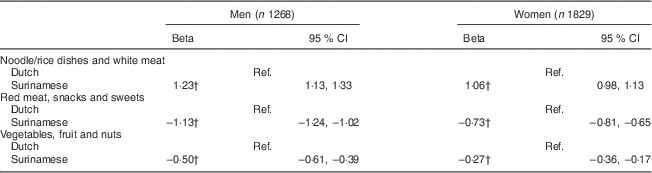
Ref., reference category.
* Adjusted for age, education level and marital status.
† Differences were statistically significant compared with Dutch (P<0·001).
Differences in adherence to dietary patterns by acculturation
Table 3 presents the differences in dietary pattern scores between respondents of Dutch and Surinamese origin differentiated by residence duration, age at migration, generation status and acculturation strategy of the Surinamese. In all acculturation strategies, Surinamese had significantly higher scores on the ‘noodle/rice dishes and white meat’ pattern than Dutch, with unstandardized beta coefficients ranging from 0·77 to 1·74. With regard to the acculturation proxies, higher ‘noodle/rice dishes and white meat’ pattern scores compared with Dutch were observed among Surinamese with shorter residence duration, a higher age at migration and among Surinamese of the first generation. Table 3 also shows that the different acculturation strategies scored significantly lower on the ‘red meat, snacks and sweets’ pattern than Dutch-origin participants (differences vary between −1·26 and −0·69). Similar results were found between Dutch and the Surinamese with regard to the acculturation proxies. Within the ‘vegetables, fruit and nuts’ pattern, Surinamese-origin participants had significantly lower scores than Dutch-origin participants, ranging from −0·68 to −0·06, independent of their acculturation level or acculturation strategy, except for the marginalized Surinamese. In all dietary patterns, the differences compared with Dutch were greater in men than in women.
Differences in dietary pattern scores between ethnic Dutch and Surinamese residents with respect to their acculturation strategy, residence duration, age of migration and generation status, displayed as unstandardized regression coefficientsFootnote *, Amsterdam, the Netherlands, January 2011–December 2013 (HELIUS dietary pattern study)

Ref., reference category.
* Adjusted for age, educational level and marital status.
† Differences were statistically significant compared with Dutch (P<0·05).
When focusing on differences within the Surinamese group, a more nuanced picture was observed as presented in Table 4. With regard to residence duration, Surinamese-origin men who lived in the Netherlands for a longer period of time scored significantly lower on the ‘noodles/rice dishes and white meat’ pattern. This trend was also seen in women, but was not statistically significant. Residence duration was not significantly associated with the other dietary patterns, except for Surinamese women who lived in the Netherlands for 38 years or longer. Men who migrated at an older age scored significantly higher on the ‘noodles/rice dishes and white meat’ pattern. Women who were older at the time of migration scored significantly lower on the ‘red meat, snacks and sweets’ pattern. First-generation Surinamese-origin women scored significantly higher than the second-generation women on the ‘noodle/rice dishes and white meat’ pattern. The first generation did not differ significantly from the second generation on the ‘red meat, snacks and sweets’ and ‘vegetables, fruit and nuts’ patterns. Overall, the observed differences in dietary patterns between the acculturation levels or acculturation strategies were small.
Differences in dietary pattern scores among Surinamese residents with respect to their acculturation strategy, residence duration, age of migration and generation status, displayed as unstandardized regression coefficientsFootnote *, Amsterdam, the Netherlands, January 2011–December 2013 (HELIUS dietary pattern study)

Ref., reference category.
* Adjusted for age, educational level and marital status.
† Differences were statistically significant compared with the first acculturation status of the Surinamese (P<0·05).
Discussion
The results indicate that dietary patterns in Surinamese-origin people living in the Netherlands differ from those of their Dutch-origin peers and that they do not vary by acculturation. With few exceptions we found that regardless of residence duration, age at migration, generation status or acculturation strategy (assimilation, integration, marginalization or separation), Surinamese-origin participants adhered more to a dietary pattern that is characterized by traditional Surinamese foods than the other dietary patterns.
The findings of the current study show inconsistencies with the literature( Reference Gilbert and Khokhar 5 , Reference Satia-Abouta, Patterson and Neuhouser 7 , Reference Lee, Sobal and Frongillo 21 – Reference Norman, Castro and Albright 24 , Reference Raj, Ganganna and Bowering 26 , Reference Neuhouser, Thompson and Coronado 28 – Reference Ayala, Baquero and Klinger 31 , Reference Kasirye, Walsh and Romano 44 , Reference Gregory-Mercado, Staten and Ranger-Moore 45 ). For example, while residence duration was associated with lower scores on the more traditional dietary pattern (‘noodle/rice dishes and white meat’) in Surinamese-origin men, the opposite was observed among residents of Asian Indian origin in the USA( Reference Raj, Ganganna and Bowering 26 ), while others were not able to find an association between length of residence and diet( Reference Lee, Sobal and Frongillo 21 – Reference Lesser, Gasevic and Lear 23 ). Sanou et al. found that Haitian immigrants easily undergo dietary transitions from their healthier traditional diet to a more Western diet with increasing time since migration( Reference Sanou, O’Reilly and Ngnie-Teta 46 ).
Nevertheless, a comparison with the literature is difficult because of several methodological considerations. First, most studies examined the link between acculturation and individual foods, instead of dietary patterns. Studying an overall dietary pattern presents a broader picture of what is consumed by taking into account the correlation between foods. It therefore describes dietary behaviour better than individual foods. Second, other studies have not included a reference group from the host population, as was performed in the present study. The comparison has provided insight into the robustness of the adherence to the dietary patterns, independent of level of acculturation or acculturation strategy. Third, contextual differences are likely to influence diet in other settings; Amsterdam is a multicultural city with a large Surinamese population, thus traditional Surinamese foods and ingredients are easily available( Reference Satia, Patterson and Taylor 8 , Reference Satia-Abouta 47 ). The association between acculturation and dietary patterns might differ in settings where traditional foods and ingredients are less available.
Potential explanations for our observation that Surinamese-origin respondents maintained a traditional dietary pattern without adapting to a Westernized dietary pattern are twofold. First, it may just be that the traditional dietary pattern in this group is very robust. This idea is supported by a recent analysis in the same study population which found that a socio-economic gradient in adherence to this traditional dietary pattern was not present among Surinamese-origin residents (LH Dekker, unpublished results). The robustness of the adherence to a traditional diet is further underscored by a study of Sharma and Cruickshank( Reference Sharma and Cruickshank 48 ) which reported that African-Caribbean adults in Britain, despite their low incomes, spent more on traditional foods like yams than on potatoes, thereby maintaining cultural food preferences. A second potential explanation is that the reality may be more complex than we have managed to capture in this analysis. For example, sociodemographic variables may influence dietary patterns. A migrant who migrated to the host country at a young age may still not adopt dietary patterns of the host country because he or she lives with parents or grandparents who prefer a traditional diet( Reference Satia-Abouta 47 , Reference Satia-Abouta, Patterson and Kristal 49 ). Additionally, migrants may be likely to change breakfast and lunch patterns towards those observed in the host population but the preferences for dinner together with the family may promote the consumption of traditional foods( Reference Lawton, Ahmad and Hanna 50 ). Other factors, such as the value assigned to traditional foods and taste preference as described in the dietary acculturation model of Satia-Abouta et al.( Reference Satia-Abouta, Patterson and Neuhouser 7 ), may also influence dietary patterns. This model presumes that there is a complex and dynamic relationship of socio-economic, demographic and cultural factors with exposure to the host culture which may better predict to what extent new migrants change their attitudes about food, taste preferences and food preparation. Such factors may all be relevant for the degree of adaptation to the dietary patterns of the host culture( Reference Satia-Abouta, Patterson and Neuhouser 7 ).
Moreover, there might not be a single best acculturation model( Reference Flannery, Reise and Yu 51 ). Flannery et al. compared the unidimensional and bidimensional models of acculturation in a sample of 291 Asian Americans. Both models performed equally well, predicting many criteria with excellent validity. They concluded that the use of a specific acculturation model is dependent on the research topic and the research population( Reference Flannery, Reise and Yu 51 ). The unidimensional model requires fewer items, takes less time to administer and is easier to interpret. The bidimensional model may produce larger findings with e.g. cultural preferences, cultural knowledge and ethnic identification( Reference Flannery, Reise and Yu 51 ).
The strength of the present study includes the large sample size of more than 1300 participants of Dutch origin and more than 1700 participants of Surinamese origin in which a dietary pattern analysis was performed. Dietary patterns can give a broader picture of what is consumed than individual foods and nutrients( Reference Hu 52 ). Additionally, the dietary patterns obtained have been previously observed in a selection of this study sample (LH Dekker, unpublished results). This underscores the reproducibility of these dietary patterns in research. However, the limitations merit consideration. First, social desirability may have influenced the responses of the Surinamese-origin participants on the questions regarding cultural orientation. They might have over-reported their feeling of belonging to the Dutch culture, which may explain that the assimilated and integrated Surinamese do not adhere significantly more to the ‘red meat, snacks and sweets’ pattern than the separated and marginalized respondents. Second, the HELIUS study was designed to address ethnic differences in health and may have appealed to a segment of the Surinamese population that is particularly interested in the health of their own ethnic group. Consequently, the dietary patterns of this group may be particularly traditional. In that case, this would be noticed in a higher proportion of respondents preferring separation or marginalization rather than integration. With this in mind it is important to mention that more than 70 % of the Surinamese-origin residents in the study were ‘integrated’. Although this is a representation of the target population, the power to detect differences in dietary patterns could therefore be limited. There might be different outcomes when the analysis used in the current study is repeated in another sample with a better distribution over the acculturation strategies. Third, the age of Surinamese participants could be strongly correlated to residence duration. Thus, adjusting for age in the analysis may have weakened the association between residence duration and dietary patterns. Finally, and perhaps most importantly, our analysis is cross-sectional while we are attempting to understand a determinant of dietary change. Prospective analysis of acculturation and diet may shed more light on this issue.
The results of the current study imply that it is important to take the traditional dietary habits of Surinamese-origin residents into account in the development of dietary interventions or nutrition programmes in order to meet the specific needs of this ethnic minority group. Counselling on dietary change should take into account the foods eaten by ethnic minority groups. For example, this group could be encouraged to maintain the healthful aspects of a Surinamese dietary pattern, which is rich in fish and chicken (in preference to red meat). Additionally, in this predominantly older, first-generation group, it seems that no distinction needs to be made on the basis of acculturation status when promoting the consumption of vegetables and fruit and when discouraging the consumption of red meat and snacks.
The present study findings may not apply to other ethnic minority groups. Although our results indicate that the operationalization of acculturation does not make a difference to the association with dietary patterns, it is worth investigating this issue further in groups with different migration histories, geographical locations and culture. Furthermore, the analysis was based on individual-level factors, including a broader range of sociodemographic, socio-cultural and environmental factors, which may help to better understand the process of acculturation and its role as a determinant of dietary behaviour.
To conclude, the findings suggest that there is no difference in the use of unidimenional or bidimensional indicators for acculturation when assessing variation in dietary patterns. However, assessing the role of acculturation as a determinant of diet may require more comprehensive analyses, including food availability and taste preference. Nevertheless, the lack of association between acculturation (operationalized unidimensionally as well as bidimensionally) and dietary patterns in the present study indicates that traditional dietary patterns might be quite robust. Consequently, they need to be accounted for when developing dietary interventions for ethnic minority and migrant-origin populations.
Acknowledgements
Financial support: The HELIUS dietary pattern study is financed by the Netherlands Organization for Health Research and Development (ZonMw) (Project number 115100005). ZonMw had no role in the design, analysis or writing of this article. Conflict of interest: None. Authorship: S.M.S., L.H.D. and M.N. designed the study. S.M.S. and L.H.D. performed data analysis and S.M.S. drafted the article. K.S., L.H.D. and M.N. made substantial contributions in interpretation of the data. K.S., L.H.D., M.N., L.A.S., M.L. and J.H.M.d.V. critically reviewed the manuscript. Ethics of human subject participation: The HELIUS dietary pattern study was approved by the AMC Medical Ethics Committee.
Supplementary Material
To view supplementary material for this article, please visit http://dx.doi.org/10.1017/S1368980015001391



