

When the [acquisition] advisor said, ‘you are now employed by the Chinese government’ and I think we all felt ‘oh’ [laughing]! You know, we did not want to be owned by a communist government. It went against all our instincts. (R&D Director, MachineSub)
Introduction
The opening quotation from our fieldwork underscores a significant, yet often underexplored challenge in the realm of post-acquisition integration (PAIFootnote 1): the pervasive prejudice directed at acquiring firms from emerging economies. Indeed, Zhang, Young, Tan, and Sun (Reference Zhang, Young, Tan and Sun2018) report that Chinese firms are often perceived by both internal and external stakeholders as lacking legitimacy due to their ‘latecomer’ and emerging-economy status. Such perceptions often manifest as negative emotional responses among employees, government bodies, and the media – responses that can actively obstruct integration and affect post-acquisition performance. Other scholars have investigated the broader liability of Chineseness (Oh, Zeng, & Oh, Reference Oh, Zeng and Oh2024; Ramamurti & Hillemann, Reference Ramamurti and Hillemann2018) faced by Chinese multinational enterprises (MNEs) in their overseas acquisitions. This liability is often compounded by host country concerns about the acquirer’s country of origin (Ramachandran & Pant, Reference Ramachandran, Pant, Timothy, Torben and Laszlo2010; Vecchi & Brennan, Reference Vecchi and Brennan2022). The latter could stem from misunderstandings and stereotypes associated with Chinese culture (Liou, Reference Liou2025; Yu & Liu, Reference Yu and Liu2018), hostility toward the Chinese government (Zhang, He, Zhou, & van Gorp, Reference Zhang, He, Zhou and van Gorp2019), negative portrayals in local media (Zhang, Xu, & Robson, Reference Zhang, Xu and Robson2023), and concerns about perceived ties with the Chinese Communist Party (Zhang, Zhou, & Ebbers, Reference Zhang, Zhou and Ebbers2011).
Concerns about foreign firms investing in host countries are not unique to Chinese acquisitions. Prejudice is widespread in mergers and acquisitions (M&As) across both cross-border and domestic contexts and presents substantial barriers to successful integration (Colman & Lunnan, Reference Colman and Lunnan2011; Koveshnikov, Vaara, & Ehrnrooth, Reference Koveshnikov, Vaara and Ehrnrooth2016; Vaara & Tienari, Reference Vaara, Tienari and Angwin2007). Despite the widespread acknowledgment of these challenges, there is limited research on strategies to mitigate prejudice during PAI. Much of the existing literature focuses on the strategic and structural dimensions of PAI, such as cultural differences, firm characteristics, resource dependency, and integration modes. While these macro-structural factors are crucial, the micro-foundations (Felin, Foss, Heimeriks, & Madsen, Reference Felin, Foss, Heimeriks and Madsen2012) of individual actors’ actions and their interactions in the PAI process, and more specifically, the impact of prejudice, remain relatively under-researched (cf. Edwards, Lipponen, Kaltiainen, & Hornsey, Reference Edwards, Lipponen, Kaltiainen and Hornsey2024; Graebner, Heimeriks, Huy, & Vaara, Reference Graebner, Heimeriks, Huy and Vaara2017; Sarala, Vaara, & Junni, Reference Sarala, Vaara and Junni2019). Consequently, the dynamics of the PAI process remain poorly understood, despite decades of scholarly attention (Angwin et al., Reference Angwin, Kroon, Mirc, Oliveira, Prashantham, Rouzies and Tienari2023).
While the international business and management literature lacks a clear definition of prejudice, psychologists generally agree that prejudice involves negative characterizations of a group without sufficient justification and is often accompanied by feelings of contempt, disdain, dislike, distaste, or aversion (Sniderman, Peri, de Figueiredo, & Piazza, Reference Sniderman, Peri, de Figueiredo and Piazza2000). It reflects an emotional predisposition to dislike and devalue individuals based solely on their group membership. Mackie and Smith (Reference Mackie and Smith1998) and Smith (Reference Smith, Mackie and Hamilton1993) argued that prejudice is an experienced emotion linked to both stereotypes – cognitive appraisals of an out-group’s characteristics – and discrimination – emotion-driven behavior. In other words, stereotypes can trigger prejudice as an emotional response, which in turn leads to discriminatory actions toward the out-group. Given the prevalence of prejudice in Chinese overseas acquisitions, our central research question is as follows: How do acquirer and acquiree managers act and interact to address prejudice during the PAI process? We argue that explicitly treating prejudice and exploring its impact on managers’ actions and interactions during PAI can offer deeper insight into why integration succeeds or fails.
Prejudices represent an ‘existing emotional condition’ that shapes how individuals make sense of events and influences the sensemaking of others (Arora, Harvey, & Roulet, Reference Arora, Harvey and Roulet2025; Shenoy-Packer, Reference Shenoy-Packer2015). Hence, we combine insights from sensemaking theory (Maitlis & Christianson, Reference Maitlis and Christianson2014; Weick, Reference Weick1995) with literature on the appraisal of emotions (Lazarus, Reference Lazarus1991a,Reference Lazarusb) and explore how emotion and sensemaking are intertwined. Specifically, we focus on ‘emotional sensemaking’ (Kroon & Reif, Reference Kroon and Reif2023; Schlindwein & Geppert, Reference Schlindwein and Geppert2021) and how it shapes managerial actions during PAI. We investigate episodes within the integration process where prejudice may be a defining component (Shenoy-Packer, Reference Shenoy-Packer2015). By examining managers’ emotional sensemaking at an episodic level, we aim to advance understanding of the micro-foundations and emotional dimensions of PAI and provide a novel perspective on its dynamic and iterative nature.
We employ a qualitative case study of two Chinese acquisitions in the UK. This context is particularly relevant due to significant cultural differences between China and the UK, the ‘latecomer’ status of Chinese firms (Peng, Reference Peng2012), and the ‘master’ mindset (Heizmann, Fee, & Gray, Reference Heizmann, Fee and Gray2018) often adopted by Western managers and employees when engaging with emerging economies. Moreover, existing research identifies abiding prejudices against Chinese firms when they venture abroad (Yu & Liu, Reference Yu and Liu2018). These factors contribute to sensemaking during the PAI phase and play a crucial role in reshaping managerial strategy and influencing the outcomes of the integration process. Thus, Chinese acquisitions in the UK provide an ideal setting for our study.
Our study provides fresh evidence that prejudice is not only prevalent but also persistent throughout the integration process, potentially triggering both positive and negative emotions in sensemaking interactions between acquiring and acquired firms. Our findings indicate that the agency of managers in addressing these emotions is crucial to integration outcomes: sensemaking informed by emotional intelligence can help accommodate, challenge, or even reduce prejudice. Thus, we empirically demonstrate the interplay between emotions and sensemaking in shaping both the PAI process and its outcomes.
This article makes several important contributions to the literature. First, in the PAI literature, it advances a deeper understanding of the micro-foundations and emotional aspects of PAI (Durand & Very, Reference Durand and Very2025; Graebner et al., Reference Graebner, Heimeriks, Huy and Vaara2017; Klok, Kroon, & Khapova, Reference Klok, Kroon and Khapova2023; Sarala et al., Reference Sarala, Vaara and Junni2019; Zhang, Liu, Tarba, & Giudice, Reference Zhang, Liu, Tarba and Giudice2020) by illustrating how emotional dynamics between managers shape integration outcomes. By investigating emotional sensemaking across a sequence of integration episodes, this study provides a novel perspective on how integration unfolds over time, emphasizing the dynamic and iterative nature of the PAI process. Zooming in on individual managers’ emotional sensemaking tied to a sequence of integration episodes, the article offers a richer and more fine-grained understanding of the micro-foundational underpinnings of managerial decision-making and interactions in PAI. Second, the article contributes to the literature on Chinese overseas acquisitions by revealing the complexities inherent in the widely acknowledged ‘light-touch’ integration (Liu & Woywode, Reference Liu and Woywode2013) or ‘partnering’ strategies (Kale, Singh, & Raman, Reference Kale, Singh and Raman2009). We uncover a variety of emotional tensions, compromises, and negotiations that underlie these strategies, showing that they involve more complexity than typically acknowledged. Our emotional sensemaking approach offers a novel perspective on the integration strategies of Chinese firms, moving beyond the conventional wisdom that focuses on strategic and structural factors (Tang & Zhao, Reference Tang and Zhao2023). Finally, the article contributes to the sensemaking literature by enriching our understanding of sensemaking and its relationship with emotions. It provides ample evidence that emotions are both inputs and outcomes of sensemaking (Steigenberger, Reference Steigenberger2017), extending the extant literature’s focus on emotions’ unidirectional impact on sensemaking (Heaphy, Reference Heaphy2017). We identify ‘sensemaking with emotional intelligence’, defined as the ability to recognize, understand, manage, and influence one’s own emotions, as well as the emotions of others (cf. Mayer, Roberts, & Barsade, Reference Mayer, Roberts and Barsade2008), and demonstrate how emotional intelligence mitigates prejudice and facilitates reflective sensemaking. The analysis reveals that both negative and positive emotions could generate either sensemaking with or without emotional intelligence. Therefore, we present a more nuanced understanding of the complex, bidirectional relationship between emotions and sensemaking than existing studies typically propose.
Conceptual Background
PAI in Cross-Border Acquisitions: The Light-Touch Approach
Research on PAI has predominantly concentrated on the strategic and structural factors influencing integration outcomes (Graebner et al., Reference Graebner, Heimeriks, Huy and Vaara2017; Sarala et al., Reference Sarala, Vaara and Junni2019; Steigenberger, Reference Steigenberger2017). Scholars widely acknowledge the importance of PAI in helping firms achieve their strategic objectives in cross-border M&As, such as entering new markets, acquiring resources, and gaining access to novel technological capabilities (Bauer & Matzler, Reference Bauer and Matzler2014; Capron & Guillén, Reference Capron and Guillén2009). A central challenge in PAI research has been managing the tension between integration and autonomy (Datta, Reference Datta1991; Puranam, Singh, & Chaudhuri, Reference Puranam, Singh and Chaudhuri2009). Scholars have also examined other strategic dimensions of PAI, such as integration mode and speed, both of which influence M&A outcomes (Homburg & Bucerius, Reference Homburg and Bucerius2006).
In recent years, increased attention has been directed toward the study of PAI in the context of Chinese firms. Much of this literature mirrors the broader PAI field in emphasizing strategic and structural aspects of the integration process. Scholars have highlighted the role of ‘contextual distance’ (Li & Wan, Reference Li and Wan2016), the strategic asset-seeking motives of Chinese acquirers, and the legitimacy challenges they face when acquiring firms in developed countries (Liu & Woywode, Reference Liu and Woywode2013; Tang & Zhao, Reference Tang and Zhao2023; Zhang et al., Reference Zhang, Liu, Tarba and Giudice2020). In response to these challenges, Chinese firms often adopt a distinct ‘light-touch’ integration approach (Liu & Woywode, Reference Liu and Woywode2013), characterized by retaining the acquired firm’s top management team, making minimal structural changes, and exercising minimal interference in daily operations and management. Zheng, Noorderhaven, and Du (Reference Zheng, Noorderhaven and Du2022), in their recent case study of Chinese acquisitions, argue that the light-touch approach is not static but evolves in response to strategic tensions between integration and autonomy, as well as shifts in the balance between task and human integration and the pace of integration. Similarly, Wu, Wang, and Morschett (Reference Wu, Wang and Morschett2022), based on multiple case studies of Chinese acquisitions in Europe and the United States, suggest that PAI should evolve in response to changing levels of resource interdependence and cultural differences. They propose that while a ‘light-touch’ approach may be suitable in the early stages of integration, a gradual shift toward deeper task and social integration is necessary as cultural differences are reduced and resource interdependency increases.
Despite the substantial body of research on PAI and the burgeoning interest in the ‘light-touch’ approach, there remains a tendency in existing research to overemphasize strategic and structural explanations (Graebner et al., Reference Graebner, Heimeriks, Huy and Vaara2017; Steigenberger, Reference Steigenberger2017). However, as Sarala et al. (Reference Sarala, Vaara and Junni2019: 38) argue, ‘the patterns of post-acquisition changes cannot be explained purely by structural explanations, such as cultural differences and the integration mode, but emerge from the involvement of organizational actors in the M&A process’.
This has led to an emerging stream of research that considers micro-level factors shaping PAI outcomes, including the role of emotions (Sinkovics, Zagelmeyer, & Kusstatscher, Reference Sinkovics, Zagelmeyer and Kusstatscher2011; Klok et al., Reference Klok, Kroon and Khapova2023). For instance, studies have shown that both positive and negative emotions can arise when employees evaluate organizational identity, justice, autonomy, power dynamics, cultural fit, and strategic fit during M&As (Allred, Boal, & Holstein, Reference Allred, Boal and Holstein2005; Drori, Wrzesniewski, & Ellis, Reference Drori, Wrzesniewski and Ellis2013; Hassett, Reynolds, & Sandberg, Reference Hassett, Reynolds and Sandberg2018; Monin, Noorderhaven, Vaara, & Kroon, Reference Monin, Noorderhaven, Vaara and Kroon2013; Rouzies, Colman, & Angwin, Reference Rouzies, Colman and Angwin2019; Van Dick, Ullrich, & Tissington, Reference Van Dick, Ullrich and Tissington2006). However, a significant gap remains in understanding how these emotions evolve and are managed throughout the PAI process. Hence, Graebner et al. (Reference Graebner, Heimeriks, Huy and Vaara2017) have called for more granular investigation into the PAI decision-making process, one that moves beyond firm-level characteristics and structural factors to focus on the micro-foundations of individual actors and their interactions. Similarly, Sarala et al. (Reference Sarala, Vaara and Junni2019: 308) urge scholars to ‘emphasize M&A actors and their sensemaking, practices, and actions’.
In response to these calls, our study focuses on the micro-foundations and emotional dynamics of the PAI process. Specifically, we seek to understand how individual managers act and interact to address prejudice, a particularly salient and underexplored emotion in cross-border M&As. Drawing on a sensemaking perspective, we aim to capture the complexity and dynamism of these interactions.
Sensemaking, Emotions, and PAI
Sensemaking, defined as ‘the process through which people work to understand issues or events that are novel, ambiguous, confusing, or in some other way violate expectations’ (Maitlis & Christianson, Reference Maitlis and Christianson2014: 57), has become a central theme in management research. Since Weick’s seminal work Sensemaking in Organizations (Weick, Reference Weick1995), scholars have explored sensemaking in various contexts, including strategic change, organizational learning, and innovation (Gioia & Chittipeddi, Reference Gioia and Chittipeddi1991; Maitlis & Christianson, Reference Maitlis and Christianson2014; Pratt, Reference Pratt2000; Vaara & Monin, Reference Vaara and Monin2010). In the context of PAI, where ambiguity and uncertainty are prevalent, sensemaking plays a crucial role in how individuals construct meaning around unfolding events. For example, Vaara (Reference Vaara2003), in an early study of Finnish acquisitions in Sweden, emphasized that sensemaking helps explain how managers interpret and navigate the complexities of the integration process, especially when faced with seemingly inconsistent or contradictory decisions.
Importantly, individuals’ meaning construction during PAI is also influenced by sensegiving – the process of attempting to influence the sensemaking and meaning construction of others toward a preferred interpretation of organizational reality (Gioia & Chittipeddi, Reference Gioia and Chittipeddi1991: 442). Together, sensemaking and sensegiving form a dynamic, dialogical process, particularly relevant in PAI contexts where acquirer and acquiree managers mutually shape the integration narrative. Clark and Geppert (Reference Clark and Geppert2011), for example, argue that powerful managers engage in both sensemaking and sensegiving to interpret each other’s political interests and preferences to influence the integration trajectory. The perceptual discrepancies that emerge between these actors, in turn, propel the integration process forward, highlighting the dynamic interplay between sensemaking and sensegiving.
Building on these insights, we argue that a sensemaking perspective offers a particularly suitable framework for exploring the PAI process at a micro-level in greater depth (Angwin et al., Reference Angwin, Kroon, Mirc, Oliveira, Prashantham, Rouzies and Tienari2023). By focusing on the micro-foundations of individual actions and interactions between acquirer and acquiree managers’ sensemaking, we aim to provide a more granular perspective, which remains largely absent in the current PAI research (Graebner et al., Reference Graebner, Heimeriks, Huy and Vaara2017).
Maitlis, Vogus, and Lawrence (Reference Maitlis, Vogus and Lawrence2013) argue that emotion and sensemaking are often intimately and intricately connected. Given the emotional intensity often present in PAI – manifesting in fear, uncertainty, mistrust, or hope – emotional dynamics can profoundly impact how individuals construct meaning. Therefore, we contend that emotions become integral to understanding how individuals make sense of complex and ambiguous situations and that sensemaking also influences emotions in PAI.
Following Sinkovics et al. (Reference Sinkovics, Zagelmeyer and Kusstatscher2011) and Schlindwein and Geppert (Reference Schlindwein and Geppert2021), emotion could be defined as ‘a mental state of (action) readiness that arises from cognitive appraisals of events, social interactions or thoughts’ (Sinkovics et al., Reference Sinkovics, Zagelmeyer and Kusstatscher2011: 28). According to cognitive appraisal theory (Lazarus, Reference Lazarus1991a,Reference Lazarusb), individuals exposed to stimuli would engage in an appraisal of the situation. This appraisal would give rise to emotions which, in turn, are linked to a readiness to act. Positive emotions are the result of appraisals that the situation is consistent with the individual’s motives; negative emotions, on the contrary, arise from situations that the individual appraises as inconsistent with his or her motives (Roseman, Reference Roseman1996).
Although Weick (Reference Weick1995) acknowledges that sensemaking has both cognitive and emotional components, early sensemaking literature often minimized the emotional dimension. Kroon and Reif (Reference Kroon and Reif2023) and Maitlis and Christianson (Reference Maitlis and Christianson2014) argue that emotions are often treated as mere autonomic arousal responses or even as obstacles to rational sensemaking. More recently, scholars have called attention to the nuanced role of emotions in the sensemaking process. Maitlis et al. (Reference Maitlis, Vogus and Lawrence2013), for example, argue that moderately intense emotions can trigger and energize sensemaking. However, extreme negative emotions such as fear or panic can overwhelm cognitive resources, impeding the sensemaking process (Loewenstein & Lerner, Reference Loewenstein, Lerner, Davidson, Scherer and Goldsmith2003; Maitlis & Sonenshein, Reference Maitlis and Sonenshein2010). Emotions also shape the interpretative frames used in sensemaking (Maitlis et al., Reference Maitlis, Vogus and Lawrence2013). For instance, managers may perceive the same issue as an opportunity or a threat depending on their emotional state (Jackson & Dutton, Reference Jackson and Dutton1988).
Recognizing the role of emotions in sensemaking, Schlindwein and Geppert (Reference Schlindwein and Geppert2021) develop a micro-level model of emotional sensemaking in PAI. Their model illustrates how emotions influence both the initiation and features of sensemaking and ultimately lead to different interpretations of PAI outcomes. More recently, Kroon and Reif (Reference Kroon and Reif2023) examine the role of emotions in middle managers’ sensemaking and sensegiving across three main stages of PAI.
Our study builds on and contributes to this line of research. By adopting a sensemaking perspective, we investigate how prejudice and other emotions are experienced by individual managers during PAI. Prejudices represent an ‘existing emotional condition’ that shapes how individuals make sense of events and influence the sensemaking of others (Arora et al., Reference Arora, Harvey and Roulet2025; Shenoy-Packer, Reference Shenoy-Packer2015). Vaara and Tienari (Reference Vaara, Tienari and Angwin2007) show that stereotype-induced prejudice shapes sensemaking by reinforcing ‘us versus them’ boundaries in M&As. Similarly, Koveshnikov et al. (Reference Koveshnikov, Vaara and Ehrnrooth2016) argue that stereotypes operate as discursive resources that managers draw upon to construct their identities and to legitimize particular interpretations in integration encounters. It is reasonable to expect these prejudiced frames to trigger further emotional dynamics of sensemaking. Emotions such as anger, shame, or anxiety could arise from appraisals rooted in prejudiced expectations and, in turn, shape action tendencies such as blame and avoidance (Lazarus, Reference Lazarus1991a,Reference Lazarusb). Such emotional responses determine how managers and employees engage in sensemaking (Maitlis et al., Reference Maitlis, Vogus and Lawrence2013), which in turn would impact the original prejudice.
By foregrounding this recursive interplay between emotions and sensemaking, our study extends existing work by revealing how micro-level interpretive processes can either alleviate or aggravate prejudice during PAI. In doing so, we aim to enrich our current understanding of how emotions influence sensemaking – and how sensemaking, in turn, affects emotional responses. More specifically, we zoom in on managers’ emotional sensemaking within specific episodes of the PAI process, moving beyond the more common stage-based approaches (Kroon & Reif, Reference Kroon and Reif2023; Wu, Wang & Morschett, Reference Wu, Wang and Morschett2022; Zheng, Noorderhaven & Du, Reference Zheng, Noorderhaven and Du2022). This episodic focus allows us to uncover the micro-foundations of emotional sensemaking in finer detail. In addition, our study addresses a notable gap in the literature: the interactive nature of emotional sensemaking between acquiring and acquired firms. By highlighting the dynamic, reciprocal relationships between acquirer and acquiree managers, our approach contributes to a deeper understanding of emotional underpinnings of PAI processes and outcomes.
Research Methods
Given the limited research on the micro-foundations of emotional sensemaking in PAI, we adopted a qualitative and exploratory case study approach as the most appropriate method to address our research focus and to answer the ‘how’ question (cf. Yin, Reference Yin2014). A multiple case design was chosen, as it offers the opportunity to generate new insights and produce more contextualized findings in this area (Yin, Reference Yin2014). It allows for the incorporation of additional observations and perspectives without resorting to quantitative methods (Stewart, Reference Stewart2012). In line with an inductive, theory-building orientation, our aim was not hypothesis testing, but the development of novel conceptual insights grounded in rich empirical data. The design of our study yielded rich qualitative data that were ‘close to the informants’ experience’ (Gioia, Corley, & Hamilton, Reference Gioia, Corley and Hamilton2013) and enabled the identification of previously unrecognized concepts. This approach was particularly suitable for capturing emotional sensemaking as a dynamic, relational, and socially embedded process that unfolds over time rather than as a static cognitive state.
Case Selection
We deliberately selected acquisitions that were comparable in terms of motivation, industry sector, size, ownership structure, and home/host country dynamics. This deliberate matching followed a theoretical replication logic (cf. Yin, Reference Yin2014), enabling us to hold constant key structural conditions while examining variation in emotional sensemaking processes across cases. This similarity allowed us to focus on the actions and interactions of managers involved in the PAI process. By minimizing extraneous variance, we were able to foreground micro-level interpretive and emotional dynamics rather than macro-structural explanations. In addition, we restricted our focus to acquisitions completed at least 3 years before the commencement of fieldwork. This temporal distance allowed informants to reflect on critical incidents with greater clarity and enabled us to trace emotional sensemaking across different phases of PAI. This time frame also ensured that enough critical episodes had emerged for meaningful investigation. Through our initial contacts and negotiations, we gained unique access to two acquisitions in the UK’s engineering sector, both undertaken by Chinese state-owned enterprises (SOEs). This access enabled us to interview top management teams from both the acquiring and acquired firms, providing a comprehensive view of the PAI process from both sides of the acquisition dyad. Such dyadic access is particularly valuable for studying emotional sensemaking, as emotions and interpretations are often co-constructed through interaction rather than residing solely within individuals.
The two selected acquisitions were completed within the same period (2008 and 2010, respectively). For confidentiality reasons, pseudonyms are used for the firms, technologies, and products. The two Chinese acquiring firms are referred to as ChinaMachine and ChinaRail, while their respective acquired firms are referred to as MachineSub and RailSub. ChinaMachine was established in 2007 by a local municipal government through the merger of a dozen small manufacturing SOEs and was listed on the Hong Kong Stock Exchange in 2008. ChinaRail was established in 2005 and listed on the Hong Kong Stock Exchange in 2006. It had been a key player in China’s railway propulsion and control technologies. MachineSub specialized in producing small volumes of high-end precision machinery, while RailSub manufactured a semiconductor module, TSCT, with applications in the rail industry. Table 1 provides further information about these firms.
Case information

Source: Corporate reports.
These acquisitions were selected because prejudice and emotional sensemaking were likely to be particularly salient. Following a critical-case logic, we expected these settings to surface emotional dynamics that might remain muted or invisible in more familiar or domestically embedded acquisitions. Both MachineSub and RailSub had proud legacies of technological development and were internationally recognized for their expertise. However, they were facing significant financial difficulties and had been unable to invest in new product development for several years. As a result, both firms were eager to attract ‘strategic investors’ to support their long-term development but remained skeptical of Chinese ownership. For example, a number of interviewees revealed their early concerns about potential job losses due to the widely held fears of ‘hollowing-out’ and ‘asset-stripping’ commonly associated with foreign acquisitions. Some even suspected that the new Chinese owners would steal their technologies and close down facilities in the UK. In addition, many of them did not hide their ‘master’ mindset (Heizmann et al., Reference Heizmann, Fee and Gray2018), believing in their superior technologies and management practices. This created fertile ground for prejudice and emotionally charged dynamics during the PAI process. Accordingly, the cases offered an analytically rich context for examining how emotions shape, and are shaped by, managerial sensemaking during cross-border integration.
The Chinese parent firms had flourished in China’s domestic market and acquired these overseas assets to support their internationalization and technological upgrading strategies. However, neither had prior experience with overseas acquisitions – these represented their first ventures abroad. Both acquisitions seemed to conform to the ‘light-touch’ integration approach (Liu & Woywode, Reference Liu and Woywode2013). For instance, the organizational structure and top management teams of the acquired firms were largely preserved. Nevertheless, the contrast between the acquiring firms’ country of origin and newcomer status and the acquired firms’ established traditions and skepticism toward Chinese ownership (Liou, Reference Liou2025; Oh et al., Reference Oh, Zeng and Oh2024; Zhang et al., Reference Zhang, Young, Tan and Sun2018) suggested the presence of intense emotional sensemaking during daily interactions between acquiree and acquirer managers. While not intended to be statistically representative, these cases allow for analytical generalization by illuminating mechanisms of emotional sensemaking that may operate in other post-acquisition contexts characterized by asymmetries of legitimacy, experience, and perceived status.
Data Collection
To gain a comprehensive understanding of the PAI process, we drew on rich qualitative data from three primary sources: (1) archival data (corporate reports, news articles, press releases, and internal newsletters/documents); (2) company visits and observations; and (3) in-depth interviews and focus group discussions. The archival data were instrumental in developing a contextual understanding of the PAI process. Beyond documentary sources, visits to the companies and informal gatherings among senior managers provided valuable opportunities to observe real-time sensemaking interactions between acquirer and acquiree managers. Although these gatherings were not formal organizational events, they offered a unique window into the ongoing, day-to-day sensemaking processes that were unfolding between the two parties. These real-time observations were crucial in addressing the potential bias of relying solely on retrospective accounts (Vaara, Reference Vaara2003). Furthermore, these visits facilitated rapport-building with informants and allowed for insights that could be further probed in interviews. For instance, during a visit to ChinaMachine, the CEO of MachineSub expressed confusion that the acquiring firm often rejected his advice on knowledge transfer. This prompted further investigation into why his counsel was not acted upon, which ultimately revealed the underlying emotional sensemaking processes at play in the PAI process.
The primary data source for this study was in-depth interviews with senior managers from both the acquiring and acquired firms. To avoid the one-sided perspective that often dominates research on PAI involving Chinese acquirers (Liang, Lupina-Wegener, Ullrich, & Van Dick, Reference Liang, Lupina-Wegener, Ullrich and Van Dick2022; Zheng, Reference Zheng2016; Zheng et al., Reference Zheng, Noorderhaven and Du2022), particular care was taken to capture the views of both sides of the dyad (Schotter & Beamish, Reference Schotter and Beamish2011). This was achieved by fostering strong relationships with senior managers, who were approached through personal contacts, enabling us to establish rapport and generate rich data. Snowball sampling (Patton, Reference Patton1990) was employed to source further interviewees from both the acquiring and acquired firms. To minimize the risk of misunderstanding during data collection and allow interviewees to express emotions more authentically (Temple & Young, Reference Temple and Young2004), the interviews were conducted by the first author, who has a Chinese origin and is bilingual. The second author participated in four interviews to ensure validity and to cross-check with initial rounds of data collection. A summary of the interviews is presented in Table 2.
Primary data collection – Interview

A total of 31 interviews were conducted – amounting to over 1,500 minutes of recordings. These interviews involved a range of senior managers from both the acquiring and acquired firms. When necessary, follow-up email exchanges were used to probe further into the data. These interviews were structured around open-ended questions, with the initial set addressing general topics such as company strategies, acquisition motivations, and expectations. Subsequent questions explored managers’ perspectives on the roles of the acquirer or acquiree in shaping the future development of the focal company, key changes that occurred during the integration process, and the impacts of these changes on both the acquirer and the acquiree. Additionally, interviewees were encouraged to share with us specific challenges and puzzling moments during the PAI process, as suggested in Vuori and Huy (Reference Vuori and Huy2016). The interview guide is available in the Appendix.
To complement the interviews and ensure triangulation of the data, two focus group discussions were conducted by the first author. The first session took place in the UK in September 2015 and lasted 2 hours, involving a dozen ChinaRail managers. The second session took place in China in July 2016 and lasted 3.5 hours, involving the CEO of MachineSub and a dozen ChinaMachine managers. These focus group discussions provided additional insights, particularly about integration challenges and progress of the acquiree’s knowledge transfer initiatives. The 2016 focus group, for instance, helped to reveal why ChinaMachine managers did not adopt the acquiree’s knowledge transfer suggestions, which were pivotal in understanding PAI challenges (further details on this episode are discussed in the findings).
All interviews and focus group discussions were conducted in either Mandarin or English, depending on the respondents’ preference, and were recorded and transcribed for analysis. Interviews conducted in Chinese were transcribed and then translated into English. To ensure translation and transcription quality, we utilized a professional service provider who has significant experience in supporting business and management research. We also employed back-translation (Ai & Tan, Reference Ai and Tan2018; Brislin, Reference Brislin1970) for a subset of interviews, which was then cross-checked by the first author.
Given the temporal gap between the events and interviews, a particular concern was to make sure of recall accuracy and the soundness of interpretation. We asked multiple informants to describe and interpret the same concrete episodes separately, which allowed us to cross-validate the plausibility of their accounts. For example, RailSub managers told us how they disliked a seemingly inferior idea of a bonus scheme introduced by the Chinese, and ChinaRail managers also told us how they felt annoyed by RailSub managers’ resistance. In addition, we relied on informants who were particularly knowledgeable about the relevant episodes and for whom the episodes were personally important, thus enhancing recall accuracy (Vuori & Huy, Reference Vuori and Huy2016).
Despite the temporal gap and the age of the interview data, we argue that the emotional dynamics of PAI, often tied to deep-rooted identity and cultural concerns (Brannen & Peterson, Reference Brannen and Peterson2009; Vaara, Tienari, & Säntti, Reference Vaara, Tienari and Säntti2003), remain highly relevant and structurally persistent – indeed, recent geopolitical developments underscore the need for deeper, historically grounded understanding of emotional sensemaking in international M&A. Accordingly, our qualitative research helps to identify enduring patterns and offer theory-informed insights that remain analytically relevant beyond the moment of data collection. This approach is consistent with longitudinal and retrospective studies that use historical or aged data to understand complex organizational processes (Dyer & Alan, Reference Dyer and Alan1991; Rowlinson, Hassard, & Decker, Reference Rowlinson, Hassard and Decker2014). It also resonates with the growing interest in historical perspectives within international business studies, where history is valued both as empirical material and as a methodological lens (Buckley, Reference Buckley2021). For instance, Vuori and Huy’s (Reference Vuori and Huy2016) study of Nokia analyzed emotional processes surrounding events that occurred several years before data collection. Similarly, Kataria, Kreiner, Hollensbe, Sheep, and Stambaugh (Reference Kataria, Kreiner, Hollensbe, Sheep and Stambaugh2018) explored emotional sensemaking during organizational changes using blog data that were more than 10 years old.
Data Analysis
In line with the work of Monin et al. (Reference Monin, Noorderhaven, Vaara and Kroon2013), we focused on sensemaking and sensegiving at the episodic level within the PAI process. The aim was to capture the micro-foundations of managerial actions and interactions in greater detail, especially the emotionally charged episodes that can significantly influence PAI outcomes.
The first stage of data analysis involved reconstructing the timelines of the critical episodes throughout the PAI periods. The timelines for ChinaRail and RailSub (Case A) spanned from 2008 to 2017, while those for ChinaMachine and MachineSub (Case B) covered 2010 to 2017. To identify these critical episodes, we conducted a comprehensive review of archival data, including corporate reports, news coverage, newsletters/documents, and interviewees’ accounts of key events. We identified 27 potentially relevant episodes (Fig. 1) – 13 for Case A and 14 for Case B – before narrowing the selection to 10 critical episodes (5 each for Case A and Case B). These critical episodes were selected based on several criteria: (a) they collectively covered the key stages of the PAI process, (b) they were particularly salient in terms of sensemaking in PAI, (c) they were deemed important by managers, (d) they represented typical events that occurred during the PAI process, and (e) they helped illustrate various patterns of emotional dynamics over time (for analogous criteria, see Monin et al., Reference Monin, Noorderhaven, Vaara and Kroon2013).
Timeline of main episodes

Data analysis was facilitated by the well-established coding process outlined by Gioia et al. (Reference Gioia, Corley and Hamilton2013). In the first stage, interview transcripts were meticulously reviewed to identify terms and categories that emerged naturally, leading to a set of first-order codes. In the subsequent stage, we identified second-order codes by comparing similarities and differences between the first-order codes while also consulting the extant literature. Finally, related second-order codes were grouped into aggregate themes, as summarized in Figure 2, with illustrative quotes/examples provided in Table 3. Consistent with established best practices for inductive qualitative research based on in-depth interviews (Becker & Burke, Reference Becker and Burke2012; Campbell, Quincy, Osserman, & Pedersen, Reference Campbell, Quincy, Osserman and Pedersen2013; Deterding & Waters, Reference Deterding and Waters2021), we employed a negotiated consensus approach to enhance interpretive reliability, where researchers code a transcript, compare coding, and then discuss any disagreements in an effort to reconcile them and resolve as many discrepancies as possible. For example, to enhance inter-rater reliability in our coding, two members of the research team independently coded the same subset of interview transcripts. Following established practice, 20% of interview transcripts were selected and coded independently without discussion in the first phase (O’Kane, Smith, & Lerman, Reference O’Kane, Smith and Lerman2021). Periodic cross-checks and regular reflexive dialogue with a third researcher ensured ongoing analytical consistency, enhancing stability (Becker & Burke, Reference Becker and Burke2012).
Data structure

Coding structure with empirical evidence

We developed a shared codebook iteratively, with bilingual coding of selected transcripts to ensure consistency in theme development across languages. Thematic comparisons were made with constant reference to the original language data, where necessary to minimize any potential loss of cultural and emotional meaning in translation.
During the interview and coding processes, we observed a lot of emotions of acquiree managers centering around prejudice toward the acquirer. In operationalizing prejudice in the coding process, we paid particular attention to the difference between stereotypes and prejudices. While stereotypes represent cognitive appraisals of an out-group’s characteristics (Mackie & Smith, Reference Mackie and Smith1998; Smith, Reference Smith, Mackie and Hamilton1993), we follow Sniderman et al. (Reference Sniderman, Peri, de Figueiredo and Piazza2000) and maintain that prejudice has to have an emotional element, that is, the unwarranted hostility against out-group members which is shown, for example, in the quotation of ‘At first people were suspicious and they thought the Chinese parent company who were purchasing us would steal our ideas and then will close us and that is all they do’. However, it is not a prejudice if the interviewers merely stated a fact such as ‘they have a different culture’. As we explored this issue further in the data, we realized that some positive emotional expressions of the acquirees were, in fact, indicators of softened prejudice. For example, the statement, ‘At first people were suspicious … [now people] talk about how supportive our Chinese parent company is. How we are working together and how we have got a future … The feeling is good’, was coded as ‘Acquiree feeling positive about Chinese ownership’. When combined with ‘Acquiree feeling proud of Chinese ownership’, ‘Acquiree celebrating Chinese high-speed culture’, and ‘Acquiree developing loyalty to Chinese owner’, together they represented a faded hostility toward the acquirer, hence signaling weakened acquiree prejudice. For the emotions of the acquiring managers, we followed Vuori, Vuori, and Huy (Reference Vuori, Vuori and Huy2018) and ultimately categorized them as either positive or negative, as this distinction sufficiently captured the key emotional mechanisms at play.
Some sensemaking actions, particularly those based on stereotypes, were relatively straightforward to code. Instances in which managers invoked or reflected stereotypes were classified under the second-order codes of ‘stereotypical sensemaking’ and ‘reflective sensemaking’, respectively. Other actions, however, were less explicit and required inference from managerial behaviors and interactions rather than from direct quotations. For instance, in Episode B2, Chinese managers insisted on imposing last-minute changes despite the inconvenience and resistance experienced by acquiree managers. We coded this behavior at the first-order level as ‘imposing ideas despite acquiree inconvenience and resistance’ and at the second-order level as ‘sense-imposing’. Similarly, in Episode A3, ChinaRail managers patiently articulated their vision of a global innovation network while respecting the acquiree’s culture and history. This was coded at the first-order level as ‘infusing ideas with trust and respect’ and at the second-order level as ‘sense-infusing’, reflecting a purposeful and skillful process of meaning construction over time.
We also noticed that certain sensemaking actions, such as ‘sense-infusing,’ ‘sense-tolerating,’ ‘sense-challenging’, and ‘reflective sensemaking’, appeared to demonstrate a degree of emotional intelligence. These were characterized by the ability to accurately perceive, understand, and manage emotions in a way that facilitated meaningful dialogue and integration (Mayer et al., Reference Mayer, Roberts and Barsade2008). As a result, we categorized these actions as ‘sensemaking with emotional intelligence’. On the other hand, actions such as ‘sense-imposing’, ‘sense-withdrawing’, ‘sense-twisting’, and ‘stereotypical sensemaking’, seemed to lack emotional intelligence and were categorized as ‘sensemaking without emotional intelligence’.
To further understand the relationships between the emerging concepts, we created diagrams mapping these relationships and integrated them with existing theoretical frameworks. The final phase of the analysis involved both within-case and cross-case comparisons (Conroy, Collings, & Clancy, Reference Conroy, Collings and Clancy2019; Dörrenbächer & Gammelgaard, Reference Dörrenbächer and Gammelgaard2016). This process enabled the development of a conceptual model that accounts for the emergent concepts and explains the role of emotional sensemaking interactions in PAI. In Table 4, we mapped the relationships between the emerging concepts against the corresponding episodes. The entire data collection, coding, and analysis process was iterative, cycling back and forth between the data, emerging categories, concepts, themes, and relevant literature (Tenzer & Pudelko, Reference Tenzer and Pudelko2017).
Prejudice and emotional sensemaking trajectories across integration episodes

Findings
Our analysis shows that PAI involves intensive emotional exchanges between acquirer and acquiree managers, which are embedded in a series of sensemaking ‘episodes’. Below, we illustrate this with a discussion of five critical episodes from each case, ordered chronologically.
Case A: Emotional Sensemaking Between ChinaRail and RailSub in PAI
Episode A1 – Initial knowledge transfer encounter (2009)
Shortly after the completion of the acquisition, ChinaRail proposed a ‘library system’ to facilitate knowledge transfer from RailSub. However, this suggestion was rejected by acquiree managers, who believed that knowledge could not be easily documented or transferred in a standardized way through explicit transfer mechanisms. One of them recalled:
That is probably a difficult area to manage … there is a difference between us … we want to do lots of research and lots of trials on new products which might take time and [the Chinese] who really want stuff very quickly. (Senior Engineer, RailSub)
In making sense of their initial knowledge transfer encounter, acquiree managers often invoked stereotypes to frame the challenges they were facing, as illustrated in the following quotation:
I think it was quite frustrating at first. I think our Chinese parent company wanted a book or wanted to be able to access a computer system that would tell them - and actually it’s not as simple as that … I think the way that a British engineer’s brain works is fundamentally different to the way that a Chinese engineer’s brain works … I think it comes down to the education system. I guess when [they] grow up, as an engineer, you want to know what the right answer is, and you don’t explore … what the answer might be. So a British engineer will engineer a problem, whereas a Chinese engineer will want to know what the right or wrong answer is. (HR Manager, RailSub)
In this context, the stereotype that Chinese engineers lack creativity due to their education system was used to explain the difficulties in the knowledge transfer process. The Chinese and British engineers were described as two entirely different ‘species’. The stereotypes provided a framework for understanding how the Chinese were perceived and how they were thought to behave in organizations. This perception was deeply rooted in prejudice, with the Chinese being degraded as rigid and uncreative. Implicitly, the message conveyed was that ChinaRail’s discussions of R&D and innovation were not taken seriously by managers at RailSub, who expressed a sense of distaste toward this approach. An associated prejudice is based on the assumption that the Chinese would expropriate British technologies (interview with Former CEO, RailSub).
The acquiree’s prejudice often annoyed ChinaRail managers, who, for example, took pride in their technological expertise. Many were eager to defend their R&D achievements and distinguish themselves from other Chinese SOEs, emphasizing their commitment to innovation and technological advancement. This sentiment was encapsulated by one of the key respondents, who expressed:
We’re different from many other SOEs … growing from a very competitive industrial environment … we are not as hierarchical as the other SOEs … and we have a deep-rooted R&D culture. (Board Secretary, ChinaRail)
Despite their frustration, ChinaRail managers showed a level of respect for RailSub’s technological capabilities. In what we define as sense-tolerating, they often chose to accommodate the acquiree managers’ prejudices, determined not to let their annoyance jeopardize the knowledge transfer project. In response to resistance from the acquiree toward the ‘library’ approach to knowledge transfer, ChinaRail managers decided to adapt to the needs of their new acquisition. They sent engineers to learn from their British counterparts, an approach that seemed to align more with the British view of how technology development should proceed. This facilitated the progress of knowledge transfer while accommodating the prejudice held by acquiree managers. However, by 2014, when we interviewed the then-CEO of RailSub, he remained fixated on the perceived practice of reverse engineering by the Chinese:
[ChinaRail] is very good at reverse engineering and making some improvements. The British, [RailSub], never thought of reverse engineering, but being creative. (Former CEO, RailSub)
Episode A2 – Working pattern dispute (2009–2010)
For ChinaRail, a major source of post-acquisition friction stemmed from their dissatisfaction with the ‘rigid’ British 8/5 (8 hours a day, 5 days a week) working pattern. The Chinese perceived this structure as unresponsive to market realities, especially as orders for the acquiree increasingly came from the fast-paced, volatile Chinese market via the parent. Consequently, ChinaRail sought to encourage RailSub to adopt a more flexible and responsive approach, often involving working overtime. However, this proposal was met with resistance from RailSub employees, who were accustomed to a more predictable Western market and viewed the parent’s demands as an infringement on their autonomy, which clashed with their cultural norms. The resistance was so strong that, by the time of our final interview, ChinaRail managers had rarely succeeded in convincing RailSub employees to work overtime, even for critical orders.
In their interactions with RailSub, ChinaRail managers perceived a strong, deeply-rooted ethnocentricity and arrogance among their British colleagues, who believed their system was superior – certainly better than that of ‘developing’ China. This prejudice was often invoked to explain RailSub’s reluctance to adopt new practices. The perceived lack of responsiveness to the fast-moving market, however, annoyed many ChinaRail managers, who were accustomed to a much faster pace of development:
We are not happy because … sometimes we have urgent orders but cannot find them. Particularly if they are on vacation, or if it’s the weekend, you’ll never find them. (Deputy General Manager, ChinaRail)
While often choosing to compromise, the acquirer managers regularly questioned the practices of the acquiree, emphasizing the importance of meeting customer demand for survival and warning against the dangers of complacency:
… if you cannot respond to the market, which sometimes requires you to work overtime, you will lose customers and orders. Without customers and orders, it is simply impossible to survive. (Director of the Semiconductor Business Unit, ChinaRail)
They have a conservative culture and are content with what they have, feeling they are the best in the world, but not willing to change. But compared to industry leaders, they are probably still lagging behind by about 10 years with regard to technology. (Board Secretary, ChinaRail)
Having experienced the financial crisis after 2008, acquiree managers were determined not to place themselves in a financially precarious situation again. We observed that the acquirer managers strategically employed emotion-laden language, such as ‘survival’, to facilitate their sensegiving and to challenge their counterparts. We define this action of challenging the other’s underlying assumptions and offering an alternative notion as sense-challenging. Through sense-challenging, ChinaRail managers deliberately contested the acquiree’s prejudices; however, they did so in a careful and intelligent manner, ensuring that their approach would not discomfort the British managers:
When we hosted our British colleagues in China, we wanted them to feel comfortable here. We wanted them to feel like being back home. We hope, as a result, they break the habit of prejudice and understand that we genuinely and sincerely want to help them to further develop. However, we will also be careful so that they do not feel that they are superior and look down upon us. (Board Secretary, ChinaRail)
Episode A3 – Establishment of the global R&D center (2010–2011)
From the outset, it was clear to ChinaRail that RailSub had limited advantages in the production of standardized products. Consequently, the strategy was to shift the acquiree’s mandate toward the development of new, customized, high-value-added products/solutions. This strategy culminated in the establishment of a new joint R&D center at the acquiree’s site, which was completed in 2010. The initiative was met with enthusiasm by RailSub managers, who anticipated that it would attract the necessary investment to support their R&D efforts.
To ensure the smooth operation of the joint R&D center, ChinaRail, and RailSub entered into an R&D agreement that would be renewed every 3 years. Upon reflection, however, managers at RailSub recognized that both parties had approached the negotiations with a certain degree of informality, ultimately producing an agreement that was not a ‘completely legal, water-tight agreement’ (Former CEO, RailSub). However, this ambiguity allowed for differing interpretations of control over the joint R&D center. While managers at RailSub believed they had significant autonomy, those at ChinaRail (the acquirer) also felt that they retained ultimate control.
RailSub managers felt that the relaxed approach to negotiation was partly due to their extensive experience in such agreements, contrasted with the relative lack of it on the part of ChinaRail. While the stereotype of Chinese firms as inexperienced suggested potential prejudice, the parent firm was no longer seen as ‘uncreative’, as was the case in Episode A1. Instead, they were viewed by RailSub managers as merely ‘lacking experience’.
Interestingly, ChinaRail managers did not perceive a loss of control and were quite relaxed about the informal R&D agreement. They felt that their extensive background in semiconductor technology and their familiarity with the industry would ensure their commanding position. One manager commented:
We do not feel we would lose control. No, we did not have strong TSCT capabilities before the acquisition, but we do have a long history and have been working on semiconductors for several decades. We know the industry really well. (Director of the Semiconductor Business Unit, ChinaRail)
Intending to establish a global innovation network, ChinaRail managers tried to convince RailSub managers of their significant role in the process. Aware of the lingering, though diminished, prejudices held by the acquiree, they chose not to impose their vision, but instead gradually introduced ideas, demonstrating respect for and trust in RailSub’s expertise. One ChinaRail manager remarked:
They have a good history, and we respect that. There is a huge cultural difference. And we do not really know the English culture. Therefore, we thought we should better trust them. Trust their managers. Given the cultural difference, we thought the best approach would be to seek collaboration instead of confrontation. (Director of the Semiconductor Business Unit, ChinaRail)
We refer to this action as sense-infusing – the gradual but purposeful process of shaping meaning over time, which involves persistent engagement and persuasion. This sense-infusing approach was implemented through numerous staff exchanges and strategic meetings during which acquirer managers demonstrated their respect and trust while also highlighting the potential of the R&D partnership with RailSub. Over time, this congenial attitude seemed to prompt reflection within the acquired firm. RailSub managers started to realize that: in addition to their substantial R&D investment, ChinaRail aspired to become one of the top three players in the industry; the parent firm had already accumulated significant expertise in mobility technologies and intended to further develop RailSub’s TSCT for broader industry applications; by designating the new center as one of the group’s two global R&D hubs (the other in North America), ChinaRail aimed to capitalize on the acquisition’s proximity to key knowledge clusters, signaling the parent firm’s growing ambition as a global knowledge integrator. Gradually, RailSub managers started to accept the technological competence of their Chinese acquirer and appreciated the benefits of joining an ambitious Chinese firm, as evidenced by the following quotation, which reflects their significantly diminished prejudice:
We are increasingly seeing the benefits of being related to this major railway company with strong tech competence in power electronics. (Former CEO, RailSub)
It is noteworthy that ChinaRail is now recognized for its strong technological competence, a clear indication of the fading prejudice that had previously existed. The HR Manager of RailSub concurred and said, ‘[now] the feeling is good’. Although still in the early stages, this newfound sense of belonging had already begun to cultivate RailSub’s support for ChinaRail’s next acquisition in the UK. In addition to providing an endorsement to relevant local stakeholders, senior managers at RailSub also voluntarily facilitated ChinaRail’s communication with its next acquisition target in the UK. This signified their acceptance of being part of the parent firm, further reflecting the diminished prejudice within RailSub.
Episode A4 – Bonus scheme dispute (2015)
In 2015, the Sales Director of RailSub (one of the two Chinese expatriate managers deployed from ChinaRail) attempted to introduce a performance-based bonus scheme into the acquired firm. This disoriented RailSub managers as they felt it contradicted their expectation of autonomy. The HR Manager of RailSub recalled:
Every time they say they should pay our salaries based on performance—every time, every time. And we should be scored on our jobs every time. And it is just a mismatch as to [our] organization, certainly, and the way that we work and what we expect from our managers, and the way that the Chinese employees are used to working. … Of course, in China, you are motivated by how much salary you get [laughter] very often. In the UK, very different. They feel [we are] not motivated because, [to them], it is the money that is the motivator. You know, the same thing—money all the time.
Invoking the stereotype that the Chinese are only motivated by money, RailSub managers were attempting to diminish ChinaRail’s practices and de-legitimize their proposal. There was an apparent prejudice in the above quotation, and the money motivation was deemed a ‘mismatch’ in the acquiree’s organizational culture – a rhetoric used to inferiorize the acquirer.
This sparked feelings of annoyance from ChinaRail managers who took pride in the achievement that the bonus scheme helped them accomplish. In their defense, they argued that people should not feel ashamed by talking about bonuses and that the bonus scheme was a legitimate practice that had proven to be useful universally; therefore, their newly acquired British subsidiary should be no exception. The Chinese Sales Manager explained:
Some of my British colleagues … told me that people are ashamed to talk about the bonus scheme and that people were motivated not by money, but by other things like promotion, honor, etc. I agree, but I think that bonuses are important. The US is always talking about bonus schemes, and other British people I met in other organizations were also using a bonus scheme. And all of the sales and marketing services from Western countries talk about the bonus scheme.
This contested acquiree managers’ prejudice against the bonus scheme adopted by many Chinese firms. In addition to sense-challenging, ChinaRail also resorted to sense-infusing, choosing not to impose the scheme but, instead, to persistently engage and persuade. This was done in a gradual but persistent fashion, as indicated by the use of ‘every time’ in the quotation from the HR Manager. In addition, they successfully won the support of the RailSub CEO, who wielded strong authority within the acquired firm and helped to relieve colleagues’ concerns. Eventually, the bonus scheme was established in the acquired firm with his help.
Episode A5 – Reversal of the teacher–student relationship (2015–2017)
While aware of the parent’s intention to learn TSCT technologies, many acquiree managers were later surprised to realize that the ‘student–teacher’ relationship began to reverse as knowledge increasingly came from ChinaRail, which gradually assumed the role of ‘teacher’. This was particularly the case when RailSub, with ChinaRail’s knowledge input and guidance, started to expand its product offering for the rail industry but also ventured into other industry sectors such as electric vehicles and wind turbines. A senior RailSub manager recalled:
So, we are originally the teacher, therefore everything we pass on, if you like, the students tend to accept and take on as we deliver it. But then gradually the students start to question the information you are sending, and then the teacher starts to get a little bit agitated because the student is questioning his knowledge. (Former CEO, RailSub)
The strongly held stereotype and the associated prejudice that the Chinese should always be the students – partially stemmed from the ‘master’ mindset (Heizmann et al., Reference Heizmann, Fee and Gray2018) – made it difficult to eschew the fact that knowledge now increasingly flowed from ChinaRail. While acquiree managers felt agitated by the teacher–student role reversal, ChinaRail managers felt more confident in assuming their global knowledge integrator role and started to demand further changes to the acquired firm. The Board Secretary of ChinaRail explained:
It has to respond to the shareholders’ interests and demands … it cannot operate, as it did before, on its own will. We need to strike a balance.
In a move to bind the acquired firm to its innovation philosophy, ChinaRail kept pushing for collaborative R&D, an activity that the acquired firm managers welcomed but found themselves increasingly exposed to the Chinese fast-innovation model. In early 2017, ChinaRail decided to recruit a veteran industry outsider as the new CEO who subsequently recruited middle managers from outside and developed a new strategic plan aiming to align with ChinaRail’s objectives. ChinaRail’s sense-infusing approach prompted a reflection among managers in the acquired firm on its culture. The new CEO commented:
This is a company that has really not had a great identity right the way through, for some years. So, it has fallen behind in terms of business practices. It has had a very, sort of, single-minded approach to - a rather insular view of itself where everyone is trying to do the right thing, but new thinking, outside thinking, really has been quite difficult.
Instead of inferiorizing the acquirer as observed in earlier episodes, now there was an honest reflection on their weakness, even implying a sense of self-inferiority. Invoking a world view that China has caught up with the West in many industries and Chinese firms have a key advantage in speed, he stated:
We have had a business kind of running along at rather mediocre speed, suddenly taken over by this Chinese company that is looking to expand internationally … and suddenly you are marrying a rather stodgy old culture with a fresh, high-speed culture.
Dismissing its own ‘stodgy old culture’ while celebrating ChinaRail’s ‘fresh, high-speed culture’ clearly indicates the erosion and disappearance of the earlier prejudice in the acquiree firm. Replacing it was the recognition that RailSub needed to converge to the parent’s ‘fast-moving, technology-driven, market-driven, performance-driven, forward-thinking organization’ (CEO, RailSub). In addition, we observed increasing loyalty to the parent, suggesting weakened prejudice:
[ChinaRail] has been extremely generous, both in terms of support, in terms of investment, and in terms of management, personal support for myself, to come in and turn it around. So, it has been [our] lifeline to be part of it. Now I see my job to repay all of that loyalty and start to produce both a financial return to [ChinaRail] and also to accelerate our R&D support for the benefit of both [ChinaRail] and [RailSub]. (CEO, RailSub)
Case B: Emotional Sensemaking Between ChinaMachine and MachineSub in PAI
Episode B1 – Chairman talk (2010)
This acquisition was completed in 2010. Many MachineSub managers and employees, however, commented that they found it difficult to accept that they were owned by a perceived laggard firm from a developing communist country. The opening quotation of the article is a clear manifestation of a strong stereotype that anything to do with the Chinese government must be negative. This had a significant impact on the emotional disposition of acquiree managers, who felt that being owned by ChinaMachine, which is an SOE, was a significant blow to their pride. The R&D Director revealed this prejudice when he commented that, ‘it went against all our instincts’.
ChinaMachine managers, however, were buoyant about their first overseas acquisition and the internationalization prospect. They felt proud of the fact that the acquisition meant an achievement of a major milestone in their growth strategy, but also, for the first time in their history, ownership of an internationally renowned brand. Yet, they recognized that MachineSub managers and employees’ self-esteem had been impacted by the acquisition, so they attempted to boost the morale of the British. The CEO of MachineSub vividly and passionately recalled the conversation that he had with the Chairman of ChinaMachine shortly after the acquisition had been completed:
He said to me ‘we are buying your company so that you can drive its innovation and upgrading’. He said, ‘you are a tiny little business and [ChinaMachine] is a huge company but, by using your knowledge, your skills, and your approach to business, you can improve all of [ChinaMachine]’. That was his vision. And he said to me, drawing a scale on a paper, ‘This is international. If you want to call this scale an international business approach’, he said, ‘you are going to get lots of pressure to bring [MachineSub] all the way down. They are going to try and turn you into an SOE. I am asking you now, never ever allow that to happen’! ‘You’—and he said this to me really, really firmly and very forcefully—‘you must drag [ChinaMachine] this way. Otherwise, it will forever be an SOE, and that is your mission’!
The phrases ‘I’m asking you now …’ and ‘you must drag [ChinaMachine] this way’ evidently show the confidence that the Chairman felt. It is also worth noting that the Chairman effectively used the ‘SOE internationalization’ discourse, which strongly resonated with managers in the acquired firm, showing his understanding of the emotions of the acquiree managers. Interestingly, in a move that demonstrated his skillful management of emotions, the Chairman did not shun the difference between the acquirer and acquiree in terms of their international experience, but he turned it into a forceful argument that the acquisition should support the parent’s upgrading agenda and help build a shared understanding that the two firms would one day become an integrated international company.
This sense-infusing approach seemed to have a significant impact. It prompted MachineSub managers to reflect on their initially strong ‘skepticism about Chinese ownership and what that would mean to an England-based manufacturer’ (Marketing Director, MachineSub). The Chairman seemed to suggest a different prospect of Chinese ownership and that ChinaMachine was not a stereotypical Chinese firm. The prospect of joining and upgrading an SOE hence became more enticing to the acquiree managers.
Despite the acquisition initially impacting the acquiree’s esteem, this sense-infusing approach invigorated them, as they felt pride in being able to take the lead in upgrading the parent firm. Ironically, the fact that upgrading a Chinese SOE sounded like a challenging and important task appeared to invoke stronger feelings of pride. According to the HR Director of MachineSub, ‘that really makes you feel proud that [they] trust you so much’.
In addition to this boosted esteem at a time when morale was low, we also sensed a renewed sense of loyalty toward the owner, as MachineSub CEO commented about the Chairman’s talk:
Very, very powerful and, since he left the company, which I regret, I miss him actually, I miss his vision. He is a very charismatic character, a very strong personality, but his vision stayed there as well as here.
Indeed, it was 6 years after the Chairman’s talk, but the CEO of MachineSub was still visibly enthused when he recalled this conversation, revealing the strong emotional effect. This loyalty, although newly developed, was so strong that in the following years, it empowered and motivated the acquiree managers to engage in a Herculean reverse knowledge transfer mission despite failed attempts year after year (which will be further discussed in Episode B5).
Episode B2 – Red carpet incident (2010)
The acquisition agreement was signed in China in early 2010. Several months later, ChinaMachine informed MachineSub that they wanted to hold a concluding ceremony in the UK. Many acquisition employees were impressed by ChinaMachine’s significant investment in the event. However, once MachineSub employees, according to ChinaMachine’s instructions, prepared everything with all the invited dignitaries, the Chinese firm demanded a last-minute change. This annoyed MachineSub managers as it conflicted with the autonomy they had expected. To make sense of this, many of them reflected on the cultural differences:
[It] sounded horrendous the way that the arrangements were changed at the last minute … And they expect that that is fine, you just go and change everything and that is I think a big cultural difference. (HR Director, MachineSub)
The use of ‘horrendous’ and the tone of the HR Director in the interview reveal the disdain and implicit prejudice felt toward the acquirer managers’ behavior – whereas the acquirer managers thought that they needed to adapt as things change, this was disapproved and disliked by acquiree managers who thought that the former behaved casually and disrespectfully.
ChinaMachine managers, however, were keen to reinforce their pride in completing their first overseas acquisition in a developed country. They asserted their authority by demanding a change in procedure at the last minute, ignoring the inconvenience to acquiree managers. We refer to this action as sense-imposing – enforcing one’s own will or ideas on others.
To managers in the acquired firm, the implicit message was that ChinaMachine treated MachineSub as a subordinate instead of a partner. Although yielding to the last-minute demand, managers in the acquired firm reinforced feelings of a typically dictatorial Chinese SOE, which they loathed, strengthening prejudice against the acquirer. Another MachineSub manager commented:
Everything has to be done at their timetable and their pace when they come over instead of your timetable and your pace when you are planning something … It is as if GOD has spoken! … It is a bit like saying they want to go and watch Man. United play on Saturday. ‘Well, they’re not playing till Sunday.’ ‘Well, can you move them to Saturday for us’. (R&D Director, MachineSub)
Episode B3 – Aborted European R&D center (2011–2012)
In 2011, ChinaMachine proposed to establish a European R&D center based at MachineSub. The acquiree initially felt excited about the idea, as it appeared to be in line with its expectations. However, it soon became apparent that there was a gulf between them and the Chinese on what counts as ‘R&D’ and innovation. In particular, acquiree managers felt that their Chinese acquirer merely wanted a ready-to-market design, which was very different from what they perceived as R&D. Many MachineSub managers thought this was because ChinaMachine was an SOE, and they believed that:
… especially state-owned businesses in China, just do not bother with [R&D] because they are state-owned. (R&D Director, MachineSub)
MachineSub managers found it difficult to make sense of the fact that, very often and for no obvious reason, ChinaMachine asked them to screen technological designs in seemingly irrelevant sectors and technological areas, again for ready-to-market design. Holding a traditional view of R&D being about time-consuming, product development from ideation to testing and then commercialization, many MachineSub managers dismissed ChinaMachine managers’ contrasting perception of R&D and innovation, which they deemed naïve. Indeed, managers in the acquired firm felt that ChinaMachine’s idea of seeking ready-for-market design was ‘crazy’ and ‘strange’ (CEO, MachineSub), clearly showing prejudice to a different perspective of R&D. The R&D Director of MachineSub dismissed ChinaMachine’s idea as ‘not what we call R&D … that’s a giant misunderstanding’!
Managers of ChinaMachine, however, deemed whatever was new to the Chinese market an innovation, and they believed this helped them be successful in the Chinese market. The dismissal of the acquiree managers was a blow to their pride – they found it difficult to align the two contrasting views and felt ashamed to talk about R&D with MachineSub. About a year after the idea was proposed, the discussion of the European R&D center disappeared from the agenda of the subsequent Board meetings, and it was not raised again. ChinaMachine withdrew its engagement with the acquired firm on this matter – an action we refer to as ‘sense-withdrawing’. Yet, this was a move that helped to sustain the prejudice of MachineSub managers. In one of the first author’s visits to ChinaMachine that the CEO accompanied, he pointed to a new building that hosted the parent’s R&D unit and remarked in disdain: ‘Not much is actually happening there’.
Episode B4 – Budgeting dispute (2014–2015)
In 2013, ChinaMachine managers were considering listing MachineSub on the stock market. The acquired firm, therefore, started to prepare for this, although reluctantly, as it involved switching accounting systems and accepting management regulatory oversight to meet the stock market authority’s demand. One of the preparations involved budgeting and in 2014 ChinaMachine managers insisted that the acquiree should produce a (yearly increasing) profit. MachineSub managers, however, resisted, predicting it could only break even. The seemingly unreasonable demand reminded them of a stereotypical, dictatorial Chinese SOE. They eventually yielded, however, under ChinaMachine’s pressure. When the year ended, there was indeed a loss instead of a profit and not surprisingly, the acquiree managers felt vindicated.
The next year, however, when they submitted a budget to ChinaMachine again, they were still requested to set a profit level higher than they had originally forecasted. The Chairman of ChinaMachine was furious when the acquiree tried to defend a lower profit target – as a publicly listed company on the Hong Kong exchange market, it was important for ChinaMachine to produce consistent profits as it signals the state of the wider group. The HR Director of MachineSub recalled:
The Chairman was so angry [about us insisting on lower profit levels]. He could not speak English, but we knew he was saying … sleeves up, ‘come on. Everything out’!
When the year ended, MachineSub made a profit slightly higher than what was expected, and their managers were blamed for not undertaking a proper budget. Feeling their guidance was ignored, ChinaMachine seemed to have chosen, certainly in the eyes of MachineSub managers, to impose their demands, disregarding the latter’s defiance and frustration. This worried the acquiree managers who felt the need to protect their colleagues from the perceived aggressive behavior of the acquiring managers:
We have animated discussions and disagreements [with the parent], but we do not allow that to go further down, because we protect our senior managers and staff from the impact that [ChinaMachine] may have in trying to change things in the business. If we do have to change, then we will make it a conversation with senior managers where they think or believe it is our decision to change. So, we do not want them thinking that they are being bullied by the Chinese owners. (HR Director, MachineSub)
In this sense, ChinaMachine was referred to as not just a stereotypical, dictatorial SOE, but as a bully, which signaled a strengthening of prejudice against their Chinese owner.
Episode B5 – Failed knowledge transfer (2016)
Since the acquisition, the CEO of MachineSub – inspired by the former ChinaMachine Chairman (see Episode B1) – felt that it was his mission to help the parent upgrade via knowledge transfer. He and his team lobbied the acquiring firm many times about adopting best practices. In our research visit to ChinaMachine, he shared with us a bulky folder containing a catalogue of issues, each with corresponding solutions, that he identified ChinaMachine could address in a series of small projects to enhance its competitiveness. To his surprise, very few were adopted. In an interview in early 2016, he commented:
We very rarely win those arguments … what we have learned over the years is to fight the battles that are worth fighting and the other ones you just say, ‘do not worry about it, that is OK’. But this one is the key territory … when it comes to management method, innovation, and business response, we need to bring [ChinaMachine] this way.
The stereotype that Chinese firms are inferior in innovation was still firm in his mind. The use of ‘fighting’ indicates a degree of hostility and prejudice. The acquiree managers felt confused by ChinaMachine’s strategic intention – they believed that they were trying, rather unselfishly, to help the acquirer but did not seem to receive the deserved welcome.
Our subsequent investigation helped to uncover the reasons behind ChinaMachine managers’ disapproval of the acquiree managers’ lobbying. ChinaMachine was made up of a group of loosely connected smaller SOEs. As such, there were some strong interest groups within ChinaMachine, as many senior managers had already been in powerful positions within smaller SOEs that merged into ChinaMachine, and they were keen to guard their interests within the group. Once the CEO of MachineSub announced his aim to lead a unit that would engage in upgrading, many powerful ChinaMachine managers became anxious and alarmed as they feared that this might jeopardize their influence within the group. In a focus group discussion, one of the HQ senior managers confessed:
[The CEO of MachineSub] has said many times that he wanted to help us to upgrade. To help us without asking for any rewards. If we had not had this international communication, this discussion, today, we would still be thinking that he was trying to meddle in our affairs. (Vice Chairman, ChinaMachine)
In what we refer to as ‘sense-twisting’, we observed that many ChinaMachine managers seemed to have misinterpreted and twisted the intention of the acquiree managers, ignoring their emotional fatigue. In this sense, MachineSub managers, after years of efforts in knowledge transfer, were still perceived as outsiders who were meddling in the internal affairs of the parent.
By 2016, it was clear that the knowledge transfer project was stranded. It meant that ChinaMachine was not able to upgrade, but it also left managers in the acquired firm feeling helpless as they did not believe the parent was listening. Acquiree managers tended to resort to cultural differences to help them make sense – they believed that, in China, bosses do not understand the problems but are nevertheless the decision makers, whereas employees in lower ranks hesitate to speak out publicly. This reinforced the prejudice that the Chinese culture is not conducive to innovation:
The whole of the Chinese cultural approach to strata and seniority and respect, the whole approach of the Chinese mentality, does not lend itself to business development! (R&D Director, MachineSub)
The Emerging Model of Emotional Sensemaking in PAI
By examining a series of episodes of actions and interactions between acquirer and acquiree managers, each imbued with emotional sensemaking, we uncover the micro-foundations and the emotional aspects of PAI. Our focus is on how specific emotions shape, and are reshaped by, the ongoing sensemaking process.
Across the PAI episodes we studied, acquiree managers, in their attempts to make sense of the integration, often fall back on stereotypes that reflect underlying prejudices toward the acquiring firm and its leadership. When interacting with their Chinese counterparts, they often exhibit a degree of hostility rooted in preexisting assumptions – such as the belief that Chinese technology and R&D are inferior, that Chinese ownership leads to stolen intellectual property or job losses, or that it entails undesirable links to the Chinese government. This is consistent with Vaara and Tienari (Reference Vaara, Tienari and Angwin2007), who argue that stereotypes in M&As lead to prejudice because they usually involve tendencies to promote one’s self-image at the expense of the other. Similarly, Koveshnikov et al. (Reference Koveshnikov, Vaara and Ehrnrooth2016) contend that stereotypes reflect not simply neutral cultural differences but are resources that managers use to construct their discursive positions and ‘inferiorize’ others.
This prejudice of the acquiree managers could stimulate an emotional response from acquirer managers. Existing research highlights how emotions arise from an individual’s appraisal of a situation in relation to their motives or goals, and that different emotions trigger different action tendencies (Lazarus, Reference Lazarus1991a,Reference Lazarusb). Our analysis reveals how either negative or positive emotions could emerge because of the appraisal. The investigation also illustrates how the action tendencies associated with particular emotions could lead to various sensemaking actions, which, in turn, impact the original prejudice (Table 4).
According to Lazarus (Reference Lazarus1991a,Reference Lazarusb), shame emerges from the appraisal that one has failed to meet expectations, and the action tendency is to withdraw (Maitlis & Sonenshein, Reference Maitlis and Sonenshein2010). In Episode B3, the acquirer managers’ aspirations to create a more innovative firm are challenged by the acquiree managers’ dismissive attitudes toward their ideas, which leads to a sense of shame and a tendency to withdraw from engagement in R&D. This ‘sense-withdrawing’ sustains the prejudice within the acquired firm as its managers thought their pre-held assumptions were vindicated.
Anger results from the appraisal that one’s ego has been insulted, and the action tendency is to blame others for the insult (Lazarus, Reference Lazarus1991a,Reference Lazarusb). In Episode B4, despite acquiree managers’ prejudice, acquirer managers view it as legitimate to demand a certain level of profit in the budget. The resistance from acquiree managers is seen by acquirer managers as a slight, leading to anger. In response, acquirer managers continue to impose seemingly unreasonable demands, blaming acquiree managers for causing problems and ignoring their emotions of frustration and defiance, leading to further hostility of the acquiree managers. Therefore, imposing one’s views despite resistance, which we term ‘sense-imposing’, results in strengthened prejudice.
Anxiety arises from the appraisal that there is an uncertain existential threat, and the action tendency is to avoid or escape (Lazarus, Reference Lazarus1991a,Reference Lazarusb). In Episode B5, acquirer managers feel that their power base was threatened by acquiree managers’ prejudice and the latter’s potential involvement in upgrading initiatives. To avoid this threat, acquirer managers resort to ‘sense-twisting’ – ignoring the emotional fatigue of acquiree managers and twisting their original intentions. This strategy may temporarily alleviate the threat but also reinforce the prejudice, as shown in the episode.
Although it seems natural to follow the action tendency associated with a particular emotion, there are occasions when managers intentionally choose not to do so. In Episodes A1, A2, and A4, acquiree managers’ prejudice also triggers negative emotions such as mild anger in the acquirer managers. The acquirer managers, however, choose not to blindly follow the action tendency of blaming others. Instead, their experience demonstrates some degree of emotional intelligence, defined as the ability to recognize, understand, manage, and influence one’s own emotions, as well as the emotions of others (cf. Mayer et al., Reference Mayer, Roberts and Barsade2008). This emotional intelligence is reflected in their sensegiving actions. For example, in Episode A1, despite being annoyed, acquirer managers engage in ‘sense-tolerating’ – they choose to tolerate the prejudice and adapt to acquiree managers’ demands to protect the knowledge transfer project. Similarly, in Episode A2, they carefully challenge the prejudice to avoid causing discomfort to acquiree managers. This ‘sense-challenging’ has also been referred to as a form of ‘sensebreaking’ (Maitlis & Christianson, Reference Maitlis and Christianson2014; Pratt, Reference Pratt2000), which can involve offering an alternative perspective to encourage the other party to question its underlying assumptions. In Episode A4, in addition to ‘sense-challenging’, acquirer managers also engage in ‘sense-infusing’, purposefully and skillfully shaping the other’s meaning over time.
According to Mayer, Caruso, and Salovey (Reference Mayer, Caruso and Salovey1999: 267), ‘emotional intelligence refers to an ability to recognize the meanings of emotions and their relationships, and to reason and problem-solve on the basis of them. Emotional intelligence is involved in the capacity to perceive emotions, assimilate emotion-related feelings, understand the information of those emotions, and manage them’. Emotional intelligence involves the appraisal and expression of emotion in oneself and others, the regulation of emotion in oneself and others, and the use of emotion to facilitate thought (Davies, Stankov, & Roberts, Reference Davies, Stankov and Roberts1998; Mayer, Salovey, & Caruso, Reference Mayer, Salovey and Caruso2004). In ‘sense-withdrawing’ (Episode B3), ‘sense-imposing’ (Episode B4), and ‘sense-twisting’ (Episode B5), we observe a lack of emotional intelligence by acquirer managers who ignore the others’ emotions or withdraw from engagement because of not being able to manage their own emotions. In contrast, with ‘sense-tolerating’ (Episode A1), ‘sense-challenging’ (Episodes A2 and A4), and ‘sense-infusing’ (Episode A4), managers intentionally attempt to avoid the tendency of blaming others that are associated with anger or annoyance, reflecting a strong understanding and management of emotions to achieve broader integration goals. Together with ‘reflective sensemaking’, they manifest intelligence in emotional work, and they can be regarded as sensemaking with emotional intelligence.
Our findings further illustrate that managers do not always respond to prejudice with negative emotions. In certain circumstances, prejudice can induce positive emotions, as seen in Episodes A3, A5, B1, and B2. In Episode A3, acquirer managers remain unfazed by the prejudice, as they perceive no threat to their control. Seeing no need to rush, they adopt a ‘sense-infusing’ approach, showing respect and trust toward the acquiree managers, which prompts the latter to reflect on their pre-held stereotypes and, as a result, weakens their prejudice. In Episodes A5 and B1, acquirer managers feel confident about a promising prospect and respond to prejudice with various effective ‘sense-infusing’ actions, encouraging acquiree managers to shift from stereotypical sensemaking to reflective sensemaking, thereby fostering a new sense of loyalty to the acquirer and weakening prejudice. In Episode B2, acquirer managers experience pride in their achievements and impose a last-minute change. However, this sense of pride ignores the emotions of the acquiree managers, resulting in a strengthened prejudice.
Taken as a whole, an interesting finding is that prejudice is capable of triggering either positive or negative emotions throughout the PAI process. This is surprising given our expectation that prejudice usually reinforces division in M&As (Vaara & Tienari, Reference Vaara, Tienari and Angwin2007). An even more interesting finding is that there is no guarantee that positive emotions would lead to sensemaking with emotional intelligence or that negative emotions would lead to sensemaking without emotional intelligence. Instead, we identify significant room for managerial agency in terms of how managers appraise the situation and what actions they take in sensemaking, which in turn could either alleviate or aggravate prejudice. Our analysis reveal two mechanisms to alleviate prejudice, both involving emotional intelligence which sometimes means not blindly follow the action tendency of a particular emotion: first, if managers can engage with sensegiving with emotional intelligence such as ‘sense-tolerating’, ‘sense-challenging’, and ‘sense-infusing’, they might be able to accommodate or challenge the prejudiced assumptions and even shape the other’s meaning over time, hence weakening the original prejudice; secondly, ‘sense-infusing’ in particularly is powerful in facilitating the other party’s reflective sensemaking resulting in alleviated prejudice. In contrast, when managers engage in sensemaking without emotional intelligence, which often involves blindly following the action tendency of a particular emotion, prejudice is likely to be sustained or strengthened.
Therefore, our findings conceptualize PAI as a dynamic, interactive process involving emotional sensemaking between managers of the acquired and acquiring firms, illustrating how prejudice may interpenetrate this process and mitigate the same. We present the emerging model of emotional sensemaking in PAI in Figure 3. Although negative emotions are typically considered a barrier to sensemaking and integration (Maitlis & Sonenshein, Reference Maitlis and Sonenshein2010; Vuori et al., Reference Vuori, Vuori and Huy2018; Zahoor, Khan, & Sinkovics, Reference Zahoor, Khan and Sinkovics2022), our case study is in line with Kroon and Reif (Reference Kroon and Reif2023) and confirms that the opposite could also be true. Our analysis of acquirer managers’ negative and positive emotional responses to acquiree prejudice shows that they could each lead to either sensemaking with or without emotional intelligence. This contrasts with the extant literature, which advocates an exclusive relationship between positive emotions and generative sensemaking and between negative emotions and integrative sensemaking (Maitlis et al., Reference Maitlis, Vogus and Lawrence2013; Schlindwein & Geppert, Reference Schlindwein and Geppert2021). In this section, we have attempted to provide an explanation for our findings employing the cognitive appraisal theory (Lazarus, Reference Lazarus1991a,Reference Lazarusb). In the following section, we discuss the broader implications and contributions of these findings.
Emerging model of emotional sensemaking in post-acquisition integration

Discussion
Using Chinese acquisitions in the UK as a research context, our study explores the role of prejudice and emotional sensemaking in PAI. Our findings reveal that prejudice is both widespread and enduring throughout the PAI process, shaping a range of positive and negative emotions during the sensemaking interactions between managers from the acquiring and acquired firms. Crucially, how managers navigate and respond to these emotional dynamics significantly influences integration outcomes. In this regard, we provide empirical evidence highlighting that emotional sensemaking is not only central to the PAI process but also plays a pivotal role in determining its success or failure.
Theoretical Contributions
This article contributes to the PAI literature by advancing a novel perspective on the integration process and offering a deeper understanding of its micro-foundations (Graebner et al., Reference Graebner, Heimeriks, Huy and Vaara2017; Klok et al., Reference Klok, Kroon and Khapova2023; Sarala et al., Reference Sarala, Vaara and Junni2019; Steigenberger, Reference Steigenberger2017). Specifically, we theorize how prejudice – filtered through emotional appraisals – shapes managerial sensemaking in PAI, and how emotional intelligence mediates the resulting integration dynamics. We go beyond traditional strategic and structural explanations by focusing on how prejudice and associated emotional dynamics shape both the integration process and its outcomes.
By analyzing managers’ emotional sensemaking across a sequence of integration episodes, our study illustrates that PAI is not merely a strategic calculation or a balance between human and task integration (Birkinshaw, Bresman, & Håkanson, Reference Birkinshaw, Bresman and Håkanson2000; Kroon, Noorderhaven, Corley, & Vaara, Reference Kroon, Noorderhaven, Corley and Vaara2022), but rather a dynamic and emotionally charged process (Klok et al., Reference Klok, Kroon and Khapova2023). The emerging model demonstrates the interdependent relationship between sensemaking and emotion in PAI and how ongoing interactions between acquirer and acquiree managers shape managerial decision-making, thereby influencing integration outcomes. These insights respond to growing calls for a deeper understanding of emotions in M&As (Klok et al., Reference Klok, Kroon and Khapova2023; Talas, Pekerti, & Ashkanasy, Reference Talas, Pekerti, Ashkanasy, Finkelstein and Cooper2024; Zahoor et al., Reference Zahoor, Khan and Sinkovics2022).
Our emotional sensemaking approach also complements existing perspectives on PAI, including those focused on power dynamics, resource dependencies, and strategic misalignments (Cuervo-Cazurra, Mudambi, & Pedersen, Reference Cuervo-Cazurra, Mudambi and Pedersen2019; Graebner et al., Reference Graebner, Heimeriks, Huy and Vaara2017). For instance, prior studies show that power dynamics, conditioned by resource possession or predetermined principal–agent positions, influence PAI and parent–subsidiary relations (Cuervo-Cazurra et al., Reference Cuervo-Cazurra, Mudambi and Pedersen2019). Our analysis highlights how emotional experiences are often intertwined with perceived power imbalances or resource dependencies between acquiring and acquired firms, as well as tensions over strategic priorities. For example, stereotypical sensemaking based on the assumption of Chinese inferior technology generates prejudice which, in turn, shapes subsequent interactions between acquirer and acquiree managers. This suggests that emotional appraisals are not simply reactions to power dynamics but co-construct how these dynamics are interpreted and acted upon. The implication is that it is critical to understand how power relations, resource dependency, and strategic fit are perceived, negotiated, and reshaped through the emotional sensemaking process in PAI.
While recent studies have begun to examine emotional sensemaking in PAI, they are often conceptual (Schlindwein & Geppert, Reference Schlindwein and Geppert2021) or focus on aggregated emotional sensemaking across major stages of integration (Kroon & Reif, Reference Kroon and Reif2023). In contrast, our study more closely explores episode-specific, individual-level emotional sensemaking, providing a more granular and temporally grounded understanding of how emotions evolve and influence integration outcomes. This fine-grained analysis moves beyond the coarse lens of major integration phases (Kroon & Reif, Reference Kroon and Reif2023), offering a richer and more fine-grained understanding of micro-foundational underpinnings of the emotional sensemaking interactions between acquirer and acquiree managers in everyday organizational life, highlighting continuity and change.
Methodologically, this article contributes a novel episode-based lens to examine the unfolding of emotional sensemaking in PAI, offering a replicable approach for studying micro-foundations of integration processes. By doing so, we contribute to the much-needed micro-level theorizing of the connection between individual interpretation, emotional reactions, and behavior (Schlindwein & Geppert, Reference Schlindwein and Geppert2021). Our approach emphasizes the dynamic, episodic nature of emotional sensemaking, offering richer insight into how emotional dynamics shape integration success or failure over time.
The study also contributes to the literature on Chinese cross-border acquisitions. Extant research suggests that Chinese firms often face significant legitimacy challenges and liabilities of emergingness (cf. Madhok & Keyhani, Reference Madhok and Keyhani2012), which typically lead them to adopt a ‘light-touch’ (Liu & Woywode, Reference Liu and Woywode2013) or ‘partnering’ strategies (Zheng et al., Reference Zheng, Noorderhaven and Du2022) when integrating acquired firms in developed countries. However, in this article, we uncover a range of sensemaking actions – including ‘sense-imposing’, ‘sense-challenging’, and ‘sense-infusing’ – that challenge the conventional portrayal of ‘light-touch’ strategies as passive or hands-off. This suggests that so-called ‘light-touch’ integration is more complex and emotionally charged than previously acknowledged. In addition, the extant literature on ‘light-touch’ created an impression that it is a panacea in PAI involving Chinese acquirers, which ultimately leads to high-level task and social integration as suggested in Wu et al. (Reference Wu, Wang and Morschett2022). Our analysis shows this is not always the case. Instead, we uncover intense, often hidden emotional tensions and negotiations between managers, which ultimately shape integration success or failure. These emotional dynamics, often hidden under the broader terms of ‘light-touch’ or ‘partnering’ strategies, deserve further exploration. Such dynamics may be particularly hard for incomers to decode, but are inherently malleable and evolving in response to events. By focusing on the role of emotions in PAI (Klok et al., Reference Klok, Kroon and Khapova2023), we offer a new perspective on the integration strategies of Chinese firms. This extends the discussion beyond conventional strategic and structural factors such as liabilities of emergingness (Madhok & Keyhani, Reference Madhok and Keyhani2012), latecomer status (Peng, Reference Peng2012; Tang & Zhao, Reference Tang and Zhao2023), resource dependency (Zheng et al., Reference Zheng, Noorderhaven and Du2022), cultural distance and institutional differences (Wu et al., Reference Wu, Wang and Morschett2022), and legitimacy deficits (Zhang et al., Reference Zhang, Young, Tan and Sun2018). Our analysis reveals how managers’ appraisals of these factors are filtered and negotiated through emotional sensemaking, offering a more holistic but simultaneously focused lens to study PAI. These insights may also generalize to other emerging-market acquirers in developed contexts, where similar cultural distance, suspicion toward foreign ownership, and ‘master’ mindsets among Western employees are present (Heizmann et al., Reference Heizmann, Fee and Gray2018).
Finally, the article contributes to the sensemaking literature by enriching our understanding of the reciprocal relationship between emotions and sensemaking. While most prior studies emphasize the unidirectional effect of emotion on sensemaking (Heaphy, Reference Heaphy2017), our findings demonstrate that emotions serve as both inputs and outputs in the sensemaking process (Steigenberger, Reference Steigenberger2017). We build on cognitive appraisal theory (Lazarus, Reference Lazarus1991a,Reference Lazarusb) to show how different emotions – positive or negative – may lead to sensemaking with or without emotional intelligence, depending on whether managers follow or deviate from the action tendencies linked to particular emotions. This highlights a more nuanced and contingent relationship than that suggested in prior work, which tends to exclusively link positive emotions with generative sensemaking and negative emotions with integrative sensemaking (Maitlis et al., Reference Maitlis, Vogus and Lawrence2013; Schlindwein & Geppert, Reference Schlindwein and Geppert2021). Overall, our study opens new avenues for theorizing how emotional intelligence mediates the effects of emotion in managerial interpretation and action within organizational change processes (cf. Huy, Reference Huy1999).
Managerial Implications
The findings of this study have significant implications for practice, particularly for managers involved in PAI. We identify the different paths in which firms may find themselves, according to different patterns of sensemaking, and how this may reinforce challenges or serve as the basis for an emerging common ground.
First, managers of both acquiring and acquired firms should broaden their focus beyond strategic and structural aspects and place greater emphasis on the emotional sensemaking process. Indeed, our analysis suggests that simply adopting a ‘light-touch’ approach is not sufficient to deal with prejudice in PAI. While much of the existing literature advocates minimizing negative emotions and fostering positive emotions to facilitate integration (Klok et al., Reference Klok, Kroon and Khapova2023; Zahoor et al., Reference Zahoor, Khan and Sinkovics2022), our findings suggest that the critical challenge lies in how managers manage and respond to emotions. Specifically, senior and middle managers from both the acquired and acquiring firms must understand how to manage both positive and negative emotions, rather than merely attempting to eliminate negative ones, to ensure successful integration.
Second, our findings underscore the persistent and ingrained nature of prejudice in PAI (Colman & Lunnan, Reference Colman and Lunnan2011; Koveshnikov et al., Reference Koveshnikov, Vaara and Ehrnrooth2016; Vaara & Tienari, Reference Vaara, Tienari and Angwin2007). Our investigation demonstrates that prejudice can be mitigated, and integration can be successful if an environment of trust, tolerance, and respect is established. To achieve this, managers of both acquiring and acquired firms should carefully consider the timing and sequencing of interventions. Early-stage diagnostic workshops can surface stereotypes and unspoken assumptions before conflict patterns become entrenched. They may also provide emotional intelligence-based leadership development focusing on recognizing emotional cues, regulating anger or shame, and empathically engaging counterparts. Specifically, leadership development programs could train managers in sense-tolerating, sense-challenging, and sense-infusing communication styles. In addition, firms could introduce and nurture reflective sensemaking, such as emotion debriefs after conflict episodes, or peer learning sessions, which can reinforce reflective sensemaking. Managers should be trained to identify situations where prejudice triggers negative emotions and reactive behaviors, and intervene early to prevent the cycle from repeating.
Third, managers should adopt deliberate communication and intervention strategies throughout the integration process. Sense-challenging communications should be clear, evidence-based, and respectful, while sense-infusing strategies may involve storytelling, co-creation, and repeated engagement to gradually align perspectives.
Finally, managers of both acquiring and acquired firms should take a longitudinal perspective, recognizing that trust-building and prejudice reduction are gradual processes requiring sustained attention. By combining early-stage interventions, ongoing leadership development, and structured reflective practices, managers can help ensure that integration outcomes remain positive over time.
Limitations and Future Research Directions
Despite the important contributions of this study, some limitations offer important opportunities for future research. First, as with any case study–based research, the findings reflect not only general issues but also specific and sometimes idiosyncratic ones. Industry is widely recognized as a potential boundary condition. In this instance, the acquisition of a less R&D-intensive organization in a different location and sector may lead to a different approach toward its managers, potentially influencing the respect for what they have to offer. R&D-intensive organizations rely heavily on staff with industry-specific skills who are typically highly mobile; competitors have incentives to poach staff to capture new knowledge and insights. This means that managers of the acquiring firm have to exercise more care in dealing with existing staff than might otherwise be the case. Again, the UK is a relatively lightly regulated, liberal market. In contrast, within coordinated markets, incremental innovation is more common, combined with higher levels of employment protection and embedded codeterminative structures; managers of acquirers have to perforce operate different management styles and practices; in practical terms, higher levels of regulation make the rules much clearer. Accordingly, future studies could explore how different contexts, such as industry or geographical location, or acquisitions, affect the emotional sensemaking process in PAI. Further attention could be accorded to cultural dynamics; it might be presumed that in culturally similar contexts, it would be easier to construct a shared language of understanding.
Second, it would be beneficial to extend the analysis of emotional sensemaking in PAI to acquisitions by MNEs from other countries where prejudice is also reported (Colman & Lunnan, Reference Colman and Lunnan2011; Koveshnikov et al., Reference Koveshnikov, Vaara and Ehrnrooth2016). Comparing emotional sensemaking processes between acquisitions by MNEs from different countries could offer insights into how cultural and organizational differences shape emotional dynamics in cross-border integrations. However, caution needs to be exercised when extending the insights to acquisitions in developed countries involving acquirers from other emerging economies who might face similar cultural challenges, suspicion of foreign acquisition, and Western managers and employees’ prejudiced ‘master’ mindset (Heizmann et al., Reference Heizmann, Fee and Gray2018). After all, the strong economic performance of the Chinese economy and the rise of Chinese multinationals impart a degree of soft power that may be lacking in MNEs from seemingly less successful economies in the global south; this may make the PMI process much more challenging.
Third, recollections of past events, and, in particular, of the emotions surrounding them, are themselves subjective and likely to be reconfigured by subsequent developments. However, such memories shape the organizational present and, hence, even if flawed, are of abiding importance in understanding the organization and its prospects (cf. Vuori & Huy, Reference Vuori and Huy2016). In this study, we seek to not only capture (albeit imperfectly) aspects of the past, but also, in doing so, provide insights on how recollections are likely to impact the organizational present, following the tradition of previous studies that seek to explore emotions around what has passed (Vuori & Huy, Reference Vuori and Huy2016). However, we also acknowledge that, in dealing with the currency of emotion, the limitations of qualitative interview-based approaches may be particularly pronounced, and follow-up work could complement this study through recourse to established historical methods.
Last but not least, we acknowledge that, beyond emotional sensemaking, post-acquisition outcomes are also shaped by structural and strategic factors, including market conditions, regulatory environments, and strategic and resource complementarity (Bauer & Matzler, Reference Bauer and Matzler2014; Graebner et al., Reference Graebner, Heimeriks, Huy and Vaara2017). Rather than competing explanations, the emotional sensemaking approach developed in this study provides a foundation for future research to further explore the social, relational, and emotional dimensions of PAI, leading to a more nuanced and holistic understanding of the dynamic PAI process over time.
Data availability statement
The data that support the findings of this study are available on request from the corresponding author, S.H.. The data are not publicly available due to restrictions (e.g., their containing information that could compromise the privacy of research participants).
Acknowledgements
We would like to thank the anonymous reviewers for their insightful feedback and Senior Editor Professor Hui Tan for his excellent editorial guidance. We are grateful for the support and insights the interviewees provided us.
Funding statement
The research is partially funded by the British Academy Small Research Grant (SG142848).
Appendix: Interview Guide
1 How did the acquisition happen? What is your strategy?
2 How has your firm changed since the start of the acquisition? What is the role of the acquirer/acquiree in this process?
3 How would you describe the integration process?
4 What is like working with a Chinese/British company?
5 Please tell me a story about a particular challenge you faced in the post-acquisition integration process. What exactly happened?
6 Please tell me a moment when you felt a little bit puzzled in the integration process.
Shaowei He (shaowei.he@northampton.ac.uk) is a professor of international business at the University of Northampton, UK. His research is based on the phenomenon of Chinese overseas investment and touches upon international relations, global value chains, regional development, and innovation. His work has been published in leading international journals including Journal of World Business, Human Resource Management, and Human Resource Management Review.
Zaheer Khan (zaheer.khan@abdn.ac.uk) is a professor in strategy and international business and the founding director of the Africa-Asia Centre for Sustainability at the University of Aberdeen Business School, UK. He is a fellow of the Academy of Social Sciences and the British Academy of Management. His research examines global technology management, alliances, nonmarket strategy, platform firms, and emerging-market multinationals, with publications in leading journals such as Journal of International Business Studies, Journal of World Business, Global Strategy Journal, Human Relations, British Journal of Management, Journal of Corporate Finance, among others.
Geoffrey Wood (gwood23@uwo.ca) is Professor and DanCap Private Equity Endowed Chair, and Department Chair DAN Management at Western University in Canada. His research interests center on the relationship between institutional setting, corporate governance, firm finance, and firm-level work and employment relations. He is a fellow of the Academy of Social Sciences and a fellow of the British Academy of Management. He is editor-in-chief of Human Resource Management Journal. He also edits the Chartered ABS Journal Guide ranking list. Previously, he has served as editor-in-chief of the British Journal of Management. He is outgoing editor-in-chief of the Academy of Management Perspectives.
Shlomo Tarba (s.tarba@bham.ac.uk) is chair (full professor) in strategy and international business at the University of Birmingham, UK. He is a fellow of the Academy of Social Sciences (FAcSS). He is currently an associate editor of Journal of Product Innovation Management and has previously served as an associate editor of Human Resource Management Review. His research interests include digitization, resilience, agility, ambidexterity, mergers and acquisitions, and workplace inclusion. His papers are published in premier journals such as Journal of Management (SAGE), Journal of Product Innovation Management, Journal of Organizational Behavior, Human Resource Management (US), Human Relations, and Academy of Management Perspectives.
Kieran Conroy (k.conroy@qub.ac.uk) is a reader of international business at Queen’s Business School, Queen’s University Belfast. He has been a visiting scholar at Harvard Business School and has previously held visiting appointments at La Rochelle Business School, France. His research and consulting interests focus on international management and global strategy, particularly the evolution of corporate strategies and global leadership in multinationals. Central themes focus on headquarter–subsidiary relationships, global mobility flows, knowledge coordination, and global human capital development. His work has been published or is forthcoming in leading international outlets such as Global Strategy Journal, Journal of World Business, Human Resource Management Journal, International Business Review, British Journal of Management, among others.
Pervaiz Akhtar (pervaiz.akhtar20@imperial.ac.uk) is currently the director of MBA programmes and chair (full professor) in business analytics, big data, and supply chains at the University of Aberdeen, United Kingdom. Capitalizing on over 20 years of academic and industrial experiences from leading public, private, and non-profit-making organizations, he has published in top-tiered international journals such as the International Journal of Operations & Production Management, British Journal of Management, Journal of Product Innovation Management, International Journal of Production Economics, Business Ethics, Technological Forecasting and Social Change, IEEE Transactions on Engineering Management, among others. He is a senior associate editor for the International Journal of Physical Distribution & Logistics Management and is affiliated with the editorial boards of the British Journal of Management and Journal of Knowledge Management.
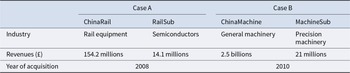
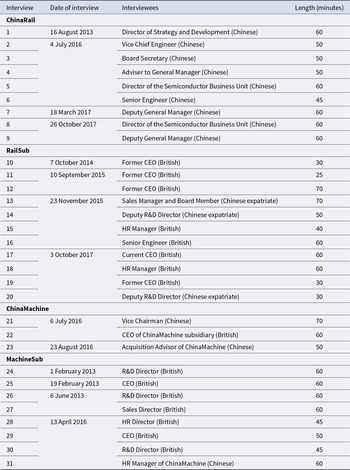


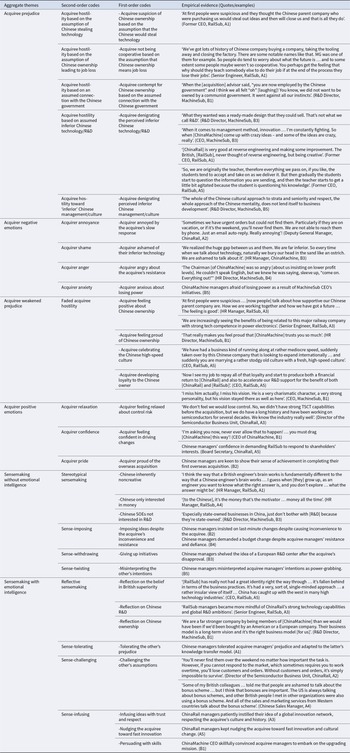
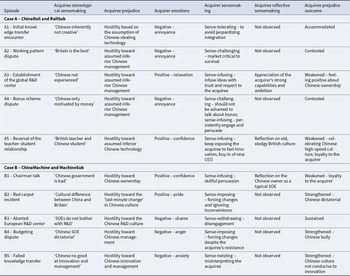


 Open access

