





1 Introduction
1.1 Background
For a long time, there has been a search for adequate analogues of o-minimality in settings other than for real geometry. Several notions have been put forward, each with certain strengths and weaknesses. In Part I [Reference Cluckers, Halupczok and Rideau10], together with this sequel paper, we put forward a notion for tame geometry on non-Archimedean valued fields, called Hensel minimality, both simple and strong and providing a common variant for the settings from, among others, [Reference Haskell16; Reference Macpherson and Steinhorn18; Reference Haskell and Macpherson15; Reference Hrushovski and Kazhdan17; Reference Cluckers and Loeser11].
Let us first explain the key flavor of the definition of Hensel minimality. Often, finding a correct analogue involves some reformulations. Here is a way to reformulate o-minimality: a structure on the real field ${\mathbb R}$
is o-minimal if and only if for each definable subset X of
${\mathbb R}$
is o-minimal if and only if for each definable subset X of ${\mathbb R}$
, there exists a finite set
${\mathbb R}$
, there exists a finite set $C\subset {\mathbb R}$
, such that, for any x in
$C\subset {\mathbb R}$
, such that, for any x in ${\mathbb R}$
, the condition
${\mathbb R}$
, the condition $x\in X$
only depends on the signs of
$x\in X$
only depends on the signs of $x-c$
for c in C, with the sign being negative, zero, or positive. In an equicharacteristic zero valued field K, we replace the sign map by the projection map
$x-c$
for c in C, with the sign being negative, zero, or positive. In an equicharacteristic zero valued field K, we replace the sign map by the projection map $\operatorname {rv}:K\to K/(1+{\mathcal M}_K)$
, where
$\operatorname {rv}:K\to K/(1+{\mathcal M}_K)$
, where ${\mathcal M}_K$
is the maximal ideal of the valuation ring of K, and
${\mathcal M}_K$
is the maximal ideal of the valuation ring of K, and $K/(1+{\mathcal M}_K)$
is the quotient of multiplicative semi-groups. In the mixed characteristic case, one additionally uses ideals of the form
$K/(1+{\mathcal M}_K)$
is the quotient of multiplicative semi-groups. In the mixed characteristic case, one additionally uses ideals of the form $N\cdot {\mathcal M}_K$
for nonzero integers N, instead of just
$N\cdot {\mathcal M}_K$
for nonzero integers N, instead of just ${\mathcal M}_K$
itself. Apart from replacing the sign map, we keep the condition of every definable subset of K being ‘controlled’ by a finite set
${\mathcal M}_K$
itself. Apart from replacing the sign map, we keep the condition of every definable subset of K being ‘controlled’ by a finite set $C\subset K$
. In the real case, C is automatically definable over the same parameters as X; in the valued field case, this is no longer automatic and needs to be imposed. Depending on the precise kind of parameters one allows, one obtains the notion of
$C\subset K$
. In the real case, C is automatically definable over the same parameters as X; in the valued field case, this is no longer automatic and needs to be imposed. Depending on the precise kind of parameters one allows, one obtains the notion of $0$
-h-minimality,
$0$
-h-minimality, $\omega $
-h-minimality or something in-between:
$\omega $
-h-minimality or something in-between: $\ell $
-h-minimality for integers
$\ell $
-h-minimality for integers $\ell>0$
; see Section 2 for the detailed definitions. When we do not want to be precise about the specific version, we just say ‘Hensel minimality’.
$\ell>0$
; see Section 2 for the detailed definitions. When we do not want to be precise about the specific version, we just say ‘Hensel minimality’.
Hensel minimality is similar to o-minimality [Reference van den Dries13; Reference Pillay and Steinhorn21] not only in its definition but also for having strong consequences. In Part I [Reference Cluckers, Halupczok and Rideau10], we focused on the equicharacteristic zero case. In this sequel, we focus on the mixed characteristic case. We obtain analogues of many of the results from [Reference Cluckers, Halupczok and Rideau10]. In addition, in Section 4, we give a new diophantine application, similar to the results by Pila-Wilkie [Reference Pila and Wilkie20] from in o-minimal case; for the moment, this application is for curves only. Many proofs from [Reference Cluckers, Halupczok and Rideau10] adapt to the mixed characteristic case in a rather straightforward way; nevertheless, many proofs are repeated in this sequel, and for many others, we sketch the key ideas so that the reader has the choice between reading the short version here or the detailed version in [Reference Cluckers, Halupczok and Rideau10].
There are several ways to adapt the notions of Hensel minimality from [Reference Cluckers, Halupczok and Rideau10] to the mixed characteristic case, based on coarsenings, on compactness or on a more literal adapation of the definitions for the equicharacteristic zero case. We treat several of these variants, and in one of the most important cases (namely, $1$
-h-minimality), we show that they are equivalent. From this equivalence, we derive that many of the geometric results of [Reference Cluckers, Halupczok and Rideau10] also hold in the mixed characteristic case, with some strong results on Taylor approximation of definable functions. In [Reference Vermeulen23], equivalences of these notions are shown also in other cases.
$1$
-h-minimality), we show that they are equivalent. From this equivalence, we derive that many of the geometric results of [Reference Cluckers, Halupczok and Rideau10] also hold in the mixed characteristic case, with some strong results on Taylor approximation of definable functions. In [Reference Vermeulen23], equivalences of these notions are shown also in other cases.
The name ‘Hensel minimality’ comes from the intuition that a Hensel minimal valued field behaves as nicely as a henselian valued field in the pure valued field language. In equicharacteristic zero, this is reflected by the fact that a pure valued field K is Hensel minimal if and only if K is henselian (where any version of Hensel minimality can be used). In mixed characteristic, this is still true if K is finitely ramified (see Remark 2.2.3), but in general, Hensel minimality only captures tameness from the ramification degree on.
1.2 Overview
Let us give a short overview of the paper. In Section 2, we introduce several variants of Hensel minimality (for both the mixed and the equicharacteristic cases), and we prove that all of them are equivalent in the key case of $1$
-h-minimality (Theorem 2.2.8). We do this for a large part by classical strategies: coarsening of valuations of mixed characteristic to equicharacteristic zero, and model theoretic compactness. A combination of these classical strategies with new geometric and model theoretic arguments leads to our strongest results, like Theorem 3.1.2 on Taylor approximation. It is precisely this result, Theorem 3.1.2 on Taylor approximation, that plays a key role in our diophantine application Theorem 4.0.7, where we estimate the number of rational points of bounded height on transcendental curves. This is the Hensel minimal analogue of point counting on transcendental curves case as treated by Bombieri and Pila [Reference Bombieri and Pila5] and o-minimally by Pila-Wilkie [Reference Pila and Wilkie20], and it is the axiomatic analogue of point counting on subanalytic sets as studied in [Reference Cluckers, Comte and Loeser8] and [Reference Cluckers, Forey and Loeser9], and on analytic sets in [Reference Binyamini and Kato4].
$1$
-h-minimality (Theorem 2.2.8). We do this for a large part by classical strategies: coarsening of valuations of mixed characteristic to equicharacteristic zero, and model theoretic compactness. A combination of these classical strategies with new geometric and model theoretic arguments leads to our strongest results, like Theorem 3.1.2 on Taylor approximation. It is precisely this result, Theorem 3.1.2 on Taylor approximation, that plays a key role in our diophantine application Theorem 4.0.7, where we estimate the number of rational points of bounded height on transcendental curves. This is the Hensel minimal analogue of point counting on transcendental curves case as treated by Bombieri and Pila [Reference Bombieri and Pila5] and o-minimally by Pila-Wilkie [Reference Pila and Wilkie20], and it is the axiomatic analogue of point counting on subanalytic sets as studied in [Reference Cluckers, Comte and Loeser8] and [Reference Cluckers, Forey and Loeser9], and on analytic sets in [Reference Binyamini and Kato4].
In Section 2.6, we develop some resplendency results analogous to the ones from [Reference Cluckers, Halupczok and Rideau10, Section 4] – namely, that Hensel minimality is preserved under certain expansions of the structure (e.g., arbitrary expansions of the value group and the residue field). Those results are used to show the equivalences of Theorem 2.2.8. It follows from the equivalence with item (4) in Theorem 2.2.8 that $1$
-h-minimality is preserved under coarsening of the valuation; such a coarsening result was previously known only for
$1$
-h-minimality is preserved under coarsening of the valuation; such a coarsening result was previously known only for $\omega $
-h-minimality by [Reference Cluckers, Halupczok and Rideau10, Corollary 4.2.4]. Note that in [Reference Vermeulen23], several results of this paper and of part I [Reference Cluckers, Halupczok and Rideau10] are extended from
$\omega $
-h-minimality by [Reference Cluckers, Halupczok and Rideau10, Corollary 4.2.4]. Note that in [Reference Vermeulen23], several results of this paper and of part I [Reference Cluckers, Halupczok and Rideau10] are extended from $1$
-h-minimality to
$1$
-h-minimality to $\ell $
-h-minimality for each
$\ell $
-h-minimality for each $\ell \ge 1$
(for example, their preservation under coarsenings of the valuation).
$\ell \ge 1$
(for example, their preservation under coarsenings of the valuation).
We end the paper with some open questions. One of the big challenges in the current framework is to push our diophantine application farther towards arbitrary dimension and thus get a full Hensel minimal analogue of the results by Pila-Wilkie [Reference Pila and Wilkie20]. Other main challenges are further developments of the geometry, like t-stratifications building on and extending [Reference Cluckers, Halupczok and Rideau10, Section 5.5]. It may also be interesting to compare the notions of Hensel minimal structures with distal expansions on valued fields, as studied recently in [Reference Aschenbrenner, Chernikov, Gehret and Ziegler1].
2 Hensel minimality in characteristic zero (including mixed characteristic)
In this whole section, we fix a theory ${\mathcal T}$
of valued fields of characteristic zero in a language
${\mathcal T}$
of valued fields of characteristic zero in a language ${\mathcal L}$
, expanding the language
${\mathcal L}$
, expanding the language ${\mathcal L}_{\mathrm {val}}= \{+,\cdot ,{\mathcal O}_K\}$
of valued fields. Note that
${\mathcal L}_{\mathrm {val}}= \{+,\cdot ,{\mathcal O}_K\}$
of valued fields. Note that ${\mathcal T}$
is allowed to be noncomplete and that each model K of
${\mathcal T}$
is allowed to be noncomplete and that each model K of ${\mathcal T}$
is a valued field of characteristic zero, which includes both possibilities that K has mixed characteristic or equicharacteristic zero.
${\mathcal T}$
is a valued field of characteristic zero, which includes both possibilities that K has mixed characteristic or equicharacteristic zero.
In this section, we give four alternative definitions of $1$
-h-minimality for
$1$
-h-minimality for ${\mathcal T}$
(see Definitions 2.2.1, 2.2.4, 2.2.5, 2.2.7), and we show that they are equivalent in Theorem 2.2.8. To keep the generality of [Reference Cluckers, Halupczok and Rideau10], we will treat more generally
${\mathcal T}$
(see Definitions 2.2.1, 2.2.4, 2.2.5, 2.2.7), and we show that they are equivalent in Theorem 2.2.8. To keep the generality of [Reference Cluckers, Halupczok and Rideau10], we will treat more generally $\ell $
-h-minimality for
$\ell $
-h-minimality for $\ell \ge 0 $
either an integer or equal to
$\ell \ge 0 $
either an integer or equal to $\omega $
. The first definition is a close adaptation of the main notion of Hensel minimality of [Reference Cluckers, Halupczok and Rideau10, Definition 2.3.3]. Definitions 2.2.4 and 2.2.5 are based on coarsenings, and Definition 2.2.7 corresponds to the criterion for
$\omega $
. The first definition is a close adaptation of the main notion of Hensel minimality of [Reference Cluckers, Halupczok and Rideau10, Definition 2.3.3]. Definitions 2.2.4 and 2.2.5 are based on coarsenings, and Definition 2.2.7 corresponds to the criterion for $1$
-h-minimality from [Reference Cluckers, Halupczok and Rideau10, Theorem 2.9.1]. Since for
$1$
-h-minimality from [Reference Cluckers, Halupczok and Rideau10, Theorem 2.9.1]. Since for $\ell =1$
these notions coincide, we simply will call them
$\ell =1$
these notions coincide, we simply will call them $1$
-h-minimality.
$1$
-h-minimality.
2.1 Basic terminology
We use the following terminology, notation and concepts from [Reference Cluckers, Halupczok and Rideau10]. By a valued field we mean a nontrivially valued field (i.e., the field of fractions of a valuation ring which is not a field itself). Any valued field K is a structure in the language ${\mathcal L}_{\mathrm {val}}= \{+,\cdot ,{\mathcal O}_K\}$
of valued fields, where
${\mathcal L}_{\mathrm {val}}= \{+,\cdot ,{\mathcal O}_K\}$
of valued fields, where $+$
and
$+$
and $\cdot $
are addition and multiplication on K, and where
$\cdot $
are addition and multiplication on K, and where ${\mathcal O}_K$
is (a predicate for) the valuation ring of K. The maximal ideal of
${\mathcal O}_K$
is (a predicate for) the valuation ring of K. The maximal ideal of ${\mathcal O}_K$
is denoted by
${\mathcal O}_K$
is denoted by ${\mathcal M}_K$
. We use multiplicative notation for the value group, which we denote by
${\mathcal M}_K$
. We use multiplicative notation for the value group, which we denote by $\Gamma _K^{\times }$
, and we write
$\Gamma _K^{\times }$
, and we write $\Gamma _K := \Gamma _K^{\times } \cup \{0\}$
. We write
$\Gamma _K := \Gamma _K^{\times } \cup \{0\}$
. We write $|\cdot |\colon K \to \Gamma _K$
for the valuation map. By an open ball, we mean a set of the form
$|\cdot |\colon K \to \Gamma _K$
for the valuation map. By an open ball, we mean a set of the form $B_{<\lambda }(a)=\{x\in K\mid |x-a| < \lambda \}$
for some
$B_{<\lambda }(a)=\{x\in K\mid |x-a| < \lambda \}$
for some $\lambda $
in
$\lambda $
in $\Gamma _K^{\times }$
and some a in K. We define
$\Gamma _K^{\times }$
and some a in K. We define $\operatorname {rad}_{\mathrm {op}} B_{<\lambda }(a)=\lambda $
to be the open radius of such a ball. Similarly, a closed ball is a set of the form
$\operatorname {rad}_{\mathrm {op}} B_{<\lambda }(a)=\lambda $
to be the open radius of such a ball. Similarly, a closed ball is a set of the form $B_{\leq \lambda }(a) = \{x\in K\mid |x-a|\leq \lambda \}$
. Its closed radius is
$B_{\leq \lambda }(a) = \{x\in K\mid |x-a|\leq \lambda \}$
. Its closed radius is $\operatorname {rad}_{\mathrm {cl}} B_{\leq \lambda }(a)=\lambda $
.
$\operatorname {rad}_{\mathrm {cl}} B_{\leq \lambda }(a)=\lambda $
.
For any proper ideal I of the valuation ring ${\mathcal O}_K$
, we write
${\mathcal O}_K$
, we write $\mathrm {RV}_I$
for the corresponding leading term structure (i.e., the disjoint union of
$\mathrm {RV}_I$
for the corresponding leading term structure (i.e., the disjoint union of $\{0\}$
with the quotient group
$\{0\}$
with the quotient group $K^{\times } / (1+I)$
, and
$K^{\times } / (1+I)$
, and $\operatorname {rv}_I:K\to \mathrm {RV}_I$
for the leading term map – that is, the quotient map extended by sending sending
$\operatorname {rv}_I:K\to \mathrm {RV}_I$
for the leading term map – that is, the quotient map extended by sending sending $0$
to
$0$
to $0$
). When I is the open ball
$0$
). When I is the open ball $\{x \in K \mid |x| < \lambda \}$
for some
$\{x \in K \mid |x| < \lambda \}$
for some $\lambda \leq 1$
in
$\lambda \leq 1$
in $\Gamma _K^{\times }$
, we simply write
$\Gamma _K^{\times }$
, we simply write $\mathrm {RV}_{\lambda }$
and
$\mathrm {RV}_{\lambda }$
and $\operatorname {rv}_{\lambda }$
instead of
$\operatorname {rv}_{\lambda }$
instead of $\mathrm {RV}_I$
and
$\mathrm {RV}_I$
and $\operatorname {rv}_I$
, and we write
$\operatorname {rv}_I$
, and we write $\mathrm {RV}$
and
$\mathrm {RV}$
and $\operatorname {rv}$
instead of
$\operatorname {rv}$
instead of $\mathrm {RV}_1$
and
$\mathrm {RV}_1$
and $\operatorname {rv}_1$
.
$\operatorname {rv}_1$
.
We will sometimes also write $\mathrm {RV}_K$
for
$\mathrm {RV}_K$
for $\mathrm {RV}$
and similarly
$\mathrm {RV}$
and similarly $\mathrm {RV}_{K,\lambda }$
for
$\mathrm {RV}_{K,\lambda }$
for $\mathrm {RV}_{\lambda }$
if multiple fields are under consideration.
$\mathrm {RV}_{\lambda }$
if multiple fields are under consideration.
Definition 2.1.1. Let $\lambda \leq 1$
be an element of
$\lambda \leq 1$
be an element of $\Gamma _K^{\times }$
.
$\Gamma _K^{\times }$
.
-
(1) Given an arbitrary set $X \subset K$
and a finite nonempty set
$C \subset K$
, we say that X is
$\lambda $
-prepared by C if the condition whether some
$x\in K$
lies in X depends only on the tuple
$(\operatorname {rv}_{\lambda }(x-c))_{c\in C}$
.
$X \subset K$
and a finite nonempty set
$C \subset K$
, we say that X is
$\lambda $
-prepared by C if the condition whether some
$x\in K$
lies in X depends only on the tuple
$(\operatorname {rv}_{\lambda }(x-c))_{c\in C}$
. -
(2) We say that a ball
$B \subset K$
is
$\lambda $
-next to an element
$c \in K$
if for some (nonzero) element
$$\begin{align*}B= \{x\in K\mid \operatorname{rv}_{\lambda}(x-c) = \xi \} \end{align*}$$
$\xi $
of
$\mathrm {RV}_{\lambda }$
.
-
(3) We say that a ball
$B \subset K$
is
$\lambda $
-next to a finite nonempty set
$C \subset K$
if B equals
$\bigcap _{c\in C} B_c$
with
$B_c$
a ball
$\lambda $
-next to c for each
$c\in C$
.


One easily verifies that for fixed C and $\lambda $
, the set of all balls
$\lambda $
, the set of all balls $\lambda $
-next to C forms a partition of
$\lambda $
-next to C forms a partition of $K \setminus C$
. Moreover, a set
$K \setminus C$
. Moreover, a set $X \subset K$
is
$X \subset K$
is $\lambda $
-prepared by C if and only if
$\lambda $
-prepared by C if and only if $X \setminus C$
is a union of parts of this partition (without any condition on
$X \setminus C$
is a union of parts of this partition (without any condition on $X \cap C$
). Decreasing
$X \cap C$
). Decreasing $\lambda $
refines this partition (i.e., if
$\lambda $
refines this partition (i.e., if $\lambda ' < \lambda $
and
$\lambda ' < \lambda $
and $C \ \lambda $
-prepares X, then it also
$C \ \lambda $
-prepares X, then it also $\lambda '$
-prepares X). Similarly, if
$\lambda '$
-prepares X). Similarly, if $C' \supset C$
and
$C' \supset C$
and $C \ \lambda $
-prepares X, then
$C \ \lambda $
-prepares X, then $C'$
also
$C'$
also $\lambda $
-prepares X.
$\lambda $
-prepares X.
Example 2.1.2. Fix any $\lambda \le 1$
in
$\lambda \le 1$
in $\Gamma _K^{\times }$
.
$\Gamma _K^{\times }$
.
-
(1) A finite set
$X \subset K$
is
$\lambda $
-prepared by C if and only if C contains X. -
(2) A subset
$X \subset K$
is
$\lambda $
-prepared by the set
$C = \{0\}$
if and only if X is a (possibly infinite) union of fibers of the map
$\operatorname {rv}_{\lambda }$
– that is, if it is of the form
$X = \operatorname {rv}_{\lambda }^{-1}(\Xi )$
for an arbitrary subset
$\Xi \subset \mathrm {RV}_{\lambda }$
. -
(3) Every open ball
$B = B_{< \lambda }(a)$
of radius
$\lambda $
contained in
$\mathcal {O}_K$
is
$\lambda $
-prepared by
$C = \{0\}$
, though B might not be
$\lambda $
-next to C. (It is
$\lambda $
-next to C if and only if
$|a| = 1$
.)


The following notation specific to mixed characteristic already appears in [Reference Cluckers, Halupczok and Rideau10, Section 6].
Definition 2.1.3 (Equicharacteristic zero coarsening).
Given a model $K \models {\mathcal T}$
, we write
$K \models {\mathcal T}$
, we write ${\mathcal O}_{K,{\mathrm {ecc}}}$
for the smallest subring of K containing
${\mathcal O}_{K,{\mathrm {ecc}}}$
for the smallest subring of K containing ${\mathcal O}_K$
and
${\mathcal O}_K$
and ${\mathbb Q}$
, and we let
${\mathbb Q}$
, and we let $|\cdot |_{{\mathrm {ecc}}}\colon K \to \Gamma _{K,{\mathrm {ecc}}}$
be the corresponding valuation. (Thus,
$|\cdot |_{{\mathrm {ecc}}}\colon K \to \Gamma _{K,{\mathrm {ecc}}}$
be the corresponding valuation. (Thus, $|\cdot |_{{\mathrm {ecc}}}$
is the finest coarsening of
$|\cdot |_{{\mathrm {ecc}}}$
is the finest coarsening of $|\cdot |$
which has equicharacteristic zero; note that
$|\cdot |$
which has equicharacteristic zero; note that $|\cdot |_{{\mathrm {ecc}}}$
can be a trivial valuation on K.) If
$|\cdot |_{{\mathrm {ecc}}}$
can be a trivial valuation on K.) If $|\cdot |_{{\mathrm {ecc}}}$
is a nontrivial valuation (i.e.,
$|\cdot |_{{\mathrm {ecc}}}$
is a nontrivial valuation (i.e., ${\mathcal O}_{K,{\mathrm {ecc}}} \ne K$
), then we also use the following notation:
${\mathcal O}_{K,{\mathrm {ecc}}} \ne K$
), then we also use the following notation: $\operatorname {rv}_{{\mathrm {ecc}}}\colon K \to \mathrm {RV}_{\mathrm {ecc}}$
is the leading term map with respect to
$\operatorname {rv}_{{\mathrm {ecc}}}\colon K \to \mathrm {RV}_{\mathrm {ecc}}$
is the leading term map with respect to $|\cdot |_{{\mathrm {ecc}}}$
. Given
$|\cdot |_{{\mathrm {ecc}}}$
. Given $\lambda \in \Gamma _{K,{\mathrm {ecc}}}$
,
$\lambda \in \Gamma _{K,{\mathrm {ecc}}}$
, $\operatorname {rv}_{\lambda }\colon K \to \mathrm {RV}_{\lambda }$
is the leading term map with respect to
$\operatorname {rv}_{\lambda }\colon K \to \mathrm {RV}_{\lambda }$
is the leading term map with respect to $\lambda $
, and
$\lambda $
, and ${\mathcal L}_{{\mathrm {ecc}}}$
is the extension of
${\mathcal L}_{{\mathrm {ecc}}}$
is the extension of ${\mathcal L}$
by a predicate for
${\mathcal L}$
by a predicate for ${\mathcal O}_{K,{\mathrm {ecc}}}$
. More generally, for any nontrivial coarsening
${\mathcal O}_{K,{\mathrm {ecc}}}$
. More generally, for any nontrivial coarsening $|\cdot |_c$
of the valuation on K, write
$|\cdot |_c$
of the valuation on K, write ${\mathcal L}_c$
for the extension of
${\mathcal L}_c$
for the extension of ${\mathcal L}$
by a predicate for the valuation ring for
${\mathcal L}$
by a predicate for the valuation ring for $|\cdot |_c$
.
$|\cdot |_c$
.
2.2 Equivalent definitions
There are several natural notions of Hensel minimality in mixed characteristic. We give four possible definitions. Theorem 2.2.8 states that these are all equivalent, in the case of $1$
-h-minimality.
$1$
-h-minimality.
We first adapt the main definition of Hensel minimality from [Reference Cluckers, Halupczok and Rideau10, Definition 2.3.3] to include the mixed characteristic case. Recall that ${\mathcal T}$
is a theory of valued fields of characteristic zero in a language
${\mathcal T}$
is a theory of valued fields of characteristic zero in a language ${\mathcal L}\supset {\mathcal L}_{\mathrm {val}}$
.
${\mathcal L}\supset {\mathcal L}_{\mathrm {val}}$
.
Definition 2.2.1. Let $\ell \geq 0$
be either an integer or
$\ell \geq 0$
be either an integer or $\omega $
. Say that
$\omega $
. Say that ${\mathcal T}$
is
${\mathcal T}$
is $\ell $
-h
$\ell $
-h $^{\mathrm {mix}}$
-minimal if for each model K of
$^{\mathrm {mix}}$
-minimal if for each model K of ${\mathcal T}$
, for each integer
${\mathcal T}$
, for each integer $n \ge 1$
, each
$n \ge 1$
, each $\lambda \le 1$
in
$\lambda \le 1$
in $\Gamma _K^{\times }$
, each
$\Gamma _K^{\times }$
, each $A\subset K$
, each finite
$A\subset K$
, each finite $A'\subset \mathrm {RV}_{\lambda }$
of cardinality
$A'\subset \mathrm {RV}_{\lambda }$
of cardinality $\# A'\le \ell $
and each
$\# A'\le \ell $
and each $(A\cup \mathrm {RV}_{|n|} \cup A')$
-definable set
$(A\cup \mathrm {RV}_{|n|} \cup A')$
-definable set $X\subset K$
, there exists an integer
$X\subset K$
, there exists an integer $m \ge 1$
such that X is
$m \ge 1$
such that X is $|m|\lambda $
-prepared by a finite A-definable set
$|m|\lambda $
-prepared by a finite A-definable set $C\subset K$
. If all models of
$C\subset K$
. If all models of ${\mathcal T}$
are of equicharacteristic zero, we also call
${\mathcal T}$
are of equicharacteristic zero, we also call ${\mathcal T}$
simply
${\mathcal T}$
simply $\ell $
-h-minimal.
$\ell $
-h-minimal.
As one sees from the definition, bigger values of $\ell $
yield stronger conditions (i.e., for
$\ell $
yield stronger conditions (i.e., for $\ell < \ell '$
,
$\ell < \ell '$
, $\ell '$
-h
$\ell '$
-h $^{\mathrm {mix}}$
-minimality implies
$^{\mathrm {mix}}$
-minimality implies $\ell $
-h
$\ell $
-h $^{\mathrm {mix}}$
-minimality).
$^{\mathrm {mix}}$
-minimality).
Clearly, if all models K of ${\mathcal T}$
are of equicharacteristic zero, then one can take
${\mathcal T}$
are of equicharacteristic zero, then one can take $n=m=1$
, so the above definition of
$n=m=1$
, so the above definition of $\ell $
-h-minimality agrees with [Reference Cluckers, Halupczok and Rideau10, Definition 2.3.3]. In the mixed characteristic case, one is obliged to take the valuation of integers into account in Definition 2.2.1. The general philosophy is that
$\ell $
-h-minimality agrees with [Reference Cluckers, Halupczok and Rideau10, Definition 2.3.3]. In the mixed characteristic case, one is obliged to take the valuation of integers into account in Definition 2.2.1. The general philosophy is that $\lambda $
-preparation in equicharacteristic zero becomes
$\lambda $
-preparation in equicharacteristic zero becomes $\lambda \cdot |m|$
-preparation in mixed characteristic, for some integer
$\lambda \cdot |m|$
-preparation in mixed characteristic, for some integer $m \ge 1$
, as the following example illustrates.
$m \ge 1$
, as the following example illustrates.
Example 2.2.2. The set X of cubes in the $3$
-adic numbers
$3$
-adic numbers ${\mathbb Q}_3$
cannot be
${\mathbb Q}_3$
cannot be $1$
-prepared by any finite set C, since each of the infinitely many disjoint balls
$1$
-prepared by any finite set C, since each of the infinitely many disjoint balls $27^r(1+3{\mathbb Z}_3)$
,
$27^r(1+3{\mathbb Z}_3)$
, $r \in {\mathbb Z}$
, contains both cubes and non-cubes. However, X is a union of (infinitely many) fibers of the map
$r \in {\mathbb Z}$
, contains both cubes and non-cubes. However, X is a union of (infinitely many) fibers of the map $\operatorname {rv}_{|3|}\colon {\mathbb Q}_3 \to \mathrm {RV}_{|3|}$
, so it is
$\operatorname {rv}_{|3|}\colon {\mathbb Q}_3 \to \mathrm {RV}_{|3|}$
, so it is $|3|$
-prepared by the set
$|3|$
-prepared by the set $\{0\}$
.
$\{0\}$
.
In [Reference Dolich and Goodrick12], Dolich and Goodrick introduced the notion of a visceral structure (a structure equipped with a uniformly definable topological base satisfying certain simple axioms) and showed several tameness results in this abstract setting. It is easy to see that $0$
-h
$0$
-h $^{\mathrm {mix}}$
-minimality implies viscerality in this sense.
$^{\mathrm {mix}}$
-minimality implies viscerality in this sense.
Remark 2.2.3. In the equicharacteristic zero case, $0$
-h-minimality implies definable spherical completeness (meaning that every definable family of nested balls has nonempty intersection), and this in turn implies henselianity (see [Reference Cluckers, Halupczok and Rideau10], Lemma 2.7.1 and Theorem 2.7.2). A similar implication holds in mixed characteristic if we restrict to finitely ramified fields K. If such a K is
$0$
-h-minimality implies definable spherical completeness (meaning that every definable family of nested balls has nonempty intersection), and this in turn implies henselianity (see [Reference Cluckers, Halupczok and Rideau10], Lemma 2.7.1 and Theorem 2.7.2). A similar implication holds in mixed characteristic if we restrict to finitely ramified fields K. If such a K is $0$
-h
$0$
-h $^{\mathrm {mix}}$
-minimal, then it is definable spherical complete by [Reference Bradley-Williams and Halupczok6, Proposition 1.4], and this in turn implies that K is henselian using the usual argument via Newton approximation (see the proof of [Reference Cluckers, Halupczok and Rideau10, Theorem 2.7.2] for details). In contrast, note that if K is not finitely ramified, then
$^{\mathrm {mix}}$
-minimal, then it is definable spherical complete by [Reference Bradley-Williams and Halupczok6, Proposition 1.4], and this in turn implies that K is henselian using the usual argument via Newton approximation (see the proof of [Reference Cluckers, Halupczok and Rideau10, Theorem 2.7.2] for details). In contrast, note that if K is not finitely ramified, then $0$
-h
$0$
-h $^{\mathrm {mix}}$
-minimality does not imply definable spherical completeness; see Example 1.5 in [Reference Bradley-Williams and Halupczok6].
$^{\mathrm {mix}}$
-minimality does not imply definable spherical completeness; see Example 1.5 in [Reference Bradley-Williams and Halupczok6].
The following two definitions use equicharacteristic zero coarsenings of the valuation to define mixed characteristic Hensel minimality in terms of the equicharacteristic notions from [Reference Cluckers, Halupczok and Rideau10, Definition 2.3.3] (which we just recalled in Definition 2.2.1). We use notation from Definition 2.1.3.
Definition 2.2.4. Let $\ell \geq 0$
be either an integer or
$\ell \geq 0$
be either an integer or $\omega $
. We say that
$\omega $
. We say that ${\mathcal T}$
is
${\mathcal T}$
is $\ell $
-h
$\ell $
-h $^{\mathrm {ecc}}$
-minimal if for every model
$^{\mathrm {ecc}}$
-minimal if for every model $K \models {\mathcal T}$
, the following holds. If the valuation
$K \models {\mathcal T}$
, the following holds. If the valuation $|\cdot |_{{\mathrm {ecc}}}$
on K is nontrivial, then the
$|\cdot |_{{\mathrm {ecc}}}$
on K is nontrivial, then the ${\mathcal L}_{{\mathrm {ecc}}}$
-theory of K, when considered as a valued field with the valuation
${\mathcal L}_{{\mathrm {ecc}}}$
-theory of K, when considered as a valued field with the valuation $|\cdot |_{{\mathrm {ecc}}}$
, is
$|\cdot |_{{\mathrm {ecc}}}$
, is $\ell $
-h-minimal.
$\ell $
-h-minimal.
One can also require every equicharacteristic zero coarsening to be $\ell $
-h-minimal, leading to the following definition.
$\ell $
-h-minimal, leading to the following definition.
Definition 2.2.5. Let $\ell \geq 0$
be either an integer or
$\ell \geq 0$
be either an integer or $\omega $
. We say that
$\omega $
. We say that ${\mathcal T}$
is
${\mathcal T}$
is $\ell $
-h
$\ell $
-h $^{\mathrm {{coars}}}$
-minimal if for every model
$^{\mathrm {{coars}}}$
-minimal if for every model $K \models {\mathcal T}$
and each nontrivial equicharacteristic coarsening
$K \models {\mathcal T}$
and each nontrivial equicharacteristic coarsening $|\cdot |_c$
of the valuation on K, the
$|\cdot |_c$
of the valuation on K, the ${\mathcal L}_{c}$
-theory of K, when considered as a valued field with the valuation
${\mathcal L}_{c}$
-theory of K, when considered as a valued field with the valuation $|\cdot |_{c}$
, is
$|\cdot |_{c}$
, is $\ell $
-h-minimal.
$\ell $
-h-minimal.
Remark 2.2.6. Since in an equicharacteristic zero valued field K, we have ${\mathcal O}_{K,{\mathrm {ecc}}} = {\mathcal O}_K$
, the theory of such a field is
${\mathcal O}_{K,{\mathrm {ecc}}} = {\mathcal O}_K$
, the theory of such a field is $\ell $
-h
$\ell $
-h $^{\mathrm {ecc}}$
-minimal if and only if it is
$^{\mathrm {ecc}}$
-minimal if and only if it is $\ell $
-h-minimal, for each
$\ell $
-h-minimal, for each $\ell \ge 0$
. For more subtle reasons,
$\ell \ge 0$
. For more subtle reasons, $\omega $
-h
$\omega $
-h $^{\mathrm {{coars}}}$
-minimality is equivalent to
$^{\mathrm {{coars}}}$
-minimality is equivalent to $\omega $
-h
$\omega $
-h $^{\mathrm {ecc}}$
-minimality by [Reference Cluckers, Halupczok and Rideau10, Corollary 4.2.4]. Even more, in [Reference Vermeulen23], it is shown that in equicharacteristic zero,
$^{\mathrm {ecc}}$
-minimality by [Reference Cluckers, Halupczok and Rideau10, Corollary 4.2.4]. Even more, in [Reference Vermeulen23], it is shown that in equicharacteristic zero, $\ell $
-h
$\ell $
-h $^{\mathrm {{coars}}}$
-minimality is equivalent to
$^{\mathrm {{coars}}}$
-minimality is equivalent to $\ell $
-h
$\ell $
-h $^{\mathrm {ecc}}$
-minimality for any
$^{\mathrm {ecc}}$
-minimality for any $\ell \geq 1$
. In mixed characteristic, we will show the analogue of this (and more) for
$\ell \geq 1$
. In mixed characteristic, we will show the analogue of this (and more) for $\ell =1$
in Theorem 2.2.8.
$\ell =1$
in Theorem 2.2.8.
By the usual play of compactness, preparation results that hold in each model of ${\mathcal T}$
also hold uniformly for all models of
${\mathcal T}$
also hold uniformly for all models of ${\mathcal T}$
, and results in equicharacteristic zero can be transfered to mixed characteristic. We will give examples in the proofs for Corollary 2.3.5 and Corollary 2.5.5 to illustrate how compactness is used for these purposes.
${\mathcal T}$
, and results in equicharacteristic zero can be transfered to mixed characteristic. We will give examples in the proofs for Corollary 2.3.5 and Corollary 2.5.5 to illustrate how compactness is used for these purposes.
In [Reference Cluckers, Halupczok and Rideau10, Theorem 2.9.1], a geometric criterion for $1$
-h-minimality is given in equicharacteristic zero. The following is a mixed characteristic version of that criterion.
$1$
-h-minimality is given in equicharacteristic zero. The following is a mixed characteristic version of that criterion.
Definition 2.2.7. Let $f: K\to K$
be A-definable for some set
$f: K\to K$
be A-definable for some set $A\subset K\cup \mathrm {RV}_{|n|}$
, for some positive integer n. We define the following two properties:
$A\subset K\cup \mathrm {RV}_{|n|}$
, for some positive integer n. We define the following two properties:
-
(T1mix) There exists a finite A-definable
$C\subset K$
and a positive integer m such that for every ball
$B \ |m|$
-next to C, there exists
$\mu _B\in \Gamma _K$
such that for
$x,y\in B$
, we have
$$\begin{align*}\mu_B\cdot|m|\cdot |x-y|\leq |f(x)-f(y)| \leq \mu_B\cdot \left|\frac{1}{m}\right| \cdot |x-y|. \end{align*}$$
-
(T2) The set
$\{y\in K\mid f^{-1}(y) \text { is infinite}\}$
is finite.


We say that ${\mathcal T}$
satisfies (T1,T2) if for all f, A and n as above, the two conditions (T1
${\mathcal T}$
satisfies (T1,T2) if for all f, A and n as above, the two conditions (T1 $^{\mathrm {mix}}$
) and (T2) hold.
$^{\mathrm {mix}}$
) and (T2) hold.
We now have several variants of 1-h-minimality in mixed characteristic. The main result of this section is the following, stating that all of the above definitions agree.
Theorem 2.2.8. The following are equivalent, for a theory ${\mathcal T}$
of valued fields of characteristic zero (possibly of mixed characteristic) in a language
${\mathcal T}$
of valued fields of characteristic zero (possibly of mixed characteristic) in a language ${\mathcal L}$
containing
${\mathcal L}$
containing ${\mathcal L}_{\mathrm {val}}$
.
${\mathcal L}_{\mathrm {val}}$
.
-
(1)
${\mathcal T}$
is 1-h
$^{\mathrm {ecc}}$
-minimal. -
(2)
${\mathcal T}$
is 1-h
$^{\mathrm {mix}}$
-minimal. -
(3)
${\mathcal T}$
satisfies (T1,T2). -
(4)
${\mathcal T}$
is 1-h
$^{\mathrm {{coars}}}$
-minimal.


Therefore, we will call this common notion simply 1-h-minimality.
We will prove Theorem 2.2.8 in Section 2.7. Until then, we continue distinguishing between the four notions.
2.3 Basic results under 1-h
$^{\mathrm {mix}}$
-minimality

Many basic results from [Reference Cluckers, Halupczok and Rideau10] also hold in mixed characteristic with only minor changes. In particular, this includes all the results of Sections 2.4–2.6 from [Reference Cluckers, Halupczok and Rideau10], and those of Section 2.8 up to Lemma 2.8.5. In the following, we state the precise version of the mixed characteristic results. When a proof is (almost) identical to the corresponding one from [Reference Cluckers, Halupczok and Rideau10], we only give a sketch so that the reader has the choice between reading the short version here or the long version in [Reference Cluckers, Halupczok and Rideau10].
Lemma 2.3.1. Assume that ${\mathcal T}$
is
${\mathcal T}$
is $0$
-h
$0$
-h $^{\mathrm {mix}}$
-minimal. The following results are true for any model K of
$^{\mathrm {mix}}$
-minimal. The following results are true for any model K of ${\mathcal T}$
.
${\mathcal T}$
.
-
(1) (Adding constants [Reference Cluckers, Halupczok and Rideau10, Lemma 2.4.1]). If
$A\subset K\cup \mathrm {RV}_{|n|}^{\mathrm {eq}}$
, then
$\operatorname {Th}_{{\mathcal L}(A)}(K)$
is
$0$
-h
$^{\mathrm {mix}}$
-minimal. (And similarly, if
${\mathcal T}$
is
$\ell $
-h
$^{\mathrm {mix}}$
-minimal, then
$\operatorname {Th}_{{\mathcal L}(A)}(K)$
is
$\ell $
-h
$^{\mathrm {mix}}$
-minimal for any
$\ell $
and any such A.) -
(2) (Preparation is first order [Reference Cluckers, Halupczok and Rideau10, Lemma 2.4.2]). If
$X_q, C_q$
are
$\emptyset $
-definable families of subsets of K with q running over an
$\emptyset $
-definable Q in an arbitrary imaginary sort, and
$C_q$
is finite for all q, then the set of
$(q, \lambda )\in Q\times \Gamma _K^{\times }$
with
$\lambda \leq 1$
such that
$C_q \ \lambda $
-prepares
$X_q$
is
$\emptyset $
-definable. -
(3) (
$\exists ^{\infty }$
-elimination [Reference Cluckers, Halupczok and Rideau10, Lemma 2.5.2]). Every infinite
$\emptyset $
-definable
$X\subset K$
contains an open ball. -
(4) (Finite sets are
$\mathrm {RV}$
-parametrized [Reference Cluckers, Halupczok and Rideau10, Lemma 2.5.3]). If
$C_q\subset K$
is a
$\emptyset $
-definable family of finite sets, for q in some arbitrary
$\emptyset $
-definable imaginary sort Q, then there is a
$\emptyset $
-definable family of injections
$f_q: C_q\to \mathrm {RV}_{|n|}^k$
(for some
$k \ge 0$
and
$n \ge 1$
). -
(5) (
$\lambda $
-next balls as unions of fibres [Reference Cluckers, Halupczok and Rideau10, Lemma 2.5.4]). Let
$C\subset K$
be a finite
$\emptyset $
-definable set. Then for any
$\lambda \le 1$
, there is a
$\{\lambda \}$
-definable map
$f: K\to \mathrm {RV}_{|n|}^k\times \mathrm {RV}_{|m|\lambda }$
(for some k, n and m) such that every ball
$\lambda $
-next to C is a union of fibres of f. If, moreover,
$\lambda = |n'|$
for some integer
$n'>0$
, then we can ensure that for some integer
$p>0$
, every ball
$|p|$
-next to C is contained in a fibre of f.


In (1) of Lemma 2.3.1, by $\mathrm {RV}_{|n|}^{\mathrm {eq}}$
, we mean imaginary sorts of the form
$\mathrm {RV}_{|n|}^{\mathrm {eq}}$
, we mean imaginary sorts of the form $(\mathrm {RV}_{|n|})^m/\mathord {\sim }$
, for some m and some
$(\mathrm {RV}_{|n|})^m/\mathord {\sim }$
, for some m and some $\emptyset $
-definable equivalence relations
$\emptyset $
-definable equivalence relations $\sim $
.
$\sim $
.
Proof of Lemma 2.3.1.
(1) and (2) are straightforward from the definition. (3) also follows directly by preparing X.
(4) Using (3), we can assume that $\#C_q$
does not depend on q. We define
$\#C_q$
does not depend on q. We define $a_q := \frac 1{\#C_q}\sum _{x \in C_q} x$
and
$a_q := \frac 1{\#C_q}\sum _{x \in C_q} x$
and $\hat f_q\colon C_q\to \mathrm {RV}_{|n|}, x \mapsto \operatorname {rv}_{|n|}(x - a_q)$
for some n which is a multiple of
$\hat f_q\colon C_q\to \mathrm {RV}_{|n|}, x \mapsto \operatorname {rv}_{|n|}(x - a_q)$
for some n which is a multiple of $\#C_q$
. This implies that
$\#C_q$
. This implies that $\hat f_q$
is not constant on
$\hat f_q$
is not constant on $C_q$
. We then apply induction to the family consisting of all fibers of
$C_q$
. We then apply induction to the family consisting of all fibers of $f_q$
, for all q. (We take the final n to be a multiple of all cardinalities
$f_q$
, for all q. (We take the final n to be a multiple of all cardinalities $\#C_q$
appearing during this process.)
$\#C_q$
appearing during this process.)
(5) For $x\in K$
, define
$x\in K$
, define
 $$ \begin{align*} \mu(x) &= \min\{|x-c|\mid c\in C\},\\ C(x) &= \{c\in C\mid |x-c| = \mu(x)\}, \\ a(x) &= \frac{1}{\#C(x)}\sum_{c\in C(x)}c. \end{align*} $$
The map $a: K\to K$
has finite image, so by (4), we can find an injection
$a: K\to K$
has finite image, so by (4), we can find an injection $\alpha : \operatorname {im} a\to \mathrm {RV}_{|n|}^k$
. Let
$\alpha : \operatorname {im} a\to \mathrm {RV}_{|n|}^k$
. Let $m = \max \{C(x)\mid x\in K\}!$
and define the map f as
$m = \max \{C(x)\mid x\in K\}!$
and define the map f as
 $$\begin{align*}f(x) := \begin{cases}(\alpha(a(x)), \operatorname{rv}_{|m|\lambda}(x-a(x))) & \text{ if } |x-a(x)|\geq \mu(x)\lambda|m| \\ (\alpha(a(x)), \operatorname{rv}_{|m|\lambda}(0) ) & \text{ if } |x-a(x)|< \mu(x)\lambda|m|. \end{cases} \end{align*}$$
If x and $x'$
are in the same ball
$x'$
are in the same ball $\lambda $
-next to C, then
$\lambda $
-next to C, then $C(x)=C(x')$
and so
$C(x)=C(x')$
and so $a(x) = a(x')$
. If x and
$a(x) = a(x')$
. If x and $x'$
are in the same fibre of f and we are in the first case, then the fact that
$x'$
are in the same fibre of f and we are in the first case, then the fact that $\operatorname {rv}_{|m|\lambda }(x-a(x)) = \operatorname {rv}_{|m|\lambda }(x'-a(x'))$
implies that
$\operatorname {rv}_{|m|\lambda }(x-a(x)) = \operatorname {rv}_{|m|\lambda }(x'-a(x'))$
implies that $\operatorname {rv}_{\lambda }(x-c) = \operatorname {rv}_{\lambda }(x'-c)$
for any
$\operatorname {rv}_{\lambda }(x-c) = \operatorname {rv}_{\lambda }(x'-c)$
for any $c\in C$
. Thus, any fibre of f is contained in a ball
$c\in C$
. Thus, any fibre of f is contained in a ball $\lambda $
-next to C.
$\lambda $
-next to C.
If $\lambda = |n'|$
for some integer
$\lambda = |n'|$
for some integer $n'$
, then one can take
$n'$
, then one can take $p = n'\cdot m$
. Then f will be constant on any ball
$p = n'\cdot m$
. Then f will be constant on any ball $|p|$
-next to C.
$|p|$
-next to C.
The following proposition states that we can also prepare families, similarly to [Reference Cluckers, Halupczok and Rideau10, Proposition 2.6.2]. That proposition will also be needed for $0$
-h
$0$
-h $^{\mathrm {mix}}$
-minimality, so we formulate it more generally.
$^{\mathrm {mix}}$
-minimality, so we formulate it more generally.
Proposition 2.3.2 (Preparing families).
Assume $\ell $
-h
$\ell $
-h $^{\mathrm {mix}}$
-minimality for
$^{\mathrm {mix}}$
-minimality for ${\mathcal T}$
and some
${\mathcal T}$
and some $\ell \ge 0$
. Let K be a model of
$\ell \ge 0$
. Let K be a model of ${\mathcal T}$
. Let
${\mathcal T}$
. Let $A\subset K$
and let
$A\subset K$
and let
 $$\begin{align*}W\subset K\times \mathrm{RV}^k_{|n|} \times \bigcup_{\lambda \le 1}\mathrm{RV}_{\lambda}^{\ell} \end{align*}$$
be $(A \cup \mathrm {RV}_{|n|})$
-definable for some integers k and
$(A \cup \mathrm {RV}_{|n|})$
-definable for some integers k and $n \ge 1$
. Then there exists a finite A-definable set
$n \ge 1$
. Then there exists a finite A-definable set $C \subset K$
and a positive integer m such that for any
$C \subset K$
and a positive integer m such that for any $\lambda \leq 1$
and any ball B which is
$\lambda \leq 1$
and any ball B which is $|m|\lambda $
-next to C, the set
$|m|\lambda $
-next to C, the set $W_{x, \lambda }:= \{(\xi , \xi ') \in \mathrm {RV}^k_{|n|} \times \mathrm {RV}_{\lambda }^{\ell } \mid (x, \xi , \xi ') \in W\}$
is independent of x as x runs over B.
$W_{x, \lambda }:= \{(\xi , \xi ') \in \mathrm {RV}^k_{|n|} \times \mathrm {RV}_{\lambda }^{\ell } \mid (x, \xi , \xi ') \in W\}$
is independent of x as x runs over B.
Proof. For each $\lambda $
and each
$\lambda $
and each $(\xi , \xi ') \in \mathrm {RV}^k_{|n|} \times \mathrm {RV}_{\lambda }^{\ell }$
, let
$(\xi , \xi ') \in \mathrm {RV}^k_{|n|} \times \mathrm {RV}_{\lambda }^{\ell }$
, let $C_{\lambda ,\xi ,\xi '}$
be a finite A-definable set
$C_{\lambda ,\xi ,\xi '}$
be a finite A-definable set $|m_{\lambda ,\xi ,\xi '}|\lambda $
-preparing the fiber
$|m_{\lambda ,\xi ,\xi '}|\lambda $
-preparing the fiber $W_{\xi ,\xi '} \subset K$
. Using compactness, we may assume that for varying
$W_{\xi ,\xi '} \subset K$
. Using compactness, we may assume that for varying $\lambda ,\xi ,\xi '$
, there are only finitely many different sets
$\lambda ,\xi ,\xi '$
, there are only finitely many different sets $C_{\lambda ,\xi ,\xi '}$
and integers
$C_{\lambda ,\xi ,\xi '}$
and integers $m_{\lambda ,\xi ,\xi '}$
. Let C be the union of the
$m_{\lambda ,\xi ,\xi '}$
. Let C be the union of the $C_{\lambda ,\xi ,\xi '}$
and m be the least common multiple of the
$C_{\lambda ,\xi ,\xi '}$
and m be the least common multiple of the $m_{\lambda ,\xi ,\xi '}$
.
$m_{\lambda ,\xi ,\xi '}$
.
Remark 2.3.3. In that proposition, instead of $\mathrm {RV}^k_{|n|}$
, we can have any product Z of sorts from
$\mathrm {RV}^k_{|n|}$
, we can have any product Z of sorts from $\mathrm {RV}_{|n|}^{\mathrm {eq}}$
(including, in particular,
$\mathrm {RV}_{|n|}^{\mathrm {eq}}$
(including, in particular, $\Gamma _K$
). Indeed, given such a
$\Gamma _K$
). Indeed, given such a $W \subset K \times Z \times \bigcup _{\lambda \le 1}\mathrm {RV}_{\lambda }^{\ell }$
, we can apply Proposition 2.3.2 to the preimage of W in
$W \subset K \times Z \times \bigcup _{\lambda \le 1}\mathrm {RV}_{\lambda }^{\ell }$
, we can apply Proposition 2.3.2 to the preimage of W in $K \times \mathrm {RV}^k_{|n|} \times \bigcup _{\lambda \le 1}\mathrm {RV}_{\lambda }^{\ell }$
under some quotient map
$K \times \mathrm {RV}^k_{|n|} \times \bigcup _{\lambda \le 1}\mathrm {RV}_{\lambda }^{\ell }$
under some quotient map $\mathrm {RV}^k_{|n|} \to Z$
. The same also applies to Corollary 2.3.4 below.
$\mathrm {RV}^k_{|n|} \to Z$
. The same also applies to Corollary 2.3.4 below.
We will mostly apply the following special case of Proposition 2.3.2:
Corollary 2.3.4. Let K be a model of a $0$
-h
$0$
-h $^{\mathrm {mix}}$
-minimal theory
$^{\mathrm {mix}}$
-minimal theory ${\mathcal T}$
, let
${\mathcal T}$
, let $A\subset K$
and let
$A\subset K$
and let
 $$\begin{align*}W\subset K\times \mathrm{RV}^k_{|n|} \end{align*}$$
be $(A \cup \mathrm {RV}_{|n|})$
-definable, for some integers k and
$(A \cup \mathrm {RV}_{|n|})$
-definable, for some integers k and $n \ge 1$
. Then there exists a finite A-definable set
$n \ge 1$
. Then there exists a finite A-definable set $C \subset K$
and a positive integer m such that for any ball B which is
$C \subset K$
and a positive integer m such that for any ball B which is $|m|$
-next to C, the set
$|m|$
-next to C, the set $W_{x}:= \{\xi \in \mathrm {RV}^k_{|n|} \mid (x, \xi ) \in W\}$
is independent of x as x runs over B.
$W_{x}:= \{\xi \in \mathrm {RV}^k_{|n|} \mid (x, \xi ) \in W\}$
is independent of x as x runs over B.
Note that in the corollary, instead of saying that $W_x$
is constant on each B, one could equivalently also say that for each
$W_x$
is constant on each B, one could equivalently also say that for each $\xi \in \mathrm {RV}^k_{|n|}$
, the set
$\xi \in \mathrm {RV}^k_{|n|}$
, the set $W_{\xi }:= \{x \in K \mid (x, \xi ) \in W\}$
is
$W_{\xi }:= \{x \in K \mid (x, \xi ) \in W\}$
is $|m|$
-prepared by C. In applications, we will sometimes use this point of view without further notice.
$|m|$
-prepared by C. In applications, we will sometimes use this point of view without further notice.
Yet another point of view of the corollary is obtained if W is the graph of a function $f\colon K \to \mathrm {RV}^k_{|n|}$
. In that case, the conclusion is that f is constant on each ball
$f\colon K \to \mathrm {RV}^k_{|n|}$
. In that case, the conclusion is that f is constant on each ball $|m|$
-next to C.
$|m|$
-next to C.
We also obtain the following corollary about preparing families in all models K of the (possibly noncomplete) theory ${\mathcal T}$
. The point here is that the integer m can be taken uniformly over all models.
${\mathcal T}$
. The point here is that the integer m can be taken uniformly over all models.
Corollary 2.3.5 (of Proposition 2.3.2).
Assume that ${\mathcal T}$
is
${\mathcal T}$
is $\ell $
-h
$\ell $
-h $^{\mathrm {mix}}$
-minimal for some
$^{\mathrm {mix}}$
-minimal for some $\ell \ge 0$
, and suppose that
$\ell \ge 0$
, and suppose that $\phi $
is an
$\phi $
is an ${\mathcal L}$
-formula such that for every model
${\mathcal L}$
-formula such that for every model $K \models {\mathcal T}$
,
$K \models {\mathcal T}$
, $W_K := \phi (K)$
is a subset of
$W_K := \phi (K)$
is a subset of $K\times \mathrm {RV}^k_{|n|}\times \mathrm {RV}_{\lambda _K}^{\ell }$
for some k, n and some
$K\times \mathrm {RV}^k_{|n|}\times \mathrm {RV}_{\lambda _K}^{\ell }$
for some k, n and some $\lambda _K \le 1$
in
$\lambda _K \le 1$
in $\Gamma _K^{\times }$
. Then there exists an
$\Gamma _K^{\times }$
. Then there exists an ${\mathcal L}$
-formula
${\mathcal L}$
-formula $\psi $
and an integer
$\psi $
and an integer $m \ge 1$
such that for every model
$m \ge 1$
such that for every model $K \models {\mathcal T}$
,
$K \models {\mathcal T}$
, $C_K := \psi (K)$
is a finite subset of K which
$C_K := \psi (K)$
is a finite subset of K which $\lambda _K\cdot |m|$
-prepares
$\lambda _K\cdot |m|$
-prepares $W_K$
in the following sense: for every ball
$W_K$
in the following sense: for every ball $B \subset K$
which is
$B \subset K$
which is $\lambda _K\cdot |m|$
-next to
$\lambda _K\cdot |m|$
-next to $C_K$
, the fiber
$C_K$
, the fiber
 $$ \begin{align*}W_{K,x} := \{\xi \in \mathrm{RV}^k_{|n|} \times \mathrm{RV}_{\lambda_K}^{\ell} \mid (x,\xi)\in W_K\} \end{align*} $$
does not depend on x when x runs over B.
Proof. Let $\phi $
be given as in the statement. Whether a pair
$\phi $
be given as in the statement. Whether a pair $(m, \psi )$
works as desired in a model K can be expressed by an
$(m, \psi )$
works as desired in a model K can be expressed by an ${\mathcal L}$
-sentence, by Lemma 2.3.1. By compactness and
${\mathcal L}$
-sentence, by Lemma 2.3.1. By compactness and $\ell $
-h
$\ell $
-h $^{\mathrm {mix}}$
-minimality, we deduce that there exist finitely many pairs
$^{\mathrm {mix}}$
-minimality, we deduce that there exist finitely many pairs $(m_i, \psi _i)$
which cover all models. We may furthermore assume that the sets
$(m_i, \psi _i)$
which cover all models. We may furthermore assume that the sets $\psi _i(K)$
are finite for each model K. We are done by letting m be the least common multiple of the
$\psi _i(K)$
are finite for each model K. We are done by letting m be the least common multiple of the $m_i$
(so that
$m_i$
(so that $|m| \le |m_i|$
for each i) and
$|m| \le |m_i|$
for each i) and $\psi $
be the disjunction of the
$\psi $
be the disjunction of the $\psi _i$
.
$\psi _i$
.
Proposition 2.3.2 also implies the following corollaries. Denote by $\mathrm {RV}_{\bullet }$
the disjoint union of all
$\mathrm {RV}_{\bullet }$
the disjoint union of all $\mathrm {RV}_{\lambda }$
for
$\mathrm {RV}_{\lambda }$
for $\lambda \leq 1$
.
$\lambda \leq 1$
.
Corollary 2.3.6. Assume 1-h $^{\mathrm {mix}}$
-minimality for
$^{\mathrm {mix}}$
-minimality for ${\mathcal T}$
. The following hold for any model K of
${\mathcal T}$
. The following hold for any model K of ${\mathcal T}$
.
${\mathcal T}$
.
-
(1) (
$\mathrm {RV}$
-unions stay finite [Reference Cluckers, Halupczok and Rideau10, Corollary 2.6.7]). Let
$W\subset K \times \mathrm {RV}_{\bullet }^{k}$
be
$\emptyset $
-definable such that
$W_{\xi }$
is finite for any
$\xi \in \mathrm {RV}_{\bullet }^{k}$
. Then the union
$\bigcup _{\xi } W_{\xi }$
is also finite. -
(2) (Finite image in K [Reference Cluckers, Halupczok and Rideau10, Corollary 2.6.8]). The image of any
$\emptyset $
-definable
$f: \mathrm {RV}_{\bullet }^{k}\to K$
is finite. -
(3) (Removing
$\mathrm {RV}$
-parameters [Reference Cluckers, Halupczok and Rideau10, Corollary 2.6.10]). Let C be a finite
$A\cup \mathrm {RV}_{|n|}^{\mathrm {eq}}$
-definable set, for some
$A\subset K$
and some integer
$n>0$
. Then there exists a finite A-definable set
$C'$
containing C.


Proof. (1) The case $k = 1$
follows by applying Proposition 2.3.2. (Each
$k = 1$
follows by applying Proposition 2.3.2. (Each $W_{\xi }$
is contained in the set C one obtains.) For
$W_{\xi }$
is contained in the set C one obtains.) For $k \ge 2$
, use induction (adding parameters to the language using Lemma 2.3.1 (1)).
$k \ge 2$
, use induction (adding parameters to the language using Lemma 2.3.1 (1)).
(2) Apply (1) to the graph of f.
(3) C is a fiber of an A-definable subset $W \subset K \times \mathrm {RV}_{\bullet }^k$
, for some k. Apply (1) to W.
$W \subset K \times \mathrm {RV}_{\bullet }^k$
, for some k. Apply (1) to W.
To obtain (T1,T2) from 1-h $^{\mathrm {mix}}$
-minimality for
$^{\mathrm {mix}}$
-minimality for ${\mathcal T}$
, we follow [Reference Cluckers, Halupczok and Rideau10, Section 2.8]. Here we have to be slightly more careful in our formulations and proofs. First, we set some notation.
${\mathcal T}$
, we follow [Reference Cluckers, Halupczok and Rideau10, Section 2.8]. Here we have to be slightly more careful in our formulations and proofs. First, we set some notation.
Definition 2.3.7. If B is an open ball in K, and $\lambda $
is in
$\lambda $
is in $\Gamma _K^{\times }$
,
$\Gamma _K^{\times }$
, $\lambda \leq 1$
, then a
$\lambda \leq 1$
, then a $\lambda $
-shrinking of B is an open ball
$\lambda $
-shrinking of B is an open ball $B'\subset B$
with
$B'\subset B$
with
 $$\begin{align*}\operatorname{rad}_{\mathrm{op}} B' = \lambda \operatorname{rad}_{\mathrm{op}} B. \end{align*}$$
Lemma 2.3.8. Assume 1-h $^{\mathrm {mix}}$
-minimality for
$^{\mathrm {mix}}$
-minimality for ${\mathcal T}$
. Let K be a model of
${\mathcal T}$
. Let K be a model of ${\mathcal T}$
and let
${\mathcal T}$
and let $f: K\to K$
be an
$f: K\to K$
be an $\emptyset $
-definable function. Then the following hold.
$\emptyset $
-definable function. Then the following hold.
-
(1) (Basic preservation of dimension [Reference Cluckers, Halupczok and Rideau10, Lemma 2.8.1]). The set of
$y\in K$
for which
$f^{-1}(y)$
is infinite, is finite. -
(2) (Piecewise constant or injective [Reference Cluckers, Halupczok and Rideau10, Lemma 2.8.2]). There exists a finite
$\emptyset $
-definable set C and a positive integer m such that on any ball
$B \ |m|$
-next to C, f is either constant or injective. -
(3) (Images of most balls are almost balls [Reference Cluckers, Halupczok and Rideau10, Lemma 2.8.3]). There exists a finite
$\emptyset $
-definable set C and positive integers
$m,n$
such that for any open ball B contained in a ball
$|m|$
-next to C, either
$f(B)$
is a singleton, or for any
$y\in f(B)$
, there are open balls
$B', B"$
for which
$y\in B'\subset f(B)\subset B"$
and
$$\begin{align*}\operatorname{rad}_{\mathrm{op}} B' \geq |n| \operatorname{rad}_{\mathrm{op}} B". \end{align*}$$
-
(4) (Preservation of scaling factor [Reference Cluckers, Halupczok and Rideau10, Lemma 2.8.4]). Suppose that there are
$\alpha , \beta $
in
$\Gamma _K^{\times }$
,
$\alpha < 1$
, such that for every open ball
$B\subset {\mathcal M}_K$
of radius
$\alpha $
, the image
$f(B)$
is contained in an open ball of radius
$\beta $
. Assume, moreover, that there is an integer p and open balls
$B', B"$
such that
$B'\subset f({\mathcal M}_K)\subset B"$
and Then
$$\begin{align*}\operatorname{rad}_{\mathrm{op}} B' \geq |p| \operatorname{rad}_{\mathrm{op}} B". \end{align*}$$
$f({\mathcal M}_K)$
is contained in an open ball of radius at most
$\frac {\beta }{|n|\alpha }$
for some positive integer n.


Proof. (1) Suppose for contradiction that f has infinitely many infinite fibers. Let $X \subset K$
be the subset of the domain of f where f is locally constant (i.e, of points
$X \subset K$
be the subset of the domain of f where f is locally constant (i.e, of points $x \in K$
such that f is constant on
$x \in K$
such that f is constant on $B_{<\lambda }(x)$
for some
$B_{<\lambda }(x)$
for some $\lambda \in \Gamma _K^{\times }$
). Since each infinite fiber of f contains a ball (by preparation of the fiber), the restriction of f to X still has infinite image.
$\lambda \in \Gamma _K^{\times }$
). Since each infinite fiber of f contains a ball (by preparation of the fiber), the restriction of f to X still has infinite image.
Let $C \subset K$
be a finite set
$C \subset K$
be a finite set $|m|$
-preparing X, for some integer
$|m|$
-preparing X, for some integer $m \ge 1$
. Then enlarge C and m in such a way that for each
$m \ge 1$
. Then enlarge C and m in such a way that for each $\lambda \in \Gamma _K^{\times }$
, whether f is constant on
$\lambda \in \Gamma _K^{\times }$
, whether f is constant on $B_{<\lambda }(x)$
only depends on the ball
$B_{<\lambda }(x)$
only depends on the ball $|m|$
-next to C containing x. This is possible by applying Corollary 2.3.4 (and Remark 2.3.3) to the set
$|m|$
-next to C containing x. This is possible by applying Corollary 2.3.4 (and Remark 2.3.3) to the set $W \subset K \times \Gamma _K^{\times }$
of those
$W \subset K \times \Gamma _K^{\times }$
of those $(x,\lambda )$
for which f is constant on
$(x,\lambda )$
for which f is constant on $B_{<\lambda }(x)$
.
$B_{<\lambda }(x)$
.
By Corollary 2.3.6 (1), there exists a ball $B_0 \subset X \ |m|$
-next to C such that
$B_0 \subset X \ |m|$
-next to C such that $f(B_0)$
is still infinite. Fix such a
$f(B_0)$
is still infinite. Fix such a $B_0$
, and also fix a
$B_0$
, and also fix a $\lambda _0 \in \Gamma _K^{\times }$
such that f is constant on every open ball of radius
$\lambda _0 \in \Gamma _K^{\times }$
such that f is constant on every open ball of radius $\lambda _0$
contained in
$\lambda _0$
contained in $B_0$
.
$B_0$
.
The family of all those balls can definably be parametrized by a subset $Z \subset \mathrm {RV}_{\lambda _1}$
, for
$Z \subset \mathrm {RV}_{\lambda _1}$
, for $\lambda _1 = \lambda _0/\operatorname {rad}_{\mathrm {op}} B_0$
. Now f induces a map from Z to K with infinite image, contradicting Corollary 2.3.6 (1).
$\lambda _1 = \lambda _0/\operatorname {rad}_{\mathrm {op}} B_0$
. Now f induces a map from Z to K with infinite image, contradicting Corollary 2.3.6 (1).
(2) First, find C and m such that $C \ |m|$
-prepares every infinite fiber of f (using (1) to see that there are only finitely many infinite fibers). Then apply Lemma 2.3.1 (4) to the family of finite fibers of f to obtain an injective map from each finite fiber of f to
$C \ |m|$
-prepares every infinite fiber of f (using (1) to see that there are only finitely many infinite fibers). Then apply Lemma 2.3.1 (4) to the family of finite fibers of f to obtain an injective map from each finite fiber of f to $\mathrm {RV}^k_{|n|}$
for some n and k. We put all those maps together to one single map
$\mathrm {RV}^k_{|n|}$
for some n and k. We put all those maps together to one single map $g\colon Y \to \mathrm {RV}^k_{|n|}$
, where Y is the union of all finite fibers of f. Enlarge C and m in such a way that g is constant on each ball
$g\colon Y \to \mathrm {RV}^k_{|n|}$
, where Y is the union of all finite fibers of f. Enlarge C and m in such a way that g is constant on each ball $B \subset Y \ |m|$
-next to C (by applying Corollary 2.3.4 to the graph of g). Then, for each ball
$B \subset Y \ |m|$
-next to C (by applying Corollary 2.3.4 to the graph of g). Then, for each ball $B \ |m|$
-next to C, either B is entirely contained in an infinite fiber of f (and hence f is constant on B, as desired) or
$B \ |m|$
-next to C, either B is entirely contained in an infinite fiber of f (and hence f is constant on B, as desired) or $B \subset Y$
and g is constant on B. In that case, f is injective on B since
$B \subset Y$
and g is constant on B. In that case, f is injective on B since $f(x_1) = f(x_2)$
for
$f(x_1) = f(x_2)$
for $x_1, x_2 \in B$
would imply that
$x_1, x_2 \in B$
would imply that $x_1$
and
$x_1$
and $x_2$
lie in the same fiber of f, contradicting that g is injective on each fiber of f.
$x_2$
lie in the same fiber of f, contradicting that g is injective on each fiber of f.
(3) Use (2) to obtain a finite $\emptyset $
-definable set C and an integer m such that on any ball
$\emptyset $
-definable set C and an integer m such that on any ball $|m|$
-next to C, f is either constant or injective. Let
$|m|$
-next to C, f is either constant or injective. Let $W_0\subset K\times (\Gamma _K^{\times })^2$
consist of those
$W_0\subset K\times (\Gamma _K^{\times })^2$
consist of those $(x, \lambda , \mu )$
with
$(x, \lambda , \mu )$
with $\mu \leq 1$
such that for every
$\mu \leq 1$
such that for every $y\in f(B_{<\lambda }(x))$
, there are open balls
$y\in f(B_{<\lambda }(x))$
, there are open balls $B', B"$
with
$B', B"$
with $y\in B'\subset f(B_{<\lambda }(x))\subset B"$
and
$y\in B'\subset f(B_{<\lambda }(x))\subset B"$
and
 $$\begin{align*}\operatorname{rad}_{\mathrm{op}} B' \geq \mu \operatorname{rad}_{\mathrm{op}} B". \end{align*}$$
We enlarge C and m, such that C also $|m|$
-prepares this set
$|m|$
-prepares this set $W_0$
.
$W_0$
.
The set C is already as desired, but m will later be enlarged to some $m\cdot m"$
. Note that we already simplified the statement we will need to prove. First, it suffices to consider balls B which are contained in a ball
$m\cdot m"$
. Note that we already simplified the statement we will need to prove. First, it suffices to consider balls B which are contained in a ball $B_1 \ |m|$
-next to C on which f is injective, and secondly, for each
$B_1 \ |m|$
-next to C on which f is injective, and secondly, for each $\lambda \le 1$
, it suffices to find a single
$\lambda \le 1$
, it suffices to find a single $\lambda \cdot |m"|$
-shrinking B of
$\lambda \cdot |m"|$
-shrinking B of $B_1$
for which the lemma holds (using some n which we still need to specify). Indeed, the fact that
$B_1$
for which the lemma holds (using some n which we still need to specify). Indeed, the fact that $C \ m$
-prepares
$C \ m$
-prepares $W_0$
implies that then the lemma also holds for all translates of B within
$W_0$
implies that then the lemma also holds for all translates of B within $B_1$
(using the same n).
$B_1$
(using the same n).
Before we can continue, we need to do some preparation on the range side of f. We want to find a finite $\emptyset $
-definable D and a positive integer p such that for every
$\emptyset $
-definable D and a positive integer p such that for every $\lambda \le 1$
and every ball
$\lambda \le 1$
and every ball $B \ \lambda |m|$
-next to C, the set
$B \ \lambda |m|$
-next to C, the set $f(B)$
is
$f(B)$
is $\lambda |p|$
-prepared by D. To see that such a D exists, first note that by Lemma 2.3.1 (5), there exists a
$\lambda |p|$
-prepared by D. To see that such a D exists, first note that by Lemma 2.3.1 (5), there exists a $\lambda $
-definable map
$\lambda $
-definable map $g_{\lambda }\colon K \to \mathrm {RV}_{|n'|}^k\times \mathrm {RV}_{|m'|\cdot \lambda }$
such that every ball
$g_{\lambda }\colon K \to \mathrm {RV}_{|n'|}^k\times \mathrm {RV}_{|m'|\cdot \lambda }$
such that every ball $\lambda |m|$
-next to C is a union of fibers of
$\lambda |m|$
-next to C is a union of fibers of $g_{\lambda }$
. We may assume (by compactness) that the maps
$g_{\lambda }$
. We may assume (by compactness) that the maps $g_{\lambda }$
form a
$g_{\lambda }$
form a $\emptyset $
-definable family. Now apply Proposition 2.3.2 to the set
$\emptyset $
-definable family. Now apply Proposition 2.3.2 to the set
 $$\begin{align*}W := \{(f(x), \lambda, g_{\lambda}(x)) \in K \times \Gamma_K^{\times} \times \mathrm{RV}_{|n'|}^k \times \bigcup_{\mu} \mathrm{RV}_{\mu} \mid x \in K, \lambda \le 1\} \end{align*}$$
and let D and p be the result. To see that this works, let $\lambda \le 1$
and
$\lambda \le 1$
and $B \ \lambda |m|$
-next to C be given. We have
$B \ \lambda |m|$
-next to C be given. We have $B = g_{\lambda }^{-1}(\Xi )$
for
$B = g_{\lambda }^{-1}(\Xi )$
for $\Xi := g_{\lambda }(B)$
, and the image
$\Xi := g_{\lambda }(B)$
, and the image $f(B)$
consists of those
$f(B)$
consists of those $y \in K$
for which the fiber
$y \in K$
for which the fiber $W_{(y, \lambda )}$
is not disjoint from
$W_{(y, \lambda )}$
is not disjoint from $\Xi $
. Since this fiber is constant when y runs over a ball
$\Xi $
. Since this fiber is constant when y runs over a ball $B' \ \lambda |p|$
-next to D, we either have
$B' \ \lambda |p|$
-next to D, we either have $B' \subset f(B)$
or
$B' \subset f(B)$
or $B' \cap f(B) = \emptyset $
, as desired.
$B' \cap f(B) = \emptyset $
, as desired.
Now that we constructed D and p (on the range side of f), we construct another set $C'$
and integer
$C'$
and integer $m'$
on the domain side of f. For
$m'$
on the domain side of f. For $\lambda \in \Gamma _K^{\times }$
,
$\lambda \in \Gamma _K^{\times }$
, $\lambda \leq 1$
, use Lemma 2.3.1 to get a map
$\lambda \leq 1$
, use Lemma 2.3.1 to get a map $h_{\lambda }: K\to \mathrm {RV}_{|p|}^k\times \mathrm {RV}_{\lambda |n"|}$
such that each fibre is contained in a ball
$h_{\lambda }: K\to \mathrm {RV}_{|p|}^k\times \mathrm {RV}_{\lambda |n"|}$
such that each fibre is contained in a ball $\lambda |p|$
-next to D. We may assume that
$\lambda |p|$
-next to D. We may assume that $h_{\lambda }$
is a
$h_{\lambda }$
is a $\emptyset $
-definable family of maps, with a parameter
$\emptyset $
-definable family of maps, with a parameter $\lambda $
. Let
$\lambda $
. Let $C'$
be a finite
$C'$
be a finite $\emptyset $
-definable set which
$\emptyset $
-definable set which $\lambda |m'|$
-prepares every map
$\lambda |m'|$
-prepares every map $h_{\lambda }\circ f$
. This can again be done using Proposition 2.3.2.
$h_{\lambda }\circ f$
. This can again be done using Proposition 2.3.2.
We need one last ingredient before we can verify that the lemma holds. Since $C'$
is finite, there exists an integer
$C'$
is finite, there exists an integer $p' \ge 1$
such that every ball
$p' \ge 1$
such that every ball $B_1 \ |m m'|$
-next to C has a
$B_1 \ |m m'|$
-next to C has a $|p'|$
-shrinking
$|p'|$
-shrinking $B_1^{\prime } \subset B_1$
disjoint from
$B_1^{\prime } \subset B_1$
disjoint from $C'$
.
$C'$
.
We now claim that the lemma holds using C, $|mm'p'|$
and
$|mm'p'|$
and $n = m'p'$
. According to the beginning of the proof, it suffices to check that given a ball
$n = m'p'$
. According to the beginning of the proof, it suffices to check that given a ball $B_1 \ |m|$
-next to C on which f is injective, and given a
$B_1 \ |m|$
-next to C on which f is injective, and given a $\lambda \le 1$
, there exists a
$\lambda \le 1$
, there exists a $\lambda \cdot |p' m'|$
-shrinking B of
$\lambda \cdot |p' m'|$
-shrinking B of $B_1$
for which the claim holds. Choose a
$B_1$
for which the claim holds. Choose a $|p'|$
-shrinking
$|p'|$
-shrinking $B_1^{\prime }$
of
$B_1^{\prime }$
of $B_1$
disjoint from
$B_1$
disjoint from $C'$
and choose B to be any
$C'$
and choose B to be any $\lambda |m'|$
-shrinking of
$\lambda |m'|$
-shrinking of $B_1^{\prime }$
. To finish the proof, we show that the lemma holds for this B.
$B_1^{\prime }$
. To finish the proof, we show that the lemma holds for this B.
On the one hand, since B is a $\lambda \cdot |m'|$
-shrinking of
$\lambda \cdot |m'|$
-shrinking of $B_1^{\prime }$
(and
$B_1^{\prime }$
(and $B_1^{\prime }$
is disjoint from
$B_1^{\prime }$
is disjoint from $C'$
), B is contained in a ball
$C'$
), B is contained in a ball $\lambda \cdot |m'|$
-next to
$\lambda \cdot |m'|$
-next to $C'$
. By definition of
$C'$
. By definition of $C'$
, this means that
$C'$
, this means that $h_{\lambda } \circ f$
is constant on B, and hence (by definition of
$h_{\lambda } \circ f$
is constant on B, and hence (by definition of $h_{\lambda }$
),
$h_{\lambda }$
), $f(B)$
is contained in a ball
$f(B)$
is contained in a ball $B" \ \lambda |p|$
-next to D.
$B" \ \lambda |p|$
-next to D.
On the other hand, B is $\lambda |mm'p'|$
-next to C, so that
$\lambda |mm'p'|$
-next to C, so that $f(B)$
is
$f(B)$
is $\lambda |pm'p'|$
-prepared by D (by definition of D). Thus, for any
$\lambda |pm'p'|$
-prepared by D (by definition of D). Thus, for any $y\in f(B)$
, we obtain that the entire ball
$y\in f(B)$
, we obtain that the entire ball $B' \ \lambda |pm'p'|$
-next to D containing y is contained in
$B' \ \lambda |pm'p'|$
-next to D containing y is contained in $f(B)$
. This ball
$f(B)$
. This ball $B'$
is just the (unique)
$B'$
is just the (unique) $|m'p'|$
-shrinking of
$|m'p'|$
-shrinking of $B"$
containing y; in particular,
$B"$
containing y; in particular, $\operatorname {rad}_{\mathrm {op}} B' = |m'p'|\operatorname {rad}_{\mathrm {op}} B"$
, as desired.
$\operatorname {rad}_{\mathrm {op}} B' = |m'p'|\operatorname {rad}_{\mathrm {op}} B"$
, as desired.
(4) If the residue field of K has characteristic zero, then this is exactly [Reference Cluckers, Halupczok and Rideau10, Lemma 2.8.4]. So we may assume that we are in mixed characteristic (though the following proof easily also adapts to the equicharacteristic zero case.) The family of radius $\alpha $
open balls in
$\alpha $
open balls in ${\mathcal M}_K$
can be definable parametrized by the set
${\mathcal M}_K$
can be definable parametrized by the set $\Lambda = \operatorname {rv}_{\alpha }({\mathcal M}_K)$
. Namely, for
$\Lambda = \operatorname {rv}_{\alpha }({\mathcal M}_K)$
. Namely, for $\xi \in \Lambda $
, let
$\xi \in \Lambda $
, let $B_{\xi }\subset {\mathcal M}_K$
be the unique open ball of radius
$B_{\xi }\subset {\mathcal M}_K$
be the unique open ball of radius $\alpha $
containing
$\alpha $
containing $\operatorname {rv}_{\alpha }^{-1}(\xi )$
. Using 1-h
$\operatorname {rv}_{\alpha }^{-1}(\xi )$
. Using 1-h $^{\mathrm {mix}}$
-minimality, we can find a finite set
$^{\mathrm {mix}}$
-minimality, we can find a finite set $C\subset K$
and a positive integer m such that
$C\subset K$
and a positive integer m such that $C \ |m|\alpha $
-prepares every set
$C \ |m|\alpha $
-prepares every set $f(B_{\xi })$
, for every
$f(B_{\xi })$
, for every $\xi \in \Lambda $
. In other words, if
$\xi \in \Lambda $
. In other words, if $\xi \in \Lambda $
, and if
$\xi \in \Lambda $
, and if $B'$
is an open ball
$B'$
is an open ball $|m|\alpha $
-next to C then either
$|m|\alpha $
-next to C then either $B'\subset f(B_{\xi })$
or
$B'\subset f(B_{\xi })$
or $B'\cap f(B_{\xi }) = \emptyset $
. Now, if
$B'\cap f(B_{\xi }) = \emptyset $
. Now, if $B'$
has radius strictly larger than
$B'$
has radius strictly larger than $\beta $
, then it follows that
$\beta $
, then it follows that $B'\cap f(B_{\xi }) = \emptyset $
. Therefore,
$B'\cap f(B_{\xi }) = \emptyset $
. Therefore, $f({\mathcal M}_K)$
is contained in the union of C and all balls
$f({\mathcal M}_K)$
is contained in the union of C and all balls $|m|\alpha $
-next to C of radius at most
$|m|\alpha $
-next to C of radius at most $\beta $
. This union is equal to the finite union of all closed balls of the form
$\beta $
. This union is equal to the finite union of all closed balls of the form $B_{\leq \beta /(|m|\alpha )}(c), c\in C$
. In particular the open ball
$B_{\leq \beta /(|m|\alpha )}(c), c\in C$
. In particular the open ball $B'$
is contained in this finite union of closed balls of radius
$B'$
is contained in this finite union of closed balls of radius $\beta /(|m|\alpha )$
. Since we are in mixed characteristic, there exists some positive integer q such that
$\beta /(|m|\alpha )$
. Since we are in mixed characteristic, there exists some positive integer q such that $\operatorname {rad}_{\mathrm {op}} B'\leq \beta /(|q|\alpha )$
. But then
$\operatorname {rad}_{\mathrm {op}} B'\leq \beta /(|q|\alpha )$
. But then $B"$
is an open ball containing
$B"$
is an open ball containing $f({\mathcal M}_K)$
of radius at most
$f({\mathcal M}_K)$
of radius at most $\beta / (|pq|\alpha )$
, finishing the proof.
$\beta / (|pq|\alpha )$
, finishing the proof.
Finally, we can prove an approximate valuative Jacobian property in mixed characteristic. The lemma and its proof are similar to [Reference Cluckers, Halupczok and Rideau10, Lemma 2.8.5] and are sharpened to an actual Jacobian property below in Corollary 3.1.3. Note that the sharpened version is obtained only using a huge detour, involving approximations by second degree Taylor polynomials. We do not see a more direct proof of this sharpened version.
Lemma 2.3.9 (Approximate valuative Jacobian property).
Assume that ${\mathcal T}$
is 1-h
${\mathcal T}$
is 1-h $^{\mathrm {mix}}$
-minimal. Let K be a model of
$^{\mathrm {mix}}$
-minimal. Let K be a model of ${\mathcal T}$
and let
${\mathcal T}$
and let $f: K\to K$
be an A-definable function, for some
$f: K\to K$
be an A-definable function, for some $A\subset K\cup \mathrm {RV}_{|n|}$
. Then there exists a finite A-definable set C and a positive integer m such that for every ball
$A\subset K\cup \mathrm {RV}_{|n|}$
. Then there exists a finite A-definable set C and a positive integer m such that for every ball $B \ |m|$
-next to C, there exists a
$B \ |m|$
-next to C, there exists a $\mu _B\in \Gamma _K$
such that for all
$\mu _B\in \Gamma _K$
such that for all $x, y\in B$
we have
$x, y\in B$
we have
 $$\begin{align*}\mu_B|m||x-y| \leq |f(x)-f(y)| \leq \mu_B \left| \frac{1}{m} \right| |x-y|. \end{align*}$$
Proof. We may assume that $A=\emptyset $
by Lemma 2.3.1. Using Lemma 2.3.8 (3), we can find a finite
$A=\emptyset $
by Lemma 2.3.1. Using Lemma 2.3.8 (3), we can find a finite $\emptyset $
-definable set
$\emptyset $
-definable set $C_0$
and positive integers
$C_0$
and positive integers $m,n$
such that
$m,n$
such that
-
○ f is constant or injective on balls
$|m|$
-next to
$C_0$
, and -
○ if B is an open ball contained in a ball
$|m|$
-next to
$C_0$
, then either
$f(B)$
is a singleton or there are open balls
$B'\subset f(B)\subset B"$
such that the radii of
$B'$
and
$B"$
differ by at most
$|n|$
.


For an open ball $B = B_{<\alpha }(x)$
contained in a ball
$B = B_{<\alpha }(x)$
contained in a ball $|m|$
-next to C on which f is injective, define
$|m|$
-next to C on which f is injective, define $\mu (x, \alpha )$
to be the (convex) set of
$\mu (x, \alpha )$
to be the (convex) set of $\mu \in \Gamma _K^{\times }$
for which
$\mu \in \Gamma _K^{\times }$
for which $f(B)$
is contained in an open ball of radius
$f(B)$
is contained in an open ball of radius $\mu $
and contains an open ball of radius
$\mu $
and contains an open ball of radius $|n|\mu $
. Note that we have
$|n|\mu $
. Note that we have $|n|\mu (x,\alpha )\leq \mu (x,\alpha )$
, in the sense that for every
$|n|\mu (x,\alpha )\leq \mu (x,\alpha )$
, in the sense that for every $\nu \in |n|\mu (x,\alpha )$
and every
$\nu \in |n|\mu (x,\alpha )$
and every $\nu ' \in \mu (x,\alpha )$
, we have
$\nu ' \in \mu (x,\alpha )$
, we have $\nu \leq \nu '$
. (In the following, inequalities between convex subsets of
$\nu \leq \nu '$
. (In the following, inequalities between convex subsets of $\Gamma _K$
are always meant in this sense.) Also define
$\Gamma _K$
are always meant in this sense.) Also define
 $$\begin{align*}s(x,\alpha) = \{\mu/\alpha \mid \mu \in \mu(x,\alpha)\}. \end{align*}$$
(An element $\nu \in s(x,\alpha )$
is a kind of ‘scaling factor’: the ball
$\nu \in s(x,\alpha )$
is a kind of ‘scaling factor’: the ball $B_{<\alpha }(x)$
is sent into a ball of radius
$B_{<\alpha }(x)$
is sent into a ball of radius $\alpha \nu $
.)
$\alpha \nu $
.)
We will now enlarge C and m to obtain the following claim. As a side remark, note that we will keep n fixed for the entire proof so that the definitions of $\mu (x,\alpha )$
and
$\mu (x,\alpha )$
and $s(x, \alpha )$
are unaltered.
$s(x, \alpha )$
are unaltered.
Claim 1. By possibly enlarging C and m, we can achieve that
-
(1)
$\mu (x,\alpha )$
and
$s(x,\alpha )$
are independent of x as x runs over a ball
$|m|$
-next to C, -
(2) if
$B_{<\alpha }(x)$
and
$B_{<\beta }(y)$
are open balls contained in the same ball
$|m|$
-next to C and
$\alpha \leq \beta $
, then
$$\begin{align*}s(y,\beta) \leq s(x,\alpha)/|m|. \end{align*}$$


To prove Claim 1, let $W\subset K\times (\Gamma _K^{\times })^2$
consist of those
$W\subset K\times (\Gamma _K^{\times })^2$
consist of those $(x, \lambda , \mu )$
such that
$(x, \lambda , \mu )$
such that $f(B_{<\lambda }(x))$
is contained in a ball
$f(B_{<\lambda }(x))$
is contained in a ball $B'$
of radius
$B'$
of radius $\mu $
, and contains a ball of radius
$\mu $
, and contains a ball of radius $|n|\mu $
. Enlarge C and m such that
$|n|\mu $
. Enlarge C and m such that $C \ |m|$
-prepares this set W. Note that item (1) of the claim then holds by preparation. Let B be
$C \ |m|$
-prepares this set W. Note that item (1) of the claim then holds by preparation. Let B be $|m|$
-next to C. If f is constant on B, then there is nothing to check, so we can assume that f is injective on B. By item (1),
$|m|$
-next to C. If f is constant on B, then there is nothing to check, so we can assume that f is injective on B. By item (1), $\mu (x,\alpha )$
and
$\mu (x,\alpha )$
and $s(x,\alpha )$
are constant when x runs over B and
$s(x,\alpha )$
are constant when x runs over B and $\alpha \leq \operatorname {rad}_{\mathrm {op}} B$
is fixed, so we write simply
$\alpha \leq \operatorname {rad}_{\mathrm {op}} B$
is fixed, so we write simply $\mu (\alpha )$
and
$\mu (\alpha )$
and $s(\alpha )$
. It remains to prove item (2) of Claim 1 (after possibly enlarging m once more). Fix
$s(\alpha )$
. It remains to prove item (2) of Claim 1 (after possibly enlarging m once more). Fix $\mu \in \mu (\alpha )$
and take
$\mu \in \mu (\alpha )$
and take $\alpha \leq \beta \leq \operatorname {rad}_{\mathrm {op}} B$
. Then any ball of radius
$\alpha \leq \beta \leq \operatorname {rad}_{\mathrm {op}} B$
. Then any ball of radius $\alpha $
inside B has image under f contained in a ball of radius at most
$\alpha $
inside B has image under f contained in a ball of radius at most $\mu $
. Hence, by a rescaled version of Lemma 2.3.8(4), there exists an integer
$\mu $
. Hence, by a rescaled version of Lemma 2.3.8(4), there exists an integer $p \ge 1$
such that for
$p \ge 1$
such that for $x \in B$
, the image
$x \in B$
, the image $f(B_{<\beta }(x))$
is contained in an open ball of radius
$f(B_{<\beta }(x))$
is contained in an open ball of radius $\frac {\mu \cdot \beta }{|p| \cdot \alpha }$
. In particular, we have
$\frac {\mu \cdot \beta }{|p| \cdot \alpha }$
. In particular, we have
 $$\begin{align*}|n|\mu(\beta)\leq \frac{\mu(\alpha)\cdot \beta}{|p| \cdot\alpha}. \end{align*}$$
But this means precisely that
 $$\begin{align*}s(\beta)\leq s(\alpha)/|np|, \end{align*}$$
which proves Claim 1 (after replacing m by, for example, $mnp$
).
$mnp$
).
To prove the lemma, we also need an inequality opposite to the one of Claim 1 (2).
Claim 2. After possibly further enlarging C and m, in Claim 1 (2), we can additionally obtain
 $$\begin{align*}s(y,\alpha) \leq s(x,\beta)/|m|. \end{align*}$$
The idea of the proof of Claim 2 is to apply Claim 1 to $f^{-1}$
(which, in reality, only exists piecewise). This is made precise as follows:
$f^{-1}$
(which, in reality, only exists piecewise). This is made precise as follows:
Denote by Y the set of $y\in K$
for which
$y\in K$
for which $f^{-1}(y)$
is finite. This is a cofinite
$f^{-1}(y)$
is finite. This is a cofinite $\emptyset $
-definable set in K, by Lemmas 2.3.1 and 2.3.8 (1). Use Lemma 2.3.1 (4) to obtain a
$\emptyset $
-definable set in K, by Lemmas 2.3.1 and 2.3.8 (1). Use Lemma 2.3.1 (4) to obtain a $\emptyset $
-definable family of injections
$\emptyset $
-definable family of injections
 $$\begin{align*}h_y: f^{-1}(y)\to \mathrm{RV}_{|n_0|}^k, \end{align*}$$
for $y\in Y$
. For
$y\in Y$
. For $\eta \in \mathrm {RV}_{|n_0|}^k$
, define
$\eta \in \mathrm {RV}_{|n_0|}^k$
, define
 $$ \begin{align*} Y_{\eta} &= \{y\in Y\mid \eta\in \operatorname{im} h_y\}, \\ g_{\eta} &: Y_{\eta} \to K: y\mapsto h_y^{-1}(\eta). \end{align*} $$
Then we have that
 $$\begin{align*}\bigcup_{y\in Y}\{y\}\times f^{-1}(y) = \bigsqcup_{\eta\in \mathrm{RV}_{|n_0|}^k}\operatorname{graph}(g_{\eta}). \end{align*}$$
For each $\eta $
, apply Lemma 2.3.8 (3) to
$\eta $
, apply Lemma 2.3.8 (3) to $g_{\eta }$
(extended by
$g_{\eta }$
(extended by $0$
outside of
$0$
outside of $Y_{\eta }$
) to obtain a finite
$Y_{\eta }$
) to obtain a finite $\eta $
-definable set
$\eta $
-definable set $D_{\eta }$
and integers
$D_{\eta }$
and integers $m_{\eta }, n_{\eta }$
. By compactness, we may take
$m_{\eta }, n_{\eta }$
. By compactness, we may take $n' := n_{\eta }$
independent of
$n' := n_{\eta }$
independent of $\eta $
. Now enlarge
$\eta $
. Now enlarge $D_{\eta }$
and
$D_{\eta }$
and $m_{\eta }$
using Claim 1, so that (1) and (2) hold for
$m_{\eta }$
using Claim 1, so that (1) and (2) hold for $g_{\eta }$
(where the corresponding
$g_{\eta }$
(where the corresponding $\mu $
and s are defined using
$\mu $
and s are defined using $n'$
). We may, moreover, assume that
$n'$
). We may, moreover, assume that $D_{\eta } \ |m_{\eta }|$
-prepares
$D_{\eta } \ |m_{\eta }|$
-prepares $Y_{\eta }$
(enlarging
$Y_{\eta }$
(enlarging $D_{\eta }$
and
$D_{\eta }$
and $m_{\eta }$
once more, if necessary). After that, apply compactness once more to make
$m_{\eta }$
once more, if necessary). After that, apply compactness once more to make $m':=m_{\eta }$
independent of
$m':=m_{\eta }$
independent of $\eta $
and to turn
$\eta $
and to turn $(D_{\eta })_{\eta }$
into a
$(D_{\eta })_{\eta }$
into a $\emptyset $
-definable family. By Corollary 2.3.6, the union
$\emptyset $
-definable family. By Corollary 2.3.6, the union $D=\bigcup _{\eta } D_{\eta }$
is a finite
$D=\bigcup _{\eta } D_{\eta }$
is a finite $\emptyset $
-definable set.
$\emptyset $
-definable set.
Using Lemma 2.3.1 (5), take a $\emptyset $
-definable function
$\emptyset $
-definable function $\chi : K\to \mathrm {RV}_{|n_1|}^{k'}$
such that every ball
$\chi : K\to \mathrm {RV}_{|n_1|}^{k'}$
such that every ball $|m'|$
-next to D is a union of fibres of
$|m'|$
-next to D is a union of fibres of $\chi $
. Then choose
$\chi $
. Then choose $C_2$
and
$C_2$
and $C_3$
such that, after possibly enlarging m,
$C_3$
such that, after possibly enlarging m, $C_2 \ |m|$
-prepares the family of sets
$C_2 \ |m|$
-prepares the family of sets $f^{-1}(\chi ^{-1}(\eta ))$
for
$f^{-1}(\chi ^{-1}(\eta ))$
for $\eta \in \mathrm {RV}_{|n_1|}^{k'}$
, and
$\eta \in \mathrm {RV}_{|n_1|}^{k'}$
, and $C_3 \ |m|$
-prepares the family of images
$C_3 \ |m|$
-prepares the family of images $g_{\eta }(Y_{\eta })$
. We will now prove that Claim 2 holds after replacing C by
$g_{\eta }(Y_{\eta })$
. We will now prove that Claim 2 holds after replacing C by $C \cup C_2 \cup C_3$
(and some further enlargement of m).
$C \cup C_2 \cup C_3$
(and some further enlargement of m).
So suppose that we have open balls $B_1, B$
with
$B_1, B$
with $\operatorname {rad}_{\mathrm {op}} B_1 = \alpha \leq \operatorname {rad}_{\mathrm {op}} B = \beta $
which are contained in the same ball
$\operatorname {rad}_{\mathrm {op}} B_1 = \alpha \leq \operatorname {rad}_{\mathrm {op}} B = \beta $
which are contained in the same ball $|m|$
-next to C. If f is constant on B, then we are done, so assume that f is injective on B. We may assume that
$|m|$
-next to C. If f is constant on B, then we are done, so assume that f is injective on B. We may assume that $B_1\subset B$
since
$B_1\subset B$
since $\mu (x, \alpha )$
is independent of x as x runs over B. Let
$\mu (x, \alpha )$
is independent of x as x runs over B. Let $B'\subset f(B)\subset B"$
be open balls whose radii differ by at most
$B'\subset f(B)\subset B"$
be open balls whose radii differ by at most $|n|$
. By definition of
$|n|$
. By definition of $C_2$
,
$C_2$
, $\chi \circ f$
is constant on B, so (by definition of
$\chi \circ f$
is constant on B, so (by definition of $\chi $
),
$\chi $
), $f(B)$
is contained in a ball
$f(B)$
is contained in a ball $|m'|$
-next to D. Perhaps after shrinking
$|m'|$
-next to D. Perhaps after shrinking $B"$
, we can assume that also
$B"$
, we can assume that also $B"$
is contained in a ball
$B"$
is contained in a ball $|m'|$
-next to D. By definition of
$|m'|$
-next to D. By definition of $C_3$
, there is a (unique)
$C_3$
, there is a (unique) $\eta \in \mathrm {RV}_{|n_0|}^k$
such that
$\eta \in \mathrm {RV}_{|n_0|}^k$
such that $B \subset g_{\eta }(Y_{\eta })$
; this implies that
$B \subset g_{\eta }(Y_{\eta })$
; this implies that $f|_B$
and
$f|_B$
and $g_{\eta }|_{f(B)}$
are mutually inverse bijections between B and
$g_{\eta }|_{f(B)}$
are mutually inverse bijections between B and $f(B)$
. Using that we applied Lemma 2.3.8 to
$f(B)$
. Using that we applied Lemma 2.3.8 to $g_{\eta }$
, take open balls
$g_{\eta }$
, take open balls $\tilde {B}'\subset g_{\eta }(B')\subset \overline {B}'$
whose radii differ by at most
$\tilde {B}'\subset g_{\eta }(B')\subset \overline {B}'$
whose radii differ by at most $|n'|$
and do the same with open balls
$|n'|$
and do the same with open balls $\tilde {B}"\subset g_{\eta }(B")\subset \overline {B}"$
. Note that we have a chain of inclusions
$\tilde {B}"\subset g_{\eta }(B")\subset \overline {B}"$
. Note that we have a chain of inclusions
 $$\begin{align*}\tilde{B}' \subset g_{\eta}(B') \subset g_{\eta}(f(B)) = B \subset g_{\eta}(B") \subset \overline{B}". \end{align*}$$
Choose similar balls corresponding to $B_1$
:
$B_1$
: $B_1^{\prime }, B_1^{\prime \prime }, \tilde {B}_1^{\prime }, \dots $
. We may certainly assume that
$B_1^{\prime }, B_1^{\prime \prime }, \tilde {B}_1^{\prime }, \dots $
. We may certainly assume that $\operatorname {rad}_{\mathrm {op}} B_1^{\prime } \le \operatorname {rad}_{\mathrm {op}} B"$
. Therefore, our application of Claim 1 to
$\operatorname {rad}_{\mathrm {op}} B_1^{\prime } \le \operatorname {rad}_{\mathrm {op}} B"$
. Therefore, our application of Claim 1 to $g_{\eta }$
yields that
$g_{\eta }$
yields that
 $$\begin{align*}\frac{\operatorname{rad}_{\mathrm{op}} \overline{B}"}{\operatorname{rad}_{\mathrm{op}} B"} \le \frac{\operatorname{rad}_{\mathrm{op}} \overline{B}^{\prime}_1}{|m'|\operatorname{rad}_{\mathrm{op}} B^{\prime}_1}. \end{align*}$$
Combining this with $\operatorname {rad}_{\mathrm {op}} B \le \operatorname {rad}_{\mathrm {op}}\overline {B}"$
,
$\operatorname {rad}_{\mathrm {op}} B \le \operatorname {rad}_{\mathrm {op}}\overline {B}"$
, $|n'|\operatorname {rad}_{\mathrm {op}} \overline {B}^{\prime }_1 \le \operatorname {rad}_{\mathrm {op}}\tilde {B}^{\prime }_1 \le \operatorname {rad}_{\mathrm {op}} B_1$
and
$|n'|\operatorname {rad}_{\mathrm {op}} \overline {B}^{\prime }_1 \le \operatorname {rad}_{\mathrm {op}}\tilde {B}^{\prime }_1 \le \operatorname {rad}_{\mathrm {op}} B_1$
and $|n|\operatorname {rad}_{\mathrm {op}} B^{\prime \prime }_1 \le \operatorname {rad}_{\mathrm {op}} B^{\prime }_1$
, we obtain
$|n|\operatorname {rad}_{\mathrm {op}} B^{\prime \prime }_1 \le \operatorname {rad}_{\mathrm {op}} B^{\prime }_1$
, we obtain
 $$\begin{align*}\frac{\operatorname{rad}_{\mathrm{op}} B}{\operatorname{rad}_{\mathrm{op}} B"} \le \frac{\operatorname{rad}_{\mathrm{op}} \overline{B}"}{\operatorname{rad}_{\mathrm{op}} B"} \le \frac{\operatorname{rad}_{\mathrm{op}} \overline{B}^{\prime}_1}{|m'|\operatorname{rad}_{\mathrm{op}} B^{\prime}_1} \le \frac{\operatorname{rad}_{\mathrm{op}} B_1}{|n'm'|\operatorname{rad}_{\mathrm{op}} B^{\prime}_1} \le \frac{\operatorname{rad}_{\mathrm{op}} B_1}{|nn'm'|\operatorname{rad}_{\mathrm{op}} B^{\prime\prime}_1}. \end{align*}$$
Since $\frac {\operatorname {rad}_{\mathrm {op}} B^{\prime \prime }_1}{\operatorname {rad}_{\mathrm {op}} B_1} \in s(\alpha )$
and
$\frac {\operatorname {rad}_{\mathrm {op}} B^{\prime \prime }_1}{\operatorname {rad}_{\mathrm {op}} B_1} \in s(\alpha )$
and $\frac {\operatorname {rad}_{\mathrm {op}} B"}{\operatorname {rad}_{\mathrm {op}} B} \in s(\beta )$
, we deduce
$\frac {\operatorname {rad}_{\mathrm {op}} B"}{\operatorname {rad}_{\mathrm {op}} B} \in s(\beta )$
, we deduce
 $$\begin{align*}s(\alpha) \le s(\beta)/|n^3n'm'| \end{align*}$$
(where the additional factor $n^2$
takes into account the length of the convex sets
$n^2$
takes into account the length of the convex sets $s(\alpha )$
and
$s(\alpha )$
and $s(\beta )$
). This finishes the proof of Claim 2 (where we take m to be a multiple of
$s(\beta )$
). This finishes the proof of Claim 2 (where we take m to be a multiple of $n^3n'm'$
).
$n^3n'm'$
).
We are now ready to prove the lemma itself. Take $x,y$
in the same ball
$x,y$
in the same ball $B \ |m|$
-next to C. Denote by
$B \ |m|$
-next to C. Denote by $\beta $
the open radius of B. Let
$\beta $
the open radius of B. Let $\mu \in \mu (x, \beta )$
, so that
$\mu \in \mu (x, \beta )$
, so that $f(B)$
is contained in a ball of radius
$f(B)$
is contained in a ball of radius $\mu $
and contains a ball of radius
$\mu $
and contains a ball of radius $|n|\mu $
. We will show that we can take
$|n|\mu $
. We will show that we can take $\mu _B = \mu /\beta $
.
$\mu _B = \mu /\beta $
.
If we choose $\alpha> |x-y|$
, then x and y are contained in an open ball of radius
$\alpha> |x-y|$
, then x and y are contained in an open ball of radius $\alpha $
. If we, moreover, choose
$\alpha $
. If we, moreover, choose $\mu '\in \mu (x,\alpha )$
, then
$\mu '\in \mu (x,\alpha )$
, then $f(x), f(y)$
are contained in an open ball of radius
$f(x), f(y)$
are contained in an open ball of radius $\mu '$
. Thus,
$\mu '$
. Thus,
 $$\begin{align*}|f(x)-f(y)|/\alpha < \mu'/\alpha \leq \frac{1}{|m|} \mu /\beta. \end{align*}$$
Since this holds for any $\alpha> |x-y|$
, this gives that
$\alpha> |x-y|$
, this gives that
 $$\begin{align*}|f(x)-f(y)| \leq \frac{1}{|m|} \frac{\mu}{\beta} |x-y|. \end{align*}$$
For the other inequality, set $\alpha = |x-y|$
and denote by
$\alpha = |x-y|$
and denote by $B'$
the open ball of radius
$B'$
the open ball of radius $\alpha $
around x. By the injectivity of f on B,
$\alpha $
around x. By the injectivity of f on B, $f(y)$
is not in
$f(y)$
is not in $f(B')$
. But
$f(B')$
. But $f(B')$
contains an open ball of radius
$f(B')$
contains an open ball of radius $|n|\mu '$
(for
$|n|\mu '$
(for $\mu ' \in \mu (x, \alpha )$
, as before) and so
$\mu ' \in \mu (x, \alpha )$
, as before) and so
 $$\begin{align*}|f(x)-f(y)|/\alpha \geq |n|\mu'/\alpha \geq |nm|\mu/\beta. \end{align*}$$
Thus,
 $$\begin{align*}|f(x)-f(y)| \geq |mn|\frac{\mu}{\beta}|x-y|. \end{align*}$$
This proves the Lemma.
We now already obtain a part of Theorem 2.2.8.
Corollary 2.3.10. Any 1-h $^{\mathrm {mix}}$
-minimal theory
$^{\mathrm {mix}}$
-minimal theory ${\mathcal T}$
satisfies (T1,T2).
${\mathcal T}$
satisfies (T1,T2).
2.4 Basic results under (T1,T2)
We now prove some consequences of ${\mathcal T}$
satisfying (T1,T2) in the sense of Definition 2.2.7. First note that by applying (T1
${\mathcal T}$
satisfying (T1,T2) in the sense of Definition 2.2.7. First note that by applying (T1 $^{\mathrm {mix}}$
) to the characteristic function of an A-definable set
$^{\mathrm {mix}}$
) to the characteristic function of an A-definable set $X \subset K$
, for some
$X \subset K$
, for some $A \subset K \cup \mathrm {RV}_{|n|}$
, we obtain a finite A-definable set
$A \subset K \cup \mathrm {RV}_{|n|}$
, we obtain a finite A-definable set $C \subset K \ |m|$
-preparing X for some
$C \subset K \ |m|$
-preparing X for some $m\ge 1$
. In Lemma 2.4.1, we will see that in (T1
$m\ge 1$
. In Lemma 2.4.1, we will see that in (T1 $^{\mathrm {mix}}$
), we can even take C to be
$^{\mathrm {mix}}$
), we can even take C to be $(A \cap K)$
-definable, so that
$(A \cap K)$
-definable, so that ${\mathcal T}$
is
${\mathcal T}$
is $0^{\mathrm {mix}}$
-h-minimal. For the moment, note that the above weaker statement already suffices to obtain
$0^{\mathrm {mix}}$
-h-minimal. For the moment, note that the above weaker statement already suffices to obtain $\exists ^{\infty }$
-elimination (namely, (3) of Lemma 2.3.1).
$\exists ^{\infty }$
-elimination (namely, (3) of Lemma 2.3.1).
Lemma 2.4.1. Assume that ${\mathcal T}$
satisfies (T1,T2). Let K be a model of
${\mathcal T}$
satisfies (T1,T2). Let K be a model of ${\mathcal T}$
. Then
${\mathcal T}$
. Then
-
(1) (
$\mathrm {RV}_{\lambda }$
-unions stay finite [Reference Cluckers, Halupczok and Rideau10, Lemma 2.9.4]). If
$C_{\xi }\subset K$
is a definable family (with parameters) of finite sets, parametrized by
$\xi \in \mathrm {RV}_{\lambda }^k$
, then
$\bigcup _{\xi } C_{\xi }$
is still finite. -
(2) (Eliminating
$\mathrm {RV}$
-parameters [Reference Cluckers, Halupczok and Rideau10, Lemma 2.9.5]). If
$f: K\to K$
is A-definable for some
$A\subset K\cup \mathrm {RV}_{|n|}$
, then we can find a finite
$(A\cap K)$
-definable set C and an integer m such that f satisfies property (T1
$^{\mathrm {mix}}$
) with respect to C and m. In particular,
${\mathcal T}$
is 0-h
$^{\mathrm {mix}}$
-minimal.


The following proof is the same as in [Reference Cluckers, Halupczok and Rideau10].
Proof of Lemma 2.4.1.
(1) We induct on k, so first assume that $k=1$
. Using
$k=1$
. Using $\exists ^{\infty }$
-elimination, we may assume that the cardinality of
$\exists ^{\infty }$
-elimination, we may assume that the cardinality of $C_{\xi }$
is constant, say, equal to m. Let
$C_{\xi }$
is constant, say, equal to m. Let $\sigma _1, \dots , \sigma _m$
be the elementary symmetric polynomials in m variables, considered as functions on m-element-subsets of K. Then the map
$\sigma _1, \dots , \sigma _m$
be the elementary symmetric polynomials in m variables, considered as functions on m-element-subsets of K. Then the map $K^k \to K, x \mapsto \sigma _i(C_{\operatorname {rv}_{\lambda }(x)})$
is locally constant everywhere except possibly at
$K^k \to K, x \mapsto \sigma _i(C_{\operatorname {rv}_{\lambda }(x)})$
is locally constant everywhere except possibly at $0$
, so by (T2), it has finite image. Since
$0$
, so by (T2), it has finite image. Since $\sigma _1(C_{\xi }), \dots , \sigma _m(C_{\xi })$
together determine
$\sigma _1(C_{\xi }), \dots , \sigma _m(C_{\xi })$
together determine $C_{\xi }$
, there are only finitely many different
$C_{\xi }$
, there are only finitely many different $C_{\xi }$
.
$C_{\xi }$
.
For arbitrary k, consider $C_{\xi }$
as a definable family
$C_{\xi }$
as a definable family $C_{\xi _1, \xi _2}$
with
$C_{\xi _1, \xi _2}$
with $\xi _1\in \mathrm {RV}_{\lambda }$
and
$\xi _1\in \mathrm {RV}_{\lambda }$
and $\xi _2\in \mathrm {RV}_{\lambda }^{k-1}$
. Then by induction on k, the union
$\xi _2\in \mathrm {RV}_{\lambda }^{k-1}$
. Then by induction on k, the union $\cup _{\xi } C_{\xi } = \cup _{\xi _1\in \mathrm {RV}_{\lambda }}\cup _{\xi _2\in \mathrm {RV}_{\lambda }^k} C_{\xi _1, \xi _2}$
is finite.
$\cup _{\xi } C_{\xi } = \cup _{\xi _1\in \mathrm {RV}_{\lambda }}\cup _{\xi _2\in \mathrm {RV}_{\lambda }^k} C_{\xi _1, \xi _2}$
is finite.
(2) Using (T1 $^{\mathrm {mix}}$
), we find an A-definable C. We consider C as an
$^{\mathrm {mix}}$
), we find an A-definable C. We consider C as an $(A\cap K)$
-definable family
$(A\cap K)$
-definable family $C_{\xi }$
, parametrized by
$C_{\xi }$
, parametrized by $\xi \in \mathrm {RV}_{|n|}^k$
. Using (1), the union
$\xi \in \mathrm {RV}_{|n|}^k$
. Using (1), the union $C' = \cup _{\xi \in \mathrm {RV}_{|n|}^k} C_{\xi }$
is
$C' = \cup _{\xi \in \mathrm {RV}_{|n|}^k} C_{\xi }$
is $(A\cap K)$
-definable, finite, and f satisfies (T1
$(A\cap K)$
-definable, finite, and f satisfies (T1 $^{\mathrm {mix}}$
) with respect to
$^{\mathrm {mix}}$
) with respect to $C'$
.
$C'$
.
Now that we know that any theory ${\mathcal T}$
satisfying (T1,T2) is
${\mathcal T}$
satisfying (T1,T2) is $0^{\mathrm {mix}}$
-h-minimal, we can use Corollary 2.3.4 and Lemma 2.3.1.
$0^{\mathrm {mix}}$
-h-minimal, we can use Corollary 2.3.4 and Lemma 2.3.1.
The following is a first adaptation of [Reference Cluckers, Halupczok and Rideau10, Lemma 2.9.6]. In Corollary 3.1.3, we will obtain an adaptation which is better in the sense that it has a more precise conclusion (and more similar to the equi-characteristic $0$
case).
$0$
case).
Lemma 2.4.2 (Images of balls).
Assume that ${\mathcal T}$
satisfies (T1,T2). Let
${\mathcal T}$
satisfies (T1,T2). Let $f: K\to K$
be A-definable, for some
$f: K\to K$
be A-definable, for some $A\subset K\cup \mathrm {RV}_{|n|}$
. Then there exists a finite A-definable C and a positive integer m such that (T
$A\subset K\cup \mathrm {RV}_{|n|}$
. Then there exists a finite A-definable C and a positive integer m such that (T $1^{\mathrm {mix}}$
) holds for f and C and m and such that the following holds for any ball
$1^{\mathrm {mix}}$
) holds for f and C and m and such that the following holds for any ball $B \ |m|$
-next to C. Let
$B \ |m|$
-next to C. Let $B'\subset B$
be an open ball and let
$B'\subset B$
be an open ball and let $\mu _B$
be as in (T
$\mu _B$
be as in (T $1^{\mathrm {mix}}$
). Then for every
$1^{\mathrm {mix}}$
). Then for every $x\in B'$
, there are open balls
$x\in B'$
, there are open balls $B_1, \tilde {B}_1$
such that
$B_1, \tilde {B}_1$
such that $f(x)\in \tilde {B}_1\subset f(B')\subset B_1$
, and moreover,
$f(x)\in \tilde {B}_1\subset f(B')\subset B_1$
, and moreover,
 $$\begin{align*}|m|\mu_B\operatorname{rad}_{\mathrm{op}}(B')\leq \operatorname{rad}_{\mathrm{op}}(\tilde{B}_1)\leq \operatorname{rad}_{\mathrm{op}}(B_1) \leq \left|\frac{1}{m}\right| \mu_B\operatorname{rad}_{\mathrm{op}}(B'). \end{align*}$$
Proof. Using Lemma 2.3.1 we may as well assume that $A=\emptyset $
. Take a finite
$A=\emptyset $
. Take a finite $\emptyset $
-definable set C and an integer m such that (T
$\emptyset $
-definable set C and an integer m such that (T $1^{\mathrm {mix}}$
) holds for f with respect to C and m. Let
$1^{\mathrm {mix}}$
) holds for f with respect to C and m. Let $\chi : K\to \mathrm {RV}_{|p|}^k$
be a
$\chi : K\to \mathrm {RV}_{|p|}^k$
be a $\emptyset $
-definable map coming from Lemma 2.3.1(5) for
$\emptyset $
-definable map coming from Lemma 2.3.1(5) for $C,m$
. So every ball
$C,m$
. So every ball $|m|$
-next to C is a union of fibres of
$|m|$
-next to C is a union of fibres of $\chi $
and every ball
$\chi $
and every ball $|n'|$
-next to C is contained in a fibre of
$|n'|$
-next to C is contained in a fibre of $\chi $
. Let D be a finite
$\chi $
. Let D be a finite $\emptyset $
-definable set
$\emptyset $
-definable set $|n|$
-preparing the family
$|n|$
-preparing the family $(f(\chi ^{-1}(\eta )))_{\eta \in \mathrm {RV}_{|p|}^k}$
; here, we use Corollary 2.3.4. Let
$(f(\chi ^{-1}(\eta )))_{\eta \in \mathrm {RV}_{|p|}^k}$
; here, we use Corollary 2.3.4. Let $\psi : K\to \mathrm {RV}_{|p'|}^{k'}$
be a
$\psi : K\to \mathrm {RV}_{|p'|}^{k'}$
be a $\emptyset $
-definable map such that every ball
$\emptyset $
-definable map such that every ball $|n|$
-next to D is a union of fibres of
$|n|$
-next to D is a union of fibres of $\psi $
and every ball
$\psi $
and every ball $|n"|$
-next to D is contained in a fibre of
$|n"|$
-next to D is contained in a fibre of $\psi $
. Finally, use Corollary 2.3.4 again to
$\psi $
. Finally, use Corollary 2.3.4 again to $|q|$
-prepare the family
$|q|$
-prepare the family $(f^{-1}(\psi ^{-1}(\eta )))_{\eta \in \mathrm {RV}_{|p'|}^{k'}}$
with a finite
$(f^{-1}(\psi ^{-1}(\eta )))_{\eta \in \mathrm {RV}_{|p'|}^{k'}}$
with a finite $\emptyset $
-definable set
$\emptyset $
-definable set $C_0$
.
$C_0$
.
We claim that $C'=C\cup C_0$
suffices. So let
$C'=C\cup C_0$
suffices. So let $B'$
be a ball
$B'$
be a ball $|q|$
-next to
$|q|$
-next to $C'$
and let B be the ball
$C'$
and let B be the ball $|m|$
-next to C containing
$|m|$
-next to C containing $B'$
. We can assume that
$B'$
. We can assume that $\mu _B\neq 0$
, for else f is constant on B. Fix any open ball
$\mu _B\neq 0$
, for else f is constant on B. Fix any open ball $B"$
in
$B"$
in $B'$
and let
$B'$
and let $x,y\in B"$
. Then
$x,y\in B"$
. Then
 $$\begin{align*}|f(x)-f(y)|\leq \frac{\mu_B}{|m|}|x-y| < \frac{\mu_B}{|m|}\operatorname{rad}_{\mathrm{op}} B". \end{align*}$$
Therefore, if we denote by $B_1^{\prime \prime }$
the open ball of radius
$B_1^{\prime \prime }$
the open ball of radius $\frac {\mu _B}{|m|}\operatorname {rad}_{\mathrm {op}} B"$
around
$\frac {\mu _B}{|m|}\operatorname {rad}_{\mathrm {op}} B"$
around $f(x)$
, then
$f(x)$
, then $f(B")$
is contained in
$f(B")$
is contained in $B_1^{\prime \prime }$
. By definition of
$B_1^{\prime \prime }$
. By definition of $C_0$
,
$C_0$
, $f(B')$
is contained in a ball
$f(B')$
is contained in a ball $B_1$
$B_1$ $|n|$
-next to D. However,
$|n|$
-next to D. However, $f(B)$
is
$f(B)$
is $|n|$
-prepared by D. Since
$|n|$
-prepared by D. Since $B_1\cap f(B)\neq \emptyset $
, we have
$B_1\cap f(B)\neq \emptyset $
, we have
 $$\begin{align*}f(B")\subset f(B')\subset B_1\subset f(B). \end{align*}$$
Using property (T $1^{\mathrm {mix}}$
), we see that
$1^{\mathrm {mix}}$
), we see that
 $$\begin{align*}\operatorname{rad}_{\mathrm{op}} B_1\geq |m|\mu_B\operatorname{rad}_{\mathrm{op}} B'. \end{align*}$$
Now take $z\in K$
such that
$z\in K$
such that $|f(x)-z| < |m|\mu _B\operatorname {rad}_{\mathrm {op}} B"$
. Then we have
$|f(x)-z| < |m|\mu _B\operatorname {rad}_{\mathrm {op}} B"$
. Then we have $z\in B_1\subset f(B)$
, and so there is some
$z\in B_1\subset f(B)$
, and so there is some $x'\in B$
with
$x'\in B$
with $f(x')=z$
. Applying (T
$f(x')=z$
. Applying (T $1^{\mathrm {mix}}$
) one more time yields that
$1^{\mathrm {mix}}$
) one more time yields that
 $$\begin{align*}|x-x'|\leq \frac{1}{|m|\mu_B} |f(x)-f(x')| < \operatorname{rad}_{\mathrm{op}} B". \end{align*}$$
We conclude that $f(B")$
contains the open ball of radius
$f(B")$
contains the open ball of radius $|m|\mu _B\operatorname {rad}_{\mathrm {op}} B"$
around
$|m|\mu _B\operatorname {rad}_{\mathrm {op}} B"$
around $f(x)$
.
$f(x)$
.
2.5 Basic results under 1-h
$^{\mathrm {ecc}}$
-minimality

We provide the tools necessary to transfer preparation results to mixed characteristic, starting from $1$
-h
$1$
-h $^{\mathrm {ecc}}$
-minimality. We prove part of Theorem 2.2.8 which states that 1-h
$^{\mathrm {ecc}}$
-minimality. We prove part of Theorem 2.2.8 which states that 1-h $^{\mathrm {ecc}}$
-minimality implies 1-h
$^{\mathrm {ecc}}$
-minimality implies 1-h $^{\mathrm {mix}}$
-minimality.
$^{\mathrm {mix}}$
-minimality.
Notation 2.5.1. The notion of balls $\lambda $
-next to a finite set
$\lambda $
-next to a finite set $C \subset K$
now has different meanings for
$C \subset K$
now has different meanings for $|\cdot |$
and for
$|\cdot |$
and for $|\cdot |_{\mathrm {ecc}}$
, with notation from Definition 2.1.3. To make clear which of the valuations we mean, we either write
$|\cdot |_{\mathrm {ecc}}$
, with notation from Definition 2.1.3. To make clear which of the valuations we mean, we either write $|1|$
-next or
$|1|$
-next or $|1|_{\mathrm {ecc}}$
-next (instead of just
$|1|_{\mathrm {ecc}}$
-next (instead of just $1$
-next).
$1$
-next).
Remark 2.5.2. Suppose that $|\cdot |_{{\mathrm {ecc}}}$
is nontrivial on K. For any
$|\cdot |_{{\mathrm {ecc}}}$
is nontrivial on K. For any $x, x' \in K$
, we have
$x, x' \in K$
, we have
 $$ \begin{align} |x|_{\mathrm{ecc}} \le |x'|_{\mathrm{ecc}} \quad \iff \quad \exists m \in {\mathbb N}_{\ge 1}\colon |m\cdot x| \le |x'|, \end{align} $$
and given a finite set $C \subset K$
, the points x and
$C \subset K$
, the points x and $x'$
lie in the same ball
$x'$
lie in the same ball $|1|_{\mathrm {ecc}}$
-next to C if and only if for every integer
$|1|_{\mathrm {ecc}}$
-next to C if and only if for every integer $m \ge 1$
, they lie in the same ball
$m \ge 1$
, they lie in the same ball $|m|$
-next to C.
$|m|$
-next to C.
Assuming $1$
-h
$1$
-h $^{\mathrm {ecc}}$
-minimality of K as an
$^{\mathrm {ecc}}$
-minimality of K as an ${\mathcal L}_{\mathrm {ecc}}$
-structure, we will be able to find finite
${\mathcal L}_{\mathrm {ecc}}$
-structure, we will be able to find finite ${\mathcal L}_{\mathrm {ecc}}$
-definable sets. To get back to the smaller language
${\mathcal L}_{\mathrm {ecc}}$
-definable sets. To get back to the smaller language ${\mathcal L}$
, we will use the following lemma:
${\mathcal L}$
, we will use the following lemma:
Lemma 2.5.3 (From
${\mathcal L}_{\mathrm {ecc}}$
-definable to
${\mathcal L}$
-definable).


Let ${\mathcal T}$
be
${\mathcal T}$
be $1$
-h
$1$
-h $^{\mathrm {ecc}}$
-minimal. Let K be a model of
$^{\mathrm {ecc}}$
-minimal. Let K be a model of ${\mathcal T}$
which is
${\mathcal T}$
which is $\aleph _0$
-saturated and strongly
$\aleph _0$
-saturated and strongly $\aleph _0$
-homogeneous as an
$\aleph _0$
-homogeneous as an ${\mathcal L}^{\mathrm {eq}}$
-structure. (Note that this, in particular, implies that
${\mathcal L}^{\mathrm {eq}}$
-structure. (Note that this, in particular, implies that $|\cdot |_{\mathrm {ecc}}$
is nontrivial.) Then, any finite
$|\cdot |_{\mathrm {ecc}}$
is nontrivial.) Then, any finite ${\mathcal L}_{\mathrm {ecc}}$
-definable set,
${\mathcal L}_{\mathrm {ecc}}$
-definable set, $C \subset K$
is already
$C \subset K$
is already ${\mathcal L}$
-definable.
${\mathcal L}$
-definable.
Remark 2.5.4. It is a standard result that every model K has an elementary extension satisfying the properties of the lemma. Indeed, any model which is special in the sense of [Reference Tent and Ziegler22, Definition 6.1.1] is strongly $\aleph _0$
-homogeneous by [Reference Tent and Ziegler22, Theorem 6.1.6], and it is easy to construct
$\aleph _0$
-homogeneous by [Reference Tent and Ziegler22, Theorem 6.1.6], and it is easy to construct $\aleph _0$
-saturated special models.
$\aleph _0$
-saturated special models.
Proof of Lemma 2.5.3.
It suffices to prove that for any $a \in C$
, all realizations of
$a \in C$
, all realizations of $p:=\mathrm {tp}_{{\mathcal L}}(a/\emptyset )$
lie in C; indeed, by
$p:=\mathrm {tp}_{{\mathcal L}}(a/\emptyset )$
lie in C; indeed, by $\aleph _0$
-saturation, this then implies that p is algebraic (using that C is finite) and hence isolated by some formula
$\aleph _0$
-saturation, this then implies that p is algebraic (using that C is finite) and hence isolated by some formula $\phi _p(x)$
. Therefore, C is defined by the disjunction of finitely many such
$\phi _p(x)$
. Therefore, C is defined by the disjunction of finitely many such $\phi _p(x)$
.
$\phi _p(x)$
.
So now suppose for contradiction that there exist $a \in C$
and
$a \in C$
and $a' \in K \setminus C$
which have the same
$a' \in K \setminus C$
which have the same ${\mathcal L}$
-type over
${\mathcal L}$
-type over $\emptyset $
. Then by our homogeneity assumption, there exists an
$\emptyset $
. Then by our homogeneity assumption, there exists an ${\mathcal L}$
-automorphism of K sending a to
${\mathcal L}$
-automorphism of K sending a to $a'$
(and hence not fixing C setwise). Such an automorphism also preserves
$a'$
(and hence not fixing C setwise). Such an automorphism also preserves ${\mathcal O}_{{\mathrm {ecc}}}$
and hence is an
${\mathcal O}_{{\mathrm {ecc}}}$
and hence is an ${\mathcal L}_{\mathrm {ecc}}$
-automorphism, but this contradicts C being
${\mathcal L}_{\mathrm {ecc}}$
-automorphism, but this contradicts C being ${\mathcal L}_{\mathrm {ecc}}$
-definable.
${\mathcal L}_{\mathrm {ecc}}$
-definable.
We obtain yet another part of Theorem 2.2.8.
Corollary 2.5.5. Assume that ${\mathcal T}$
is
${\mathcal T}$
is $1$
-h
$1$
-h $^{\mathrm {ecc}}$
-minimal. Then
$^{\mathrm {ecc}}$
-minimal. Then ${\mathcal T}$
is 1-h
${\mathcal T}$
is 1-h $^{\mathrm {mix}}$
-minimal.
$^{\mathrm {mix}}$
-minimal.
Proof. By Remark 2.5.4, we may consider a model K of ${\mathcal T}$
which is sufficiently saturated and sufficiently homogeneous (as in Lemma 2.5.3). Consider an integer n,
${\mathcal T}$
which is sufficiently saturated and sufficiently homogeneous (as in Lemma 2.5.3). Consider an integer n, $\lambda \in \Gamma _K^{\times }$
,
$\lambda \in \Gamma _K^{\times }$
, $A\subset K$
,
$A\subset K$
, $\xi \in \mathrm {RV}_{\lambda }$
,
$\xi \in \mathrm {RV}_{\lambda }$
, $\eta \in \mathrm {RV}_{|n|}^k$
for some integers
$\eta \in \mathrm {RV}_{|n|}^k$
for some integers $k,n>0$
, and an
$k,n>0$
, and an ${\mathcal L}(A\cup \{\eta ,\xi \})$
-definable set
${\mathcal L}(A\cup \{\eta ,\xi \})$
-definable set $X\subset K$
. We have to show that X can be
$X\subset K$
. We have to show that X can be $|m|\cdot \lambda $
-prepared by some finite
$|m|\cdot \lambda $
-prepared by some finite ${\mathcal L}(A)$
-definable set C for some integer
${\mathcal L}(A)$
-definable set C for some integer $m>0$
.
$m>0$
.
Let $\lambda _{\mathrm {ecc}}$
be the image of
$\lambda _{\mathrm {ecc}}$
be the image of $\lambda $
in
$\lambda $
in $\Gamma _{K,{\mathrm {ecc}}}$
. Since
$\Gamma _{K,{\mathrm {ecc}}}$
. Since $B_{<\lambda _{\mathrm {ecc}}}(1) \subset B_{<\lambda }(1)$
, we have a canonical surjection
$B_{<\lambda _{\mathrm {ecc}}}(1) \subset B_{<\lambda }(1)$
, we have a canonical surjection $\mathrm {RV}_{\lambda _{\mathrm {ecc}}} \to \mathrm {RV}_{\lambda }$
. Similarly, there is a canonical surjection
$\mathrm {RV}_{\lambda _{\mathrm {ecc}}} \to \mathrm {RV}_{\lambda }$
. Similarly, there is a canonical surjection $\mathrm {RV}_{{\mathrm {ecc}}}\to \mathrm {RV}_{|n|}$
. We fix any preimage
$\mathrm {RV}_{{\mathrm {ecc}}}\to \mathrm {RV}_{|n|}$
. We fix any preimage $(\xi _{\mathrm {ecc}}, \eta _{\mathrm {ecc}}) \in \mathrm {RV}_{\lambda _{\mathrm {ecc}}} \times \mathrm {RV}_{\mathrm {ecc}}^k$
of
$(\xi _{\mathrm {ecc}}, \eta _{\mathrm {ecc}}) \in \mathrm {RV}_{\lambda _{\mathrm {ecc}}} \times \mathrm {RV}_{\mathrm {ecc}}^k$
of $(\xi ,\eta )$
, so that X is
$(\xi ,\eta )$
, so that X is ${\mathcal L}(A \cup \{\xi _{\mathrm {ecc}}, \eta _{\mathrm {ecc}}\})$
-definable. By
${\mathcal L}(A \cup \{\xi _{\mathrm {ecc}}, \eta _{\mathrm {ecc}}\})$
-definable. By $1$
-h-minimality for the
$1$
-h-minimality for the ${\mathcal L}_{\mathrm {ecc}}$
-structure on K, there exists a finite
${\mathcal L}_{\mathrm {ecc}}$
-structure on K, there exists a finite ${\mathcal L}_{\mathrm {ecc}}(A)$
-definable set C such that for every pair
${\mathcal L}_{\mathrm {ecc}}(A)$
-definable set C such that for every pair $x, x'$
in the same ball
$x, x'$
in the same ball $\lambda _{\mathrm {ecc}}$
-next to C, we have
$\lambda _{\mathrm {ecc}}$
-next to C, we have $x \in X \iff x' \in X$
. By Lemma 2.5.3, C is already
$x \in X \iff x' \in X$
. By Lemma 2.5.3, C is already ${\mathcal L}(A)$
-definable; we claim that it is as desired. Suppose for contradiction that there exists no m as in the corollary; that is, for every integer
${\mathcal L}(A)$
-definable; we claim that it is as desired. Suppose for contradiction that there exists no m as in the corollary; that is, for every integer $m \ge 1$
, there exists a pair of points
$m \ge 1$
, there exists a pair of points $(x, x') \in K^2$
which lie in the same ball
$(x, x') \in K^2$
which lie in the same ball $\lambda \cdot |m|$
-next to C such that
$\lambda \cdot |m|$
-next to C such that $x \in X$
but
$x \in X$
but $x' \notin X$
. By
$x' \notin X$
. By $\aleph _0$
-saturation (in the language
$\aleph _0$
-saturation (in the language ${\mathcal L}$
), we find a single pair
${\mathcal L}$
), we find a single pair $(x, x') \in K^2$
of points with
$(x, x') \in K^2$
of points with $x \in X$
but
$x \in X$
but $x' \notin X$
and which lie in the same ball
$x' \notin X$
and which lie in the same ball $\lambda \cdot |m|$
-next to C for every
$\lambda \cdot |m|$
-next to C for every $m \ge 1$
. The latter implies that x and
$m \ge 1$
. The latter implies that x and $x'$
lie in the same ball
$x'$
lie in the same ball $\lambda _{\mathrm {ecc}}$
-next to C (by Remark 2.5.2), so we get a contradiction to our choice of C.
$\lambda _{\mathrm {ecc}}$
-next to C (by Remark 2.5.2), so we get a contradiction to our choice of C.
2.6 Resplendency
In order to prove that (3) implies (1) in Theorem 2.2.8, we will need a way to add the coarsened valuation ring to the language. This is made possible via a mixed characteristic resplendency result, as in [Reference Cluckers, Halupczok and Rideau10, Section 4]. All proofs in this subsection work exactly as in [Reference Cluckers, Halupczok and Rideau10]; one just needs to replace $\mathrm {RV}_{I}$
by
$\mathrm {RV}_{I}$
by $\bigcup _n\mathrm {RV}_{nI}$
everywhere (where I is an ideal of
$\bigcup _n\mathrm {RV}_{nI}$
everywhere (where I is an ideal of ${\mathcal O}_K$
). For completeness, we nevertheless give most of the details.
${\mathcal O}_K$
). For completeness, we nevertheless give most of the details.
Fix a ∅-definable ideal I of ${\mathcal O}_K$
which is neither
${\mathcal O}_K$
which is neither $\{0\}$
nor equal to
$\{0\}$
nor equal to ${\mathcal O}_K$
. Call a language
${\mathcal O}_K$
. Call a language ${\mathcal L}'$
an
${\mathcal L}'$
an $\bigcup _n\mathrm {RV}_{nI}$
-expansion of
$\bigcup _n\mathrm {RV}_{nI}$
-expansion of ${\mathcal L}$
if
${\mathcal L}$
if ${\mathcal L}'$
is obtained from
${\mathcal L}'$
is obtained from ${\mathcal L}$
by adding (any) predicates which live on Cartesian products of the (imaginary) definable sets
${\mathcal L}$
by adding (any) predicates which live on Cartesian products of the (imaginary) definable sets $\mathrm {RV}_{nI}$
for some
$\mathrm {RV}_{nI}$
for some $n>0$
. (Recall that
$n>0$
. (Recall that $\mathrm {RV}_I$
has been defined in 2.1.)
$\mathrm {RV}_I$
has been defined in 2.1.)
In the following, we assume that K is $\kappa $
-saturated for some
$\kappa $
-saturated for some $\kappa> |{\mathcal L}|$
; we call a set ‘small’ if its cardinality is less than
$\kappa> |{\mathcal L}|$
; we call a set ‘small’ if its cardinality is less than $\kappa $
, and ‘large’ otherwise.
$\kappa $
, and ‘large’ otherwise.
Definition 2.6.1 (Mixed-I-preparation).
We say that K has mixed- I-preparation if for every integer n, every set $A\subset K$
and every
$A\subset K$
and every $(A\cup \mathrm {RV}_{nI})$
-definable subset
$(A\cup \mathrm {RV}_{nI})$
-definable subset $X\subset K$
, there exists a finite A-definable set
$X\subset K$
, there exists a finite A-definable set $C \subset K$
and an integer m such that X is
$C \subset K$
and an integer m such that X is $mI$
-prepared by C.
$mI$
-prepared by C.
We say that K has resplendent mixed- I-preparation if for every set $A\subset K$
, for every
$A\subset K$
, for every $\bigcup _n\mathrm {RV}_{nI}$
-expansion
$\bigcup _n\mathrm {RV}_{nI}$
-expansion ${\mathcal L}'$
of
${\mathcal L}'$
of ${\mathcal L}$
and for every
${\mathcal L}$
and for every ${\mathcal L}'(A)$
-definable subset
${\mathcal L}'(A)$
-definable subset $X\subset K$
, there exists an integer m and a finite
$X\subset K$
, there exists an integer m and a finite ${\mathcal L}(A)$
-definable set
${\mathcal L}(A)$
-definable set $C \subset K$
such that X is
$C \subset K$
such that X is $mI$
-prepared by C.
$mI$
-prepared by C.
Clearly, resplendent mixed-I-preparation implies mixed-I-preparation.
We consider the language ${\mathcal L}$
as having the sorts K and RV
nI
for each
${\mathcal L}$
as having the sorts K and RV
nI
for each $n> 0$
. Moreover, let L
I
be the language with the same sorts but consisting only of the additive group on K and the maps rv
nI
.
$n> 0$
. Moreover, let L
I
be the language with the same sorts but consisting only of the additive group on K and the maps rv
nI
.
Lemma 2.6.2 (Preparation and partial isomorphisms).
Let $A \leq K$
be a small
$A \leq K$
be a small ${\mathbb Q}$
-sub-vector space. The following are equivalent:
${\mathbb Q}$
-sub-vector space. The following are equivalent:
-
(i) Any
${\mathcal L}(A\cup \bigcup _n \mathrm {RV}_{nI})$
-definable set
$X\subset K$
can be
$mI$
-prepared, for some integer m, by some finite set
$C\subset A$
. -
(ii) For every small subset
$A_2\subset K$
,
$c_1, c_2 \in K$
and all (potentially large) sets
$B_1, B_2\subset \bigcup _n\mathrm {RV}_{nI}$
with
$\bigcup _n\operatorname {rv}_{nI}(\langle A,c_1\rangle ) \subset B_1$
, if
$f\colon A B_1 c_1 \to A_2 B_2 c_2$
is a partial
${\mathcal L}_I$
-isomorphism sending
$c_1$
to
$c_2$
whose restriction
${\left .{f}\right |{}_{AB_1}}$
is a partial elementary
${\mathcal L}$
-isomorphism, then the entire f is a partial elementary
${\mathcal L}$
-isomorphism. -
(iii) For all
$c_1, c_2 \in K$
and all (potentially large) sets
$B\subset \mathrm {RV}_{nI}$
which contain
$\bigcup _n\operatorname {rv}_{nI}(\langle A,c_1\rangle )$
, any partial
${\mathcal L}_I(A\cup B)$
-isomorphism
$f\colon \{c_1\} \to \{c_2\}$
, is a partial elementary
${\mathcal L}(A\cup B)$
-isomorphism.


Proof. (i) $\Rightarrow $
(iii): Let f be as in (iii). We have to check that for every
$\Rightarrow $
(iii): Let f be as in (iii). We have to check that for every ${\mathcal L}(A\cup B)$
-definable set
${\mathcal L}(A\cup B)$
-definable set $X\subset K$
,
$X\subset K$
, $c_1 \in X$
if and only if
$c_1 \in X$
if and only if $c_2\in X$
. By (i), there exists a finite
$c_2\in X$
. By (i), there exists a finite $C \subset A$
and an integer m such that X is
$C \subset A$
and an integer m such that X is $mI$
-prepared by C. Since f is an
$mI$
-prepared by C. Since f is an ${\mathcal L}_I(A\cup B)$
-isomorphism and B contains
${\mathcal L}_I(A\cup B)$
-isomorphism and B contains $\operatorname {rv}_{mI}(\langle A,c_1\rangle )$
, for all
$\operatorname {rv}_{mI}(\langle A,c_1\rangle )$
, for all $a\in C$
and all
$a\in C$
and all $r\geq 1$
, we have
$r\geq 1$
, we have
 $$\begin{align*}\operatorname{rv}_{mI}(c_2-a) = \operatorname{rv}_{mI}(f(c_1)-a) = f(\operatorname{rv}_{mI}(c_1-a)) = \operatorname{rv}_{mI}(c_1-a). \end{align*}$$
Since X is I-prepared by C, it follows that $c_1 \in X$
if and only if
$c_1 \in X$
if and only if $c_2\in X$
.
$c_2\in X$
.
(iii) $\Rightarrow $
(ii): Let f be as in (ii). Since f is
$\Rightarrow $
(ii): Let f be as in (ii). Since f is ${\mathcal L}$
-elementary if and only its restriction to every finite domain is, we may assume
${\mathcal L}$
-elementary if and only its restriction to every finite domain is, we may assume $B_i$
small. Using the assumption that
$B_i$
small. Using the assumption that ${\left .{f}\right |{}_{AB_1}}$
is
${\left .{f}\right |{}_{AB_1}}$
is ${\mathcal L}$
-elementary, we can extend
${\mathcal L}$
-elementary, we can extend $({\left .{f}\right |{}_{AB_1}})^{-1}$ ${\mathcal L}$
-elementarily to some g defined at
${\mathcal L}$
-elementarily to some g defined at $c_2$
. Let
$c_2$
. Let $c^{\prime }_1 := g(c_2)$
. Then
$c^{\prime }_1 := g(c_2)$
. Then $g\circ f\colon \{c_1\} \to \{c^{\prime }_1\}$
is a partial
$g\circ f\colon \{c_1\} \to \{c^{\prime }_1\}$
is a partial ${\mathcal L}_I(A\cup B_1)$
-isomorphism. Since
${\mathcal L}_I(A\cup B_1)$
-isomorphism. Since $\bigcup _n\operatorname {rv}_{nI}(\langle A, c_1\rangle )\subset B_1$
, it follows by (iii) that
$\bigcup _n\operatorname {rv}_{nI}(\langle A, c_1\rangle )\subset B_1$
, it follows by (iii) that $g\circ f$
is an elementary
$g\circ f$
is an elementary ${\mathcal L}$
-isomorphism. As g is also
${\mathcal L}$
-isomorphism. As g is also ${\mathcal L}$
-elementary, so is f.
${\mathcal L}$
-elementary, so is f.
(ii) $\Rightarrow $
(i): Let X be as in (i), and let
$\Rightarrow $
(i): Let X be as in (i), and let $B \subset \bigcup _n\mathrm {RV}_{nI}$
be a finite subset such that X is
$B \subset \bigcup _n\mathrm {RV}_{nI}$
be a finite subset such that X is ${\mathcal L}(A \cup B)$
-definable. Let
${\mathcal L}(A \cup B)$
-definable. Let ${\mathcal L}_I^{\prime }$
denote the expansion of L
I
by the full L(A)-induced structure on ⋃
n
RV
nI
.
${\mathcal L}_I^{\prime }$
denote the expansion of L
I
by the full L(A)-induced structure on ⋃
n
RV
nI
.
Consider any $c_1, c_2 \in K$
which have the same qf-
$c_1, c_2 \in K$
which have the same qf- ${\mathcal L}_I^{\prime }$
-type over
${\mathcal L}_I^{\prime }$
-type over $A \cup B$
. Then the map
$A \cup B$
. Then the map $f\colon c_1 \to c_2$
is an
$f\colon c_1 \to c_2$
is an ${\mathcal L}_I^{\prime }(A \cup B)$
-isomorphism and extends to
${\mathcal L}_I^{\prime }(A \cup B)$
-isomorphism and extends to $f\colon A B_1 c_1 \to A_2 B_2 c_2$
, where
$f\colon A B_1 c_1 \to A_2 B_2 c_2$
, where $B_i := B \cup \bigcup _n \operatorname {rv}_{nI}(\langle A,c_i\rangle )$
. By definition of
$B_i := B \cup \bigcup _n \operatorname {rv}_{nI}(\langle A,c_i\rangle )$
. By definition of ${\mathcal L}_I^{\prime }$
, the restriction
${\mathcal L}_I^{\prime }$
, the restriction $f|_{AB_1}$
is
$f|_{AB_1}$
is ${\mathcal L}$
-elementary, so by (ii), the map f is
${\mathcal L}$
-elementary, so by (ii), the map f is ${\mathcal L}$
-elementary. Moreover, since f is the identity on
${\mathcal L}$
-elementary. Moreover, since f is the identity on $A \cup B$
, this implies that
$A \cup B$
, this implies that $c_1$
and
$c_1$
and $c_2$
have the same
$c_2$
have the same ${\mathcal L}$
-type over
${\mathcal L}$
-type over $A \cup B$
.
$A \cup B$
.
We just proved that the ${\mathcal L}(A \cup B)$
-type of any element
${\mathcal L}(A \cup B)$
-type of any element $c \in K$
is implied by its qf-
$c \in K$
is implied by its qf- ${\mathcal L}_I^{\prime }(A \cup B)$
-type. By a classical compactness argument (cf. the proof of [Reference Tent and Ziegler22, Theorem 3.2.5]), it follows that any
${\mathcal L}_I^{\prime }(A \cup B)$
-type. By a classical compactness argument (cf. the proof of [Reference Tent and Ziegler22, Theorem 3.2.5]), it follows that any ${\mathcal L}(A\cup B)$
-formula in one valued field variable is equivalent to a quantifier free
${\mathcal L}(A\cup B)$
-formula in one valued field variable is equivalent to a quantifier free ${\mathcal L}_I^{\prime }(A\cup B)$
-formula. In particular, this applies to our set X. Since
${\mathcal L}_I^{\prime }(A\cup B)$
-formula. In particular, this applies to our set X. Since ${\mathcal L}_I^{\prime }(B)$
is an
${\mathcal L}_I^{\prime }(B)$
is an $\bigcup _n\mathrm {RV}_{nI}$
-expansion of
$\bigcup _n\mathrm {RV}_{nI}$
-expansion of ${\mathcal L}_I$
, X is indeed mI-prepared by some finite C ⊂ A.
${\mathcal L}_I$
, X is indeed mI-prepared by some finite C ⊂ A.
We can now prove, exactly as in [Reference Cluckers, Halupczok and Rideau10, Lemma 4.1.16]:
Lemma 2.6.3 (Back and forth over
$\bigcup _n \mathrm {RV}_{nI}$
).

Let K have mixed-I-preparation. Then the set of partial elementary ${\mathcal L}$
-isomorphisms
${\mathcal L}$
-isomorphisms $f\colon \bigcup _n\mathrm {RV}_{nI}\cup A_1 \to \bigcup _{n}\mathrm {RV}_{nI}\cup A_2$
(where
$f\colon \bigcup _n\mathrm {RV}_{nI}\cup A_1 \to \bigcup _{n}\mathrm {RV}_{nI}\cup A_2$
(where $A_1, A_2$
run over all small subsets of K) has the back-and-forth (i.e., given such an f and a
$A_1, A_2$
run over all small subsets of K) has the back-and-forth (i.e., given such an f and a $c_1 \in K \setminus A_1$
, f can be extended to a partial elementary
$c_1 \in K \setminus A_1$
, f can be extended to a partial elementary ${\mathcal L}$
-isomorphism on
${\mathcal L}$
-isomorphism on $\bigcup _n\mathrm {RV}_{nI}\cup A_1 \cup \{c_1\}$
).
$\bigcup _n\mathrm {RV}_{nI}\cup A_1 \cup \{c_1\}$
).
Proof. Let $A_1, A_2, f, c_1$
be given. We may assume that
$A_1, A_2, f, c_1$
be given. We may assume that $\mathrm {acl}_K A_i = A_i$
. Set
$\mathrm {acl}_K A_i = A_i$
. Set $B_1 := \bigcup _n\operatorname {rv}_{nI}(\langle A_1, c_1\rangle _{\mathbb Q})$
. We claim that we can extend f by setting
$B_1 := \bigcup _n\operatorname {rv}_{nI}(\langle A_1, c_1\rangle _{\mathbb Q})$
. We claim that we can extend f by setting $f(c_1) := c_2$
for any
$f(c_1) := c_2$
for any $c_2\in K$
realizing
$c_2\in K$
realizing $f_*\mathrm {qftp}_{{\mathcal L}_I}(c_1/A_1B_1)$
. To see this, we use 2.6.2 (i)
$f_*\mathrm {qftp}_{{\mathcal L}_I}(c_1/A_1B_1)$
. To see this, we use 2.6.2 (i) $\Rightarrow $
(ii) (i.e., we need to verify that
$\Rightarrow $
(ii) (i.e., we need to verify that $f|_{A_1B_1}$
is a partial elementary
$f|_{A_1B_1}$
is a partial elementary ${\mathcal L}$
-automorphism (this is clear by assumption) and that f is a partial
${\mathcal L}$
-automorphism (this is clear by assumption) and that f is a partial ${\mathcal L}_I$
-isomorphism). This follows from the restrictions
${\mathcal L}_I$
-isomorphism). This follows from the restrictions $f|_{A_1B_1c_1}$
and
$f|_{A_1B_1c_1}$
and $f|_{\bigcup _n\mathrm {RV}_{nI}}$
being partial
$f|_{\bigcup _n\mathrm {RV}_{nI}}$
being partial ${\mathcal L}_I$
-isomorphisms, since the only
${\mathcal L}_I$
-isomorphisms, since the only ${\mathcal L}_I$
-interaction between
${\mathcal L}_I$
-interaction between $A_1c_1$
and
$A_1c_1$
and $\bigcup _n\mathrm {RV}_{nI}$
is via
$\bigcup _n\mathrm {RV}_{nI}$
is via $B_1$
.
$B_1$
.
And finally, as in [Reference Cluckers, Halupczok and Rideau10, Proposition 4.1.7], we have the following:
Proposition 2.6.4. Assuming K is $\kappa $
-saturated for some
$\kappa $
-saturated for some $\kappa> |{\mathcal L}|$
, the following are equivalent:
$\kappa> |{\mathcal L}|$
, the following are equivalent:
-
(i) K has mixed-I-preparation.
-
(ii) K has resplendent mixed-I-preparation.
Proof. (ii) $\Rightarrow $
(i) is trivial, so we assume (i) and prove (ii). Let
$\Rightarrow $
(i) is trivial, so we assume (i) and prove (ii). Let ${\mathcal L}' \supset {\mathcal L}$
be an
${\mathcal L}' \supset {\mathcal L}$
be an $\bigcup _n\mathrm {RV}_{nI}$
-expansion and suppose that
$\bigcup _n\mathrm {RV}_{nI}$
-expansion and suppose that $X \subset K$
is
$X \subset K$
is ${\mathcal L}'(A)$
-definable, for some
${\mathcal L}'(A)$
-definable, for some $A \subset K$
. We need to find a finite
$A \subset K$
. We need to find a finite ${\mathcal L}(A)$
-definable
${\mathcal L}(A)$
-definable $C \subset K$ $mI$
-preparing X for some
$mI$
-preparing X for some $m \ge 1$
. We may replace K by a sufficiently saturated elementary extension. We may also assume that
$m \ge 1$
. We may replace K by a sufficiently saturated elementary extension. We may also assume that $A = \mathrm {acl}_{{\mathcal L},K}(A)$
(since every finite
$A = \mathrm {acl}_{{\mathcal L},K}(A)$
(since every finite $\mathrm {acl}_{{\mathcal L},K}(A)$
-definable set is contained in a finite A-definable set). Now we are in the setting of Lemma 2.6.2. Applying the lemma for
$\mathrm {acl}_{{\mathcal L},K}(A)$
-definable set is contained in a finite A-definable set). Now we are in the setting of Lemma 2.6.2. Applying the lemma for ${\mathcal L}'$
shows that it suffices to verify that every partial
${\mathcal L}'$
shows that it suffices to verify that every partial ${\mathcal L}_I(\tilde A)$
-isomorphism
${\mathcal L}_I(\tilde A)$
-isomorphism $f\colon \{c_1\} \to \{c_2\}$
is an elementary
$f\colon \{c_1\} \to \{c_2\}$
is an elementary ${\mathcal L}'(\tilde A)$
-isomorphism, for
${\mathcal L}'(\tilde A)$
-isomorphism, for $\tilde A :=A \cup \bigcup _n\mathrm {RV}_{nI}$
, and applying the lemma for
$\tilde A :=A \cup \bigcup _n\mathrm {RV}_{nI}$
, and applying the lemma for ${\mathcal L}$
shows that such an f is an elementary
${\mathcal L}$
shows that such an f is an elementary ${\mathcal L}(\tilde A)$
-isomorphism. Thus, we can finish the proof by showing (more generally) that any elementary
${\mathcal L}(\tilde A)$
-isomorphism. Thus, we can finish the proof by showing (more generally) that any elementary ${\mathcal L}(\tilde A)$
-isomorphism
${\mathcal L}(\tilde A)$
-isomorphism $f\colon B_1 \to B_2$
is already an elementary
$f\colon B_1 \to B_2$
is already an elementary ${\mathcal L}'(\tilde A)$
-isomorphism, for small sets
${\mathcal L}'(\tilde A)$
-isomorphism, for small sets $B_1, B_2 \subset K$
. We show that such f preserve every
$B_1, B_2 \subset K$
. We show that such f preserve every ${\mathcal L}'(\tilde A)$
-formula, by induction over the structure of the formula. For quantifier free formulas, this is clear. To deal with an existence quantifier, use Lemma 2.6.3 to extend f to a realization of the existential quantifier.
${\mathcal L}'(\tilde A)$
-formula, by induction over the structure of the formula. For quantifier free formulas, this is clear. To deal with an existence quantifier, use Lemma 2.6.3 to extend f to a realization of the existential quantifier.
We now get the analogue of [Reference Cluckers, Halupczok and Rideau10, Theorem 4.1.19] (about ⋃
n
RV
n
-expansions preserving Hensel minimality), where the case with $\ell =1$
is replaced by conditions (T1,T2). Once we will have proved Theorem 2.2.8 in full, we recover the case
$\ell =1$
is replaced by conditions (T1,T2). Once we will have proved Theorem 2.2.8 in full, we recover the case $\ell =1$
as well.
$\ell =1$
as well.
Proposition 2.6.5.
-
(i) If T is ℓ-h
$^{\mathrm {mix}}$
-minimal for some ℓ ∈{0, ω}, then any ⋃
n
RV
n
-expansion also is ℓ-h
$^{\mathrm {mix}}$
-minimal. -
(ii) If
${\mathcal T}$
satisfies (T1,T2), then any
$(\bigcup _n\mathrm {RV}_{n})$
-expansion of
${\mathcal T}$
also satisfies (T1,T2).


Proof. (i) follows easily from Proposition 2.6.4 (applied in sufficiently saturated models $K \models {\mathcal T}$
), using
$K \models {\mathcal T}$
), using $I = {\mathcal M}_K$
in the case
$I = {\mathcal M}_K$
in the case $\ell = 0$
, and using
$\ell = 0$
, and using $I = B_{<\lambda }(0)$
for every
$I = B_{<\lambda }(0)$
for every $\lambda \le 1$
in the case
$\lambda \le 1$
in the case $\ell = \omega $
. In the latter case, we need to first add
$\ell = \omega $
. In the latter case, we need to first add $\lambda $
to the language and then get rid of it again using that
$\lambda $
to the language and then get rid of it again using that $\mathrm {RV}$
-unions preserve finiteness (Corollary 2.3.6 (1)). The full argument is as follows: to
$\mathrm {RV}$
-unions preserve finiteness (Corollary 2.3.6 (1)). The full argument is as follows: to $\lambda $
-prepare a set
$\lambda $
-prepare a set $X \subset K$
which is
$X \subset K$
which is $A \cup \mathrm {RV}_{\lambda }$
-definable (where
$A \cup \mathrm {RV}_{\lambda }$
-definable (where $A \subset K$
) in the ⋃
n
RV
n
-expansion of K, apply Proposition 2.6.4 with
$A \subset K$
) in the ⋃
n
RV
n
-expansion of K, apply Proposition 2.6.4 with $I = B_{<\lambda }(0)$
in the language
$I = B_{<\lambda }(0)$
in the language ${\mathcal L}(\lambda )$
to get a finite
${\mathcal L}(\lambda )$
to get a finite ${\mathcal L}(A,\lambda )$
-definable set
${\mathcal L}(A,\lambda )$
-definable set $C' = \phi (K,\lambda )$ $\lambda $
-preparing X. By Corollary 2.3.6 (1), the
$\lambda $
-preparing X. By Corollary 2.3.6 (1), the ${\mathcal L}(A)$
-definable set
${\mathcal L}(A)$
-definable set $C = \bigcup _{\lambda '} \phi (K,\lambda ')$
is still finite (and it
$C = \bigcup _{\lambda '} \phi (K,\lambda ')$
is still finite (and it $\lambda $
-prepares X since it contains
$\lambda $
-prepares X since it contains $C'$
).
$C'$
).
For (ii), let ${\mathcal L}'$
be an
${\mathcal L}'$
be an $(\bigcup _n\mathrm {RV}_{|n|})$
-expansion of the language
$(\bigcup _n\mathrm {RV}_{|n|})$
-expansion of the language ${\mathcal L}$
, and let K be a model of the expansion of
${\mathcal L}$
, and let K be a model of the expansion of ${\mathcal T}$
. First of all, by part (i) (and Lemma 2.4.1 (2)) we know that
${\mathcal T}$
. First of all, by part (i) (and Lemma 2.4.1 (2)) we know that $\operatorname {Th}_{{\mathcal L}'}(K)$
is still
$\operatorname {Th}_{{\mathcal L}'}(K)$
is still $0^{\mathrm {mix}}$
-h-minimal. Let
$0^{\mathrm {mix}}$
-h-minimal. Let $f: K\to K$
be
$f: K\to K$
be ${\mathcal L}'(A)$
-definable for some
${\mathcal L}'(A)$
-definable for some $A\subset K\cup \mathrm {RV}_n$
. By Proposition 2.6.4, the
$A\subset K\cup \mathrm {RV}_n$
. By Proposition 2.6.4, the ${\mathcal L}'(A \cup \{x\})$
-definable set
${\mathcal L}'(A \cup \{x\})$
-definable set $\{f(x)\}$
can be prepared by a finite
$\{f(x)\}$
can be prepared by a finite ${\mathcal L}(A \cup \{x\})$
-definable set
${\mathcal L}(A \cup \{x\})$
-definable set $C_x$
; note that this implies
$C_x$
; note that this implies $f(x) \in C_x$
. We may assume (using compactness) that
$f(x) \in C_x$
. We may assume (using compactness) that $C_x$
is definable uniformly in x. By Lemma 2.3.1, we find an
$C_x$
is definable uniformly in x. By Lemma 2.3.1, we find an ${\mathcal L}(A)$
-definable family of injective maps
${\mathcal L}(A)$
-definable family of injective maps $g_x: C_x\to \mathrm {RV}_m^k$
. We define
$g_x: C_x\to \mathrm {RV}_m^k$
. We define $h: K\to \mathrm {RV}_m^k: x\mapsto g_x(f(x))$
and
$h: K\to \mathrm {RV}_m^k: x\mapsto g_x(f(x))$
and
 $$\begin{align*}\tilde{f}: K\times \mathrm{RV}_m^k\to K: (x, \zeta)\mapsto \begin{cases} g_x^{-1}(\zeta) & \text{ if } \zeta\in g_x(C_x), \\ 0 & \text{ else.} \end{cases} \end{align*}$$
Note that $f(x) = \tilde {f}(x, h(x))$
for every
$f(x) = \tilde {f}(x, h(x))$
for every $x\in K$
and that h is
$x\in K$
and that h is ${\mathcal L}'(A)$
-definable while
${\mathcal L}'(A)$
-definable while $\tilde {f}$
is
$\tilde {f}$
is ${\mathcal L}(A)$
-definable. By Lemma 2.3.1, we can find an
${\mathcal L}(A)$
-definable. By Lemma 2.3.1, we can find an ${\mathcal L}(A)$
-definable family of finite sets
${\mathcal L}(A)$
-definable family of finite sets $C_{\xi }$
, for
$C_{\xi }$
, for $\xi \in \mathrm {RV}_m^k$
such that the map
$\xi \in \mathrm {RV}_m^k$
such that the map $x\mapsto \tilde {f}(x, \xi )$
satisfies (T1
$x\mapsto \tilde {f}(x, \xi )$
satisfies (T1 $^{\mathrm {mix}}$
) with integer p and (T2) with respect to
$^{\mathrm {mix}}$
) with integer p and (T2) with respect to $C_{\xi }$
. Let
$C_{\xi }$
. Let $C_1$
be the union of all of these
$C_1$
be the union of all of these $C_{\xi }$
, which is still finite by Lemma 2.4.1. By
$C_{\xi }$
, which is still finite by Lemma 2.4.1. By $0^{\mathrm {mix}}$
-h-minimality, there exists a finite
$0^{\mathrm {mix}}$
-h-minimality, there exists a finite ${\mathcal L}'(A)$
-definable set
${\mathcal L}'(A)$
-definable set $C_2\subset K$
and a positive integer
$C_2\subset K$
and a positive integer $p'$
such that h is constant on the balls
$p'$
such that h is constant on the balls $|p'|$
-next to
$|p'|$
-next to $C_2$
. Now take
$C_2$
. Now take $C = C_1\cup C_2$
and let
$C = C_1\cup C_2$
and let $q = pp'$
. Then C is a finite
$q = pp'$
. Then C is a finite ${\mathcal L}'(A)$
-definable set for which f satisfies properties (T1
${\mathcal L}'(A)$
-definable set for which f satisfies properties (T1 $^{\mathrm {mix}}$
) and (T2) with respect to C (with integer q).
$^{\mathrm {mix}}$
) and (T2) with respect to C (with integer q).
Remark 2.6.6. After proving Theorem 2.2.8 (which will be done in the next subsection), the resplendency statement (i) of Proposition 2.6.5 follows for $\ell =1$
. Indeed, this is direct from (ii) of Proposition 2.6.5 and Theorem 2.2.8. Preservation of
$\ell =1$
. Indeed, this is direct from (ii) of Proposition 2.6.5 and Theorem 2.2.8. Preservation of $\ell $
-h-minimality under
$\ell $
-h-minimality under $\mathrm {RV}$
-enrichment is generalized in [Reference Vermeulen23, Theorem 2.2.5] to all
$\mathrm {RV}$
-enrichment is generalized in [Reference Vermeulen23, Theorem 2.2.5] to all $\ell \geq 0$
in equicharacteristic zero.
$\ell \geq 0$
in equicharacteristic zero.
2.7 Proof of Theorem 2.2.8
We are now ready to complete the proof of Theorem 2.2.8.
Proof of Theorem 2.2.8.
-
(1) implies (2). This is Corollary 2.5.5.
-
(2) implies (3). This is Corollary 2.3.10.
-
(3) implies (4). Let
$|\cdot |_c$
be a nontrivial equicharacteristic zero coarsening of the valuation
$|\cdot |$
.


The coarsened valuation ring ${\mathcal O}_{K,c}$
is a pullback of some subset of
${\mathcal O}_{K,c}$
is a pullback of some subset of $\mathrm {RV}$
. Hence, by Item (ii) of Proposition 2.6.5, the theory of K in
$\mathrm {RV}$
. Hence, by Item (ii) of Proposition 2.6.5, the theory of K in ${\mathcal L}' = {\mathcal L}\cup \{{\mathcal O}_{K,c}\}$
still satisfies (T1,T2). We work in this language
${\mathcal L}' = {\mathcal L}\cup \{{\mathcal O}_{K,c}\}$
still satisfies (T1,T2). We work in this language ${\mathcal L}'$
.
${\mathcal L}'$
.
We will use [Reference Cluckers, Halupczok and Rideau10, Theorem 2.9.1], which says that the theory of K in ${\mathcal L}_c$
with respect to the norm
${\mathcal L}_c$
with respect to the norm $|\cdot |_c$
is
$|\cdot |_c$
is $1$
-h-minimal if for every set
$1$
-h-minimal if for every set $A\subset K\cup \mathrm {RV}_c$
and every A-definable function
$A\subset K\cup \mathrm {RV}_c$
and every A-definable function $f: K\to K$
, the following hold:
$f: K\to K$
, the following hold:
-
(1) there exists some finite A-definable set C such that for every ball B which is
$|1|_c$
-next to C, there is a
$\mu _B\in \Gamma _{K,c}$
such that for
$x,y\in B$
,
$$\begin{align*}|f(x)-f(y)|_c = \mu_B |x-y|_c, \text{ and} \end{align*}$$
-
(2) the set
$\{y\in K\mid f^{-1}(y) \text { is infinite}\}$
is finite.


Let us say that a finite set C $\mathfrak {m}_c$
-prepares a function f if (1) holds for f and C.
$\mathfrak {m}_c$
-prepares a function f if (1) holds for f and C.
So let $f: K\to K$
be A-definable for some
$f: K\to K$
be A-definable for some $A\subset K\cup \mathrm {RV}_{c}$
. By adding parameters from K to the language, we may as well assume that
$A\subset K\cup \mathrm {RV}_{c}$
. By adding parameters from K to the language, we may as well assume that $A\subset \mathrm {RV}_c$
. We will find a finite
$A\subset \mathrm {RV}_c$
. We will find a finite $\emptyset $
-definable C which
$\emptyset $
-definable C which $\mathfrak {m}_c$
-prepares f. We induct on
$\mathfrak {m}_c$
-prepares f. We induct on $r=\# A$
. The case
$r=\# A$
. The case $r = 0$
is clear. Indeed, in that case, there even exists a finite
$r = 0$
is clear. Indeed, in that case, there even exists a finite ${\mathcal L}$
-definable set C such that f satisfies (T1) with respect to
${\mathcal L}$
-definable set C such that f satisfies (T1) with respect to $C,m$
. In particular, C will
$C,m$
. In particular, C will $\mathfrak {m}_c$
-prepare f.
$\mathfrak {m}_c$
-prepare f.
So suppose that $r>0$
. Let
$r>0$
. Let $A=A'\cup \{\zeta \}$
and consider an
$A=A'\cup \{\zeta \}$
and consider an $A'$
-definable family
$A'$
-definable family $(f_y)_y$
for
$(f_y)_y$
for $y\in K$
with
$y\in K$
with $f_y = f$
if
$f_y = f$
if $\operatorname {rv}_c y=\zeta $
. Here, we use the fact that
$\operatorname {rv}_c y=\zeta $
. Here, we use the fact that $\mathfrak {m}_c$
is
$\mathfrak {m}_c$
is $\emptyset $
-definable. Let
$\emptyset $
-definable. Let $Y = \operatorname {rv}_c^{-1}(\zeta )$
. By induction on r, there exist for every
$Y = \operatorname {rv}_c^{-1}(\zeta )$
. By induction on r, there exist for every $y\in K$
a finite y-definable
$y\in K$
a finite y-definable $C_y$
$C_y$ $\mathfrak {m}_{c}$
-preparing
$\mathfrak {m}_{c}$
-preparing $f_y$
. Fix a y-definable injection
$f_y$
. Fix a y-definable injection $h_y: C_y\to \mathrm {RV}_{|n_0|}^k$
for some integer
$h_y: C_y\to \mathrm {RV}_{|n_0|}^k$
for some integer $n_0$
. Such a map exists by Lemma 2.3.1(4) which holds under (T1,T2) by Lemma 2.4.1. By compactness we may assume that both
$n_0$
. Such a map exists by Lemma 2.3.1(4) which holds under (T1,T2) by Lemma 2.4.1. By compactness we may assume that both $C_y$
and
$C_y$
and $h_y$
form
$h_y$
form $\emptyset $
-definable families with a parameter y. For
$\emptyset $
-definable families with a parameter y. For $\eta \in \mathrm {RV}_{n_0}^k$
, consider
$\eta \in \mathrm {RV}_{n_0}^k$
, consider
 $$ \begin{align*} Y_{\eta} &= \{y\in K\mid \eta\in \operatorname{im}(h_y)\} \\ g_{\eta}&: Y_{\eta}\to K: y\mapsto h_{y}^{-1}(\eta). \end{align*} $$
Both of these are $\eta $
-definable, and via compactness, we may assume that the entire family is
$\eta $
-definable, and via compactness, we may assume that the entire family is $\emptyset $
-definable with a parameter. Note that
$\emptyset $
-definable with a parameter. Note that
 $$\begin{align*}\bigcup_{y\in K} \{y\}\times C_y = \bigsqcup_{\eta\in \mathrm{RV}_{n_0}^k} \operatorname{graph} (g_{\eta}). \end{align*}$$
Let $D_{\eta }$
be a finite
$D_{\eta }$
be a finite $\eta $
-definable set
$\eta $
-definable set $|m_0|$
-preparing
$|m_0|$
-preparing $Y_{\eta }$
and such that
$Y_{\eta }$
and such that $g_{\eta }$
(extended by zero) satisfies Lemma 2.4.2 with respect to
$g_{\eta }$
(extended by zero) satisfies Lemma 2.4.2 with respect to $D_{\eta }$
and
$D_{\eta }$
and $m_0$
. This is possible by Lemma 2.4.2. Moreover, take
$m_0$
. This is possible by Lemma 2.4.2. Moreover, take $D_{\eta }$
to
$D_{\eta }$
to $\mathfrak {m}_c$
-prepare the
$\mathfrak {m}_c$
-prepare the $(A'\cup \{\eta \})$
-definable
$(A'\cup \{\eta \})$
-definable
 $$\begin{align*}\tilde{f}_{\eta}: K\to K: y\mapsto f_y(g_{\eta}(y)). \end{align*}$$
This is via induction on r together with the fact that we can add $\eta $
to the language and preserve (T1,T2). By compactness, we have without loss that
$\eta $
to the language and preserve (T1,T2). By compactness, we have without loss that $D_{\eta }$
forms a
$D_{\eta }$
forms a $\emptyset $
-definable family, with a parameter
$\emptyset $
-definable family, with a parameter $\eta $
, and that
$\eta $
, and that $m_0$
does not depend on
$m_0$
does not depend on $\eta $
. Now put
$\eta $
. Now put $D=\{0\}\cup \bigcup _{\eta \in \mathrm {RV}_{|n_0|}^k} D_{\eta }$
, which is a finite
$D=\{0\}\cup \bigcup _{\eta \in \mathrm {RV}_{|n_0|}^k} D_{\eta }$
, which is a finite $\emptyset $
-definable set by Lemma 2.3.1.
$\emptyset $
-definable set by Lemma 2.3.1.
If $D\cap Y\neq \emptyset $
, then
$D\cap Y\neq \emptyset $
, then $C = \bigcup _{y\in D} C_y$
is a finite
$C = \bigcup _{y\in D} C_y$
is a finite $\emptyset $
-definable set which
$\emptyset $
-definable set which $\mathfrak {m}_c$
-prepares f. So suppose that
$\mathfrak {m}_c$
-prepares f. So suppose that $D\cap Y = \emptyset $
. Since
$D\cap Y = \emptyset $
. Since $0\in D$
and as Y is an
$0\in D$
and as Y is an $\operatorname {rv}_c$
-fibre, we have that Y is
$\operatorname {rv}_c$
-fibre, we have that Y is $\mathfrak {m}_c$
-next to D.
$\mathfrak {m}_c$
-next to D.
Use Lemma 2.3.1 to find integers $p,k'$
and a
$p,k'$
and a $\emptyset $
-definable map
$\emptyset $
-definable map
 $$\begin{align*}\chi: K\to \mathrm{RV}_{|p|}^{k'} \end{align*}$$
such that any ball $|m_0|$
-next to D is a union of fibres of
$|m_0|$
-next to D is a union of fibres of $\chi $
. Use Corollary 2.3.4 to find a finite
$\chi $
. Use Corollary 2.3.4 to find a finite $\emptyset $
-definable set C and a positive integer
$\emptyset $
-definable set C and a positive integer $n'$
such that C
$n'$
such that C $|n'|$
-prepares every set
$|n'|$
-prepares every set $g_{\eta }(\chi ^{-1}(\xi ))$
for any
$g_{\eta }(\chi ^{-1}(\xi ))$
for any $\eta \in \mathrm {RV}_{|n_0|}^k$
and any
$\eta \in \mathrm {RV}_{|n_0|}^k$
and any $\xi \in \mathrm {RV}_{|p|}^{k'}$
for which
$\xi \in \mathrm {RV}_{|p|}^{k'}$
for which $\chi ^{-1}(\xi )\subset Y_{\eta }$
. Then we have that for any ball B
$\chi ^{-1}(\xi )\subset Y_{\eta }$
. Then we have that for any ball B $|m_0|$
-next to D with
$|m_0|$
-next to D with $B\subset Y_{\eta }$
that
$B\subset Y_{\eta }$
that $g_{\eta }(B)$
is
$g_{\eta }(B)$
is $|n'|$
-prepared by C. We will prove that C
$|n'|$
-prepared by C. We will prove that C $\mathfrak {m}_c$
-prepares f.
$\mathfrak {m}_c$
-prepares f.
We claim that C $\mathfrak {m}_c$
-prepares
$\mathfrak {m}_c$
-prepares $g_{\eta }(Y)$
for any
$g_{\eta }(Y)$
for any $\eta \in \mathrm {RV}_{n_0}^k$
with
$\eta \in \mathrm {RV}_{n_0}^k$
with $Y\subset Y_{\eta }$
. To this end, we will show that for any
$Y\subset Y_{\eta }$
. To this end, we will show that for any $\lambda \in \Gamma _K^{\times }, \lambda \leq 1$
, if
$\lambda \in \Gamma _K^{\times }, \lambda \leq 1$
, if $B_0$
is a ball
$B_0$
is a ball $|m_0|\lambda $
-next to D, then
$|m_0|\lambda $
-next to D, then $g_{\eta }(B_0)$
is
$g_{\eta }(B_0)$
is $|m_0^2n'|\lambda $
-prepared by C whenever
$|m_0^2n'|\lambda $
-prepared by C whenever $B\subset Y_{\eta }$
. So let
$B\subset Y_{\eta }$
. So let $B_0$
be
$B_0$
be $|m_0|\lambda $
-next to D for some
$|m_0|\lambda $
-next to D for some $\lambda \in \Gamma _K^{\times }, \lambda \leq 1$
and let B be the ball
$\lambda \in \Gamma _K^{\times }, \lambda \leq 1$
and let B be the ball $|m_0|$
-next to D containing
$|m_0|$
-next to D containing $B_0$
. Suppose that
$B_0$
. Suppose that $B\subset Y_{\eta }$
and let
$B\subset Y_{\eta }$
and let $\mu _B$
be as in (T1,T2) for
$\mu _B$
be as in (T1,T2) for $g_{\eta }$
on B. By Lemma 2.4.2, for any
$g_{\eta }$
on B. By Lemma 2.4.2, for any $x\in B_0$
, the open ball of radius
$x\in B_0$
, the open ball of radius $|m_0|\mu _B\operatorname {rad}_{\mathrm {op}}(B_0)$
around
$|m_0|\mu _B\operatorname {rad}_{\mathrm {op}}(B_0)$
around $g_{\eta }(x)$
is contained in
$g_{\eta }(x)$
is contained in $g_{\eta }(B)$
. By the same Lemma,
$g_{\eta }(B)$
. By the same Lemma, $g_{\eta }(B)$
is contained in an open ball of radius
$g_{\eta }(B)$
is contained in an open ball of radius $|1/m_0|\mu _B\operatorname {rad}_{\mathrm {op}}(B)$
. Now let
$|1/m_0|\mu _B\operatorname {rad}_{\mathrm {op}}(B)$
. Now let $B^{\prime }_0$
be the ball
$B^{\prime }_0$
be the ball $|m_0^2n'|\lambda $
-next to C containing
$|m_0^2n'|\lambda $
-next to C containing $g_{\eta }(x)$
and let
$g_{\eta }(x)$
and let $B'$
be the ball
$B'$
be the ball $|n'|$
-next to C containing
$|n'|$
-next to C containing $B^{\prime }_0$
. Since
$B^{\prime }_0$
. Since $g_{\eta }(B)$
is
$g_{\eta }(B)$
is $|n'|$
-prepared by C,
$|n'|$
-prepared by C, $B'\subset g_{\eta }(B)$
. Hence,
$B'\subset g_{\eta }(B)$
. Hence,
 $$ \begin{align*} \operatorname{rad}_{\mathrm{op}} B_0^{\prime} = |m_0^2|\lambda\operatorname{rad}_{\mathrm{op}} B' \leq |m_0|\lambda \mu_B \operatorname{rad}_{\mathrm{op}} B = |m_0|\mu_B\operatorname{rad}_{\mathrm{op}} B_0. \end{align*} $$
Therefore, $B^{\prime }_0\subset g_{\eta }(B_0)$
, and we conclude that C
$B^{\prime }_0\subset g_{\eta }(B_0)$
, and we conclude that C $|m_0^2n'|\lambda $
-prepares
$|m_0^2n'|\lambda $
-prepares $g_{\eta }(B)$
.
$g_{\eta }(B)$
.
We now prove the claim that C $\mathfrak {m}_c$
-prepares
$\mathfrak {m}_c$
-prepares $g_{\eta }(Y)$
for any
$g_{\eta }(Y)$
for any $\eta \in \mathrm {RV}_{n_0}^k$
with
$\eta \in \mathrm {RV}_{n_0}^k$
with $Y\subset Y_{\eta }$
. Fix such an
$Y\subset Y_{\eta }$
. Fix such an $\eta $
and recall that Y is
$\eta $
and recall that Y is $\mathfrak {m}_c$
-next to D. Let
$\mathfrak {m}_c$
-next to D. Let $B_0$
be the ball
$B_0$
be the ball $|m_0|$
-next to D containing Y. By property T1,
$|m_0|$
-next to D containing Y. By property T1, $g_{\eta }$
is either injective or constant on
$g_{\eta }$
is either injective or constant on $B_0$
. If
$B_0$
. If $g_{\eta }$
is constant on
$g_{\eta }$
is constant on $B_0$
, there is nothing to show, so assume that
$B_0$
, there is nothing to show, so assume that $g_{\eta }$
is injective on
$g_{\eta }$
is injective on $B_0$
. Let
$B_0$
. Let $B'$
be a ball
$B'$
be a ball $\mathfrak {m}_c$
-next to C. If
$\mathfrak {m}_c$
-next to C. If $B'\cap g_{\eta }(Y)=\emptyset $
, then there is nothing to show. So we may assume that
$B'\cap g_{\eta }(Y)=\emptyset $
, then there is nothing to show. So we may assume that $g_{\eta }(y)$
and
$g_{\eta }(y)$
and $B'$
are not disjoint. Assume that the claim is false, so there exists some
$B'$
are not disjoint. Assume that the claim is false, so there exists some $z\in B'\setminus g_{\eta }(Y)$
. Now
$z\in B'\setminus g_{\eta }(Y)$
. Now $B'$
is contained in a ball
$B'$
is contained in a ball $|n|$
-next to C, which is, in turn, contained in
$|n|$
-next to C, which is, in turn, contained in $g_{\eta }(B_0)$
by construction of C. By injectivity of
$g_{\eta }(B_0)$
by construction of C. By injectivity of $g_{\eta }$
on
$g_{\eta }$
on $B_0$
, there is a unique
$B_0$
, there is a unique $x\in B_0$
with
$x\in B_0$
with $g_{\eta }(x)=z$
. We necessarily have that
$g_{\eta }(x)=z$
. We necessarily have that $x\notin Y$
. Take an open ball
$x\notin Y$
. Take an open ball $B_1$
around Y not containing x. This ball is
$B_1$
around Y not containing x. This ball is $|m_0|\lambda $
-next to D for some
$|m_0|\lambda $
-next to D for some $\lambda \leq 1$
in
$\lambda \leq 1$
in $\Gamma _K^{\times }$
. Since Y is
$\Gamma _K^{\times }$
. Since Y is $\mathfrak {m}_c$
-next to D, we have that the image of
$\mathfrak {m}_c$
-next to D, we have that the image of $|m_0|\lambda $
is
$|m_0|\lambda $
is $1$
under the map
$1$
under the map $\Gamma _K^{\times } \to \Gamma _{K,c}^{\times }$
. By the previous paragraph,
$\Gamma _K^{\times } \to \Gamma _{K,c}^{\times }$
. By the previous paragraph, $g_{\eta }(B_1)$
is
$g_{\eta }(B_1)$
is $|m_0^2n'|\lambda $
-prepared by C. Now similarly,
$|m_0^2n'|\lambda $
-prepared by C. Now similarly, $|m_0^2n'|\lambda $
becomes
$|m_0^2n'|\lambda $
becomes $1$
in
$1$
in $\Gamma _{K,c}^{\times }$
and so
$\Gamma _{K,c}^{\times }$
and so $B'\subset g_{\eta }(B_1)$
. But then
$B'\subset g_{\eta }(B_1)$
. But then $z\in g_{\eta }(B_1)$
, contrary to assumption.
$z\in g_{\eta }(B_1)$
, contrary to assumption.
We now prove that C $\mathfrak {m}_c$
-prepares f. Suppose the result is false and let B be a ball
$\mathfrak {m}_c$
-prepares f. Suppose the result is false and let B be a ball $\mathfrak {m}_c$
-next to C on which the result does not hold. So there exist distinct
$\mathfrak {m}_c$
-next to C on which the result does not hold. So there exist distinct $x,x',x"\in B$
and
$x,x',x"\in B$
and $\mu _1, \mu _2\in \Gamma _{K,c}$
with
$\mu _1, \mu _2\in \Gamma _{K,c}$
with $\mu _1\neq \mu _2$
and
$\mu _1\neq \mu _2$
and
 $$ \begin{align*} |f(x)-f(x')|_c &= \mu_1|x-x'|_c \\ |f(x)-f(x")|_c &= \mu_2|x-x"|_c. \end{align*} $$
Assume that $|x-x'|_c\geq |x-x"|_c$
and let
$|x-x'|_c\geq |x-x"|_c$
and let $B_1$
be the smallest closed ball containing
$B_1$
be the smallest closed ball containing $x,x'$
for
$x,x'$
for $|\cdot |_c$
. Fix a
$|\cdot |_c$
. Fix a $y_0\in Y$
. Since
$y_0\in Y$
. Since $C_{y_0}$ $\mathfrak {m}_c$
-prepares
$\mathfrak {m}_c$
-prepares $f_{y_0}=f$
and since
$f_{y_0}=f$
and since $x,x',x"\in B_1$
, we have
$x,x',x"\in B_1$
, we have $C_{y_0}\cap B_1\neq \emptyset $
. So let
$C_{y_0}\cap B_1\neq \emptyset $
. So let $\eta \in \mathrm {RV}^k$
be such that
$\eta \in \mathrm {RV}^k$
be such that $g_{\eta }(y_0)\in B_1$
. Recall that Y is a maximal ball disjoint from D for the coarsened norm. By our construction of D,
$g_{\eta }(y_0)\in B_1$
. Recall that Y is a maximal ball disjoint from D for the coarsened norm. By our construction of D, $g_{\eta }$
is defined on all of Y. We claim that since D
$g_{\eta }$
is defined on all of Y. We claim that since D $\mathfrak {m}_c$
-prepares
$\mathfrak {m}_c$
-prepares $\tilde {f}_{\eta }$
,
$\tilde {f}_{\eta }$
, $g_{\eta }(Y)$
cannot contain all of
$g_{\eta }(Y)$
cannot contain all of $B_1$
. Indeed, suppose to the contrary that
$B_1$
. Indeed, suppose to the contrary that $g_{\eta }(y)=x, g_{\eta }(y')=x'$
and
$g_{\eta }(y)=x, g_{\eta }(y')=x'$
and $g_{\eta }(y")=x"$
for some
$g_{\eta }(y")=x"$
for some $y,y',y"\in Y$
. Then there are
$y,y',y"\in Y$
. Then there are $\mu _{g_{\eta }}, \mu _{\tilde {f}_{\eta }}\in \Gamma _{K,c}$
such that
$\mu _{g_{\eta }}, \mu _{\tilde {f}_{\eta }}\in \Gamma _{K,c}$
such that
 $$ \begin{align*} |f(x)-f(x')|_c &= \mu_1|x-x'|_c = \mu_1\mu_{g_{\eta}}|y-y'|_c \\ &= |\tilde{f}_{\eta}(y)-\tilde{f}_{\eta}(y')|_c = \mu_{\tilde{f}_{\eta}}|y-y'|_c. \end{align*} $$
Hence, $\mu _1 = \mu _{\tilde {f}_{\eta }}/\mu _{g_{\eta }}$
. But exactly the same reasoning works for
$\mu _1 = \mu _{\tilde {f}_{\eta }}/\mu _{g_{\eta }}$
. But exactly the same reasoning works for $\mu _2$
, contrary to our assumption that
$\mu _2$
, contrary to our assumption that $\mu _1$
and
$\mu _1$
and $\mu _2$
are distinct. Thus,
$\mu _2$
are distinct. Thus, $g_{\eta }(Y)$
cannot contain all of
$g_{\eta }(Y)$
cannot contain all of $B_1$
.
$B_1$
.
Therefore,
 $$\begin{align*}\operatorname{rad}_{\mathrm{op},{\mathrm{ecc}}}(g_{\eta}(Y))\leq \operatorname{rad}_{\mathrm{cl},{\mathrm{ecc}}}(B_1) = |x-x'|_c. \end{align*}$$
Now C $\mathfrak {m}_c$
-prepares
$\mathfrak {m}_c$
-prepares $g_{\eta }(Y)$
, so there exists some
$g_{\eta }(Y)$
, so there exists some $c\in C$
with
$c\in C$
with
 $$\begin{align*}|g_{\eta}(y_0)-c|_c \leq \operatorname{rad}_{\mathrm{op},{\mathrm{ecc}}}(g_{\eta}(Y))\leq |x-x'|_c. \end{align*}$$
So we have
 $$\begin{align*}|x-c|_c \leq \max\{|x-g_{\eta}(y_0)|_c, |g_{\eta}(y_0) - c|_c \} \leq |x-x'|_c. \end{align*}$$
But this would mean that x and $x'$
are not in the same ball
$x'$
are not in the same ball $\mathfrak {m}_c$
-next to C, a contradiction.
$\mathfrak {m}_c$
-next to C, a contradiction.
(4) implies (1). Trivial.
3 Geometry of definable sets in 1-h-minimal structures
In this section, we develop our main geometrical results under 1-h-minimality, often using the equivalences of Theorem 2.2.8.
3.1 Taylor approximation
Results which simply state that every definable set or function of a certain kind has some nice (language-independent) properties immediately follow for valued fields of mixed characteristic via coarsenings; in particular, we have a good dimension theory, similar to [Reference Cluckers, Halupczok and Rideau10, Section 5.3]. Here, the dimension of a (nonempty) definable set $X\subset K^n$
is the maximal integer m such that there is a K-linear function
$X\subset K^n$
is the maximal integer m such that there is a K-linear function $\ell : K^n\to K^m$
for which
$\ell : K^n\to K^m$
for which $\ell (X)$
has nonempty interior. We denote it by
$\ell (X)$
has nonempty interior. We denote it by $\dim X$
and put
$\dim X$
and put $\dim \emptyset = -\infty $
.
$\dim \emptyset = -\infty $
.
More generally, we have the following.
Proposition 3.1.1 (Language-independent properties).
Let ${\mathcal T}$
be a
${\mathcal T}$
be a $1$
-h-minimal theory. Then the conclusions of the following results hold for any model K of
$1$
-h-minimal theory. Then the conclusions of the following results hold for any model K of ${\mathcal T}$
:
${\mathcal T}$
:
-
(1) (Almost everywhere continuity [Reference Cluckers, Halupczok and Rideau10, Theorem 5.1.1]). For every definable function
$f: X\subset K^n \to K$
, the set of
$u\in X$
at which f is continuous in a neighbourhood of u is dense in X. -
(2) (Almost everywhere
$C^k$
[Reference Cluckers, Halupczok and Rideau10, Theorem 5.1.5]). For every definable function
$f: X\subset K^n \to K$
, the set of
$u\in X$
at which f is
$C^k$
in a neighbourhood of u is dense in X. -
(3) (Dimension theory [Reference Cluckers, Halupczok and Rideau10, Proposition 5.3.4]). Let
$X,Y\subset K^n, Z\subset K^m$
be nonempty and definable, and let
$f: X\to Z$
be definable. Then the following hold:-
(1) We have
$\dim X\geq d$
if and only if there is a coordinate projection
$\pi : K^n\to K^d$
such that
$\pi (X)$
has a nonempty interior. -
(2)
$\dim (X\cup Y) = \max \{\dim X, \dim Y\}$
. -
(3) For any integer d, the set of
$z\in Z$
such that
$\dim f^{-1}(z) = d$
is definable over the same parameters of f. -
(4) If all fibres of f have dimension d, then
$\dim X = d + \dim Z$
. -
(5) There exists an
$x\in X$
such that for every open ball
$B\subset K^n$
around x,
$\dim X = \dim (X\cap B)$
. -
(6) We have that
$\dim (\overline {X} \setminus X) < \dim X$
where
$\overline {X}$
is the closure of X.
-


Proof. We may work in a model $K \models {\mathcal T}$
such that
$K \models {\mathcal T}$
such that $|\cdot |_{{\mathrm {ecc}}}$
is nontrivial. Then every
$|\cdot |_{{\mathrm {ecc}}}$
is nontrivial. Then every ${\mathcal L}$
-definable object is in particular
${\mathcal L}$
-definable object is in particular ${\mathcal L}_{{\mathrm {ecc}}}$
-definable, so all of the above equicharacteristic zero results apply to the definable objects in question and yield the desired mixed-characteristic result, except in the case of Item 3.c. (Concerning [Reference Cluckers, Halupczok and Rideau10, Theorem 5.1.1] and [Reference Cluckers, Halupczok and Rideau10, Theorem 5.1.5], note that
${\mathcal L}_{{\mathrm {ecc}}}$
-definable, so all of the above equicharacteristic zero results apply to the definable objects in question and yield the desired mixed-characteristic result, except in the case of Item 3.c. (Concerning [Reference Cluckers, Halupczok and Rideau10, Theorem 5.1.1] and [Reference Cluckers, Halupczok and Rideau10, Theorem 5.1.5], note that $|\cdot |$
and
$|\cdot |$
and $|\cdot |_{{\mathrm {ecc}}}$
induce the same topology and hence equivalent notions of continuity and derivatives.)
$|\cdot |_{{\mathrm {ecc}}}$
induce the same topology and hence equivalent notions of continuity and derivatives.)
Now Item 3.c (definability of dimension) can easily be reproved directly in ${\mathcal L}$
, using Lemma 2.3.1 and that
${\mathcal L}$
, using Lemma 2.3.1 and that $0$
-dimensional is equivalent to finite.
$0$
-dimensional is equivalent to finite.
Recall that if $f: K\to K$
is a function which is
$f: K\to K$
is a function which is $C^r$
at a point
$C^r$
at a point $x_0\in K$
, then we define the order r Taylor polynomial of f at
$x_0\in K$
, then we define the order r Taylor polynomial of f at $x_0$
as
$x_0$
as
 $$\begin{align*}T_{f,x_0}^{\leq r}(x) = \sum_{i=0}^{r} \frac{f^{(i)}(x_0)}{i!}(x-x_0)^i. \end{align*}$$
Now we find back the precise analogue of [Reference Cluckers, Halupczok and Rideau10, Theorem 3.2.2] on Taylor approximation.
Theorem 3.1.2 (Taylor approximation).
Suppose that ${\mathcal T}$
is
${\mathcal T}$
is $1$
-h-minimal and let K be a model of
$1$
-h-minimal and let K be a model of ${\mathcal T}$
. Let
${\mathcal T}$
. Let $f\colon K \to K$
be an A-definable function, for
$f\colon K \to K$
be an A-definable function, for $A\subset K\cup \mathrm {RV}_{|n|}$
, and let
$A\subset K\cup \mathrm {RV}_{|n|}$
, and let $r \in {\mathbb N}$
be given. Then there exists a finite
$r \in {\mathbb N}$
be given. Then there exists a finite $A\cap K$
-definable set C and an integer
$A\cap K$
-definable set C and an integer $m \ge 1$
such that for every ball B
$m \ge 1$
such that for every ball B $|m|$
-next to C, f is
$|m|$
-next to C, f is $(r+1)$
-fold differentiable on B,
$(r+1)$
-fold differentiable on B, $|f^{(r+1)}|$
is constant on B and we have
$|f^{(r+1)}|$
is constant on B and we have
 $$ \begin{align} |f(x) - T^{\le r}_{f,x_0}(x) | = \left|\frac{1}{(r+1)!} f^{(r+1)}(x_0)\cdot (x-x_0)^{r+1}\right| \end{align} $$
for every $x_0, x \in B$
.
$x_0, x \in B$
.
Proof. As usual, we may simply assume that $A=\emptyset $
since we can add parameters from
$A=\emptyset $
since we can add parameters from $K\cup \mathrm {RV}_{|n|}$
to
$K\cup \mathrm {RV}_{|n|}$
to ${\mathcal L}$
and preserve 1-h-minimality. We first prove a slightly weaker version of this result, where the conclusion states that
${\mathcal L}$
and preserve 1-h-minimality. We first prove a slightly weaker version of this result, where the conclusion states that
 $$ \begin{align} |f(x) - T^{\le r}_{f,x_0}(x) | \leq \left|\frac{1}{m}\cdot f^{(r+1)}(x_0)\cdot (x-x_0)^{r+1}\right|, \end{align} $$
for some positive integer m. Proceeding as in the proof of Corollary 2.5.5, we assume that K is sufficiently saturated and sufficiently homogeneous, and we use [Reference Cluckers, Halupczok and Rideau10, Theorem 3.2.2] and Lemma 2.5.3 to find a finite ${\mathcal L}$
-definable set C such that f is differentiable away from C, and such that for
${\mathcal L}$
-definable set C such that f is differentiable away from C, and such that for $x_0, x$
in the same ball
$x_0, x$
in the same ball $|1|_{\mathrm {ecc}}$
-next to C, we have
$|1|_{\mathrm {ecc}}$
-next to C, we have
 $$ \begin{align} |f(x) - T^{\le r}_{f,x_0}(x) |_{\mathrm{ecc}} \leq |f^{(r+1)}(x_0)\cdot (x-x_0)^{r+1}|_{\mathrm{ecc}}. \end{align} $$
Now suppose that there exists no $m \ge 1$
satisfying the condition involving (3.1.2). As before, we then use
$m \ge 1$
satisfying the condition involving (3.1.2). As before, we then use $\aleph _0$
-saturation to find a pair
$\aleph _0$
-saturation to find a pair $(x_0, x) \in K^2$
of points which lie in the same ball
$(x_0, x) \in K^2$
of points which lie in the same ball $|1|_{\mathrm {ecc}}$
-next to C and such that (3.1.1) fails for every m. The latter means that (3.1.3) fails for
$|1|_{\mathrm {ecc}}$
-next to C and such that (3.1.1) fails for every m. The latter means that (3.1.3) fails for $x_0, x$
, so we have a contradiction to our choice of C.
$x_0, x$
, so we have a contradiction to our choice of C.
For the weakened theorem, it remains to ensure that $|f^{(r+1)}|$
is constant on balls
$|f^{(r+1)}|$
is constant on balls $|m|$
-next to C. By applying Corollary 2.3.4 to the graph of
$|m|$
-next to C. By applying Corollary 2.3.4 to the graph of $x \mapsto \operatorname {rv}(f^{(r+1)}(x))$
, we can enlarge C so that this works for balls
$x \mapsto \operatorname {rv}(f^{(r+1)}(x))$
, we can enlarge C so that this works for balls $|m'|$
-next to C, for some
$|m'|$
-next to C, for some $m' \ge 1$
. Now the weaker statement holds using
$m' \ge 1$
. Now the weaker statement holds using $m \cdot m'$
(since
$m \cdot m'$
(since $|m \cdot m'| \le |m|, |m'|$
).
$|m \cdot m'| \le |m|, |m'|$
).
We now explain how to get the statement with $(r+1)!$
instead of m. We can find a finite
$(r+1)!$
instead of m. We can find a finite $A\cap K$
-definable C and an integer m such that f satisfies the weakened version of this theorem with order
$A\cap K$
-definable C and an integer m such that f satisfies the weakened version of this theorem with order $r+1$
. We now enlarge C and find an integer n such that
$r+1$
. We now enlarge C and find an integer n such that $f^{(r+1)}$
satisfies the conclusion of Lemma 2.4.2 with respect to C and n. Moreover, we may assume by Lemma 2.3.2 that
$f^{(r+1)}$
satisfies the conclusion of Lemma 2.4.2 with respect to C and n. Moreover, we may assume by Lemma 2.3.2 that $\operatorname {rv}\circ f^{(r+1)}$
is constant on balls
$\operatorname {rv}\circ f^{(r+1)}$
is constant on balls $|n|$
-next to C. Then there exists an integer
$|n|$
-next to C. Then there exists an integer $n'$
such that for any ball B
$n'$
such that for any ball B $|n|$
-next to C and any
$|n|$
-next to C and any $x_0\in B$
, we have that
$x_0\in B$
, we have that
 $$\begin{align*}|f^{(r+2)}(x_0)|\operatorname{rad}_{\mathrm{op}} B \leq \frac{1}{|n'|}|f^{(r+1)}(x_0)|. \end{align*}$$
Now at the cost of enlarging n (and making B smaller), we obtain
 $$\begin{align*}|f^{(r+2)}(x_0)|\operatorname{rad}_{\mathrm{op}} B \leq |m||f^{(r+1)}(x_0)|. \end{align*}$$
Thus, we obtain for $x, x_0\in B$
that
$x, x_0\in B$
that
 $$\begin{align*}|f(x)-T_{f, x_0}^{\leq r+1}(x)|\leq \left|\frac{1}{m}f^{(r+2)}(x_0)\cdot (x-x_0)^{r+2}\right| \leq \frac{|f^{(r+1)}(x_0)(x-x_0)^{r+2}|}{\operatorname{rad}_{\mathrm{op}}(B)}. \end{align*}$$
But since $|x-x_0|< \operatorname {rad}_{\mathrm {op}}(B)$
, we get that
$|x-x_0|< \operatorname {rad}_{\mathrm {op}}(B)$
, we get that
 $$\begin{align*}|f(x)-T_{f, x_0}^{\leq r+1}(x)|< |f^{(r+1)}(x_0)(x-x_0)^{r+1}|. \end{align*}$$
Now, apply the ultrametric triangle inequality to get
 $$ \begin{align*} |f(x)-T_{f, x_0}^{\leq r}(x)| & \le \max\{ |f(x) - T_{f, x_0}^{\leq r+1}(x)|, \left| \frac{f^{(r+1)}(x_0)}{(r+1)!}(x-x_0)^{r+1}\right|\} \\ &= \left| \frac{1}{(r+1)!}\right| \cdot |f^{(r+1)}(x_0)(x-x_0)^{r+1}|.\\[-37pt] \end{align*} $$
Surprisingly, this implies an exact version of property (T1 $^{\mathrm {mix}}$
) and of Lemma 2.3.9 – namely, an exact valuative Jacobian property similar to [Reference Cluckers, Halupczok and Rideau10, Corollary 3.1.6] – and we get an ever finer version with
$^{\mathrm {mix}}$
) and of Lemma 2.3.9 – namely, an exact valuative Jacobian property similar to [Reference Cluckers, Halupczok and Rideau10, Corollary 3.1.6] – and we get an ever finer version with $\operatorname {rv}$
in Corollary 3.1.4.
$\operatorname {rv}$
in Corollary 3.1.4.
Corollary 3.1.3 (Valuative Jacobian property).
Let ${\mathcal T}$
be a 1-h-minimal theory. Let K be a model of
${\mathcal T}$
be a 1-h-minimal theory. Let K be a model of ${\mathcal T}$
and let
${\mathcal T}$
and let $f: K\to K$
be A-definable, for some
$f: K\to K$
be A-definable, for some $A\subset K\cup \mathrm {RV}_{|n|}$
. Then there exists a finite
$A\subset K\cup \mathrm {RV}_{|n|}$
. Then there exists a finite $\emptyset $
-definable set C and an integer m such that for any ball B
$\emptyset $
-definable set C and an integer m such that for any ball B $|m|$
-next to C, f is differentiable on B,
$|m|$
-next to C, f is differentiable on B, $|f'|$
is constant on B, and for all
$|f'|$
is constant on B, and for all $x, x'\in B$
, one has
$x, x'\in B$
, one has
 $$\begin{align*}|f(x)-f(x')| = |f'(x)|\cdot|x-x'|. \end{align*}$$
Moreover, we can ensure that if $B'\subset B$
is an open ball, then
$B'\subset B$
is an open ball, then $f(B')$
is either a singleton or an open ball of radius
$f(B')$
is either a singleton or an open ball of radius
 $$\begin{align*}|f'(x)|\cdot\operatorname{rad}_{\mathrm{op}} B'. \end{align*}$$
Proof. Apply Theorem 3.1.2 for $r=0$
for the first statement. For the moreover part, follow the proof of [Reference Cluckers, Halupczok and Rideau10, Lemma 2.9.6].
$r=0$
for the first statement. For the moreover part, follow the proof of [Reference Cluckers, Halupczok and Rideau10, Lemma 2.9.6].
The following finer variant with $\operatorname {rv}$
instead of the valuation is useful for motivic integration, for the change of variables formulas and for Fourier transforms.
$\operatorname {rv}$
instead of the valuation is useful for motivic integration, for the change of variables formulas and for Fourier transforms.
Corollary 3.1.4 (Jacobian property).
Let ${\mathcal T}$
be a 1-h-minimal theory. Let K be a model of
${\mathcal T}$
be a 1-h-minimal theory. Let K be a model of ${\mathcal T}$
and let
${\mathcal T}$
and let $f: K\to K$
be A-definable for some
$f: K\to K$
be A-definable for some $A\subset K\cup \mathrm {RV}_{|n|}$
. Then there exists a finite A-definable set C and an integer m such that for every
$A\subset K\cup \mathrm {RV}_{|n|}$
. Then there exists a finite A-definable set C and an integer m such that for every $\lambda \in \Gamma _K^{\times }$
,
$\lambda \in \Gamma _K^{\times }$
, $\lambda \leq 1$
and every ball
$\lambda \leq 1$
and every ball $|m|\lambda $
-next to C, we have the following:
$|m|\lambda $
-next to C, we have the following:
-
(1) The derivative
$f'$
exists on B and
$\operatorname {rv}_{\lambda }\circ f'$
is constant on B. -
(2) For any
$x, x'\in B$
, we have
$\operatorname {rv}_{\lambda } \left ( \frac {f(x)-f(x')}{x-x'}\right )= \operatorname {rv}_{\lambda } (f')$
. -
(3) If
$B'\subset B$
is any open ball, then
$f(B')$
is either a point or an open ball.


Proof. Identical to [Reference Cluckers, Halupczok and Rideau10, Corollary 3.2.7] (whose proof is below [Reference Cluckers, Halupczok and Rideau10, Definition 3.2.8]).
3.2 Algebraic Skolem functions
We show that as in the equicharacteristic zero case, one can obtain $\mathrm {acl}=\mathrm {dcl}$
by an
$\mathrm {acl}=\mathrm {dcl}$
by an $\bigcup _n\mathrm {RV}_n$
-expansion. Recall that a theory satisfies
$\bigcup _n\mathrm {RV}_n$
-expansion. Recall that a theory satisfies $\mathrm {acl}=\mathrm {dcl}$
if for for any model K and any subset
$\mathrm {acl}=\mathrm {dcl}$
if for for any model K and any subset $A\subset K$
, we have
$A\subset K$
, we have $\mathrm {acl}_K(A) = \mathrm {dcl}_K(A)$
. Equivalently, this means that algebraic Skolem functions exist in any model of the theory. The following is the analogue of [Reference Cluckers, Halupczok and Rideau10, Proposition 2.6.12].
$\mathrm {acl}_K(A) = \mathrm {dcl}_K(A)$
. Equivalently, this means that algebraic Skolem functions exist in any model of the theory. The following is the analogue of [Reference Cluckers, Halupczok and Rideau10, Proposition 2.6.12].
Lemma 3.2.1. Suppose that $\operatorname {Th}(K)$
is
$\operatorname {Th}(K)$
is $0$
-h-minimal (possibly of mixed characteristic) and let
$0$
-h-minimal (possibly of mixed characteristic) and let $A\subset K$
. Let
$A\subset K$
. Let $X\subset \mathrm {RV}^k_{|m|}$
be an A-definable set, for some integers
$X\subset \mathrm {RV}^k_{|m|}$
be an A-definable set, for some integers $k,m$
. Then X is
$k,m$
. Then X is $\mathrm {dcl}_{\cup _n \mathrm {RV}_{|n|}}(A)$
-definable.
$\mathrm {dcl}_{\cup _n \mathrm {RV}_{|n|}}(A)$
-definable.
Proof. We can assume that A is finite and induct on $\#A$
. The case where
$\#A$
. The case where $A=\emptyset $
is clear, so write
$A=\emptyset $
is clear, so write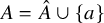 $A = \hat {A}\cup \{a\}$
. Then we find an
$A = \hat {A}\cup \{a\}$
. Then we find an $\hat {A}$
-definable family
$\hat {A}$
-definable family
 $$\begin{align*}Y\subset K\times \mathrm{RV}_{|m|}^k \end{align*}$$
such that $Y_a = X$
. Using Proposition 2.3.2, we find a finite
$Y_a = X$
. Using Proposition 2.3.2, we find a finite $\hat {A}$
-definable set C and an integer p such that either
$\hat {A}$
-definable set C and an integer p such that either $a\in C$
, or for every
$a\in C$
, or for every $a'\in K$
in the same ball
$a'\in K$
in the same ball $|p|$
-next to C, we have
$|p|$
-next to C, we have $Y_{a'} = Y_a = X$
. In both cases, we use Lemma 2.3.1(5) to find an
$Y_{a'} = Y_a = X$
. In both cases, we use Lemma 2.3.1(5) to find an $\hat {A}$
-definable map
$\hat {A}$
-definable map $f: K\to \mathrm {RV}_{|q|}^{k'}$
for some integers
$f: K\to \mathrm {RV}_{|q|}^{k'}$
for some integers $q,k'$
such that any ball
$q,k'$
such that any ball $|p|$
-next to C is a union of fibres of f. Then
$|p|$
-next to C is a union of fibres of f. Then $Y_a = X$
is definable over
$Y_a = X$
is definable over $\hat {A}\cup \{f(a)\}$
, so there is a family
$\hat {A}\cup \{f(a)\}$
, so there is a family $Z\subset \mathrm {RV}_{|m|}^{k}\times \mathrm {RV}_{|q|}^{k'}$
such that
$Z\subset \mathrm {RV}_{|m|}^{k}\times \mathrm {RV}_{|q|}^{k'}$
such that $X = Z_{f(a)}$
. By induction, Z is definable over
$X = Z_{f(a)}$
. By induction, Z is definable over $\mathrm {dcl}_{\cup _n \mathrm {RV}_{|n|}}(\hat {A})$
. Since
$\mathrm {dcl}_{\cup _n \mathrm {RV}_{|n|}}(\hat {A})$
. Since $f(a)\in \mathrm {RV}_{|q|}^{k'}$
is definable over A, we find that X is definable over
$f(a)\in \mathrm {RV}_{|q|}^{k'}$
is definable over A, we find that X is definable over $\mathrm {dcl}_{\cup _n \mathrm {RV}_{|n|}}(A)$
.
$\mathrm {dcl}_{\cup _n \mathrm {RV}_{|n|}}(A)$
.
Lemma 3.2.2. Suppose that $\operatorname {Th}(K)$
is
$\operatorname {Th}(K)$
is $0$
-h-minimal (possibly of mixed characteristic) and that for any integer m and any set
$0$
-h-minimal (possibly of mixed characteristic) and that for any integer m and any set $A\subset \mathrm {RV}_{|m|}$
, we have
$A\subset \mathrm {RV}_{|m|}$
, we have $\mathrm {acl}_{\cup _n\mathrm {RV}_{|n|}}(A) = \mathrm {dcl}_{\cup _n\mathrm {RV}_{|n|}}(A)$
. Then for any set
$\mathrm {acl}_{\cup _n\mathrm {RV}_{|n|}}(A) = \mathrm {dcl}_{\cup _n\mathrm {RV}_{|n|}}(A)$
. Then for any set $A\subset K$
, we have
$A\subset K$
, we have $\mathrm {acl}_K(A) = \mathrm {dcl}_K(A)$
.
$\mathrm {acl}_K(A) = \mathrm {dcl}_K(A)$
.
Proof. See also [Reference Cluckers, Halupczok and Rideau10, Lemma 4.3.1]. Let $C\subset K$
be a finite A-definable set. By Lemma 2.3.1(4), there exists an A-definable bijection
$C\subset K$
be a finite A-definable set. By Lemma 2.3.1(4), there exists an A-definable bijection $f: C\to C'\subset \mathrm {RV}_{|n|}^k$
for some integers
$f: C\to C'\subset \mathrm {RV}_{|n|}^k$
for some integers $n,k$
. By the previous lemma,
$n,k$
. By the previous lemma, $C'$
is already definable over
$C'$
is already definable over $\mathrm {dcl}_{\cup _p \mathrm {RV}_{|p|}}(A)$
. So by the assumption
$\mathrm {dcl}_{\cup _p \mathrm {RV}_{|p|}}(A)$
. So by the assumption $C'$
is contained in
$C'$
is contained in $\mathrm {dcl}_{\mathrm {RV}_{|n|}}(A)$
, and by pulling back via f, we have that
$\mathrm {dcl}_{\mathrm {RV}_{|n|}}(A)$
, and by pulling back via f, we have that $C\subset \mathrm {dcl}_K (A)$
.
$C\subset \mathrm {dcl}_K (A)$
.
Proposition 3.2.3. Suppose that $\operatorname {Th}(K)$
is
$\operatorname {Th}(K)$
is $1$
-h-minimal of possibly mixed characteristic in a language
$1$
-h-minimal of possibly mixed characteristic in a language ${\mathcal L}$
. Then there exists a
${\mathcal L}$
. Then there exists a $\cup _n \mathrm {RV}_n$
-expansion
$\cup _n \mathrm {RV}_n$
-expansion ${\mathcal L}'$
of
${\mathcal L}'$
of ${\mathcal L}$
such that
${\mathcal L}$
such that $\operatorname {Th}_{{\mathcal L}'}(K)$
is still
$\operatorname {Th}_{{\mathcal L}'}(K)$
is still $1$
-h-minimal, and for any model
$1$
-h-minimal, and for any model $K'$
of
$K'$
of $\operatorname {Th}_{{\mathcal L}'}(K)$
and any subset
$\operatorname {Th}_{{\mathcal L}'}(K)$
and any subset $A\subset K'$
, we have
$A\subset K'$
, we have
 $$\begin{align*}\mathrm{acl}_{{\mathcal L}',K'}(A) = \mathrm{dcl}_{{\mathcal L}',K'}(A). \end{align*}$$
Proof. This is identical to [Reference Cluckers, Halupczok and Rideau10, Proposition 4.3.3]. We simply let ${\mathcal L}'$
be the extension of
${\mathcal L}'$
be the extension of ${\mathcal L}$
by a predicate for every subset of
${\mathcal L}$
by a predicate for every subset of $\mathrm {RV}_{|n|}^k$
(for all integers
$\mathrm {RV}_{|n|}^k$
(for all integers $n,k$
). The theory remains
$n,k$
). The theory remains $1$
-h-minimal in view of Proposition 2.6.5. By construction, we have for every model
$1$
-h-minimal in view of Proposition 2.6.5. By construction, we have for every model $K'$
of
$K'$
of $\operatorname {Th}_{{\mathcal L}'}(K)$
and every subset
$\operatorname {Th}_{{\mathcal L}'}(K)$
and every subset $A\subset \mathrm {RV}_{|m|}^k$
that
$A\subset \mathrm {RV}_{|m|}^k$
that $\mathrm {acl}_{\cup _n \mathrm {RV}_{|n|}}(A) = \mathrm {dcl}_{\cup _n \mathrm {RV}_{|n|}}(A)$
, so that we can conclude by the previous lemma.
$\mathrm {acl}_{\cup _n \mathrm {RV}_{|n|}}(A) = \mathrm {dcl}_{\cup _n \mathrm {RV}_{|n|}}(A)$
, so that we can conclude by the previous lemma.
By an $\cup _n \mathrm {RV}_n$
-expansion of the language as in Proposition 3.2.3, we can thus always obtain
$\cup _n \mathrm {RV}_n$
-expansion of the language as in Proposition 3.2.3, we can thus always obtain $\mathrm {acl}=\mathrm {dcl}$
. The following lemma provides a tool for returning to the original language.
$\mathrm {acl}=\mathrm {dcl}$
. The following lemma provides a tool for returning to the original language.
Lemma 3.2.4 (Undoing
$\mathrm {RV}$
-expansions).

Suppose that $\operatorname {Th}_{{\mathcal L}}(K)$
is 0-h-minimal and that
$\operatorname {Th}_{{\mathcal L}}(K)$
is 0-h-minimal and that ${\mathcal L}'$
is an
${\mathcal L}'$
is an $\cup _n\mathrm {RV}_{|n|}$
-expansion of
$\cup _n\mathrm {RV}_{|n|}$
-expansion of ${\mathcal L}$
. Let
${\mathcal L}$
. Let $\chi '\colon K^n \to \mathrm {RV}^{k'}_{|m'|}$
be an
$\chi '\colon K^n \to \mathrm {RV}^{k'}_{|m'|}$
be an ${\mathcal L}'$
-definable map (for some positive integers
${\mathcal L}'$
-definable map (for some positive integers $k' $
and
$k' $
and $m'$
). Then there exists an
$m'$
). Then there exists an ${\mathcal L}$
-definable map
${\mathcal L}$
-definable map $\chi \colon K^n \to \mathrm {RV}^k_{|m|}$
(for some k and m) such that
$\chi \colon K^n \to \mathrm {RV}^k_{|m|}$
(for some k and m) such that $\chi '$
factors over
$\chi '$
factors over $\chi $
(i.e.,
$\chi $
(i.e., $\chi ' = g\circ \chi $
) for some function
$\chi ' = g\circ \chi $
) for some function $g\colon \mathrm {RV}_{|m|}^k \to \mathrm {RV}_{|m'|}^{k'}$
(which is automatically
$g\colon \mathrm {RV}_{|m|}^k \to \mathrm {RV}_{|m'|}^{k'}$
(which is automatically ${\mathcal L}'$
-definable).
${\mathcal L}'$
-definable).
Proof. The proof is similar to [Reference Cluckers, Halupczok and Rideau10, Lemma 4.3.4].
We induct on n. The case $n=0$
is clear, so let
$n=0$
is clear, so let $n>0$
, and for
$n>0$
, and for $a\in K$
, define
$a\in K$
, define $\chi ^{\prime }_a: K^{n-1}\to \mathrm {RV}^{k'}_{|m'|}: x\mapsto \chi '(a,x)$
. By induction and compactness, we find an
$\chi ^{\prime }_a: K^{n-1}\to \mathrm {RV}^{k'}_{|m'|}: x\mapsto \chi '(a,x)$
. By induction and compactness, we find an ${\mathcal L}$
-definable family of maps
${\mathcal L}$
-definable family of maps $\chi _a: K^{n-1}\to \mathrm {RV}^{\ell }_{|m|}$
with a parameter
$\chi _a: K^{n-1}\to \mathrm {RV}^{\ell }_{|m|}$
with a parameter $a\in K$
such that for every
$a\in K$
such that for every $a\in K$
, we have
$a\in K$
, we have $\chi ^{\prime }_a = g_a\circ \chi _a$
for some
$\chi ^{\prime }_a = g_a\circ \chi _a$
for some ${\mathcal L}'$
-definable family of maps
${\mathcal L}'$
-definable family of maps $g_a$
. Now consider the set
$g_a$
. Now consider the set
 $$\begin{align*}W = \{(a, \zeta', g_a(\zeta'))\mid a\in K, \zeta'\in \mathrm{RV}^k_{|m|}\} \end{align*}$$
and use Lemma 2.3.2 to uniformly $|p|$
-prepare W with some finite
$|p|$
-prepare W with some finite ${\mathcal L}'$
-definable set
${\mathcal L}'$
-definable set $C'$
. Using Proposition 2.6.4, we find a finite
$C'$
. Using Proposition 2.6.4, we find a finite ${\mathcal L}$
-definable set C containing
${\mathcal L}$
-definable set C containing $C'$
. By Lemma 2.3.1(5), we find
$C'$
. By Lemma 2.3.1(5), we find $f: K\to \mathrm {RV}_{|q|}^{\ell '}$
an
$f: K\to \mathrm {RV}_{|q|}^{\ell '}$
an ${\mathcal L}$
-definable map such that every ball
${\mathcal L}$
-definable map such that every ball $|p|$
-next to C is a union of fibres of f. We can assume that
$|p|$
-next to C is a union of fibres of f. We can assume that $|q|\leq |m|$
, and so by lifting
$|q|\leq |m|$
, and so by lifting $\chi _a$
to a map
$\chi _a$
to a map $K^{n-1}\to \mathrm {RV}_{|q|}^{\ell }$
, the
$K^{n-1}\to \mathrm {RV}_{|q|}^{\ell }$
, the ${\mathcal L}$
-definable map
${\mathcal L}$
-definable map $\chi (a,x) = (f(a), \chi _a(x))$
will be as desired.
$\chi (a,x) = (f(a), \chi _a(x))$
will be as desired.
3.3 Cell decomposition and (higher dimensional) Jacobian property
As in [Reference Cluckers, Halupczok and Rideau10, Section 5.2], we approach the cell decomposition results in a simpler way than usual (compared to, for example, [Reference Pas19]), by imposing $\mathrm {acl}=\mathrm {dcl}$
in K, or in other words, that we have algebraic Skolem functions in K. This is harmless by Proposition 3.2.3 and Lemma 3.2.4. In fact, the assumption that
$\mathrm {acl}=\mathrm {dcl}$
in K, or in other words, that we have algebraic Skolem functions in K. This is harmless by Proposition 3.2.3 and Lemma 3.2.4. In fact, the assumption that $\mathrm {acl}$
equals
$\mathrm {acl}$
equals $\mathrm {dcl}$
does more than just simplify the arguments; it also allows one to formulate stronger results like piecewise Lipschitz continuity results as in Theorem 3.3.6. This is similar to [Reference Cluckers, Forey and Loeser9], where this condition is also used for similar reasons.
$\mathrm {dcl}$
does more than just simplify the arguments; it also allows one to formulate stronger results like piecewise Lipschitz continuity results as in Theorem 3.3.6. This is similar to [Reference Cluckers, Forey and Loeser9], where this condition is also used for similar reasons.
In the following, for $m \le n$
, we denote the projection
$m \le n$
, we denote the projection $K^n \to K^{m}$
to the first m coordinates by
$K^n \to K^{m}$
to the first m coordinates by $\pi _{\le m}$
, or also by
$\pi _{\le m}$
, or also by $\pi _{<m+1}$
.
$\pi _{<m+1}$
.
Definition 3.3.1 (Cells, twisted boxes).
Fix any parameter set $A \subset K^{\mathrm {eq}}$
and consider a nonempty A-definable set
$A \subset K^{\mathrm {eq}}$
and consider a nonempty A-definable set $X\subset K^n$
for some n, an integer N, and for
$X\subset K^n$
for some n, an integer N, and for $i=1,\ldots , n$
, values
$i=1,\ldots , n$
, values $j_i$
in
$j_i$
in $\{0,1\}$
and A-definable functions
$\{0,1\}$
and A-definable functions $c_i:\pi _{<i}(X)\to K$
. Then X is called an A-definable cell of depth
$c_i:\pi _{<i}(X)\to K$
. Then X is called an A-definable cell of depth $|N|$
, with center tuple
$|N|$
, with center tuple $c=(c_i)_{i=1}^n$
and of cell-type
$c=(c_i)_{i=1}^n$
and of cell-type $j= (j_i)_{i=1}^n$
if it is of the form
$j= (j_i)_{i=1}^n$
if it is of the form
 $$ \begin{align*}X = \{x\in K^n\mid (\operatorname{rv}_{|N|}(x_i-c_i(x_{<i})))_{i=1}^n \in R \}, \end{align*} $$
for a (automatically A-definable) set
 $$ \begin{align*}R \subset \prod_{i=1}^n (j_i\cdot \mathrm{RV}_{|N|}^{\times}), \end{align*} $$
where $x_{<i}=\pi _{<i}(x)$
and where
$x_{<i}=\pi _{<i}(x)$
and where $0 \cdot \mathrm {RV}_{|N|}^{\times } = \{0\} \subset \mathrm {RV}_{|N|}$
, and
$0 \cdot \mathrm {RV}_{|N|}^{\times } = \{0\} \subset \mathrm {RV}_{|N|}$
, and $1 \cdot \mathrm {RV}_{|N|}^{\times } = \mathrm {RV}_{|N|}\setminus \{0\}$
.
$1 \cdot \mathrm {RV}_{|N|}^{\times } = \mathrm {RV}_{|N|}\setminus \{0\}$
.
If X is such a cell, then for any $r\in R$
, the subset
$r\in R$
, the subset
 $$ \begin{align*}\{x \in K^n\mid \operatorname{rv}_{|N|}(x_i-c_i(x_{<i})))_{i=1}^n = r \} \end{align*} $$
of X is called a twisted box of the cell X. We also call X itself a twisted box if it is a cell consisting of a single twisted box (i.e., if R is a singleton).
Note that a cell of depth $|N|$
is automatically also a cell of depth
$|N|$
is automatically also a cell of depth $|M|$
for any
$|M|$
for any $|M|\leq |N|$
, by taking the preimage of the set R under the projection map
$|M|\leq |N|$
, by taking the preimage of the set R under the projection map $\mathrm {RV}_{|M|}^n\to \mathrm {RV}_{|N|}^n$
.
$\mathrm {RV}_{|M|}^n\to \mathrm {RV}_{|N|}^n$
.
Example 3.3.2. Consider the set of nonzero cubes X in ${\mathbb Q}_3$
from Example 2.2.2. This is a
${\mathbb Q}_3$
from Example 2.2.2. This is a $(1)$
-cell of depth
$(1)$
-cell of depth $|3|$
with cell center
$|3|$
with cell center $0$
. Indeed, X is a union of fibres of the map
$0$
. Indeed, X is a union of fibres of the map $\operatorname {rv}_{|3|}: {\mathbb Q}_3\to \mathrm {RV}_{|3|}$
.
$\operatorname {rv}_{|3|}: {\mathbb Q}_3\to \mathrm {RV}_{|3|}$
.
For a two-dimensional example, let $Y\subset {\mathbb Q}_3^2$
be the set of
$Y\subset {\mathbb Q}_3^2$
be the set of $(x,y)\in {\mathbb Z}_3^2$
for which
$(x,y)\in {\mathbb Z}_3^2$
for which $y-x$
is a nonzero cube. This is a
$y-x$
is a nonzero cube. This is a $(1,1)$
-cell of depth
$(1,1)$
-cell of depth $|3|$
with cell tuple
$|3|$
with cell tuple $c_1 = 0$
and
$c_1 = 0$
and $c_2(x) = x$
. In more detail, let
$c_2(x) = x$
. In more detail, let $R \subset \mathrm {RV}_{|3|}$
be the set
$R \subset \mathrm {RV}_{|3|}$
be the set $\operatorname {rv}_{|3|}(X)$
of
$\operatorname {rv}_{|3|}(X)$
of $\operatorname {rv}_{|3|}$
-values of cubes in
$\operatorname {rv}_{|3|}$
-values of cubes in ${\mathbb Q}_3$
. Then we have that
${\mathbb Q}_3$
. Then we have that
 $$\begin{align*}Y = \{(x,y)\in {\mathbb Z}_3^2 \mid (\operatorname{rv}_{|3|}(x - 0), \operatorname{rv}_{|3|}(y - x))\in \mathrm{RV}_{|3|}\times R\}. \end{align*}$$
As in [Reference Cluckers, Halupczok and Rideau10, Section 5.2], we first state the simplest version of cell decomposition and then formulate stronger versions as addenda.
Theorem 3.3.3 (Cell decomposition).
Suppose that $\mathrm {acl}$
equals
$\mathrm {acl}$
equals $\mathrm {dcl}$
in
$\mathrm {dcl}$
in $\operatorname {Th}(K)$
and that
$\operatorname {Th}(K)$
and that $\operatorname {Th}(K)$
is
$\operatorname {Th}(K)$
is $1$
-h-minimal. Consider a
$1$
-h-minimal. Consider a $\emptyset $
-definable set
$\emptyset $
-definable set $X\subset K^n$
for some n. Then there exists a cell decomposition of X – namely, a partition of X into finitely many
$X\subset K^n$
for some n. Then there exists a cell decomposition of X – namely, a partition of X into finitely many $\emptyset $
-definable cells
$\emptyset $
-definable cells $A_{\ell }$
of some depth
$A_{\ell }$
of some depth $N>0$
.
$N>0$
.
Example 3.3.4. Here is an example of a cell decomposition for which one needs the condition that $\mathrm {acl}=\mathrm {dcl}$
. Let K be a field of equicharacteristic zero which contains cube roots of unity. Let
$\mathrm {acl}=\mathrm {dcl}$
. Let K be a field of equicharacteristic zero which contains cube roots of unity. Let $Z\subset K^2$
be the set of
$Z\subset K^2$
be the set of $(x,y)$
in
$(x,y)$
in $(K^{\times })^2$
for which
$(K^{\times })^2$
for which $x=y^3$
. This is a 1-dimensional set, but it is not a cell. Denote by
$x=y^3$
. This is a 1-dimensional set, but it is not a cell. Denote by $X\subset K$
the set of nonzero cubes. This set X is a union of fibres of the map
$X\subset K$
the set of nonzero cubes. This set X is a union of fibres of the map $\operatorname {rv}: K\to \mathrm {RV}$
, so it is a cell with cell center
$\operatorname {rv}: K\to \mathrm {RV}$
, so it is a cell with cell center $0$
. By using
$0$
. By using $\mathrm {acl}=\mathrm {dcl}$
we find three definable maps
$\mathrm {acl}=\mathrm {dcl}$
we find three definable maps $f_1, f_2, f_3: X\to K$
such that for any
$f_1, f_2, f_3: X\to K$
such that for any $x\in X$
,
$x\in X$
, $\{f_1(x), f_2(x), f_3(x)\}$
is the set of cube roots of x. Then Z is the union of three
$\{f_1(x), f_2(x), f_3(x)\}$
is the set of cube roots of x. Then Z is the union of three $(1,0)$
-cells (of depth
$(1,0)$
-cells (of depth $1$
) – namely the sets
$1$
) – namely the sets
 $$\begin{align*}Z_i = \{(x,y)\in K^2\mid (\operatorname{rv}(x-0), \operatorname{rv}(y-f_i(x))) \in \operatorname{rv}(X)\times \{0\}\}, \quad \text{ for } i=1,2,3. \end{align*}$$
Addendum 1 (Preparation of
$\mathrm {RV}_{|M|}$
-sets).

On top of the assumptions from Theorem 3.3.3, let also a $\emptyset $
-definable set
$\emptyset $
-definable set $P\subset X\times \mathrm {RV}_{|M|}^k$
be given for some k and
$P\subset X\times \mathrm {RV}_{|M|}^k$
be given for some k and $M>0$
. We consider P as the function sending
$M>0$
. We consider P as the function sending $x\in X$
to the fiber
$x\in X$
to the fiber $P_x := \{\xi \in \mathrm {RV}_{|M|}^k \mid (x,\xi ) \in P\}$
.
$P_x := \{\xi \in \mathrm {RV}_{|M|}^k \mid (x,\xi ) \in P\}$
.
Then the cells $A_{\ell }$
from Theorem 3.3.3 can be taken such that moreover P (seen as function) is constant on each twisted box of each cell
$A_{\ell }$
from Theorem 3.3.3 can be taken such that moreover P (seen as function) is constant on each twisted box of each cell $A_{\ell }$
.
$A_{\ell }$
.
Addendum 2 (Continuous functions).
On top of the assumptions from Theorem 3.3.3 (with Addendum 1, if desired), suppose that finitely many $\emptyset $
-definable functions
$\emptyset $
-definable functions $f_j\colon X \to K$
are given. Then the
$f_j\colon X \to K$
are given. Then the $A_{\ell }$
can be taken such that, moreover, the restriction
$A_{\ell }$
can be taken such that, moreover, the restriction $f_j|_{A_{\ell }}$
of each function
$f_j|_{A_{\ell }}$
of each function $f_j$
to each cell
$f_j$
to each cell $A_{\ell }$
is continuous, and that each component
$A_{\ell }$
is continuous, and that each component $c_i\colon \pi _{<i}(A_{\ell }) \to K$
of the center tuple of
$c_i\colon \pi _{<i}(A_{\ell }) \to K$
of the center tuple of $A_{\ell }$
is continuous.
$A_{\ell }$
is continuous.
In the one-dimensional case, we can prepare the domain and the image of the functions in a compatible way.
Addendum 3 (Compatible preparation of domain and image).
Under the assumptions of Addendum 2, if $n=1$
, we may moreover impose that there exists an integer M such that for each
$n=1$
, we may moreover impose that there exists an integer M such that for each $\ell $
and each j,
$\ell $
and each j, $f_j|_{A_{\ell }}$
is either constant or injective,
$f_j|_{A_{\ell }}$
is either constant or injective, $f_j(A_{\ell })$
is a
$f_j(A_{\ell })$
is a $\emptyset $
-definable cell of depth N and for every twisted box R of
$\emptyset $
-definable cell of depth N and for every twisted box R of $A_{\ell }$
, there are twisted boxes
$A_{\ell }$
, there are twisted boxes $S\subset S'$
of
$S\subset S'$
of $f_j(A_{\ell })$
of depth
$f_j(A_{\ell })$
of depth $NM$
, respectively N, such that
$NM$
, respectively N, such that
 $$\begin{align*}S\subset f_j(R)\subset S'. \end{align*}$$
In [Reference Vermeulen23], this result is generalized in equicharacteristic zero to higher dimensions, where one can compatibly prepare the domain and image of a definable map $K^m\to K$
.
$K^m\to K$
.
We recall the usual notion of Lipschitz continuity.
Definition 3.3.5 (Lipschitz continuity).
For a valued field K and an element $\lambda $
in its value group
$\lambda $
in its value group $\Gamma _K^{\times }$
, a function
$\Gamma _K^{\times }$
, a function $f:X\subset K^n\to K^m$
is called Lipschitz continuous with Lipschitz constant
$f:X\subset K^n\to K^m$
is called Lipschitz continuous with Lipschitz constant $\lambda $
if for all x and
$\lambda $
if for all x and $x'$
in X, one has
$x'$
in X, one has
 $$ \begin{align*}|f(x)-f(x')| \leq \lambda |x-x'|, \end{align*} $$
where the norm of tuples is, as usual, the sup-norm. We call such f shortly $\lambda $
-Lipschitz.
$\lambda $
-Lipschitz.
Call f locally $\lambda $
-Lipschitz, if for each
$\lambda $
-Lipschitz, if for each $x\in X$
, there is an open neighborhood U of x such that the restriction of f to U is
$x\in X$
, there is an open neighborhood U of x such that the restriction of f to U is $\lambda $
-Lipschitz.
$\lambda $
-Lipschitz.
Addendum 4 (Lipschitz centers).
Theorem 3.3.3 (with Addenda 1 and 2 if desired) is also valid in the following variant. Instead of imposing that $A_{\ell }$
itself is a cell in the sense of Definition 3.3.1, we only impose that
$A_{\ell }$
itself is a cell in the sense of Definition 3.3.1, we only impose that $\sigma _{\ell }(A_{\ell })$
is a cell for some coordinate permutation
$\sigma _{\ell }(A_{\ell })$
is a cell for some coordinate permutation $\sigma _{\ell }\colon K^n \to K^n$
. With this extra freedom given by the choice of
$\sigma _{\ell }\colon K^n \to K^n$
. With this extra freedom given by the choice of $\sigma _{\ell }$
, we can moreover ensure that there is an integer
$\sigma _{\ell }$
, we can moreover ensure that there is an integer $M>0$
such that
$M>0$
such that $\sigma _{\ell }(A_{\ell })$
is of cell-type
$\sigma _{\ell }(A_{\ell })$
is of cell-type $(1, \dots , 1, 0, \dots , 0)$
and that each component
$(1, \dots , 1, 0, \dots , 0)$
and that each component $c_i$
of the center tuple
$c_i$
of the center tuple $(c_i)_i$
of
$(c_i)_i$
of $\sigma _{\ell }(A_{\ell })$
is
$\sigma _{\ell }(A_{\ell })$
is $|1/M|$
-Lipschitz.
$|1/M|$
-Lipschitz.
Closely related to that addendum, we also have the following reformulation of the piecewise continuity result of [Reference Cluckers, Forey and Loeser9] in the Hensel minimal setting.
Theorem 3.3.6 (Piecewise Lipschitz continuity).
Suppose that $\mathrm {acl}$
equals
$\mathrm {acl}$
equals $\mathrm {dcl}$
in
$\mathrm {dcl}$
in $\operatorname {Th}(K)$
and that
$\operatorname {Th}(K)$
and that $\operatorname {Th}(K)$
is
$\operatorname {Th}(K)$
is $1$
-h-minimal. Consider a
$1$
-h-minimal. Consider a $\emptyset $
-definable set
$\emptyset $
-definable set $X\subset K^n$
for some n and a
$X\subset K^n$
for some n and a $\emptyset $
-definable function
$\emptyset $
-definable function $f:X\to K$
. Suppose that f is locally
$f:X\to K$
. Suppose that f is locally $1$
-Lipschitz. Then there exist an integer
$1$
-Lipschitz. Then there exist an integer $M>0$
and a finite partition of X into
$M>0$
and a finite partition of X into $\emptyset $
-definable sets
$\emptyset $
-definable sets $A_{\ell }$
such that the restriction of f to
$A_{\ell }$
such that the restriction of f to $A_{\ell }$
is
$A_{\ell }$
is $1/|M|$
-Lipschitz, for each
$1/|M|$
-Lipschitz, for each $\ell $
.
$\ell $
.
Definition 3.3.7 (Supremum Jacobian property).
Let integers $m>0$
and
$m>0$
and $n\ge 0$
be given. For
$n\ge 0$
be given. For $X \subset K^n$
open and
$X \subset K^n$
open and $f\colon X \to K$
a function, we say that f has the
$f\colon X \to K$
a function, we say that f has the $|m|$
-supremum Jacobian Property on X if f is
$|m|$
-supremum Jacobian Property on X if f is $C^1$
on X, and f is either constant on X, or for every x and y in X with
$C^1$
on X, and f is either constant on X, or for every x and y in X with $x\not =y$
, we have
$x\not =y$
, we have
 $$ \begin{align} |(\operatorname{grad} f)(x) - (\operatorname{grad} f)(y)| < |m\cdot (\operatorname{grad} f)(y)| \end{align} $$
and
 $$ \begin{align} |f(x) - f(y) - (\operatorname{grad} f)(y)\cdot(x - y) | < |m\cdot (\operatorname{grad} f)(y) |\cdot |x-y|. \end{align} $$
In the definition, as usual, one considers $(\operatorname {grad} f)(y)$
as a matrix with a single row with entries
$(\operatorname {grad} f)(y)$
as a matrix with a single row with entries $(\partial f/\partial x_i)(y )$
, which is multiplied with the column vector
$(\partial f/\partial x_i)(y )$
, which is multiplied with the column vector $x - y$
.
$x - y$
.
Theorem 3.3.8 (Sup-Jac-preparation).
Suppose that $\operatorname {Th}(K)$
is
$\operatorname {Th}(K)$
is $1$
-h-minimal. Let integers
$1$
-h-minimal. Let integers $m>0$
and
$m>0$
and $n\ge 0$
be given. For every
$n\ge 0$
be given. For every $\emptyset $
-definable function
$\emptyset $
-definable function $f\colon K^n \to K$
, there exists a
$f\colon K^n \to K$
, there exists a $\emptyset $
-definable map
$\emptyset $
-definable map $\chi \colon K^n\to \mathrm {RV}_{|N|}^k$
(for some integers
$\chi \colon K^n\to \mathrm {RV}_{|N|}^k$
(for some integers $k\geq 0$
and
$k\geq 0$
and $N\ge 1$
) such that for each fiber F of
$N\ge 1$
) such that for each fiber F of $\chi $
which is n-dimensional, F is open and f restricted to F has the
$\chi $
which is n-dimensional, F is open and f restricted to F has the $|m|$
-supremum Jacobian property on F.
$|m|$
-supremum Jacobian property on F.
To prove these results, we first prove the cell decomposition theorem together with Addendum 1 directly. Although it is possible to prove the other addenda in a similar way, we give an alternative recipe for transferring cell decompositions via coarsening.
Proof of Theorem 3.3.3 with Addendum 1.
We induct on n. For the base case $n=1$
, we use Proposition 2.3.2 to find a finite
$n=1$
, we use Proposition 2.3.2 to find a finite $\emptyset $
-definable set C and an integer N such that C
$\emptyset $
-definable set C and an integer N such that C $|N|$
-prepares P. By our assumption that
$|N|$
-prepares P. By our assumption that $\mathrm {acl}=\mathrm {dcl}$
, every element of C is
$\mathrm {acl}=\mathrm {dcl}$
, every element of C is $\emptyset $
-definable. For each ball B
$\emptyset $
-definable. For each ball B $|N|$
-next to C, we can definable pick
$|N|$
-next to C, we can definable pick $c(B)\in C$
such that B is
$c(B)\in C$
such that B is $|N|$
-next to
$|N|$
-next to $c(B)$
. The desired cell decomposition consists of two cells for every element
$c(B)$
. The desired cell decomposition consists of two cells for every element $c\in C$
, namely the
$c\in C$
, namely the $0$
-cell
$0$
-cell $\{c\}$
and the
$\{c\}$
and the $1$
-cell consisting the union of all balls B
$1$
-cell consisting the union of all balls B $|N|$
-next to C for which
$|N|$
-next to C for which $c(B) = c$
.
$c(B) = c$
.
Now assume that $n>1$
. For every
$n>1$
. For every $a\in K^{n-1}$
, we apply the case
$a\in K^{n-1}$
, we apply the case $n=1$
to the set
$n=1$
to the set
 $$\begin{align*}P_a = \{(b, \xi)\in K\times \mathrm{RV}_{|M|}^k\mid (a,b,\xi)\in P\}. \end{align*}$$
Using compactness, we find for each $a\in K^{n-1}$
a finite set of cells of depth
$a\in K^{n-1}$
a finite set of cells of depth $|N|$
adapted to
$|N|$
adapted to $P_a$
, where we can moreover assume that the cell centers are
$P_a$
, where we can moreover assume that the cell centers are $\emptyset $
-definable functions
$\emptyset $
-definable functions $K^{n-1}\to K$
. Now consider the set
$K^{n-1}\to K$
. Now consider the set $P'\subset K^{n-1}\times \mathrm {RV}_{|N|} \times \mathrm {RV}_{|M|}^k$
, where for each
$P'\subset K^{n-1}\times \mathrm {RV}_{|N|} \times \mathrm {RV}_{|M|}^k$
, where for each $a\in K^{n-1}$
,
$a\in K^{n-1}$
, $P_a^{\prime }$
consists of the following:
$P_a^{\prime }$
consists of the following:
-
(1) For each
$0$
-cell
$\{c\}\subset K$
of
$P_a$
, the set
$\{(0, \ldots , 0)\in \mathrm {RV}_{|N|}\}\times P_{a,c}$
is in
$P_a^{\prime }$
. -
(2) For each
$1$
-cell X with center
$c\in K$
of
$P_a$
, let
$R\subset \mathrm {RV}_{|N|}$
be the set from Definition 3.3.1. Then the set is in
$$\begin{align*}\{ (\zeta, \xi)\in \mathrm{RV}_{|N|}\times \mathrm{RV}_{|M|}^k\mid \zeta \in R, \xi\in P_{a,b} \text{ for any } b\in K \text{ with } \operatorname{rv}_{|N|}(b-c) = \zeta\}\} \end{align*}$$
$P_a^{\prime }$
.


We find the desired cell decomposition by applying the induction hypothesis to the set $P'$
.
$P'$
.
The following lemma can be used to move from a cell decomposition in $K_{{\mathrm {ecc}}}$
to one in K.
$K_{{\mathrm {ecc}}}$
to one in K.
Lemma 3.3.9. Assume that $\mathrm {acl}$
equals
$\mathrm {acl}$
equals $\mathrm {dcl}$
in K and that
$\mathrm {dcl}$
in K and that $\operatorname {Th}_{\mathcal L}(K)$
is 1-h-minimal. Let
$\operatorname {Th}_{\mathcal L}(K)$
is 1-h-minimal. Let ${\mathcal A}'$
be an
${\mathcal A}'$
be an ${\mathcal L}_{\mathrm {ecc}}$
-definable cell decomposition of
${\mathcal L}_{\mathrm {ecc}}$
-definable cell decomposition of $K^n$
. Then there exists an
$K^n$
. Then there exists an ${\mathcal L}$
-definable cell decomposition
${\mathcal L}$
-definable cell decomposition ${\mathcal A}$
of
${\mathcal A}$
of $K^n$
of depth
$K^n$
of depth $|N|$
, for some N, such that every
$|N|$
, for some N, such that every $|1|_{\mathrm {ecc}}$
-twisted box of
$|1|_{\mathrm {ecc}}$
-twisted box of ${\mathcal A}$
is contained in a twisted box of
${\mathcal A}$
is contained in a twisted box of ${\mathcal A}'$
.
${\mathcal A}'$
.
By a $|1|_{\mathrm {ecc}}$
-twisted box of
$|1|_{\mathrm {ecc}}$
-twisted box of ${\mathcal A}$
, we mean the following. Let
${\mathcal A}$
, we mean the following. Let $(c_1, \ldots , c_n)$
be the cell center of some cell in
$(c_1, \ldots , c_n)$
be the cell center of some cell in ${\mathcal A}$
and let
${\mathcal A}$
and let
 $$\begin{align*}\{x\in K^n\mid (\operatorname{rv}_{|N|}(x_i-c_i(\pi_{<i}(x))))_{i=1}^n = r\} \end{align*}$$
be a twisted box in this cell for some $r\in \mathrm {RV}_{|N|}^n$
. Then a
$r\in \mathrm {RV}_{|N|}^n$
. Then a $|1|_{\mathrm {ecc}}$
-twisted box of
$|1|_{\mathrm {ecc}}$
-twisted box of ${\mathcal A}$
is a set of the form
${\mathcal A}$
is a set of the form
 $$\begin{align*}\{x\in K^n\mid (\operatorname{rv}_{{\mathrm{ecc}}}(x_i-c_i(\pi_{<i}(x))))_{i=1}^n = r'\}, \end{align*}$$
for any $r'\in \mathrm {RV}_{\mathrm {ecc}}^n$
reducing to r under the natural projection
$r'\in \mathrm {RV}_{\mathrm {ecc}}^n$
reducing to r under the natural projection $\mathrm {RV}_{\mathrm {ecc}}\to \mathrm {RV}_{|N|}$
.
$\mathrm {RV}_{\mathrm {ecc}}\to \mathrm {RV}_{|N|}$
.
Proof of Lemma 3.3.9.
We can do this one cell at a time, so let A be an ${\mathcal L}_{\mathrm {ecc}}$
-definable cell with cell center
${\mathcal L}_{\mathrm {ecc}}$
-definable cell with cell center $(c_1, \ldots , c_n)$
. By [Reference Cluckers, Halupczok and Rideau10, Corollary 4.1.17] (which holds in our context by Proposition 2.6.4), we have that
$(c_1, \ldots , c_n)$
. By [Reference Cluckers, Halupczok and Rideau10, Corollary 4.1.17] (which holds in our context by Proposition 2.6.4), we have that $c_i(\pi _{<i}(x))$
is always
$c_i(\pi _{<i}(x))$
is always ${\mathcal L}(\pi _{<i}(x))$
-definable. Let
${\mathcal L}(\pi _{<i}(x))$
-definable. Let $C_i(\pi _{<i}(x))$
be an
$C_i(\pi _{<i}(x))$
be an ${\mathcal L}$
-definable family of finite sets, with parameter
${\mathcal L}$
-definable family of finite sets, with parameter $\pi _{<i}(x)\in K^{i-1}$
, such that
$\pi _{<i}(x)\in K^{i-1}$
, such that $c_i(\pi _{<i}(x))$
is an element of
$c_i(\pi _{<i}(x))$
is an element of $C_i(\pi _{<i}(x))$
. Using
$C_i(\pi _{<i}(x))$
. Using $\mathrm {acl}=\mathrm {dcl}$
in
$\mathrm {acl}=\mathrm {dcl}$
in ${\mathcal L}$
, we can find several
${\mathcal L}$
, we can find several ${\mathcal L}$
-definable cells of depth
${\mathcal L}$
-definable cells of depth $|N|$
, for some N, whose cell center is among the
$|N|$
, for some N, whose cell center is among the $C_i$
. This will be the desired cell decomposition.
$C_i$
. This will be the desired cell decomposition.
Proof of Theorems 3.3.6 and 3.3.8 the Addenda 2, 3, 4.
We explain the use of compactness to prove Theorem 3.3.8. Let f be given as in Theorem 3.3.8. We may suppose that K is saturated when we prove the existence of $\chi $
. Let
$\chi $
. Let ${\mathcal L}_{\mathrm {ecc}}$
be the
${\mathcal L}_{\mathrm {ecc}}$
be the $\mathrm {RV}$
-enrichment of
$\mathrm {RV}$
-enrichment of ${\mathcal L}$
obtained by adding to
${\mathcal L}$
obtained by adding to $\Gamma _K$
the cut given by the maximal ideal of
$\Gamma _K$
the cut given by the maximal ideal of ${\mathcal O}_{K,{\mathrm {ecc}}}$
. Working in
${\mathcal O}_{K,{\mathrm {ecc}}}$
. Working in ${\mathcal L}_{\mathrm {ecc}}$
and applying [Reference Cluckers, Halupczok and Rideau10, Theorem 5.4.10], we obtain an
${\mathcal L}_{\mathrm {ecc}}$
and applying [Reference Cluckers, Halupczok and Rideau10, Theorem 5.4.10], we obtain an ${\mathcal L}_{\mathrm {ecc}}$
-definable map
${\mathcal L}_{\mathrm {ecc}}$
-definable map $\chi ': K^n\to \mathrm {RV}_{\mathrm {ecc}}^k$
such that on the fibres of
$\chi ': K^n\to \mathrm {RV}_{\mathrm {ecc}}^k$
such that on the fibres of $\chi '$
, f has the supremum Jacobian property with respect to
$\chi '$
, f has the supremum Jacobian property with respect to $|\cdot |_{\mathrm {ecc}}$
. We can assume that
$|\cdot |_{\mathrm {ecc}}$
. We can assume that $\chi '$
comes from a
$\chi '$
comes from a ${\mathcal L}_{\mathrm {ecc}}$
-definable cell decomposition. Let
${\mathcal L}_{\mathrm {ecc}}$
-definable cell decomposition. Let ${\mathcal A}$
be the
${\mathcal A}$
be the ${\mathcal L}$
-definable cell decomposition of depth
${\mathcal L}$
-definable cell decomposition of depth $|N|$
of
$|N|$
of $K^n$
obtained from Lemma 3.3.9 on
$K^n$
obtained from Lemma 3.3.9 on $\chi '$
. We claim that after enlarging N, f has the
$\chi '$
. We claim that after enlarging N, f has the $|m|$
-supremum Jacobian property on the twisted boxes of
$|m|$
-supremum Jacobian property on the twisted boxes of ${\mathcal A}$
. Suppose the claim is false. By saturation, we can find
${\mathcal A}$
. Suppose the claim is false. By saturation, we can find $x,y\in K^n$
which are in the same
$x,y\in K^n$
which are in the same $|N|$
-twisted box of
$|N|$
-twisted box of ${\mathcal A}$
for every integer N and such that either
${\mathcal A}$
for every integer N and such that either
 $$\begin{align*}|(\operatorname{grad} f)(x) - (\operatorname{grad} f)(y)| \geq |m\cdot (\operatorname{grad} f)(y)| \end{align*}$$
or
 $$\begin{align*}|f(x) - f(y) - (\operatorname{grad} f)(y)\cdot(x - y) | \geq |m\cdot (\operatorname{grad} f)(y) |\cdot |x-y|. \end{align*}$$
However, if x and y are in the same $|N|$
-twisted box of
$|N|$
-twisted box of ${\mathcal A}$
for every integer N, then they are also in the same
${\mathcal A}$
for every integer N, then they are also in the same $|1|_{\mathrm {ecc}}$
-twisted box of
$|1|_{\mathrm {ecc}}$
-twisted box of ${\mathcal A}$
, and hence also in the same fibre of
${\mathcal A}$
, and hence also in the same fibre of $\chi '$
. But this contradicts our choice of
$\chi '$
. But this contradicts our choice of $\chi '$
, proving the claim.
$\chi '$
, proving the claim.
The proofs of the addenda and 3.3.6 can be proven in the same way using coarsening, or alternatively, by direct adaptation of the proofs of [Reference Cluckers, Halupczok and Rideau10, Theorems 5.2.4 and 5.2.8].
4 Diophantine application for 1-h-minimal transcendental curves
In this section, we give a diophantine application of Hensel minimality by bounding the number of rational points of bounded height on transcendental curves that are definable in Hensel minimal structures, in the spirit of [Reference Bombieri and Pila5], [Reference Pila and Wilkie20], [Reference Cluckers, Comte and Loeser8] and [Reference Cluckers, Forey and Loeser9]. In more detail, our Diophantine application for curves resembles the results for curves from Bombieri-Pila [Reference Bombieri and Pila5] but allows for an axiomatic setting, analogous to the results by Pila-Wilkie [Reference Pila and Wilkie20] (where o-minimality is used). It extends [Reference Cluckers, Comte and Loeser8] and [Reference Cluckers, Forey and Loeser9] to our axiomatic setting of Hensel minimality, but only in the curve case. In [Reference Cluckers, Comte and Loeser8] and [Reference Cluckers, Forey and Loeser9], the analytic (and subanalytic) situation is treated. These approaches all use Taylor approximation to finite order. In the one-dimensional case, Theorem 3.1.2 is strong enough as Taylor approximation, but in higher dimensions, new and extra work is needed which seems quite hard at the moment. See Section 5.4 for a discussion on the difficulties to extend the axiomatic approach to higher dimensions.
Note that the finiteness result of [Reference Binyamini, Cluckers and Novikov3] for the number of polynomials of bounded degree on the transcendental part of non-Archimedean analytic and subanalytic sets X in $K^n$
with
$K^n$
with $K={\mathbb C}\mathopen {(\!(} t \mathopen {)\!)}$
no longer needs to hold, in general,
$K={\mathbb C}\mathopen {(\!(} t \mathopen {)\!)}$
no longer needs to hold, in general, $1$
-h-minimal structures on K, and is specific to the subanalytic situation. See [Reference Cantoral-Farfán, Nguyen, Stout and Vermeulen7] for such examples with infinitely many polynomials of bounded degree on the transcendental part of a set definable in a Hensel minimal structure. We leave the discovery of higher dimensional variants of Theorem 4.0.7 to the future.
$1$
-h-minimal structures on K, and is specific to the subanalytic situation. See [Reference Cantoral-Farfán, Nguyen, Stout and Vermeulen7] for such examples with infinitely many polynomials of bounded degree on the transcendental part of a set definable in a Hensel minimal structure. We leave the discovery of higher dimensional variants of Theorem 4.0.7 to the future.
We first define sets of rational points of bounded height, as in [Reference Cluckers, Comte and Loeser8], [Reference Cluckers, Forey and Loeser9].
Definition 4.0.1. For any integer $H> 0$
and any set
$H> 0$
and any set $X\subset K^n$
with K a field extension of
$X\subset K^n$
with K a field extension of ${\mathbb Q}_p$
, write
${\mathbb Q}_p$
, write $X(H)$
for
$X(H)$
for
 $$ \begin{align*}X(H) := \{x\in X \cap {\mathbb Z}^n\mid 0\le x_i \le H \mbox{ for each } i \}. \end{align*} $$
In the real setting, convexity together with bounds on $C^r$
-norms leads to Taylor approximation results, but in our setting, we have to control Taylor approximation in other ways (by lack of convexity and by total disconnectedness). This is captured by the
$C^r$
-norms leads to Taylor approximation results, but in our setting, we have to control Taylor approximation in other ways (by lack of convexity and by total disconnectedness). This is captured by the $T_r$
notion from [Reference Cluckers, Comte and Loeser8] and [Reference Cluckers, Forey and Loeser9].
$T_r$
notion from [Reference Cluckers, Comte and Loeser8] and [Reference Cluckers, Forey and Loeser9].
Definition 4.0.2 (
$T_r$
maps).

Fix a positive integer r. A function $f : U\subseteq K^m \to K$
is said to be
$f : U\subseteq K^m \to K$
is said to be $T_r$
if for each
$T_r$
if for each $y\in U$
there is a polynomial
$y\in U$
there is a polynomial $T^{<r}_{f,y}(x)$
of degree less than r and coefficients in K such that for each
$T^{<r}_{f,y}(x)$
of degree less than r and coefficients in K such that for each $x,y\in U$
,
$x,y\in U$
,
 $$ \begin{align} {\lvert {f(x)-T^{<r}_{f,y}(x)}\rvert} \leq {\lvert{x-y}\rvert}^r. \end{align} $$
A map $f : U\subseteq K^m \to K^n$
is called
$f : U\subseteq K^m \to K^n$
is called $T_r$
if each component function is.
$T_r$
if each component function is.
We need some notation from [Reference Cluckers, Forey and Loeser9, Section 5.1].
Definition 4.0.3. Let $\alpha =(\alpha _1,...,\alpha _m)\in {\mathbb N}^m$
and define
$\alpha =(\alpha _1,...,\alpha _m)\in {\mathbb N}^m$
and define $|\alpha |=\alpha _1+\cdots +\alpha _m$
. We define the following sets and numbers:
$|\alpha |=\alpha _1+\cdots +\alpha _m$
. We define the following sets and numbers:
-
○
$\Lambda _m(k):=\{\alpha \in {\mathbb N}^m;\; |\alpha |=k\}$
, -
○
$\Delta _m(k):=\{\alpha \in {\mathbb N}^m;\; |\alpha |\leq k\}$
, -
○
$L_m(k):=\#\Lambda _m(k)$
and
$D_m(k):=\#\Delta _m(k)$
.


Note that $L_m(k)$
(resp.
$L_m(k)$
(resp. $D_m(k)$
) is the number of monomials of degree exactly (resp. at most) k in m variables.
$D_m(k)$
) is the number of monomials of degree exactly (resp. at most) k in m variables.
Fix an integer d and define, for all integers n and m such that $m<n$
the following integers.
$m<n$
the following integers.
 $$ \begin{align} \begin{aligned} \mu(n,d) &=D_n(d) \qquad& r(m,d)&=\min\{x\in {\mathbb Z}; \; D_m(x-1)\leq \mu < D_m(x)\}\\ V(n,d) &=\sum_{k=0}^d k L_n(k) \qquad & e(n,m,d) &=\sum_{k=1}^{r-1} kL_m(k)+r(\mu-D_m(r-1)). \end{aligned} \end{align} $$
We recall [Reference Cluckers, Forey and Loeser9, Lemma 5.1.3], amending it with a correction for the exponent (See Remark 4.0.5).
Lemma 4.0.4 (Counting algebraic hypersurfaces).
For all positive integers d, n, m with $m<n$
, consider the integers r, V, e and
$m<n$
, consider the integers r, V, e and $\mu $
as defined above. Fix a finite field extension K of degree
$\mu $
as defined above. Fix a finite field extension K of degree $\nu $
over
$\nu $
over ${\mathbb Q}_p$
and with
${\mathbb Q}_p$
and with $q_K$
many elements in the residue field of K. Let a subset
$q_K$
many elements in the residue field of K. Let a subset $U\subseteq {\mathcal O}_K^m$
and a
$U\subseteq {\mathcal O}_K^m$
and a $T_r$
map
$T_r$
map $\psi : U\to {\mathcal O}_K^n$
be given and put
$\psi : U\to {\mathcal O}_K^n$
be given and put $X = \psi (U)$
. Then for each
$X = \psi (U)$
. Then for each $H\ge 1$
, the set
$H\ge 1$
, the set $X(H)$
is contained in at most
$X(H)$
is contained in at most
 $$ \begin{align} q_K^m (\mu !)^{m/e} H^{\nu mV/e} \end{align} $$
hypersurfaces of degree at most d. Moreover, when d goes to infinity, $mV/e$
goes to
$mV/e$
goes to $0$
.
$0$
.
Remark 4.0.5. Note that the exponent $\nu $
of H in (4.0.3) is forgotten in the statement of [Reference Cluckers, Forey and Loeser9, Lemma 5.1.3] in the characteristic zero case, but it comes up in the proof given there. This lemma is used for the characteristic zero cases of Proposition 5.1.4 and Theorems B and 5.2.2 of [Reference Cluckers, Forey and Loeser9], each of which can be corrected by letting the implicit constants depend furthermore on
$\nu $
of H in (4.0.3) is forgotten in the statement of [Reference Cluckers, Forey and Loeser9, Lemma 5.1.3] in the characteristic zero case, but it comes up in the proof given there. This lemma is used for the characteristic zero cases of Proposition 5.1.4 and Theorems B and 5.2.2 of [Reference Cluckers, Forey and Loeser9], each of which can be corrected by letting the implicit constants depend furthermore on $\nu $
. The positive characteristic cases of Lemma 5.1.3, Proposition 5.1.4 and Theorems B and 5.2.2 of [Reference Cluckers, Forey and Loeser9] do not need any change. A sharper variant of [Reference Cluckers, Forey and Loeser9, Lemma 5.1.3] (under some extra conditions) that would recover the original Theorems B and 5.2.2 from [Reference Cluckers, Forey and Loeser9] may be found in the future.
$\nu $
. The positive characteristic cases of Lemma 5.1.3, Proposition 5.1.4 and Theorems B and 5.2.2 of [Reference Cluckers, Forey and Loeser9] do not need any change. A sharper variant of [Reference Cluckers, Forey and Loeser9, Lemma 5.1.3] (under some extra conditions) that would recover the original Theorems B and 5.2.2 from [Reference Cluckers, Forey and Loeser9] may be found in the future.
The following lemma plays a similar role as Lemma 3.2.14 of [Reference Cluckers, Comte and Loeser8] and Lemma 3.4.3 of [Reference Cluckers, Forey and Loeser9]. Similarly, as in the Yomdin-Gromov and Pila-Wilkie approaches [Reference Yomdin24] [Reference Gromov14] [Reference Pila and Wilkie20], it states that composing with well-chosen powers maps yields good Taylor approximation.
Lemma 4.0.6 (Composing with power maps).
Let an integer $r>0$
and a finite field extension K of
$r>0$
and a finite field extension K of ${\mathbb Q}_p$
be given. Let B be an open ball of the form
${\mathbb Q}_p$
be given. Let B be an open ball of the form $d(1+N{\mathcal M}_K)$
for some integer
$d(1+N{\mathcal M}_K)$
for some integer $N>0$
and some
$N>0$
and some $d\in {\mathcal O}_K$
. Let
$d\in {\mathcal O}_K$
. Let $f:B\to {\mathcal O}_K$
be a
$f:B\to {\mathcal O}_K$
be a $T_1$
function such that f and each of the iterated derivatives
$T_1$
function such that f and each of the iterated derivatives $f',f",\ldots f^{(r)}$
of f up to order r has the Jacobian property, and such that f satisfies Taylor approximation up to level r as in Theorem 3.1.2. Then there is an integer
$f',f",\ldots f^{(r)}$
of f up to order r has the Jacobian property, and such that f satisfies Taylor approximation up to level r as in Theorem 3.1.2. Then there is an integer $r'\ge r$
such that the map
$r'\ge r$
such that the map
 $$ \begin{align*}x\mapsto f( a+bx^{r'}) \end{align*} $$
is $T_r$
on
$T_r$
on $B'$
for any choice of
$B'$
for any choice of $a,b\in {\mathcal O}_K$
and any ball
$a,b\in {\mathcal O}_K$
and any ball $B'\subset {\mathcal O}_K$
which maps into B under the map
$B'\subset {\mathcal O}_K$
which maps into B under the map $x\mapsto a+bx^{r'}$
.
$x\mapsto a+bx^{r'}$
.
The proof of Lemma 4.0.6 is similar to the proofs of Lemma 3.4.3 of [Reference Cluckers, Forey and Loeser9] and Lemma 3.2.14 of [Reference Cluckers, Comte and Loeser8], where the analyticity condition is replaced by the Jacobian property for the functions $f,f',f",\ldots f^{(r)}$
. Slightly more details of the proof can be found in [Reference Cluckers, Comte and Loeser8; Reference Cluckers, Forey and Loeser9].
$f,f',f",\ldots f^{(r)}$
. Slightly more details of the proof can be found in [Reference Cluckers, Comte and Loeser8; Reference Cluckers, Forey and Loeser9].
Proof of Lemma 4.0.6.
The Jacobian property for f and the $f^{(i)}$
and the fact that f is
$f^{(i)}$
and the fact that f is $T_1$
imply that
$T_1$
imply that $|f^{(i)}(b+bNx)| \le |x|^{1-i}$
for all i with
$|f^{(i)}(b+bNx)| \le |x|^{1-i}$
for all i with $0<i\le r$
and all x with
$0<i\le r$
and all x with $b+bNx\in B$
. Write
$b+bNx\in B$
. Write $f_{r',B'}$
for a composition of the form
$f_{r',B'}$
for a composition of the form $x\in B' \mapsto f( a+bx^{r'})$
for some choice of
$x\in B' \mapsto f( a+bx^{r'})$
for some choice of $r'$
,
$r'$
, $a,b$
and
$a,b$
and $B'$
as in the lemma. By the chain rule for differentiation, we find that
$B'$
as in the lemma. By the chain rule for differentiation, we find that $|f_{r',B'}^{(i)}(x)| \le |r'/N^r|$
for all i with
$|f_{r',B'}^{(i)}(x)| \le |r'/N^r|$
for all i with $0<i\le r$
and all x in
$0<i\le r$
and all x in $B'$
. Since Taylor approximation up to level r as in Theorem 3.1.2 still holds for
$B'$
. Since Taylor approximation up to level r as in Theorem 3.1.2 still holds for $f_{r',B'}$
since it is preserved under compositions (see Lemma 3.2.7 of [Reference Cluckers, Comte and Loeser8]), we are done for suitable choice of
$f_{r',B'}$
since it is preserved under compositions (see Lemma 3.2.7 of [Reference Cluckers, Comte and Loeser8]), we are done for suitable choice of $r'$
.
$r'$
.
Call an infinite set $C\subset K^n$
purely transcendental if every algebraic curve in
$C\subset K^n$
purely transcendental if every algebraic curve in $K^n$
has finite intersection with C.
$K^n$
has finite intersection with C.
Theorem 4.0.7. Let K be a finite field extension of ${\mathbb Q}_p$
. Let
${\mathbb Q}_p$
. Let $C\subset K^n$
be a purely transcendental set which is definable in a
$C\subset K^n$
be a purely transcendental set which is definable in a $1$
-h-minimal structure on K and which is of dimension
$1$
-h-minimal structure on K and which is of dimension $1$
(i.e., there is a linear projection
$1$
(i.e., there is a linear projection $p:K^n\to K$
such that
$p:K^n\to K$
such that $p(C)$
is infinite and such that p has finite fibers on C). Then for each
$p(C)$
is infinite and such that p has finite fibers on C). Then for each $\varepsilon>0$
, there is a constant c such that for all
$\varepsilon>0$
, there is a constant c such that for all $H\ge 1$
, one has
$H\ge 1$
, one has
 $$ \begin{align*}\# C(H) \le c H^{\varepsilon}. \end{align*} $$
Moreover, the constant c can be chosen uniformly in a definable family of such curves in the following sense. Consider a $1$
-h-minimal structure on K and a definable family
$1$
-h-minimal structure on K and a definable family $\{C_y\}_{y\in Y}$
of definable sets
$\{C_y\}_{y\in Y}$
of definable sets $C_y\subset K^n$
, where y runs over some definable set
$C_y\subset K^n$
, where y runs over some definable set $Y\subset K^m$
. Then for each
$Y\subset K^m$
. Then for each $\varepsilon>0$
, there is a constant c such that for all
$\varepsilon>0$
, there is a constant c such that for all $y\in Y$
and all
$y\in Y$
and all $H\ge 1$
, one has, if
$H\ge 1$
, one has, if $C_y$
is of dimension
$C_y$
is of dimension $1$
and purely transcendental,
$1$
and purely transcendental,
 $$ \begin{align*}\# C_y(H) \le c H^{\varepsilon}. \end{align*} $$
Proof. Let K and C be given as in the beginning of the theorem and fix $\varepsilon>0$
. Write
$\varepsilon>0$
. Write $n'$
for
$n'$
for $\binom {n}{2}$
. Fix d (and corresponding value for r, V and e) such that
$\binom {n}{2}$
. Fix d (and corresponding value for r, V and e) such that $\nu V/e< \varepsilon /n'$
, with notation from Lemma 4.0.4 for plane curves (namely, the case of that lemma with
$\nu V/e< \varepsilon /n'$
, with notation from Lemma 4.0.4 for plane curves (namely, the case of that lemma with $m=1$
and
$m=1$
and $n=2$
). We may suppose that
$n=2$
). We may suppose that $\mathrm {acl}=\mathrm {dcl}$
by Proposition 3.2.3, and thus, we can speak more easily about cells. Clearly we may suppose that
$\mathrm {acl}=\mathrm {dcl}$
by Proposition 3.2.3, and thus, we can speak more easily about cells. Clearly we may suppose that $C\subset {\mathcal O}_K^n$
. By the Cell Decomposition Theorem 3.3.3 with Addendum 4 and possibly after composing with
$C\subset {\mathcal O}_K^n$
. By the Cell Decomposition Theorem 3.3.3 with Addendum 4 and possibly after composing with $x\to a+Mx$
for some
$x\to a+Mx$
for some $a\in {\mathcal O}_K$
to kill the factor
$a\in {\mathcal O}_K$
to kill the factor $|1/M|$
from the addendum, we may suppose that we have N maps
$|1/M|$
from the addendum, we may suppose that we have N maps
 $$ \begin{align*}\varphi_i : P_i\subset {\mathcal O}_K\to C \end{align*} $$
the union of whose images equals C, and which are $1$
-Lipschitz. Indeed, by varying over finite choices of a, we can ensure that the union of images equals C. Furthermore, after translation by the center, we may suppose that each
$1$
-Lipschitz. Indeed, by varying over finite choices of a, we can ensure that the union of images equals C. Furthermore, after translation by the center, we may suppose that each $P_i$
is a cell with center
$P_i$
is a cell with center $0$
, that each of the component functions of each partial derivative of
$0$
, that each of the component functions of each partial derivative of $\varphi _i$
up to order r has the Jacobian property and that each component functions of
$\varphi _i$
up to order r has the Jacobian property and that each component functions of $\varphi _i$
satisfies Taylor approximation up to level r, as in Theorem 3.1.2. By Lemma 4.0.6, we find an integer
$\varphi _i$
satisfies Taylor approximation up to level r, as in Theorem 3.1.2. By Lemma 4.0.6, we find an integer $r'\ge r$
such that the map
$r'\ge r$
such that the map $x\mapsto \varphi _i( a+bx^{r'})$
is
$x\mapsto \varphi _i( a+bx^{r'})$
is $T_r$
on
$T_r$
on $P_i^{\prime }$
, for any choice of
$P_i^{\prime }$
, for any choice of $a,b\in {\mathcal O}_K$
and any cell
$a,b\in {\mathcal O}_K$
and any cell $P_i^{\prime }$
which is mapped into
$P_i^{\prime }$
which is mapped into $P_i$
under
$P_i$
under $x\mapsto a+bx^{r'}$
. Indeed, on any twisted box
$x\mapsto a+bx^{r'}$
. Indeed, on any twisted box $B'$
in
$B'$
in $P_i^{\prime }$
, this is exactly given by Lemma 4.0.6, and obtaining Equation (4.0.1) on
$P_i^{\prime }$
, this is exactly given by Lemma 4.0.6, and obtaining Equation (4.0.1) on $P_i^{\prime }$
for x and y lying in different twisted boxes of
$P_i^{\prime }$
for x and y lying in different twisted boxes of $P_i^{\prime }$
is easier. By varying over a, b and
$P_i^{\prime }$
is easier. By varying over a, b and $P_i^{\prime }$
, we can ensure that the union of the images of the
$P_i^{\prime }$
, we can ensure that the union of the images of the $\varphi _i$
still equals C.
$\varphi _i$
still equals C.
Hence, we may suppose that the maps $\varphi _i$
are already
$\varphi _i$
are already $T_r$
themselves. Write
$T_r$
themselves. Write $C_i$
for
$C_i$
for $\varphi _i(P_i)$
. Apply Lemma 4.0.4 to the sets
$\varphi _i(P_i)$
. Apply Lemma 4.0.4 to the sets $p_j(C_i)$
in
$p_j(C_i)$
in $K^2$
for each choice of coordinate projection
$K^2$
for each choice of coordinate projection $p_j:K^n\to K^2$
. This yields
$p_j:K^n\to K^2$
. This yields $N'>0$
and for each
$N'>0$
and for each $i,j$
and
$i,j$
and $H\ge 1$
, a collection of at most
$H\ge 1$
, a collection of at most $N' H^{\varepsilon /n'}$
algebraic curves
$N' H^{\varepsilon /n'}$
algebraic curves $S_{ij\ell }$
of degree d whose union contains
$S_{ij\ell }$
of degree d whose union contains $p_j(C_i)(H)$
. Since any intersection of the form
$p_j(C_i)(H)$
. Since any intersection of the form $\bigcap _j p_j^{-1}(S_{ij\ell })$
is algebraic and of dimension at most
$\bigcap _j p_j^{-1}(S_{ij\ell })$
is algebraic and of dimension at most $1$
(see, for example, the argument on transversal cylinders on page 45 of [Reference Cluckers, Comte and Loeser8]), we have for each
$1$
(see, for example, the argument on transversal cylinders on page 45 of [Reference Cluckers, Comte and Loeser8]), we have for each $H\ge 1$
that the set
$H\ge 1$
that the set $C_i(H)$
is contained in no more than
$C_i(H)$
is contained in no more than $N'{}^{n'} H^{\varepsilon }$
many algebraic curves (all of bounded complexity in terms of d and n). Each such algebraic curve has finite intersection with
$N'{}^{n'} H^{\varepsilon }$
many algebraic curves (all of bounded complexity in terms of d and n). Each such algebraic curve has finite intersection with $C_i$
by the pure transcendence of
$C_i$
by the pure transcendence of $C_i$
. Since the intersections of
$C_i$
. Since the intersections of $C_i$
with the mentioned algebraic curves appear in a definable family of finite definable sets, and since one has uniform upper bounds on the size of finite sets in definable families in
$C_i$
with the mentioned algebraic curves appear in a definable family of finite definable sets, and since one has uniform upper bounds on the size of finite sets in definable families in $1$
-h-minimal structures by (3) of Lemma 2.3.1, the theorem follows.
$1$
-h-minimal structures by (3) of Lemma 2.3.1, the theorem follows.
Remark 4.0.8. A version of Theorem 4.0.7 which works uniformly in all local fields K of large residue field characteristic (namely, ${\mathbb Q}_p$
and
${\mathbb Q}_p$
and ${\mathbb F}_p\mathopen {(\!(} t\mathopen {)\!)}$
and their finite field extensions, for large p) can also be formulated and proved along the same lines. This extends the one-dimensional case (with
${\mathbb F}_p\mathopen {(\!(} t\mathopen {)\!)}$
and their finite field extensions, for large p) can also be formulated and proved along the same lines. This extends the one-dimensional case (with $m=1$
, and with implied constant as specified in Remark 4.0.5) of Theorem 5.2.2 of [Reference Cluckers, Forey and Loeser9] to the
$m=1$
, and with implied constant as specified in Remark 4.0.5) of Theorem 5.2.2 of [Reference Cluckers, Forey and Loeser9] to the $1$
-h-minimal situation (instead of subanalytic).
$1$
-h-minimal situation (instead of subanalytic).
5 Some questions
We end the paper with some questions for future research.
5.1
$\mathrm {RV}$
-reducts

Suppose that ${\mathcal L}'$
is an ⋃
n
RV
n
-expansion of
${\mathcal L}'$
is an ⋃
n
RV
n
-expansion of ${\mathcal L}$
. Then
${\mathcal L}$
. Then $\ell $
-h
$\ell $
-h $^{\mathrm {mix}}$
-minimality of
$^{\mathrm {mix}}$
-minimality of $\operatorname {Th}_{{\mathcal L}}(K)$
implies
$\operatorname {Th}_{{\mathcal L}}(K)$
implies $\ell $
-h
$\ell $
-h $^{\mathrm {mix}}$
-minimality of
$^{\mathrm {mix}}$
-minimality of $\operatorname {Th}_{{\mathcal L}'}(K)$
for
$\operatorname {Th}_{{\mathcal L}'}(K)$
for $\ell = 0, 1, \omega $
(see Proposition 2.6.5 and Theorem 2.2.8).
$\ell = 0, 1, \omega $
(see Proposition 2.6.5 and Theorem 2.2.8).
Question 5.1.1. Does the converse also hold (i.e., does $\ell $
-h-minimality of
$\ell $
-h-minimality of $\operatorname {Th}_{{\mathcal L}'}(K)$
imply
$\operatorname {Th}_{{\mathcal L}'}(K)$
imply $\ell $
-h-minimality of
$\ell $
-h-minimality of $\operatorname {Th}_{{\mathcal L}}(K)$
)?
$\operatorname {Th}_{{\mathcal L}}(K)$
)?
Remark 5.1.2. Hensel minimality is not preserved by passing to reducts in general. Indeed, suppose that $\operatorname {Th}_{{\mathcal L}}(K)$
is
$\operatorname {Th}_{{\mathcal L}}(K)$
is $\omega $
-h-minimal and that K is
$\omega $
-h-minimal and that K is $\aleph _0$
-saturated. Fix a ball
$\aleph _0$
-saturated. Fix a ball $B = B_{<\lambda }(a) \subset K$
which is strictly contained in a ball disjoint from
$B = B_{<\lambda }(a) \subset K$
which is strictly contained in a ball disjoint from $\mathrm {acl}_K(\emptyset )$
(so that B cannot be prepared by a finite,
$\mathrm {acl}_K(\emptyset )$
(so that B cannot be prepared by a finite, $\emptyset $
-definable
$\emptyset $
-definable $C \subset K$
). Then
$C \subset K$
). Then $\operatorname {Th}_{{\mathcal L}(a,\lambda )}(K)$
is
$\operatorname {Th}_{{\mathcal L}(a,\lambda )}(K)$
is $\omega $
-h-minimal, but the reduct
$\omega $
-h-minimal, but the reduct $\operatorname {Th}_{{\mathcal L} \cup \{B\}}(K)$
is not even
$\operatorname {Th}_{{\mathcal L} \cup \{B\}}(K)$
is not even $0$
-h-minimal (where by ‘B’, we mean a predicate for that ball). It would be interesting to find a tameness notion which is preserved on reducts.
$0$
-h-minimal (where by ‘B’, we mean a predicate for that ball). It would be interesting to find a tameness notion which is preserved on reducts.
5.2 Coarsened valuations
Suppose that $\operatorname {Th}(K)$
is
$\operatorname {Th}(K)$
is $\omega $
-h
$\omega $
-h $^{\mathrm {ecc}}$
-minimal and that we have a definable coarsening
$^{\mathrm {ecc}}$
-minimal and that we have a definable coarsening $|\cdot |_c$
of the valuation; write
$|\cdot |_c$
of the valuation; write $K_c$
for K considered as a valued field with the coarsened valuation
$K_c$
for K considered as a valued field with the coarsened valuation $|\cdot |_c$
and write
$|\cdot |_c$
and write $k_c$
for the residue field of
$k_c$
for the residue field of $K_c$
, and put the full induced structure on
$K_c$
, and put the full induced structure on $k_c$
. By [Reference Cluckers, Halupczok and Rideau10, Corollary 4.2.4], resp. by Theorem 2.2.8, one has
$k_c$
. By [Reference Cluckers, Halupczok and Rideau10, Corollary 4.2.4], resp. by Theorem 2.2.8, one has
-
(1) if
$\operatorname {Th}(K)$
is
$\omega $
-h
$^{\mathrm {ecc}}$
-minimal, then so is
$\operatorname {Th}(K_c)$
, and resp., if
$\operatorname {Th}(K)$
is
$1$
-h-minimal, then so is
$\operatorname {Th}(K_c)$
.


Question 5.2.1.
-
(2) Does
$\omega $
-h
$^{\mathrm {ecc}}$
-minimality of
$\operatorname {Th}(K)$
imply
$\omega $
-h
$^{\mathrm {ecc}}$
-minimality of
$\operatorname {Th}(k_c)$
? -
(3) Do
$\omega $
-h
$^{\mathrm {ecc}}$
-minimality of
$\operatorname {Th}(K_c)$
and
$\omega $
-h
$^{\mathrm {ecc}}$
-minimality of
$\operatorname {Th}(k_c)$
together imply
$\omega $
-h
$^{\mathrm {ecc}}$
-minimality of K?


And one may ask (2) and (3) also for $1$
-h-minimality instead of
$1$
-h-minimality instead of $\omega $
-h
$\omega $
-h $^{\mathrm {ecc}}$
-minimality. One may also ask whether (1) holds under other variants of Hensel minimality.
$^{\mathrm {ecc}}$
-minimality. One may also ask whether (1) holds under other variants of Hensel minimality.
5.3 The Implicit Function Theorem
Any $C^1$
-function
$C^1$
-function $U \subset {\mathbb R}^n \to {\mathbb R}$
also has a strict derivative (see [Reference Cluckers, Halupczok and Rideau10, Definition 3.1.2]. This is not the case in valued fields.
$U \subset {\mathbb R}^n \to {\mathbb R}$
also has a strict derivative (see [Reference Cluckers, Halupczok and Rideau10, Definition 3.1.2]. This is not the case in valued fields.
Example 5.3.1. Define $f\colon K^2 \to K$
by
$f\colon K^2 \to K$
by $f(x,y)= x^2$
if
$f(x,y)= x^2$
if $|x|^4 \leq |y|$
and
$|x|^4 \leq |y|$
and $f(x,y) = x^3$
otherwise. This function is
$f(x,y) = x^3$
otherwise. This function is $C^1$
everywhere, but at
$C^1$
everywhere, but at $0$
, the strict derivative does not exist, since
$0$
, the strict derivative does not exist, since $\frac {f(x,x^4) - f(x,0)}{x^4} = x^{-2} - x^{-1}$
, which diverges for
$\frac {f(x,x^4) - f(x,0)}{x^4} = x^{-2} - x^{-1}$
, which diverges for $x \to 0$
.
$x \to 0$
.
In view of this example, and by our knowledge that strict $C^1$
is the better notion for rank one valued fields for several reasons (see e.g. [Reference Bertram, Glöckner and Neeb2], and where strict
$C^1$
is the better notion for rank one valued fields for several reasons (see e.g. [Reference Bertram, Glöckner and Neeb2], and where strict $C^1$
means that the strict derivative exists everywhere and is continuous), one may try to build a good working notion of definable strict
$C^1$
means that the strict derivative exists everywhere and is continuous), one may try to build a good working notion of definable strict $C^1$
submanifolds of
$C^1$
submanifolds of $K^n$
, assuming a suitable form of Hensel minimality. The following is a first question in this direction.
$K^n$
, assuming a suitable form of Hensel minimality. The following is a first question in this direction.
Question 5.3.2. In what form could an Implicit Function Theorem hold for definable functions, say, assuming $1$
-h-minimality? This should be considered knowing that a
$1$
-h-minimality? This should be considered knowing that a $1$
-h-minimal theory does not automatically imply Hensel’s lemma in mixed characteristic, and knowing that, in some special situations (like in [Reference Bertram, Glöckner and Neeb2]), it is known that strict
$1$
-h-minimal theory does not automatically imply Hensel’s lemma in mixed characteristic, and knowing that, in some special situations (like in [Reference Bertram, Glöckner and Neeb2]), it is known that strict $C^1$
functions work well for the Implicit Function Theorem.
$C^1$
functions work well for the Implicit Function Theorem.
5.4 Higher order Taylor Approximation
Theorem 3.3.8 can be seen as an order one Taylor approximations result for functions in several variables. This viewpoint suggests that we might have the following variant of [Reference Cluckers, Halupczok and Rideau10, Theorem 5.6.1] (which is a result on higher order Taylor approximations of functions in several variables).
Question 5.4.1. Given a definable function $f\colon K^n \to K$
in a
$f\colon K^n \to K$
in a $1$
-h-minimal structure and an integer
$1$
-h-minimal structure and an integer $r \ge 1$
, does there exist a definable map
$r \ge 1$
, does there exist a definable map $\chi \colon K^n \to \mathrm {RV}_{|N|}^k$
such that [Reference Cluckers, Halupczok and Rideau10, Equation (5.6.1)] (or a similar kind of Taylor approximation) holds on each n-dimensional fiber of
$\chi \colon K^n \to \mathrm {RV}_{|N|}^k$
such that [Reference Cluckers, Halupczok and Rideau10, Equation (5.6.1)] (or a similar kind of Taylor approximation) holds on each n-dimensional fiber of $\chi $
?
$\chi $
?
Such a result would be strictly stronger than [Reference Cluckers, Halupczok and Rideau10, Theorem 5.6.1], which yields Taylor approximations only on boxes disjoint from a lower-dimensional definable set C. Indeed, given $\chi $
, one can easily find a C such that every box disjoint from C is contained in a fiber of
$\chi $
, one can easily find a C such that every box disjoint from C is contained in a fiber of $\chi $
(namely by
$\chi $
(namely by $1$
-preparing
$1$
-preparing $\chi $
fiberwise using Corollary 2.3.4). However, the family of maximal boxes disjoint from C cannot, in general, by parametrized by a tuple from
$\chi $
fiberwise using Corollary 2.3.4). However, the family of maximal boxes disjoint from C cannot, in general, by parametrized by a tuple from $\mathrm {RV}$
. An answer to Question 5.4.1 is important to generalize the diophantine application of Section 4 to arbitrary dimension instead of just curves.
$\mathrm {RV}$
. An answer to Question 5.4.1 is important to generalize the diophantine application of Section 4 to arbitrary dimension instead of just curves.
Competing interest
The authors have no competing interest to declare.
Funding statement
The author R. C. was partially supported by the European Research Council under the European Community’s Seventh Framework Programme (FP7/2007-2013) with ERC Grant Agreement nr. 615722 MOTMELSUM, by KU Leuven IF C16/23/010. R. C. thanks the Labex CEMPI (ANR-11-LABX-0007-01). The author I. H. was partially supported by the research training group GRK 2240: Algebro-Geometric Methods in Algebra, Arithmetic and Topology and by the individual research grant No. 426488848, both funded by the Deutsche Forschungsgemeinschaft (DFG, German Research Foundation). The author S. R. was partially supported by GeoMod AAPG2019 (ANR-DFG), Geometric and Combinatorial Configurations in Model Theory. The author F. V. was supported partially by KU Leuven IF C14/17/083 and partially by F.W.O. Flanders (Belgium) with grant number 11F1921N.


 Open access

