





Introduction
Weedy rice (Oryza sativa L.) is a widespread weed in cultivated rice (Oryza sativa L.) throughout the world that can cause severe yield losses (Fogliatto et al. Reference Fogliatto, Ferrero and Vidotto2020b; Nadir et al. Reference Nadir, Xiong, Zhu, Zhang, Xu, Li, Dongchen, Henry, Guo, Khan, Suh, Lee and Chen2017). The majority of O. sativa populations have been classified as belonging to the same species as cultivated rice and of having a red pericarp, which has led to them being referred to as “red rice” (Cao et al. Reference Cao, Song and Lu2007; Cui et al. Reference Cui, Song, Li, Li, Huang, Caicedo, Jia and Olsen2016; Huang et al. Reference Huang, Kelly, Matsuo, Li, Li, Olsen, Jia and Caicedo2018). This weed has become widespread in many rice-growing areas throughout the world as a consequence of increased adoption of direct rice seeding, mainly due to the scarce availability of low-cost labor (Delouche et al. Reference Delouche, Burgos, Gealy, Zorrilla and Labrada2007; Ziska et al. Reference Ziska, Gealy, Burgos, Caicedo, Gressel, Lawton-Rauh, Avila, Theisen, Norsworthy, Ferrero, Vidotto, Johnson, Ferreira, Marchesan, Menezes and Sparks2015). Oryza sativa has been reported in about 70% of the European paddy fields in France, Spain, Portugal, and Greece, and continuous rice monocropping is considered one of the main causes of its spread (Grimm et al. Reference Grimm, Fogliatto, Nick, Ferrero and Vidotto2013). This weed is particularly problematic in Italy, which accounts for more than 50% of the European rice area, and in Spain (Delouche et al. Reference Delouche, Burgos, Gealy, Zorrilla and Labrada2007; Fogliatto et al. Reference Fogliatto, Vidotto and Ferrero2010; Vidotto and Ferrero Reference Vidotto, Ferrero and Gressel2005).
Oryza sativa is characterized by a great morphological, physiological, and genetic diversity, which permits different populations, or ecotypes, to be identified, and it is characterized by specific traits that contribute to its weediness (Fogliatto et al. Reference Fogliatto, Vidotto and Ferrero2012; Grimm et al. Reference Grimm, Sahi, Amann, Vidotto, Fogliatto, Devos, Ferrero and Nick2020).
Oryza sativa infestations may result in significant yield losses, as well as a reduction in the market value and quality of the rice grain (Durand-Morat Reference Durand-Morat2018; Shivrain et al. Reference Shivrain, Burgos, Scott, Gbur, Estorninos and McClelland2010). For these reasons, O. sativa is one of the weeds for which farmers plan specific control treatments throughout the rice-growing season, and different techniques have been developed and applied to control this weed. However, O. sativa management has always been particularly difficult, because of its similarity to cultivated rice and its biological variability (Andres et al. Reference Andres, Fogliatto, Ferrero and Vidotto2015; Ziska et al. Reference Ziska, Gealy, Burgos, Caicedo, Gressel, Lawton-Rauh, Avila, Theisen, Norsworthy, Ferrero, Vidotto, Johnson, Ferreira, Marchesan, Menezes and Sparks2015).
Preventive methods are necessary to avoid the accumulation and persistence of O. sativa in the seedbank, as such seeds guarantee further infestations. Planting seeds certified “free of weedy rice” is one of the best methods to prevent O. sativa infestations. However, seed certification is controlled by national governments, with country-specific regulations that are not always sufficiently strict and that on occasion permit a certified seed stock, containing a certain amount of O. sativa seeds, to be sown (Fogliatto et al. Reference Fogliatto, Vidotto and Ferrero2012). Other preventive methods include tillage, water management, the adoption of a stale seedbed technique, and rotation with other crops.
In Europe, rice seeding is carried out in water or in dry soil in plowed fields or shallow-tilled fields (minimum tillage) (Calcante and Oberti Reference Calcante and Oberti2019). Autumn tillage, after the rice harvest, is carried out on about 60% of Italian rice fields, and plowing is the most common technique (Fogliatto et al. Reference Fogliatto, Vidotto and Ferrero2011). Weed seeds, including those of O. sativa, are more widely distributed through the soil profile after plowing, while minimum tillage keeps seeds on the soil surface or at shallow depths, thus favoring their emergence (Zhang et al. Reference Zhang, Gao, Dai, Song, Hu and Qiang2019).
In the last 20 yr, the adoption of rice dry seeding has increased in Italy, especially in the Lombardy region, mainly because it reduces water consumption, and in 2016, this technique was adopted on about 44% of Italian rice fields (Zampieri et al. Reference Zampieri, Ceglar, Manfron, Toreti, Duveiller, Romani, Rocca, Scoccimarro, Podrascanin and Djurdjevic2019). After sowing, as occurs in the majority of global rice-growing areas, rice fields are usually continuously flooded throughout the growing season, with intermittent irrigation being a less common practice (Lagomarsino et al. Reference Lagomarsino, Agnelli, Linquist, Adviento-Borbe, Agnelli, Gavina, Ravaglia and Ferrara2016). Continuous flooding from planting to harvesting has been determined to be a good O. sativa control technique, even though it suffers from some disadvantages, such as poor rice stands (Fogliatto et al. Reference Fogliatto, Vidotto and Ferrero2011). One of the most effective preventive O. sativa control techniques is the stale seedbed, which contributes to depleting the O. sativa seedbank, and this practice is often applied in fields with high O. sativa infestations (Fogliatto et al. Reference Fogliatto, Ferrero, Vidotto and Sparks2020a). A field is generally prepared early in the season (March) and then flooded to stimulate O. sativa emergence (Ziska et al. Reference Ziska, Gealy, Burgos, Caicedo, Gressel, Lawton-Rauh, Avila, Theisen, Norsworthy, Ferrero, Vidotto, Johnson, Ferreira, Marchesan, Menezes and Sparks2015). After the seedlings have emerged, they are destroyed by harrowing, other light cultivations, or by using herbicides, including glyphosate or other graminicides (Ferrero and Vidotto Reference Ferrero, Vidotto, Ferrero and Vidotto2007; Fogliatto et al. Reference Fogliatto, Ferrero, Vidotto and Sparks2020a).
Rice rotation with non-flooded crops is also a good method to reduce the O. sativa seedbank (Scherner et al. Reference Scherner, Schreiber, Andres, Concenço, Martins, Pitol and Shah2018; Ziska et al. Reference Ziska, Gealy, Burgos, Caicedo, Gressel, Lawton-Rauh, Avila, Theisen, Norsworthy, Ferrero, Vidotto, Johnson, Ferreira, Marchesan, Menezes and Sparks2015). However, this practice is rarely applied in Italy, due to the difficulty of draining soil in rice cultivation areas (Fogliatto et al. Reference Fogliatto, Vidotto and Ferrero2011).
Chemical control is often difficult, as the availability of effective herbicides against O. sativa is reduced because of its high similarity to cultivated rice. The adoption of herbicide-resistant rice varieties in Italy, such as Clearfield® varieties (Basf Italia, Cesano Maderno (MB), Italy) (resistant to acetolactate synthase–inhibiting imidazolinone herbicides), introduced in 2006, and Provisia® varieties (Basf Italia, Cesano Maderno (MB), Italy) (resistant to some acetyl-CoA carboxylase–inhibiting herbicides), just introduced in 2020, has permitted better O. sativa infestation control. However, other issues have arisen after the cultivation of these resistant rice varieties, such as the occurrence of gene flows from resistant rice to the weed (Busconi et al. Reference Busconi, Rossi, Lorenzoni, Baldi and Fogher2012; Durand-Morat and Nalley Reference Durand-Morat and Nalley2019).
Nevertheless, after decades of attempts to find solutions to guarantee a consistent control of O. sativa, it can still be considered an intractable weed, and there is still not a single management option that is adopted on the vast majority of rice farms (Fogliatto et al. Reference Fogliatto, Ferrero and Vidotto2020b). The Italian rice-cropping system has several traits that are similar across most of the production area and result in a homogeneous rice landscape. However, despite this apparent uniformity, farms can be quite different from each other in terms of adopted agronomic practices, including tillage, water management, and weed control strategies. This variability is reflected in the severity of the weed infestations, particularly O. sativa.
The objective of the present study was to correlate the different agricultural practices adopted on several rice farms in northern Italy, the main European rice-growing area, with the O. sativa infestation level determined through survey data.
Materials and Methods
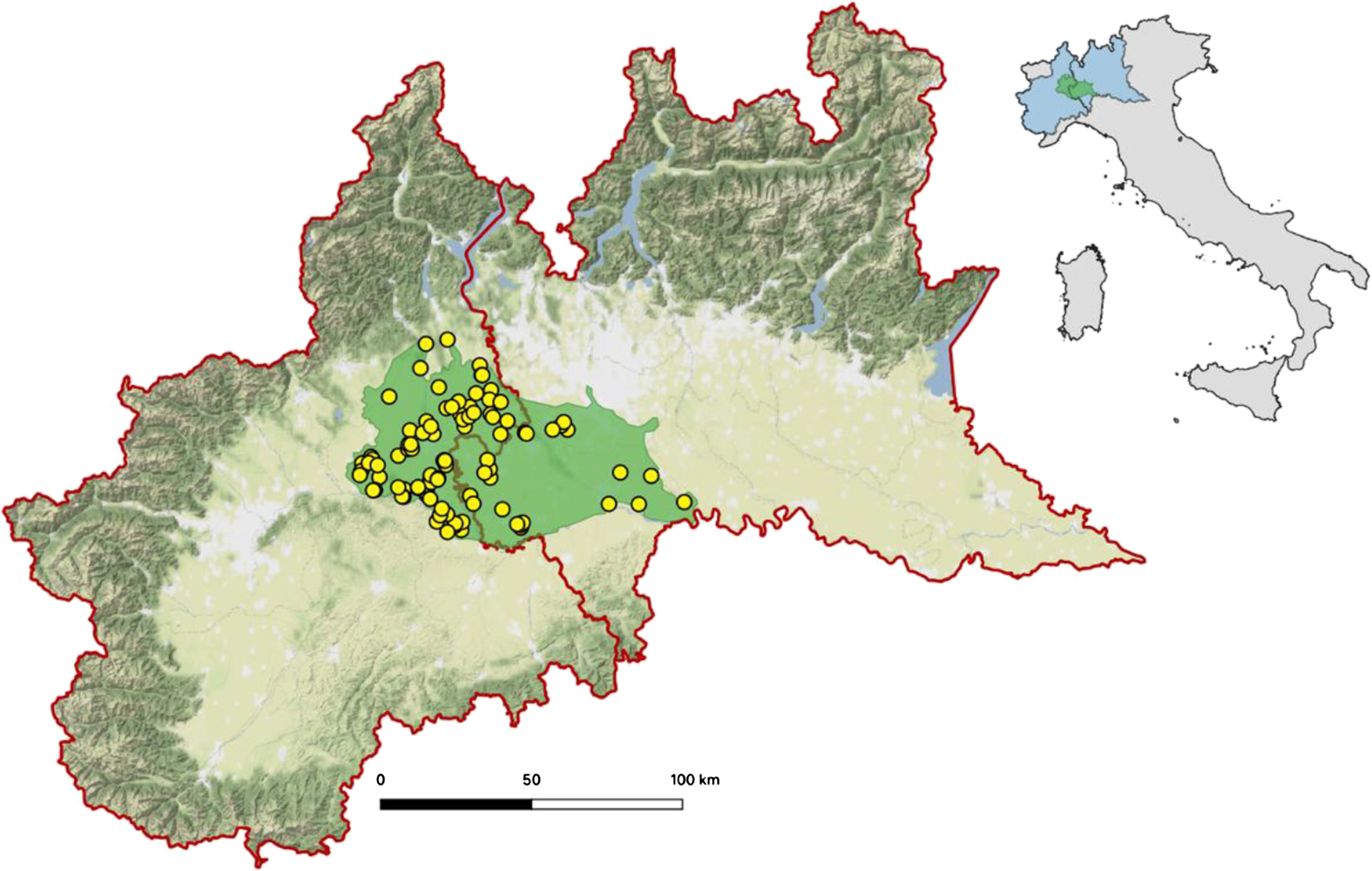
An O. sativa survey was carried out in 2018 and 2019 in the main rice-growing areas of northwestern Italy, between the Piedmont and Lombardy regions, where more than 90% of Italian rice is cultivated (Figure 1). The territory has a homogeneous climate and is characterized by heavy-textured soils, water seeding, and continuous monocropping in the northern part, and by loamy soils, water and dry seeding, and rice monocropping in the southern part. The eastern part is generally characterized by light soils, dry seeding, and both monocropping and rotation with other crops such as wheat (Triticum aestivum L.), soybean [Glycine max (L.) Merr.], and maize (Zea mays L.) (Fogliatto et al. Reference Fogliatto, Vidotto and Ferrero2012). In each of these rice territory areas, a varying number of farms were selected as representative of the area. Ninety-eight rice-growing farms were chosen across the rice area to ensure different farm sizes, different cultivation practices, and a variable degree of O. sativa infestation. The farms were scattered throughout the entire rice-growing area, thus covering most of the variability of the territory. Farm selection was based on the knowledge of the farm characteristics present within the territory and conducted with the help of local consultants who contacted the farmers before the interview; all 98 farmers agreed to participate in the survey. The 98 farms accounted for about 3% of the total number of rice farms and about 7% of the rice area present in Piedmont and Lombardy regions (3,629 farms and 214,107 ha) (Ente Nazionale Risi Reference Ente Nazionale2020). However, each farm should be considered descriptive of a much larger area (about 10 times) than the farm size in terms of representation of the agronomic practices and environments.
Italian rice area between Piedmont and Lombardy regions (green area) in which the survey was carried out. Yellow dots represent the farms surveyed.
Rice farmers were interviewed face-to-face to assess their adopted agronomic practices and the level of O. sativa infestation on each farm. The survey comprised the following information (Supplementary Table S1):
-
1. a general section soliciting information on the farm size and area cultivated with Clearfield® varieties;
-
2. a section that included the most common agronomic practices adopted, such as: type of soil tillage for the seedbed preparation (plowing at a depth varying between 20 and 25 cm, minimum tillage without plowing and cultivation at a maximum depth of 15 cm, or both types of tillage), type of sowing (water sowing, direct drilling—dry, or both), water management (continuous flooding, intermittent irrigation, or both), the origin of seed (purchased, self-produced, or both), adoption of crop rotation or monocropping, adoption of the stale seedbed (yes or no), the use of imazamox, and thus the cultivation of Clearfield® rice varieties (yes or no), and the supposed presence of O. sativa resistant to imazamox (yes or no); and
-
3. a section in which the farmers indicated the level of O. sativa infestation, subdivided into low, medium, and high infestation, considering the average level of infestation in most of the fields: O. sativa infestation was considered low if ≤5 plants m−2 were present in the fields, as estimated by the farmers; medium if density was >5 and ≤20 plants m−2; and high if more than 20 plants m−2 were estimated.
Statistical Analyses
Data regarding adopted agronomic practices and level of O. sativa infestation were first analyzed by means of descriptive statistics to obtain the frequency of the adoption of certain practices. The collected data included both categorical polytomous and dichotomous variables. For the polytomous variables, the data related to agronomic practices were labeled as mixed when one of the two main practices was adopted on less than 70% of a rice farm; otherwise the farm was assigned to the prevailing technique.
A cumulative odds ordinal logistic regression analysis with proportional odds was then carried out to determine which agronomic practices had the most influence on the level of O. sativa infestation. The O. sativa infestation level, an ordinal variable with three categories (low, medium, and high), was considered the dependent variable, while the agronomic practices mentioned earlier were the categorical independent variables. This analysis was chosen because it can handle both ordinal dependent variables and categorical independent variables. Independent variables were considered significant at P ≤ 0.05.
The collected variables were also used to perform the two-step cluster analysis procedure to identify possible clusterings between farms based on the adopted agronomic practices and the level of O. sativa infestation. A two-step cluster analysis allows both continuous and categorical data to be analyzed and the optimal number of clusters to be found based on a specific algorithm. The water management and crop rotation agronomic practices were not included in the analysis because of the strong prevalence of one category for each, namely continuous flooding and monocropping, respectively. Both statistical analyses were conducted by means of SPSS Statistics v. 26 (IBM, 1 New Orchard Road, Armonk, New York 10504-1722).
Results and Discussion
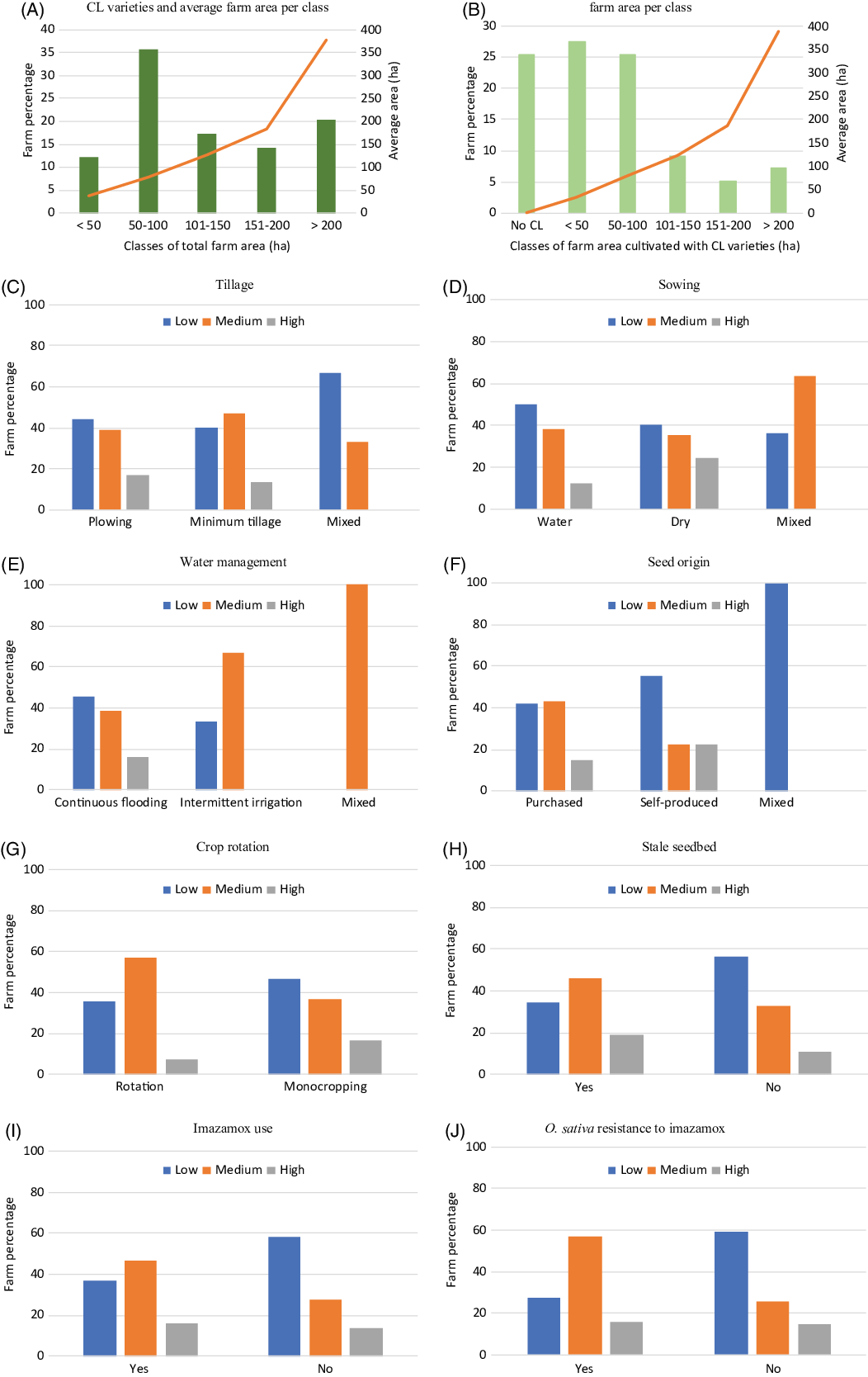
The surveyed farms were located in both the Piedmont and Lombardy regions, in the main Italian rice-growing district, which represents about 93% and 46% of the Italian and European rice-growing areas, respectively (Mongiano et al. Reference Mongiano, Titone, Tamborini, Pilu and Bregaglio2019; Ranghetti et al. Reference Ranghetti, Cardarelli, Boschetti, Busetto and Fasola2018) (Figure 1). The average size of the surveyed farms was 158 ha, with the smallest one cultivating 21 ha with rice and the largest one cultivating 955 ha (data not shown). By subdividing the farms on the basis of their total farm area, it was possible to observe that the most-represented class was that including farms with a size between 50 and 100 ha (35% of farms with an average size of 79.5 ha), while only about 12% of the farms had an area below 50 ha (average size of 38 ha) (Figure 2A). The average area on each farm cultivated with the Clearfield® rice variety was 78 ha, while 25% of the farms did not cultivate Clearfield® rice varieties at the time of the survey (Figure 2B). Almost 80% of the farms surveyed had an area of 100 ha maximum cultivated with Clearfield® varieties (Figure 2B). In Italy, the area cultivated with Clearfield® varieties represented, in 2017, about 37% of the entire Italian rice area. Since the introduction of Clearfield® rice in Italy, the area cultivated with these varieties has increased over the years because of the spread of O. sativa infestations (Ente Nazionale Risi Reference Ente Nazionale2020; Kraehmer et al. Reference Kraehmer, Thomas, Vidotto, Chauhan, Jabran and Mahajan2017). At the time of the survey, the rice varieties resistant to cycloxydim (marketed as Provisia® technology) had not yet become available on the market.
Percentage of rice farms with different Oryza sativa infestation levels (low, medium, and high) on the basis of the adopted cultivation practices. (A) Total farm area and average farm area per class; (B) total farm area cultivated with Clearfield® (CL) varieties and average farm area per class; (C) tillage; (D) sowing; (E) water management; (F) seed origin; (G) crop rotation; (H) stale seedbed; (I) imazamox use; and (J) O. sativa resistance to imazamox.
Agronomic Practices Adopted on the Surveyed Farms
About 79% of the farms plowed their fields to prepare the seedbed, while only about 15% regularly used minimum tillage, and 6% of the farms used both techniques (Table 1). Tillage is generally carried out in autumn.
Agronomic practices and frequency of adopting a certain practice.
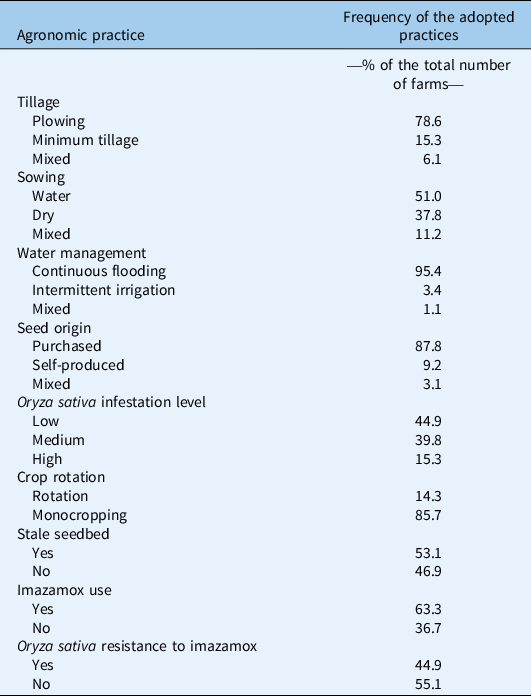
About 51% of the farms implemented the water-seeding practice, about 38% implemented dry seeding, and 11% implemented both techniques. Dry seeding is increasingly being adopted in Italy, as evidenced by a recent study estimating that the transition from water to dry seeding in 2016 involved about 28% and 69% of the rice fields in the Piedmont and Lombardy regions, respectively (Zampieri et al. Reference Zampieri, Ceglar, Manfron, Toreti, Duveiller, Romani, Rocca, Scoccimarro, Podrascanin and Djurdjevic2019). Rice seeding was carried out between the second half of April and the end of May (data not shown).
Continuous flooding of rice fields is the predominant type of water management in the surveyed area, as more than 95% adopted this technique, while only 3.4% of the farms irrigated rice intermittently (Table 1). This prevalence of permanent flooding of rice fields on the surveyed farms is consistent with what occurs at a national level; intermittent flooding is limited and is restricted to areas with highly permeable soils or where water is scarce (Peyron et al. Reference Peyron, Bertora, Pelissetti, Said-Pullicino, Celi, Miniotti, Romani and Sacco2016).
Most of the surveyed farms, almost 88%, purchased certified rice seed on the market, while seeds were self-produced on 9% of the farms, and about 3% of the farms fell into the mixed category (Table 3). The Italian rice seed industry is the European leader on the market, and this is why most rice fields were sown with certified seeds; however, the Italian areas in which rice seeds are self-produced have recently increased (Assosementi 2016; Nardi Reference Nardi2016).
The O. sativa infestation level in the surveyed area was classified as low on about 45% of the farms (infestation did not exceed 5 plants m−2), while a medium infestation (>5 and up to 20 plants m−2) was recorded on about 40% of the farms, and the remaining 15% had high infestations (>20 plants m−2) in their fields. Only 3 farmers out of the 98 interviewed declared they did not have O. sativa plants in their fields at the time of the survey and that they did not cultivate Clearfield® rice varieties.
Continuous rice monocropping is the most common cropping practice, and it is employed on about 86% of the farms, while only 14% rotated rice with other crops, mainly maize (Table 1).
Slightly more than half of the surveyed farms adopted the stale seedbed technique to control O. sativa (about 53%), and they mainly used glyphosate and cycloxydim to eliminate emerged O. sativa seedlings (Table 1). This technique is also widely adopted at the national level, especially in fields that are highly infested with O. sativa (Fogliatto et al. Reference Fogliatto, Ferrero, Vidotto and Sparks2020a; Scarabel et al. Reference Scarabel, Cenghialta, Manuello and Sattin2012).
The use of imazamox, linked with the sowing of Clearfield® varieties in the surveyed fields, was prevalent, with more than 63% of the farms adopting this technique. About 45% of the surveyed farms reported some occurrence of resistant populations, which was fewer than those that adopted the Clearfield® technology. A previous study on more than 150 Italian O. sativa populations, collected before the introduction of Clearfield® rice varieties and tested for their sensitivity to imazamox, highlighted that the weed was not resistant to this herbicide before the introduction of these varieties (Andres et al. Reference Andres, Fogliatto, Ferrero and Vidotto2014). Another study confirmed that imazamox-resistant O. sativa showed the same mutation as Clearfield® varieties, thereby showing that outcrossing between O. sativa and Clearfield® rice occurred a few years after cultivation of these varieties began (Busconi et al. Reference Busconi, Rossi, Lorenzoni, Baldi and Fogher2012).
Agronomic Practices and Oryza sativa Infestation Level
The farms that adopted plowing to prepare their rice seedbeds mainly showed low O. sativa infestations (44%), but 39% of the farms showed medium infestations (Figure 2C). Most of the farms that performed minimum tillage had a medium O. sativa infestation (47%), while 40% of the farms recorded a low infestation. The farms that adopted both techniques showed a prevalence of low infestations in rice fields (67%) (Figure 2C). The plowing of rice fields is a common preparatory tillage practice in many areas in the world, as was also demonstrated in a similar survey on rice cultivation techniques adopted in the United States (Kanapeckas et al. Reference Kanapeckas, Tseng, Vigueira, Ortiz, Bridges, Burgos, Fischer and Lawton-Rauh2018). Plowing moves the shed O. sativa seeds deep into the soil, which results in a lower weed emergence, while shallow tillage generally concentrates O. sativa seeds close to the soil surface, thus favoring their emergence (Zhang et al. Reference Zhang, Gao, Dai, Song, Hu and Qiang2019).
The preponderance of the farms recorded a low O. sativa infestation level when either dry seeding or water seeding was performed, while a dominance of medium O. sativa infestation was shown for the farms that adopted both practices. Nevertheless, about 25% of the farms that adopted dry seeding reported a high infestation level of O. sativa (Figure 2D). According to the literature, the dry seeding of rice favors O. sativa infestations, and farmers who apply this seeding method tend to compensate for this disadvantage by performing crop rotation (Gealy et al. Reference Gealy, Saldain and Talbert2000; Wang et al. Reference Wang, Peng, Liu, Tao, Huang, Cui and Nie2017). In our study, only a few farmers applied both dry seeding and crop rotation, as monocropping is more traditional for rice cultivation in the area.
A small prevalence of low O. sativa infestation (about 45%) was found on farms that cultivated rice with continuous flooding, while 38% had a medium O. sativa infestation (Figure 2E). Intermittent irrigation and the application of both continuous flooding and intermittent irrigation showed a prevalence of medium infestations, although this result cannot be considered robust, as fewer than five farms applied these practices. Permanent flooding is largely adopted in many areas of the world, as it can reduce weed emergence and growth (Chauhan Reference Chauhan2013; Wang et al. Reference Wang, Peng, Liu, Tao, Huang, Cui and Nie2017).
In this study, almost 88% of the farms purchased certified rice seeds, and almost an equal number (about 40%) of them recorded either low or medium O. sativa infestation levels (Figure 2F). Most of the farms that self-produced their rice seeds or used both certified and self-produced seeds also showed low infestations, but only about 10 farms fell within to these categories.
The majority of the rice farms (about 57%) that adopt crop rotation showed a medium O. sativa infestation, while among farms that practiced cultivated rice monocropping, most (about 46%) showed a low infestation, and 37% had a medium infestation (Figure 2G). Crop rotation is considered a practice useful to reduce weed dominance, while monocropping has the opposite effect (Chauhan Reference Chauhan2013). The medium infestation shown in our study by most of the farms that adopted crop rotation, together with the fact that only about 14% of the farms adopted rotation (Table 1), would appear to be an indication that rotation is introduced as a last resort when O. sativa infestation is quite significant. However, high numbers of O. sativa infestations were recorded in almost 17% of the farms that cultivated rice by means of monocropping and in only about 7% of the farms that rotated rice with other crops (Figure 2G). The introduction of at least another crop in the rotation was found to reduce O. sativa infestation in a study conducted in Italy in which rice was alternated with soybean, where a 97% reduction of the O. sativa seeds present in the first 10 cm of the seedbank was observed (Ferrero and Vidotto Reference Ferrero and Vidotto1997).
Farms that used a stale seedbed (about 50% of the total) mainly reported medium O. sativa infestation levels, while the farms that did not adopt this practice more frequently reported low infestation levels (about 56% of the farms) (Figure 2H). This result can be explained by considering that the stale seedbed practice is specifically performed to control O. sativa; it is likely that the farms that had more O. sativa infestation problems adopted this technique and thus had higher weed infestation levels. On the other hand, the farms that did not use a stale seedbed had fewer initial O. sativa problems.
A similar result was observed on the farms that used imazamox for O. sativa control, a practice that is linked to the adoption of Clearfield® varieties. The prevalent level of infestation on these farms was medium (about 47%), while a prevalence of low O. sativa infestations was observed on the farms where imazamox was not applied (Figure 2I). This technique was specifically developed for O. sativa control, and it is therefore also conceivable that the farms with higher amounts of O. sativa infestations decided to cultivate Clearfield® rice varieties (Milan et al. Reference Milan, Ferrero, Fogliatto, De Palo and Vidotto2017; Singh et al. Reference Singh, Singh, Black, Boyett, Basu, Gealy, Gbur, Pereira, Scott, Caicedo and Burgos2017).
The spread of imazamox resistance has been linked to the use of Clearfield® varieties; again, in this case, more than 57% of the farmers who had resistance problems declared they had a medium level of infestation, while those who did not have resistance problems and did not apply imazamox reported low prevalence of O. sativa infestation (Figure 2J).
Ordinal Regression
The results of the ordinal logistic regression performed to find any relationships between the agronomic practices and O. sativa infestation level showed that the assumption of proportional odds was met, as assessed by a full likelihood ratio test in which the fitted model was compared with a model with varying slope coefficients, χ2(15) = 21.38, P = 0.125. The deviance goodness-of-fit test indicated a good fit of the model with the observed data, χ2(173) = 163.90, P = 0.68. The final model significantly predicted the dependent variable over the intercept-only model, χ2(15) = 26.43, P = 0.034.
In the analysis, by default, the last category of a dichotomous or polytomous variable (after automatic recoding of the categories) is used as the reference category and consequently does not appear in the results (Table 2). For polytomous variables, the effect of the first two categories are compared separately with the last category, while for dichotomous variables, the effect of the first category is compared with the other. In our study, the variables and related default reference categories were: tillage (plowing), sowing (water), water management (mixed), seed origin (self-produced), crop rotation (rotation), stale seedbed (yes), imazamox use (yes), and O. sativa resistance to imazamox (no).
Results of the ordinal logistic regression, significance of the variables, parameter estimates (log odds), odds ratios, and confidence intervals (lower and upper limits of the odds ratios).
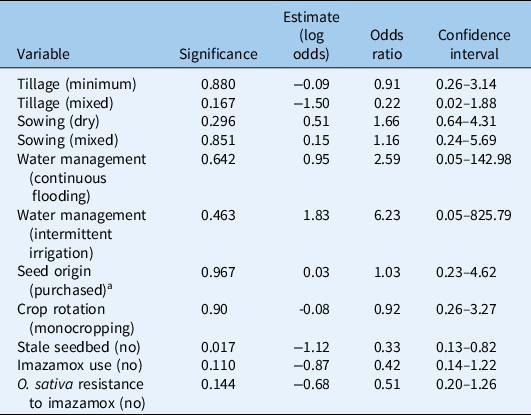
a Mixed seed was omitted, as all the farms had low infestations and thus no variability emerged.
Among all the considered agronomic practices, the only variable that was found to be statistically significant was stale seedbed (Table 2).
The odds ratio of being in a higher category of the dependent variable (high O. sativa infestation) for farms that did not adopt the stale seedbed versus farms that adopted this technique was 0.33 (95% confidence interval, 0.13 to 0.82), a statistically significant effect, χ2(1) = 5.649, P = 0.017 (Table 2). Thus, the odds of having a high O. sativa infestation level on the farms that did not use the stale seedbed are about one-third of those of the farms that used it. This also emerged when considering the log odds (estimates), which show a negative correlation between not using a stale seedbed and high O. sativa infestation level, which means that the farms that used a stale seedbed had higher O. sativa infestations than farms where the stale seedbed was not adopted. This result had already been observed when the proportion of farms with low, medium, and high O. sativa infestation levels were reported in histograms on the basis of using or not using the stale seedbed practice (Figure 2H).
Two-Step Cluster Analysis
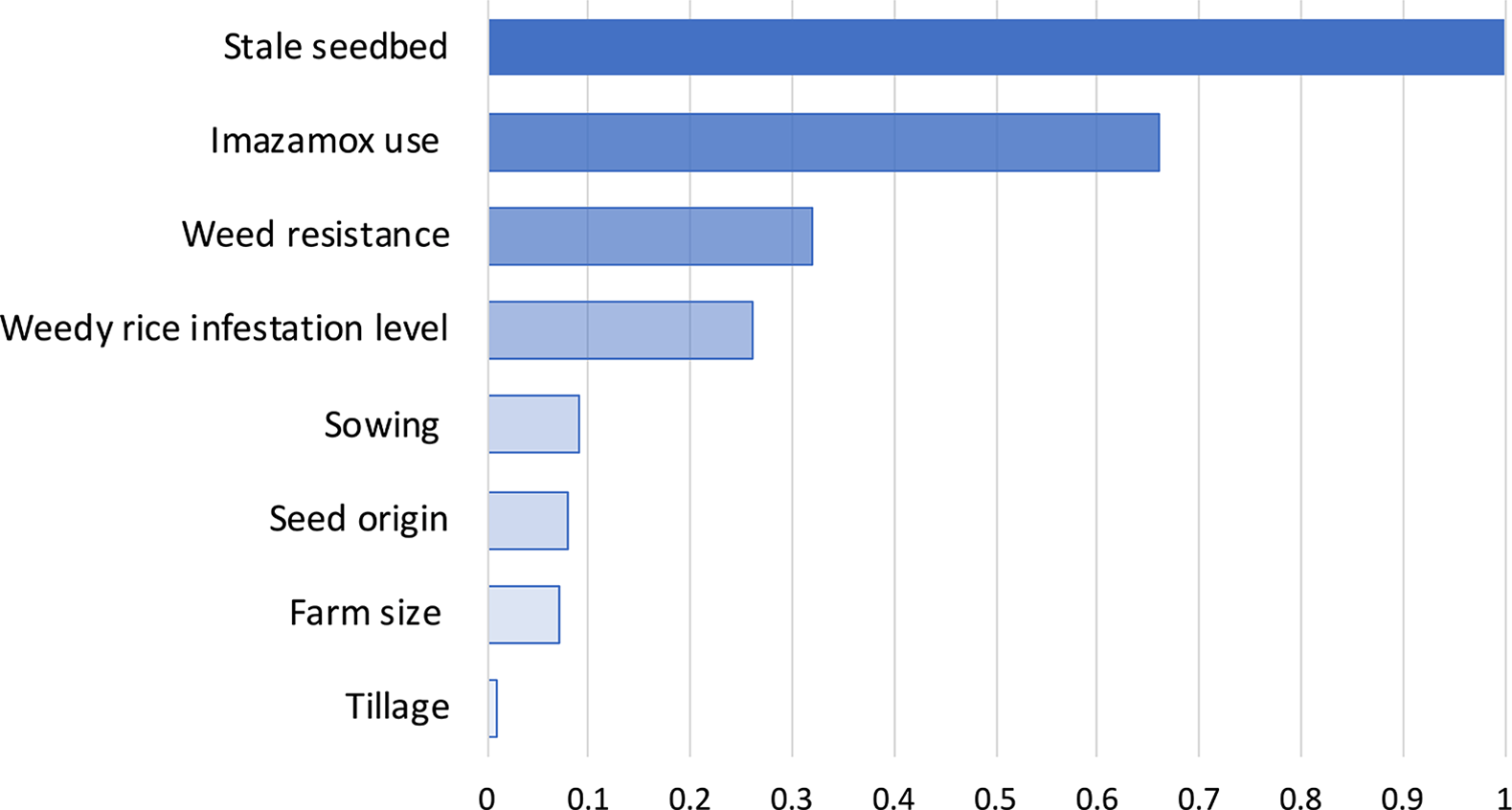
The two-step cluster analysis, conducted by means of the auto-clustering algorithm, identified three clusters on the basis of the minimum Bayesian information criterion value and the change in this value between adjacent numbers of clusters. The variable that contributed most to the chosen clustering was the stale seedbed, followed by the use of imazamox, albeit to a lower extent (Figure 3). Two other variables that made important contributions to the cluster formation were weed resistance to imazamox and O. sativa infestation level, even though their importance was much lower than the use of imazamox and stale seedbed adoption. The high level of importance of the stale seedbed in discriminating farms was in agreement with the results of the ordinal regression analysis.
Relative importance of each variable in the clustering, as identified by the two-step cluster analysis. Variable scoring 1 represents the most important variable in the cluster formation.
The three clusters contained 20, 46, and 32 farms, representing 20.4%, 46.9%, and 32.7% of the whole data set, respectively (Figure 4). Cluster 1 was mainly composed of farms that used neither a stale seedbed (65% of the farms) nor imazamox and that did not have any resistance problems. Moreover, 90% of the farms in this cluster recorded low O. sativa infestations (Figure 4A). This cluster was also composed of farms that mainly sowed purchased certified rice seeds in water, in plowed fields, and on average had a farm size of 94 ha; however, these latter practices contributed minimally to clustering (Figure 4A; Figure 3).
The three clusters identified in the two-step cluster analysis and the composition of each cluster for all the variables that contributed to clustering. The size of the circle and percentages close to each circle represent the proportion of farms pertaining to a certain category of each variable. The percentage of farms belonging to each cluster is reported in parentheses following the cluster name. (A) Cluster 1; (B) cluster 2; and (C) cluster 3.
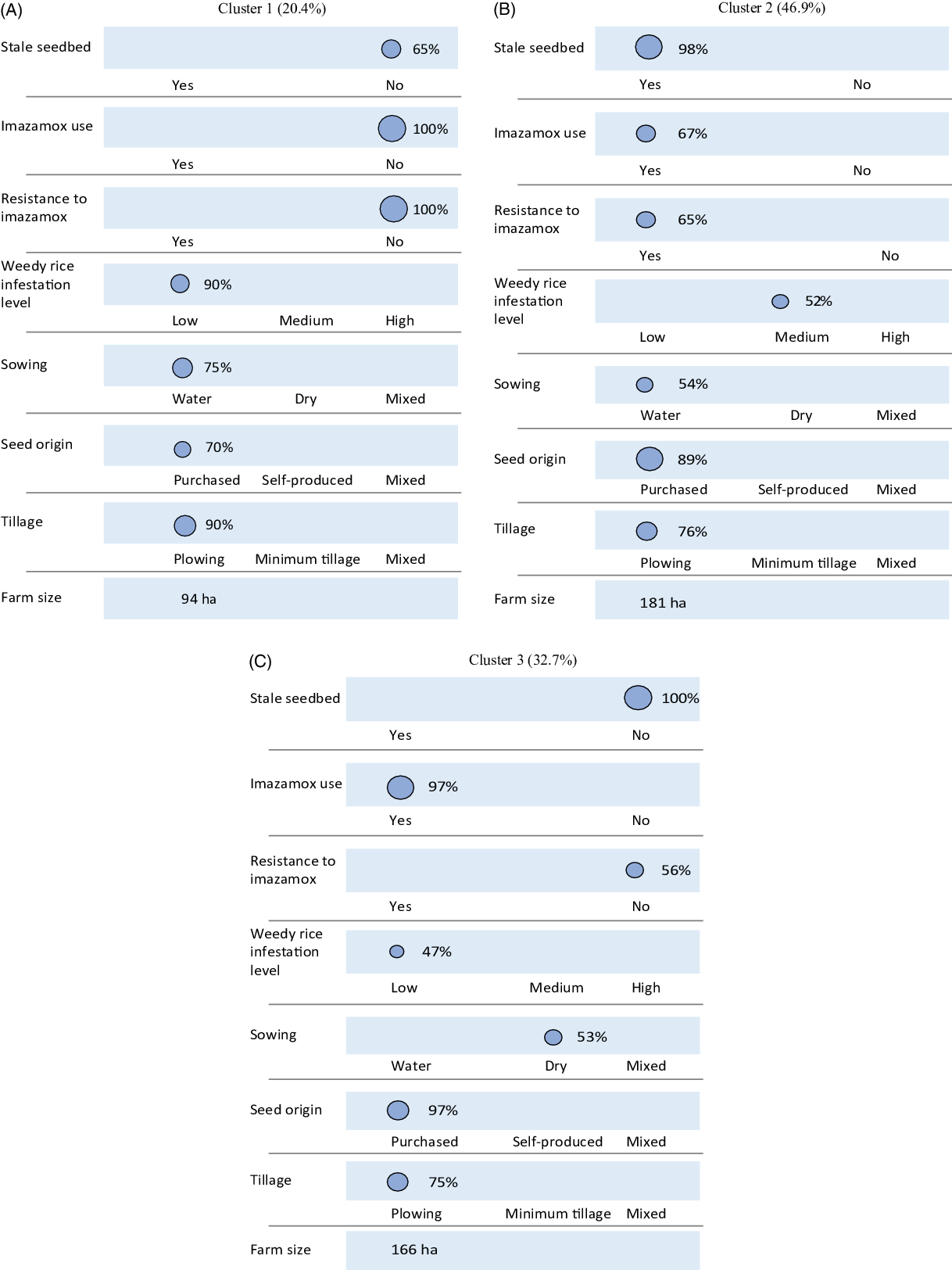
Almost half of the farms belonged to cluster 2, and most used the stale seedbed practice as well as imazamox to control O. sativa, but still showed resistance problems. More than half of the farms in this cluster had a medium O. sativa infestation level (Figure 4B). Most of the farms in this cluster sowed purchased certified rice seeds in water in plowed soil and had an average farm size of about 181 ha (Figure 4B). Cluster 3 consisted mainly of farms that did not adopt the stale seedbed but used imazamox to control O. sativa, and they did not observe the presence of resistant O. sativa. The infestation of O. sativa in this cluster was mainly low (Figure 4C). Farms belonging to this cluster mainly adopted dry seeding and certified seeds in plowed fields and had an average farm size of about 166 ha (Figure 4C).
The cluster analysis allowed us to highlight that almost half of the surveyed farms used both imazamox and the stale seedbed practice and that they showed a medium O. sativa infestation level; as these farms also had imazamox-resistant O. sativa populations, they probably adopt the stale seedbed technique to help control resistant individuals. A previous study conducted in Arkansas (USA) highlighted that most of the O. sativa and Clearfield® rice hybrids had nondormant seeds, and the stale seedbed practice could be used to help manage resistance occurrence, as this practice can help control seedlings originating from nondormant seeds (Singh et al. Reference Singh, Singh, Black, Boyett, Basu, Gealy, Gbur, Pereira, Scott, Caicedo and Burgos2017). The application of glyphosate, the most frequently used herbicide coupled with this technique in our survey, to eliminate emerging O. sativa seedlings during the stale seedbed practice proved to be a good option to control imidazolinone-resistant O. sativa populations, as also reported in the literature (Dilipkumar et al. Reference Dilipkumar, Burgos, Chuah, Ismail, Dilipkumar, Burgos, Chuah and Ismail2018).
A smaller proportion of farms, about 20%, also adopted the stale seedbed practice, but did not use imazamox, probably because their O. sativa infestations were low, and the use of Clearfield® varieties was therefore not considered necessary. About 30% of the farms only used imazamox to control O. sativa, but not the stale seedbed practice, probably because they did not have resistance problems, and the use of this technique was enough to limit the spread of O. sativa, as the level of infestation was low.
The survey permitted a correlation to be found between some of the most common agronomic practices and O. sativa infestation on Italian rice farms. The ordinal logistic regression underlined that the use of the stale seedbed practice was correlated with the O. sativa infestation, and the two-step cluster analysis showed that the surveyed farms were mainly grouped based on the application of this technique. The majority of the farms that adopted the stale seedbed practice were characterized by a higher O. sativa infestation level than those that did not use it, which means that this technique was mainly applied where there were more serious O. sativa infestations, due to its high efficacy (Shrestha et al. Reference Shrestha, Sharma, Burgos and Tseng2019). The present study also highlighted that farmers in the Italian rice-growing area surveyed often rely on the stale seedbed technique to control O. sativa, as well as on the use of imazamox coupled with Clearfield® rice varieties. In the case of strong O. sativa infestations, both techniques are often applied, particularly to control herbicide-resistant populations. It should be noted that these two techniques can also help control other troublesome rice weeds, such as Echinochloa spp. and Cyperus spp. (Singh et al. Reference Singh, Bhullar and Gill2018). The present survey also highlighted that crop rotation, one of the most effective agronomic practices used to control O. sativa and herbicide-resistant weeds, was only applied by 14% of the farms, both because of the difficulty surrounding soil drainage in areas with heavy soils, and for economic and organizational reasons: the large areas cultivated by means of monocropping required less equipment and more specialized machinery than the areas that cultivated different crops (Ferrero and Vidotto Reference Ferrero, Vidotto and Sharma2010).
The knowledge of the adoption of certain agronomic practices and their effects on weeds is particularly important to help farmers adopt appropriate crop and weed management practices.
Supplementary material
To view supplementary material for this article, please visit https://doi.org/10.1017/wsc.2020.85
Acknowledgments
This research received no specific grant from any funding agency or the commercial or not-for-profit sectors. No conflicts of interest have been declared.


 Open access

