




Introduction
‘Beijing has changed so fast’, notes the narrator at the start of In the Heat of the Sun (1994). ‘In the last twenty years, it has become a modern city, from which I could not find anything in my memories. In fact, such change has wiped out my memories. I cannot tell what is real and what is not.’ As such films have revealed, Beijing experienced an extensive process of urbanization and modernization that turned this historical city into a metropolis in both its infrastructural and social dimensions.Footnote 1 Modernist, international-style infrastructures such as high-speed roads, subway systems, luxury malls, high-rise residential blocks and office buildings sprang up everywhere in the new city. In contrast, the historical districts – in particular the centuries-old, vernacular hutong dwellings that represented local people’s culture, identity and life – were regarded as an obstacle in the way of the city’s new plan. The original cityscape of hutongs was gradually overwritten by new designs in the process of modernization, and the lived experiences and memories embedded in this vernacular architecture were simultaneously erased in the large-scale demolition and re-building. As a result, the present-day spatial configuration of Beijing can no longer function as a repository for the memory of the city and the people.
The loss of urban memory is not a phenomenon which is unique to Beijing. Many cities in China and other developing countries are facing or may face a similar issue – local memories and the spirit or identity of a place can be obscured by the process of modernity. This article endeavours to find an alternative ‘place’ where the lost urban memory might crystallize, or in the French historian Pierre Nora’s term, ‘lieux de mémoire’ (the sites/places of memory). Nora stressed the significance of ‘sites of memory’ at a particular historical turning point where ‘consciousness of a break with the past is bound up with the sense that memory has been torn’.Footnote 2 This is the challenge that Beijing and other cities are experiencing. Modernist overwriting confronts the city with a break in historical continuity (physically and mentally), while spontaneous memory no longer occurs naturally, for instance in the largely demolished hutong dwellings. Without deliberate commemorative vigilance, the historical memories and traces of how local people used to live and think risk being swept away. To prevent this social amnesia, we need to revive this vanishing urban memory when its connection with the original environment has been lost.
Interpreted by Nora, ‘sites of memory’ are mnemonic ‘places’ that have no physical meanings but are rather symbolic instruments. The phrase can be defined as ‘a meaningful entity of a real or imagined kind, which has become a symbolic element of a given community’.Footnote 3 This ambiguous notion is further clarified by scholars in memory and history studies as comprising a wide variety of ‘sites’, including places, events, objects and images stemming from the shared past. In light of this, it is not hard to think of the medium of film as being ‘a repository, an archive, of memory’.Footnote 4 As Astrid Erll has put it, ‘without eyewitnesses to history, societies are dependent on media-supported forms of remembrance (such as historiography, monuments, or movies)’.Footnote 5 It is acknowledged in both memory and film studies that cinema plays a significant role in representing collective/cultural memory.Footnote 6 Not only does the camera capture the physical transformation of the urban environment, but at the same time, film also partially documents the shifts in people’s lives/habits, identities and mindsets shaped by the ‘new configurations of urban space’.Footnote 7 However, in urban studies little attention has been paid to the power of film in recording and preserving memories of places and people in a given urban and social context. This article therefore takes Beijing’s vernacular hutong areas as a case-study with which to examine the use of fiction film as a ‘site of memory’ to make the vanishing traces of life in historical urban districts visible.
A cinematic approach to reviving urban memory
Some may argue that cinematic materials can introduce biases into the study of a city’s history through the dramatization of spatially expressed narratives. Although fiction film never truly mirrors urban reality, it is fundamentally, according to early film theorist André Bazin, ‘a preservation of life by a representation of life’.Footnote 8 During urban transitions, film, whether intentionally or not, audio-visually preserves a slice of life in a historical space and time. Cinema is an art of recording that is always imbued with a pre-existing reality associated with a social and physical context, within given cultural, political and environmental circumstances, and this is especially clear when films are shot on location. The filmic images of urban traces therefore constitute ‘an inexhaustible depository of the city’s digital archives’,Footnote 9 or a digital site of urban memory that sometimes may serve as ‘the only record of urban spaces swept away through processes of urbanization’.Footnote 10 Regarding the issue of realism, Colin MacCabe has stated that ‘what is in question is not just a rendering of reality but the rendering of a reality made more real by the use of aesthetic device’.Footnote 11 By virtue of framing and editing, according to Walter Benjamin, film extracts the ordinary within the extraordinary from real life,Footnote 12 and in François Penz’s words, ‘helps us to notice and grasp a “reality” to which we are otherwise blind’.Footnote 13 Hence, the cinematic site of urban memory not only magnifies everyday realities that are too intangible to be perceived, but also amplifies urban phenomena that are too intricate to be discerned in the physical environment.
Moreover, unlike conventional historical materials such as city plans, drawings and photography, fiction film serves as a site of memory that does not merely convey information about the past. As a form of artistic representation, it has the power to connect ‘photographic realism’ and ‘dreamlike fantasy’.Footnote 14 Film can paradoxically impartially capture reality and contribute to ‘imaginative rediscovery’ by recounting the past in new ways.Footnote 15 Accordingly, filmmakers seek to critically reflect on a city’s history instead of simply mirroring it. In some cases, the urban memory portrayed in films is a reworking of memory subject to the filmmaker’s intention to deal with the issue of the present. By projecting the past onto the present, new memories are generated among audiences in the act of film watching; as David Morley has pointed out, film media play a significant role ‘in the construction of collective memories and identities’.Footnote 16 As Nora has emphasized, unlike history, ‘there are as many memories as there are groups…collective, plural, and yet individual’.Footnote 17 Film is a means of underlining the urban memory of a specific group at a specific time, and thus to construct or reinforce a city’s identity by telling people about the past (e.g. political context, cultural lifestyle or ideology) in today’s context. Therefore, the cinematic site of urban memory not only helps to recall memories of aspects of the city that no longer exist – vanished cityscapes, habitual behaviour, lived experience – but also evokes reflections on the contextual reasons behind these urban phenomena. As Geraldine Pratt and Rose Marie San Juan put it,
We consider film as a repository of images from which new histories and memories keep re-emerging in unexpected ways; as a medium not just for representing but evoking nostalgia; and as a technology that mediates the indeterminacy of trauma, as a means of forging memory in the present out of the indecipherable and unstable remnants of memories from the past.Footnote 18
Film can be used as a complementary way of probing into a city’s history, with a particular focus on the cultural, social and humanized memory of a place. As has been suggested in the Cambridge-led research project ‘Cinematic Geographies of Battersea’, film serves as a new approach to a longitudinal historical study of a district in London. This approach uses cinematic urban archaeology to excavate the successive changes in the urban fabric through the lens of films, ‘making visible the emergence of the modern city and its subsequent transformations since the year 1895’.Footnote 19 However, central to the Battersea study are the changes in a large-scale urban region, rather than the small-scale, everyday inhabited environment that this current research is concerned with. Building on the initial concept of cinematic urban archaeology, this article designs a longitudinal study of the history and transformation of Beijing’s old city by virtue of the urban memories embodied in film material, and makes explicit chronologically the individual and collective memory of everyday lived experience during the modernization process.
A cinematic database of memories of the hutongs
To collect useful data about the inhabited environments in the hutong neighbourhoods, a film archive has been created with 75 feature-length films that embody images of daily life in Beijing’s old city from the 1940s to the 2010s, including 28 key films that cast the most light on the daily life of ordinary hutong inhabitants (Table 1). The raw materials in this research are predominantly fiction films that portray quotidian lives in the given urban context – most were shot on location in Beijing while some were produced with artificial settings in studios. Although the filmic materials selected are fiction films, which are fundamentally subjective responses from the director rather than objective documentations, they can still be used as a source of quotidian reality. As noted by French ethnographer and filmmaker Jean Rouch, fiction films also have an ‘ethnographic capacity for detecting everyday life’.Footnote 20 Whether shot on location or not, film mimics aspects of everyday reality so that viewers will believe and immerse themselves in the settings. Eliminating the dramatic scenes, this research collects data from footage embodying the most ordinary, common daily depictions that can be found in almost every film.
Category list of film archive consisting of 28 key hutong films
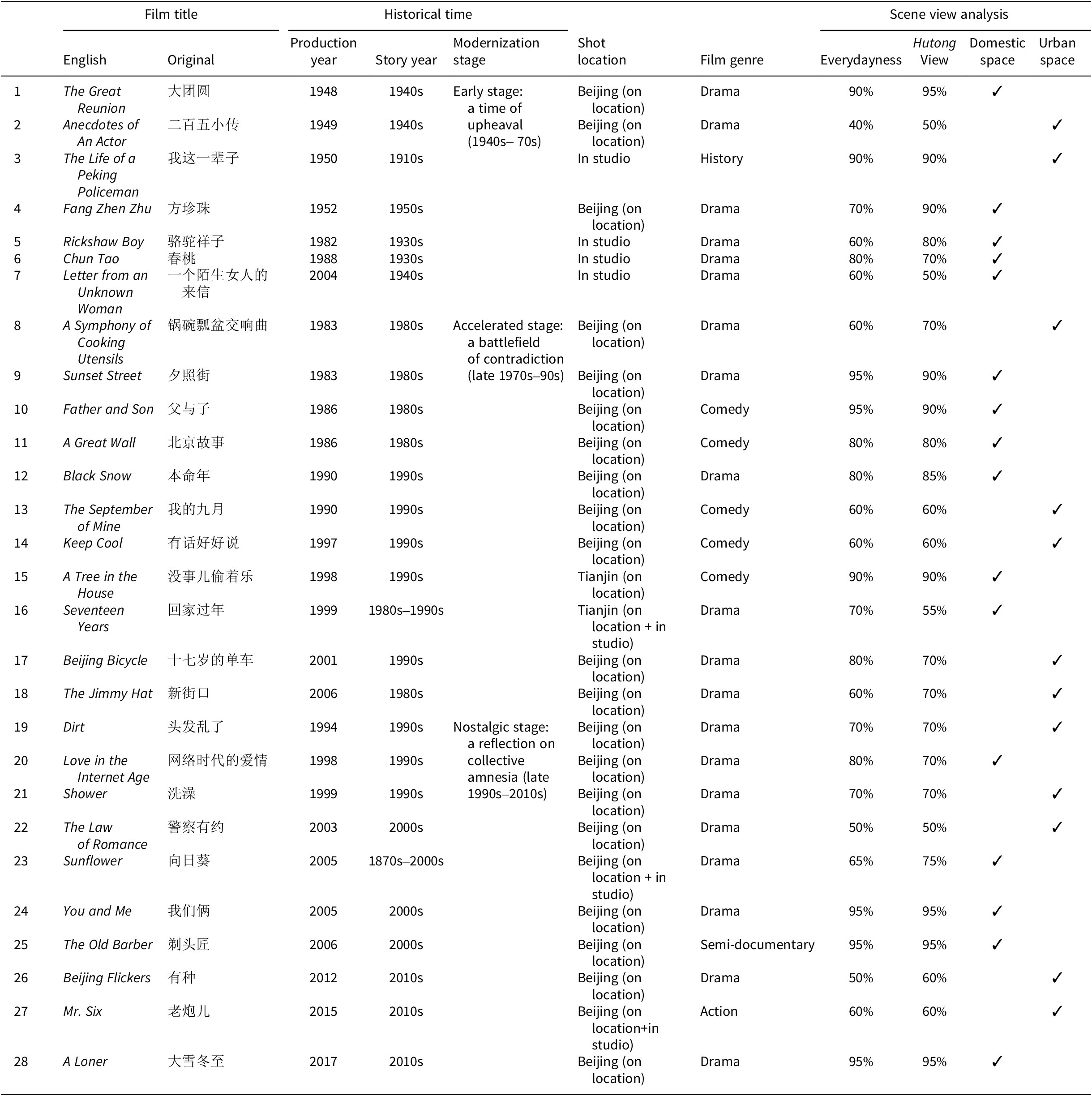
In addition, as Table 1 shows, selected filmic materials are classified based on categories of everyday settings, where quotidian events and activities take place in line with generic expectations. Semi-documentary films, such as You and Me (2005) and The Old Barber (2006), which mainly focus on domestic scenes (everydayness nearly 95 per cent), are used to analyse the private domestic environment, including courtyard, living room, kitchen, bed, sofa and dining table. In contrast, dramatic and action movies such as The Jimmy Hat (2006) and Mr. Six (2015), which mostly portray stories in urban spaces (everydayness around 60 per cent), are used to analyse the public urban environment near or inside hutong communities including the street corner, grocery store, bus station and the riverside. Films such as Anecdotes of An Actor (1949) and The Law of Romance (2003), which contain a large number of scenes depicting non-everyday spaces in hutong districts (spaces not regularly visited by most local residents in their daily routines such as theatre and police station), will not be analysed in detail here.
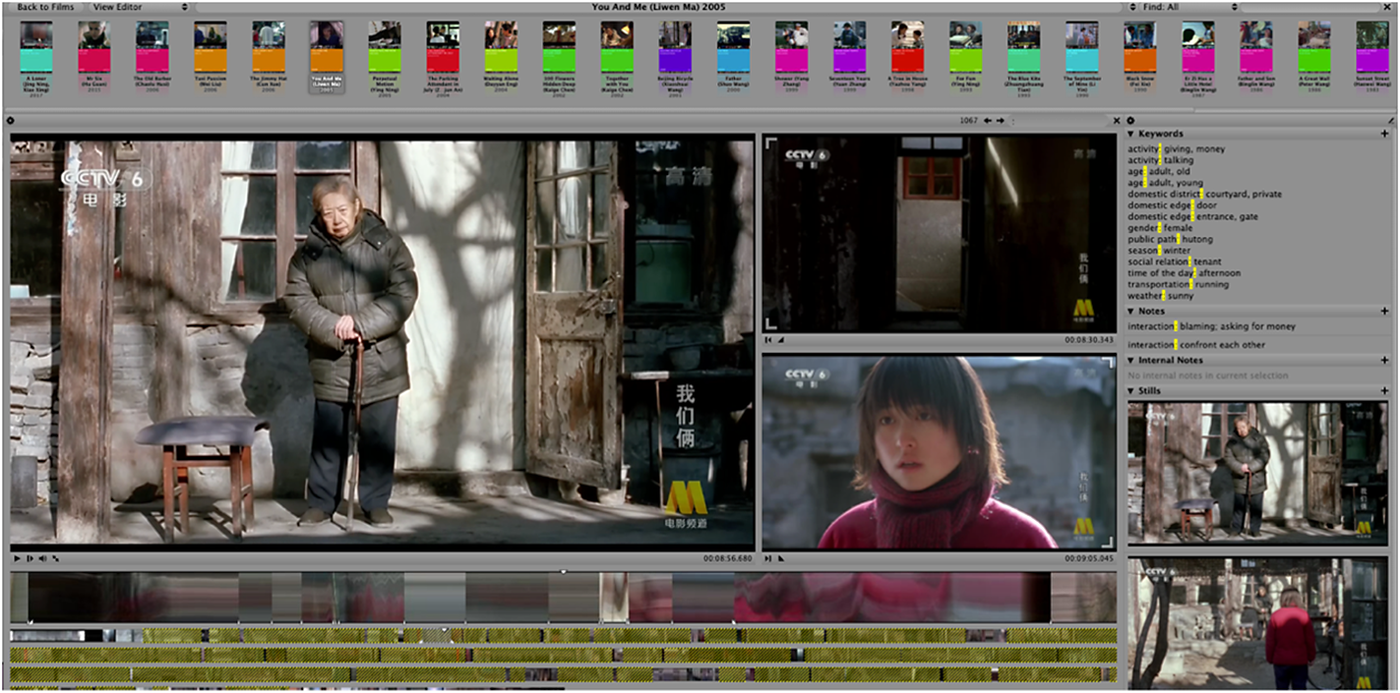
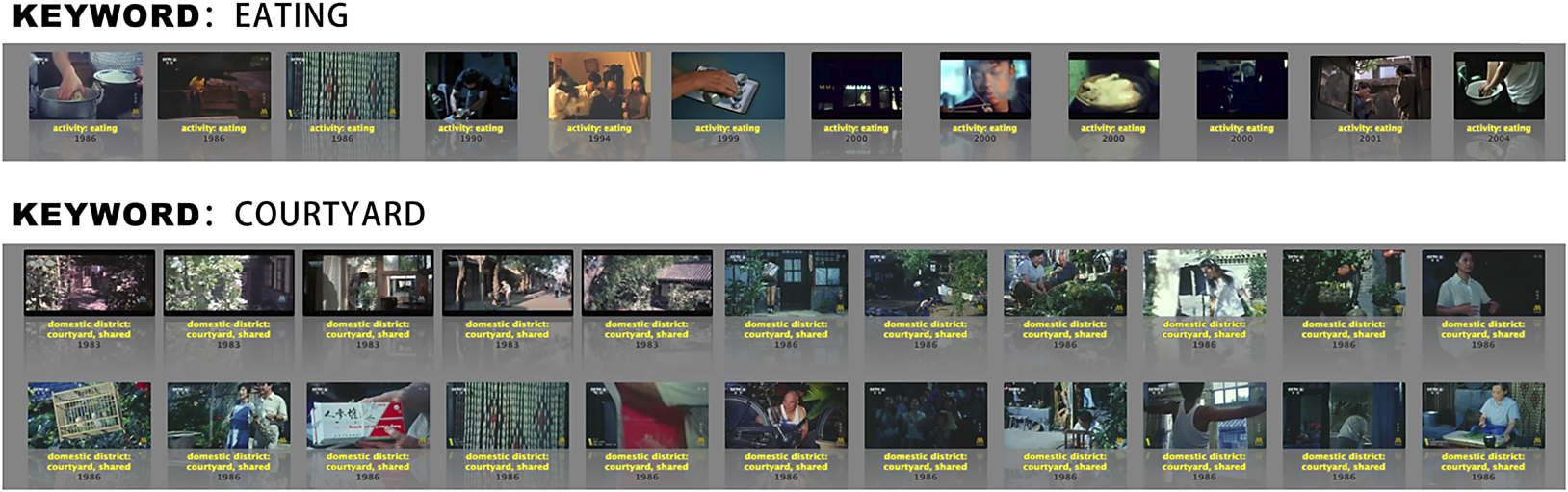
To filter out irrelevant details from the vast amounts of filmic data, central to this methodology is a bespoke time-based digital tool (Figure 1) devised by the CineMuseSpace Project, based on a database technology called Pan.do/ra, in which films are annotated in three stages – ‘data input, data mining and analysis, data recombination and dissemination’.Footnote 21 With the aid of this tool, the elements of the hutong inhabitant’s spatially organized daily life – getting up from bed, chatting with friends in front of the door, organizing a party at the yard, etc. – are classified and labelled as filmic capture (time, space and activity) of urban memory, and thereby constitute a searchable cinematic database of Beijing’s hutong districts in different historical periods. Consequently, daily scenes that are related to a peculiar activity or space can be located instantly by searching a keyword (Figure 2) – for instance, the keyword ‘eating’ will find all the dining scenes in various lived spaces and ‘courtyard’ helps identify all the activities taking place in this spatial location at different times. With the help of this cinematic database, this research revives and analyses vanishing urban memories of diverse scenes of human interaction at different stages in the modernization process in Beijing.
The film You and Me under annotation using the digital tool developed by the CineMuseSpace Project.
(a) Searching keyword ‘eating’ using the film analysis tool; (b) Searching keyword ‘courtyard’ using the film analysis tool.
On-screen image of Beijing (1940s–present)
To discern and track the urban memories hidden in the wealth of filmic materials, it is necessary to make explicit the timeline and vital points where the city’s on-screen images changed during modernization. Although film scholars, including Zhang,Footnote 22 BraesterFootnote 23 and Kuoshu,Footnote 24 have identified the affinity between the history of cinema and urban development in the context of China, little attention has been given to the city of Beijing. As the birthplace of China’s film industry, Beijing has become one of the most filmed Chinese cities, in particular after the foundation of the Beijing Film Production Factory in 1949.Footnote 25 When portraying ordinary people’s lives in the new China, films shot in Beijing around the late 1940s and 1950s typically represented its most characteristic urban features: famous city landmarks (the Forbidden City, the Summer Palace, the Temple of Heaven), the everyday residential environment of hutong neighbourhoods, and public urban spaces relevant to a conventional Beijing lifestyle (the teahouse, market, plaza for street performance, etc.). However, the city was not well documented in film for a few decades after the late 1950s because the film industry in China, especially in the political centre of Beijing, was severely impeded by social upheavals such as the ‘Great Leap Forward’ (1958–62) and the ‘Cultural Revolution’ (1966–76). As Shao Mujin, a senior researcher at the China Film Association has noted, ‘During the “cultural revolution” years, film people were among the most cruelly persecuted.’Footnote 26 It was not until the 1980s that the film industry was reinvigorated by students (widely known as the fifth and sixth generations of Chinese directors) and teachers at the Beijing Film Academy.Footnote 27 With regard to the urban reforms in the 1970s, Tang has pointed out that symbols of an early modernist city that include restaurants, hotels, hair salons, clothing stores and taxi stands were frequently captured in films, which together formed a picture of Beijing’s urban phenomena at an early stage of the modernist transformation.Footnote 28
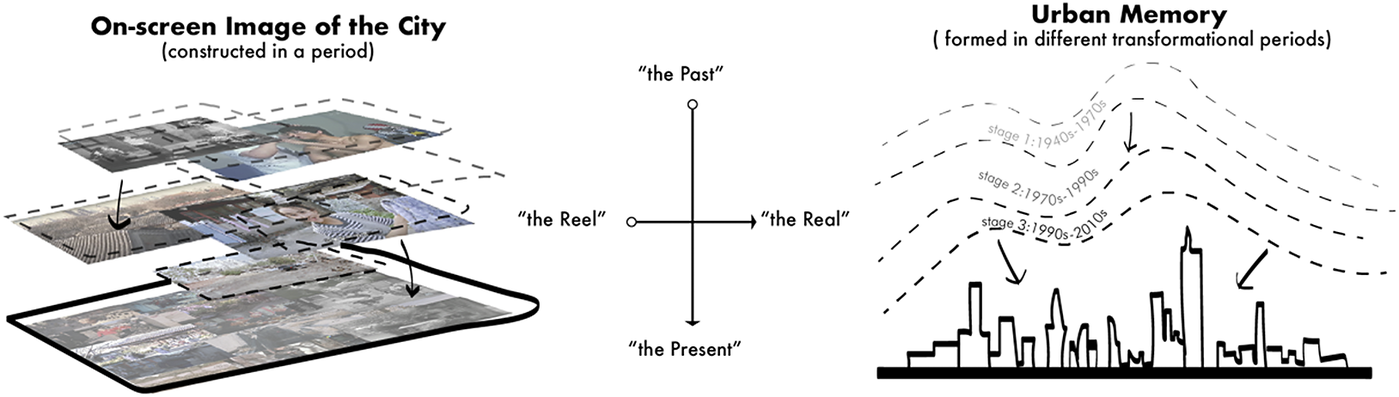
From the end of the 1990s when the modernization programme began to accelerate, the image of Beijing portrayed in films was radically reshaped. As a showcase for China’s policy of reform and opening up to the West, Beijing became a city that ‘combines village and metropolis, Western-style modernization and Chinese tradition, new-fashioned pomp with old-fashioned modesty’.Footnote 29 In this period, traditional hutongs, modernist buildings under construction, logos of international brands like ‘Carrefour’ or ‘McDonald’s’ constituted a mosaic, or collage portrait, of the past, present and future of the city. The weirdness of this Beijing city image, in the view of Tang, ‘stems from the striking simultaneous juxtaposition of vastly dissimilar, more likely conflictual, moments of history within its spatial construct, each and every historical moment inscribed in a given spatial form’.Footnote 30 By the end of the modernization programme, films shot in Beijing around the 2010s deliberately sought to build up a similar on-screen image resembling other international metropolises like New York, Tokyo, London and Singapore.Footnote 31 Deeply influenced by globalization, the well-known CCTV tower, bustling CBD area, luxury shopping malls, as well as the ‘Bird’s Nest’ national stadium, were often projected on screens to gain recognition and to meet an audience’s expectation of Beijing. Nevertheless, given the fact that film is fundamentally a form of representational art, we need to bear in mind that the cinematic representation of Beijing ‘is hardly a transparent window onto reality but rather a form of interrogation of the “truth” value of both its referent and its image and their indexical rapport’.Footnote 32 Paralleling the general consensus among existing studies on the changing points of Beijing’s filmic images, this article will endeavour to dig into the detailed characteristics of the portrayals of urban memory formed in three transformational periods, namely the 1940s–70s, the 1970s–90s and then the 1990s–2010s (Figure 3).
Illustrative diagram of a cinematic approach to identifying urban memory formed in different transformational periods.
Early stage: a time of upheaval (1940s–70s)
The first wave of modernization in Beijing began in the Republican period (1912–48), which is also the time when cinema started to play a part in the history of China’s cities. However, unlike Shanghai and Hong Kong, Republican Beijing did not play a dominant role in Chinese film production, and scarcely any film was shot on location in this period. The situation changed when the first official Film Bureau was founded in Beijing in the 1950s after the foundation of the new China, and the process of modernity accelerated. Yet because of political crises in the following decades, including the ‘Great Leap Forward’ (1958–62) and the ‘Cultural Revolution’ (1966–76), the pace of modernization as well as the development of the cinema industry were significantly impeded until the late 1970s.
Opening up in urban space
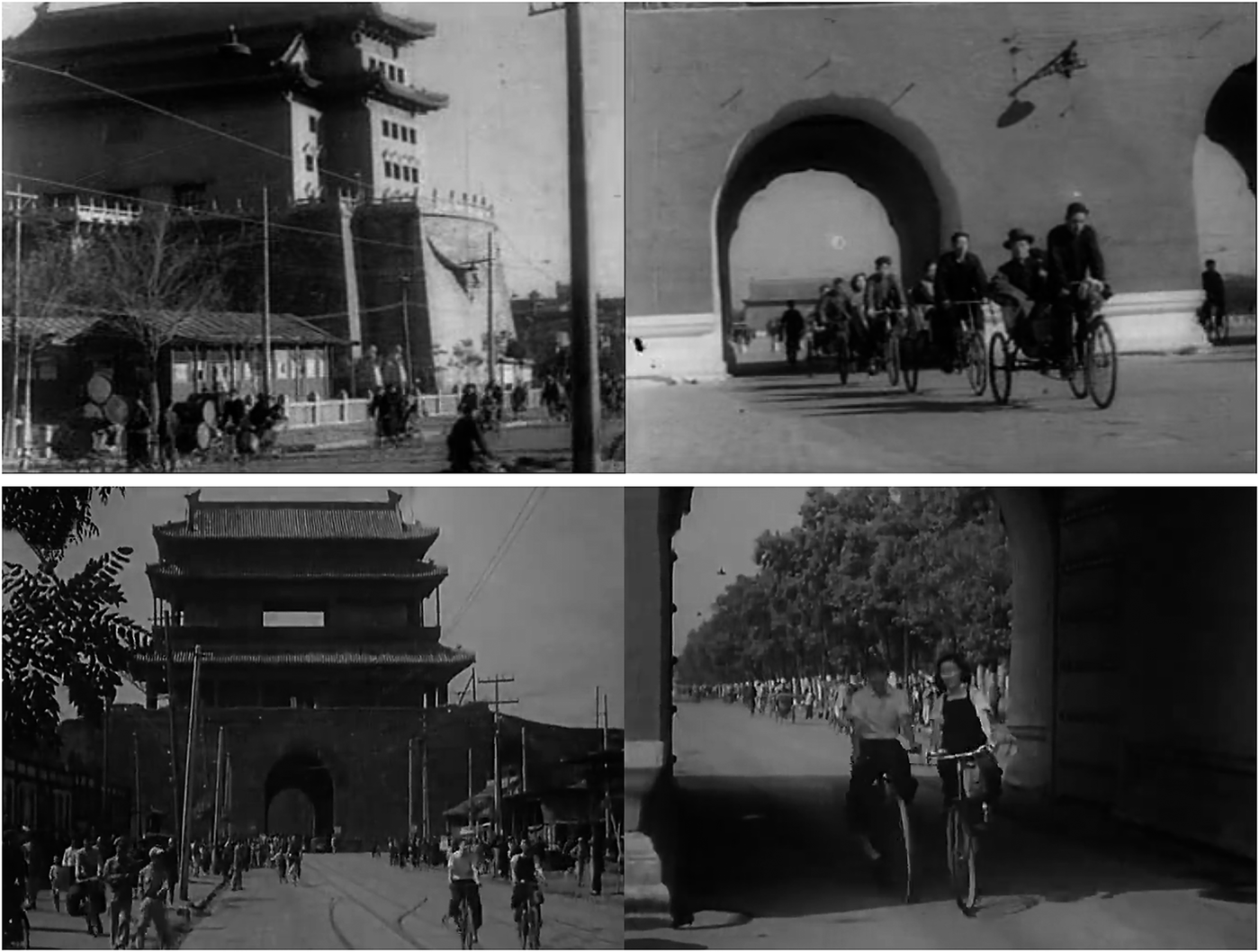
Evidence of urban transformation in this early modernist period can only be seen in a few films made in the late 1940s and 1950s – such as The Great Reunion (1948), The Life of a Peking Policeman (1950), Fang Zhen Zhu (1952) and Cerf-volant du bout du monde (1958). In The Life of a Peking Policeman and Cerf-volant du bout du monde, the camera pans over the central area of 1950s Beijing, showing the historical layout of the city and its predominant dwelling form – the hutong – in a bird’s-eye view (Figure 4). As demonstrated, the physical layout of the hutong cityscape largely remains in the same spatial configuration as during the imperial era: a physical entity hierarchically segmented by walls, walled enclosures and gates. However, when we change the point of view to the eye of an ordinary citizen, it is obvious that the film portrays changes in how urban space was used in everyday life.Footnote 33 In several scenes in The Great Reunion and Fang Zhen Zhu, the monumental urban gates no longer act as an enclosed spatial edge; instead the gate stays open to the public so that normal citizens can easily cycle through it, and the protective city walls have been torn down and given way to modernist streets (Figure 5). As indicated by opened gates and removed walls, imperial Beijing’s traditional ‘wall-gate’ system had lost its disciplinary power in a political/ideological sense; instead, it is considered a barrier that made transportation inconvenient and hindered the process of modernization.Footnote 34 As a result, the traditional boundary between ‘inner’ and ‘outer’ realms of the city dissolved (both physically and ideologically) in the everyday life of citizens, replaced by a modern, open-minded outlook. Beijing’s urban transformations during these early stages of modernization were ‘more symbolic than physical’, and were predominantly concerned with how people think and live in the city.Footnote 35
The layout of the early modern Beijing city was captured and preserved in films such as The Life of a Peking Policeman (1950) and Cerf-volant du bout du monde (1958).

As demonstrated in films such as Fang Zhen Zhu (1952) and The Great Reunion (1948), the city gate stays open to the public and the city walls were torn down and had given way to modern streets.
Segmentations in domestic space
Film was not the only way to record people’s lives during periods of social upheaval. A wide range of testimonies of life in the early stages of modernization were recorded in literature. Adapted from these written records, a considerable variety of everyday scenes were visually revived on screen in the 1980s, including Divorce (Lao She’s 1933 novel, film 1992), Rickshaw Boy (Lao She’s 1936 novel, film 1982), Teahouse (Lao She’s 1957 novel, film 1982), My Memories of Old Beijing (Lin Haiyan’s 1960 novel, film 1983) and Chun Tao (Xu Dishan’s 1934 novel, film 1988). Although shot in artificial studio settings, these films mostly reproduced the historical inhabited environment of ordinary people living in Beijing’s hutong areas, demonstrating their struggles at the bottom of a society undergoing social turbulence. Among notable films recording the lived experience of people at the lowest end of the social scale were The Life of a Peking Policeman and Rickshaw Boy. Working as a rickshaw puller was a popular way to earn a living during periods of social unrest, and according to David Strand, was ‘a sign of social dislocation’.Footnote 36 As illustrated in these films, people who enjoyed a higher social status, such as the owner of the rickshaw company, were largely unaffected by the social upheaval – they could still afford to live in spacious residences with their own families. In contrast, people of the lowest social ranks struggling to survive, such as the rickshaw pullers, had no choice but to live in a shared shabby house with other poor people.
In addition, the conventional collective lifestyle of a large family living in a hutong courtyard residence was also challenged by social upheaval. In The Great Reunion, members of a large Beijing family with eight children were compelled to separate twice on account of World War II and the Civil War respectively, and had to move out of their house to survive the difficult times. The film reveals a common phenomenon: most large family units were divided into smaller units. The fact that the average family size in Beijing was shrinking was also reflected in the use of space in a hutong courtyard house. Although the original architectural form and spatial layout still remained, a hutong residence ceased to be owned by one family – the rooms in a house were assigned to different smaller family units so that more people could be housed during this turbulent time (The Life of a Peking Policeman, Chun Tao, Letter from an Unknown Woman (2004)).
Appropriations in public hutong space
In addition to the segmentation inside the residential house, the public space in the hutong was increasingly divided into several residential districts and appropriated by the residents in their daily lives – in particular the entrance area at each house gate, or the open ground at the corner of the hutong. Captured in many films, such public space in hutongs served as a casual meeting place for neighbours (Fang Zhen Zhu and The Life of a Peking Policeman). Middle-aged women might be found sitting and doing housework while exchanging gossip (Chun Tao); children living in the neighbourhood might use the space as a playground (Chun Tao and My Memories of Old Beijing). The everyday living area extended from the courtyard house into the public space in the hutong, and various daily activities began to ‘invade’ the space originally designed for transportation.
As illustrated in films such as The Great Reunion, My Memories of Old Beijing and Chun Tao, commercial activities also started to appear in hutongs. In contrast to the imperial era when almost everyone depended on the temple markets, a segmented pattern of market trading emerged to supply residents’ everyday needs. During this period, trading activities extended into every alley; small traders sold vegetables, food, toys, thread and other miscellaneous items at the gates of households (Chun Tao), in the buyer’s courtyard (The Great Reunion) or at the hutong corner (My Memories of Old Beijing). In films featuring hutong neighbourhoods, peddlers were often shown parking their stalls at the corner, and hawking their food or other wares.
Accelerated stage: a battlefield of contradiction (late 1970s–90s)
Since the late 1970s, symbols of a fully developed modern city – high-speed roads, metros, avenues, high-rise buildings and shopping malls – have frequently been captured in films such as ZhenZhen’s Barber Shop (1986), Good Morning, Beijing (1990) and Black Snow (1990), which together formed a picture of urban phenomena in Beijing at the accelerated stage of the city’s modernization.Footnote 37 With the rise of the fifth generation directors who brought increased popularity to Chinese cinema, the number of films made in Beijing’s old city rapidly increased during this period (late 1970s–90s). Largely influenced by Italian Neorealism and French New Wave, the filmmakers chose to record the city in a realistic way.Footnote 38 Mostly set in the real hutong environment, these films sought to cast light on the daily lives and struggles of the most ordinary residents dealing with urban transition – ranging from the management of a little restaurant (A Symphony of Cooking Utensils (1983)), a female barber (ZhenZhen’s Barber Shop (1986)), a bus conductor (Good Morning, Beijing (1990)) to a migrant worker (No Regret about Youth (1991), Beijing Bicycle (2001)), a neighbourhood police officer (Dirt (1994), On the Beat (1995), East Palace, West Palace (1996)), a retired worker (For Fun (1993)), a rock musician (Dirt (1994)) and a book retailer (Keep Cool (1997)).
Expansions in courtyard space
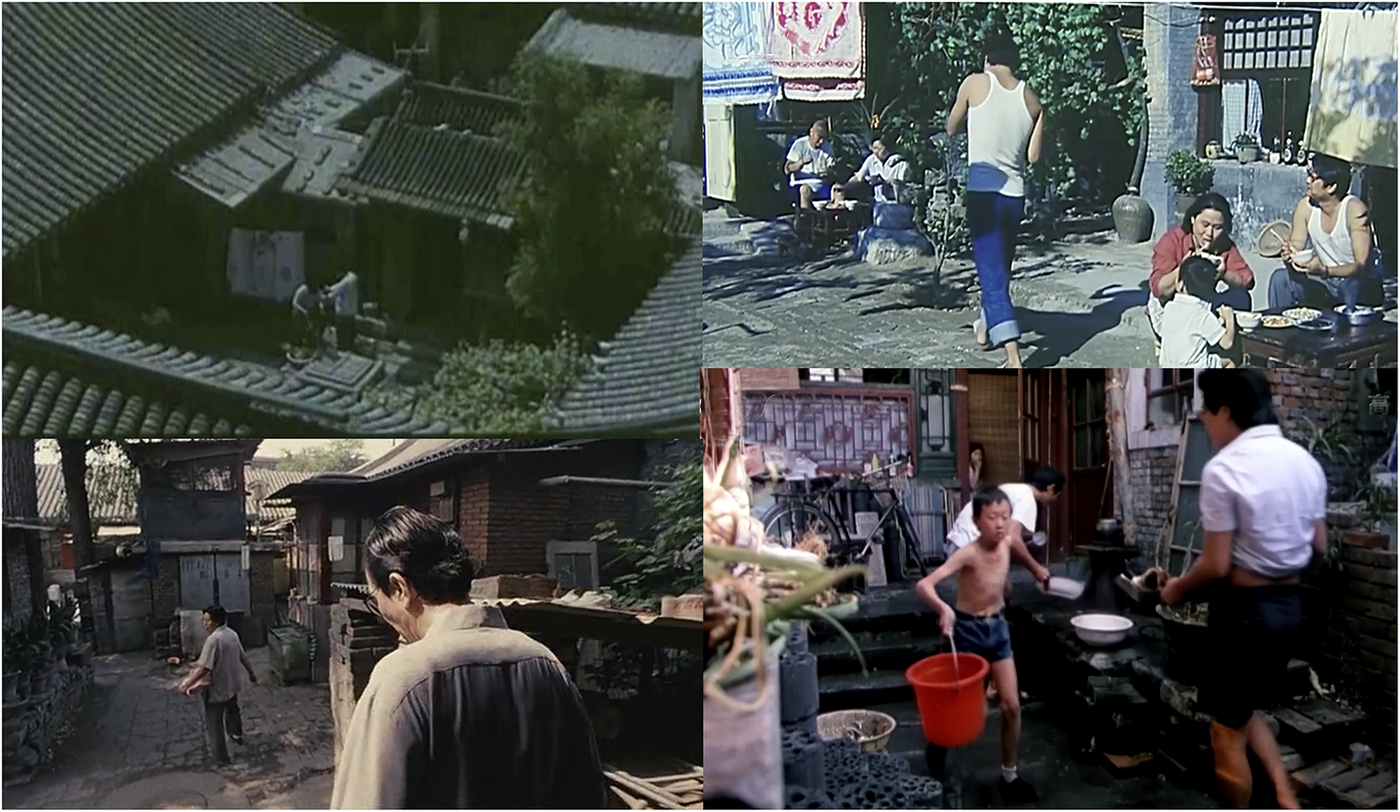
As shown in the films noted above, the acceleration of modernization in the late 1970s increased the population of migrants in Beijing and led to a housing crisis in the hutongs. Footnote 39 To solve the housing problem, socialist reform was carried out in the hutong areas under the ‘Jing Zu’ policy, which meant that all private houses were to be managed by the government and had to be shared between families.Footnote 40 This policy is implicit in the film To Live (1999), in which the owner of a large hutong residence, Long Er, is executed in front of the public because of his refusal to hand over his house to the government. In this period, the conventional hutong residence became a ‘battlefield’ crowded with people who struggled to find a place to settle down in central Beijing. Because of the lack of official planning, lived spaces in the hutong were appropriated bottom-up by residents themselves. Not only were most dwellings divided into more and more tiny rooms to house as many families as possible, but informal houses were also built in the courtyards to meet their basic socio-spatial needs, which frequently led to a ‘battle’ for inhabited space between neighbours.Footnote 41 In the film A Tree in the House (1998), the protagonist together with his four siblings and their mother are crowded into a small room and have to make more living space by building an extra room around a tree in the shared courtyard, which caused a struggle with the neighbours. As a result of such divisions, the original architectural form and urban fabric in the hutong districts were completely altered by reappropriation and personalization.Footnote 42 Since then, the vast majority of hutong dwellings have been turned into miscellaneous compounds (in Chinese ‘Da Za Yuan’, meaning large mixed courtyard) where a large number of people co-exist in high-density areas (Black Snow (1990), Keep Cool (1997), Seventeen Years (1999), etc.) (Figure 6).
Shared hutong courtyard dwellings and collective living situations with neighbours represented in films (from left to right, up to down: Sunset Street (1983), Father and Son (1986), Keep Cool (1997), The September of Mine (1990)).
Co-living in shared courtyards
The main social relationship in a hutong dwelling therefore shifted from the conventional one of extended family to co-living neighbours. It is not surprising to find that films made during this period tend to portray interactions between neighbours living in the same residence. Because of the dwelling house’s unique introverted spatial form and the centrally located/shared courtyard, a bond of family affection might be forged between residents in the same building by means, for example, of sharing food and taking care of each other. In films such as He Yan Er (2002), Go Home (2002) and Taxi Passion (2006), two neighbour-families are connected by the interweaving of mundane, everyday activities, and eventually become one when love and marriage are forged in the nexus between ‘neighbour’ and ‘family’. Other films such as Black Snow, Dirt, Waiting Alone (2004) and The Jimmy Hat demonstrate that friends who grew up in the same neighbourhood share such a strong bond that they regard each other as ‘brother’ or ‘sister’ although there is no biological relation between them. People who grow up in the hutong were often depicted as willing to do anything for their friends. However, complaints and disputes between neighbours over trivial aspects of daily life are also common in the hutong films. The September of Mine (1990), Honourable Friends (1991) and Love in the Internet Age (1998), for instance, provide the other side of such collective living situations – conflict and misunderstanding are caused by the lack of privacy, noise from neighbours, the loss of personal possessions in communal space, and the uneven distribution of the shared courtyard.
Beijing youth culture in hutongs
The contrast stirred up by the hutong’s modernist transition is not only reflected in the physical environment but also in the lifestyle and mindset of ordinary people. Such a fast-paced social transition was also documented by filmmakers in the 1980s and 1990s who ‘work under the menace of disappearance and against the city’s transformation’.Footnote 43 They were adept at depicting the young hutong residents suffering from ‘socioeconomic unevenness, psychological anxiety, and moral confusion caused by the upheaval’.Footnote 44 Captured and, to some extent, strengthened by such images, a unique hutong culture/lifestyle was formed in 1990’s Beijing. Many hutong films in this period – Black Snow, Dirt, Keep Cool, Love in the Internet Age – focus on the aspirations of hutong youths to escape from the old districts and seek opportunities in the beautiful modern Beijing. In Love in the Internet Age, they complain about the unsatisfactory living conditions in the hutong, about the poor sound insulation, the inconvenience of using public toilets and the terrible infrastructure that is constantly out of order. They dream about getting rich and moving out to the high-rise, well-equipped modern flats. Confronting the impact of the social and economic transformations, hutong youths in films at this time share common characteristics – they live by their passions and ambitions, with rebelliousness, and even with madness. For instance, fighting, rock music and alcohol are frequently shown in a young hutong resident’s daily life, which symbolized the struggle to escape from reality and the great desire for freedom (Dirt, Beijing Rocks (2001)).
Nostalgic stage: a reflection on collective amnesia (late 1990s–2010s)
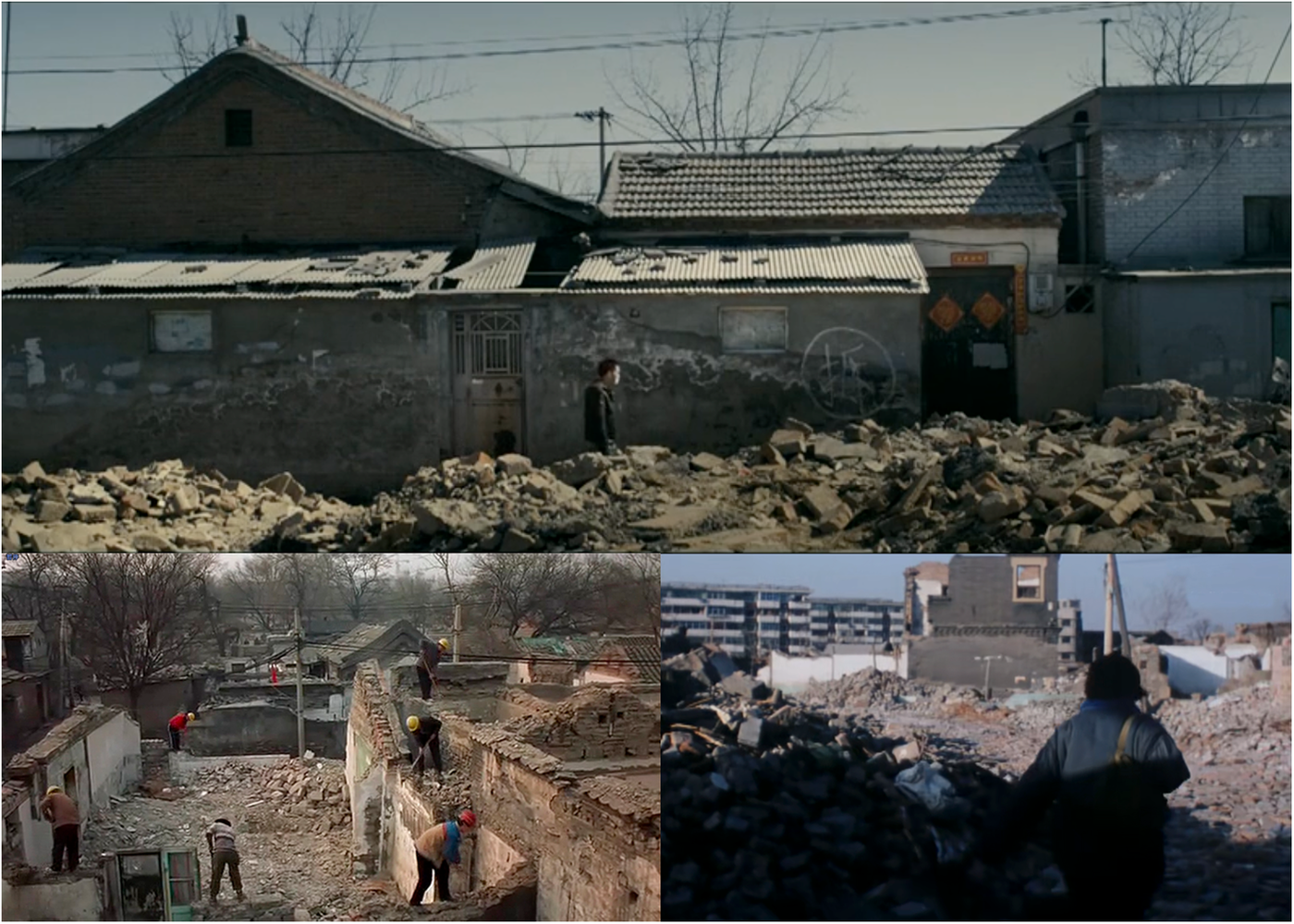
By the end of the 1990s when the modernization programme had reached its peak, the image of Beijing portrayed in films had been radically reshaped. As a showcase for China’s policy for reform and opening up to the West, Beijing had become a city that ‘combines village and metropolis, Western-style modernization and Chinese tradition, new-fashioned pomp with old-fashioned modesty’.Footnote 45 In films of this period that captured the hutong districts, soon-to-be-demolished vernacular dwellings alongside modernist buildings under construction constituted a collage portrait of the past, present and future of the city (Figure 7).Footnote 46 Although the modernization of the hutongs slowed down in the 2010s when people began to be aware of the value of the old city, the socio-economic urban centre had already shifted to the sprawling new districts. Most filmmakers panned their camera away from the old hutong areas. Films shot in Beijing around the 2010s, including Finding Mr. Right (2013), The Breakup Guru (2014) and Beijing Love Story (2014), deliberately sought to build a similar on-screen image resembling other international metropolises like New York, Tokyo, London and Singapore.Footnote 47 Only a few filmmakers – in particular the sixth generation directors including Yuan Zhang, Hu Guan, Xiaoshuai Wang – use the camera as their ‘weapon’ to express reflections and critical thinking about the dilemma that the mostly demolished hutong districts were facing. Having realized the dangers of losing their own culture, they started to depict a nostalgia for the rapidly vanishing old Beijing and attempted to offer/evoke critical insights into the effects of reckless transformation that uprooted the hutong communities.Footnote 48 Films made since the late 1990s, such as Love in the Internet Age (1998), Shower (1999), 100 Flowers Hidden Deep (2002), Gone Is the One Who Held Me the Dearest in the World (2002), The Old Barber (2006), Mr. Six (2015) and A Loner (2017), lament the disappearance of the old cityscape and the forgetting of traditional urban practices with an elegiac tone, as their titles suggest.
Soon-to-be-demolished buildings in hutong districts captured in films (from left to right, up to down: Beijing Flickers (2012), Sunflower (2005), Seventeen Years (1999).
A record of massive demolition
The demolition of the hutong houses has been portrayed in many Beijing films since the 1990s: No Regret about Youth (1991), Dirt (1994), A Tree in the House (1998), Love in the Internet Age (1998), Shower (1999), Seventeen Years (1999). The demolition scenes constitute a turning point in many plotsFootnote 49 – for example, a character returns to his/her home and sees a building that was full of childhood memories demolished, or the protagonist wades through the debris, possibly to look for his/her demolished home. The filmmakers, intentionally or by chance, record the relentless urban destruction by prominently featuring the ‘aggressive’ bulldozers, the signs of ‘tear down’ on the collapsing walls or the debris of building ruins in the foreground or background of the frame (in 100 Flowers Hidden Deep, The Law of Romance (2003), The Old Barber, Beijing Flickers (2012). In contrast to these scenes of ruin, a new Beijing skyline formed by high-rise modern buildings is exhibited in the deepest background layer.
Along with changes in the urban environment, the different emotional reactions of displaced dwellers whose houses were facing demolition were also documented in films. Protagonists are often informed about the demolition date before which they are forced to evacuate their homes and move into the resettlement houses in the new city with large amounts of compensation.Footnote 50 Some people, as illustrated in Taxi Passion (2006), evince a positive attitude towards the relocation to convenient modern spaces, which echoed the desire of former hutong residents for better living conditions. Others, as shown in films including Sunset Street (1983), Love in the Internet Age, Seventeen Years, Shower and The Old Barber, bear the pain and sorrow of bidding farewell to the place where they grew up. There is often a scene in such films in which the protagonist stares at the ruins of his/her residence with a nostalgic expression. In addition, some films warned how massive demolition threatened to erase the city’s past and cause ‘collective amnesia’. For example, the short film 100 Flowers Hidden Deep depicts a madman who insists on asking the removal company to move his invisible old furniture out of a non-existent hutong house that has already been demolished. When the madman is on the way to his imaginary home, he seems to be completely unfamiliar with the new city and confused by the roads on which the driver takes him. As the driver jokes ‘Now it is the local resident that loses his bearings in the contemporary Beijing’, the protagonist becomes the only one who still sees and lives in the older version of Beijing retained in his memory. Similarly, Shower depicts a mentally handicapped boy who easily gets lost in the glitzy modern urban districts, yet knows everything about his home as well as the surroundings in the hutong even only by touching the walls. The odd behaviours demonstrated in such films might seem ridiculous to normal people. However, filmmakers were suggesting to the audience that perhaps radical urban transformation creates a form of madness and collective amnesia without even realizing it.
A countdown of collective amnesia
As has been recorded in films including Love in the Internet Age, numerous young people have chosen to move out from the hutong districts to chase their dreams in the shining new Beijing. Indicated by the leading characters in films made after the 2000s (Gone Is the One Who Held Me the Dearest in the World, You and Me, The Old Barber, Mr. Six, A Loner, etc.), the majority of present-day hutong dwellers are old people who refused to move out with the younger generations. Bearing witness to the dramatic socio-economic changes in the modernization process, the old hutong dwellers have built a deep emotional connection with this vernacular architectural form and the hutong habits/lifestyle – for example, eating traditional Beijing food (‘Bao Dur’ in The Old Barber), listening to traditional Beijing music (Beijing Opera in A Loner), living collectively and interdependently with their neighbours (You and Me) or being willing to do anything for their ‘brothers’/neighbours (Mr. Six). Their insistence on vernacular practices is the most powerful weapon against the replacing of the local by the modernist and the international. They act as the last-ditch resistance to forgetting the memory of yesterday’s Beijing. However, death is a common theme in these films depicting the old hutong dwellers. In Gone Is the One Who Held Me the Dearest in the World, a successful writer who flung herself into her career in modern Beijing witnesses the death of her 80-year-old mother who lives alone in her old house. The landlady in You and Me eventually, and unwillingly, moves out of the old neighbourhood before she dies at her daughter’s place. The protagonist in Sunflower (2005) finds his neighbour/best friend has died quietly in his room during the night. Similarly, in A Loner, an old lady dies in her home, with no one as witness, one winter’s night sitting on the sofa while watching TV. In The Old Barber, though the death of the protagonist is not shown in the film, the countdown of his lifetime is hinted at by the gradual demolition of the neighbourhood where he lives. In Sunflower, the shot of a dismantled building serves as a metaphor for the death of the protagonist’s father. These old natives act as a human countdown clock that is fast running out of time, which indicated the vanishing traditions and forgetting about the hutong as the spirit of Beijing.
A scene in Love in the Internet Age demonstrates this ‘countdown clock’ metaphor vividly. When the protagonist seeks to find someone who can play Danxianr (a near obsolete traditional Beijing musical instrument), he sees a monumental tower where all the old Beijingers gather on the stone stairs doing different traditional activities – singing Beijing music, doing Tai Chi and playing Chinese chess. The monumental tower serves as an elevated display platform, and the aged faces shown on the screen are the materialized form of ‘the dying traditions’. The film ends on a nostalgic, mournful tone: the only person in the world who could play Danxianr gets Alzheimer’s disease. Sitting in a wheelchair in the nursing home, the old man is not able to remember anything. The film alerts us to the fact that by the time the ‘countdown clock’ stops, the traditional Beijing will have disappeared – there will be no one left who remembers the city’s past.
Conclusion
To prevent ‘collective amnesia’ and the loss of the city’s identity, this research provides insight into the transitions undergone in the physical and social fabric of Beijing through the lens of film. Although the filmic spaces are not identical to the real urban environment, these films provide us with a considerable amount of visual documentation of the quotidian scenes taking place in the hutong dwellings. Such filmic visual representations offer us a chance to grasp how people used to live along with a baseline picture of what the physical, cultural and social environment was like during the modernization process, such as the changes in the urban fabric, architectural form and lifestyles. This project employs an experiential, humanized method to revive the everyday memory of a place by collecting slices of reality from related filmic materials made in different historical periods. Firstly, a film archive was created out of 75 fiction films spanning 70 years that were mainly shot on location in Beijing, including 28 key films primarily shot in the hutong areas. The films were then categorized based on their year of appearance, shot location, film genre and the analysis of film contents (everydayness, setting types, etc.). Secondly, critical data and information on people’s everyday lives and environment embedded in film scenes were filtered out, marked and labelled on a film-annotation platform. A searchable cinematic database of Beijing hutong memory, or a cinematic site of Beijing hutong’s memory, is thereby constituted. The spirit/identity of Beijing’s old city is therefore revived and strengthened within the larger context of globalization, and helps us understand the transformation of the vernacular dwelling form and the formation of its unique hutong culture.
Referring to the urban transformations in Beijing over recent decades, the famous Chinese architect, Yong Ho Chang, criticized the massive demolition in the old city in a nostalgic tone: ‘the demolition of the past pretty much makes history, time, culture all abstract; so you can use all these words, but you cannot really understand them’.Footnote 51 His argument echoes the main aim of this project, which is to use film as a digital ‘site of memory’ to revive the vanishing urban histories of the hutong, and thus prevent collective amnesia caused by the dramatic modernization of Beijing. Chang offers profound insight into the meaning of a city’s history by highlighting the sense of time:
When you find a piece of stone which is three or four hundred years old, then you understand the notion of time as more than what we can experience as human beings…it gives you a sense of profound time, and then you understand your history and ancestors that lived in a different world, different from the one we are in now.
Aligning the case of Beijing’s hutong with Chang’s reflections on ageless stone allows us to see the city’s past embodied in its form for centuries. Hence, even though Beijing’s socio-economic centre has shifted to its modern districts, the spirit of this city still lies in the old part, where a unique Beijing culture and lifestyle was historically generated.


 Open access

