




1. Introduction
In today’s increasingly globalized, multilingual, and multicultural societies, English as a lingua franca (ELF) has become a trend. To promote students’ mastery of ELF, content and language integrated learning (CLIL) has emerged as an important teaching approach in many non-English-speaking countries, especially in Europe and Asia (Díez-Arcón & Agonács, Reference Díez-Arcón and Agonács2024). CLIL, mostly implemented in primary and secondary school settings, emphasizes the use of additional language to facilitate both academic and second/foreign language instruction (Cenoz, Genesee & Gorter, Reference Cenoz, Genesee and Gorter2014). According to Coyle and Meyer (Reference Coyle and Meyer2021), CLIL has three characteristics. First, it is dual-focused, including both content knowledge and language knowledge learning. It is a continuum spanning from soft CLIL, in which the content of the subject is subordinate to the language goal, to hard CLIL, in which the subject or subject curriculum is taught in a foreign language with more emphasis on the content area. Second, differing from conventional English as a foreign language (EFL) instruction, in CLIL classes, languages other than English, including students’ mother tongues and foreign languages, are welcomed as “translanguaging strategies” (García & Kleifgen, Reference García and Kleifgen2018) to reflect the multilingual and multicultural phenomena in societies. Lastly, to cope with the rapid societal changes and technological developments, this approach also emphasizes that both teachers and students need to be trained in their multiliteracies and multimodality ability. Coyle and Meyer (Reference Coyle and Meyer2021) further proposed a new “pluriliteracies” approach in CLIL that aims to enhance deeper learning by encouraging disciplinary literacies and communication across cultures to cultivate responsible global citizens.
Although the importance of multiliteracies, pluriliteracies, and multimodality ability has been highlighted, research examining how CLIL teachers explore the use of ICT is still in its infancy. As identified by a review article of CLIL (Porcedda & González-Martínez, Reference Porcedda and González-Martínez2020), among 39 articles discussing CLIL teacher education, only four studies were empirical studies investigating CLIL teachers’ use of ICT. Similarly, computer-assisted language learning (CALL) research highlights its importance in teachers’ competencies (Boulton, Reference Boulton2023; Lee & Wu, Reference Lee and Wu2024), as they reduce geographical and time barriers in language learning (Lee & Wu, Reference Lee and Wu2024) and help teachers assess learners’ issues (Rahimi, Reference Rahimi2024). Nevertheless, scholarly examination of how preservice teachers (PSTs) develop their CALL competencies is still insufficient, as most research has primarily concentrated on examining teachers’ beliefs and attitudes toward CALL (Tseng, Chai, Tan & Park, Reference Tseng, Chai, Tan and Park2022). On the other hand, PSTs and in-service CLIL teachers felt inadequately prepared for ICT use in their teaching (Bueno-Alastuey, Villarreal & García Esteban, Reference Bueno-Alastuey, Villarreal and García Esteban2018; García & Kleifgen, Reference García and Kleifgen2018; Jauregi & Melchor-Couto, Reference Jauregi, Melchor-Couto, Borthwick, Bradley and Thouësny2017) because of insufficient training. To shed light on how CLIL PSTs’ use of ICT and CALL competencies developed in an 18-week teacher education program, a teacher education model based on technological pedagogical content knowledge (TPACK) was proposed and examined in this study.
2. Literature review: TPACK framework
2.1 CLIL teacher education
CLIL teachers’ ICT use is a key aspect of their teaching competence (Ball, Kelly & Clegg, Reference Ball, Kelly and Clegg2015; Coyle & Meyer, Reference Coyle and Meyer2021). It is included in many important teacher competence frameworks, including the European Framework for CLIL Teacher Education, European Framework for the Digital Competence of Educators (DigCompEdu), and the CLIL Teacher’s Competences Grid. Similarly, many studies highlight the importance of developing PSTs’ ICT use in teacher education, showing positive results (Bueno-Alastuey et al., Reference Bueno-Alastuey, Villarreal and García Esteban2018; Cinganotto, Reference Cinganotto2016; Porcedda & González-Martínez, Reference Porcedda and González-Martínez2020). For example, Cinganotto (Reference Cinganotto2016) reported how a five-week online CLIL teacher education program, “Techno-CLIL for EVO 2016,” facilitated over 5,000 CLIL teachers’ experiential and authentic use of technology in lesson planning. Participants explored various ICT tools in lesson planning and reflected on their experiences, with 97% expressing satisfaction with the program. They also reported a greater appreciation for technology, increased willingness to experiment with new tools, and a stronger desire to share their insights with the global CLIL community.
Prior studies show that while CLIL teacher education enhances PSTs’ ICT use, they often feel unprepared. Challenges include identifying appropriate ICT for lessons (Ball et al., Reference Ball, Kelly and Clegg2015), a lack of technical knowledge (García & Kleifgen, Reference García and Kleifgen2018), and limited classroom experience with ICT (Jauregi & Melchor-Couto, Reference Jauregi, Melchor-Couto, Borthwick, Bradley and Thouësny2017). Additionally, as CLIL studies are still in their infancy, most studies on teachers’ ICT development in teacher education are reports (Cinganotto, Reference Cinganotto2016) or studies using only self-perceived data (Bueno-Alastuey et al., Reference Bueno-Alastuey, Villarreal and García Esteban2018). It is essential to examine CLIL teachers’ development of ICT use to enhance CLIL learning through empirical studies and observational data (Mahan, Reference Mahan2022). Accordingly, the TPACK framework, which refers to how teachers develop an understanding of the interactions among technology, pedagogy, and content when planning lessons (Mishra & Koehler, Reference Mishra and Koehler2006), can be incorporated to provide further insights into investigating CLIL teachers’ ICT development.
2.2 The TPACK framework and language teacher education
CALL scholars emphasize teachers’ ability to integrate technology, as it boosts learning engagement and outcomes (Hubbard & Levy, Reference Hubbard and Levy2016) and helps to develop students’ essential 21st-century skills, such as digital literacy, in this technology-driven world (Boulton, Reference Boulton2023). Prior studies mostly utilized the TPACK framework to investigate both preservice and in-service teachers’ development of CALL competencies in teacher education programs (Bustamante, Reference Bustamante2020; Lee & Wu, Reference Lee and Wu2024; Liu & Kleinsasser, Reference Liu and Kleinsasser2015; Tai, Reference Tai2015; Tseng & Yeh, Reference Tseng and Yeh2019). Researchers have also used the TPACK framework to enhance teachers’ technology skills such as augmented reality (Belda-Medina & Calvo-Ferrer, Reference Belda-Medina and Calvo-Ferrer2022) and corpus tools (Ma, Lee, Gao & Chai, Reference Ma, Lee, Gao and Chai2024). The TPACK conceptual framework (see Figure 1), proposed by Mishra and Koehler (Reference Mishra and Koehler2006), illuminates how teachers develop an understanding of the interaction among technology, pedagogy, and content (Harris & Hofer, Reference Harris and Hofer2011) as well as the ability to meaningfully integrate content knowledge (CK; teachers’ full understanding of subject content), pedagogical knowledge (PK; teachers’ utilization of appropriate pedagogies), and technological knowledge (TK; teachers’ choice and mediation of proper technological tools). While the original TPACK model focused on three core components, Mishra (Reference Mishra2019) proposed a revised framework emphasizing the importance of contextual knowledge (XK). He highlighted that external factors such as institutional policies, available resources, and student needs play an integral role in fostering effective technology integration in teaching.
TPACK framework (http://tpack.org ).

Most of the studies reported self-perceived data through mixed-methods research (Sulaimani, Sarhandi & Buledi, Reference Sulaimani, Sarhandi and Buledi2017) and showed effectiveness through improvement in different dimensions of the TPACK questionnaires or positive events shared in interviews and open-ended surveys. A few studies went beyond self-perceived reports and incorporated lesson plans and observation data to understand teachers’ TPACK development in teacher education programs to examine teachers’ actual practices and competencies (Bustamante, Reference Bustamante2020; Liu & Kleinsasser, Reference Liu and Kleinsasser2015; Tai, Reference Tai2015; Tseng & Yeh, Reference Tseng and Yeh2019). Liu and Kleinsasser (Reference Liu and Kleinsasser2015) examined the TPACK development of six in-service teachers in a six-week workshop in Taiwan, where participants were trained to use Moodle and other ICT tools for classroom teaching. Results showed improvement in TPACK dimensions (including TPACK, TCK, and TPK), as well as in self-efficacy, motivation, and involvement. Observations noted a shift from exam-based assignments to online project-based tasks. However, TCK and TPK scores showed limited improvement in the TPACK survey, highlighting a gap between self-reported competencies and actual classroom practices.
Similarly, Tai’s (Reference Tai2015) study analyzed TPACK surveys, two interviews, and reflections from 24 in-service English teachers in a five-week professional development (PD) program in Taiwan using TPACK-informed coding themes. The findings indicated a high level of perceived CALL competencies among participants by the program’s end. Additionally, participants’ main pedagogical purposes of ICT incorporation were identified, including scaffolding the content and engaging students. However, in-service teachers were less likely to use technology for collaboration with colleagues and reflection on their teaching practices. On the other hand, through qualitative inquiry, Bustamante (Reference Bustamante2020) examined 18 in-service Spanish teachers in an online PD program in the United States and found that an effective PD program could change teachers’ negative viewpoints on technology use and encouraged more active and adventurous use of innovative ICT tools for educational purposes in practice. Likewise, Tseng and Yeh (Reference Tseng and Yeh2019), utilizing a problem-based learning approach to plan the TPACK development of 12 PSTs in Taiwan, found that participants utilized ICT tools to motivate students and provide personalized and comprehensible input in their teaching demonstrations. Yet issues such as mismatches between personal choice of ICT tools and teaching objectives were also found. Finally, although these studies did not explicitly use XK as an analytical lens, the results also demonstrated how teacher training cultivated teachers’ XK, such as equipping them to navigate exam-driven curricula and adapt to new policy mandates for online project-based learning (Liu & Kleinsasser, Reference Liu and Kleinsasser2015). They also underscored the role of training in helping educators overcome contextual barriers, such as limited institutional support, including scarce instructional resources (Bustamante, Reference Bustamante2020) and insufficient technical assistance (Tseng & Yeh, Reference Tseng and Yeh2019).
Although prior studies shed light on the effects of TPACK-informed teacher education programs on enhancing teachers’ CALL competencies, several issues remain. First, most TPACK studies focused on exploring teachers’ educational beliefs and attitudes (Tseng et al., Reference Tseng, Chai, Tan and Park2022), but studies on how teachers’ CALL competencies could be enhanced in teacher education programs, especially for PSTs, remain scarce (Sulaimani et al., Reference Sulaimani, Sarhandi and Buledi2017). Additionally, most investigations reported self-perceived data. As gaps regarding CALL competencies could be found between teachers’ self-reported TPACK surveys and their real classroom practices (Liu & Kleinsasser, Reference Liu and Kleinsasser2015), it is essential to include multiple sources of data encompassing both self-perceived and observational data (Tseng et al., Reference Tseng, Chai, Tan and Park2022) to address this issue. Regarding the few studies that incorporated observation data (Bustamante, Reference Bustamante2020; Liu & Kleinsasser, Reference Liu and Kleinsasser2015; Tai, Reference Tai2015; Tseng & Yeh, Reference Tseng and Yeh2019), the validity of the results could still be greatly strengthened by incorporating more participants (Bustamante, Reference Bustamante2020; Tai, Reference Tai2015; Tseng & Yeh, Reference Tseng and Yeh2019), implementing longer research time frames (Liu & Kleinsasser, Reference Liu and Kleinsasser2015) or supplying quantitative analysis (Liu & Kleinsasser, Reference Liu and Kleinsasser2015; Tseng & Yeh, Reference Tseng and Yeh2019). Lastly, most studies targeted certain technological tools in teacher education programs (18 tools taught in Tai, Reference Tai2015). Nevertheless, as it is impossible to prepare PSTs for a variety of teaching scenarios with ever-evolving technologies (Hlas, Conroy & Hildebrandt, Reference Hlas, Conroy and Hildebrandt2017), cultivating PSTs’ abilities of active exploration of ICT tool use via problem-solving, self-direction, and support-seeking to develop the capacity to successfully manage unknown situations is essential in teacher education programs.
Following suggestions from the prior studies regarding the benefits of cyclical practices and reflections in teacher education (Farrell, Reference Farrell2022), the current study aimed to investigate how the TPACK-based, cyclical teacher education model influenced preservice CLIL teachers in Taiwan by examining the following three research questions:
-
1. How do preservice CLIL teachers perceive their development of CALL knowledge and competencies?
-
2. What technological tools do PSTs integrate into their teaching demonstrations? Are these tools used for student-centered or teacher-centered purposes?
-
3. What kinds of CALL competencies can be observed in the PSTs’ three rounds of teaching demonstration?
3. Methodology
3.1 Participants
The participants were a group of 43 preservice CLIL teachers enrolled in an elective two-credit course (“Computer-Assisted Language Teaching”) taught by one of the authors, as required by the CLIL teacher education program at a university in Northern Taiwan. The objective of this course was to cultivate CLIL PSTs’ ability to integrate technology into lesson planning and teaching practice for primary school students. Thirty-seven students were English majors in their sophomore year, while the remaining six were non-English majors (three in music, one in natural science, one in physical education, and one in computer science) ranging from sophomore to graduate student level and aged from 20 to 25 years old. Their English proficiency ranged from B1 to C1 in the CEFR framework. Most of them (35 of 43) had prior teaching experience, either as private tutors or after-school program teachers. They were training to become certified CLIL teachers and teachers of their majors (English, natural science, physical education, and music). They were divided into six small groups of six to seven members.
3.2 Research design
A multi-method case study design was employed to examine how the cyclical, TPACK-based CATERR model facilitated the development of preservice CLIL teachers’ CALL competencies. This model operated through three iterative cycles, with quantitative data from pre- and post-TPACK questionnaires and qualitative data from lesson plans, teaching demonstration videos, and reflection notes. Data were collected at each cycle stage to track the ongoing development of CALL competencies through repeated practice, reflection, and refinement.
3.3 Teacher education model and procedure
3.3.1 The TPACK-based CLIL teacher education model
For the 18-week teacher education course, two of the authors developed a TPACK-based, student-centered teacher education model that emphasizes PSTs’ exploration of ICT tools to implement in their primary school teaching via self-direction, problem-solving, and support-seeking (Hlas et al., Reference Hlas, Conroy and Hildebrandt2017; Tai, Reference Tai2015). The model consisted of six interrelated and interdependent stages: comprehending, analyzing, teaching, evaluating, reflecting, and refining (CATERR; see Figure 2).
CATERR teacher education model.

PSTs began their training by comprehending the TPACK framework and important CLIL concepts (Stage 1), followed by analyzing CLIL lesson plans and activities (Stage 2). In Stage 3, teaching demonstration, preservice CLIL teachers designed 40-minute CLIL lessons for elementary school students and conducted teaching demonstrations. To develop their actual teaching competency, they were given the freedom to explore content, pedagogies, and technologies to meaningfully integrate technology into their teaching (Mishra & Koehler, Reference Mishra and Koehler2006).
Adopting the idea of “peer coaching” (Farrell, Reference Farrell2022), where teams of teachers regularly observe one another and provide support, companionship, feedback, and assistance, in Stage 4, evaluation, the preservice CLIL teachers played the 15-minute teaching demonstration highlight video, presented lesson plan designs within the TPACK framework, and conducted peer evaluations and post-teaching practice discussion. Dialogic interaction and exploratory talk among peers were implemented to facilitate mediation among the PSTs and to help them learn from each other.
In the last two stages, reflection and refining, adopting the reflective practice model (Farrell, Reference Farrell2022), which engaged teachers in active and careful reflection on contexts, resources, and actions, the preservice CLIL teachers reflected on their teaching demonstrations and feedback received from the peer evaluation, then refined their lesson plans accordingly. The last four stages (3 to 6) were implemented cyclically over three rounds. Each CLIL lesson demonstration was followed by peer evaluation and discussion, fostering reflection and refinement of teaching practices. This iterative process encouraged continuous improvement in lesson design and execution. Additionally, PSTs’ TPACK and CALL concepts (Stages 1 and 2) were reinforced during teaching and evaluation, restarting the training cycle.
3.3.2 Implementation process
Over 18 weeks, participants completed a pre-test TPACK questionnaire (Week 1), received CLIL instruction (Weeks 2–7), conducted teaching demonstrations and reflections for three rounds (Weeks 8–16), wrote a reflective essay on in-service teachers’ lesson planning (Week 17), and finished with a reflective essay on the teacher education model and post-test TPACK questionnaire (Week 18). See Figure 3 for more details.
Study procedure.

3.4 Instruments
3.4.1 TPACK questionnaire
The TPACK questionnaire, administered pre- and post-CATERR, assessed the model’s impact on PSTs’ CALL competencies. The questionnaire, adapted from Bostancıoğlu and Handley’s (Reference Bostancıoğlu and Handley2018) instrument, EFL-TPACK, a “self-report instrument for the assessment of TPACK among English language teachers” (p. 574), comprised 65 Likert-scale items related to seven different dimensions: TK (12 items), CK (8 items), PK (13 items), PCK (9 items), TCK (8 items), TPK (8 items), and TPACK (7 items). Cronbach’s coefficient alpha was calculated to ensure the reliability of the items, obtaining a value of .97 for the overall TPACK questionnaire. For the individual subtests, Cronbach’s alpha values were as follows: TK = 0.89, PK = 0.91, CK = 0.88, TCK = 0.85, PCK = 0.90, TPK = 0.92, and TPACK = 0.94, indicating high internal consistency across all dimensions. The questionnaire also demonstrated strong validity with high composite reliability (CR > .70), robust convergent validity (AVE > .50), and clear discriminant validity.
3.4.2 Lesson plans, teaching demonstration videos, self-analysis, coding framework, and scoring rubric
Lesson plan templates (see supplementary material A), teaching demonstration video guidelines and rubrics, self-analysis templates (see supplementary material B), and revised data produced in the sixth stage, refining, including revised lesson plans and group reflection, were also collected as reference material. In total, 36 sets of data (two sets from six groups over three teaching rounds) were gathered to examine how the PSTs developed CALL competencies in the CATERR teacher education model. To examine the above-mentioned data, a coding framework with eight categories adapted from Liu, Wang and Koehler (Reference Liu, Wang and Koehler2019) and Tai (Reference Tai2015) was developed to examine whether the tools were implemented for student-centered or teacher-centered purposes. The three categories referring to teacher-centered use of technology include teachers presenting authentic language input, delivering language knowledge in classroom teaching, and assessing students’ language proficiency. And the five categories referring to student-centered use of technology include teachers encouraging students to use technology to reinforce language skills, communicate electronically, search for information, express themselves in class, and self-diagnose and address knowledge gaps (see supplementary material C for more details). Moreover, a scoring rubric, adapted from prior studies with quantitative coding (Harris & Hofer, Reference Harris and Hofer2011), was developed to analyze the observed PSTs’ CALL competencies. Five key CALL competencies include selecting and using various ICT tools in lesson planning, adapting these tools for language tasks, conveying content effectively, training students to utilize them, and using technology to actively engage students in class (see supplementary material D for more details).
3.4.3 Class observation, peer evaluation, and reflections
Further qualitative observational data were gathered through detailed class observations and structured peer evaluations, offering comprehensive reference points that enrich and triangulate the findings. These additional sources provide nuanced insights into participant behaviors and interactions, supporting a more robust analysis of the study’s outcomes.
3.5 Data collection and analysis
To answer research question one (RQ1) regarding participants’ perceived development of CALL competencies, the TPACK questionnaire was administered before and after the CATERR teaching model. Seven paired-samples t-tests were used to analyze the potential differences between the scores of the pre-test and post-test in seven dimensions of TPACK (TK, CK, PK, TCK, TPK, CPK, TPACK). For the paired-samples t-tests, we selected this method to examine significant changes across the seven dimensions of TPACK before and after the training, ensuring each participant’s pre-test and post-test responses were directly compared. To provide clear interpretation, we report effect sizes (Cohen’s d for t-tests) to demonstrate practical significance where mean differences appear modest. To enhance the interpretability of the results, 95% confidence intervals (CI) were calculated and reported alongside effect sizes, providing a range of plausible values for the observed effects.
To answer RQ2, the investigation was divided into two parts. First, for teachers’ integration of technological tools, participants’ lesson plans, teaching demonstration and self-analysis as well as the revised lesson plans and group reflection were examined to count the number and types of integrated content, activities, and technological tools over three rounds of teaching demonstration. Second, to examine whether the tools were implemented for student-centered or teacher-centered purposes, the coding framework with eight categories (see supplementary material C) was utilized. Across three teaching rounds, if a certain pedagogical purpose (teacher used the technology to examine students’ language knowledge) was found in an activity or task, it would be counted as one for that category. Note that multiple pedagogical purposes might be coded for one single activity or task with ICT tools. A total of three coders, all professional teacher educators in EFL and CLIL courses, independently rated the items. Interrater reliability was assessed using Cohen’s kappa, which measures the level of agreement between raters for categorical data. The coders achieved an overall reliability score of .87, indicating a strong level of agreement. Discrepancies were resolved through discussion and consensus among the raters.
For analyzing RQ3 regarding the observed PSTs’ CALL competencies, the scoring rubric (see supplementary material D) was developed. For each teaching round, PSTs’ lesson plans and teaching demonstration were rated independently from 1 to 5 based on five categories of CALL competencies: (1) choose (choose ICT for teaching), (2) adapt (adapt the use of ICT for teaching), (3) convey (convey the content through ICT use), (4) train (train students how to use ICT), and (5) activate (help students become active participants through the use of ICT). The mean score across these categories served as the total score for each round. Interrater reliability for each category of the CALL scoring rubric, with three raters (see RQ2), was assessed separately: choose (.88), adapt (.82), convey (.84), train (.83), and activate (.86). The overall interrater reliability score was .85, indicating strong consistency across all dimensions and supporting the reliability of the subtests used in the analysis. A repeated measures ANOVA was conducted to compare three total scores from three rounds of observed CALL competencies.
4. Results and discussion
4.1 Teachers’ perceived development of CALL competencies after CATERR
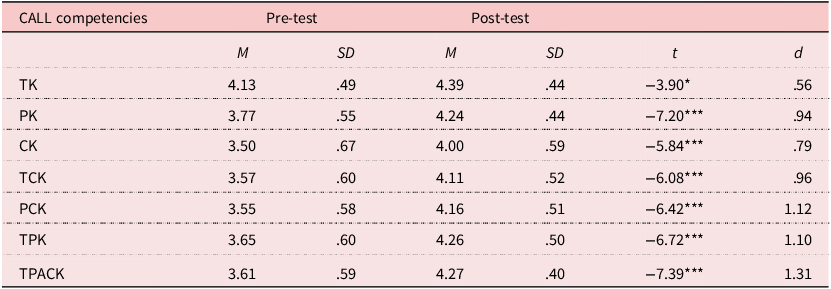
To investigate how PSTs perceived their CALL competencies before and after the CATERR teacher education model, seven paired-samples t-tests were conducted for pairwise comparisons. As shown in Table 1, there were significant pre and post differences in all seven dimensions, including TK, t(42) = −3.904; PK, t(42) = −7.197; CK, t(42) = −5.844; TCK, t(42) = −6.079; PCK, t(42) = −6.418; TPK, t(42) = −6.719; TPACK, t(42) = −7.386. (pTK < .001, pPK < .001, pCK < .001, pTCK < .001, pPCK < .001, pTPK < .001, pTPACK < .001.)
Descriptive statistics and paired-samples t-tests for pre- and post-TPACK questionnaire differences

Note. *p < .05. **p < .01. ***p < .001.
Statistical analysis showed significant improvements across TPACK dimensions (p < .05), with moderate to large effect sizes (Cohen’s d = .56, 95% CI [0.34, 0.78], to 1.31, 95% CI [1.08, 1.54]). These results indicate that PSTs demonstrated growth in their TPACK competencies. The reliability of the subtests, with Cronbach’s alpha values ranging from .85 to .94 and interrater reliability scores above 0.80, supports the validity of these findings and strengthens the conclusions drawn, compared to other teacher education models, such as those by Tseng and Yeh (Reference Tseng and Yeh2019) and Bueno-Alastuey et al. (Reference Bueno-Alastuey, Villarreal and García Esteban2018), in which not all dimensions demonstrated equally significant improvement in TPACK questionnaires. Among all dimensions, the biggest improvement was for TPACK (pre, M = 3.61; post, M = 4.27), while the ranking of other dimensions remained unchanged in both tests. TK remained at the top, and pedagogy-related knowledge (PK and TPK) was high, but content-related knowledge (CK, TCK, and PCK) was relatively low. These results indicated that while PSTs’ high confidence in technological literacy as “digital natives” (Prensky, Reference Prensky2001), whose ICT for personal use is integral in their daily life, the CATERR teacher education model helped them cultivate “digital wisdom” (Prensky, Reference Prensky2011), enabling them to use technology purposefully and thoughtfully, from personal to pedagogical applications, as the dimension “TPACK” increased the most among all dimensions. This also provided a possible counterexample to the “ceiling effect” issue raised in Liu and Kleinsasser (Reference Liu and Kleinsasser2015: 131), whereby young high-tech generation teachers with high technological literacy improved little in CALL competencies in a training workshop. Additionally, the teacher education model built their confidence more in pedagogy-related aspects (PK, TPK) than in content-related aspects (CK, TCK), most likely because of the abundant hands-on teaching demonstration opportunities given rather than extensive instruction on CLIL in the teacher education model. This echoes many studies that pointed out that pedagogy-related knowledge has the biggest influence on the growth of TPACK (Wilson, Ritzhaupt & Cheng, Reference Wilson, Ritzhaupt and Cheng2020). In this study, the biggest improvement in TPACK could also be the result of high pedagogy-related knowledge.
4.2 Teachers’ technology integration and pedagogical purposes for teaching
As shown in Figure 4, 36 different tools were incorporated into teaching a variety of content with various teaching objectives, ranging from language knowledge (listening, speaking, vocabulary) to subject knowledge (soft CLIL lessons, such as environmental protection lessons, and hard CLIL lessons, such as baseball passing skills). Also, the content was designed and implemented in different pedagogies, evident in the variety of incorporated teaching activities (whole-class instruction and pair work).
CLIL PSTs’ CALL integration.

Among the 36 integrated technological tools shown in Figure 4, as indicated in their self-analysis, eight were technological tools they had experienced for personal use, 11 were tools they had used for pedagogical purposes before (serving as a tutor), and the remaining 17 were those they had discovered for this current teaching demonstration. This shows that PSTs did not restrict themselves to tools they felt the most comfortable and skilled in using because of abundant prior personal or pedagogical experiences. The results demonstrated a very different attitude shown in Sulaimani et al.’s (Reference Sulaimani, Sarhandi and Buledi2017) study, in which teachers who already had a restricted repertoire of ICT tools were very conservative toward the exploration of new tools.
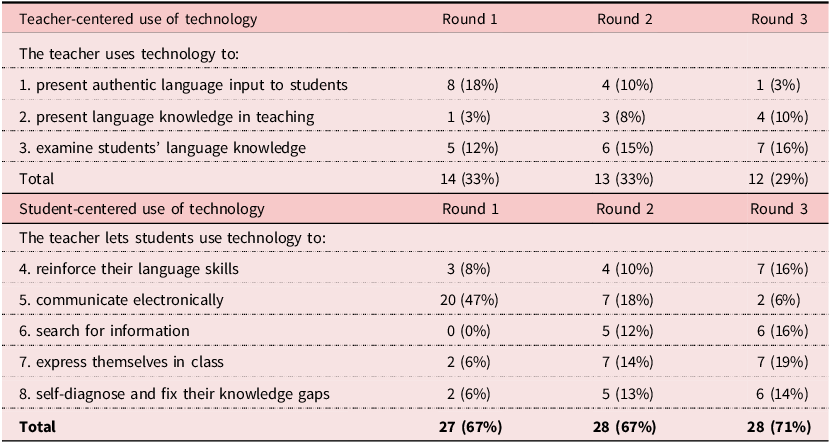
Furthermore, as shown in Table 2, throughout three rounds of teaching demonstration, teacher-centered use of technology accounted for roughly 31.7% of the purposes identified, while student-centered use of technology accounted for roughly 68.3% of the purposes observed. This ratio remained the same throughout three rounds. In many prior studies (Hlas et al., Reference Hlas, Conroy and Hildebrandt2017; Liu et al., Reference Liu, Wang and Koehler2019), teacher-centered technology use dominated the language classroom. Sometimes, the preponderance of teacher-centered use even remained the same after the TPACK-informed teacher education (Liu & Kleinsasser, Reference Liu and Kleinsasser2015). The high ratio of student-centered use of technology right at the beginning of the training in this study portrayed a very different picture of teachers’ technology use.
Pedagogical purposes of observed technology integration

The differences found may be attributed to two main factors. First, compared with the “teacher generation” reported in prior studies, PSTs as Generation Z in this study have very different upbringings and educational experiences because of recent educational reforms over the past two decades in Taiwan (Lai, Reference Lai2024), during which student-centered curricula and learner autonomy have been promoted. These findings align with Mishra’s (Reference Mishra2019) emphasis on contextual knowledge as a crucial component of TPACK. These contextual shifts, including the promotion of student-centered curricula and learner autonomy, shaped PSTs’ approach to integrating technology in ways that align with contemporary pedagogical trends. Another possible reason might be their first-hand experience with the CATERR model, a highly student-centered teacher education approach that emphasizes self-direction, problem-solving, and support-seeking. This adds to the idea that PSTs should “experience language through the use of technology as their students would” (Bustamante, Reference Bustamante2020: 329). This reflects the “loop input” instructional method (Woodward, Reference Woodward2003), where content delivery mirrors its subject. To foster student-centered teaching in PSTs, teacher education courses must model this approach.
Nevertheless, while the overall ratio of student-centered and teacher-centered use remained the same throughout three rounds, how they used technology for various pedagogical purposes within each category changed over time. First, as time went by, PSTs tended to use technology to present language knowledge more (number 2 in Table 2) or to let students reinforce their language skills (number 4 in Table 2); in contrast, their use of technology to present authentic language input to students (number 1 in Table 2) dropped. This demonstrates PSTs’ gradual transition of ICT use from wider personal use to more targeted pedagogical use (Hlas et al., Reference Hlas, Conroy and Hildebrandt2017). In the first round, PSTs used an English cartoon to introduce motion art but only offered “authentic language input,” as the video’s language level exceeded their learners’ proficiency. By the third round, they incorporated YouTube videos they had curated or edited, accompanied by explicit language instruction or follow-up discussions in the target language.
Second, the percentage of PSTs’ use of technology to let students express themselves in class increased (number 7 in Table 2), while the tendency to use technology to let students communicate electronically dropped significantly (number 5 in Table 2). This shows a shift from person–computer to interpersonal interaction (Chapelle, Beckett & Ranalli, Reference Chapelle, Beckett and Ranalli2024). Initially, all groups used Kahoot! or Google Classroom for idea sharing, reflecting their familiarity with these tools. However, after peer and instructor advice to prioritize in-person communication in primary school language classes, they later used technology to enhance in-class discussions.
Finally, the tendency of PSTs to let students use technology to search for information (number 6 in Table 2) and to self-diagnose and fix their knowledge gaps (number 8 in Table 2) also increased. This is evident in their incorporation of self-learning tools in class activities, such as the Cambridge Dictionary or Grammarly in the last two rounds, which featured specific learning tasks. For example, they instructed students to use dictionaries to look up the meaning of “brave” and guided them in contemplating gender stereotypes. As shown, PSTs guided students to engage in those tasks, identified as “everyday digital literacy practice” by Kern (Reference Kern2021). This not only helped their future students’ knowledge gain in both subject area and language but also promoted their students’ discovery learning, which is conducive to students’ learning.
4.3 PSTs’ observed development of CALL competencies after CATERR
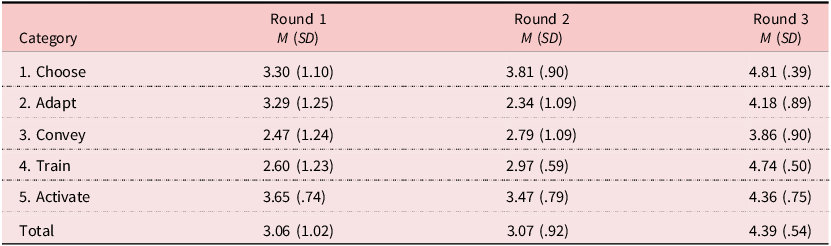
According to the framework with five categories, choose, adapt, convey, train, and activate, to evaluate PSTs’ observed CALL competencies developed and rated by three professional teacher educator raters, Table 3 and Figure 5 show the development of PSTs’ observed CALL competencies over three rounds (Round 1 = 3.06, Round 2 = 3.07, Round 3 = 4.39) on a scale of 0 to 5, where 5.0 represents the highest level of competency. A repeated measures ANOVA was conducted to compare the effect of time on PSTs’ CALL competencies. The results showed a significant effect of time, F(2, 86) = 60.35, p < .001, with a large effect size (partial η 2 = .584, 95% CI [0.46, 0.70]). Post hoc tests revealed significant differences in CALL competencies between Round 1 and Round 3 (mean difference = 1.33, 95% CI [1.12, 1.54], p < .001) and between Round 2 and Round 3 (mean difference = 1.32, 95% CI [1.11, 1.53], p < .001). No statistically significant difference was found between Round 1 and Round 2 (mean difference = 0.01, 95% CI [−0.18, 0.20], p = .50). These results indicate that the CATERR teacher education model helped improve PSTs’ development of CALL competencies.
PSTs’ observed CALL competencies in different CALL categories

The development of overall CALL competencies over time.

The statistically significant increase in observed CALL competencies suggests the effectiveness of reflection and collaboration, proposed and promoted by Farrell (Reference Farrell2022), for enhancing teachers’ CALL competencies. This study further evidenced how reflection and collaboration enhance teachers’ CALL competencies, complementing prior qualitative CALL research (Liu & Kleinsasser, Reference Liu and Kleinsasser2015; Tai, Reference Tai2015; Tseng & Yeh, Reference Tseng and Yeh2019), and reports in CLIL teacher education studies (Bueno-Alastuey et al., Reference Bueno-Alastuey, Villarreal and García Esteban2018; Cinganotto, Reference Cinganotto2016). This study supports the effectiveness of highly student-centered teacher education, where self-initiated exploration and active tool use in lesson planning align with calls from studies like Hlas et al. (Reference Hlas, Conroy and Hildebrandt2017) and Tai (Reference Tai2015). Unlike prior research focusing on instructor-assigned technologies (e.g. Tai, Reference Tai2015), this study shows that PSTs can independently integrate technology with curriculum goals through self-direction, problem-solving, and support-seeking.
Table 3 shows the five different dimensions of CALL competencies identified in the coding framework, which include (1) choose, (2) adapt, (3) convey, (4) train, and (5) activate. Similar to their overall development of CALL competencies, participants generally made improvements in each of the five different dimensions after engaging in the CATERR teacher education model; however, their development trajectories varied in each dimension.
First, the first dimension, “choose,” concerns PSTs’ ability to choose the appropriate ICT for teaching. As shown in Figure 6, over three rounds, participants continuously chose a wider variety of technological tools in their teaching demonstrations, with continuous exploration of new tools from the familiar tools they had utilized for personal use (GarageBand, Google Maps) or learning purposes (PowerPoint, Google Classroom) to new pedagogical ICT tools in the later rounds (InShot, Jamboard, Voki). Second, although among the three rounds, the tools that they used the most frequently were still those they were most familiar with, such as Kahoot!, YouTube, and Pear Deck, they refined the way they used these common tools pedagogically as time went by. This shows that the PSTs could utilize their preferred personal tools to better align with class objectives – an ability that PSTs in Tseng and Yeh (Reference Tseng and Yeh2019) lacked. In the first round, Kahoot! was widely used, although some teachers struggled with optimal timing, leading to overuse and limiting opportunities for student oral practice. In later rounds, Kahoot! was primarily used for icebreakers or final quick reviews. Lastly, PSTs also modeled other groups’ choice of technology, exemplifying the obvious advantages mentioned in peer-coaching studies (Farrell, Reference Farrell2022). For example, Pear Deck and Sketchpad, initially used by Group 6 in the first two rounds, were later adopted by other groups (Groups 1, 3, and 5). In their third-round reflections, Group 1 noted switching to Sketchpad for drawing, stating, “The hijab drawing students made on Sketchpad and shared immediately brought fruitful discussion among students!”
Technology integration in three rounds of teaching demonstration.

On the other hand, for the second dimension, “adapt,” PSTs’ ability to adapt ICT tools to their teaching showed a more complex trajectory. Unlike choosing ICT tools in which PSTs showed linear development because of their high technology literacy, their ability to adapt the chosen ICT tool into lesson planning took longer to develop. In the first round, two typical types of adaptation were found. The first was the frequent use of familiar pedagogical tools they had experienced as students, such as PowerPoint and Kahoot!, which they were better at adapting into their teaching because of their prior experiences. The other type of usage was the tools borrowed from personal use, such as GarageBand and YouTube videos. For example, Group 6 noted in their self-analysis that “GarageBand is ideal for CLIL music lessons as it is accessible, free, and easy to learn from personal experience, which we believed elementary students could quickly adopt.” However, they struggled to adapt the tool pedagogically for language learning, a challenge often faced by younger teachers (Tseng & Yeh, Reference Tseng and Yeh2019). This issue became more pronounced in the second round as PSTs experimented with new tools, leading to a drop in the use rating from 3.29 in the first round to 2.34 in the second. This highlights their difficulty in creating pedagogically meaningful connections with advanced technologies like augmented reality (AR), which they had limited classroom experience using. Improvement was observed in the third round, after two cycles of teaching demonstration, evaluation, reflection, and refinement. They were better able to “contextualize lesson plans,” as emphasized in Hlas et al. (Reference Hlas, Conroy and Hildebrandt2017), and meaningfully integrate the newly found tools into lesson planning and carefully designed language learning tasks. For instance, the use of Sketchpad by students in Group 5 to draw a hijab and present the design and cultural meaning attached to the design in English demonstrates appropriate tool use.
For the third dimension, “convey,” delivering the content via the use of ICT appears to be the most challenging aspect, as this is rated as the lowest in the first (2.47) and third (3.86) rounds. The result aligns with what is described in Tai’s (Reference Tai2015) study, namely that teachers showed a weaker ability to use technology to scaffold the content, and the study by Ball et al. (Reference Ball, Kelly and Clegg2015), which found that problems and deficiencies were identified for many CLIL teachers. More importantly, this showed a contrasting picture compared to their confidence in CALL competencies displayed on the TPACK questionnaire, as all aspects of the questionnaire scored over 4 (out of 5), identified as “high competencies” by Tai (Reference Tai2015). The strong contrast between the “observed CALL competencies” compared with “self-perceived CALL competencies” shown in the current study further echoes the call from scholars regarding the necessity to collect and analyze observational data in TPACK development (Tseng et al., Reference Tseng, Chai, Tan and Park2022). For example, the first group of PSTs used a 10-minute English cartoon to introduce motion art but omitted guidance on language aspects such as vocabulary, grammar, and key terms like “coloring” and “texture.”
The fourth dimension, “train” (training language users in the use of ICT), and the fifth dimension, “activate” (using ICT to help learners become active participants in the class), showed contrasting trends, with the training dimension improving the most and the activating dimension the least. Yet both trends may share a common explanation: PSTs were high-tech generation educators shaped by two decades of student-centered learning, similar to the in-service teachers in Liu and Kleinsasser’s (Reference Liu and Kleinsasser2015) study. Initially, PSTs provided little training in tool use, assuming students, as “digital natives,” already knew how to use them. However, after the first round of peer and instructor evaluations, they quickly adjusted. As their contextual knowledge grew, particularly regarding institutional realities and learner-specific needs, they better recognized students’ varying levels of digital literacy. This awareness contributed to their significant progress in the training dimension by the final round of teaching demonstrations, highlighting the importance of structured support in technology integration. For example, in the third round, despite elementary school students’ familiarity with the popular social media app Snapchat, Group 4 PSTs conducted a brief tutorial to help students upload and label their basketball demonstration videos, facilitating subsequent pedagogical discussions. Meanwhile, the “activate” dimension received the highest ratings from the beginning, as all groups implemented student-centered activities like role-play or group work using technology, drawing on their extensive experience with similar activities, as observed in Liu and Kleinsasser’s (Reference Liu and Kleinsasser2015) and Bustamante’s (Reference Bustamante2020) studies. Nevertheless, simply implementing the activities does not guarantee the success of the activity when flaws exist in other dimensions. For instance, in Round 2, PSTs from Group 2 used the AR app, JigSpace, intending to engage students in describing professions they saw through the application; however, they failed to select vocabulary items and explain the concepts involved in the professions (conveying dimension). In addition, they did not train students in how to use the AR app (training dimension). Therefore, the pitfalls in other dimensions indirectly caused the ineffectiveness of this seemingly highly student-centered activity via the use of cutting-edge technology.
5. Conclusion and future research directions
In conclusion, this study demonstrates that the CATERR teacher education program improved CLIL PSTs’ confidence and performance in CALL competencies. The long-term, multi-phase design provided a comprehensive view of their perceived and observed development. While PSTs entered training as digital natives with strong TK, their initial technology use in teaching was largely superficial, lacking the pedagogical depth required for meaningful student-centered learning, as they integrated digital tools without structured guidance, pedagogical adaptation, or clear learning objectives. However, through the teacher training model, all dimensions of TPACK, including their contextual understanding (XK) of institutional, cultural, and learner-specific factors, showed significant growth, with TPACK itself experiencing the most notable increase. They developed digital wisdom, moving beyond passive tool use to purposeful technology integration that reinforced language learning. Their student-centered approach evolved from assumptions about student autonomy to context-aware, pedagogically sound practices, where technology effectively supported self-directed learning and language problem-solving. These findings highlight the importance of targeted training in fostering meaningful technology integration and advancing PSTs’ pedagogical competence.
While the results of the study shed light on CLIL PSTs’ development of CALL competencies, there are still some aspects that can be considered for further study. First, the pre-post design without a control group limits causal attribution, and the small sample size may affect generalizability. Future studies with a control group and larger sample are recommended. Second, implementing PSTs’ CALL lesson plans in real primary classrooms could further investigate student attitudes and learning outcomes, providing additional insight into the effectiveness of the CATERR teacher education model.
Supplementary material
The supplementary material for this article can be found at https://doi.org/10.1017/S095834402510027X.
Data availability statement
Data available within the article or its supplementary materials. Additional data available on request due to privacy/ethical restrictions.
Acknowledgements
We thank the National Science and Technology Council, Taiwan, ROC, under grant numbers NSTC 111-2410-H-845-008-MY3, MOST 110-2511-H-003-038-MY3, and MOST 111-2410-H-003-006-MY3, for financially supporting this research.
Authorship contribution statement
Yi-ju Ariel Wu: Conceptualization, Data curation, Formal analysis, Investigation, Methodology, Project administration, Resources, Visualization, Writing – original draft, Writing – review & editing; Dorothy M. Chun: Conceptualization, Writing – review & editing; Yu-Ju Lan: Conceptualization, Methodology, Writing – review & editing.
Funding disclosure statement
This research received financial support from the National Science and Technology Council, Taiwan, ROC, under grant numbers NSTC 111-2410-H-845-008-MY3, MOST 110-2511-H-003-038-MY3, and MOST 111-2410-H-003-006-MY3.
Competing interests statement
The authors declare no competing interests.
Ethical statement
We have complied with the APA ethical standards in the treatment of the participants.
GenAI use disclosure statement
We did not use any AI tools to generate images or text, or to analyze or extract insights in this manuscript.
About the authors
Yi-ju Ariel Wu is an associate professor in the Department of English Instruction at the University of Taipei, Taiwan. Her research interests include technology-enhanced foreign language learning, language learning in virtual environments, teacher education, second language (L2) speaking and writing, English for specific purposes (ESP), and bilingual education.
Dorothy M. Chun is a professor emerita of applied linguistics at the University of California, Santa Barbara, USA, and editor-in-chief of Language Learning & Technology. Her research areas include L2 pronunciation, L2 vocabulary, CALL, and telecollaboration for intercultural learning. She is currently investigating high-immersive virtual reality and artificial intelligence for language learning.
Yu-Ju Lan (corresponding author) is a research chair professor in the Department of Chinese as a Second Language at the National Taiwan Normal University, Taiwan. Her research interests include technology-enhanced foreign language learning, language learning in virtual worlds, mobile learning, and online synchronous teacher training.





 Open access

