



There is an increasing interest in nutrition labelling as a mechanism to improve people’s diets at the population level to address the high and growing levels of obesity and nutrition-related diseases( Reference Cecchini and Warin 1 – Reference Gregori, Ballali and Vogele 3 ). Nutrition labelling provides information on the basic nutritional characteristics of foods, which enables consumers to make better-informed food choices( Reference Kleef and Dagevos 4 , Reference Yang and Han 5 ). People who regularly read and use nutrition labelling have a relatively healthier diet due to control of their intake of total energy( Reference Cecchini and Warin 1 , Reference Wahlich, Gardner and McGowan 6 ), fat( Reference Neuhouser, Kristal and Patterson 7 ) or sugar( Reference Graham and Laska 8 ). In addition, their health is benefited by intentionally increasing the amount of dietary fibre, vegetables and fruits in their daily food intake, which leads to a reduction in the risk of occurrence of diseases such as the metabolic syndrome( Reference Kang, Shim and Lee 9 ). More than 70 % of the countries or regions worldwide have implemented nutrition labelling( Reference Yang and Han 5 ). The China ‘Guidance of Nutrition Labelling of Pre-packaged Food’ (GB28050-2011) has been officially implemented from 1 January 2013( Reference Yang and Han 5 ). The essential components of mandatory labelling include data on the contents of energy, protein, fat, carbohydrates and sodium, and their percentages of nutrient reference values.
However, consumers have encountered many problems in understanding and using nutrition labelling. The European Heart Network( 10 ) systematically analysed the ‘understanding of nutrition labelling by consumers’ and argued that there were some problems in the understanding of nutritional labels by consumers, especially in terms of terminology and the numerical information of the calculations. In addition, a study on supermarket shoppers in India evidenced that the nutrient information on labels was frequently not read because most consumers either lacked nutritional knowledge or found the information too technical or complex to understand( Reference Vemula, Gavaravarapu and Mendu 11 ). In Korea, nutritional labelling was found to be ineffective for the elderly( Reference Kim, Oh and No 12 ). Some studies( Reference Feunekes, Gortemaker and Willems 13 , Reference Kelly, Hughes and Chapman 14 ) have investigated different types of nutrition labelling (such as traffic lights, Wheel of Health, smileys, stars) to elucidate which forms of nutritional information representation can be used better by consumers in practice. As a result, simpler labelling formats (such as smileys, stars) seem more appropriate in a shopping environment where quick decisions are made. A recent systematic review( Reference Cecchini and Warin 1 ) reported that traffic light schemes are marginally more effective in increasing the selection of healthier options compared with Guideline Daily Amount and other food labelling schemes (e.g. front-of-pack logos).
Earlier reports have shown that some factors could affect consumers’ use and interpretation of nutrition labels. A positive association was found between education level and various aspects of food labels. Moreover, women and girls were more concerned about ‘fat’ and ‘sugar’ intake and read the nutrition facts panel( Reference Vemula, Gavaravarapu and Mendu 11 ). Nutrition knowledge, attitude, subjective norms and diet–health concern were significant predictors of the intention to use food labels( Reference Cooke and Papadaki 15 , Reference Vijaykumar, Lwin and Chao 16 ). In another study, age, education, income, household size and nutrition knowledge had an impact on nutritional label use( Reference Cannoosamy, Pugo-Gunsam and Jeewon 17 ). Health reasons, the search for specific information, desire for weight control and health-related knowledge led to a more frequent label use among college students( Reference Rasberry, Chaney and Housman 18 ). The lack of previous knowledge of technical language prevents the use and interpretation of the nutrition information panel and the utilization of this nutritional information for making purchasing decisions( Reference de la Cruz-Gongora, Villalpando and Rodriguez-Oliveros 19 , Reference Miller and Cassady 20 ). Overweight and obese people were more likely to use nutrition labelling than those with a normal weight( Reference Satia, Galanko and Neuhouser 21 ). There are studies( Reference Zeng, Cao and Ji 22 ) reporting that factors associated with the choice of Chinese residents to read nutrition labels were gender, age, nutrition knowledge, family size, the degree of emphasis on nutrition knowledge, the level of knowledge of nutrition labels, health status, shopping frequency, and the food properties of interest during shopping.
Currently, community residents, college students or the elderly have been most frequently used as research subjects in most of the reports on nutrition labelling( Reference Cooke and Papadaki 15 – Reference Zeng, Cao and Ji 22 ), whereas there are few studies in which students’ parents have been included( Reference Gong, Guo and Song 23 , Reference Kakinami, Houle-Johnson and McGrath 24 ). The phenomenon of eating pre-packaged snacks by Chinese primary- and secondary-school students is widespread. The snacks with the top four consumption rates are chocolate candy, biscuits, western pastries and puffed food, which have higher energy and fat contents, but lower protein amount( Reference Jin, Guo and Deng 25 ). Parents are responsible for an estimated 66·9 % of food purchases( Reference Ma, Guo and Wu 26 ). Students use nutrition labels more frequently when selecting foods if their parents use them regularly( Reference Gong, Guo and Song 23 ). Family environment and parental pattern of food choices play important roles in the formation and development of healthy behaviours in adolescent consumers( Reference Pearson, Biddle and Gorely 27 – Reference Waylen, Stallard and Stewart-Brown 29 ). Therefore, parents were selected as subjects of the present cross-sectional study, in which two main issues were investigated: (i) the degree of knowledge and use of the nutrition labels by parents; and (ii) the factors that influence use of nutrition labelling. The aim of the study was to provide the basis for the development of a practical nutrition education programme.
Methods
Design
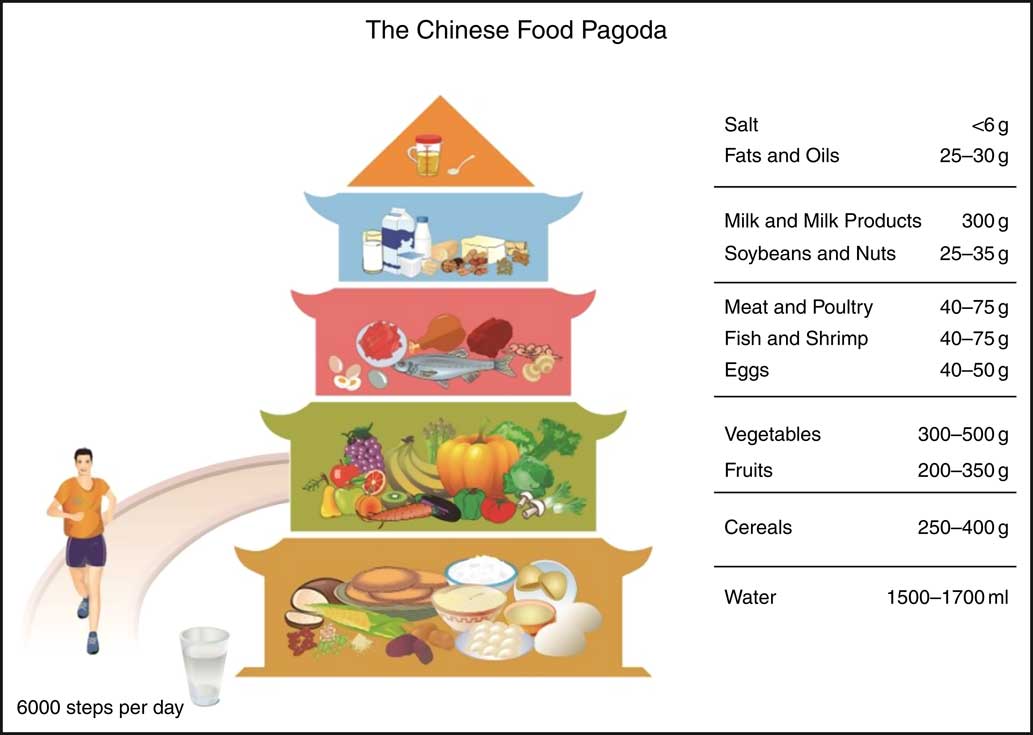
Two combined primary and secondary schools providing a nine-year education programme in Putuo District, Shanghai, China, were selected. A cross-sectional survey was conducted among 1770 students in Grades 2–4 and Grades 6–8 and their parents, from December 2015 to February 2016. All subjects signed an informed consent. Information was collected in the form of questionnaires which were recycled by the class teachers after completion. The contents of the survey included demographic data (including parent’s gender and age, family size, parental marital status, monthly household income, parental cultural level, parent’s medical background and presence of chronic disease, student’s grade, gender and overweight and obesity), knowledge of the Chinese Food Pagoda (Fig. 1), names of the top three snacks consumed, knowledge and use of nutrition labelling, willingness to learn about the information contained on nutrition labels and whether nutrition labelling could affect parent’s choice of food.
(colour online) The Chinese Food Pagoda
Samples
The sample size was calculated using the simple random sampling method. A total of 150 students and their parents were included in a pilot study. The expected knowledge and use rate (p) of nutrient labelling among parents was 15 %. The sample size (n) consisting of 967 people was calculated taking α=0·05 and a relative error of 15 %. A minimum of 1064 participants constituted the sample size at a non-response rate of 10 %.
Sampling
Two public combined primary and secondary schools at intermediate education levels in Putuo District, Shanghai were selected, from which 1770 students in Grades 2–4 and Grades 6–8 and their parents were included as study participants. The proportion of students in each grade was similar to the overall structure of students in Putuo region (χ 2=0·427, P>0·05). Because of objective reasons, such as the difficulty in understanding the information of the study by students in Grade 1 and the academic pressure on students in Grades 5 and 9, students from these three grades were not included in the investigation.
Quality control
A pilot study was conducted to inspect the rationality and feasibility of the current survey in 150 students from a primary or secondary school and their parents, who were not included in the study. Two items of filling-in instructions were adjusted in the questionnaire to improve the readability after the pilot study. After the class teachers in the targeted schools completed unified training provided by the regional project leader, they informed their students about the requirements for filling in the questionnaires. The student questionnaire was filled in by the student him- or herself, and the parent questionnaire was sent via the student to the parent who was responsible for the daily care of the student, with a request for it to be completed and submitted within a specified time period. Health teachers and class teachers were responsible for checking the integrity of the questionnaires. The investigators of the Center for Disease Control and Prevention in Putuo District, Shanghai, re-collected 2 % of the questionnaires to perform an authenticity check on some questions by telephone within three days after the investigation.
Related definitions
Nutrition labelling was defined as the description of nutritional information and characteristics of foods provided to consumers on pre-packaged food labels, including nutritional facts, nutritional claims and nutritional function claims( Reference Yang and Han 5 ). Having a medical background was defined as having graduated or above from a professional school of medicine, or having completed studies on related majors in formal institutions recognized by the national education and health administrative departments. Knowledge of the Chinese Food Pagoda was judged in two steps: one was defined as self-reported knowledge of the pagoda, the other was measured by an open question whose answer was related to some of the pagoda components. Based on the two steps above, the data inputter determined whether the respondents knew about the pagoda or not. The criteria for classification of overweight and obesity and screening of the BMI of Chinese school-aged children and adolescents, which were formally established by the Chinese Obesity Working Group in November 2003( 30 ), were used as a definition of overweight and obesity of the students. Parents and children were asked to name the three snacks they ate most often. The top three snacks consumed by parents and children were classified into four categories: ‘low consumption of snacks’, ‘a snack recommended to be eaten frequently (low in fat/sugar/salt)’, ‘a snack recommended to be eaten moderately (moderate in fat/sugar/salt)’ and ‘a snack recommended to be limited (high in fat/sugar/salt)’, which were then scored according to the guidelines on snacks for Chinese children and adolescents( 31 ) as corresponding to 0, 1, 2 and 3 points, respectively. The cumulative score ranged from 0 to 9 points. A higher score indicated higher consumption of unhealthy snacks. Parents’ understanding of information on nutrition labelling was measured by the question: ‘Do you understand the nutrition labels?’ The answers were categorized into three types: ‘understanding all’, ‘understanding partially’ and ‘not understanding at all’. Those who chose the second or the third answer (meaning they did not understand the information on nutrition labelling), were asked an additional question: ‘What don’t you understand about the nutrition label?’
Main indicators
The knowledge on and use of nutritional labelling among parents included three situations: ‘knew and used’, ‘knew but did not use’ and ‘did not know and use’.
Statistical analysis
An EpiData 3.1 database was used, and double entry and checking the accuracy of data entry were performed. Single-factor analysis was conducted to analyse the factors affecting parents’ use of nutritional labels by the χ 2 test and variance analysis, using the statistical software package IBM SPSS Statistics version 19.0. The variables extracted by the single-factor analysis were included in the multivariate stepwise logistic regression model to explore which factors had an influence on the parents’ use of food nutritional labels. At the time of analysis, P<0·05 was considered statistically significant. For description of the results, count data (n and %) and measurement data (mean and sd) were used.
Results
General information
A total of 1770 questionnaires were distributed and 1766 completed questionnaires were collected (a response rate of 99·8 %). The survey was greatly supported by the local education bureau that administered primary and secondary schools, which enabled us to get responses efficiently and reliably. Mothers constituted the highest proportion among the parents who were in charge of students’ daily care, accounting for 63·9 %. The age of parents was in the range of 28 to 77 years, with a mean age of 39·1 (sd 5·8) years. A total of 1232 parents had a diploma degree or above, accounting for 69·8 %. The percentages with monthly household incomes of <¥10 000 (<€1300), ¥10 000–19 999 (€1300–2599) and ≥¥20 000 (≥€2600) were 29·7, 45·3 and 25·0 %, respectively. The group of students who participated in the survey consisted of 901 boys and 865 girls, with a male to female ratio of 1·04:1. A total of 963 primary-school students and 803 middle-school students were included in the survey. The prevalence of overweight and obese students was 13·3 and 8·1 %, respectively (Table 1).
Demographic characteristics of the survey sample: primary- and secondary-school students and their parents (n 1770), Putuo District, Shanghai, China, December 2015–February 2016
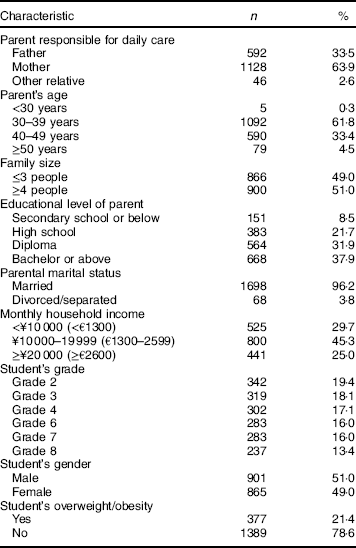
¥, Chinese Yuan.
Results of single-factor analysis
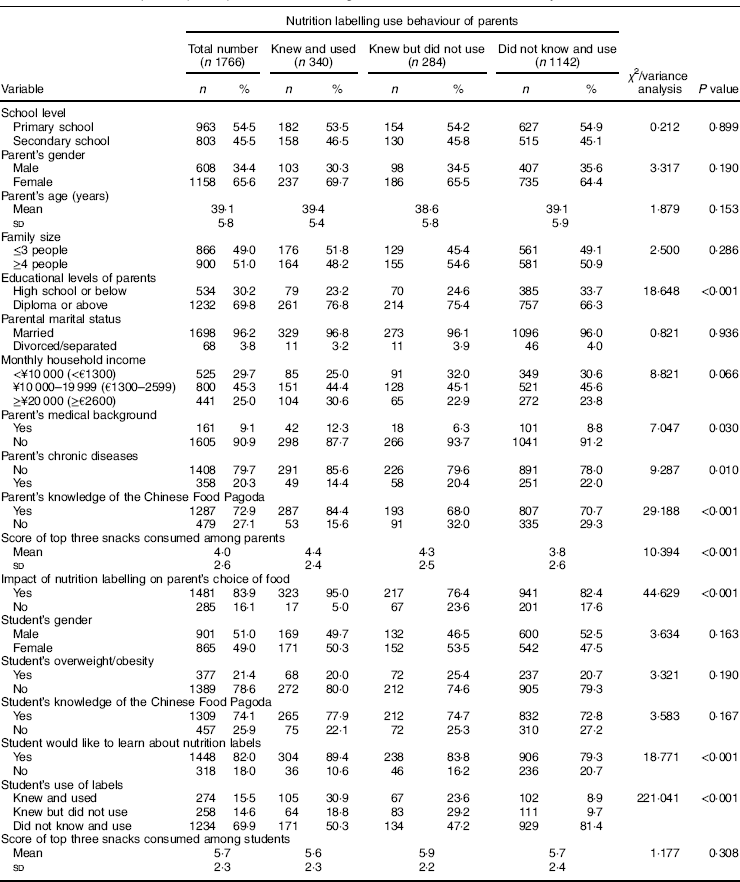
In answer to the question whether nutrition labels were used for purchasing pre-packaged foods or not, 340 (19·3 %) of the parents knew and used them, 284 (16·1 %) knew but did not use them, and 1142 (64·6 %) did not know and use such labels. The χ 2 test and variance analysis were employed to analyse the demographic data, knowledge of the Chinese Food Pagoda, consumption of snacks and knowledge of nutrition labelling. There was no significant difference in parental nutrition labelling use among different groups by school level, parent’s gender and age, family size, parental marital status, monthly household income, or student’s gender, overweight/obesity, pagoda knowledge and score of the top three snacks consumed (P>0·05). However, there were significant differences among groups on eight variables, including parent’s educational level, medical background, chronic diseases, knowledge of the food pagoda, score of the top three snacks consumed, impact of nutrition labelling on food selection, student’s willingness to learn about nutrition labels and use of labels by the student (P<0·05). The use of labels among students was related to that among parents to some degree (r=0·310, P<0·001; Table 2).
Single-factor analysis of factors related to parents’ use of nutrition labelling among the survey sample of primary- and secondary-school students and their parents (n 1770), Putuo District, Shanghai, China, December 2015–February 2016
Multivariate logistic regression analysis
Considering that single-factor analysis cannot rule out the combined effect of other variables, multivariate logistic regression analysis was applied. Whether or not the parent knew and used nutrition labelling was the dependent variable (coded as 2=knew and used nutrition labelling; 1=knew but did not use nutrition labelling; 0=did not know and use nutrition labelling). Logistic multivariate regression analysis was performed of the eight factors displayed in Table 2 as independent variables. The definition and assignment of the independent variables are presented in Table 3. A P value of 0·05 was taken as significant in the test.
Logistic regression analysis of factors related to parents’ use of nutrition labelling among the survey sample of primary- and secondary-school students and their parents (n 1770), Putuo District, Shanghai, China, December 2015–February 2016

Definition and assignment of independent variables: parent’s educational level: 1=high school or below, 2=diploma or above; parent’s medical background: 0=no, 1=yes; parent’s chronic disease: 0=yes, 1=no; parent’s knowledge of the Chinese Food Pagoda: 0=no, 1=yes; score of top three snacks consumed by parent ranges from 0 to 9 points; nutritional labelling could affect parent’s choice of food: 0=no, 1=yes; student wanted to learn the labelling knowledge: 0=no, 1=yes; student’s usage of labels: 0=did not know and use, 1=knew but did not use, 2=knew and used.
The results showed that when other variables were controlled for, parents with high educational levels used nutrition labels more often. In addition, we found that parents’ knowledge of the Chinese Food Pagoda influenced their use of nutrition labels. It is noteworthy that parents whose top three consumed snacks were unhealthy according to score analysis were likely to use nutrition labelling frequently. Interestingly, parents who believed that nutritional labelling could affect their choice of food had a high degree of using nutrition labels. On the other hand, the parents of students who wanted to acquire knowledge and understand the labelling frequently used nutrition labels. The parents of the students who knew and used nutrition labels also used them more often (Table 3).
Parents’ confusion during the use of nutrition labels
Among 624 parents knowing nutrition labelling, 22·1 % understood all the information included, 70·7 % understood it partially and 7·2 % could not understand it at all. There was no significant difference between parents of primary- and secondary-school students (χ 2=0·632, P>0·05).
The reasons given by 486 parents who could not understand part or all information included on nutrition labels were as follows: 321 (66·1 %) could not understand the technical terms; 158 (32·5 %) did not know whether the nutrient was good; 115 (23·7 %) had difficulties in understanding complicated figures and units; and thirty-six (7·4 %) did not understand the information due to other reasons.
Discussion
Following the implementation of the ‘Guidance of Nutrition Labelling of Pre-packaged Food in China’ on 1 January 2013, we studied the use of nutrition labels by parents of students of two schools in Shanghai, China, and the factors associated with such use. These findings provide clues for targeted intervention and research on the effects of nutrition labelling on the eating habits and health status of students and parents.
In the present study, using multivariate logistic regression analysis, we determined the influence of factors related to the use of nutrition labels among parents. Some of our findings are consistent with those of previous studies in China and abroad, but the roles of some variables are still controversial. Parents with high educational levels used nutrition labels more easily, in agreement with the results of earlier research( Reference Vemula, Gavaravarapu and Mendu 11 , Reference Cannoosamy, Pugo-Gunsam and Jeewon 17 , Reference Ye, Feng and Wu 32 , Reference Zhang, Zhang and Peng 33 ). Parents’ medical background and health status had no relationship with their label use, which is not consistent with other studies( Reference Rasberry, Chaney and Housman 18 , Reference He and Yang 34 ). This may be due to differences in study population or other associated factors. Parents’ knowledge of the Chinese Food Pagoda was helpful for their use of nutrition labels, in agreement with the accumulation of nutritional knowledge helping consumers understand and use nutrition labels( Reference de la Cruz-Gongora, Villalpando and Rodriguez-Oliveros 19 , Reference Miller and Cassady 20 , Reference Liu, Hoefkens and Verbeke 35 ). Parents whose top three consumed snacks were unhealthy were more likely to use nutrition labelling frequently. This phenomenon may be due to the following two reasons. First, it might be related to the health education concept ‘easy to understand but difficult to perform’. Although parents know nutrition labelling, they still choose unhealthy foods. Second, parents may use nutrition labels to make a wrong judgement due to a lack of correct nutrition knowledge( Reference Vijaykumar, Lwin and Chao 16 ), the specific mechanisms of which still need to be further studied. Parents who believed that nutritional labelling would affect their choice of foods had high use of labelling, which can be explained by the positive effect of nutrition labels on health. The use of labels among students was related to that among parents to some degree. Parents whose children wanted to obtain knowledge of nutrition labels and whose children knew and used such labels also used them regularly, probably because one of the basic characteristics of the current one-child family lifestyle and consumption model in China is that parents are focused on their children( Reference Bian 36 ). Another study( Reference Dong, Howard and Herring 37 ) also found that positive parent–child association for diet existed in longitudinal research. There is a possibility that the knowledge of nutrition labels passed from children to their parents, on one hand; or on the other hand, that parents’ knowledge and behaviours could influence their children. Since the present study used a cross-sectional survey, it was not possible to determine the causal relationship between students and parents. The traditional idea is that parents have a great impact on children. However, children’s diet behaviours positively affect their parents’ because children are more open to adopt lifestyles compared with their parents( Reference Dong, Howard and Herring 37 ). Therefore, the focus of nutrition education in the future should be on both parents and children.
The utilization rate of nutrition labelling was 19·3 % among 1766 parents. Some other studies have reported a lower rate among parents in China (15·0 %)( Reference Gong, Guo and Song 23 ) and a higher rate among community residents in Washington, DC (37·0 %)( Reference Neuhouser, Kristal and Patterson 7 ), in Seoul, Korea (21·9 %)( Reference Kang, Shim and Lee 9 ), in South Korea (34·8 %)( Reference Kim, Oh and No 12 ), in Mauritius (42·3 %)( Reference Cannoosamy, Pugo-Gunsam and Jeewon 17 ) and in China (40·5 %)( Reference Zeng, Cao and Ji 22 ). In addition to differences in the survey subjects and sampling methods, we consider that the varying rates may be caused by the differing definitions of knowledge and nutrition labelling usage. In the process of our pilot study, we found that respondents often mistakenly believed that the ingredients table, manufacturing date and expiration date were also nutrition labels. Thus, in our survey, we defined knowledge of nutritional labels as when the respondents were able to provide some information related to nutritional labels. We regarded participants who used nutritional labelling to select foods as ones who use nutritional labels, regardless of whether the chosen food was healthy or not. On the other hand, the ‘Guidance of Nutrition Labelling of Pre-packaged Food in China’ has been carried for out less than 3 years, far less than the 25 years in the USA and 20 years in South Korea, which may lead to low utilization rate to some degree.
The main reasons for the lack of understanding of nutrition labelling exhibited by some parents were as follows. Such parents do not understand the technical terms and do not know whether the nutritional content is good or bad; they find the numbers and units complicated. Consumers prefer to use nutrition labels that are easy to understand, explain the information simply and clearly, and are highlighted( Reference Pettigrew, Talati and Miller 38 ). Training on the skills of reading nutrition labelling is helpful for the later understanding and application of the information( Reference Miller, Beckett and Bergman 39 ).
At the same time, we can carry out exploratory studies on the effects of using nutrition labels on the health condition of the relevant population and its social effects.
Although the current study has yielded some valuable results, there are still limitations as it was a cross-sectional survey, which does not allow in-depth explanation of the causal relationship between students and parents in their use of labels, or the specific mechanisms of unhealthy snack consumption and nutrition label usage. In addition, the research data in the study are from only two public primary and secondary schools in Putuo District, Shanghai, China, which leads to certain deficiencies in representation. A more extensive epidemiological survey of different types of schools in different regions would provide more convincing information.
Conclusion
The levels of knowledge and use of nutrition labelling among parents are still low, and some information included in the nutrition labels is not understood by parents. The forms of the existing nutrition labelling need to be continuously improved to facilitate their understanding and usefulness. The use of nutrition labels by parents is related to a variety of factors, including parents’ high educational level, knowledge of the Chinese Food Pagoda, consuming unhealthy snacks, food selection affected by nutrition labelling, students’ willingness to learn about nutrition labels and use of labels among students. It is necessary to establish nutrition projects focusing on education and use of nutrition labels which help parents and their children make the right choices when selecting foods.
Acknowledgements
Acknowledgements: The authors would like to express their sincere gratitude for the strong support provided by Jinyuan Affiliated School and Cao Yang Affiliated School, Putuo District, Shanghai, China. They also extend thanks to the survey participants for their understanding and cooperation. They are thankful for all the hard work of the staff at the Disease Control and Prevention Center, Putuo District, Shanghai, China. Financial support: The project was funded by the Shanghai Municipal Health and Family Planning Commission (project number 201440501). The funder had no role in the design, analysis or writing of this article. Conflict of interest: The authors declare that they have no conflict of interest. Authorship: J.M. conceived and coordinated the study, designed, performed and analysed the experiments, and wrote the paper. Z.Z., X.C., Y.G., H.Z., Y.Z. and J.Z. carried out the data collection, data analysis and revised the paper. All authors reviewed the results and approved the final version of the manuscript. Ethics of human subject participation: This study was conducted according to the guidelines laid down in the Declaration of Helsinki and all procedures involving human subjects were approved by the Ethics Committee of Disease Control and Prevention Center, Putuo District. Informed consent was obtained from all subjects.



