Introduction
Large carnivores (>20 kg) are useful for monitoring and predicting ecological disturbance in human-dominated landscapes because they occur at low density, and have large home ranges, low reproductive rates, and highly acute sensory systems that make them susceptible to human activity and to changes in the configuration and connectivity of habitats such as those induced by fragmentation (Knight & Eberhardt, Reference Knight and Eberhardt1985; Noss & Cooperrider, Reference Noss and Cooperrider1994; Noss et al., Reference Noss, Howard, Maurice, Troy and Paul1996; Woodroffe & Ginsberg, Reference Woodroffe and Ginsberg1998; Soule & Terborgh, Reference Soule and Terborgh1999).
Roads that fragment wildlife habitats may negatively affect large carnivores through (1) modified behavioural responses such as home range shifts and reduced reproductive success (Trombulak & Frissell, Reference Trombulak and Frissell2000), (2) direct mortality (Kerley et al., Reference Kerley, Goodrich, Miquelle, Smirnov and Quigley2002; Kramer-Schadt et al., Reference Kramer-Schadt, Revilla, Wiegand and Breitenmoser2004), (3) reductions in prey availability (Kerley et al., Reference Kerley, Goodrich, Miquelle, Smirnov and Quigley2002; Havlick, Reference Havlick2004), and (4) subdivision and isolation of populations (Forman & Deblinger, Reference Forman and Deblinger2000). Roads are conduits for human activity and may become barriers to carnivore movement because of vehicular traffic (Adams & Geis, Reference Adams and Geis1983; Lyon, Reference Lyon1983; Forman & Alexander, Reference Forman and Alexander1998; Forman & Deblinger, Reference Forman and Deblinger2000; Trombulak & Frissell, Reference Trombulak and Frissell2000; USDAFS, 2000). Hard-edged boundaries of protected areas, where natural habitat adjoins human-dominated landscapes, are also places where increased mortality of carnivores occurs because of human-carnivore conflicts (Woodroffe & Ginsberg, Reference Woodroffe and Ginsberg1998).
In tropical Asia, protected areas typically lack buffer zones and are therefore hard-edged at their boundaries and often internally fragmented by roads. These areas are subject to incursions by local people who collect various forest products and sometimes poach wildlife. However, the risks to carnivores at roads and park boundaries have never been assessed. The Asiatic leopard Panthera pardus is a tropical large carnivore that has a wide distribution in Asia (Corbett & Hill, Reference Corbett and Hill1992) and occurs across a range of habitat types and disturbance conditions (Sunquist & Sunquist, Reference Sunquist and Sunquist2002).
Understanding the responses of leopards to roads and park boundaries could assist in the development of more science-based wildlife conservation policy in protected areas. Thus, the objectives of this study were to (1) determine the relative influence of the natural environment versus the human-modified environment on leopards in Kaeng Krachan National Park, one of the largest contiguous landscapes for wildlife in South-east Asia but which lies adjacent to lands converted for human use, and (2) determine the movement and activity patterns of leopards in a part of the Park that receives heavy human use.
Study area
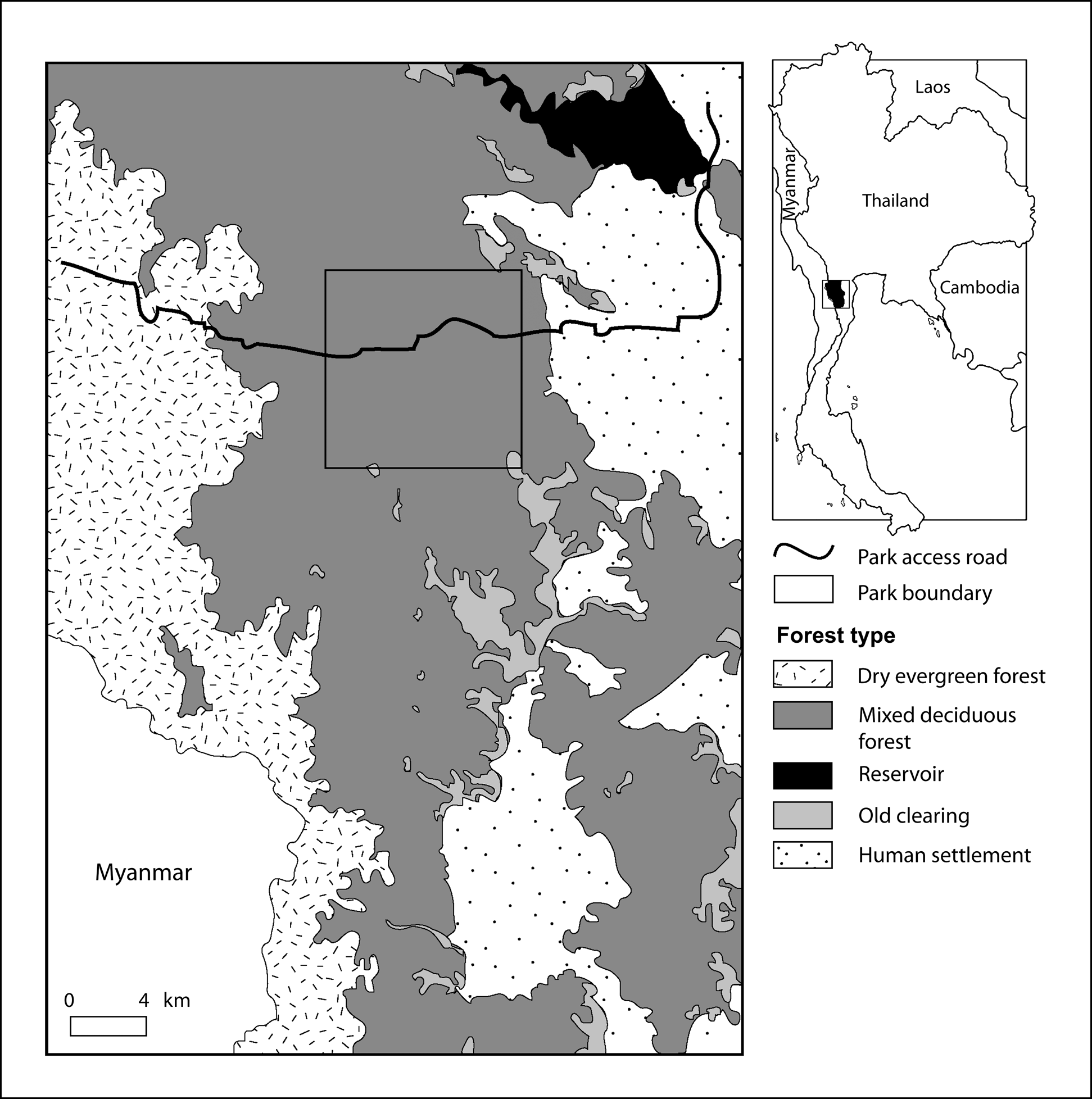
The 2,915 km2 Kaeng Krachan National Park, at altitudes of 100-1,513 m, lies close to the junction of the Sundaic and Indochinese zoogeographic zones (Corbet & Hill, 1992) and is Thailand’s largest National Park (Fig. 1). Much of the topography is steep, with slopes >30% covering 60% of the Park. Extensive contiguous forests change from dry evergreen in the north to semi-evergreen in the south, and support populations of globally threatened large mammals including tiger Panthera tigris and Asian elephant Elephas maximus, and threatened endemics such as Fea’s muntjac Muntiacus feai. Along the eastern edge of the Park, lands have been converted for rice and fruit farming and cattle grazing. This study focused on Ban Krang, an area inside the National Park through which the main access road passes. The 36 km road includes both asphalt and dirt surfaces. Forests around Ban Krang are recovering from commercial logging of large (>1 m diameter at breast height) dipterocarp tree species (D. Marod, pers. comm.), which ended in 1989.
The location of the Ban Krang study area in Kaeng Krachan National Park, showing details of vegetation types within the Park and the access road. The inset shows the location of Kaeng Krachan National Park in Thailand.

Methods
Field surveys
Asiatic leopards and other large mammals were sampled using passive infrared camera traps (Camtrakker, Camtrak South Inc., Georgia, USA). Large mammals were those recognizable to species level from photographs. Single camera traps were placed at optimal locations for detecting leopards (animal trails, mineral licks and stream beds) within the study area. A set of 72 trap locations was chosen following field reconnaissance in July–December 2002. Twenty-four traps were rotated through the 72 locations in 3-month trapping cycles. Each photograph was date and time stamped. Each camera trap was set for 24 h, equivalent to one trap night. During each cycle, traps were established and operated for 19.8 ± SE 0.3 trap nights. A relative abundance index (RAI) was defined by the number of independent photographs recorded per trap night and scaled up to 100 trap nights (O’Brien et al., Reference O’Brien, Kinnaird and Wibisono2003). However, because we did not measure the functional relationship with density (Carbone et al., Reference Carbone, Christie, Conforti, Coulson, Franklin, Ginsberg, Griffiths, Holden, Kawanishi, Kinnaird, Laidlaw, Lynam, Martyr, McDougal, Nath, O’Brien, Seidensticker, Smith, Sunquist, Tilson and Shahruddin2001), RAI was interpreted as a measure of habitat use. Camera traps were also used to monitor movements of individual leopards, identified by their unique coat patterns. Leopards included spotted and black morphs but only the former could be individually distinguished in camera-trap photographs.
Potential prey species for leopards
A range of potential prey species have been identified for Asiatic leopards (Rabinowitz, Reference Rabinowitz1989; Grassman, Reference Grassman1999). We defined potential prey species as those mammals occurring at >40% of camera-trap locations in the study area. These species including bear macaque Macaca arctoides, East Asian porcupine Hystrix brachyura, large Indian civet Viverra zibetha, red muntjac Muntiacus muntjak, hog badger Arctonyx collaris, wild pig Sus scrofa and sambar Cervus unicolor. Total prey abundance was calculated by summing the values of RAI for these seven species.
Landscape and disturbance variables
At each trap location the nearest distances to the access road, villages at the Park boundary, mineral licks, and streams (landscape variables) were estimated using the Nearest Features v. 3.8a extension (Jenness, Reference Jenness2004) for the geographical information system ArcView v. 3.2a (ESRI Inc., Redlands, USA). Elevation at the study site was 298-616 m. All distance variables were normalized by log-transformation. One disturbance variable was human traffic, measured as the numbers of passes of humans in front of camera traps per trap night, scaled to 100 trap nights. For the purpose of this study, locations where humans were not detected by camera traps were defined as places with no human traffic, whereas locations where one or more human detections were recorded were defined as places with human traffic. A second disturbance variable was vehicle traffic measured as the total number of vehicles using the access road at Ban Krang per month. This was derived from vehicle entrance logbooks maintained by Park rangers.
Data analysis
For the analysis we assumed that leopard capture probabilities were relatively constant across the study area, so that RAI could be directly compared between trap stations. Univariate tests were used to assess differences in RAI near (0–1 km) and far (>1 km) from roads, streams, villages and mineral licks. The relative importance of landscape variables on variation in habitat use was determined using stepwise linear regression. Because of the possibility of non-independence caused by spatial autocorrelation and increased chance of type I error (Koenig, Reference Koenig1999) we tested for spatial autocorrelation in the regression residuals by calculating Moran’s I statistic using the CrimeStat III software (N. Levine & Associates, Houston, USA). The software tests the significance of Moran’s I using a Z-test.
An index-based map of habitat use may provide an important tool for assessing space use in carnivores, and locations where leopards were detected or human traffic registered were mapped using ArcView. The Spatial Analyst extension to ArcView was used to identify core areas of leopard activity and show the minimum movement patterns for individual leopards, as well as concentrations of human activity. Interpolated surface functions were created as continuous surfaces from the sample points using an inverse distance weighted algorithm. This algorithm assumes that the similarity between points decreases with distance, and weights the interpolated points closer to the sample processing cell greater than those farther away (ESRI, 1996). Leopard activity was categorized from camera-trap records as either nocturnal (18.00-06.00) or diurnal (06.00-18.00). The activity of individual leopards was compared in areas with or without human traffic using χ2 tests.
Results
Leopard abundance
Between February 2003 and February 2004 a total of 4,493 camera trap nights recorded 161 photographs of leopard of which 146 photographs were identifiable as individuals, and 117 photographs were identifiable and had date and time stamps. This included a minimum of five spotted morph individuals (three males and two females), and at least one black morph individual (male). The RAI for leopards during the entire study was 3.58 detections per 100 trap nights, with an average of 2.71 ± SE 0.39 detections per 100 trap nights (spotted and black morphs).
Effects of landscape and disturbance variables on leopard abundance
Human traffic across the study area was mostly of tourists (62%), with the remainder being local people, Park staff and paramilitary personnel. At 74% of camera-trap locations no humans were recorded. Mean human traffic at the remainder of locations was 1.8 passes per 100 trap nights (range 1–38). Average vehicle traffic rate was separated into three categories using percentile rankings (low <1; medium 1-14; high >14; range = 0–31 vehicles per day). Leopard RAI was not significantly different among different categories of vehicle traffic rates (Kruskal-Wallis test, P >0.05).
Two independent variables, the nearest distance to the road and villages, were significantly correlated but only weakly so (Pearson’s R = 0.31, P <0.05). The stepwise regression analysis indicated that only one variable, nearest distance to villages, was significant (R 2 = 0.293, F-test = 28.97, df = 1, P <0.05), with leopard RAI increasing with distance from the nearest village (RAI = −82.02 + 9.27 * ln(distance)). The residuals from this regression were not significantly autocorrelated (Moran’s I = 0.020, P >0.05). However, the error variance was not homogeneous for different distances from the villages (Levene’s Test, P <0.01), indicating that a nonparametric or randomization test was required to confirm this trend. Univariate tests suggested that leopard RAI was higher far from villages (Mann-Whitney U-test = 172.5, P <0.01), thus supporting the results of the regression. In addition, leopard RAI was higher far from roads (Mann-Whitney U-test = 400.5, P <0.05) and closer to streams (Mann-Whitney U-test = 395.5, P <0.01).
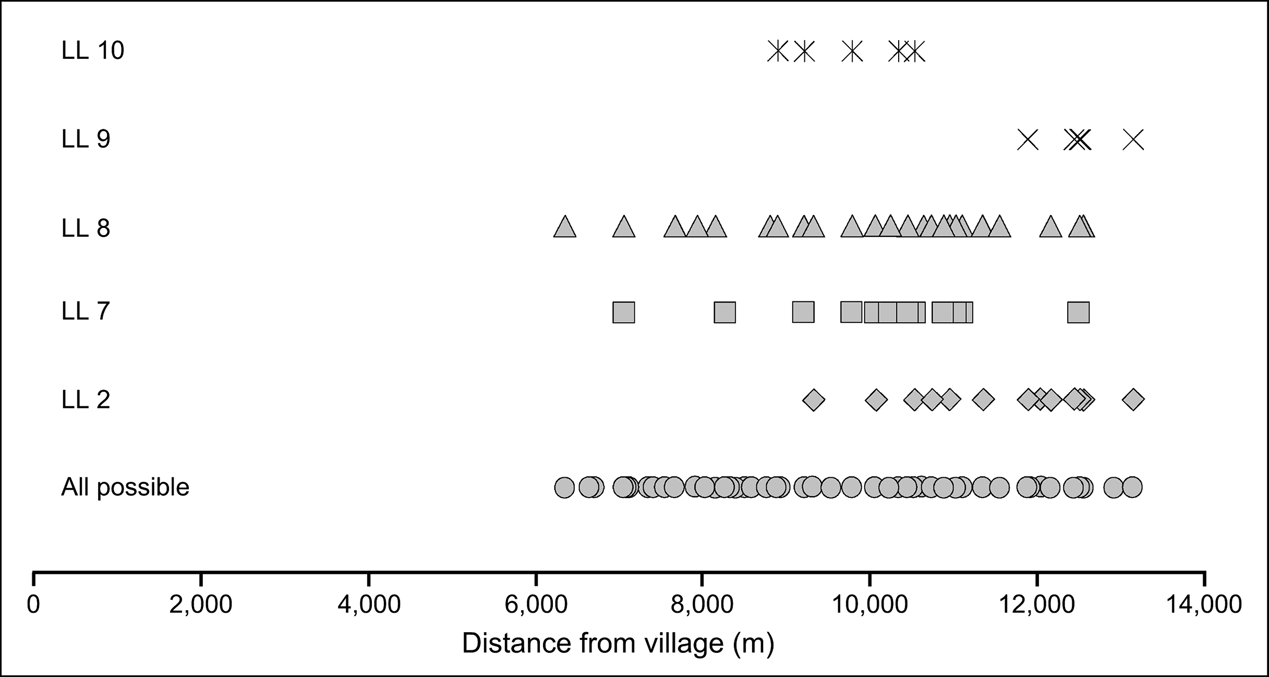
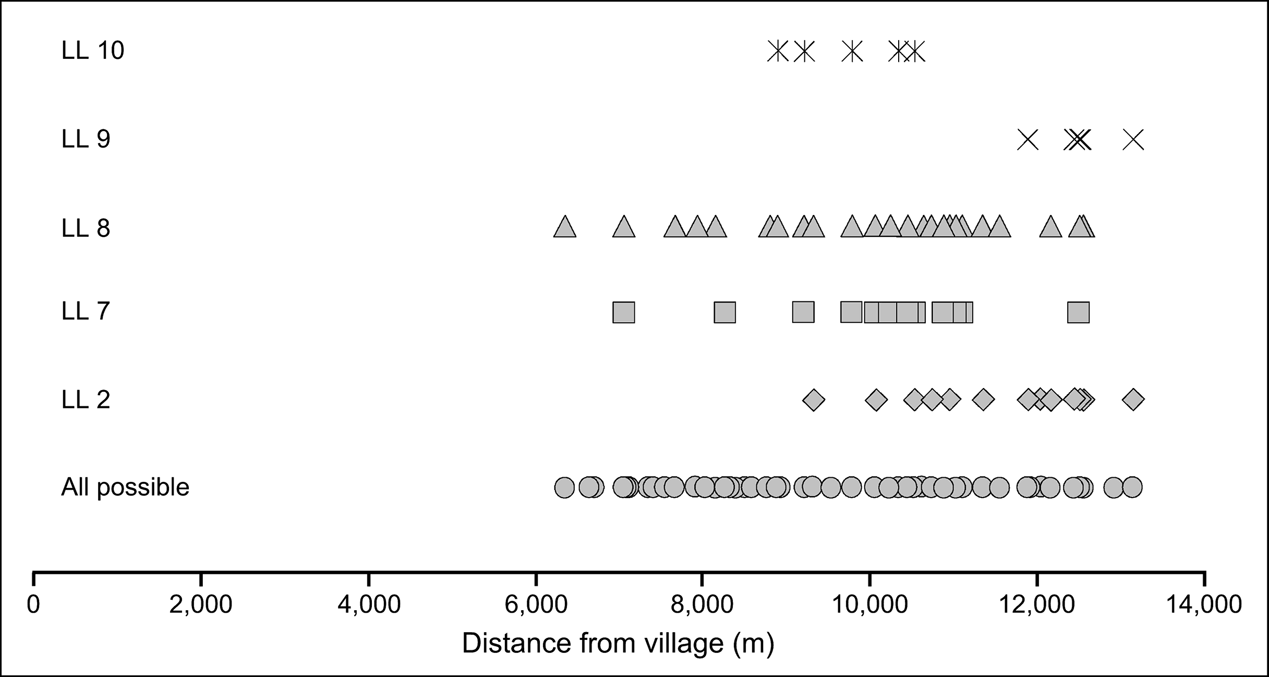
To ensure that distance to village reflected the responses of multiple individuals and was not the result of a single leopard whose home range was far from the villages, but visited several trapping stations, we assessed the results graphically (Fig. 2). Of the five spotted morphs that were captured multiple times only two individuals were detected at traps closest (6.4 km) to villages and then only on a few occasions. One individual was detected only at traps furthest (11.8 - 13.1 km) from villages. The black morph individual(s) were detected at sites >8 km from villages.
Camera-trap records of five spotted morph Asiatic leopards (LL 2, 7, 8 9 and 10), separately and pooled, with respect to distance from nearest village.
Leopard movement and behaviour
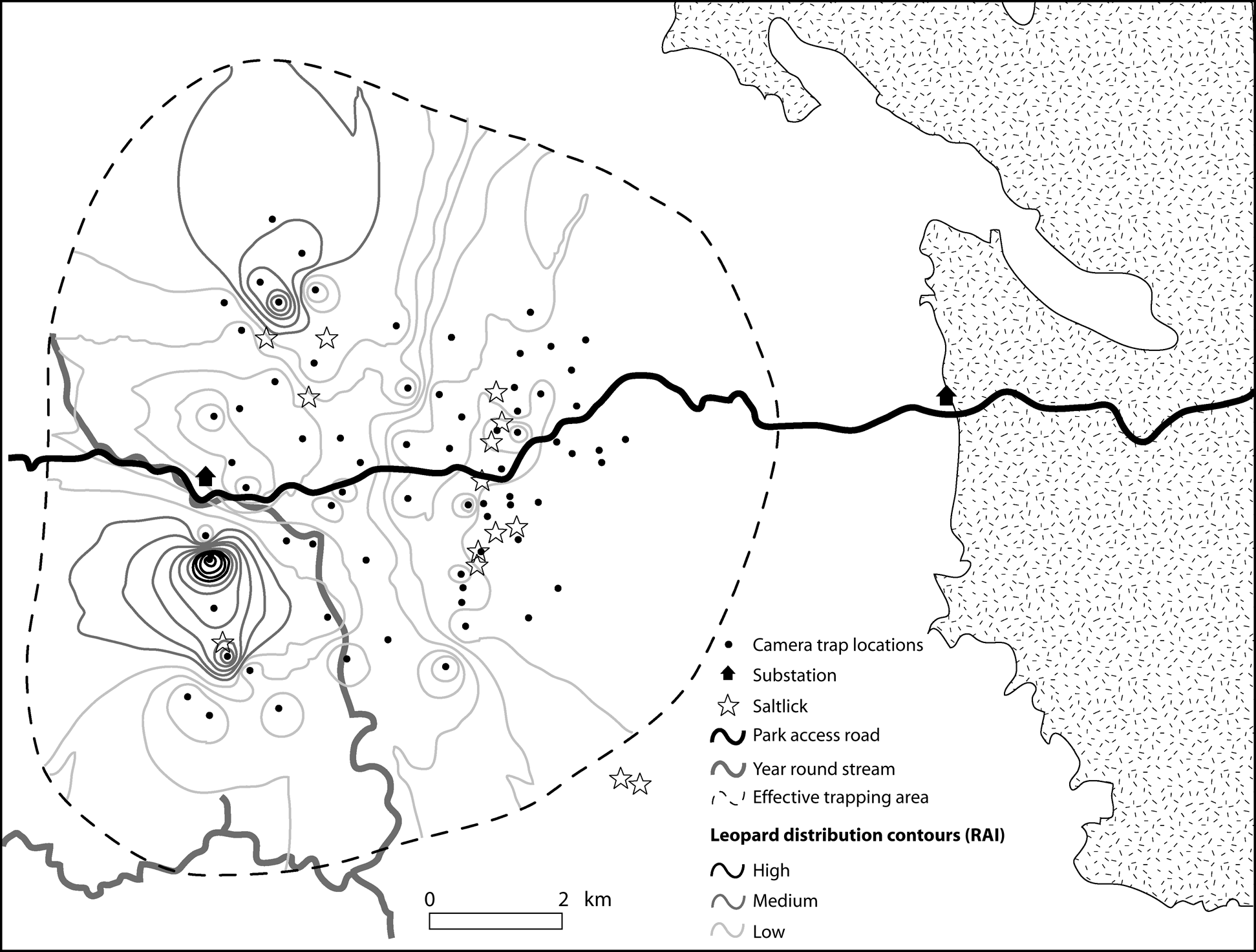
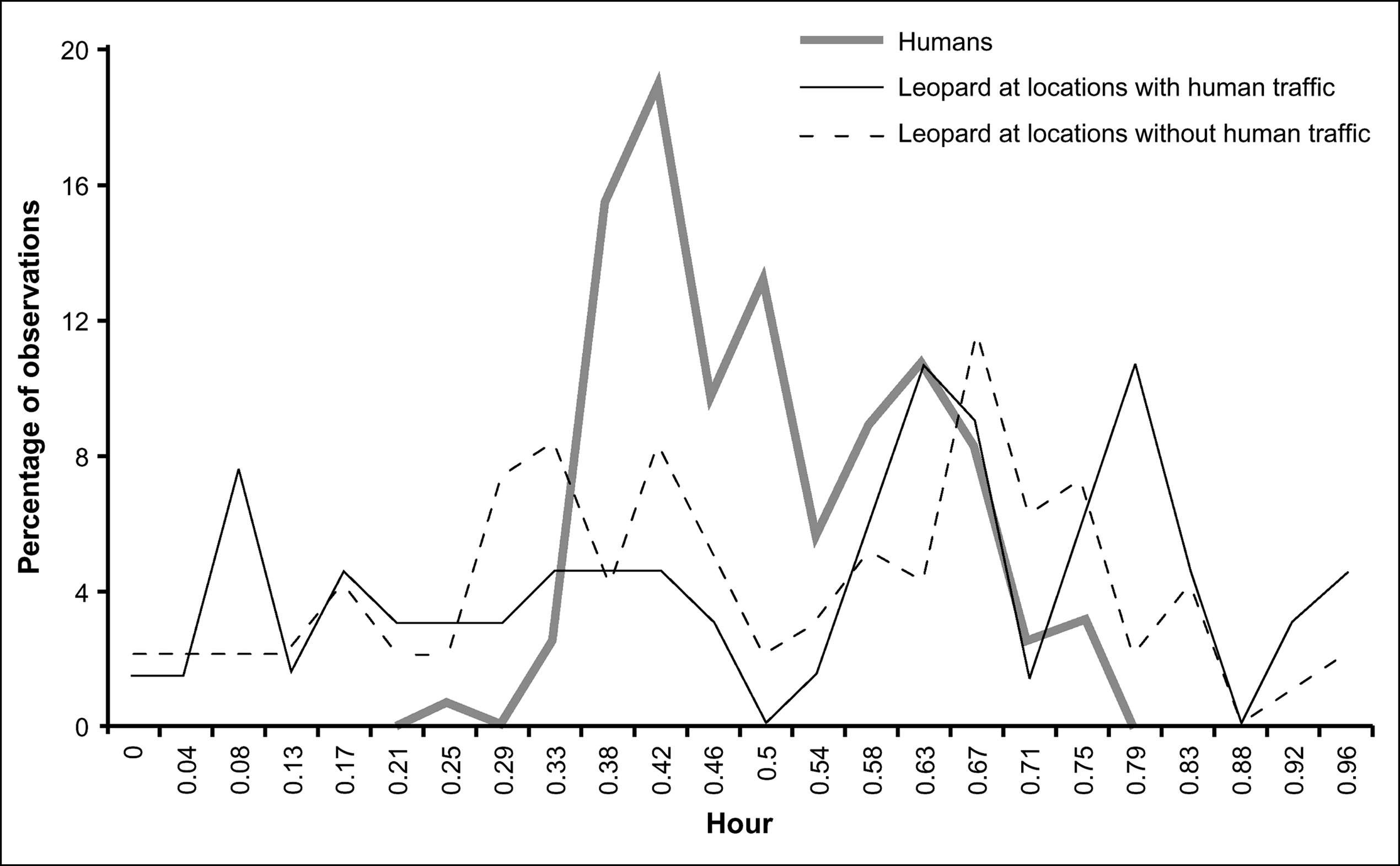
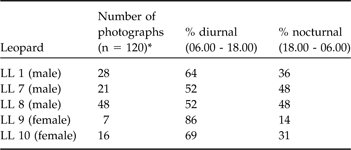
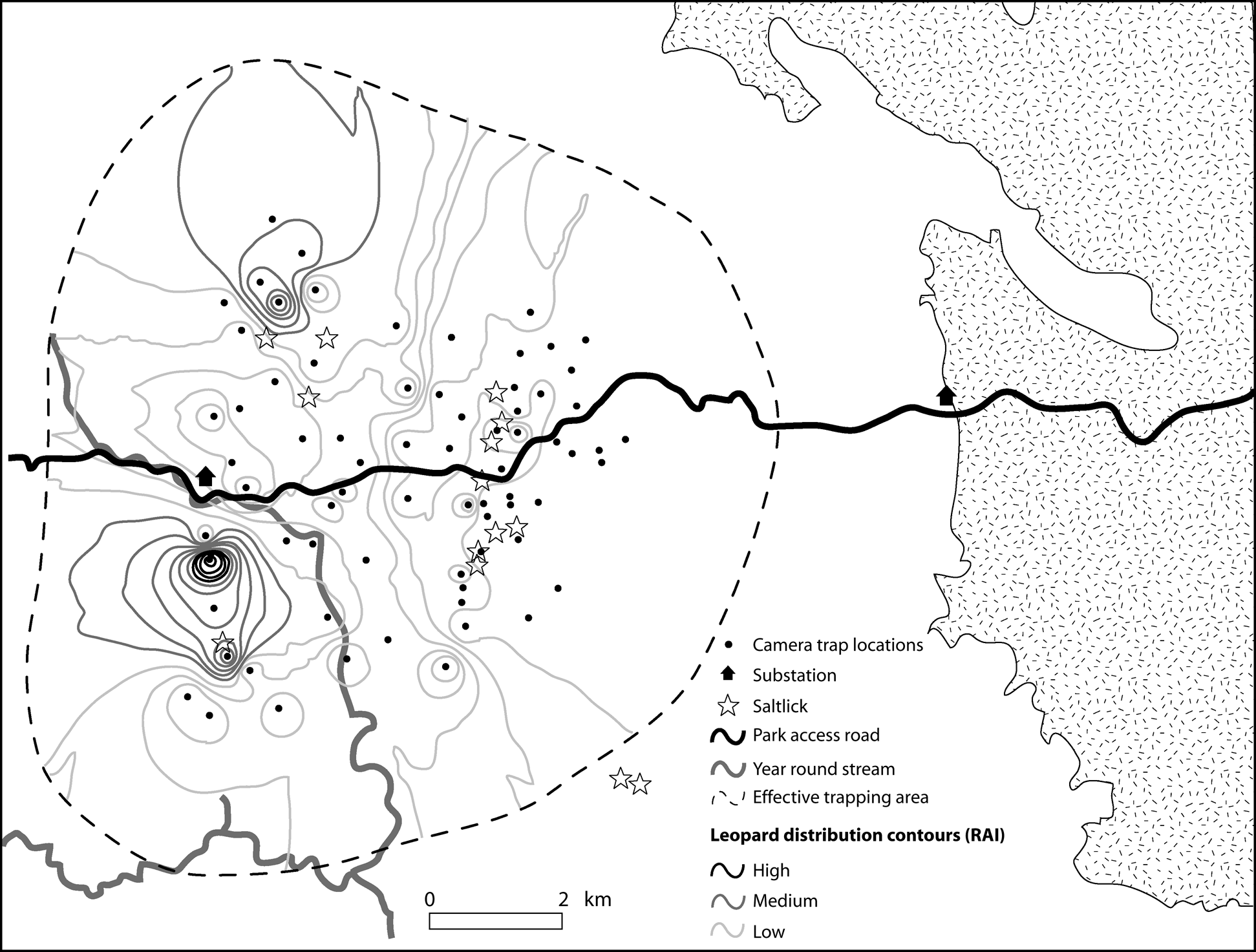
Leopards used >50% of the study area (Fig. 3). The Park entrance road was not a barrier to the movement of leopards because at least three males were photographed on both sides of the road. However, univariate tests (above) suggested that leopards tended to avoid areas near the road. Leopard activity was arrhythmic (Fig. 4) with most activity recorded during the daytime (99 of 161 photographs; 61%). Leopards were primarily diurnal and crepuscular, with activity peaks during 07.00-11.00 and 14.00-20.00 and a peak of activity in the afternoon (16.00). Individual spotted morph leopards were more diurnal in areas with no human traffic (χ2 3.971, df = 1, P <0.05; Table 1). These leopards were also 59% more frequently detected in places with no human traffic than places with human traffic.
Relative habitat use by Asiatic leopards in the study area. Leopard distribution contours were created using an inverse distance weighted algorithm function (see text for details).
Activity patterns (percentage of observations) of humans, and of leopards at locations with and without human traffic.

Percentage activity patterns of five individual white morph leopards.
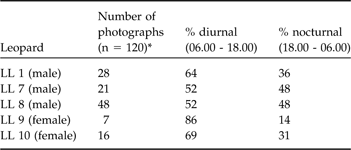
* Number of photographs with visible time and date on film
Discussion
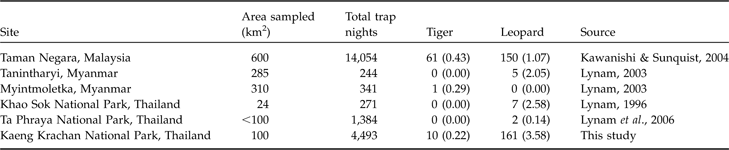
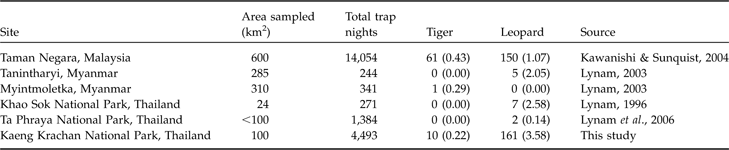
Using camera traps we found that leopard habitat use in Kaeng Krachan National Park was 1.4-25 times higher than at other sites in central and southern Thailand, and elsewhere in South-east Asia (Table 2). At our undisturbed sites (<1 km from roads, no human traffic, n = 22 locations) leopards were detected more than twice as frequently in camera traps as large Indian civet (3.71 vs 1.56 detections per 100 camera-trap nights), the next most frequently recorded large carnivore, seven times more frequently recorded than dholes (0.61 detections per 100 camera-trap nights), and 25 times more than tigers (0.15 detections per 100 camera-trap nights), suggesting leopard is the dominant large carnivore. Although univariate tests suggested an effect of streams relative to human-related factors, natural habitat variables measured here (distance to streams and mineral licks) did not significantly affect leopard abundance. Although the impacts on vegetation from past logging (which we did not measure) could have influenced leopard distribution, this influence did not appear to be mediated via effects on the common prey species (see below).
Occurrence of Asiatic tiger and leopard determined from camera trapping in Kaeng Krachan National Park, Thailand (this study), and five other sites in South-east Asia. Numbers are total independent photographs, and numbers in parentheses are independent photographs per 100 trap nights (RAI).
Leopard used forest areas 6–14 km from human settlements at the Park boundary (Fig. 2), with habitat use increasing with distance from villages (Fig. 3), suggesting an edge effect. Leopards may be sensitive to changes at the Park boundary for several reasons. One explanation is that because leopards are obligate predators their populations should vary according to prey levels. Prey species abundance may be reduced, for example, due to poaching close to forest edges (Glanz, Reference Glanz, Robinson and Redford1991; Bodmer et al., Reference Bodmer, Fang, Moya and Gill1994; Carrillo et al., Reference Carrillo, Wong and Cuaro2000; Robinson & Bennett, Reference Robinson and Bennett2000) or near human settlements (Johnson et al., Reference Johnson, Vongkhamheng, Hedemark and Saithongdam2006). However, seven potential leopard prey species were widely detected at camera locations in the study area, with multiple species of ungulates recorded at some locations, and abundances of these species did not vary with proximity to villages (Mann Whitney U-test, P >0.05). Although leopard diets at Kaeng Krachan National Park apparently include primates and small-bodied species (Grassman, Reference Grassman1999; D. Ngoprasert, pers. obs.), and these taxonomic groups are under-sampled by camera traps, for the majority of larger prey species, e.g. M. muntiacus, S. scrofa, C. unicolor, camera traps permit both reliable detection and estimation of abundance (O’Brien et al., Reference O’Brien, Kinnaird and Wibisono2003). Additionally, prey abundance per se was not an important determinant of leopard habitat use. Therefore, we conclude that sensitivity to variation in prey abundance was not a likely explanation for the avoidance of forest edges by leopards.
Another explanation for the edge effect is that poaching at the Park boundary reduces the abundance of the carnivores themselves (Woodroffe and Ginsberg, Reference Woodroffe and Ginsberg1998). However, although traps, shotgun cases, and hunting apparatus were occasionally found in the study area, and there was evidence of a bear (P. Manopawitr, pers. comm.) and a tiger (D. Ngoprasert, pers. obs.) caught in snares, we did not find any evidence of leopards killed by humans. Therefore, we believe the effect of direct poaching on leopards in the study area is negligible.
Alternatively, human traffic could explain the response of leopards to the edge. Although levels of human traffic were not different near and far from villages, it may be the kind of human traffic that affects leopards. Human disturbance at Ban Krang was primarily from tourist traffic but also included border patrol police and Park ranger field patrols, as well as movements of local people. However, in places near the Park boundary away from the access road tourist activity is minimal and human traffic mostly comprises local people making forays into the forest to collect wild fruits, e.g. Parkia timoriana, and other non-forest timber products, and to poach wildlife such as langurs Cercopithecidae spp., pangolins Manidae spp., squirrels Sciuridae spp., civets Viverridae spp. and turtles. Although leopards use places frequented by humans, leopards were more diurnal in places with no human traffic. Moreover, encounters with people carrying guns or traps are likely to be more dangerous for a leopard than encounters with tourists, thus leading them to avoid areas near villages at the Park boundary. Elevated levels of human traffic associated with poaching may be facilitated by changes in forest structure at the Park boundary. Logging activities prior to 1989 have apparently reduced the density of large trees (D. Marod, pers. comm.), opening up the forest, and making access on foot easier. Although poacher traffic constituted <13% of all human foot traffic in the study area, the elevated risk to leopards from poacher traffic close to villages is a likely cause of reduced leopard abundance and altered behaviour.
Leopard abundance was reduced near the park access road but vehicular traffic rate did not appear to influence leopards except during periods of peak traffic, such as during holidays. However, we suspect that outside peak traffic periods and at night when vehicle traffic is reduced, the risk of contact with humans or vehicles is low and leopards may venture close to and cross the access road. Leopards may also use the road as a travel corridor (DN and AJL, pers. obs.) as do other carnivores (Kerley et al., Reference Kerley, Goodrich, Miquelle, Smirnov and Quigley2002). The average traffic rate in the Ban Krang study area is lower (17 vehicles per day) compared with other forest sites where large cats occur (77 vehicles per day, Kawanishi, Reference Kawanishi1995; 4.2 vehicles per hour, Kerley et al., Reference Kerley, Goodrich, Miquelle, Smirnov and Quigley2002). It is unclear whether leopards in the Park would be affected if traffic rates increased dramatically.
Leopard is considered to be the generalist large carnivore that is least sensitive to disturbance (Sunquist & Sunquist, Reference Sunquist and Sunquist2002). However, our study clearly demonstrated adverse effects on leopards from human presence and activity, suggesting that beyond a certain threshold, effects on populations may be evident. This may indicate problems for more sensitive carnivores. For example, tigers, with larger home ranges, were rarely recorded at the study site, and may be largely restricted to areas in the west of Kaeng Krachan National Park where wild cattle prey populations are concentrated, and where access is limited because of an absence of roads and established foot trails, and human traffic is low.
Increasing numbers or activity of humans in a protected area increases the likelihood of encounters with large carnivores and this may have negative effects on the survival of sensitive species through several mechanisms (Woodroffe & Ginsberg, Reference Woodroffe and Ginsberg1998; Woodroffe, Reference Woodroffe2000). Humans disturbing carnivores while they hunt or feed may affect carnivore survival by causing predation to be less efficient (Kerley et al., Reference Kerley, Goodrich, Miquelle, Smirnov and Quigley2002). This may be detrimental to carnivores but in turn may lead to increases in otherwise vulnerable species (Isbell & Young, Reference Isbell and Young1993). In areas with continuous human traffic, such as close to villages, this effect may lead to permanent changes in community structure that are similar to the long-term effects of hunting (Griffiths & van Schaik, Reference Griffiths and van Schaik1993). Roads may affect carnivore survival because of collisions with vehicles but perhaps more importantly because they increase access for poachers (Kerley et al., Reference Kerley, Goodrich, Miquelle, Smirnov and Quigley2002). Because of these influences of human disturbance a strategy adopted by carnivores and other species sensitive to human presence is to change their behaviour by becoming more nocturnal (Haltenorth & Diller, Reference Haltenorth and Diller1977; Griffiths & van Schaik, Reference Griffiths and van Schaik1993). Leopards may adopt nocturnal behaviour at forest edges and near roads in order to reduce encounters with humans (Sunquist, Reference Sunquist1981). Our findings support the premise that leopards avoid forest edges and change their behaviour in response to human disturbance.
Most reserves in Thailand and elsewhere in South-east Asia have hard edges, as at the eastern border of Kaeng Krachan National Park. Moreover, most are completely surrounded by these hard edges, and few abut large expanses of unbroken wildlife habitat, as in the western part of the Park. Management of protected areas with hard edges should focus on regulating human access across their boundaries (Rowcliffe et al., Reference Rowcliffe, Merode and Cowlishaw2004), and these edges may help to separate carnivores from humans if (1) the boundaries are respected by people living at the edge, (2) the boundaries are patrolled and monitored by reserve staff, and (3) penalties are applied to discourage illegal incursions. In general, poaching can be reduced and protection increased by increasing numbers of active enforcement staff (Bruner et al., Reference Bruner, Gullison, Rice and da Fonseca2001), increasing enforcement effort through patrolling, guarding and investigations, and directing enforcement efforts towards problem areas inside the reserves. At the same time, restricting tourist access to specified recreation areas inside reserves may help to reduce disturbance to populations of leopards and their prey species. Human impacts can be mitigated through zoning to separate recreation areas from strict conservation areas and limited use areas, by establishing limits on the number of visitors entering a park at one time, and by careful management of tourist activities. For example, at Kaeng Krachan National Park wildlife watching towers located along the access road in areas with sufficient wildlife, but away from key mineral licks that attract large ungulates, may help to focus visitor traffic. The use of public vehicles for transporting people in and out of parks will help reduce impact of humans on sensitive areas, and increase the chances of viewing wildlife. This is important as numbers of tourists and traffic are predicted to increase in Asian parks.
The Kaeng Krachan National Park authorities have used the results of this study to improve management. One immediate outcome has been the closing of the Park during the wet season (May – October) to reduce disturbance to leopards and other wildlife. To gather further information on the effects of human disturbance a possible next step should be to examine demographic responses of leopards and other carnivores to forest edges.
Acknowledgements
The authors wish to thank the following individuals and institutions for facilitating and supporting this work: Director-General, Department of National Parks, Wildlife and Plants Conservation; Director, Office of National Parks; Manote Karnpanakngarn, Superintendent of Kaeng Krachan National Park and his staff. Fieldwork was done with the assistance of Prawing Klinklay, Tongbai Charoendong, Rawang Klinklay, Vichai Klinklay, Son Jitkum, Sutha Chansuk, Mana Charoengwai, Chaiwat Harnnarong and Pratthana Puangpratum. Funding was provided by a Thailand Government TRF/BIOTEC Special Program for Biodiversity Research and Training grant BRT R_346001, King Mongkut’s University of Technology, Thonburi, and the Wildlife Conservation Society - International Programs. Justina Ray and Luke Hunter provided particularly helpful comments on early drafts of the manuscript, and Bill Kristan assisted with the statistics.